“Don’t Sell Until the Leaders Arrive.”

Author’s Note
When I first drafted this in October 2024, it was heavy with emotion. I couldn’t quite grasp how the company operated; I was angry, resentful. Revising the piece this year, after my own “baptism of fire” at another state-owned enterprise, those incidents now seem fairly unremarkable in hindsight. The only thing that remains unchanged is that distinct feeling of “playing house”.
I harbour some reservations, concerned that laying everything out exactly as it occurred might bring trouble. As a result, I have used pseudonyms for all the people, places, brands, and e-commerce mini-programs mentioned. The story itself is factual; I have merely taken a single cross-section of it to share.
‘Qingzhou’ is a pseudonym. The agricultural brands mentioned in this piece are equally fictionalised.
In August 2022, I joined an agricultural products company in the Qingzhou Development Zone to work in marketing. The department itself was newly established, though the state-owned enterprise had been operating for over a decade. It had seen the entry of private capital over the years, and by the time I joined, it was in the midst of a mixed-ownership restructuring. Our entire remit was to operate a mini-program called ‘Qingzhou Flavor’. The company had no real intention of going all-in on e-commerce; it was merely managing the project on behalf of the Qingzhou District Agriculture Commission. A well-performing mini-program would simply qualify the company for government subsidies.
This operational model, which was neither truly market-driven nor genuinely geared towards public service, laid the groundwork for every bit of chaos that followed.
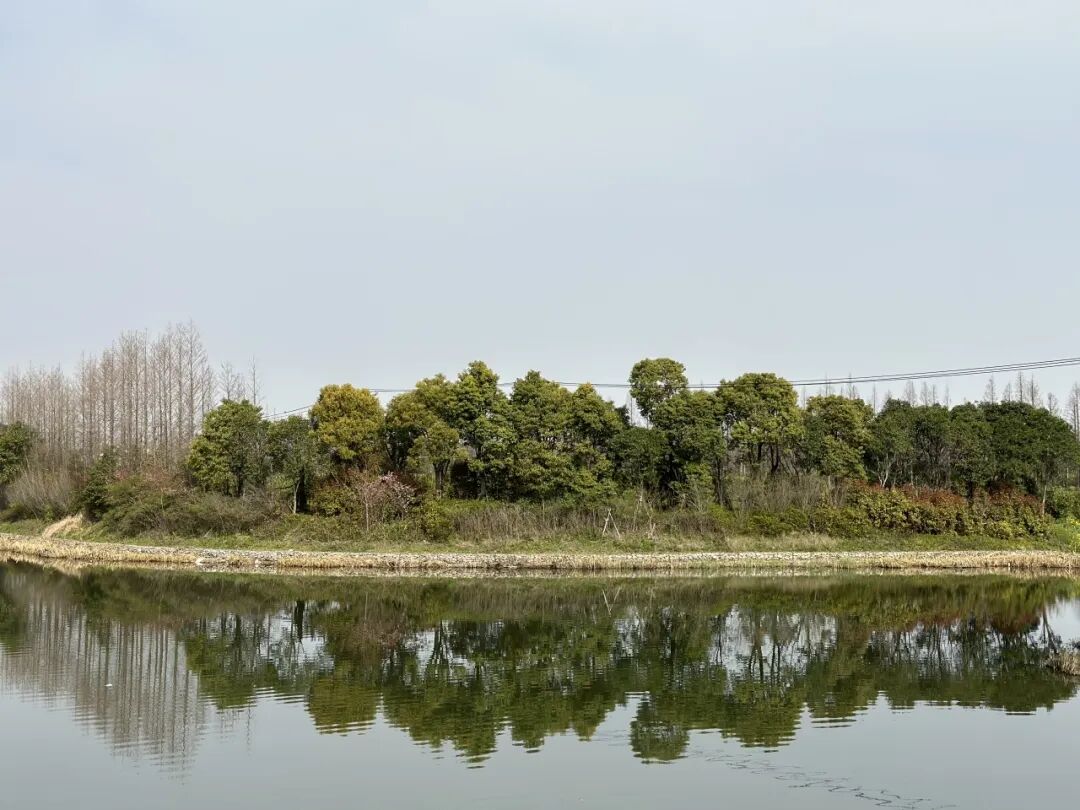

◉Day and evening in Qingzhou.
The Qingzhou Development Zone lies along the lower reaches of the Yangtze River, its townships bearing little distinction from other riverside settlements in the Jiangsu and Zhejiang area. Bolstered by expansive land and fertile soil, the region enjoys a natural advantage in agriculture. Yet, as a development zone under a municipality renowned for its economic strength, Qingzhou’s GDP has been lacklustre over the ten years since its elevation from county to district status. Pivoting instead to cultivate “local specialties”, the district government set up an online trading platform to project the reputation of its homegrown produce across the country—a novel enough initiative for the internet economy.
On the surface, it sounded like a solid role, and I was keen to take it. I had previously worked as an editor for a food video channel, shooting cooking tutorials and short culinary documentaries, travelling across the country to document regional specialities. I had also handled product promotion for a chain food brand. This time, I thought I could get right to the source of agricultural produce, actually pull off that “farm-to-table” branding, and offer farmers some tangible support. With the mini-program carrying official backing, I figured there would be plenty of extra leverage, making the work relatively straightforward to execute.
However, a few months into the job, my enthusiasm was dampened. I gradually realised that this government-led mini-program operated on far from a pure e-commerce model; it was intertwined with bureaucratic directives, the conventions of a relationship-driven society, and equity power struggles. Actually selling agricultural produce turned out to be, in fact, the least important objective.
For the next two years, I felt as though I were merely “playing house”, until I was eventually forced out. It was not long before the mini-program itself “disappeared”.
Where the Goods Come From
My first major assignment in the marketing department after joining was to transition the existing group-buying operations online.
I had assumed that e-commerce was simply about selling directly to retail customers, driven by marketing campaigns, content creation to attract traffic, and routine platform management. Much to my surprise, however, the company also brought a senior sales representative, Mr Pu, into the marketing department. He had been handling group-buying operations for the company for more than ten years.
Mr Pu’s experience in institutional group-buying was geared primarily towards businesses and public institutions: for years, our company had operated almost entirely on a B2B model. We would purchase agricultural produce in bulk, wholesaling some to department stores and supermarkets, while allocating the rest to institutional welfare purchasing—each year, ahead of the major holidays, these organisations would release their welfare budgets well in advance. If we won the tender, we would source local produce, transport it, and distribute it straight to the employees. The logic governing this kind of institutional holiday trade is fundamentally different from that of the fiercely competitive retail market.
Mr Pu is just over forty. When he joined us, he didn’t take part in any of the online work. Instead, he simply added two steps to our established group-buy operations for corporate and institutional clients: listing the agreed product bundles on the platform, and printing paper vouchers to distribute to partner organisations. Ironically, we ended up handling both tasks for him. If any employees at the partner organisations ran into trouble redeeming their vouchers, we also had to double as customer support to answer queries.
Mr Pu preferred to work on his own. He was rarely in the office, always saying he was out chasing business. I never really got to know him, and at first I couldn’t see why he’d been assigned to the marketing department. It was only after a while that I noticed our daily turnover usually hovered between a few dozen and a few hundred yuan, but would surge to four or five thousand in the run-up to holidays. That’s when it clicked: our results were practically propped up by Mr Pu’s group-buy orders. If we relied solely on selling to individual consumers, our total revenue would be painfully low, and we’d certainly fail to hand in a satisfactory report to management at year-end.
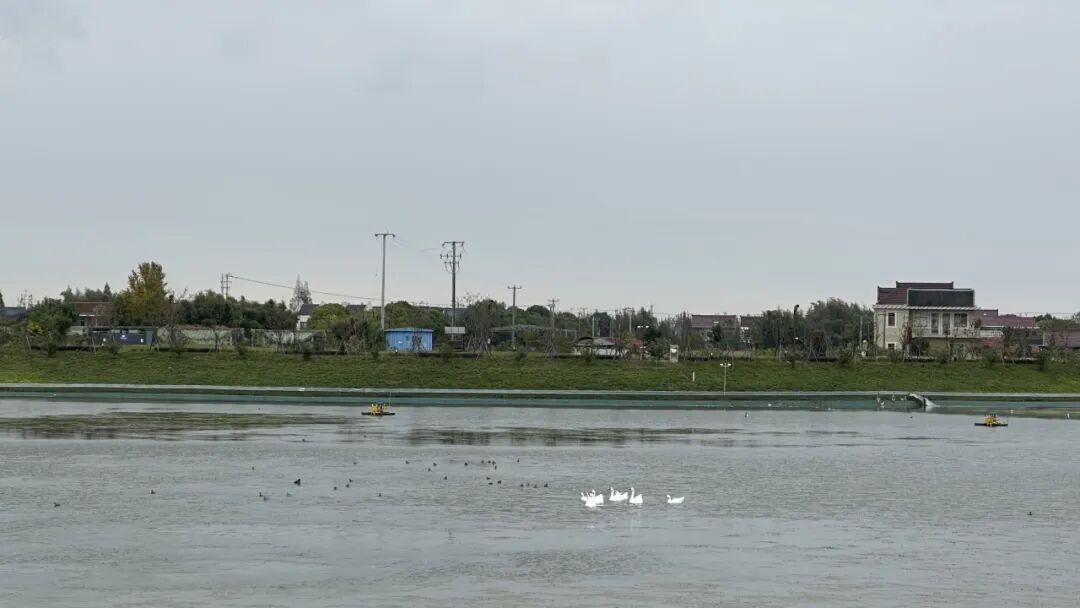
◉A hairy crab cooperative in Qingzhou.
The marketing department’s second key task was to develop a regional public brand for agricultural produce.
Before our mini-program went live, the Qingzhou authorities had already rolled out a public agricultural brand called ‘Fengyue Haichuan’ (pseudonym). I heard they initially wanted to register ‘Qingzhou’ directly, but trademark law forbids using place names outright, so they deconstructed the characters to create ‘Fengyue Haichuan’. Many local farmers had used the brand’s packaging, and local press had run plenty of stories on it. Yet as soon as the new district leadership took charge, they announced a fresh brand, ‘Qinghe Three Brothers’, pledging to start everything anew and replace ‘Fengyue Haichuan’ entirely.
Our marketing department actually designed the logo for ‘Qinghe Three Brothers’. A part-time graphic designer whipped up an icon in half a day—no brand narrative, no colour guidelines—but the District Agriculture Commission approved it anyway. By February the following year, the name had already surfaced in the government work report: “Refine the public agricultural brand system, launch the unified ‘Qinghe Three Brothers’ mark, and establish the ‘Qingzhou Flavor’ platform.”
When the new brand officially launched, it initially felt like I was part of something monumental. With official backing, I assumed everything would run smoothly. Yet, in the first six months of my tenure, the bulk of my effort went into tracking down suppliers and persuading them to list their goods on our mini-program, only to find that nobody was particularly keen to show this official platform any respect.
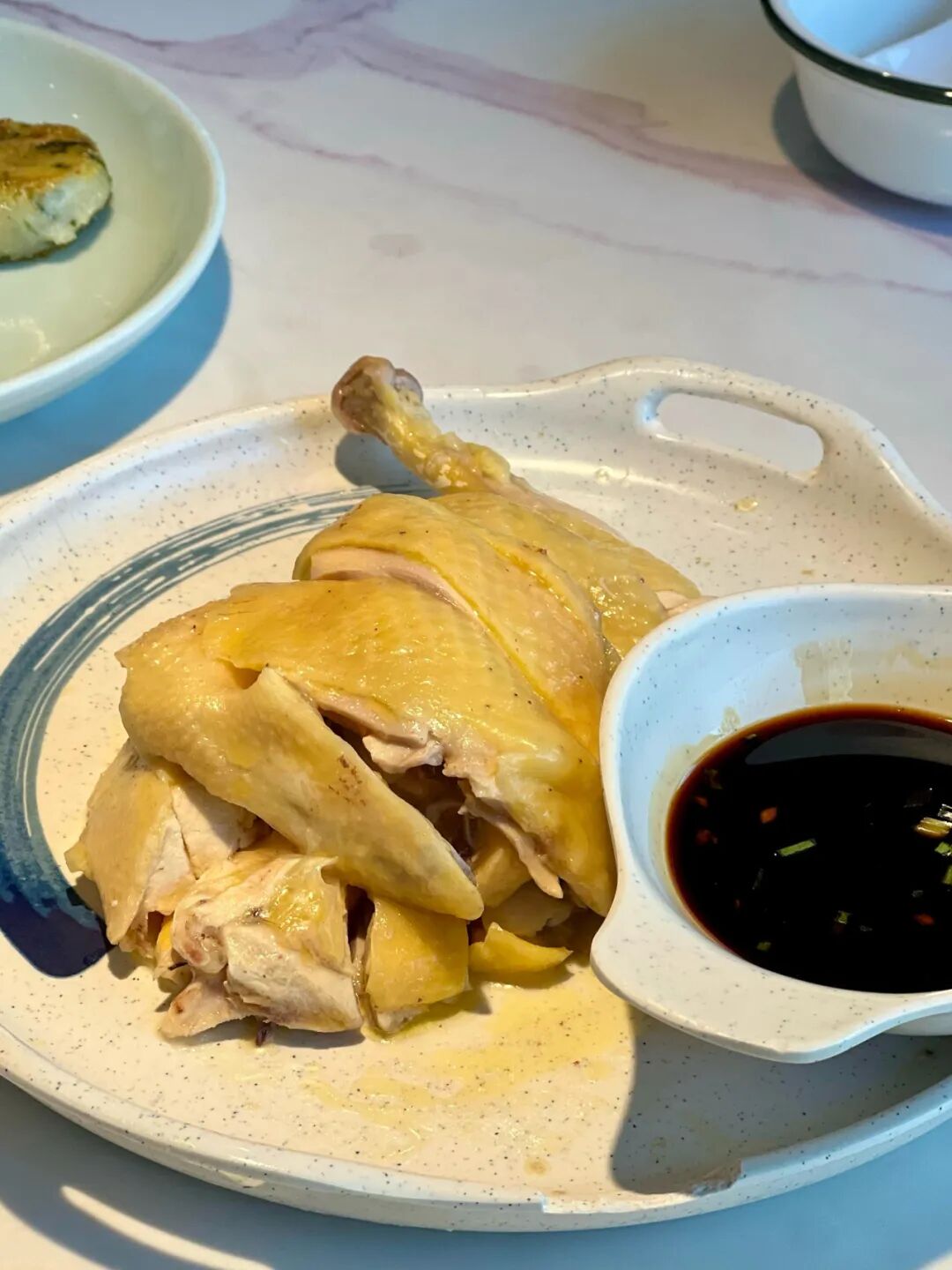
◉White-cut chicken made with local free-range chickens, served at Qingzhou restaurants.
It was only after joining the company that I gradually realised just how many varieties of local specialty produce Qingzhou actually had. When dining at Jiangsu–Zhejiang restaurants, cold appetisers routinely featured shredded Qingzhou golden pumpkin and Qingzhou lamb. The local rice is excellent, and the rice wine brewed from it regularly appears on restaurant menus. From hairy crabs and poultry such as chickens, ducks, and pigeons to a wide range of vegetables and fruit, Qingzhou produces it all. Even saffron, which I had always assumed was cultivated exclusively in Tibet, turns out to be grown here too.
With so many different categories, there are countless individual growers and farmers, though local smallholders typically grow and sell their own produce directly. As their output was too limited to support a partnership, we instead focused on cooperatives and enterprises that had already reached a certain scale. Several of these companies had already made a name for themselves in the city, such as Chunhe brand pork and Jinmu brand lamb (pseudonyms). If they agreed to join, their participation alone would be a valuable boost to our marketing efforts.
The general manager and Mr Pu are Qingzhou locals with extensive networks and plenty of supplier contacts, so they helped us add vendors to WeChat group chats one by one. We drew up an information form to invite partners to submit their business licence, product details, alongside wholesale and suggested retail prices.
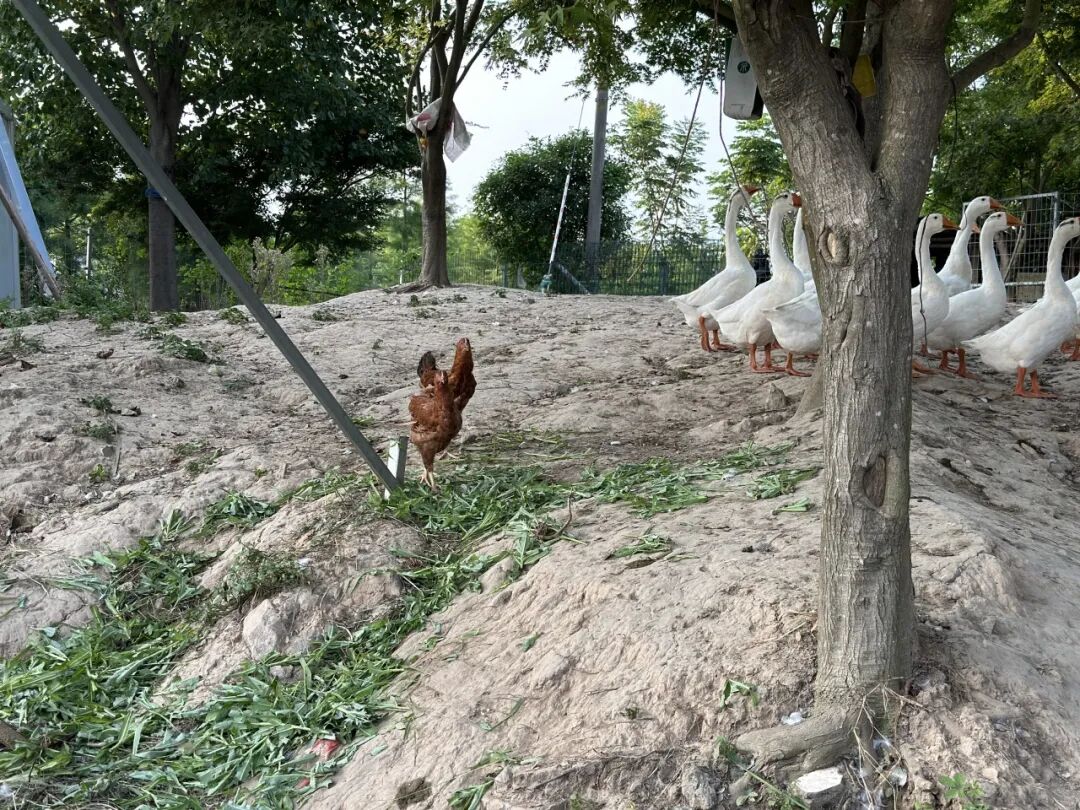
◉Orchards in rural Qingzhou often also keep poultry.
Distributing the form in the group chat often met with silence. Our operations colleagues had to follow up every few days just to get a form back, and even then it was usually missing key details. It took another two or three rounds of back-and-forth to scrape together all the required information. Some suppliers would simply call instead: “I’ll just give you the prices verbally, you take a note. Don’t bother with photos—you can just download them online, they’re all pretty much the same.”
Slow progress was only the least of our difficulties; perfunctory cooperation was far more common. Hengda Stainless Steel (a pseudonym) enjoyed a strong local reputation. They were courteous, amiable, and quick to reply. I assumed this was largely because they manufactured for leading international brands and had plenty of experience dealing with outsiders. On this occasion, they wanted to list stainless steel cookware under their in-house brand, Youchu. Yet the wholesale prices they provided seemed highly questionable. I checked their Tmall flagship store and discovered that, for several items, the cost price they quoted us was actually higher than their own retail price. Once we flagged this in the group chat, they quickly submitted a revised, more reasonable list. Their initial pricing guesswork simply stemmed from their assessment that our platform would not generate meaningful sales volume.
The recruitment process was painfully slow. The District Agriculture Commission organised a dedicated mobilisation meeting to gauge whether local enterprises and cooperatives were willing to join Qingzhou Flavor. Our company sent Mr Pu to attend. Upon his return, he briefed us: “Everyone raised their hands, but whether they’ll actually come aboard is another matter.”
Chunhe Pork was a major local brand, and I had seen their dedicated counters at both wet markets and supermarkets. During earlier communications in the group chat, they noted that handling sporadic orders would require shipping each item separately, which wouldn’t be cost-effective. They never explicitly turned us down, yet they endlessly delayed filling out the form. After the commission’s mobilisation meeting, our operations team assumed matters would finally move forward. When we followed up, however, we found that nothing had changed—the stalemate continued.
A while later, without any additional prompting from us, Chunhe suddenly took the initiative to complete and return the form. Two or three other pork brands also stepped up to join.
We later discovered that this was not the result of market competition, but rather a veiled instruction from above: if Chunhe did not join Qingzhou Flavor, official promotional materials would no longer list it as one of Qingzhou’s representative pork brands.
Naturally, such directives were never documented in writing. The “invisible hand” conveyed the message quietly behind the scenes. These enterprises chose to join not because they believed in the e-commerce platform, but to hedge against whatever official measures might follow.
Our e-commerce platform thus became the beneficiary of this semi-coercive arrangement. Over the course of six months, some thirty to forty cooperatives and enterprises gradually came onboard. With over a hundred products listed, users would no longer hit the bottom after scrolling just a couple of screens; the mini-program finally began to resemble a legitimate e-commerce platform.
Striving for greater professionalism
As the platform’s product range expanded, we received fresh instructions to remove any traces of the “Fengyue Haichuan” logo from the interface.
This was a legacy issue. “Fengyue Haichuan” had served as the region’s public brand for years. The Agriculture Commission had previously designed packaging for several pillar categories, including vegetables, white goats, hairy crabs, Cuiguan pears, and rice. Consequently, the Fengyue Haichuan logo remained clearly visible in product photos submitted by numerous suppliers, forcing our operations colleagues to painstakingly edit out the branding from each image, one by one.
Yet physical packaging proved difficult to completely “eradicate”. Vast quantities had already been printed, and no company was willing to simply write them off. We continued to spot traces of “Fengyue Haichuan” in the occasional customer photos showing delivered orders.
We would gently remind suppliers to steer clear of the old packaging, but the advice went little further: everyone simply turned a blind eye—who knows whether policies will shift when the local administration changes in a few years? The “Qinghe Three Brothers” brand being championed today could well become the next legacy issue down the line.
As the brand guidelines proved unworkable, we tried to steer our marketing strategy as closely as possible towards standard professional practice.
Manager Kong, our department head, was a former colleague of mine. She was the one who invited me to join the company. A Qingzhou local, she had met the company’s general manager—who also happened to be from Qingzhou—in an MBA class. Conveniently, he was just then preparing to establish a marketing department. It was the general manager’s personal connections that gave the company the opportunity to serve as the operator for the District Agriculture Commission, setting the stage for the chain of events that followed.
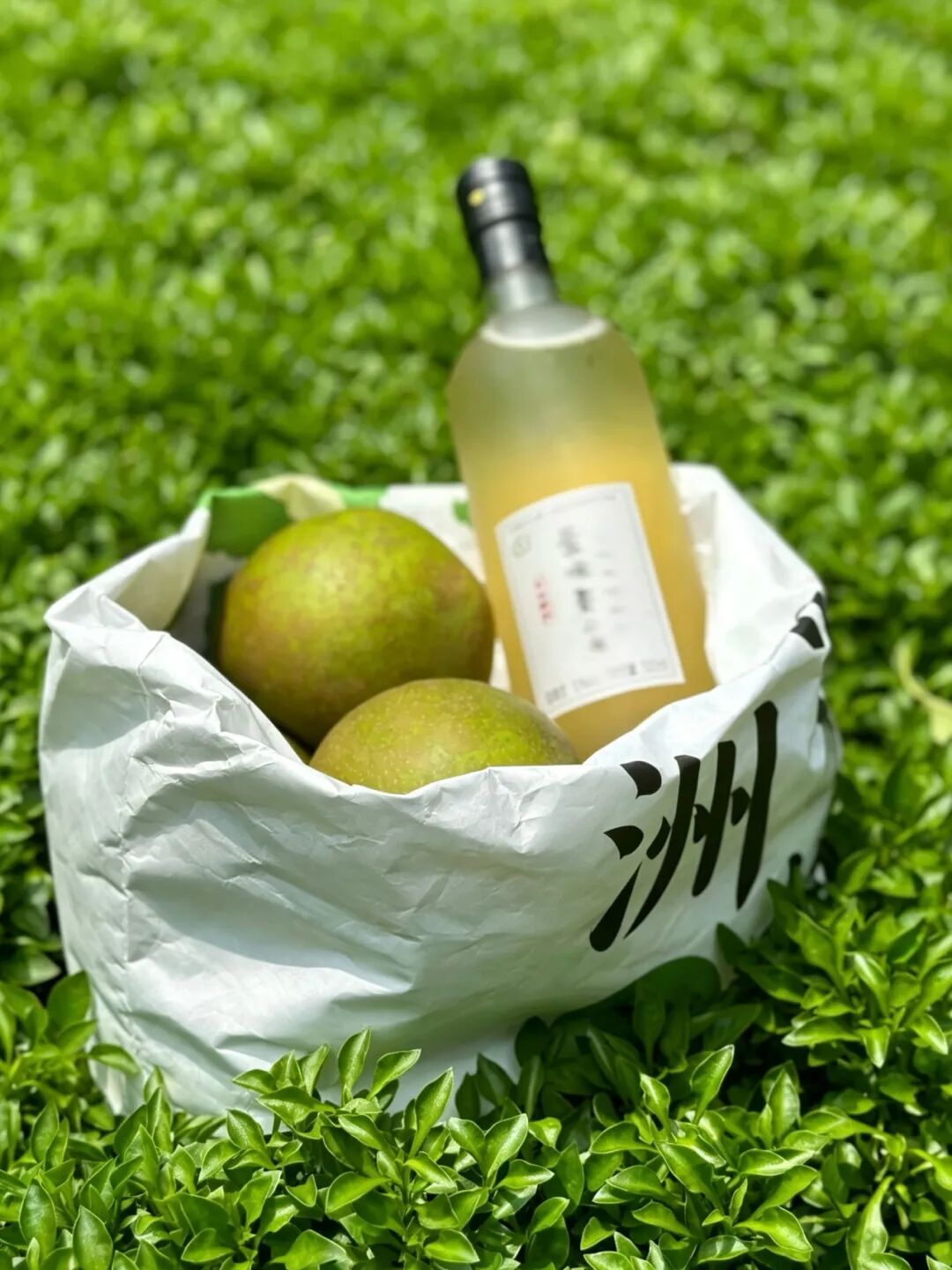
◉The operations colleague and I were taking photos of the products in the park outside the office.
Manager Kong had spent over a decade in marketing, bringing a methodology honed in large corporations. She believed that any promotion should start with a ‘marketing calendar,’ dividing the year into distinct campaign windows. Major sales pushes like the 618 Mid-Year Sale, Double 11, and the pre-Lunar New Year shopping rush are industry-wide events that nearly every sector takes part in. Beyond those, however, you also need to invent your own promotional holidays tailored to your product range, ensuring the mini-program maintains a steady rotation of campaigns from end to end.
So, we began with an annual plan, which we then broke down into a master Excel spreadsheet mapping out every campaign period. The sheet had to clearly list the theme, start and end dates, hero products, marketing strategies, promotional tactics, member benefits, communications plan, and sales targets for each window.
Previously, I only handled communications. The marketing team would develop the upfront strategy, and I would then align content and external ad placements to the agreed plan. But here, strategy, communications, and execution all fell squarely on my shoulders.
I dug up the campaign planning spreadsheet Manager Kong and I had used at my previous company. Using it as a rough framework, I started by laying the foundations for the first half.
Like any other e-commerce platform, we implemented spend-threshold discounts, time-limited deals, flash sales, and a ¥5 registration voucher with no minimum spend. Then, following the seasonal rhythms of agricultural produce, we manufactured wave after wave of ‘major sales events.’ Virtually every campaign window saw the mini-program roll out yet another marketing theme.
Yet, the results of these campaigns remained consistently limited.
A significant part of the problem lay in our promotional outreach. On paper we were the marketing department, yet we had absolutely no discretionary budget. Paid advertising was out of the question; even the most basic product-for-exposure arrangements—asking influencers to post on WeChat Moments or Xiaohongshu—were strictly off limits.
The only channels we truly had to speak through were the “Qingzhou Flavor” Official Account and Video Account. Our Official Account had been carried over from the “Fengyue Haichuan” era, boasting twenty thousand followers, yet each article barely scraped past five or six hundred views. Later on, whenever Manager Kong shared our posts to her Moments, readership would jump by another hundred or two. To be honest, that may well have been our most effective promotional tactic.
It was not until April 2023 that I finally got to organise my first in-person event with an actual budget.
The event was a “Benefits for Residents” market hosted by the District Agriculture Commission. In addition to manning a stall, we were required to run a simultaneous online broadcast, streaming live through the “Qingzhou Flavor” Video Account.

◉Manager Kong on the live stream; I was the floor manager.
We’d done live streams before, straight from the office. Manager Kong would host while the rest of us managed the floor, pulling in just a dozen or so viewers online per session. This time, the production standards were considerably higher. We hired an advertising agency that brought professional recording equipment and even sent along two seasoned hosts. To ensure the final metrics looked impressive in our reports, the company even authorised us to run paid traffic campaigns.
The problems quickly surfaced. Both linking external streaming hardware to a WeChat Channel and running paid traffic required the account to meet a minimum follower threshold. The few hundred followers we had painstakingly accumulated through genuine engagement fell drastically short, leaving us no choice but to resort to a little “artificial pollination” – buying fake followers.
That was the first money I spent on marketing at this company: 150 yuan to purchase 300 followers for our WeChat Channel.
The moment the advertising agency arrived, they set about organising another matter. They reasoned that the stream needed to showcase finished dishes, not just raw ingredients. Having the host sample a few bites would also help stretch out the broadcast time. We headed upstairs to find a restaurant willing to handle the cooking. After pitching it to several places, we finally found one that took the job, preparing seven or eight small dishes for a total service fee of 600 yuan.
As the stream got underway, the host’s commentary and guest interviews alternated. Each time a new product category was introduced, we brought on a guest from the corresponding sector for a fifteen-minute discussion on camera.
For the lamb segment, I had reached out in advance to Mr Li, a contact I’d only just made. Around Labour Day, I’d worked with the District Agriculture Commission on a ‘New Farmers’ feature series, profiling him as a seasoned expert across the entire white goat supply chain. With the rapport still fresh, I asked him to join, and he agreed without hesitation.
Just before he was due to go on, I ran through the script with Mr Li. He suddenly grew hesitant, repeatedly suggesting other people step in instead. I assumed he was simply nervous about going live or just being characteristically deferential, so I rallied him, insisting this segment wouldn’t work without him. Reluctantly, Mr Li took the cue card. I assumed we were good to go.
The moment the lamb segment began, I realised Mr Li had already slipped away. With no other option, I quickly plucked another staff member from a local lamb cooperative at the stall to fill in at the last minute.
This was thoroughly characteristic of Qingzhou – in a society governed by personal relationships, a casual agreement is rarely meant to be taken at face value. The timing of Mr Li’s departure was, of course, perfectly convenient: he slipped away the very moment the visiting officials had left.
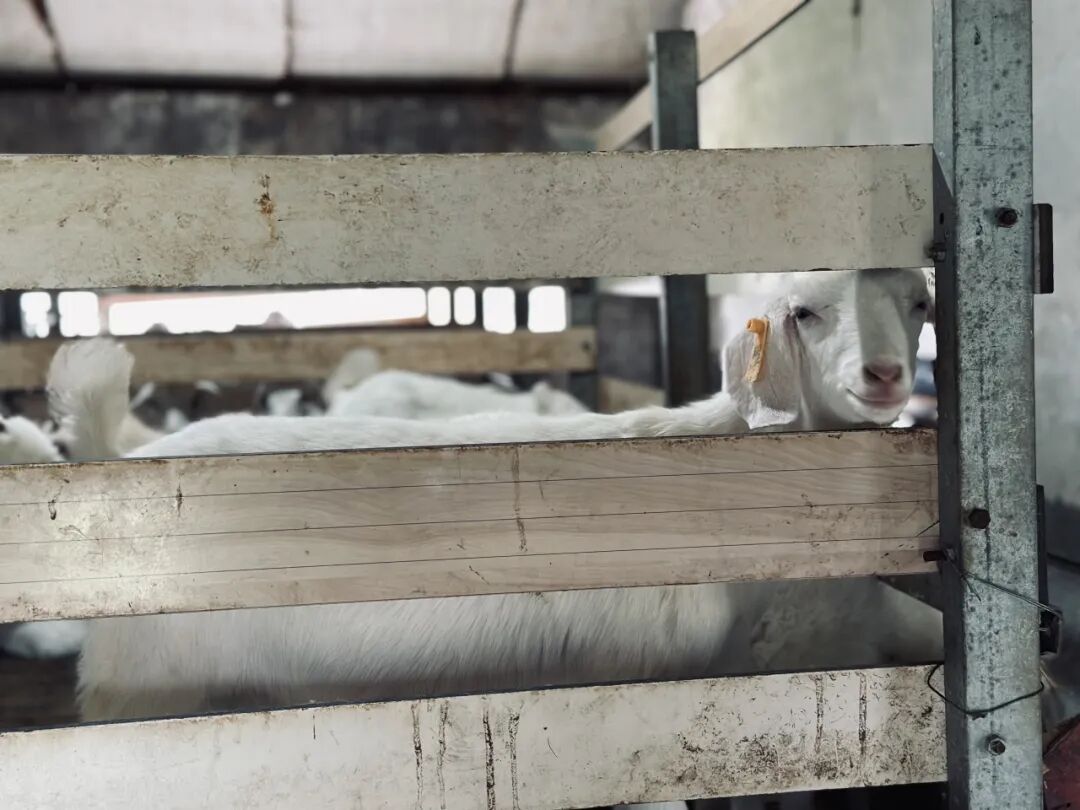
◉Mr Li’s sheep pen.
Returning to the market, it was officially billed as ‘bringing benefits to the community’, but whether locals could actually buy anything was never the point.
By eight or nine in the morning—prime shopping hours for residents—the stalls were set up and fully stocked, yet sales were strictly off limits. The logic was simple: once stock began to dwindle, the displays would look sparse, and that simply wouldn’t do for the officials’ inspection.
By the time we were finally cleared to open for business, it was already afternoon. The ice packs had melted, and the remaining meat and poultry had been sitting out for most of the day, gradually weeping blood and water. Though nothing was technically spoiled, the sight was so off-putting that it naturally turned shoppers away.
All the Agriculture Commission liaison cared about was ‘enough’—enough volume, enough visual impact. How much was wasted simply wasn’t part of the equation.
My disdain for vanity projects reached its absolute peak that day. Strangely enough, just a few days before the event, my voice completely gave out. Throughout the day, I could only manage to coordinate tasks in a raspy whisper, and by the end, I had lost the ability to speak altogether.
Silence became my final form of resistance, and the only mental self-preservation I could hold onto.
‘The Regulars’ vs ‘The Unorthodox’
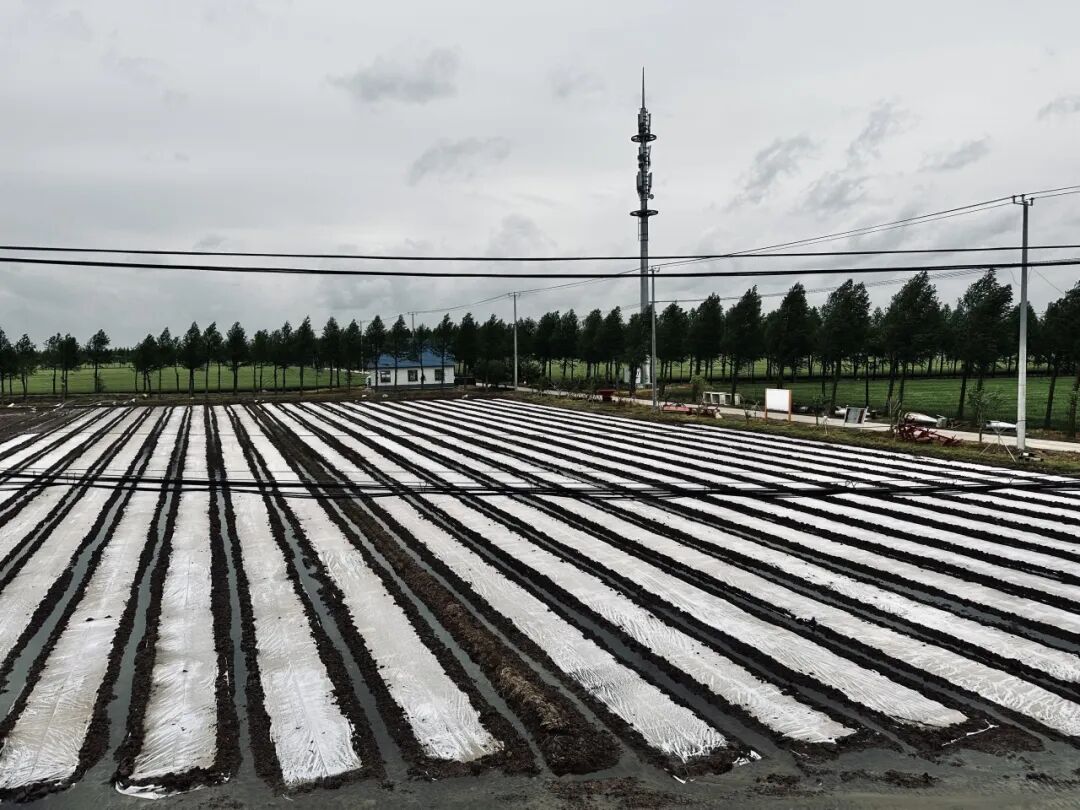
◉Rice fields in Qingzhou.
Not everyone who works the land receives support from “above”. More often than not, people rely on their own means of survival.
Sister Wei is exactly that kind of person.
Sister Wei began as a pastry supplier on “Qingzhou Flavor”. Everyone in the office was struck by her, given how active she was and how she was always reachable on her phone. Whether it was new product listings, after-sales support, or various last-minute notices, she was always quick to respond in the group chat. On many occasions, we would see no replies from other suppliers, leaving the entire WeChat group feeling as though she were the only one engaging.
Colleagues would often send me short videos, suggesting they could be re-edited for promotional use. You didn’t need to guess the source: they were all taken from Sister Wei’s WeChat Moments.
Once I added her on WeChat, I got a much clearer sense of her posting frequency. She would publish at least eight to ten updates on her Moments every day, featuring close-ups of products, nine-image grids from Kuaotuantuan sales pages, or short videos of around fifteen seconds. Her range wasn’t confined to pastries either; every vegetable, cut of mutton, free-range chicken or duck, and hairy crab we stocked on “Qingzhou Flavor” was also available through her channels.
Sister Wei operated using a group-buy mini-program. In this model, suppliers handle stock, pricing and commissions, while group-buy leaders manage their own private traffic – essentially personal, WeChat-based sales networks – and share purchase links, earning a commission on every completed order. This channel does not rely on platform traffic, but rather on a leader’s ability to curate products and leverage personal influence. It was through this very system that Sister Wei’s agricultural produce business got its start.
In truth, Sister Wei has always been a naturally gifted salesperson.
Before she turned to agricultural produce, Sister Wei ran a maternity and infant goods store in Qingzhou for over twenty years, and was among the first wave of local traders to open a shop on Taobao. When the baby products market took a downturn around 2016, she kept her physical shop open but also joined Amway, travelling to unfamiliar cities like Shenzhen to build a client base, where she met with fair success.
Sister Wei truly possesses a natural sales instinct. Bursting with energy, she can talk at a rapid pace without pausing. Her slightly husky voice, coupled with a faint Jiangnan accent, works in her favour rather than turning customers off.
The real catalyst for her move into selling farm produce was the 2022 city-wide static lockdown. With everyone confined at home and unable to get hold of food, Sister Wei suddenly realised that she had an abundance of local produce right at her fingertips: her cousin runs a 100-mu nursery with free-range chickens roaming beneath the trees; another cousin grows pears and peaches; a third cousin bakes Qingzhou cakes… These relatives all became her suppliers.
Sister Wei joined more than fifty local WeChat groups in quick succession, sharing the link to the group-buy mini-program in each. The reach extended to over forty housing estates around her home town. To this day, she “knows exactly where each estate is with her eyes closed,” as she has personally delivered the orders herself.
It was also through these WeChat groups that Sister Wei met our sales representative, Mr Pu, and subsequently became a supplier for Qingzhou Flavor. Pastries, fresh produce, mutton—she gradually added all the local goods she sold to the platform. She estimates the revenue it generates accounts for just five per cent of her total turnover. A modest slice, perhaps, but as a sharp saleswoman, she never overlooks a single potential channel.
This “natural-born saleswoman” also demonstrates a sharp product sense.
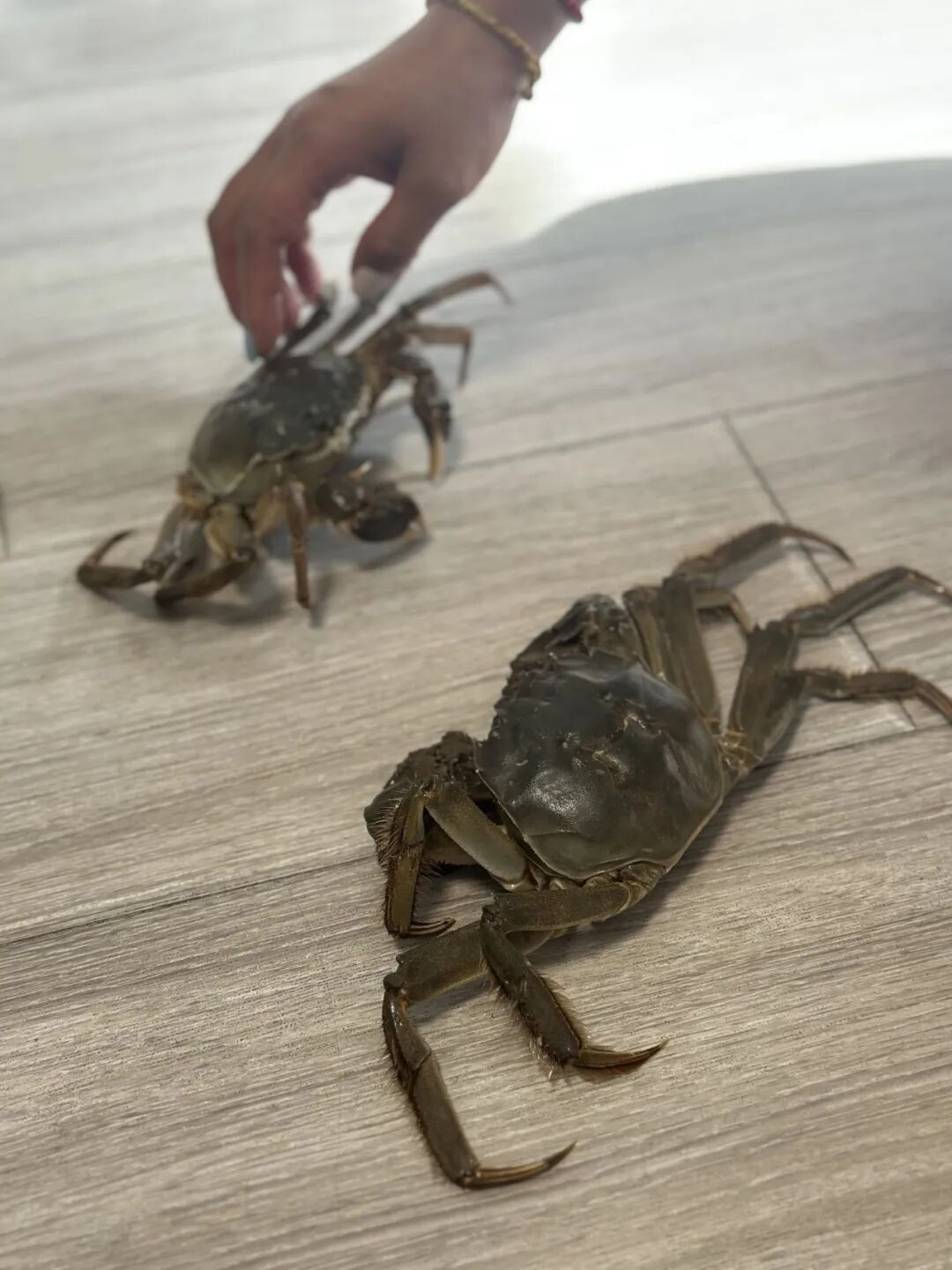
◉I visited Sister Wei, and she showed me the ‘imperfect crabs’.
Take hairy crabs, for example. Alongside the high-value gift boxes, Sister Wei lists a separate SKU on her own mini-program for “imperfect crabs” – crabs missing a leg that can’t be packaged for gifts. They are cheaper and better suited for home cooking. Whereas the official e-commerce platform has to maintain a polished, presentable image, Sister Wei’s channels are far more agile.
From our perspective, Sister Wei was hardly the ideal supplier. After all, she was already acting as a “middleman”, meaning her wholesale prices were on the higher side and product quality was difficult to trace back to the source. Yet she was remarkably nimble. The moment many products came into season, she had already sourced them ahead of us. She was also the most diligent in filling out our Excel new product form, which is largely why the partnership carried on.
It was only a year later, when I visited her operation in person, that I truly grasped the scale at which Sister Wei’s business was operating.
Sister Wei’s WeChat had nearly 9,000 contacts and eight dedicated customer groups, the larger ones holding three or four hundred members, the smaller ones well over a hundred. Beyond that, she had built a network of 181 downstream group-buy leaders. Through the mini-program’s “one-click reselling” feature, these leaders didn’t need to handle logistics or shipping; they simply had to promote items on their WeChat Moments to pocket commissions.
Sister Wei was essentially doing the job of an entire marketing department single-handedly: sourcing products, producing content, managing customers, running communities, and handling after-sales support.
By comparison, the membership figures and community size of Qingzhou Flavor paled in comparison to hers. Put more bluntly, Qingzhou Flavor was, in effect, one of Sister Wei’s own “downlines”. The platform-versus-supplier power dynamic I had taken for granted might well have been completely inverted.
Seeing Sister Wei’s operation in this light, I was struck, for the first time, by how much of what I had been involved in over the past two years amounted to little more than “playing house”.
We pored over the marketing calendar, designed a membership scheme, planned seasonal promotions, and celebrated when our official account article views went up by a hundred or two. Yet the people actually selling the produce did not rely on these systems. They built their business up, bit by bit, through their own supply sources, personal connections, WeChat groups, and WeChat Moments.
We thought we were building a platform, but in truth, we were merely drawing on a sales network that others had long since established.
Two years into my tenure, the company’s shareholding structure shifted. The general manager, who had been seeking investment, was ultimately ousted by the new investors, stripped of his management duties in the process. The marketing department he had founded was then ordered to relocate to the controlling parent company’s offices.
It wasn’t long before Manager Kong resigned, followed shortly by Mr Pu.
Myself and two operations colleagues were left with barely anything to do. We’d publish one Official Account article a week, update the mini-program’s promotions every fortnight, and sit in the new office, feeling entirely invisible.
Yet it was also during this period that I began to pick up on the subtler shifts taking place.
In the district government’s work report for January of that year, the call was to “strengthen the development of the “Qinghe Three Brothers” regional public brand for agricultural products”. Yet, unlike in previous years, it made no mention of bolstering the mini-program platform “Qingzhou Flavor” alongside it. Our platform’s name had simply vanished from the official plans.
Did the company ever receive the government subsidies that year? I’m not sure. With the key decision-makers gone, would the District Agriculture Commission continue to back “Qingzhou Flavor”? I doubt it. The parent company, clearly aware of this, naturally stopped assigning any more staff to the project.
Half a year later, the rest of us followed suit.
To this day, “Qingzhou Flavor” has never been taken offline. Its Official Account profile still reads: “Official designated sales platform for the Qingzhou regional agricultural public brand”. Yet the quiet, unspoken network that once kept it running is long gone.
While researching for this piece, I came across a more recent district government work report.
A year after we left, the report called for “intensifying efforts to develop and promote regional public brands, while continuously expanding channels for agricultural product exhibition and sales”.
By the report issued two years after our departure, the phrasing had shifted again to “further developing the “Qingzhou Fresh Products” brand and platform”.
A familiar script plays out once more. As always, there’s a new generation ready to step in.
– This is Foodthink’s 825th original article –

Foodthink
Author
Frankie
Struggling to get by, writing occasionally.
About the Lianhe Creative Project
To better understand the present state of food and agriculture, and to encourage wider exploration of the complexities behind these issues, Foodthink has partnered with several charitable and media organisations. Across 2024 and 2025, we jointly launched the Lianhe Creative Project to support media creators and researchers in investigating the food and agriculture sector, providing funding to help them produce content for the public.
Following multiple rounds of interviews with the selection panel, the Lianhe Creative Project supported 18 creative projects in 2024 and 20 in 2025. Several of the funded pieces have since been completed and published:
A Cleaner Named Mei Just Wants a Proper Meal | The Worker’s Table
In Malaysia, Chinese Buyers Only Want Grade-A Durians
“Fake Meat” Driving Out the Real Thing: Herders, Dinner Tables, and Amazon
Selling Watermelons Guarantees Sweetness, Growing Them Guarantees Bitterness
Ma Lan in Shenzhen, With No Meal Buddy
Why Has the Sweetness of Childhood Faded?
Why Guizhou Cannot Live Without Sour Soup, and Sour Soup Cannot Live Without Guizhou
Who Drove the Wet Markets Away?
Will Fresh Food E-commerce Wipe Out Wet Markets?
When Drones Become the New Farm Tools: Who Defines “Scientific Farming”?
All images provided by the author.
All personal names, locations, brand names, and e-commerce mini-program names mentioned in this article are pseudonyms.
Editor: Auntie Xiong
Layout: Xiao Cun
Scan to donate and support original food writing.
▼

▼
Click the image to read related articles.
▼
Click any keyword to view more article collections.
Seeds|Ag Tech|Policy|Fermentation|Nutrition|Fruit|Fisheries|Events|Recruitment|Food Delivery|Wet Markets|Livestock|Food Talk|Sharing Sessions|Book Club|Harvest Festival|Smallholder Stories|Climate Change|Rural Development|Cooperative Economy|Urban Farmers|Food Safety|Digital Technology|Biodiversity|Pandemic and Food|False Solutions|Agroecology Internship Programme
Beijing|Hebei|Shanghai|Guangdong|Guangxi|Henan|Sichuan|Jiangxi|Xinjiang|Shaanxi|Hong Kong|Chongqing|Zhejiang|Jiangsu|Guizhou|Northeast China|Taiwan|Inner Mongolia|Philippines|Canada|Russia|Mexico|Italy|United States|United Kingdom|Germany|Netherlands|Thailand|Sweden|Japan