A Month Planted in the Taihang Mountains

After a period of work in a first-tier city, I soon quit and decided to return to the village. Perhaps it was because I had come to realise that city life meant living perpetually inside a cubicle in a steel forest — a way of life not everyone can adapt to.
Beyond the eight-hour punch-in workday and eight hours of sleep, what most quietly drained me was the commute and the food — mostly takeaways. Day after day, I felt perpetually exhausted. Something about life felt off. So in May, through Foodthink’s internship programme, I came back — back to the mountains, back to the village. As an intern, I arrived in Wangjinzhuang. From Shanghai to Hebei, it felt as though I had come full circle, returning to the land I trusted and relied on most.
Arriving in Wangjinzhuang
The shock and wonder a northern village holds for me came in wave after wave.
The moment I stepped off the high-speed train at Handan, I saw a northern spring for the first time. The air was filled with snow-like particles drifting everywhere — poplar and willow catkins, in fact.
I had not yet reached Wangjinzhuang that day. My first meal was at the home of Sister Fang, who had been sent by the Hebei Shexian Dryland Terraced Field Conservation and Utilisation Association to pick me up. She had prepared minjie noodles, a dish quintessentially local. What makes this noodle most distinctive is that coarse grain is treated as fine cuisine: ordinary mixed-cereal flour is pressed through a specially crafted minjie board to form delicate strands. Sister Fang also added various beans and other touches in keeping with local tradition. In her hands, the coarse grains that grow abundantly in the region became a delicacy with a texture unlike anything I had tasted. For a southerner eating it for the first time, the meal was a revelation.
Thanks to the care of everyone at the association, over the course of that month I tasted my way through the local fare: minjie noodles, eggs scrambled with Sichuan pepper leaves, bean flour soup, bean rice, triangular sugar buns, scallion pancakes, and many more dishes I could not even name. The sweet potato I ate at Auntie Jingluan’s home was the sweetest I have had in my life. And the mantou of Wangjinzhuang — the first time I ate one, I assumed it was just an ordinary white-flour steamed bun, only to find it so dense that I had to chew hard before I could swallow.
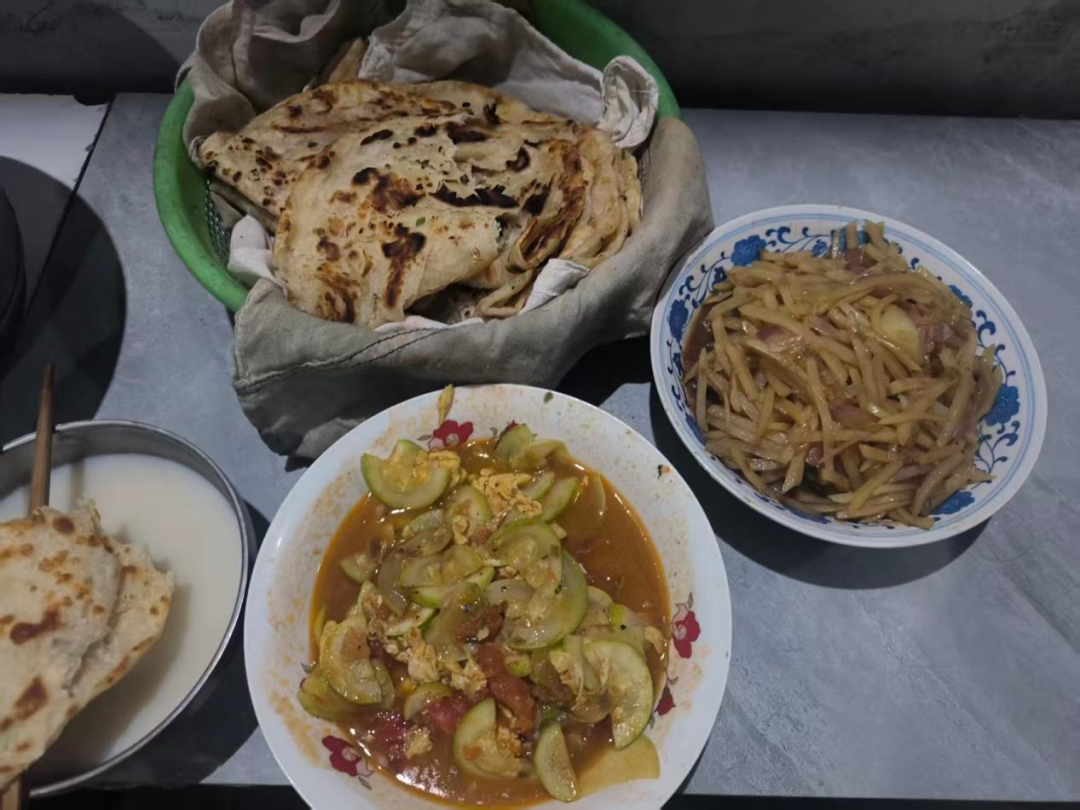
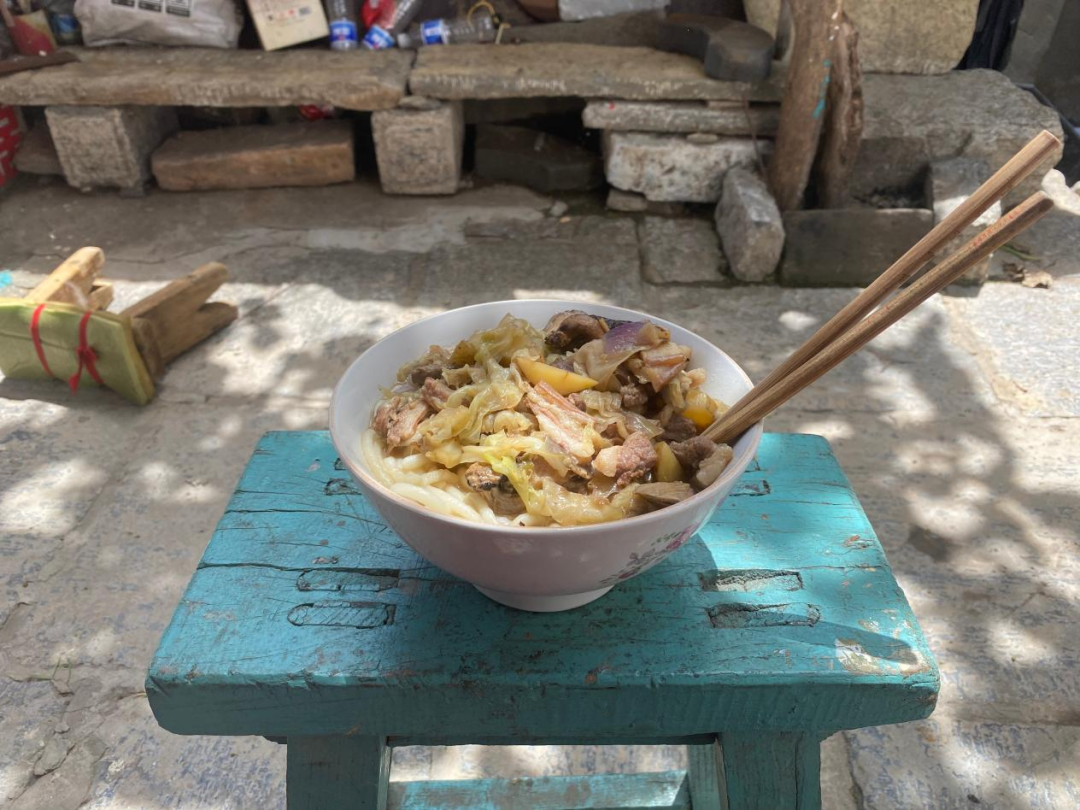
◉ In Wangjinzhuang, every meal is distinctly local.
In Wangjin Village, rice and flour are the most precious things. The local land is barren and water is scarce, making it difficult to grow wheat. Wangjin Village is a place of high mountains and abundant rock. To wrestle arable land from the mountains, the villagers — in an era before mechanisation — made use of what was at hand: piling up mountain stones to build the terrace walls, then filling them in with soil. Soil is more precious than gold here; when constructing the terraces, they even had to transport earth in from elsewhere. This is a miracle wrought by the people of Wangjin Village — a modern-day version of the Foolish Old Man Who Moved the Mountains. The Dryland Stone-Banked Terraced Fields in Shexian County, Hebei Province, China, were inscribed by the Food and Agriculture Organization of the United Nations on the Globally Important Agricultural Heritage Systems list in 2022.
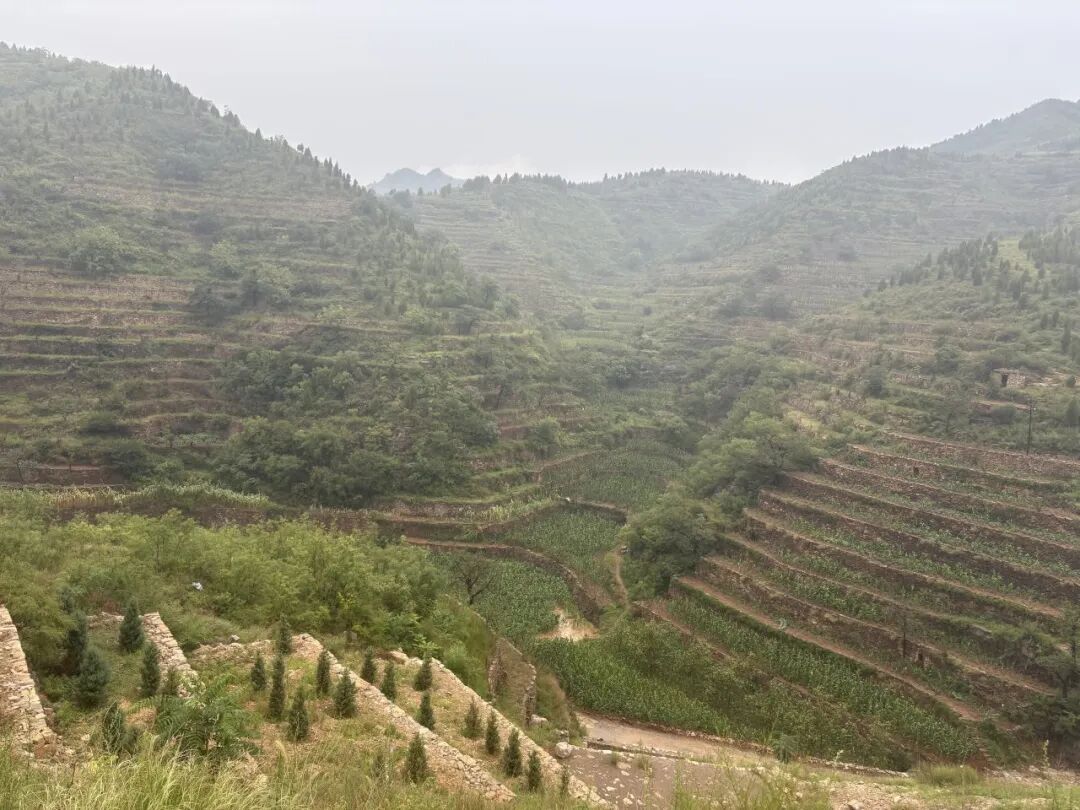
◉Terraced fields in Wangjinzhuang. Photo: Foodthink
Because of this, the cultivable terraced land is extremely precious, so villagers grow a variety of crops together on the same terrace, mostly coarse grains. As a rule, the centre of a terrace is planted with tall-stalked staples such as millet and maize, while rows of Sichuan pepper trees line the outer edges, with various legume crops sometimes interplanted between the trees. This “one field, multiple crops” approach is agricultural wisdom accumulated by local people over centuries.
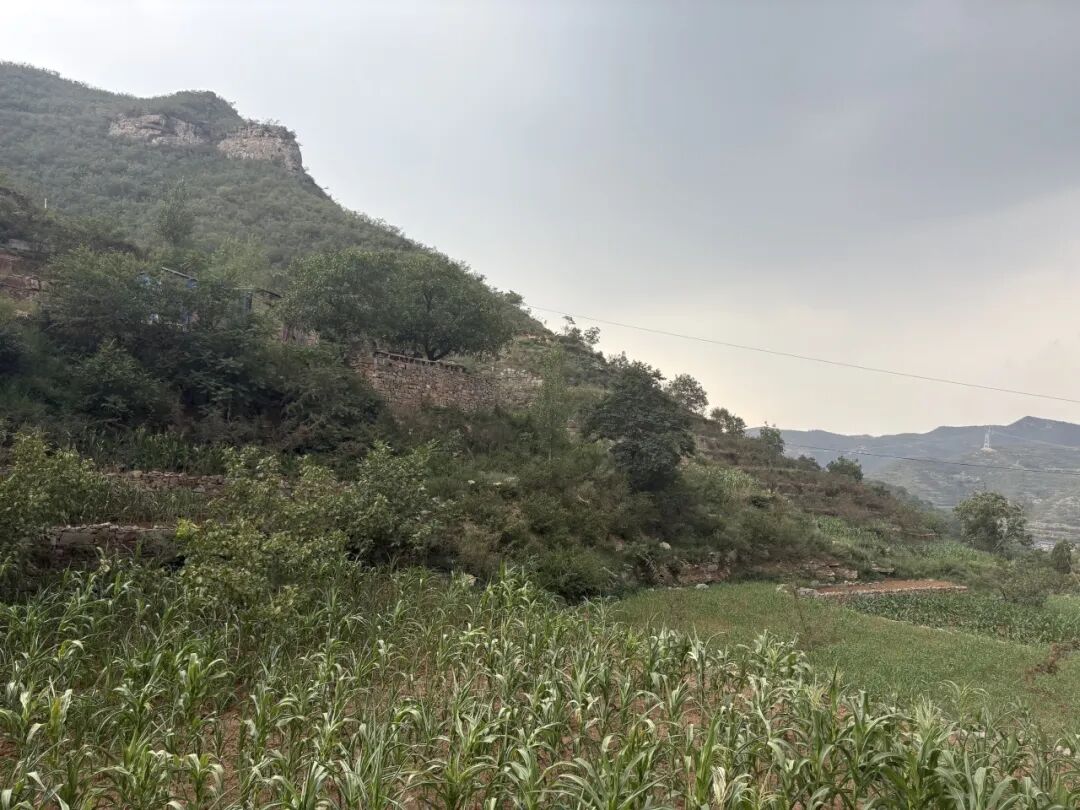
◉Maize planted inside the terraced fields, with Sichuan pepper trees on the outer edges. Photo: Foodthink
I always joke that I came at the wrong time of year. If I’d come in August or September, when the jujubes, beans, grapes, rice, and persimmons are all ripe across the mountain, that would truly be Wangjinzhuang at its best.
The eating habits here also carry traces of the hard years that came before. Protein comes mainly from beans; meat is eaten sparingly—not because they can’t afford it, but because they’re not used to it. When there’s field work to do, lunch is often a make-do affair: some dry rations and dried noodles to get by, and it might not be until dinner that anyone sits down properly for a real meal. But even so, they find all manner of ways to make coarse grains taste good.
The Wisdom of Storing Grain in the Land
The food in Wangjinzhuang is genuinely plain, yet genuinely particular. Those who have known poverty know what sustains life, and how to honour their grain. The villagers never use the word “organic” — they simply say the vegetables on the market don’t taste as good as what they grow themselves. When city people talk about “organic”, it is consumption. When they talk about “what we grow ourselves tastes better”, it is life.
There is a saying the villagers of Wangjinzhuang often repeat: no one ever starves here. At first I did not quite understand why. Only later did I learn that nearly every household stocks away several hundred kilograms of grain and crop seeds — like a policy of insurance on their lives.
The association has also set up a seed bank. Seeds for every crop grown on the terraced fields can be found there, all traditional heirloom varieties. Any villager who wants to plant a particular variety can come to borrow some. What is borrowed is returned, ensuring that seeds — the most fundamental thing of all — continue to circulate, be preserved, and carry on in the village. I once asked an older woman why she stored so much. She said they had been so poor for so long that the memory lingered; conditions are better now, but they still keep a little extra as a matter of habit. Whatever disaster or misfortune comes, the people of Wangjinzhuang will always find a way to survive. This wisdom sounds plain, but it is the most important thing of all.
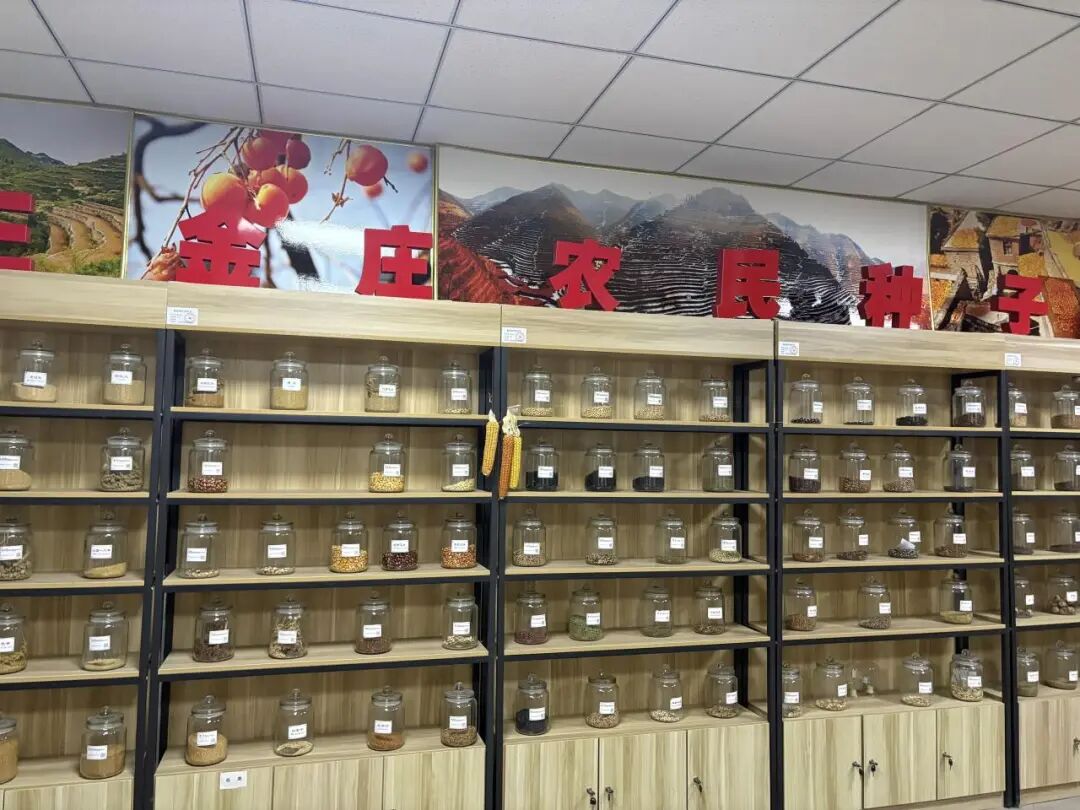
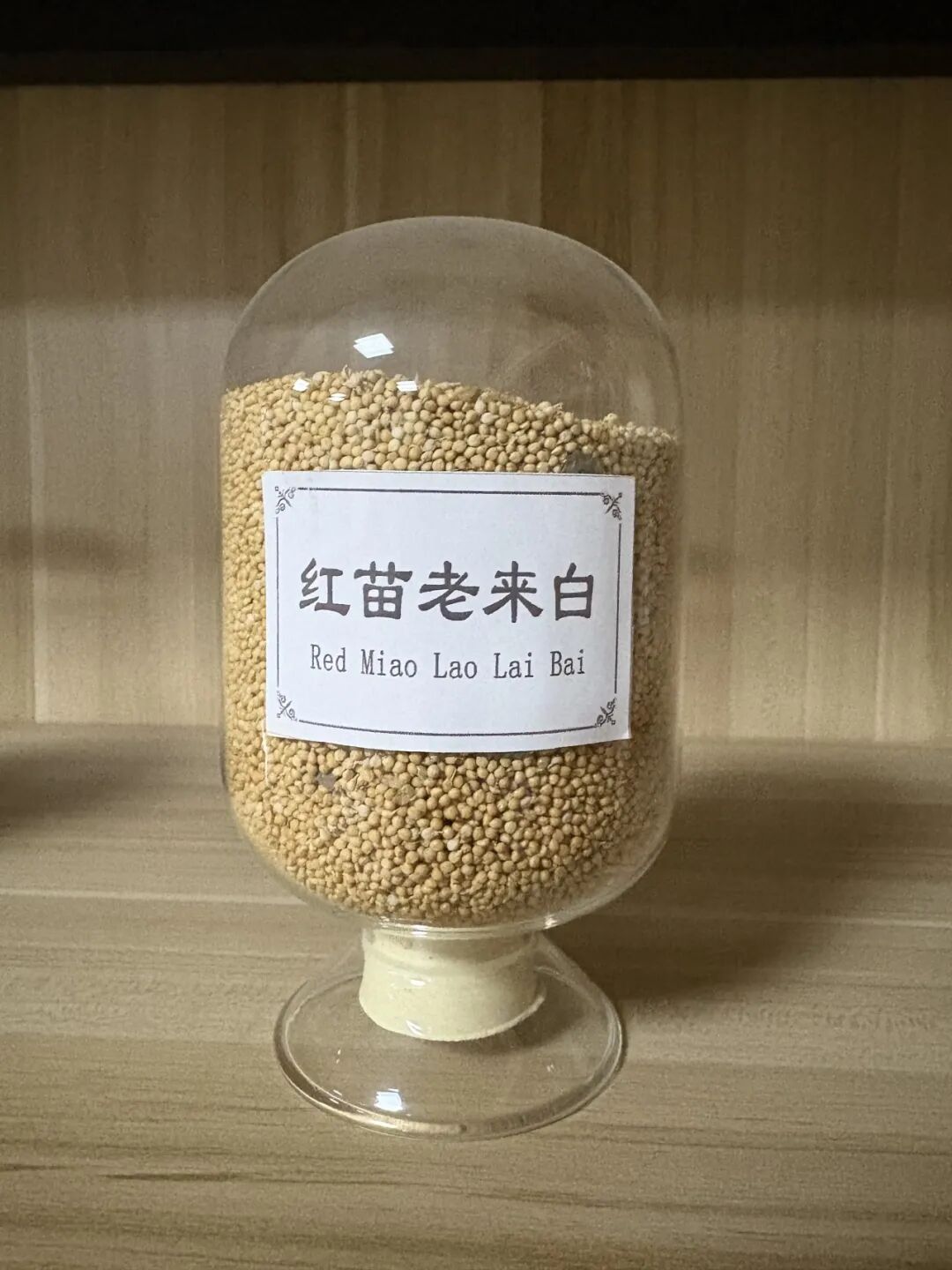
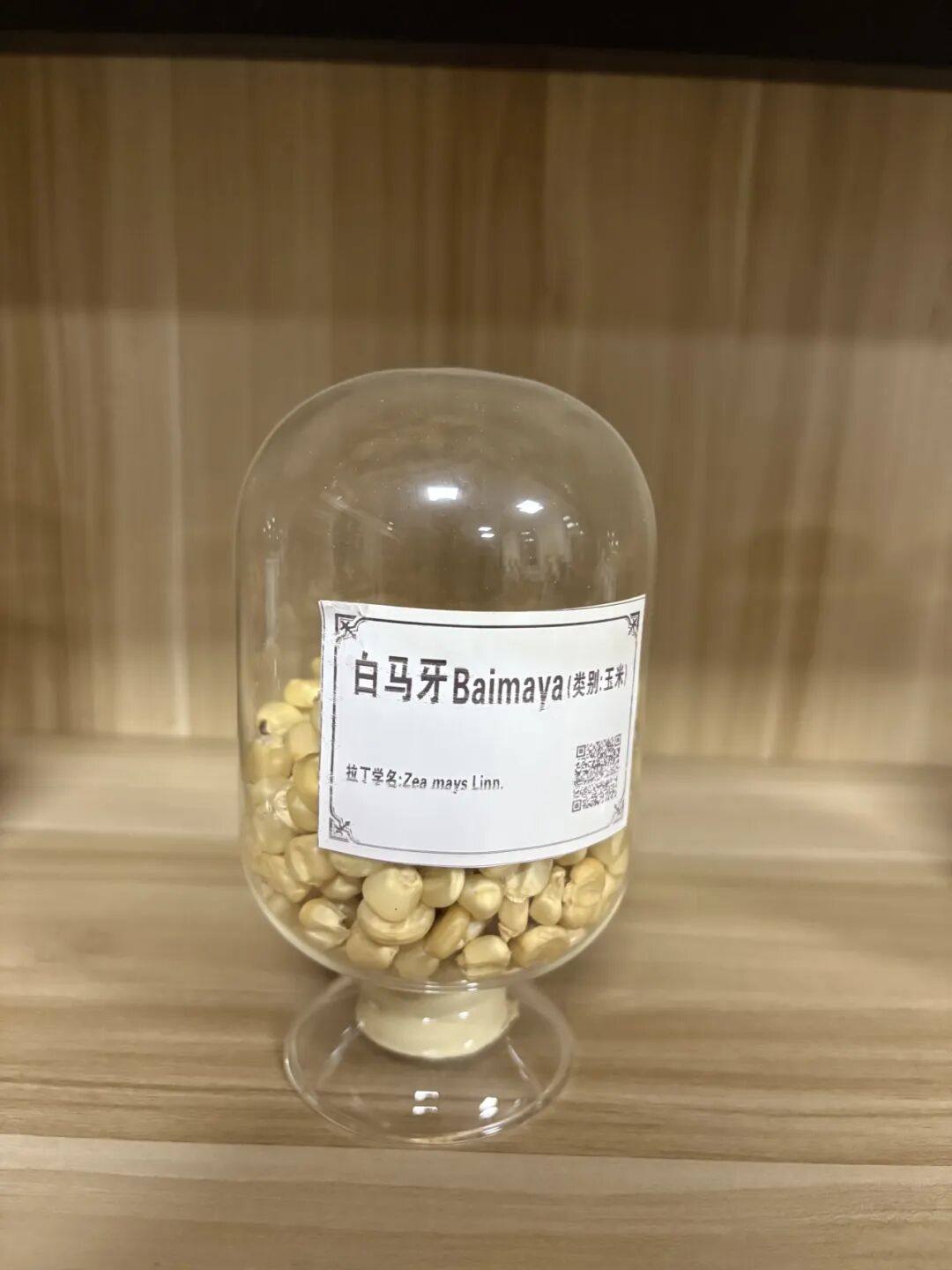
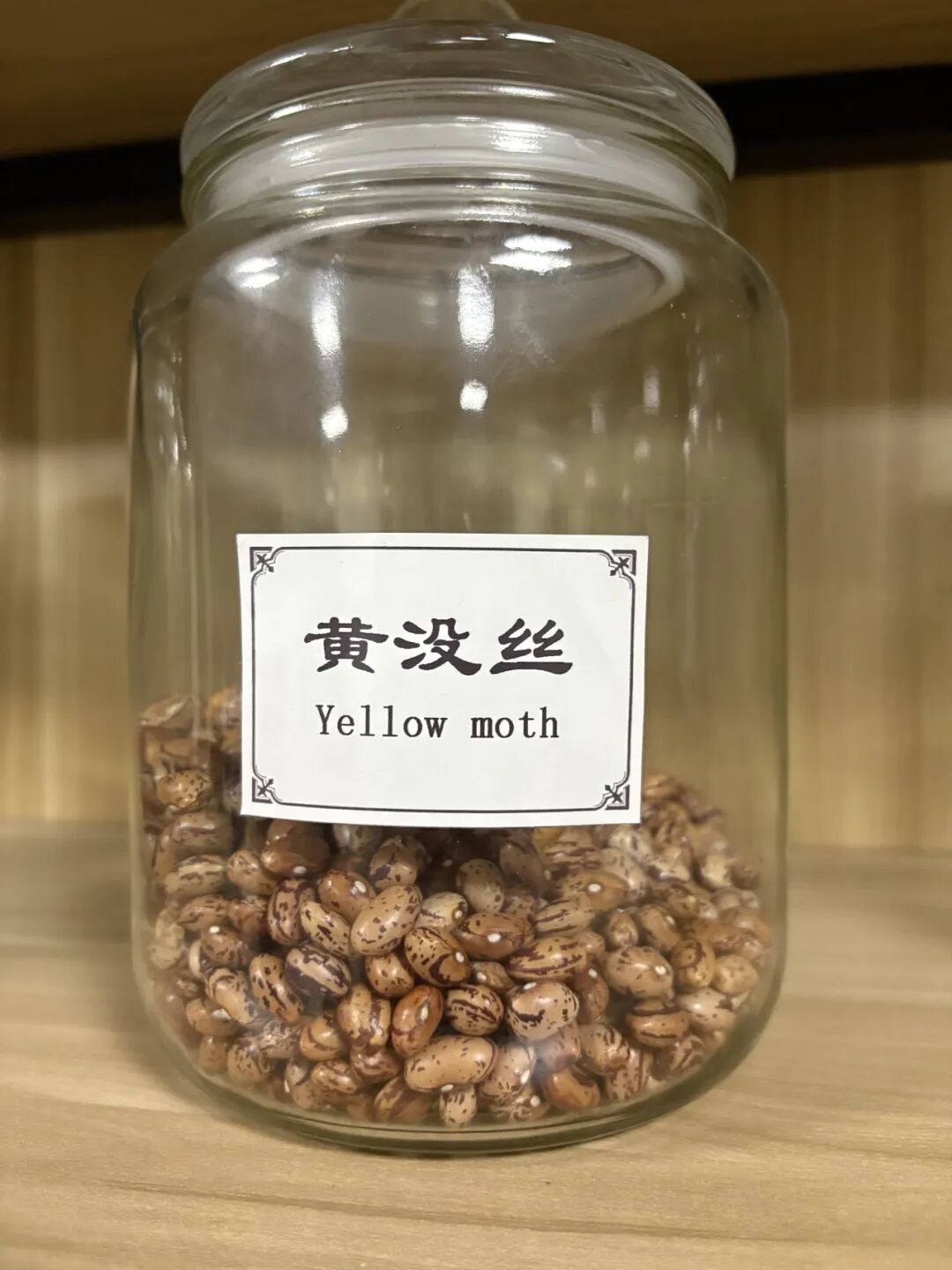
◉Wangjinzhuang has established a seed bank within the Terraced Field Association, preserving over a hundred heirloom varieties. Image source: Foodthink
To hold on to the foundations their ancestors laid and to keep as much of their culture and heritage alive as they can, the association — self-organised by the villagers themselves — is exploring ecological farming, linking resources from within and beyond the village, and finding more ways to keep wealth circulating through this land and to sustain people’s lives.
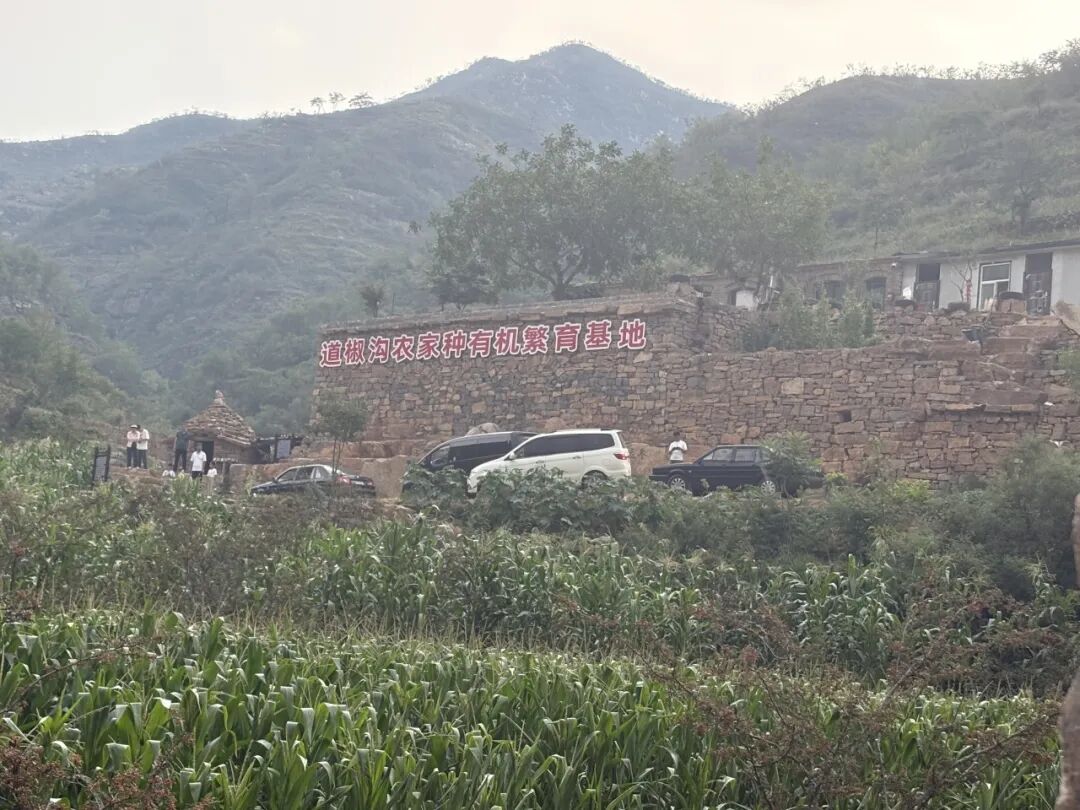
◉Wangjinzhuang has established a propagation base, aiming to develop local agricultural products through ecological farming methods. Image source: Foodthink
The Liveliness and Ease of Village Life
The wedding was the liveliest event I experienced in the village, and a feast like this is the scene that most directly embodies the warmth of human connection and the deep attachment to the land. Auntie Jingluan took me to her grandson’s wedding banquet, and I was happy to go. Weddings in rural Hebei are very different from those in the south — plenty of cold dishes, few hot ones. The spread is mostly platters of prepared meats, simply made pastries, and the most substantial one-pot stews. The dish that left the deepest impression on me was dried egg tofu tossed in peanut sauce. I can’t say whether it was good or not — it was just unique. I found the food everyone was eating quite novel.
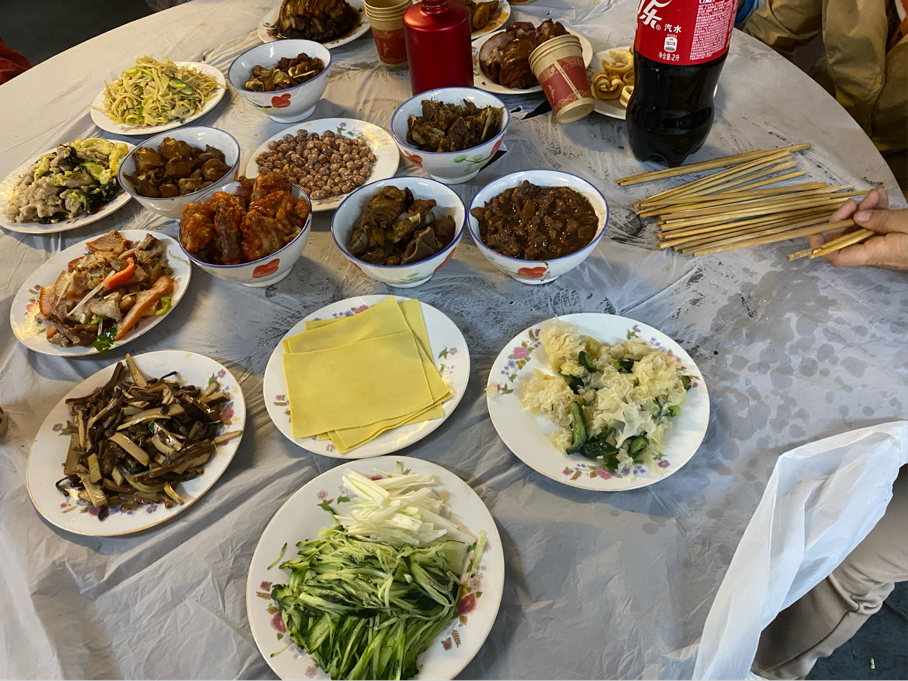
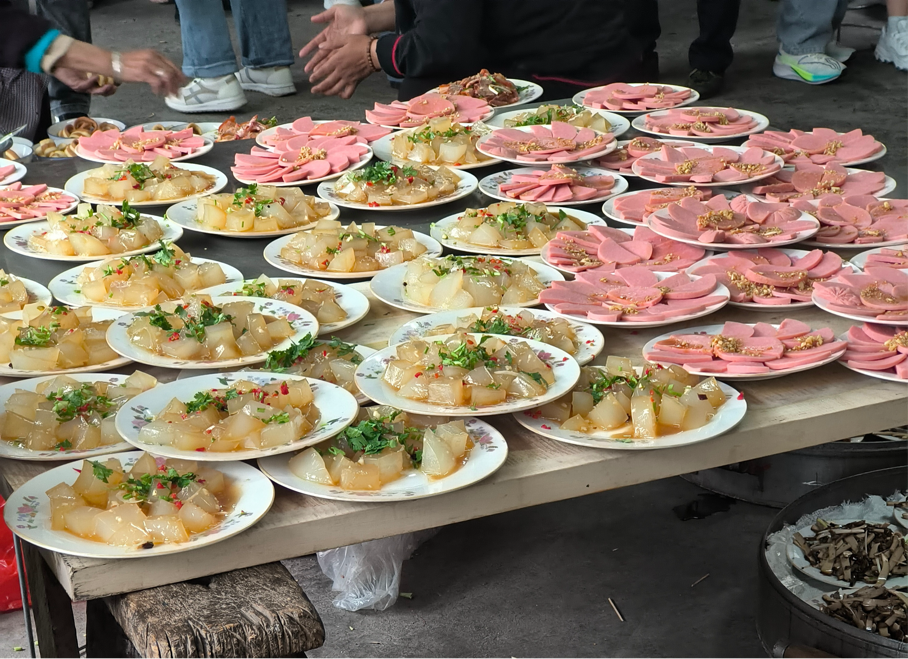
◉A wedding banquet in Wangjin Village.
Over the meal, I listened as the elders remarked on how the rich, down-to-earth folk customs have been steadily worn away by time and modernisation, especially since the pandemic. All the rituals surrounding weddings, funerals, and other life events have been pared to the bare minimum — what was once a three-day wedding banquet has now been trimmed to two.
Day one was the big day. It rained lightly, but a procession of young village wives followed the wedding car from the village entrance, drums and flutes playing all the way, the music echoing through the whole village. Day two was the thank-you banquet, put on specifically for the neighbours who had helped out on the first day but hadn’t managed to eat. I tagged along with Auntie Jingluan to freeload on the second day’s meal too. The light was dim and yellowish, everyone gathered round the table, drinking Congtai liquor, playing knuckle-rapping, and chatting — the atmosphere was wonderfully relaxed. Someone at the table told me the liquor takes its name from ‘Congtai,’ a Warring States–era ruin in Handan, and that it’s the most common and best-loved liquor in Wangjinzhuang.
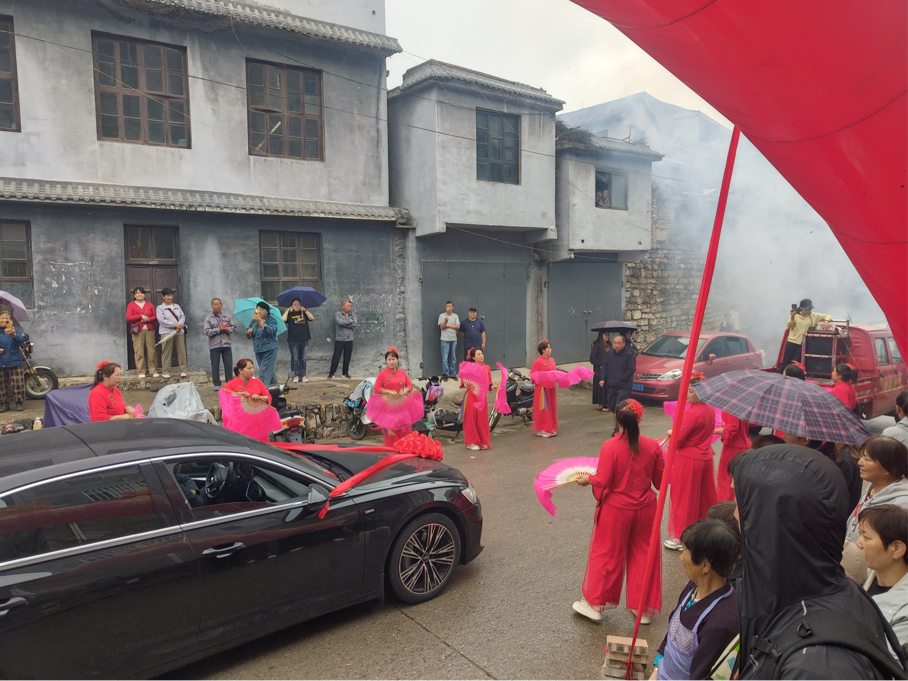
◉The wedding procession.
Mountain life has its own rhythm of tension and release. The hardworking villagers are not always caught up in the frantic rush of harvesting and planting. When rain makes work impossible, everyone stays home, watching television and having a chat. Wangjinzhuang on a rainy day is simply breathtaking. The village is built of stone, and when the clouds part and the rain lets up, mist drifts over the stone houses. At times like that, just sitting there and spacing out is the greatest pleasure of all.
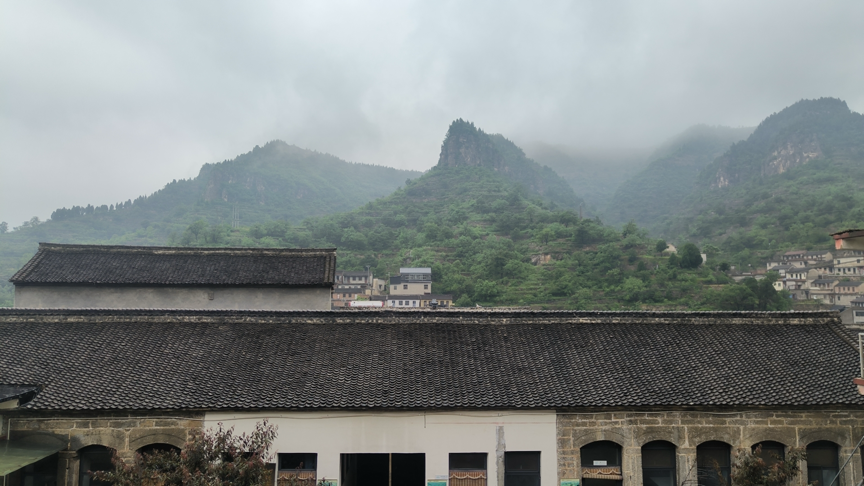
◉Mist and clouds shrouding the mountains.
Uncle Naiyuan, one of my interview subjects, was the first person I grew close to in the village. One day I followed him to the fields to look at the corn seedlings and caught a glimpse of his everyday life. As long as he was still in the village or not far beyond the entrance, he would acknowledge everyone he met on the road. They would exchange a few words in their local dialect — a simple greeting — and then hurry on. But if they crossed paths in the fields, there was always more to talk about. We came upon a woman, and the two of them, with a strip of terraced field between them, worked and chatted in equal measure. When the work grew tiring, they would simply settle down on the ridge, light a cigarette, and carry on. For Uncle Naiyuan, farming is a form of freedom — nothing like the old days of working for someone else, when even a rest had to be waited for by command. In the fields, he can rest when he wants, plant when he wants, and be content in the ease of it all.
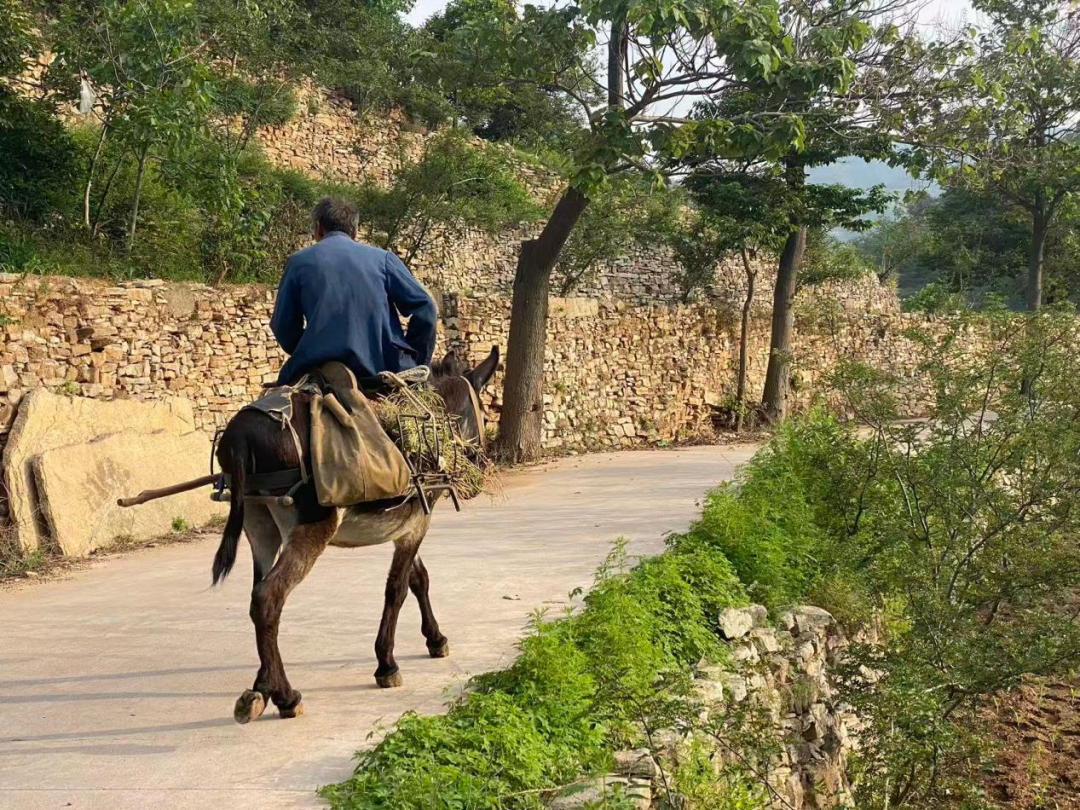
◉In the past, nearly every household in Wangjinzhuang kept a donkey. Travelling between the terraced fields and doing all manner of farm work was almost impossible without their help.
The People and Warmth of the Mountains
In Wangjin Village, doors left unlocked at night are the norm. The people here have little wariness of strangers; they smile the moment they see you. The older aunties especially love to take me by the arm and ask whose little girl I am, how old I am. Their appraising gaze is direct and warm.
The Terrace Association regularly hosts scholars of various disciplines, and I am often along for the ride. One time, walking past the Banqiao intersection, I spotted an old man crouched on the ground sorting through medicinal herbs he had just carried down from the mountain. We went over and chatted for a while. Sensing we might be interested in buying, he waved his hands quickly: “No, no, things from the mountains are not worth much.” With that, he got up and went back inside, rummaging out a few plastic bags. He filled a small one for each of us and explained that it cures insomnia. Strange as it may sound, I barely had a single night of insomnia in Wangjin Village. The land, the water, the mountains carry a kind of spirit—I used to be sceptical of that, but now I believe it.
As a village of over a thousand people, Wangjin Village’s daily life is actually quite scattered. Young wives doing odd jobs, children schooling in and around the village, idle and lonely elderly, young people working desperately to support their families—each lives their own life, yet they are all bound together. The warmth of rural life seeps through every little detail, at all times. Everyone carries the most generous, unpretentious heart: a neighbourly auntie I had met only a few times saw me buying skewers and offered to treat me; the shop owner who had helped me bring meat from the town did not charge a cent extra; the aunt who kept calling me over for dinner would find every way to cook me something good.
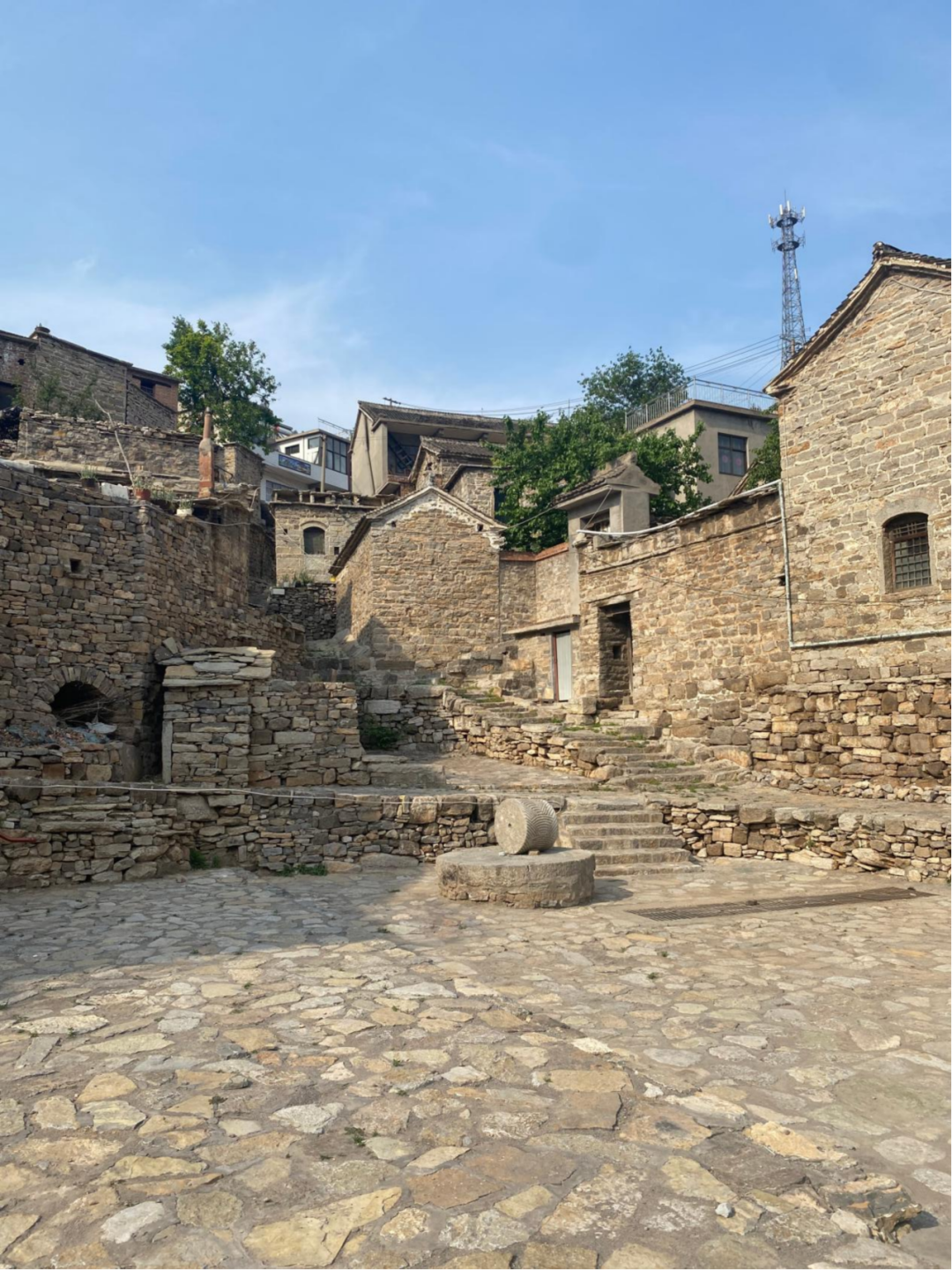
◉Wangjin Village is full of stone — the houses here are all built from it too.
The brief spell on the ground perhaps did not teach me much in the way of hard knowledge about ecological farming. But by choosing to observe and feel through the lens of ‘presence’—a perspective more natural to me—I touched something deeper. On this land, I felt not only the distinctive warmth of rural China but heard, as well, a call from the countryside.
For me, returning to the countryside is no longer just a short-term project; it has become more like a way of living that follows the heart. What I keep turning over is how to carry into the life ahead the kindness and calm Wangjinzhuang has given me, and the rhythm of a life with feet in the soil.
– This is Foodthink’s 843rd original article –
Foodthink
Author
Li Xiaoxiao
My jianghu name is Shuzi Xie Liuhai, though I don’t actually wear a side-swept fringe. These past few years have been a state of ceaseless drifting—I’ve been locked in a constant brawl with life. I hope that before this year is out, my creativity will have a proper outburst, and I can keep searching for the right place to take root: solid as the soil, lush as the crops.
Ecological Agriculture Internship Programme
‘Ecological Agriculture Internship Programme’ was initiated by Foodthink in 2021, aiming to support both young people keen to work in ecological agriculture and established ecological farms. The programme enables young people to acquire farming knowledge and skills through hands-on practice, to document and pass down the experience of seasoned farmers, while also channeling quality talent to farms and bringing vitality to rural communities.
To date, six rounds of recruitment have been completed, supporting over a hundred participants in undertaking farm internships of varying lengths—ranging from three months to a year—at more than ten ecological farms across the country.
All images in this article are by the author unless otherwise stated.
Edited by Xiaodan
Layout by Xiaoshu
Scan to tip and support original food knowledge
▼

▼
Click the image to read related articles
▼
Click on a keyword to explore more articles in that collection
Seeds|Agronomy|Policy|Fermentation|Nutrition|Fruit|Fisheries|Takeaway|Events|Jobs|Wet Markets|Livestock|Food Talk|Sharing Sessions|Book Club|Harvest Festival|Smallholder Stories|Climate Change|Rural Development|Cooperative Economy|Urban Farming|Food Safety|Biodiversity|Pandemic and Food|False Solutions|Ecological Agriculture Internship Programme
Beijing|Hebei|Shanghai|Guangdong|Guangxi|Yunnan|Henan|Sichuan|Jiangxi|Xinjiang|Shaanxi|Hong Kong|Chongqing|Zhejiang|Jiangsu|Guizhou|Taiwan|Inner Mongolia|Philippines|Canada|Russia|Mexico|Italy|United States|United Kingdom|Germany|Netherlands|Thailand|Sweden|Japan