Fake Truffles, Real Underworld | Mushroom Pickers Host a Book Talk

The “Diamond” of Fine Cuisine
The truffle is a rare and precious fungus, ranked alongside foie gras and caviar as one of the “Three Great Delicacies” of Western cuisine.
This fungus typically grows in symbiosis beneath pine, oak, and hazel trees, and its requirements for growing conditions are exacting. At the White Truffle Fair in Italy, freshly shaved truffle slices cost 3–4 euros per gram; in the United States, they can fetch up to $3,000 per pound. In 2007, a 3.3-pound white truffle was purchased by a Macau casino magnate for $330,000.
One source of the high price is the truffle’s distinctive and enigmatic aroma. For the white truffle, the late food writer Josh Ozersky once described it thus: “a blend of freshly ploughed earth, autumn rain, earthworms burrowing in the soil, and vivid memories of lost youth and old loves.”
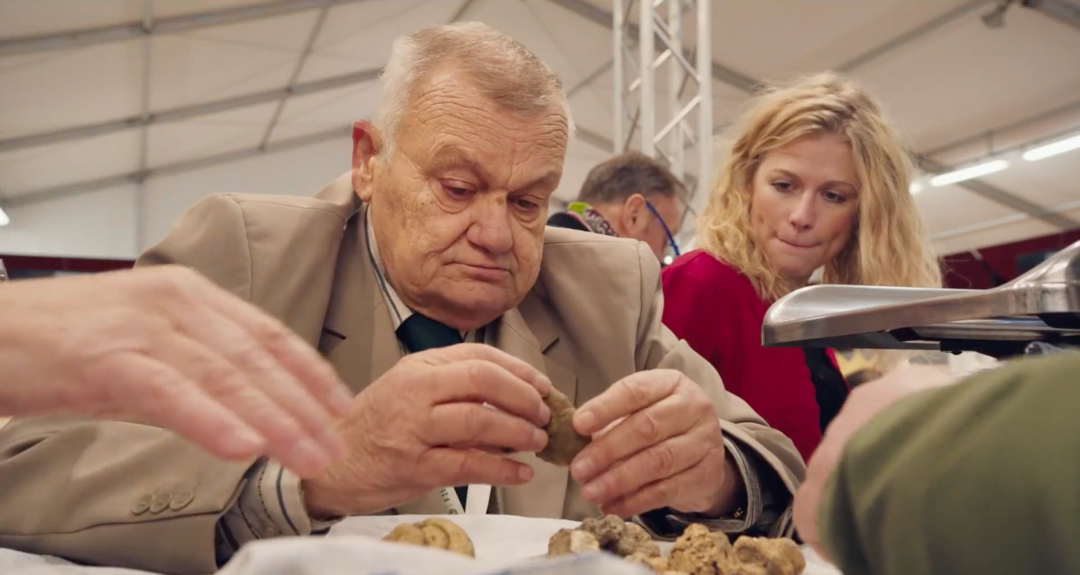
◉At the auction, experts sniff truffles. Source: the documentary Truffle Hunters
Whether this was yet another tale spun by the top tier of the food industry, or a genuine and profound experience on the palate, this global pursuit of truffle aroma had captivated American food writer Ron Yakubson. He decided to ‘figure it out’ once and for all.
This veteran food writer travelled to six countries and wrote *Truffle Tracks: The Science, Culture and Secrets Behind a Top-Tier Ingredient*. He witnessed the vast global supply chain behind truffles and its complex cast of players: the most acute truffle hunters, large-scale truffle companies (such as the Urbani family enterprise, with operations around the world), local oligarchs whose connections reach the highest levels and who control the forests, former coders turned farmers, dedicated mycorrhizal biology researchers, the organisers of dozens of bustling truffle festivals, and pedigreed dogs competing in championships in the winter rain…
He also discovered that although aroma is the truffle’s most celebrated soul, when buyers grade and price the most expensive white truffles, they assess only appearance (large in size, unchewed, capable of being shaved into thin slices). Aroma is never a factor they consider.
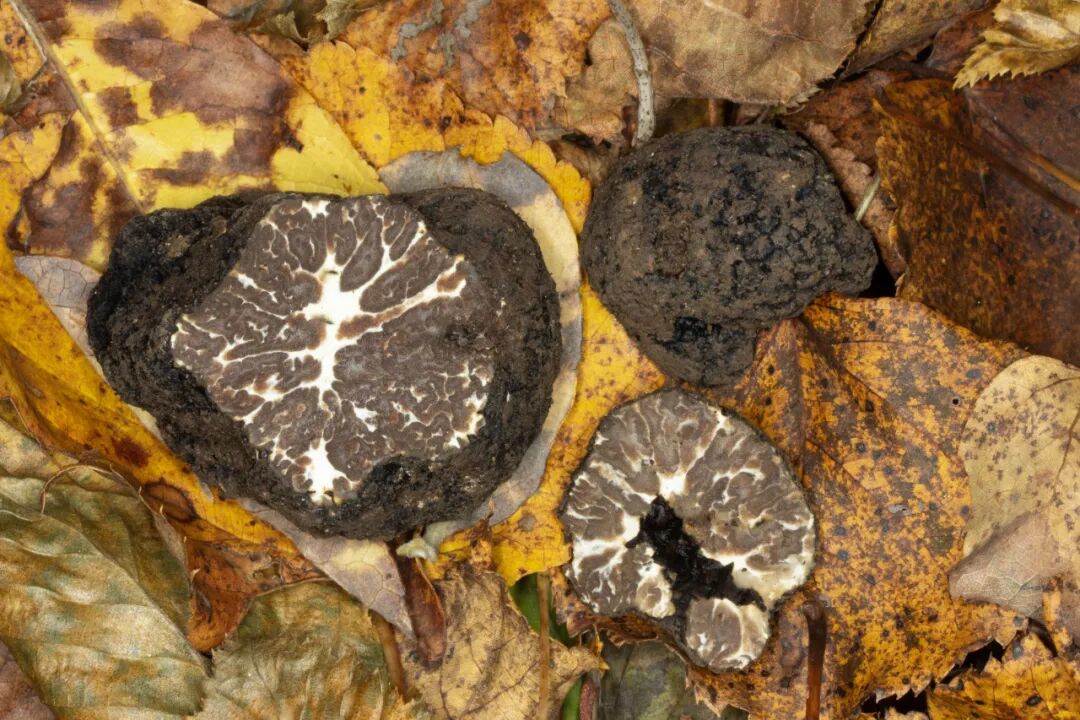
◉Burrumal truffles. Image source: Truffle
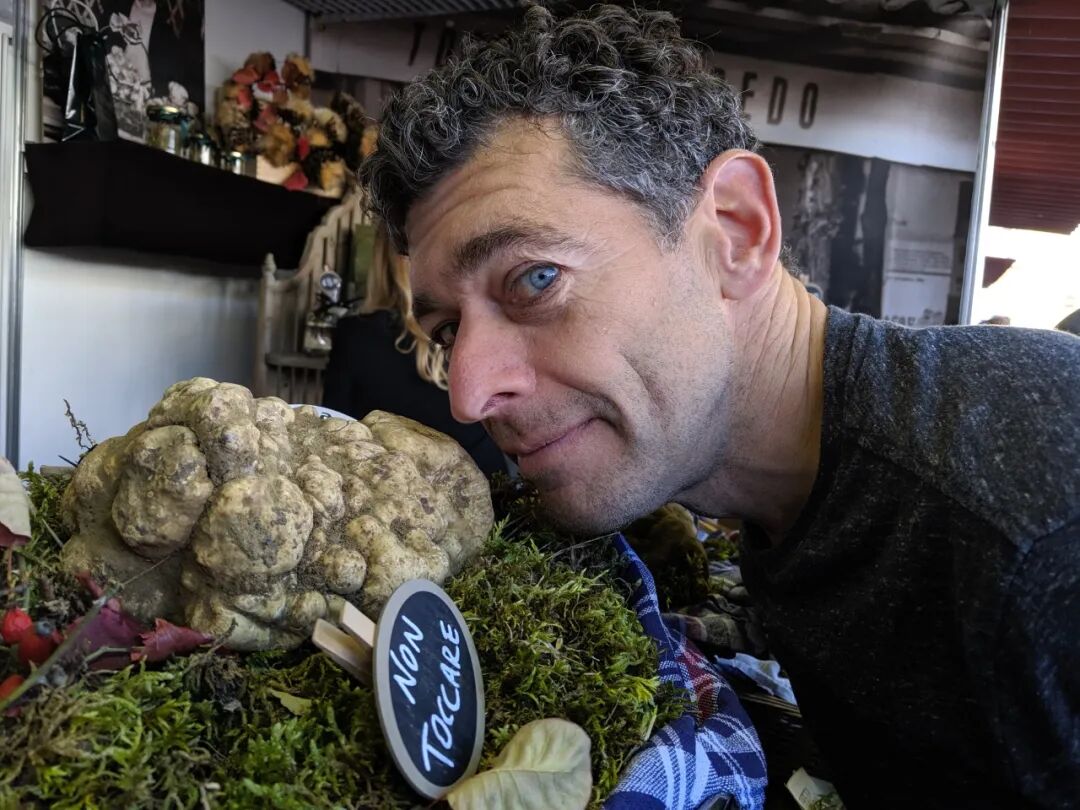
◉Ron Yakubson, author of Tracking the Truffle, posing with a massive truffle weighing 1,143 grams at the Acqualagna National White Truffle Fair. Image source: Tracking the Truffle
By September, the wild mushroom season is gradually drawing to a close, while truffles produced in China are reaching full ripeness. This globally renowned ‘food diamond’ has, in fact, long been closely linked to both small-scale gatherers and major merchants across China.
As reported by Jiemian News, over the full year of 2023, China exported a total of 32,486 kilograms (32.5 tonnes) of fresh or chilled truffles (Tuber species), exceeding the 20,486 kilograms of 2022 and reaching a historic high. On the question of price, however, Yunnan black truffles average just $82 per kilogram — only one-ninth the price of French black truffles at $721 per kilogram. It is understood that over-harvesting, declining quality, and a damaged international reputation are all weighing on the price of Chinese truffles. Following destructive extraction, Yunnan’s natural truffle yield once plummeted from 1,200 tonnes a year to around 250 tonnes — an 80 per cent drop.
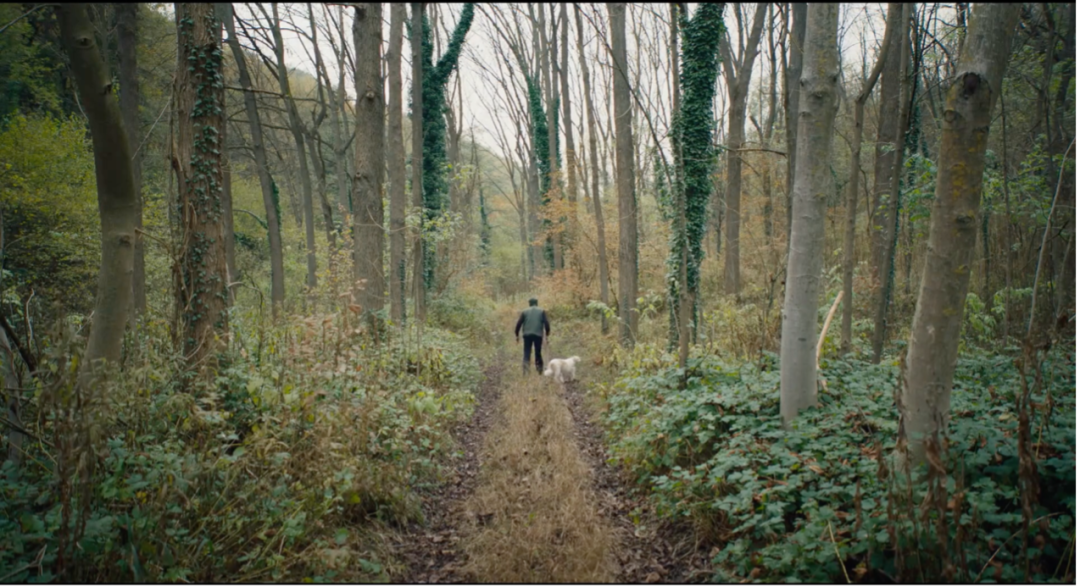
◉ In the documentary The Truffle Hunters, an elderly Italian truffle hunter with his beloved hunting dog. Source: online streaming platform
Junjun is the convener of the Slow Foraging Network and a writer for Foodthink, with a long-standing focus on the sustainable harvesting of wild mushrooms. He learned that in recent years, with rising tariffs, Chinese truffles have become particularly difficult to sell. One import-export trader told him that his cold storage still holds black truffles from a decade ago.
What determines which truffles are considered more premium and command higher prices? And which companies are driving and shaping China’s black truffle exports?
These questions are also addressed in the book <em>Truffle Tracks</em>.
Chinese Truffles Passed Off as Premium
*This section is excerpted from Chapter Five, “Tricks and Deceptions,” of <em>Truffle Tracks</em>. Thank you to Commercial Press for the authorisation.*
The tragedy of the truffle is that the sensory thrill this subterranean marvel once provided has been commodified, becoming a symbol of luxury in the mass market. Truffles are always compared to diamonds, and I don’t think that’s a coincidence: glittering diamonds, too, are things hidden underground, so closely linked to price tags that the original thrill has become almost irrelevant.
The De Beers of the truffle industry (the South African diamond-mining monopoly founded in 1888) is the Italian giant Urbani Tartufi, which controls roughly three-quarters of the global truffle market. Or at least that’s what Urbani Tartufi claims—and no other company can demand proof. People in the truffle business are not particularly good at keeping records.
In the mid-nineteenth century, the Urbani family began purchasing truffles from local hunters in Umbria and exporting them to France, where truffle consumption had already outstripped the supply from domestic hunters. At first, the transactions involved only fresh truffles, but Urbani Tartufi quickly adopted canning and bottling to overcome the challenges of transport. The company expanded relentlessly, employing ever more buyers to acquire truffles from hunters across Italy and France and sell them worldwide. It even acquired Tartufi Morra, the Alba truffle company founded by Giacomo Morra.
Urbani Tartufi is now led by Olga Urbani, great-great-granddaughter of the company’s founder, Constantine Urbani. To get a sense of Olga, simply watch the 60 Minutes television feature on the company. The twelve-minute piece is dripping with flattery, packed with every rumour mentioned in this book, and the dialogue reads as though it were written by Dr Seuss: ‘Trafficked like drugs! Stolen by crooks!’ Tanned dark, with jet-black hair, clad in a sumptuous fur coat and black leather gloves, Olga stands in a truffle field, talking at length. She looks as though she has walked straight off the set of the latest Bond film, playing the mastermind behind Spectre. It is not hard to see that Urbani Tartufi represents the image most people conjure when they think of truffles: luxury, decadence, old-world Europe, and above all, money.
Urbani Tartufi’s reputation as the Spectre of the truffle world was cemented in the 1990s, when two species of Chinese truffle — the Indian truffle (Tuber indicum) and the Himalayan truffle (Tuber himalayensis) — began appearing in international supply. These two Chinese truffles have a mild flavour. However, if they are mixed into black winter truffles in transit, or blended into packaged products laced with synthetic truffle oil, they are very difficult to distinguish. (Himalayan truffles are visually almost indistinguishable from black winter truffles. An experienced Italian truffle hunter told me to score the skin to check: beneath the skin of a black winter truffle there is a thin layer of brown, whereas the Himalayan truffle is jet black throughout.)
These two species grow at high altitudes in Yunnan, Sichuan, and Tibet. Once mature, they carry a mild aroma. They had never attracted attention in China, but once their export value was discovered, they were immediately dug up madly with rakes, hoes, and ploughs rather than dogs. The truffles were entirely unripe, but they were perfectly suited to shipping, which was what mattered most to buyers. Unfortunately, this practice caused severe damage to the soil — sometimes down to a foot deep — and would often destroy the mycelium that produces the truffles.
In the 1990s, Chinese truffles fetched around twenty-five dollars per kilogram on the open market — a fraction of the price of black winter truffles — so, as many observed, they were being mixed into black winter truffles. The margins were extraordinary, but the practice was illegal in Italy, where the import of Chinese truffles was strictly prohibited.
For years, rumours had persisted that Urbani Tartufi was involved in the Chinese truffle trade. In 1998, Italian police raided the company’s warehouse in Umbria and seized forty-seven tonnes of Chinese truffles, confirming the rumours.
Forty-seven tonnes! Let that sink in. France, the spiritual home of the black winter truffle, produces less than thirty tonnes of them per year across the whole country. And with a single, casual search of Urbani Tartufi’s warehouse, forty-seven tonnes of a black winter truffle substitute were uncovered.
According to testimony, Urbani initially blended Chinese truffles into black winter truffles at a three-to-seven ratio, but later grew greedier and more reckless—much like the plot of Goodfellas, the 1990 American crime biographical drama based on the true story of mob figure Henry Hill, chronicling his legendary thirty-plus years in the criminal underworld and the distinctive lifestyle and values of the people who inhabit it. The company paid a substantial fine, yet everyone escaped prison—until 2001, when they were convicted of evading millions of dollars in taxes. Even so, all Olga’s father Paolo had to do was wear an ankle monitor and pace around his mansion for a while.
To be fair, Urbani Truffles have been on the up and up since 2001. They have promoted truffles around the world, giving more and more people the chance to enjoy them. There is nothing wrong with that in itself. It is just that the business has grown so large. The unfortunate truth is that whether your product is caviar or cornflakes, once it becomes a big business, it turns into the company’s signature item, and all you can think about is how to make it a more profitable one.
If any food can resist this trend, it might be the truffle; each one represents a moment of grace between the truffle hunter and the dog. For these intensely flavoured spheres, provenance and authenticity ought to be an integral part of their uniqueness. Yet because white truffles are a wild food, hunted in secret and traditionally sold through informal networks, the stories behind them have been as scarce as the people in witness protection programmes. They simply materialise at the back door of restaurant kitchens, handled by big companies, small companies, and whoever happens to be dealing in them. Somehow, the farm-to-table revolution has transformed nearly every aspect of cooking and food, yet it has bypassed truffles entirely. Between the Carlo Marendas of the world and the restaurants and fairs where these truffles turn up, there is a vast black box.
This strikes me as strange. A chef who can spot an inferior sea urchin from twenty metres away — would they really be fooled by a fake or second-rate truffle? I don’t know. I have never been in the truffle business.
…
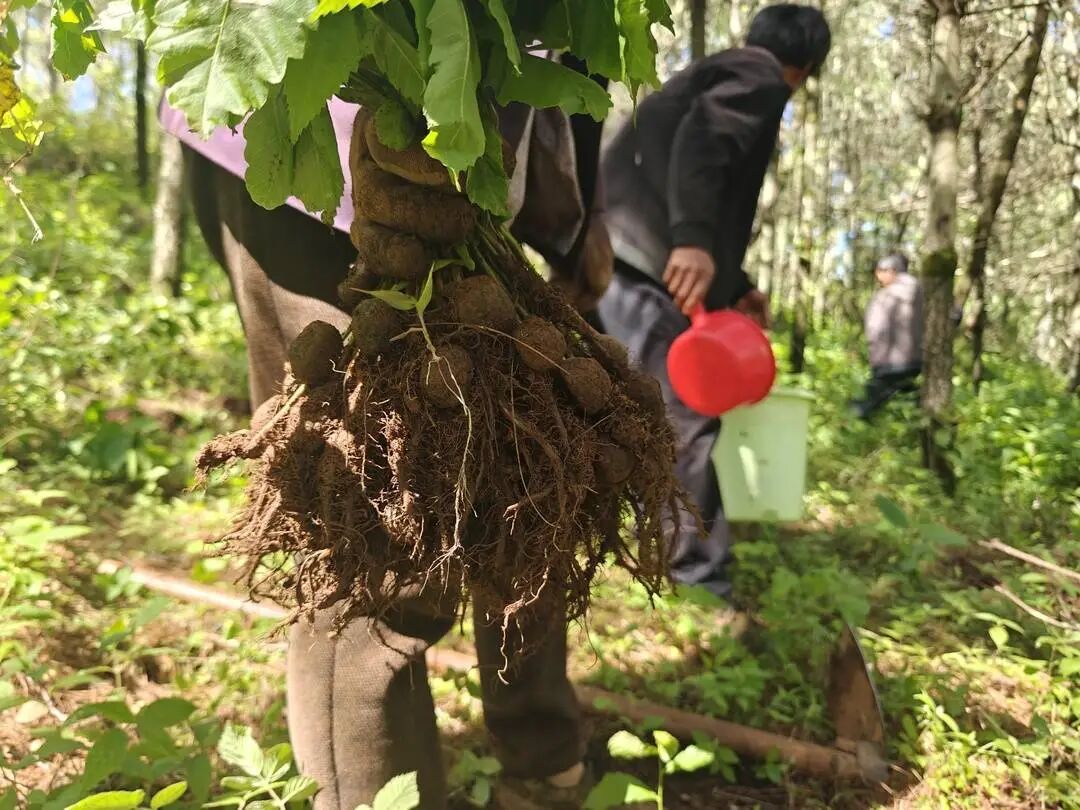
◉From 2025, Huidong County in Liangshan Prefecture, Sichuan, China, is also attempting to cultivate truffles artificially. Villagers first infect tree roots with truffle mycelium, then transplant the saplings to cultivation sites. Image source: The Cover News
No Truffles in Truffle Oil
The book also contains some other lesser-known facts of particular relevance to consumers, such as:
There are no truffles in truffle oil, just olive oil laced with a synthetic chemical compound, diethyl tetrathiasulfur. Even chefs are easily fooled: “they rarely have the opportunity to know ingredients the way the people who sell them do.” (Chapter 5, “Deceptive Tricks”)
“Any truffle loses most of its precious aroma during the canning process. The scent is provided by diethyl tetrathiasulfur and other chemical compounds, which is exactly the flavour most consumers prefer, much as they prefer artificial strawberry flavouring over the taste of real strawberries. There is therefore no need to use any real truffle at all to make your product smell the way customers expect.”
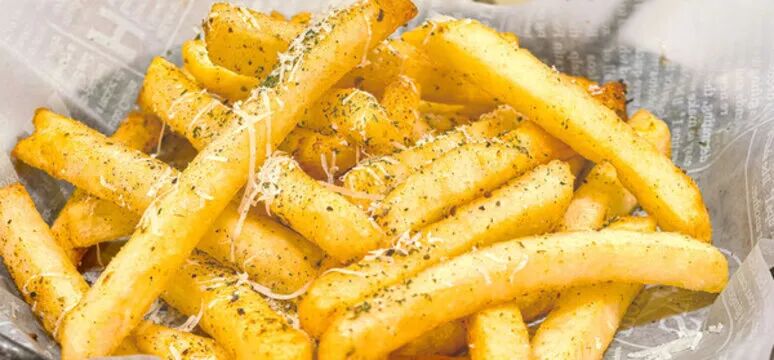
◉In common truffle products such as truffle chips and truffle butter, the aroma comes from chemical compounds rather than the truffle itself. Image source: Huitu.com
Most truffles end up frozen and canned. Only a small quantity of top-grade truffles can be sold fresh at a premium. This is the black summer truffle — not the black winter truffle, which has a more intense aroma and commands a higher price. The black summer truffle is so abundant (the author likens it to something as common as dirt) that it has paradoxically become the favourite of large truffle companies. It was the black summer truffle that displaced Chinese truffles on the Italian market. With large-scale dumping from countries such as Iran and Bulgaria, the price has continued to fall, dropping from 200 euros per kilogram to 30–40 euros. (Chapter 6, “The Big Truffle Companies”)
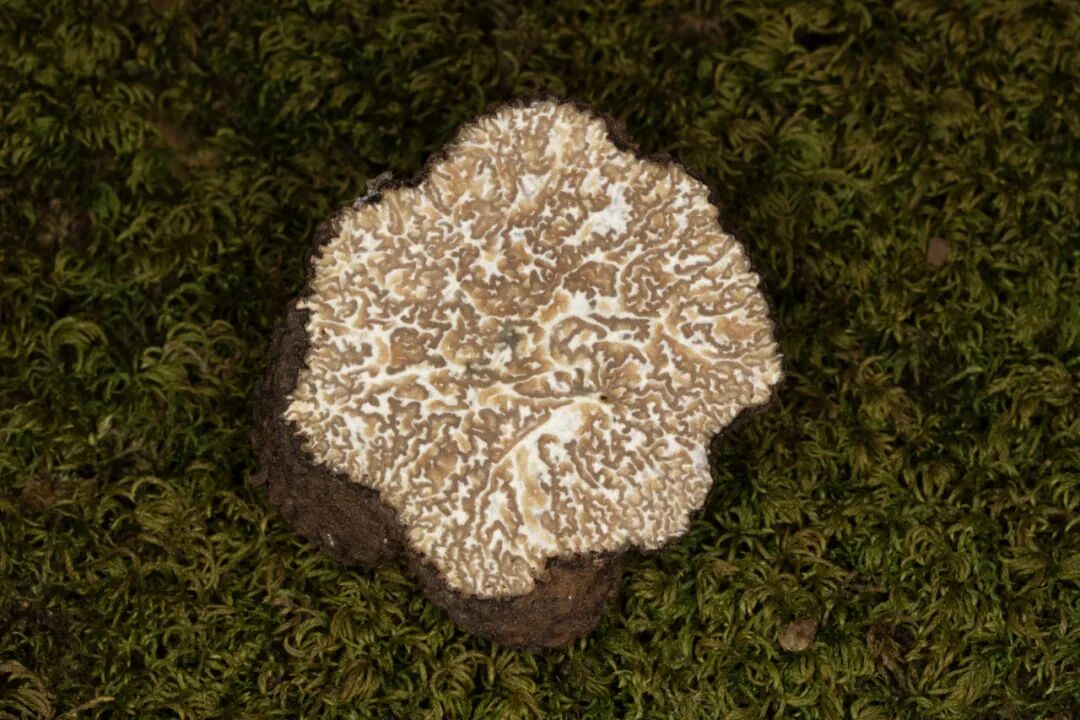
◉ Black summer truffle. Image source: Truffle Tracing
As for black winter truffles, Spain and France are the main producing regions, and farmers there are struggling hard against the drought.
Hungary is also one of the main producing regions for black winter truffles, and the game of truffle hunting has here given rise to a ‘tragedy of the commons’—in Romania, Bulgaria, Iran, China, Oregon in the United States… destructive methods of black truffle harvesting have all been seen. People use rakes to scrape away the topsoil to retrieve black truffles near the surface, rather than training truffle dogs. Such harvesting methods tear up tree roots and mycelium. (Chapter 12, ‘The Saint László Truffle Knights’)
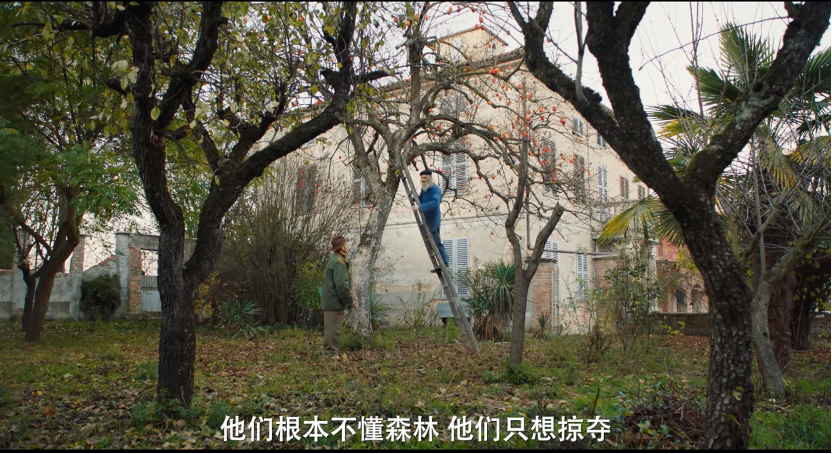
◉ In the documentary The Truffle Hunters, a retired Italian truffle hunter speaks of greed in the truffle trade, specifically the poisoning of hunting dogs. Source: streaming platform
Others have been carefully tending ‘truffle farms,’ such as Blackberry Farm in Tennessee, USA, which the book’s author visited. Many have enjoyed fleeting moments of success, but now, following a tree disease, hundreds of hazelnut truffle orchards are yielding very little. (Chapter 15, ‘Winter People’)
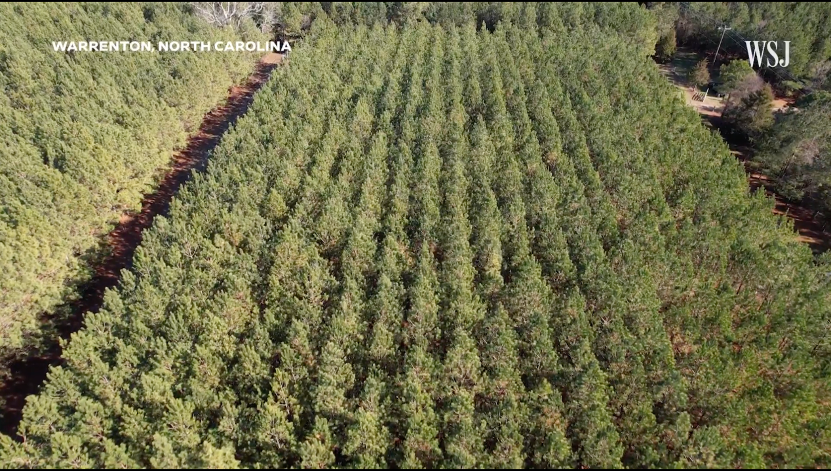
◉Burwell Farm in North Carolina, the first farm in the United States to produce white truffles at scale, covers ten acres (approximately 400 hectares). In an interview with The Wall Street Journal, farm staff also noted that dozens of dogs are poisoned every year. Image source: The Wall Street Journal
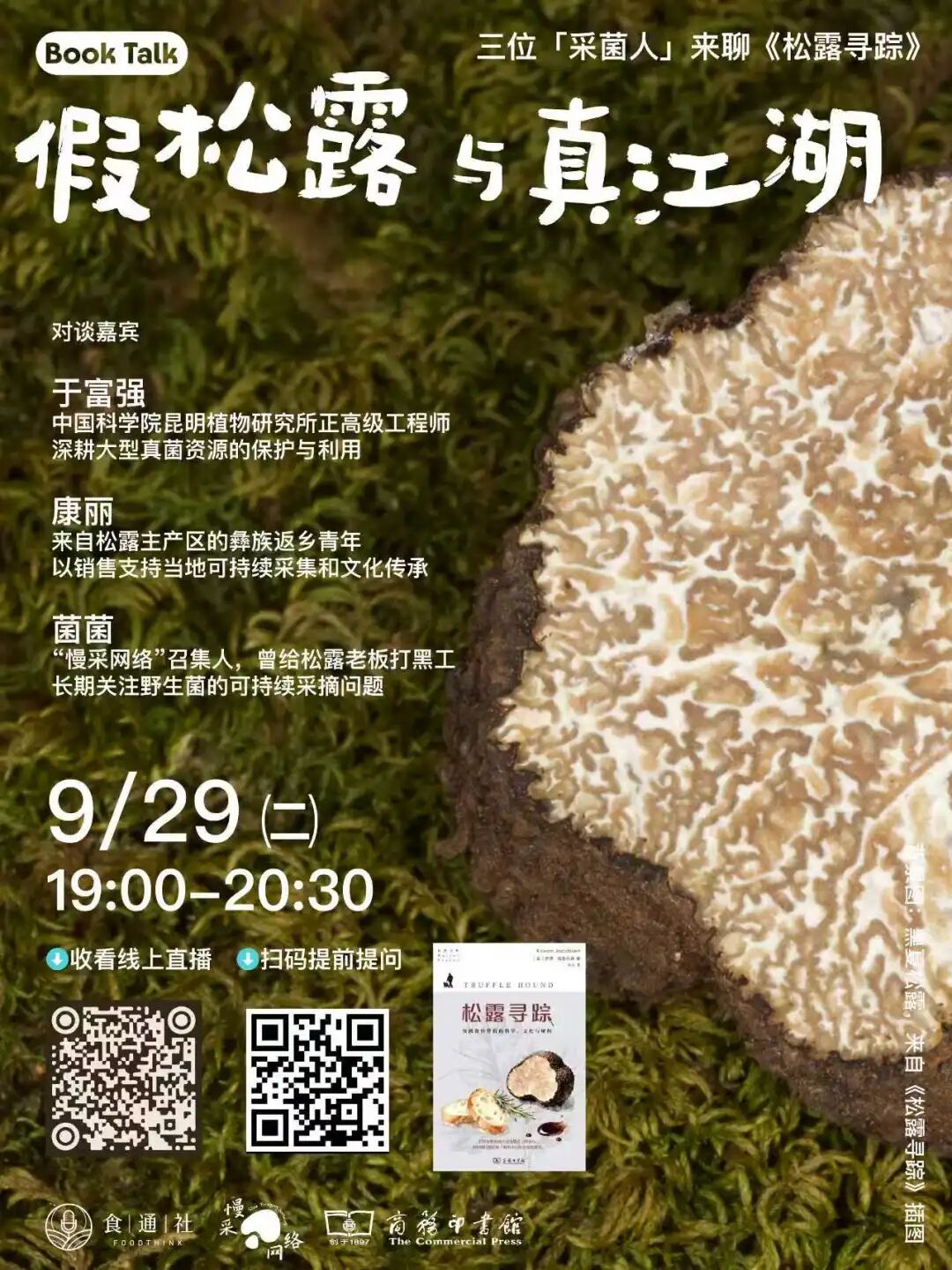
Next Tuesday (29 September), Foodthink, in collaboration with the Slow Harvest Network, will host a book talk on *Truffle Tracking*, featuring Senior Engineer Yu Fuqiang from the Kunming Institute of Botany and Kang Li, a Yi returnee farmer from a key truffle-producing region. Together they will discuss how the foraging, flavour, and culture of truffles in China have evolved in recent years under climate change, and how the circumstances of small-scale foragers have shifted.
– Event Preview –
*Truffle Tracking* Book Talk
29 September (Tuesday)
19:00–20:30
Online livestream, free to join
To ask the guests a question, please scan the QR code below

– Guest Introductions –
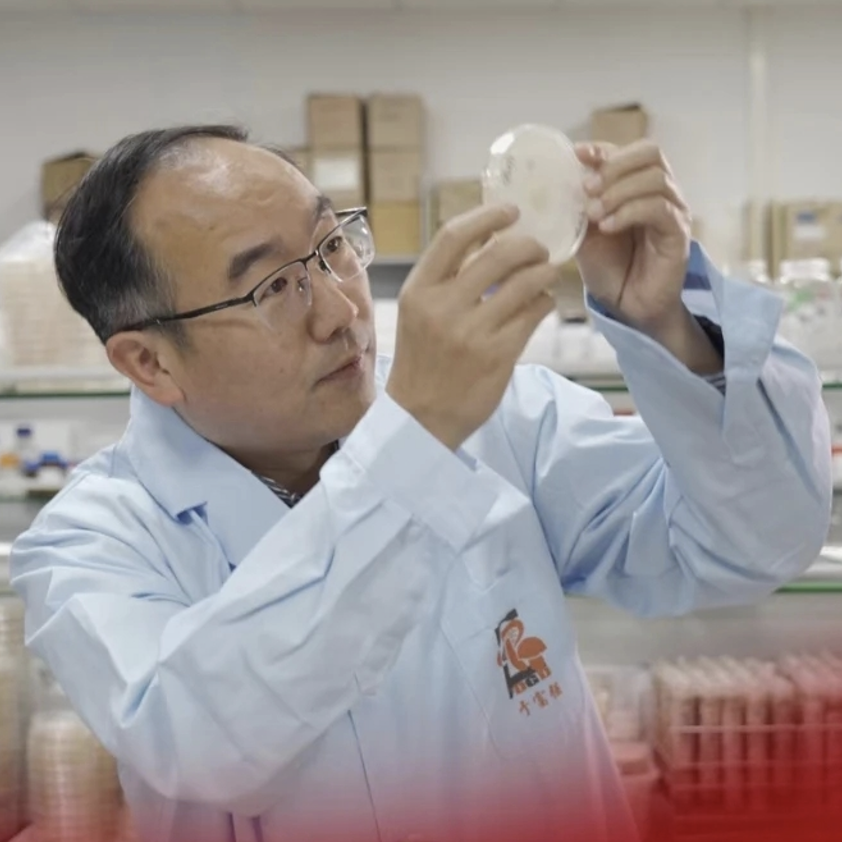
Yu Fuqiang|Senior Engineer at the Kunming Institute of Botany, Chinese Academy of Sciences, with deep expertise in the conservation and utilisation of macrofungal resources. Has achieved breakthroughs in key technologies for the artificial cultivation of truffles, and is based in the mountainous regions of southwestern China promoting the cultivation of rare edible fungi, contributing to the efficient use of biological resources and rural livelihood development. Recipient of the Chinese Academy of Sciences Advanced Individual Award.
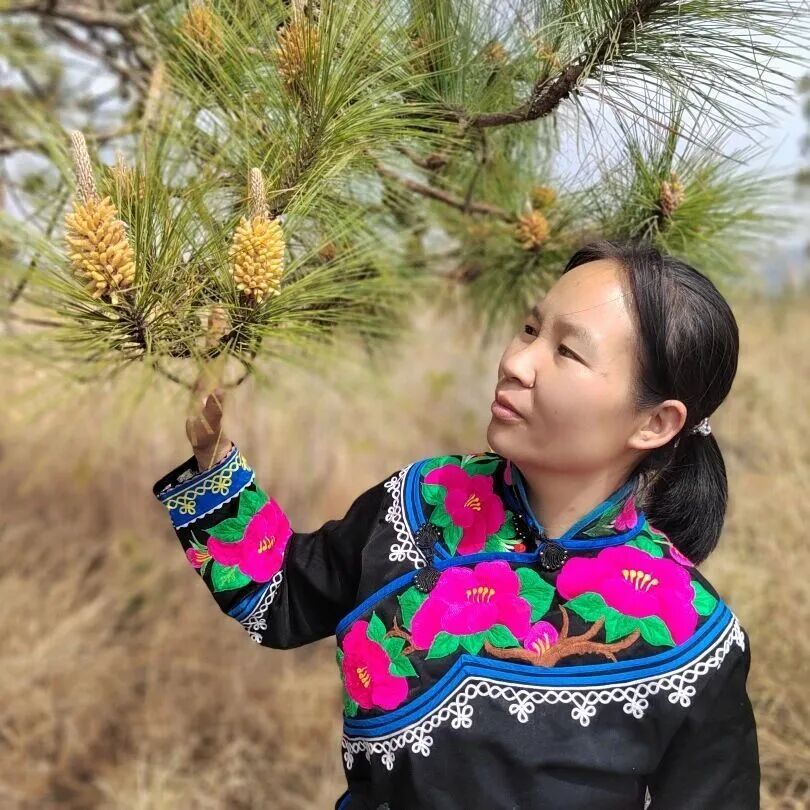
Kang Li|A Yi woman from China’s principal truffle-producing region. After graduating from high school, she worked on rural development projects in Kunming and Beijing. At the end of 2015, she decided to devote her life to the land and returned to Chuxiong, Yunnan to start a business, going on to establish two platforms — Kang Li Tu Huo and Kaixin Jiayuan — using sales to support local sustainable harvesting and cultural heritage.
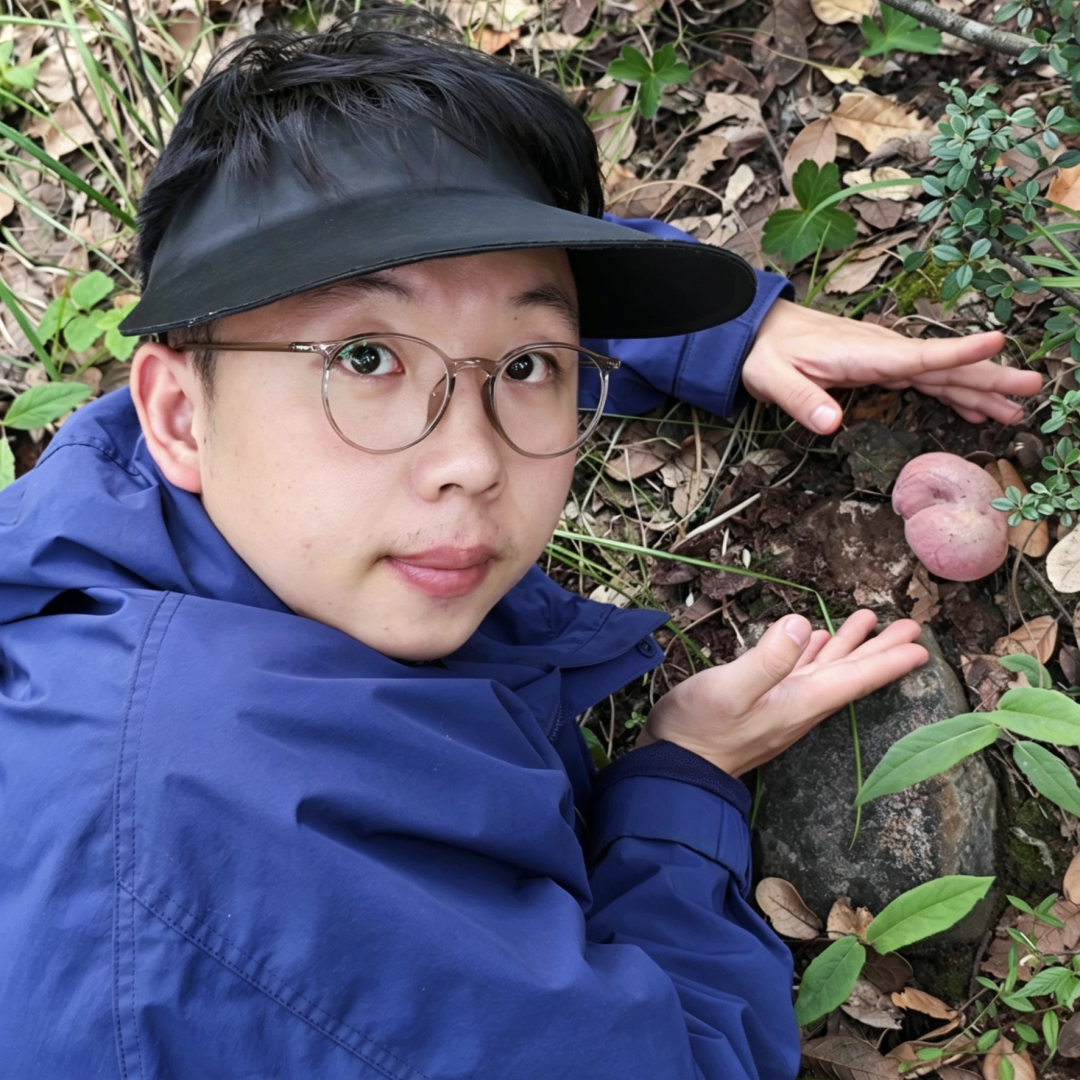
Jun Jun|Convenor of Slow Harvest Network. Entered the wild mushroom industry after working off the books for a truffle dealer. Has a long-standing focus on the sustainable harvesting of wild mushrooms. (WeChat ID: mancaiwangluo)
– Book Details –
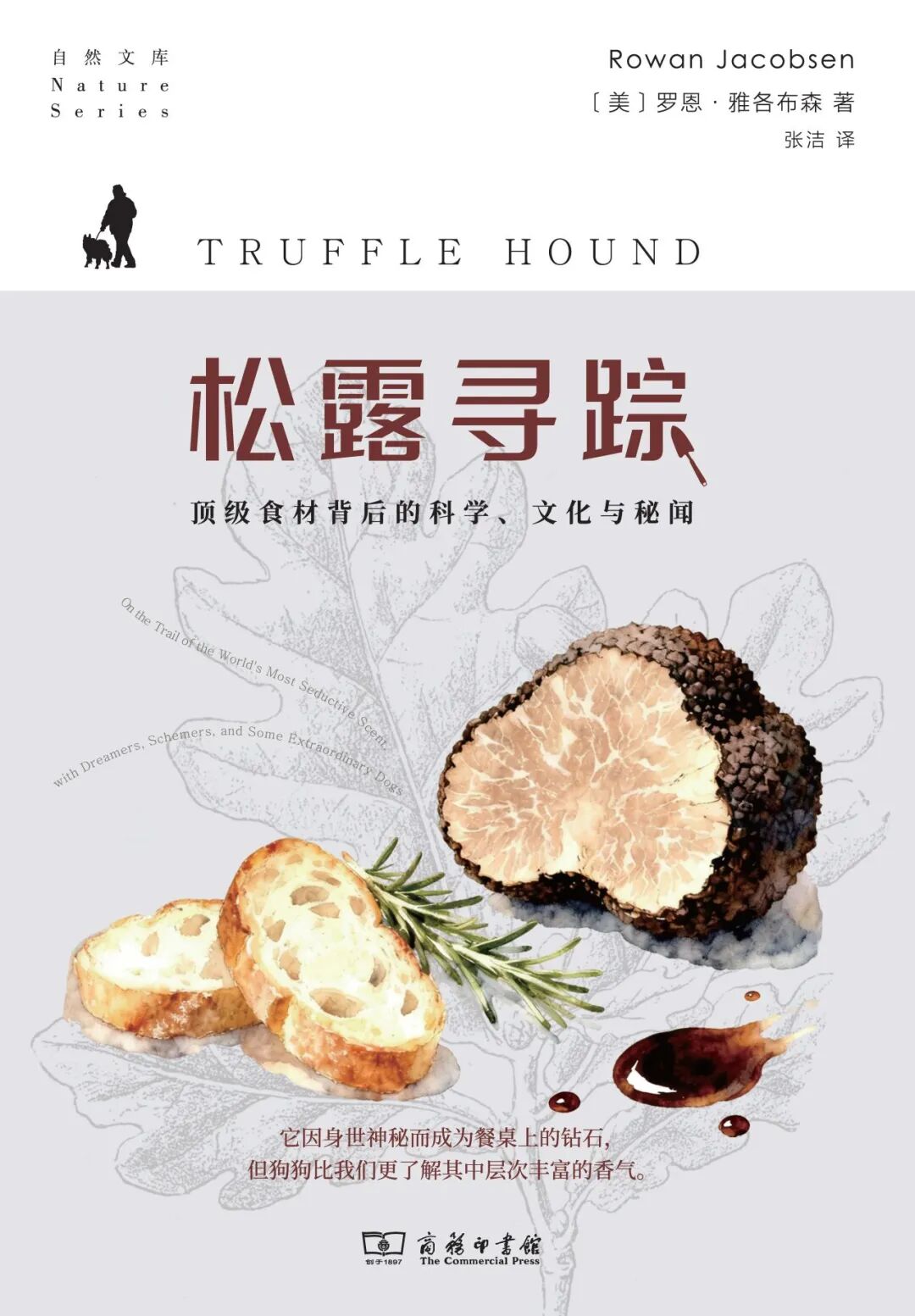
Truffle Hunters: The Science, Culture, and Secrets Behind the World’s Most Prized Ingredient
Food writer Rowan Jacobsen travels across six countries, following larger-than-life truffle hunters and their beloved dogs as they trek through forests in search of treasure, unearthing these diamond-grade delicacies from beneath the unremarkable leaf litter. From Italy, France, Spain, Croatia, and Hungary to the United States, from the adventurous truffle hunts in the dark of the forest, to truffle fairs as chaotic as tourist souvenir markets where quality is impossible to judge, to truffle buying scenes where buyer and seller scheme against each other—on these earth-soaked journeys, Jacobsen also unravels the science of how truffles grow and delves into the heart of the truffle industry, revealing the hidden struggles for profit and complex relationships that lie beneath.
About the Author
Rowan Jacobsen won the James Beard Award – often called the Oscars of the food world – for A Geography of Oysters, and is also the author of American Terroir, Apples of Uncommon Character, and other works. He writes regularly for The New York Times, Outdoor, Food & Wine, and Orion, has appeared on numerous food television programmes, and has been profiled in The Wall Street Journal, The Washington Post, and other media outlets.
About the Translator
Zhang Jie is from Songjiang, Shanghai. She earned her BA in History from Fudan University and went on to complete a Master of Laws in International Relations at the School of International Relations and Public Affairs, Fudan University. She is currently affiliated with Fudan University. Her translations include The Few Given to China: The Birth of the Flying Tigers, Wandering Lemons: A Journey Through Italy’s Citrus Groves, and The Warp and Weft of Civilization: How Textiles Shaped the World.
– Contents –
Swipe up to read
1 Down the Rabbit Hole
2 Black Magic
3 The Alba Truffle Trade
4 Unforgettable Truffles
5 The Charade
6 The Big Truffle Companies
7 Truffle Town
8 The Crescent Moon
9 Black Autumn Truffles
10 Big Shots
11 Family
12 The Truffle Knights of San Lazzaro
13 The Core of the Inner Circle
14 Miracle
15 Winter People
16 Carolina Gold
17 The Oregon Mystery
18 New Tricks
Acknowledgments
Gustave’s Side Story
Recommended Recipes
Sources
A Truffle Primer
Compiled by: Pei Dan, Zhou Xuan
Poster: Zhou Xuan
Layout: Xiaoshu
Scan to tip and support original food knowledge
▼

▼
Tap a keyword to explore more articles
Seeds|Agri-tech|Policy|Fermentation|Nutrition|Fruits|Fisheries|Events|Careers|Delivery|Wet Markets|Livestock|Food Talk|Sharing Sessions|Book Club|Harvest Festival|Smallholder Stories|Climate Change|Rural Development|Cooperative Economics|Urban Farmers|Food Safety|Digital Technology|Biodiversity|Pandemic and Food|False Solutions|Organic Farming Internship
Beijing|Hebei|Shanghai|Guangdong|Guangxi|Henan|Sichuan|Jiangxi|Xinjiang|Shaanxi|Hong Kong|Chongqing|Zhejiang|Jiangsu|Guizhou|Taiwan|Inner Mongolia|Philippines|Canada|Russia|Mexico|Italy|United States|United Kingdom|Germany|Netherlands|Thailand|Sweden|Japan