The Foods We Refused to Buy Over the Years

Foodthink Says
A while ago, we put a call out to our readers: what was it that made you decide to refuse to buy something?
The responses we received were richer than we had expected. Some people refused to buy certain foods, some gave up takeaway, some started scrutinising the ingredients list, and others, prompted by a news report or a documentary, began to re-examine their habitual consumption.
We also found that the motivations behind these “not buying” decisions varied greatly — consumers are not merely passive recipients of what the market offers. The more they learn, the more some people begin to actively adjust their choices, or simply use “not buying” to express their feelings and stance. This is both a personal choice and, potentially, the most direct form of protest against businesses and production methods.
The distance from field to table grows ever longer. We can easily see the price, the packaging and the product on the shelf, but it becomes harder and harder to see how it was produced, and who bears the costs to the environment, to lives, and to society behind that production.
From “knowing” to “acting”, from a purchase to a vote, consumers’ choices may not change anything straight away, but at the very least, they make us start asking ourselves again: What kind of production and consumption should the money we spend support?
🥑 A Commitment to Environmental Protection
C: Avocados – I Just Hold Myself to Not Buying Them
I watched documentaries about avocados and read articles on the subject. When I learned that their cultivation could be causing enormous water consumption in South America, I began not wanting to buy them anymore. I feel a little sad about it. The farmers growing avocados are probably not well-off themselves — they’re just trying to earn a living — but the money that’s actually made goes to marketing, advertising and middlemen. What this touches is my concern for environmental protection.
I used to argue with people close to me about not eating avocados, but eventually I stopped bringing it up. I just hold myself to not buying them, and I occasionally mention it to those around me.
As far as I can see, this problem hasn’t been solved. I know that one person’s “not buying” may be all but negligible, but for me personally, this matters.
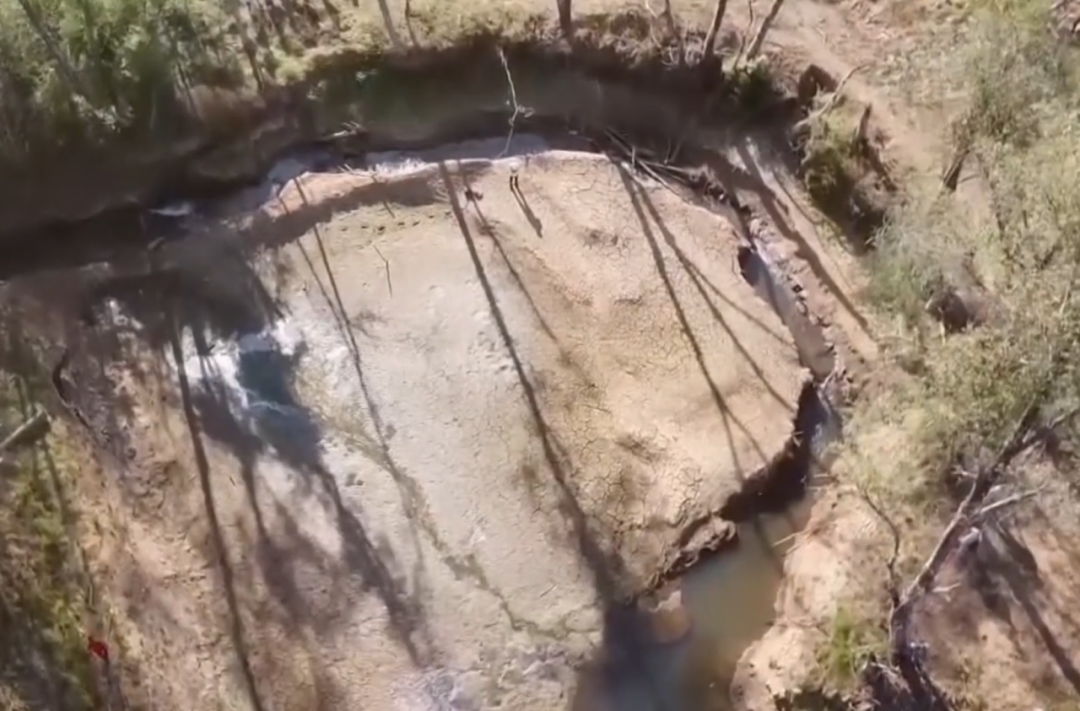
◉ Mexico’s large-scale avocado exports have led to a domestic water crisis and land drought. Image source: Youtube
Factory Director: I Rarely Buy Avocados Now That I Know How Much Water They Use
The thing I refuse to buy is avocados. After I learned that growing avocados requires enormous amounts of water, I started to care about the carbon footprint of individual products. I know that as a single consumer, there is no way I can change an entire industry, but I can at least choose to drastically reduce how often I buy them, or even not buy them at all. I have kept this habit for quite a long time now.
Cherrie: No Jeans, No Milk
When I used to go shopping, I would occasionally buy jeans, and I also regularly bought milk.
Later, when I learned that manufacturing a single pair of jeans pollutes vast amounts of water, I decided to stop buying them. While I was in New Zealand, my university studies also made me aware of the water and river pollution caused by local animal husbandry and dairy production, so I began cutting back and eventually stopped buying milk altogether.
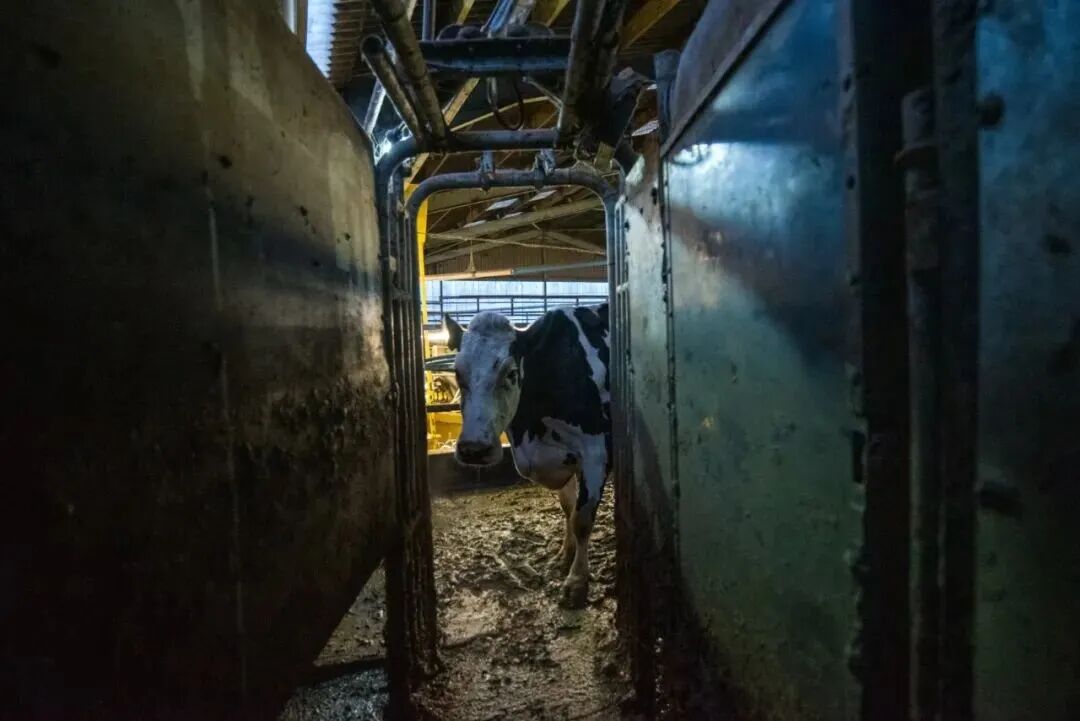
◉ Emissions of manure, wastewater and waste from industrial farms cause severe pollution of water bodies. Image source: the documentary Cow
What I felt at the time was regret, heartache, and anger. These things touched my commitment to environmental protection. I feel that, as the younger generation, we need to make more changes for the sake of the climate and the environment.
I have kept this habit right up to the present. Because there are so many alternatives, it has never felt particularly troublesome. Since I stopped drinking milk, I have looked for plant-based drinks such as soy milk, almond milk and coconut milk; since I stopped buying jeans, I wear trousers made from other fabrics. I also share these things with people around me.
If manufacturers genuinely take active steps to address these problems in the future, I would still consider buying them again. For me, “not buying” is meaningful — it is a way of expressing my consumption philosophy and attitude. It has also shaped my choices since then, leading me to seek out more products that I consider sustainable.
Ms Li: Though I Love Food, There Are Some Things I Would Rather Not Eat
I used to occasionally buy cold-tossed razor clams — I thought they were really delicious; I also bought Chinese yam from time to time, and the flavour was lovely.
Then I read an article online about how the waters where razor clams are farmed are covered with dense nets, and birds that come to feed get caught in them and eventually die on them. Later, I came across a video showing how Chinese yams grow vertically in the soil, and how the machines used in harvesting need to dig very deep into the earth. I began to worry about the impact of this method of cultivation on the soil.
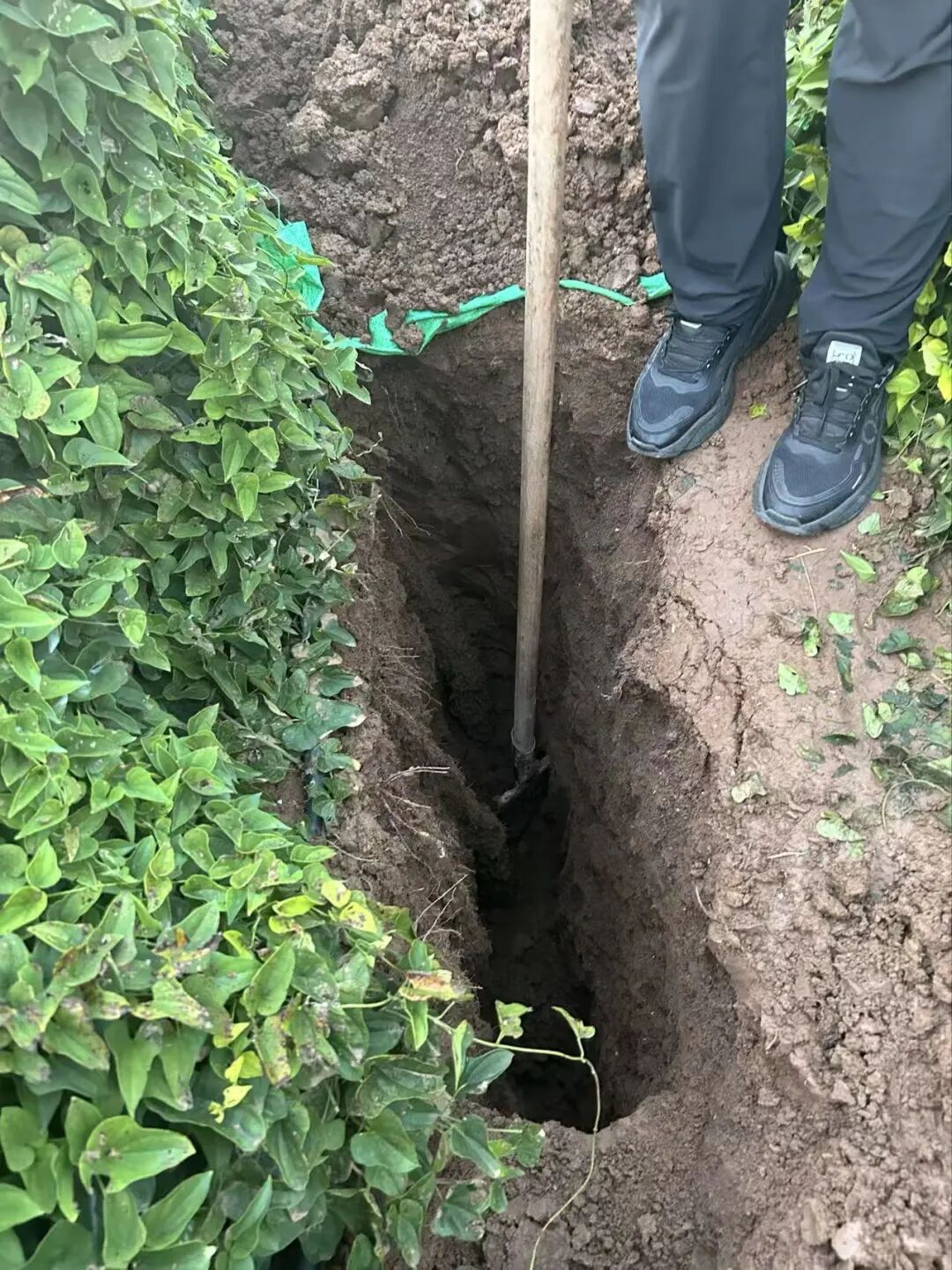
◉ Chinese yam is a deep-rooted crop that places enormous demands on soil fertility; continuous cropping leads to a significant decline in soil fertility. Image source: Foodthink
What I felt at the time was anger. I don’t want my own appetite to make other species and the environment bear a cost I am unwilling to accept. I care about the lives of other species, and I care about the soil, the air and the plants.
So after that, I stopped buying razor clams and Chinese yam altogether, and I have stuck with it ever since. I don’t find it troublesome, because in my view there are very few true necessities in life — most things are needs extended by desire, and giving them up is no great hardship.
I have told people around me about it too. I know one person’s boycott may not make much of a difference, but at the very least it can bring me peace of mind. For me, that is enough.
Miaomiao: If I Can Go Without Plastic, I Try My Best Not to Use It
Before, I didn’t pay much attention to any of these things. I would buy whatever I felt like eating, and even when my child insisted on buying something, I’d go along with it. Now, I try my best to avoid foods high in additives; when it comes to processed food, I’ll go without if I can, because you never really know whether the ingredients are good or safe. Many of the small restaurants outside serve fast food, and I try to avoid those too when possible.
The thing that really made me start consciously cutting back on consumption was watching a documentary about plastic. I learned that once plastic is produced, it is incredibly difficult for the earth to break down, and it affects the environment, animals and people alike. So I decided: from now on, if I can go without buying it, I will.
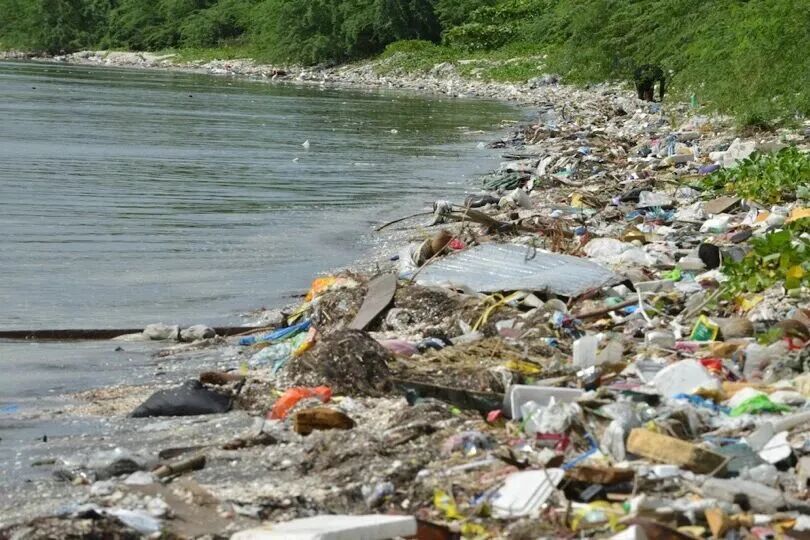
◉ Non-recyclable plastic packaging waste eventually scatters across mountains and rivers, and may also travel up the food chain back to the human dinner table, ultimately entering the body. Image source: Mao Da
I felt deeply pained at the time, though with many things one’s willingness far exceeds one’s ability. I often think: the earth provides us with so many resources, yet every single day we create pollution.
So after that, I didn’t hesitate much — I just wanted to find alternatives as quickly as possible. It’s been almost a year now, and I rarely buy plastic products of my own accord. I recently bought six stainless steel lunchboxes, and whenever I can bring my own food, I do. It’s a bit more of a hassle, but I feel it’s healthier and more hygienic. I used to use cling film and plastic seal bags when buying meat; now I’ve switched to stainless steel and glass lunchboxes. When I go out shopping or to the market, I bring my own cloth bag, and I don’t buy cling film anymore either. Unless it’s absolutely unavoidable, I won’t go out of my way to buy plastic products.
I think “not buying” does make a difference. If at least one person is doing this, a little less plastic waste gets created.
🥡 I Don’t Want Takeaway
Ms: I Never Order Takeaway
I don’t order takeaway. At first, it was because I didn’t know much about takeaway cutlery, and I didn’t want to take part in a process I considered not environmentally friendly. It’s very simple for me: the parts that aren’t eco-friendly, I won’t accept.
Senior Sister: From Daily Takeaway to Just Three Times a Year
Ten years ago, I was ordering takeaway almost every day, which had a great deal to do with my working environment at the time. Later, I changed jobs and got a one-hour lunch break, so I started often dining in at restaurants with colleagues. Then one health check-up showed I was deficient in vitamin D, and I began consciously spending more time outdoors, getting some sunshine.
By last year, I had ordered takeaway just three times all year. Partly it is because my current workplace provides meals, and partly, to cut down on lying at home scrolling through my phone, I choose to dine in at restaurants or go grocery shopping instead. Over the past couple of years, to reduce excessive packaging, I have also started buying groceries at the wet market, bringing my own bags. When I buy eggs, I even bring my own egg carton, and the stallholder will round down the price for me.
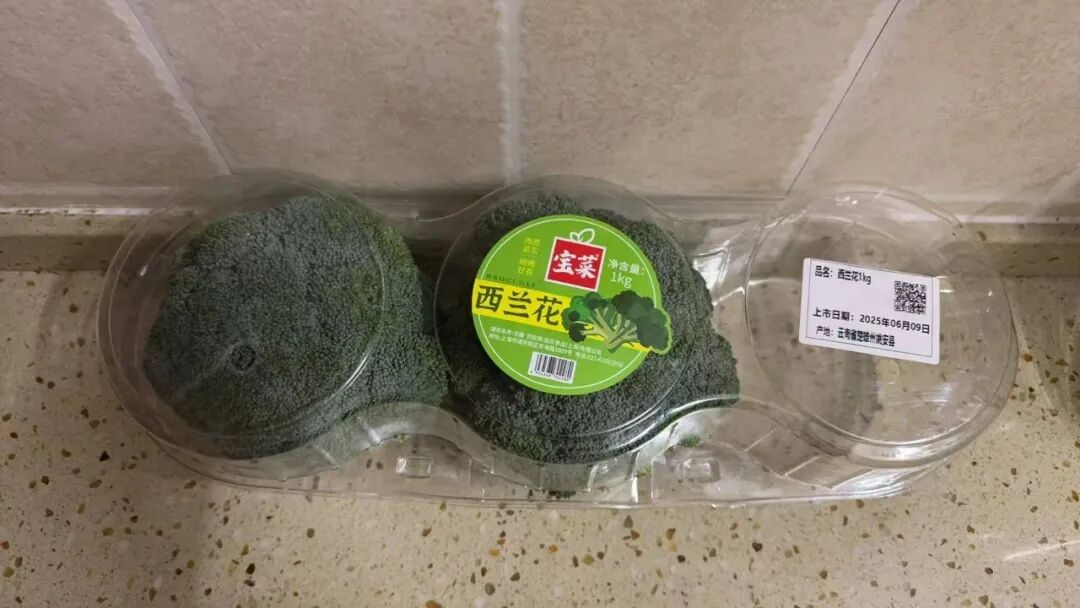
◉ Broccoli packaged in a plastic box. Many consumers have encountered the problem of excessive packaging by fresh-food e-commerce platforms. Image source: Wu Xiaowei
What really made me resistant to takeaway platforms were the incidents I have seen over these years — overwork, labour disputes and so on — as well as the relationship between the platforms and small restaurants. I have experienced overwork myself, so there is a sense of “we are all workers, and a wound to one of our kind grieves us all.” A few years ago, when my working environment changed, I began reading Capital and related commentary, and started to understand overproduction, overwork and the promotion of consumer markets from another angle.
Many changes may be triggered by a single event, but a reservoir of resentment always builds up over time. Add to that the fact that, reaching middle age, I have developed a new understanding of the value of many things. Chasing bargains to feed myself nothing but sugar-and-fat-laden food — that is something I simply will not do any more.
I have now uninstalled all the takeaway apps, and when I absolutely have to use one, I will go through the mini-program. But I do not demand of myself to be a “perfect practitioner.” If I fall ill or really face an emergency, I will still order. Perfect practice requires the right timing, the right place and harmony among people, and very few can achieve it. What matters more is that more people practise a little bit, according to their own circumstances.
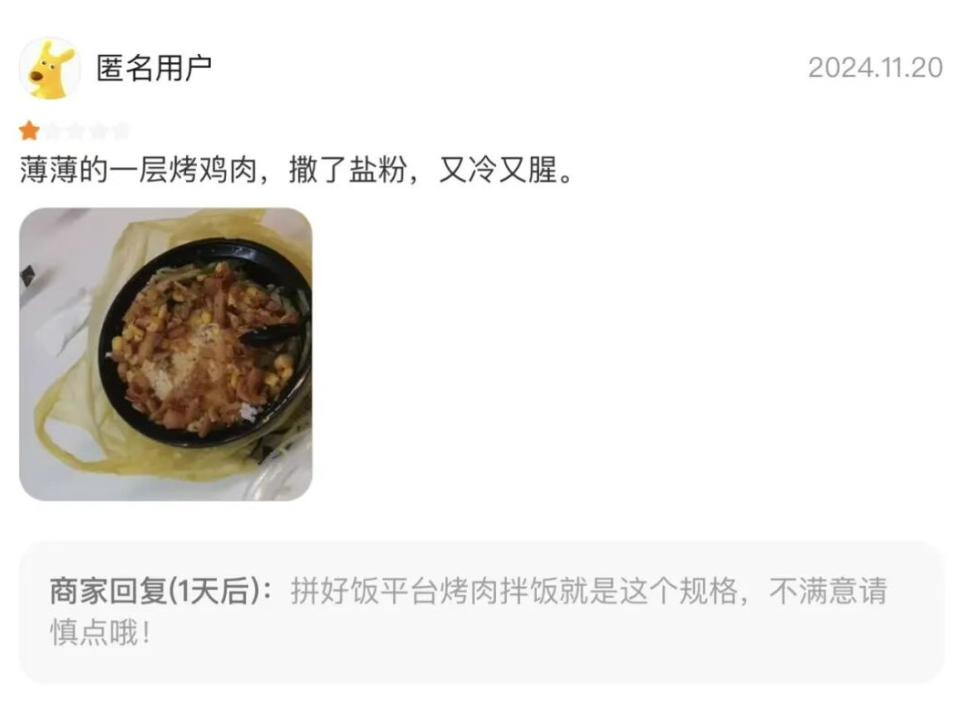
◉ Feedback from Meituan Pinhaofan takeaway users and vendors’ responses. Image source: screenshot from the Meituan app
I also leave comments under official accounts, and when I cancel a service, I explain my reasons in the customer feedback form. I do wonder whether any of it makes a difference, but at least I have tried. When it comes to the people around me, I usually only speak from a health perspective, because everyone’s situation is different.
Now, my life no longer has an essential need for ordering takeaway. If my circumstances change in the future, I might order again.
Ray: After Delivering Takeaway Myself, I Rarely Order It Anymore
There was a stretch of time when I refused to order takeaway altogether — whether from Meituan or Ele.me, I would not buy from either.
Ever since I started delivering takeaway myself, I haven’t ordered a single day’s worth. Having a fellow rider from the same area serve me makes me uncomfortable, and even brings on a physical nausea. These bodily and psychological reactions lingered long after I stopped delivering myself. I think it is a natural reaction, not one dictated by moral principle. I don’t deliberately refuse to buy — I simply don’t want to hear a former colleague out of breath, then switching to a particularly courteous tone to tell me my food has arrived. I’m also terrified they might recognise my voice over the phone.
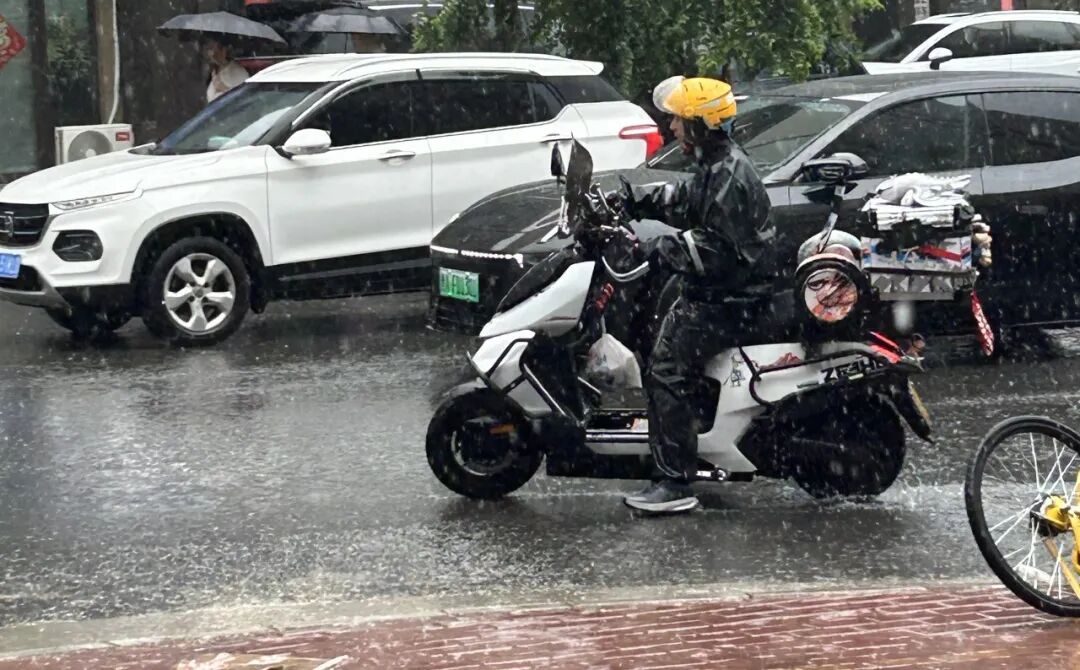
◉ A takeaway rider still delivering in the pouring rain. Image source: Yu Yang
My boycott lasted about half a year, because I would imagine that the riders in my neighbourhood might already have turned over, and it would no longer be someone I knew back then serving me — and that made it bearable. Even so, every time I do order takeaway, it still feels awful, because I know only too well how cruel it is for the algorithm to drive every rider to run.
Besides not buying, I also wrote some articles to help more people understand the labour conditions of takeaway riders. As for my occasional takeaway orders after that, I turned to podcasts and articles to explore why people’s lives have become so dependent on takeaway.
Refusing to buy is certainly useful, but not in the sense that my actions forced the industry to solve the problems within itself. What it really did was force me to change — cooking at home, for instance, or trying the community canteen near where I live.
🥫 From Not Wanting to “Be Deceived” to Prioritising Ingredient Lists
Little Pomegranate: Starting with Chicken Feet, I Grew Used to Checking Ingredient Lists First
There was a time when I regularly bought chicken feet — whenever I picked up snacks, they were always my first choice. Now, I won’t go out of my way to buy cakes with cream, bleached-white pickled chilli chicken feet, milk tea, or animal blood products.
It started when I came across some videos and reports showing chicken feet piled on the ground, being casually washed and bleached. After that, I did a great deal of online research on cakes, milk tea, and animal blood products, and began paying attention to issues around additives and food production processes.
When I first saw all of this, I was shocked and couldn’t quite believe it. I used to think that products sold in reputable supermarkets shouldn’t be like that. Even later, when I came across content about industrial pickled vegetable production, I was reluctant to jump to conclusions at first. But once you learn about the production process, some things simply make you feel sick. What matters to me is cleanliness, hygiene, and honesty.
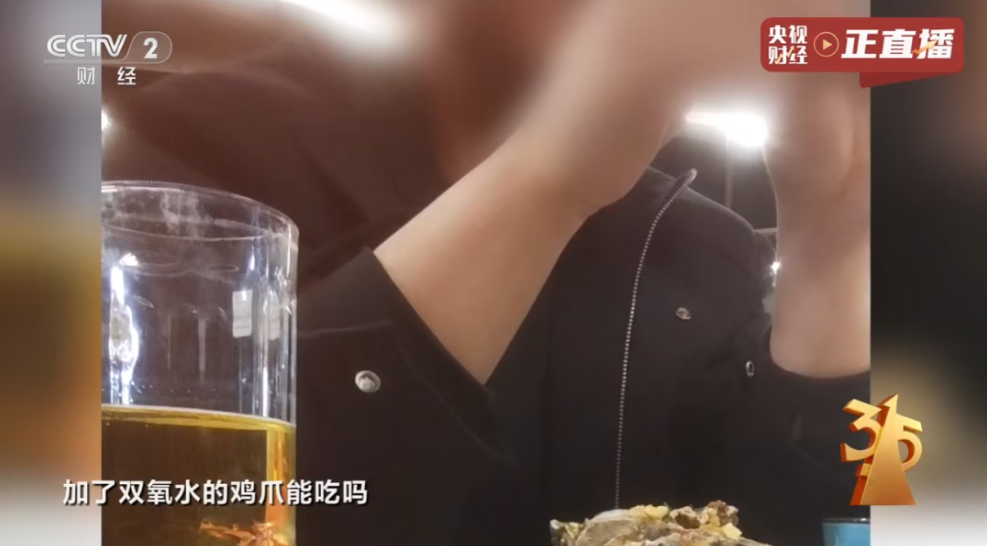
◉ This year’s 315 Gala exposed bleached chicken feet. Image source: CCTV Finance
After that, I barely hesitated or made any exceptions, and I have stuck with it ever since. I have tried making chicken feet at home myself, and I also check which vendors at the market earn my trust. I definitely won’t buy anything that looks bleached white, or anything that makes me uncomfortable to eat. I basically don’t eat cake any more, and I proactively tell people not to buy it for me. When it comes to family and friends who enjoy these things, I share the videos and articles I have seen with them, and sometimes I will even try to talk them out of buying them in person.
This experience has gradually changed the way I shop for food. Now, when I buy something, I check the ingredient list and the packaging. If I have doubts, I look into how the product is made, whether the company has any negative reports, and whether there are better alternatives, before deciding whether to go ahead and buy it.
I think “not buying” is at least useful for me. Eating simply and cleanly makes me feel better, both physically and emotionally, and it has also curbed my urge to buy things.
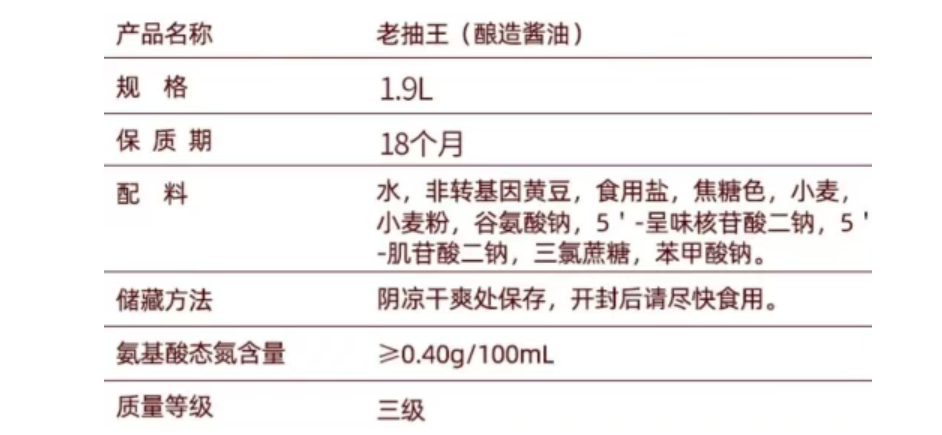
◉ The ingredient list on a bottle of soy sauce contains many food additives. Image source: Foodthink
Lala: Now When I Shop, I Check for Sucralose First
I now refuse to buy or eat any food whose ingredient list includes Sucralose.
Before, I didn’t pay much attention to how additives affect your taste buds or your body. Then I noticed that after eating something containing Sucralose, I would still have a cloying sweetness in my mouth the next day, and my throat would feel uncomfortable too. That physical sensation made me start reflecting on what the things I eat are actually doing to my body.
From then on, I started checking ingredient lists. I found that Sucralose turns up in all sorts of foods — drinks, yoghurt, bread, sauces, pickled mustard tuber, and more. If I spot Sucralose or any other sweetener I don’t want to consume, I put the product back on the shelf. Some of the light and dark soy sauces, yoghurts, and sparkling waters I used to buy — I don’t buy them any more.
This makes me feel angry and helpless. I think that, on the manufacturing side, as long as an ingredient is compliant and can bring costs down, it is very easy for it to be used widely. But I have at least to be responsible for my own body, so I don’t want to let industrial products I don’t accept into it any more.
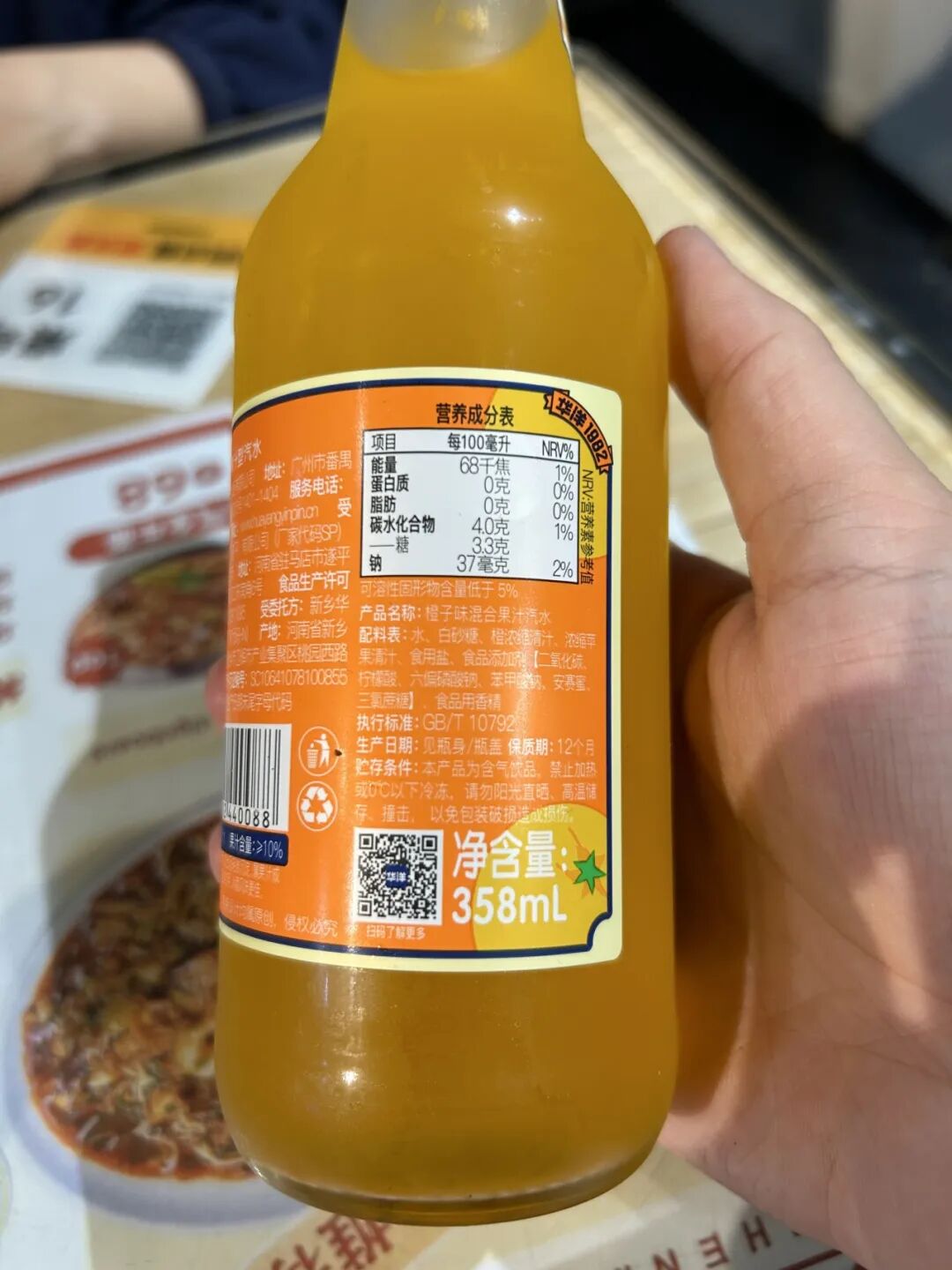
◉ The ingredient list on a bottle of soft drink, which contains Sucralose, Acesulfame K and other sweetening food additives. Research suggests that long-term intake of artificial sweeteners may disrupt blood glucose homeostasis and increase the risk of diabetes, obesity and other conditions. Image source: Yu Yang
I have stuck with it all the way to now. I have even cut back on eating out, because I cannot be sure what seasonings the takeaway places and restaurants are using. Fortunately, there are still plenty of products on the market with ingredient lists I consider clean enough to choose from.
I also post on WeChat Moments to let the people around me know about Sucralose. If I accidentally end up buying something containing Sucralose on a platform, I used to phone up to report it, but then I found that customer service wasn’t particularly bothered, so I switched to requesting a return and refund, writing in my reasons. I hope that if enough people do this, the platforms will start to notice what consumers have to say.
Even if a manufacturer that once used Sucralose later changes its recipe, I probably would not buy from them again. For me, this is no longer just about one particular ingredient; it is my judgement of a manufacturer’s production choices. I would rather use my actual spending to support the manufacturers I trust.
Green Peaks: Feeling “Deceived”, I Care More and More About Ingredient Lists
I now refuse to buy many snacks that are heavy in additives, and I pay particular attention to products labelled “sugar-free” whose ingredient lists turn out to contain other sugar-based ingredients. I also tend to avoid items where the ingredient list is obscured, so you cannot simply pick up the packaging and read it.
The name and the ingredient list of some products diverge dramatically. Take breads that tout “pure milk” in the name — when you check the ingredient list, the milk content is nowhere near as high as you would assume, and margarine has been added as well. That feeling of being deceived really makes you want to hurl the thing to the floor.
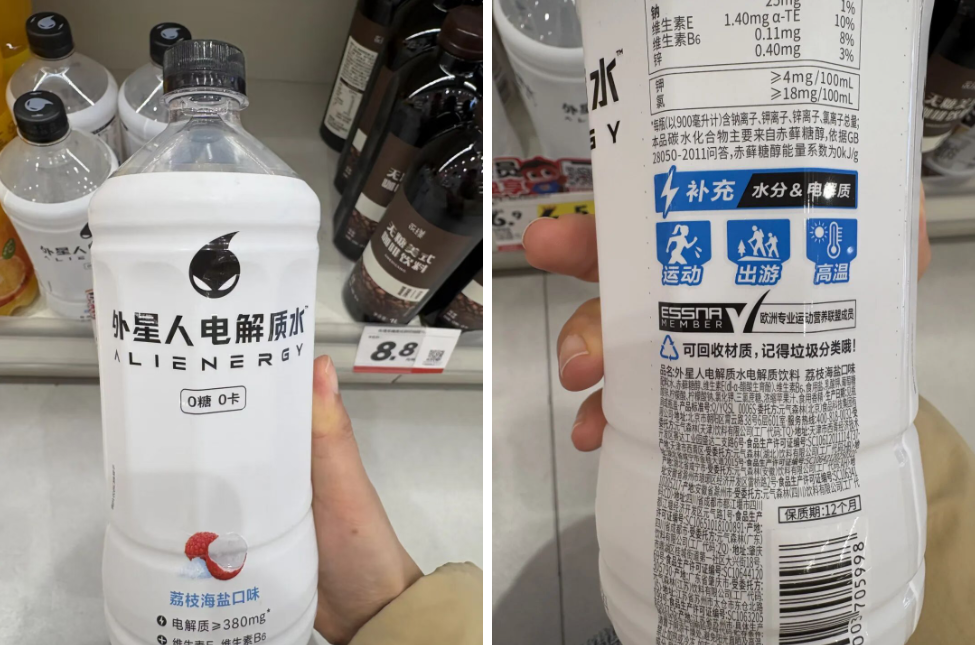
◉ Drinks labelled “zero sugar, zero calories” actually contain Erythritol and other sugar substitutes. Image source: Xiao Dan
Near where I live, including my rather remote family hometown in the countryside, snack wholesale shops have sprung up in recent years. Back in the city, when I finish work, I often see young people rushing into fast-food outlets or grabbing fried chicken, roast chicken, and other deep-fried street food from roadside stalls. It makes me feel that so much of what people eat nowadays is ultra-processed food laden with additives — and that has made me feel disgusted, dispirited, and gradually unwilling to buy these products.
Now when I come across things like this, I vent to my family and friends, and I try to encourage them not to buy such products either.
Sister Yu’s Little Admirer: I Once Loved Braised Donkey Meat — Now I Haven’t Eaten Any in Six Years
I used to absolutely love braised donkey meat.
Then I came across the hundred-million-yuan counterfeit donkey meat scandal in Dong’e, Shandong. At first, I wondered whether I could learn to tell donkey, horse and mule meat apart. But since what I enjoyed was braised donkey meat, there was simply no way to distinguish them by colour; and when it came to examining the thickness of the fibres in a cross-section — unsurprisingly, I could not make that out either.
Eventually, my trust collapsed completely. There were two separate donkey meat restaurants nearby, and both owners told me the other was selling horse meat. My thinking at the time was: I would rather go without than let them profit so easily! Honestly, though, it was also simply that I had no way out.
What truly bothered me was being deceived.
So after that, I stopped eating braised donkey meat — it has now been six years. Very likely, I will not buy it again. With trust, I think once it has collapsed, there is simply no room left.
This experience has also shaped the way I spend since then. When I go shopping now, I factor in one more consideration: can I actually trust it?
🐑 The “Born to Die” Fate
Little Chick: May Fewer Animals Die Because of Me — Though We Have Never Met
I first encountered the philosophy and culture of vegetarianism rather hazily, without really grasping it. I thought to myself: if I can live perfectly well without meat, then I simply will not. And gradually, I just stuck with it.
In the meantime, through documentaries, I saw and learned about some of the realities of animal farming, which only strengthened my determination to stop consuming animal products. Over time, the scope extended beyond just meat to leather, down, skincare tested on animals, and more.
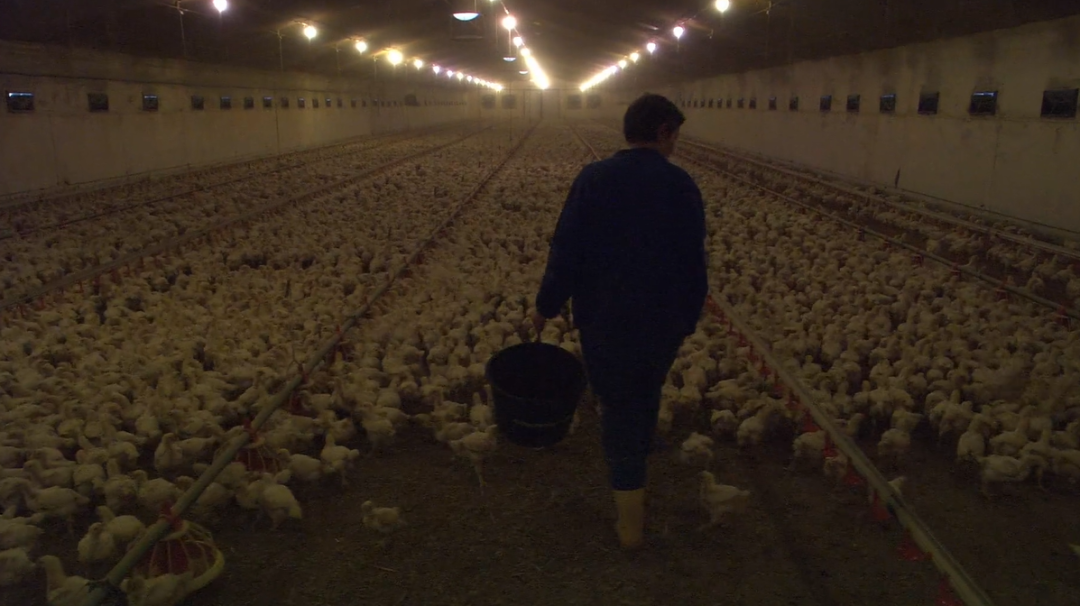
◉ Chicks in intensive farming. Image source: Our Daily Bread official website
My feelings are actually rather complicated. I cannot understand why a society that appears so civilised, that seems to keep making progress, can do such things to animals.
By now, I have been vegetarian for eight years and vegan for one. But I do not put too much psychological pressure on myself. I have always thought: if one day I truly cannot keep it up, I will eat meat again. Perhaps it is precisely this more relaxed attitude that has actually kept me going all along.
Now, if a friend wants to try vegetarianism, I tell them that even eating vegetarian just once, or consuming slightly fewer meat products, is already perfectly fine.
In daily life, I look for alternatives, I work hard at fitness — I want to prove my body can be perfectly healthy — and I want to get involved in some related activism.
I do not know whether my “not buying” actually makes any difference to the world. But whenever I have a meal with friends or family, everyone tends to order a few fewer meat dishes. What I find rather heartening is the thought that, perhaps, in this world, a few fewer animals die because of me — even though we have never met.
Life’s Wayside Inn: A Newborn Calf Stopped Me from Buying New Zealand Dairy for Ten Years
In the past, I had an inexplicable trust in overseas dairy products — I felt they were at least more “genuine” than domestic ones, and that animal welfare was handled better, so I tended to favour them.
Then one day I came across a report on milk production in New Zealand. It included a video: a newborn calf, because it was a bull and could never produce milk, was thrown onto a truck bound for the abattoir before it had even managed to stand.
After watching it, I felt furious, heartbroken, helpless, and even somewhat melancholic. The calf’s cries were like daggers piercing my heart. I cannot say precisely what it struck in me — perhaps it was the sheer shock of how cruel human beings can be. My empathy makes me all too easily wounded by things like this, yet there is nothing I can do.
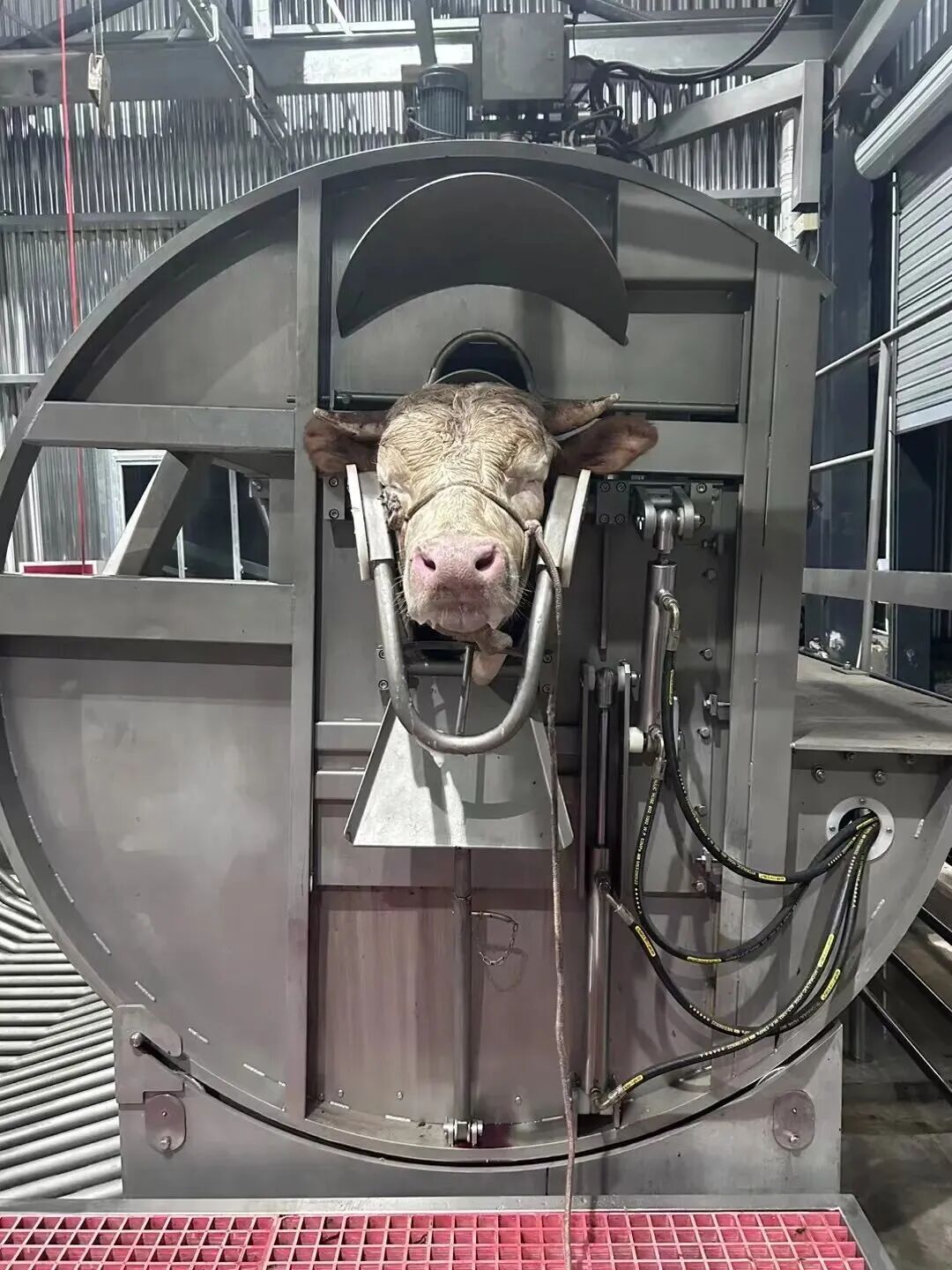
◉ To improve efficiency, abattoirs use electrical stunning to kill calves. Image source: Chentusheng
After that, I started refusing to buy New Zealand dairy products — it has been roughly ten years now. I made one exception along the way: I needed butter at the time, and only one product had an ingredient list that met my needs, so I gave in just that once.
I have also mentioned it to a small number of people around me; at the very least, my parents no longer buy such products. But I have found that some people think the whole thing is pretentious, and some even engage in retaliatory consumption because they were persuaded. So nowadays, I only tell those whom I feel can truly empathise with animals.
I do not know whether this situation has changed at all. I do not even know who or what to believe any more. But at least “not buying” does make a difference — for me personally, and for those within my reach. If I buy one less item, demand may be just that much smaller. Over time, perhaps one calf will no longer have to bear the “Born to Die” fate — even if it means it will never be born at all.
Rock Tea: It Began with a Piece of Meat — Now I Care More and More About Where Food Comes From
I now refuse to buy pork teat meat, and I have also grown wary of unusually large ginger and grapes.
One time, I went to buy meat and did not know how to pick a piece, so I asked the butcher at the stall to grab one for me. When I got home, I discovered it was a cut I would never have expected. After cooking it, I looked up some information online. I decided at that point that this kind of meat should not be sold at all, so I resolutely chose not to eat it and simply blacklisted that butcher’s shop. For a while, I even developed something of a shadow over all pork.
The strongest feeling at the time was disgust, anger, and a sense of being deceived. I had clearly trusted the shop owner, and yet, in order to sell that one piece of meat, he chose to throw away the trust a well-disposed customer had placed in him.
After that, I began to have similar doubts about fruit and vegetables. When I see ginger or grapes growing unusually large, I wonder how they actually manage to grow that way. It feels as though, when faced with these fruits and vegetables, people consider only the immediate price and the visible quality, without really understanding their true worth or the cost hidden behind their growth.
I also once saw a pig pen that “could not bear the light of day”. The stench carried for a great distance, and the pigs inside were crying out in despair. After that, I found the whole matter of eating meat increasingly uncomfortable. But the feeling is very complicated. I want so badly to help these pigs, to let them at least live a little better — yet I am not vegetarian myself. I cannot bring myself to turn a blind eye, but I have no truly concrete action to take.
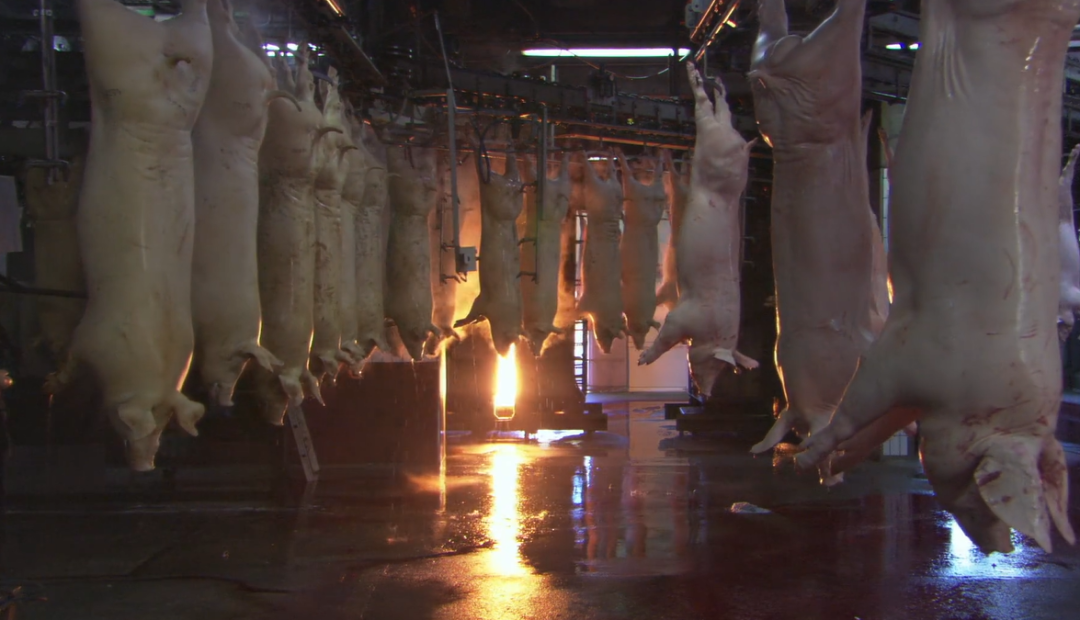
◉ At the abattoir, slaughtered pigs are undergoing further washing. Image source: Our Daily Bread official website
So for me, “not buying” may not produce any immediate effect. Its real value, perhaps, lies in the repeated choices themselves — slowly building a more sustainable set of consumption and living habits that align with my own moral judgement, while spreading the ideas behind them and bringing these issues into more people’s view.
Under the Plum, In the Melon Field: Foie Gras, Shark Fin and Bear Bile Products — I Have Never Bought Them
I refuse to buy foie gras, shark fin, and bear bile products. It began when I saw the harm inflicted on animals during the production or harvesting of these products. I found it terribly cruel — an immense torment for another living creature. So I have never bought them since, and I share what I have learned with the people around me. To my mind, the issue is still far from resolved, so I have never gone back to buying any of them.
🍞 Steamed Buns and Bread
Mr Li: After the Coloured Steamed Bun Scandal, I Only Buy White Steamed Buns
Now, I do not buy steamed buns in any colour other than white. It was probably around 2000 when I saw a television news report in Guangzhou about coloured steamed buns. I was quite shocked at the time. Ever since then, I have harboured suspicions about coloured steamed buns. Even to this day, I basically will not buy steamed buns in any colour other than white.
Tomato: If I Can’t Find the Steamed Buns I Want, I’ll Just Make Them Myself
In the past, for the sake of convenience at work, I used to buy baozi and steamed buns from breakfast shops or supermarket counters. But after tasting ones made at home, I decided I would never buy them from outside again.
I later discovered that many breakfast shops in Beijing sell baozi and pastries that are factory-produced or pre-made, with hardly any of the traditional fermented texture I love. I started paying attention to flour, baking powder, yeast, and how things are made — and grew increasingly aware that while many wheat-based products on the market ensure consistency and production efficiency, they sacrifice the flavour and texture I truly care about.
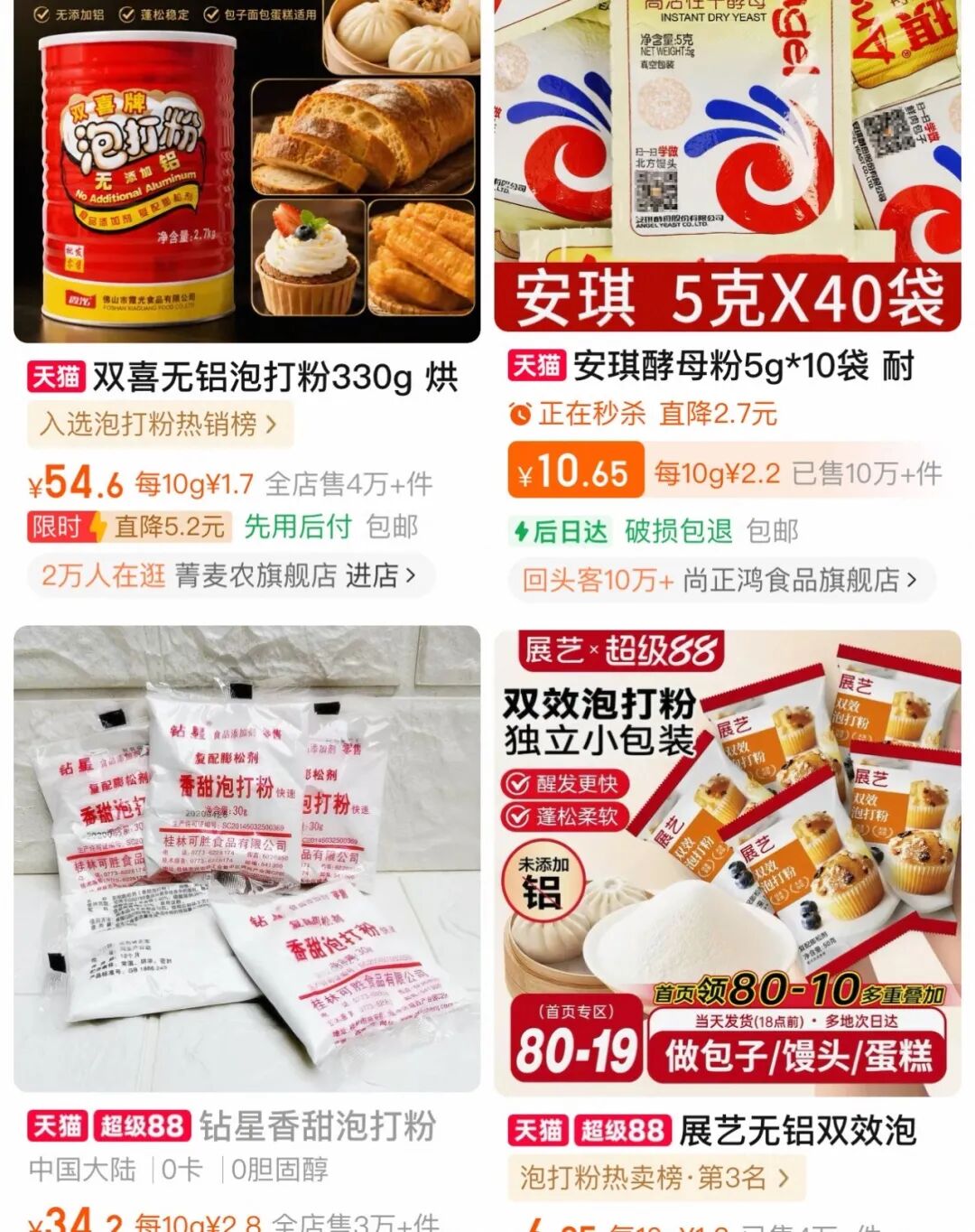
◉ Baking powder is a chemical leavening agent — it works quickly but produces a relatively firm texture with none of the aroma of proper fermentation. Image source: Taobao screenshot
Steamed buns and baozi are deeply traditional, everyday foods, yet finding fermented wheat products that meet my own standards has become remarkably difficult. Sometimes I wonder whether this is simply inevitable in modern commercial society: everything must chase efficiency.
What truly bothers me about all this is the freedom of choice. I feel I should be able to decide what kind of wheat-based food I eat, but the reality of the market makes it so hard to find what I want that my only option is to make it myself.
After that, I stopped buying baozi and steamed buns from outside altogether — you never know when the next one will leave you feeling caught out. I told my family, and they were fully on board. Now, the baozi and steamed buns we eat at home are mostly made ourselves using yeast. It is not a traditional starter, but for me, that is already far better than most of what you find on the market.
If someday someone sells me properly fermented wheat-based foods that I can wholeheartedly endorse, of course I would buy them.
I know that one person choosing not to buy does little on its own — it is only when everyone stops buying that it makes a real difference. But this issue is not severe enough for everyone to refuse to buy. I have talked to others about it too, and many feel that the wheat-based products on the market are perfectly acceptable. So in the end, I still choose to change my own life.
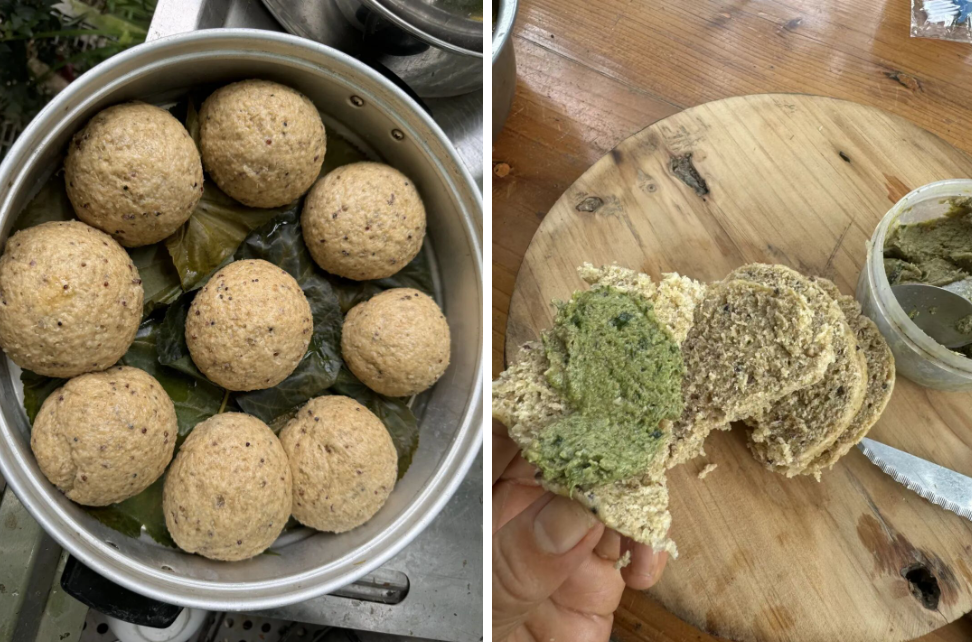
◉ Wholemeal flour steamed buns, milled at home by Grandma Kouzi. Image source: Grandma Kouzi
Manxixi: After Working at a Bread Factory, I Stopped Buying Bread with a Three-to-Six-Month Shelf Life
I used to buy and eat a great deal of mass-produced bread, especially those with a three-to-six-month shelf life. Then I took a job at a bread factory myself and saw the production recipes. After that, I came across some material about food additives and simply did not want to buy that kind of bread any more. At the time, I was actually both surprised and a little calm. Because I care a great deal about food health, once I knew what was going on, I did not hesitate much; I almost stopped buying it altogether. I also tell the people around me that it is best not to buy them.
As I see it, the issues that led me to refuse to buy these products have not been resolved. But at least for myself, “not buying” has been useful.
🛒 Reassessing Our Consumer Choices
Maodou: I Have Not Bought Supermarket Chicken Wings in Four Years
What I refuse to buy is supermarket chicken wings.
It all began after I finished Crisis on the Dinner Table and learned about the issue of antibiotic use in animal farming. I stopped wanting to buy them, and it has been four years now that I have kept it up. After that, I would go to “Jishi” to buy chicken, and I also try to avoid chicken bought from outside in my day-to-day life. Since I give lectures to students, I also bring this content into the classroom.
I believe “not buying” is at least useful for myself, and it may also help some of the students who have attended my lectures.
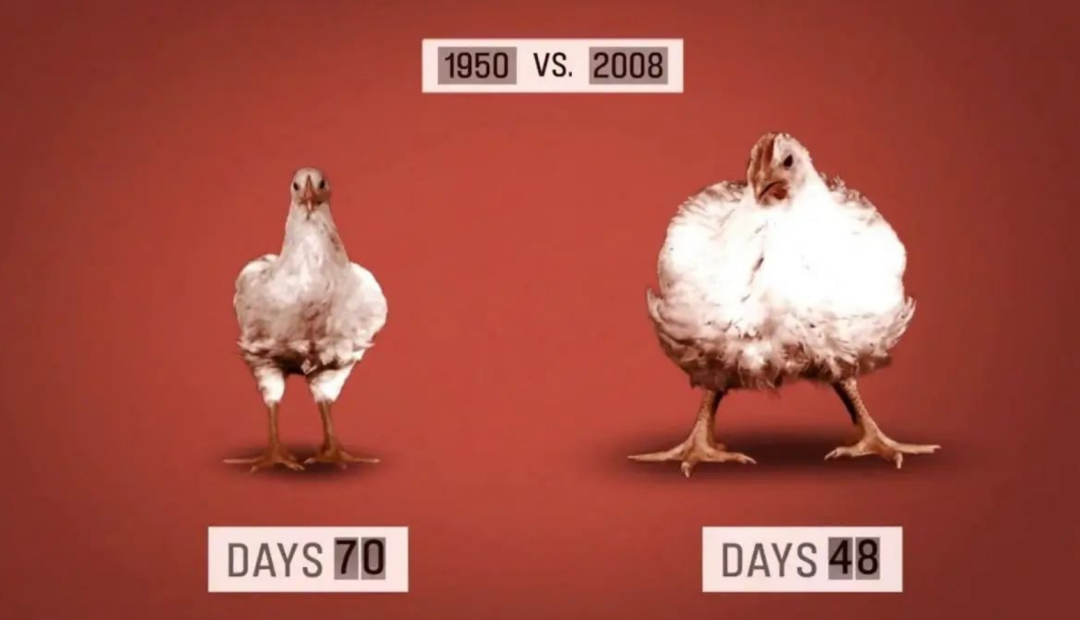
◉ In industrial farming, hormones are used to accelerate the growth of broiler chickens, causing their legs to become lame as they can no longer support the birds’ body weight. Image source: Monthly Review
Yaoyao: After Tasting True New-Crop Rice, the Old Simply Won’t Go Down
I used to buy rice very casually. When I didn’t cook often, I would just grab some loose rice. Once I started a family, I would buy whole bags of branded rice — I even ate rice that was a year or two past its use-by date.
The real change began when I started eating new-crop rice grown on an ecological farm. After a while, I forgot to order rice one time, and my husband picked up two bags from Sam’s Club. For the next few weeks, I had no appetite whatsoever. The rice had no fragrance at all — I could only manage it stirred through tomato and scrambled egg.
Since we eat our meals with my mother-in-law, there is already more than enough pointing and commenting at the table. To keep the peace, I carried on eating with a perfectly calm exterior, but inside I was miserable — I desperately did not want to eat.
Perhaps it mainly comes down to this: once you have tasted the best, you simply cannot stomach the rest. After eating new-crop rice freshly milled from the same year’s sowing, I found I could detect the taste of old rice. The fragrance of new-crop rice as it cooks catches your nose and makes your mouth water — a perfectly natural response to something truly delicious.
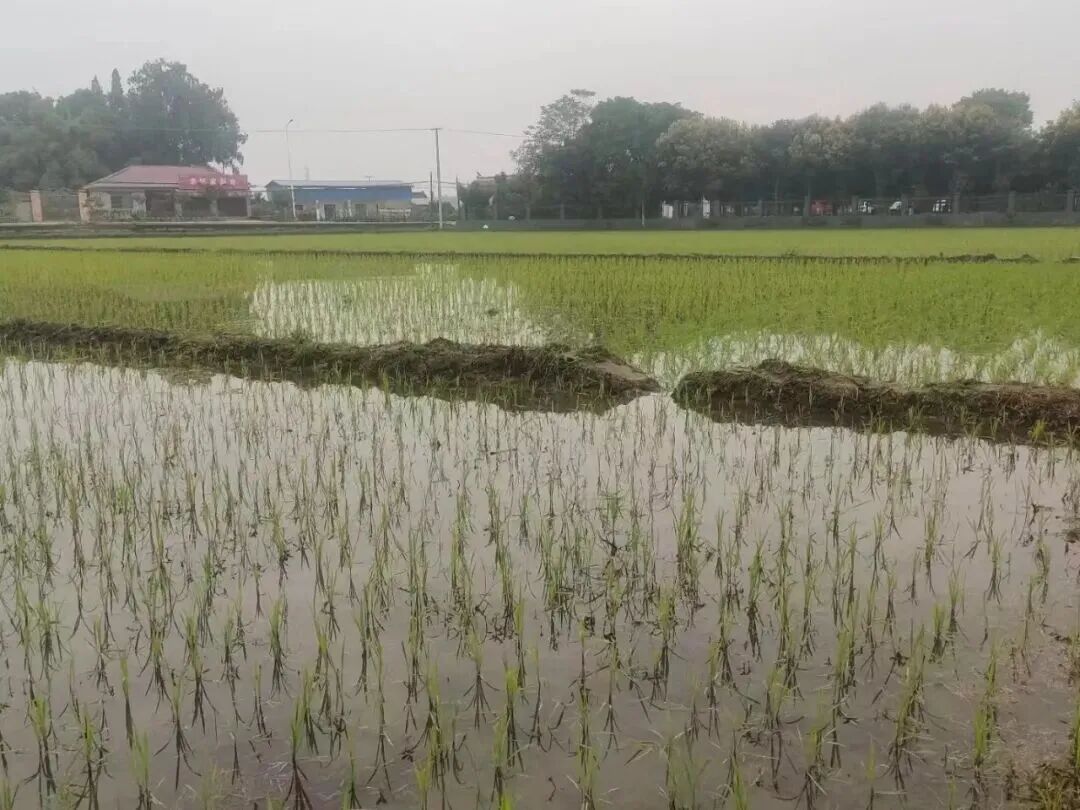
◉ Ecological rice paddy. Image source: Chen Ying
Rice accounts for roughly 40% of my diet, and its unit price is not particularly high compared with other foods, so I feel it is worth choosing fresher, safer rice. Substitutes are not hard to find, either — there is plenty of organically grown rice available now.
Later on, I would also buy some ecological rice as a gift for family members to try, especially for the little baby — I hope she can eat well from a young age. I also talk to the people around me about the stories behind rice, hoping more people will revisit this far-too-ordinary food and awaken their dormant senses.
Once, I asked the owner of a rice shop in a small town: “Do you spray pesticides?” He said, “Beautiful, I can tell straight away you have never farmed a field — how on earth can you grow rice without spraying? If you don’t spray, would there even be anything to eat?” That moment also made me realise that behind an ordinary bowl of rice, there are so many questions I would never have thought to ask.
From now on, unless I have been to the place of production, or know the producer is someone I can trust, I will not buy.
I do not really see this as a simple act of “boycotting”. The yield of good-quality food may simply not be high enough, and choosing it sometimes feels more like a niche path towards a higher quality of life — it costs more, and I get nagged by my mother-in-law for buying the expensive stuff. But I believe that good food is, at the very least, worthwhile for me and my family.
Zhang Hua: Starting with McDonald’s, I Reassessed My Consumer Choices
I refuse to buy from McDonald’s, Starbucks, and a whole range of food-and-drink brands that I believe are connected to the Gaza issue. I mostly want to focus on McDonald’s here.
I used to live above a McDonald’s. I never particularly liked it, and I knew it was unhealthy, but it was so convenient that I still ended up there often.
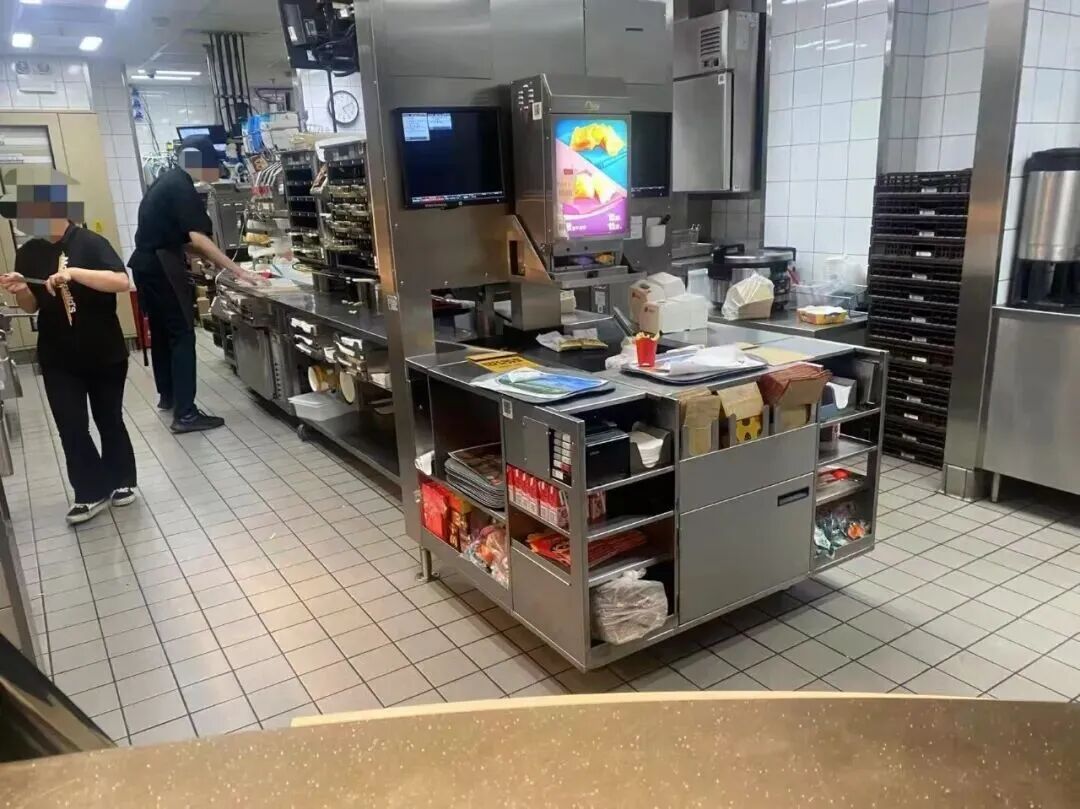
◉ McDonald’s back kitchen. Image source: Qingtai Yinwu
Then I saw the news about McDonald’s branches in Israel offering free meals to Israeli soldiers. Beyond the anger, I found the whole thing deeply nauseating. My decision to stop buying was not even because of BDS (Boycott, Divestment and Sanctions — a global, non-violent political and economic pressure movement launched by Palestinians in July 2005), nor did I frame it as an act of solidarity. It was mainly that I could not bear to eat the same food as the soldiers who took part in the attacks on Gaza.
I started learning properly about the Palestinian issue in October 2023. It gradually became an important part of my life and began to intersect with many other issues. Since then, I have kept up the boycott right up to today. I found that my life actually became healthier — perhaps I never needed McDonald’s in the first place.
I also tell people around me. At the time, I was active in a community solidarity campaign and printed lots of small BDS leaflets to hand out everywhere, including suggestions for what alternatives people could find for each brand. That was a period when I felt genuinely empowered.
After I moved back, though, I sometimes find myself unsure how to bring this up with people I have just met. Especially when someone suggests McDonald’s for lunch — I could easily rattle off everything I have learned over these past few years, yet suddenly I do not know where to begin.
BDS has also made me reassess many of my consumer choices. Not just McDonald’s, and not even just the Palestinian issue. I started looking for alternatives I consider more ethical, and in my everyday purchases I have become increasingly aware of the issues behind the products.
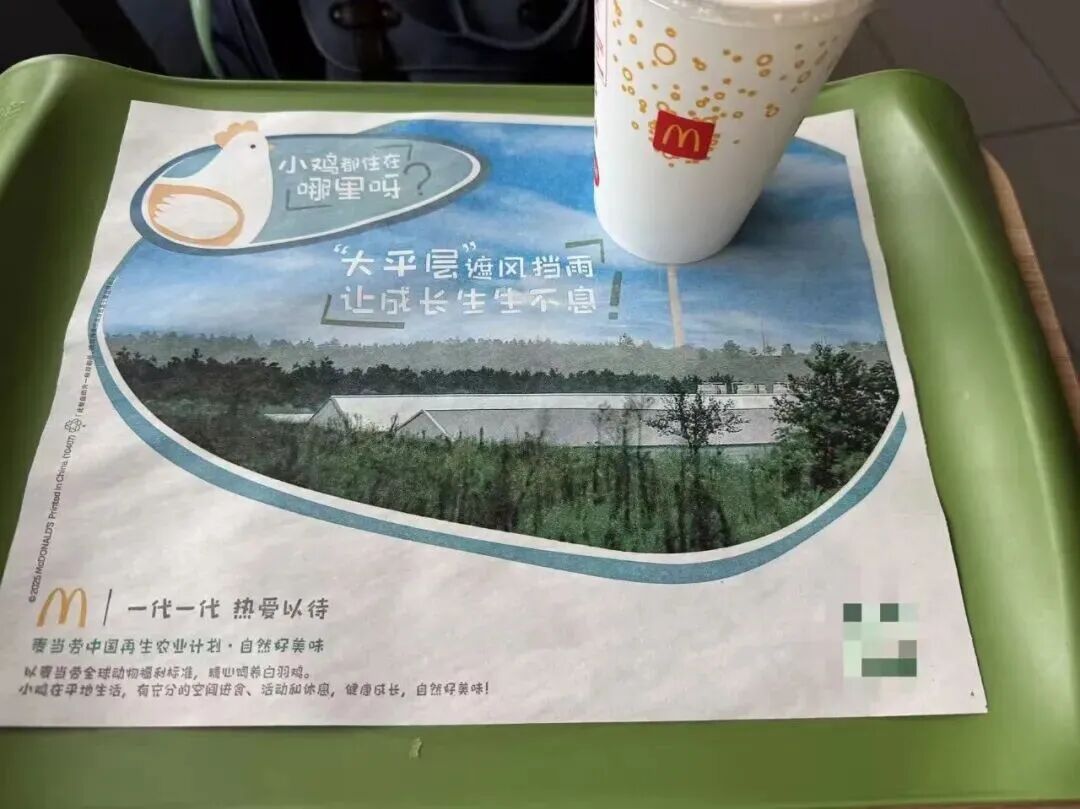
◉ A McDonald’s advertisement promoting its commitment to animal welfare and environmental protection. Image source: Yuyang
One thing I find really interesting is that I used to know about the labour and health controversies in the meat supply chains of McDonald’s, KFC and others, but none of those things changed my consumption as powerfully as the BDS movement did. It made me realise that when a consumer choice is linked to a larger public issue, people’s concern for global justice can actually carry tremendous force.
55: I Won’t Go Back to That Tong Sui Shop
There is a very tasty, internet-famous tong sui shop right below my flat. Before, every time friends came to visit, I would take them there, and even on days when I had nothing particular to do, I would often just wander downstairs for a bowl.
Then one day, while scrolling through Xiaohongshu, I saw that a user had screenshotted this shop’s official Douyin account. In the videos on the account’s homepage, the owner could be seen handing out cigarettes to the male customers queuing outside — all as a marketing gimmick. After seeing it, I was furious, and I also felt a deep sense of grief and heartache. It struck at my conviction about anti-smoking; I simply cannot accept cigarettes being used as a promotional tool for a food establishment.
So I just stopped going — no hesitation, no exceptions. The tong sui scene in Guangdong is enormous; there are plenty of other places to go. I still patronise a tong sui shop owned by a woman, and I have told the people around me not to go to this one.
Whether or not the shop has changed since then, I do not know, nor do I care anymore. My “not buying” may only matter to me and those close to me — that shop still has a long queue to this day. But going forward, I will continue to refuse to spend money at a place like that.
Sighing Repeater: When There Are Alternatives, I Try to Avoid What Makes Me Uneasy
As long as alternatives exist, I try to steer clear of foods that have been hit by negative publicity — Daqing milk powder and Wandashan milk, for example. As for other milk powder brands like Yili and Mengniu, I do not really consider them.
I can no longer recall the specific incident that first sparked this mindset decades ago — gutter oil was probably the earliest. Food safety is what matters most to me. Back then, it was pure anger and outrage. Now, with testing and enforcement in place, plus alternative disposal channels for waste oil, I think the gutter oil problem should be somewhat better than it used to be. But ultimately, much still comes down to testing and penalties, and whether running a business in compliance can actually be profitable. If there is no fundamental change in these areas, the problem may well persist.
I believe that “not buying” works, though one person’s power is negligible. What really matters is that the choices of the majority shift, and the actions of professional anti-counterfeit campaigners and grassroots whistleblower networks. An individual’s contribution is limited, but the latter at least make some producers realise that passing official inspections does not mean all is well.
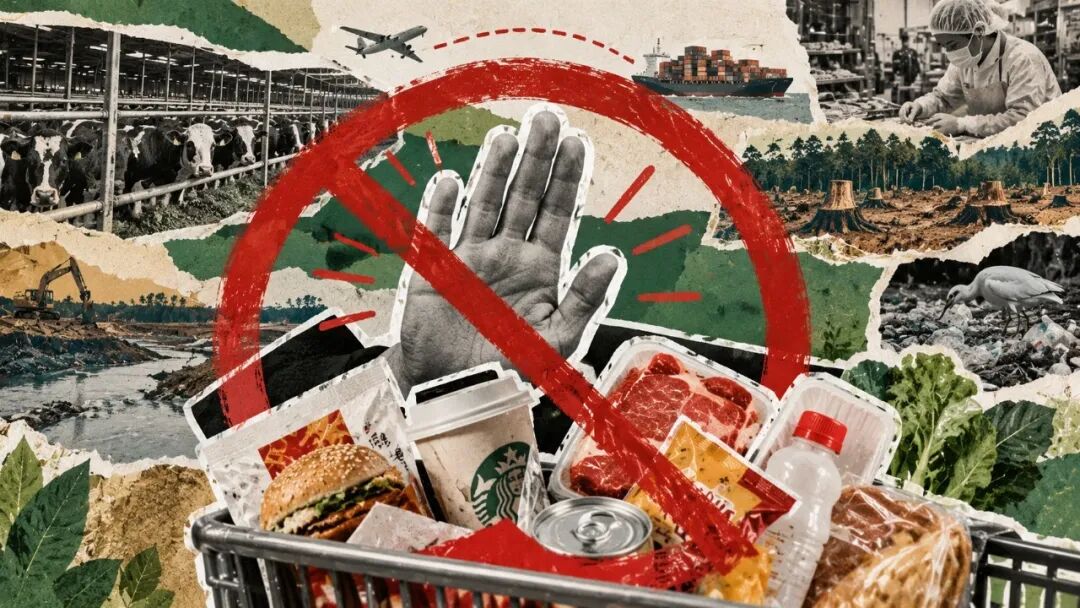
◉ Image source: AI-generated
Compiled by: Kairui
Layout: Xiaoshu
Scan the QR code to tip and support original Zhishi
▼
Click on an image to read related articles.

▼
Click a keyword to browse more article collections.
Seeds | Farming Techniques | Policy | Fermentation | Nutrition | Fruits | Fisheries | Events | Recruitment | Takeaway | Wet Market | Livestock | Food Talk | Sharing Sessions | Book Club | Harvest Festival | Smallholder Stories | Climate Change | Rural Development | Cooperative Economy | Urban Farmers | Food Safety | Digital Technology | Biodiversity | Pandemics and Food | False Solutions | Agroecology Internship Programme
Beijing | Hebei | Shanghai | Guangdong | Guangxi | Henan | Sichuan | Jiangxi | Xinjiang | Shaanxi | Hong Kong | Chongqing | Zhejiang | Jiangsu | Guizhou | Taiwan | Inner Mongolia | Philippines | Canada | Russia | Mexico | Italy | United States | United Kingdom | Germany | Netherlands | Thailand | Sweden | Japan