Twelve Years After Switching to Farming: The Business Wisdom He Gained

When I visited the Gudao Xifeng Manor in the northwestern suburbs of Beijing, Brother Daotian served me a watermelon. I had eaten yellow-fleshed watermelons before, but had never seen one this slender and elongated. The skin was still a pale green, without the familiar stripes of a watermelon — it looked rather like a winter melon.
Brother Daotian explained that it was an old heirloom variety from the Yangtze River Delta, called Sanlin Benggua (literally “bursting melon”), and that he had bought just five seeds to try growing. He added with a trace of regret that he had planted too late: in August the temperatures are high and growth is fast, so the transpiration pull is strong and the plant greedily absorbs any moisture available. The water content becomes excessive, and the melon splits. Had he planted earlier, the sweetness would have been greater.
I listened, understanding only half of what he said. I farm myself, but my methods are practically primitive: scatter the seeds, leave everything to nature, and only pull weeds or water when I happen to have the time — the rest is entirely up to the crops themselves. I had never imagined that the difference between a June melon and an August melon could be so striking, or that air temperature could affect quality and flavour so indirectly.
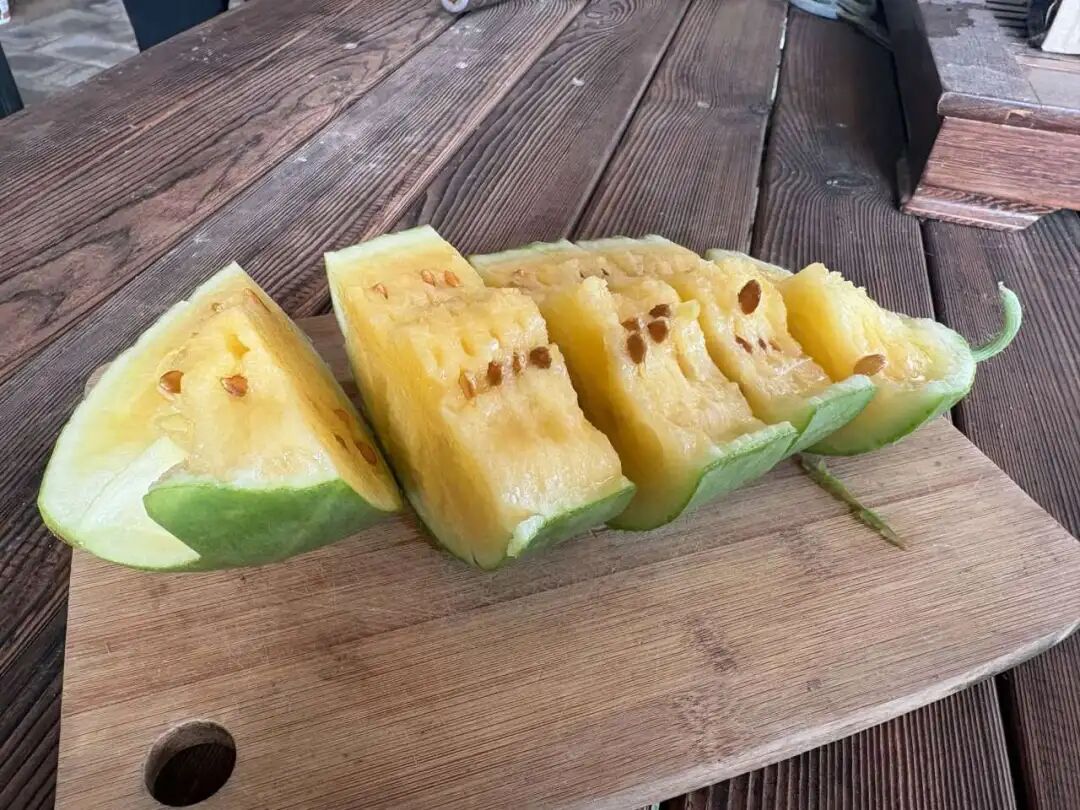
◉ Sanlin Benggua in August, bursting with juice. Image: Xiaodan
Brother Daotian is not formally trained. In 2014 he switched careers to learn farming. Today he has contracted 150 mu of land beyond the North Fifth Ring Road in Haidian District, Beijing. Fifty mu he keeps for himself, growing mainly Jingxi rice, strawberries and other crops. The remaining hundred-plus mu he has divided into small plots of a few dozen square metres and sublet to city dwellers. In his own words — he turned the shared garden into his main business.
In recent years, the trend of city dwellers renting land to farm has grown ever more popular. This model lets urban residents experience pastoral life while giving farmers an extra source of income. Yet the outlook for shared gardens does not appear promising. According to available data, more than half of all shared garden projects are currently mired in losses.
I was curious: why did he decide to switch to agriculture in the first place? Whether farming the land himself or renting it to others, making money is no easy feat. What is Brother Daotian’s secret to keeping the business afloat?
Proprietors Must Know Their Techniques
Since entering the field he had been seeking out every chance to learn. The first person he tracked down was Professor Du Xiangge of the Organic Technology Research Centre at China Agricultural University. From the very first lecture he attended, everything he thought he knew was overturned: one could actually farm without spraying any pesticides.
So Brother Daotian approached Professor Du for a partnership — he would provide a free site for the professor to bring students to, while Professor Du supplied the technical guidance.
In 2014 he went on a week-long study tour to Shanghai, visiting farms that operated on different models. Over time he also sat in on courses by various ecological farming experts, and even took a part-time role for two years at an organic certification body, travelling around to carry out inspections. In his spare time he learned from the polytunnel managers at the park — all of them seasoned growers from every corner of the country.
Later, a friend added him to a WeChat group made up mainly of teachers from agricultural universities and technical leads at farming bases across the country. There was one rule for joining: members had to share professional knowledge. Strawberry expertise alone was shared over fifteen days, with a different farm presenting each day.
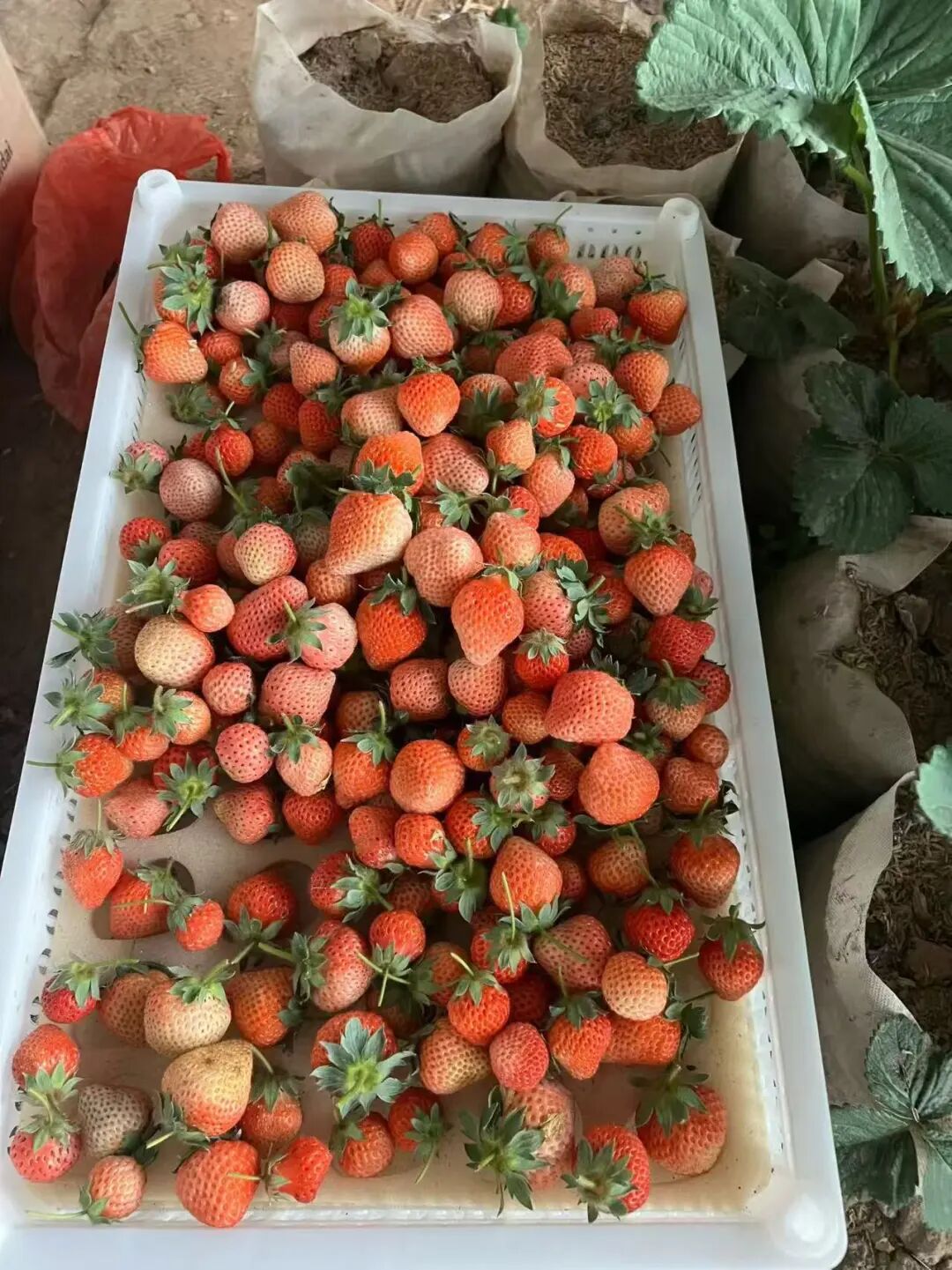
◉ Strawberries grown by Brother Daotian.
He stayed in the group for three years, steadily building a solid foundation. On one occasion he clashed with a worker. They were both from Baoding, and the man had even been Brother Daotian’s lecturer at vocational college. But he insisted on farming by Baoding methods. “I told him to make raised ridges, and he insisted on flat beds.” As a result, the cucumbers were hit by a severe aphid outbreak. Helpless, the worker ended up turning to Brother Daotian for help.
In the end Brother Daotian analysed the cause using the methods he had picked up from the professors in the group. He reasoned that Beijing’s soil was heavy clay, and the aphid outbreak was due to poor root aeration. He dug trenches on either side of the cucumber rows to vent the soil, and at the same time applied supplementary nutrients. Sure enough, the plants recovered and went on fruiting right through to autumn.
Brother Daotian then dismissed his own former teacher, and grew ever more confident in his own methods. From then on he kept a tight rein on labour costs — no middle layer of management in farm operations, just him overseeing everything directly. Compared with other farms, he not only kept costs lower but also maintained full oversight of every process and every piece of information in production.
Since switching to agriculture, Brother Daotian has always stuck to ecological farming: no pesticides, and strictly pigeon manure for fertiliser. Working in ecological agriculture is not simply a case of leaving things to the weather. Because production costs are relatively higher, ecological produce also tends to sell at a premium. Take Brother Daotian’s products: his rice goes for 40 yuan per jin, and his strawberries fetch 160 yuan per jin. Consumers willing to pay that price naturally want more than just health and safety — they want flavour, what people call “the taste of childhood”. Competing in the market against conventionally grown produce at scale demands a higher level of technical skill from ecological farmers.
When I met him that day, Brother Daotian stressed with great conviction that the single most important factor in judging an ecological farm is whether the proprietor knows the techniques personally and takes part in the technical management hands-on, rather than leaving it to the workers.
On his own land, Brother Daotian is an absolute controller: every task must be done on his orders, planted in his way. That afternoon, a worker had to come and find him every so often to check what needed doing and — more importantly — how to do it. He gave instructions one by one, urging them to pull the weeds quickly, clear the plot, and once the ground was ready, to get the broccoli and cauliflower planted straight away, or there would not be enough growing time left.
The Art of Farming
He has his own system for managing crops.
Take Chinese cabbage, for instance. In mid-August this year, Brother Daotian posted an announcement in the “landlord” group chat of plot renters, outlining the key technical points at each growth stage: when the seedlings have two to three true leaves, do not water them — protect the original cotyledons. At four to five leaves, you hit the transplanting window. Once eight true leaves have emerged, consider top-dressing, but flood irrigation is strictly forbidden. As the most important winter-stored vegetable in the north, almost every household cannot do without Chinese cabbage through the cold months. August is the critical moment for planting it; if you put it off until September and the temperatures drop, it will be too late.
He planted his own Chinese cabbage in the fields too. At that time, Typhoon No. 13, Baihaitun, had not yet arrived. The storm made landfall in Zhejiang and then tracked north, bringing prolonged rainfall to North China. The moment he saw the news that the typhoon was approaching, he and the workers spent two days rushing to plant the entire two mu of Chinese cabbage.
All of this was to make the cabbage taste better. “Chinese cabbage needs water during its seedling stage, and catching a spell of consecutive rainy days is the best thing,” Brother Daotian explained to me. Compared with well water or river water, rain contains more nitrogen and other nutrients. After a heavy downpour, plant leaves turn a deep, dark green — absolutely never a pale, tender green. Watering by hand simply cannot match rainfall; the moment any crop receives human intervention even once, its flavour loses at least a degree. Manual watering also requires careful timing and precise amounts. So, as Brother Daotian puts it, “If it all comes down to the workers doing it by hand, I’d sooner leave it to the sky.”
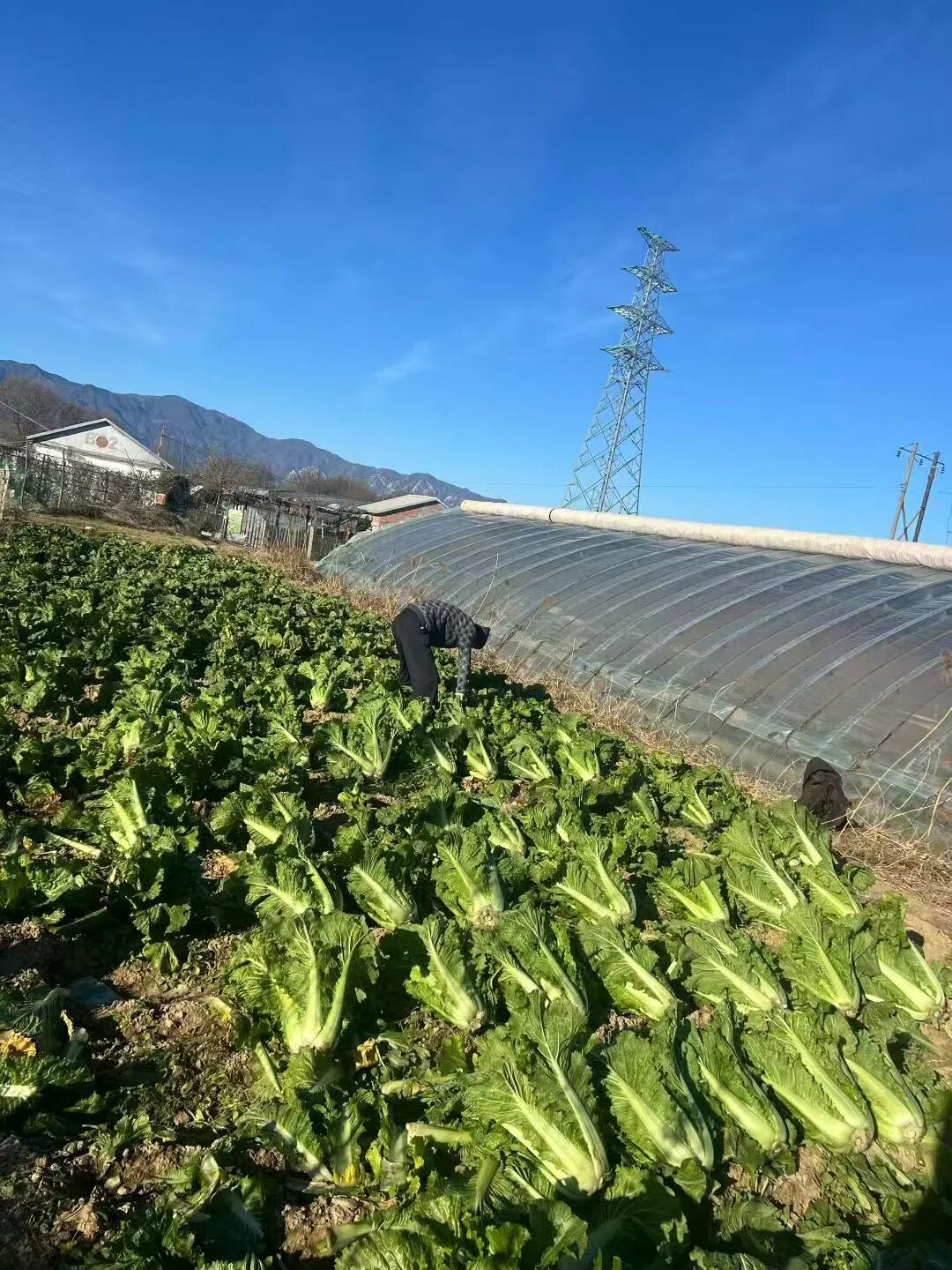
◉ Chinese cabbage harvested in winter.
He offered another example: “I haven’t given my onions a single watering this year — they rely entirely on rain. The taste of those onions — every bite is full of juice.”
Much as with Chinese cabbage, he keeps his own “calendar” for growing onions. The rice is usually harvested around 20 October. Once cut, it is laid out to dry for no more than ten days. After those ten days a rain is certain to come; if the rice hasn’t dried by then, plastic sheeting must be readied to cover it.
Armed with these weather patterns he has observed over the years, he can manage with no irrigation or very little. Typically, Brother Daotian times his onion transplanting for late October, deliberately to catch that post-harvest rain. In winter, a single round of pre-freeze watering is usually enough — sometimes he skips it altogether and simply applies straw mulching to lock in the moisture. By the time the Awakening of Insects and Grain Rain solar terms arrive the following spring, rain is certain to come, and together with the snowmelt from winter, that is more than sufficient for the onions to grow.
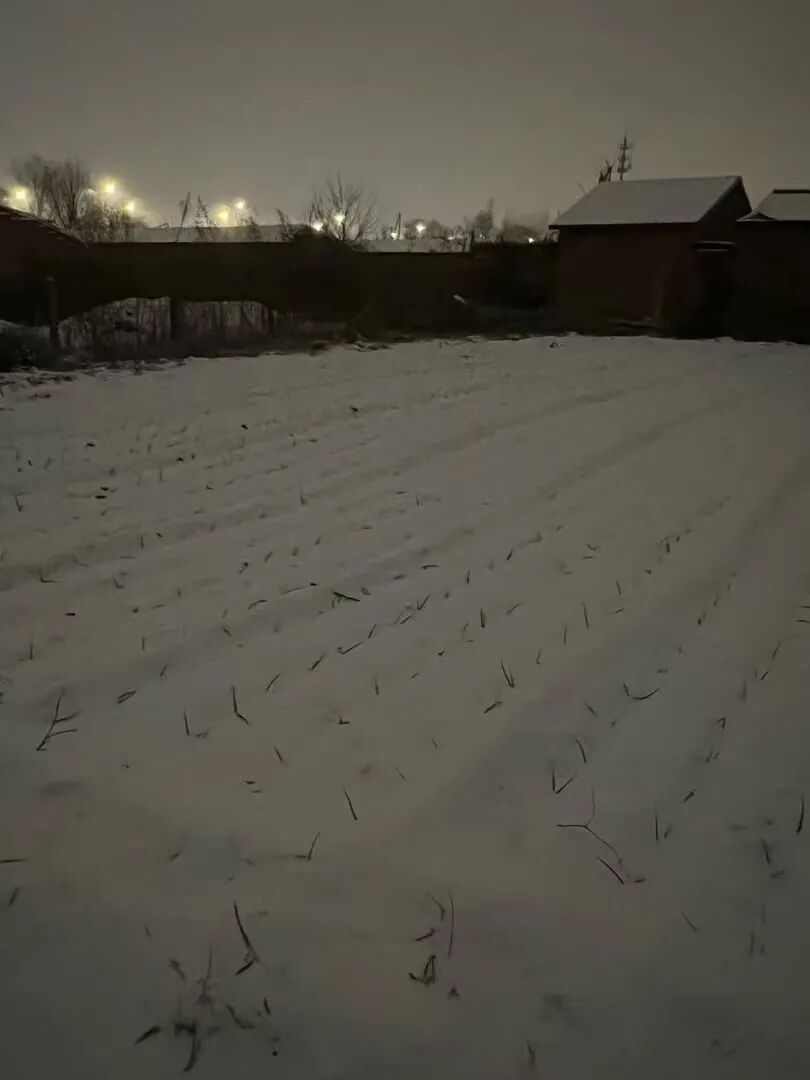
◉ Winter snow blankets the land; crops draw all the moisture they need for the season from the meltwater.
His refusal to water often makes the farm workers uneasy. They gossip among themselves, muttering about why no watering has been done yet. They find ways to bring it up, but he turns them all down.
Even so, after nearly twelve years of farming, Brother Daotian still has his share of mishaps.
This year he planted a strip of an old-variety corn, and the gales brought by Baihaitun knocked it flat. Afterward he analysed what had gone wrong and blamed his own greed. In that same cornfield he had intercropped onions and taro. On top of that, weeding had come too late, so the weeds grew wildly dense. Fighting for survival — for a share of sunlight — the corn could only stretch ever upward, and in doing so failed to put down deep roots. The moment the wind came, it toppled.
Poorly controlled weeds also affected his Jingxi rice this year. Jingxi rice is a signature crop of Beijing, with a history of cultivation in Haidian stretching back to the reign of Emperor Kangxi in the Qing dynasty, earning it the name “Imperial rice”. Today Jingxi rice remains one of Brother Daotian’s principal self-grown crops.
He had originally planted fifteen mu of Jingxi rice this year. Ecological rice paddies can only be weeded by hand. The tractor operators, worried that the excessive weeds would damage their machines, all refused the job. Manual labour is the heaviest cost in ecological farming. At last year’s rates, hiring someone to hand-weed a single mu costs an extra 600 to 800 yuan. But if the weeds grow too thick and are left unchecked, a mu of land may yield less than 100 jin of rice in the end.
He could afford to shrug off the lodged corn — after all, that was corn he had grown to eat himself. But the rice was a genuine commercial crop, and the maths between input costs and output had to add up. Weighing the two, Brother Daotian ultimately decided to abandon the rice and clear the paddy. The land he had rushed to plant with Chinese cabbage was that very paddy — neither the soil nor the fertiliser went to waste.
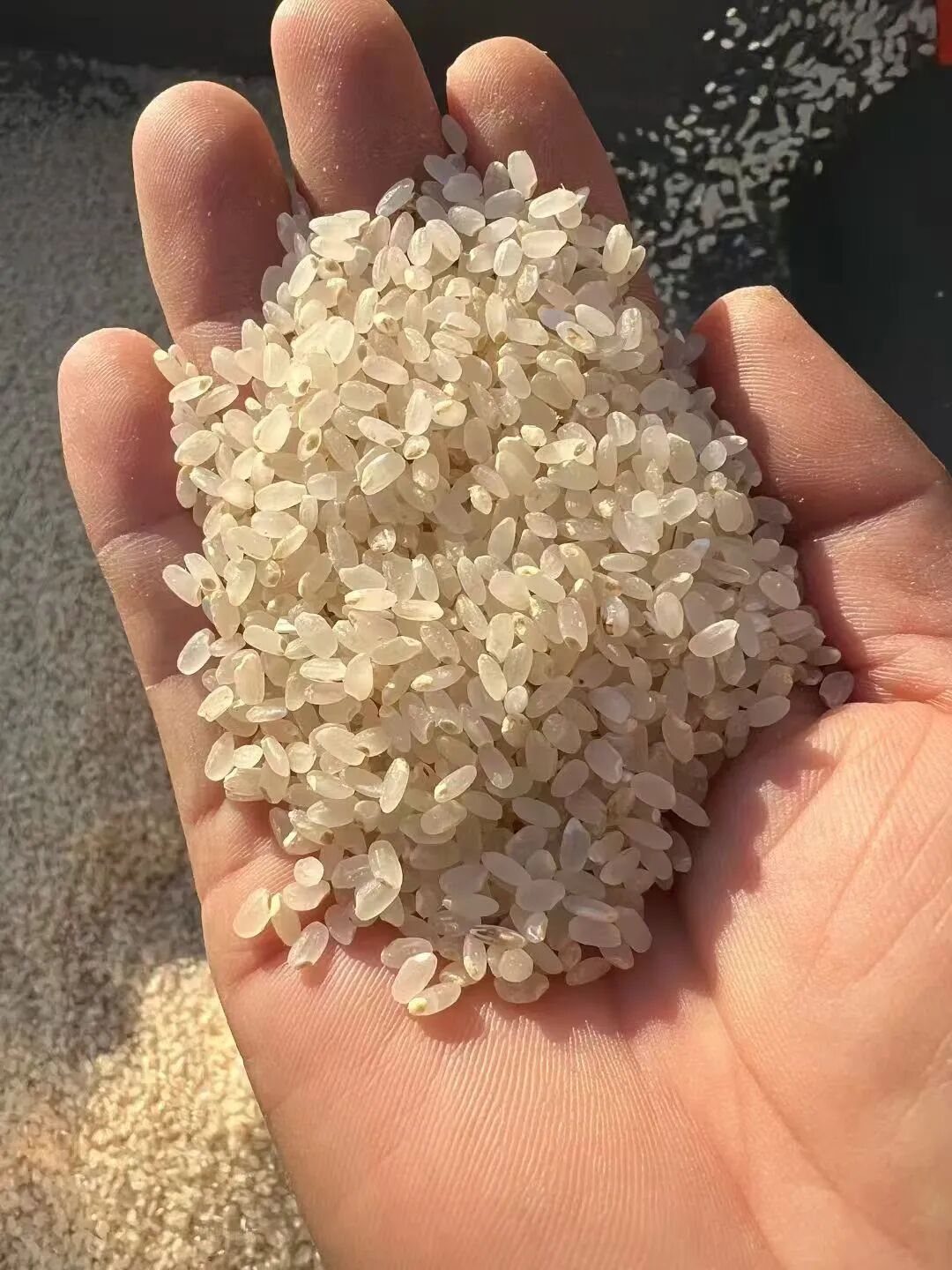
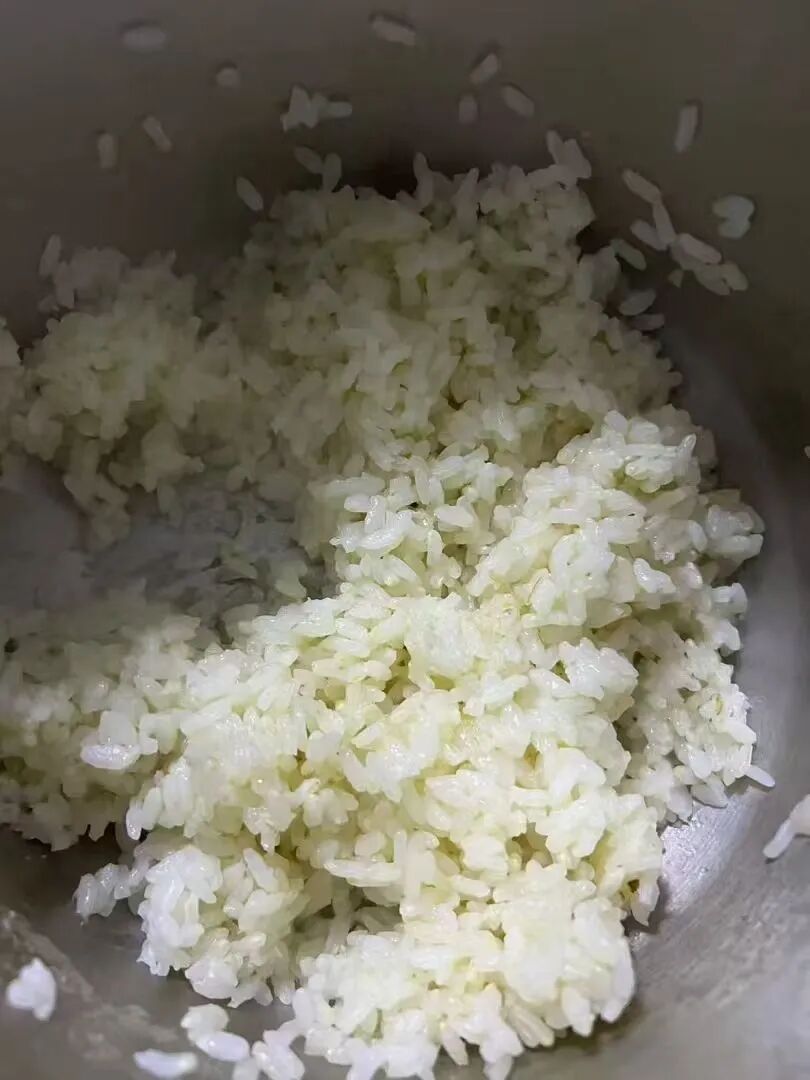
◉ Jingxi rice and the rice cooked from it.
Breaking Even
Ecological agricultural produce, burdened by higher costs, can barely circulate in conventional produce markets. Ecological farmers must therefore carve out their own sales channels to move their products. That is why Brother Daotian has a guiding business principle — the operation must break even.
He stops every so often to work out his costs — the best cost accountant I have ever met among “farmers”. And his sums are crystal clear. The rent on one polytunnel is 15,000 yuan. If you do not plant, the cost is simply the rent. But the moment you put something in the ground, add in inputs and labour, and the cost leaps to 40,000. “If my sales ability cannot reach that mark, I’d rather not plant at all.”
This habit of cost calculation is a professional instinct he built up during his years in the construction industry.
At university, Brother Daotian studied Industrial and Civil Engineering. After graduation he landed squarely in the thick of the property boom, and he stayed in the trade for ten years.
Had he carried on, perhaps he would have ended up much like his old classmates today — at worst a department head at a property company, with some ranking as high as the top three in the company.
But by then he had begun to want out. Constant overtime, late nights, drinking and entertaining without restraint — by the time he realised something was wrong, his blood glucose had hit 16.8 mmol/L, far beyond the diabetes diagnostic threshold. As it happened, he was involved in building the polytunnel park where Gudao Xifeng Manor now stands. “I drew every single blueprint. If I were a few years younger, I could tell you exactly how many bricks went into any one corner of the place.”
So he rode the wave and stayed on in “property management”, looking after utilities, seedlings, and growing techniques. Later still, the company that held the land contract ran into heavy losses, and Brother Daotian put down 600,000 yuan of his own money to take over.
Subletting the land he had contracted was pure businessman’s instinct. In 2014 they went first to visit Xiaomaolü Citizens’ Farm and Sanyuan Agricultural Science and Technology Park. Both farms sit in Beijing’s western suburbs — Sanyuan Agricultural Science and Technology Park, in fact, practically next door to Gudao Xifeng Manor, less than a kilometre away.
At the time, Xiaomaolü Citizens’ Farm had shot to fame, drawing widespread attention for the first time to the idea of city dwellers renting land in the countryside. Founded in 2008, right as Chinese consumers were reaching a peak of concern over food safety, one of its core principles was this: urban residents rent a 30-square-metre vegetable plot and, through hands-on farming, come to experience the toil of peasant life and the sheer difficulty of agriculture, understand where their food comes from, grasp the true cost of ecologically grown produce, and at the same time shed the mental and physical pressures of city work. In a retrospective article, Huang Zhiyou, one of the founding members, noted that over the nine years from 2009 to 2017, Xiaomaolü had provided land-lease growing services to nearly 1,000 urban households across Beijing.
But Xiaomaolü was more the product of intellectual ideals leading the way. One early participant once told me wistfully: back then everyone dreamed of reforming society, and no one realised there was money in it. Brother Daotian, on the other hand, sniffed out the commercial opportunity in renting plots to city folk early on, and quickly transplanted the Xiaomaolü model to his own site, running it from 2014 right through to today.
Today, across the 150 mu of land he has contracted, the operations are divided — beyond his own cultivation — into family vegetable plots, managed plots, and self-cultivation. The open-air plots run as the shared garden, cultivated primarily by the subletting “landlords” themselves, while some fourteen polytunnels operate as managed plots: workers tend them day to day, and clients in this category bear both the rent and the labour costs.
Of course, running a shared garden means shifting from primary-sector farming into the service economy — the proprietor becomes a service provider. Farming is a dialogue with heaven and earth; running a shared garden is a dialogue with people. Each has its difficulties, and its skills.
Brother Daotian joked with me that if I tried it, customer service would have me bullied to death. He rattled off a few examples. Say someone plants crops on a green belt or in a drainage ditch and then insists you cannot clear them — what do you do? If two plots sit side by side and one owner plants corn that shades the other’s, how do you mediate between them? Or someone asks: how do I grow Chinese cabbage — direct sow or transplant? You give your advice, and then it goes wrong — what then?
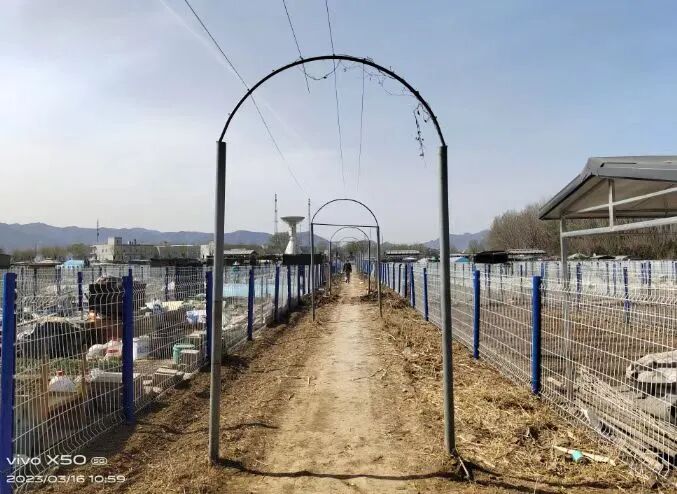
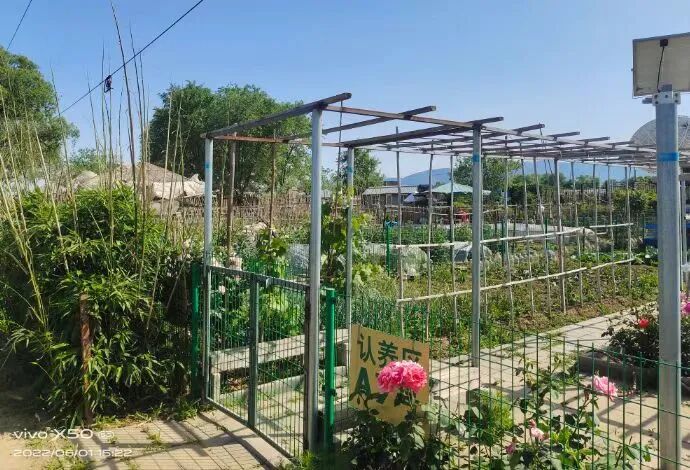
◉ Brother Daotian’s shared garden.
Has the Best Time Passed?
Brother Daotian has worked out the sums in meticulous detail. His shared garden now spans 105 mu. On the cost side, the main outlays are land rent, staffing — a farm manager, a cleaner, and a worker, three people in total to run the shared garden — plus the upfront capital investment in infrastructure. To date, he has amassed nearly 300 household clients, each paying 2,800 yuan in rent, bringing his normal annual revenue to just over 800,000 yuan and an average output value of 8,000 yuan. Very few crops can match that level of income through pure production alone. His Jingxi rice, for instance, can reach an output value of eight or nine thousand yuan, but once you factor in labour costs and the risk of extreme weather, that income is hard-won and far from assured.
Over more than a decade of farming, his own 50 mu of production land has, on paper at least, neither made a profit nor recorded a loss. Running the shared garden has given him room to grow and spread the risks of agricultural production.
From time to time I come across people in agriculture chat groups mulling over a similar venture — finding a patch of land and subletting it for others to farm. Is Brother Daotian’s experience worth learning from? Is the shared garden a model worth getting into?
He clearly does not think so. By his own admission, the success came down to catching two lucky breaks. On top of that, the shared garden model carries inherent risks around whether the market and policy support will remain stable and sustained.
When he took over the shared garden, he also inherited the 80-odd clients his predecessor had left behind. He was still far from breaking even, but at least he had been spared a great deal of initial customer-acquisition cost.
Luckier still, in 2023 Sanyuan — the very model Brother Daotian had once drawn upon — pulled out of the shared garden business. Sanyuan’s “landlords” wheeled up their handcarts, grabbed their bamboo poles, and simply stopped by Brother Daotian’s site on the way past. In the space of a single month, he gained 120 new clients. He had set himself a target of growing his shared garden client base by 10% a year; that one episode delivered years’ worth of growth in a single stroke.
At the time, he had no land ready to go. To absorb these new arrivals, he had to invest more. To that end, he converted his entire 30 mu of paddy into shared garden plots. Over one winter, he completed the basic infrastructure — levelling the land, subdividing it into plots, and putting in fences and access paths.
He took a considerable risk for those 120 clients. The upfront infrastructure alone was a hefty outlay — not just land rent, but digging drainage ditches, building roads, even working out whether there was enough space for clients to park. In that single month, he brought in 360,000 yuan but spent 400,000.
Member attrition is a common operational headache for shared gardens. Fortunately, the second year sailed through the risk. When he recalls that decision, he still looks a little shaken: “If I hadn’t been able to recoup it, I’d have been done for.”
Counting from the founding of Xiaomaolü, shared gardens have now been developing for close to twenty years, gradually becoming a form of weekend economy and springing up across the country.
But most of them seem to be struggling. According to data from Professor Cui Bingqun at the College of Economics and Management, Shandong Agricultural University, fewer than 10% of shared gardens that rely purely on land rent are profitable. Among other garden models, roughly 20% of projects turn a profit, about 30% are roughly break-even, and the remaining 50% run at a loss — some of which have already shut down or begun to pivot.
In recent years, Brother Daotian has been experimenting with new approaches, such as WeChat Channels. When he first started the shared garden, he relied on handing out flyers in housing estates to attract clients; now he has switched media, using WeChat Channels for promotion.
He has also noticed a shift in the shared garden market. Before, he could hardly find anyone promoting a shared garden on WeChat Channels; but starting last year, shared gardens have been popping up all over the country.
He does not yet feel the pressure himself, though he believes the best window for running a shared garden has already closed. “At the start, competition was light, we didn’t know how to advertise, and clients came anyway. But now acquisition costs are much higher.”
Since last year he has been telling his farm manager, “We’ll just outlast them. Give it three years and they’ll surely fall into the pit.”
– This is Foodthink’s 848th original article –
Foodthink
Author
Xie Xiaodan
Former agricultural journalist, dreams of having a small plot to farm herself
Unless otherwise noted, all images in this article are courtesy of Brother Daotian
Editor: Lingyu
Layout: Xiaoshu
Scan to tip, supporting original food writing
▼

▼
Click the image to read related articles
▼
Click a keyword to browse more article collections
Seeds | Agricultural Techniques | Policy | Fermentation | Nutrition | Fruit | Fisheries | Events | Careers | Takeaway | Markets | Livestock Farming | Food Talk | Share Sessions | Book Clubs | Harvest Festival | Smallholder Stories | Climate Change | Rural Development | Cooperative Economy | Urban Farmers | Food Safety | Digital Technology | Biodiversity | Pandemics and Food | False Solutions | Ecological Farming Internship Programme
Beijing | Hebei | Shanghai | Guangdong | Guangxi | Henan | Sichuan | Jiangxi | Xinjiang | Shaanxi | Hong Kong | Chongqing | Zhejiang | Jiangsu | Guizhou | Taiwan | Inner Mongolia | the Philippines | Canada | Russia | Mexico | Italy | the United States | the United Kingdom | Germany | the Netherlands | Thailand | Sweden | Japan