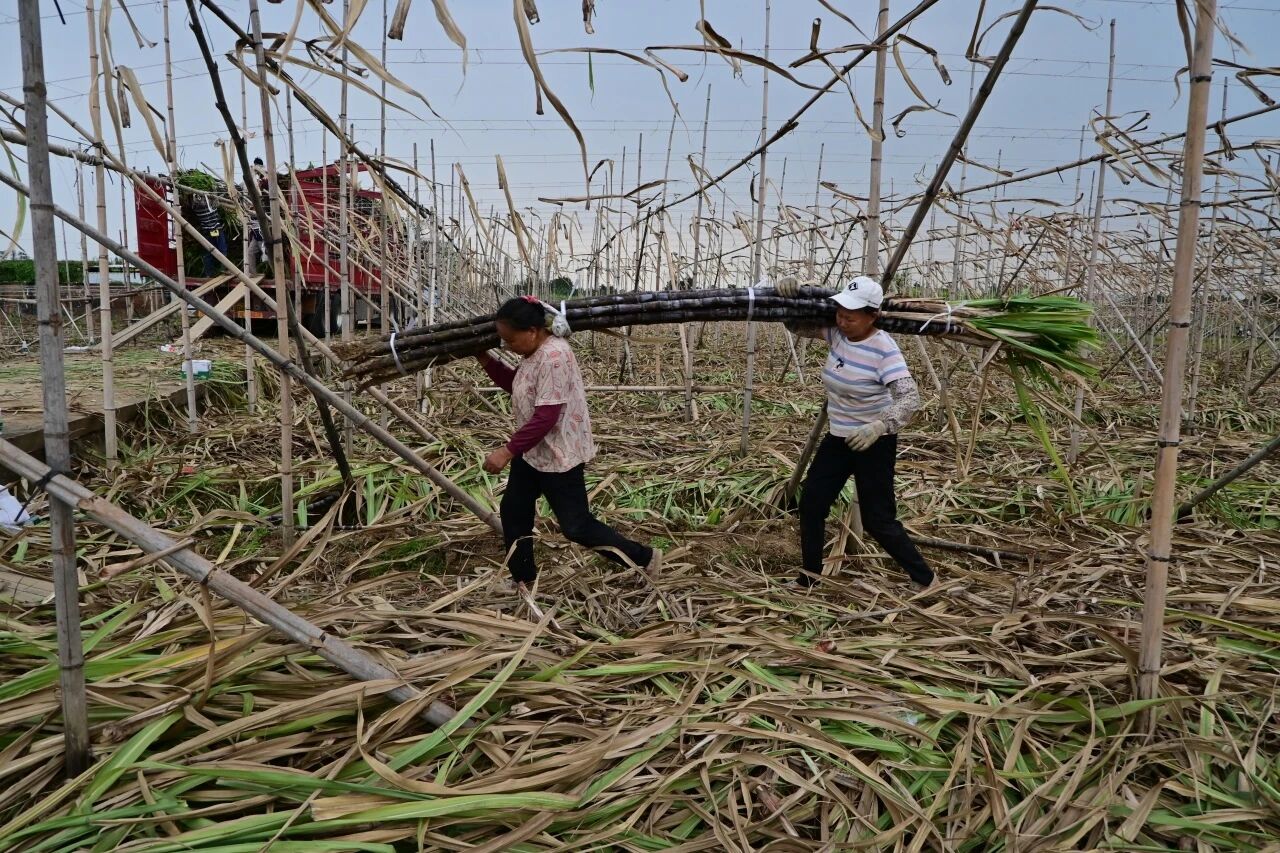
In Lanhe Town, Nansha, Guangzhou, the buying price of black-skinned sugarcane has plunged from nearly 100 yuan to 5 yuan. Farmers over 50 give their cane away for free to clear land before the spring ploughing window, yet farmland policy means they can only keep planting sugarcane.
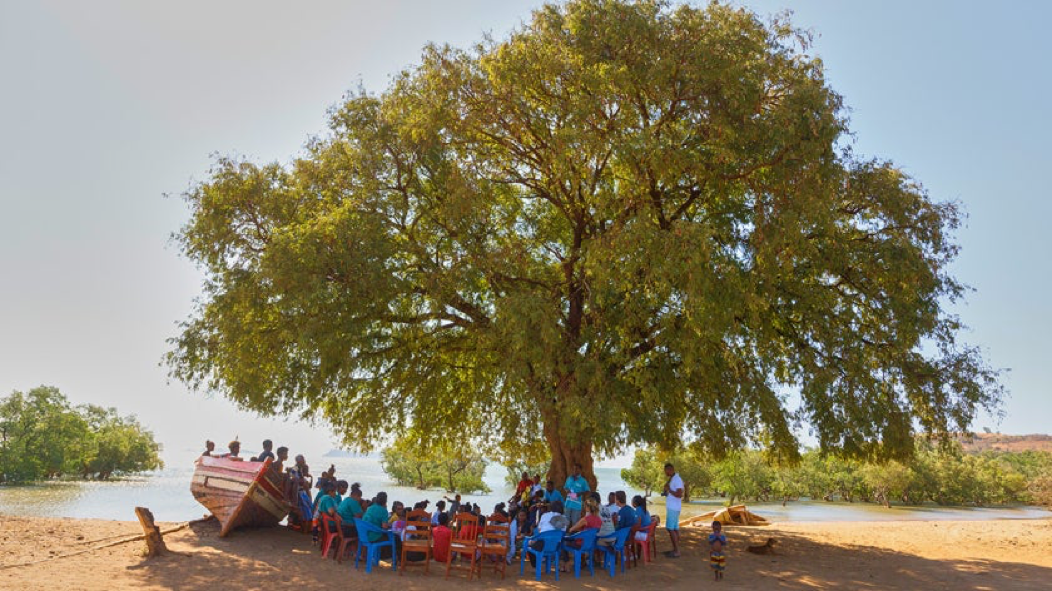
After storms razed homes, national parks barred fishers from rebuilding elsewhere; dredging killed seagrass beds, starving scores of Dugongs; carbon sink projects eye the mangroves. Fishers in Trang and Satun use bamboo to reclaim land, run Crab banks, co-manage with government – defending their own sea, bit by bit.
Mercosur and the EU formally signed their free trade agreement after nearly ten thousand farmers hurled potatoes at EU headquarters in Brussels. Grain-price trauma, double environmental standards and transition costs stack up—fairly, who bears the cost of green transition? China’s low-carbon agriculture faces the same question.
The Satun Province fishers’ association began by driving out illegal trawlers and eradicated local overfishing within a decade; yet the 2025 Fisheries Act amendment, approved by Parliament, will allow fine-mesh nets for night fishing, putting thirty years of community conservation to a new test.
The 2026 Document No. 1 includes “low-carbon agriculture” for the first time. Tracing sixteen years of climate change in Document No. 1, the real challenge lies beneath resource surveys and climate zoning: how to design policies that allow ordinary farmers to participate and benefit.
Chen Jingjing, a 20-year researcher of rural construction, worked a paddy for the first time this year in Qingshan Village, Hangzhou—no herbicide, sun-drying. Rice cost over 30 yuan a jin, and he also hit a hard wall woven from land rent, hired labour and the division of labour.
Anonymous readers from southwest, northwest, and central China described farmland abandonment due to water shortage after high-standard farmland conversion, raw subsoil exposed by construction destroying soil fertility, and outsider large-scale operators suspected of leasing land to extract subsidies. Contractors also reported plunging profits and overly stringent oversight.
Last century, the Sugar Association funded Harvard scholars to blame heart disease on fat; Ancel Keys’s Seven Countries Study cemented this with cherry-picked data. The first Dietary Guidelines for Americans ushered in half a century of low-fat wrong turns — only the 2026 edition finally rejects added sugars entirely.
Forty thousand delivery riders faced 700,000 active peers; the platforms raised per-order prices and simply defused the strike. Lacking employment contracts and strike protections, riders continue to take risks in a cycle of ever-shrinking algorithmic delivery deadlines.
Meishan farmer Zhao Lishun watched rice paddies transferred to outside large-scale lessees go mouldy and be left unharvested. Across villages in Sichuan, Guizhou and Henan, high-standard conversion has stripped away topsoil, water-conservancy facilities are empty shells, and the “large-field” model is pulling villagers further from their land.