Chasing the Market Trend on a 5-Mu Plot: A Shaanxi Farmer’s 30 Years

My hometown of Liquan, a county in Shaanxi province, is best known for its apples. There was even a saying that “to see China”s apples, look to Shaanxi; to see Shaanxi’s apples, look to Liquan’. In the past, nearly every farming household in the area grew apples, supplementing them with peaches, pears and other fruit, but apples were the undisputed top crop. Starting in the 1990s, my family took up apple growing too, and we made our money from it.
Over three decades have passed. The original fruit trees have aged, and apples are no longer as profitable as they once were. My father has been repeatedly torn between growing grain and planting fruit trees, shifting our family’s 5 mu of land from grain to fruit, back to grain, and then to fruit once more. The shifting crops on the land mirror the changes in farmers’ lives, their fortunes, and the passing of the times.
Apples Brought Prosperity to Liquan
The first variety we planted was Qinguang (a cold-hardy apple cultivar). Cross-bred and selected by Northwest A&F University in the 1950s, it was once widely grown around Liquan owing to its cold and drought tolerance, as well as its ease of management.
During the peak of Liquan’s apple boom, in the early 1990s, my father planted apple trees on a four-mu family plot (historically allocated private farming land) closest to our home. They were the first apple trees in our village, and the fruit they bore later became the village’s very first apple harvest. In 1993, the first year our trees actually bore fruit, neighbours and relatives all came over to help with the picking. The orchard was unusually lively, bustling as if we were hosting major family events (weddings or funerals).
That year, we harvested over 4,000 jin (about 2,000 kg) of apples. Sold at over 80 cents a jin, they brought in more than 3,200 yuan. It was the first time our household had ever seen such an income. When the buyers pressed a thick stack of banknotes into my parents’ hands, I could plainly see their flustered hesitation; I knew it was the sheer surprise getting to them.
At the time, the family savings account held less than 1,000 yuan. Once the money from the first year’s apple harvest was in hand, my parents were both delighted and worried. With such a large sum, they felt uneasy no matter where they put it. They paced back and forth, hiding the cash in several different places, but still couldn’t rest easy. Fortunately, the village committee’s treasurer could help villagers make deposits, so my father took the money there, finally solving the problem.
In many ways, for a long stretch, it was Qinguang that lifted the local economy and improved livelihoods across Liquan. But then the Fuji variety arrived. Qinguang fell far short in both taste and appearance, so nearly everyone switched to Fuji. Today, the Qinguang cultivar is practically a relic, much like a dinosaur fossil.
Uprooting Trees to Plant Grain
On our plot today, there are just over 80 Red Fuji apple trees; the rest is mostly given over to growing grain.
These trees were planted seven or eight years ago. After their initial four-year growing period, they have settled into steady fruiting, and they are my parents’ pride and joy. Fruit trees demand constant attention. In the years I lived in Xi’an helping look after the children, my parents would make the trip back to Liquan every weekend to get a full forty-eight hours of work in at the orchard. Making use of every spare moment, they never fell behind on any of the necessary orchard tasks.
When I returned home for the May holiday this year, I happened upon my parents fruit bagging (a protective technique for apples). By midday, the sun was beating down and the orchard was stiflingly hot, yet they worked with real focus. Each carried a lit stick of incense and had a bundle of thin plastic bags hanging from their chests. They moved deftly through the rows, hunting among the branches for apples no bigger than marbles. Every time they found one, they quickly slipped a bag over it and sealed it with the incense.
“This year’s not bad. We should manage five thousand bags, so it’s a high-yield year.” Bagging is one of the most crucial steps in apple cultivation. Over the years, our family’s already meagre income has depended heavily on these apples. Because yield is at stake, they refuse to cut corners. Each year at this time, they spend around ten days bagging the fruit, tree by tree. At the end of a day, each of them will have bagged two or three hundred apples. Back in the day, the bagging season used to last well over a month, since we had two or three hundred trees then.
At the turn of spring into summer in 2019, we were hit by a severe hailstorm. The apples were in their setting stage at the time and took heavy damage, which drove market prices to rock bottom by the autumn harvest. By then, Liquan’s Red Fuji apples were already considered a step behind, no longer in the same league as the famous Luoquan and Baishui apples (renowned Shaanxi varieties) from our province. More importantly, these trees had been growing for thirty years. They were old, plagued by decay, and simply couldn’t bear more or better fruit.
My father was thoroughly disheartened by apple farming. That winter, he dug up every last one of those trees and started planting grain on the land. Like him, many others in the village opted for the same approach: uprooting orchards to sow crops.
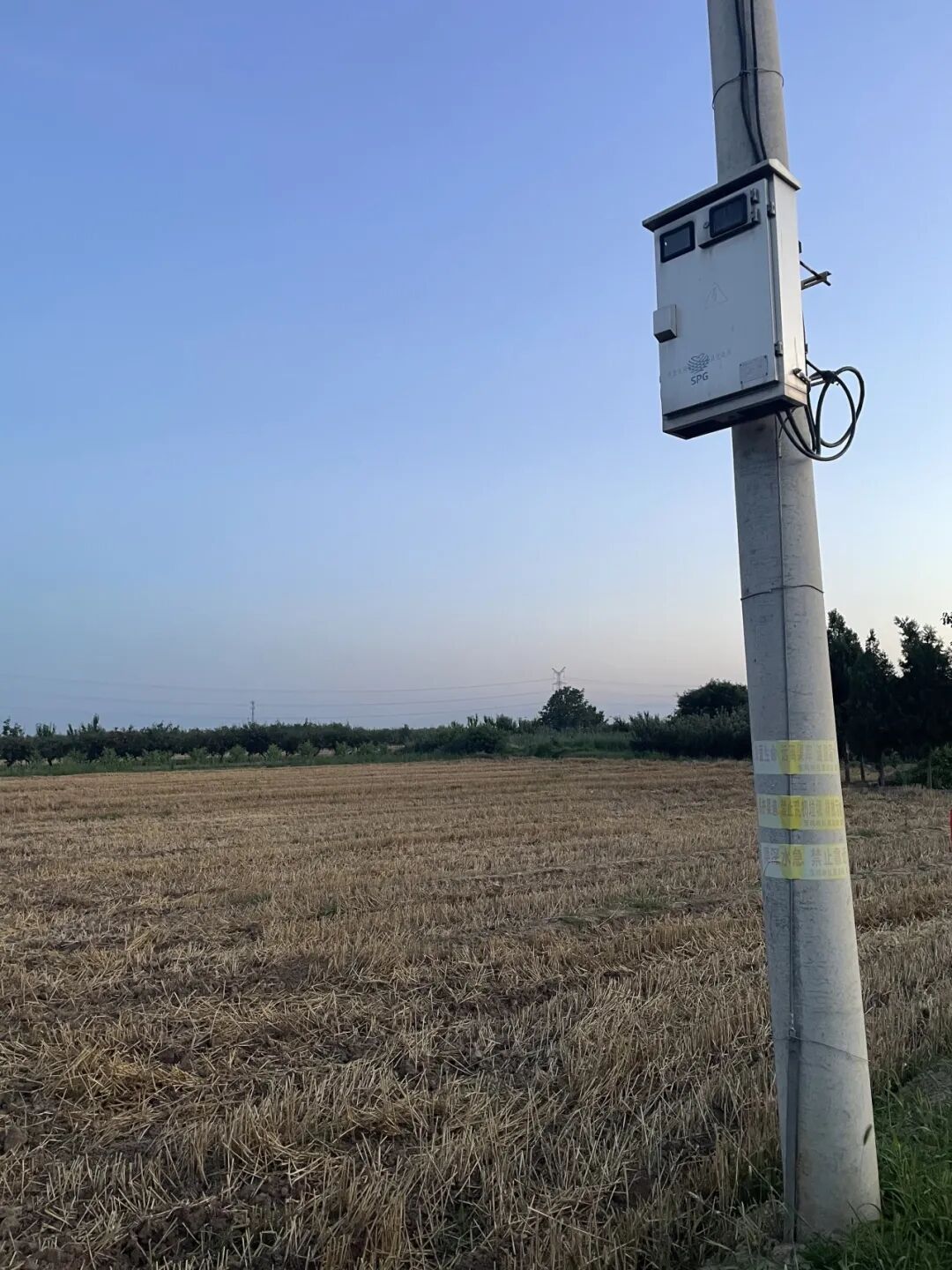
◉Land converted to grain cultivation.
Replanting fruit trees
Growing grain follows a “two harvests a year” cycle (a local Shaanxi term, typically meaning three crops in two years): sow wheat in autumn, harvest it the following June, then plant corn. When the corn is ready in autumn, harvest it and sow wheat again, continuing the rotation. Compared to growing apples, grain farming saves time, effort, and worry. Once the seeds are in the ground, aside from a few pesticide sprays and necessary irrigation, there is virtually no need for anyone to work in the fields. By the time the wheat and corn mature, the village always has combines available to handle the harvest, so there is no heavy manual labour involved.
Consequently, after switching to grain crops, many villagers chose to leave for migrant work. During the busy farming seasons, they would return, get the fieldwork done, and then leave again. This was exactly my father’s routine for the past couple of years. But he was getting on in years, and after a few stints, employers were no longer willing to keep him on. So he became a full-time farmer once again, dedicating himself entirely to the land.
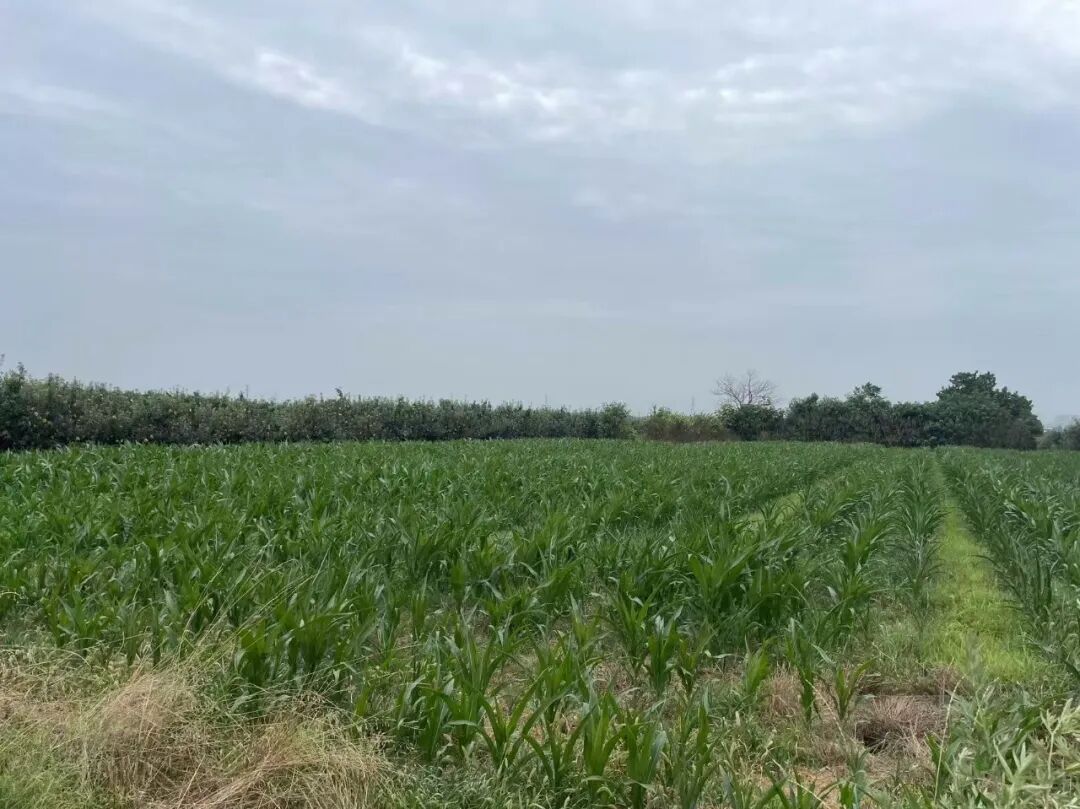
◉A cornfield that demands little attention.
Farming no longer required him to be in the fields all day. With more free time on his hands, he began frequenting mahjong parlours. Life was certainly freer, but when harvest season arrived, his expression would darken. Growing grain was undeniably less arduous, yet the hard truth was that it didn’t bring in any money.
My father began to envy those who still tended fruit trees. He pointed out that although growing fruit is backbreaking work, it at least brings in a return by year’s end; in years when prices are strong, the profits can be even higher. Wheat and corn are perfectly adequate for household consumption, but as far as making money goes, don’t even bother thinking about it.
He ran the numbers carefully. Over the past few years, growing wheat and corn on the family plot, once fixed costs like seeds, fertiliser, pesticides, machinery for cultivation and harvest, and irrigation were deducted, left a net profit of only around 1,400 yuan per mu annually. That too is assuming favourable weather; a drought or flood could wipe out even that return. Even at its lowest, fruit orchards yield between 5,000 and 6,000 yuan per mu, and in high-price years, it is entirely normal to see returns exceed 10,000 yuan per mu.
True to his practical nature, he wasted no time teaming up with my mother to plant fruit saplings on those four mu. This time, however, it was not apples, but peaches and plums. Over the past few years, peaches and plums have become highly sought-after commodities. In good market years, they command prices of three or four yuan a jin even at wholesale collection points. Take peaches alone: the sheer number of new varieties is dizzying, from yellow peaches to flat peaches, all of exceptionally high quality, which naturally drives prices up considerably.
He also had another factor in mind: beyond the better prices, peaches and plums have a shorter growing cycle than apples. Apples take longer to mature, with harvests not coming until September or October, whereas peaches and plums are ready by May or June. Though they lack keeping quality and must be sold promptly, they ultimately demand less hassle than apples.
When it comes to returning to fruit orchards, my father’s approach and mine actually differ quite a bit across the generations. Anyone who grows fruit knows that securing a good market price down the line hinges entirely on the variety. Our family’s earlier success, for instance, rode the wave of the temporary market advantage brought by Qinguang and Red Fuji. For this round of peaches and plums, I specifically reached out to a skilled orchardist. He is well-connected with fruit specialists at the Yangling Agricultural Science Institute, and whenever new cultivars are released, his orchard is invariably among the first to trial them on a commercial scale. I asked him to set aside some branches for our grafting work. My father, however, baulked at the distance and refused to travel out to collect the cuttings. In the end, like most others, he sourced his varieties locally, taking scions from a neighbour’s plot in a nearby village.
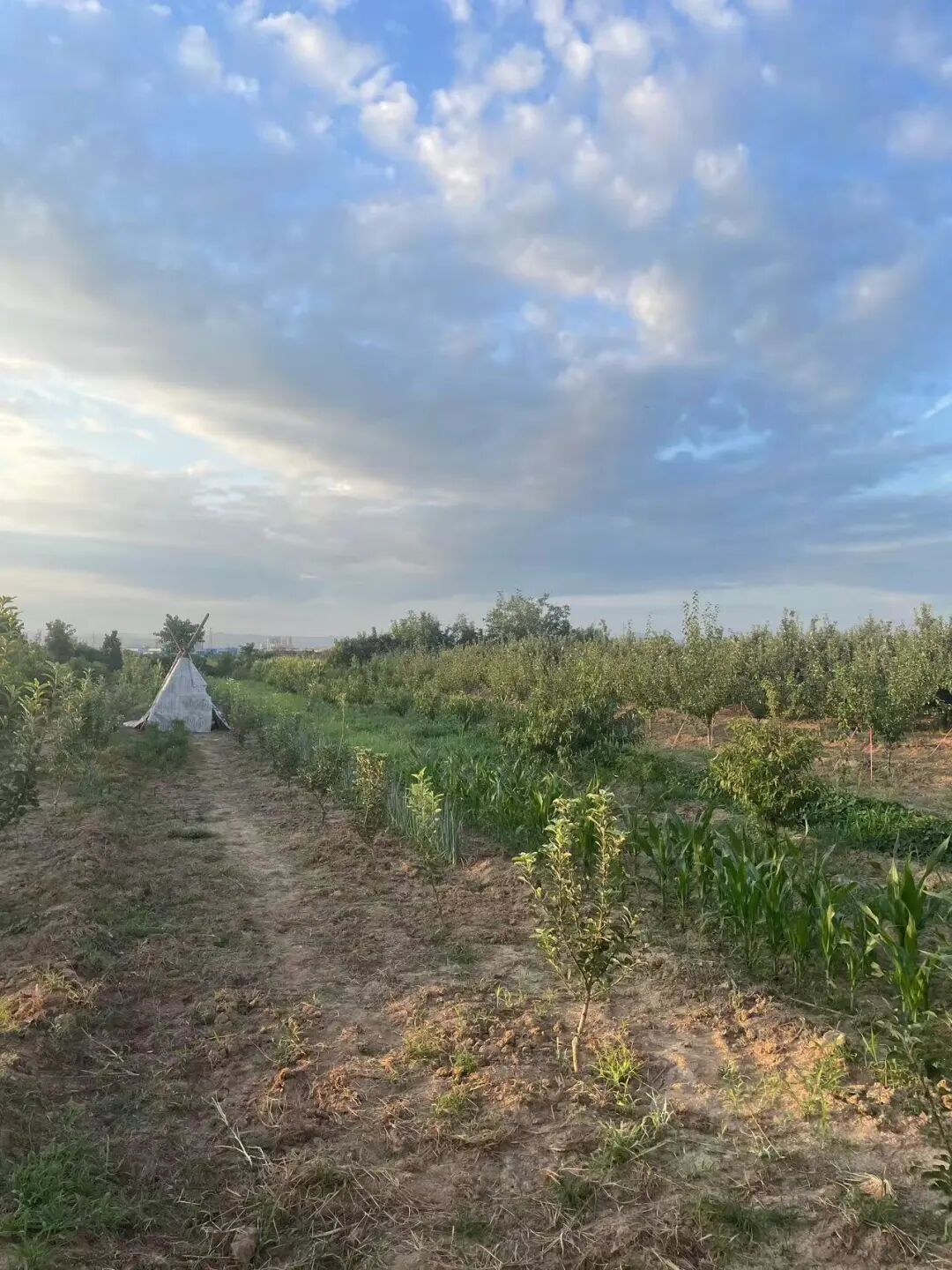
◉Planted fruit trees among the grain crops.
Hand-harvesting wheat
Planting fruit trees is no overnight job. Back when we planted apples, we’d put the saplings straight into the wheat field; once the trees took hold and grew, the wheat would eventually yield the ground. We’re doing the same thing this time. My father planted the new saplings right into the standing wheat, with four rows of trees dividing the field into five strips.
By the Dragon Boat Festival in 2025, the wheat had turned golden. The saplings weren’t tall enough to interfere with the combine harvester, but the narrow strip on the eastern edge was too tight for the machine to navigate, so we had to harvest it by hand. My parents, my sister, and I formed a makeshift team. Armed with three sickles, three of us did the cutting while the fourth person tossed the bundles into the adjoining section, ready for the combine to sweep through and thresh the grain.
Most of the Guanzhong region had suffered a severe drought in the first half of the year. For more than two months, not a drop of rain fell, and the sun baked the fields relentlessly. Despite a couple of emergency waterings, the wheat still failed to thrive. The plants grew stunted, their stalks at least a third shorter than usual, almost as if the drought had arrested their development. Neighbours all agreed the harvest would be down. But the shorter stalks did have one upside: they were easier to mow, which made our job a good deal simpler.
We had only been working a short while before the sun grew brutal, beating down until my head felt like it was ringing. Tired, I straightened up in the wheat and said, “If we’d known we were harvesting today, we should’ve started at dawn to beat the heat. It’s far too scorching now; this is proper misery.” My father explained that the morning dew would make cutting impossible. You have to wait for the sun to dry the grain out before the sickle can do its job.
That narrow strip wasn’t long, so we didn’t take much longer to clear it. We then swept the yard outside the house clean, preparing to spread out the newly threshed wheat for drying.
Hardly had we finished sweeping the yard when my father pulled up in his electric trike. The nearly five mu of land had yielded six full loads of grain. Each load was packed tight with pale yellow wheat kernels that gave off that unmistakable, earthy scent of fresh harvest. We tipped the grain out of the cargo bed and used wooden rakes and boards to spread it into a thin, even layer across the courtyard.
Villagers soon came over to lend a hand. This kind of mutual aid is now a settled routine for wheat growers in the village: the neighbours band together to harvest one family’s field, then move on to the next, and so round the village. It covers everything from carrying the cut wheat in to spreading it out to dry, right through to scrambling together to bring the grain under cover when a sudden summer storm breaks.
This year, the newly planted trees in our orchard have already started branching out and putting on leaves, finally taking on the proper shape of young fruit trees. That naturally left us with a bit less space for wheat than last year. We planted just around three mu in total and brought in 800 jin of grain. Yet, thanks to a more favourable growing season, we actually managed to harvest 100 jin more than the previous year.
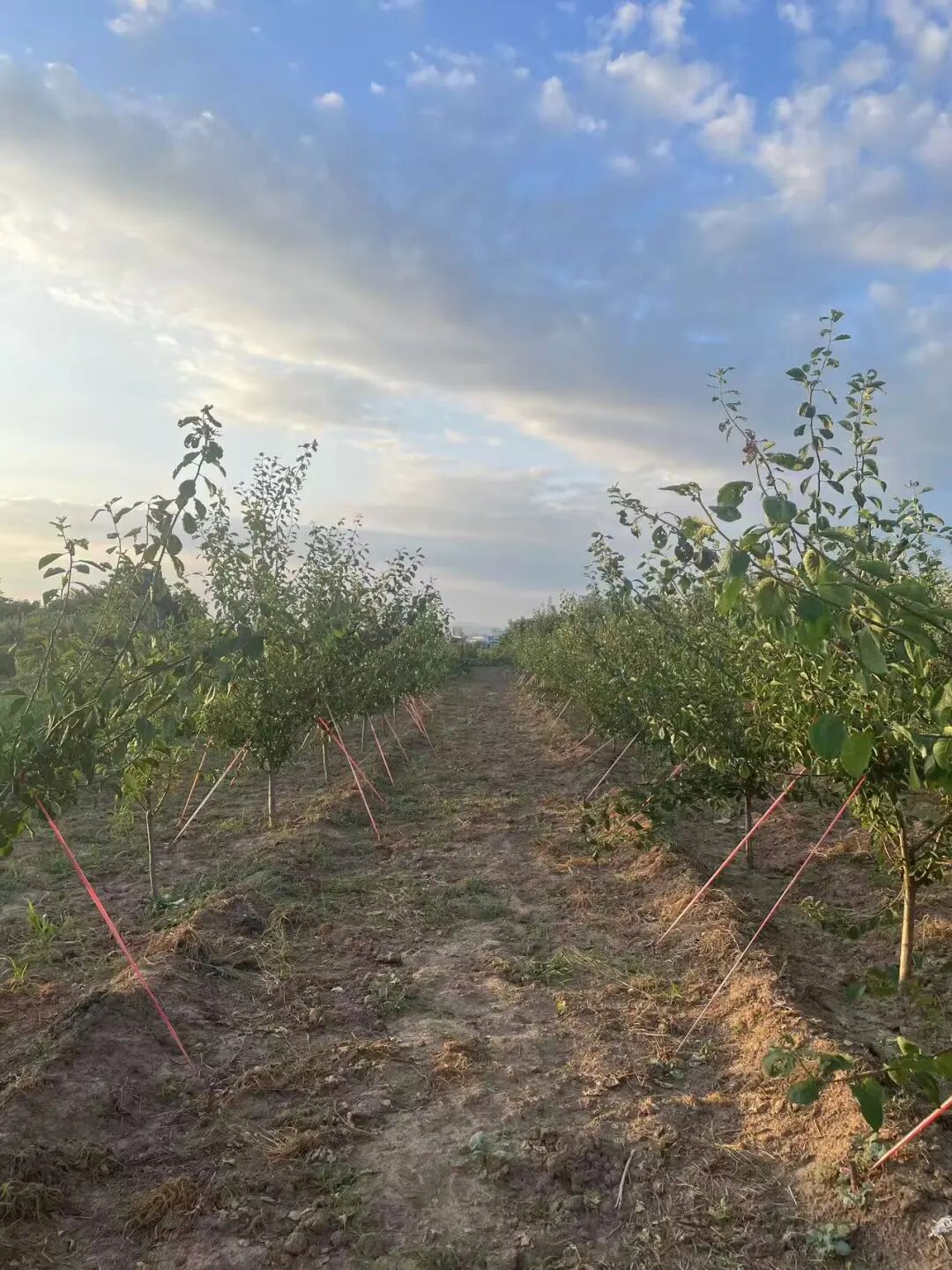
◉The fruit trees planted that year gradually grew up.
Concerns for the Future
By next year, the trees should be bearing fruit. But who can guarantee the future of fruit farming? Even though peaches and plums are fetching a decent price now, who can say what the market will look like in a few years, or even further down the line? Will they still be in short supply then? Will they still be profitable?
Watching these saplings tucked away in the gaps between the wheat, I couldn’t help but voice my concerns to my father. But he doesn’t dwell on it. Or perhaps he simply chooses not to look that far ahead; he just wants to get on with the task at hand and do it well.
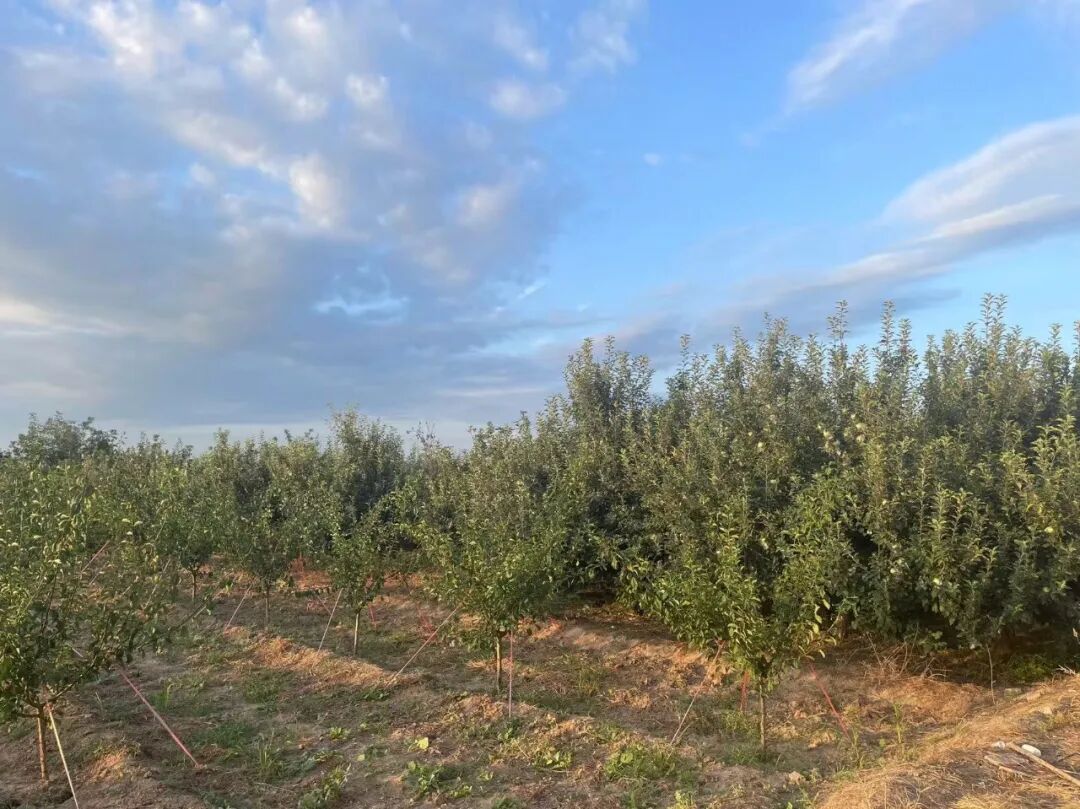
◉The grown fruit trees.
I have another concern. In the early 1990s, my parents were young and full of vigour; they could look forward to a steady income and a decent life. Now, approaching seventy, how much energy and drive do they really have left?
A school friend’s parents have been growing apples for years. With an orchard of several mu and all their children living in the city, the old couple tend to it entirely on their own. A few years ago, during the apple harvest, they could still manage the heavy lifting themselves. But over the past two years, they’ve started asking him to come home and help. His job keeps him busy; he can sometimes make it back, but when he’s truly tied up, he suggests they hire hands. The old couple, however, balk at the expense and always refuse. One year, while picking fruit, his mother slipped and fell from an orchard ladder. Fortunately, it had just rained and the ground was soft, so she escaped anything serious. She did break a bone, though, and needed several months to recover. He eventually had no choice but to take time off work and go home to help.
He has repeatedly urged his parents to stop growing fruit, but they refuse. He has a younger brother who is already in his thirties and still unmarried. His parents are determined to earn as much as they can, hoping it will give their son better prospects when it comes to finding a partner. Only once the youngest son has settled down, they reckon, will they finally be able to step away from the apples and rest properly.
This is another dilemma for my family. Once you plant cash crops like fruit, the orchard becomes a colossal magnet, and the older growers are like specks of iron filings, firmly bound to it. You spend the year round working in the orchard: thinning blossoms, thinning fruit, weeding, cultivating, irrigating, fertilising, spraying, harvesting, and pruning. Every task demands careful attention, and every single one must be carried out through sheer physical effort. And to date, not one of these tasks can be truly mechanised; they remain entirely manual labour. Having grown up working in the orchard with my parents and spent over a decade doing so, the hardship is etched in my memory. Just during the harvest days, you practically lose a layer of skin. A fully loaded traditional pole-carried basket carries at least thirty jin of apples, and the fruit must be passed through at least four pairs of hands from start to finish. Picking, hauling, and stacking—none of it is straightforward.
The cost of growing fruit is rising steadily, and if the harvest does not sell well, it is all too easy to run at a loss. Setting aside other expenses, the labour costs alone are staggering. Every year, during fruit bagging and harvest season, farmers with even moderately sized orchards simply cannot manage on family labour alone. The going rate for hired hands is rising year on year, standing at a minimum of 120 yuan a day. These are real, out-of-pocket expenses; some farmers spend between 10,000 and 20,000 yuan in a single year just on temporary labour. Once you factor in all the other costs, the total becomes almost unimaginable.
No one can say for certain what the future holds. These days, you hardly see any young people in the village; they have all headed to the provincial capital or scattered across the country to carve out their futures. When this generation of parents eventually steps aside, what will become of this land?
– This is Foodthink’s 833rd original article –
Foodthink
Author
Liu Lei
Born in 1984 in Liquan, Xianyang, Shaanxi province, he has long been based in Xi’an, where he currently works at a manufacturing company. His work has appeared in print media including *Shanghai Stories*, *Xi’an Daily* and *Western Development*, as well as on digital platforms such as NetEase Renjian, Yi Shi Tan and *Southern Weekly*.
All images in this article are provided by the author.
Editor: Xiao Dan
Layout: Xiao Shu
Scan to tip and support original food content
▼

▼
Click the image to read related articles.
▼
Click a keyword to explore more article collections
Seeds | Agricultural Tech | Policy | Fermentation | Nutrition | Fruit | Fisheries | Events | Recruitment | Takeaway |Wet Markets | Livestock | Food Talk | Sharing Sessions | Book Club | Harvest Festival | Smallholder Stories | Climate Change | Rural Development | Cooperative Economy | Urban Farming | Food Safety | Digital Technology |Biodiversity | Pandemic and Food | False Solutions | Agroecology Internship Programme
Beijing|Hebei|Shanghai|Guangdong|Guangxi|Henan|Sichuan|Jiangxi|Xinjiang|Shaanxi|Hong Kong|Chongqing|Zhejiang|Jiangsu|Guizhou|Taiwan|Inner Mongolia|Philippines|Canada|Russia|Mexico|Italy|United States|United Kingdom|Germany|Netherlands|Thailand|Sweden|Japan