When the Last of Our Kin Depart, Is the Homeland Still a Homeland?

Only in a homeland brimming with life, not in rootless wandering, are people free.
—D. H. Lawrence
Only in my hometown am I truly happy—that much is certain. I am fortunate. Although during my childhood, because life in the countryside was so harsh, my parents took me to Beijing to find work and make a living, I have always carried the pride of having a home to return to. When I speak of my hometown—Zhenhua Village, Bayan County, Heilongjiang Province—I am most often like a child who has never grown up, and the first thing that comes to mind is the nourishment of my family’s love. There will always be someone there, waiting for me to come home.
Although the hollowing-out and ageing of rural China have long been an undeniable fact, both in theory and in the data—over thirty years, the permanent-resident population of China’s countryside has fallen by nearly 400 million, and my parents, my aunts, every one of them is a single soul among those hundreds of millions. But I had never thought that one day it would truly become a place I could no longer return to.
It was not until this year, after two trips home to prepare for my wedding, that I felt the urgency of this problem with a directness rooted in my own lived experience: I may well be reduced to this—the homeland still stands, yet I have no home to return to. Perhaps this will also be the lot of many sons and daughters of China’s farming families. A fear I had never known surged through me. Yet the more I came to see, the clearer it grew that this is a reality we cannot escape, and that decisive change will come within the next 10 to 20 years.
I… Am Home
“I simply won’t stay in those apartment blocks. Every time before I go up the stairs, I get a knot of dread in my stomach. Out here in the village, you step out the door and there’s the courtyard in front of you, the vegetable garden behind—what a sense of openness! Cooped up in a flat, you feel so stifled you don’t know what to do with yourself. I don’t want to live in Harbin either—you can never find anywhere to buy a thing! And those delivery apps like Meituan—I won’t touch them, too much hassle! Back here in Bayan, if I need a spade or a pickaxe, I don’t even need to ask—you just know whose door to knock on. That’s the difference, that’s what I mean…”
Every Bayan native returning home feels their heart quicken as they pass along Binshui Avenue. At dusk in summer, a great mass of soft, golden cumulonimbus clouds, billowing like a mane, churns in the fading light; as the car moves, the surface of the Songhua River shifts between bright and dim, stirring an answering surge in the traveller’s breast; on the meadow by the riverbank, cattle graze at their ease, flicking their tails and occasionally turning to gaze at the traffic on the road.
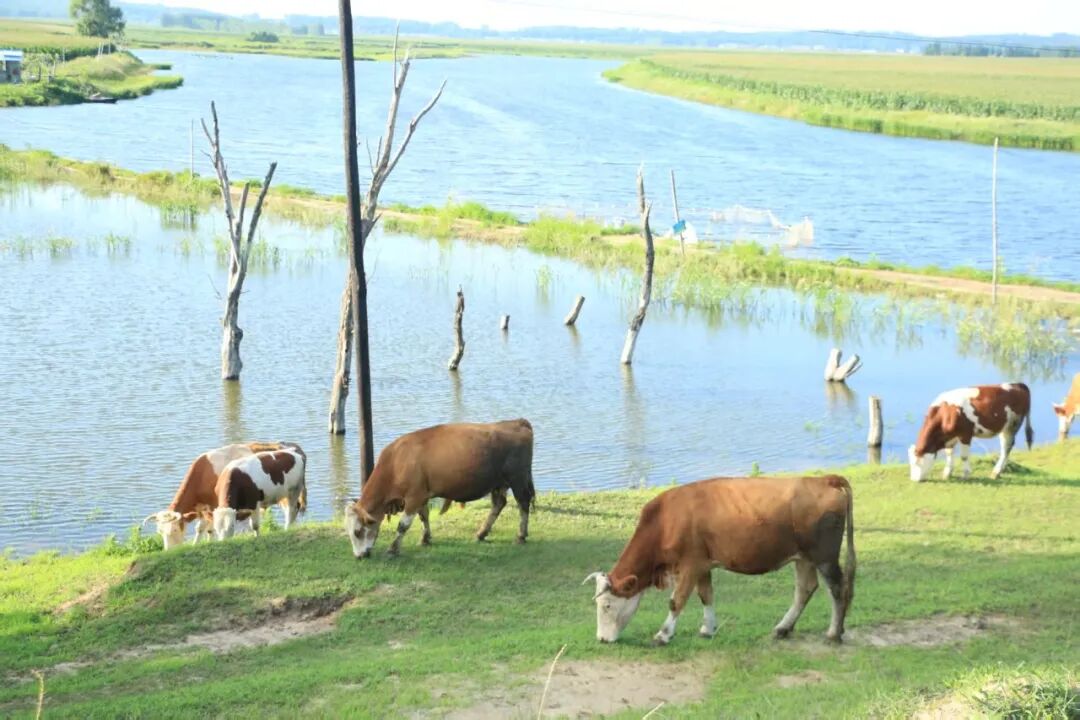
◉ My hometown is Zhenhua Village, Bayan County, Harbin, Heilongjiang Province. Bayan lies in the heart of the Songnen Plain, rich in meadow resources. The photograph shows a herd of cattle grazing along the banks of the Songhua–Nen River system. Photo by: Wang Xiaolu
One by one, these scenes, moving from distant to near, all remind me that I have truly returned to the Songnen Plain. Uncle Wang, from our village, has come to collect me, enthusiastically recounting all the changes the homeland has undergone in recent years.
Little by little, the road vanished, the apartment blocks vanished, and on either side there was nothing left but wide stretches of farmland. In the distance, a small cluster of people were moving slowly across a field. Uncle Wang said: “That’s a chilli patch. There used to be no one round here growing chillies—not the sort of cash crop we’re used to—but in the past couple of years, quite a few people have started growing them on a big scale. Those things are a real pain to look after; you have to spray them with pesticide, otherwise they spoil easily. And when it’s picking time, you’ve got to sort through every one of them, polish them till they gleam, or you won’t fetch a good price. Plenty of the women in the village—your Auntie among them—have gone out to pick for other people, from before dawn till dusk. You can earn maybe eighty, a hundred yuan a day.”
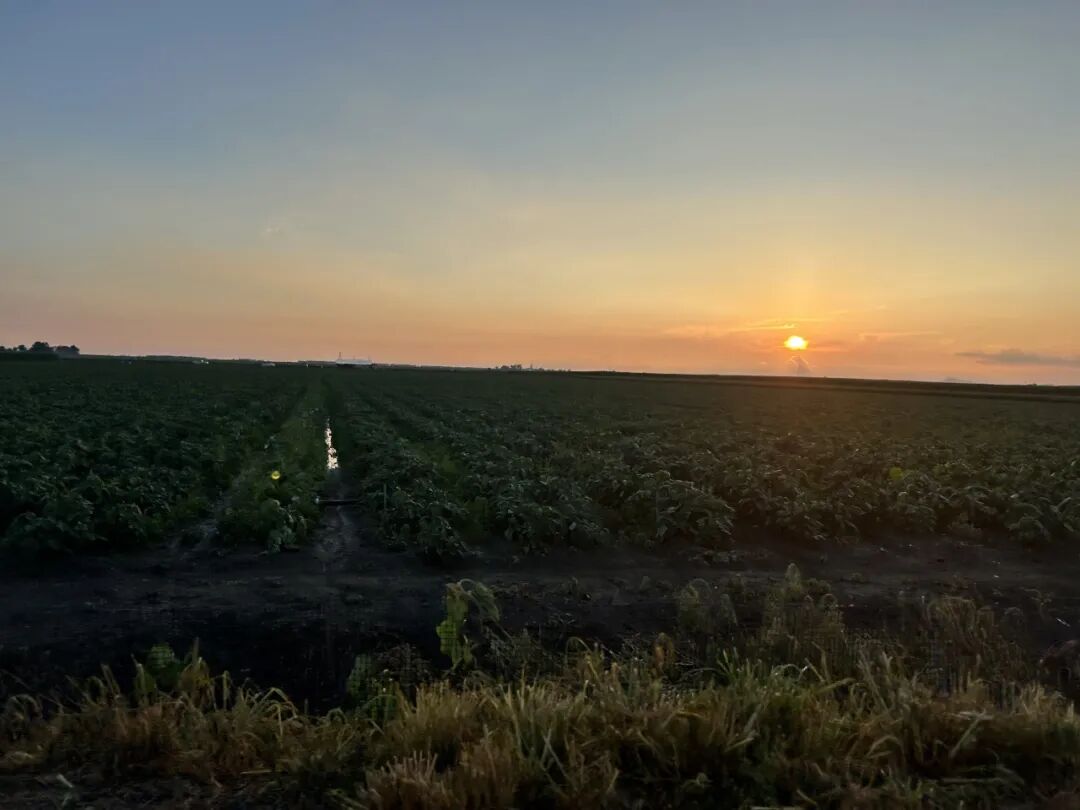
◉ Farmland at sunset.
The car pressed on, passing a grove of poplars. Beneath the poplars, weeds grew thick—it had once been a fine place to graze sheep and cattle—but what I saw now left me stunned: ten thousand plump white geese, densely confined between the trees. When we passed this way again later, the old folks who had lived here all their lives looked at the flock as if they were witnessing something extraordinary, exclaiming: “I tell you, these things bring in real money now! Ready for market in just two months—just do the sums! It’s all growth hormones! When we used to keep our own geese, it took a good four months, no matter what.”
Little by little, the broad rice paddies disappeared too, leaving nothing but endless cornfields on either side and a narrow lane running between them. Instinct told me the corn was planted far more densely than before. This observation was later confirmed by my childhood friend Tiantian: the plant spacing used to be about one chi (33.33 cm), whereas now it is only five to six cun (16.67–20 cm).
The car turned onto a narrow lane leading into the village, the cornfields still keeping us company. Not more than a decade ago, the kitchen gardens in front of and behind every house would have grown Chinese hawthorn, plums, carrots, pumpkins, runner beans, potatoes, cucumbers, lettuce, tomatoes… Now all that land was planted over with corn. The change was driven by two factors: on the one hand, planting, spraying, fertilising and harvesting corn now all rely on machines and drones—it takes far less human labour, so the more you plant, the more you earn; on the other—and more crucially—the village population has continued to drain away. Many people’s houses have already fallen into ruin, and even if you grew all that food, there would be no one left to eat it.
At last a brick house came into view—our old home, where the three of us once lived together. The glass was grey with dust, and inside lay heaps of odds and ends. At the front door stood a cement platform overgrown with weeds, built when the family had run a small grocery shop. That raised step, once above ground level, where grown-ups and children alike had liked to sit and rest a while, had now sunk below the ground.
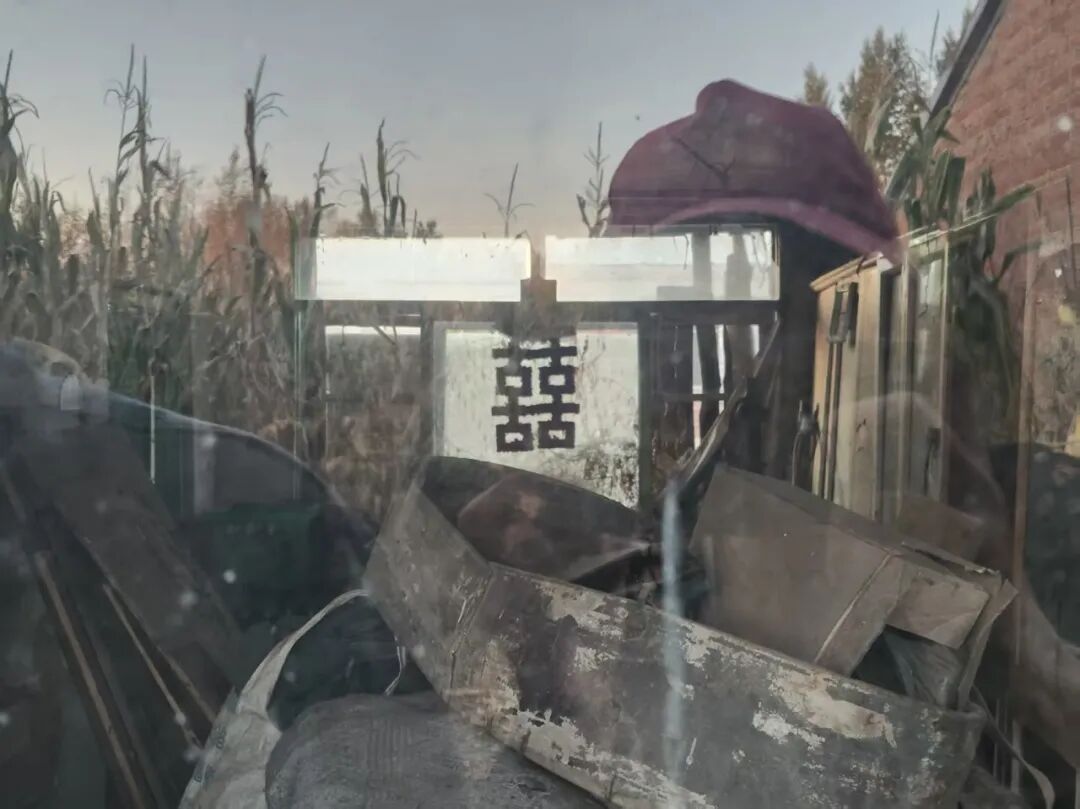
◉ Our old home was a small brick house, now turned into a storehouse piled with odds and ends. Reflected in the glass is the corn growing in the kitchen garden behind the house. Photo by: Wang Xiaolu
The car drove further on, and the village suddenly came alive: a group of people were dancing yangge. Judging by eye, the average age must be sixty or older. Closer up, I recognised the one leading the troupe—it was Great-Uncle, wearing the wide red trousers worn especially for yangge. Hearing the car return, everyone turned round to have a good look.
All the way along, the changes in my hometown had indeed made it feel somewhat unfamiliar. But when Third Great-Aunt came bustling over and clasped our hands tightly in hers, and Great-Uncle took our bags and led us into the courtyard, I knew—I was home.
“When We Can No Longer Carry the Firewood”
In summer in Heilongjiang, dawn breaks at half past three in the morning. The owls, mice, Siberian weasels and mole crickets that prowled the darkness have all gone to ground. A swallow pokes its little head out from beneath the eaves, darts up to a wire, shakes out its wings, and prepares for a new day. Meanwhile, across this land, a dozen hands draw back the curtains, a dozen pairs of eyes turn to the blue sky, a dozen brooms sweep the courtyard, and a dozen chimneys send up curls of hearth-smoke.
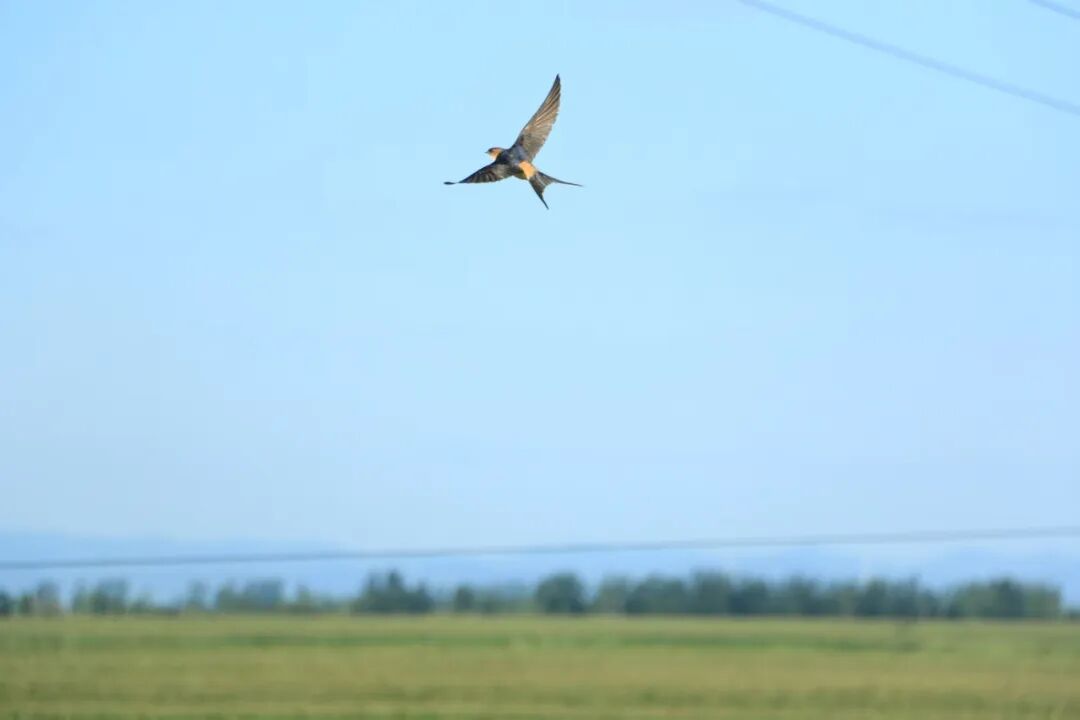
◉ Swallows soaring over this land. Photo by: Wang Xiaolu
There are fewer people in the village now, but the daily round of labour and life remains unchanged. Rural folk are an industrious lot, and even in summer, when the busy farming season has passed here in the Northeast, people still rise early to get on with their work.
Through the haze of half-sleep I hear my Great-Uncle’s footsteps going in and out of the xiawu (wú—a Northeastern dialect word for the storehouse), followed by a jangling, rattling, thudding cascade. Those sounds set my mind at ease. Though Zhenhua Village has changed in many ways—some for the better, some for worse, some impossible to categorise—the rhythm of life these noises carry tells me that the things which form the bedrock of my heart remain just as they were.
Yet it was also over dinner the previous evening that Great-Uncle told me he had hurt his back while working a while ago. “Your young Uncle’s told us to come and live with him in the future.” Great-Uncle does not want to stay “in those apartment blocks.” But he knows, too, that out here in the countryside, “getting to a hospital is a real struggle.” As for everything else, “it’s all fine, really.” He intends to put it off until the day he simply “can’t manage any more.”
I know that their leaving is inevitable. Both of them are in their sixties now; the day when he can no longer work is perhaps only five or ten years away. But even so, when Great-Uncle said these things my heart still clenched with dread. My Great-Uncle’s home is one of only two places in the village where I can find a roof over my head. Counting my parents, people from both the elder and younger generations of the family have already left—the far-flung ones went to Beijing, the nearer ones moved into the county town. When that day comes, will I still be able to return to Zhenhua Village?
The other place I can stay is at Bayan State Farm No. 2, in the neighbouring settlement, at my Great-Uncle’s home. “Great-Uncle” is what I call my grandfather’s youngest brother. He, too, spoke words much the same: “Your Great-Aunt and I are managing all right for now. Farming isn’t quite as back-breaking as it used to be—you can just get the machines to do it. But cooking over a wood fire out here still means carrying the firewood, and the day we can’t carry it any more, we’ll go and spend our old age in town.”
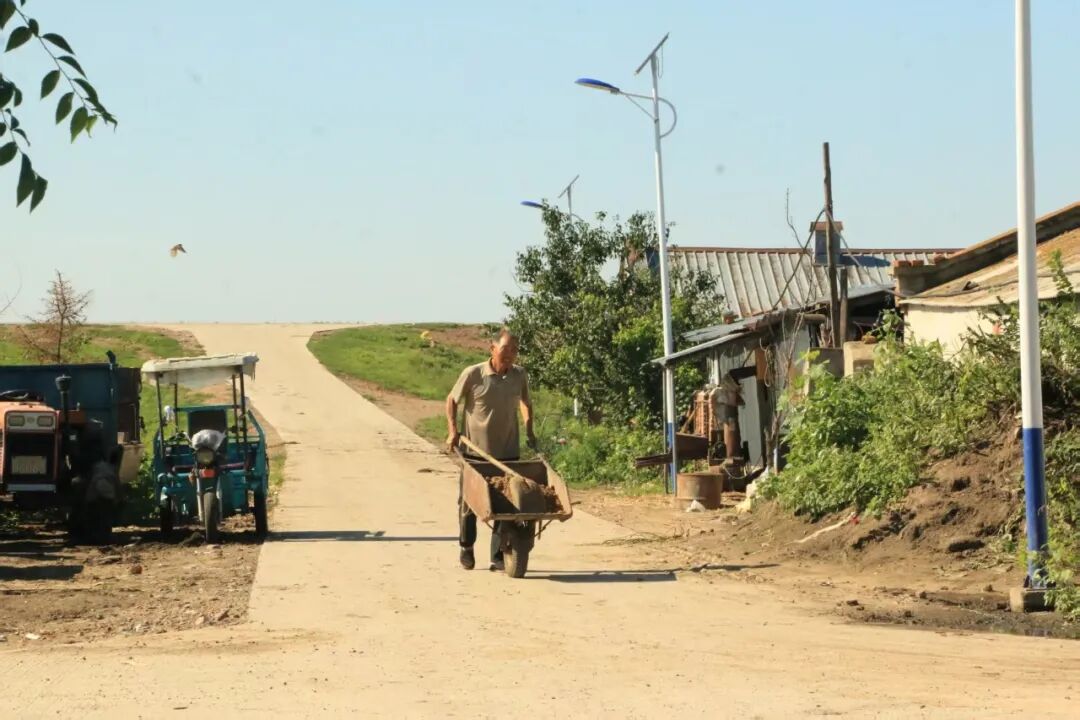
◉ Great-Uncle at work in the fields.
“But that city food—especially the food in Beijing—we can’t stomach it!” he complained. “The vegetables are all watery and limp, no flavour at all, and the chicken is tough and stringy. Nothing like our own vegetables, grown without a spray of pesticide, or the pigs and chickens we rear—no hormones, just maize meal and soybean meal for feed.”
I could not bring myself to answer. I only smiled and said that in a few more years, when my wife and I had a child, I would bring the little one back to visit.
“By the time you have children, we’ll most likely not be here any more. Besides, little ones can’t stand the countryside. We’ve got pigs and chickens around here—summer brings the flies, and it’s sweltering.” He said his own grandson simply cannot take it when he comes to stay. “I tell him, it’s not like your life in town—there you’ve got air conditioning, cold or hot whenever you want it, just like that.” Great-Uncle sees reality clearly.
He also told me of a tragedy in a neighbouring village: an old man in his early sixties, with his children away working in the cities, had been left in the care of a neighbour. One day he collapsed behind the kitchen garden and never woke up. By the time the neighbour found him, green bottle flies had gnawed his body down to little more than half of what it had been.
And so, listening all the way along, I had never felt so viscerally the severity of rural ageing and the hollowing-out of the countryside—even though the infrastructure at the Second Farm was, plainly, far better than before, with street lamps and a concrete road now laid.
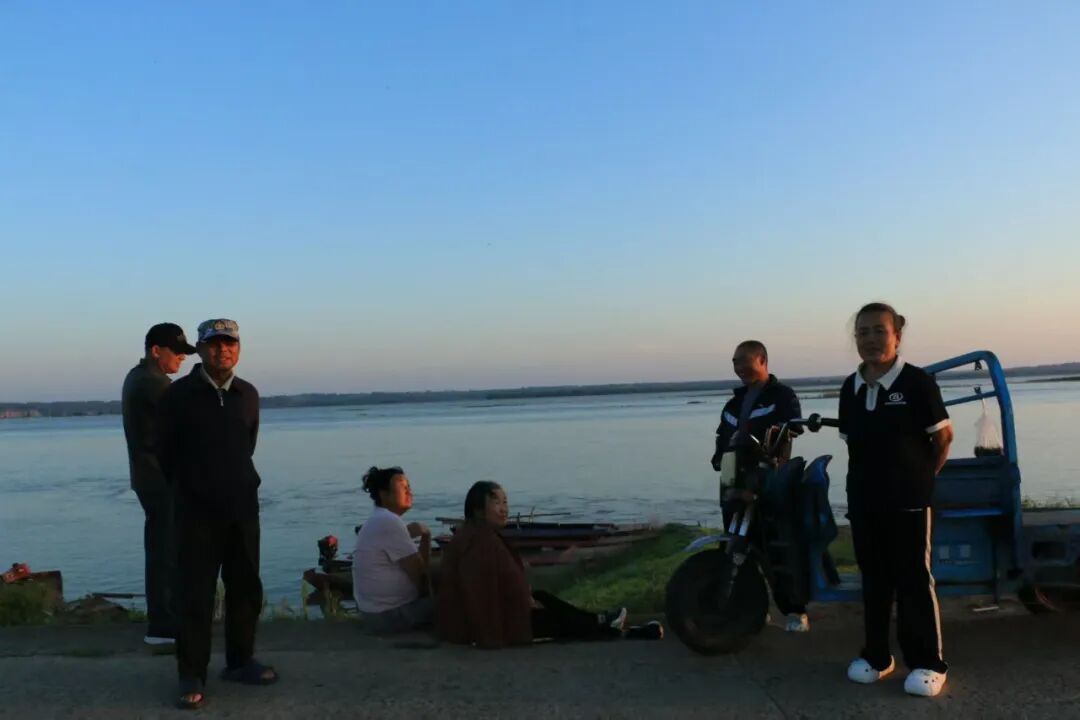
◉ Villagers from the Second Farm chatting on the embankment. Photo by: Wang Xiaolu
“This concrete road’s been laid barely two years. Before, we had ‘concrete roads’ too—concrete roads, concrete roads—except when the rain came, it was nothing but water and mud.” Tiantian, my childhood friend, stood beside me on the embankment, gazing out over the whole village. “What use is fixing it up now? Everyone’s gone from this hamlet. Over seventy households, and only fourteen are left. When there were still people around, why didn’t someone mend the roads then?” Tiantian is the only young person of our generation who has stayed in the village. He seems to be everywhere at once—racing around on his tricycle delivering parcels for people, then cutting weeds in someone else’s yard.
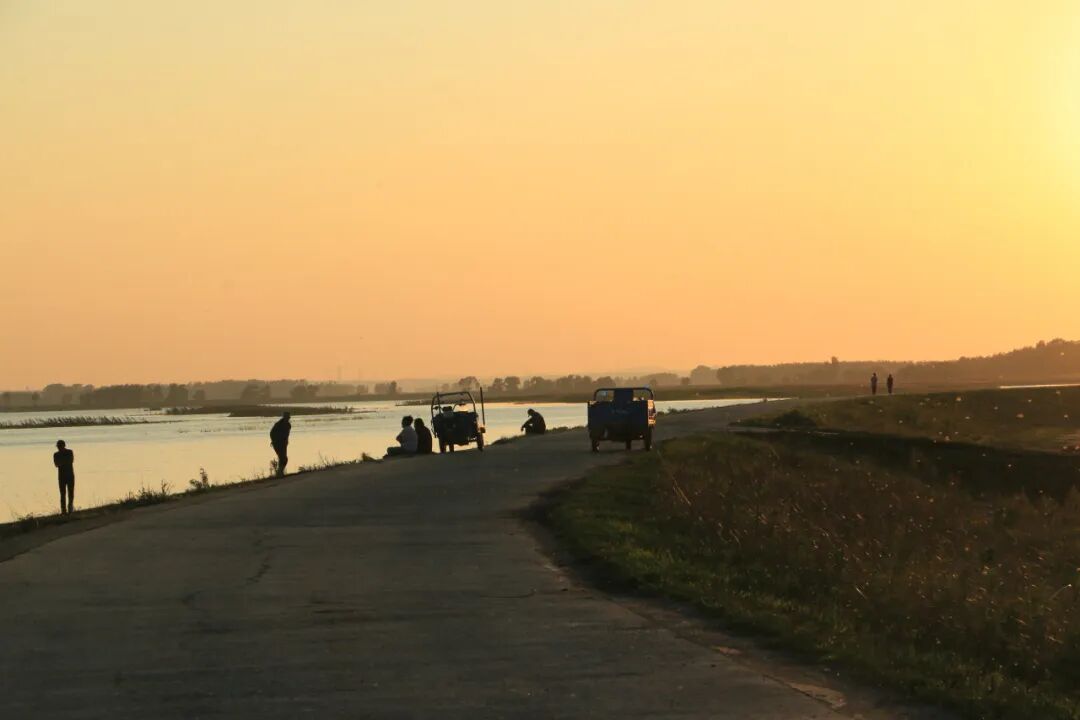
◉ At sunset, villagers stroll in twos and threes along the embankment. Photo by: Wang Xiaolu
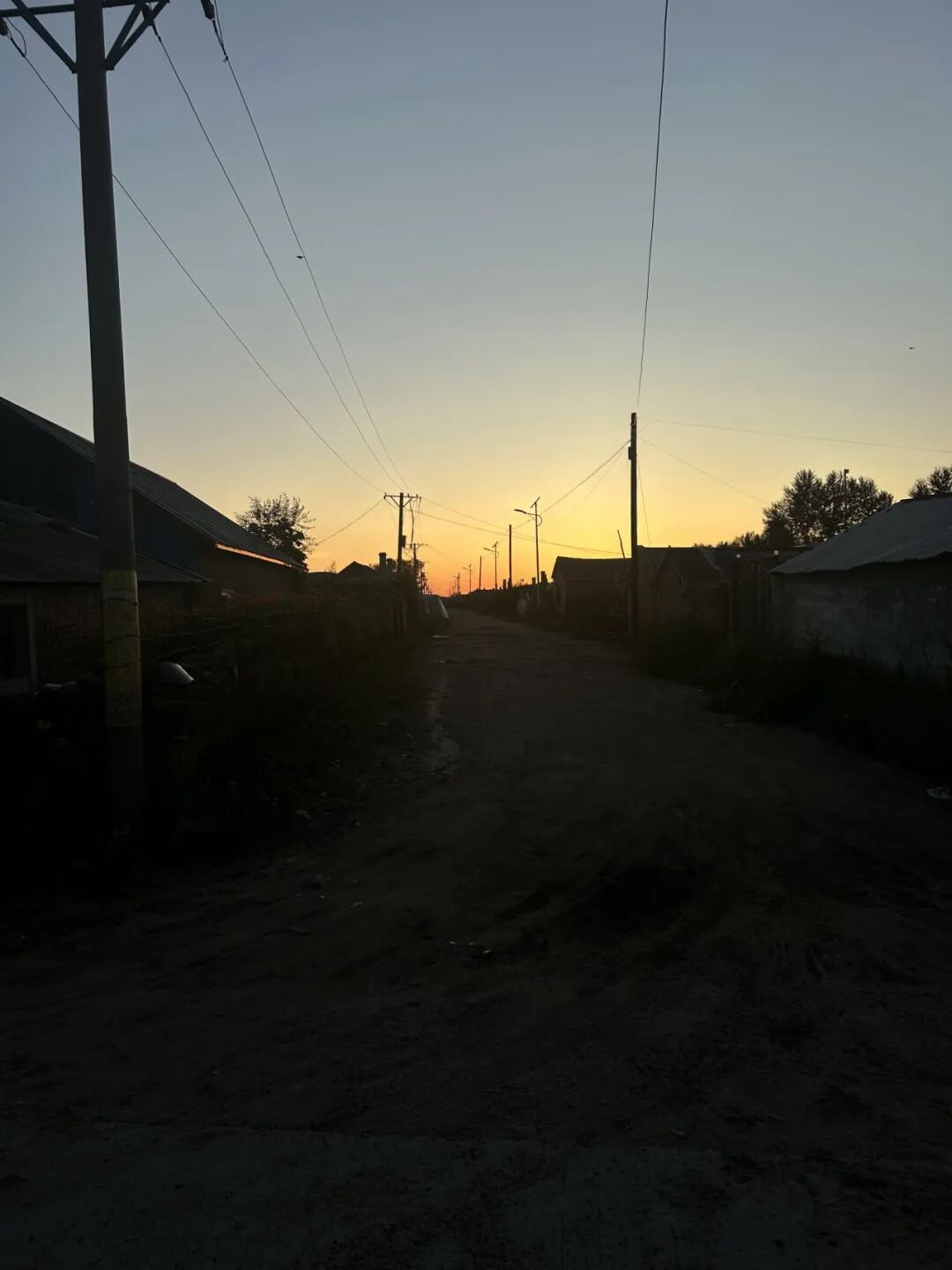
Another dusk: the setting sun has draped this village in a cloak of gold and crimson. Watching the blurred play of light and shadow on the houses, the trees, the utility poles, the tops of the walls, I feel as though I have been daydreaming—and now, waking at last, the village has finally revealed herself to me. In truth, every soul here is still present; they have simply gone home to eat, and that is why the lanes seem so deserted.
I walk on through this hour where day and night entwine, imagining what this village will look like in ten or twenty years’ time. The feeling inside is bittersweet.
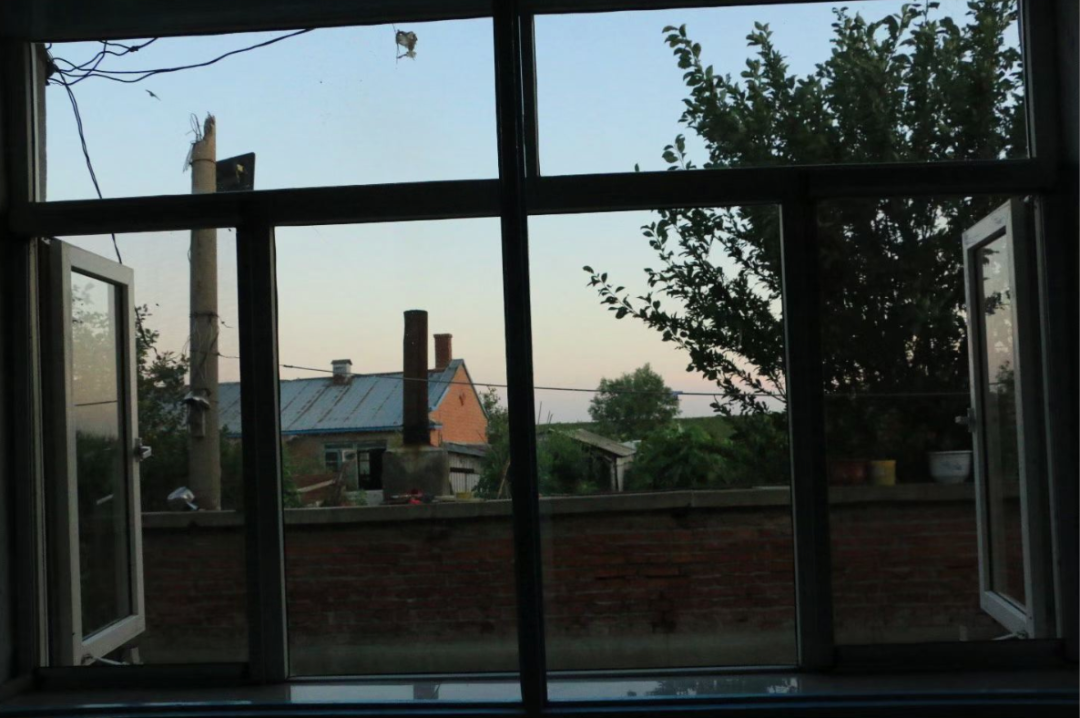
◉ Evening outside Great-Uncle’s window. Photo by: Wang Xiaolu
Autumn Harvest After the Wedding Feast
In Heilongjiang, as soon as October arrives, the countryside welcomes harvest season.
“It’s because you’re a proper nephew—no matter how busy we are, we still have to host it!” On 2 October, we threw a grand rural wedding feast at Great-Uncle’s house. Lanterns and banners strung, every seat filled—the place was alive with joy.
But every feast must come to an end. Whether the guests were wanderers who had once lived here or friends from far away who had come for the first time, one by one they took their leave.
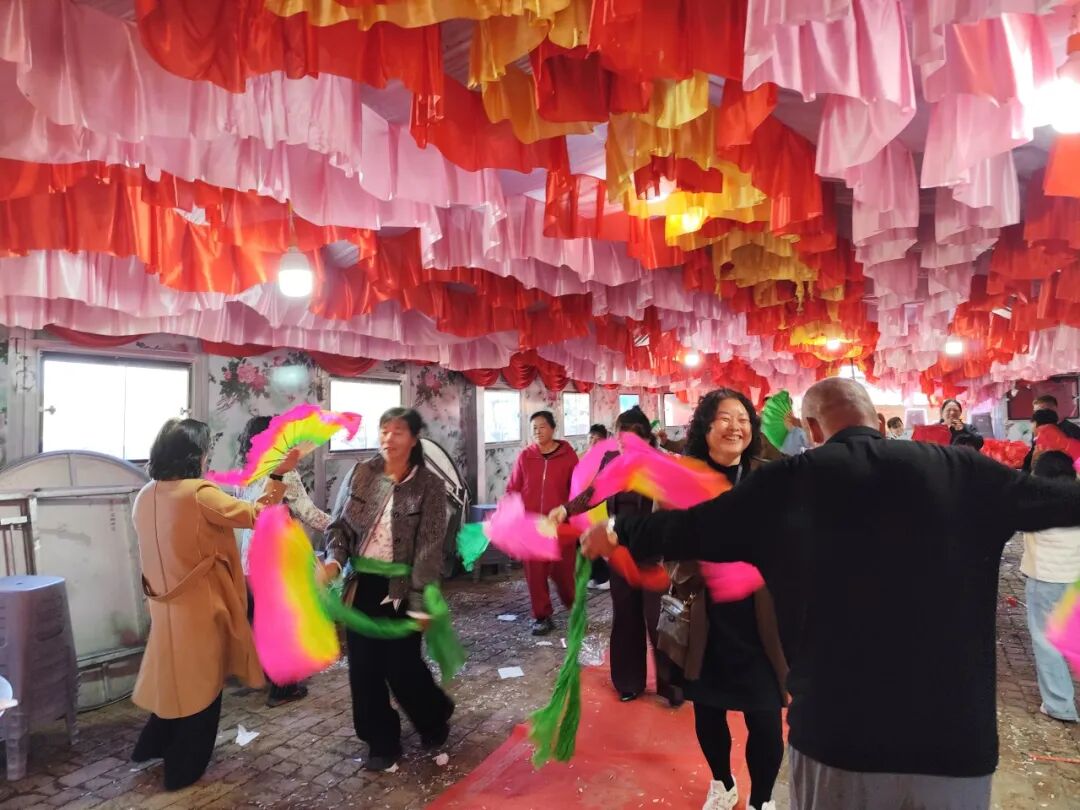
◉ After the feast, the relatives danced yangge (a traditional Northeastern folk dance) in the yard.
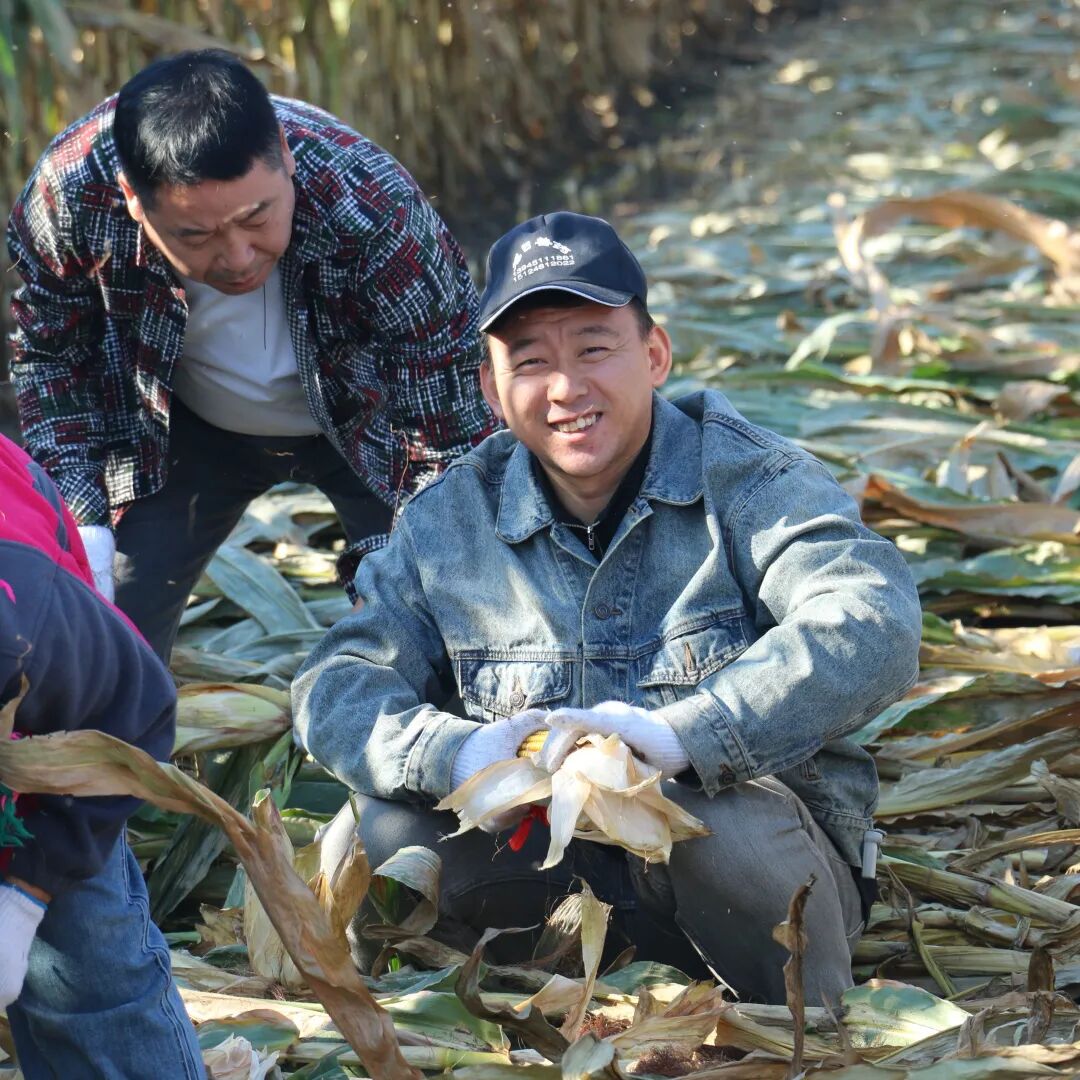
“Three springs of labour cannot match the rush of one autumn.” By the day we saw off the guests and returned to the village, Great-Uncle and Great-Aunt were already out working the land. All four of us joined in. Great-Uncle was naturally delighted to hear that we could help husk maize. On the spot, he fashioned iron prongs for us, wrapping them with strips of red cloth printed with the character for “joy.” Slipped over the middle finger, these prongs could be used to peel back the maize husks.
Ever since my parents left for Beijing to make a living around the turn of the millennium, they had not done a day’s farm work in over twenty years. Second Aunt watched us pull on thick coats, triangular headscarves and rubber boots for the fields, and exclaimed: “Good Lord, Third Sister-in-law! How many years has it been since you last husked maize? That wedding manicure—don’t let it crack!”
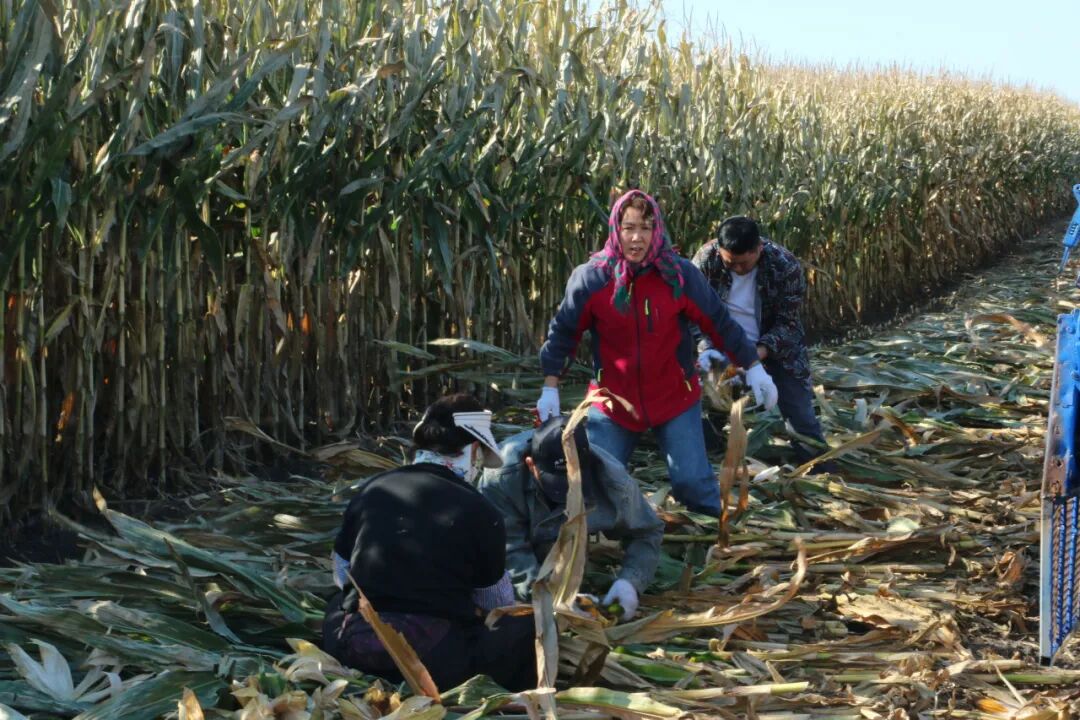
◉ My parents, Great-Uncle and Great-Aunt, Second Aunt, and my wife and I husking maize in the field together. Photo by: Wang Xiaolu
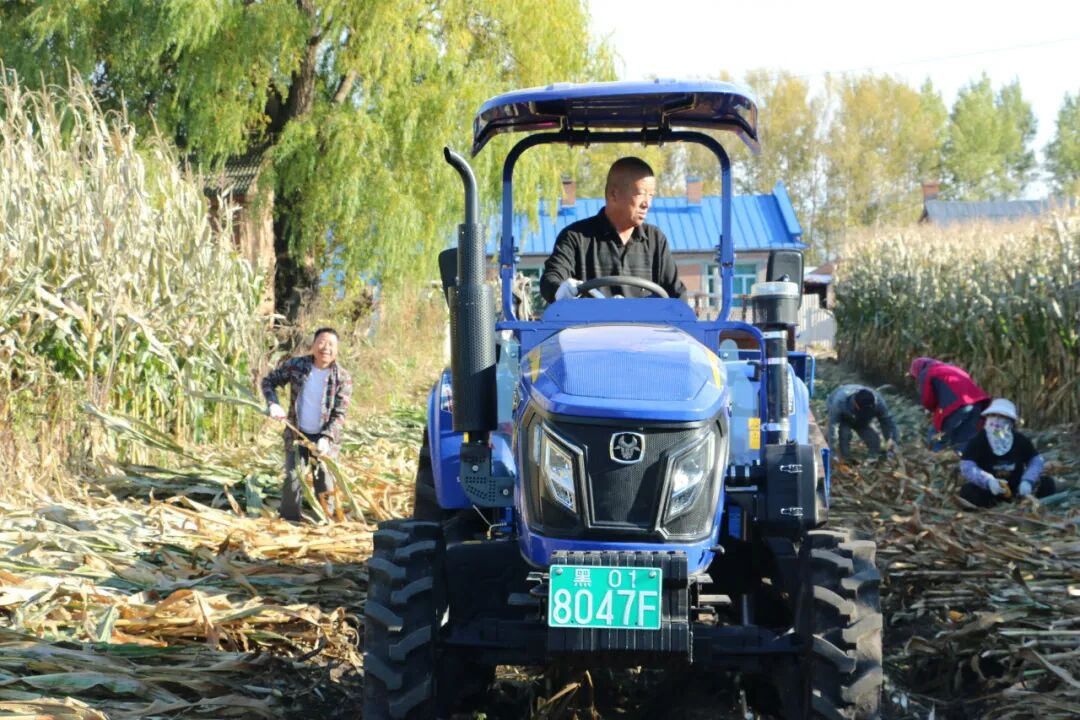
In fact, most maize in the countryside no longer needs to be harvested by hand. Combine harvesters can drive straight into the maize fields and complete the entire process—cutting, ear-picking and stripping the husks—in one pass.
But before the combine is brought in, the field still needs its “liú cháng yuān”—a headland cleared flat at the edge of the field for stacking, drying and threshing the maize. Traditionally, such an open yard was called a chǎngyuàn (threshing yard), but in Northeastern colloquial speech it has long been known simply as “cháng yuān.”
Normally, just Great-Uncle and Great-Aunt, together with Second Uncle and Aunt—the handful of them—would tend to this yard. This time, with all four of us thrown into the mix, the maize field seemed to buzz with life once more, as it must have done back when the village still teemed with people. Mum said that working alongside Second Aunt was never tiring; it felt just like old times, because Second Aunt was always chatting and cracking jokes.
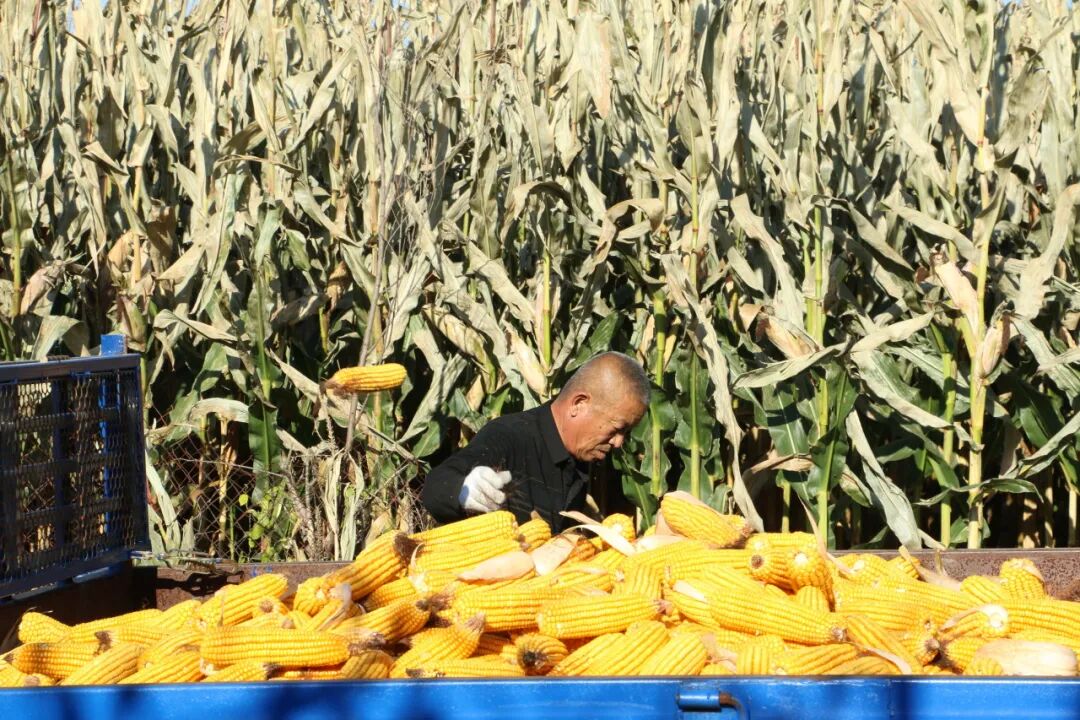
Second Aunt chatted with us as she worked, husking maize and flinging the cobs into the cart without so much as lifting her head, yet she held a steady rhythm—one cob tossed every five seconds. This kind of skill was forged by rising before dawn and working long past dark. With barely a trace of moonlight, they could labour in the pitch-black fields.
Mum warned us not to throw the cobs too far and hit Great-Aunt. “If you knock her over, where would I go looking for another one!” Great-Uncle quipped. When we’re out working the land, we always fall back on this kind of light banter to take the edge off the exhaustion.
Row by row we worked our way through, until the cart was heaped with maize, glowing golden in the setting sun. Before supper, Second Great-Aunt took in the sight of us, covered head to toe in corn silk and shredded stalks, and said: “How can high-flying graduates like you two be doing this? You look like proper working people now!”
For us, of course, that was a compliment. In truth, we had timed the wedding to fall right in the busiest stretch of the year. Lending a hand husking maize was the finest farewell we could give them before heading back to Beijing.
The next morning, a little after five, with mist blanketing the earth, we left Zhenhua Village. I knew that, out in the field at this hour, Great-Aunt must be telling Great-Uncle all about us. Whatever the landscape ten or twenty years from now may bring, we will always long to meet again. I carried back to Beijing this warm current of life—this tide that can wash away the coldness, the weariness and the anxiety of this place, and sweep me onward to seek a life lived with heart and loyalty.

◉ Dusk and starlit sky over the village.
‑ This is Foodthink’s 849th original article ‑
Foodthink
Author:
Yu Yang
An INTP who studied under Hardy and Lawrence.
Edited by: Pei Dan
Layout by: Xiao Shu
Scan to tip—supporting original food wisdom
▼

▼
Click the images to read related articles
▼
Click a keyword to explore more article collections
Seeds | Agricultural Techniques | Policy | Fermentation | Nutrition | Fruit | Fisheries | Events | Jobs | Takeaway | Wet Markets | Livestock | Food Talk | Sharing Sessions | Book Clubs | Harvest Festival | Smallholder Stories | Climate Change | Rural Development | Co-operative Economics | Urban Farmers | Food Safety | Digital Technology | Biodiversity | Pandemic and Food | False Solutions | Ecological Agriculture Internship Programme
Beijing | Hebei | Shanghai | Guangdong | Guangxi | Henan | Sichuan | Jiangxi | Xinjiang | Shaanxi | Hong Kong | Chongqing | Zhejiang | Jiangsu | Guizhou | Taiwan | Inner Mongolia | The Philippines | Canada | Russia | Mexico | Italy | The United States | The United Kingdom | Germany | The Netherlands | Thailand | Sweden | Japan