
A Good Farmer Knows How to Save Time and Effort
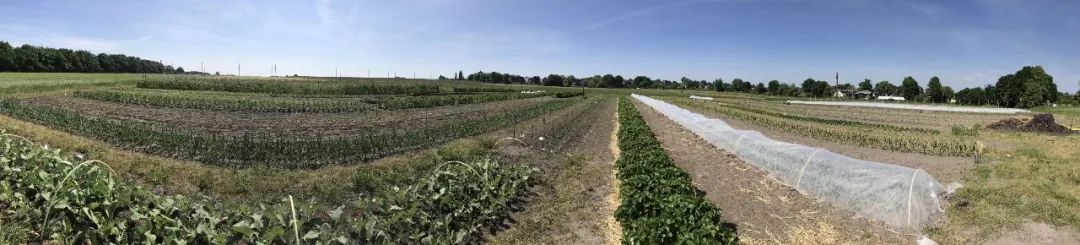
At the start of this year, after four years in the Netherlands, my partner and I finally rented a hectare of land in the province of Utrecht and began working my own farm.
Before committing to starting a farm, I had interned at several small-scale ecological farms in the Netherlands. In the summer of 2020, I interned for two months at Gordons Spoor farm in eastern Netherlands. I learned a great deal, but the intense 10- to 12-hour working days were often exhausting.
So in April of last year, I came to the “Happy Vegetables” farm, which claimed it could make vegetable growing a nine-to-five job.
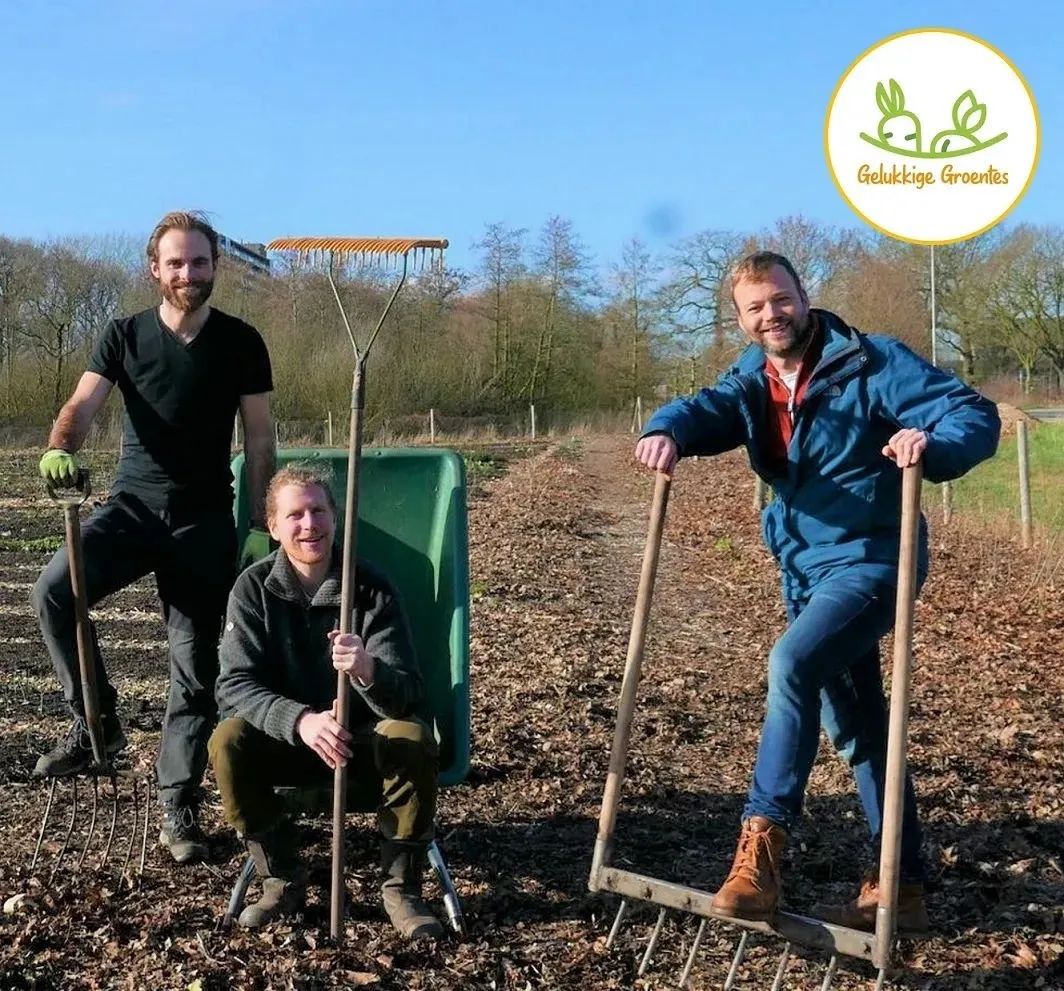
The farm was founded by two optimistic young Dutchmen, Sam and Martin. Neither had a farming background; they met and worked together at a small permaculture farm in the Netherlands.
There they gained a wealth of practical experience, built connections with other small ecological farmers in the neighbourhood, and gained a deeper understanding of the environmental problems caused by industrialised agriculture. That is how they developed the ambition to “become ecological smallholders and change this status quo”.
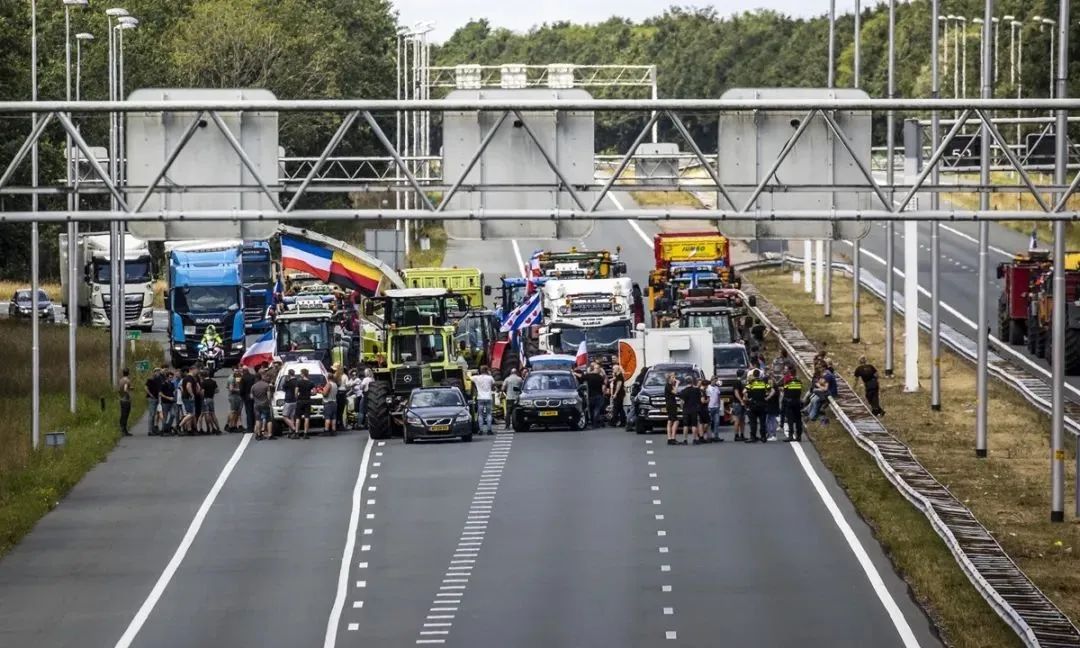
However, small-scale ecological farming in the Netherlands faces enormous challenges: start-up financing for new growers, the steep price of Dutch land (in Q4 2021 the average price of agricultural land in the Netherlands neared €70,000 per hectare, equivalent to over CNY 35,300 per mu per year), low-price competition from supermarkets, excessively long working hours with low pay, and what can only be described as the country’s “barren” food culture.
1. Building a Farm from Scratch
Third, the CSA business model secures their income. The farm’s pick-your-own subscribers pay an annual membership fee at the start of the year, which is effectively one year’s wages paid upfront. Another advantage is that the picking price is fixed, shielding them from seasonal fluctuations in vegetable prices.
I remember Sam once saying they wanted to show people, by running a good farm, that:
2) Agriculture can be sustainable and environmentally friendly.
3) Farmers can earn a decent income.
4) A farm serves its community, and its consumers are valued members of that community.
5) Their model can be replicated in other parts of the Netherlands.
2. A Good Farmer Knows How to Save Time and Effort
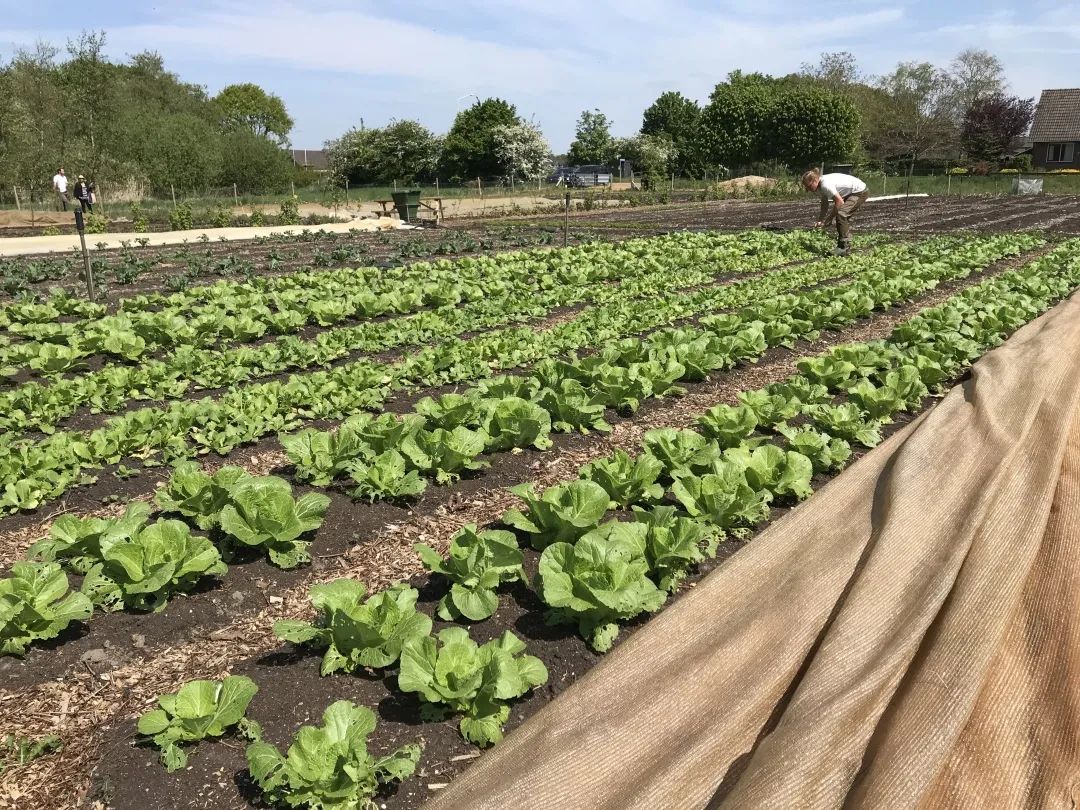
A width of 0.75 m also accommodates the row-spacing requirements for all manner of vegetables. For crops with generous row-spacing tolerance — such as spinach, carrots, onions and beetroot — you can plant three to four columns in close succession. For crops that demand wider rows — celeriac, broccoli, cauliflower, for instance — at least one column still fits comfortably.
The 0.25 m pathway is wide enough to stand and walk along without feeling hemmed in, and there is ample room for wheelbarrows and tools.
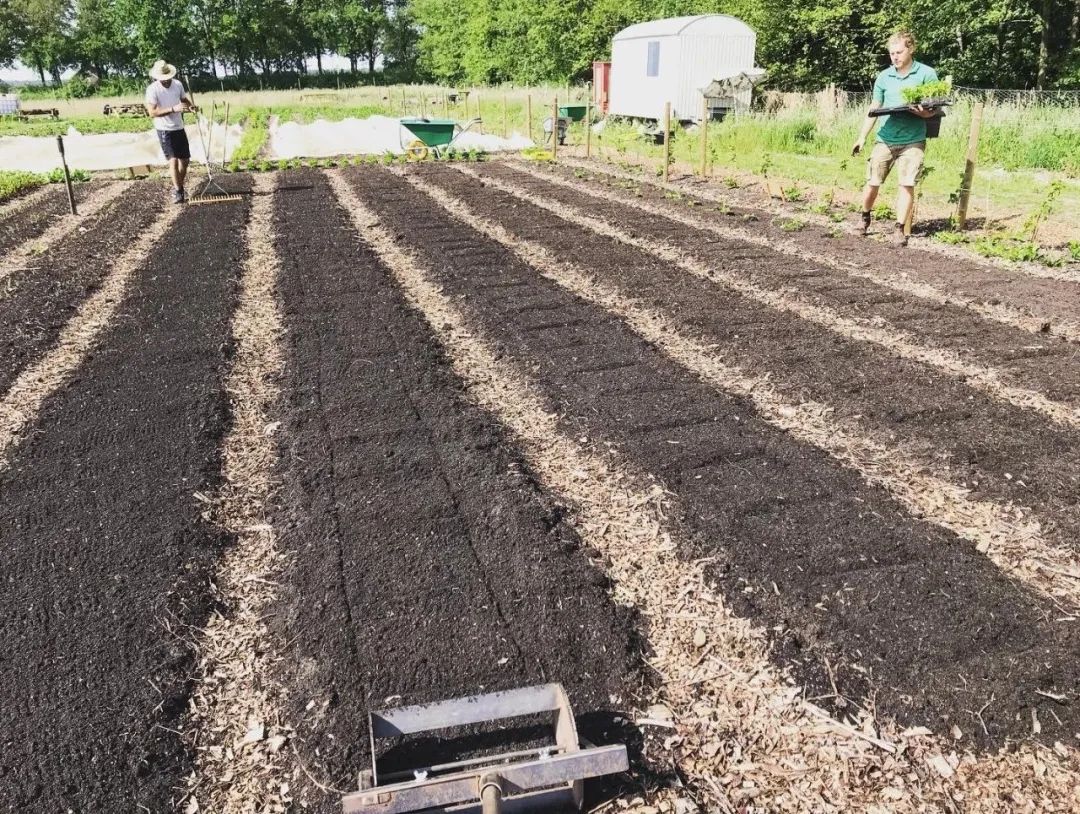
Next, the farm uses small, single-operator machines to boost efficiency. The most ingenious of all are the paper pot and drop seeder kit and its companion seeder.
In the paper pot and drop seeder kit, the paper pots look like accordion pleats before they are opened. To use them, two metal bars are inserted from either side to spring the pots open and spread them across the moulding board, where they take on the appearance of a honeycomb.
Once the honeycomb-like trays are filled with potting compost, a dibber is pressed down and lifted. This creates a neat indentation in each seedling cell. Finally, you simply select the appropriately sized seed plate and sow. It could not be simpler.

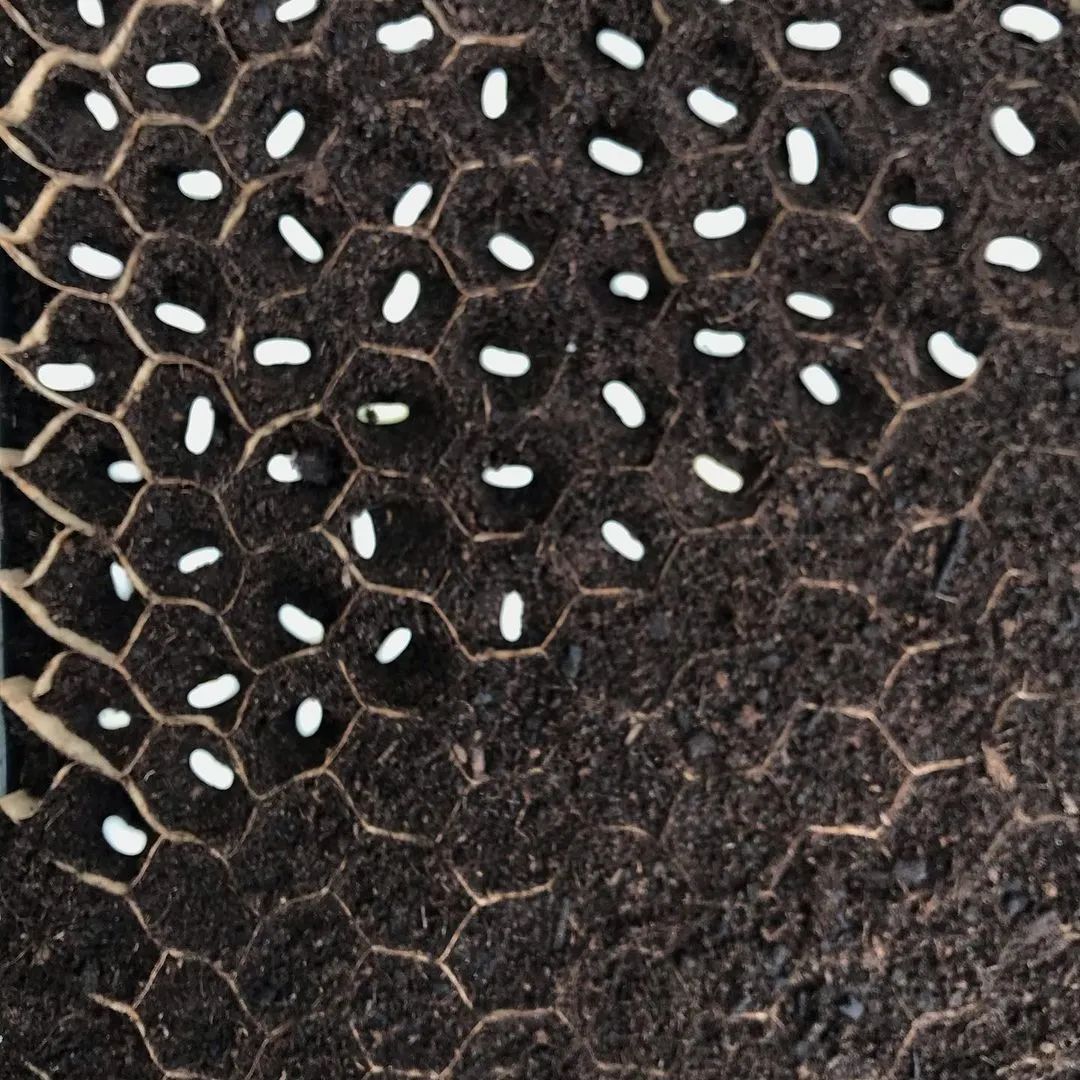
A single tray of paper pots with 10 cm plant spacing unfolds to a total length of 27 m. That means one tray can sow 270 seedlings at a time — just enough for two rows on a 15 m seedbed.
So the original decision to make the seedbeds 15 m long was also influenced by the length of the paper pot trays.
Another workhorse is the direct-sowing staple — the Jang Seeder — which can be used alongside the paper pot kit and is indispensable for crops such as carrots that do not transplant well.
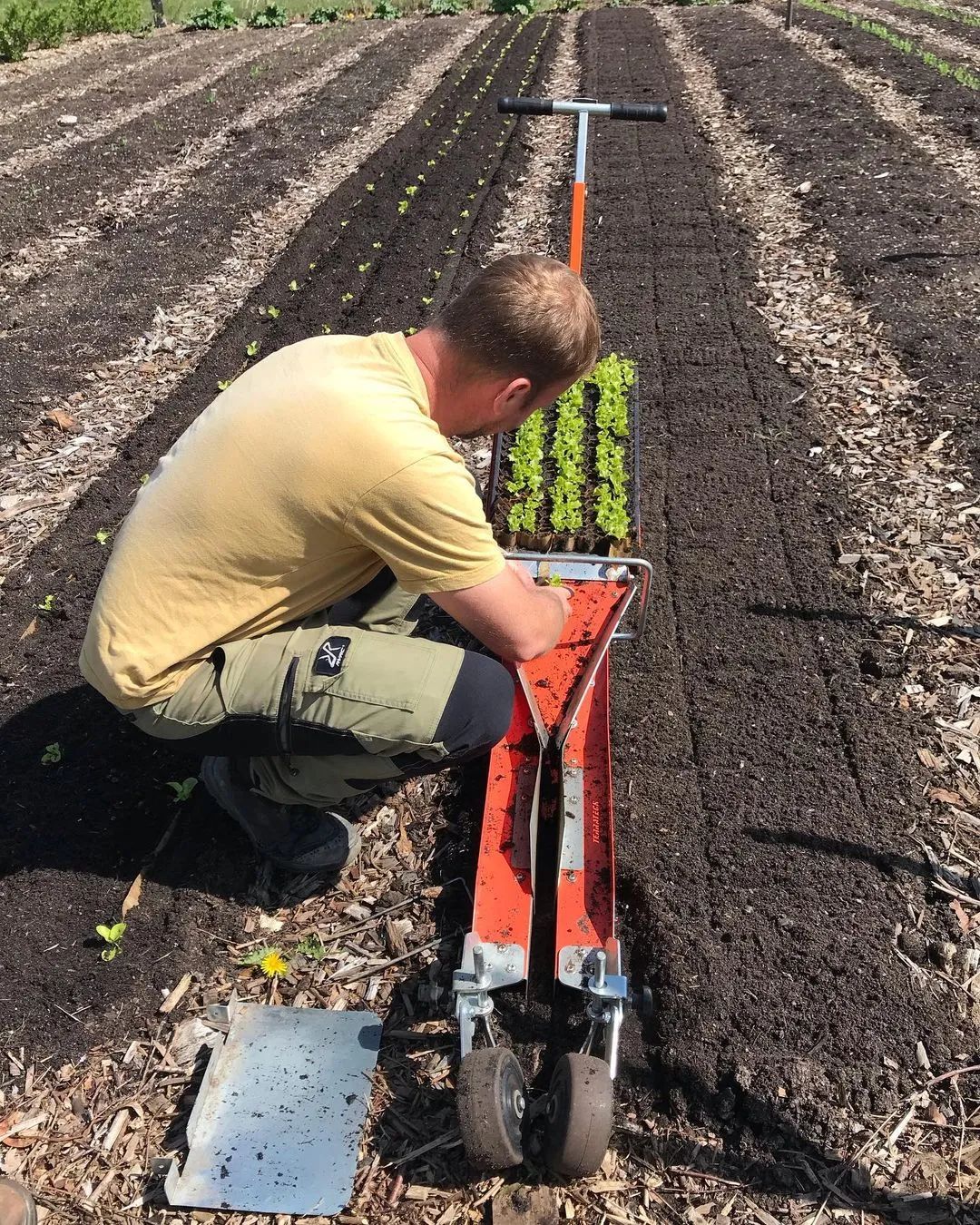
The seeder looks like a push-along scooter, complete with a frame and front and rear wheels, and the most fascinating parts are the drive box and the seed box.
Inside the drive box sit front and rear gears; swapping between gear sizes lets you adjust the plant spacing. The seed box holds the vegetable seeds, and at its lower end is a grooved wheel whose grooves are exactly deep enough to cradle a single seed. As the wheel turns, the seeds sitting in the grooves drop out while the rest are held back inside the seed box.
3. Sprinkler Irrigation, Drip Irrigation and No-Till
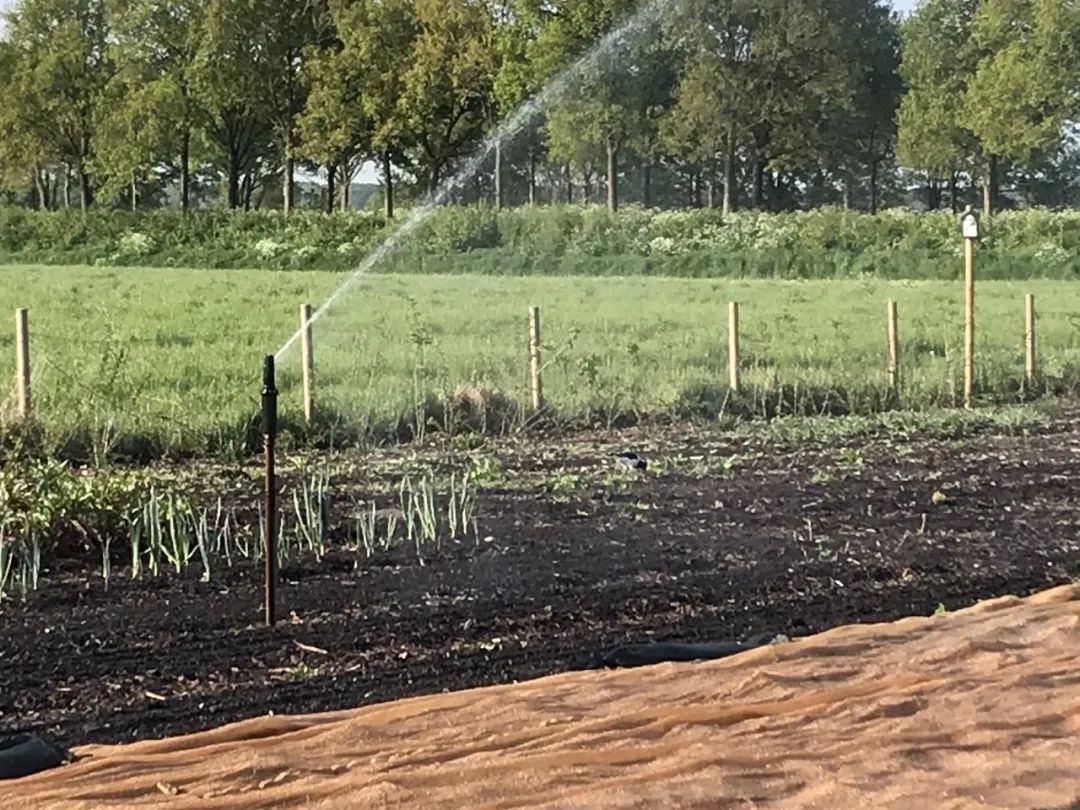
Each newly sown plot gets one hour of sprinkling each morning for five consecutive days, with no need for anyone to be on site. Two sprinkler heads cover exactly one plot in still conditions.
Drip irrigation lines can also be attached at the sprinkler heads. The tomatoes in the polytunnel are watered by drip irrigation, which effectively prevents late blight and other soil-borne diseases.
Compared to the days of lugging hosepipes around my previous farm, this is infinitely better. Best of all, efficient irrigation saves time.
And finally, the single biggest contributor to saving time and effort is no-till.
Before the farm started growing vegetables, the land had been pasture. To suppress weeds at the germination stage, Martin and Sam laid black polythene sheeting over the grassland to block out the light. After about two months, once the grass had died and turned yellow, they simply laid down a thick layer of compost.
The compost is rich in organic matter, an ideal growing medium for vegetables. Properly rotted compost contains no weed seeds or pathogens, and long-term, regular application improves soil health too — and healthy soil nourishes healthy, beautiful vegetables. On top of that, without digging, dormant weed seeds in the soil are never brought to the surface to germinate.
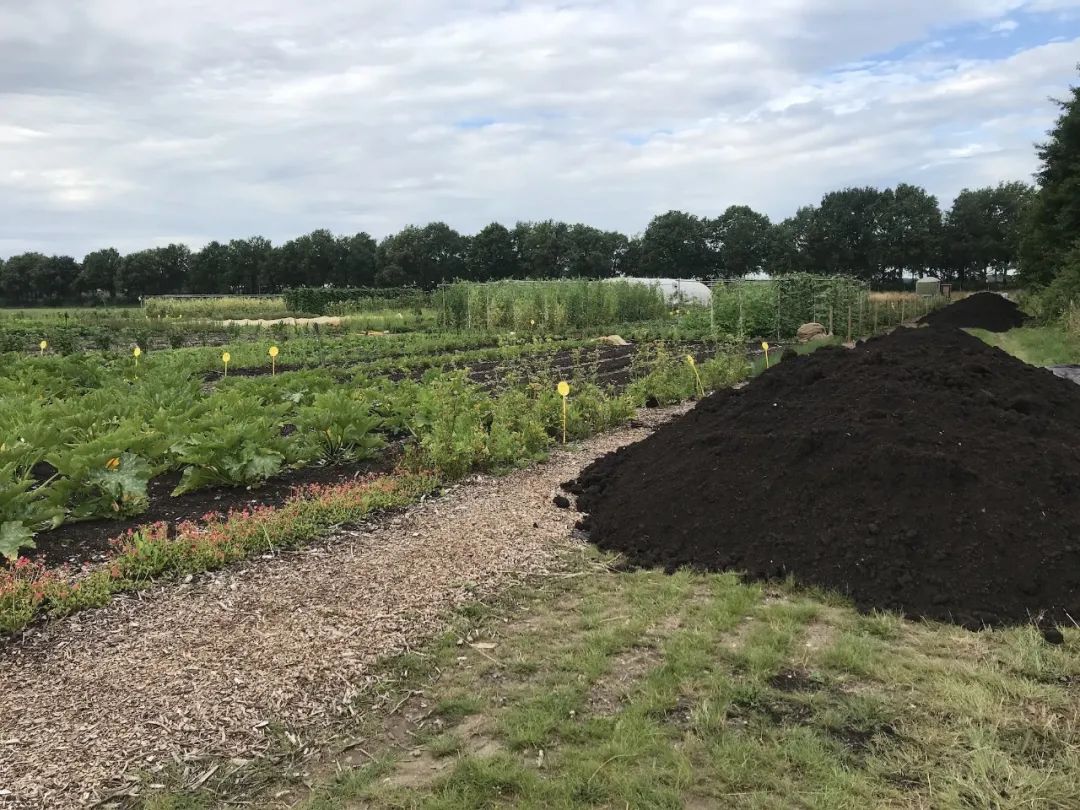
I have experienced at first hand how much the decision to dig or not dig affects weed numbers — take leeks, for example.
Planting leeks on the farm in spring means digging holes about 30 cm deep in the seedbeds and burying the seedlings in them, to encourage the development of the white stem.
Many local farmers bank soil up around the leeks periodically as they grow. This not only disturbs the soil but also brings buried weed seeds into conditions favourable for germination, adding to the weeding workload.
At Happy Vegetables, however, the no-till approach means far fewer weeds. Of course, when the holes are first dug for planting, some soil from beneath the compost layer inevitably comes up, along with buried weed seeds. But because the compost is light and crumbly, weeding is relatively easy — even deeply rooted dandelions sometimes come out with the gentlest pull.
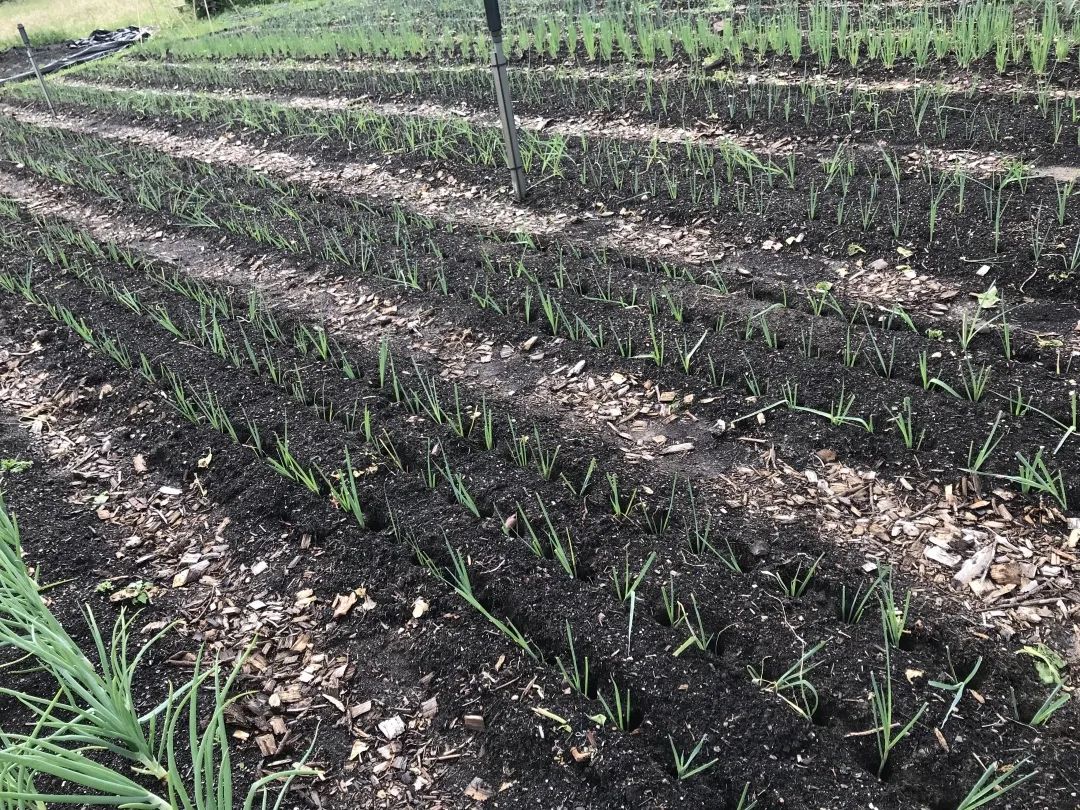
No-till makes the drudgery of weeding far more manageable, and with regular, routine upkeep, weeds can be kept well under control. Happy Vegetables now has eighteen vegetable plots. If one and a half workers spend one hour each working day tackling weeds on four plots, the farm can get very close to a zero-weed state!
The reason it is “very close” rather than absolute is that the farm is not a closed environment — wind and other animals carry weed seeds in. The farm belongs to us only while we are working it; the rest of the time it belongs to nature’s visitors: hares, crows, oystercatchers, voles, moles, slugs, snails, spiders … and all the creatures beyond the reach of our eyes.
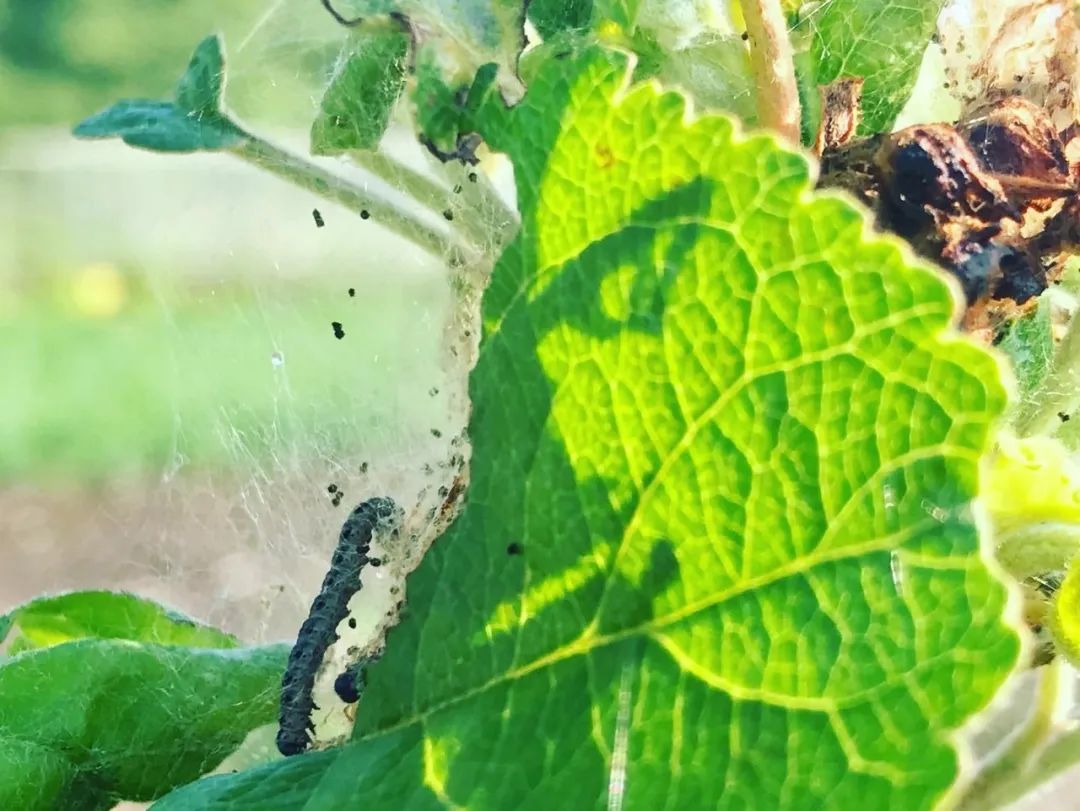
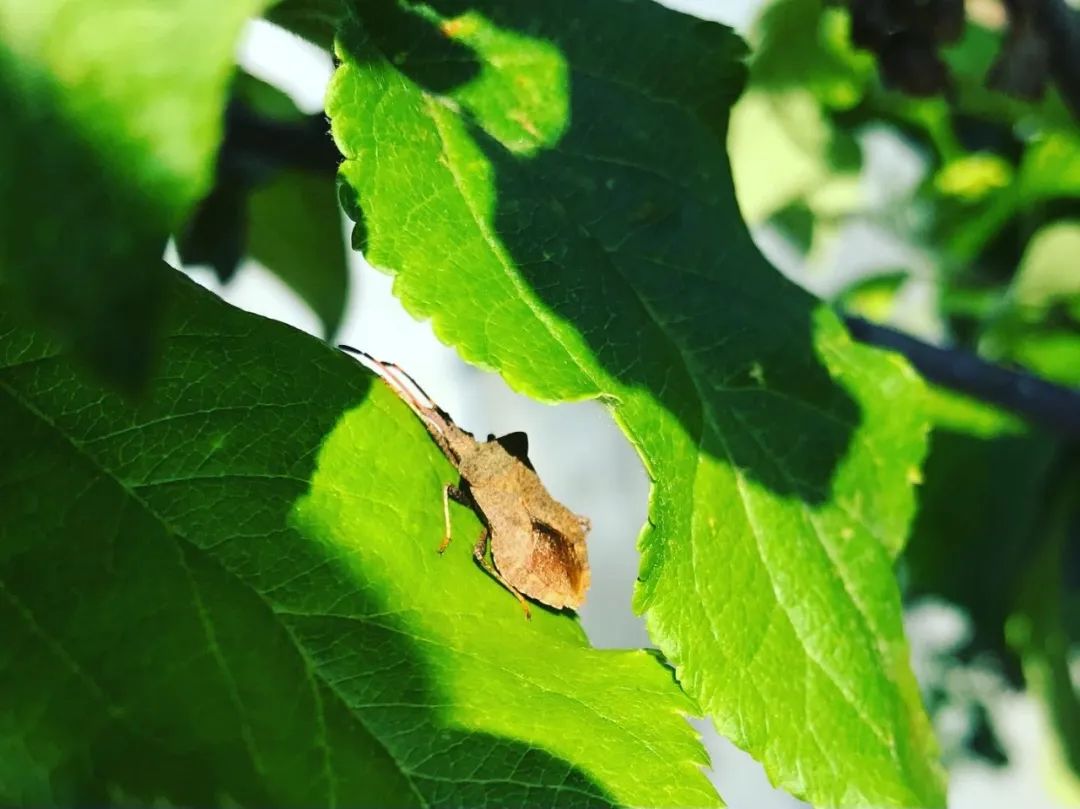

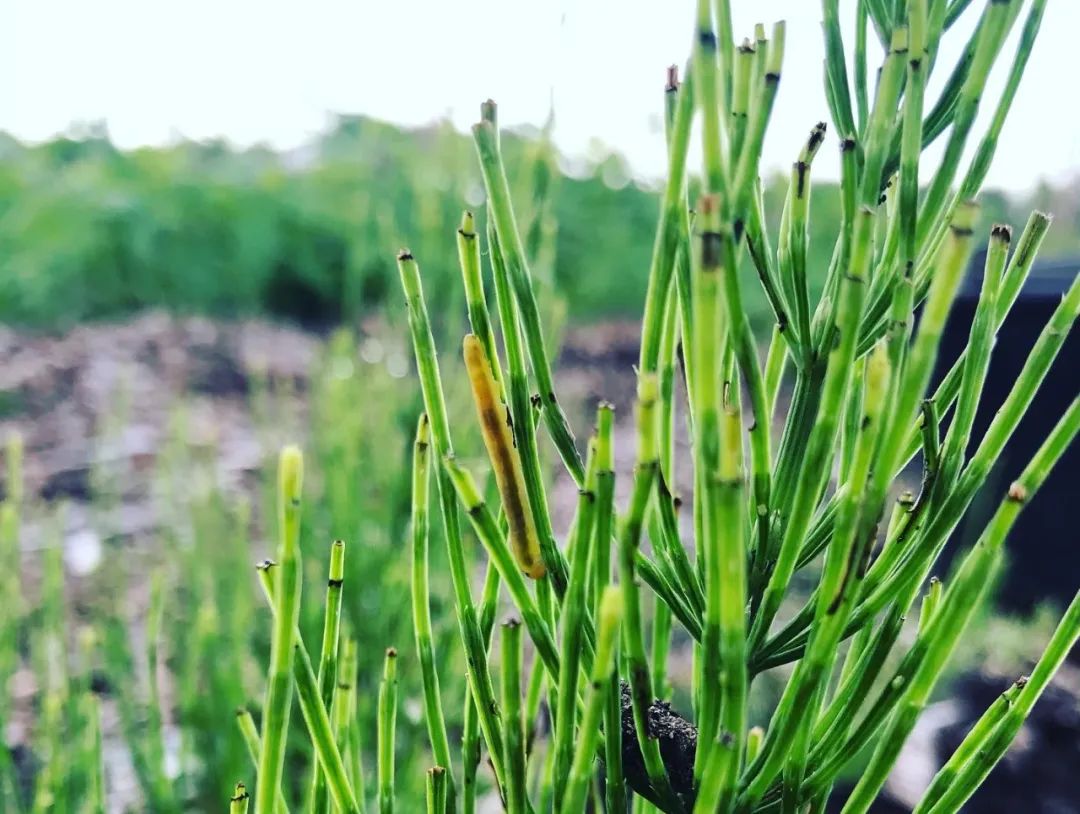
Martin says that if nothing in your fields has yet been eaten by other animals, you are not yet part of nature. And I suppose that is the truest spirit of sharing with the natural world.
These days, I am putting the lessons I learned at Happy Vegetables into practice on my own farm. How replicable are their methods? What is it like to run a farm in earnest versus interning at one? Next time, we shall explore that.
Editor: Zeen