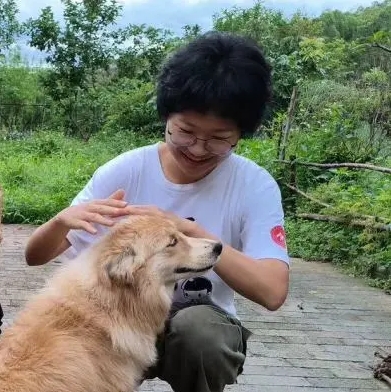
Leaving the City, I Planted a New Seed of Life at the Farm
From Foodthink
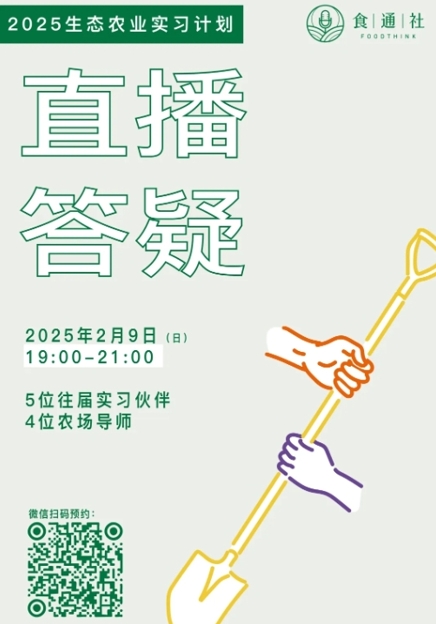
Scan the QR code on the poster to go straight to Foodthink’s WeChat Channel and book the live session. For more details, see “5 Days to Go: Give Yourself a Reason to Farm”.
I. Roaming Life Before the Farm
At the time, PDT was mainly working on the consumption side, organising consumer education programmes in the city, collaborating with restaurants on projects, and so on. But I always felt that, starting from everyday life, food production was far more marginal and invisible than consumption—and far more compelling to me.
Wanting to try becoming a worker with my own hands, I left PDT and set off on a long, meandering journey. Two farmers left a deep mark on me during that time.
The first was my godmother in the Dong village.
At the time, I was working in exchange for a room at a hostel in Kangding—managing reception, helping in the kitchen, cleaning rooms. I happened to make my way back to Guandong Village in Sanjiang Dong Autonomous County, Guangxi, where I had once collected oral histories. This time, though, I was returning as family and as someone involved in farming. It was harvest season, so I joined them in gathering rice, picking tea leaves, and making Dong cloth.
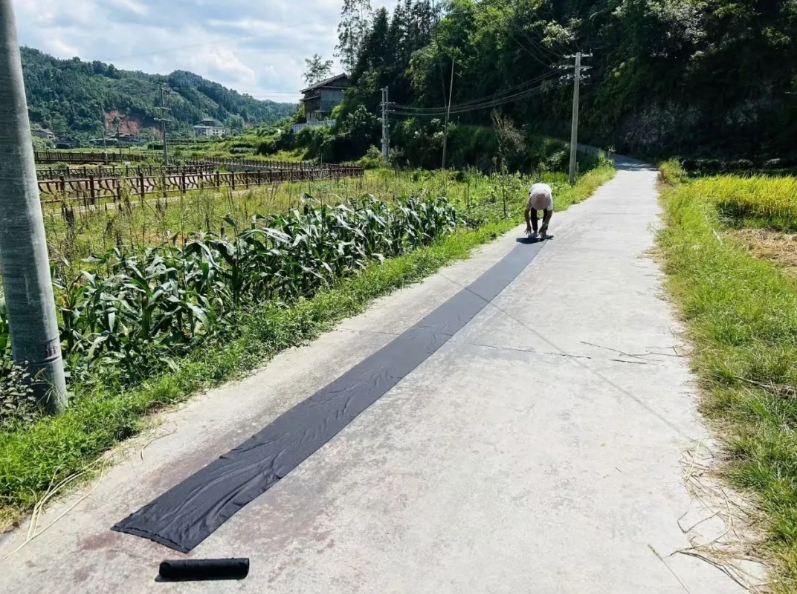
During that period, I tried making a documentary with my grandmother as its subject. She, too, came from the countryside, and I wanted to know how she saw rural life, farmers, and the city.
One day we walked through a field of rapeseed flowers on the outskirts of town. The bright yellow blooms made me so happy. Seeing how delighted I was, my grandmother said, “Do you know? All those rapeseed seeds could be pressed into oil, and you’d still only fetch just over ten thousand yuan—far less than what you could earn working away from home.” If you deduct costs and labour, farmers really are not making any profit. What people in the city see as a beautiful sea of blossoms, to a farmer is nothing but back-breaking work.
Those two moments planted seeds of doubt and shame in me.
After that, I joined Foodthink’s Ecological Agriculture Internship Programme. On the one hand, I wanted to understand the truth about farming: what is it really like to till the land? What are farmers’ lives actually like today? Can agriculture offer a way of living?
At the same time, it was a way of escaping my parents’ relentless pursuit. Even though I had always wanted to break free from the mainstream vision of a good life, my parents still felt that for years I had been wasting my life on nothing productive. By then, I had already started applying for a master’s degree abroad, but I was not entirely sure why I wanted to study overseas. It felt as though, following that path, I would ultimately find myself back inside the mainstream framework.
So going to a farm as an intern was my last attempt.
II. What the Farm Is Like
Brother Qiang, Guixinyuan’s farm owner, along with several other partners, are a group of people living what is called “half-farming, half-X”. Brother Qiang normally works for a foreign company in Shenzhen and only goes to the farm on weekends and public holidays.
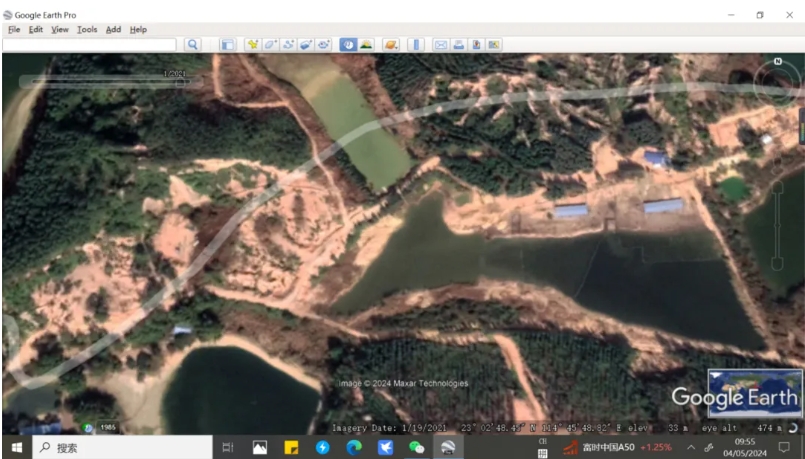
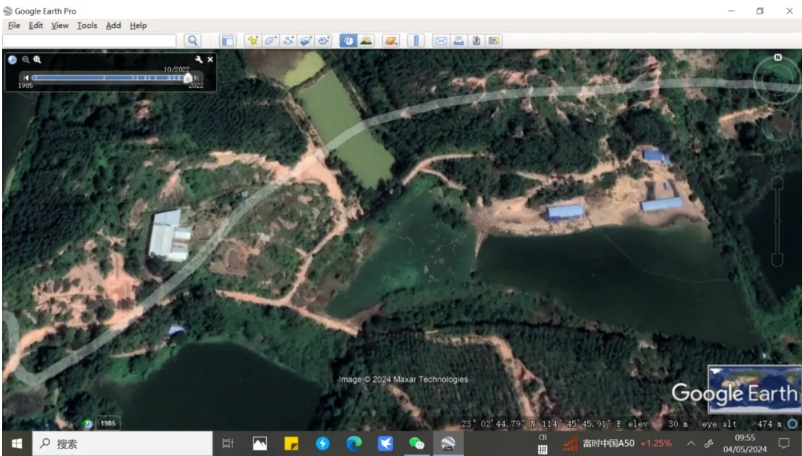
The first keyword for Guixinyuan is “Permaculture”.
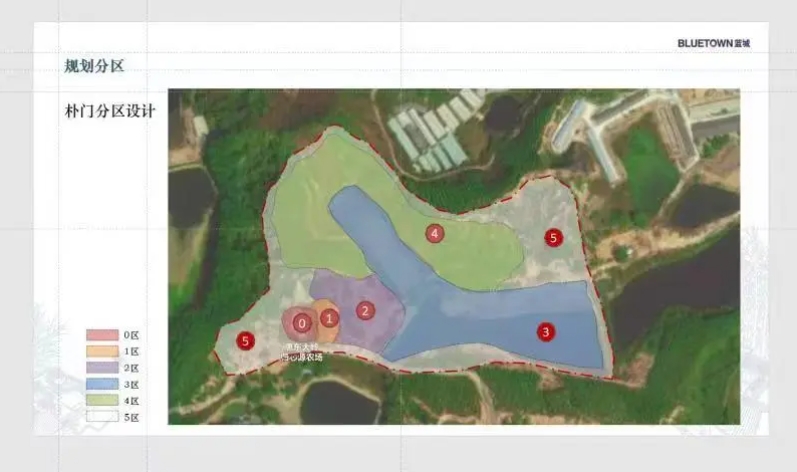
The farm was designed with Permaculture principles in mind: Zone 0 is where people live, Zones 1, 2 and 3 are the areas used for agricultural production, and the further out you go, the closer you get to nature. Zones 4 and 5 are left for plants and animals to grow freely, and we rarely go there.
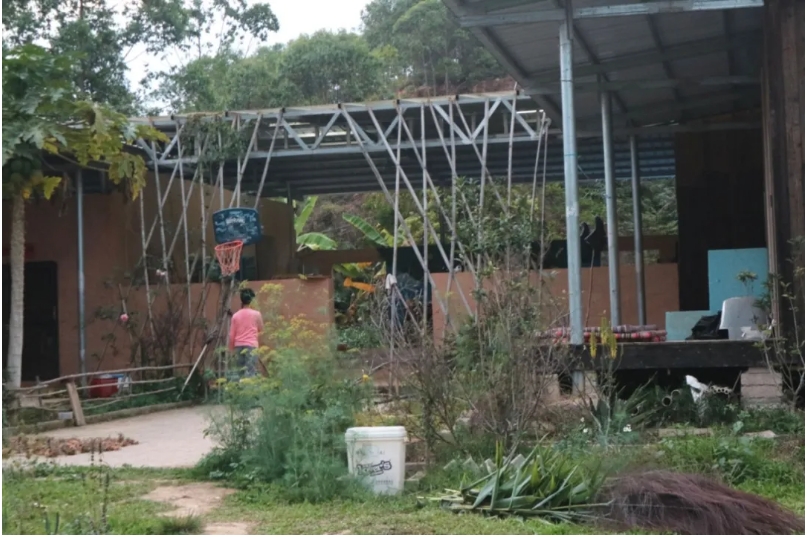
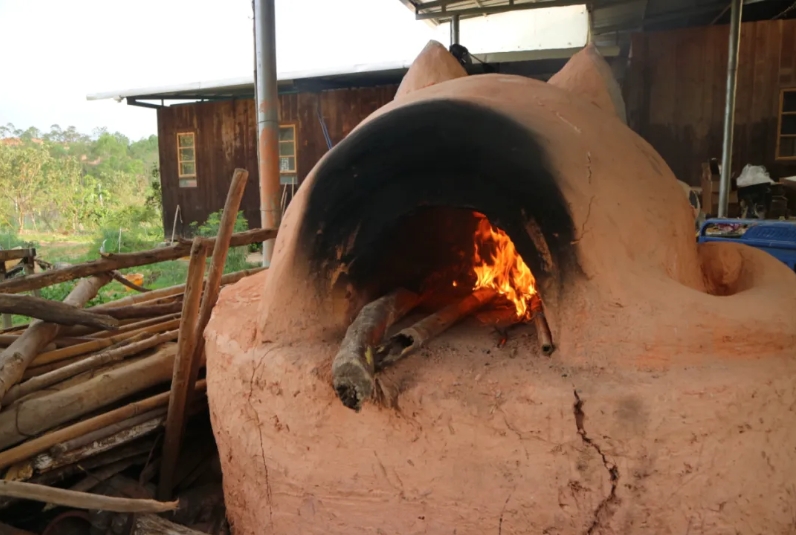
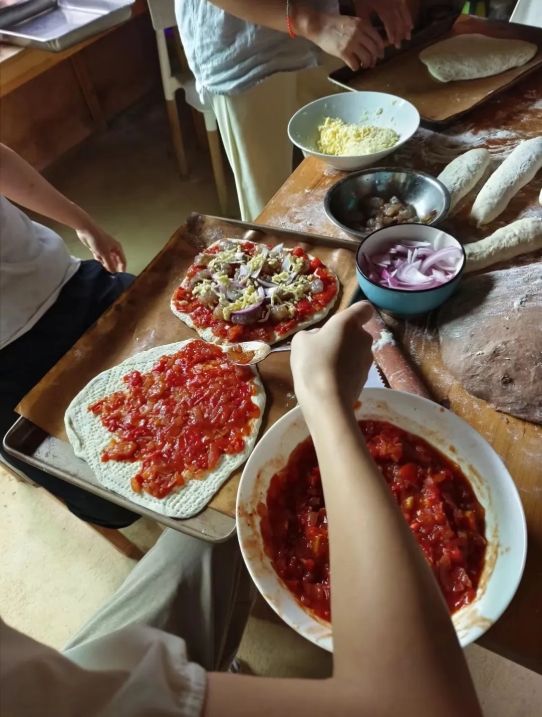
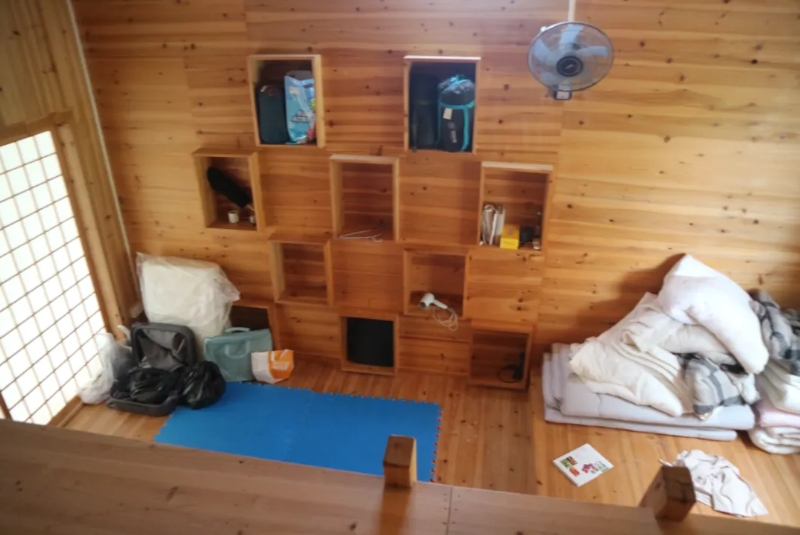
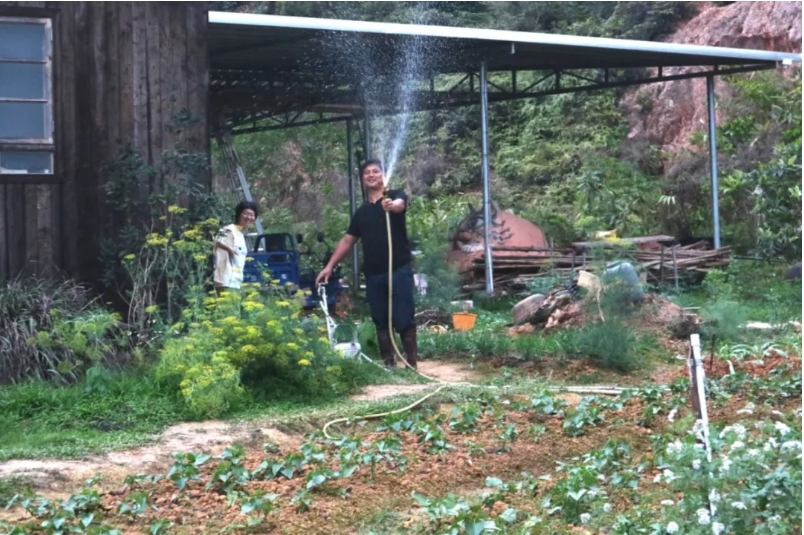
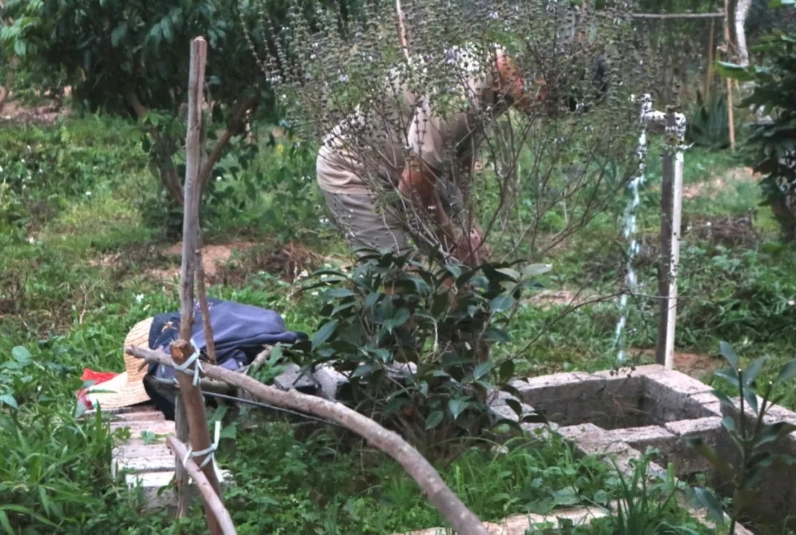
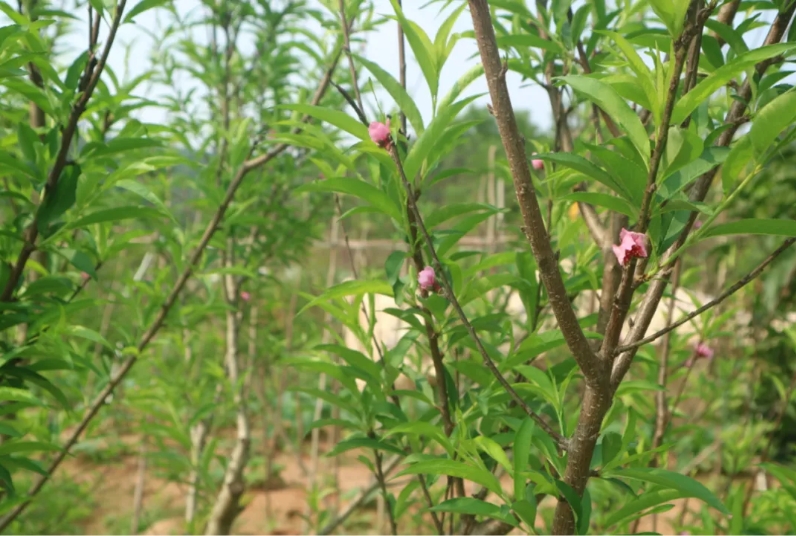
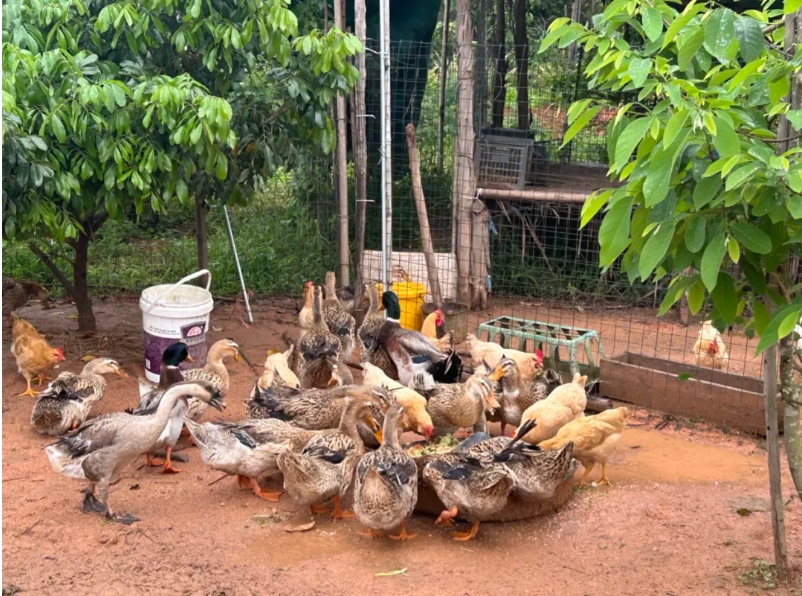
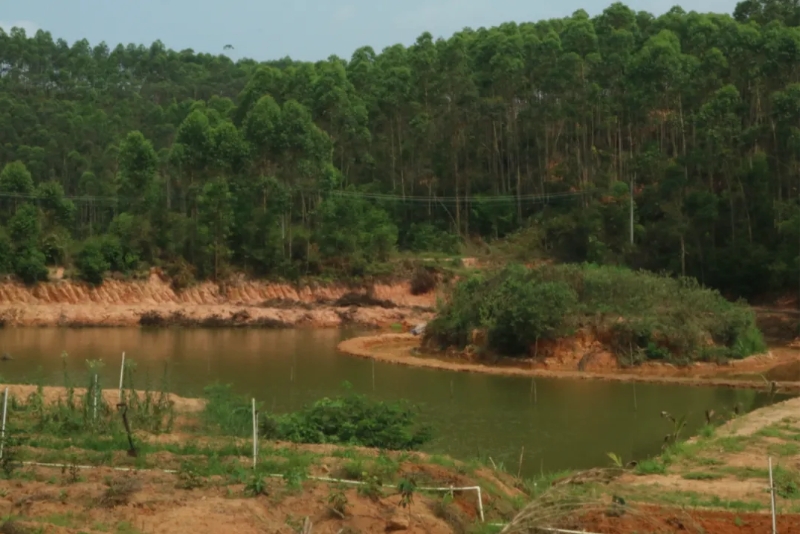
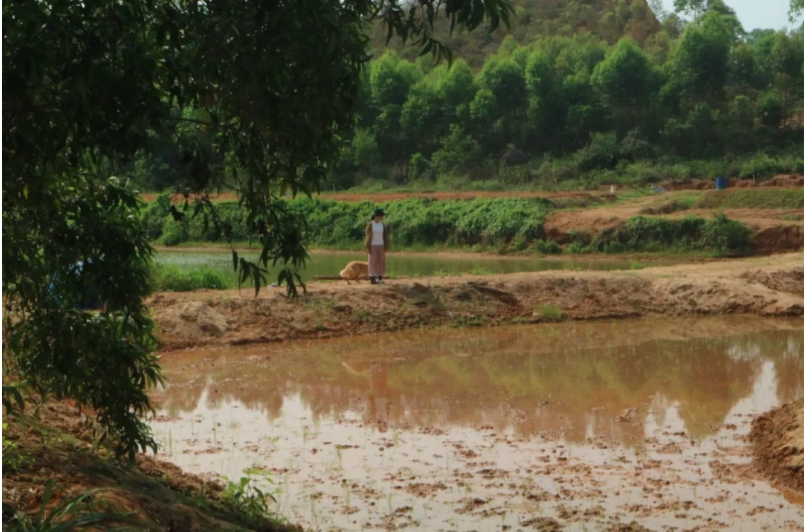
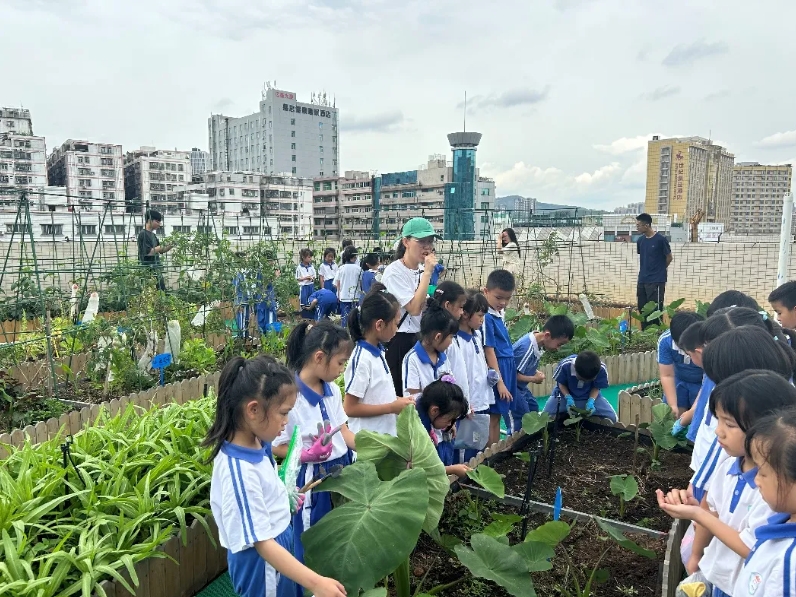
At the same time, the farm also hosts visitors who come to tour, stay overnight, and eat, and we run nature-education programmes in collaboration with schools in Shenzhen and elsewhere. Because our income streams are so varied, Guixinyuan reached a break-even point after just three years of operation. An ecological farm really does need to diversify its operations as much as possible—that is the lesson I took away from this experience.
III. Daily Life on the Farm
After that, I would let the two masters assign me tasks for the day. Since Brother Qiang, the farm owner, was not usually on site, they were the ones running things, so we interns simply assisted them with whatever they needed.
Weeding and mulching were by far our most frequent tasks.
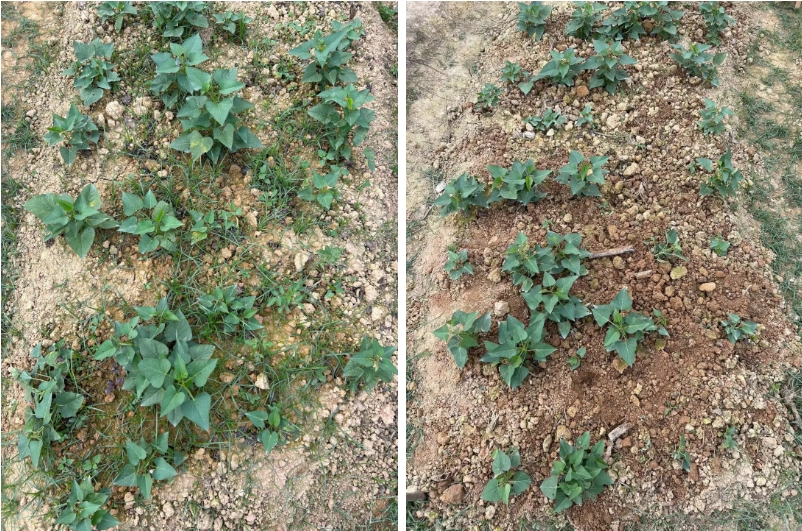
In these two images, the one on the left shows the sweet potato field before weeding. You can see that where the grass grows, the soil is a darker colour, which means it holds more moisture. Once the weeds are pulled out, the wet soil gets dragged up along with the roots, all that moisture rises to the surface, and within minutes the sun bakes it dry, leaving it as hard and compacted as the ground where no grass ever grew.
Because I could see that grass actually protects the soil, I had a very real doubt about whether we should be weeding at all.
I later learned that the reason this particular plot needed clearing was that the sweet potato leaves had not yet spread out, and the weeds were competing with them for resources. The grass had to be pulled when it was still small and sparse. Once the sweet potato canopy grew large, the weeds could simply be left alone.
But to keep the soil from lying bare, we used grass as mulch instead. This suppresses weeds, retains moisture, and lets the rotting plant matter break down into humus, enriching the soil.
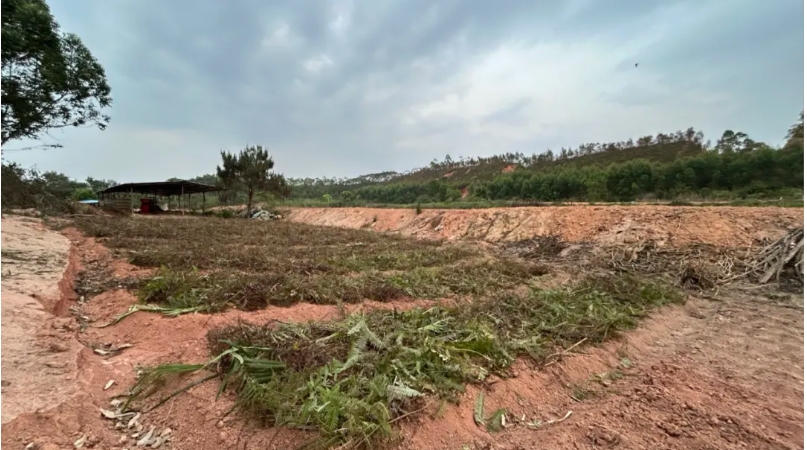
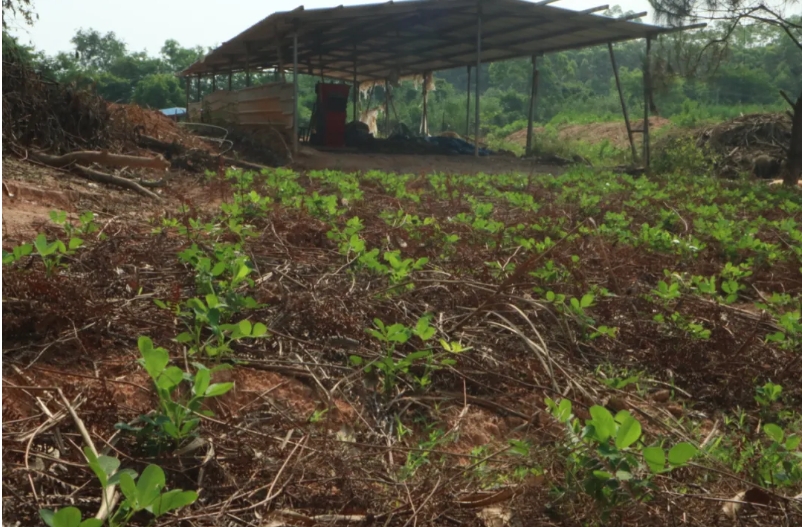
In fact, Ajiang and his colleagues knew plenty of mulching techniques.
For example, when weeding among sugarcane, he showed us how to lay the pulled grass in a ring around each stalk. If you are worried the uprooted weeds might re-root once you set them back on the ground, simply drape the roots of the next plant over the leaves of the one before it. As long as the roots never touch the soil, the weeds cannot regrow.
Both masters farmed through practical, experience-based methods that differed from the traditional or natural farming approaches I had imagined.
Over time I developed a little hobby of studying weeds here on the farm. As it turns out, many so-called weeds are edible, and some even have medicinal value. Sometimes the dog would follow us into the field, and I noticed it would nibble at different kinds of grass. Master Ajiang once told me, “Dogs are far smarter than people. When a person falls ill, they have to go to the hospital. A dog just walks over to the edge of the field, munches on a few stalks of grass, and cures itself.”
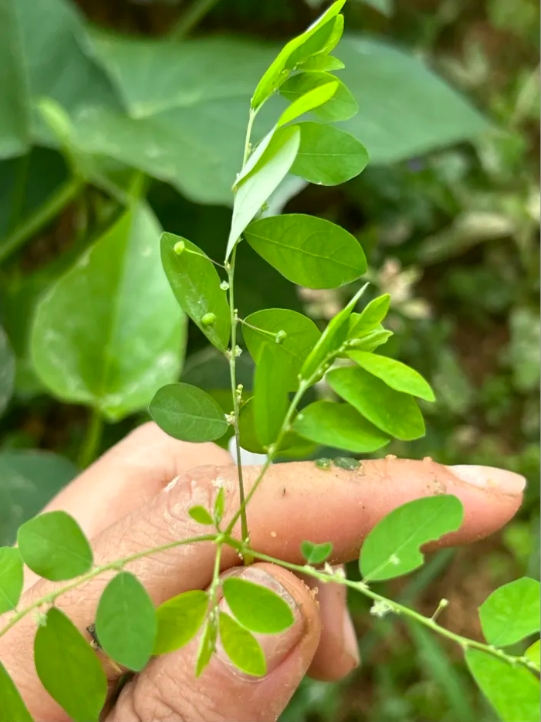
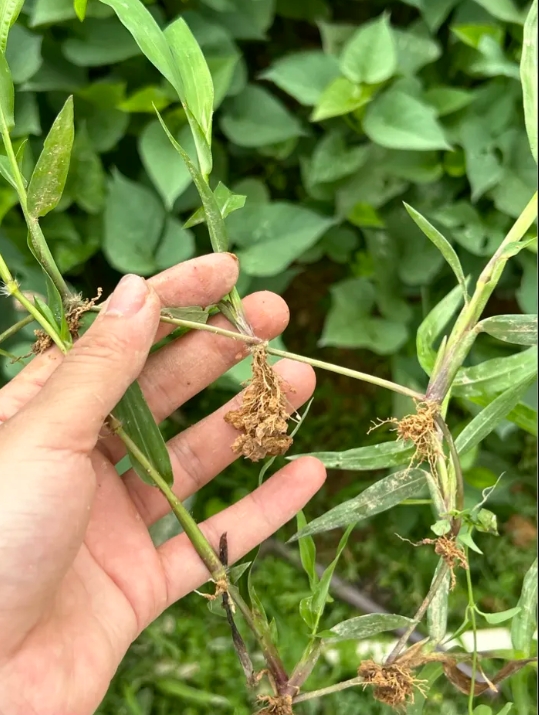


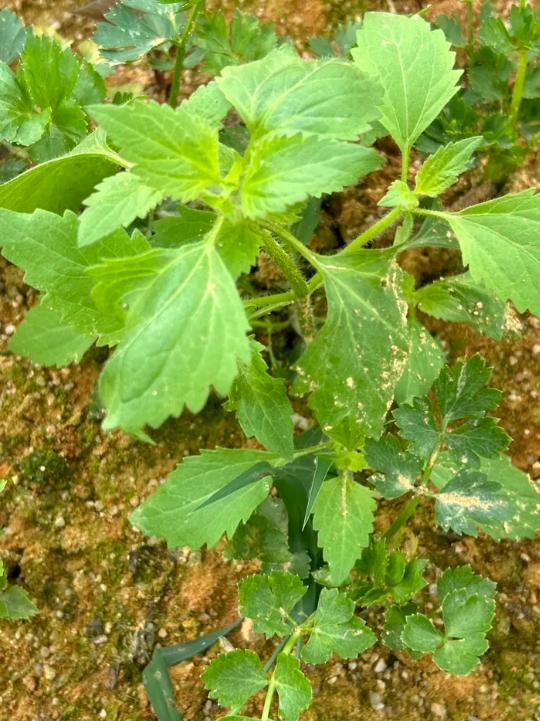
●Some of the common weeds we encountered, in order: Phyllanthus urinaria; carpet grass (Axonopus compressus)—it sends out stolons and quickly spreads across the whole plot like a living carpet, making it incredibly stubborn to pull; Bidens pilosa (beggar’s-ticks)—also edible, and when a mosquito bites you, you can pinch off a bit, crush it, and dab it on the bite to relieve the itch; Crassocephalum crepidioides—grows abundantly by the water’s edge, but Brother Qiang says it is poisonous, so we never dared eat it; common chickweed; Praxelis clematidea—which releases a curious fragrance like an expensive Italian herb. Supposedly it is not safe for people either, but geese and fish absolutely adore it.
My partner, fellow intern Cheng Hao, loved studying insects. She would often call me over to admire some new creature she had found, but I was never quite as enthralled—we each had our own specialties.
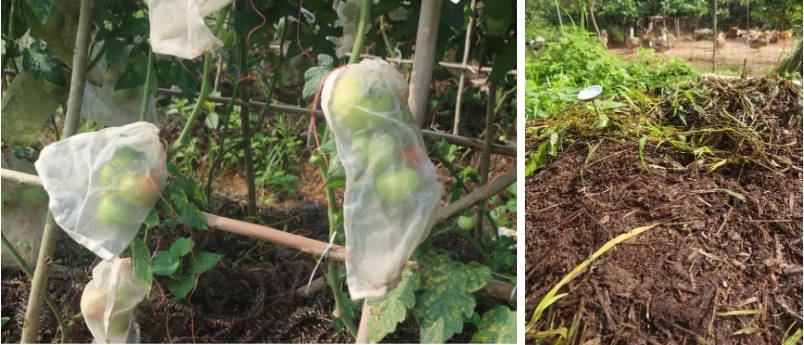
Besides all that, we also did fruit bagging, composting, sowing seeds, and other tasks.
IV. What a Farming Beginner Gained
Master Ajiang often said, “Plants are really just like people. Think of a plant’s root system—it looks very much like a person’s circulatory system. If you imagine what a person needs, you can work out what a plant needs.” When it came to the finer details of watering, top-dressing, and so on, he sometimes struggled to give us a scientific explanation, but he simply went about tending his crops with that mindset, almost by intuition.
Weeds, too, are part of this natural system. For example, while looking after the peanut field, I noticed lots of tiny black insects perched on the weeds—stink bugs. They seemed to prefer the weeds to the peanuts, so as long as there was grass for them, they left the crop alone. After that, I deliberately left a patch of grass for them. I have come to believe that how you treat your weeds says a great deal about your growing philosophy.
V. Farm Visits: From Seeing One Tree to Seeing a Forest
In the end, I realised: ecological agriculture has no standard answer—it is a spectrum.
A farm can be measured by many indicators: different scales of operation, the degree of “ecological” practice—does it use polytunnels? How much fertiliser does it apply? What is the revenue split across primary, secondary and tertiary industries? Every farm is genuinely different, but I believe that as long as they share certain fundamental principles—respecting nature, not causing harm to health or the environment—they are all ecological agriculture.
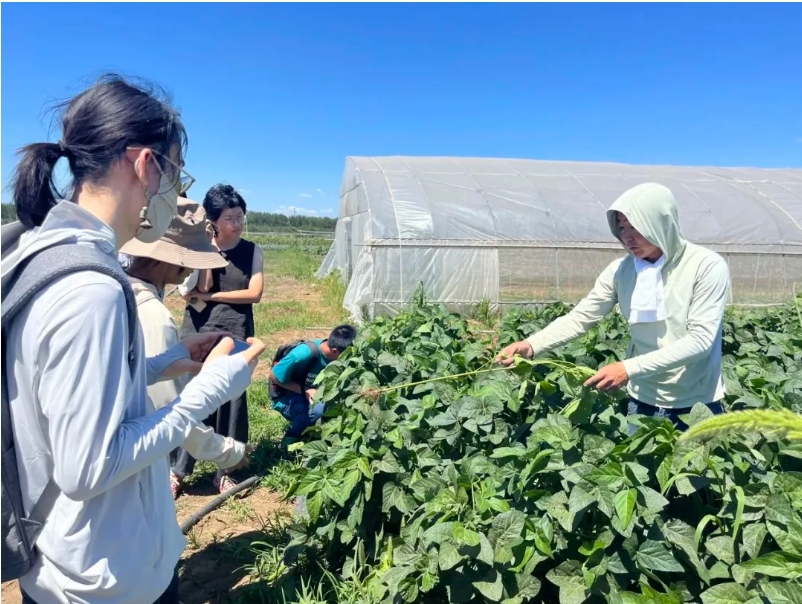
While chatting with Brother Liu of Xiaoliushu Farm, he categorised farms into interest-based, skill-based and technology-based. I can use these lenses to look at the farms I visited:
Interest-based—whose interest is being served? It can be the farmer’s own interest, like Sister Chen Yanhong’s personal vegetable plot; or the interest of city dwellers, as at Phoenix Commune and Little Donkey Farm, which subdivide plots and rent them to urban residents.
Skill-based. Teacher Pengcheng stood right there in the fields, explaining how to do pruning on lychee and guava trees. With just a few simple Pruning cuts, he can determine what shape the tree will ultimately take and where it will bear fruit. Skill is not limited to growing crops either: Lüwo Farm, for instance, makes delicious biscuits, and Teacher Gan Juzheng processes his own rice into rice cakes and rice noodles.
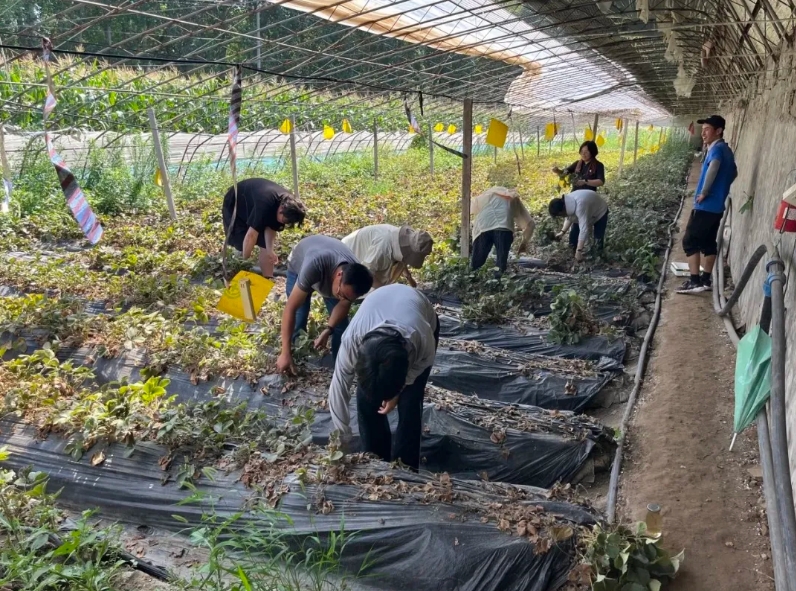
Technology-based. Yinlin Farm stands out for its management—the composting layout, the crop rotation in the Polytunnels are all meticulously organised, and it brings young people together to work. In Beijing too there are standout technologies: mechanical farming equipment at Xiaoliushu, soil and cultivation techniques at Xiqing, and so on.
Agriculture is not only a way of living; it can also be a “way of thinking.”
When I visited farms in Guangxi, I felt that my fellow ecological farmers held a worldview quite different from that of city dwellers—one closer to the traditional Chinese ideal of the Unity of heaven and humanity, with a way of thinking that differs from modern society. They are also drawn to topics like traditional Chinese medicine, traditional culture, astrology and astronomy. Along the way I met all sorts of people with all sorts of ideas—people you would rarely encounter in a city.
VI. The Future
For the me of today, perhaps I possess none of these three. I have already learned so much and seen a rather large world, but perhaps I still want to see an even larger one. I still feel bewildered by this world, and perhaps the very process of seeking answers to that bewilderment is the process of finding my “X”.
I can say that this journey has already planted a seed in my heart. Whether it is further study, work, saving up, or meeting new people, I hope to move step by step towards this ideal. It will also become a new window through which I attend to the world, witnessing ever more farms, and I hope this journal can go on being written, page after page.