Can’t Quit High Sugar and Fat? Hand-Roll Healthy Snacks | Grandma Kouzi

Going to the market in town, I came across two snack stalls within just a few steps.
One was a local elderly woman. She had a fixed spot in the market, sitting on a small stool, tending a pot of hot oil and frying oil-lamp cakes to order. Seeing me hold up my phone to take a photo, she asked how many I’d like. I quickly stashed my phone and beat a hasty retreat.
Next to the oil-lamp cake stall was an itinerant hawker. This middle-aged man, who went from market to market, pushed a specially modified vending cart selling ready-made “jin baoyin” – golden-fried glutinous rice cakes sandwiching a sesame-and-white-sugar glutinous rice filling. Worried about another awkward hard sell, I just snapped one photo from a distance.
Stepping out of the market, at the corner commanding the most prominent position was a snack shop called “Tang Chao” – literally, Sugar Nest. You didn’t even need to step inside, let alone scan the ingredient list; just the name told you the sugar content.
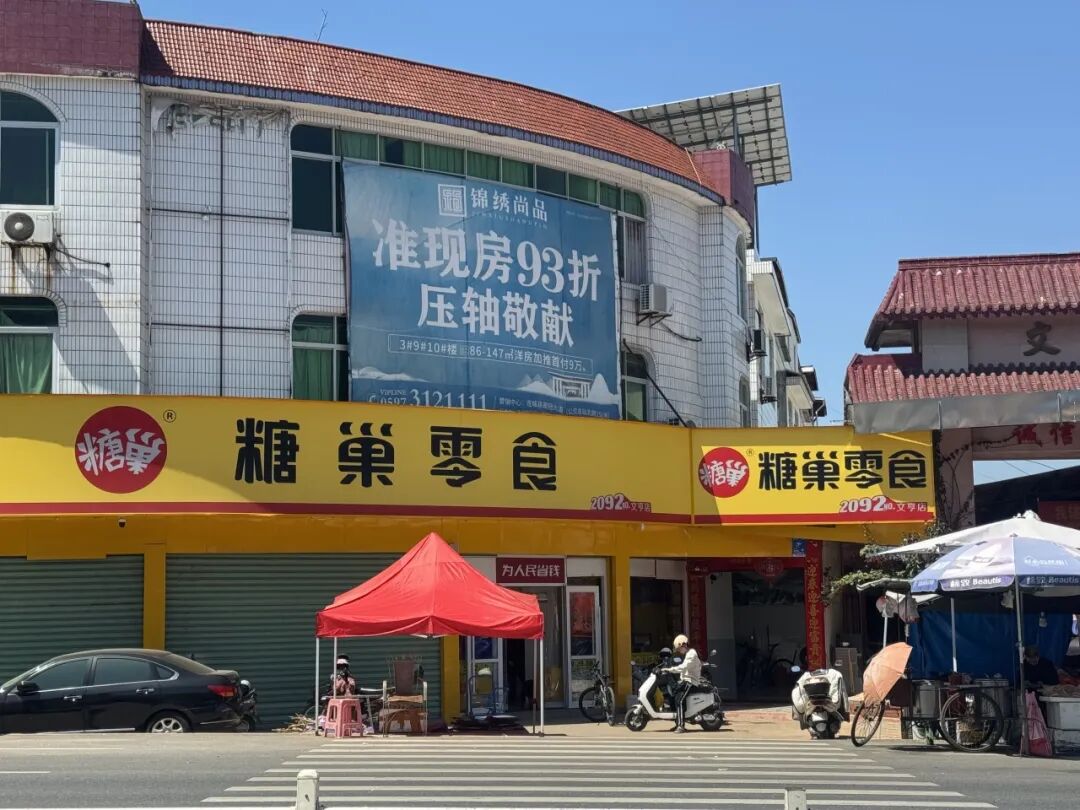
◉ The snack shop in town.
Today’s snacks are either high in sugar, high in fat, or both – and for modern people living with the “three highs” (high blood pressure, blood sugar and lipids), every last one is a killer.
What on earth has happened to our snacks?
The Han Chinese Harvest Festival
The two local snacks I was so desperate to get away from earlier are both traditional delicacies with deep roots.
Two stories explain how the oil-lamp cake got its name. One says the finished cake resembles the shape of an ancient soybean-oil lamp; the other holds that the small iron mould used to fry it looks like the cup of an old-style oil lamp.
A younger local friend from Fujian once told me that when he was small, the once-a-year oil-lamp cake was the one treat a child would savour in memory for a whole year. In those days, everyday meals were watery and plain, with not a flicker of oil in sight. You had to wait until spring, when rapeseed oil was pressed, before oil-lamp cakes would be fried – just once. Three parts rice to one part soybeans, soaked the night before. The next day, you first ground the mixture on a stone mill into a fine batter, then seasoned it with salt, chopped spring onion, or chopped green garlic. Set the oil over high heat, lower the small iron mould in first, and once it is thoroughly preheated, lift it out, pour in the rice-and-soybean batter, then sink it back into the oil. The children would hover nearby, watching with wide, eager eyes, waiting only for the batter to swell with the heat, puff into an oil-lamp cake, and rise to the surface. Freshly fried, the oil-lamp cake was fragrant, shatteringly crisp, and billowing with steam.
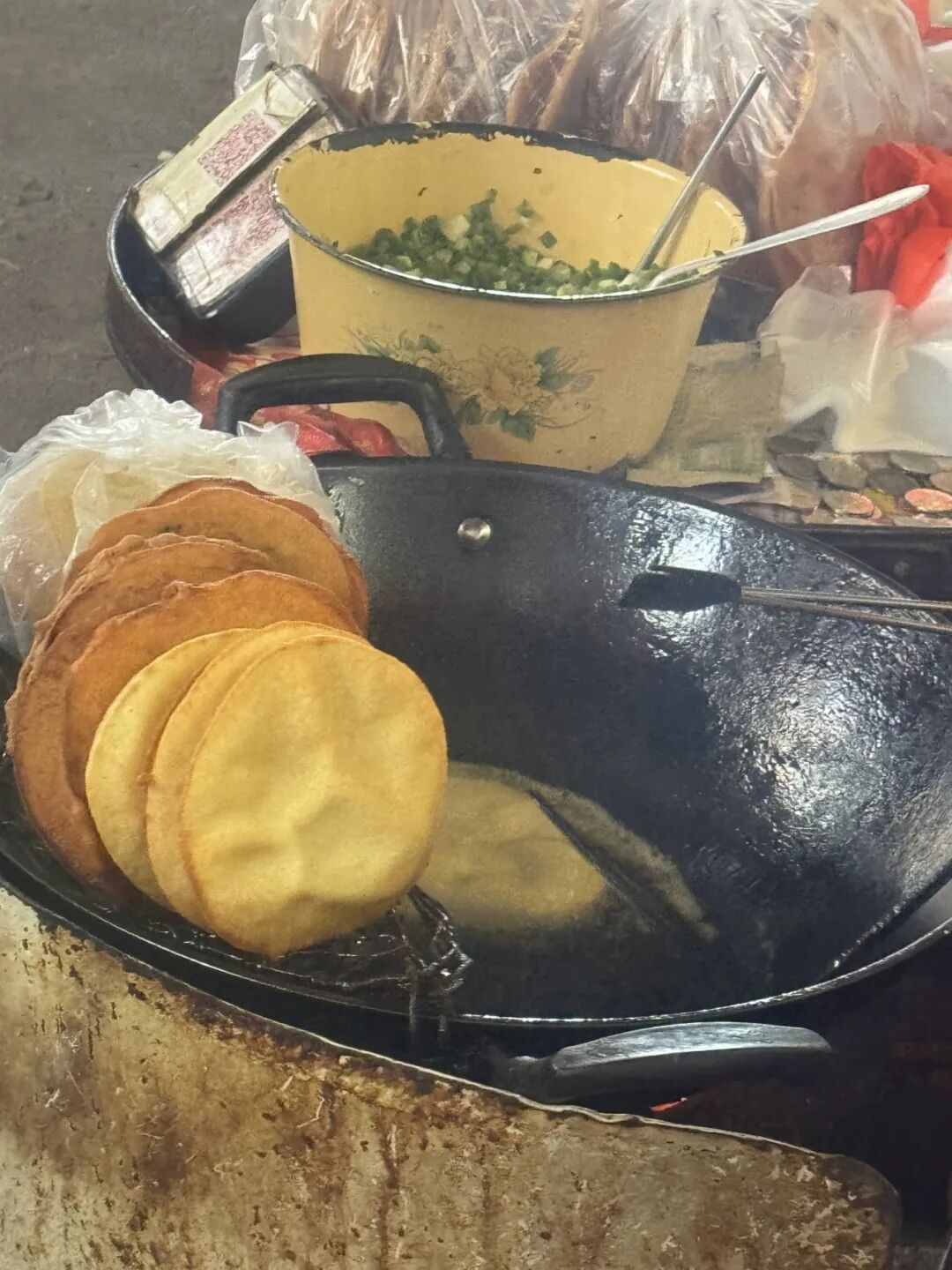
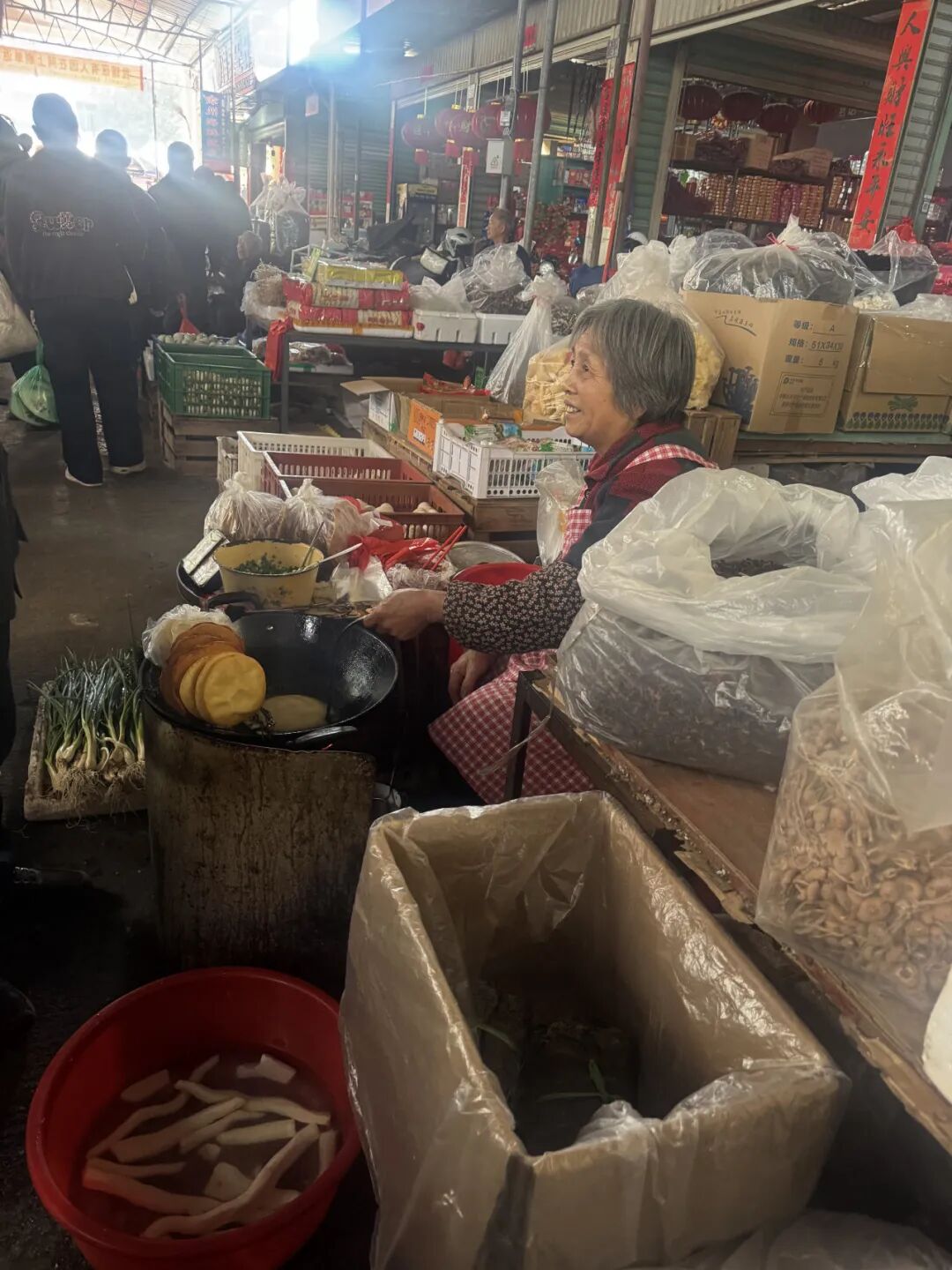
◉ Oil-lamp cakes and the elderly woman at her stall, frying them to order.
Jin baoyin was inscribed on the local Intangible Cultural Heritage list in 2018. The main ingredient of both the “gold” and the “silver” is glutinous rice. The “gold” is glutinous rice flour blended with wheat starch or cassava flour, kneaded smooth, flattened, and deep-fried until it puffs up into a golden sphere that floats to the top. The “silver” follows the method for ciba (a traditional pounded glutinous rice cake): first steam the glutinous rice, pound it, then add sugar; or, alternatively, mix glutinous rice flour with water and sugar, then steam until cooked through. If glutinous rice flour is used, it must be exceptionally fine in quality – what is called water-milled rice flour.
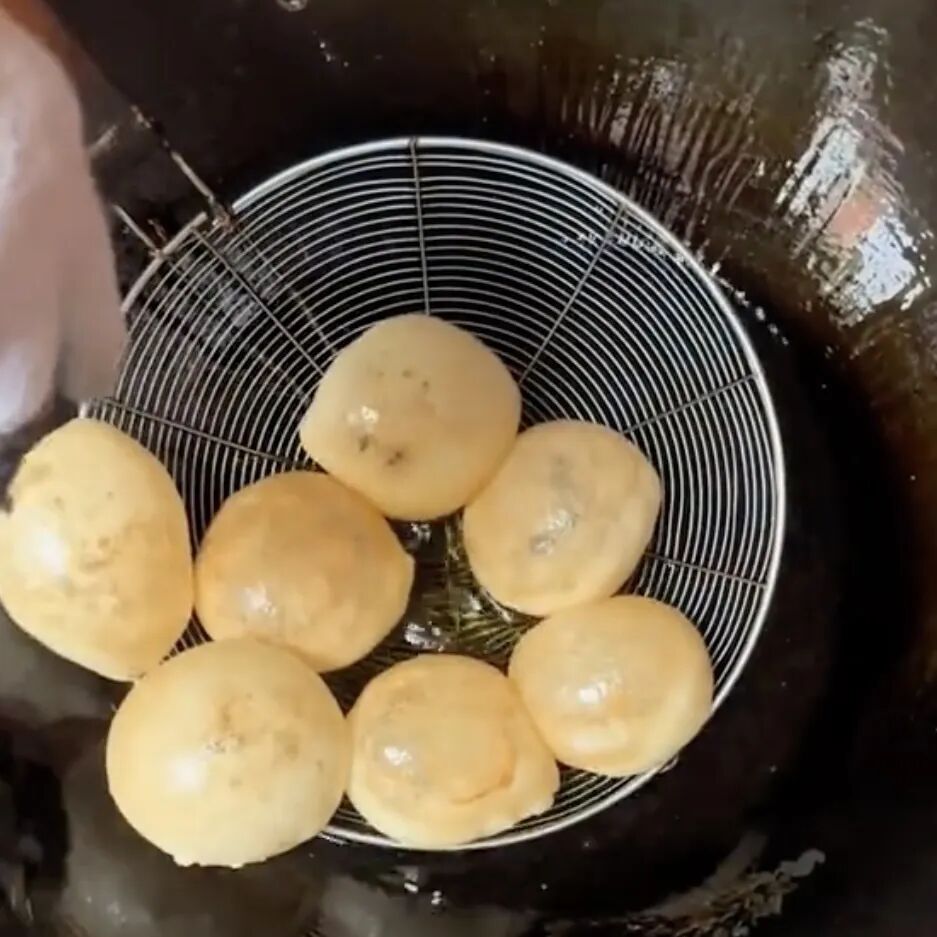
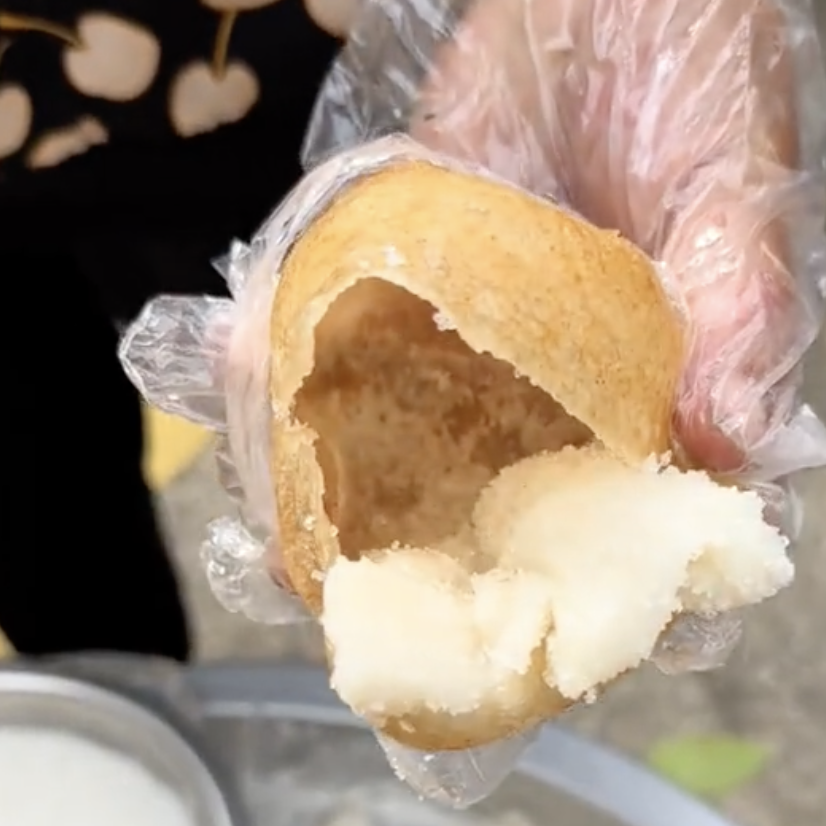
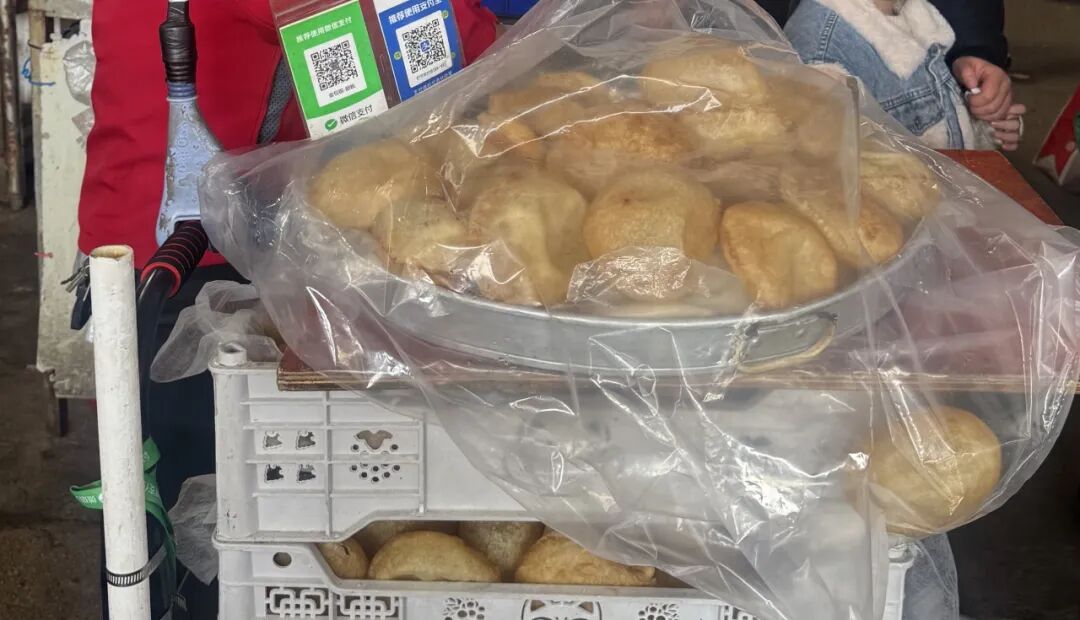
◉ The freshly fried “gold” and the “silver” nestled inside. Photo credit: Douyin user @黄掌柜吃吃吃, Grandma Kouzi.
Most families can make oil-lamp cakes at home, but jin baoyin takes far longer, is more exhausting to prepare, and is all the more precious for its rarity. It is not hard to imagine how wonderful a memory oil-lamp cakes and jin baoyin must have been for children a few decades ago.
I have similar sweet memories from my own childhood. The difference is this: where Fujian’s delicacies are made from rice, Shandong’s are made from wheat.
Before starting school, I lived with my mother, a teacher, at a rural middle school. The village children had hardly any snacks. My most blissful food memory is of every wheat harvest, when Granny would roast the new wheat in an iron wok, then take it to the stone roller to grind into flour. She would sieve it, stir in a little brown sugar, and bind it into a ball with boiled-and-cooled water. With infinite tenderness, I would cup that egg-sized lump of brown dough in my palm, nibble the tiniest amount, and let it linger on my tongue, savouring it slowly for the longest while before swallowing.
Every wheat-ripening season, I longed for that one taste. From the moment Granny winnowed the wheat, washed it and roasted it, I never left her side. The roasted grains needed grinding for a very long time, and the finer the grind, the more delectable the roasted flour that came through the sieve. Unable to resist my craving, I kept on nagging, while Granny, with her bound feet, pushed the stone roller round and round, soothing me and telling me to be patient. That was the only snack I had before I moved to town at seven – those long, slow spring days, so sweet and yet so achingly hard to wait through, remain the most exquisite memories of my childhood.
Later, while making documentaries, I witnessed a number of ethnic minority festivals. The Han people rarely have ceremonies filled with song and dance, but that little ball of sweet, wheat-scented roasted flour – that was my harvest festival.
I imagine that, for the elderly woman selling oil-lamp cakes at the market, the oil-lamp cake means much the same.
From a Sign of Abundance to a Health Killer
I was born into hunger and grew up in hunger. Although the Three-Year Famine had passed, ours was a large family. My parents were raising five of us siblings, plus my grandparents, and they still had to look after aunts and uncles out in the village. Of this whole household, only four of us held urban household registration and could draw on the state grain supply; the rest of our daily food had to come from “high-priced grain”. For years, I remember that at every meal we would first drink a great bowl of hybrid sorghum porridge before eating, so we could get by on fewer steamed buns. Hybrid sorghum was a wretchedly unpalatable coarse grain – it could neither be steamed into buns nor made into griddle cakes – and only families without grain ration coupons and without money would eat it.
In those hungry years, many ordinary things were pressed into service as both food and remedy. When I was small, a child with diarrhoea would be given a “roasted flour drink”. Flour was toasted in an iron wok over a low flame until pale gold, then pushed a shade deeper – to a tawny, amber hue, just on the cusp of scorching – and stirred with boiling water into a thick paste. Drinking it could stop diarrhoea. If the trouble was indigestion, a flatbread as thin as a cicada’s wing would be rolled out, then toasted in a flat pan over low heat until bone-dry and crisp, its surface lightly charred. This was called the “charred flatbread”.
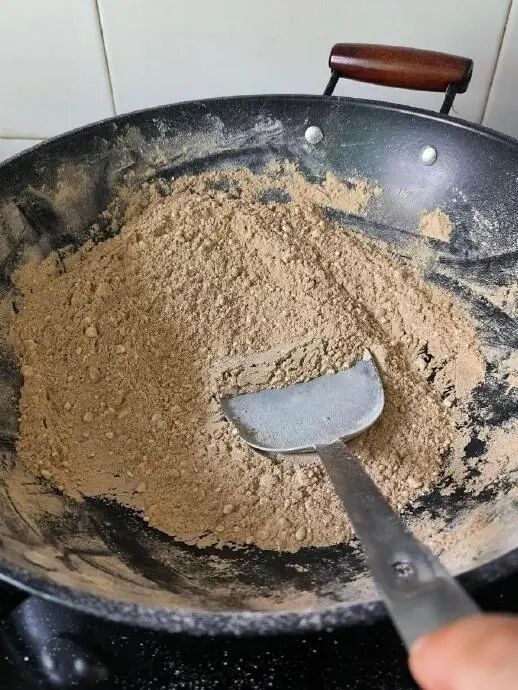
◉ Even now, some people still stir-roast flour in an iron wok to soothe the stomach. Photo source: Sina
Stopping diarrhoea with flour roasted until scorched works on a principle close to that of montmorillonite powder. Paralleling the charred flatbread’s role in easing food stagnation is dried steamed bun, toasted until scorched and then soaked in hot water. Once I became a farmer in the south, I discovered that there, rice plays a similar role. Roasted rice tea – brown rice roasted until scorched – is also used to regulate the spleen and stomach.
In the agricultural era, rice and wheat were both the staple grains sustaining basic survival and the source of a rare, precious indulgence – snacks you could hardly ever come by. Making snacks yourself meant first living within one’s means; nothing was done on a whim. You had to set aside enough grain for the family’s meals. When a harvest was relatively generous, you would eat a little more refined, high-calorie food, and the body would convert it to fat for storage – a lifeline reserve for the lean days between old and new harvests. That is an instinct passed down through countless generations. Through the long ages when food was scarce and fullness rare, humanity evolved to this day; in the genes of those who survived, a love of higher-energy food is etched deep.
By the late 1970s, my family no longer had to drink sorghum-flour porridge. Back then came Uncle’s Eight-Treasure Tea Soup, brought all the way from Tianjin. The base was still roasted flour – flour roasted in oil – plus toppings: sesame seeds, walnut halves, green and red candied peel, sugar-preserved osmanthus, raisins, and sugar – very, very sweet. Judged by today’s standards, this tea soup would be nothing short of a sugar-and-fat health bomb.
Even if Granny stirred enough sugar into her homemade roasted flour to make it perfectly sweet, it was a completely different matter from Eight-Treasure Tea Soup – the divide between “food of the agricultural era” and “products of the commercial era.” That bowl of exquisite Eight-Treasure Tea Soup was the fruit of nationwide, industrialised food production and distribution. The raisins came from Xinjiang, the sesame and walnuts from the Northwest, the sugar-preserved osmanthus from Jiangnan, the green and red candied peel from North China, the sugar from the south, and the flour from the north.
That was still the era of the planned economy. Today, supermarket shelves are crammed with snacks of every conceivable new variation – all high in sugar, all high in fat. In an age when widespread hunger was the norm, these tasty, high-calorie treasures would enter the body and be immediately converted to energy, filling the body’s caloric deficits; only surplus beyond that stood a chance of becoming stored fat. But things are different now. The fat piled up inside a modern body simply will not budge. The once-precious, once-rare delicacies have become, just like that, a health killer for modern people.
Can We Still Eat Snacks?
So, can we still eat snacks? We can.
The pleasure that delicious food brings – humans cannot resist it, nor need they. I have been writing this article while cracking and chewing my way through a handful of snacks: dried pumpkin, high in sugar; roasted peanuts, high in fat.
In the Vale of Villains, whether for a proper meal or a snack, everything is wrested from the land – we eat what the soil gives and grow what we crave. But one cannot carry the land on one’s back and wander the world. While my parents were still alive, I would go back to the old village to tend to them, and there I had to fall back on buying, buying, buying – snacks included.
Buying is not the problem; not knowing how to buy is. Healthy snacks do exist – one simply needs a discerning eye to spot them, digging out the treasures from layer after layer of additives.
Here are my guidelines for buying snacks:
One: go for raw, plain-flavoured nuts as the main choice, and refuse all cooked, ready-to-eat packets – these are very likely to contain sweeteners or free sugars. I do not buy them online either; instead, I visit a larger shop and choose only loose varieties that allow tasting. If I can get to a farmers’ market, even better, for there everything can be tasted before you buy.
Nuts are rich in oil, and generally after a year they begin going rancid and their flavour turns. Outdated or near-expiry nuts are bulked up with flavourings into cream, five-spice, spicy-and-numbing varieties, using bold seasonings to mask the rancid taste of gone-off oil. For peanuts, walnuts, apricot kernels, peach kernels, almonds, pumpkin seeds and sunflower seeds – buy them raw, only. Once home, you can roast them in the air fryer or the oven. My go-to setting is 130 °C for one hour; if you have the patience, drop another five degrees and go for two. Nuts roasted slowly at a low temperature become perfectly crisp and faintly sweet; if the heat is too high and they char, the sweetness is gone.
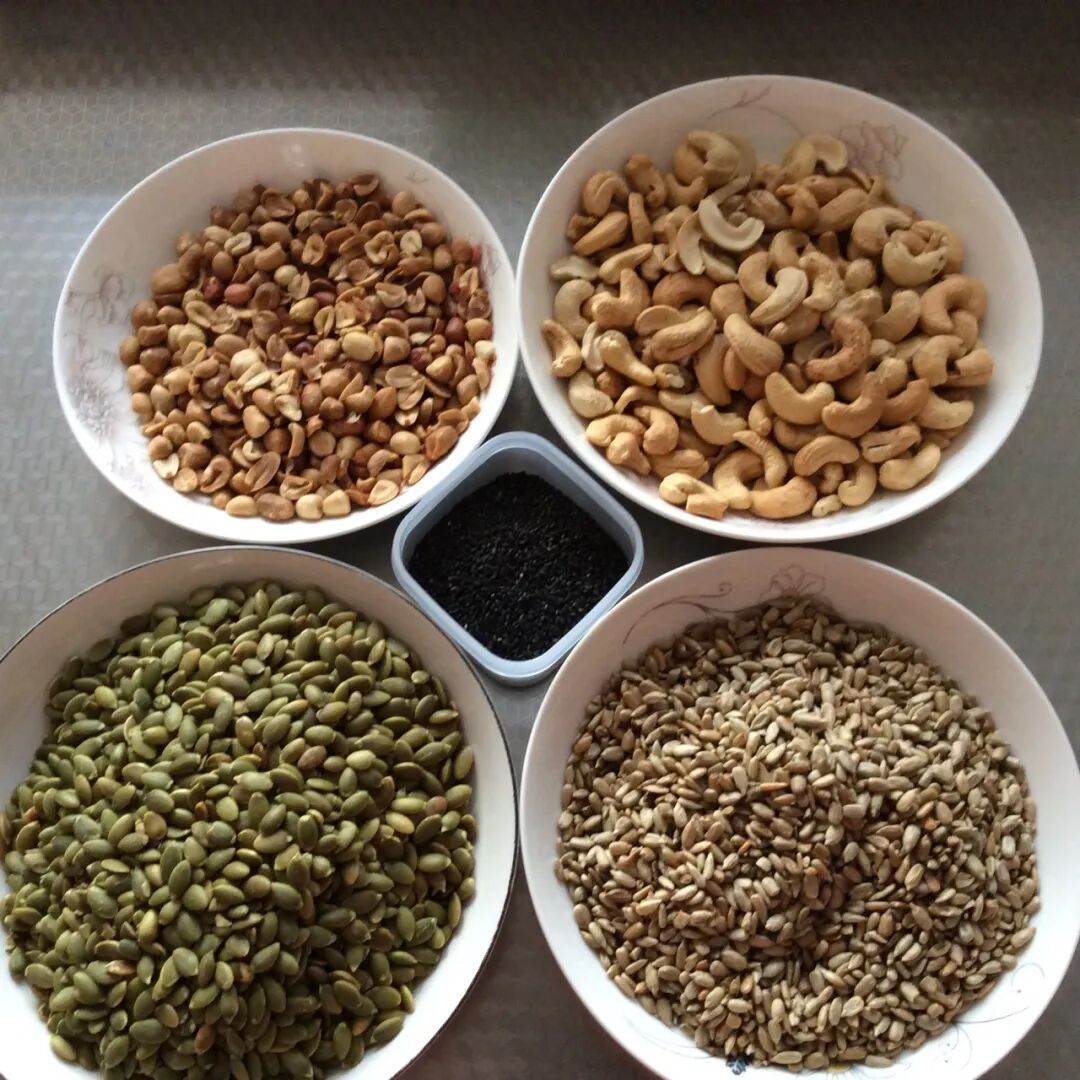
◉ Various nuts.
Two: for sweet snacks, jujubes are the workhorse. Choose dog-head jujubes or grey jujubes, both with firm, dense flesh. Dried fruits work too – raisins or dried blueberries. Many dried fruits on supermarket shelves are processed with added sugar, so scrutinise the ingredient list and go for pure dried fruit. The Beijing Organic Farmers’ Market catalogue lists plenty of sweet snacks with no added sugar. Dried figs, dried sweet potato, dried pineapple and dried apple are all excellent choices.
Putting a red jujube and a walnut or peanut in my mouth at the same time – that is my all-time favourite snack pairing; the more I chew, the more the flavour unfolds. Yes, red jujubes are sweet enough, peanuts are fatty enough, and the calories are high enough. But the 100 calories you take in this way produce a vastly different result from 100 calories from a glass of cola. The dietary fibre in jujubes and peanuts boosts satiety, allows blood sugar to rise gently, and delays the absorption of sugars and fats. This indefatigable fibre is converted into vitamins in the large intestine, and what remains sweeps out accumulated waste on its way out of the body.
Hand-Rolled Healthy Snacks
Back in the Vale of Villains, the range of snacks becomes plentiful. Making these snacks by hand is a bit of a labour, but the difficulty is not high – once you have tried them once, you are free to improvise and let your imagination run wild.
The simplest entry-level recipe is a sugar-free sweet drink – roselle and stevia. The difficulty rating is practically zero.
Roselle, also called hibiscus, is good in a thousand ways and bad in just one – it is intensely tart. So many people steep it with sugar or honey. Pairing roselle with sugar precisely cancels out its natural benefits.
My method lets the roselle drink be both sweet and lovely to sip, without any harm from sugar – typically four or five dried roselle flowers per cup, paired with four stevia leaves. Water that is too hot makes roselle astringent, so use room-temperature water and let the flavour seep out slowly. Not only does the harshness disappear, but the gorgeous colour of the roselle and the sweetness of the stevia both unfurl gently. If you happen to have dried rose petals, add a few as well. Roselle tea is so strikingly beautiful that poured into a stemmed glass, it is a perfect match for a festive table. It is ideal for children as a stand-in for sugary drinks, and for adults as a substitute for red wine. Besides stevia, monk fruit and mujiangyeke leaves (a natural sweet-leaf plant) serve as sweet alternatives too.
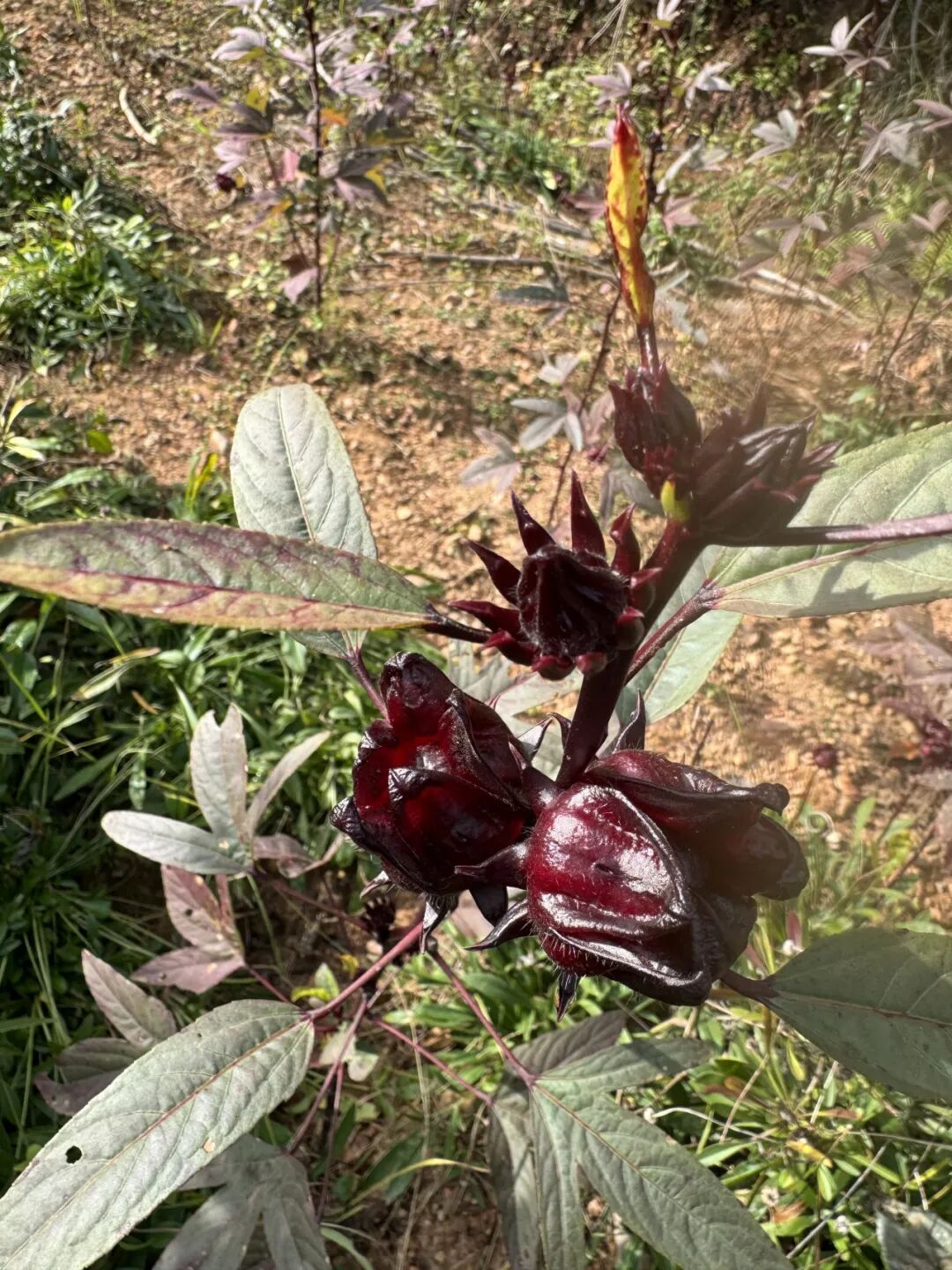
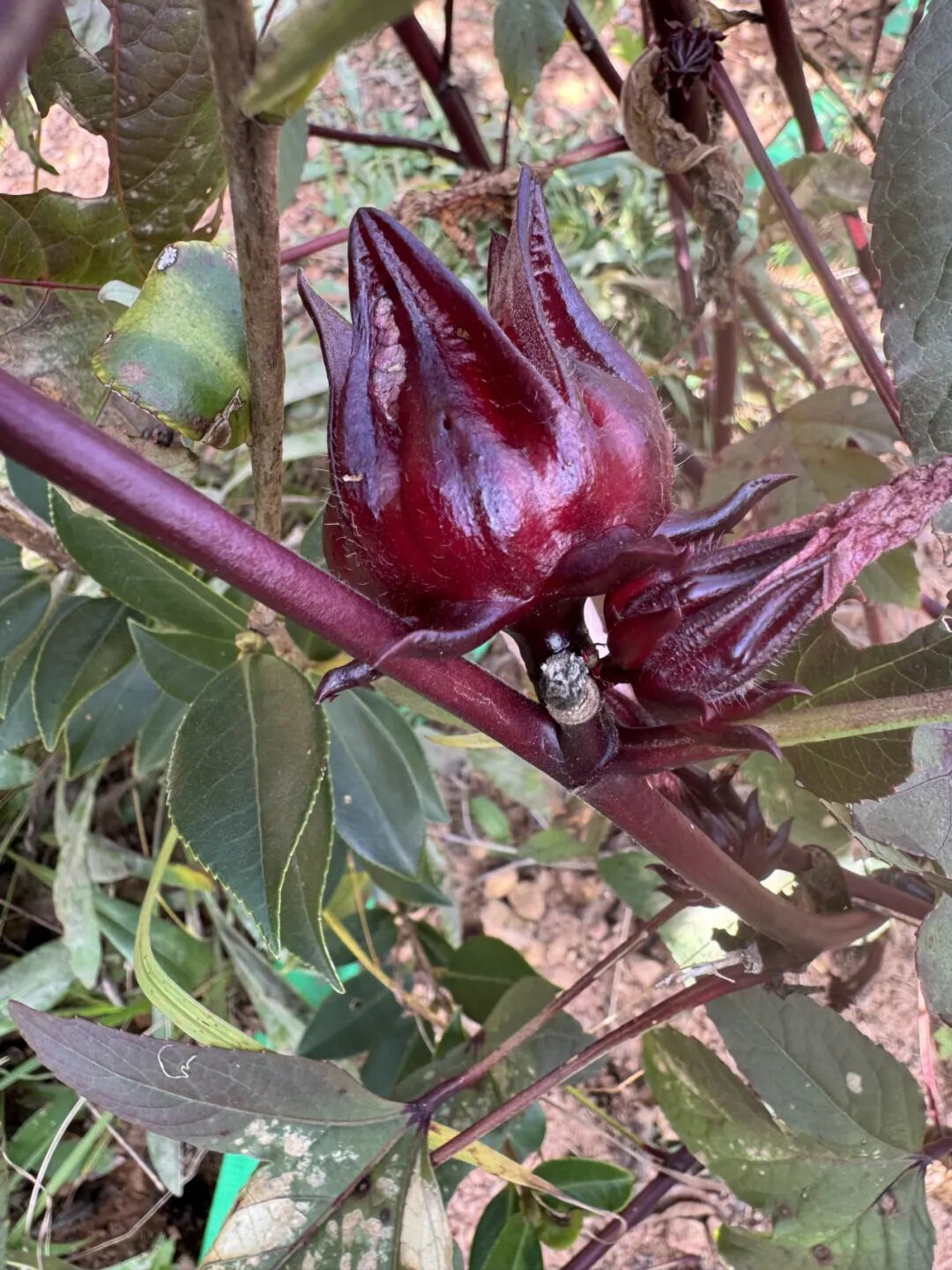
◉ Roselle in full bloom on the branch.
We also make our own yoghurt in the Vale of Villains. Yoghurt is a wonderful thing, but commercial “yoghurt” and “yoghurt drinks” loaded with added sugar or sweeteners are not – the damage they do to the liver is on par with sugary drinks. Admittedly, genuine sugar-free yoghurt is not impossible to find, but I have never trusted my own luck, so I chose not to gamble: I make my own, and was fortunate enough to stumble upon a wonderfully simple method.
My starter culture is an unexpected gift. Four years ago, a friend’s family came to visit and left behind a container carrying kefir grains. Before that, I had tried buying live-culture yoghurt to use as a starter, feeding it fresh milk again and again, but after a few rounds the cultures would grow weak. I also tried powdered sachets of lactic acid bacteria and yoghurt cultures – about the same. Then I came across my friend’s container, and its cultures have thrived endlessly ever since. The grains have even been on aeroplanes and trains with me: I spread the yoghurt onto a clean handkerchief, and once I arrive, a soak and a rinse in water restores my cultures – wherever I go, I make yoghurt.
At home in the Vale of Villains, we keep one dedicated glass jar for making yoghurt. I skip liquid milk and use imported whole-milk powder mixed with water, made a little on the thick side. We scoop out whatever we want to eat; the cultures stay at the bottom of the jar, and I simply top up with more mixed milk powder – an endless cycle.
There are many ways to enjoy yoghurt. The super-thick variety has a faint resemblance to soft, creamy cheese, with a gentle tang. Those who cannot abide tartness need not push it – just add a little sweetness. Banana is yoghurt’s finest fruit companion. You can also make your own dried-fruit-and-nut yoghurt: wash raisins or dried blueberries first, then soak them for about half an hour until they swell with water and taste all the better. Scatter a little pumpkin seed, chopped almond, and sunflower seed on top, and plain yoghurt is effortlessly elevated.
For families with children, make fruit smoothies with homemade yoghurt. Toss yoghurt and fruit into a high-speed blender for 30 to 60 seconds. If it is too thick, add water; on hot days, throw in some ice. You can also add nuts, following the dried-fruit-and-nut yoghurt method above. Homemade ice cream is another option: wash the fruit, cut it into chunks, freeze, then blend with yoghurt in the high-speed blender and it is done. Anything left over goes straight back into the freezer.
As for the homemade sweet snacks unique to the Vale of Villains, the perennial champion is dried pumpkin.
Pumpkin is high in fructose, so when turned into dried pumpkin the texture improves, the sweetness deepens, and it becomes all the more perfect as a snack – as sweet on the tongue as confectionery itself. I have tried every method under the sun for dried pumpkin, so I will cut straight to the best-tasting one, which is also the fussiest. (For other dried-pumpkin methods, see this article: No Need to Shiver: The Right Way to Spend Winter in the South | Grandma Kouzi))
Choose a riper, sweeter pumpkin – I would steer clear of Bébé pumpkin and chestnut pumpkin, both higher in starch. Peel the skin, cut into rings, and hang them in a well-ventilated, bright spot to sun-dry for about ten days. Then place them in a bamboo steamer and steam for 20 minutes once the water boils and the steam is rising, or microwave for 25 minutes. Every stove and oven is a little different, so aim for the pumpkin just cooked through – any more and it turns mushy and will not hold its shape. Sun-dry again, and repeat. After three rounds of steaming and sun-drying, the finished dried pumpkin is semi-translucent, soft and chewy, and noticeably sweeter. One thing to watch: fully dehydrated dried pumpkin becomes very hard, so for that soft, chewy texture, do not dry it too much – or, just before eating, steam it to a medium softness.
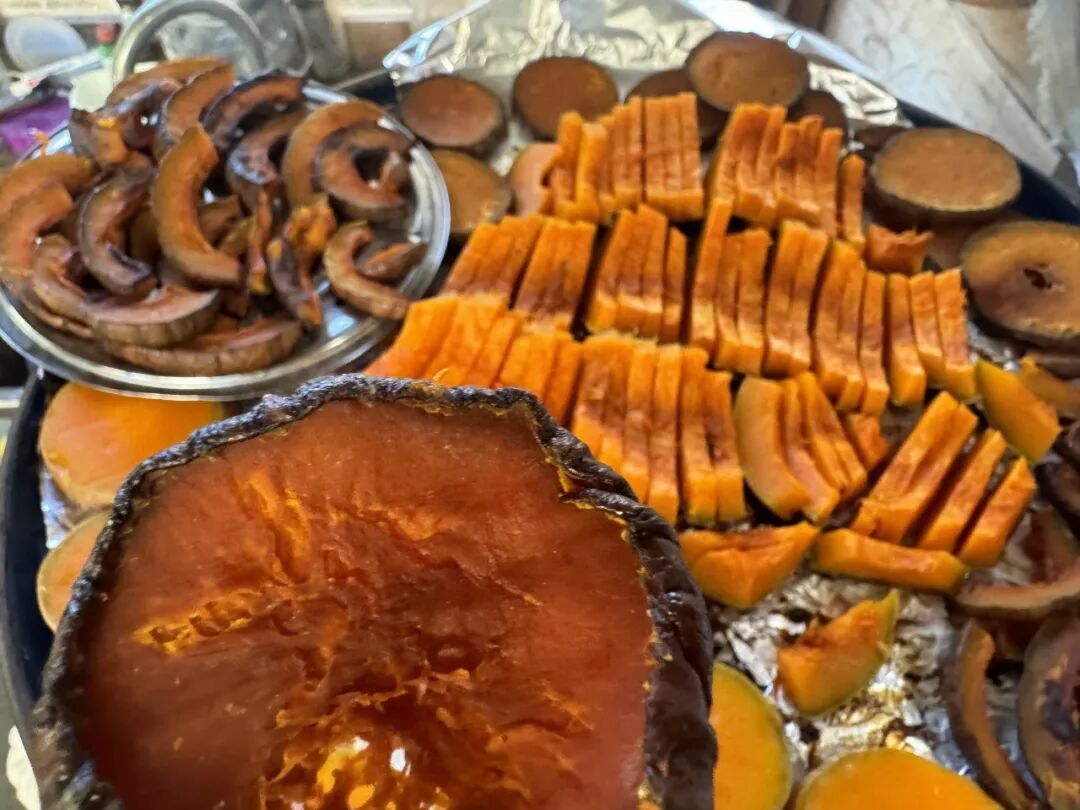
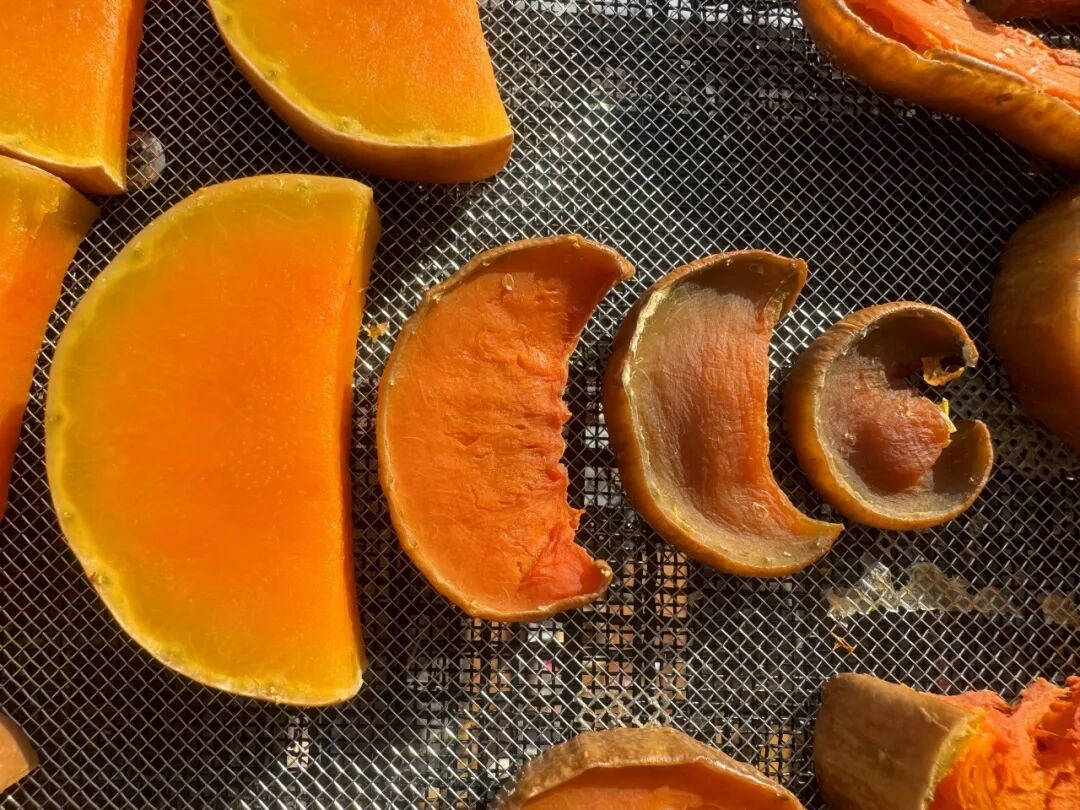
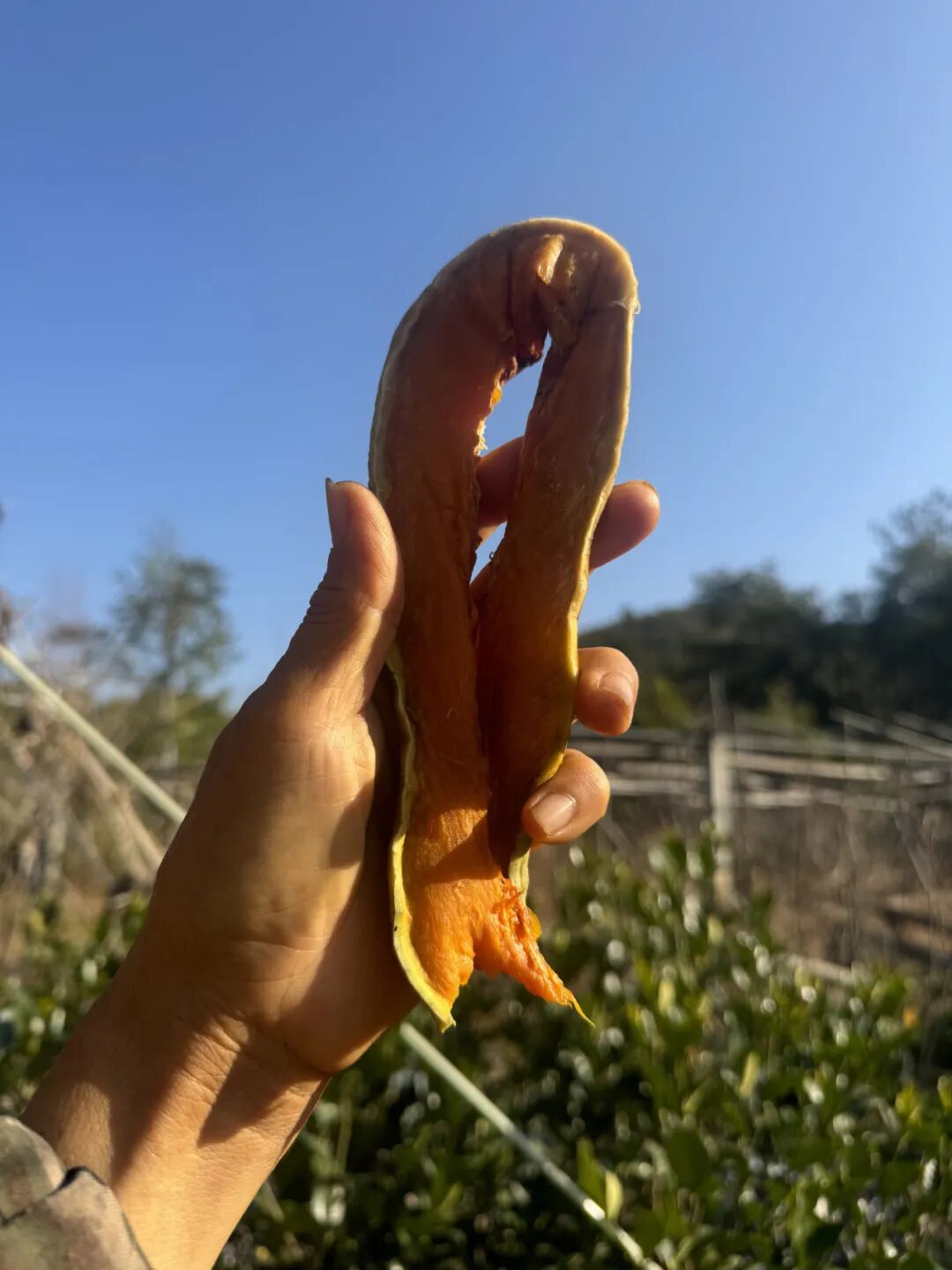
◉ Dried pumpkin, after several rounds of steaming and sun-drying, produces a result so good it will make you cry.
I have always drawn a firm line at shop-bought sweets, but the children in the family adore them, so my solution is to make them at home.
Maltose and raw peanuts, walnuts, cashews, sunflower seeds, sesame seeds – in a ratio of 1.5: 1: 1: 1: 1: 1. This gives you a homemade nut toffee with roughly one-sixth the sweetness of ordinary shop-bought sweets.
First, spend an hour toasting the nuts. Then combine them in the right proportions – you can try pairing them two by two, or mix them all in one batch, or stir in a little chopped dried jujube as well. Finally, melt the maltose, add the prepared nuts, and fold until evenly coated. Pour onto a lightly oiled board, press flat, let cool and set, then slice – and your homemade nut toffee is complete!
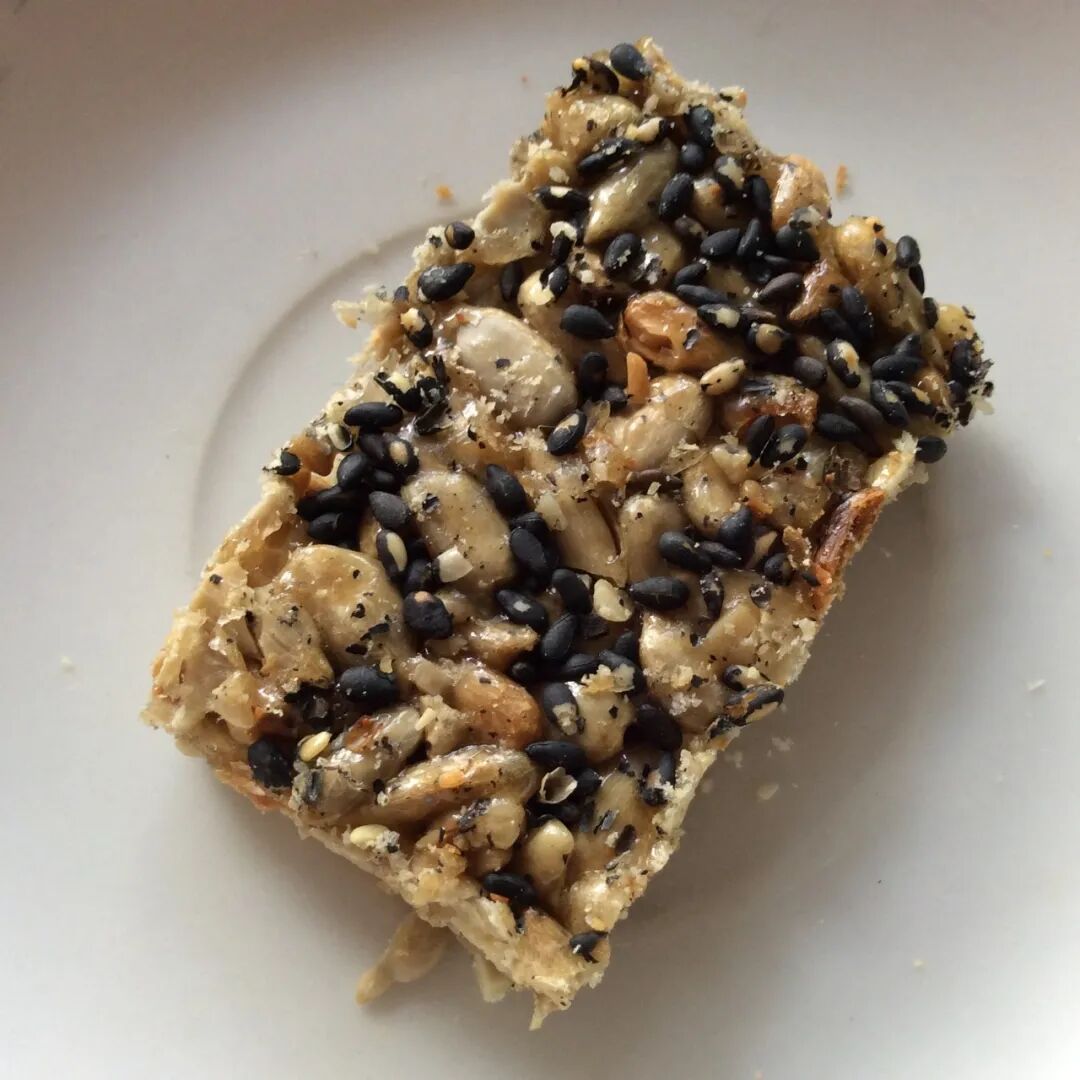
◉ The homemade sweets are done.
If you want to help a child with endless energy burn it off, you can go all the way back and make the maltose yourself – starting by soaking wheat until it sprouts into raw malt, then soaking and steaming glutinous rice, crushing the sprouted malt and shaking it into the rice, straining and settling the liquid together, simmering it into a syrup, and finally using it to make the nut toffee. That alone will keep the little ones occupied for four or five days on end.
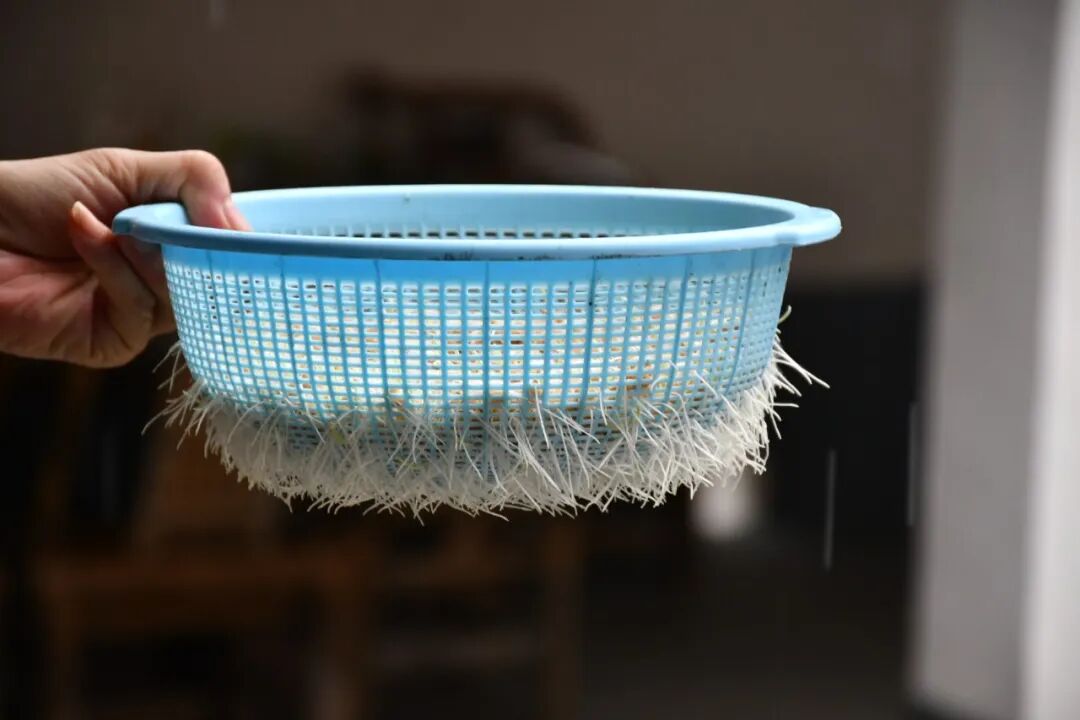
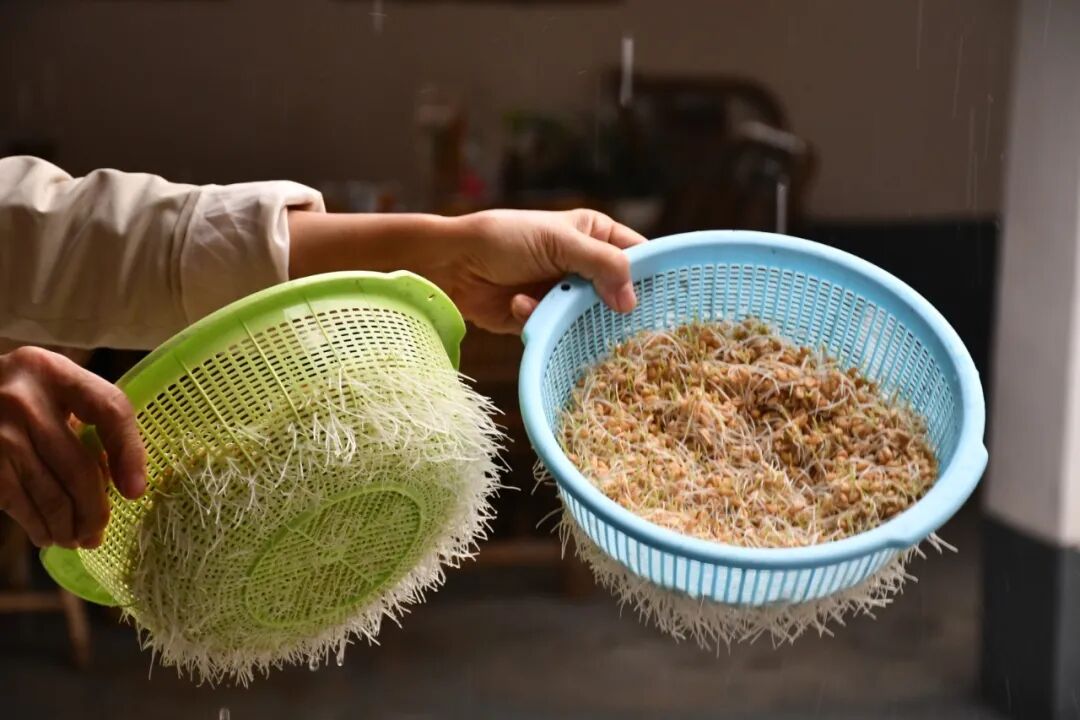
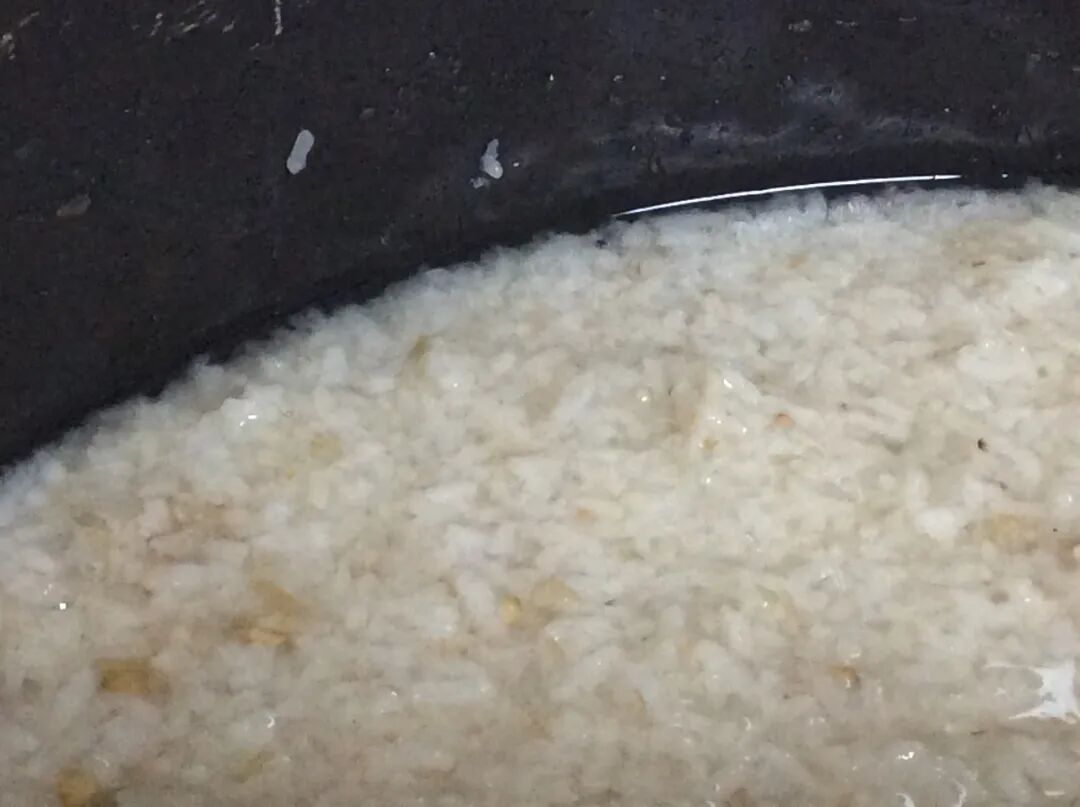
◉ The first step in making maltose at home is sprouting raw malt, then mixing the crushed malt with steamed glutinous rice to ferment.
For homemade savoury snacks, there is jerky – pork or beef both work. Choose lean meat. If you prefer hand-shredded jerky, cut along the grain; for a more tender bite, cut against it. Slice about 4 mm thick. Pick a spice mix with no added MSG or chicken bouillon powder – any brand will do. I use Wang Shouyi dumpling seasoning from the supermarket; I have checked the ingredient list carefully, and it is all natural plant-based spices. If you do not mind the extra work, you can grind your own. Combine the seasoning with salt and cooking wine, rub it into the meat, cover, and leave in the fridge overnight. Lay the slices flat in the air fryer or oven at 120 °C for one hour, and they become jerky.
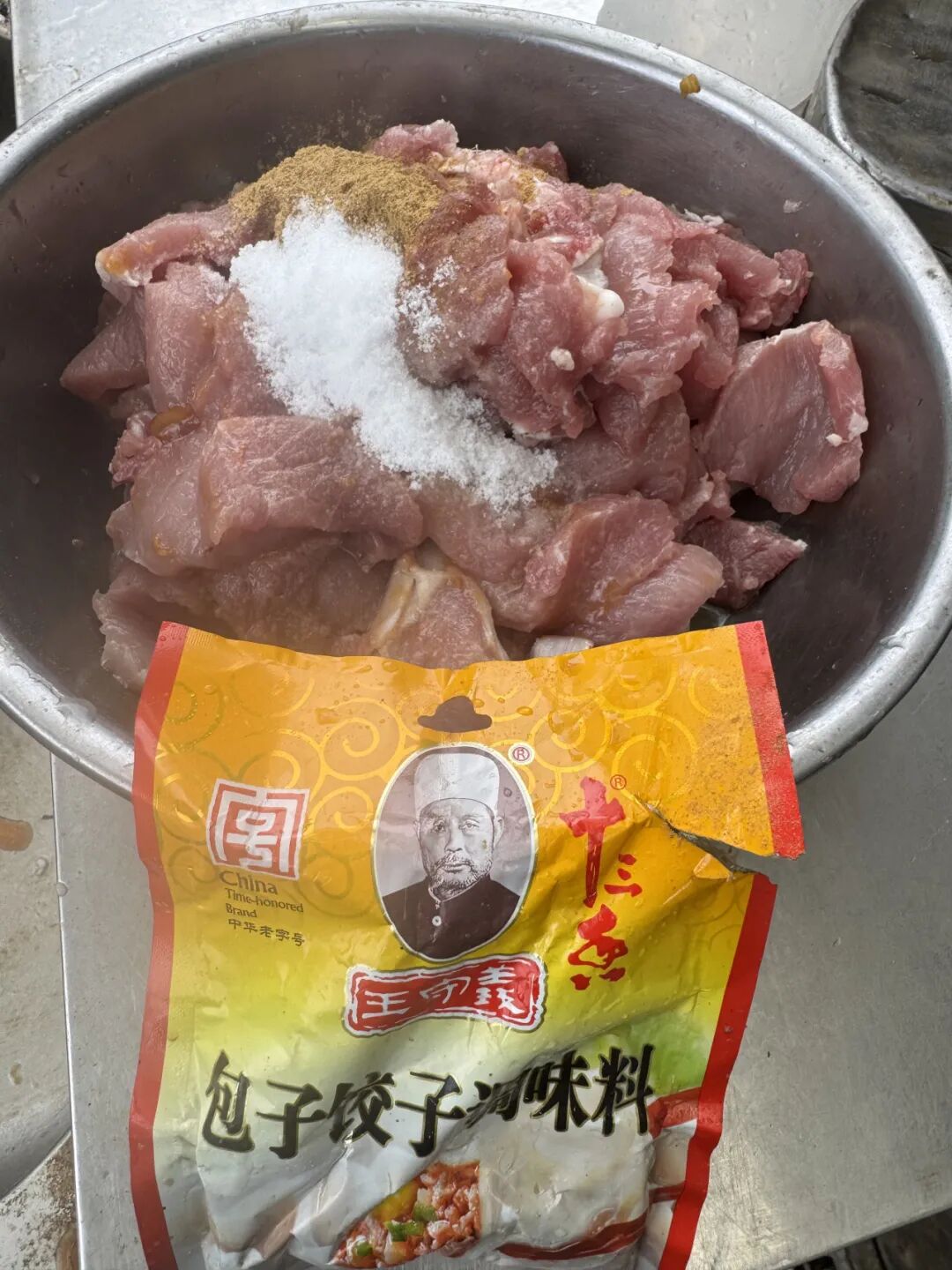
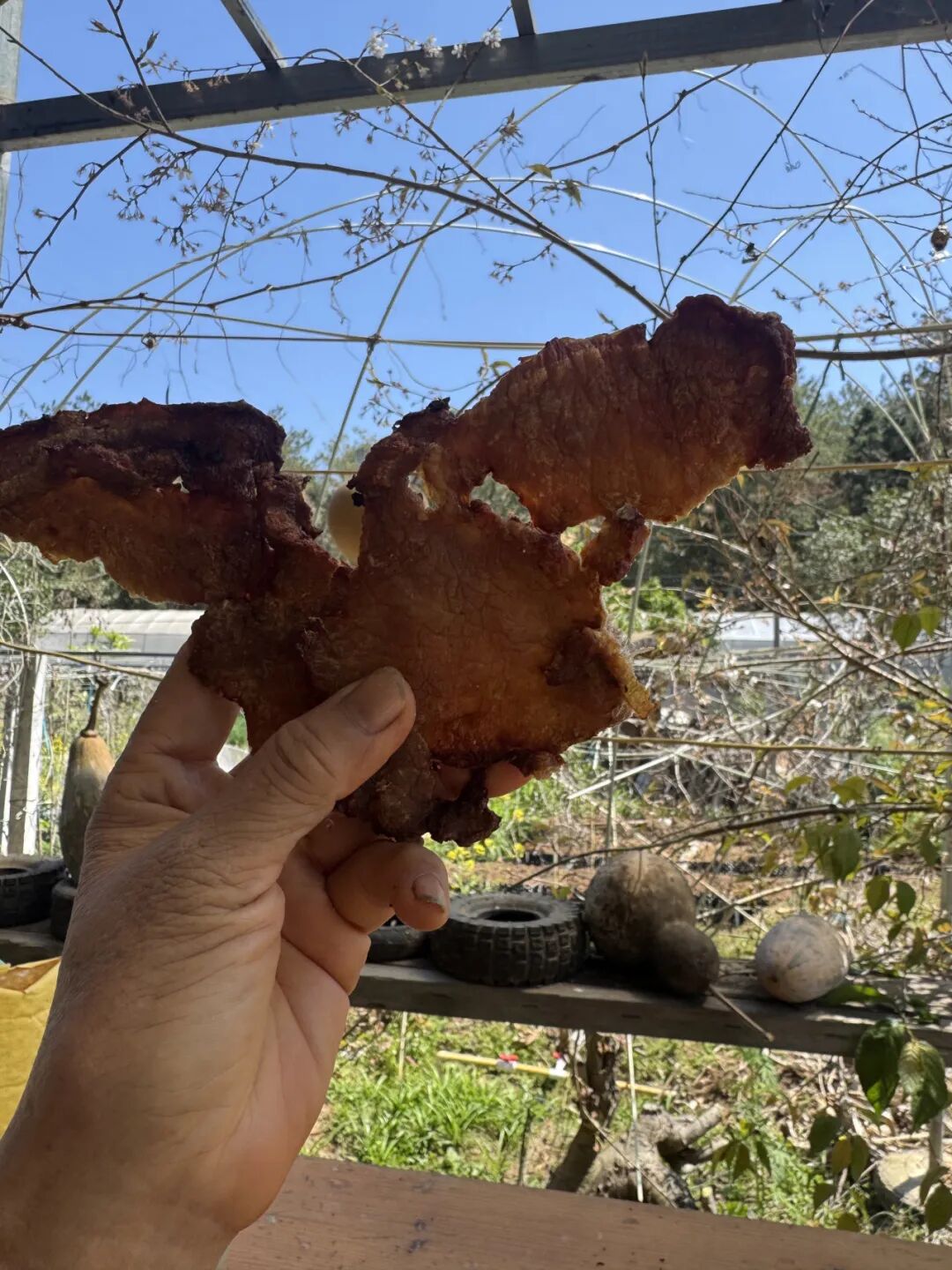
◉ From marinated meat to jerky.
For a more complex texture and deeper layers of flavour, add a glaze and return to the oven. Mix a little sugar or honey with water to form a starch slurry, flip the jerky, brush a thin layer over the top, and bake at 170 °C for 5 minutes. The colour deepens a shade; the sugar adds new dimensions on the palate, and the Maillard reaction between sugar and starch under high heat makes the jerky even more delicious. As a rule, for 500 g of meat, use about 2 g of sugar and 5 g of starch.
At the end of the day, it is not that we have suddenly lost all discipline, or that we have suddenly grown greedy. The pleasure that sugar and fat bring has been written into our genes by evolution. The problem is that the industrialised production and global distribution of modern food products have filled our delicious snacks with free sugars and refined vegetable seed oil, both harmful to health, and before we know it, we are consuming far more sugar and fat than our bodies can handle.
So I would rather bring snacks back to the kitchen and back to the soil – using my own two hands to have both the flavour and the health.
– This is Foodthink’s 805th original piece –

Foodthink
Author
Kouzi
A farmer walking with resolve, a village brewmaster. Full-time foodie, part-time farmer, amateur writer.
Editor: Xiaodan
Layout: Minglin
▼
Click the image to read related articles.