Land Will Not Exit History: A Resident Artist’s Permaculture Practice in Italy | Event Preview

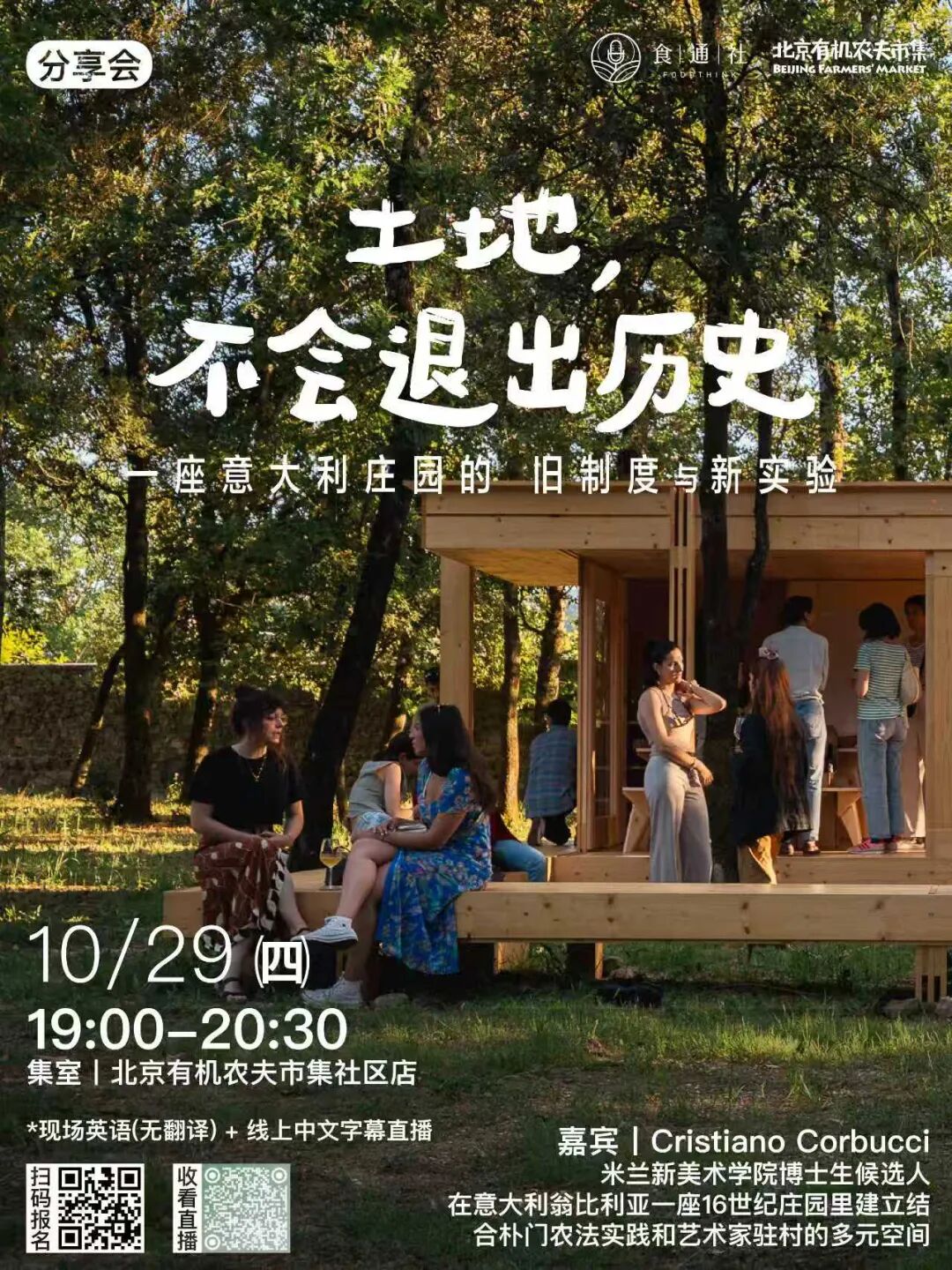
When Traditional Agricultural Land Tenure Exits the Stage of History, How Do We Reimagine the Countryside?
In the Umbria region of central Italy stands a centuries-old estate. Once the grounds of a monastery, it lay long neglected and overgrown with weeds. Today, it is both a field for agroecology practice and a cultural space hosting artist residencies, workshops, and collective practice.
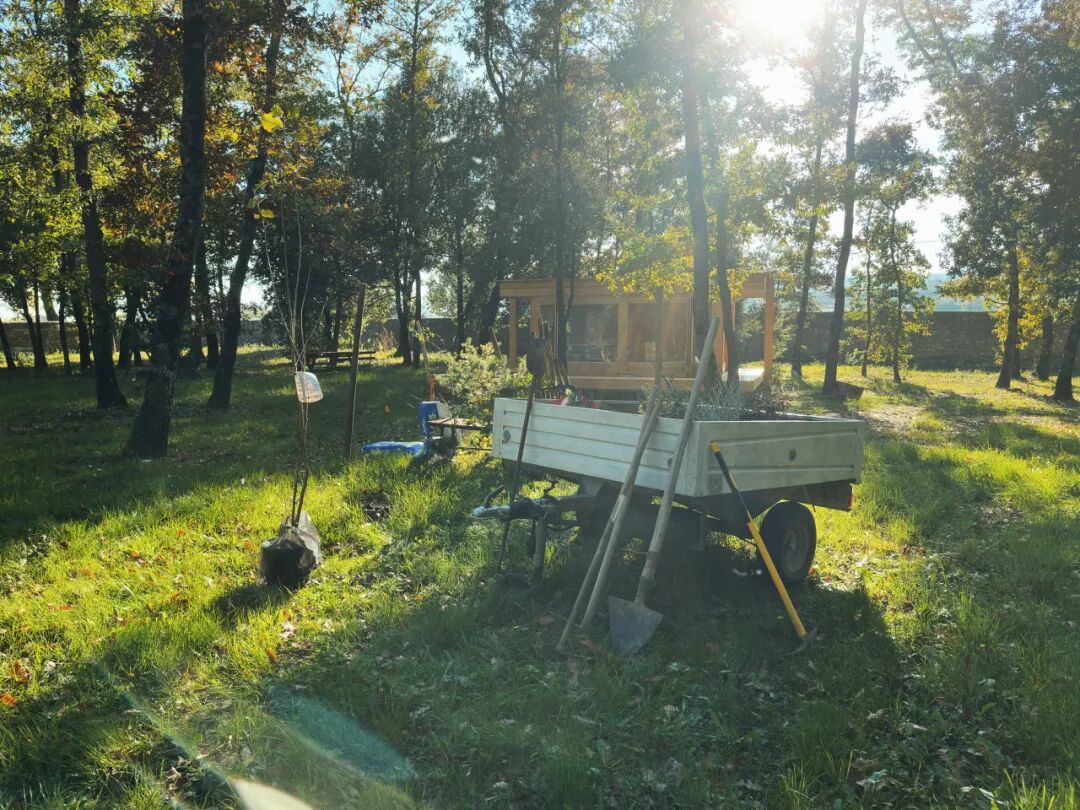
◉ Cristiano’s restored Villa Cappuccini garden, 2020. Unless otherwise noted, all images in this article are provided by the author.
This Thursday (29 October) at 7 pm, Cristiano from Italy will begin with the traditional agricultural system of central Italy, take us into his family’s estate, and share how it has gradually transformed from an abandoned monastery garden into a living space connecting agricultural production and artistic practice.
Sharecropping in Italy: Labour and the Division of Harvest
In the rural history of central Italy, mezzadria, commonly translated as “sharecropping,” was a feudal land tenure system. It gradually took shape in the late Middle Ages, spread widely across central Italy in the fifteenth and sixteenth centuries, and persisted well into the twentieth century.
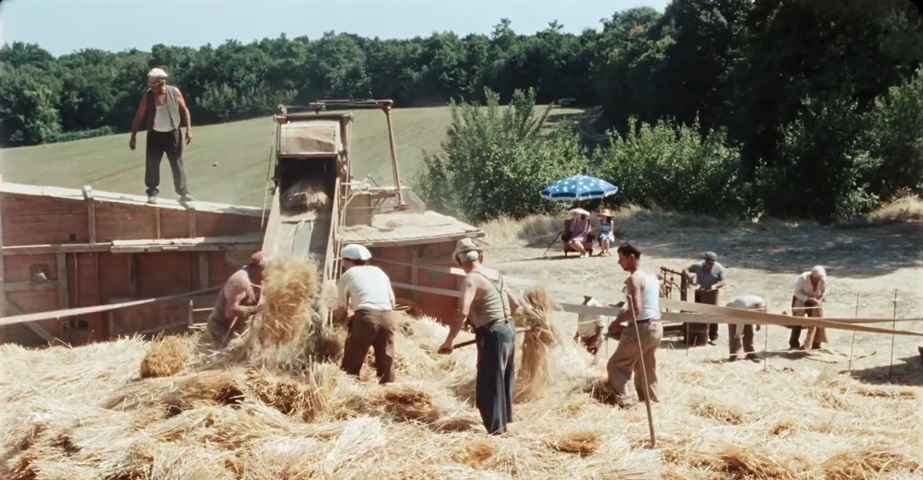
◉ A modern Italian sharecropper depicted in the film Happy as Lazzaro.
Unlike a tenancy based on a fixed rent, a mezzadria contract revolved around the division of the harvest. The landlord typically provided the land, a farmhouse, and a portion of the means of production, while the tenant was responsible for cultivation, drawing on his own and his family’s labour. In most cases, both parties received half the harvest and shared a portion of production costs as agreed.
The basic unit for a peasant family was typically a farmhouse and the surrounding land. The tenant family resided in the farmhouse for long periods, with all household members participating in agricultural work. The landowner might oversee the farm’s operations and labour arrangements through estate managers.
This system shares certain parallels with the traditional landlord–tenant relationship in China. However, the typical form of mezzadria in central Italy placed greater emphasis on the joint bearing of production costs and harvest between landlord and tenant. In traditional Chinese agriculture, peasant families likewise had to organise their own household labour, but whether the landlord contributed to production inputs and how the two parties shared risks depended on specific local customs and contracts.
Of course, the shared responsibilities inherent in a mezzadria arrangement concealed deeply unequal power relations. Landowners controlled the land and key productive resources, while tenant families bore the bulk of daily labour. As populations grew and pressure on the land intensified, tenants in some regions faced ever-mounting livelihood pressures, and conflicts of interest between landlords and tenants became a recurring occurrence.
After the Second World War, agricultural mechanisation and the migration of rural populations to cities gradually led to the decline of the traditional mezzadria system across central Italy.
Monastery, Agriturismo, Art Village
Cristiano’s parents built their family farm and estate around precisely such a traditional farmhouse. In 1995, the couple renovated the old farmhouse they had inherited through the family, establishing Il Cicaleto as an agriturismo alongside their own organic orchard.
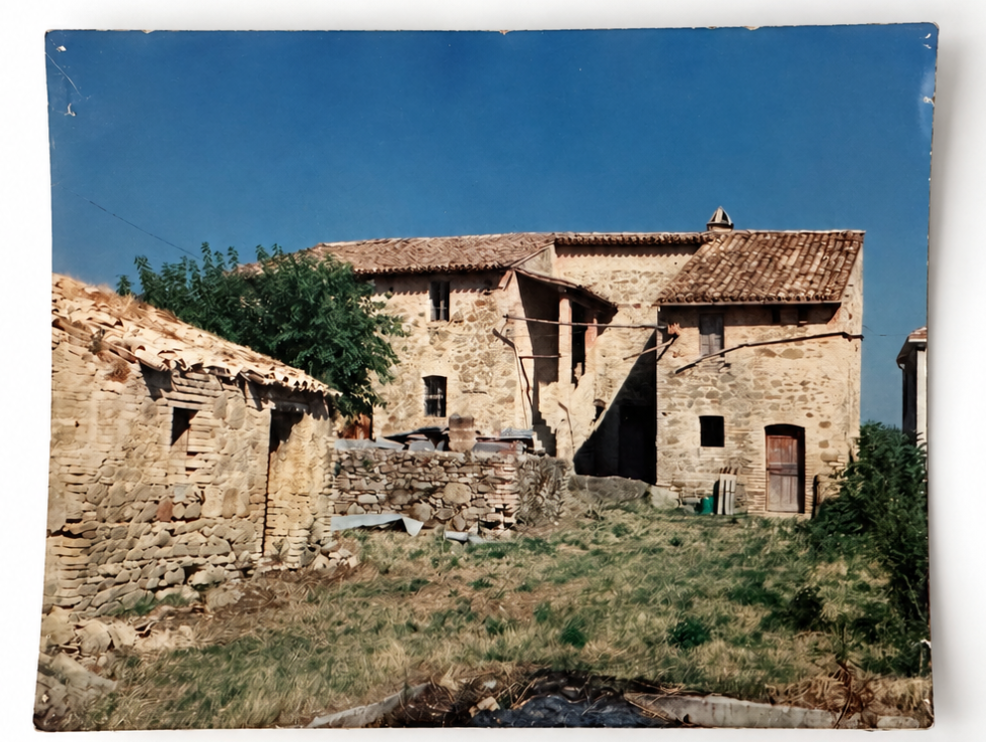
◉ Il Cicaleto, the family home of Cristiano’s parents, before renovation
Cristiano grew up here, and his parents’ experience of running the family farm directly shaped him. In 2020, just three or four kilometres from the family home, he founded Giardino Villa Cappuccini, a project that combines agriculture with arts and culture, gradually restoring the historic gardens while transforming them into a space for contemporary art creation, artist residencies, performances, workshops, and collective activities.
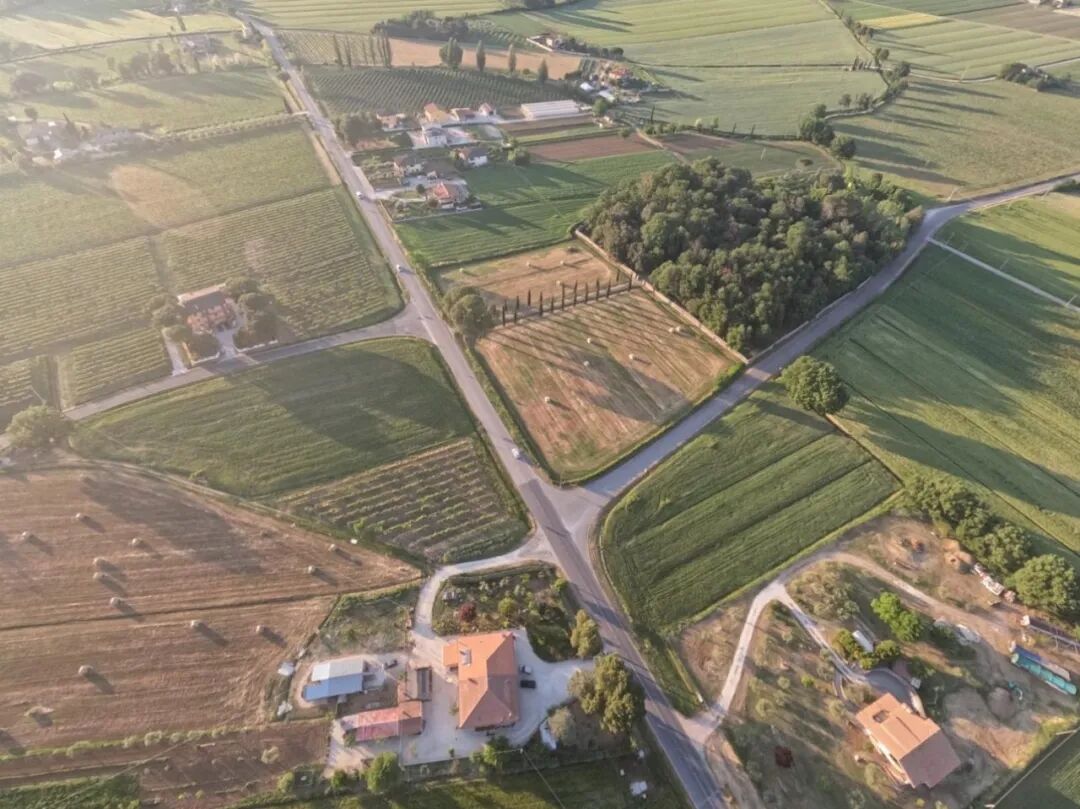
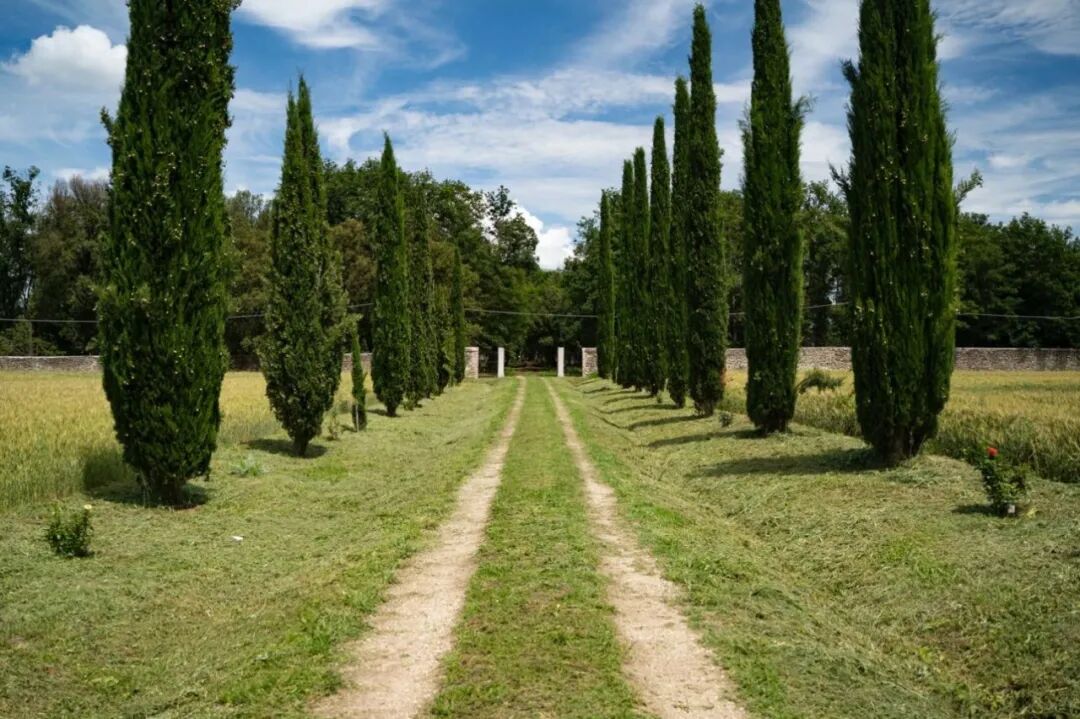
◉ After taking over the Cappuccini estate, Cristiano’s conservation and restoration work ensured visitor safety and encouraged the natural recovery of the ecosystem, laying the groundwork for subsequent redevelopment.
The Cappuccini estate is located in Cannara in Italy’s Umbria region, with a history traceable to 1587, when it served as the grounds of the Capuchin Franciscan monastery in Cannara. In 1886, following the suppression of the monastery, the grounds passed to the Pesci Maiolica family and gradually became known as Villa Cappuccini. In the decades that followed, the estate remained part of local community life. As late as the 1970s, residents still gathered here to celebrate festival traditions associated with the Convent of Saint Anthony.
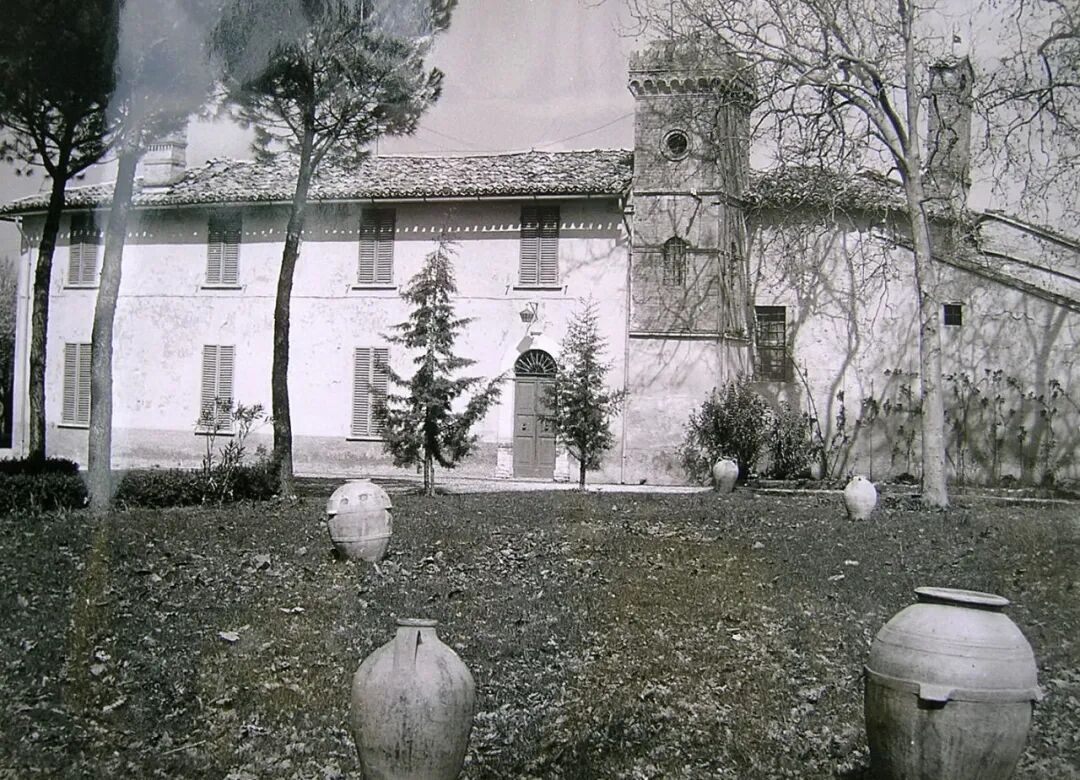
◉ Villa Cappuccini in years past
However, the artistic practice here has not been divorced from agricultural production. On the contrary, Cristiano carries on the centuries-old agricultural traditions of the Cannara area, helping people maintain a sensitivity to soil, climate, and ecology even in an era when they no longer depend on the mercy of the weather for their livelihood. Today, many artists have gathered here, and cultural events are held regularly. The bedrock of artistic practice at the Cappuccini estate is simply doing good work.
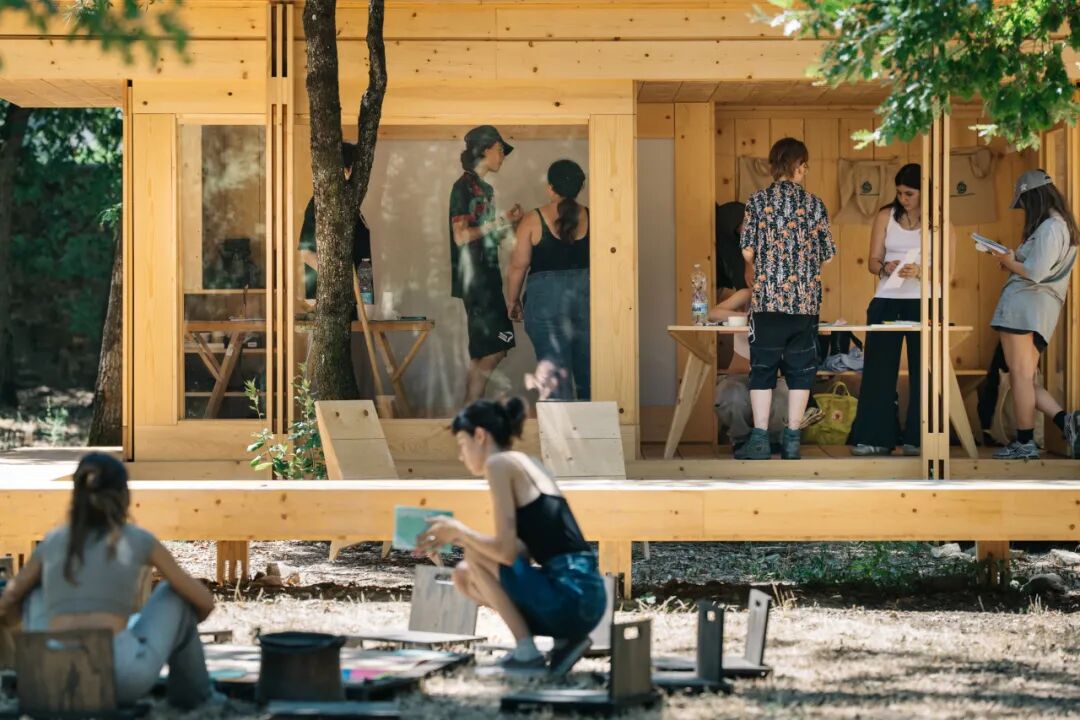
◉ The Villa Cappuccini artist community
This practice also raises a question worth discussing: when a farm is no longer dedicated solely to production, can a mutually supportive relationship form between agricultural management and cultural production, rather than one that is strictly either/or?
From the history of sharecropping, through the running of a family farm, to the establishment of a contemporary artist residency community, Cristiano will share how, starting from practice, one can reimagine the fusion of modern village life and traditional agricultural culture.
The sharing session will explore:
▶︎ How did sharecropping in central Italy shape local agricultural production and rural society?
▶︎ What investments lie behind the success of a multi-generational family farm?
▶︎ How can agricultural production and contemporary artistic practice coexist on the same land and open up new possibilities for rural life?
– Speaker –
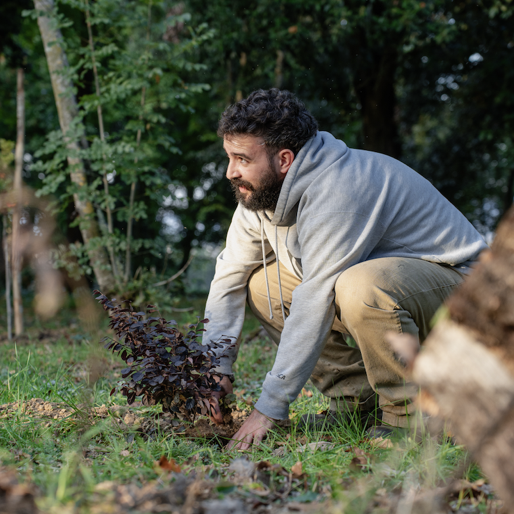
Cristiano Corbucci | Doctoral candidate at Nuova Accademia di Belle Arti (NABA). He has established a pluralistic space combining Permaculture practice and village-based artist residencies on a sixteenth-century estate in Umbria, Italy.
– How to Participate –
– Event Format –
In-person (Beijing) + online livestream
In-person talk delivered in English; Chinese subtitles for the online broadcast
– Time –
Thursday, 29 October 2026
19:00-20:30
– Venue –
Beijing Organic Farmers’ Market Community Store – Jishi (Lixiang branch)
– In-Person Participation –
Registration form required (scan QR code)

– Online Livestream Reservation –
(Replay available)
Coordination: Jieni, ZX
Layout design: Xiaoshu
Scan to tip and support original food writing
▼

▼
Click on keywords to explore more article collections
Seeds | Agricultural Techniques | Policy | Fermentation | Nutrition | Fruit | Fisheries | Events | Jobs | Food Delivery | Wet Market | Animal Husbandry | Food Talk | Talks | Book Club | Harvest Festival | Smallholder Stories | Climate Change | Rural Development | Cooperative Economy | Urban Farmers | Food Safety | Digital Technology | Biodiversity | Pandemic and Food | False Solutions | Agroecology Internship Programme
Beijing|Hebei|Shanghai|Guangdong|Guangxi|Henan|Sichuan|Jiangxi|Xinjiang|Shaanxi|Hong Kong|Chongqing|Zhejiang|Jiangsu|Guizhou|Taiwan|Inner Mongolia|Philippines|Canada|Russia|Mexico|Italy|United States|United Kingdom|Germany|Netherlands|Thailand|Sweden|Japan