
The Invisible Labour of Natural Farming
But after coming here as an intern, my thinking began to shift.
The counter-intuitive practices of Natural Farming—leaving fruit on the trees, letting grass grow, composting—were all set out in detail in “Natural Farming That Defies Convention”. Yet sustaining this ecosystem demands a great deal of invisible labour.
I. Production: Rebuilding the Soil
Starting from a conventional agriculture base, it takes three to five years to restore a healthy ecosystem. Take Sister Yanping’s orchard, for example: she began experimenting in 2019 with a completely pesticide-free, fertiliser-free and herbicide-free approach on six rows of fruit trees, and only after proving it viable did she transition the whole orchard to ecological farming. But in the first few years, she poured considerable time and cost into learning to make compost and fermented solutions for feeding the soil and the trees—spreading them also required a great deal of manual labour.
Moreover, even once the soil has been restored, short-cycle crops and vegetables still call for ongoing composting and ferment-making: these plants are not dominant species in a natural setting and need supplementary feeding to survive against the onslaught of dominant weeds. And to bring in a harvest, one must also compete with all manner of small animals—I learned this firsthand during my internship: over a hundred sunflowers bloomed beautifully, only for the mice to strip them bare.
We tried broadcasting seeds in the grass, digging holes and dropping seeds in, and clearing weeds before sowing in furrows; the germination rates of beans and sorghum improved noticeably. But because of the orchard’s rich biodiversity (birds and mice being particularly abundant), many uncertainties remain until every last grain is safely in the barn. Sister Yanping recently shared photos of the bean and sorghum harvest, which looked quite promising—at least she herself seemed genuinely content. I think this satisfaction is inseparable from her underlying philosophy of sharing the bounty with all living things.


II. Sales: The Extra Labour of Picking, Shipping and After-Sales
On the sales side, joining an ecological produce platform requires the farm to pass a rigorous vetting process. Eco-farming peers and consumers who collaborate on distribution also need time before they can place their trust in a new grower and their produce.
Throughout the sales period, there is also a constant stream of communication. One must keep in close contact with ecological platforms and eco-farming peers to keep order volumes steady, avoiding both backlogs and long dry spells. When dispatching parcels, we often encounter customers requesting a sudden return after the shipment is marked as dispatched, and the farm then has to rush to contact the courier service to amend or recall the order.
The direct-from-orchard shipping model means the farm must handle the after-sales follow-up for every single order—an enormous workload. Each platform uses different online systems and document templates, adding up to a mountain of paperwork. During the Wogan mandarin sales period, Sister Yanping is often still dealing with after-sales issues well past midnight.
Moreover, under the direct-shipping model, the farm must also bear the risks of courier transport. If fruit is damaged in transit, Sister Yanping absorbs the loss. This was especially severe during the COVID lockdowns: parcels sat in transit for so long—or failed to be delivered at all—that entire boxes of fruit rotted, with the bulk of the losses falling on the farm. Even the working relationship with the courier company only became smooth after a long period of adjustment.
For ecological produce to gain acceptance from all parties, a great deal of industry-building, platform development and consumer education must happen behind the scenes—and a considerable share of that work falls on the farmers themselves.
For example, in just a few months, we met all kinds of visitors who came to the little cabin: consumers, ecological platform assessors, eco-farming peers, and learners just like ourselves. All of it requires the farm owner to devote a great deal of time to hosting and liaising.
During my internship, I had the opportunity to accompany Sister Yanping to the Nanning Urban Farmers’ Market, the Guigang Hecheng Farmers’ Fair and other study-visit activities. In taking part in these events, I felt the eco-farming peers’ keen desire for exchange and learning, and I saw the important role they play in building industry platforms and fostering dialogue.
In everyday life, we often heard Sister Yanping on WeChat calls with ecological platforms, eco-farming peers, consumers and learners. These conversations ranged from ideas, philosophies and techniques in ecological farming to product sales and platform development; at times, she even offered emotional support to her partners like a caring elder sister.
I could sense that sometimes she felt wistful—that this was not the pastoral life she had first imagined, that certain activities scattered her energy too widely, and that she longed for more time to devote to the orchard’s work. Finding a balance, then, is a challenge she faces too.
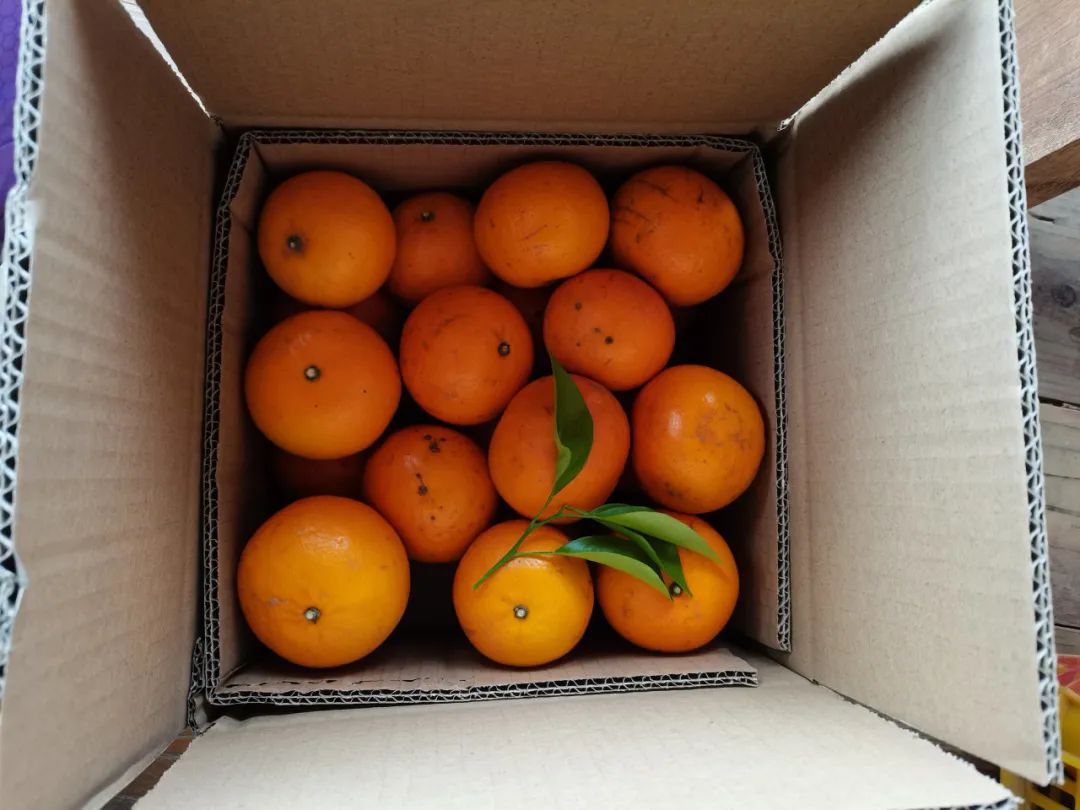
Worth noting is that Sister Yanping’s fruit packaging has gone through several rounds of redesign: the aim was to ensure safe transport while achieving fully plastic-free packaging. The final solution is a square, double-layer cardboard box in which the Wogan mandarins are packed directly, with no plastic whatsoever. This is rare even among courier-shipped fruit, and speaks volumes about Sister Yanping’s commitment to the environment.
III. Daily Life: The Invisible Labour of Environmental Care
For example, the courier packaging design I mentioned earlier: the double-layer cardboard boxes provide sufficient protection without any additional packaging, and apart from the packing tape—which, at present, still has no substitute—no plastics whatsoever are used in the parcel.
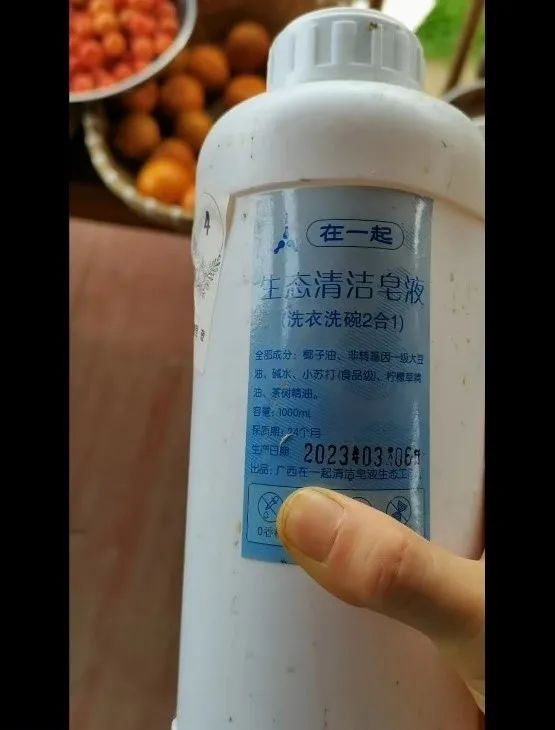
In daily life, the fruit and vegetables we eat come largely from the orchard’s own produce. Although most staples, cooking oil and condiments must be bought in externally, Sister Yanping is extremely strict about food sourcing; practically everything is purchased from or bartered with eco-farming peers. The same applies to toiletries: since domestic wastewater is discharged directly into the orchard, nearly all our washing and personal-care products are eco-organic—which also means spending considerably more.
Another form of invisible labour is the proper handling of domestic waste. Because we live and eat at the orchard, all food scraps and human waste must be dealt with by the farm itself. Food waste is stored in bins, and the toilet is an ecological dry toilet—essentially a chamber pot covered with wood shavings after each use, which effectively eliminates any odour. Both the food-waste bin and the chamber pot are emptied daily. During my internship, my fellow intern Box and I took turns each day using a carrying pole to haul the waste to the composting area.
IV. A Pastoral Idyll, Too
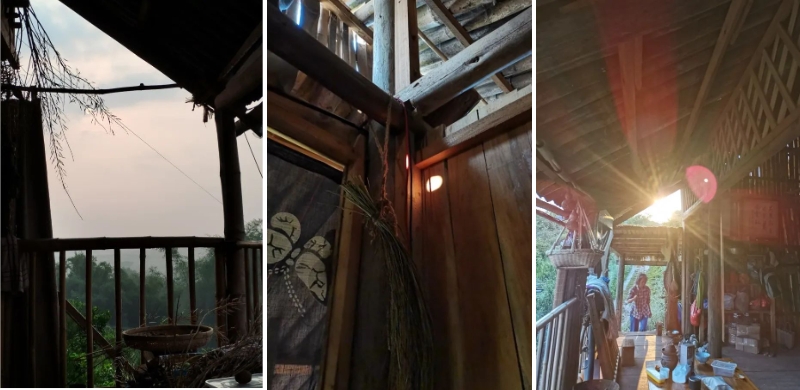
Sharing the cabin with us were all manner of creatures from the orchard: mice, bullfrogs, spiders, mosquitoes, fleas, ants, cockroaches, and more. These small creatures once filled me with dread and discomfort, but gradually I grew accustomed to their presence. Beyond the cabin walls, still more creatures kept us company, their calls weaving into a concerto that became the soundtrack to our sleep. The light of sun and moon streamed in at shifting angles, constantly transforming the space.
In spring, when the Wogan and Emperor mandarins are in blossom, the whole orchard is suffused with the fragrance unique to citrus trees. If you never leave the orchard, you easily forget how beautiful it is. I remember one evening in late March, returning from the Nanning Farmers’ Market—the moment the car door swung open, we were enveloped by that familiar scent, and the feeling is beyond words. On summer nights, swarms of fireflies flicker through the orchard; that must be the most romantic sight I have ever seen. Sometimes the fireflies even glow dimly, then brighten, then dim again, in a darkened room. The natural breeze at night keeps the summer heat from becoming unbearable.
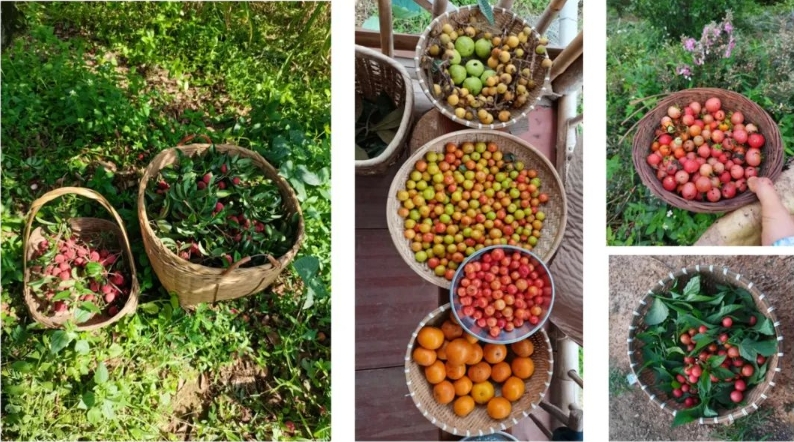
Over those months, I, a Northerner, tasted many foods and seasonings I had never tried before: cassava, alkaline-water zongzi (sticky rice dumplings wrapped in bamboo leaves), Cleome, Beggar-ticks, Shiwan Cuo (a local edible herb), young bean shoots, young pumpkin tips, Taro stems, steamed buns leavened with fermented Wogan mandarin juice, young broom-grass leaves, Hemp seed, Wampee sauce, turmeric powder, young Litsea cubeba leaves…
The orchard is a strict vegetarian household. To make sure Box and I got enough protein, Sister Yanping bought free-range eggs from the senior farmhand’s home—one egg each, every day. For a vegetarian like me, that was plenty; for Box, who was used to meat, it was still something of a challenge, so on the odd occasion she craved meat, she would pop over to the senior farmhand’s house and treat herself to a proper meal. Thanks to the senior farmhand’s family, we even unexpectedly achieved loquat, lychee and Wampee freedom.
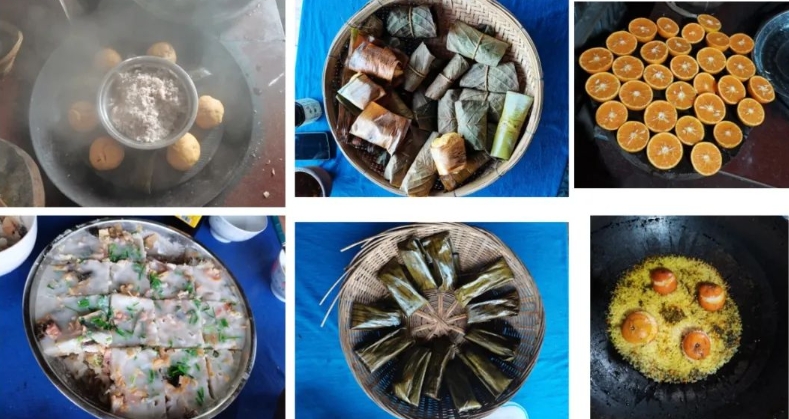
Taking part in farm work also reshaped my understanding of certain words, such as “no waste” and “effortlessness”.
When I first started grading the Wogan mandarins, I could never bring myself to be tough. Every fruit looked so lovely that tossing the sub-standard ones into the compost heap felt like a waste. I would wistfully tuck pretty-looking fruit—ones that could not survive a courier’s rough handling—into the grade-B pile. The senior farmhand would always scold me during her check: “You take the criticism willingly but never change.” Then, to soften it, she would add: “I was the same at first. I always felt it was a shame to throw fruit away, and the owner—which is what she calls Sister Yanping—would tell me off. After enough telling-off, I changed.” Come to think of it, she was right: holding on to them only means the recipient gets rotten, inedible fruit and claims for compensation—a far greater waste.
I think the first time I heard the word “effortlessness” in the orchard was when I was splitting firewood with a billhook. Sister Yanping said, “Don’t use brute force—relax your wrist and just let the weight of your arm fall.” She showed me, and when I tried it, the wood came apart far more easily than when I had been hacking away with all my strength. The same word came up when mowing: the senior farmhand said Sister Yanping had shown them again and again how to cut grass without strain, and that practice of “effortlessness” ran through every task and every moment of our internship in the orchard.
V. Returning to the City
During my four months in the orchard, I reread The One-Straw Revolution and noticed how my attention had shifted—from being drawn to the techniques to being drawn to the spirit behind them.
Much like my internship itself, what truly endures over time is not the fragmentary observations and experiences these words convey, but the people I met and the remarkable encounters between us. The Natural Farming practised by Mr Fukuoka and Sister Yanping cannot be summed up in technical phrases like “no tilling, no fertilising, no pesticides, no weeding”; it is a wordless wisdom woven into daily labour and daily life. Perhaps once I truly set foot on the path of Natural Farming, I will come to feel more fully the line Mr Fukuoka wrote at the close of his book: “This is a drifting soul’s aerial journey—then it becomes the open field, becomes the hillside.”
As for how to begin my own ecological farming journey, I have sketched out a few possible paths for myself. The ideal would be to start with a small plot to experiment on—feeding the soil, honing my skills—then scale up to a manageable size, and eventually build an operation that encompasses growing, processing, and even running a combined community shop in the city.
I may well return to office work in the city for another three to five years, saving more capital before making the leap, so that I can ease into a half-farming, half-X life without ever leaving the land behind—even if I have no idea yet what that X might be.
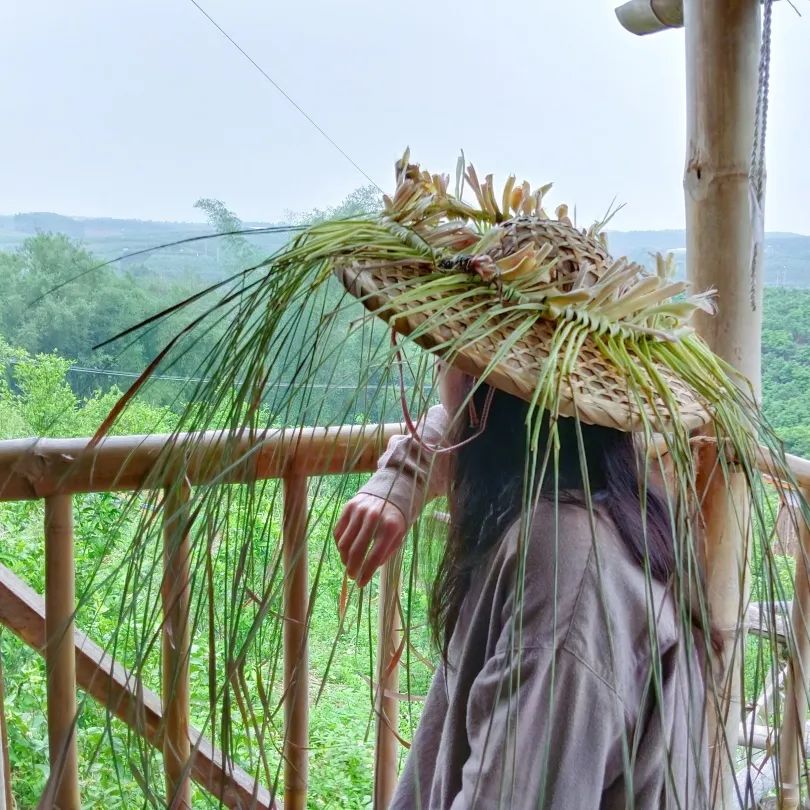
To date, two recruitment rounds have been completed, supporting more than forty participants in interning at over ten ecological farms across the country, for periods ranging from two months to one year. The second cohort of interns will “graduate” by the end of 2023, and recruitment for the third cohort will open to the public in January 2024. Stay tuned to Foodthink for updates on the “Ecological Farming Internship” Programme!
Unless otherwise noted, all photographs in this article were taken by the author
Editor: Xiong Yi