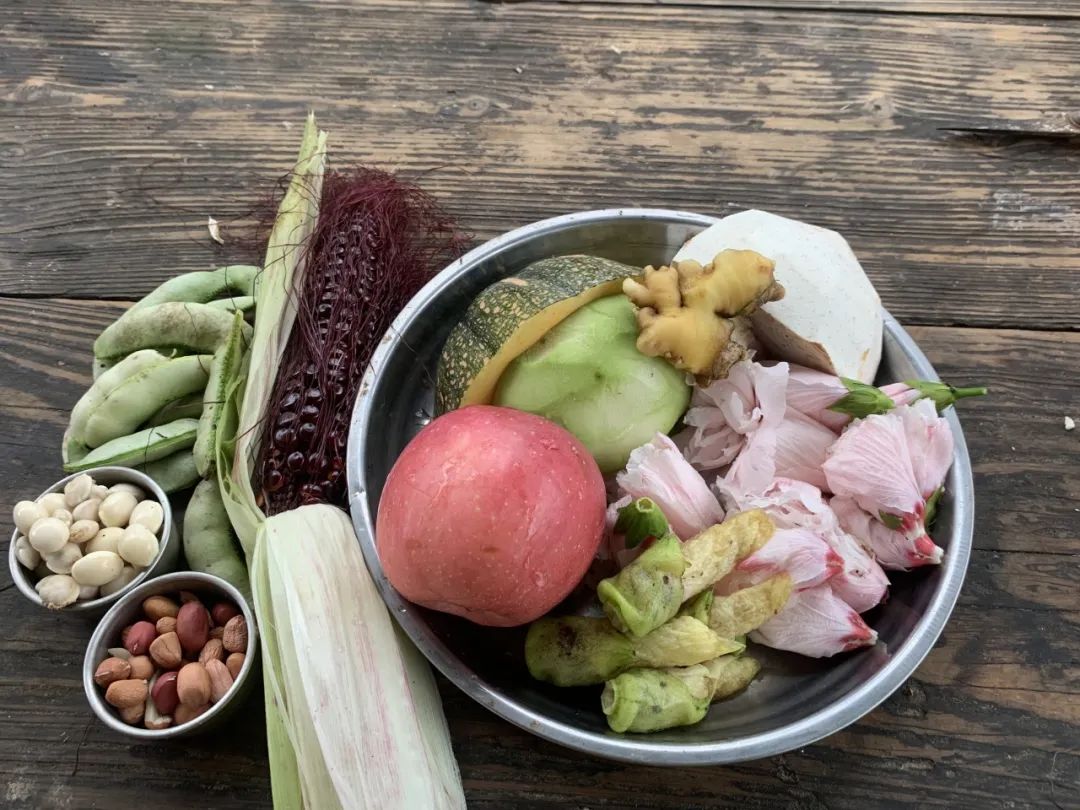
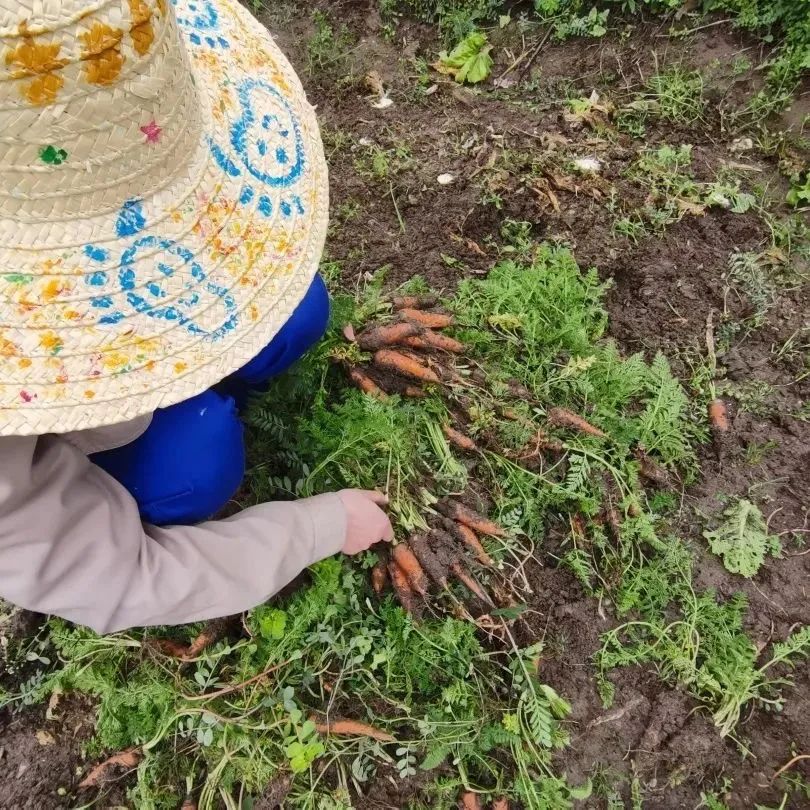
In 2015, a couple born in the 1990s – Yingying and Zhiqiang – returned to their hometown of Pingquan, Chengde, Hebei, and set up Lianxiang Farm. Over eight years, they have grappled time and again with pests, weeds, extreme heat and hiring difficulties – yet they persevere.
Sun Shan, farming in Canada, turned kale earning rave reviews but selling poorly at the Farmers’ market into Korean-style kimchi, building a fermentation kitchen at Chi Garden Eco Farm. Fermentation touches gut microbiota and memories of home; she shares beginner insights from chilli sauce to fermented pickled vegetables.
Inspired by Finnish immigrants carrying Viili culture in a handkerchief to America, designer Xu Xijing screen-prints the negative patterns of three natural yoghurts onto cloth, paints the positive shapes in yoghurt, and makes tiny culture containers that revive in milk—sending them to friends to keep roaming.
Kouzi arrived alone in Villain’s Valley two years ago to farm. Of over a thousand saplings, most were tuition fees; fruit flies spare barely one pumpkin in ten. Every mouthful, then, must be savoured and treasured.
At Letian Bay Farm, consumers rent plots in the countryside not for organic certification or environmental ideals, but for a sense of ease so scarce in the city: seeing how vegetables grow, recognising one’s neighbours, eating cucumbers without peeling.
After over three years in Wicked Valley, Fujian, farmer Kōuzi has reaped an entire paddy crop by hand for the first time, from transplanting to final cut. The harvest was treated as a festival: harvest meals prepared three days ahead, the first block of paddy cut between downpours.
US Treasury Secretary Janet Yellen’s visit propelled jiàn shǒu qīng viral – prices soared, e-commerce platforms scrambled to list it, and poisoning cases outside Yunnan surged. “Toxic” and “can you eat it” are two different questions – cooking experience and “see little people” mindset won’t ship in a click.
From 300 mu in Bashang to 9 in Huailai, Baxia: Huang Lifeng and Li Yuxia let Eurasian magpies peck their tomatoes, save 60 per cent of water with drip irrigation, and sell home-grown veg at the Beijing Organic Farmers’ Market at weekends — enough for a family of four.
More than a month after the floods receded, the Longjiazhuang market reopened, yet nearly half the farmers’ east-side stalls remain empty. Aunt Li’s two mu of farmland lies buried under silt and debris. ‘People are fine, the land is done,’ she says. Compensation has yet to materialise.
Northwest China is warming at roughly twice the global rate, and rising extreme precipitation means wine grapes in areas such as Zhangye and Yinchuan are repeatedly hit by late frosts and rain damage during the harvest period. Greenpeace’s report warns that warming and wetting are threatening their quality.