
This New Year’s Eve, Can You Accept a Whole Table of Pre-made Dishes?
A Note from Foodthink
Yet despite their surging popularity in recent years, opinions on pre-made dishes remain sharply divided. How exactly should we identify them? What should consumers really be looking for when it comes to pre-made dishes?
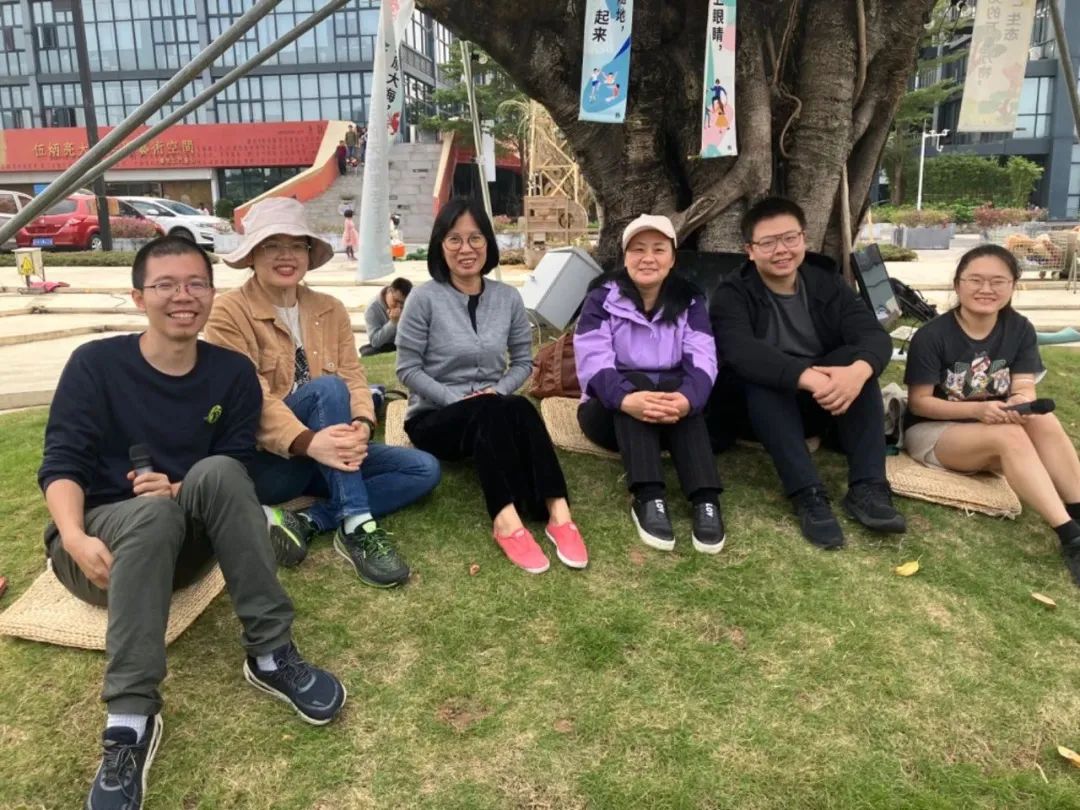
At Fengnianqing, held in Guangzhou at the end of 2023, Foodthink hosted a forum on pre-made dishes, inviting consumers, scholars and industry practitioners to explore the topic together. Despite the humble setup — sitting on the floor in an open space — the discussion attracted quite a few ordinary passers-by. What follows is a transcript of that conversation.
Discussion Guests
Moderator
I. Personal Experiences with Pre-made Dishes
Song Tinghui: Over the years, I have worked in restaurant and hotel kitchens, and as far back as 2016 I was already hearing the term “pre-made dishes” — only back then people called them “semi-prepared products”. It was only when I saw the recent news about ‘pre-made dishes in schools’ over the past six months that I realised what people call ‘pre-made dishes’ have been around for years — they simply went by a different name.
Zhong Shuru: In fact, pre-made dishes can be divided into many types. In the food industry, they fall into four categories, also known as the 4R principle —
- Ready-to-eat food — foods you can eat immediately, such as instant noodles;
- Ready-to-heat food — foods that simply need reheating, such as frozen dumplings; heat a whole portion and it is ready to eat;
- Ready-to-cook food — pre-cut ingredients that only need a quick stir-fry at home, such as marinated steak;
- Ready-to-use food — generally pre-portioned ingredients from a central kitchen, which is the most common type on the market.
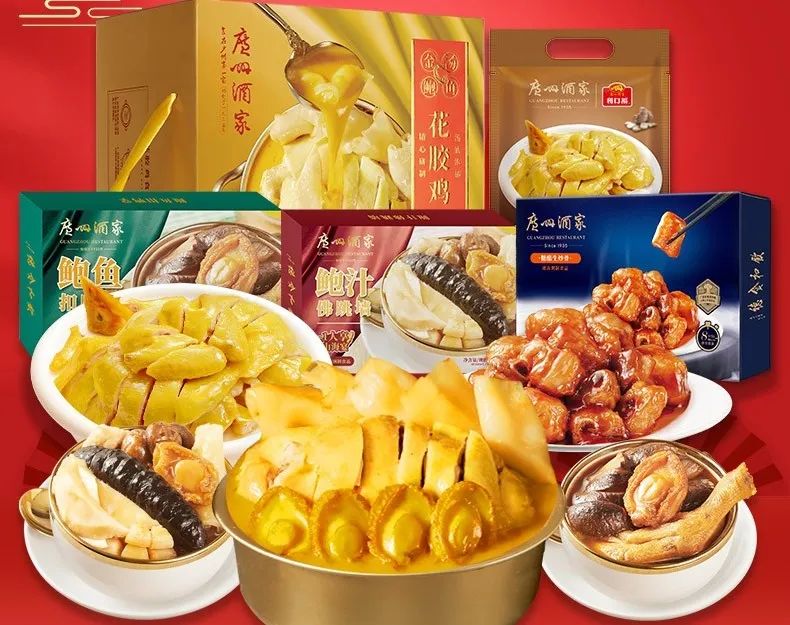
Yang Erma: My first experience with pre-made dishes was during the pandemic, when we needed to prepare a New Year’s Eve dinner at home. Conditions were limited, and I couldn’t manage any elaborate dishes, so my husband brought home a Poon Choi from outside. In a way, it truly saved the day. That evening my child happily announced: ‘Mum, I had eight pieces of abalone!’ For quite a while afterwards, I kept buying that kind of pre-made dish. But after four or five times, my child and I had had enough.
The flavours of pre-made dishes are very one-dimensional. Even pairing them with different sides, I could never achieve a rich, layered taste. Since then, I rarely buy them. Looking at the long term, my life certainly won’t depend on pre-made dishes.
Wang Hao: You are a parent yourself, and your child eats at school. Have you come across anything like the “pre-made dishes in schools” situation?
Yang Erma: My child attends a secondary school in Guangzhou’s Tianhe District. The school used to have a canteen, but for various reasons it was shut down, so we now have to order meals from external catering companies. The Parents’ Committee spent a great deal of time and effort dealing with this, weighing up cost, taste, food safety and all sorts of other concerns.
I visited several of the catering companies in person. The production sites all looked respectable, but there were actually many problems. For instance, the food sits in the kitchen for half an hour before being loaded onto delivery vans, and then it takes another 40 minutes to drive from the catering company to the school… Just imagine – hot food sealed in plastic containers for over an hour. What does it turn into? The greens are practically inedible. But we had no choice; there simply were no catering companies to choose from anywhere near the school or within the city. My son isn’t a fussy eater – he’ll tuck into things he doesn’t particularly like and at least fill up. But some children genuinely refuse every last mouthful and just throw their trays away.
It was only through the search for a catering company that I came to appreciate how hard it is for a school canteen to deliver both good value and good flavour. Students’ lunch budgets are just 15 to 18 yuan a day, so you can imagine the school canteen hardly makes a profit either. Freshly stir-fried or pre-portioned dishes, which then just need finishing off in the school kitchen, are actually a perfectly sensible option.
Wang Hao: Qinyuan, could you share with us how you make pre-made dishes at home?
Qinyuan: Honestly, I started out of pure laziness. I love cooking, but it demands so much physical effort. If I can’t accept the food from outside yet don’t fancy the slog of cooking every time, making things in advance means I can cook once and enjoy several meals from it.
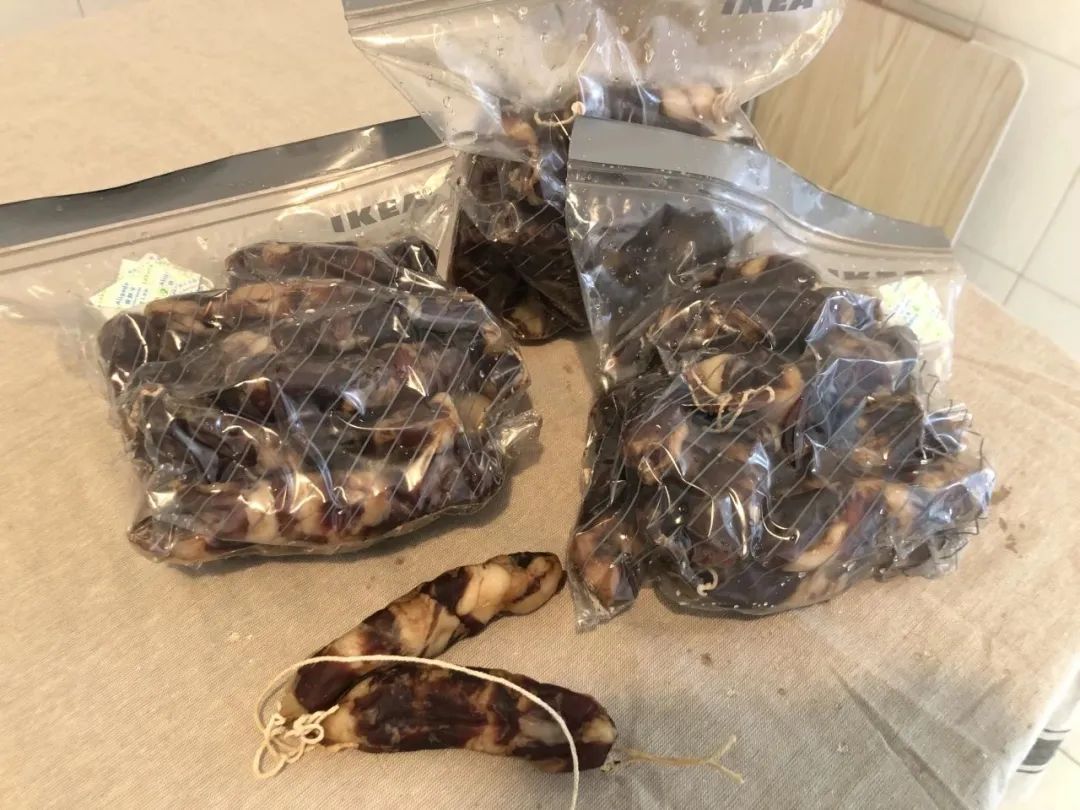
When I make the food myself, every step is under my control. After some experimenting, I’ve worked out which foods keep well in the fridge and which have to go in the freezer.
Once, I made five jin (about 2.5 kg) of beef shank in one go and got roughly fifteen meals out of it. Some foods last remarkably well in the freezer – a month, three months, and the texture barely changes; even after six months, they’re still perfectly fine.
I do sometimes choose pre-made dishes deliberately – mostly things I can’t cook well myself or find too much trouble to make at home, like frozen steamed buns. I once bought a pre-made Buddha Jumps Over the Wall too, and it was truly awful.

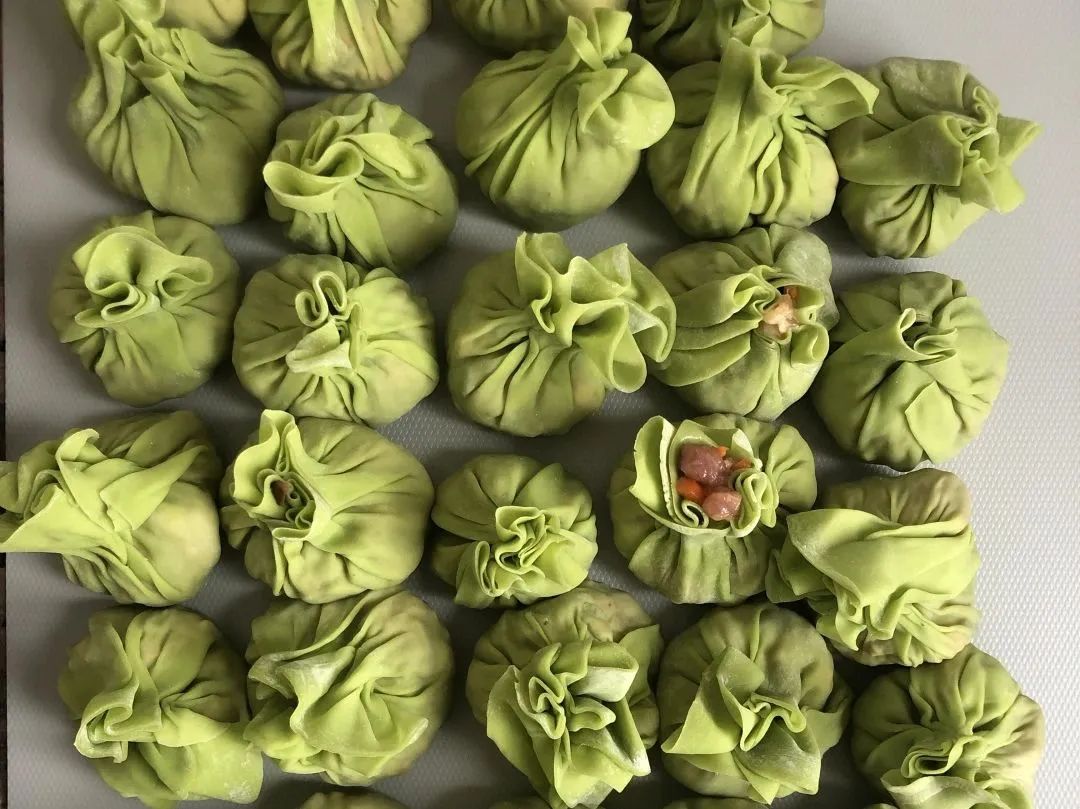
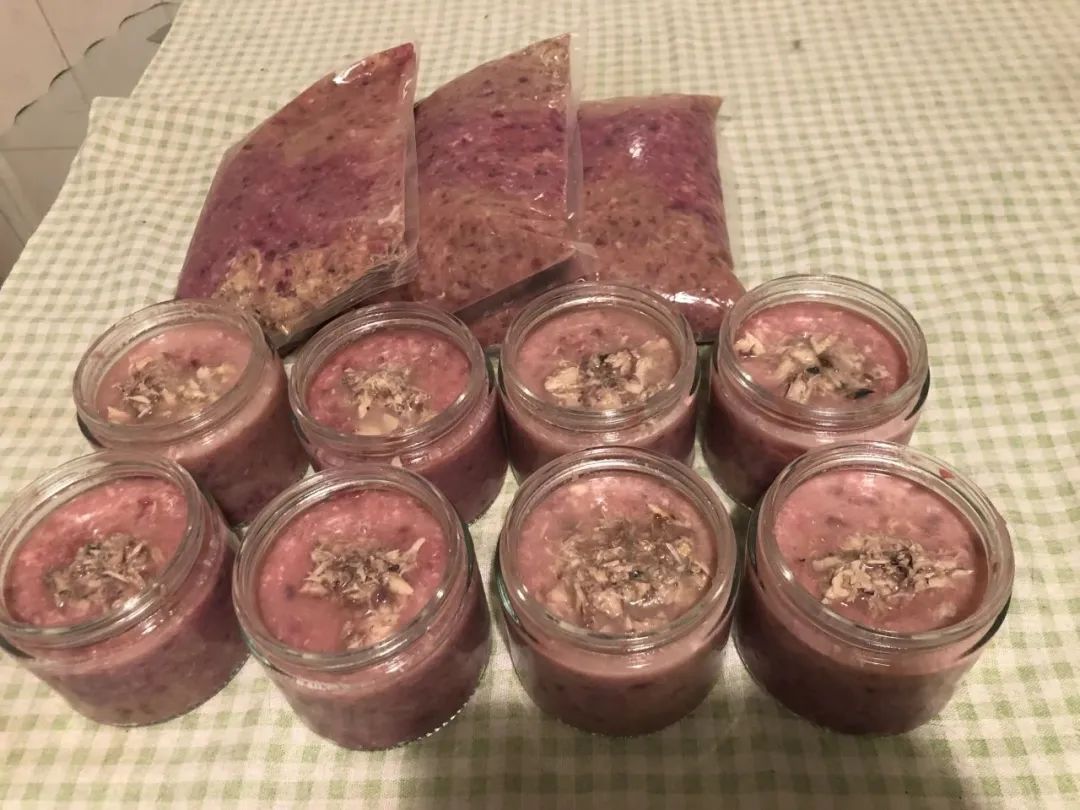
When I first started working, I hadn’t even come across the concept of “healthy eating”, so I just ordered whatever I fancied. My takeaways were always the same few items – deep-fried meat dishes, things like that, which looking back were all pre-made. Back then, my palate seemed to be entirely dominated by the taste of pre-made food – I kept thinking I’d just order the same thing again, wanting nothing but the same flavour every time. Now I realise that wasn’t a very healthy eating habit.
II. How to Identify Pre-made Dishes?
Song Tinghui: Working in the kitchen, I know quite a lot about this. Spending more doesn’t guarantee freshly cooked food. Some upmarket restaurants don’t cook everything from scratch either – I’ve even seen high-end restaurants buy takeaway from outside shops and simply serve it at the table straight from the packaging.
Qinyuan: I have a way of spotting pre-made dishes. If you know how a dish is meant to be cooked – if you’ve made it yourself at home – you know exactly what a properly prepared version should taste like. Then when you eat the pre-made version, you will always notice the difference. When the technique is in your own hands, even if you lack the time or energy to cook every day, you still have the ability to judge just how pre-made something is.
Yang Erma: I rarely go to chain restaurants now, but from my experience, chain restaurants are essentially all pre-made. Small, family-style restaurants that stir-fry dishes to order are far more likely to have food prepared by the chef themselves.
Yue Xin: When my wife and I got married, we took our families to a star-rated hotel for the banquet. Even then, I felt that everything on the menu was pre-made. Some dishes arrived only lukewarm – some were even cold. Every plate was exquisitely presented, and the food arrived and the tables turned remarkably fast, but there was a curious blandness to the whole meal.
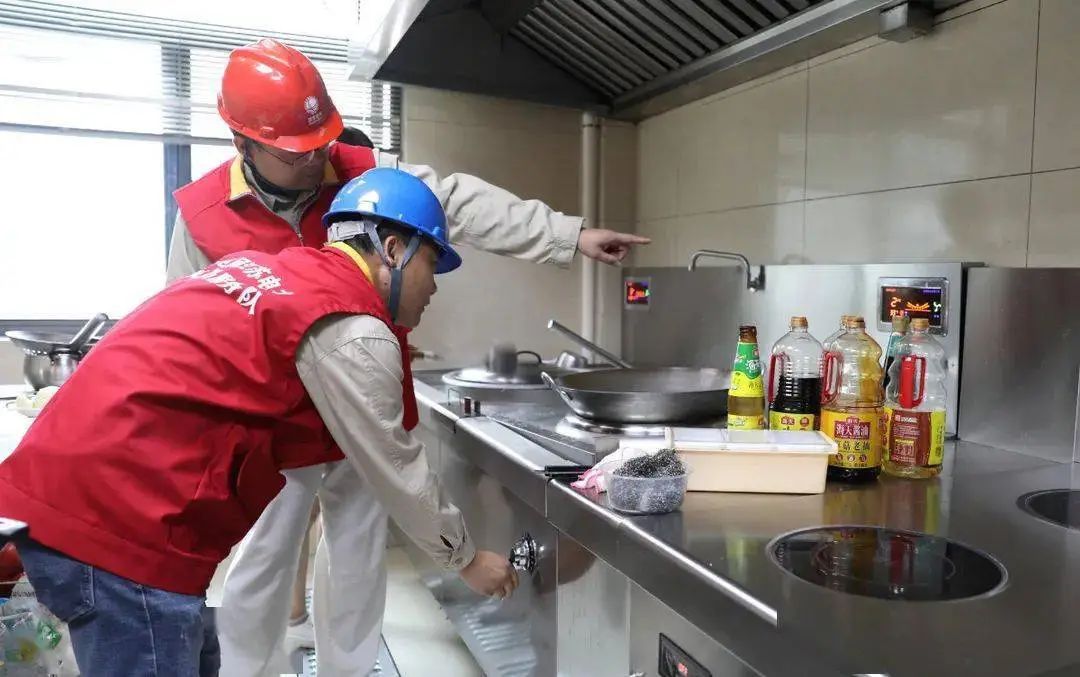
Zhong Shuru: These days, virtually all the food served in restaurant outlets inside shopping malls is pre-made. I’ve learned that some shopping malls in Beijing do not permit the use of open flames, which effectively cuts the lifeline of Chinese cooking. Without an open flame, chefs cannot stir-fry properly – all they can do is reheat or do the bare minimum before sending the dish out. Some restaurants set up open kitchens or install surveillance cameras. You can check those feeds to see whether there’s an open flame in action.
III. Can We Trust Pre-Made Dishes?
Zhong Shuru: The real question may not be whether a dish is pre-made or not, but whether the processes behind it are transparent enough to trust. Qinyuan mentioned earlier that she makes her own “pre-made dishes” at home — and the whole process is perfectly transparent, because she buys the ingredients herself and cooks the dishes herself. There is no issue there. But if you eat at a restaurant, the quality is not necessarily guaranteed. From the raw ingredients and the production process to the source of the plastic packaging, none of it can be verified.
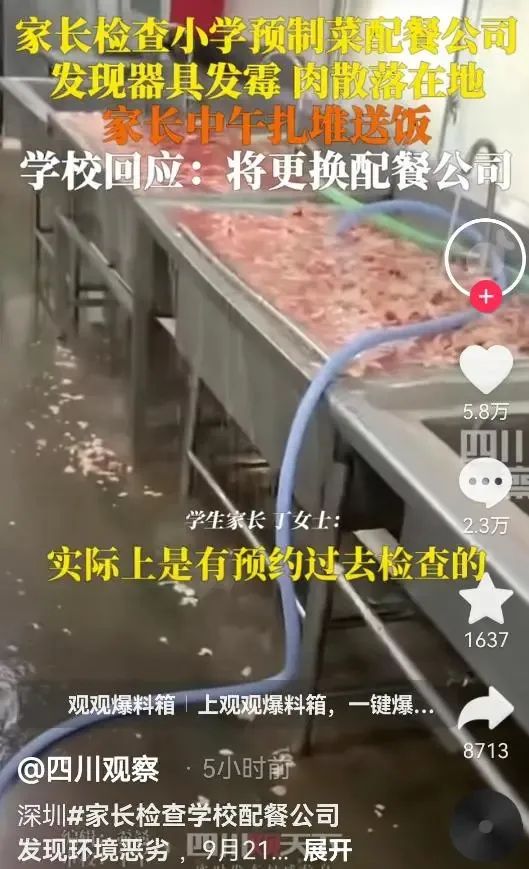
The reason there has been so much opposition to “pre-made dishes in schools” is that the oversight mechanisms behind them are still not transparent enough. No one knows which pre-made dishes are allowed in schools and which are not, and the catering companies vary enormously in quality.
Yang Erma: Getting a school to select a catering company really is an incredibly complex process. We tried finding a few trustworthy local restaurants near the school, but once we submitted the list, every single one was rejected — none of them met the standards set by the Education Bureau for catering services in schools. Many of those restaurants run small operations and had never completed the accreditation checks required by the Education Bureau. So we had no choice but to follow the Education Bureau’s guidance and go with the larger catering companies — only to find that those, too, suffer from a lack of transparency.
Qinyuan: First of all, pre-made dishes are often heavily flavoured, and the rich oils in them cause more fat-soluble additives from the packaging to leach out, creating health risks. Many practices that are supposed to ensure food safety are not necessarily followed rigorously in the catering industry, and it is even harder to guarantee safety with cheap takeaway meals costing just ten-something yuan. PP (polypropylene) is a relatively stable and safe material among plastics, so it is a safer option for food packaging — but the cost is too high, and many restaurants simply will not choose it. Another example: once disposable cutlery has been manufactured, it is coated in various industrial cleaning agents and powder residues that require thorough washing — yet we have no way of monitoring or verifying whether that washing actually happens.
Song Tinghui: From my experience working in kitchens, washing also silently adds to the workload for factories and restaurants and drives up labour costs, so I think in practice the strict safety standards are essentially never met.
Yue Xin: The view I find most convincing is that we should introduce labelling and grading for food products, so that everyone can make an informed judgement about what they are eating. Beyond that, I would love to see more public education on the topic — because for office workers, pre-made dishes are pretty much unavoidable.
Wang Hao: I have also noticed that pre-packed food and beverages are required by national regulations to carry production dates, ingredient lists and so on — yet meals from central kitchens carry no label at all. They seem to have become a blind spot when it comes to information.
Zhong Shuru: It comes down to the channel. If you buy pre-made dishes from a food retail store, they come with a full ingredient list and cooking instructions. But with takeaway, labelling is very difficult — how, for instance, do you test the oil content of a takeaway meal? Consumers can only judge for themselves whether it is healthy, based on their own experience.
IV. Will Pre-made Dishes Destroy the Catering Industry?
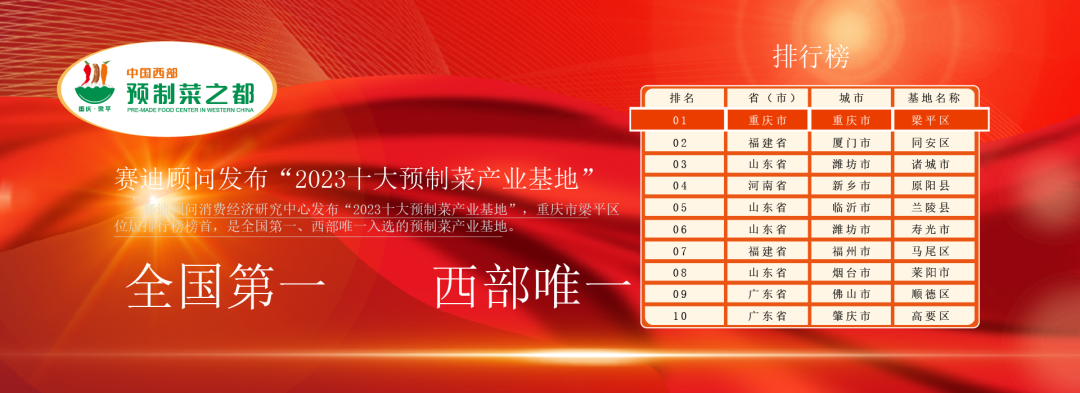
At present, the penetration rate of pre-made dishes in our country is still relatively low, at less than 20 per cent. By comparison, 60 per cent of restaurant dishes in Japan are already pre-made. Put them side by side and there is enormous room for growth in pre-made dishes here, and that is a foreseeable, perhaps even irreversible, trend. But it also means that it is becoming increasingly difficult for us to taste the authentic flavour of local food.
Song Tinghui: When you compare prices, pre-made dishes are certainly not cheap. Take pickled cabbage fish, for example. If the chef makes it himself — a chef earning a few hundred yuan a day can prepare plenty of pickled cabbage fish. But if the restaurant buys pre-made pickled cabbage fish, a single tub costs several dozen yuan, and just a few tubs amount to a day’s wages for a chef. From that angle, the cost is actually very high.
The rise of pre-made dishes has certainly dealt a major blow to Chinese chefs. Take dough-and-pastry-making, for instance. In our kitchen, four chefs used to work together on the pastry section, handling everything from kneading dough and mixing fillings to rolling out wrappers and wrapping — every step was done by hand to ensure freshness and flavour. But now the dough-and-pastry section has only two chefs. The canteen has dropped the in-house making of plain steamed buns, stuffed buns and wontons, and redirected the wages saved from cutting two chefs’ positions towards buying pre-made pastry items, which simply need reheating before they go out.
Qinyuan: Pre-made dishes do not necessarily have a price advantage. The reason they are being pushed so aggressively is primarily from the business owner’s perspective. Restaurant staff come and go — someone may resign, someone may ask for a pay rise, and as a chef gains seniority, the cost keeps climbing. If a restaurant wants to expand, pre-made dishes make standardisation possible. Even if the upfront costs are not low, once you reach a sufficient scale, costs fall as standardisation takes hold. That is one of the reasons it is so hard for us to resist the tide of pre-made dishes.
Wang Hao: This brings us to the ecology of the catering industry — do you go big and scale up, or stay small and independent?
Zhong Shuru: I conducted a survey a while ago and found that a central kitchen needs at least ten chain outlets to bring costs down to a workable level. And the new trend now is to turn the central kitchen into a B2B model — central kitchens going directly to restaurants to pitch their services, offering all manner of pre-made ingredients and finished dishes.
If you want to open a takeaway shop, a chef might manage to produce four or five dishes an hour. But with pre-made dishes, you can reheat more than ten, even dozens, in the same hour. During peak meal times, speed is what determines your competitiveness.
Wang Hao: In truth, many restaurants also cook large batches of their own dishes, reheat them at lunchtime and sell portions — which is rather like a restaurant’s own version of pre-made dishes. Take Longjiang braised pork trotter rice, for example — you see it everywhere in Guangzhou.
Zhong Shuru: Exactly — so pre-made dishes have existed all along. We are not against pre-made dishes in themselves; what we care about is what happens behind the scenes — the production and the transportation.
V. Would You Choose Pre-made Dishes?
Yang Erma: I have made pre-made dishes at home myself — I cut up pork, season it, then divide it into individual portions and store them in the freezer. For us, home-made pre-made dishes have been a lifeline for a family that lives at a fast pace but would rather not eat out.
Yue Xin: As a working person, it is easy to be influenced by your surroundings. When I first joined my company, I would just order takeaway alongside my colleagues. Luckily, I met my wife. She is terribly “fussy”, so her benchmark for whether food is good is simply whether it sits comfortably with her — and generally, whatever she can eat comfortably tends to be healthy too. Gradually, I took on a sense of responsibility to seek out better ingredients. I now try to cook dinner at home as well. I prep some ingredients in the fridge in advance, then come home in the evening and give them a quick stir-fry.
Song Tinghui: My current employer asks me to come to his home every day to cook dinner. Everything is freshly cut and stir-fried to order using fresh ingredients, to guarantee the food is as fresh as possible. For home-made items that can be frozen — like soy-braised beef, stuffed buns and dumplings — he still feels they are fresher and healthier than anything bought from outside.
Many families also face the question of how to divide and share the responsibility of cooking at home. Take Sister Song’s employer, for instance — he has the means to outsource something as important as preparing meals, but not every household has that option, and not everyone will have a partner who prepares food for them.
So how do we navigate the division of labour within the family? Especially in situations where a woman works outside all day and then comes home in the evening still expected to cook. Do pre-made dishes, in some ways, lighten the domestic burden on women?
Yang Erma: In my home, my husband is the kind of person who could eat instant noodles every single day without a single complaint. I, on the other hand, simply cannot accept that. So I make it a point to go to the market, buy fresh ingredients and cook at home myself. But when I’m not feeling well or simply don’t want to cook, we go out to eat or order a takeaway — we can manage that too. We just do whatever feels right for each of us. I believe every member of a family needs to find a way of living that feels comfortable for them.
There’s also something rather funny about our household: every friend who has ever eaten at our home thinks I am a dreadful cook! But my husband and child praise me and encourage me every single day. When my son wants something better or more distinctive, he teaches himself to cook — and now he cooks even better than I do. Everything has simply fallen into place.
So I think choosing the way that suits you matters enormously. I feel that the person who takes real pride in cooking at home should not complain about the hardship — if you cannot change it, try your best to enjoy the process. And if you don’t feel like cooking, rest. But if you go into the kitchen harbouring resentment, the whole thing loses its beauty.
Song Tinghui: We work hard to earn money precisely for our own and our family’s health. If we were to buy pre-made dishes or order takeaway every single day, it really could take a toll on our wellbeing. When you are truly exhausted, of course, have a rest — but try your best to cook at home whenever you can. Even something as simple as a bowl of noodles makes for a perfectly good meal.
Compiled by: Shan Wei
Edited by: Wang Hao