After Beijing-Tianjin-Hebei Flood, Smallholders Still Trapped in Climate Adaptation Dilemma
Production and daily life in the cities have largely returned to normal, but the impact of extreme weather on farmers is neither fleeting nor confined to a single place. It endures far longer than most would imagine. First came the scorching of several anomalously hot days above 40 degrees in June and July, and now the “heaviest rainstorm in 60 years”. For farmers, what does more than two months of such extreme weather actually mean? After the downpour, how do they pick up the pieces and prepare for the next extreme event that strikes without warning?
I. “Total Wipeout”
Had that happened, more than half the village would have been submerged. Neighbours who had somewhere to go had already fled into the town. Once the house was flooded, Chen and his family would have had to get out as fast as they could and find somewhere to shelter. It was only later that people learned Baoding had averaged 141 mm of rain over those two days – nearly a third of the average annual rainfall.
Chen and his family currently operate an eco-farm called Wo Cui Yuan in Beiliggezhuang Village, Qingyuan District, Baoding. The farm spans over 100 mu, growing mainly wheat and coarse grains, with a small amount of vegetables and watermelon. Twenty mu of maize had been planted in a standby flood channel that had not carried water in decades.
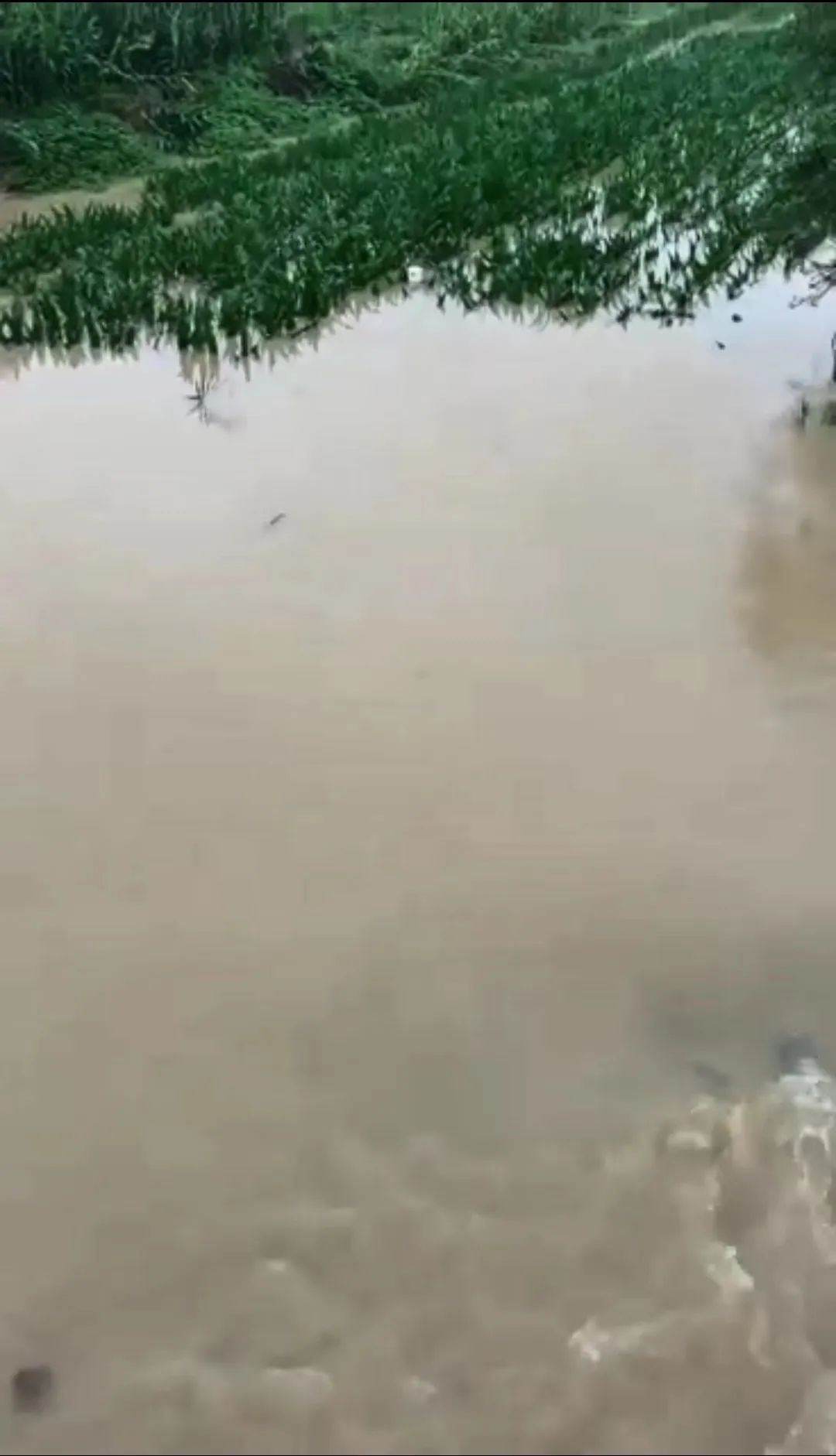
After the rain, the channel coursed with muddy, yellow floodwater. The bright green expanse of maize plants had been submerged until only their tips were visible. Even two weeks after the downpour, the standing water in the channel refused to drain away. Needless to say, the maize was a total crop failure, and the late-season watermelons and tomatoes were dead to the last plant.
He made a rough calculation and estimated that the twenty mu of maize alone represented a loss of 50,000 yuan in output. “And that is based on conventional maize.” They grow organic maize, which carries higher costs for fertiliser and labour and commands a higher price, so the true loss would only be heavier.
With the land waterlogged, everything had to start from scratch. They repaired the collapsed sections, re-levelled the ground, let the sun dry the soil, and as soon as the soil moisture status was right, rushed to plant cabbages.
By comparison, Xiao Liushu Farm in Shunyi, Beijing, was considerably luckier. Shunyi District lies in Beijing’s northeast suburbs and was not the worst-hit area in this storm. Rainfall was relatively lower, and the farm’s surrounding drainage was also good, so it escaped flooding. But the farm still suffered enormous losses.
“I have been farming for ten years, and I have never seen anything like this,” said Liu Gang, the manager of Xiao Liushu Farm. “The soil was saturated with standing water and many of the crops drowned: open-field broccoli, celery, tomatoes, sweetcorn, kale … and every short-cycle leafy green – total wipeout.”
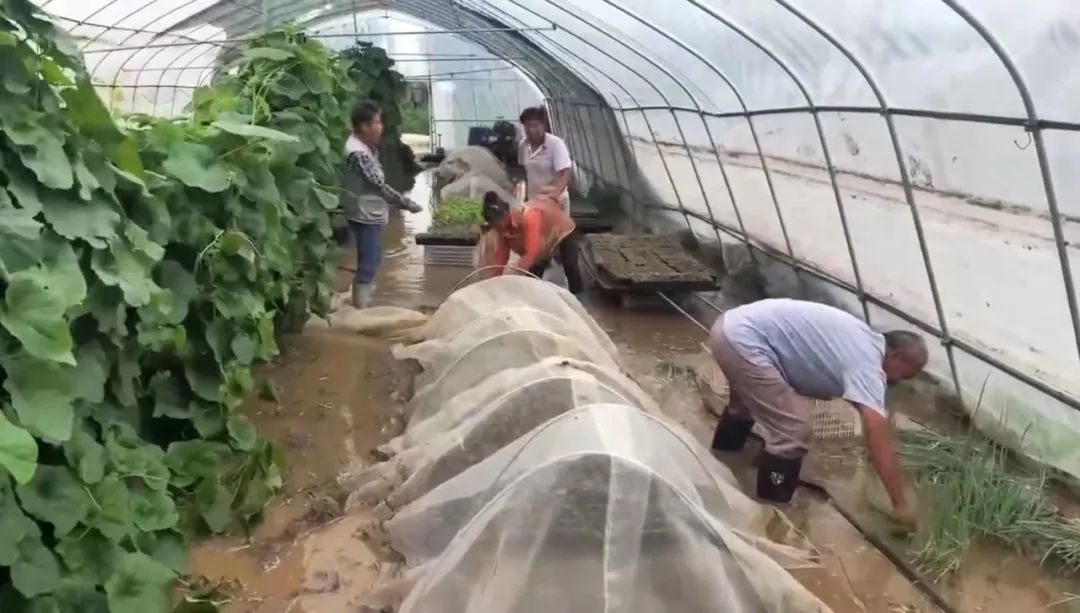
The seedling nursery had been flooded. After the rain stopped, Liu Gang and his workers rushed in to salvage what they could. Wearing tall rubber boots, they found that every step sank deep into the mud; the water rose all the way to their calves, seeping into their boots.
“Even the ginger drowned,” Liu Gang said in disbelief. “Ginger is sensitive to drought – you always have to water it. Not a single plant died from rain in all these years.” He estimated that the loss on these vegetables alone came to around 100,000 yuan.
The storm had also damaged the greenhouses. Xiao Liushu Farm focuses on vegetable production; alongside open-field cultivation, it has unheated polytunnels and a heated greenhouse. The damage was mainly to the unheated polytunnels – rainwater pooling on the plastic covering had crushed them under its weight.
It was not just about reduced yields; the taste of the vegetables had changed noticeably too. Liu Gang suspected that the rainwater had carried high levels of acidic substances, making the vegetables astringent and bitter. “I just don’t find them tasty – I would be embarrassed to recommend them to anyone.”
II. Has Flood Drainage Passed the Test?
Reflecting on this flood, Liu Gang believes the priority should be better waterproofing and drainage. For instance, the materials used to build the unheated polytunnels fell short of standard – the tubing was too thin and will need replacing with sturdier pipes. In addition, the seedling nursery sits at the lowest point on the farm, so going forward he plans to erect a raised rack to place the seedling trays higher up.
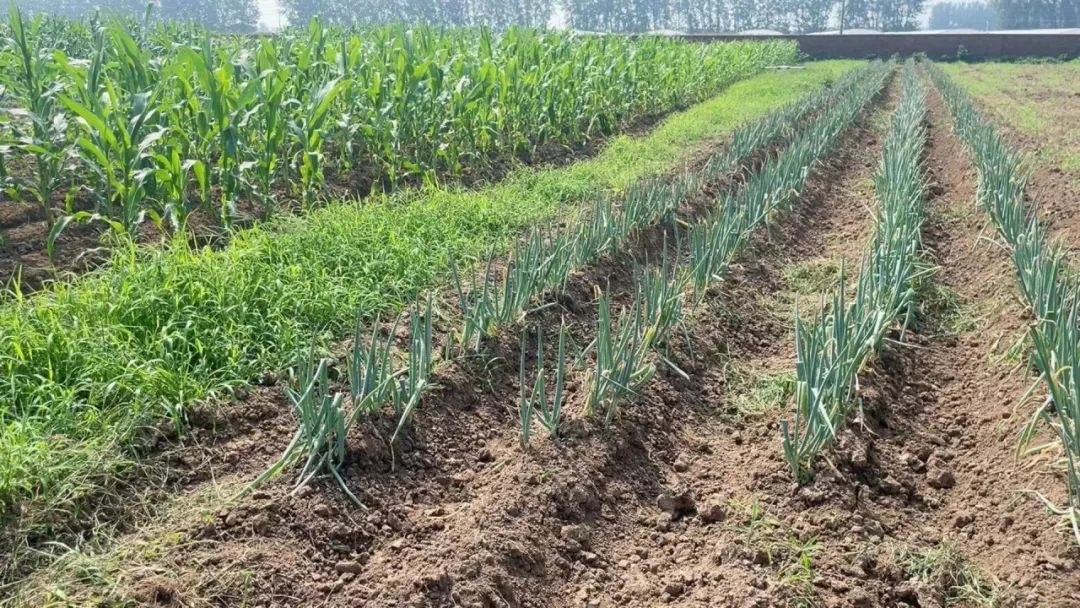
Xiao Liushu Farm moved to Qijiawu Village, Shunyi, four years ago. The surrounding area had been a state-run farm for three or four decades, with wide drainage ditches running through the fields – over a metre wide and five metres deep. At first, Liu Gang did not understand the point. In such a dry part of Beijing, what use were drainage ditches this large? They took up arable land and hampered production efficiency.
This rainstorm showed him the worth of those ditches – built for years but needed only in a moment of crisis. He plans to draw up a thorough drainage layout this winter: not only digging more ditches, but also installing simple infrastructure on the farm’s low-lying plots, draining water at the lowest possible cost.
This, Liu Gang believes, is the lesson the flood taught him; there is little else to be done. He will not change his cropping plan over it. When it comes to the idea of flood-tolerant varieties, he remains noncommittal. Crops, he says, may be drought-tolerant or moisture-loving, but even moisture-loving crops cannot survive being submerged. The key is to get the water off the land quickly.
For smallholders, the value of a drainage ditch must be weighed against its cost. Their livelihood depends on every square inch of productive land. So the expense of a ditch is not just the labour, machinery and time spent digging it – it also means years of land left fallow, unable to be cultivated.
Some would say it is too great a luxury to leave a plot idle for the sake of a flood that may never come.
The twenty mu of maize Chen Ziyu lost this time was planted in a standby flood channel. Yet he says he will plant there again next year. The rain was simply too extreme and too rare; since the catastrophic flood in the Haihe River basin in August 1963, water had never flowed through that channel like this. In other words, leaving the ditch idle for sixty years to avoid one bad year is simply not worth it.
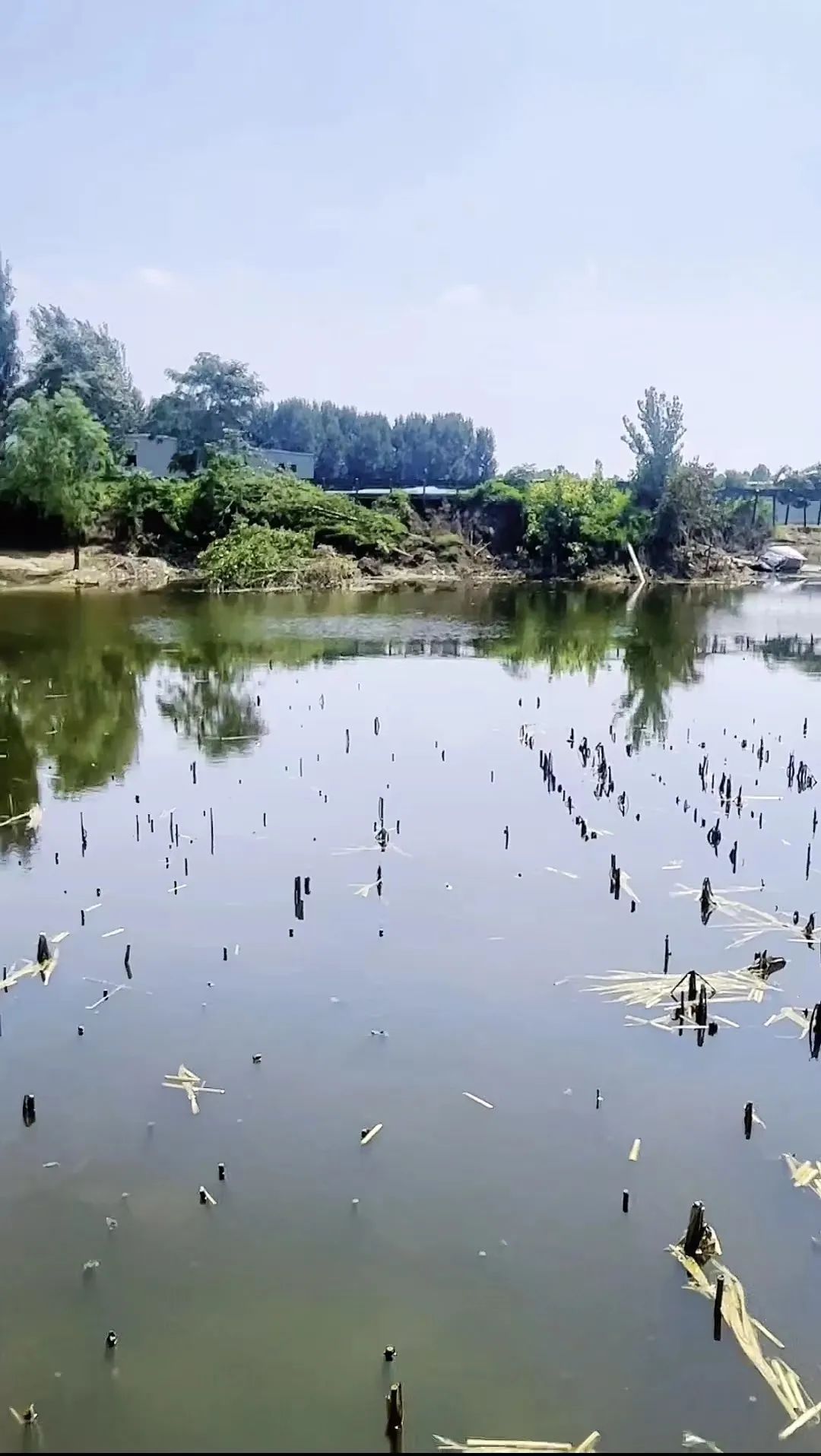
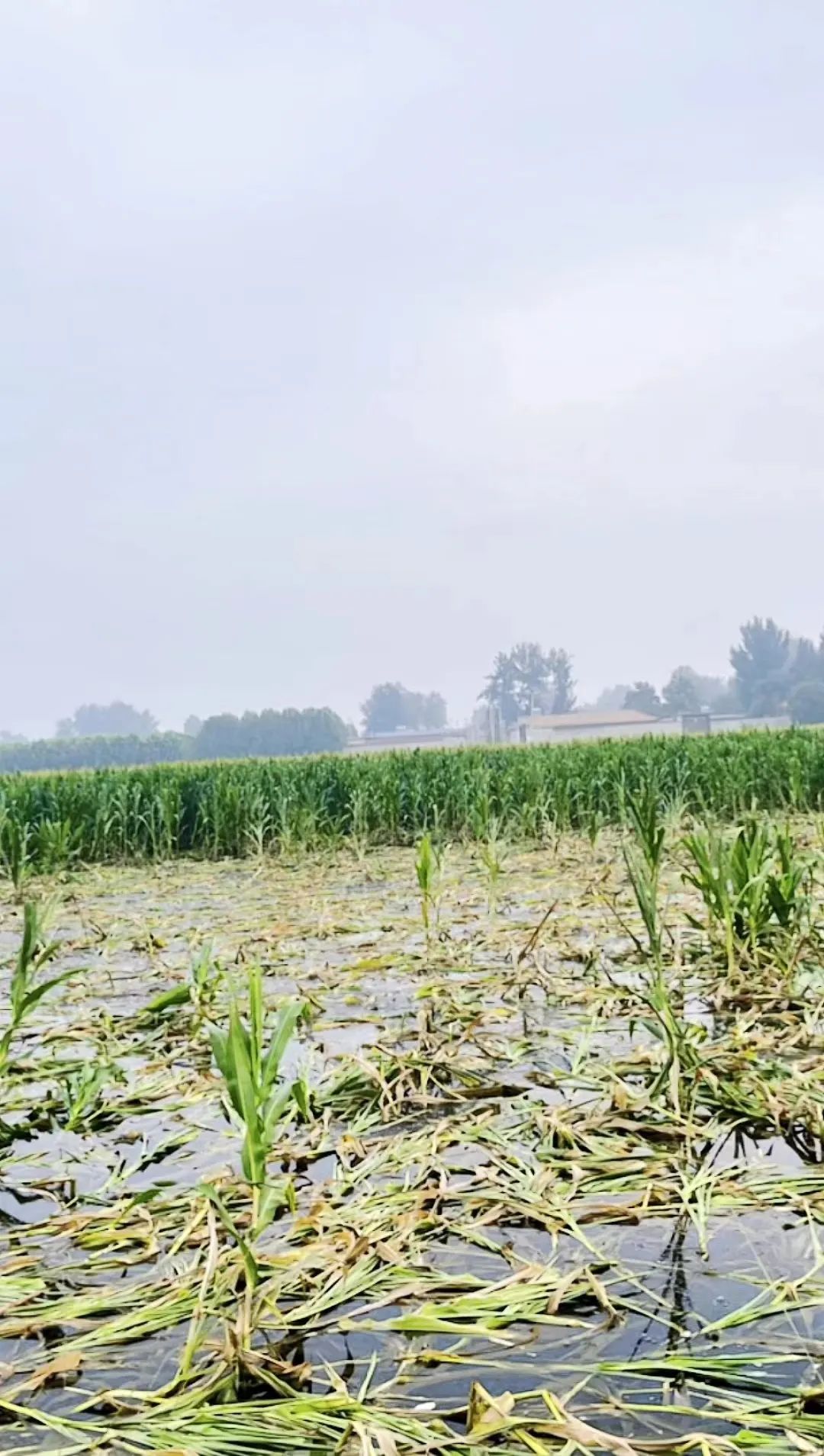
Chen Ziyu said: “If every storm is like this, no measures will help. We would all have to move away. When we cannot even keep ourselves alive, how can we worry about the fields?”
III. What Have Farmers Done to Cope with Extreme Rainfall?
In recent years, China has seen a trend of northern floods and southern droughts, with rainfall during the North China rainy season increasing markedly. For some farmers, adapting to wetter summers is first visible in changes to their cropping patterns.
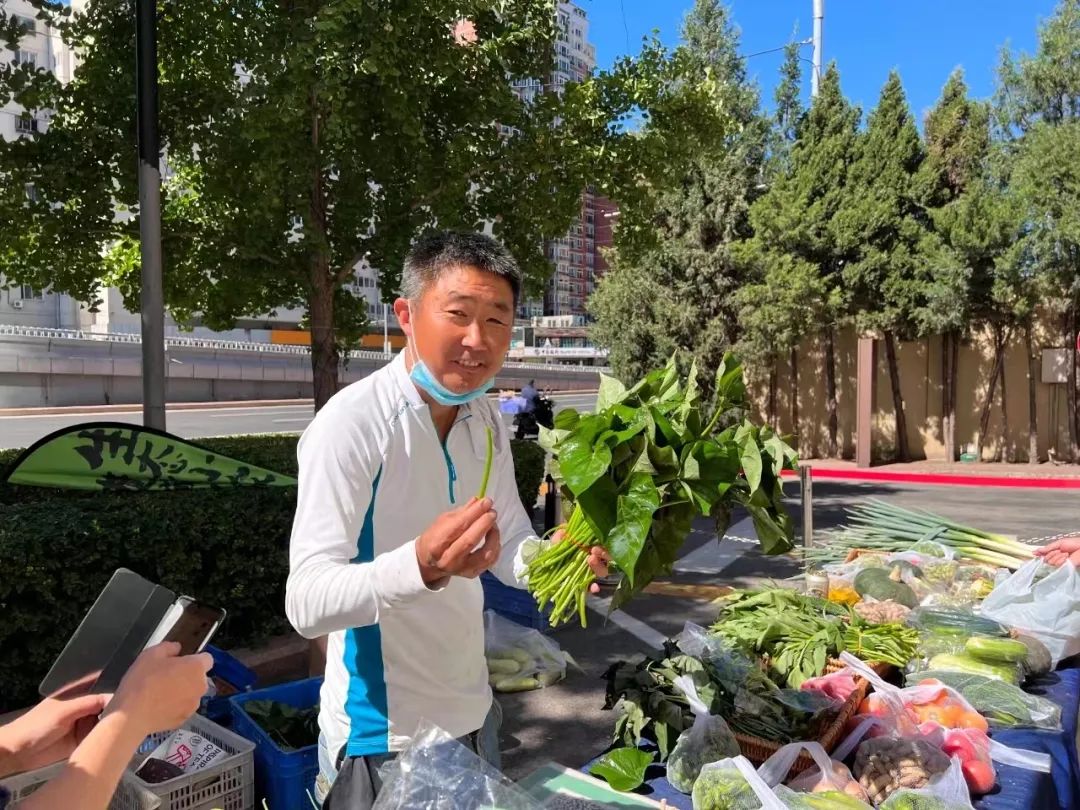
Take the Beijing Organic Farmers’ Market, where Liu Gang and Chen Ziyu are members. Because they sell directly to urban consumers, growers tend to adopt a strategy of small batches and many varieties. Some are already deliberately growing more moisture-loving “southern vegetables”. Liu Gang noticed this time that taro not only suffered no losses but thrived.
Second, soil improvement has been proven an effective strategy against both drought and flooding.
Just days before this round of torrential rain, Beijing welcomed a heavy shower on 25 July after a prolonged heatwave and drought. In Shunyi, after more than three hours of driving wind and rain, the organic-cultivated maize at Xiao Liushu Farm was bent at a 45-degree angle, while nearby conventionally grown maize lay completely flat.
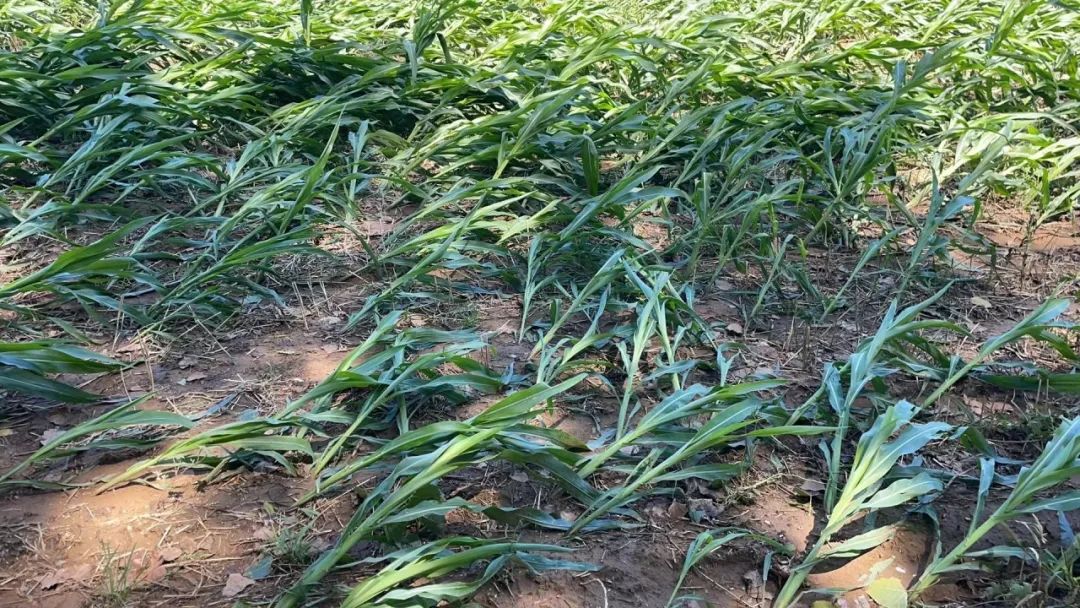
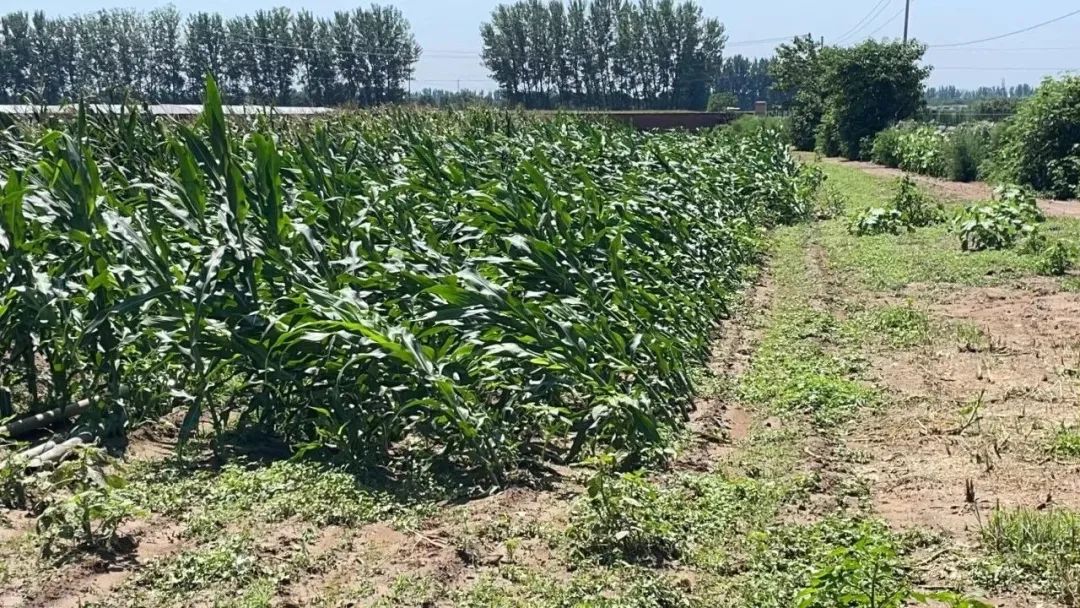
Liu Gang places enormous store on soil health, believing that the key to ecological agriculture is building healthy soil. In his early career he worked at a Japanese-funded company, and after switching to organic farming he studied new agricultural practices from Japan and the United States, using leaf-litter composting to maintain balanced nutrients, a loose structure, and good aeration and moisture retention. Soil like this is resilient against both drought and flooding, buffers against temperature extremes, and is a reliable defence against abnormal weather.
Though healthy soil can certainly withstand more extreme dryness or wetness than depleted soil reliant on chemical fertilisers and pesticides, it too has its limits.
Liu Gang takes pride in the fact that his farm’s soil drains far better than the surrounding land – in all the years, water has never failed to drain away. As he applauded the 45-degree-bent maize, he could scarcely have predicted that just days later another storm lasting three or four days would drown his sweetcorn outright.
IV. The Challenges of Post-Disaster Management
After the rain, conventional farms spray generous amounts of herbicide. But ecological smallholders like Chen Ziyu and Liu Gang rely mainly on a combination of machinery and manual labour to clear weeds. Yet after the deluge the fields were too waterlogged; Liu Gang’s small tractor sank into the mud and could not be dug out for three days. He and his workers resorted to ploughing and harrowing the land over and over by hand. Labour and time spent on weeding multiplied three or fourfold.
Another challenge was that the storm had altered the soil’s structure and microbial environment. Liu Gang explained that the soil had previously had a good aggregate structure, but after being waterlogged, the sand floated to the top while the clay and stones sank to the bottom. It needed to be turned over by hand to restore the structure, or the land would suffer soil compaction, looking like a reservoir bed cracking open after the water has dried up.
Once the surface compacted, pathogenic microorganisms were prone to take hold. After this flood, a green film of microbes formed on the soil surface. Only by raking the soil to let air and sunlight in could the microbial community be brought back into balance.
“This is all we can do,” he said. “We have already ploughed the ground twice. The key is letting the sun dry the land.”
Chen Ziyu was watching the soil moisture status closely. As soon as the soil recovered, he would rush to plant cabbages. Across the village, a great deal of land had suffered total crop failure. Everyone worried and waited for the water to recede, and everyone was working out the same remedial step: plant cabbages.
By now there was nothing else to plant on the flooded plots. Chen Ziyu was already bracing himself for what the year-end price slump would do to farmers. “It has happened before – we sold cabbages for less than what it cost to hire people to cut them. In the end they just rotted in the field.”
Beyond the wetter summers, farmers in the Beijing-Tianjin-Hebei region perceive the traces of climate change more keenly than their urban neighbours.
Take cabbages again. Chen Ziyu remembered how, as a child, on the day of the Start of Autumn the whole village would be in the fields planting cabbages. “It had to be the Start of Autumn itself – a day before or after would not do.”
But as temperatures rise and accumulated temperature increases, cropping seasons lengthen, and the planting date for cabbages drifts later and later. Plant too early and the cabbage’s heart rots from the inside. Locals have come to recognise that scheduling farm work by the twenty-four solar terms no longer fits the new climate.
This storm also showed Chen Ziyu, for the first time, what happens when watermelons rot until mould grows on them. Thinking it through, he found a connection to climate change too. The abnormally hot June and July pushed soil temperatures so high that when the watermelons needed most moisture, there was no rain, and irrigation could not keep up. Several melons died of drought just as they looked ready to ripen – overall, yields fell by three-fifths compared with last year.
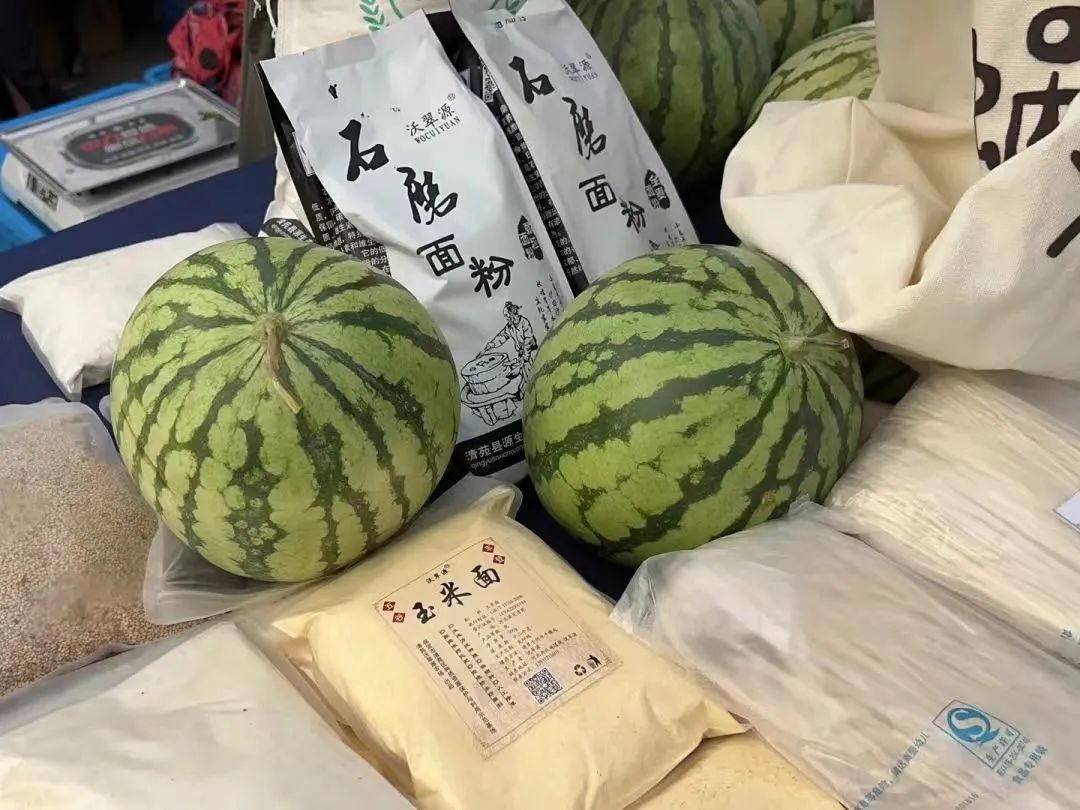
Chen Ziyu thinks it may be because the growing season for every crop has shifted later. He plans to grow late-season watermelons again next year and begin keeping records.
V. Who Bears the Cost of Climate Adaptation?
Yet it takes time for farmers to recalibrate their understanding, and seizing new climatic opportunities calls for chance encounters, continuous observation, and a considerable base of knowledge.
Studies projecting, through model simulations at regional scale, how climate change affects cropping systems are abundant – yet they cannot effectively tell the farmer bent over the soil how to dodge climate disasters or make use of new climate openings.
To counter the uncertainty brought by climate change, smallholders must pay additional costs in time, labour and capital to sustain production. How these climate-adaptation costs are to be shouldered, and who shares the burden, remains an answer still drifting in the wind.