Tianxingzhou Watermelons, Extraordinarily Hard to Ripen

On a mid-river island that flourishes with the waters yet is swallowed by them, how do melon farmers come to terms with an increasingly erratic climate—or are they destined only to be forgotten, to be displaced?
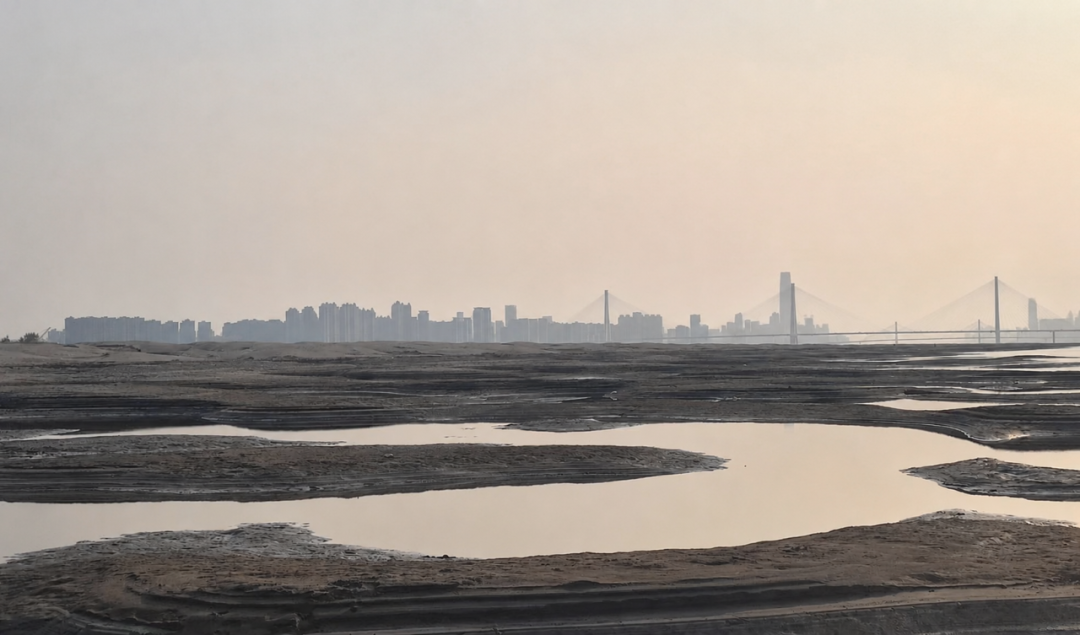
◉A path on the river sand, November 2022
What lies at the end of the sandbar?
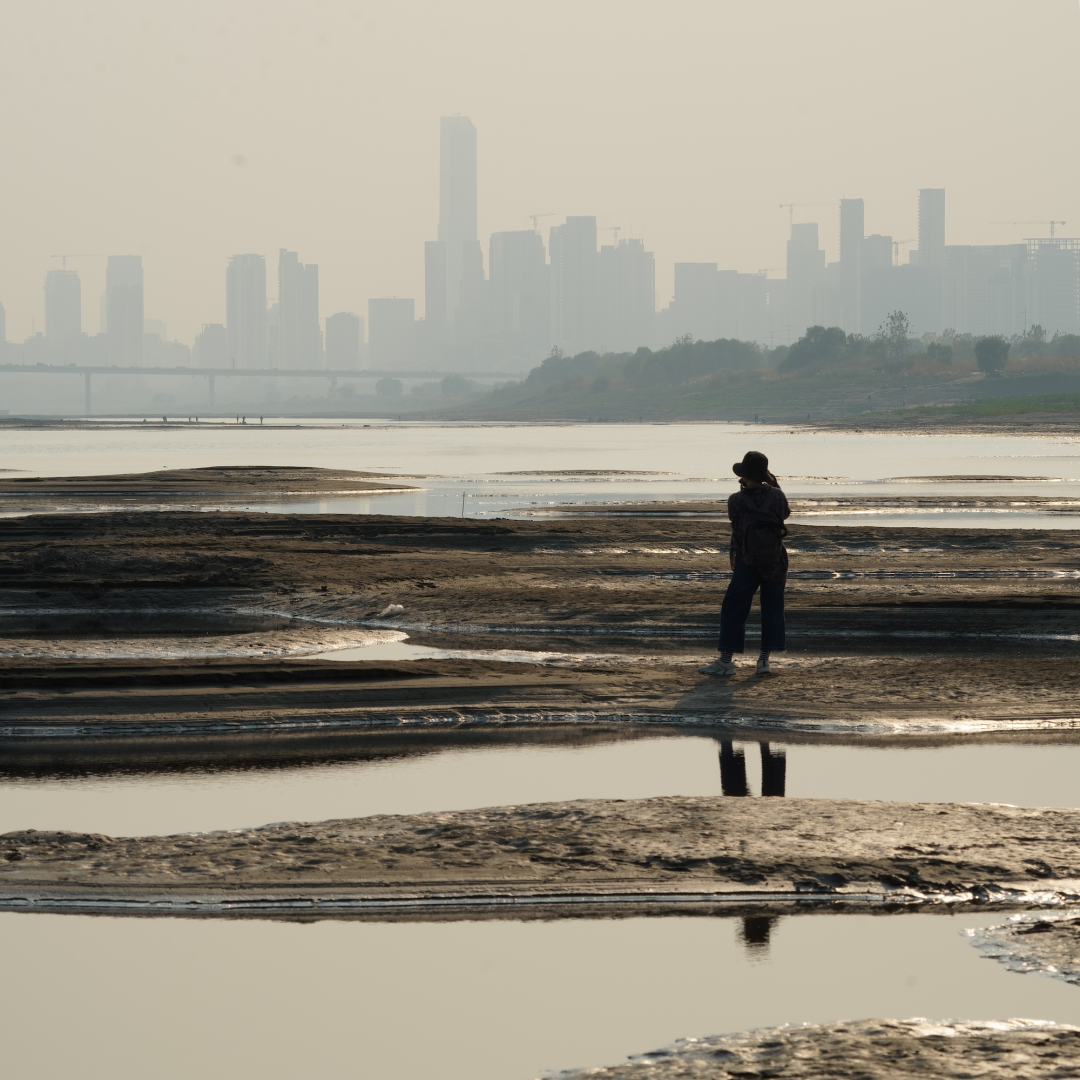
That day, the sandbar was hemmed in by high-rise buildings, a grey-yellow haze rising over the river. It was November 2022, and I set foot in the middle of the Yangtze. The river was in its low-water season; on the non-navigation side, the water had drawn back to expose the fine, soft gravel of the riverbed. Puddles lingered in the low spots, bird footprints appeared near the pools, a frog’s carcass had sun-dried, and wild grass was pushing through. At the far end of this ephemeral sandbar, the land gave way to a stretch of lush green.
That was Tianxingzhou.
Every winter, for a stretch of the season, Wuhan residents can walk to this small island on the outskirts of Hongshan District. Come summer, the sandy river path is swallowed by the water. Year after year, the river has deposited its silt and sand, and the sandy soil became the foundation for watermelon cultivation. Combined with the island’s unique encircling-river microclimate, this has nurtured a century of history as Tianxing’s “melon island.” But the water has also, time and again, overtopped the levee (crest elevation 28.5 metres), or been deliberately channeled onto the island during flood-diversion operations, forcing the people here to leave.
While this year Henan melon farmers, whose melons are “fetching a poor price,” are scrambling to load their watermelons onto “big trucks” and feed them into the distribution network, Tianxingzhou watermelons have long since withdrawn from wholesale markets, pivoting instead to premium direct-to-consumer sales. There is even a Melon Expo Garden here whose watermelons have been served at Ministry of Foreign Affairs banquets. Yet the island’s designation as a flood-diversion zone, the difficulty of accessing it, and the still-unresolved land-use planning all constrain production and sales, and the number of local farmers still growing melons continues to shrink.
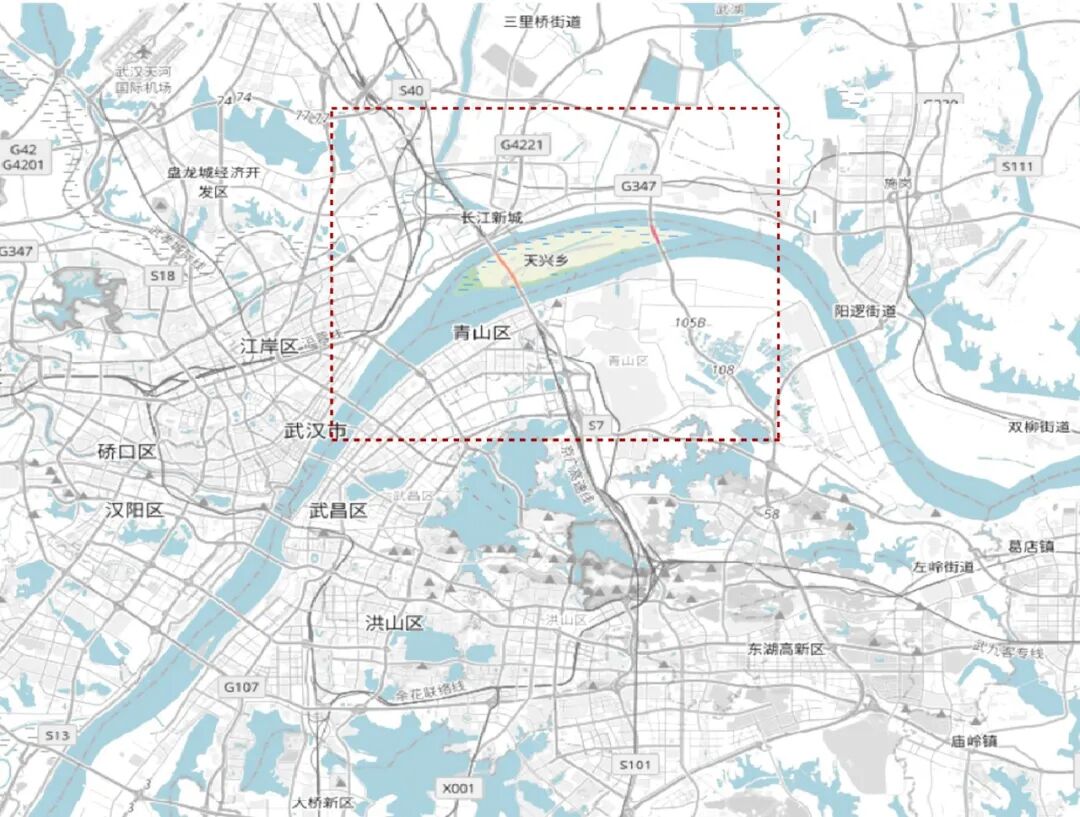
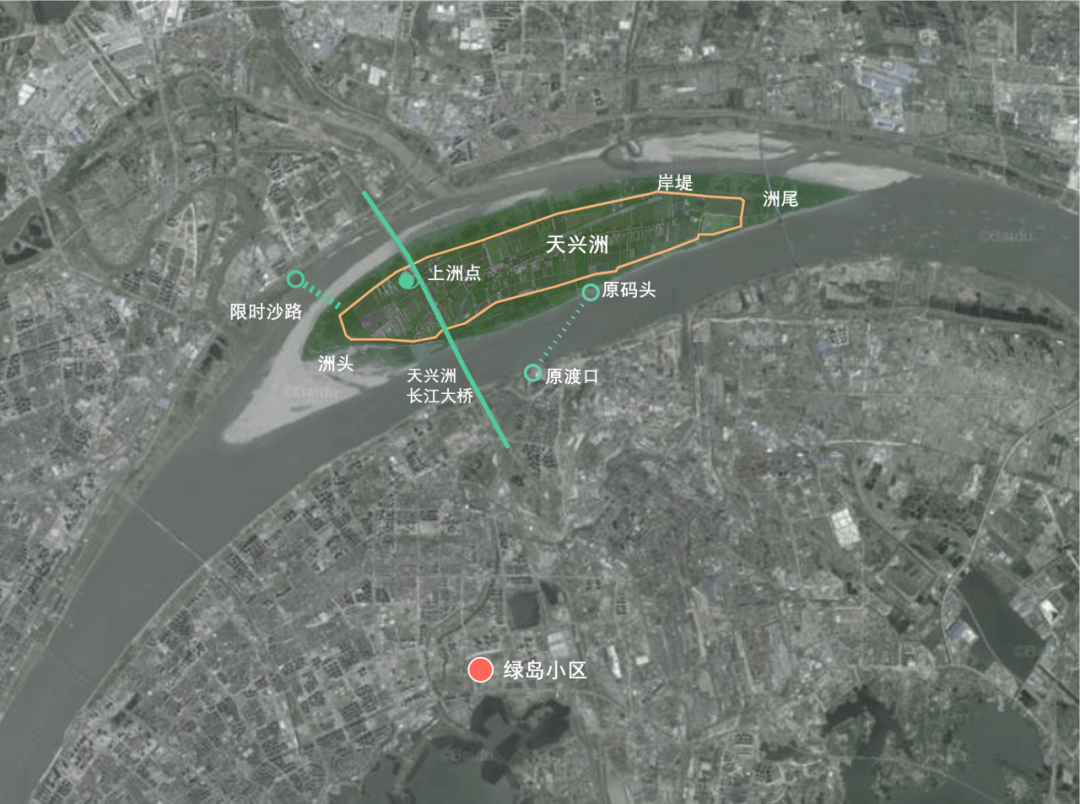
◉Left: Location map of Tianxingzhou; right: route to the islet. By the author.
I have followed the growth of this season’s watermelons, wanting to know: in an era of ever-intensifying climate change, what effect has the relentless rain of the first half of the year had on the watermelons of Tianxingzhou? Who remains on the island growing them? And how does the knowledge of watermelon cultivation here endure, and how does it change?
After the Flood, An Interim Island
Yangtze River floods have always threatened Tianxingzhou. In 1954, after the island was submerged (water level 29.73 metres, the highest on record), it was designated a flood passage zone. In the 1960s, the levees around Tianxingzhou breached three times; in 1970, waterlogging caused disaster; in 1983 (water level 28.11 metres), 1995 (water level 27.79 metres), and 1996 (water level 28.66 metres), floods struck again.
In 1998, Wuhan experienced the second greatest basin-wide Yangtze flood of the twentieth century. The highest water level at the Wuhan gauge reached 29.43 metres (alarm level 27.30 metres). The flood season lasted 93 days in all, with the water level at Wuhan above the alarm level for 73 of them, and eight flood peaks in total. For over two months, the front pages of the <i>Hubei Daily</i> were filled with reports of the flooding. The following year, Tianxingzhou was flooded once more.
To shield local residents from flooding, after the 1998 flood season the central government introduced the policy of ‘flattening polders for flood passage, returning farmland to the lake, and resettling communities in new towns (villages).’ Villages in designated flood detention and passage zones and in low-lying areas that had been struck by floods were no longer to be rebuilt on site; instead, residents were to be relocated to nearby areas or rebuilt elsewhere, so that the flood passage and detention function of these zones could be restored.
In 1999, Tianxingzhou was designated a ‘single-withdrawal’ civilian polder, implementing the principle of ‘withdraw the people, not the cultivation’: should a major flood occur, the land the villagers work would have to serve as a flood passage, although outside the flood season they could continue to produce and live on the island. The government encouraged residents to leave. The island’s schools and hospital were successively moved out, and most residents were relocated to the Green Island residential compound on the opposite bank. Only a handful of elderly people remained on Tianxingzhou.
Since then, Tianxingzhou has been proposed for development as an ecological oasis. Yet thousands of mu of basic farmland remain on the island. The protection of basic farmland and the cultivated land red line conflict with the policy of withdrawing polders to return them to the river. In a public response from the Hongshan District government in 2026, the dedicated plan was still being drafted and reviewed.
In the view of the few farmers still growing watermelons, since the Three Gorges Dam commenced operations, floods have come less frequently than before. Since 1999, flood passage has occurred on Tianxingzhou in 2002 (water level 27.76 metres) and 2020 (water level 28.77 metres), and non-flood-defense personnel were evacuated in 2016 (water level 28.37 metres).
What worries them even more is the worsening weather. This year’s early-spring cold snap, the severe convective storms of April, and the successive downpours of May have repeatedly disrupted the growth rhythm of the watermelons. And, driven by the demands of urban renewal and unresolved questions of land tenure, the residents of the Green Island compound are about to be moved again.
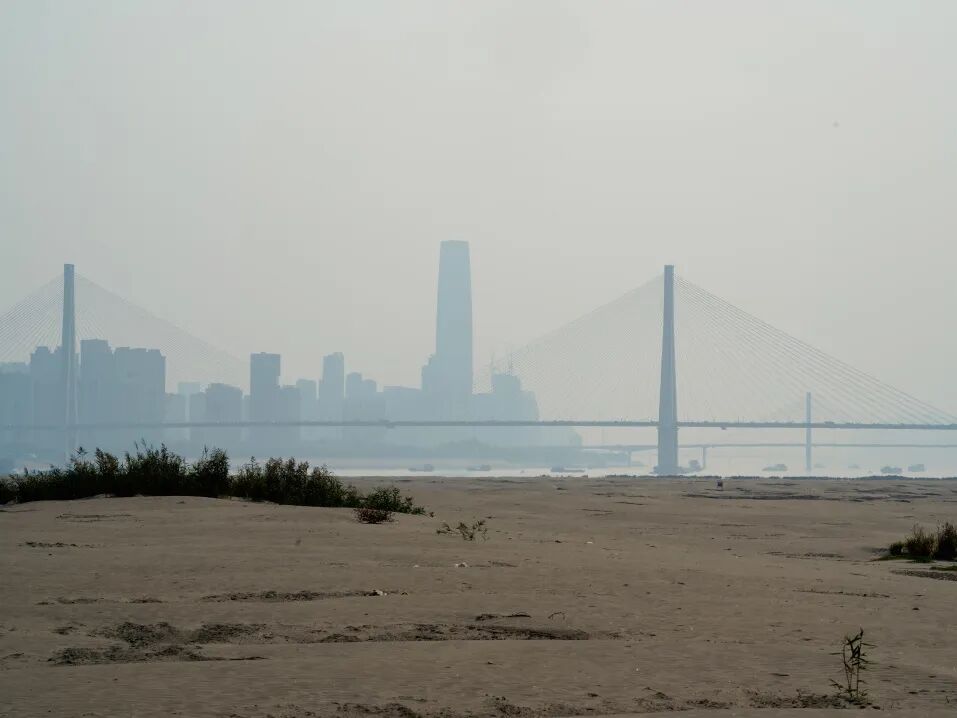
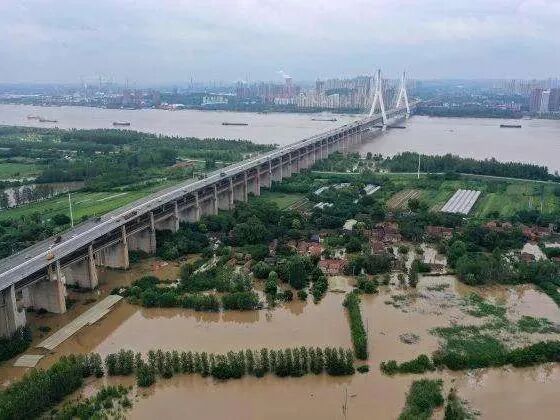
◉Left image: A sandy river path during the dry season (photographed by the author; click to see full size). Right image: 11 July 2020, embankment breach for flood discharge on Tianxingzhou. Source: The Paper
Migratory Farming
In early May this year, I took a taxi to Tianxingzhou. The island is dotted with stretches of farmland; some houses are overgrown with weeds and look barely inhabited. Once out of the car, I called Peng An: “How do I find you?”
“Head towards the sun and you’ll see us,” he said.
Peng An is in his forties. Two or three times a week, he crosses the river like a migratory bird, shuttling between the Lüdao residential compound and Tianxingzhou. In the mornings, he and his wife Yuzhen, who married in from out of town, take a shuttle bus to the island. The first bus leaves at 7:10, and the journey takes twenty to thirty minutes. It is packed, full of people heading to Tianxingzhou to work. But even the first bus is too late for the farmers. More often, Peng An and Yuzhen ride their electric scooter in the morning; the trip takes a little over forty minutes, and by the time they arrive, the dew in the fields is still cool.
The Peng An family grows open-field watermelons. An acre is divided into three long ridges, and only one ridge carries melons. The sun hangs directly overhead, and the leaves lie flat, pressed against the mulch film and the ridge soil. Look closer, and beneath the yellow melon flowers you can spot small young fruit covered in fine white hairs. These are the unpolinated ovaries beneath the female flowers; once fertilisation succeeds, they will swell into watermelons.
Yuzhen and I crouched at the edge of the ridge, training the melon vines: fishing out the tangled vines, untangling them, and dividing them along both sides of the ridge, leaving room for the vines to stretch and the fruit to set. At the same time, we had to turn the upper surface of the leaves skyward so they could catch more light.
Yuzhen explained that any young fruit emerging from the third leaf along the vine must be pinched off. At that stage the vine hasn’t grown strong enough, and the melons tend to come out hollow with thick rinds. Only fruit from the tenth leaf onward should be kept. She counted along the vine, found a young fruit worth keeping, plucked a male flower, and gave a light touch to the stigma of the female flower above it—hand pollination complete. After that, if the young fruit didn’t wither and drop, it counted as “the melon had set.”
“Once the melon has set, if the temperature is high, the watermelon swells like a balloon being blown up—a different shape every day,” she said.
The sun was making me dizzy. I could only crouch for a while before I had to stand up and turn my back to it to catch my breath. Yuzhen kept hunching forward, inching along. “My back aches. I fell ill the year before last and have been on medication ever since. Now after an hour or two I can’t manage any more, ah. You young people aren’t making it easy either—my daughter is still sleeping in at home.”
Local melon farmers like Peng An and Yuzhen who still insist on farming are becoming rare. They believe that growing crops doesn’t pay. This stretch of ridge alone requires at least five hundred yuan in fertiliser, plus mulch film and hiring a tractor to plough the field—easily several thousand more. Costs rise every year, yet the selling price hasn’t budged in years. “Right now, any bit of income is a bonus. When we have time, we come up here and add a bit more labour,” Yuzhen said. Because their scale of production is small and the returns limited, they skip more meticulous tasks such as pruning the lateral vines. Pruning the vines reduces the drain of nutrients by excess foliage, channeling them more directly to the fruit, which improves the fruit set rate and quality, stabilising overall yield.
Besides farming, they pick up odd jobs in between, earning a “stable” one or two hundred yuan a day. Peng An has done brick carrying, moving, and rebar breaking. “If there’s work, I do it. If not, I go up to the island and farm,” he said.
Besides watermelons, the fields also grow broad beans, chillies, and potatoes. Once the watermelons are harvested, they plant radishes and Chinese cabbage. The produce is mainly for their own household; some goes out as gifts to friends and neighbours, and whatever is left over is sold to supplement the family income. Through this low-input, low-return approach, they keep the risk of melon farming within what they can afford to bear.
“If I could find a proper job, I wouldn’t be growing melons,” Peng An said.
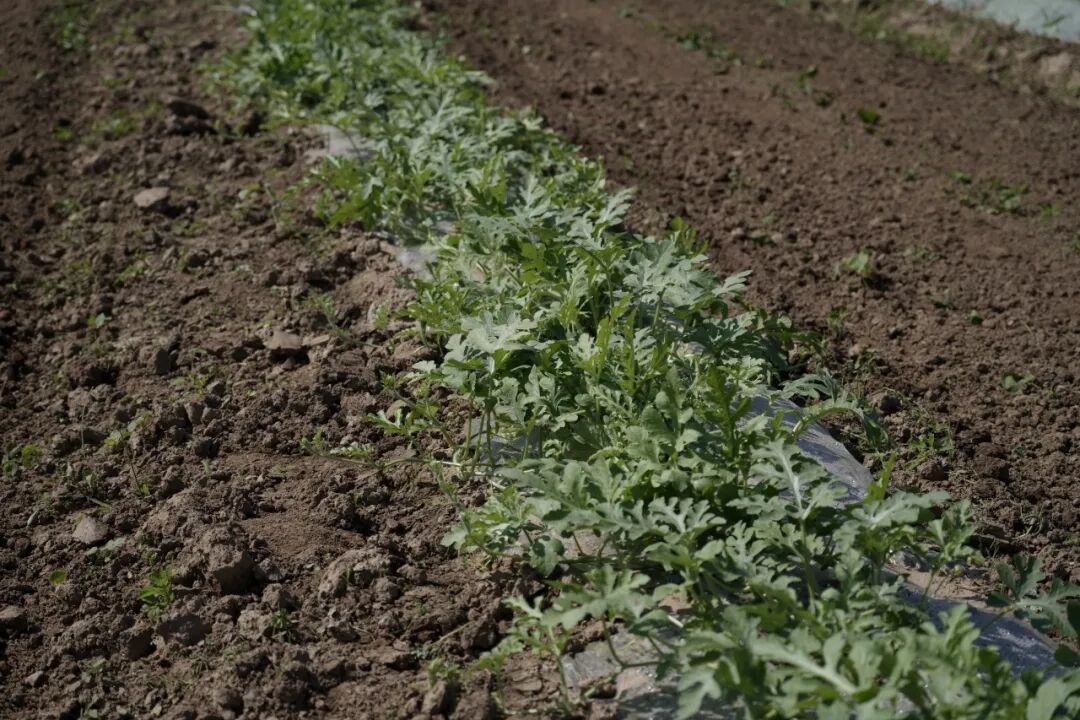
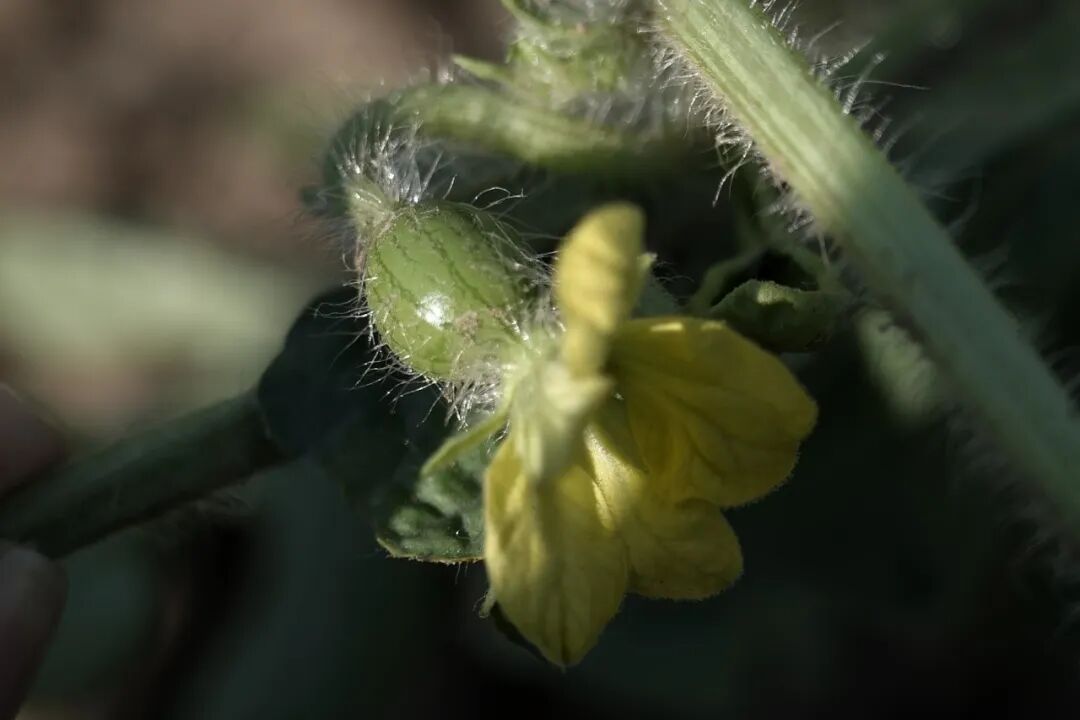
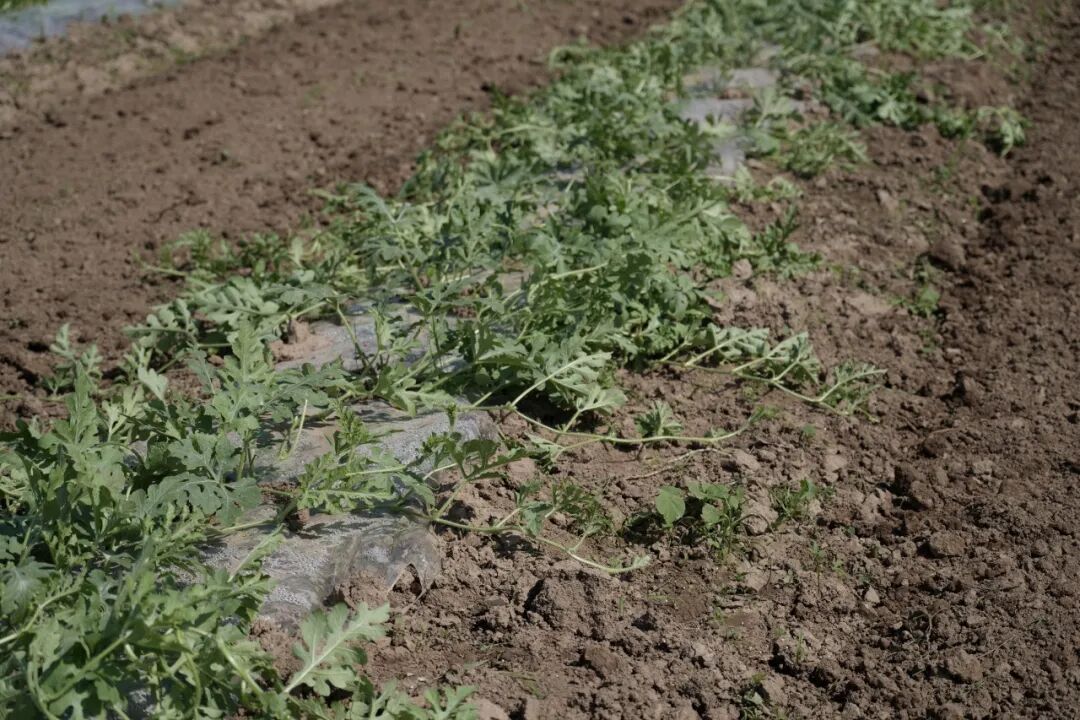
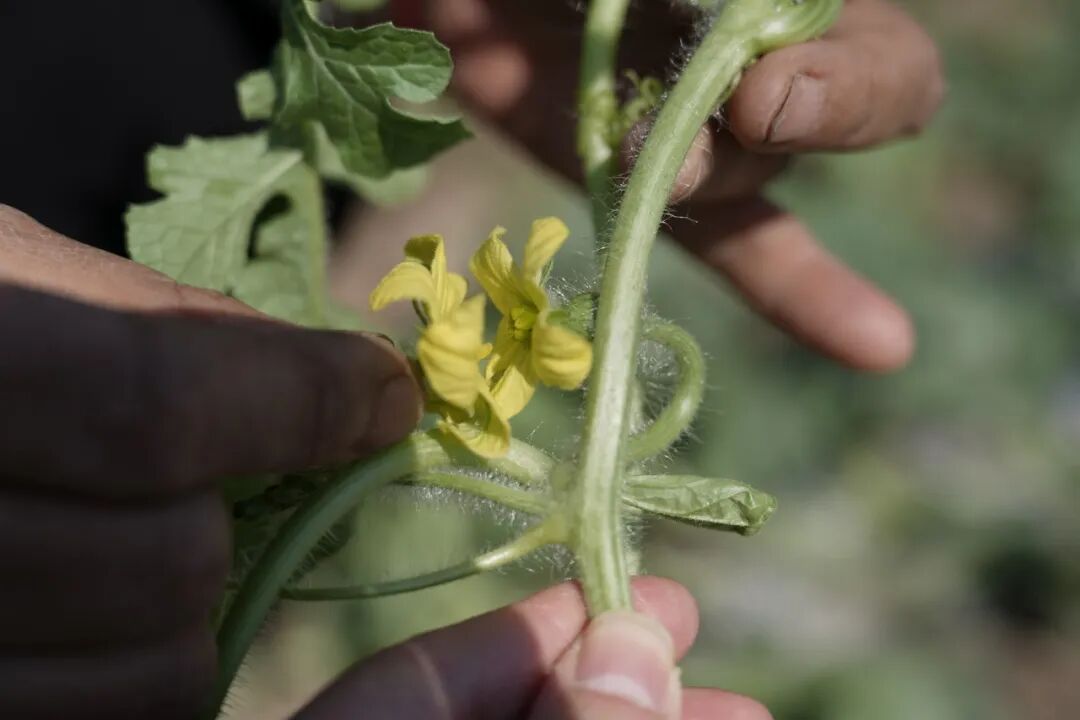
◉Top left: before vine training; bottom left: after vine training; top right: fruit set; bottom right: pollination (click image to enlarge)
An Unusual Watermelon Season
Peng An said, “This year’s melons are running late.” In early May, the watermelons had only just set their young fruit; at the same point last year, they were already two or three jin each. In May, while I was training the vines in the field with Yu Zhen, she noticed that one melon vine was growing shorter than the others and pointed it out to me: “Last month a hailstorm knocked it back. Between the wind and the hail, it hit right when the melons were flowering.”
Peng An believes the delay in the melon season is linked to several cold spells and rainy days in early spring this year. Research also shows that low temperatures slow vine growth, flowering, and fruit set in watermelons.
In addition to Yu Zhen’s, Gui Ying’s open-field watermelons were also affected by the rain. Gui Ying is sixty this year; she married into Tianxingzhou from elsewhere when she was young.
In mid-May, I visited Gui Ying. Just half a day of torrential rain had accumulated knee-deep water across her seven-plus mu of field. She put on a raincoat and went out to dig channels, trying to get the water into the drainage ditches as quickly as possible. If the melon seedlings sit in water too long, once the sun comes out, they won’t survive.
From a distance, the melon vines and leaves had grown lush and full, a green carpet covering the ground. To my untrained eye, things looked promising. But Gui Ying crouched down, parted the leaves, and pointed to a small young fruit: “See, this one is done for. With so much rain, once the young fruit touches the mud, the tiny pores on its surface get clogged, and it can’t set properly.”
“Everything that grows depends on the sun. Without it, nothing works. You can fight the sky and fight the earth, but can you win? On Tianxingzhou, whenever there’s a downpour, two or three days and the field is all white water, waterlogged. We farmers watch the weather forecast every single moment,” she said.
A watch shelter had been built beside the melon field. “In another ten days or so, we’ll be able to welcome customers to come and pick their own melons here.”
Unlike what the weather forecast had promised, rain suddenly started falling over the field again. Gui Ying jumped up, raising her arm to push the pooled water off the roof of the shelter.
Besides the watermelons, the tomatoes and Golden Melons (Jintong watermelons) that Gui Ying grew this year were all insipid, “lacking flavour.”
Wu Ping, a large-scale grower and owner of the Melon Expo Park, summed it up: Tianxingzhou’s unique sandy soil, river water, and mist give its melons their distinctive flavour. The sandy soil warms up quickly and drains well; the river’s rise and fall deposit silt and nutrients; the morning mist and dew nourish the melon leaves and rind. Only when the water is “neither too much nor too little” can the watermelons be crisp and sweet.
But this year there was simply too much rain. Watermelons love light but fear waterlogging; their root systems are especially sensitive to changes in soil moisture and do not tolerate cold.
A watermelon season runs from early spring through summer: seedlings are started after the Chinese New Year, and the season ends in mid-to-late July. But this year, on April 8, hail, thunderstorm winds, and heavy rain hit multiple areas of Hubei; Wuhan experienced its earliest major downpour on record. From May 16 to 19, Hubei saw the strongest regional downpour of the year so far; on May 24, Wuhan issued another red rainstorm alert. Prolonged rain and insufficient light are detrimental to the fruit’s ability to accumulate sugars and flavour.
On top of all that, around International Women’s Day this year, when the watermelon seedlings were being transplanted, multiple cold fronts and rainy spells hit Wuhan, and the seedlings grew slowly, so the ripening and harvest this year were both delayed. Peng An remembered that in early June the weather was hot, and one batch of his melons was fetching 3 yuan per jin. But more of them didn’t ripen until the plum rain season. “Melons that ripen in rainy weather are poor quality. Customers called me wanting to buy, but I didn’t sell them. The melons rotted right there in the field.” Gui Ying’s family is the same — they rely on regular customers for long-term business, and would rather not sell at all than damage their reputation. This year, both Peng An’s and Gui Ying’s yields were over 4,000 jin per mu, but less than half was sellable.
Peng An and many other melon farmers all wish for “good weather” — meaning it rains once, then clears up for five or six days. It can’t rain nonstop, and it can’t go days without a drop. The past three years have been bad. Last year was dry, and the melon vines didn’t grow either; the melon quality was poor. Other growers told me they lost money last year and have already quit this year. “Growing open-field watermelons is just a gamble!”
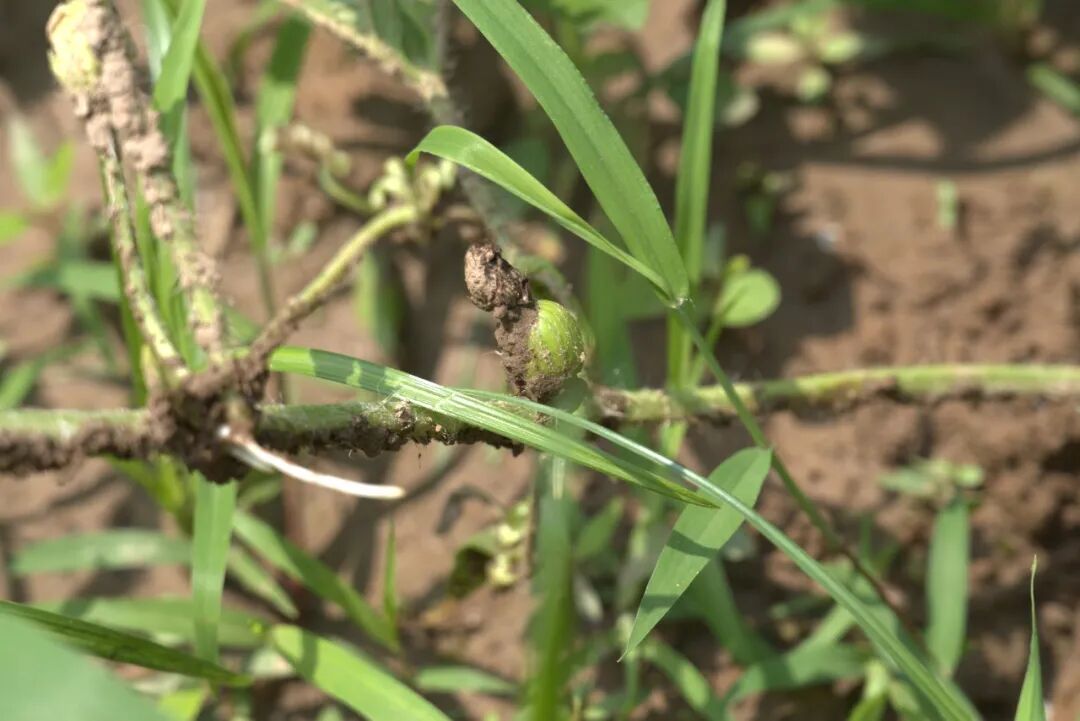
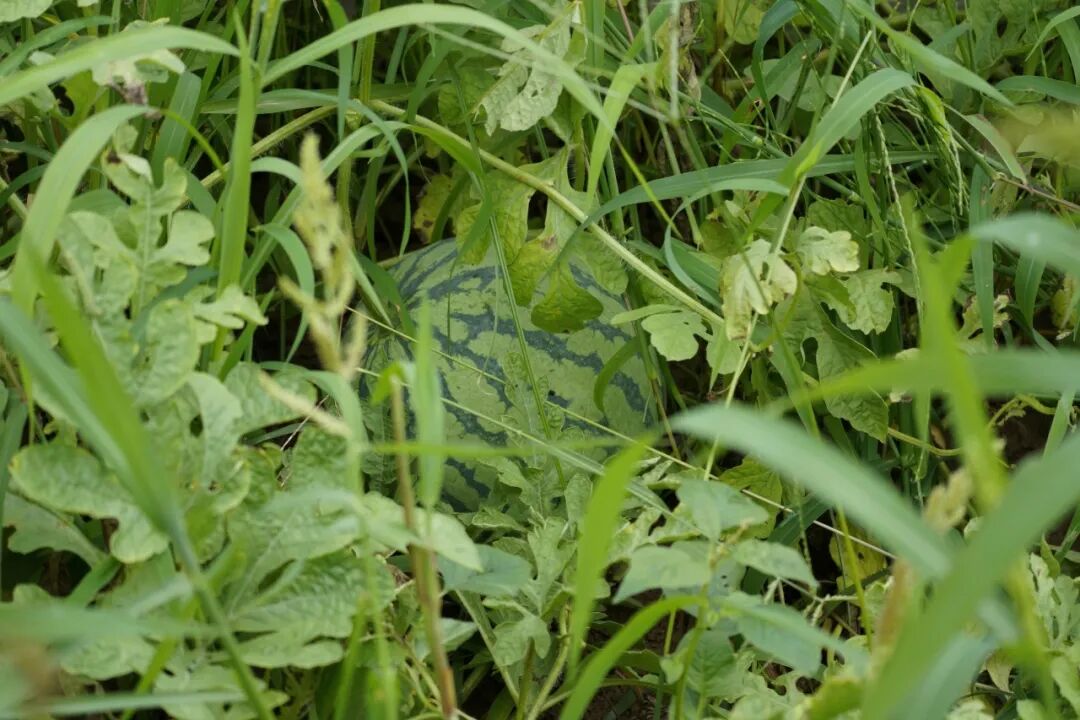
◉Left: Watermelon flower buds caked in mud in Guiying’s field, mid-May. Right: Unsold watermelons in Peng An’s field after the plum rains began.
Greenhouse Watermelons
In my imagination, Guaboyuan — operating over three hundred mu of planting base with standardised, tech-driven, and large-scale management — stood in “opposition” to the local smallholder farmers who lived at the mercy of the weather. But reality dissolved my assumption. In early June, right in the middle of the watermelon harvest, I made my way to Guaboyuan at the tail of the island, only to find a sparse scattering of watermelons under the shade structures.
In 2015, Wu Ping, a man from Shandong, and his business partners leased land at the tail of the island, built greenhouses, and established a specialised watermelon-growing cooperative, naming it Guaboyuan. He was drawn to the island’s unique soil and water conditions. “The moment I tasted one, I knew it was different from anywhere else. Take a Tianxingzhou watermelon and try to grow it in Shandong — work yourself to death and you still won’t get the same result,” Wu Ping said. In collaboration with the Academy of Agricultural Sciences, he trial-planted 101 watermelon varieties.
In 2018, the Tianxingzhou watermelons grown at Guaboyuan featured at a gala dinner for the Ministry of Foreign Affairs’ global promotion event for Hubei. Wu Ping recalled that the weekend after the newspaper coverage, residents who made the trip to the island bought out every last watermelon. At the entrance to Guaboyuan stands a sign inscribed by Wu Mingzhu, the academician known as the “watermelon scientist”: “A century of melons on this island, its fame filling all of Jingchu.”
The greenhouses do have their advantages. Wu Ping explained that from the opening of the female flower to full maturity, a watermelon requires 1,000°C of accumulated heat. Greenhouses allow the watermelons to accumulate more heat each day, bringing them to market earlier and at a better price. They also shield the crop from everyday wind and rain. He grows two crops a year; in nine years he has harvested eighteen. Thanks to the scale of his operation, he can buy organic fertiliser at 48 yuan per bag, when the market price runs 80 to 100 yuan. “Open-field watermelons offer no security. However you grow them, you lose money,” he said.
But greenhouses cannot stand up to floods or the extreme weather that catches you off guard. The higher the investment and the larger the rigid infrastructure, the heavier the loss tends to be. In recent years, Wu Ping has rebuilt his greenhouses three times.
At first, he invested 2.8 million yuan. But the following year, Tianxingzhou was flooded. Of his four hundred greenhouses, only seventeen survived; the rest were washed away. “I sat by the river crying. The water was right at my feet. Everyone kept telling me not to do anything foolish.”
After the flood, he rebuilt the greenhouses. A year later, a heavy snowstorm hit. That morning, as he walked through the fields, the greenhouses were groaning. He watched them warp and collapse one by one — there was no time to save them. Apart from a single lone survivor, every greenhouse had caved in.
The third time was a spell of freezing rain in 2024 — the first freezing rain he had ever experienced in his life. “The weather forecast said freezing rain. I thought, it’s just rain, what’s there to worry about? Wrong!” Freezing rain may fall as rain, but once it hits a greenhouse it turns to ice, and before long the entire structure is frozen solid. “You can’t even move. You just watch it get crushed under the weight of the freezing rain. That damn freezing rain has ruined me again.”
By Wu Ping’s estimate, the three major disasters caused cumulative losses exceeding five million yuan. “The climate is brutal. Back in 2016, the rain just fell and fell and fell and fell — non-stop, for over twenty days. The water started rising, and that was it. The snow was the same — falling and falling and falling.” They are unable to buy agricultural insurance; insurers cite the area’s status as a “special crop zone” as grounds for declining coverage.
In his view, weather forecasts can only report short-term conditions. Farming means continuously investing in the land, so he needs to judge whether a given year is suitable for watermelons before he even sows.
To my surprise, he brought up a set of farming proverbs passed down by word of mouth on Tianxingzhou — on the first day of the lunar New Year, read the wind: an east wind portends floods, a north wind portends waterlogging, a west wind portends pests, a south wind portends drought. “The first day of the year is the weather forecast for the whole year,” he said. This year, on the first day, winds blew from the east, south, west, and north from dawn until noon. It was only in the afternoon that the wind settled on a south-westerly. By his reading, this meant a volatile climate in the first half of the year and a dry, rainless second half. Besides reading the wind on New Year’s Day, there is also “two insects and one bird”: the height of magpie nests on the island, the white trails left by snails climbing trees, and whether large numbers of stink bugs appear on the sandy beaches all signal whether a major flood is coming.
“You can’t explain these things. I don’t know the reason either — you just have to watch,” he said. In his view, the weather in the first half of this year has confirmed his reading.
Based on these judgements, he cut back his watermelon planting significantly this year and switched to maize. Although maize will not fetch a high price, the harvest covers the land rent and wages for three workers, and he can also apply for agricultural subsidies. A grassroots worker noted that Tianxingzhou is not classified as a grain-producing area, and the subsidy conditions differ by crop. Maize must be planted on more than 30 mu to qualify for agricultural subsidies.
“I don’t plan to grow watermelons next year either,” Wu Ping said. “In ’97, strong El Niño. The following year brought the massive 1998 flood. This year is another strong El Niño — next year will most likely bring prolonged rain and overflowing rivers.”
The greenhouses cannot give Wu Ping greater climate resilience, but that does not mean he is quitting. On the contrary, he wants to expand his operation and is planning to apply for geographical indication status for Tianxingzhou watermelons.
The Hardest Part of Growing Watermelons Is Selling Them
Everyone in Wuhan remembers the scene of eating Tianxingzhou watermelons in the furnace-like summer heat. “In those days, my family ate the round Tianxingzhou watermelons in the first half of summer — thick-skinned, juicy, and crisp. In the second half of summer we had the long ones, Ningxia stone watermelons,” one resident recalled.
According to historical records, watermelon cultivation began on Tianxingzhou in 1919. Between 1969 and 1972, watermelons came to occupy 30 per cent of the island’s total arable land. From the 1960s through the 1980s, as an economic-crop zone under the planned economy, Tianxingzhou watermelons were in particularly high demand. Every summer, two or three hundred vehicles from large state-owned enterprises would queue up to buy watermelons from the island as staff benefits. At that time, the price of Tianxingzhou watermelons was at least 20 per cent higher than comparable varieties.
It was not until the 1980s and 1990s that suburban Wuhan began building greenhouses, enabling multiple harvests per season and a staggered release of watermelons onto the market. Superior and early-maturing varieties from other regions kept flowing into Wuhan. Tianxingzhou watermelons, grown in open fields, reached the market later. As the collective-purchasing channel through work units disappeared, sales depended on middlemen or on farmers bringing their crop into the city — and at one point, watermelons sat unsold.
Although Wuhan residents could still find Tianxingzhou watermelons at wet markets and by the roadside in the early twenty-first century, the decline was unstoppable.
In 2007, the district government introduced new varieties from elsewhere to support the Tianxingzhou watermelon industry. Yet the following year, the wholesale price of Tianxingzhou watermelons remained at 0.6 yuan per kilogram, far below the 2.2 to 2.6 yuan per kilogram for watermelons grown in Zhejiang, a major producing region.
At the end of August this year, at the Baishazhou fruit wholesale market in Wuhan, several traders told me that local watermelons no longer reach the wholesale market at all. What is sold there comes from Ningxia, Gansu, Hainan, and other regions. One trader said: “This year’s wholesale price tops out at 2 to 2.5 yuan per jin; last year you could still get 3 yuan per jin.” He gestured at a pile of Gansu watermelons. “These are worth only a few mao a piece — they’re just sitting here, and nobody wants them.”
In the traders’ view, supply and demand dictate the watermelon market, and this year’s sales have been weaker than in previous years. I asked whether it was because Wuhan’s summer had been cooler. “People just haven’t got the money,” a woman trader said.
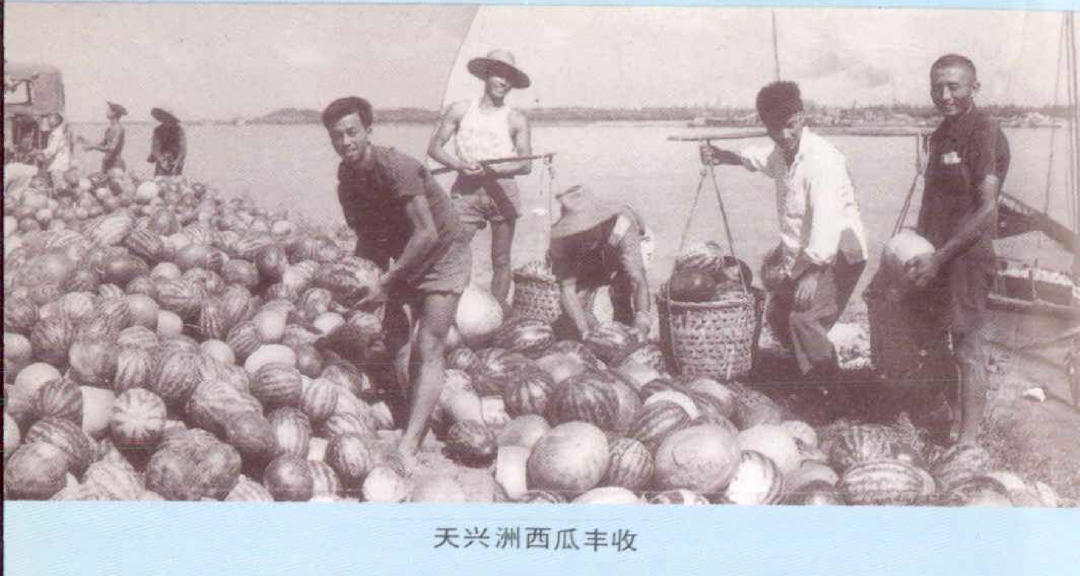
◉A bumper watermelon harvest on Tianxingzhou. Image source: Wuhan Municipal Gazetteer, Volume on Agriculture, Wuhan University Press, 1991.
Tianxingzhou watermelons ripen late; by the time they reach the market, watermelons from other regions have already come in by the truckload. Moreover, there are fewer growers and fewer traders. The more practical route for the farmers is group orders from regular customers and agritourism — those who want Tianxingzhou watermelons make the trip to the island to pick them themselves.
This also means that visitor numbers and online marketing on social media platforms have become critically important. Today, what decides who can remain on the land in the long run is the ability to connect resources and run sales effectively. Wu Ping has five groups of regular customers, totalling more than two thousand “watermelon-eating onlookers.” In his observation, most of them are urban middle-class. He also has long-term wholesale clients.
Farming practices are shifting too. The older generation used oilseed cake, chicken manure, duck manure, quail manure, and pig manure — every household’s watermelons tasted different. The newer generation of growers leans more on peptide fertiliser, horse manure, wood-based fertiliser… Wu Ping reckons that machine oil-pressing is so much more thorough these days that there is hardly any oil left in the soybean cake, so he has switched to wood-based organic fertiliser and added fermented soybean to boost the aroma.
Guaboyuan has lifted the price of Tianxingzhou watermelons to levels the older growers could never have imagined. With the guidance of watermelon experts conducting tasting evaluations, one variety of rainbow watermelon fetched as much as 18 yuan per jin. Through scaled operations, variety trials, agritourism and pick-your-own experiences, and media coverage, Tianxingzhou watermelons have shifted from the “staple melon” of the wet market to a “premium melon” aimed at a discerning clientele.
Even though the market has been opened up a second time and value has risen, the weather remains a factor beyond the growers’ control.
In April 2024, the car ferry between Tianxingzhou and Qingshan suspended service on a temporary basis, and to this day no resumption has been announced. The only public transport to the island is a designated bus service that runs once every two hours. In November that year, a booking system was introduced for vehicles belonging to non-residents, with daily numbers capped at three hundred. For Tianxingzhou agriculture, which depends on urban visitors, the transport constraints have once again created a new sales predicament.
A long-standing, ambiguous in-between state defines both the position of the melon fields on Tianxingzhou and the island’s place within Wuhan’s urban development: the old order of production and life is perpetually interrupted, held in suspension, while new relationships recombine in the gaps. Between the ebb and flow of the river, the routinisation of extreme weather, and the uncertainty of urban policy, smallholders sustain their tenuous bond with the land through migratory farming, eating their own crops and giving them as gifts, selling to acquaintances, and small-scale pick-your-own. When the suspension drags on and “temporary” becomes the norm, transition ceases to be a passage towards some definite future — it becomes their very life.
“My feelings can never be still — I am always in a state of turmoil,” said Guiying.
– This is Foodthink’s 837th original article –
Foodthink
Author
Hewu
Perched at the water’s edge, recording stories of climate change, birds, cities and people.
About the Joint Harvest Creative Programme
To understand the current state of food and agriculture, and to support more people in exploring the complexities behind food and agriculture issues, Foodthink has partnered with several public-interest and media organisations to launch the Lianhe Creative Programme in 2024 and 2025, supporting media creators and researchers in conducting fieldwork in the food and agriculture sector and funding the creation of public-facing content.
Following multiple rounds of interviews by the judging panel, the Lianhe Creative Programme supported 18 creative projects in 2024 and 20 creative projects in 2025. To date, some of the supported works have been completed and published:
A Cleaner Named A-Mei Wants to Eat Properly | A Worker’s Table
In Malaysia, Chinese Traders Only Want Grade A Durian
“Fake Meat” Drives Out Real Meat: Herders, the Table, the Amazon
Watermelons Are Guaranteed Sweet; Growing Them Is Guaranteed Bitter
Ma Lan in Shenzhen Has No One to Eat With
Why Has the Sweetness of Childhood Disappeared?
Why Can’t Guizhou Do Without Sour Soup, and Why Can’t Sour Soup Do Without Guizhou?
Who Drove the Wet Market Away?
Will Fresh Food E-commerce Make Wet Markets Disappear?
When Drones Become New Farming Tools: Who Is Defining “Scientific Farming”?
The Braised Goose in a Remittance Letter: Ten Thousand Yuan a Bird
All characters mentioned in this article use pseudonyms
Unless otherwise noted, all photographs are by the author
Edited by Pei Dan
Layout by Xiao Cun
Scan to tip and support original food writing
▼

▼
Click the image to read related articles
▼
Click a keyword to explore more article collections
Seeds|Agronomy|Policy|Fermentation|Nutrition|Fruit|Fisheries|Events|Jobs|Delivery|Wet Markets|Livestock|Food Talk|Sharing Sessions|Book Club|Harvest Festival|Smallholder Stories|Climate Change|Rural Development|Cooperative Economics|Urban Farmers|Food Safety|Digital Technology|Biodiversity|Pandemic and Food|False Solutions|Organic Farming Internship Programme
Beijing|Hebei|Shanghai|Guangdong|Guangxi|Henan|Sichuan|Jiangxi|Xinjiang|Shaanxi|Hong Kong|Chongqing|Zhejiang|Jiangsu|Guizhou|Northeast|Taiwan|Inner Mongolia|Philippines|Canada|Russia|Mexico|Italy|United States|United Kingdom|Germany|Netherlands|Thailand|Sweden|Japan