When a Historian Goes Gardening | Reading *I Live at the Tail of the Yangtze*

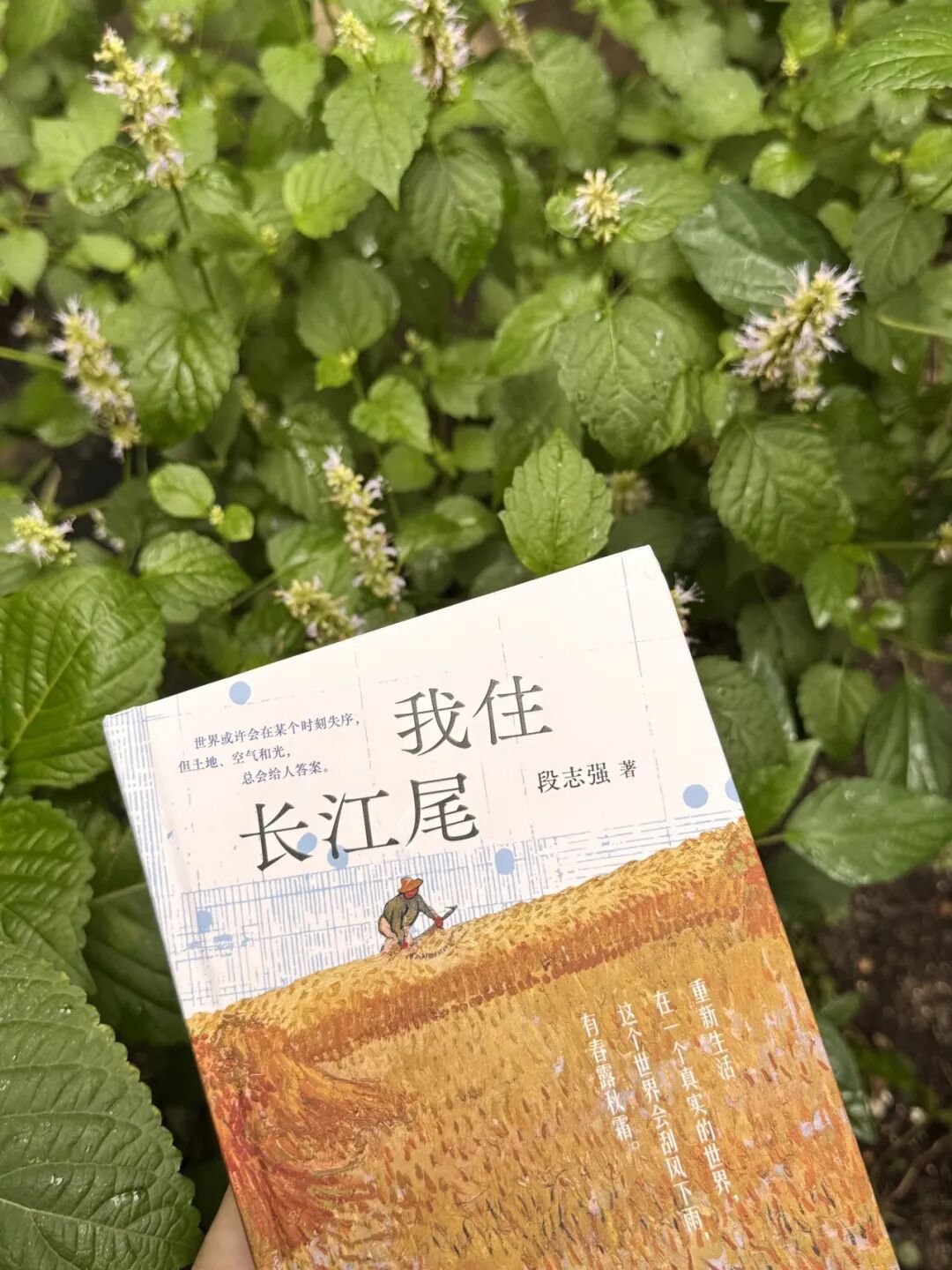
Historian Duan Zhiqiang has written a book about his experiences growing vegetables on Chongming Island, Shanghai – <em>I Live at the Tail of the Yangtze</em>.
The day I received the book, Beijing was under the influence of Typhoon Dolphin, with a heavy-rain warning in effect. The typhoon made landfall in Zhejiang, swept through Shanghai (where Mr Duan’s watermelons suffered), and then triggered rainfall over Beijing. I couldn’t help but mutter to myself: oh, I live at the tail of the Dolphin.
What connected us even earlier than the typhoon was our shared passion for growing vegetables. We share a peculiar label – formerly “urban farmers”, and in the past couple of years a newer term has cropped up: “city bumpkins”.
The scale of our city-bumpkin operations differs between Beijing and Shanghai. I live in Beijing’s CBD; apart from the One-Metre Garden right outside my ground-floor door, my only other option is a suburban greenhouse an hour’s drive away. Mr Duan is better off – he has four plots, inside and outside his courtyard walls. Following the advice in Song Xu’s Ming-dynasty <em>Family Regulations of the Song Clan</em>, he has compiled a “land register” and bestowed names with a sense of historical grandeur on each plot: step outside and you first reach the “Mainland”, then the “Subcontinent”, and a few hundred metres on, the “New World” – which is really just the vegetable patch, the fruit trees, and a small field. A tiny five-square-metre piece of ground, separated from the courtyard by a concrete path, has been solemnly christened the “Offshore Island”, despite bearing nothing but a single peach tree and a few clumps of small plants.
So even among city bumpkins, setting aside differences in gardening skill, merely naming one’s plots with historical references is enough to make one feel both clever and hilarious – a full head and shoulders above me. In truth, as a historian with a doctorate and a researcher at Fudan University’s Institute of History and Philology, Mr Duan tackles big questions in the academy while also appearing regularly at cultural events as a populariser of history. His programmes on the Kanlixiang app – <em>A Global History from China</em>, <em>Travels in the Age of Silver</em>, and <em>New Readings of Ancient Texts</em> – take audiences to explore the often-overlooked yet vividly particular people and events of history.
So how does a historian use an entire book to talk about growing vegetables? I was very much looking forward to finding out.
A High-Five Across the Centuries, Shared with Fellow Vegetable Growers
The Chinese love of working the land has ancient roots – it has even been elevated, at times, to the level of a genetic trait. But growing vegetables as a “city bumpkin” is a trend that has only recently broken out of its usual circle.
The urban vegetable growers I know tend to fall into a few categories: those who want healthy food to eat; those who work in environmental protection or sustainability; those engaged in rural development and exploring the relationship between people and the land; those doing it to instil values in their children; and the charming residents who squeeze edible plants into every crack and corner of their hutongs and residential compounds. What I have never heard, however, is a cultural figure among my acquaintances recounting their own experience of working the soil.
Yet the “grand enterprise of planting” as depicted in Mr Duan’s book is something a fellow city bumpkin like me finds entirely familiar. Sure enough, there are no grand meanings or abstract abstractions in his writing – only concrete, particular little things. I see myself in it: the enthusiastic collecting of different varieties of the same crop – four kinds of watermelon (Lazy Man’s Watermelon, Texiaofeng, Black-Skinned Watermelon, 8424), four kinds of potato (yellow potato, black potato, small potato, rainbow potato) – and the zeal for seeking out expert advice online, consulting neighbours, combing through ancient texts, and experimenting to find the best method of cultivation.
He is utterly absorbed in experimenting with different methods of supplementing nitrogen and trace elements, including composting experiments – anaerobic and aerobic. He has also tried buying in fertiliser and even explored a material cycle among family members (to no avail). Of course, the failure of Mr Duan’s organic experiments, in my view, does not mean that agriculture cannot do without pesticides and chemical fertilisers. Rather, it reflects an important lesson in ecological agriculture: what we seek to restore is the vitality and resilience of agriculture’s ecological environment, not merely the simple act of abstaining from chemicals on our own few square metres of ground.
Mr Duan also turns to the classics for authority on each of the topics he takes up. The chapter on “Manure” alone sweeps through <em>The Classic of Agriculture and Sericulture</em>, <em>Essential Techniques for the Welfare of the People</em>, <em>Complete Treatise on Agriculture</em>, <em>Counsel to Farmers in Baodi</em>, <em>Miscellaneous Memories of Hu Shi</em>, and <em>The Peony Pavilion</em>. He is deeply convinced of the ancient saying: “Without raising pigs, you cannot farm the fields; without reading, a scholar cannot fulfil his calling – it is simply impossible to get anything done.”
As a university teacher, Professor Duan is, of course, no stranger to the pressures of ‘peer review.’ One year, after his celtuce crop underperformed, a neighbour asked, ‘Professor! What is that thing growing in your plot that looks a bit like celtuce but much thinner?’ He nursed the slight for two years, until he finally produced a spectacular sweet potato that drew a round of genuine admiration from the same neighbour — ‘At last, everyone believes I’m a professor!’ Growing vegetables right next to a cornfield so immaculately ordered it looks like soldiers lined up for a flag-raising ceremony, Professor Duan, we can only imagine the pressure!
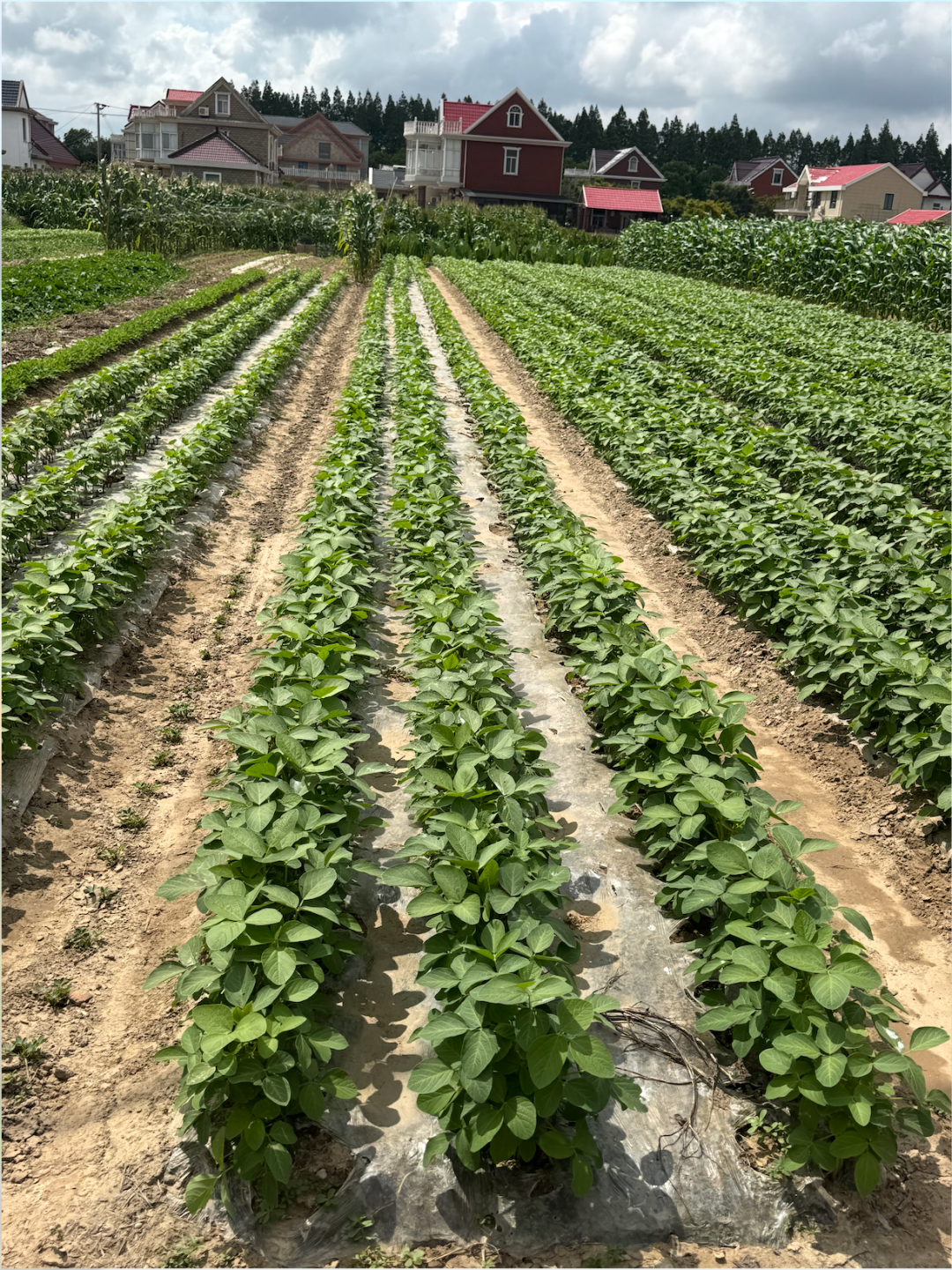

◉Professor Duan’s neighbour’s cornfield, with its perfect rows, once made him feel quite inadequate — fortunately, he was later rescued by the anthropologist James Scott’s critique of ‘agricultural geometry’ in Six Lectures on Spontaneity.
Professor Duan also includes plenty of historical material in the book that helps us understand the emotional side of farming — not merely the ‘knowing’ but the ‘loving it’ and ‘delighting in it.’ Su Shi once recorded his younger brother Su Zhe’s fondness for ‘visiting the vegetable garden’: ‘Such tiny things — how could they deserve a second glance, yet you alone never tire of watching them.’ ‘Now you have changed again, always finding time to peer at the melon vines.’ Lu You was a kindred spirit, writing ‘So absorbed in watching I forgot to eat my dinner at home, just like schoolchildren at the end of the day.’ It turns out that these joys and obsessions we share were already familiar to the ancients.
What sets us apart from the ancients is that Su Dongpo and Lu You could only enjoy the vegetable gardens within reach, while Teacher Duan and I can share our experiences from afar. This year I brought in a full cart of small watermelons and made a point of sending photos to Teacher Duan—not just to apply a little peer pressure, but because there is real pleasure in sharing a harvest with someone who understands the effort behind it. I have even caught myself thinking that Teacher Duan really did not need to grow so many potatoes and watermelons, but then I consider my own grapevines, which keep multiplying yet refuse to bear a single fruit—what would I even say about those? In fact, the moment I got back from Teacher Duan’s place, I immediately planted some shiso, tried making shiso-filled dumplings (they are delicious), and I cannot stop thinking about growing daylilies too…
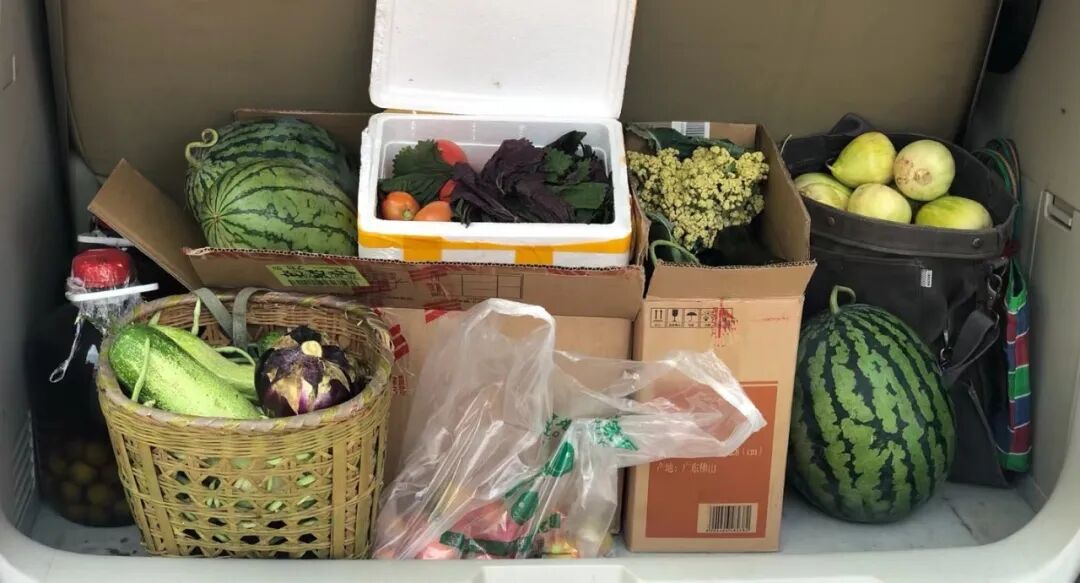
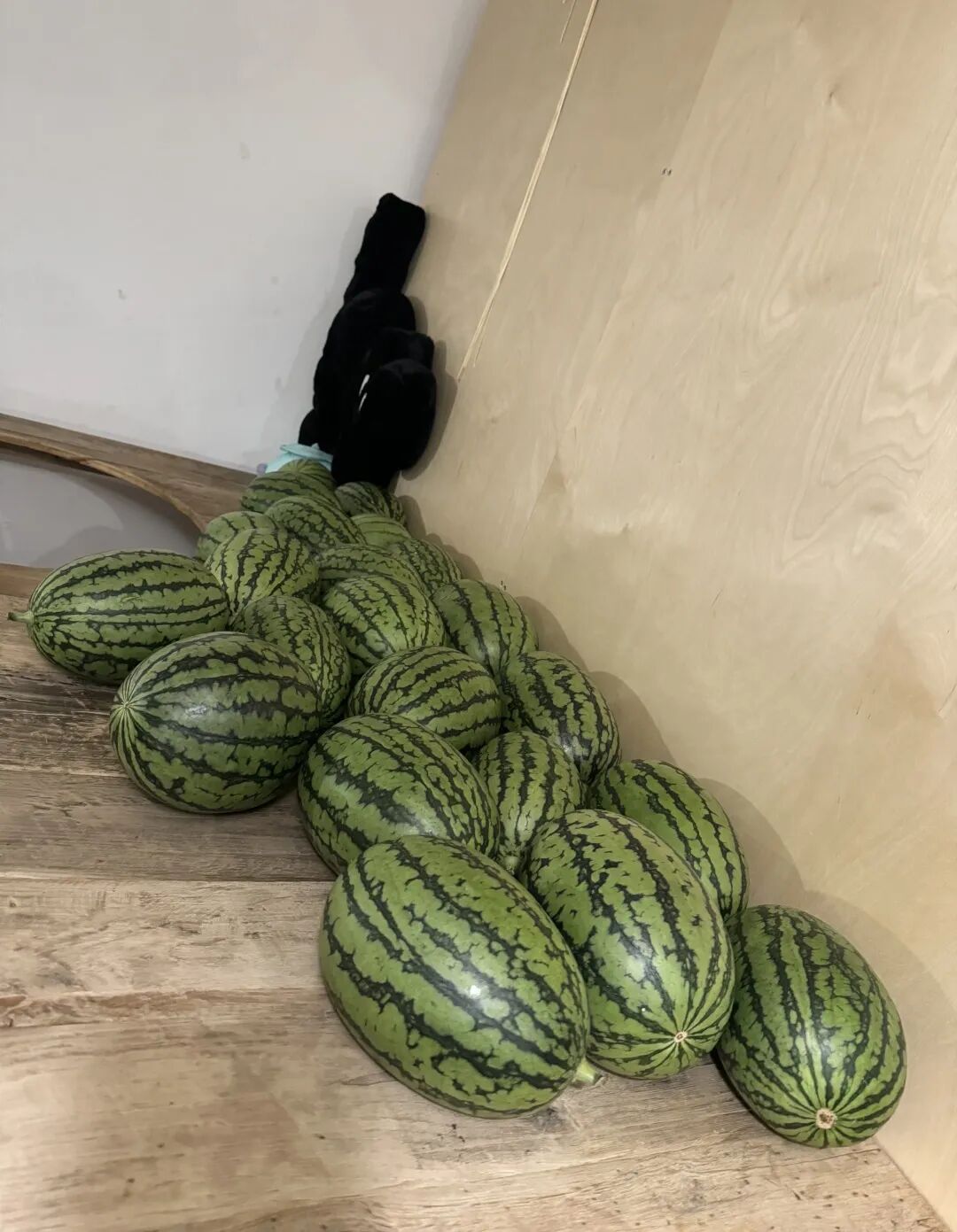
◉(Left) The harvest from my suburban vegetable shed. (Right) This year’s bumper watermelon crop — I made a point of sending Teacher Duan a ‘good news bulletin’.
From a Socially Anxious Person’s Paradise to the Great Watermelon Defence
The structure of <em>I Dwell at the Yangtze’s End</em> follows a general-to-specific logic. It moves from a broad setting of the geographical and cultural backdrop, through the several stages of farming across the year (The Swallows Return, Qingming, Typhoon Day, Harvest Season, the Dead of Winter), and within each stage, into individual chapters — essentially, anecdotes from the process of growing vegetables. So we are led into Teacher Duan’s world of cultivation from his plot and the geography of Chongming Island, Shanghai, where he lives: first the island’s location and his commute, then a survey of the old-style island dwellings, then all manner of details tied to cultivation, and finally the radius his “Red Hare” — an electric tricycle — can carry him across.
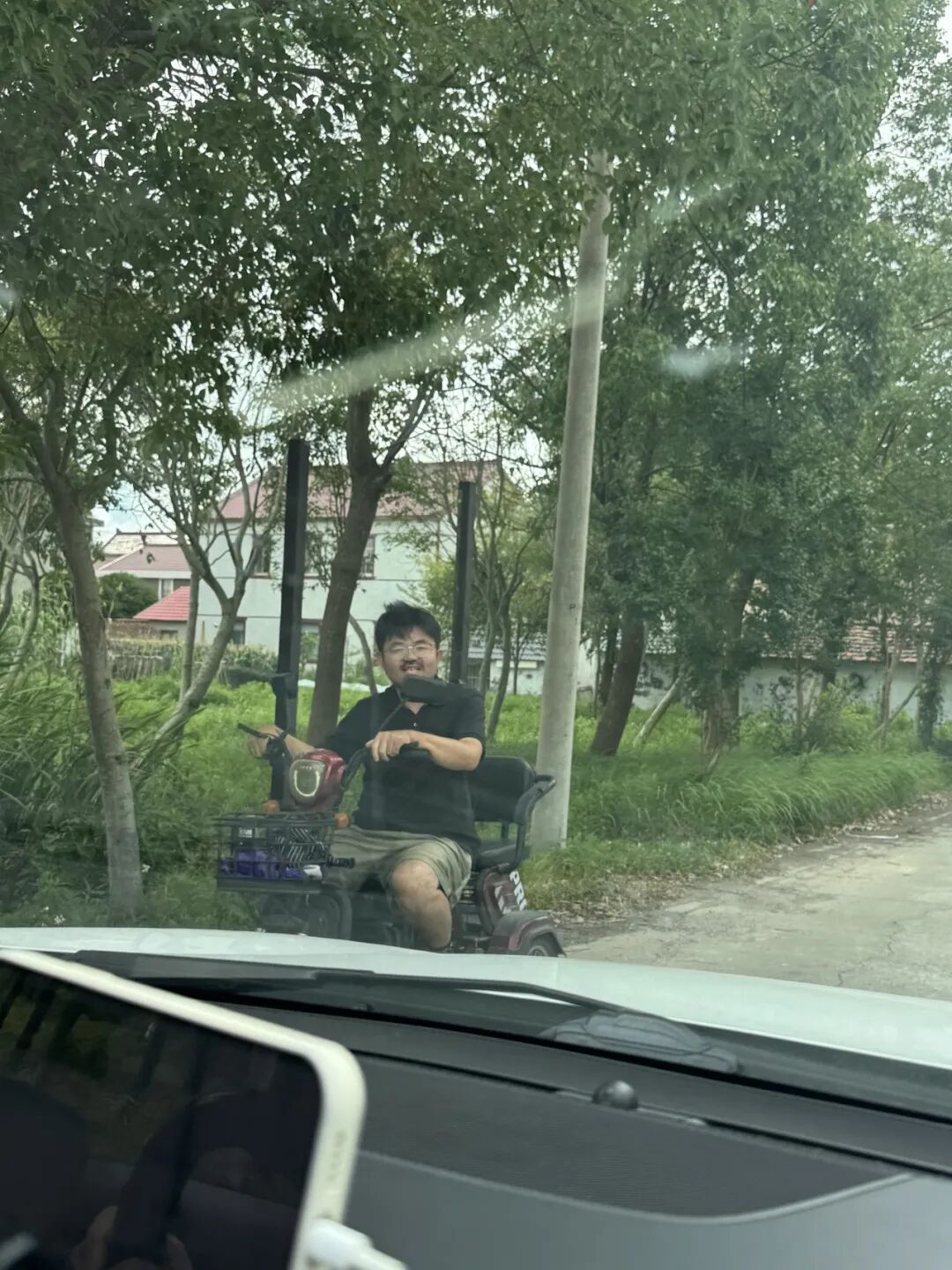
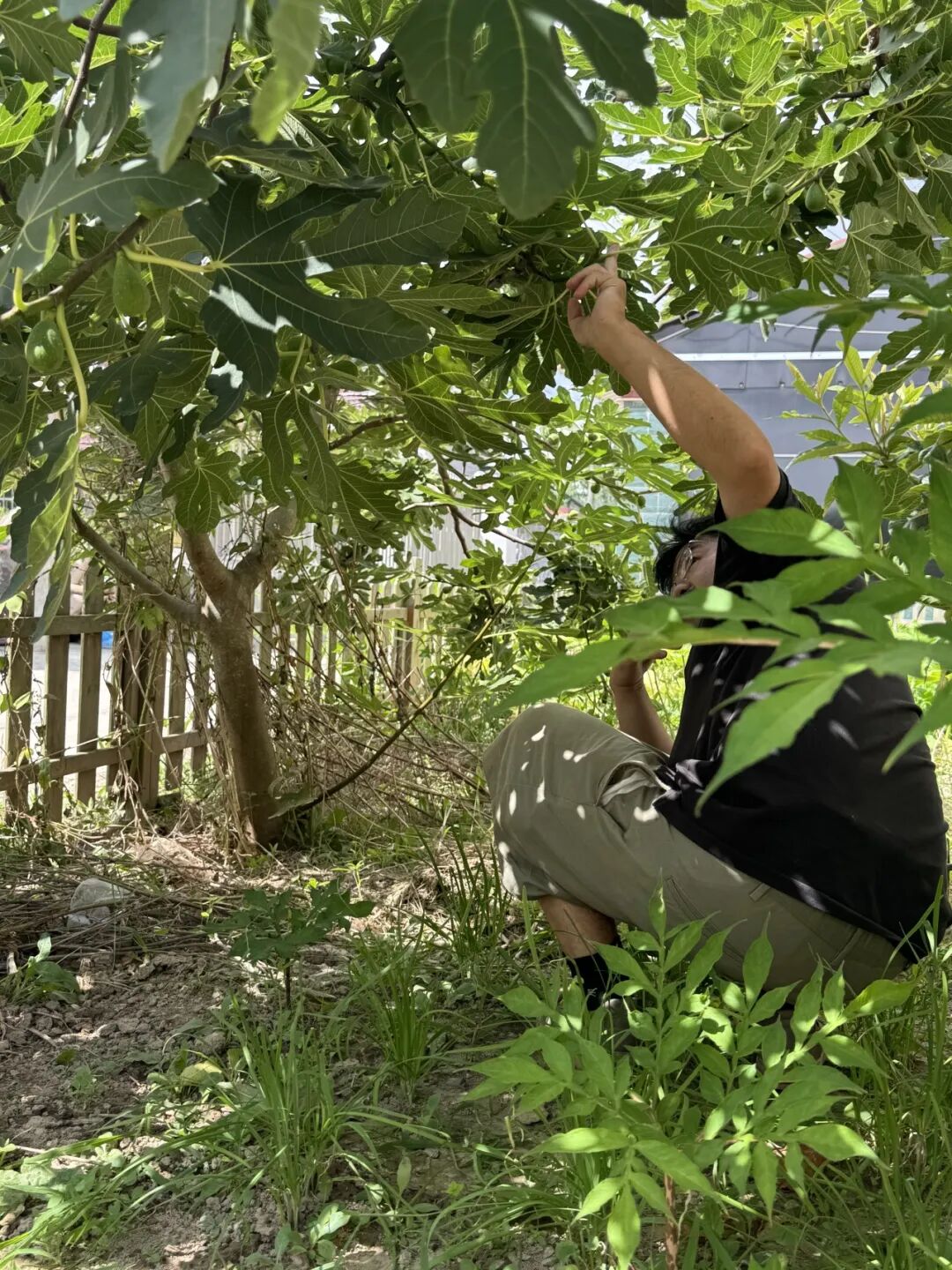
◉ (Left) Professor Duan on his Red Hare aka three-wheeled farm vehicle, coming to pick us up. (Right) Professor Duan picking figs in the ‘Subcontinent’.
Next comes the chapter on the Monthly Ordinances: what arrangements a planting household must make throughout the year. After that, he unfolds his specific practices season by season, chapter by chapter, at a steady pace. In self-deprecating yet lively prose, he vividly depicts one exploration after another, one “battle” after another.
A friend once joked that Teacher Duan is “Clark Strong”—a nod to the star of the British documentary *Clarkson’s Farm*—implying that Teacher Duan is a major internet personality in China’s world of urban-bumpkin vegetable growing.
In my view, beyond publishing books and enthusiastically sharing his vegetable-growing experiences, Professor Duan is markedly different from Clarkson: his approach to growing is far more grounded. He runs steady experiments with modest investments, finding boundless joy in the small details, rather than at every turn exclaiming ‘I have an idea’ and then throwing a fortune at it, only to lose everything.
This can be seen from the account in the book of how he chose his electric vehicle. Beyond the island’s two mainstream types — two-wheeled electric scooters and large three-wheeled farm vehicles — he eventually found, tucked away in a corner of a dealership, a small electric tricycle with a rear seat that could barely accommodate a single passenger, for a mere 1,200 yuan. Fully charged, this ‘Red Hare’ was more than enough to let him, with home as his centre, gallop within a thirty-kilometre radius.
It should be remembered that Clarkson first gained a wider audience because, the moment he took up farming, he went and bought a Lamborghini tractor (yes, the luxury car marque actually started out making farm vehicles), which ultimately brought him nothing but endless trouble. By comparison, Professor Duan is undoubtedly the wiser of the two.
Professor Duan’s attentiveness is also evident in how he copes with the plum rains. In the chapter ‘Plum Rain (Continued)’, he records what he calls the ‘Plum Rain Season Watermelon and Melon Defence’. He describes the state of his plants using personification: no matter how hard he tries to erect trellises and cover his crops, they cannot escape the fierce onslaught of days of heavy rain, and in the end all he can do is tough it out. Even when he does survive, the melons lack flavour and the tomatoes refuse to set, much like an individual struggling against an entire downturn.
On the days around the onset of the plum rains mentioned in this chapter, I happened to be at the Qingshan Village event on the outskirts of Hangzhou that Professor Duan describes in his book. I watched him, brimming with enthusiasm, chat everything from the watermelons he had grown to climate change, and I happily shared in the melon he had brought for everyone. Looking back at the descriptions in the book now, what we must have been eating was ‘Te Xiao Feng’. At the time I had no idea that, though he was physically present at the event in Hangzhou, his heart was in fact powerfully tethered to Chongming Island.
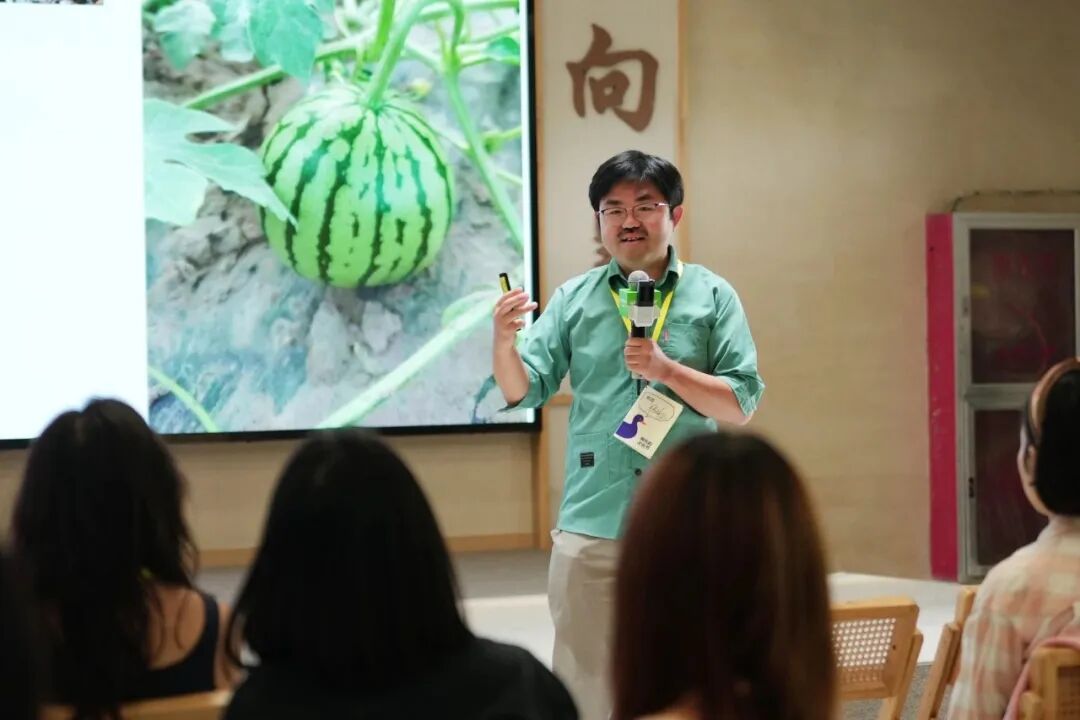
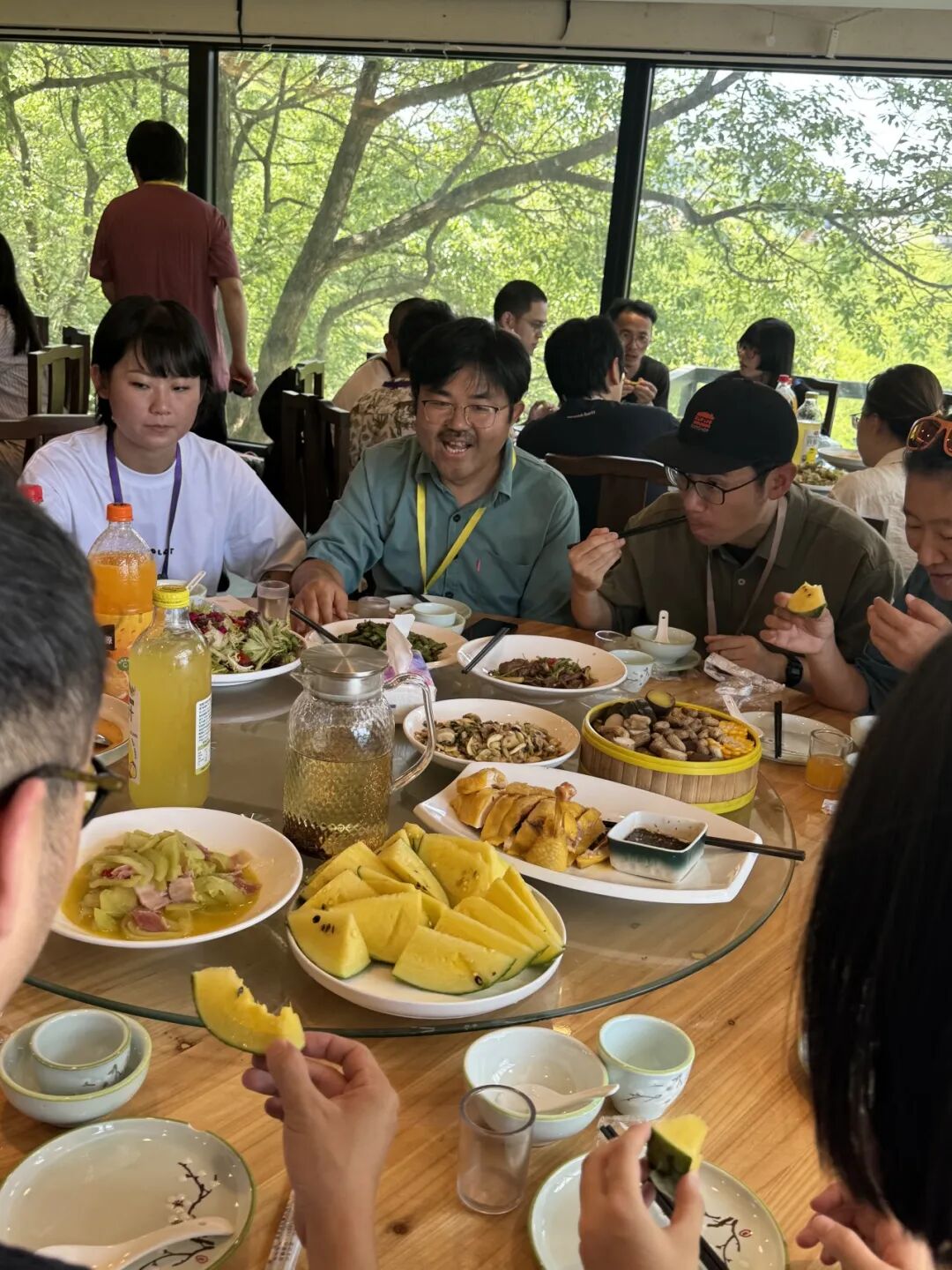
◉(Left) Professor Duan in conversation with young artists and climate activists in Qingshan Village. (Right) In addition to his lecture, he made a point of bringing watermelons of the ‘Texiaofeng’ variety that he had grown himself to share with everyone — the plate in the foreground with the yellow-fleshed fruit.
The bond between people and the land is a fundamental need
In the world we inhabit, the food system has already become an industrial one, and the fashionable discourse used to discuss it is often a financial register far removed from nature. Yet some are trying to forge different paths: the historian Professor Duan, by getting his hands dirty, grasps what is real; the anthropologist Professor Zhong Shuru, through her research on wet markets, reveals the flexibility, community connections, and diversity that small vendors offer; and restaurants pursuing a ‘non-prepared’ aesthetic are beginning to transparently display to diners which dishes are pre-prepared and which are not.
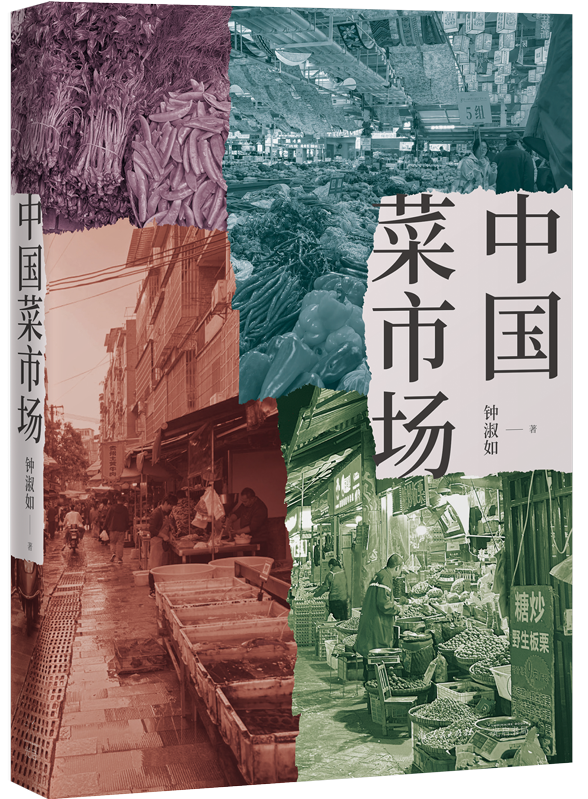
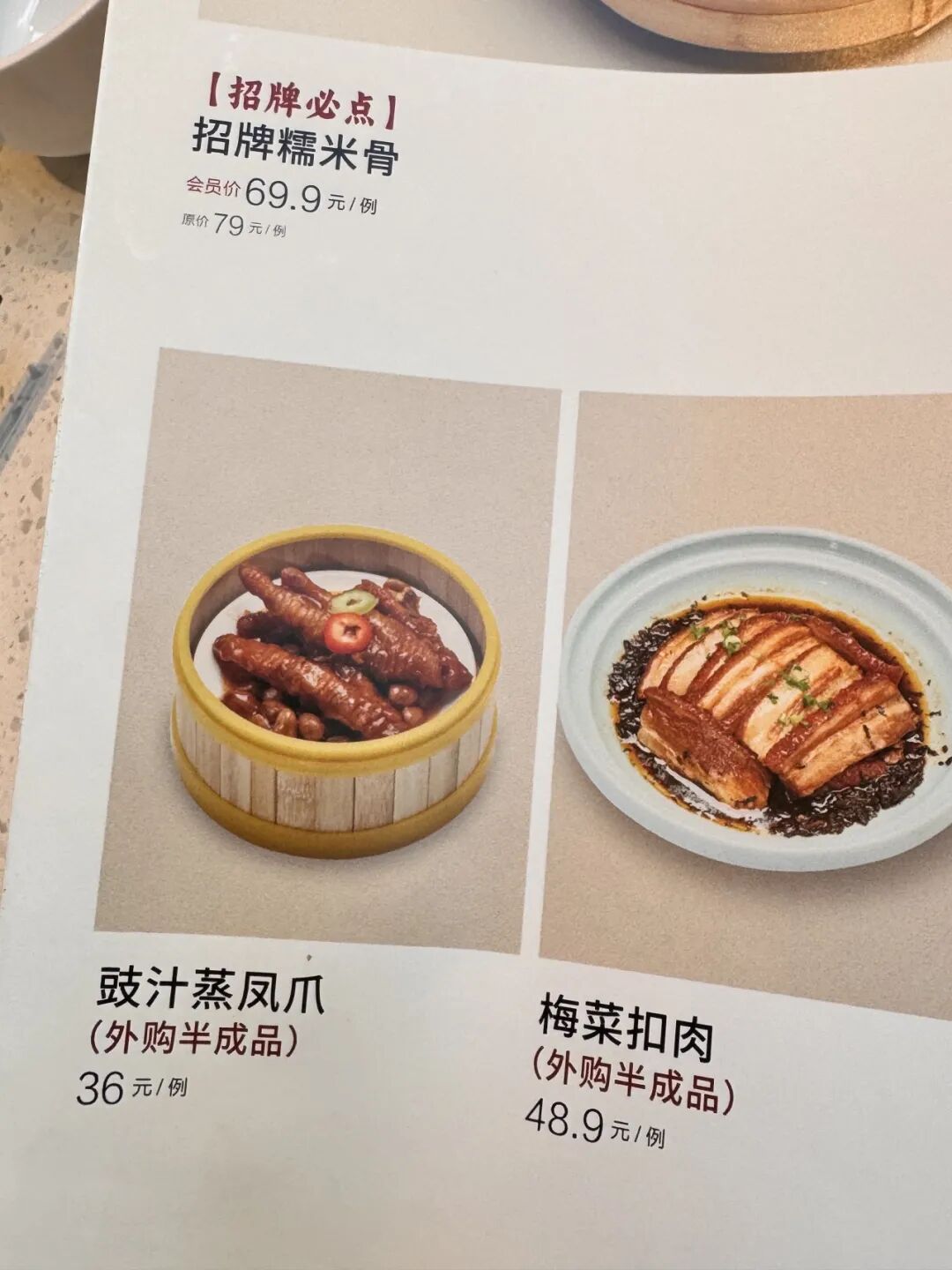
◉ (Left) Professor Zhong Shuru, an anthropologist at Sun Yat-sen University, has written a decade of her research into *Chinese Wet Markets*. Click the image to hear her discuss her work on the Foodthink podcast. (Right) A restaurant menu labelling pre-prepared dishes.
This niche pastime that has yet to make much of a splash — growing vegetables — is drawing more and more converts. There are plenty of us like me, thin on theory and practice alike, yet still pulling out all the stops as amateur growers.
“Isn’t the bond between people and the land a fundamental need?” Professor Duan’s reply was an unqualified “absolutely.”
A book that lifts the corners of your mouth
Let me return to how it feels to read. I haven’t finished the book yet. Its chapters unfold by season, and I want to save them up and read them slowly, unable to bring myself to swallow them whole just to get a review done on time.
Professor Duan writes in plain, unadorned prose, unfolding her narrative at a gentle pace. Although the book is full of historical research, there is not a hint of showing off. What’s more, the “Moat-Enclosed Courtyard” from the chapter “The Introvert’s Paradise” — one I’ve actually visited in person — turns out to have a former life, revealed in the book as “Siting Zhaigou.” As I read on, my mind began automatically pairing the words with Professor Duan’s voice, and I found myself responding:
Nodding along: “Yes, yes, yes — same here!”
Exclaiming: “It can actually be like that?!”
And every so often, the urge to interject: “Professor Duan, have you considered doing it this way or that…”
In the barely a week since receiving the book, I’ve been carrying it around to exhibitions and to work. I’ve noticed that whether it’s a sun-tanned middle schooler or a doctoral researcher in ecology, the moment anyone opens this book, the corners of their mouth involuntarily lift into a smile.
– This is the 841st original article on Foodthink –
Foodthink
Author
Wang Youzao
Documentary director and amateur vegetable gardener. Directed the documentary *Asking the Rice*, which follows the changing lives of ethnic minority rice farmers. Tends to the “CBD One-Metre Garden” (a video account of the same name) on a daily basis and shares a vegetable shed in the Beijing suburbs with friends.
Editor: Tianle
Layout: Xiaoshu
Scan the code to tip and support original food knowledge
▼

▼
Click the image to read related articles
▼
Click on a keyword to explore more article collections.
Seeds|Farming Techniques|Policy|Fermentation|Nutrition|Fruit|Fishery|Events|Jobs|Takeaway|Wet Markets|Livestock|Food Talk|Sharing Sessions|Book Club|Harvest Festival|Smallholder Stories|Climate Change|Rural Development|Co-operative Economics|Urban Farming|Food Safety|Digital Technology|Biodiversity|Pandemic and Food|False Solutions|Ecological Agriculture Internship Programme
Beijing|Hebei|Shanghai|Guangdong|Guangxi|Henan|Sichuan|Jiangxi|Xinjiang|Shaanxi|Hong Kong|Chongqing|Zhejiang|Jiangsu|Guizhou|Taiwan|Inner Mongolia|Philippines|Canada|Russia|Mexico|Italy|United States|United Kingdom|Germany|Netherlands|Thailand|Sweden|Japan