What kind of farmers aren’t afraid of falling grain prices?

Foodthink says
Across the world, large-scale, mechanised farming has seen high-yielding monocultures displace many of the crop varieties that once thrived in the fields. Small-scale farming culture now appears to be relegated to the status of agricultural heritage, destined to be consigned to the past. But is this really the case? Last September, as Thai rice prices hit rock bottom, Foodthink joined partners from Towards Organic Asia on a trip to northeastern Thailand, revealing an alternative model for the commercial smallholder economy.
Falling rice prices, lost varieties
Before we get into the story, a little context is in order. Thailand is the world’s second-largest rice exporter, yet selling rice has grown increasingly difficult: soaring US tariffs have weighed on sales of Thailand’s premium jasmine rice, while India’s resumption of exports has intensified global competition. Earlier in 2025, Thailand’s average paddy rice price fell by roughly 30 per cent year-on-year, dropping to just over 2,000 RMB a tonne.
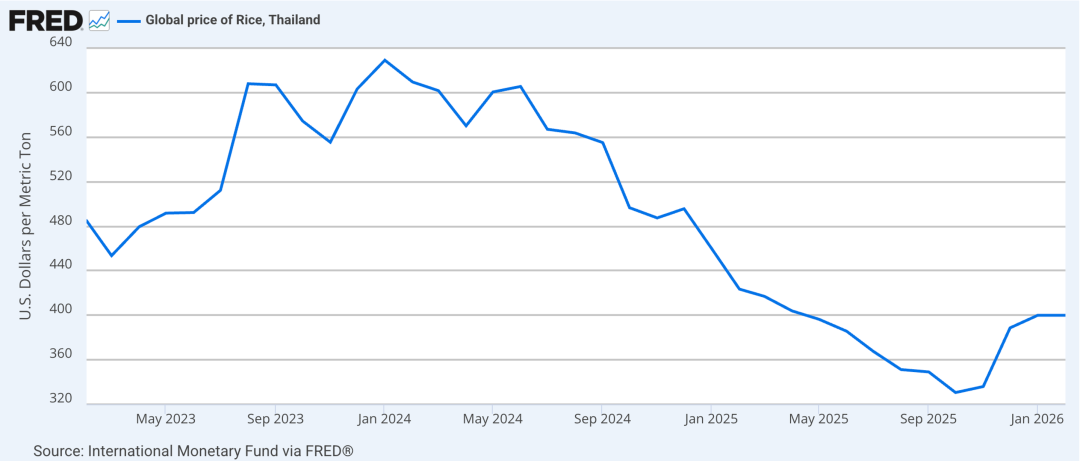
◉Thai rice prices fell from just under $640 per tonne in early 2024 to $320 per tonne by September 2025. Image source: IMF
Amid overproduction and intense market competition, many local rice varieties have also disappeared. Northeast Thailand is the country’s principal grain-growing region, historically dominated by farmer-saved seeds and local landraces. These varieties were well-suited to the local ecology, requiring minimal modern technology or agricultural inputs, though they yielded less and had limited commercial potential. From the late twentieth century onwards, as part of state-led agricultural modernisation and market integration, high-yield varieties developed by government and international bodies rapidly proliferated through extension services and subsidy programmes. Improved strains, particularly those adapted to local conditions, steadily displaced traditional farmer-saved seeds. In 2000, 43% of farming households still cultivated these local traditional varieties; by 2009, that figure had fallen to 11%.
Smallholder farmers sit at the bottom of the value chain, with their planting decisions dictated by international market demand and policy subsidies. Thailand’s export market has effectively narrowed farmers’ choices to two: grow certified, high-value fragrant, soft-grain rice for the United States, or cultivate high-yield hybrid long-grain rice for the Middle East. Yet when competition in the export rice market intensifies, farmers cannot simply switch to alternative varieties overnight. Take Thai fragrant rice, for instance. Despite its premium value, it relies heavily on the specific rainfall patterns and light, slightly saline soils of northeast Thailand. Furthermore, as a photoperiod-sensitive, late-maturing, low-yielding crop, its harvests fluctuate considerably. Most smallholders lack the conditions to grow it and can only manage to get by by continuously striving to increase the yields of their current varieties. This means that rising labour and input costs are met with diminishing marginal returns.
Is this a vicious cycle? A village in Thailand has challenged our pessimistic outlook.
Farmers can collaborate on seed breeding
In late September 2025, we joined South-East Asian partners working on environmental and community initiatives to visit Khok Sa-at village in north-east Thailand (hereafter referred to as Khok Sa-at), where we encountered a group of farmers who neither grow export varieties nor farm at scale, yet are thriving.
In Khok Sa-at, villagers use home-made compost instead of chemical fertilisers and pesticides, persist in saving and breeding their own traditional rice varieties, and rely entirely on manual planting and harvesting. Compared to the logic of large-scale, capital-intensive modern industrial agriculture, the village might seem like a holdover from a pre-modern farming society. Yet we found that they have not only avoided being weeded out by the commercial system, but face no financial pressure whatsoever. How do they manage to stay profitable without engaging in the cutthroat competition of the mainstream market?
Located more than 70 kilometres west of the Mekong River, Khok Sa-at is a traditional farming village known in the surrounding area for conserving local landraces of rice. A young man in the village, Aew, finished his studies and took up a job as an environmental journalist, spending his time travelling widely. More than a decade ago, upon learning that Thailand boasts over 5,000 varieties of rice, he began gathering traditional seeds from farmers in the northeast. In the first year, Aew collected just five rice varieties; the following year, that figure rose to more than a dozen. Gradually, he amassed over 250 different types from across the provinces of the northeast.
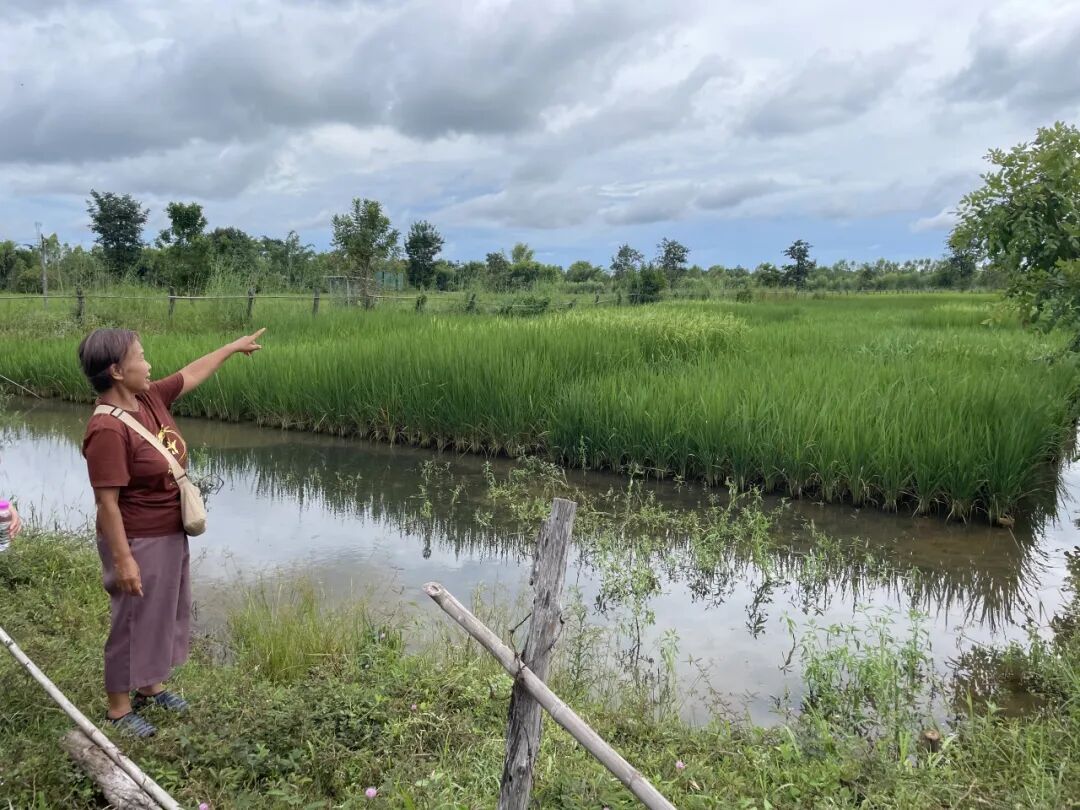
◉A breeding team member’s own rice paddy. She is trialling the cultivation of Khok Sa-at village’s flagship rice variety.
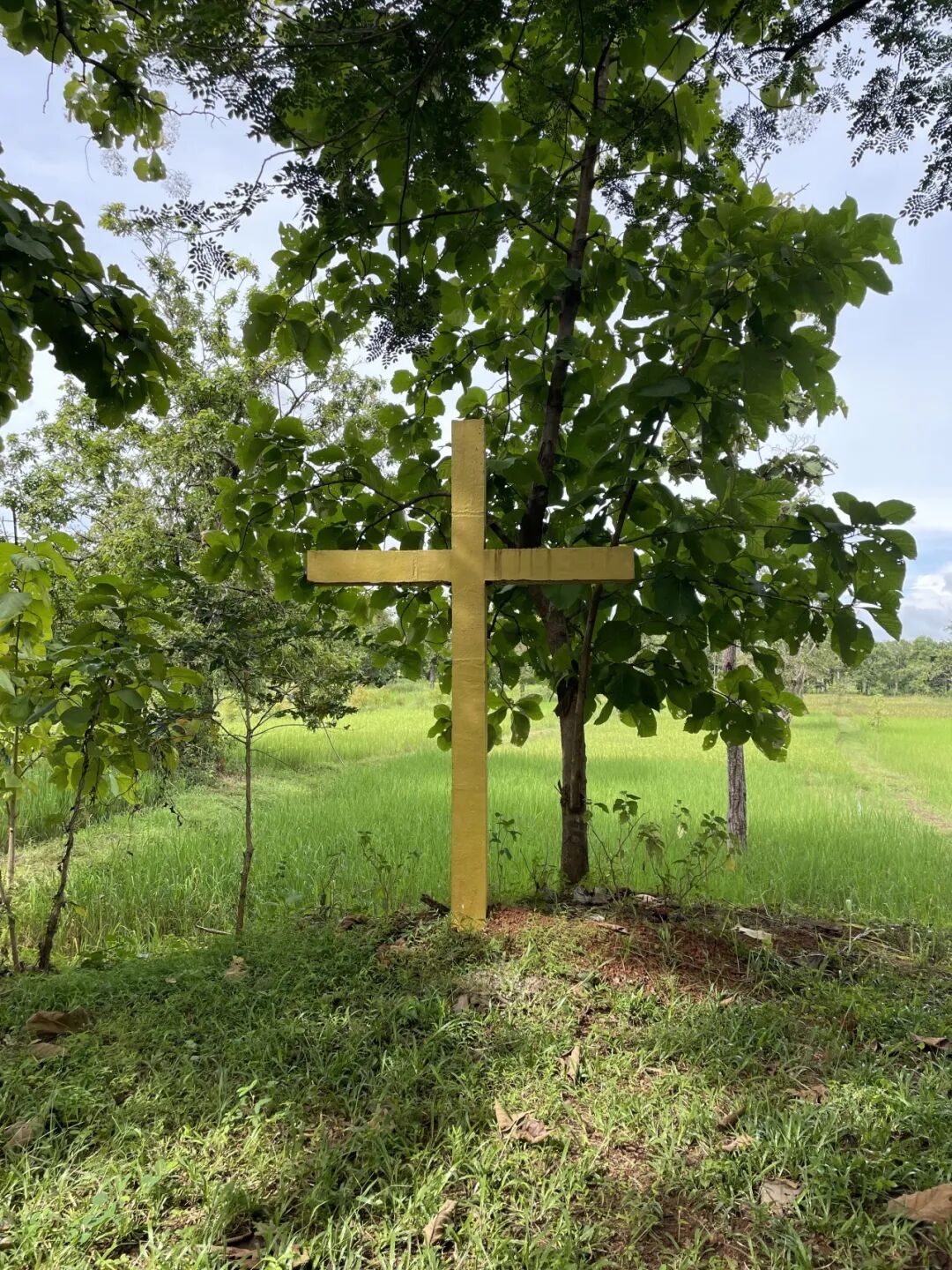
◉A cross on the bank of the seed trial field. Most villagers are Christians.
Preserving traditional rice varieties is about more than just collecting seeds. Aew has also mobilised farmers in his own village to begin saving and breeding their own. Members of the rice working group monitor the tillering of each variety, noting how a single grain can develop into 10 to 20 tillers (and sometimes as many as 60). They examine the tillering and panicle characteristics of each plant—checking for grain density, even spacing, and overall shape—to select high-yielding varieties. The village now maintains a communal rice field owned by the local church, which has been converted into a trial plot cultivating over 200 indigenous rice varieties. The entire plot is managed on a voluntary basis by 15 members of the breeding group. Members exchange techniques at farmer field schools, and through repeated trials, transplant their preferred, well-adapted varieties into their own plots. Over the past seven years, the breeding group, with support from local research institutions, has been developing a flagship variety for Khok Sa-at village, which is expected to reach the market in three years.
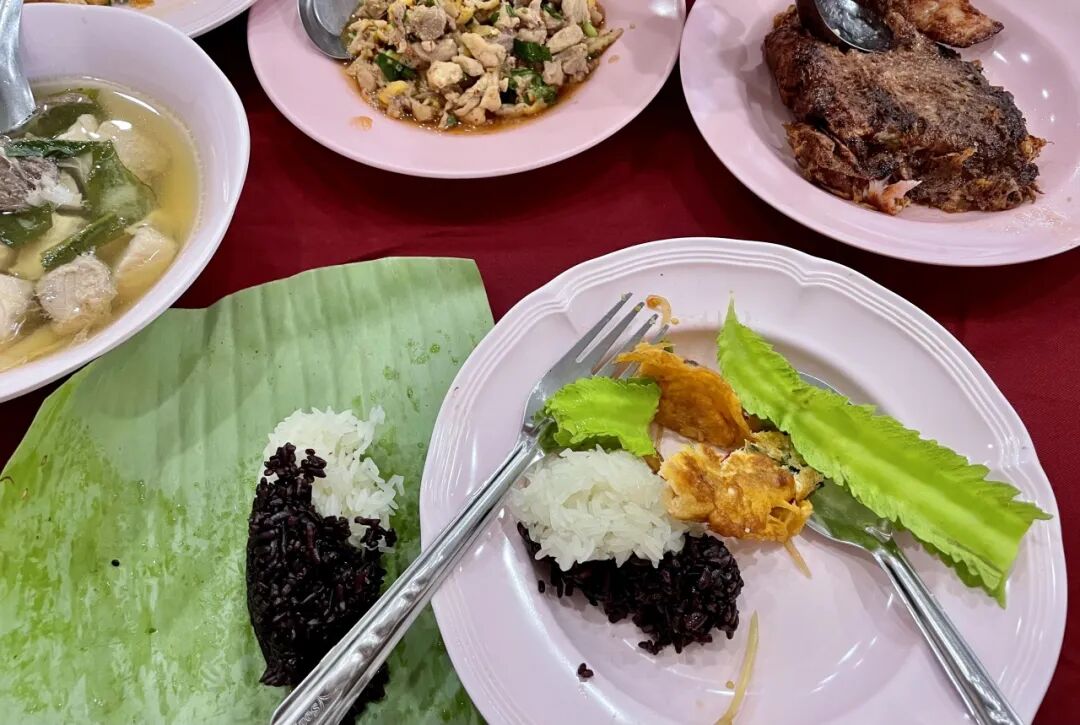
◉At lunch, the women members prepared black and red rice wrapped in banana leaves for us.
We were fortunate enough to taste small black rice and red rice in a single meal, both locally renowned traditional varieties. The black rice grains are shorter and largely hold their shape after cooking; they are chewy and so aromatic they can be eaten plain. The cooked red rice, by contrast, is softer and fluffier, making it easier to digest and a perfect counterpoint to a green papaya salad so fiercely spicy it feels like leaving your body. Although rain-fed rice yields less than irrigated crops, its flavour is noticeably richer and more intense.
Can relying solely on traditional seeds still yield a plentiful harvest?
Yet can such a seemingly pastoral lifestyle, sustained entirely by growing traditional rice, actually be profitable?
Aside from no longer needing to purchase seeds year after year, K village has two further advantages: land and labour.
Starting with land, over 40% of Thailand’s farmers do not own their own plots and must rent land to farm. These farmers grow rice three times a year, yet they often still end up unable to make ends meet. The costs of seeds, pesticides, fertilisers and machinery leave them heavily in debt.
Khok Sa-at village’s advantage lies in its land and infrastructure: the fields are privately owned, often passed down through generations, and supported by well-developed water management systems. Local farmers know the natural ecology intimately, enabling them to select varieties suited to the regional climate. A dipterocarp forest borders the village’s paddy fields; its extensive root systems help conserve water, minimise soil erosion, and regulate runoff. The land in Khok Sa-at is predominantly rainfed upland, meaning farmers can only grow a single rice crop annually during the wet season, from May to October. In the low-lying areas, they plant varieties that yield more panicles, take longer to mature, and demand more water. On the hillsides, they grow upland rice that matures faster but produces fewer panicles. I have heard of similar practices in the mountainous regions of Yunnan. The crops are irrigated by rainwater, ponds, or stored reservoir water, so there is no need to divert water, drill wells, or dig canals. After the rice harvest, when conditions become drier, farmers rotate in pumpkins or other crops with lower water needs, rather than forcing a second rice crop.
Turning to labour. When Thai rice farmers began cultivating uniform, export-oriented rice varieties, the busy seasons demanded a far greater density and intensity of work. Tasks such as transplanting, spraying, and harvesting were increasingly handed over to professional agricultural machinery crews. Farm work gradually shifted from an unavoidable household duty to a market service that could be purchased.
Yet, K village continues to follow traditional farming methods, which do not require the intensive seasonal labour typical of modern monoculture. Rather than hiring outside workers, group members simply exchange labour during peak farming periods. Meanwhile, the rice group avoids purchasing pesticides and chemical fertilisers from outside; instead, they use plastic dummy figures to deter sparrows and apply home-produced cow manure as fertiliser.
Without the pressure to maximise yields, farmers are free from the burden of debt and rent, making it far easier to adopt diversified farming. With no worries over land rent and no need to purchase agricultural inputs, rice production costs can be remarkably low. Lower input costs make it much easier to encourage the cultivation of traditional varieties using ecological methods.
The Role of the Credit Union
However, low production costs alone do not necessarily guarantee profitability. Why, after experimenting with new approaches, do farmers persist with traditional varieties that offer lower yields and narrower sales channels, when the international market provides such steady demand for “Thai jasmine rice”?
This leads to the question of financial viability. Unlike typical rural enterprises, the Hom Dok Hung Rice Cooperative (hereafter “the cooperative”) was established with support from Khok Sa-at village’s credit union (hereafter “the credit union”). When the credit union was founded more than 40 years ago, it had just 17 members. Today, it has grown to nearly 3,000 members across 21 neighbouring villages, with total assets exceeding 117 million baht – roughly equivalent to 23 million yuan.
It is worth clarifying the relationship between agricultural cooperatives and credit unions. Both are member-owned organisations that pool capital, share profits, and participate in collective decision-making. The agricultural cooperative’s operations centre on cultivation, along with the sale and processing of agricultural produce. The credit union primarily provides financial services, including savings, lending, and payment processing. In Khok Sa-at village, the cooperative and the credit union operate as separate entities on paper, yet there is considerable exchange of both funds and personnel between them.
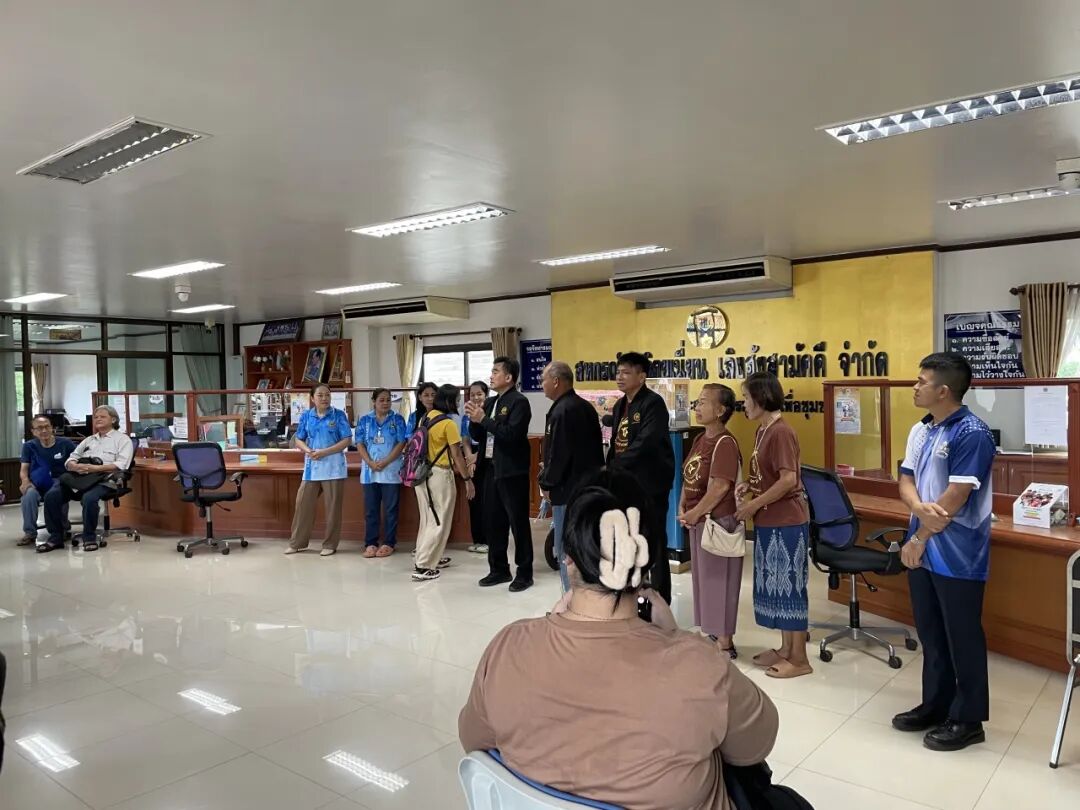
◉The Khok Sa-at village credit union. All staff are cooperative members who volunteer their time; no one receives a salary.
Thailand’s first agricultural cooperative was established in 1916 to help rice farmers trapped in debt during the early commercialisation of agriculture. Today, there are nearly 2,000 cooperatives across the country, most focused on agricultural production. Despite their numbers, credit unions make up just 9 per cent of them. Most farmers still need to turn to the Bank for Agriculture and Agricultural Cooperatives (BAAC) to meet their lending needs.
Unlike conventional banks, credit unions do not prioritise profit maximisation or shareholder returns. In other words, their earnings are not deployed in high-risk investments; instead, they are channelled into provident funds, risk reserves, or distributed as year-end dividends. While offering more favourable loan rates than commercial banks, the K village credit union pays a deposit interest rate of 3.75% (compared with just 0.75% at typical commercial banks). The credit union manager has even proposed raising deposit rates, but the government has declined. On top of this, the credit union maintains a dedicated welfare fund to provide condolence payments to members who have lost family members, and interest-free loans for households in hardship.
Profits from the rice cooperative are deposited back into the credit union. The flow of members’ assets is highly transparent and secure, creating a self-contained ecosystem of circulating funds.
However, a credit union of this kind cannot be established just anywhere; it thrives in tandem with local culture. Urban residents long ago placed their personal security and financial affairs in the hands of the government, financial institutions, and insurance groups. In K village, however, community leaders still command natural authority. For the older, more conservative farmers in K village, borrowing and wealth management are foreign concepts. The credit union’s growth to its current scale would not have been possible without pastors who actively encouraged participation.
Eighty per cent of the villagers here are Christian (the remaining roughly 20 per cent are Buddhist, but the two groups get on well, working and living together). According to the cooperative manager, Christians are frugal, hardworking, and value education for the next generation, while village solidarity is another key factor in the cooperative’s success. In terms of lifestyle, they bear some resemblance to Mennonite communities in the United States: both are cultivating their own quiet havens, set apart from the mainstream world.
The village “7-Eleven”
Here, the phrase “for the collective good” is no mere platitude. Keeping every penny within the community must be put into practice across the board. The village has no restaurants, no leisure or entertainment spots—let alone a wet market. There is only one co-operative village shop, which has been operating for more than fifty years.
The cooperative head proudly shared that locals jokingly refer to this shop as the village’s “7-Eleven” precisely because residents have actively resisted chain store incursions. This mirrors my own observations in the rural American West. There, communities argue that large chains, wielding massive scale and aggressive pricing power, not only squeeze out independent businesses but also funnel the hard-earned profits from farm sales off to distant corporate headquarters.
Operating on a membership basis, the “village 7-Eleven” allocates shares equitably and functions essentially as a consumer cooperative. Each household may purchase shares proportionate to family size, and profits are returned to members at year-end in proportion to their stake. The shop stocks everyday necessities, buying and selling at prevailing market rates before returning profits to the community to foster an internal community economy. Villagers are both shareholders and customers.
We arrived towards the end of the month. Although the shelves were far from overflowing, all daily essentials were well stocked, and household prices were broadly in line with convenience stores in Bangkok. Among the wares: bars of soap (apparently, purchasing them still works out cheaper than the rice-bran soap they produce and sell themselves), laundry detergent, hair dye, cola, ice creams, and so forth.
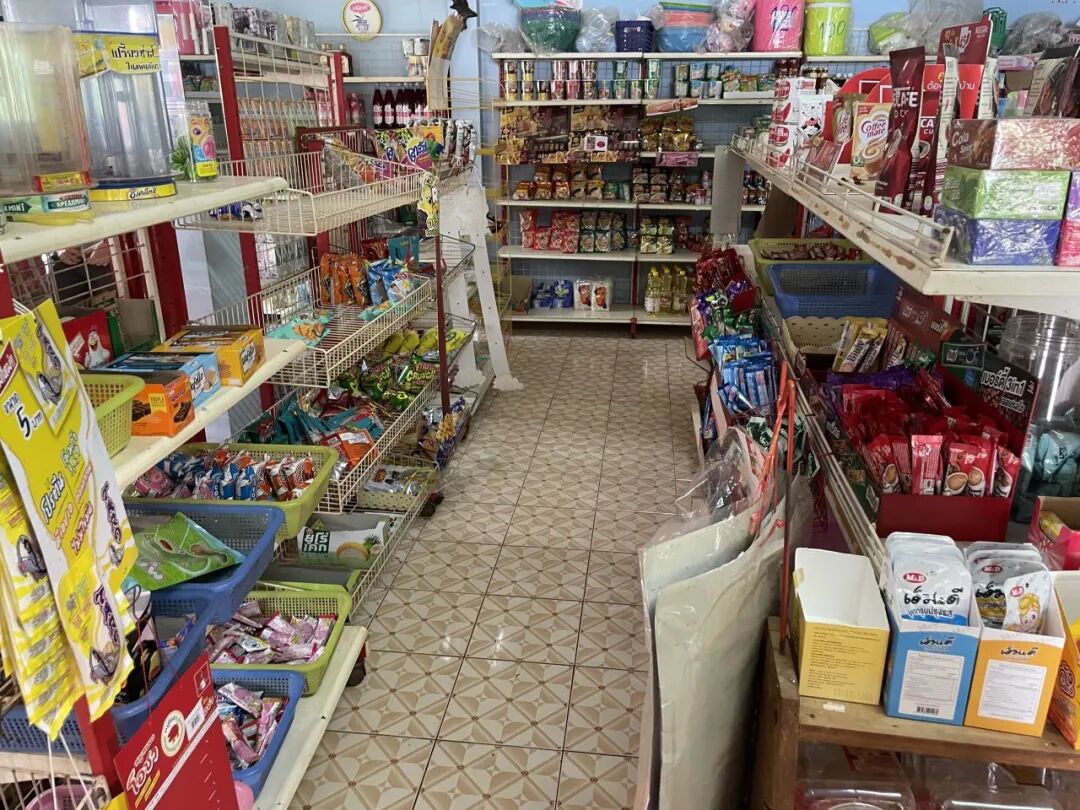
◉Interestingly, the village’s ‘7-Eleven’ still stocks ordinary commercial soap. Perhaps in Khok Sa-at village, where goods are scarce, a bar of commercially produced soap is more appealing than rice bran soap?
After dispatching the e-commerce parcels
Returning to the cabin to cook over a wood fire
The farmers do not merely work in the fields; they also oversee the entire supply chain, from seed selection to sales.
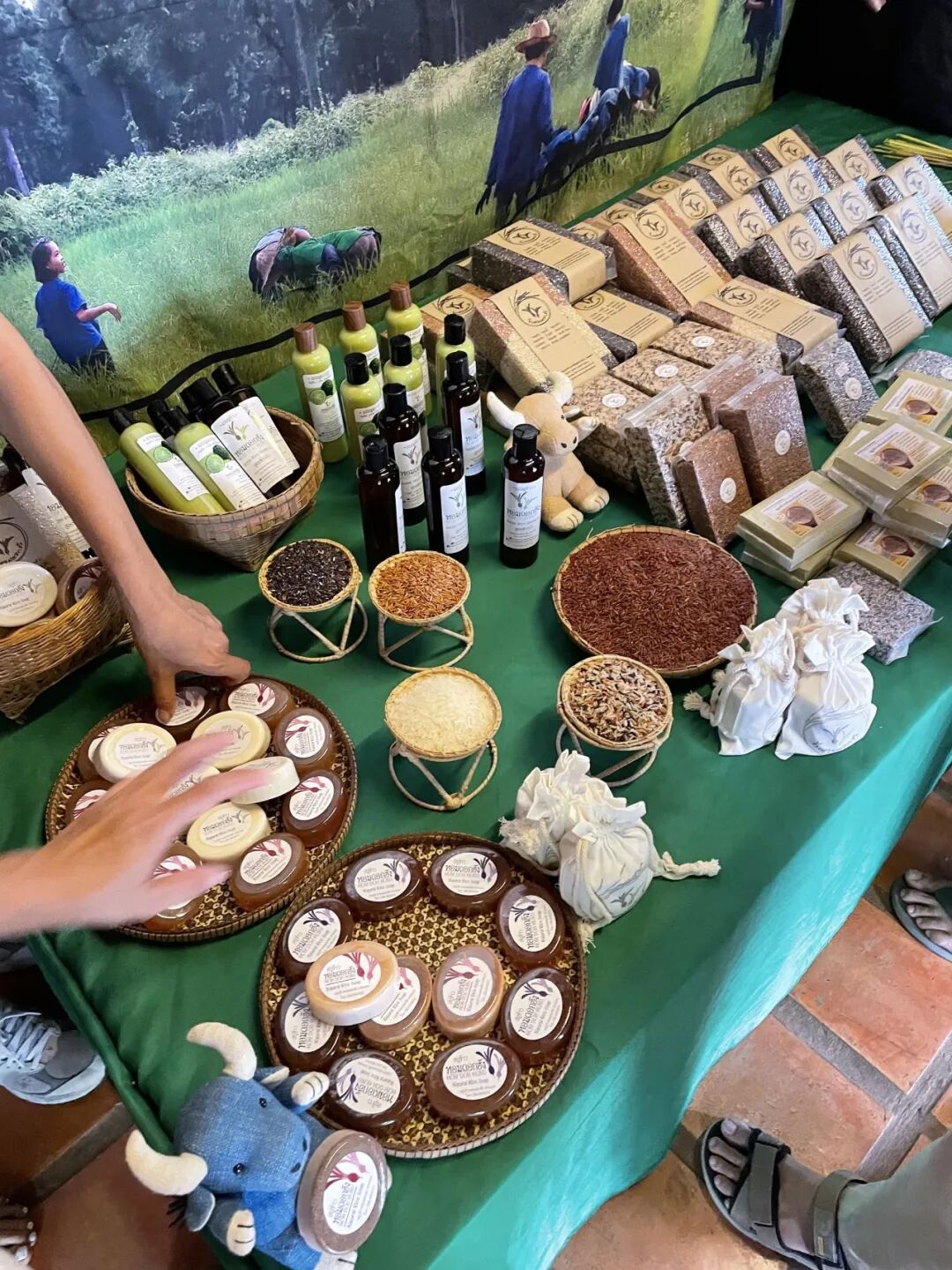
◉The farmers showed us their products. The attractive packaging and the village’s ecological ethos appeal to a particular segment of consumers.
The organic rice is packaged into neat, small portions that highlight the distinct flavour and health benefits of each variety. Meanwhile, the broken grains, rice germ, and bran sorted out during processing are turned into raw materials for shampoo soap, cutting the cost of bottled shampoo and preventing unnecessary plastic waste. The villagers have realised that straightforward processing can add further value to the by-products of rice cultivation.
Turning a grain of rice into products like rice wine and soap right where it is grown may sound unremarkable, but by bypassing middlemen and wholesalers, and selling directly to urban consumers via e-commerce and logistics, farmers naturally retain a much larger share of the profits.
Consumers who prioritise health, environmental sustainability, and social justice strongly support Khok Sa-at village’s cooperative model, enabling their organic rice to sell for double the price of comparable products. Even a Thai celebrity has voluntarily stepped in to promote their brand.
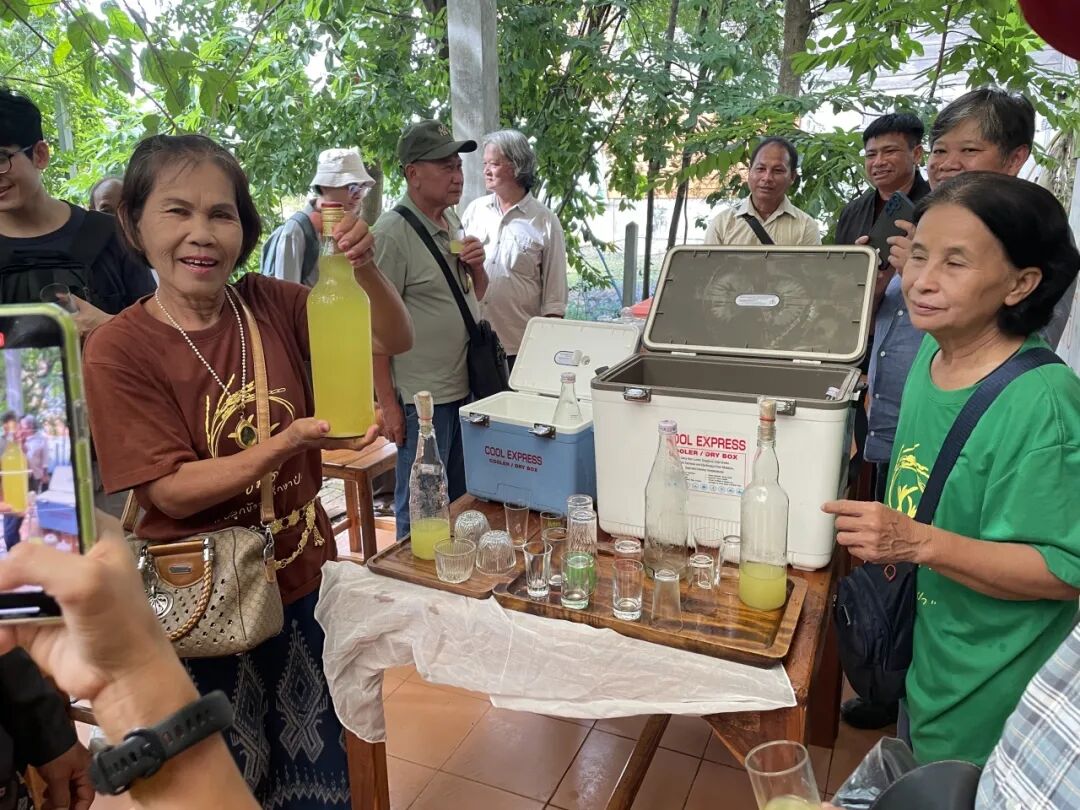
◉Without a production licence, the rice wine cannot be sold externally and is kept for internal consumption. Nevertheless, thanks to the enthusiastic recommendations of friends from across Southeast Asia and a dozen or so local villagers, we quickly worked our way through several bottles of sweet rice wine.
The collective economic model is vividly illustrated by the rice cooperative in K village, operating without reliance on sales volumes or policy support. To sum up, this can be attributed to several key factors.
First, the rice cooperative was fostered by the local credit union, with its initial capital drawn directly from the villagers’ savings. Social ties are woven straight into the financial system, forging a robust foundation of mutual trust, with lending tailored exclusively for members. Second, the cooperative operates as the primary revenue earner, distributing dividends to the credit union based on shareholdings, which ensures that profits grow and circulate internally within the community. Third, rather than routing its harvest through conventional supply chains, the cooperative sells directly into the premium market. Realising all this requires the combined strength of a healthy local ecosystem, a sound financial framework, and strong social cohesion.
Yet, not all Thai rice farmers cultivate traditional varieties and fetch premium prices like those in Khok Sa-at village. In Thailand, high-yield rice and lowland jasmine rice fields, highly favoured by international markets, still dominate. Meanwhile, international bodies, governments and foundations are investing tens of millions of dollars into the research, development and promotion of ‘climate-friendly’ rice. Many rural areas remain heavily indebted, lacking any internal financial systems. The majority of rice farmers continue to wait for policy backing from Bangkok, hoping to secure bargaining power and for rice prices to rise.
Yet in Khok Sa-at village, growing rice is about more than a gamble on yields and purchase prices; it is a matter of dignity, achievement, and autonomy. Before leaving, we hurriedly visited a household tucked away in the woods. They live in a cluster of simple wooden structures that barely qualify as houses, with pots and pans resting on a bamboo rack outside, cooking daily over an open fire. The eldest sister lifted the wooden lid off a large vat beneath the tree. I switched on my torch, peered inside, and found it packed with loaches. Chickens scurried under the trees, crabs scuttled across plastic basins, and two idle yellow cattle stood beneath the cow shed. Tens of millions in net assets have not drawn the villagers away from the world they know. Our notion of a “prosperous life” remains far too narrow.
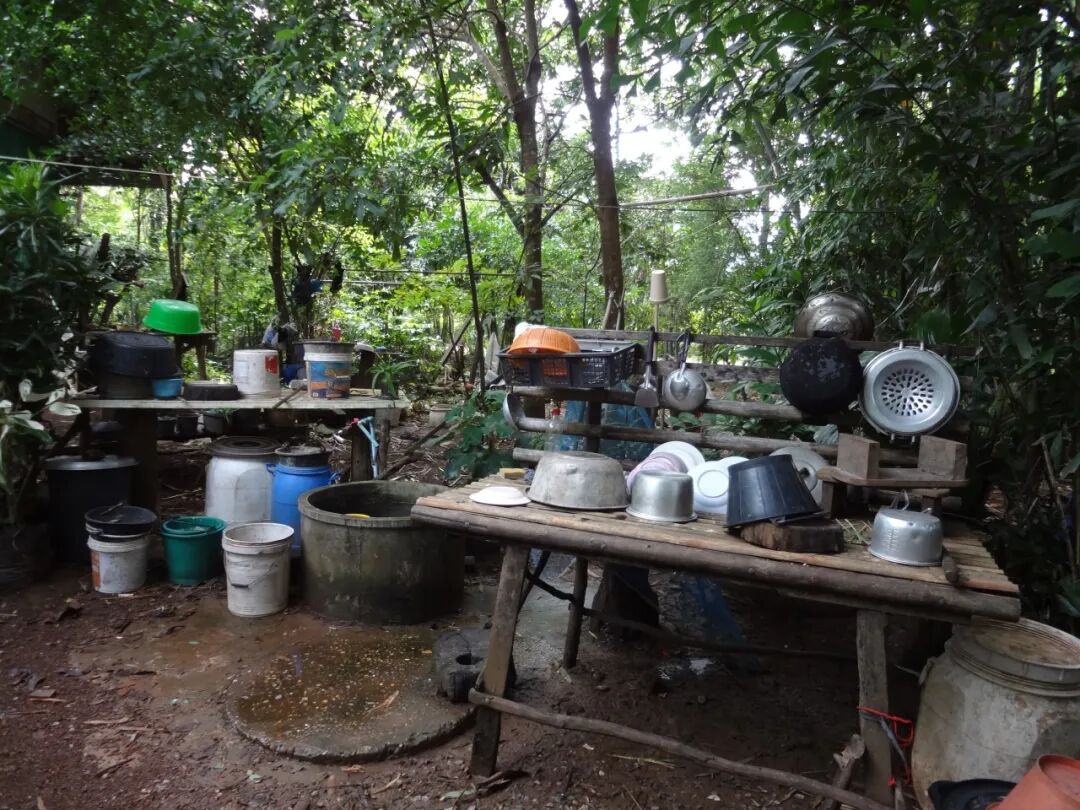
◉The kitchen outside a farming family’s wooden house.
– This is Foodthink’s 807th original article –
Foodthink
Author
Jieni
Project officer at Foodthink and a postgraduate student in the Department of Human Geography at the University of Toronto. Focuses on environmental and food systems.
All photography in this article is by the author, unless otherwise stated.
Editor: Xiong Ayi
Layout: Minglin
▼
Click the image to read related articles