First Stumped by Plastic: Young Farmers on Beijing’s Outskirts

In the spring of 2024, as a city office worker with absolutely no farming experience, I began tending a plot of land in the Beijing suburbs on and off, tentatively embarking on my agricultural journey. When I told people around me, their reactions generally fell into two camps: some found the idea romantic, calling it pastoral therapy for city dwellers; others assumed it would be gruelling, wondering what point there was in getting baked by the sun and soaked by the rain. I had pictured both scenarios and prepared myself for either.
Yet once I actually got to work in the fields, what first confronted me was neither the disillusionment of pastoral romanticism nor the rigours of manual labour, but a highly practical dilemma: how to deal with plastic.
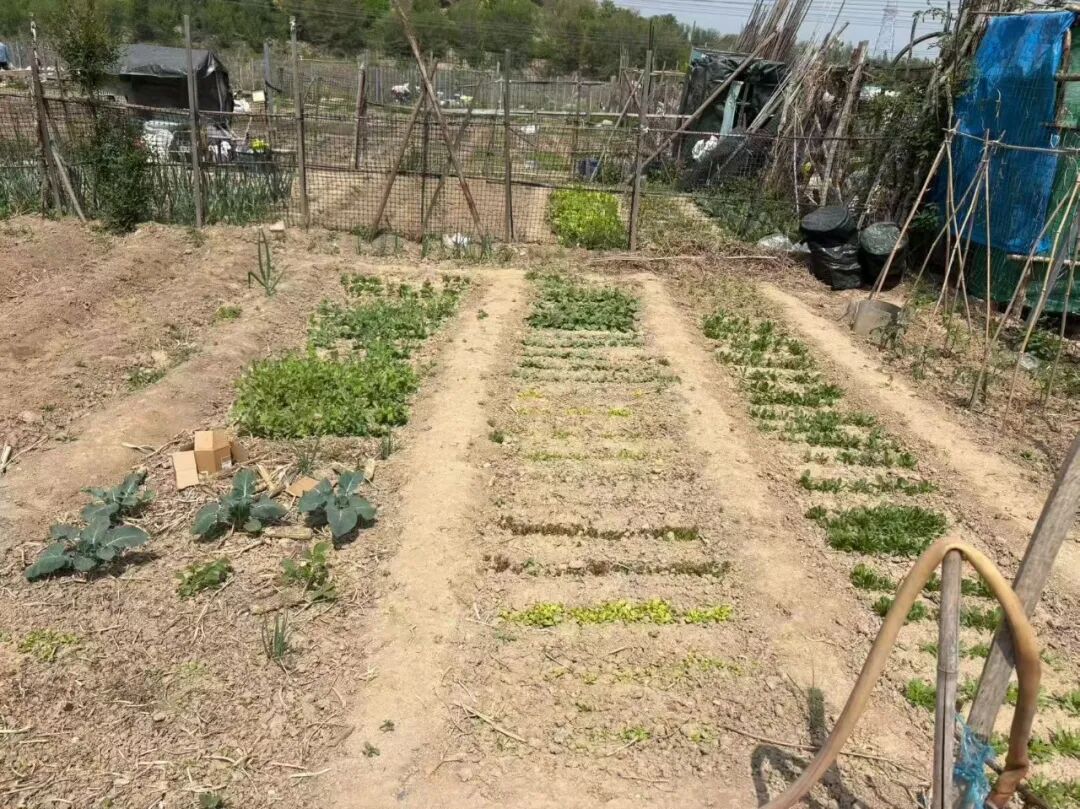
◉The plot of land I rented this spring.
Farming Meets Plastic Waste
2024 marked my first year of farming, and I rented a 10-square-metre plot. By the time I took it over, it was already May. Given Beijing’s climate, open-ground planting typically begins in mid-to-late March, or even earlier with a greenhouse. Naturally, the land wouldn’t lie idle. Once the season arrived, the farm owner would sublet plots to hobby farmers, planting the unrented sections themselves. As a result, the plot I took on was already seeded with chillies by the farm manager.
This saved me a fair bit of effort. I had no need to till the soil, dig trenches, or raise ridges; I simply dug up the chillies and cleared the space. All that remained was to work 40 kg of sheep manure into the soil, after which the preparatory work would be complete.
The farm’s plots are managed by zone. Mine sat right at the entrance to Zone C, so everyone had to pass by when coming and going. A young face working with clumsy but boundless enthusiasm quickly caught the attention of several neighbourhood elders (dàye dàmā). They would simply stop to chat, snatch the spade to demonstrate a technique if my methods looked questionable, and one even handed me a large bag of fresh vegetables on the spot. Fortunately, the workload was light; I finished by late afternoon, and the awkwardness of being watched so closely came to an end.
It was my first year, and with absolutely no prior experience, I managed to cultivate the plot through sheer determination alone. By year’s end, the harvest was, as they say, “abundant”. Naturally, it would amount to a financial loss if tallied against the rent and market prices for vegetables. But you reap what you sow, and the sense of purpose and accomplishment gained from it simply cannot be quantified in monetary terms.
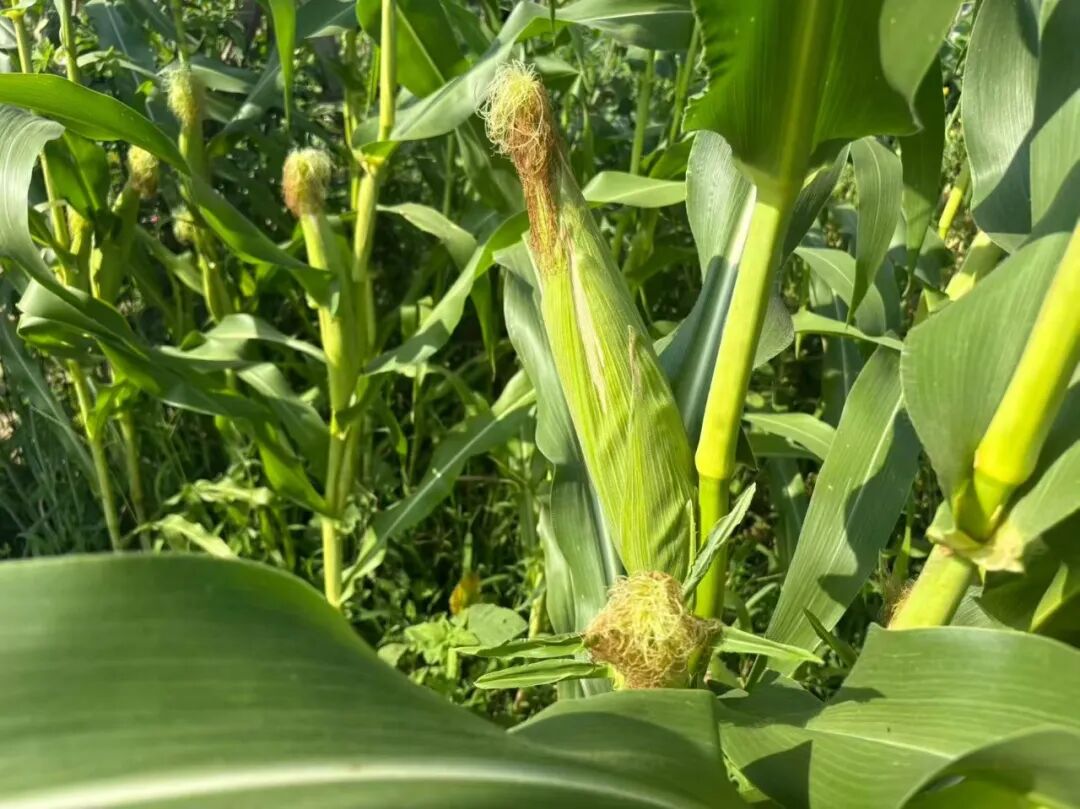
◉My newly harvested corn.
These are my earliest memories of farming. A year on, I returned to the farm, brimming with confidence, and rented a larger plot – 20 square metres.
With those few months of limited farming experience behind me, I set three conditions when choosing my plot: not adjacent to a path, not by an entrance, and completely out of sight. Farming is my time for solitude and relaxation. I had no wish to be surrounded by neighbourhood elders again, nor did I fancy putting on a polite face for small talk.
From 1 January 2026, I held temporary rights to another plot. I headed to the farm over the New Year break, eager to map out my planting schedule for the year ahead. It wasn’t until that moment, however, that I suddenly realised my three conditions were rather beside the point.
What truly matters is the condition of the land. Take my plot for instance: it was littered with plastic waste left behind by the previous owner.
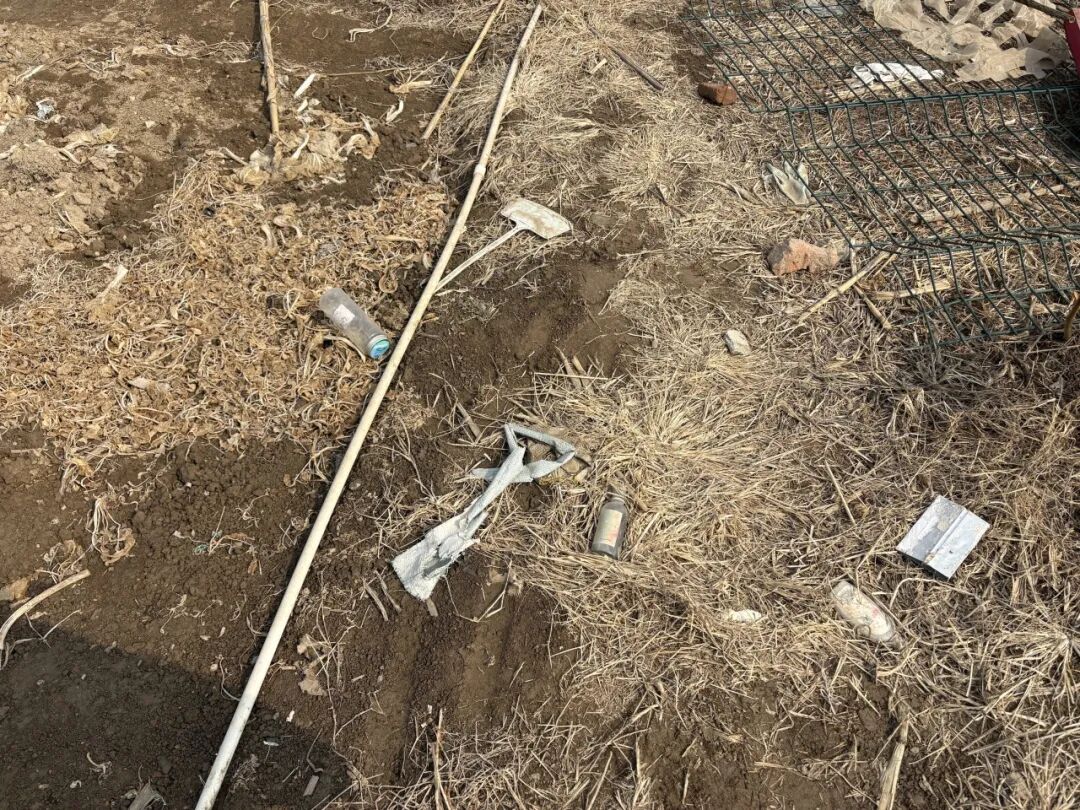
◉ Various plastic waste scattered across the land.
Plastic is truly the most convenient material ever devised by humanity, solving countless problems for those living in the modern world. Take agricultural production, for instance: the use of plastic mulch film has extended the growing season, helped suppress weeds, and reduced the need for herbicides.
Yet alongside agricultural waste such as mulch film, plastic cord, and fertiliser bags, there were everyday items like drink bottles, and even plastic tubing from hospital IV drips. I can only wonder why they had ended up in the soil.
Plastic lying on the surface was relatively straightforward to clear, but the half-buried plastic cord posed a real challenge. It had been used to secure trellises for climbing crops, and over successive rounds of tilling, the other end had been accidentally buried underground.
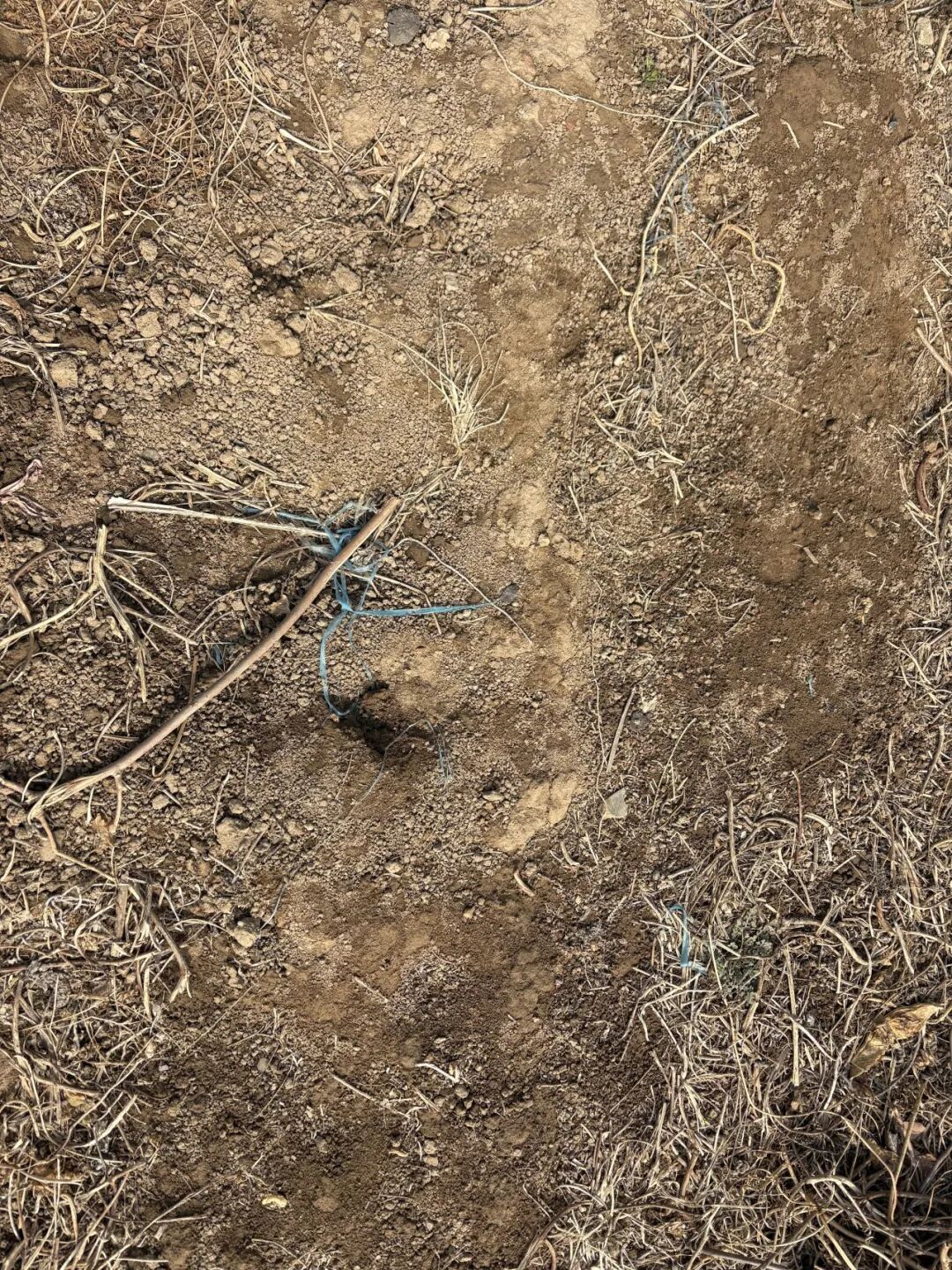
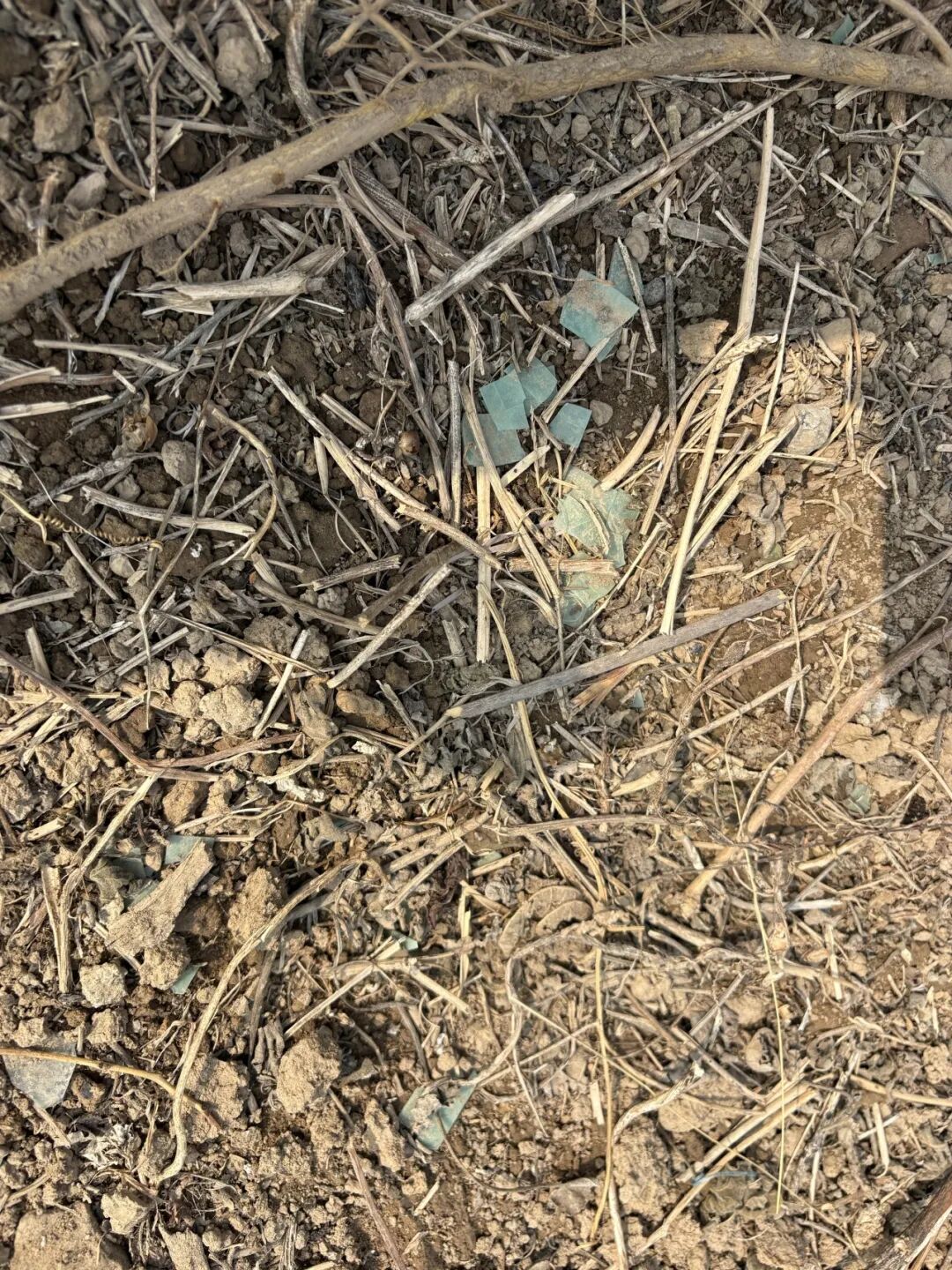
◉On the left, the plastic rope on the ground is used to secure support frames for climbing beans. Not only is this rope buried in the soil, but it is also tangled in dead branches, making it difficult to simply pull out. The plastic fragments in the field, meanwhile, must be picked out by hand.
The first cleanup attempt was back in January. The winter soil was frozen solid; a few strikes with the spade only left shallow scrapes, and I couldn’t even spot the end of the rope. I ultimately had to call it quits, planning to tackle it once the weather warmed up.
Finally, spring returned in March. The soil thawed and loosened, turning the once stubborn earth soft and workable. With just a gentle tug on the loose ends, the buried plastic ropes slid out effortlessly. I started by clearing the larger, visible plastic debris from the surface, intending to wait until I had some free time to gradually expand the cleanup to the litter along the nearby road.
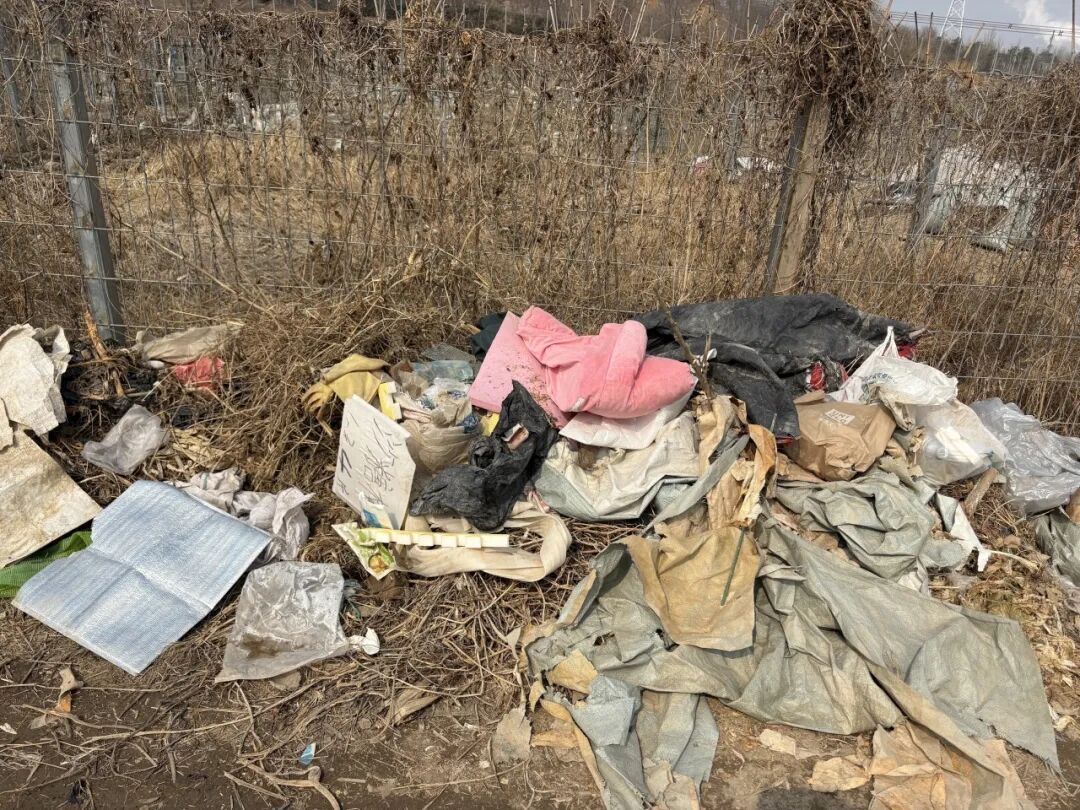
◉A rubbish heap on the farm. These spots were never designated waste drop-off points, but once enough people started tossing litter, they inevitably turned into rubbish piles. In June this year, the pile was finally cleared away.
But this plan never actually came to fruition. Plastic proved to be even harder to eradicate than resilient weeds. Merely clearing my own 20 square metres felt like a task with no end in sight. Whenever I thought I had finished, there would always be a fresh ‘harvest’: fragments left behind from larger pieces of plastic that had broken down. Mixed into the soil, they required a sharp eye and careful attention to be picked out by hand. The delicacy this work demanded was akin to embroidery.
I developed plastic anxiety
I saw a scene in the documentary *Soil (“种土”)* that really stayed with me: several people standing either side of a conveyor belt, painstakingly picking out plastic from the compost piece by piece. It is a time-consuming and labour-intensive task. Yet plastic breaks apart and settles into the soil; aside from manual clearance, there is simply no other option. Who would undertake such work unless they genuinely cared for the land?
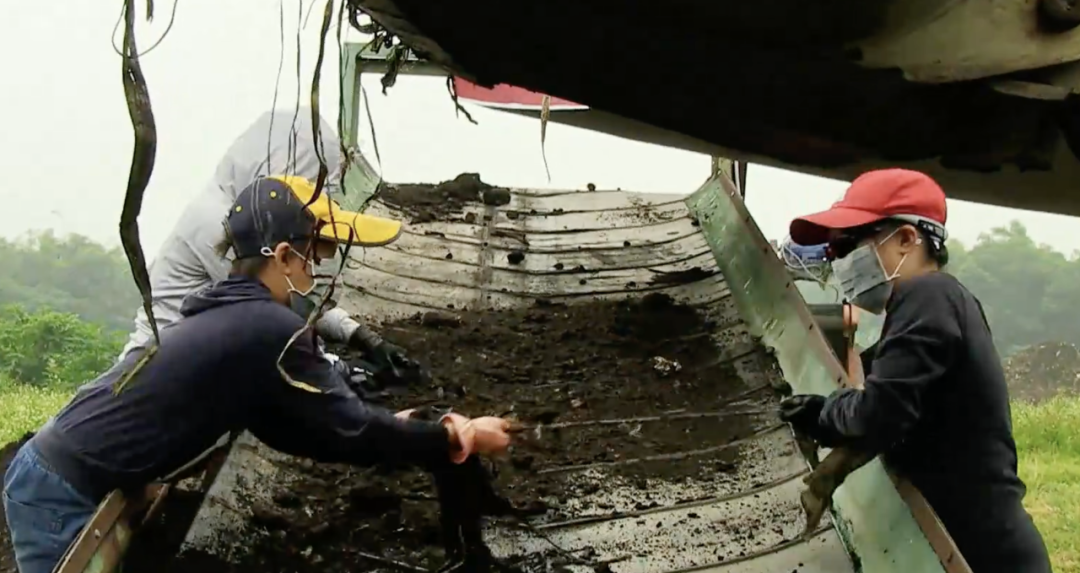
◉A scene from *Soil*: a family picking plastic waste out of compost on a conveyor belt. Image source: Screenshot from the documentary
Those tending the land are ultimately safeguarding urban consumers too. Research has shown that microplastics can be taken up by crops, eventually travelling up the food chain and into the human body. Witnessing firsthand how tenaciously the plastic fragments we produce cling to the soil brought the issue sharply into focus for me.
But human activity seems incapable of halting the production of plastic waste, which led me to develop plastic anxiety. I later attended a conference on plastic pollution, hoping to catch up on everything I’d missed in one go, only to find myself lost in a vast labyrinth of information.
After brushing up on the subject, my anxiety only intensified. There are so many precautions to bear in mind and pitfalls to avoid!
Simply put, plastics form a vast family, with each type bearing complex, unwieldy names such as polyethylene and polyethylene terephthalate. The average person simply cannot be expected to remember them all.
To reuse them safely, you also need to understand the specific precautions for each type. Some resourceful users online have devised clever workarounds. Take the popular “Weichuan–Scream oil bottle” hack, for example: it simply involves screwing the cap from a Scream sports drink onto a Weichuan beverage bottle to store cooking oil. Both the Scream cap and the Weichuan bottle carry the PP5 code (signifying polypropylene, which is safe for repeated use and heat-resistant), whereas the Scream bottle itself, being unsuitable for reuse, is discarded.
Yet without this knowledge, reusing plastic containers can easily pose hidden health risks.
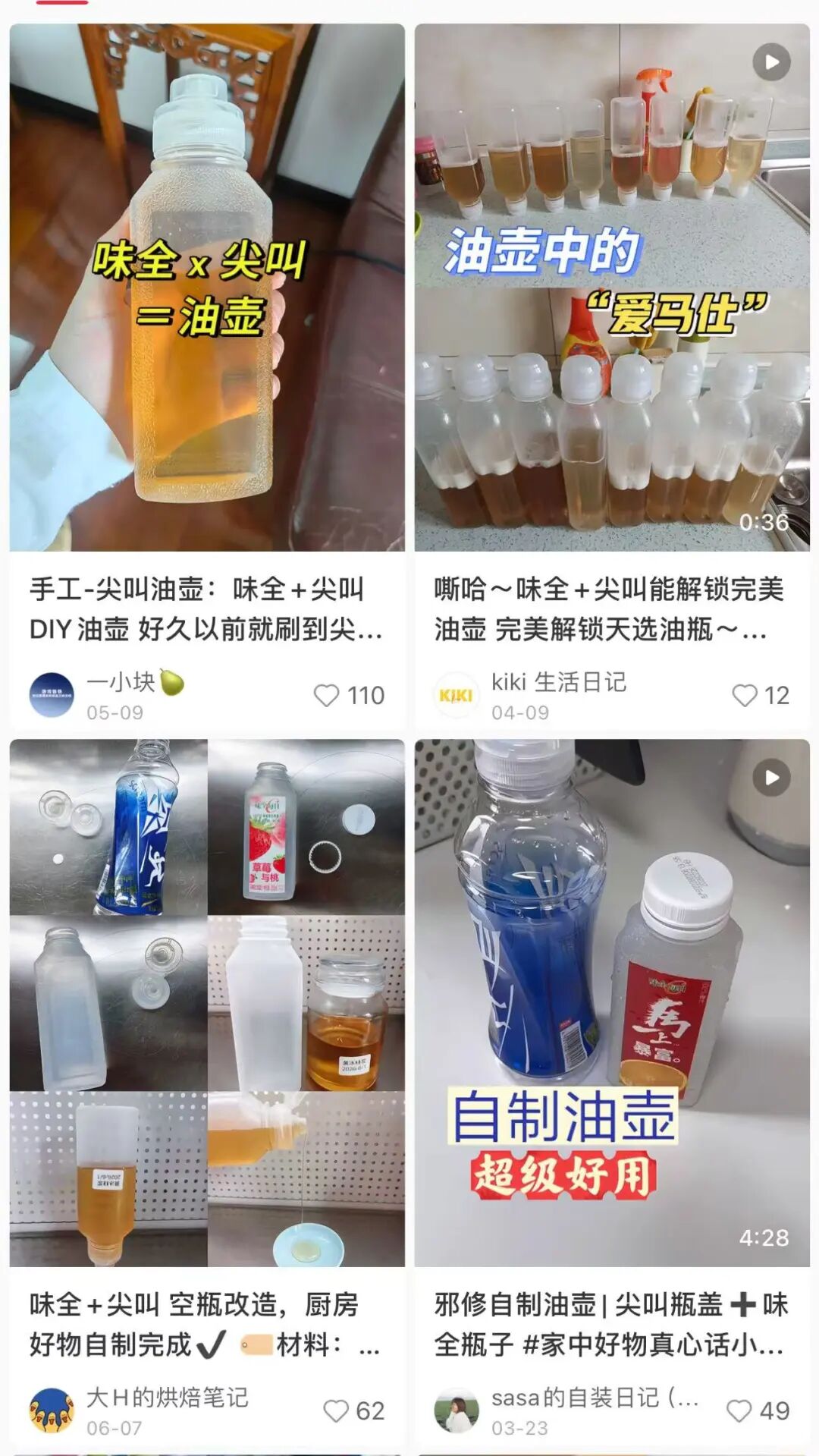
◉Netizens’ unorthodox DIY hack for homemade oil dispensers. Image source: RED (Xiaohongshu) screenshot
Biodegradable plastic sounds eco-friendly, but it hasn’t really started to deliver on that promise yet. This type of plastic requires not only dedicated industrial composting facilities (not yet available, sorry), but also a specialised recycling and processing system (also currently lacking, sorry). Otherwise, it breaks down no easier than ordinary plastic waste.
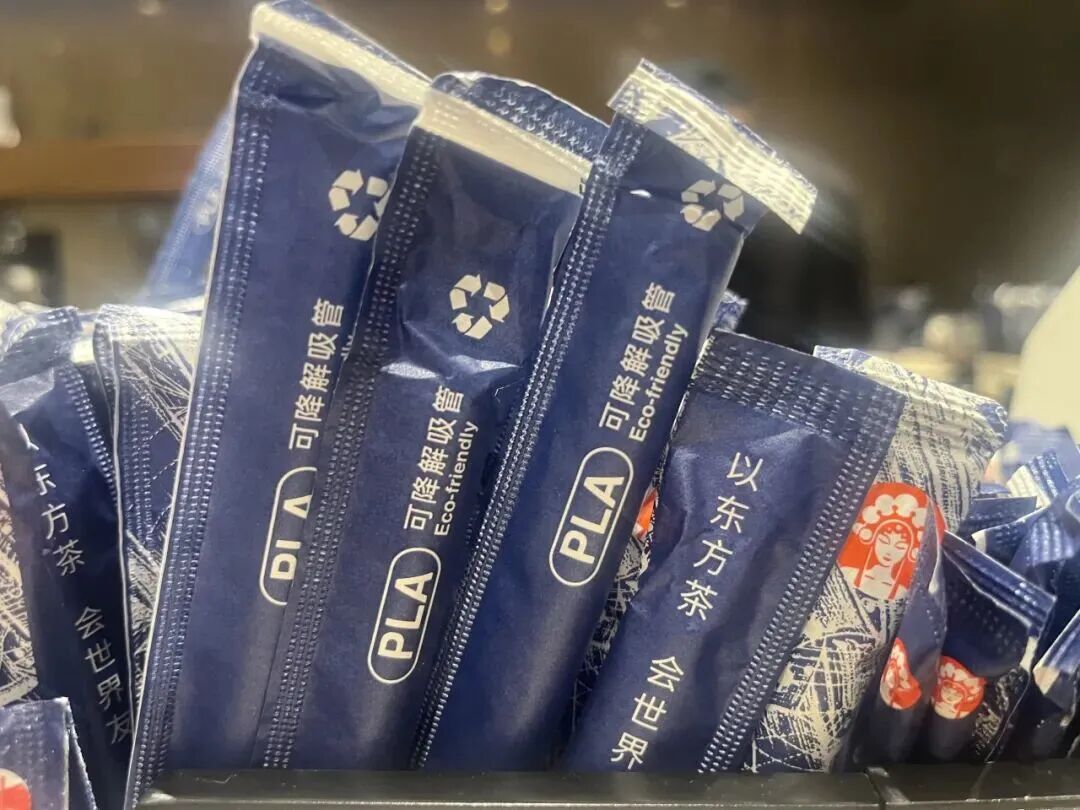
◉Biodegradable PLA straws are widely used in China, but do you know how they are recycled, or whether your local area actually has the conditions for them to degrade? Image source: Foodthink
After taking all this in, my plastic anxiety already began to flare up. After all, there is so much to fret over, and the prefrontal cortex is a finite resource! Modern life demands health, safety, and sustainability, yet we also want to save money and hassle without investing extra time or effort. How on earth can we have it all? Come to think of it, isn’t this rather another trolley problem?
Caught in this internal tug-of-war, I still hope to find a systemic solution, rather than being left to shoulder the anxiety on my own.
So I did a bit more digging. To tackle the plastic issue, we can only turn to the 3R principle (Reduce, Reuse, Recycle). Yet each of these three R’s is fairly disheartening in its own way.
Proper sorting is the prerequisite for recycling. We once launched a vigorous waste-sorting campaign, though it is hard to judge the outcome. Just looking at my own farm: there are waste bins and a few designated disposal points that have become routine, with management handling the clearance. Yet there are always those who litter indiscriminately and ignore sorting rules. The farm has a few bins intended only for weeds and dead branches, each labelled “Please do not dispose of white plastics”. Yet plastic waste keeps ending up inside them. Material that could have been composted is instead contaminated, mixed in with the plastic.
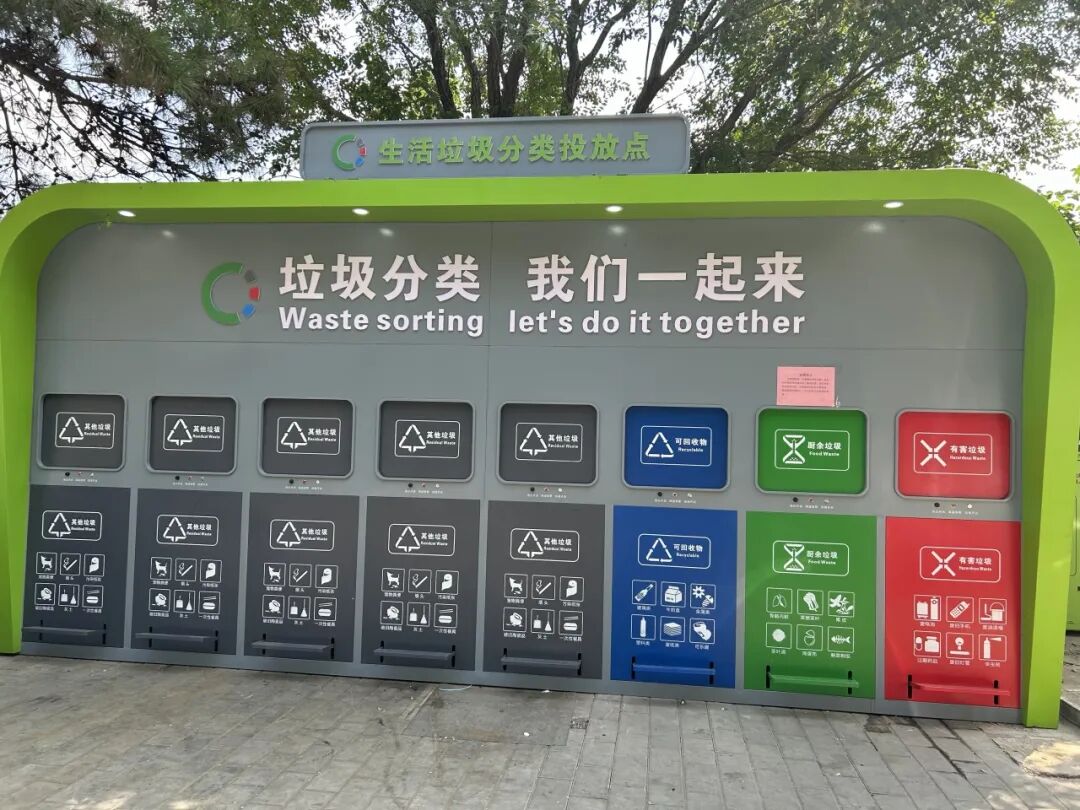
◉While waste-sorting infrastructure in many residential neighbourhoods is gradually improving, many people have yet to develop the habit of sorting their waste when they actually dispose of it. Image source: Foodthink
Plastic reduction efforts have had little visible impact, either. China is the world’s largest producer and exporter of plastics, accounting for a third of the output of the four most common plastic products. Looking at China’s data alone, plastic production continues to climb. In 2019, the country’s output of primary plastic materials stood at 95.741 million tonnes, while plastic product manufacturing reached 81.842 million tonnes. By 2025, although plastic product output had dipped to 79.199 million tonnes, the production of primary materials surged to 147.928 million tonnes. Even though finished product volumes didn’t rise, the raw plastic pellets used to make them increased by well over half.
My research uncovered some even grimmer news. Plastics are no longer the exclusive domain of the petrochemical industry. Thanks to technological advances and industrial shifts, coal-chemical companies have entered the market, churning out larger quantities of cheaper plastics. If recycled plastic loses its cost advantage, manufacturers will inevitably cut back on its use.
After looking into it from every angle, I felt completely defeated. There simply is no external fix.
Can we break free from our reliance on plastics?
Recently, while farming, I hit another moment of sheer frustration.
I bought a lightweight shovel. Once the delivery arrived, I took it straight to the farm still in its packaging, along with a pair of scissors, planning to open it on site. But the moment I snipped the woven bag wrapping it, the sack disintegrated into countless small fragments. A gust of wind caught them, scattering the pieces right across the surrounding soil.
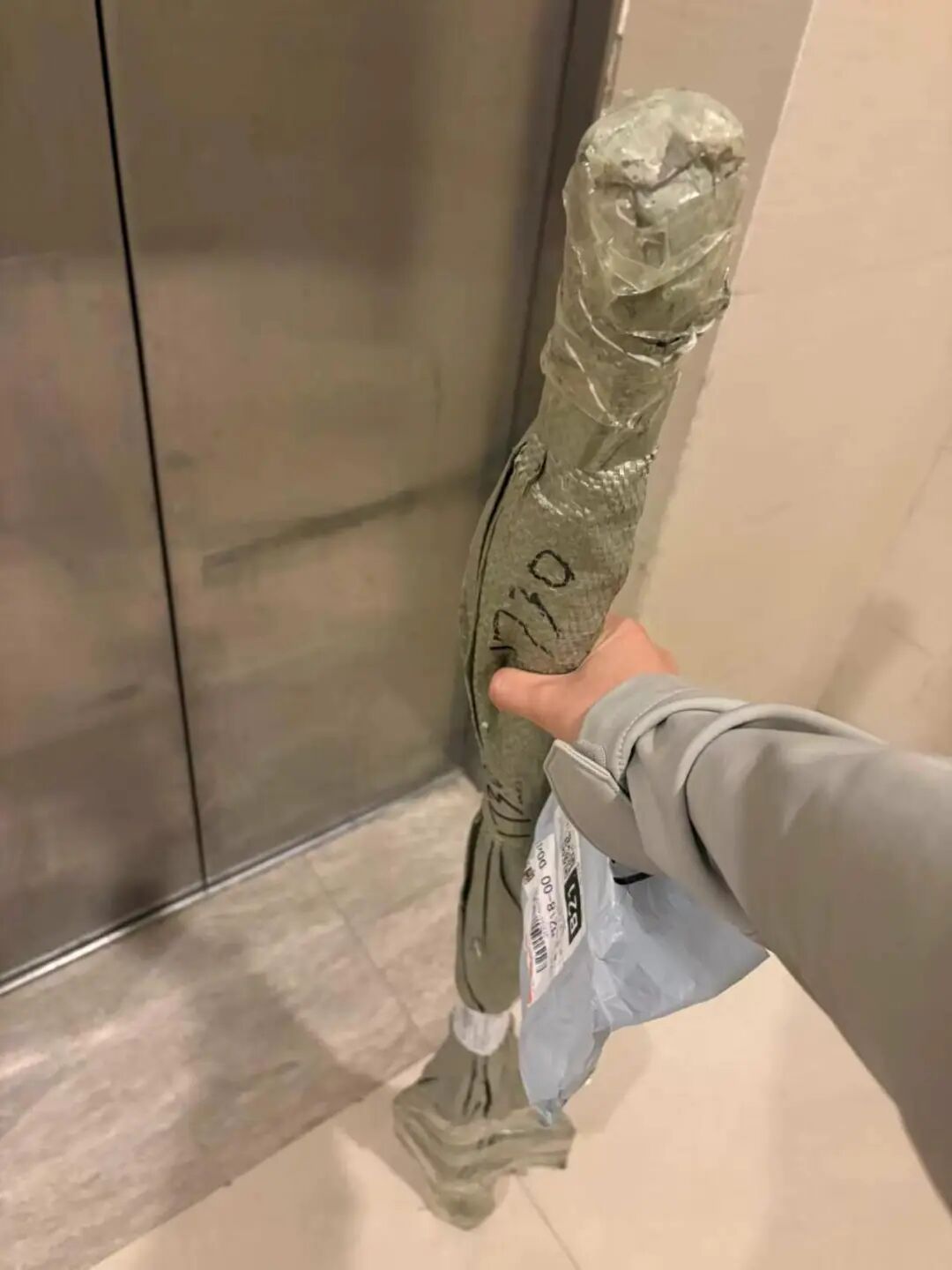
◉I took the lightweight shovel I bought online straight to the farm that day, still in its packaging. A quick tip: never open this type of packaging in the field.
I set out to clear away every fragment, but managed only a handful. To clear the lot properly would mean spending hours crouching in the dirt, squinting and painstakingly sorting through it. The pieces cling to the hands with static, refusing to drop into the bin bag, which only compounds the hassle. I suspect the plastic mess I made is still out there today, far from cleared.
It is the most ashamed I have felt since taking up farming. In the past, when people chided me for paying a pretty penny to rent land only to be a clumsy farmer, it never stung quite like this. The truth is, the spade was hardly essential; the farm already provides tools. I only bought a new one on an e-commerce site because the others didn’t feel quite right in my hands.
The fault lies entirely with me. Without a systemic fix, the only recourse is to start with myself and cut waste at the source.
It brought to mind a board for Chinese chess I once spotted outside a household in Tanzania. On either side of the “Chu River and Han Border” (the traditional Chinese chess divide), every piece had been fashioned from plastic bottle caps: the red ones from Coca-Cola, the green from Sprite. With a thin industrial base and high retail prices across much of Africa, crafting a game from whatever was to hand made perfect economic sense.
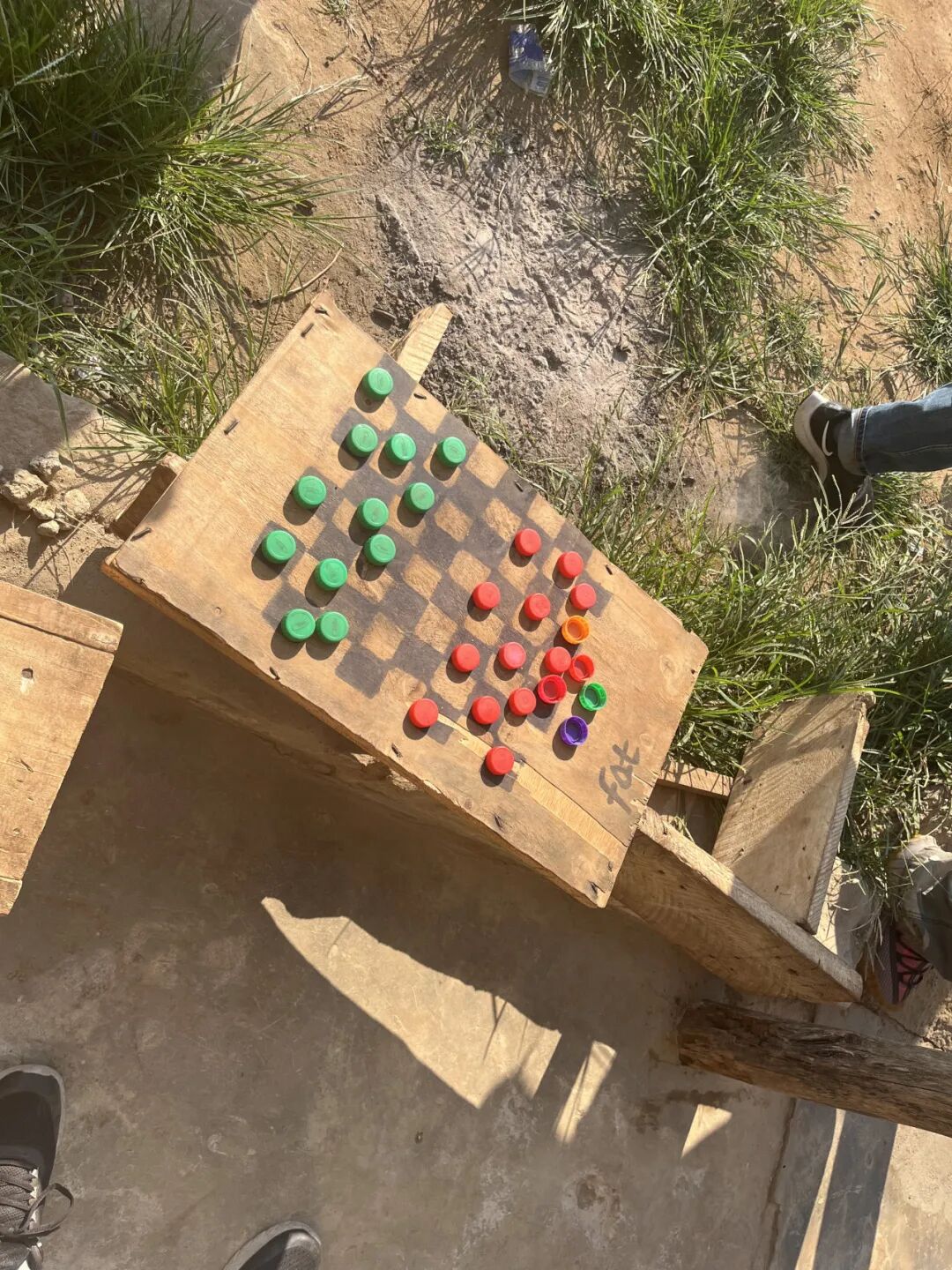
◉Chess set made from beverage bottle caps.
By contrast, our reality as the “factory of the world” has laid the groundwork for a heavily commercialised society. Relentless competition has flooded the market with overproduced goods, making everything overwhelmingly plentiful and incredibly cheap. On e-commerce platforms, a decent set of Chinese chess costs just over ten yuan. If a piece goes missing, you simply buy a replacement set. When items are this inexpensive, it’s hardly surprising that frugality rarely crosses people’s minds.
The convenience of modern consumption has also reshaped my mindset and habits. Whenever I run into a problem in daily life, my first instinct is to browse e-commerce platforms to see if a ready-made product exists to fix it. That’s precisely how I ended up with that spade.
Put aside the question of whether consumption inevitably leads to waste; in an era dominated by e-commerce platforms, this effortless shopping inevitably generates vast quantities of plastic packaging waste. For instance, the clear plastic tubs used to pack fresh fruit and vegetables are by far the most common plastic items I receive. It wasn’t until I visited a local recycling centre that I learned these containers are entirely excluded from the recycling system.
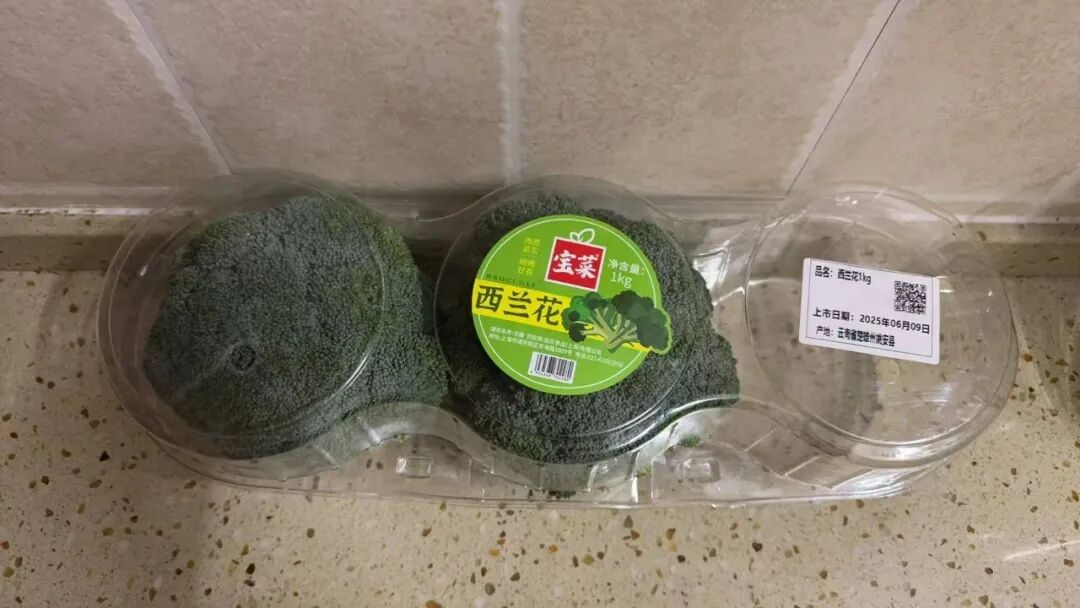
◉Every head of broccoli from Sam’s Club lives in its own ‘plastic single room’. Image source: Wu Xiaowai
The true power of consumerism lies in its ability to manufacture desire, convincing people to part with their money for things they have no real need for. Some companies have even managed to turn plastic toys into global ‘icons’. If consumerism were graded on a scale, China’s fiercely competitive manufacturers would undoubtedly push it to the absolute extreme.
Under a relentless barrage of advertising and marketing campaigns, consumers inevitably yield to mass-produced desires. The toll that consumerism takes in the form of waste and plastic pollution will ultimately be borne by us all, yet we habitually turn a blind eye to it when we shop.
Perhaps if more people were to witness, as I have, the plastic litter scattered across the very soil that feeds us, they might take the need to break our reliance on plastic a little more seriously.
This year’s farming season has been incredibly rewarding, yet I know that should I continue tending this plot next year, my struggle with plastic waste here is far from over.
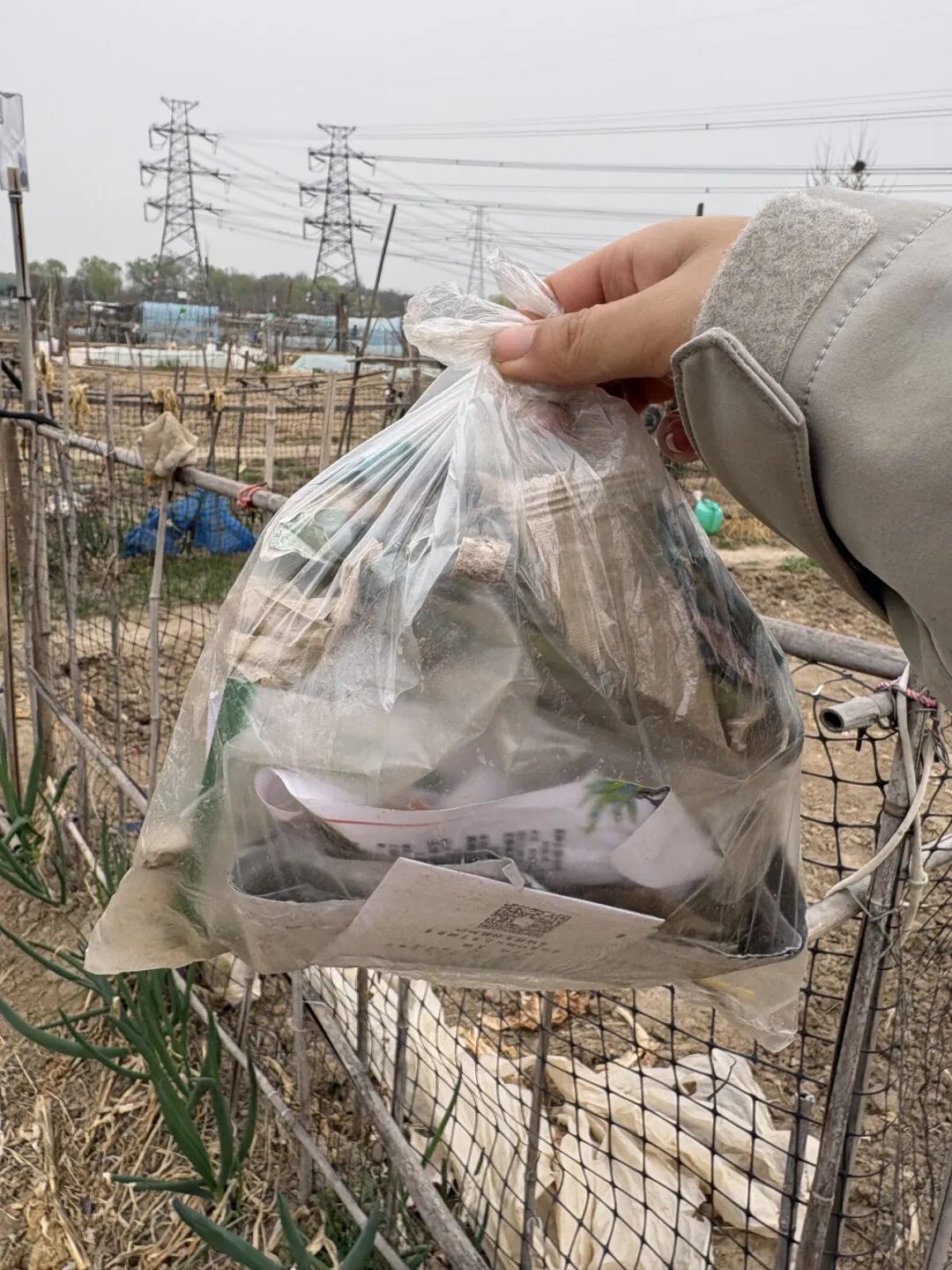
◉Every time I go farming, I make sure to bring a bag to take away the plastic waste I generate.
– This is Foodthink’s 831st original article –
Foodthink
Author
Xie Xiaodan
Former agricultural journalist, dreaming of a small plot of land to farm for myself
Editor: Yu Yang
Layout: Xiao Shu
Scan the QR code to tip and support original food insights
▼

▼
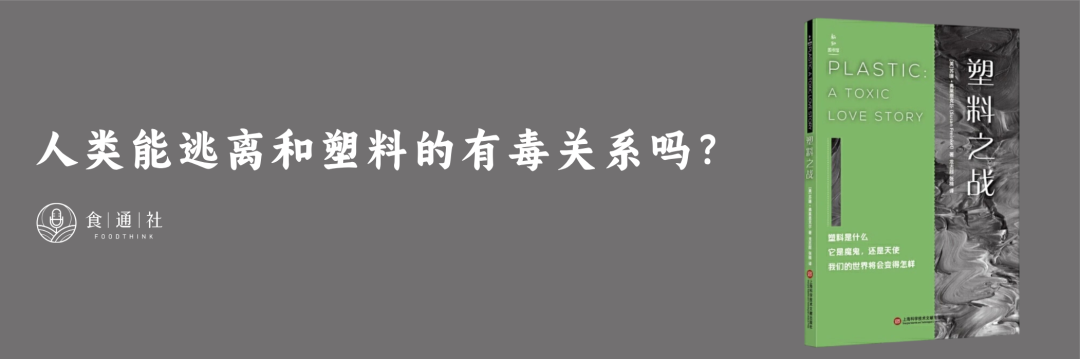
Click the image to read related articles
▼
Click a keyword to explore more articles in this collection
Seeds|Farming Techniques|Policy|Fermentation|Nutrition|Fruit|Fisheries|Events|Recruitment|Food Delivery|Food Markets|Livestock|Food Talk|Sharing Sessions|Book Club|Harvest Festival|Smallholder Stories|Climate Change|Rural Development|Cooperative Economy|Urban Farmers|Food Safety|Digital Technology|Biodiversity|Pandemic & Food|False Solutions|Agroecology Internship Programme
Beijing|Hebei|Shanghai|Guangdong|Guangxi|Henan|Sichuan|Jiangxi|Xinjiang|Shaanxi|Hong Kong|Chongqing|Zhejiang|Jiangsu|Guizhou|Taiwan|Inner Mongolia|Philippines|Canada|Russia|Mexico|Italy|USA|UK|Germany|Netherlands|Thailand|Sweden|Japan