What Extra Costs Has Straw Incorporation Brought Farmers?

Want to Farm? Shred the Straw First
The village said, “We can’t cope! Just chop it all into the field!”
Zhao Hai recalled that after the autumn harvest the previous year, he had approached village cadres and asked for straw removal from field — in other words, hiring machinery operators to bale the straw and haul it away. He managed several hundred mu of paddy on behalf of others and figured this would be the simplest way to get rid of the straw. But his wish went unfulfilled: the village committee failed to find buyers for the straw, and most of it had to be forced into the fields.
This past June, Foodthink visited three counties in Hunan to examine how straw incorporation is affecting the way farmers work the land. The Village A we visited had only the previous year endured the strictest straw-burning ban season in history. Higher-level government demanded that not a single hotspot be lit. Suddenly forced to incorporate straw, Zhao Hai endured a tumultuous six-plus months, witnessed strange things he had never seen in all his years of farming, and racked up many extra costs.
Village A sits in the heartland of the Dongting Lake area of Hunan. Its farmland was built up over generations from lake silt deposits, the terrain is remarkably flat, and it is a principal production zone for rice and oilseed rape. Embankments separate the village’s channels from the external waterways, and irrigation relies on electric pumping stations. In recent years the village has begun to develop crayfish farming: trenches for shrimp wind between the paddy fields, shallow water mirrors the sky, and little egrets are often seen foraging along the field ridges.
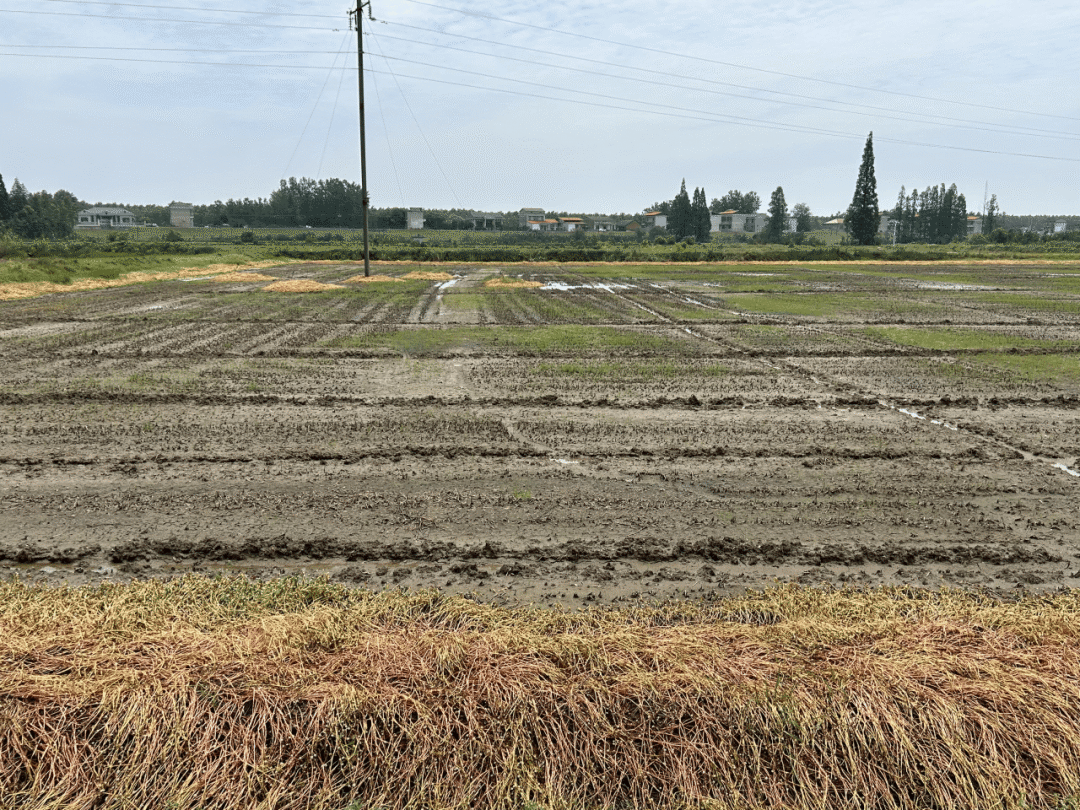
◉ The previous season’s rice paddies were kept flooded for crayfish; after draining and digging trenches, low rice stubble can still be seen.
In years past, after the autumn rice harvest, farmers would follow orders from above, burn the straw in an orderly fashion, then sow oilseed rape seeds directly into the bare field. Some also flooded their plots for crayfish. Confronted with the sudden straw-burning ban, the first thing farmers had to face was a thick, tangled blanket of straw smothering the fields.
Crouch down and look closely, and this layer of “grass” turns out to be a mix of already-shredded rice stems and leaves alongside rice stubble still rooted in the soil — the root systems and short stems protruding above the surface. Experts vividly call it the “sponge layer”. If it is not thoroughly worked into the soil and left to decompose in good time, it will block the tiny oilseed rape seeds from rooting and establishing seedlings, causing a drop in yield.
According to the Ministry of Agriculture and Rural Affairs’ “Guidelines on Scientific Straw Incorporation for Autumn-Harvested Crops, 2022”, the rice–oilseed rape crop rotation zones in northern Hunan are advised to use combine harvesters fitted with a straw chopping and spreading device, shredding the straw and spreading it evenly in a single pass at harvest, with an average stubble height kept below 15 centimetres.
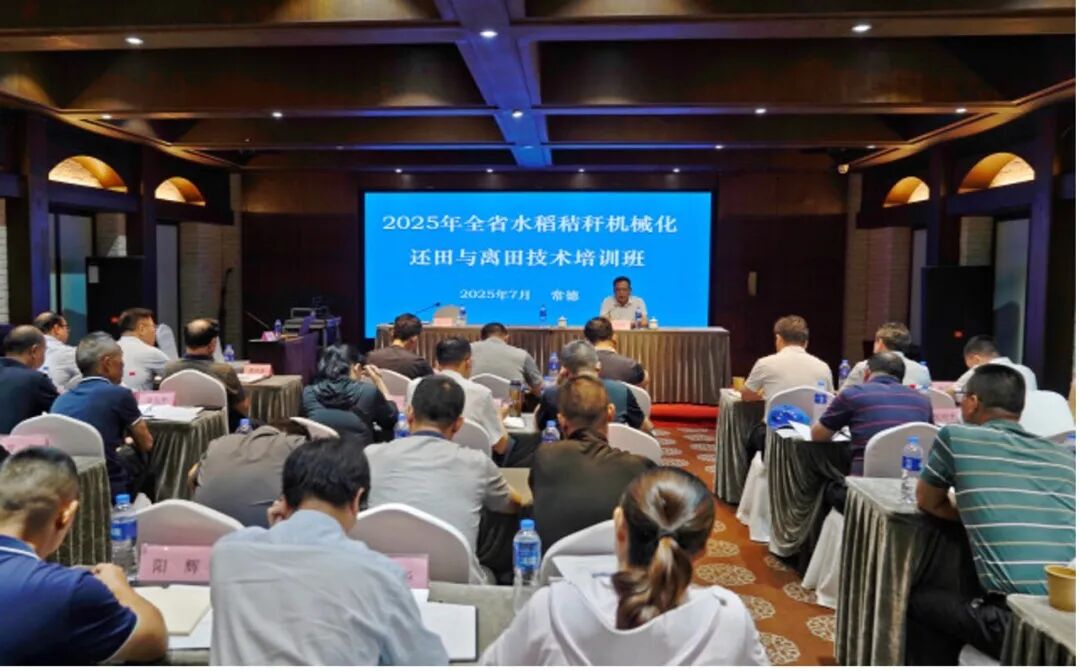
◉ On 18 July 2025, a province-wide training class on mechanised rice-straw incorporation and removal technology opened in Changde. Image source: Hunan Daily
In practice, though, operators — eager to save fuel and rush through the work — routinely leave stubble height far above 15 centimetres. The second round of Hunan’s routine provincial ecological and environmental inspection in 2023 found that stubble height across 80 rice paddies ranged between 40 and 60 centimetres.
Moreover, in random field checks, more than half of the harvesters inspected were not fitted with a straw chopping and spreading device. Fitting the set of chopping blades adds load to the machine, burns more fuel, costs at least ten extra yuan per mu, and lengthens each working run. As a result, operators often sneakily leave the device idle or pull out some of the blades, achieving only partial shredding.
Local agricultural officials, too, reluctantly acknowledged that itinerant machinery operators from elsewhere work on thin margins, cannot claim local straw-incorporation subsidies, and are certainly unwilling to take on extra load and fuel costs. The local government, for its part, finds it hard to keep them in line.
So farmers fall into two camps: large-scale growers who own their own machinery are happy to cut lower — lower stubble makes every subsequent field operation easier, and they are willing to spend extra fuel and time on land preparation; but for smallholders the cost ultimately comes back on them, and they refuse to pay operators a premium for proper shredding, choosing instead to defy the ban and burn the straw in secret.
The party secretary of Village A also admitted that for most villagers the straw has not even been shredded — the long stems simply stand where they were left. If the village does not arrange baling and removal, they will seize any opportunity to set fire to it.
As mentioned earlier, Village A failed to find buyers for its straw and could only figure out how to deal with the long stems. It coordinated with the town, which dispatched machinery for a second round of straw shredding. Locals say the per-mu subsidy or fee paid to operators is 30–35 yuan.
Straw shredding means shredding rice straw a second time. Locals fit a shredder head to the rear of a tractor. If they also want rotary tillage, they swap in the corresponding blades.
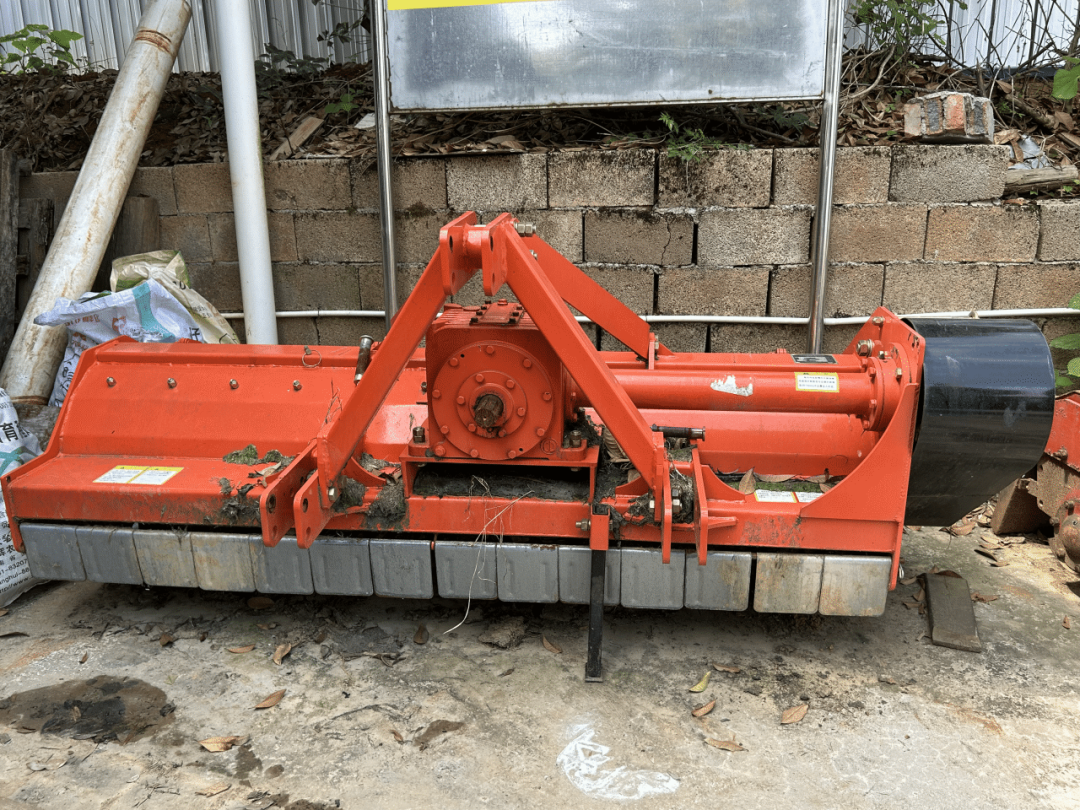
◉ A shredder head bought in 2025 by a large-scale grower in Village B near Changsha, which can be mounted on a tractor. After subsidy, the farmer’s actual outlay per unit is just over 5,000 yuan.
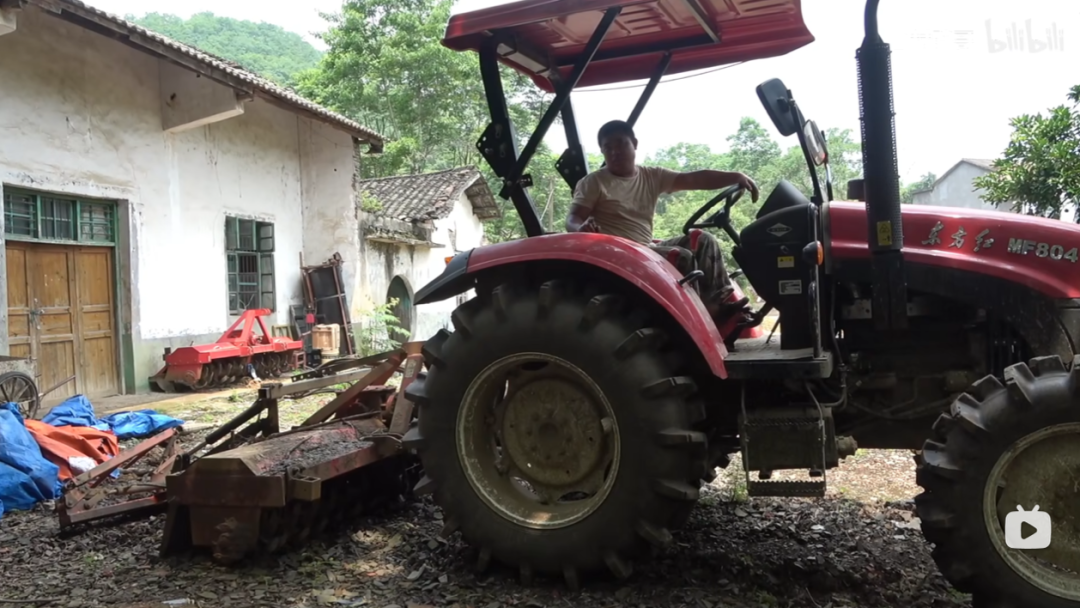
◉ A tractor used for shredding, stubble destruction, and rotary tillage. Image source: bilibili
The straw is simply too thick. Even with the town government footing the bill and dispatching shredding machinery, the results leave much to be desired.
What is more, because these machines are dispatched by the town, they do not necessarily take direction from the farmers. Zhao Hai’s impression is that only the core plots get genuinely thorough chopping; on the rest, the operators simply “run through it and that’s that”.
With that, the first step of straw incorporation — straw shredding — is nominally done. Next, if Village A farmers intend to grow oilseed rape as the following crop, they must plough the shredded straw into the soil via rotary tillage. Rotary tiller blades cut deeper than 10 centimetres and burn more fuel, but there is no subsidy for this stage: hiring an operator costs 80 yuan per mu. Before the ban, rotary tillage was only needed before planting rice; for oilseed rape a simple ditch-cutting pass sufficed (30 yuan per mu). The extra 50 yuan must come from the farmers’ own pockets.
Compounded by heavy rainfall, which caused severe yield losses, farmers in Village A report that their oilseed rape fails to root, fails to emerge, and is prone to lodging. Many harvest only 100–200 jin per mu (the normal yield being 300–400 jin).
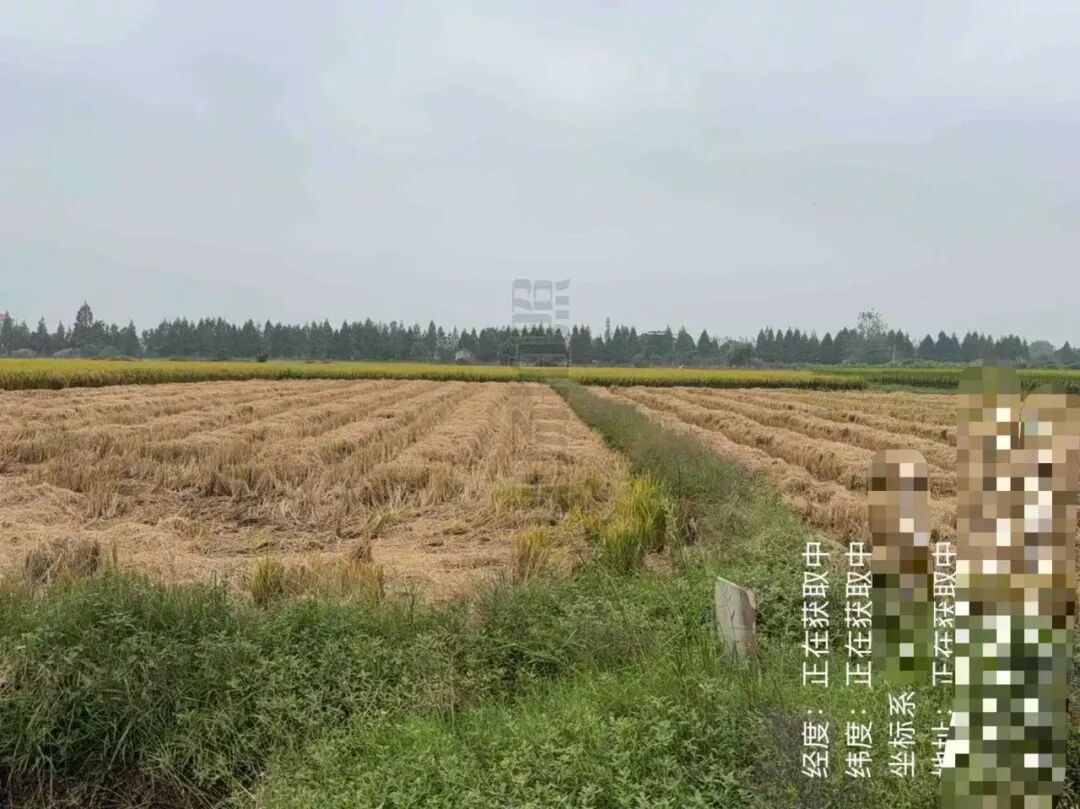
◉ After harvest, Village A’s rice paddies are left blanketed in thick, uncut stems. Image source: interviewee
An Extra 80 Yuan
To safeguard yield, Village A’s solution was to sow more heavily. Originally two bags of seed per mu, some plots were pushed up to three or even four. Although oilseed rape, as an oilseed crop, has its seed paid for by the state, in the eyes of Village A’s party secretary that was still taxpayers’ money. Besides, the government-allocated seed was not always enough — Zhao Hai, for instance, always had to buy a little more himself.
They also considered applying the no-till straw mulching method set out in the aforementioned Straw Incorporation Guidelines, which would spare them the cost of rotary tillage. But the rice stubble left on the surface lay unevenly in thickness and still impaired rooting and germination, and many farmers were far from convinced of the method’s merits.
Village B near Changsha, however, had been incorporating straw since 2021, without any rotary tillage. Their experience was “richer” — or, as locals put it, they had worked their way through every conceivable fix for the problems straw incorporation brought.
The old routine was to plough the field first, then raise ridges and beds and sow by hand — and the oilseed rape still did not root well.
Now they have devised a combination of practices: first, the rice stubble is cut lower. Then the large growers buy blade attachments capable of both straw shredding and stubble destruction, mounting them on the front of their tractors — after subsidy, a unit costs roughly 5,000 yuan. These blades not only shred straw but also destroy stubble, pulling the rice root stocks buried in the soil up and chopping them to bits.
Finally, to help the oilseed rape root more effectively, they use a seed drill. Once the straw has been shredded and the stubble destroyed, this machine completes fertilising, sowing, rotary tilling and ditch-cutting in a single pass — a model promoted specifically by the agricultural department, costing around 20,000 yuan per unit after subsidy.
Yet, compared with Village A, no one is footing the bill for straw shredding in Village B, and the straw incorporation subsidy comes to less than 10 yuan per mu. After the large growers finish shredding, they apply upward for subsidy, which can cover just under half of this one operation’s cost — but the disbursement has yet to be approved.
In the estimates of multiple farmers across both villages, the extra costs of straw shredding, rotary tillage and pesticide spraying for one season of oilseed rape after straw incorporation add up to roughly 60–80 yuan. And the per-mu profit on oilseed rape is generally barely over 200 yuan.
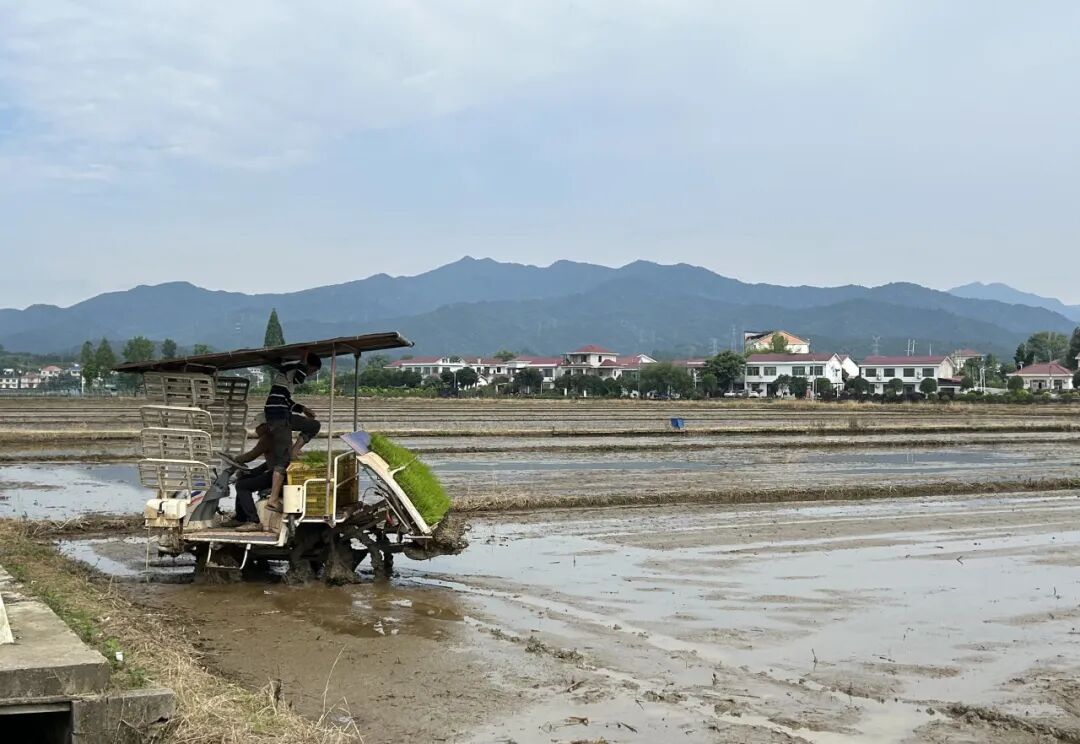
◉ In early June, large growers in Village B are carrying out mechanised rice transplanting.
Some simply gave up. One large grower in Village A had 200 mu; after secretly burning just over ten mu, he decided to walk away — his plots were scattered, and sending the rotary tiller back and forth over 20 kilometres to sow a patch of oilseed rape was hardly worth it. What is more, because the plots had only just been upgraded to high-standard farmland, the soil surface was uneven, pushing rotary tillage costs above the local norm at 120 yuan per mu. In the end, he handed all 200-odd mu over to the village collective to grow green manure.
Pest Damage and Soy Sauce Water
During the visit to Village B, the agriculture-sector official mentioned earlier kept stressing the same point: straw incorporation returns fertility to the soil. “If you don’t incorporate the straw and apply the same fertiliser, yields will certainly be lower.”
Yet in the interviews, not a single farmer had actually reduced their chemical fertiliser use. With the official in the room, a large grower in Village B who had been incorporating straw for five years could only say, diplomatically: “Maybe the fertiliser just isn’t as potent as it used to be?”
Perhaps they were simply too worried about yield loss ever to dare cut back on fertiliser. But one crayfish farmer in Village A had seen at first hand how straw could “enrich” the water — the feed his crayfish consumed had dropped noticeably. He uses a compound microbial product based primarily on Lactobacillus plantarum for “bottom amendment” in his ponds, combined with brown sugar and rapeseed cake, which helps cultivate microorganisms and plankton in the water and indirectly promotes the decomposition of organic matter on the pond bed (leftover feed, faeces, and the like).
In such conditions, the feed he had bought at last year’s volume was still nowhere near finished. Crayfish do not actually eat straw, but the microbial product may promote the proliferation of microorganisms on the straw’s surface and the breakdown of organic matter, forming a biofilm and organic detritus that the crayfish can feed on.
But there is a downside. Once the straw begins to rot, the paddy turns into a dark, grimy “soy sauce” — foul-smelling and filthy. The moment you stir it even slightly — “Oh my God, the stench hits you full on!” says Zhao Hai.
The farmer mentioned above did save on feed, but admitted he had to change the water every three days. In Village A — a flat water-town area where every household relies on electric pumping stations to draw water from the ditches — his field sits right next to a water channel, conveniently placed: “As soon as it changes colour, I change it.” He changed the water at least a dozen times a season.
Not all farmers, though, can afford this. In recent years, the village has suffered stretches when the external rivers held no water and there was simply nothing to pump in. Crayfish fall sick and die; sometimes by the time the farmer realises a water change is overdue, the young crayfish have already perished. Adding extra pumps and pumping infrastructure costs money too. In fact, these farmers are eligible for a “manure return to field” subsidy of 10 yuan per mu, but nearly a year on, the payment still has not come through.
Gains and losses aside, what everyone could plainly see was the runaway increase in farmland pest damage.
The party secretary of Village A recalled that during the autumn harvest, when he drove out to the fields at night and switched on his torch, the beams were crawling with insects — packed dense.
One grower in Village A said that half of his extra 80 yuan in costs had gone to pest control alone. Drone spraying charged at 20 yuan per mu; he flew two passes. In past years, his oilseed rape had never needed a single pesticide spray.
The insects affect not only the winter oilseed rape but also the rice from spring through summer. Two large growers in Village B recalled that seven or eight years ago the rice stem borer (commonly called the stem-boring worm) was not nearly so troublesome — without spraying, it would eat a few rice plants at most. Yet in the years that followed, it could wipe out an entire rice harvest. Rice thrips have also grown more numerous; they used to plague only the seedling beds, but now wherever there is rice straw, there are insects.
The frequency and intensity of pesticide spraying have both escalated. Previously, spraying was only needed once the rice entered grain filling, and by the time the panicles began to “nod,” the borers stopped penetrating the stems. Now, just half a month after rice transplanting, farmers must start applying high-quality imported pesticides and keep spraying right through to harvest — three to four full rounds per rice season. Some smallholders have sprayed eight times in a single season and still failed to control the pests. “Just think about that — spraying every twenty-something days, steeped in pesticide!” exclaims the large grower who helped him harvest, still in disbelief.
Farmers and agricultural technicians have also noticed that some pests appear to have developed pesticide resistance — as if they had “mutated” and “levelled up.”
The farmers’ own analysis is this: without burning the straw, insects can shelter in the rice stubble through the winter and can never be eradicated. On top of that, the plots here are scattered, with single-season, early-season and late-season rice paddies intermixed in a “patchwork” pattern — you spray one side, and the pests simply fly in from the other, causing “rolling damage” from plot to plot. Coordinated joint control is all but impossible.
They all remember when an official from Changsha personally went out to the countryside and split open a “stubble clump” (i.e., rice stubble) — a single one contained over a dozen larvae.
The agriculture-sector official mentioned earlier confirmed that the rice stem borer has “caused a crisis” in Hunan, with total crop failure in some areas. Since 2024, the Hunan Department of Agriculture and Rural Affairs has repeatedly used terms such as “tough battle,” “heavy outbreak,” and “severe outbreak” to describe the state of stem borer infestation in rice paddies. In April 2025, the Ministry of Agriculture and Rural Affairs made a special trip to Hunan to investigate stem borer control efforts.
That same year, the Hunan Plant Protection and Quarantine Station’s Pest and Disease Bulletin forecast that rice pests and diseases would be more severe than usual overall, with a combined occurrence area of 310 million mu-times across multiple pests and diseases, 62 million of those attributed to the rice stem borer. The province-wide weighted average insect density stood at 9,773 per mu — up 67.6 per cent from the ten-year average and up 20.9 per cent from 2024.
Those interviewed worry that as straw incorporation continues apace, the pest problem will only grow worse.
Solutions from Ecological Rice Farmers
Is Straw Burning an Inevitable Product of High-Intensity Intensive Agriculture?
First, continuous monocropping or tightly packed cropping cycles — land where neither crop rotation nor fallowing is possible — provide a perpetual breeding ground for pests. Several villagers in Hunan we interviewed recalled that as children, the village did not farm in winter. The collective would organise “soil sun-drying”: the subsoil was turned up in winter, and when frost came, it invariably killed a portion of the overwintering pests.
Nowadays, only tobacco plots still enjoy this “soil-baking and sun-drying” treatment, because tobacco seedlings are not transplanted until March or April, leaving the land fallow through winter after the autumn harvest.
Furthermore, when rice is not mechanically harvested but cut by hand, farmers can keep the stubble lower — just an inch high, “like a close shave” — leaving the pest eggs nowhere to hide. The Pest and Disease Bulletin mentioned earlier also noted that mechanised harvesting now covers more than 90 per cent of the province’s rice acreage, and the stubble left on mechanically harvested fields is generally quite high.
Most importantly, as piped gas and electricity gradually reached the countryside and livestock farming went large-scale, the low-calorific rice straw became useless. In the old days, straw was baled and stacked in the loft above the pigsty — used to fire the cooking stove, feed the pigs and cattle, thatch the roof, pad the beds. You could even pick the rice kernels from early-season rice and tie the remaining straw into little scarecrows…
In Village C — in another town also within the Dongting Lake area — Ding Yong’s dozen or so mu of paddy land have been managed under ecological farming methods for years, with straw mulching. Yet he said the concentrated rice planthopper outbreak last year had not much affected him: while others in the village could no longer prevent the damage, his yield still fell within the range of fluctuation it had always shown. He credits the biodiversity his fields have achieved as a key reason: rice stem borers come and go year after year, but their natural enemies — rove beetles, spiders, and the like — are equally regular visitors to the paddies, keeping stem borer damage within an acceptable range.
Ding Yong added that in winter he plants Chinese milk vetch as green manure, sowing it ten days before harvesting the mid-season rice while the soil is still moist. After harvest, the straw is simply laid on the soil surface, which actually helps shield the vetch from the sun and conserve soil moisture — late September and early October in Hunan are far from cool. In this way the seeds can still germinate, and the cost of rotary tillage is spared.
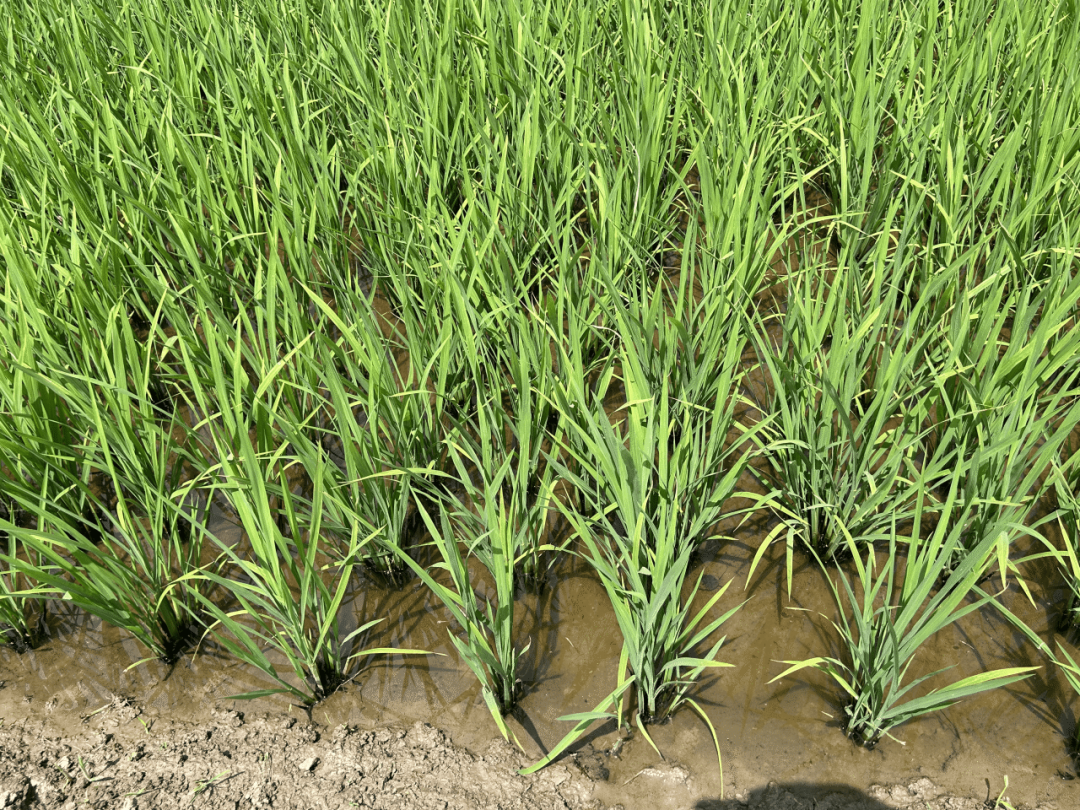
◉ In Ding Yong’s rice paddies, tadpoles, snails, and foraging birds are in abundance.
The straw that gives farmers in Village A so many headaches, Ding Yong can barely have enough of. To mulch the crops in his greenhouse vegetable plot, he cuts and dries the grass himself. Even alligator weed — that tenacious invasive — has multiple uses: besides mulching, it can be fermented into liquid fertiliser. “Mulching does so much for me, I call it my ‘five-guarantee household’ — water retention, soil retention, moisture conservation, nutrient retention, and weed control,” Ding Yong recites, unhurried. Above all, it returns fertility to the soil, in keeping with his planting philosophy of “energy cycling.”
To deal with straw, Ding Yong also spent 4,000 yuan (after subsidy) on a shredder head.
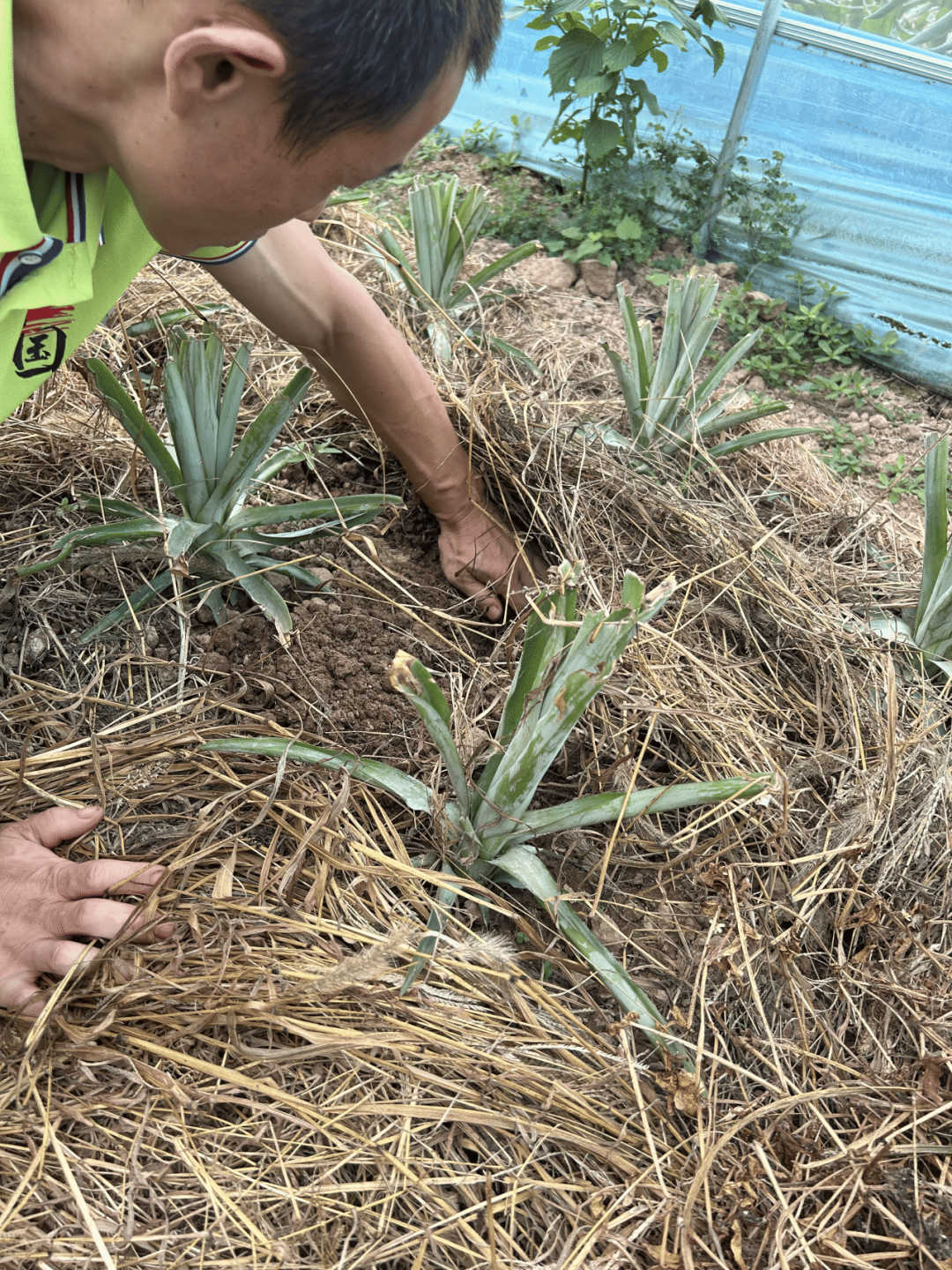
◉ Ding Yong mulches his pineapple seedlings with straw. Comparing before and after, he found that watering frequency dropped noticeably once mulching began, and he could use less fermented fertiliser residue.
When we visited the local straw collection and storage facility, we spotted bales of damp, sprouting — even mouldy — straw, unwanted by anyone, dumped outside the warehouse. He spotted something too: there was rice straw and rice husk in plenty, making it an ideal setting for no-till mulched potato planting. “The mulch-and-no-till method isn’t fussy about soil.”
And yet other piles of shredded straw — clumps of soil mixed in from the baling process — were, in his eyes, treasures simply put in the wrong place, worth hauling back to enrich his vegetable plot.
Though Ding Yong treats straw as treasure, he is not the kind of beneficiary the government prioritises. Subsidies and support are steered first to large-scale operations processing more than ten thousand tonnes of straw. Ding Yong understands the logic: a boss has to coordinate massive volumes across the region, liaise with sellers, and claim the subsidy. He has neither the eye nor the spare capacity for meticulous small-plot cultivation that builds a true ecological cycle.
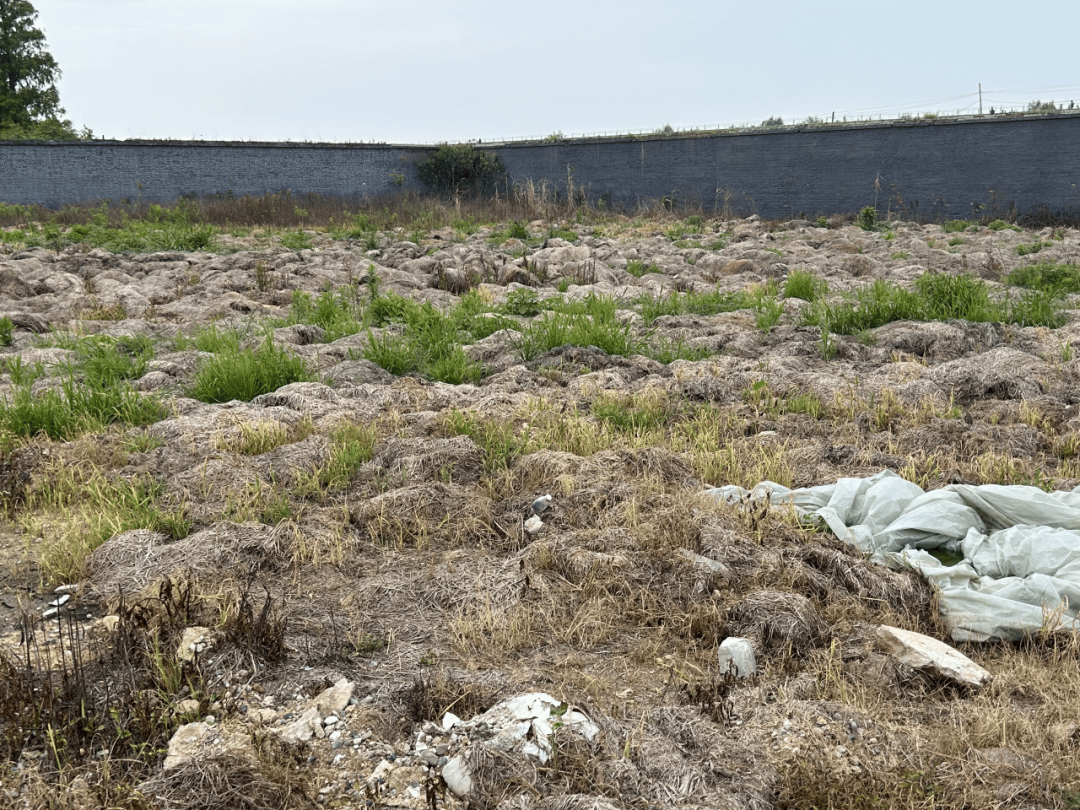
◉ Through the lens of Ding Yong’s “energy cycling”, this abandoned straw yard is, in fact, a future fertile potato farm brimming with potential.
We also visited other conventional growers in Ding Yong’s village. They too had secretly removed the shredding attachment from their harvesters and even burned the straw (especially during the brief gap between harvesting early-season rice and sowing late-season rice). The bumpy road of straw incorporation that Villages A and B have been traversing, they had walked years ago: they had received free straw-shredding and stubble-destruction machines dispatched by the government, then found the pest problem worse than before, and now simply pay out of their own pockets to rotary-till the straw into the soil.
Within the same village, two farming systems run on entirely different ledgers of cost and return. For a large grower, it comes down to penny-by-penny cost accounting, yield control, and machinery outlay — to ensure the grain can be sold by year-end, land rent paid to the farmers, and the fertiliser bills settled. In that light, as Zhao Hai puts it: whether or not you burn, pesticide application never skips a beat; but once you stop burning, field management is easier — the harrow no longer tangles with straw during rotary tillage. Bottom line: it’s less hassle.
Yet Ding Yong’s apparent ease, of course, carries its own costs. As an ecological farmer, he has spent years building up a pocket ecosystem, and much more labour goes into weeding, running comparison trials, and making fermented fertiliser — the labour bill is far steeper. If the contract changes hands, or extreme weather strikes, that small pocket of ecological diversity can vanish overnight.
So even if ecological farming appears to offer a better, more “painless” path to straw incorporation, it is hard to declare breezily who is more viable or more “eco-friendly”.
At the end of the day, the straw-burning ban is an exceedingly complex ledger: farmers’ livelihoods, ecological consequences, administrative costs — all are key variables on this balance sheet, yet they are perpetually eclipsed by the single target of air quality. Only by witnessing the real struggles farmers face under the ban can we truly find a way forward for straw.
– This is Foodthink’s 832nd original piece –

Foodthink
Author
Pei Dan
A writer returned to the straight and narrow, covering climate change, the environment, and the real people caught in the currents of change.
Zhao Hai is a pseudonym in this article.
Unless otherwise noted, all photographs were taken by the author.
Editor: Ling Yu
Layout: Xiao Shu
Scan to tip and support original food writing
▼

▼
Click an image to read related articles
▼
Click a keyword to browse more article collections
Seeds | Farming Techniques | Policy | Fermentation | Nutrition | Fruit | Fisheries | Events | Recruitment | Takeaway | Wet Markets | Livestock Farming | Food Talk | Sharing Sessions | Reading Groups | Harvest Festival | Smallholder Stories | Climate Change | Rural Development | Cooperative Economy | Urban Farmers | Food Safety | Digital Technology | Biodiversity | Pandemic and Food | False Solutions | Agroecology Internship Programme
Beijing | Hebei | Shanghai | Guangdong | Guangxi | Henan | Sichuan | Jiangxi | Xinjiang | Shaanxi | Hong Kong | Chongqing | Zhejiang | Jiangsu | Guizhou | Taiwan | Inner Mongolia | the Philippines | Canada | Russia | Mexico | Italy | the United States | the United Kingdom | Germany | the Netherlands | Thailand | Sweden | Japan