Chasing Trends on Five Mu: A Shaanxi Farmer’s 30 Years

My hometown of Liquan is perhaps best known for many things, but apples stand among the top. There was once a celebrated saying: ‘For China’s apples, look to Shaanxi; for Shaanxi’s apples, look to Liquan.’ In the old days, nearly every household in the area grew apples, with peaches, pears and other fruits playing a supplementary role—but apples were the undisputed champion. From the 1990s onwards, our family joined in too, and apples are what brought us real income.
More than thirty years on, those original fruit trees have aged, apples no longer pay the way they once did, and Dad has been torn time and again between growing grain and growing fruit trees. On our five mu of land, it has been grain, then fruit trees, back to grain, then fruit trees once more. The changes in what is grown on the land are changes in the lives of farmers, changes in their fates, and changes in the times.
Apples Made Liquan Rich
The first variety we planted was Qinguang. Bred in the 1950s at Northwest A&F University through cross-breeding and selection, Qinguang was once widely cultivated across the Liquan area for its cold-hardiness, drought tolerance and ease of management.
At the height of Liquan’s apple boom, in the early 1990s, Dad planted apples on the four mu of household plot nearest to home. They were the first apple trees in our village, and the fruit they eventually bore was the first apple crop our village had ever produced. In 1993, the year the trees first came into fruit, the whole village turned up to help with the picking. The orchard was a scene of tremendous bustle, as if the family were holding one of life’s great occasions—a wedding or a funeral.
That year, our harvest came to over 4,000 jin of apples. At a little over 8 jiao per jin, we sold them for just over 3,200 yuan. It was the first time our family had ever taken in so much. When the trader pressed a thick stack of banknotes into my parents’ hands, I could clearly see them completely at a loss—not knowing what to do with themselves—and I knew it was the overwhelming joy of it.
At the time, our family had less than 1,000 yuan in savings. Once the first apple money came in, Mum and Dad were both elated and uneasy. So much cash—wherever they put it, they could not feel at ease. They came and went, stashing it in one hiding place and then another, still restless. Fortunately, the treasurer at the village committee could hold deposits on behalf of villagers, so in the end Father took the money over there, and the problem was settled at last.
For a long time after, many people in Liquan owed whatever improvement in their circumstances to Qinguang. But when Fuji arrived, Qinguang fell far short in both taste and appearance, so almost everyone switched over. Today, the Qinguang variety has become as much a dinosaur fossil as it is a living apple.
Uprooting Trees, Planting Grain
On our family’s land there are now over eighty Red Fuji apple trees; the rest is mainly planted in grain.
These apple trees were planted seven or eight years ago. After four years of growing in, they have settled into steady fruit-bearing, and they are Mum and Dad’s greatest treasure. Fruit trees simply cannot be left to their own devices. During the years they were in Xi’an helping me look after the children, every weekend they would rush back to Liquan to tend the orchard, making the most of the two full days at their disposal. They fitted in every task the orchard called for, leaving nothing undone.
This May, I went home for the holiday and caught Mum and Dad right in the middle of bagging the apples. By midday the sun was blazing and the orchard stiflingly hot, yet they were still completely absorbed in their work. Each held a lit incense stick in one hand, a stack of thin plastic bags slung across their chest, and moved back and forth through the rows, searching the branches for apples no bigger than marbles. At every one they found, they’d slip a bag over it with a deft flick, then seal it shut with the incense.
“This year’s been all right—we’ll bag about 5,000 apples, which counts as a good year.” Bagging is one of the most essential practices in apple cultivation. Over the years, the family’s meagre income has come largely from these apples. Since it bears directly on yield, they dare not be careless. Every year when the season arrives, it takes them about ten days to go tree by tree and bag every apple. Each person puts on two to three hundred bags in a day. In the old days, the bagging could stretch to over a month, because then we had two or three hundred trees.
In the spring-to-summer transition of 2019, we were hit by a severe hailstorm. The apples were right in the fruit-set period and the damage was heavy; by that autumn’s harvest, apple prices had bottomed out. By then, Liquan’s Red Fuji apples had already fallen behind—they simply were not in the same league as the celebrated Luochuan apples and Baishui apples of our great apple province. More importantly, these trees had been growing for thirty years. They were old, afflicted with Valsa canker, and simply could not muster the strength to bear more, better fruit.
Dad had become thoroughly disillusioned with apple-growing. That winter, he uprooted every last one of those trees and began planting grain on the land. Like Dad, many others in the village chose the same path—uprooting trees, planting grain.
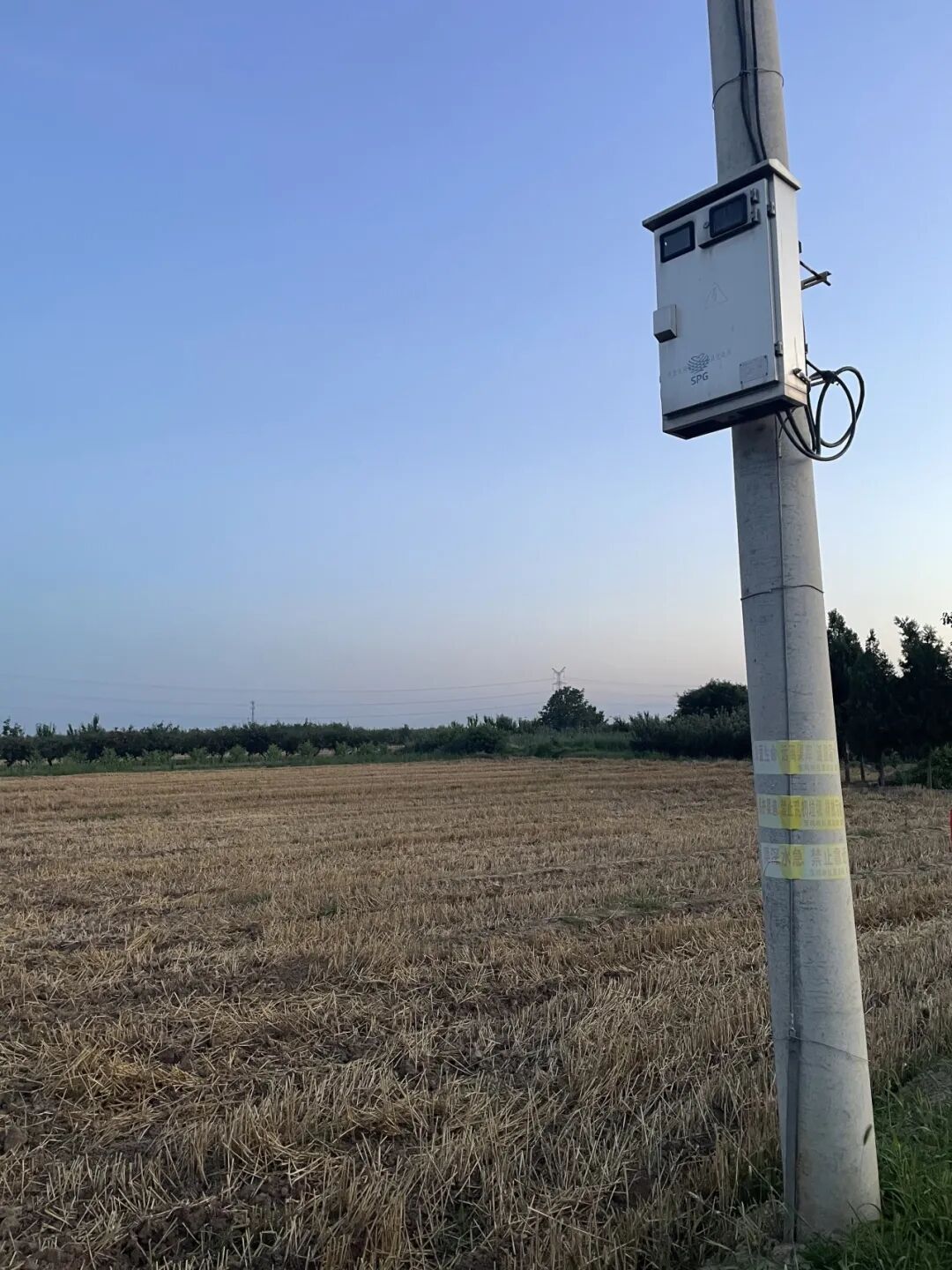
◉ Land replanted with grain.
Replanting Fruit Trees
Growing grain follows a cycle of “two crops per year” (a Shaanxi dialect term; locally it generally works out to two harvests every three years). In autumn you plant winter wheat, harvest it the following June, then put in corn, which grows until autumn and is reaped, after which wheat goes back in again, and the cycle repeats. Compared with growing apples, grain is easy-going—less time, less labour, less worry. Once the seed is sown, aside from a few rounds of spraying and the necessary irrigation, there is hardly anything else the farmer needs to do out in the field. When the wheat and the corn are ripe, the village has combine harvesters come round to do the reaping—no heavy labour involved.
So once they had switched to grain, many villagers chose to head out and take up migrant work elsewhere. They would return during the busy farming season, get the work done, and then go back to their jobs. That was how my father spent the first couple of years. But he was getting on in years after all, and after a few seasons the employers were no longer willing to keep him on. So he became a full-time farmer again, throwing himself wholeheartedly into the land.
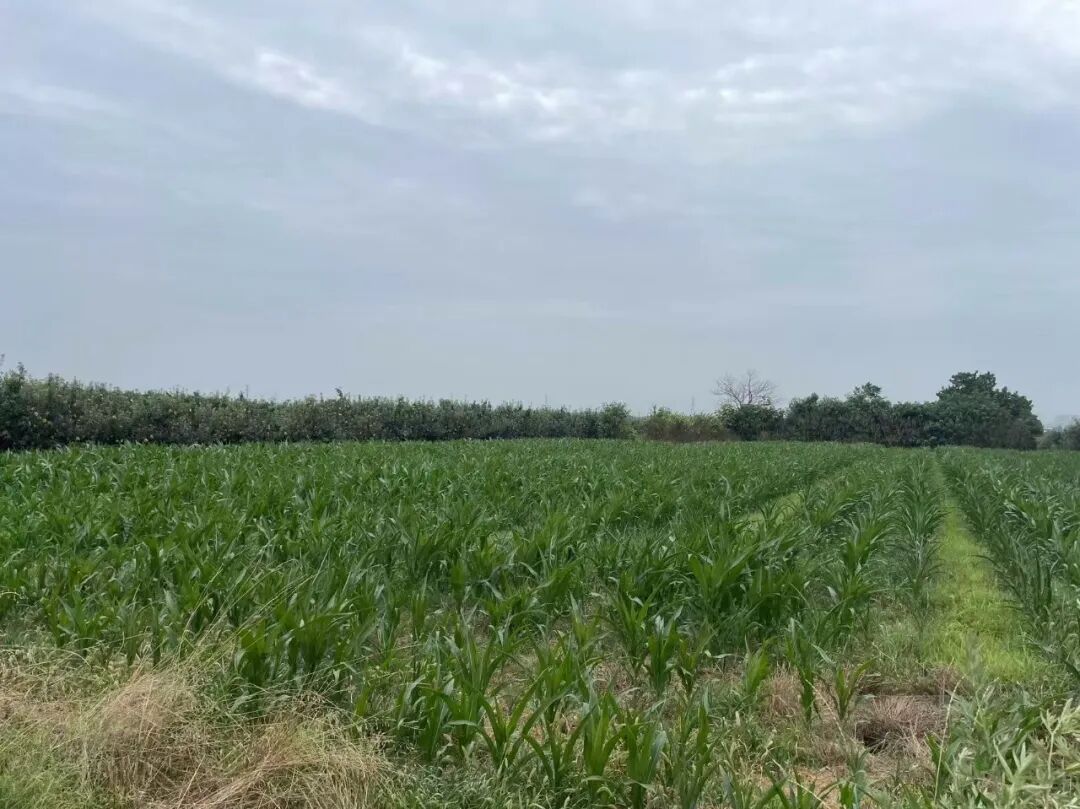
◉ A cornfield that needs no fussing over.
Since farming no longer required him to be in the field all day, he found himself with plenty of leisure and often frequented the mahjong parlours. Life had its freedoms, but when harvest season came, his face would cloud over. Growing grain had indeed been far less demanding, but the stark fact remained: it brought in no money.
My father began casting envious eyes at those still tending fruit trees. He said: growing fruit was hard work, true, but at the end of the year there was still income coming in, and in a good-price year you could earn quite a bit more. Wheat and corn—fine enough to feed yourselves—but making money? Forget it!
He had done the sums carefully. Over the past few years, growing wheat and corn meant that once you subtracted the fixed outlays—seed, fertiliser, pesticide, machine ploughing, sowing, harvesting, and irrigation—the net income per mu for a whole year came to around 1,400 yuan, and that was only under favourable weather. If drought or flooding struck, you could not even earn that much. The income from fruit trees at their very worst was still five to six thousand yuan per mu, and in a high-price year, breaking ten thousand yuan per mu was perfectly normal.
So, being the action man he is, he wasted no time in roping Mum in and getting peach and plum saplings into those four mu of field. Only this time it was not apples—it was peaches and plums. In recent years, peaches and plums had become hot, hard-to-come-by commodities. When prices were good, you could fetch three or four yuan a jin just selling at the collection point. Peaches alone had seen new varieties springing up at a dizzying rate—this yellow peach, that flat peach—and the quality was consistently top-notch, so naturally the prices were sky-high.
He had yet another consideration: beyond the favourable prices, the growing cycle for peaches and plums was shorter than for apples. Apples took a long time to mature and were not harvested until September or October, whereas peaches and plums could be picked in May or June. They did not keep well and had to be sold quickly, but all in all, they were less fussy than apples.
When it came to replanting fruit trees, my father and I—two generations—were not quite on the same page. Anyone who grows fruit knows that if the crop is to fetch a good price, variety choice is everything. Our family’s success back in the day rested on the temporary variety advantage of Qinguang and Red Fuji. This time, for the peaches and plums, I specifically reached out to a real expert at tending fruit trees. He kept in touch with fruit-tree specialists at the Yangling Academy of Agricultural Sciences in Shaanxi, and whenever a new variety came out, his orchard was among the first to go into mass production. I asked him to set some peach branches aside for us, suitable for grafting. But my father thought the place was too far and refused to travel there to pick up the scions, so in the end, like most people, he found a variety from a neighbour’s plot in the next village.
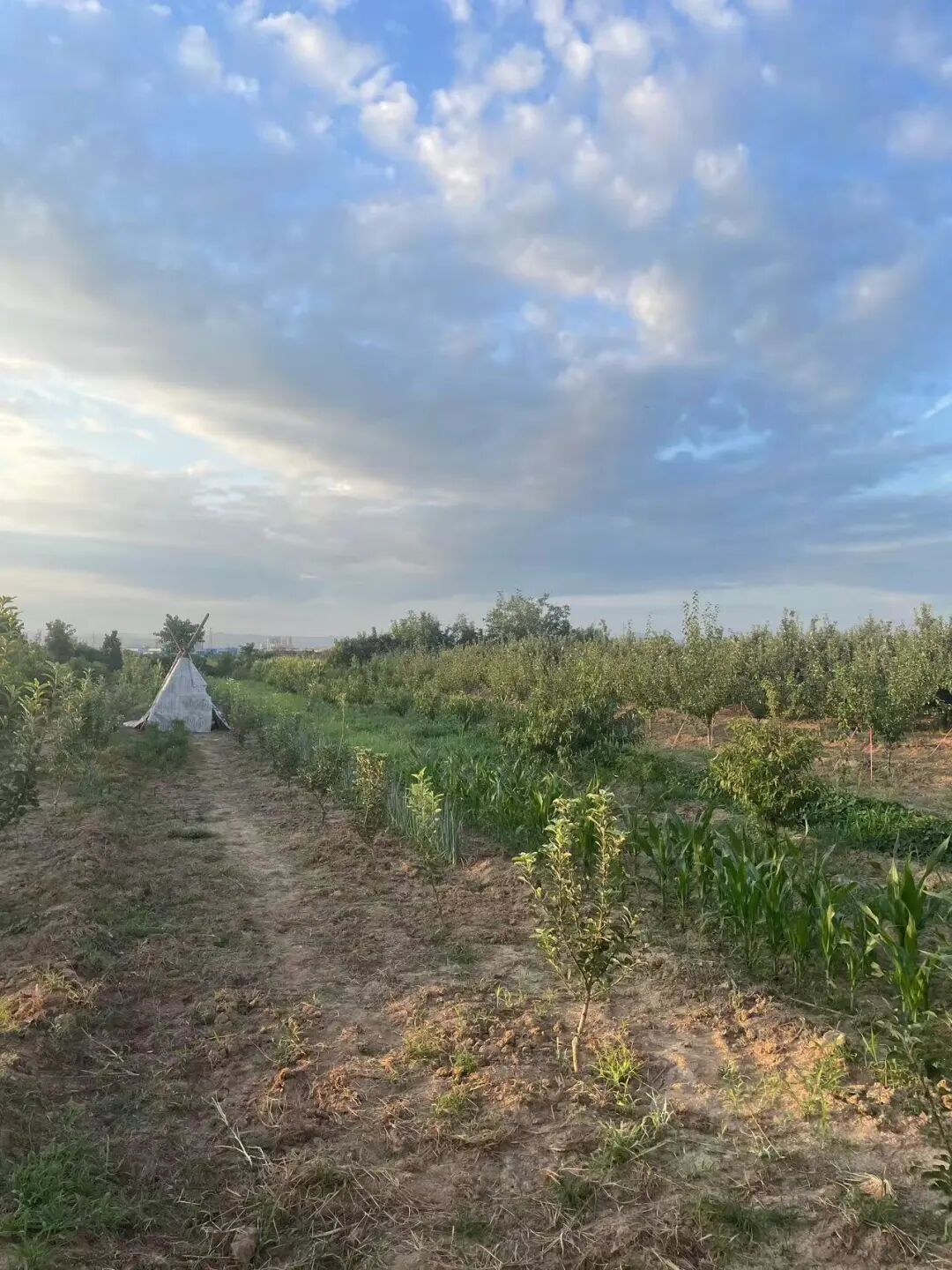
◉ Fruit trees planted among the grain crops.
Cutting Wheat by Hand
Planting fruit trees is never something you achieve overnight. The old way with apples was to set the saplings in among the wheat, and once the trees had grown tall, the wheat simply made way. This time was no different: Dad put his young trees right in the middle of the wheat field—four rows of saplings dividing the wheatland into five sections.
By the Dragon Boat Festival of 2025, the wheat in the fields had turned golden. The saplings were not yet tall enough to impede the combine harvester, but the strip on the east side was too narrow for the machine to get in, so we had to cut the wheat by hand. Dad, Mum, my sister and I made up an ad hoc team. We took three sickles—three of us cutting, while the fourth bundled the cut wheat into shocks and tossed them into the neighbouring field so that when the harvester came through, it could cut and thresh them all together.
The first half of that year saw most of the Guanzhong Plain gripped by a severe drought. For over two months not a single drop of rain fell, and the sun scorched the earth like mad. Even after the farmers had watered their fields two or three times, the wheat was deeply disappointing—every stalk as if struck with dwarfism, at least a third shorter than in years past. Everyone agreed the harvest would suffer. But there was a small upside to the shorter stalks: they made cutting easier, and that served us well.
We had only been cutting a short while when the sun grew fiercer and the heat set our heads buzzing. I was tiring, so I straightened up from the wheat and said, “If I’d known we’d be cutting wheat today, we should have come out early while it was still cool. It’s so hot and glaringly exposed now—this is real suffering, it is!” Dad said you couldn’t cut when there was still moisture in the morning; you had to wait for the sun to dry the wheat before the sickle could go in.
That strip of land wasn’t long, and we finished it off in no time. We swept the ground clear in front of our doorway, ready to spread out the freshly threshed wheat for drying.
We had barely finished sweeping when Dad came rolling back on the electric tricycle. The nearly five mu of land had yielded six loads of wheat. The flatbed was heaped with grain, the pale-gold kernels giving off that unmistakable fragrance of fresh harvest. We tipped the wheat out of the bed, then used a leveling board and a wooden rake to spread it thin across the front yard for sun-drying.
Neighbours came to help in numbers. Lending a hand like this has now become a fixed routine among the village’s wheat-growers: everyone joins forces—you harvest on my land first, then on my neighbour’s, then on someone else’s. Whether it’s carting the crop off the field, spreading it in front of the door to dry, or even rushing to rescue and dry the wheat when a summer thunderstorm bears down, it is always done this way.
This year, the fruit trees we had newly planted had already begun to put out branches and leaves, taking on the basic shape of a proper fruit tree for the first time. Land still available for wheat was a little less than last year—we planted only about three mu and harvested 800 jin of wheat. But thanks to a kinder year, we actually reaped 100 jin more than last year.
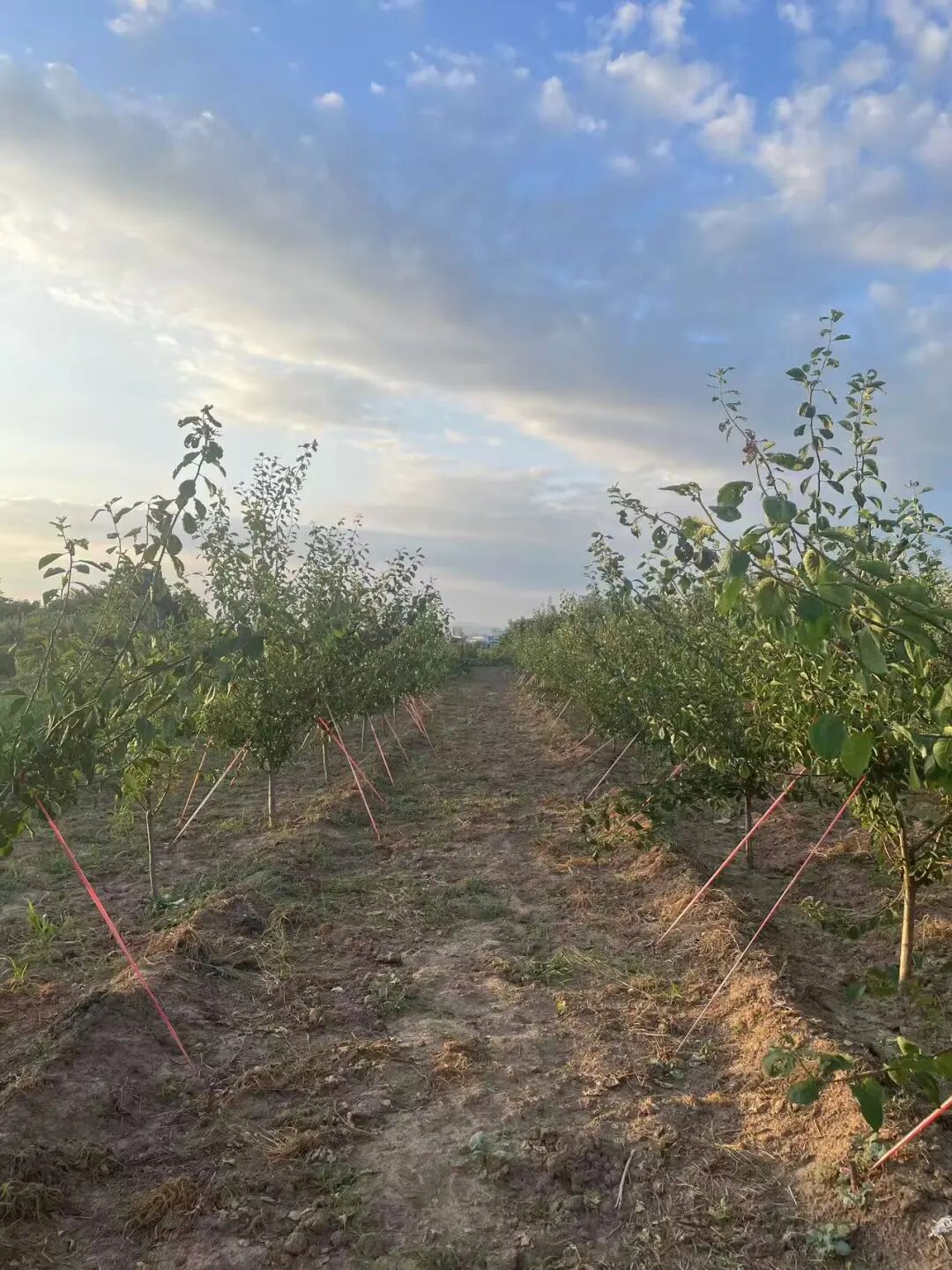
◉ The fruit trees planted that year are growing steadily taller.
Worries for the Future
By next year, the fruit trees should begin to bear. But who can guarantee the future of fruit growing? Even if the peaches and plums are bringing in money now, who can say what the market will look like in a few years—or longer? Will they still be in short supply? Will they still be profitable?
Looking at those saplings hidden between the rows of wheat, I couldn’t help sharing my worries with Dad. But he hasn’t given it much thought. Or rather, he doesn’t want to look that far ahead—he just wants to do a good job of what’s in front of him.
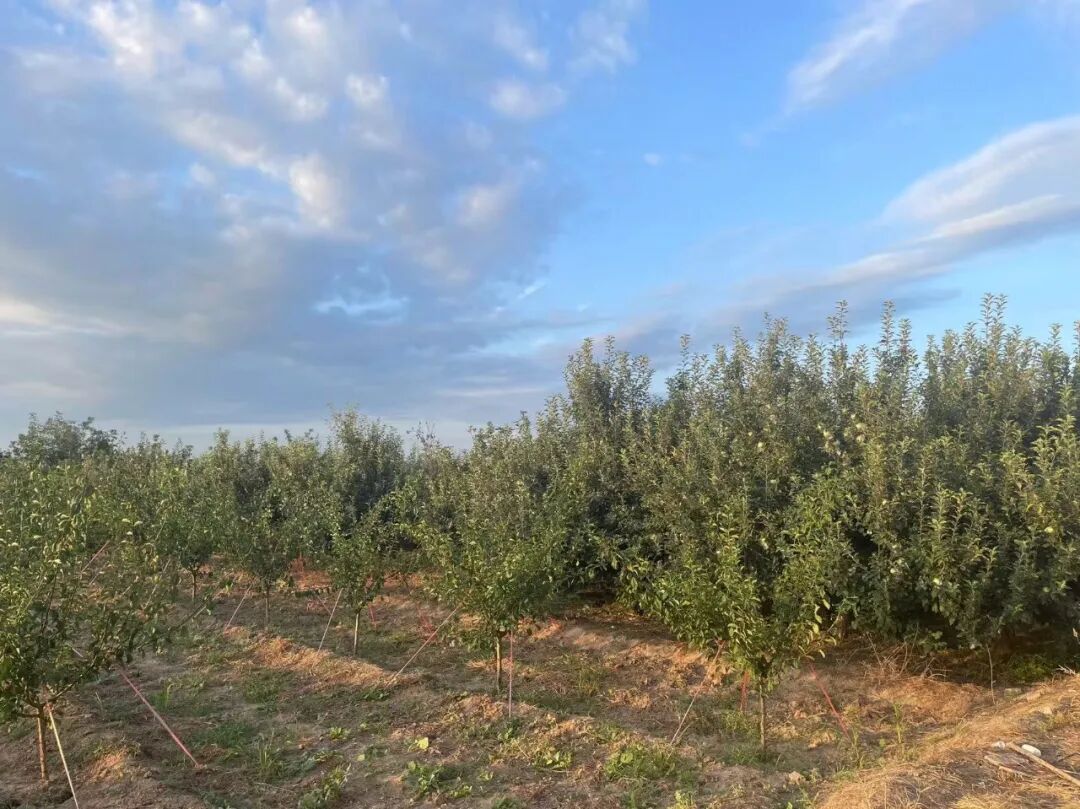
◉ The fruit trees, grown tall.
I have yet another worry. In the early 1990s, my parents were young and strong. They had energy to spare, and they could look forward to better earnings and a good life ahead. But now they are close to seventy. How much enthusiasm and strength can they still muster?
A classmate of mine—his parents have been growing apples for years now. They have several mu of orchard, and with all their children living in the city, the old couple manage it all themselves. In past years, during the apple harvest, the old man could shoulder a load or two and get through it. But over the last couple of years, his parents have started calling him home to help. He is busy with work too; sometimes he can make it back, and when he absolutely cannot, he asks them to hire help. But the old folks grumble at the cost and are always reluctant. Then one year, while picking fruit, his mother slipped off the fruit-picking ladder. Fortunately, it had just rained and the ground was soft, so she escaped serious injury—only a broken bone, which took months to heal. After that, he had no choice but to take leave and go home to help.
He has been urging his parents to stop growing fruit, but they won’t hear it. He also has a younger brother, in his thirties, still unmarried. His parents are always anxious to earn more, so that the brother’s chances at a matchmaking meeting might be slightly better. Only after the younger son takes a wife, they figure, might they finally be able to leave the apple trees and rest in peace.
This is our family’s dilemma too. Once you plant fruit trees and other cash crops, the orchard becomes like an enormous magnet, and the old fruit farmers are like iron filings, firmly held fast to it. You have to be in the orchard all four seasons—flower thinning, fruit thinning, weeding, loosening the soil, irrigating, fertilising, spraying pesticides, harvesting, pruning—every task must be done with care, and every one of them demands real physical labour. And none of these jobs has yet been truly mechanised; they are all manual work. I grew up working in the orchard alongside my parents for more than a decade, and the hardship of those years is still vivid in my memory. Just during those few days of picking, you’d be worn to a frazzle. A full pole-and-basket load of apples weighed at least thirty-odd jin, and it had to be passed through at least four hands before reaching its destination. Picking, transporting, stacking—none of it is easy.
Meanwhile, the cost of growing fruit is climbing ever higher, and if the crop does not sell well, you can easily lose money. Setting other expenses aside, the labour costs alone make you catch your breath. Every year, when it comes to fruit bagging and harvesting, orchard owners of any size simply cannot manage with family labour alone. Hire rates rise year on year—no less than 120 yuan per day per worker. This outlay is hard cash: some farmers spend ten to twenty thousand yuan a year on hired labour alone. Factor in the other costs, and it is truly staggering.
What the future holds, no one can say for certain. You hardly see any young people in the village nowadays—they have all gone to the provincial capital or elsewhere to make their way. When the parents’ generation finally steps off the stage of history, what fate will be left for this land?
– This is Foodthink’s 833rd original article –
Foodthink
Author
Liu Lei
Born in 1984, from Liquan, Xianyang, Shaanxi. Long based in Xi’an, he currently works at a manufacturing company there. His writings have appeared in print publications such as Shanghai Stories, Xi’an Daily, and Western Development, as well as on WeChat platforms including NetEase Renjian, Yishi Tan, and Southern Weekly.
All images in this article are provided by the author.
Editor: Xiaodan
Layout: Xiaoshu
Scan to tip and support original Foodthink
▼

▼
Click on the image to read related articles
▼
Click on a keyword to access more article collections
Seeds | Agritech | Policy | Fermentation | Nutrition | Fruit | Fisheries | Events | Jobs | Food Delivery | Wet Market | Livestock | Food Talk | Sharing Sessions | Book Club | Harvest Festival | Smallholder Stories | Climate Change | Rural Development | Co-operative Economy | Urban Farmers | Food Safety | Digital Technology | Biodiversity | Pandemic and Food | False Solutions | Ecological Agriculture Internship Programme
Beijing | Hebei | Shanghai | Guangdong | Guangxi | Henan | Sichuan | Jiangxi | Xinjiang | Shaanxi | Hong Kong | Chongqing | Zhejiang | Jiangsu | Guizhou | Taiwan | Inner Mongolia | Philippines | Canada | Russia | Mexico | Italy | United States | United Kingdom | Germany | Netherlands | Thailand | Sweden | Japan