After Tasting Over 30 Durian Varieties in Penang, Musang King Is My Least Favourite

As a durian enthusiast, I had long heard that Penang in Malaysia is home to hundreds of different durian varieties. This year, I joined a durian tour group and sampled more than twenty distinct kinds, and while working alongside local farmers, I tasted the day’s randomly fallen durian “blind box” (a surprise, unlabelled assortment)—where the exact variety remains a mystery and each fruit is a fleeting, unrepeatable encounter.
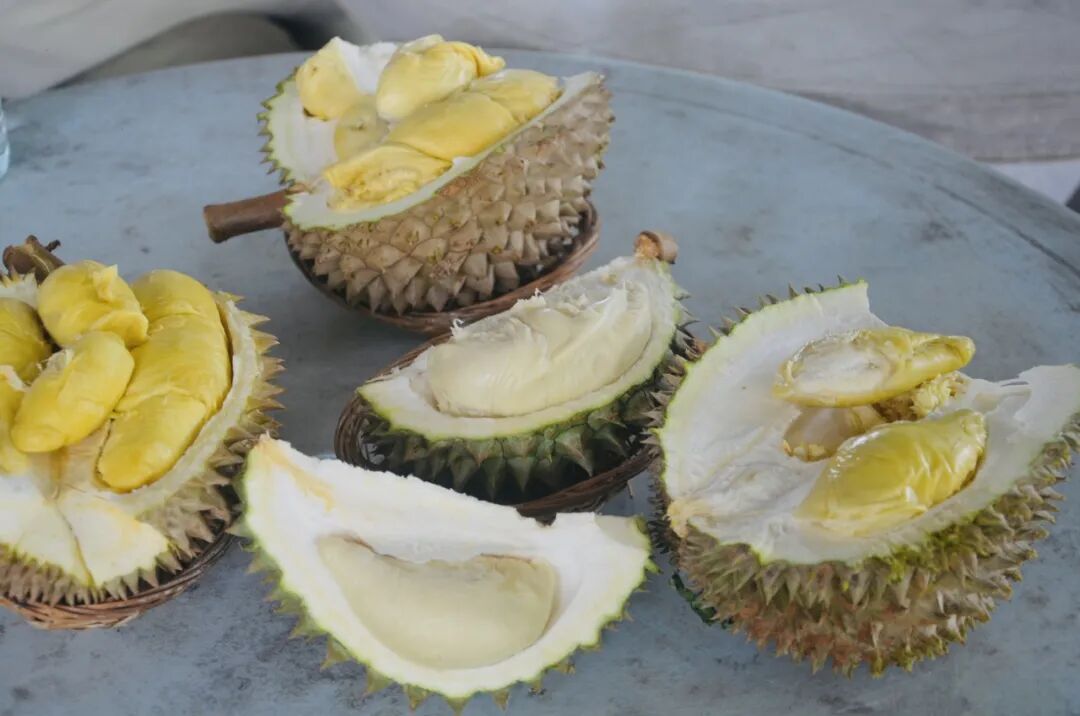
◉Heading to the orchards with durian companions to sample durians, where each orchard lets you taste 5 to 15 different varieties
In recent years, a rather unusual way of experiencing Penang has caught on among Chinese visitors: hillside durian trips. It is less like buying fruit from a traditional shop and more like a private exploration of flavour—whatever drops from the trees that day is what the visitors get to eat. These durian outings were not originally tourism ventures; they began as a method for local connoisseurs to track down old-tree kampong durians. Once they spread across social media, however, more and more Chinese travellers started making the journey specifically to Bukit Mertajam.
‘Old durian trees’ refers to trees aged over 30 years, while ‘kampong’ is a transliteration of the Malay word ‘kampung’, denoting varieties that are native and locally rooted.
This experience truly captured the blind-box thrill of eating durian in Penang: a complex interplay of bitter and sweet, with notes of cream, peanut butter, floral blossoms, cheese, a slight tingling sensation, whisky, and even, for some, a distinct cockroach-like note… You simply never know what the next one will taste like.

◉Friends in the WeChat group for durian companions have sampled yet another new durian flavour.
May to July marks Penang’s peak durian season. Tree-ripened fruit is fully mature the moment it falls, has a short shelf life, and must be sold quickly before its flavour begins to deteriorate. Countless food lovers fly in specifically for this, naturally because such a seasonal treat is not to be missed. This year, however, there is another factor: the celebrated varieties destined for the national export market have ripened, triggering a sudden production glut that has sent local durian prices plummeting. According to the BBC, Malaysia typically produces around 550,000 tonnes of durian annually. But 2026 has seen an unusually bumper harvest. The two benchmark varieties, Musang King and Black Thorn, are in oversupply, with prices dropping to their lowest in three to four years. Despite their excellent quality, they are selling at just half their usual price.
This is the flip side of the ‘surprise blind box’ phenomenon. For local orchard owners, the recent ‘Penang durian craze’ represents both the reward of years of quiet, dedicated cultivation and the harsh reality that the local market is unavoidably bearing the brunt of volatility from the large-scale, export-driven durian trade. As one orchard owner put it: “Lower prices are certainly good for consumers, but they also lay bare a deeper issue that Penang’s smallholder farmers are forced to confront.”
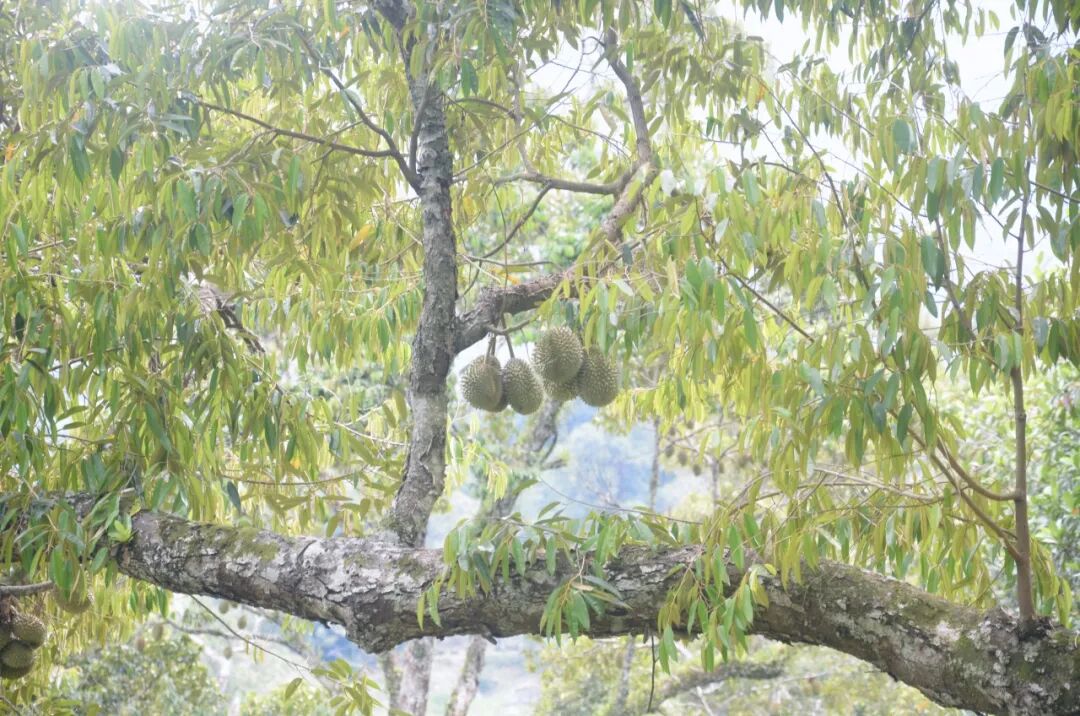
◉Photographed at a durian orchard in Bukit Mertajam.
Why aren’t seasoned foodies chasing Musang King?
Among the visitors who make a special trip to Penang for durian season, the vast majority are from China. Now that fresh fruit from celebrated varieties such as “Musang King”, “Black Thorn” and “Red Prawn” can easily be bought back home, why bother flying all the way to Penang—and even going to the trouble of travelling from the city out to Bukit Mertajam in the southwest—just to eat durian?
A middle-aged man, who has lived with diabetes for years yet still travels to Penang every year for durian (please don’t try this at home), told me: “Anyone making the trip to Penang for durian isn’t here for the famous commercial varieties. They’re here specifically for the old-tree kampong durians!”
Having grown up eating only lychees picked straight from the tree and free-range chickens, I completely understand foodies’ devotion to kampong durian. Malaysia also has a strong local tradition of eating tree-ripened durian. Unlike in Thailand or other markets that depend on large-scale cold-chain logistics and exports—where fruit is often harvested at seven-tenths ripe—here, growers wait until the fruit is fully mature on the branch, its flavour at its most complex, and allowed to drop naturally. Today, Penang remains home to many of these old trees, some standing for more than thirty years, and others well over a century or even two centuries old.
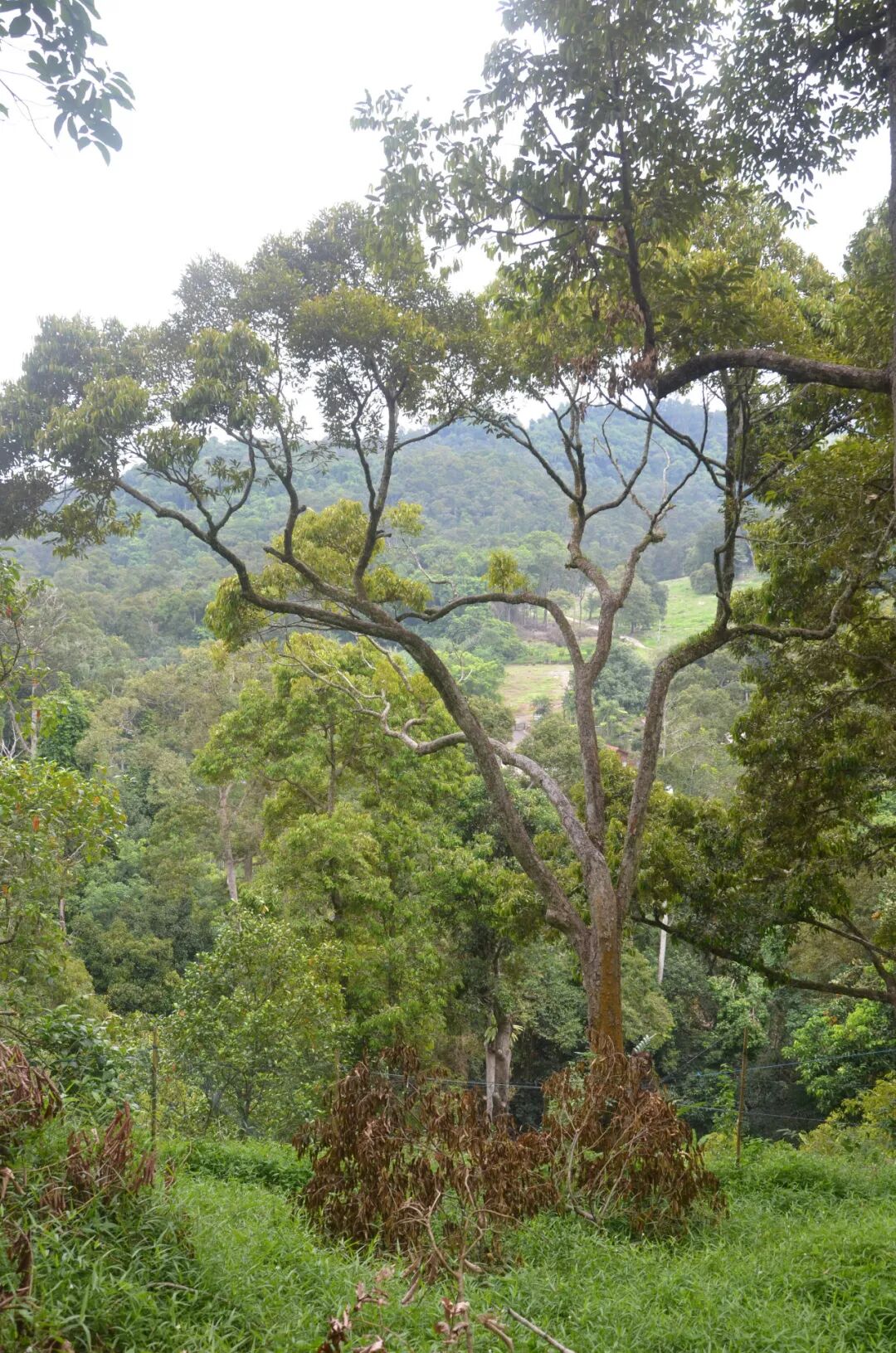
◉Taken at the Lim Brothers Durian Orchard. It is home to hundreds of old durian trees, with so many varieties that even the owner cannot identify them all.
Precisely because of this unpredictability, the best way to enjoy durian in Penang isn’t about counting how many flesh chambers it has or checking whether its sugar content meets the commercial standards that sellers love to tout. Instead, it calls for a return to a mode of interaction rooted in genuine personal connection—becoming friends with the orchard owners, so that when richly flavoured durians from mature old trees naturally drop, they will be the first to set some aside for you.
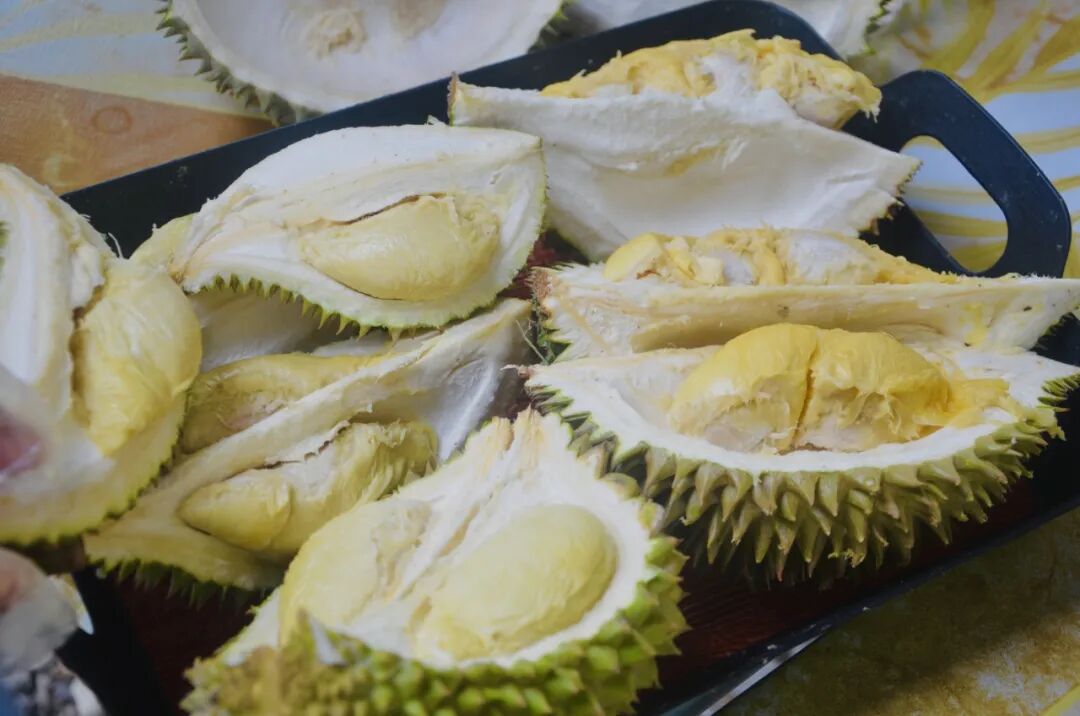
◉ Photographed at Zhong Zhang Durian Orchard in Penang. When visitors organise a group trip up the hills of Penang to sample durian, what they’re really after is a table of fresh kampong durians, each boasting a distinct flavour.
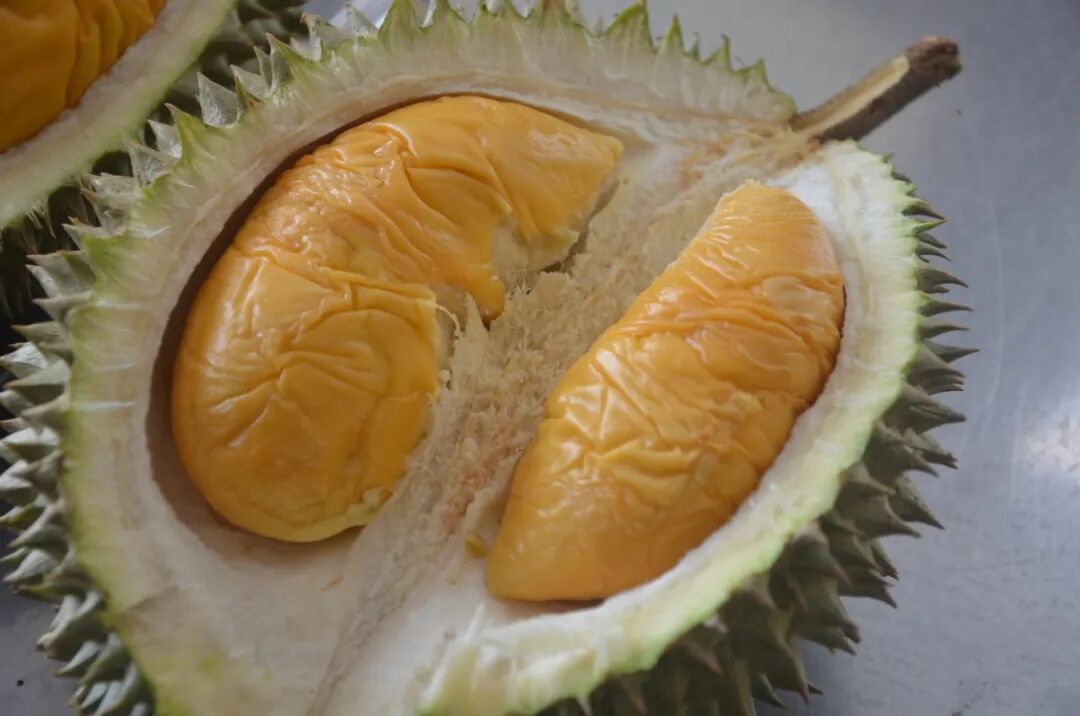
◉ An old-tree Musang King at Lin Brothers Durian Orchard. After tasting dozens of different kampong durians, returning to Penang’s Musang King felt noticeably more uniform and rather flat. It’s sweet and milky, certainly, but lacks those unexpected, layered notes. Taking a bite of this fruit finally brought the orchard owner’s words into sharp focus: “Many kampong durians taste far better, yet they simply don’t get the same attention.”
Early one morning, I stepped into a traditional kampong orchard planted with old durian trees. The orchard owner’s wife was deftly cracking the fruit open, scooping the flesh into a bucket. “These are the ones we’d normally discard. Someone will collect them to make durian puree,” her husband joked. “Probably bound for China, I suppose.” Intrigued, I picked up a piece and tasted it. It was sweet, pleasant, and tasted perfectly fresh. Why was it being thrown away? Seeing my puzzled look, everyone in the orchard kept teasing me: “Eat too much of the rubbish and you won’t have any room left for the real durians!” It wasn’t until I finally tasted their true signature varieties that I understood why they would so casually dismiss these durians, which lacked such complex flavour profiles, as “rubbish”.
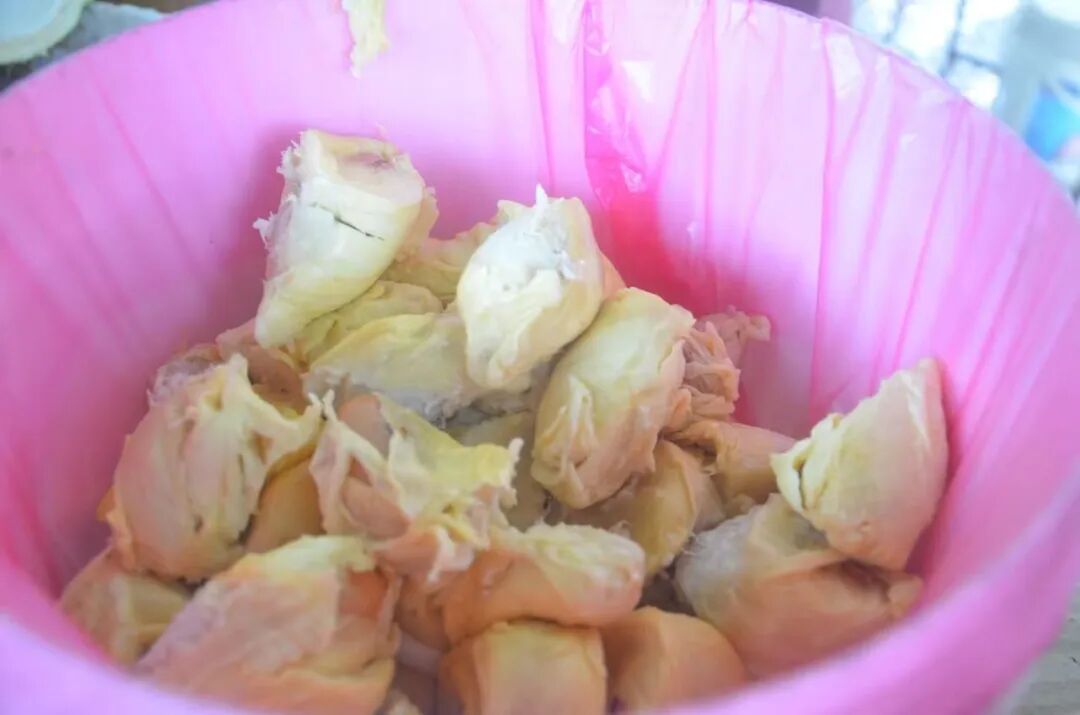
◉These substandard durians destined for the purée factory remain sweet and palatable.
That day, our group sampled fifteen different varieties of durian in total. The orchard owner carefully sequenced the tasting based on the party size: beginning with mild, floral introductory picks, and moving steadily towards intense old-tree varieties with cheesy, numbing, and spicy notes. In doing so, he gradually broadened the flavour palette of every diner.
Another orchard owner offered a historical explanation for why Penang’s durian varieties are so numerous and eclectic. Situated in northern Malaysia close to the Thai border, the area saw farmers frequently crossing between the two countries in earlier decades. When grafting techniques were still in their infancy, many simply planted seeds brought back from Thailand. They soon discovered that while some seedlings faithfully inherited their parent’s traits, others developed entirely new characteristics. This inherent unpredictability ultimately forged Penang’s rich and distinctive flavour profile. Today, the region boasts over 200 distinct durian varieties.
Yet, alongside these extraordinary flavour experiences comes the necessity of accepting the fruit’s inherent unpredictability. Some embrace this as part of the fun, while others draft impassioned warning posts when their actual experience falls short of the descriptions found on a popular Chinese social media platform (Xiaohongshu/RED).
Interestingly enough, a friend from Thailand—who was accustomed to the mass-produced, consistently mild and sweet Monthong durian—struggled to appreciate the Malaysian kampong durian. With its complex interweaving of winey, bitter, sweet, and numbing notes, and a texture that is moist, slick, and occasionally sticky to the throat, it presented a stark contrast to what she was used to.
A seasoned durian connoisseur in our group knew exactly which orchards and individual trees yielded the best fruit. Under her guidance, we visited an orchard renowned for its XO (a local kampong variety). The opened pods displayed a deep greenish-black hue—a shade that typically signals a more intense flavour profile, making it a firm favourite among those who crave stronger, bolder tastes. With pronounced winey aromas and a distinct bitterness, the XO truly lives up to its name. Watching the orchard owner skillfully husk the fruit by hand, it was no surprise that diners had travelled from afar just to photograph the process. ‘Why is my XO better than anyone else’s? Because I water it more diligently!’ the owner declared, thoroughly proud of his orchard’s crown jewel.
Dining on durian in Penang offers more than just the thrill of unboxing a highly cost-effective durian ‘blind box’—for roughly 70 Malaysian Ringgit (MYR 70, equivalent to 116 Chinese Yuan), you can feast to your heart’s content on around ten different varieties. It is also a chance to engage with the capable and tireless local farmers. With a quick glance at the freshness of the stem, the hue of the husk, and the shape of the thorns, followed by a gentle shake to listen to the rattle inside, they can accurately deduce a fruit’s variety, the age of its parent tree, whether it will be dry-fleshed or wet-fleshed (indicating lower or higher moisture content), and even its likely texture and taste. This entire empirical knowledge system is built solely on daily, hands-on experience with the trees, cultivated through practice rather than any textbook.
Upon arriving at the Lim Brothers’ orchard, the most striking feature is a historic black wooden house. Revered as a culinary haven by durian enthusiasts from across the region, the structure is over a century old. Built without a single nail, its black-painted walls serve as a natural deterrent against insects and fire. Alongside dozens of century-old durian trees scattered throughout the grounds, the house has stood as a sanctuary for three generations. A walk through the orchard reveals a thriving ecosystem of insects, birds, and snakes, alongside heritage fruit trees—mangosteen, nutmeg, rambutan, and white cardamom—originally planted by the founders. The owner may not be able to catalogue every durian variety on site, but after more than forty years living here, he knows exactly which tree yields which fruit and precisely how each one tastes.
Following these dedicated connoisseurs up the hillsides in search of durian left me with a simple reflection: in Penang, durian is much like an encyclopaedia—endlessly complex to study, and impossible to ever fully taste.
Terroir: Why Bukit Mertajam?
Bukit Mertajam sits in the southwest of Penang, spanning roughly two-thirds of the island. It derives its name from the rolling hills and mountain ranges that encircle the district. Established as a settlement by the British East India Company in 1764, it has remained predominantly agricultural ever since. Penang’s three celebrated produce staples—durian, nutmeg, and cloves—thrive across these hilly slopes. Early Chinese immigrants were among the first to clear the land and establish orchards, and many of these family-run durian farms have now been passed down through three generations.
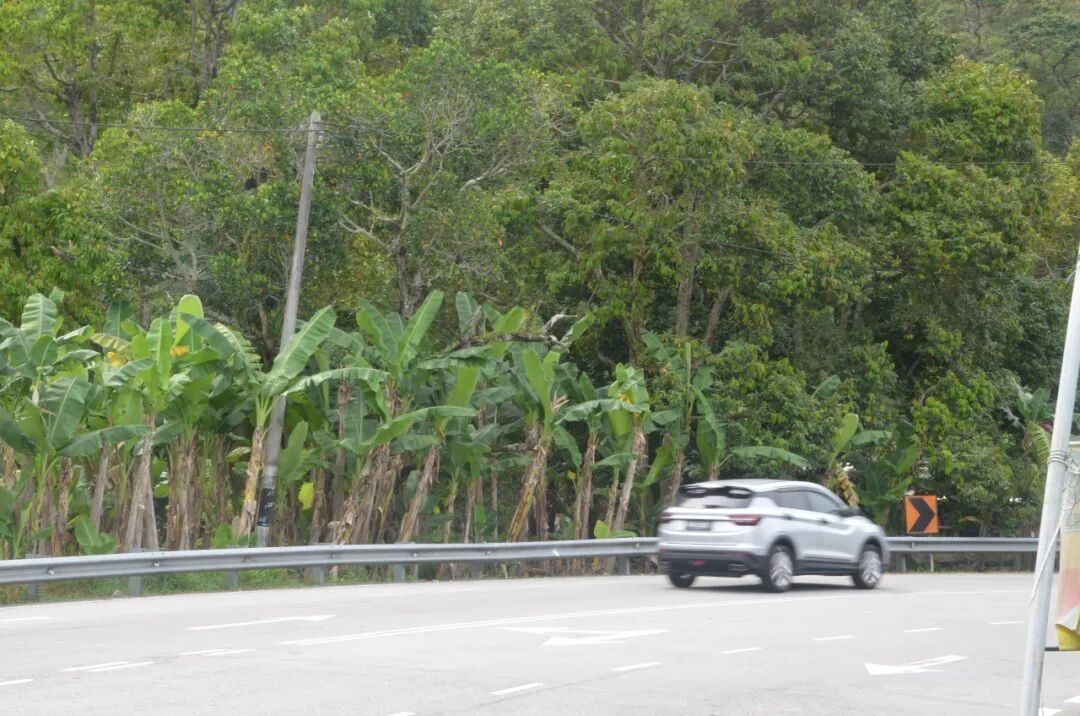
◉Bukit Mertajam. Elevations here reach over 800 metres, offering views across Penang and the coast, while the route passes numerous smallholder durian farms. Family-run, multi-generational farming is the predominant model for these orchards.
Uncle An (a pseudonym) has been growing durians for 30 years. He looks after a kampong durian orchard the size of eight football pitches, where the trees are at least 50 years old and two are well over a century. He told me the secret to Penang’s fine durian lies in ‘high hills, steep slopes, and plenty of rocks’. Durian trees need plenty of water but dread waterlogging, which rots the roots. Most orchards in Bukit Mertajam are planted on slopes steeper than 45 degrees. The soil is a fine, dark earth formed from weathered granite, offering excellent drainage. Along with the large boulders scattered across the hillsides, which help divert water away from the roots, this topography ensures the trees drink enough without their roots becoming waterlogged.
Different altitudes, temperatures, and light conditions suit different durian varieties. For example, the Red Prawn thrives at higher elevations. Bukit Mertajam faces towards Sumatra, and the constant sea breezes bring salt spray that helps keep the leaves dry, reducing pests and diseases while aiding the accumulation of flavour. Meanwhile, the durian ripening season from May to July coincides with the year’s cooling period. This drop in temperature helps retain polyphenols in the flesh—especially the anthocyanins in red-fleshed varieties, which lend the pulp its distinctive reddish-orange tint.
Which is precisely why I heard the orchard owners’ oft-repeated saying time and again in Bukit Mertajam: whether the season is profitable or not depends entirely on the weather.
A consumer’s “blind box”, or a farmer’s risk?
The greatest pleasure of eating durian at Uncle An’s orchard is simply “not knowing”. Unlike commercial farms where you book ahead, you trek deep into the hills just to ask one question: “What’s fallen today?”
But for Uncle An, this uncertainty is not the thrill tourists anticipate; it is a daily reality he must contend with.
Once we had grown comfortable with one another, I spent two days working alongside Uncle An and his wife, Auntie Bi. Uncle An worked in an office for years before returning after retirement to inherit the orchard his mother left him.
Uncle An works year-round, only stepping away for two days on the first and second days of the Lunar New Year. Come June, the peak durian season, his handwritten diary is packed with visitor bookings every single day. He wakes at 5 am to gather fallen fruit—twice a day—to ensure they are opened at the optimal moment. Between harvesting, he must also reply to tourists’ messages and host diners making the journey up the hill.
During the growing season, he keeps busy with manual weeding and catching pests. He says tending durian trees is harder than raising children; skip a month, and the trees perish. The orchard is vast, yet they remain committed to traditional methods, believing pesticides spoil the fruit’s flavour (not to mention the trees are too tall to spray effectively). They also eschew herbicides, maintaining that manual weeding preserves the soil’s temperature and moisture, keeps the roots cool, and allows the soil’s microbial communities to survive.
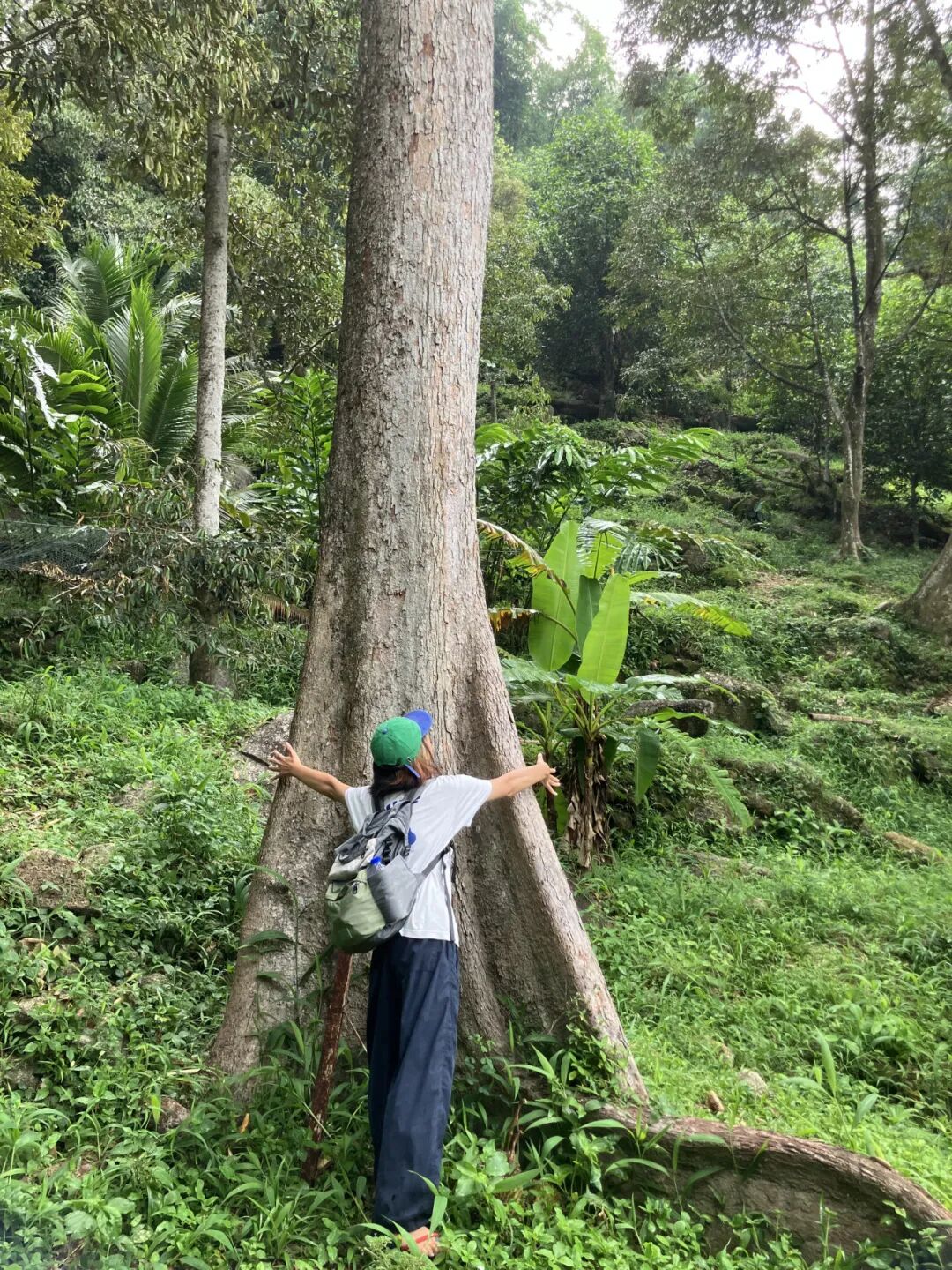
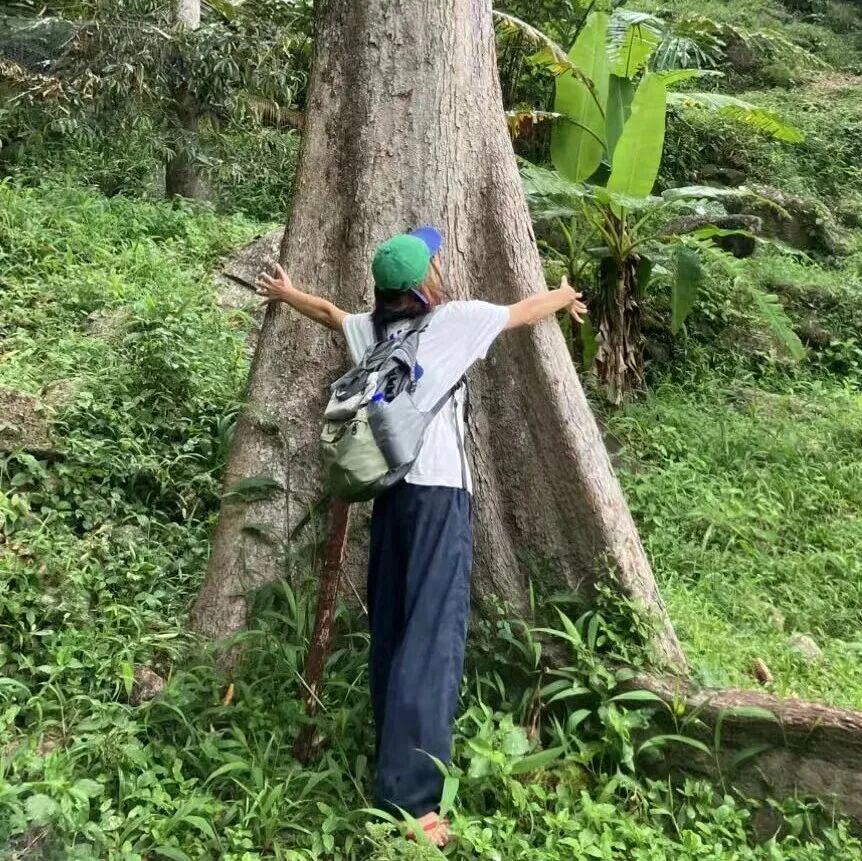
◉Taken at Uncle An’s durian orchard, embracing an old durian tree over 100 years old. While typical grafted durian trees grow to only four or five storeys, old-tree kampong durians can reach ten storeys high.
Auntie Bi says her last day off was last year, when she injured her hand from cutting open too many durians. The orchard grows more than a hundred different varieties, each requiring its own technique to identify, sort and open. If they were to hire extra hands, she remarks, “they’d likely run off before they even learned the ropes.” It is true; during my time there, I could only pitch in with straightforward manual labour, such as gathering fallen fruit and brushing off the dirt, dust and leaves. While I found it a strain just to lift the durians and position the knife, she would work with practised ease, drawing a clean arc along the husk and opening one in just two or three minutes.
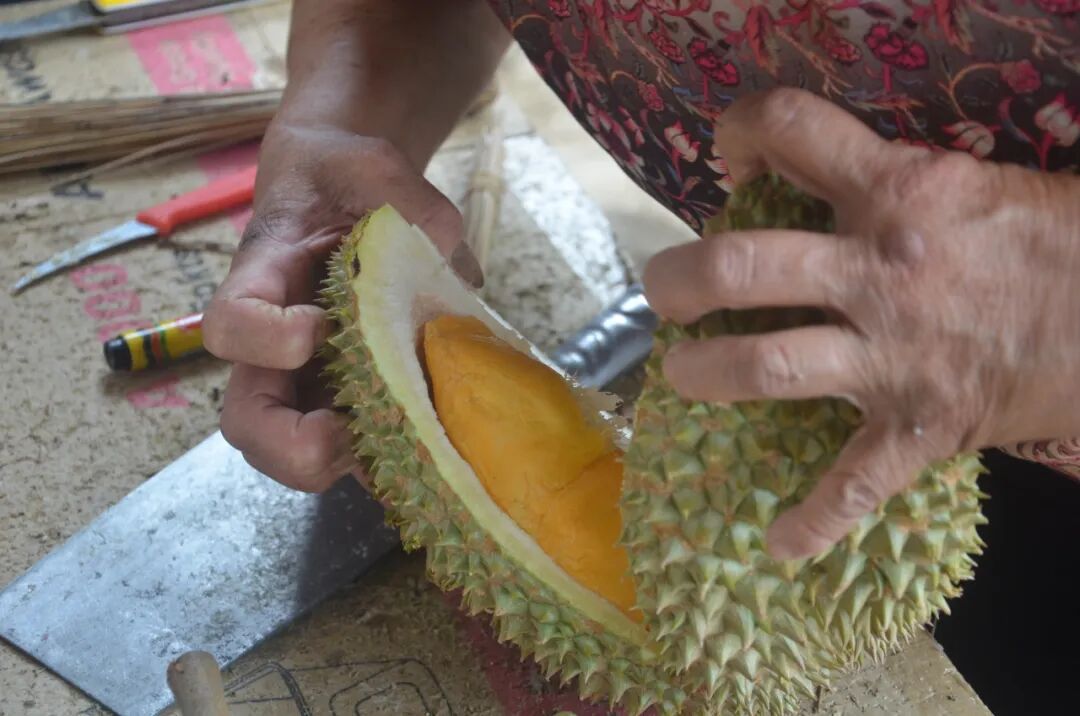
◉Opening a durian requires finesse
This year’s unseasonal weather meant nearly 80% of the orchard’s crop dropped within June alone — fruit that should have been harvested gradually over several months all fell at once, resulting in significant losses. Auntie Bi has to open hundreds of fruits daily and simply cannot keep up, forcing her to sell off lesser-known varieties in bulk at rock-bottom prices: a heap of around 20 kg for just 28 Malaysian Ringgit (about 45 Chinese Yuan) — ironically, being tree-ripened actually puts the old kampong durians at a disadvantage. The couple only sells fresh durian that has fallen on the day; kampong durian left overnight develops a watery texture and must either be discarded or sold even cheaper to durian puree processors. By contrast, celebrated varieties such as Musang King and Black Thorn typically drop at about 90% ripeness and can be kept for an extra two or three days. This lag in timing proves fatal.
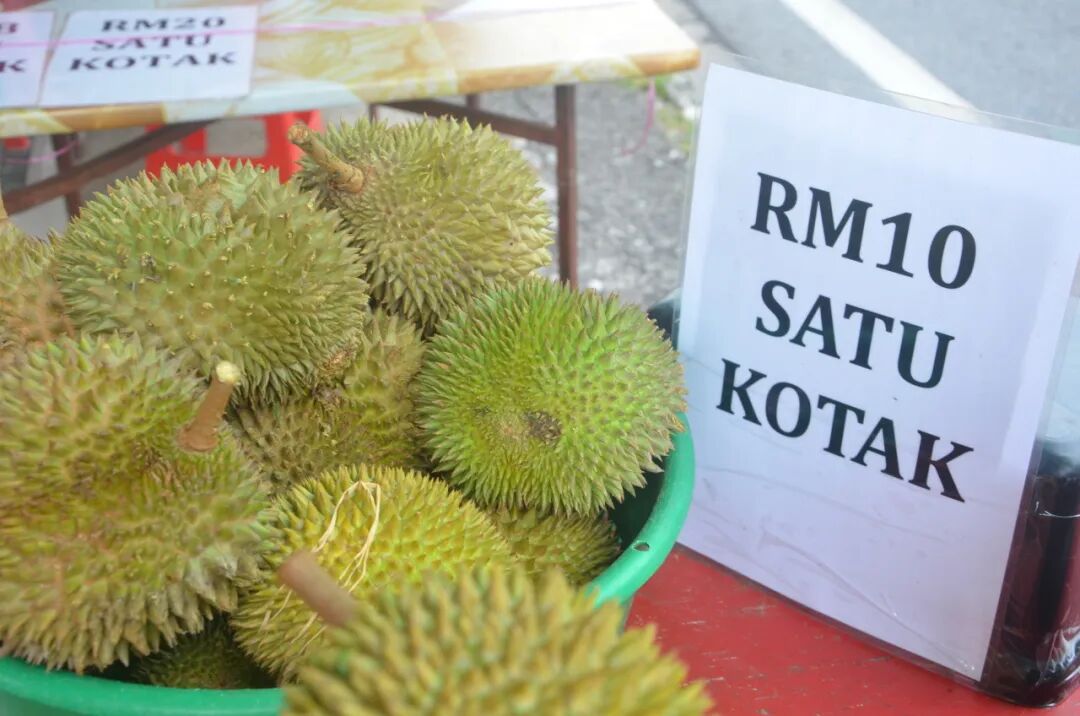
◉Old-tree kampong durians packed and “sold off cheaply”
Some durian stalls and orchards will still serve kampong durians that have been kept overnight. After all, the flesh is merely a little more watery, and most customers won’t notice.
Occasionally, Uncle An shares other customers’ delight with me. “You have no idea how thrilled a visitor was today to come across some freshly fallen old-tree Chok Anan (a durian variety)! Spotted it and took it straight away!” This prompted me to ask him whether he actually enjoys growing durians. He replied frankly: “I truly regret planting durian trees. The work is just too gruelling.”
When discussing the day-to-day reality of the work, one phrase Uncle An repeats is that you are “at the mercy of the weather.” The flowering stage, for instance, is highly vulnerable to extremes; neither too much nor too little rain is tolerable. “Over the decades, I have seen years of unbroken rain during the flowering season that led to near-total crop failure,” he says.
There is also a widely circulated set of techniques for inducing flowering: assessing a tree’s condition by leaf size, applying calcium before phosphorus ahead of the dry season, and restricting water while lowering temperatures to stimulate flower buds. These practices are mainly used in orchards growing grafted trees, as only genetically uniform grafted stock allows growers to rely on a “standard leaf size”. Since each kampong old tree is genetically distinct, such rigid benchmarks are simply unworkable.
Furthermore, storms can prematurely knock down nearly ripe fruit, while squirrels and monkeys frequently raid the orchard, and pest infestations can sometimes strip half a tree bare. Some trees withstand the damage and continue to grow, while others simply do not survive.
Given how gruelling the work is, why keep going? He explains: “Do you have any idea just how poor my family was when I was young? My mother planted durian seeds, but we couldn’t afford to lay a water pipe. She hauled bucket after bucket of water up the hill to water the seedlings. How could I possibly bear to cut them down now?!”
This attachment is being gradually eroded by economic reality. Many growers now choose to fell old trees and switch to premium varieties that promise better returns, such as Black Thorn and Musang King. By grafting scions of these superior cultivars onto rootstock, trees can bear fruit within five or six years. The resulting produce is highly uniform in shape and flavour, stable and predictable, making it ideal for commercial farming and delivering rapid financial returns. By contrast, seed-grown trees may take ten or twenty years to yield their first harvest; Uncle An even tends trees that have stood for fifty or sixty years without ever producing a crop.
On the other hand, old kampong trees still retain the advantage when it comes to flavour. Commercial varieties require fertilising seven or eight times a year, whereas old kampong trees need it at most once or twice. One orchard owner told me that these commercial varieties produce larger, better-looking fruits largely thanks to pesticide use. By contrast, old kampong trees typically yield smaller fruits, allowing the tree to concentrate more nutrients and resulting in a richer, more complex flavour profile. *The Durian Kingdom* (“榴梿” is the spelling used by Malaysian Chinese for “durian”) observes that after decades of growth, the root systems of old trees sink deep into the soil and become exceptionally robust. They can even reach underground water tables, drawing up minerals that contribute to the flavour. Moreover, such sturdy root systems may be more resilient to waterlogging. Grafted commercial varieties, such as Black Thorn and Musang King, by contrast, have shallower roots, shorter lifespans, and are far more sensitive to weather fluctuations.[1]
Sources?
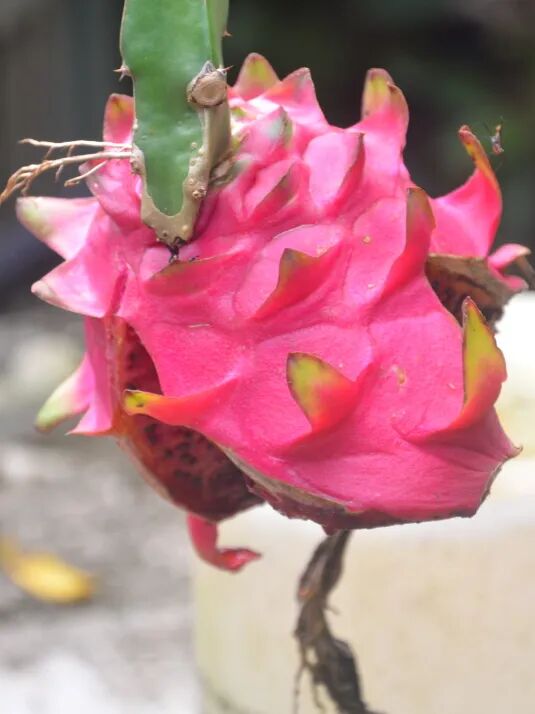
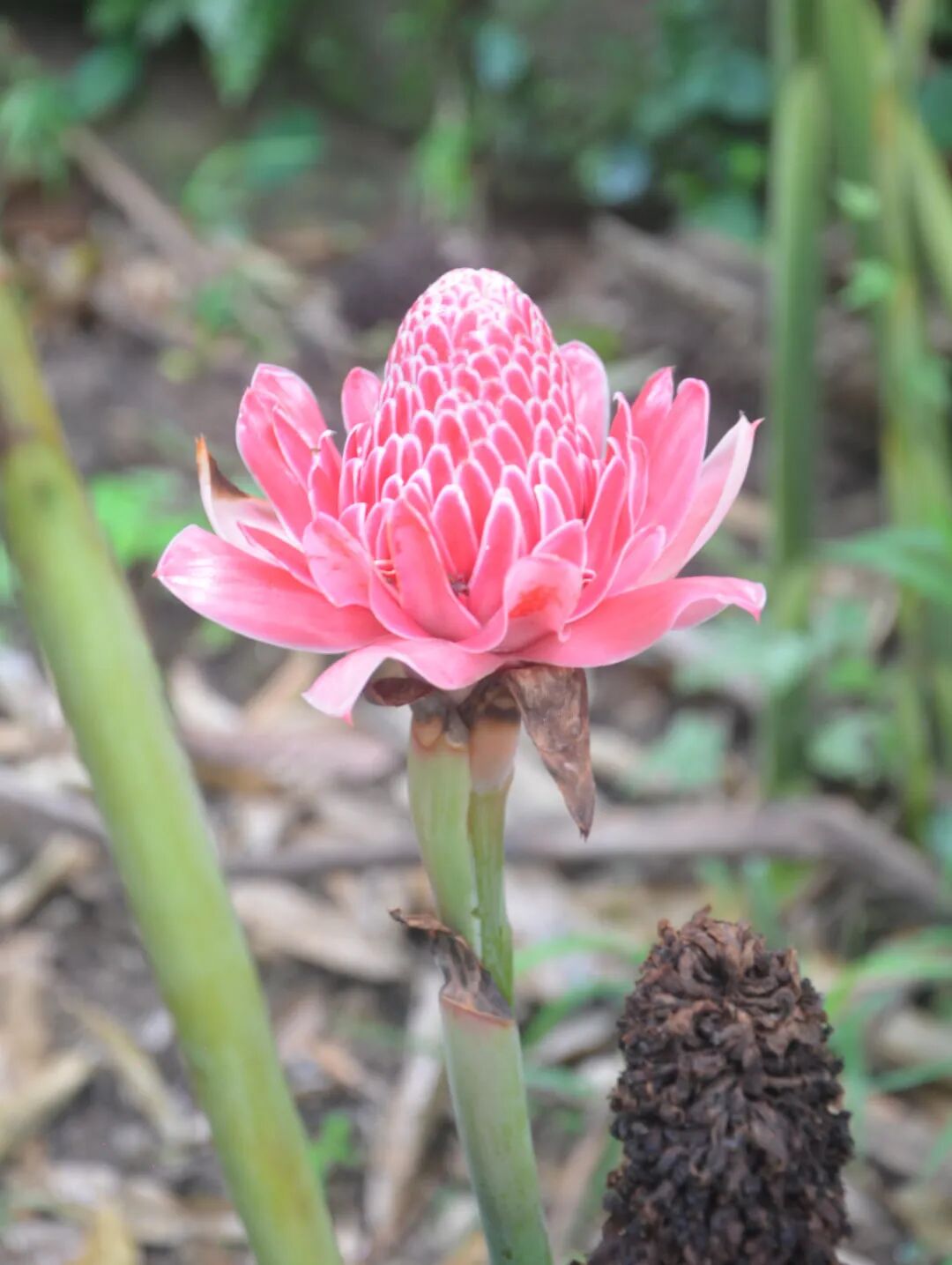
◉Durian orchards host plants such as dragon fruit and ginger lily, planted by earlier generations, alongside various insects, birds, and even snakes. An orchard of this kind is like a miniature tropical botanical garden. In contrast, plantations that focus on commercial varieties to achieve quick returns are typically monocultures. Heavily fertilised and sprayed with pesticides, they lack this kind of symbiotic relationship.
One day, I brought a cake to share. Auntie Bi initially demurred, so I teased, “You’ve been here cracking durians since six in the morning; if I hadn’t brought it, when would you’ve had time to eat?” She accepted it and began to chat, sharing little fragments of her daily life. She mentioned how there’s simply no time to clean the house during durian season, and when they finally return home after July, they find it as untidy as a “pigsty”. Her son works in Kuala Lumpur, so he can hardly lend a hand at the orchard. I half-joked, “How about I inherit the orchard instead?” Uncle An roared with laughter: “You could manage for a day or two, but you wouldn’t even stand the mosquitoes!”
I felt a twinge of guilt. He’s right. Farming is hardly an easy living; all I can really do is probably eat a few more kampong durians myself.
The Durian “Tsunami”: Behind the Plummeting Prices
This year’s widespread drop in durian prices has been dubbed the “durian tsunami” (a sudden market crash driven by oversupply). The metaphor is apt—when a tsunami strikes, almost no one escapes unscathed.
The origins of this ‘tsunami’ can be traced back a decade. The Malaysian economy was thriving at the time, and the Chinese market’s burgeoning appetite for Musang King was just taking hold. In response, many farmers felled their rubber and oil palm trees to switch to durian, favouring varieties that promised quicker returns and stronger commercial demand, particularly Musang King and Black Thorn. Ten years on, those early plantings have all reached peak productivity simultaneously, flooding the market with a massive surplus of fruit.
Musang King and Black Thorn are considered premium varieties, and their market price directly dictates the value of every other type. Growers cultivating lesser-known or completely obscure varieties are left with little choice but to sell their harvest to middlemen at drastically reduced rates. Production costs, however, remain unchanged, and smallholders say scraping by is getting harder by the year.
The problems run deeper. The cohort of Musang King and Black Thorn trees planted ten years ago is now hitting peak yield. Because these younger trees had less time to establish deep roots and accumulate nutrients, they are far more likely to produce flawed fruit—empty pods, under-ripe segments, and the like. Much of this harvest falls short of China’s strict export standards, leaving it stranded in the Malaysian domestic market to be sold off at rock-bottom prices.
Chinese demand has directly reshaped export-oriented growing regions across Pahang, Raub, and Kuala Lumpur. Between 2020 and 2024, the total value of durians imported into China tripled. In 2023, nearly 90% of all durians exported by Vietnam and Thailand were also destined for China. While Malaysia’s share of the Chinese market still sits at a modest 4–5%, areas like Pahang have long since established comprehensive grading systems covering fruit shape, sugar content, and export compliance. Some orchards have even integrated IoT-based fertigation systems to enable standardised, data-driven cultivation.
By contrast, Penang’s Bukit Mertajam district is made up of fragmented plots, predominantly managed by family-run smallholders. The terrain simply doesn’t allow for large-scale expansion, and durian yields remain a fraction of those in Pahang or Johor. Yet Penang is far from insulated from these market shifts—when prices fall, the impact is felt here just as sharply.
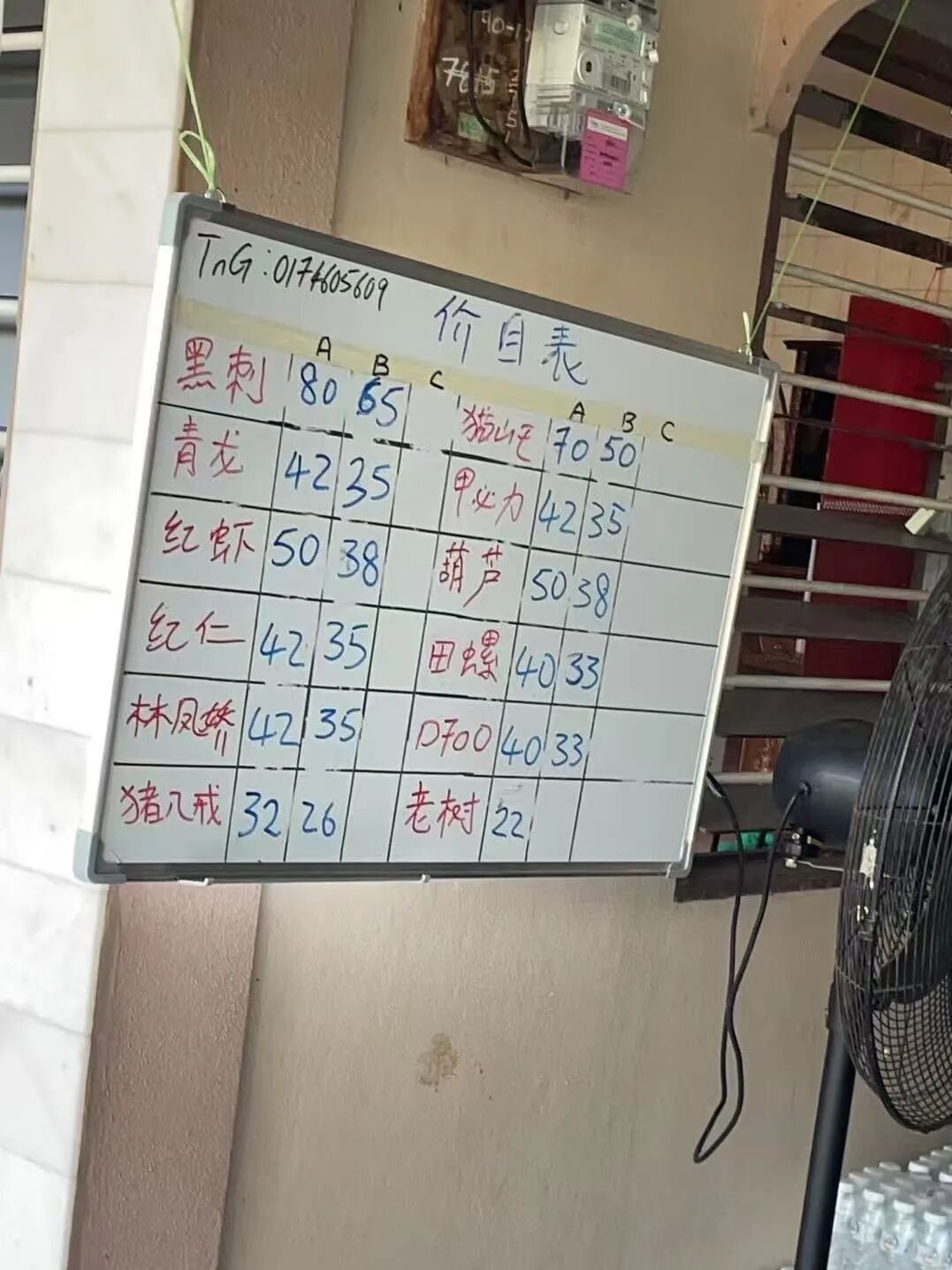
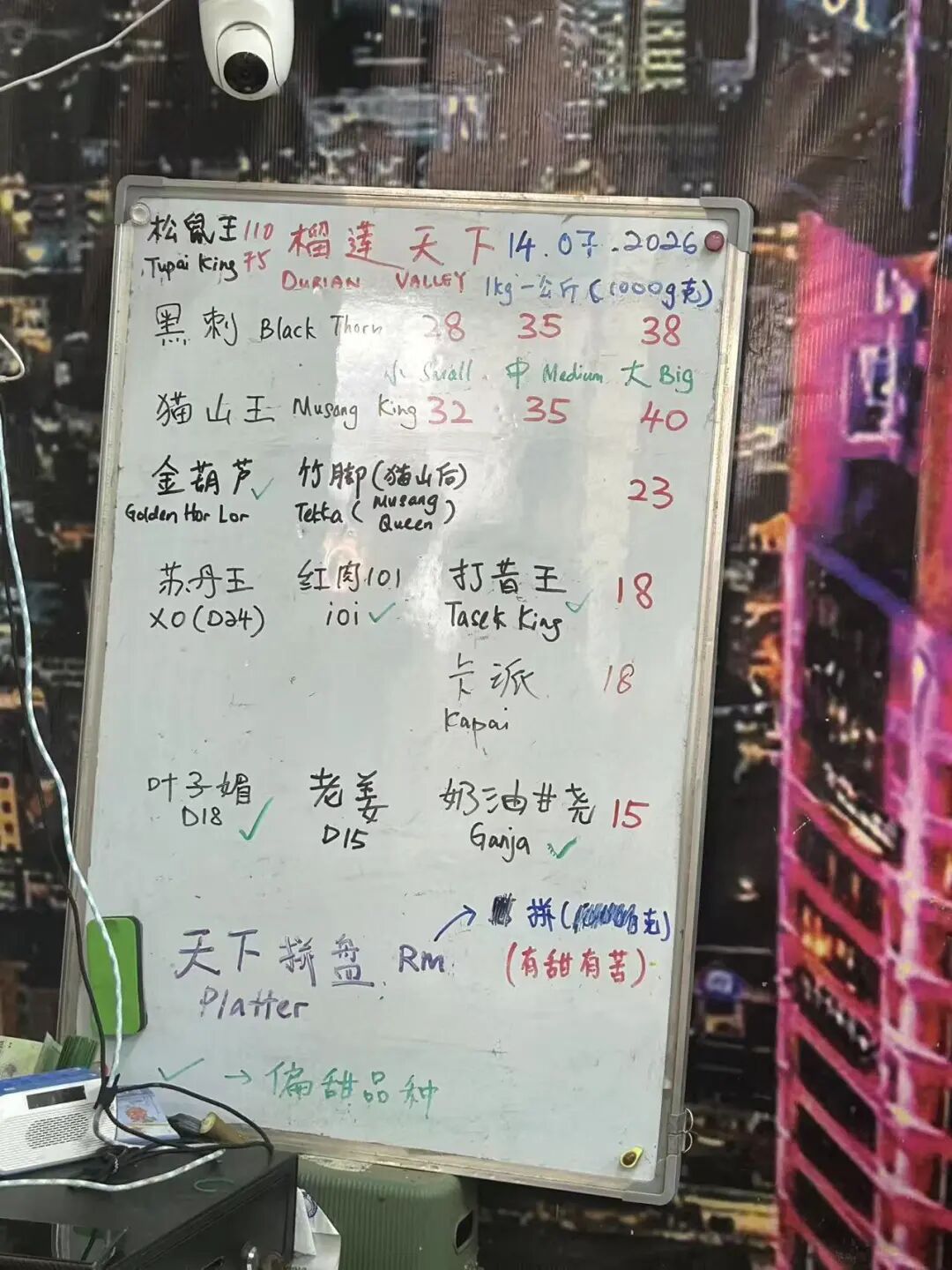
◉Year-on-year price changes in Penang, photographed at a durian stall. This year’s prices are half of last year’s.
In the wake of this export-driven price crash, Malaysian growers of premium varieties are still locked in a debate over one issue:
Should they continue to harvest durians tree-ripened in Malaysia?
Malaysia’s hallmark has always been the rich, complex flavours of tree-ripened durians. Yet many growers are now seriously debating whether to emulate Thailand and Vietnam by harvesting the fruit early: it prolongs shelf life, suits cheaper transport routes, and extends the selling window.
Those advocating for tree-ripening argue that this is virtually Malaysia’s sole differentiating advantage in the Chinese market—fresh fruit exports only launched in 2024, and that year, 52.6% of China’s imported durians came from Thailand and 46.7% from Vietnam. Unable to compete on volume, they can only rely on a distinct flavour profile. They also fear that, having already lost its global dominance in rubber and palm oil, Malaysia could see history repeat itself if it surrenders durian’s uniqueness.
Those favouring early harvesting take a more pragmatic view: cutting the fruit shifts risk from growers to buyers, allows farmers to receive payment sooner, and avoids dumping produce into a market that cannot absorb the supply. Furthermore, most Malaysian orchards already consist of old trees; even when harvested early, the flesh continues to ripen over two or three days, evolving from sweet and creamy to richer, slightly bitter undertones. The quality still surpasses that of Thailand’s younger trees, which rely on growth hormones.
This debate currently centres on export staples such as Musang King and Black Thorn, leaving Penang’s kampong old trees—which were never part of the import-export supply chain—temporarily on the sidelines. But if “tree-ripened” is no longer regarded as the benchmark for a quality durian, will Penang’s tradition of “eating whatever drops from the tree” eventually be forgotten?
Bahang Terraces, a Penang durian orchard, cultivates kampong durians and hosts farm tours to help more visitors appreciate the local terroir and history of these varieties. They caution that as farmers switch to higher-value crops like Musang King and Black Thorn to meet market demands, Penang’s kampong durians will grow increasingly scarce. If the issue goes unaddressed, certain varieties could vanish. This process has already begun.
“Penang’s durian scene shouldn’t revolve solely around Musang King, which actually hails from Pahang,” a local durian enthusiast told me.
Epilogue
By late July, Penang’s durian season was drawing to a close. I asked Uncle An what fruit was still available. He replied that there wasn’t much left, advising me to just eat whatever comes along.
Whether it is the off-season or peak season, eating durian here is truly a matter of “leaving it to chance”. After riding a motorbike through the bustling city, winding up a stretch of mountain road, and putting in a fair bit of effort, you arrive at the orchard to ask a simple question: what has fallen from the trees today?
You never know what you will end up eating, yet you remain happy to pay for this seasonal bounty.
For the orchard owners here, however, this “uncertainty” is never a romantic game of chance. It translates to decades spent at the mercy of the weather, compounded by a market environment that has grown increasingly unfavourable alongside China’s durian craze and planting boom. Whether a storm will knock the fruit down just before it ripens, whether the crop will fetch a fair price, or whether their children will be willing to carry on the family trade—none of it is within their control. All they can do is continue tending to the trees that are ageing alongside them.
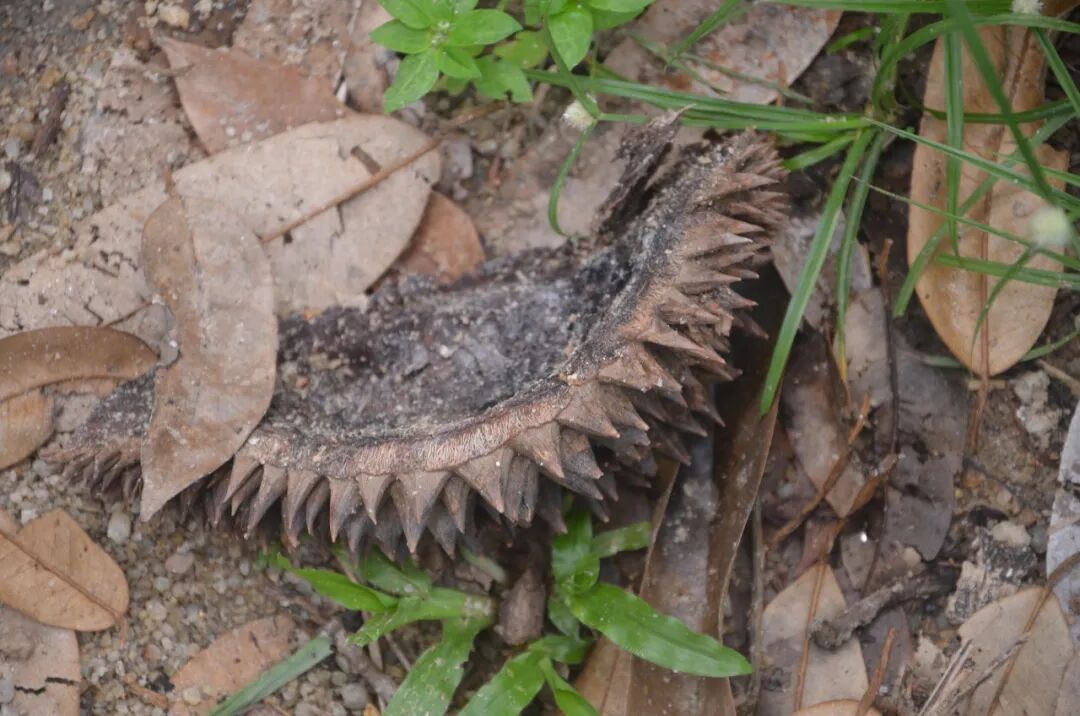
◉Photographed at a durian orchard in Penang. These might be durians consumed by small animals, or those left to “decompose naturally,” soon to become new nutrients for the orchard.
– This is Foodthink’s 829th original article –
Foodthink
Author
Renso
Southeast Asia wanderer, endlessly curious about flavours I haven’t yet tried.
Editor: Pei Dan
Layout: Xiaoshu
Scan to tip and support original food writing.
▼

▼
Click the image to read related articles
▼
Click a keyword to explore more article collections.
Seeds|Farming Techniques|Policy|Fermentation|Nutrition|Fruit|Fisheries|Events|Careers|Takeaway|Wet Markets|Livestock|Food Talk|Meetups|Book Clubs|Harvest Festivals|Smallholder Stories|Climate Change|Rural Development|Cooperatives|Urban Farmers|Food Safety|Digital Technology|Biodiversity|Disease & Food|False Solutions|Agroecology Internship Programme
Beijing | Hebei | Shanghai | Guangdong | Guangxi | Henan | Sichuan | Jiangxi | Xinjiang | Shaanxi | Hong Kong | Chongqing | Zhejiang | Jiangsu | Guizhou | Taiwan | Inner Mongolia | Philippines | Canada | Russia | Mexico | Italy | US | UK | Germany | Netherlands | Thailand | Sweden | Japan