Anthropologist’s Check-In Diary at Shahe Grand Market | New Book Excerpt & Saturday Event

Foodthink Says
Wet markets today appear to be undergoing a remarkable ‘restoration’: what was once nothing more than the mundane daily errand of elders lugging bags of groceries has now become a destination young people flock to—a trending hotspot, a window into the city’s character, even a ‘healing space’ endowed with its own emotional value.
From checking in at Shahe Grand Market—where watermelons go for as little as 80 fen a jin and ‘antiques’ from every dynasty (authenticity not guaranteed) line the stalls—to decoding the know-how behind stall signs: just how many ways are there to experience a wet market? As anthropologist Zhong Shuru puts it, a wet market is not merely a good-looking, browseable spectacle or a space for consumption; it is also our entry point for observing society, understanding the city, and practising the art of everyday life.
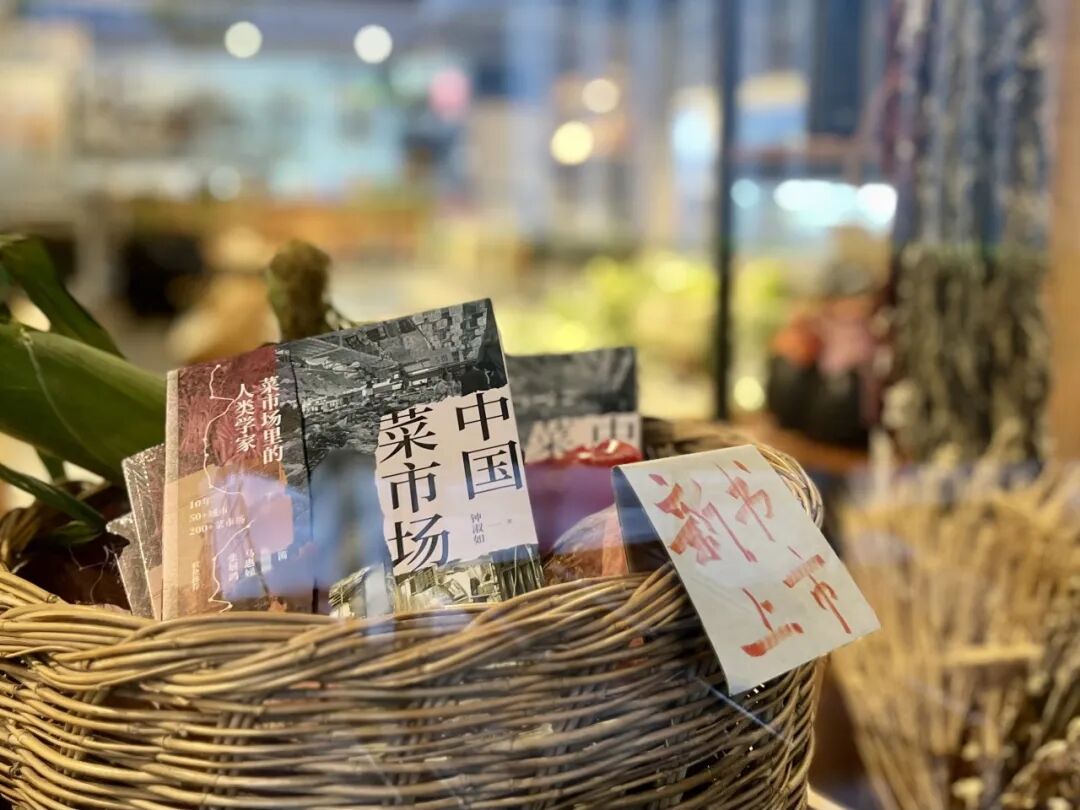
◉Click the image to purchase.
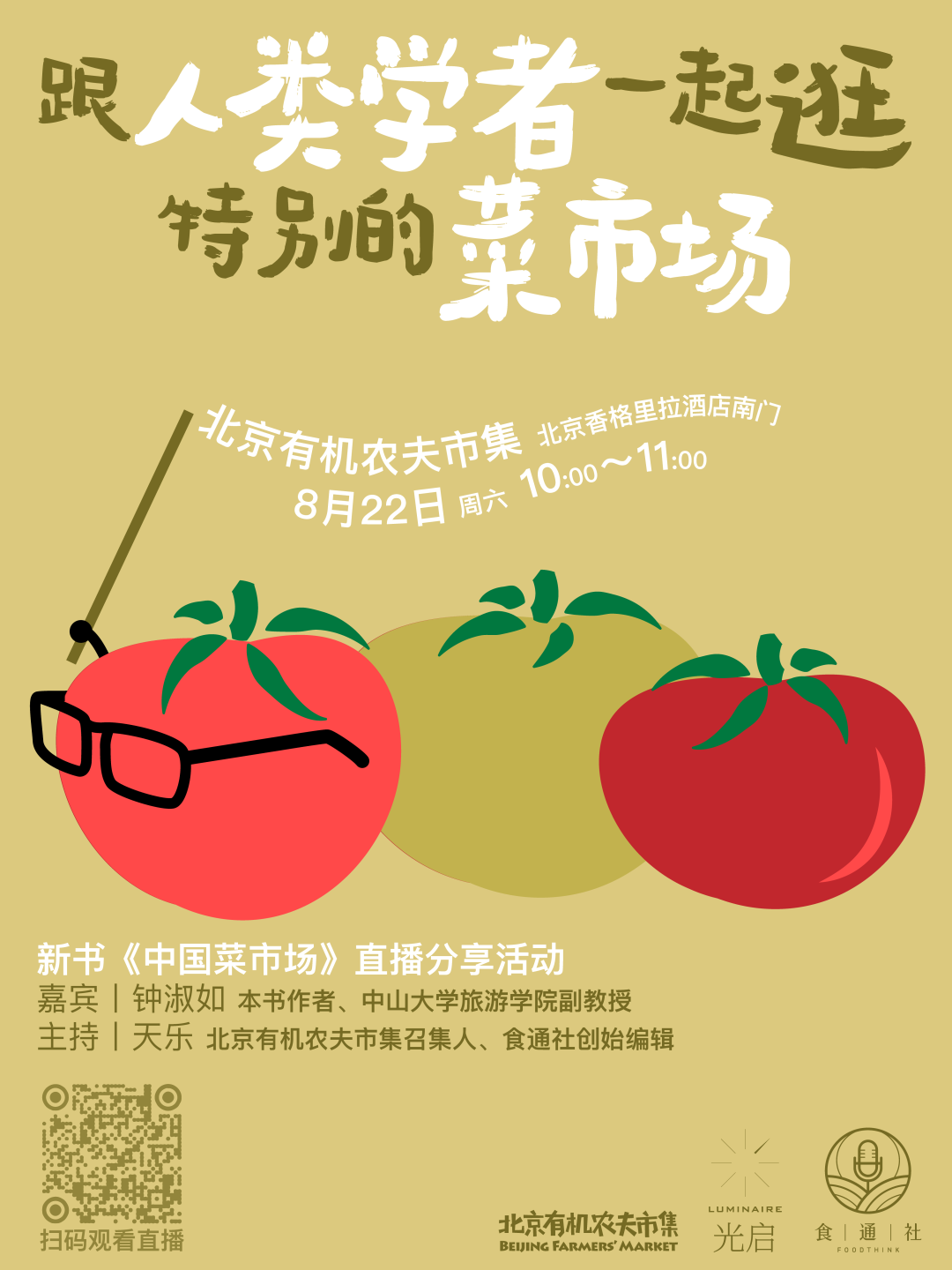
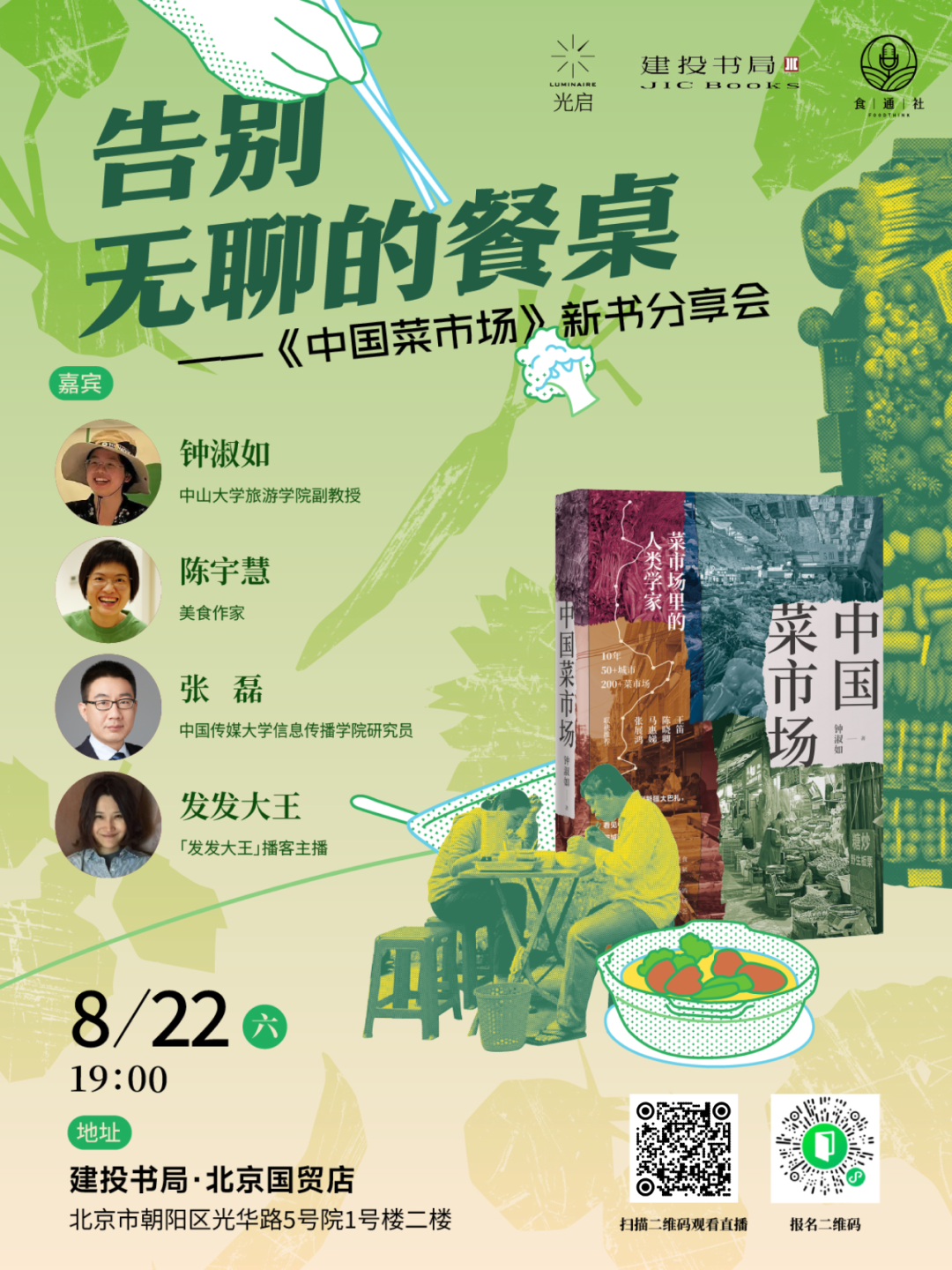
Tomorrow (Saturday 22 August), Professor Zhong will also be in Beijing with her new book ‘China’s Wet Markets’—visiting a special wet market and chatting about the book. (*For event registration and booking, see the preview at the end of the article.)
Before the event, let us follow her pen into an exploration of the wet market—
*Excerpted from ‘China’s Wet Markets’, ‘Creative Ways to Explore the Wet Market’. With thanks to Guangqi Press for permission.
Some people never set foot in the market at the end of their own street, yet the moment they travel, the first stop is a wet market. Others, scrolling through short videos of chasing the daji, are drawn in by the bustle and plunge headfirst into the vortex of everyday life. In recent years, the wet market has become a window onto the character of a city and has built new imaginings in the online world. But for me, the wet market is more than ‘pretty to look at and a pleasure to browse’; it is also an entry point into observing society, understanding a city, and practising life. During my research, I experienced different ‘ways into’ the wet market: the check-in style—heading to the daji to witness a real and raucous carnival of everyday life; the youth companion walk—using fieldwork methods to turn the bustle into insight; the intergenerational learning walk—treating the market as a tactile ‘museum’, planting curiosity between food and people. The paths differ, but they all lead to a closer connection with place.
Checking in at internet-famous wet markets has actually become something of a trend, which I found genuinely surprising. In recent years, wet markets have been emerging as popular travel destinations—Zhuanxin Market in Kunming, Fengmen Heng Street in Suzhou, Kexiang Market in Nanjing, Bashi in Xiamen, to name a few. Wet markets are a window onto the character and customs of a city, and many travellers are drawn to them by sayings like ‘If you want to understand a place, go to its wet market.’ Compared with the cookie-cutter ancient towns and food pedestrian streets, wet markets are genuinely more authentic and more interesting.
In the online world, wet markets have developed a style quite different from their somewhat forlorn state in reality — busier and busier, with an almost ‘restoration’ about them. Many influencers have published check-in guides and short videos about wet markets. Some have gone viral across social media platforms, routinely racking up millions of views. The typical formula goes something like this: a gorgeously dressed influencer, embodying the gaze of ordinary urban youth, ventures into a wet market in search of novelty, hunting down local snacks and distinctive flavours, while giving viewers a feel for regional specialties and the customs and seasonal rhythms of a place.
Among all the wet-market-related video categories, ‘Going to the Daji’ is particularly eye-catching. The daji is a traditional periodic rural market; across different regions, market days are staggered according to the lunar calendar, forming a vital network for the exchange of goods in rural areas. Today, daji on the urban-rural fringe have become check-in destinations that young people flock to — Puli Grand Market in Qingdao, Shahe Grand Market in Changping, Puhe Grand Market in Shenyang… Among the crowds, there’s no shortage of young people who look as though they’ve stumbled into the Grand View Garden.
The thrill of heading to the daji has been vividly captured in phrases like ‘hardcore,’ ‘surreal,’ ‘earthy,’ ‘eye-opening,’ ‘so cheap it might as well be free,’ ‘once you’re in, you can’t get out,’ ‘you want to buy everything in sight’… I relate to all of it.
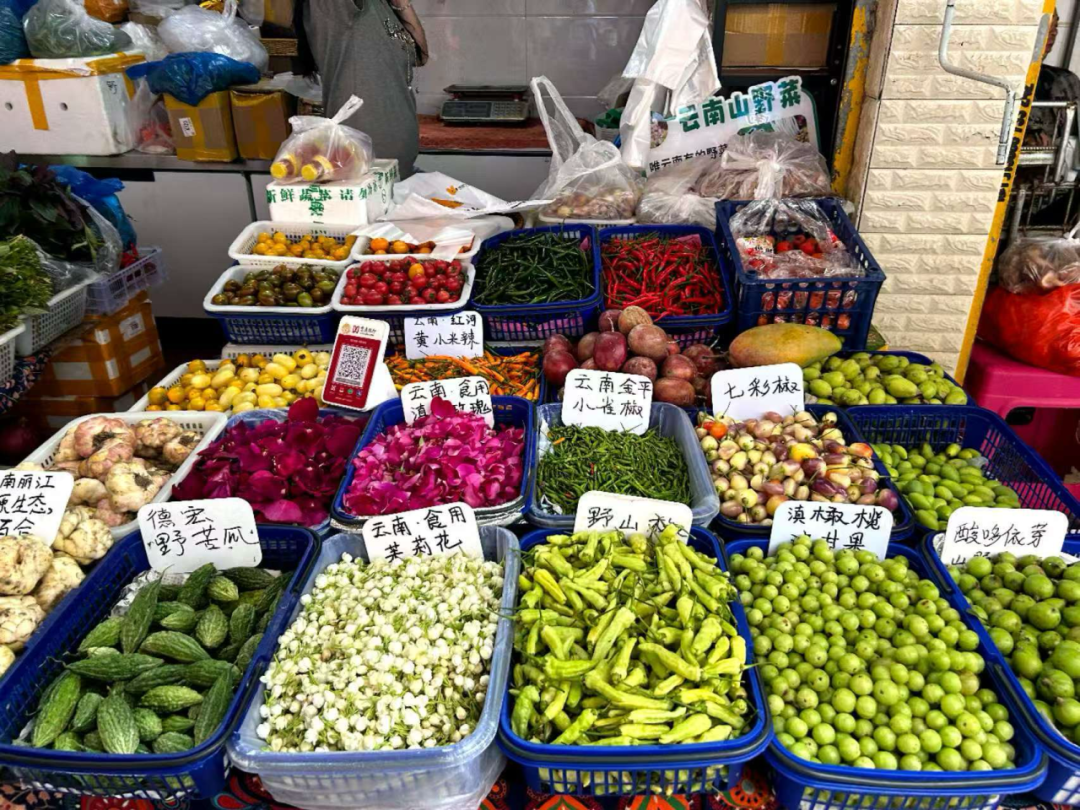
◉Wild greens at Zhuanxin Market, Kunming, in spring.
Late summer slipping into early autumn, I arrived at Shahe Grand Market, a sprawling 50,000-square-metre affair in Changping District, Beijing. It opens on Wednesdays, Fridays, and Sundays, entirely open-air. The buzz is palpable right at the entrance. By eight or nine in the morning, the crowd flows in an endless stream — an elderly man emerging contentedly, spring onions in hand; a woman cradling a potted flower; parents with children of four or five; young people meeting up in threes and fours. All manner of transport weaves through the scene: bicycles, small e-scooters, standing electric balance boards, and the wheeled shopping trolleys that are the staple of any serious market day.
Here, prices are so low they blow past my frame of reference for cost of living—the 100 yuan in my pocket has never felt this heavy. (And this is still Beijing!) Goods rarely come in anything but plain packaging; red and blue plastic bags are the most beautiful colours on display, yet everything has its own unit of measure: sold by the pile, bought by the bag. ‘One hundred and two percent’ home-grown vegetables from Yanjiao, 2 yuan a jin, take your pick; sandy-fleshed Zhangjiakou tomatoes, with the stallholder having split open an entire basin for customers to try—whether they carry that proper tomato flavour is a one-bite affair; live fish and prawns, sold by the basin, all far cheaper than in the city markets. ‘Fruit freedom,’ the standard entitlement of the modern middle class, is within easy reach at the grand market: fresh blueberries, 20 yuan a jin; Shuixian mangoes, 5 yuan a jin; Shine Muscat grapes, 10 yuan a jin; Kyoho grapes, 6 yuan a jin; in-season Pinggu peaches, 3 yuan a jin; Qilin watermelons, 80 fen a jin—watermelons are even sold bagged, 10 yuan a bag with three or four inside.
But alongside the bargain finds are products that call for a careful eye. Staring at these marvels of dubious authenticity broadens the mind while also prompting a wry reflection on the complexity of humanity. The dried beef at the entrance, priced at 30 yuan per 500 g, is most likely pressed from duck meat. Durian, which routinely fetches 30 yuan a 500 g elsewhere, goes for just 20 yuan at the daji—but it is very likely Chanthaburi, a variety with characteristically large seeds, passed off as Monthong. Camel milk from the Tianshan Mountains, rare and precious, supposedly a cure for the “three highs”; one sip and sure enough, the non-dairy creamer flavour is unmistakable. Er-ci pork at 15 yuan a kilogram—a price hard to come by even at the trough of the pig cycle—yet the surface is weeping liquid; who knows how long it has been sitting in the freezer? A world-travel-themed drink stall offers bottles in every shade, a feast for the eyes, and for just 10 yuan customers can take home Ukrainian-imported craft mojito and craft blackcurrant, re-bottled no less in Foshan and unfindable on Taobao; there are also “genuine” Putian AJ and Nike shoes—the full range of styles, the latest releases and discontinued pairs alike—laid out flat in thin plastic bags for the taking, unadorned and utterly sincere.
Those with a sense for the finer things in daily life can also find freshly cut lotus blooms and seed pods at the daji. The grasshopper stall includes a small bamboo cage, and several old-timers cluster round. Children needn’t feel shortchanged at the daji, either—there are stalls selling toys, as well as puppies, kittens, and bunnies, with flowers, birds, fish, and insects all on display. The daji also carries shag tobacco and pipes in every grade. The tobacco is sold by weight, so spend as much or as little as you like. Premium brands include Chunghwa, Xuanhemen, and Yellow Crane Tower, while more affordable options include Hongtashan and Golden Leaf. The stallholder will happily roll one himself to show you how.
The stall-holders at Panjiayuan also make regular trips to Shahe. Their curio stalls span the full breadth of ancient Chinese history—every dynasty in stock at thirty yuan a piece. You can pick out a Tang-dynasty Buddha-bead bracelet, a Ming-dynasty snuff bottle, a mixed-dynasty copper coin string. Of course, authenticity is not guaranteed. Next door is a stall that serves as a protest against modern consumerism, dealing in second-hand odds and ends—every miscellaneous item can be repaired or bought back, as if my grandfather’s storage chest had been overturned on the ground, everything laid bare for all to see. There are quite a few hand-worn walnut stalls too. The walnuts bear different imposing names: Coarse Vein, Eagle’s Beak, Heaven-and-Earth Lion’s Head. Once purchased, you can keep working them as you browse, absorbing the market’s atmosphere. There are also unpeeled walnuts in a fresh green, called Toad Head, whose striking resemblance to the three-legged toad has drawn a wave of appearance fans. Buying new walnuts is as thrilling as gambling on a jade boulder.
The daji seems to be emphatically saying ‘no’ to industrialisation. The bed sheets and covers feature vintage floral patterns, looking festive and cheerful. Walk a little further and you’ll find a stall hand-paddling cotton batting into quilts on the spot—pair it with a floral cover and you’ve taken home a one-of-a-kind quilt in the world. At the belt stalls, large hides of cowhide in varying shades are laid out in the open. Customers simply stand still while the stallholder measures their waist, then swiftly cuts the leather and punches the holes—genuine materials guaranteed. Belt buckles can go the Chanel or CK route for a modern Western look, or the vintage gold-inlaid jade court style, complete with dragon motifs. Walking sticks in different materials are handmade with fine craftsmanship, ranging from peach wood to ash, and can be customised. The young stallholder pulls out a hidden treasure—a dragon-head cane in the martial style of Consort She Taigun, the legendary warrior matriarch from Chinese folklore. He straightens his spine, and for a moment you feel he’s about to march out to battle…
I spent a quick round browsing the daji and glanced at my watch—two hours had already slipped by. As I was leaving, I carried a plastic bag of Pinggu peaches and a slab of hawthorn cake; my trouser pocket held two miniature zodiac gourds, picked out by a child I’d chanced upon; my stomach was full of huoshao and luzhu; and dopamine was flooding through my brain. I felt it deeply here: the eyes are too busy to keep up, but all the worries simply vanish. No wonder so many young people love a trip to the daji.
A trip to the daji delivers a fresh, almost uncanny experience, because the non-everyday quality of the daji stands in stark contrast to young people’s quotidian lives, generating a sense of the exotic within the real—almost a carnival undertone. You slip into an unfamiliar rhythm, an unknown liminal threshold, drawn by raw, unadorned authenticity and swept up by the explosive energy of the crowd, finding a brief indulgence and release from the weight of everyday reality.
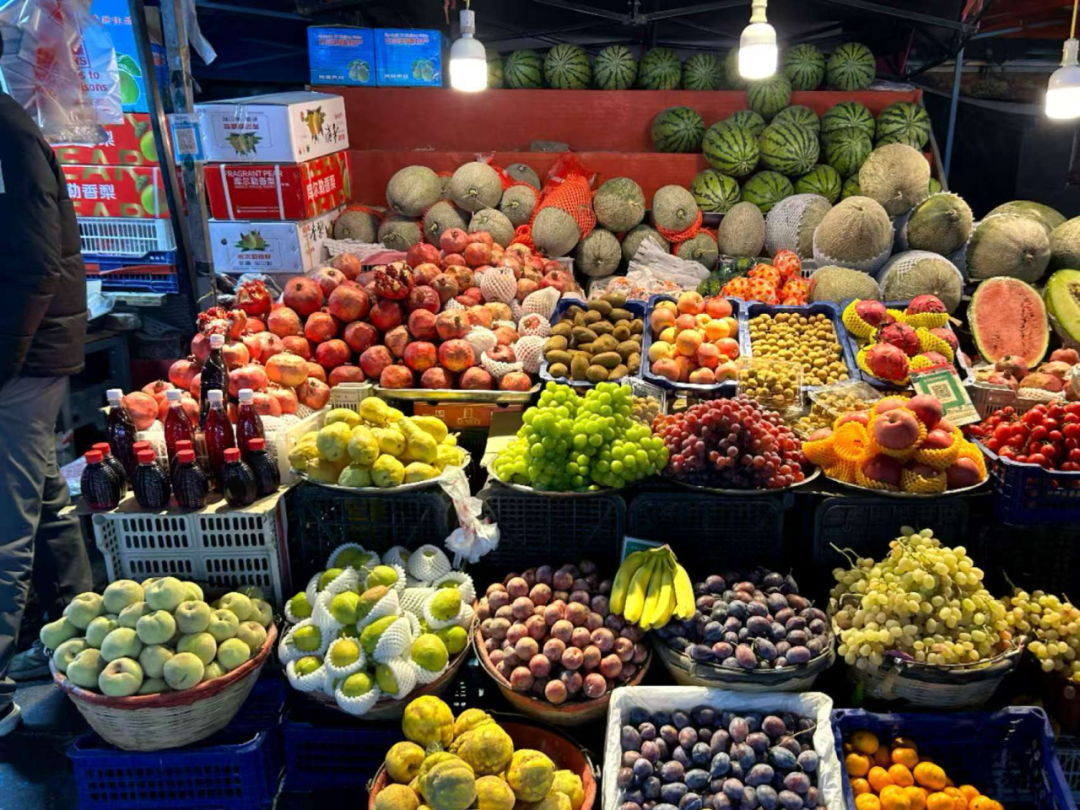
◉Fruits and melons at the Hetian night market in autumn.
***
Another way into the wet market is to move from spectating to understanding the craft. In recent years, a growing number of young people have developed a curiosity about the people, events, and objects in wet markets. They can smell the intermingled scent of dampness and freshness, notice the fine details on hand-painted signs and plastic bags, and hear the stallholders’ cries rising and falling over one another. I have led many wet market walking tours and have seen this curiosity transform into action.
In 2024, I co-founded the Wet Market Research Group with Fengnianqing, a food-and-agriculture organisation, in an advisory capacity. What started with barely a dozen people now has over seventy members in the group chat. Our motivations differ: some simply want to chat with stallholders; some want to photograph every plastic bag of vegetables in a market to work out exactly how many kinds there are; some are taken with the lettering and phrasing on hand-painted signs; some follow the traditional snack stalls around the market in search of flavour; some study how to buy ‘quality at fair prices’ ingredients; and some keep a special eye on ‘the most business-savvy stallholders’, eager to learn the tricks of their trade.
We have organised several field visits, trying to cover the full range from urban to rural. Traditional wet markets and internet-famous markets in Guangzhou, the xushi—periodic rural markets—on the urban–rural fringe of Foshan, the street markets of Hong Kong … all have been on our routes. Because one member’s parents work in wholesale at Haijixing, a major wholesale market in Shenzhen, we also followed vegetables upstream into wholesale markets, trying to understand how food moves through a city.
When I lead a group visit, I do a short interpretive walkthrough and share my own observations. But as an anthropologist who has long studied wet markets, I make a point of setting aside the researcher’s ‘arrogance’—not rushing to offer answers, but preferring to let my companions see for themselves, ask their own questions, run their fingers over the dents worn into a cutting board, catch the damp air at the fish counter, or lift a bunch of leafy greens and judge its moisture by hand. Out on the ground at a wet market, the concrete sensations and knowledge gained through direct practice are often more effective than attending a hundred lectures. In my view, the wet market is a public space for learning, where young people can reflect on their own lifestyles and consumption choices.
We make a point of drawing on each participant’s own experience and initiative. Take Yiding, for instance: working from the database of the newspaper he is employed by, he traced the historical threads running through Guangzhou’s wet markets and led the group through them during the walk. This is how we came to learn about part of Shayuan Market’s past—specifically the history of Yuanyang Market. In 1958, small-scale commerce began to appear in Haizhu District; state-owned enterprise communities sprang up in its wake, and Yuanyang Market was established by Yuanyang Company to provide everyday convenience for its workers’ residential compounds. Its story is inextricably bound up with the broader trajectory of market-oriented reform. The property-rights structure remains complicated to this day, which is why subsequent renovation and upgrading have proven so difficult… Everyone listened intently, using history to make sense of what the market looks like today.
To keep the spirit of exploration alive, each session is led by an enthusiastic participant who does the groundwork in advance and sets small tasks for the group. After the walk, we sit down together for a focused discussion. On one occasion, the person leading asked everyone to draw a ‘sensory map’: at a designated spot inside the market, record what you smell, hear, touch, taste, and see. If that sensation had a shape, what would it be? What colour does it most resemble? Which word does it bring to mind? Each spot is paired with a photograph to be labelled on the map later. Exercises like this ground the elusive ‘qi’—that indefinable atmosphere—in concrete, shareable details.
‘You can only find the unique qi of each market by being there yourself.’ A participant put it this way. The observation was particularly vivid at Xinhongfeng Market. Shaped by the Hubei migrants who gathered there around the garment industry, the market is full of a ‘Tianmen flavour’. The foam-board signs on the vegetable crates don’t read ‘local’, ‘Conghua’, or ‘Qingyuan’—they read ‘Tianmen’: Tianmen aubergines, potatoes, luffa, garlic shoots. Even the salt is produced by Changzhou Company in Tianmen, Hubei.
One participant, after several visits, said: “The more you visit wet markets, the more you can feel your embodied understanding of food, culture, and city slowly shifting.” “I feel I’m coming to know this city, Guangzhou, better and better.” Others have gone from “disliking” them to “unable to live without them”. A participant, Yiyuezhou, recalls how as a child she dreaded the dimness, dampness, and clamour of the market: “My parents would drag me along to do the shopping, and eight times out of ten I’d try to slip away.” After going abroad and learning to cook, she discovered that the supermarket simply didn’t carry many seasonal ingredients, so she turned to the wet market. Around a corner she spotted toon shoots and seasonal coriander, bought them in a burst of excitement, and posted a photo on her WeChat Moments—only to be pointed out that she had mistaken celery for coriander. After the embarrassment, she realised that to eat well, you simply cannot be confined to the supermarket; you have to grow your knowledge of food.
Walking into Haijixing wholesale market in Shenzhen, the numbers are striking: roughly 85 per cent of the city’s vegetables pass through here. That sense of “so it was this simple all along” makes you realise that in a city with such a high standard of living, the difference in vegetable sourcing between various supermarkets and restaurants isn’t nearly as great as one might imagine. The overall impression of browsing Haijixing is that an enormous supply chain sustains a great many people, yet food here feels more like goods in transit. Some participants began to understand why they had grown accustomed to shopping online, gravitating towards e-commerce or Hema, and in turn began to ask why “soulful” wet markets are becoming so few—why does everyone treat them merely as commodities? Can we have more choices?
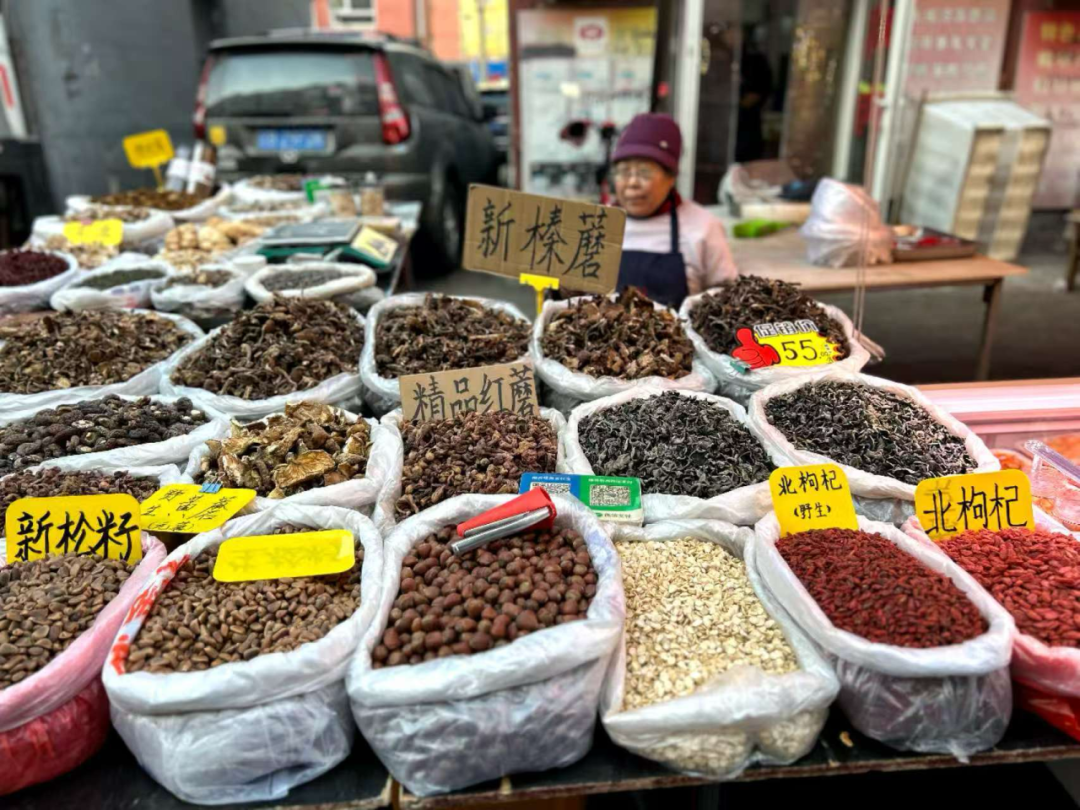
◉Mountain produce at Yaming Market, Shenyang, in winter.
In the xushi (periodic rural markets) of Sanzhou in Foshan, Nanxiong in northern Guangdong, and Maoming in western Guangdong, Fei Lan writes: ‘I saw live chickens, ducks, and geese, bamboo-woven baskets, and unfamiliar yet abundant local produce. I saw more handmade foods, and food producers facing consumers directly—vegetable farmers, poultry farmers, beekeepers… I saw how closely we are tied to the land, the wild roughness of rural life, the full spectrum of lives among smallholder farmers across different regions, and the flexibility, resilience, and wisdom of those who work in food.’
These activities were never very ‘orderly’—mostly driven by enthusiasm—but everyone’s energy stayed high. By 2025, partners outside Guangzhou began suggesting they run activities in their own hometowns, so we launched a ‘Wet Market Archive’ recording initiative: sharing online how to approach a wet market, swapping tips on interviews and observation, and then each going out to practise.
The Wet Market Archive template is simple:
1. Basic Information
Name, location, opening hours, market type, date of visit, observer.
2. Spatial Observation
• A floor plan of the market (look for a layout map on the market notice board to photograph, or sketch one by hand).
• Impressions from observing the space (record the wet market and its surrounding community in words and photographs
• Observation: This can be a general impression or more specific observations, such as stallholder positioning, layout, circulation, and facilities, along with your thoughts on why things are arranged as they are. For the su rrounding neighbourhood, consider who the wet market serves and what characterises the local community. If possible, it is best to look up some background information or conduct light informal research in the area).
III.Food Observation
• Notes and photos related to food. You can describe foods that interest you,
• or the food on offer across the wet market as a whole.
IV. People Observation
• Observe the different types of people in the market; ideally, include some personal stories.
V. Subjective Impressions and Reflections
• What unexpected discoveries did you make at the wet market? How would you describe your overall impression? What stood out to you?
6. Wet Market History
• Based on your interests, decide whether to dig deeper.
At first, I worried that with such bare-bones guidance, the wet market archives everyone produced would be indistinguishable from one another, but I soon found I had worried for nothing. Each person brought their own emphasis: some fixated on the visual, noticing that certain markets write their slogans in extraordinary detail, even specifying cooking methods; others paid attention to the ‘services’ a market provides and how they carry different meanings in different communities — beyond selling produce, it also serves as an information hub, posting job listings, sharing neighbourhood gossip, and arranging all kinds of household services.
Looking back, my favourite moment always comes after the crowd has thinned. We set our bags down gently, sit in a circle, and tell one another about the different worlds we glimpsed in the same market: who was preoccupied with the size and material of the plastic bags, who was spellbound by the brushwork on the hand-lettered stall signs, who fell suddenly quiet at the sight of a snack from home, who understood for the first time why they had never liked going to wet markets. I think this is what keeps me bringing people back. The wet market remains that same cacophonous place, yet time and again it helps people think more clearly about food, about the city, about themselves.
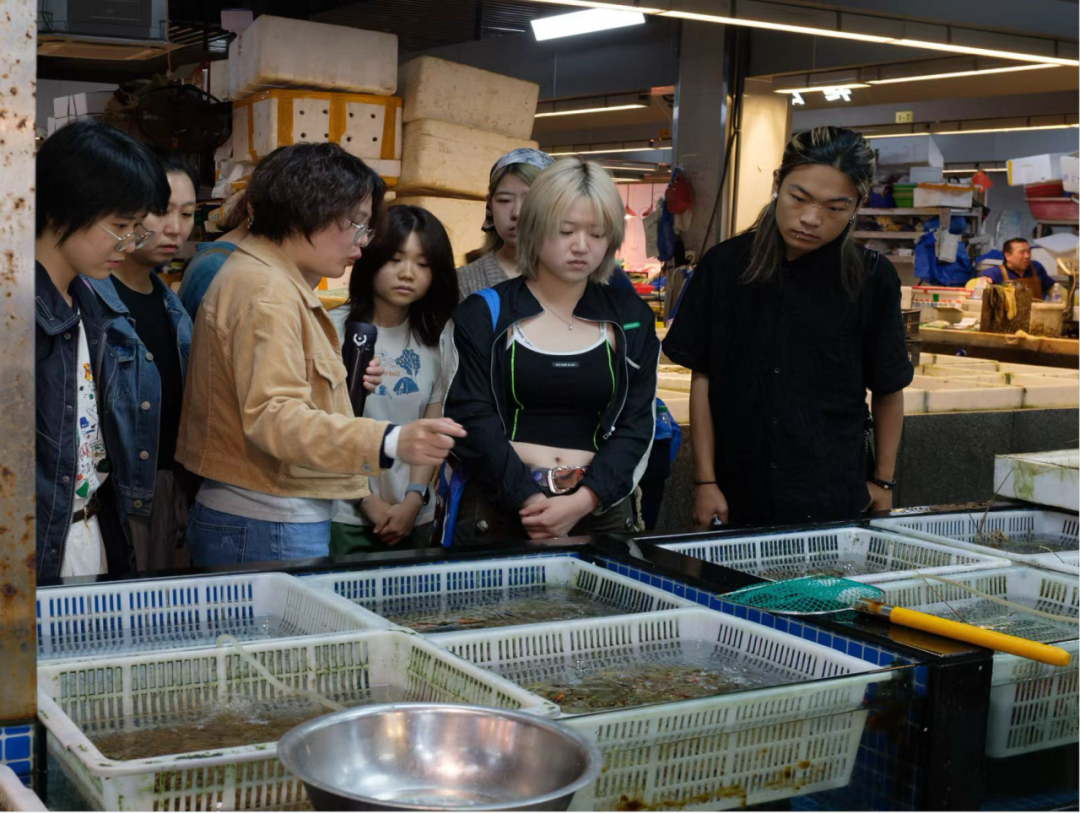
◉How do young people explore wet markets? The author regularly joins market visits with young people and, together with partners, co-founded the Wet Market Research Group.
– About the Author –
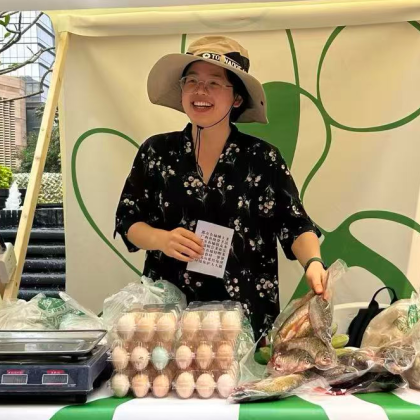
Zhong Shuru | Associate Professor at the School of Tourism, Sun Yat-sen University; PhD in Anthropology from Texas A&M University. Her long-standing research spans wet market culture, sustainable food systems, and gastronomy tourism, continually exploring in both research and practice how food can serve as a medium to reconnect people with food, nature, society, and place.
From immersing herself in a shift at a fish stall on a remote island to exploring how wet markets connect to sustainable living, Professor Zhong has appeared as a guest on Foodthink, sharing many insights about wet markets. Click here to find out more.
– Event Preview –
– New Book Details –
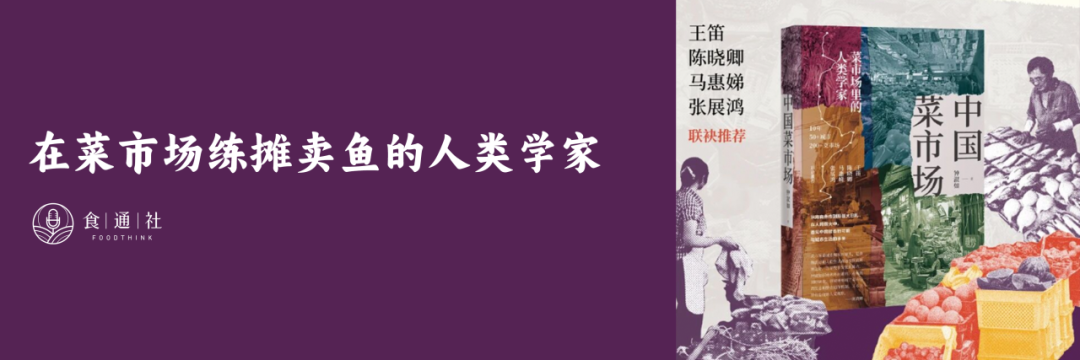
China’s Wet Markets
Author: Zhong Shuru
Guangqi Press | Published July 2026
Ten years, over 50 cities, more than 200 wet markets…
Based on panoramic observation and fieldwork across wet markets in cities nationwide,
exploring the history of wet markets, vendor communities, supply chains, food consumption culture, urban public management, and more.
– Contents
All images in this article are illustrations from the book.
Layout: Xiaoshu
Scan the code to leave a tip and support original food writing
▼

▼
Tap the image to read related articles
▼
Click a keyword to browse more article collections
Seeds|Agri-Tech|Policy|Fermentation|Nutrition|Fruit|Fisheries|Events|Careers|Takeaway|Wet Markets|Livestock|Food Talk|Share Sessions|Book Club|Fengnianqing|Smallholder Stories|Climate Change|Rural Development|Co-operative Economy|Urban Farmers|Food Safety|Digital Technology|Biodiversity|Pandemic and Food|False Solutions|Agroecology Internship Programme
Beijing|Hebei|Shanghai|Guangdong|Guangxi|Henan|Sichuan|Jiangxi|Xinjiang|Shaanxi|Hong Kong|Chongqing|Zhejiang|Jiangsu|Guizhou|Taiwan|Inner Mongolia|Philippines|Canada|Russia|Mexico|Italy|United States|United Kingdom|Germany|Netherlands|Thailand|Sweden|Japan