
Braised Goose in a Qiaopi: 100,000 a Bird

A Braised Goose Worth 100,000 Yuan
This is a Qiaopi dated 12 July 1946, sent from Seremban, Malaysia, to Huamei Township, Chao’an, Guangdong, over 4,000 kilometres away. It is now held in the collection at the Qinghui Pavilion of the Caitang Qiaopi Museum in Chao’an County, Chaozhou City.
The sender was Shen Dongyan, and the recipient was his mother. Like the vast majority of Qiaopi, this letter deals with concrete daily affairs. He asks about the harvest of the early-season rice at home, how much crop rent a certain brother has collected, and brings up the matter of a family member’s schooling, covering school transfers as well as arrangements for tuition and board. He mentions that once shipping lanes are clear, he will send back some ‘clothing for daily wear’. Finally, he refers to one particular matter:
“Counting the days, I see that Grandfather Yong’s birthday draws near. I imagine that over these past years, you have not been in a position to purchase a large goose for the offerings. I think it right to buy one this year. I do not know what the going rate is for each goose now, so I have sent 100,000 National Currency notes in advance to cover household needs. I will send further funds in my next letters as required. Please accept my respectful regards and best wishes for your health.”
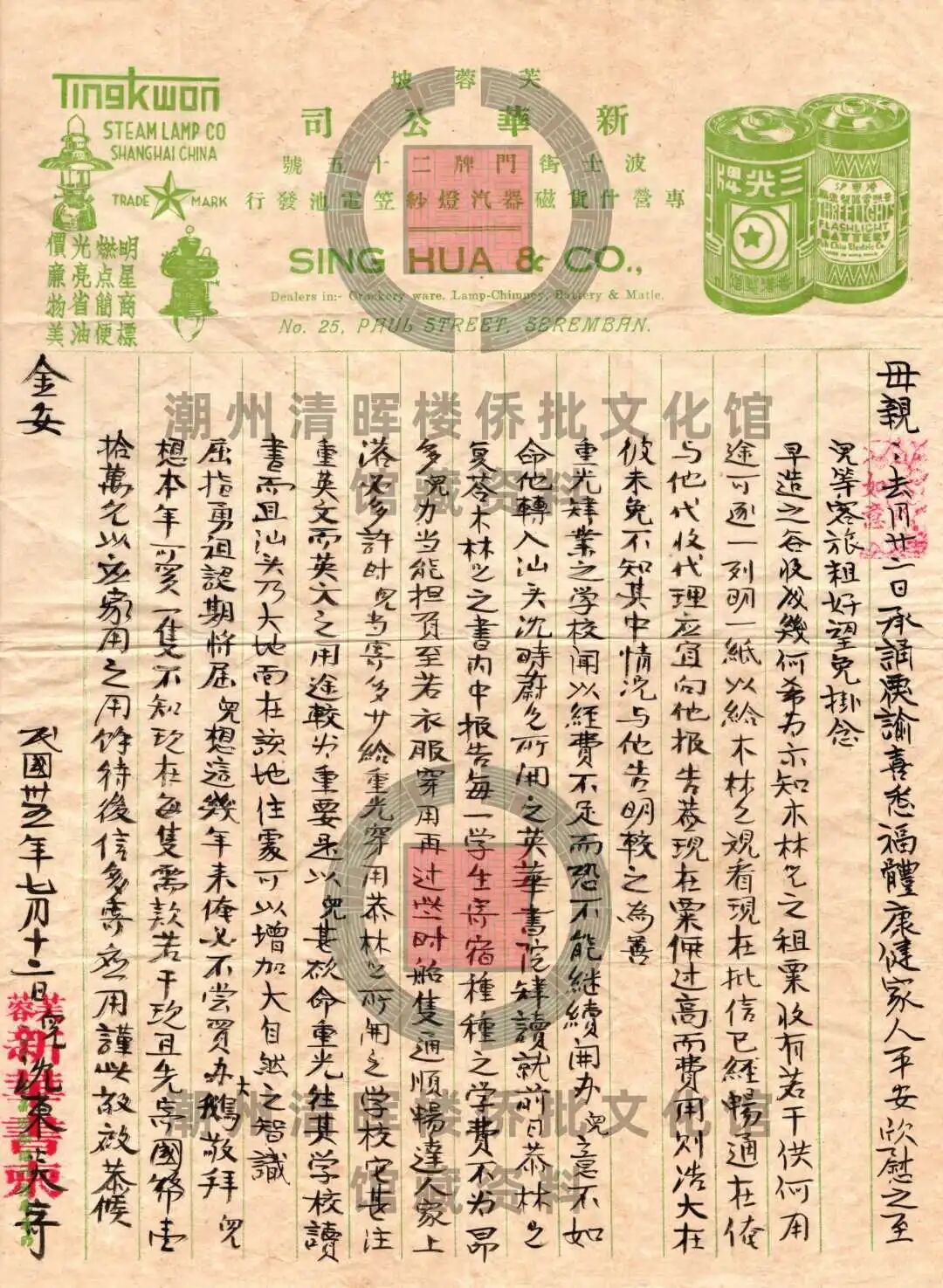
◉Overseas Chinese or Qiaopi museums across Guangdong preserve numerous Qiaopi sent back by Shen Dongyan, Nanzhi, Musheng and others. Image source: Qinghui Pavilion, Caitang Qiaopi Museum
You need not be fluent in classical Chinese to grasp its meaning; from the keywords alone, any Teochew speaker would understand. It states that the birthday of one of the family’s ancestors is approaching. For the past few years, the household may not have been in a position to afford a braised goose for the offerings, so he writes to ask whether the money enclosed in the letter will be enough to purchase one.
In Chaoshan, presenting a braised goose for Chinese New Year deity worship or routine ancestral rites is regarded as the highest ceremonial standard. This Qiaopi demonstrates how deeply entrenched this folk tradition already was by the 1940s. At the time, Shen Dongyan, living far away in Malaysia, had this matter very much at heart. The 100,000 National Currency notes he enclosed with the letter to his mother was almost certainly his estimate of what a single braised goose would cost back then.
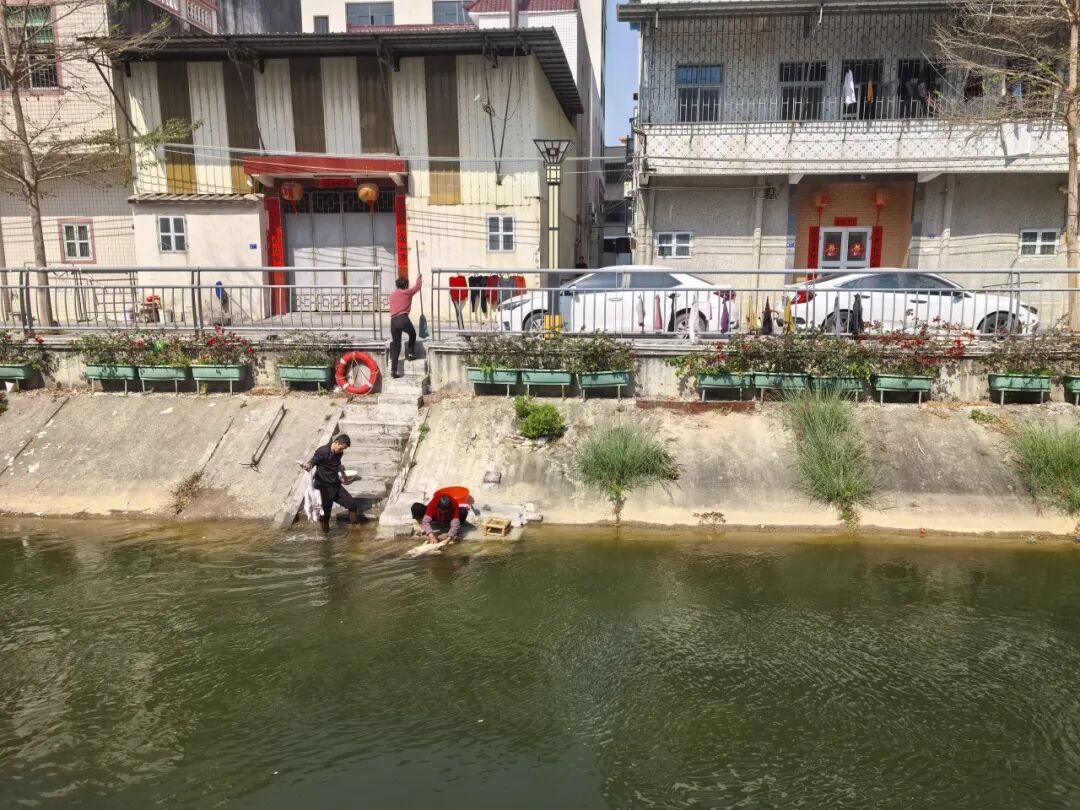
◉During the Spring Festival in the Chaoshan region, it is common to see people by the water’s edge washing geese and other traditional three or five animal offerings prepared for festival worship and celebrations.
That year fell squarely within the most severe period of hyperinflation in modern Chinese history. In early 1946, 100,000 notes of National Currency could still purchase two cattle; by the end of the year, that same sum had rapidly lost its purchasing power. By early 1947, it would only stretch to a single chicken. The Qiaopi in question dates from July 1946, when 100,000 notes roughly equated to the price of one braised goose. Reflecting on this brings a pang of sympathy for Shen Dongyan. With the National Currency inflating at such a rate, if that 100,000 sum were delayed even slightly en route, one can only imagine how drastically it would have depreciated by the time it reached China. Whether it would still be enough to buy a braised goose would have been far from certain.
Had that 100,000 sum not been delayed in transit, its purchasing power that year could have covered dozens of jin (500g) of cooking oil or rock sugar, 100 to 200 jin of rice, or enough ordinary cloth for a shirt. This clearly shows that the braised goose was indeed a premium item, far beyond what an ordinary household could casually purchase for ancestral worship at the time. For Teochew migrants undertaking the migration to Nanyang (Southeast Asia), the ultimate symbol of financial success and an improved family life was having enough to place a braised goose on the ancestral altar.
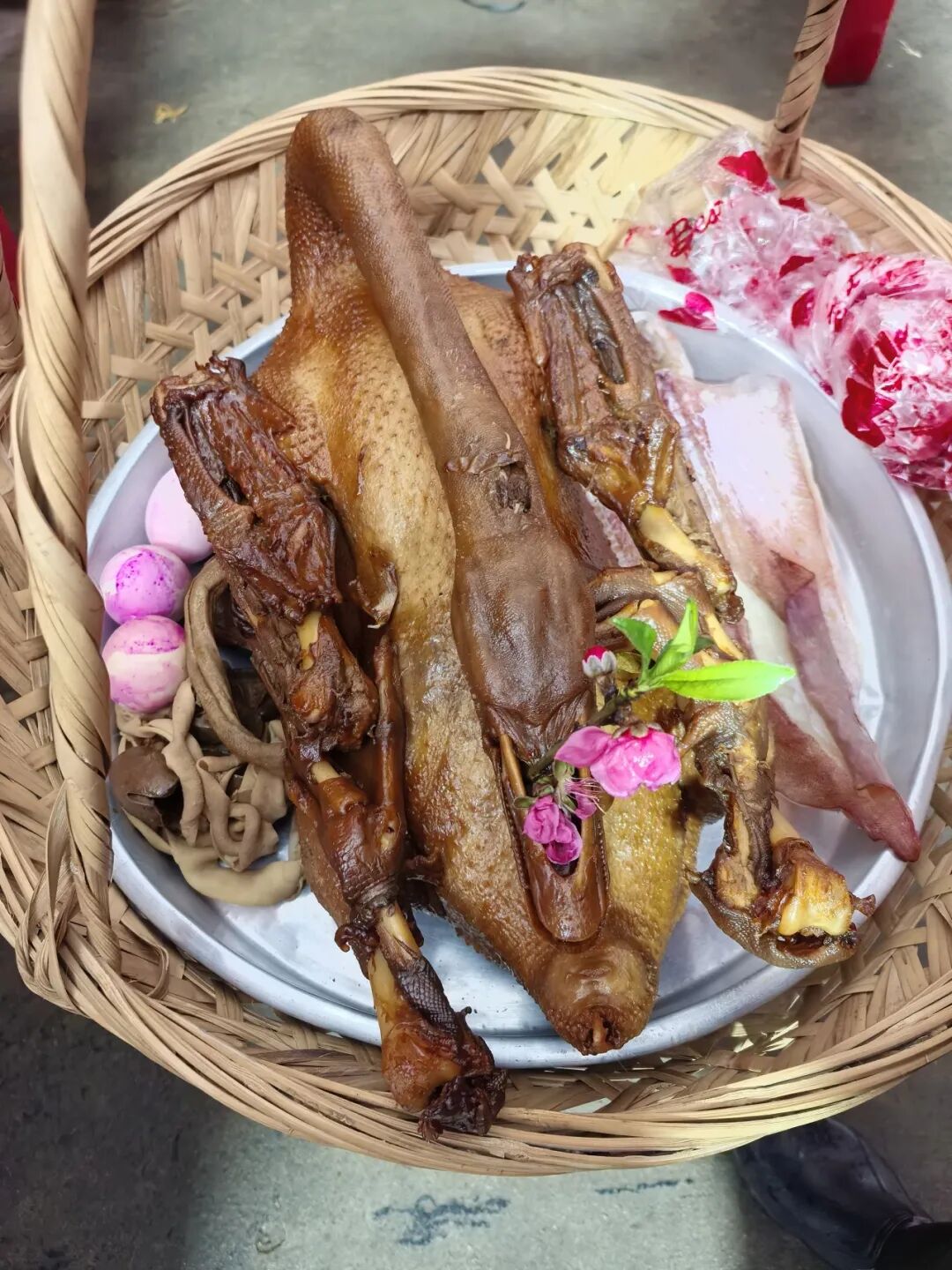
◉Meticulous Teochew families would also adorn the sacrificial braised goose with peach blossoms.
Culinary Nostalgia After Migrating to Nanyang
So, as overseas Chinese migrants to Nanyang, could Shen Dongyan and his fellow expatriates enjoy their hometown’s braised goose there? On this point, Curator Xu of the Qinghui Pavilion Qiaopi Museum is quite certain. He notes that given the vast Chinese population in Nanyang, someone would inevitably have been making braised goose, albeit not using the authentic Lion-head goose breed, and the flavour would have been influenced by local ingredients. Curator Xu also recalls that in the 1980s and 1990s, when overseas relatives returned to the Chaoshan region to visit family, they would specifically bring braised goose back to South-east Asia, highlighting that the taste of home remained distinct from the Nanyang version.
During the era when Shen Dongyan was writing his Qiaopi letters, did anyone carry braised goose from their homeland to Nanyang? Qin Mu, a writer from Chenghai, Guangdong, penned an essay titled *The Goose*. He writes: “In the past, rural travellers who wished to take a large goose on a journey would typically tie its legs with a rope, hang it from the handle of a large oilcloth umbrella, and carry it on their shoulder, strolling along at their leisure. The goose remained remarkably placid, offering no resistance along the way, merely turning its neck from time to time to look around, as though entirely accustomed to such a mode of transport.” The scene is indeed charming. One wonders whether, among those migrating to Nanyang during the Republic of China era, a braised goose might have departed the Chaoshan region aboard a red-headed junk in exactly this manner, destined for the islands beyond.
In a recent episode of the podcast *Yijian Fangjian* (The Dissenting Room) titled ‘Grandmother and Qiaopi in the Hidden Currents of History’, Teochew-born writer Li Jielin recalled coming across a particular remittance letter. In 1936, a pair of parents from Raoping sent three baskets of lychees to their son in Siam (present-day Thailand). I raised this detail with Curator Xu at Qinghui Pavilion, who suggested that while the lychees might have taken a week to arrive—losing their peak freshness but remaining unspoiled—a braised goose would surely have gone off after just two or three days on the road.
No Braised Goose, No Grand Feast
Returning to the braised goose in Shen Dongyan’s household, it stands as perhaps the most symbolically potent dish in the Chaoshan culinary repertoire. Its presence signals a meal that is grand, lavish, and steeped in ritual, serving as the ultimate expression of reverence towards ancestors and deities. There is a common saying in the Chaoshan region: ‘Without braised goose, there is no pangpei.’ The term pangpei describes a feast that is both abundant and ceremonially grand.
As is widely known, the Chaoshan region observes ritual worship (baibai) throughout festivals and holidays. The sacrificial offerings typically comprise sets of three or five animal products, with the three-animal set further divided into small and large variations. Regardless of the configuration, a braised goose is an absolute necessity. This is most vividly on display during the deity processions in rural villages, where temporary street shrines (shenpeng, or ‘spirit sheds’) are erected. Every household arrives bearing their offerings on shoulder poles; while the exact assortment may vary unpredictably from family to family, a braised goose is invariably included. A walk through the countryside during the first lunar month reveals countless geese lined up on the altars, forming a silent, imposing array.
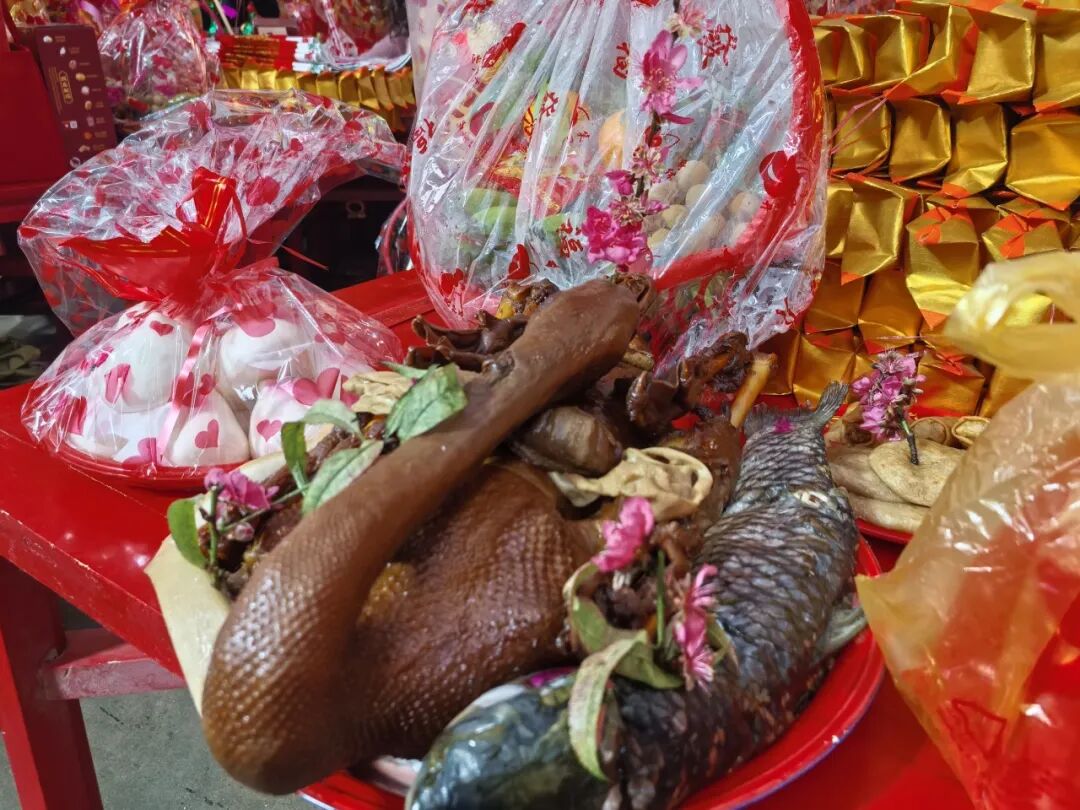
◉Braised goose takes centre stage among the traditional three animal offerings.
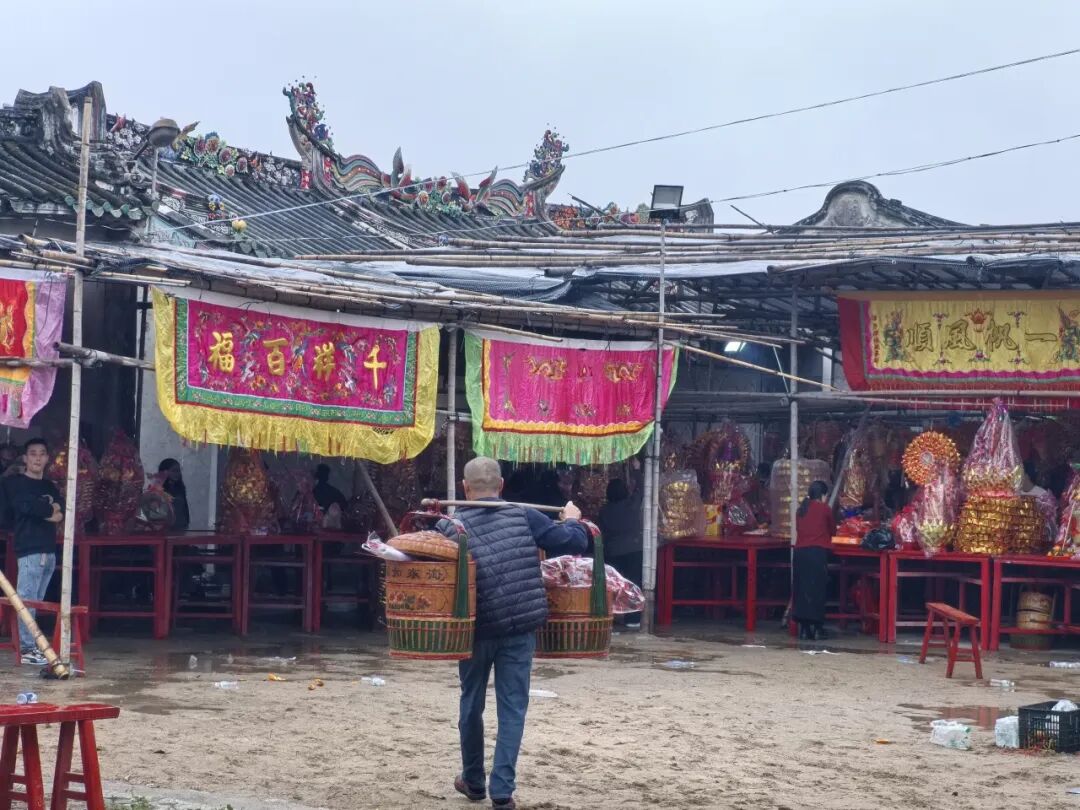
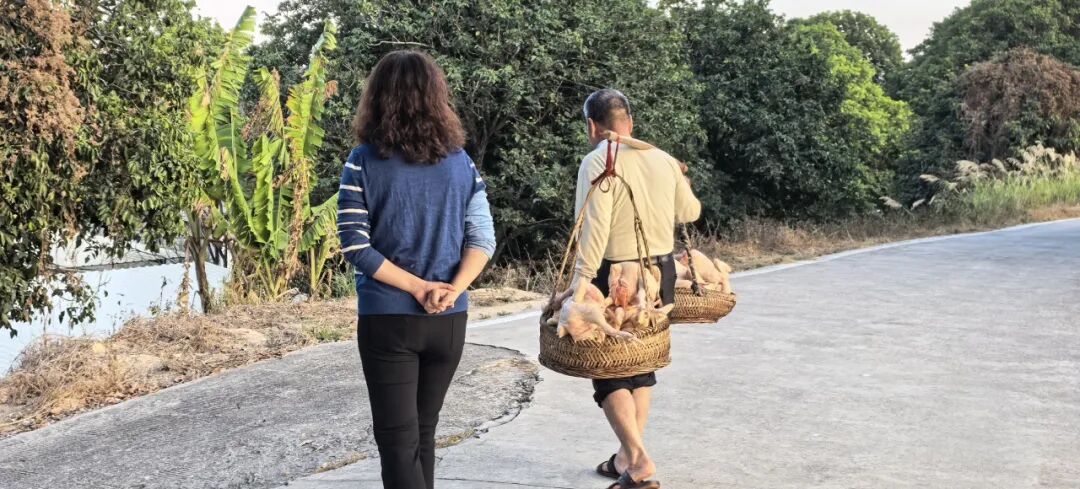
◉Teochew locals carrying braised goose to pay respects to the deities.
Taking Xikou Village in Lixin Town, Chaozhou City—known as the “Hometown of Braised Goose”—as an example, four braised geese are required for New Year deity offerings alone: one to send the gods back to heaven on the 24th day of the twelfth lunar month, one for New Year’s Eve on the 30th, one for the sixteenth-day procession through Zhexiang, and another for the local patron deity’s birthday on the twenty-third. Cast your eye over the rest of the year, and you need another for Mazu’s birthday (the 23rd day of the third lunar month), plus one more for ancestral hall worship during Mid-Autumn in the eighth month. Winter Solstice sometimes calls for one as well. Everyday ancestral rites, chuhuayuan (a local fifteenth-year coming-of-age ceremony), and weddings and funerals all demand their share. You could not possibly count them all on both hands.
Nearly a century on, and braised goose has become an everyday fare for modern Teochew people. Shops specialising in the dish are found on every street and lane. Should unexpected guests drop by, the standard response is to pop down to the corner shop, have two plates of braised goose “portioned” out, and bring them back to round out the meal. Yet for Teochew families just a few decades past, eating something as ceremonious as braised goose in ordinary times—outside of ancestral rites and deity worship—was out of the question. Families of modest means would often substitute duck for goose instead.
Should Shen Dongyan’s mother that year have done as he wished, using the funds sent via Qiaopi to place a braised goose on the offering table, the family would still have had to wait until the deities and ancestors had partaken before they could eat. Fortunately, braised goose is rich and succulent even when served cold; without needing to be reheated, it can be shared freely by both humans and gods.
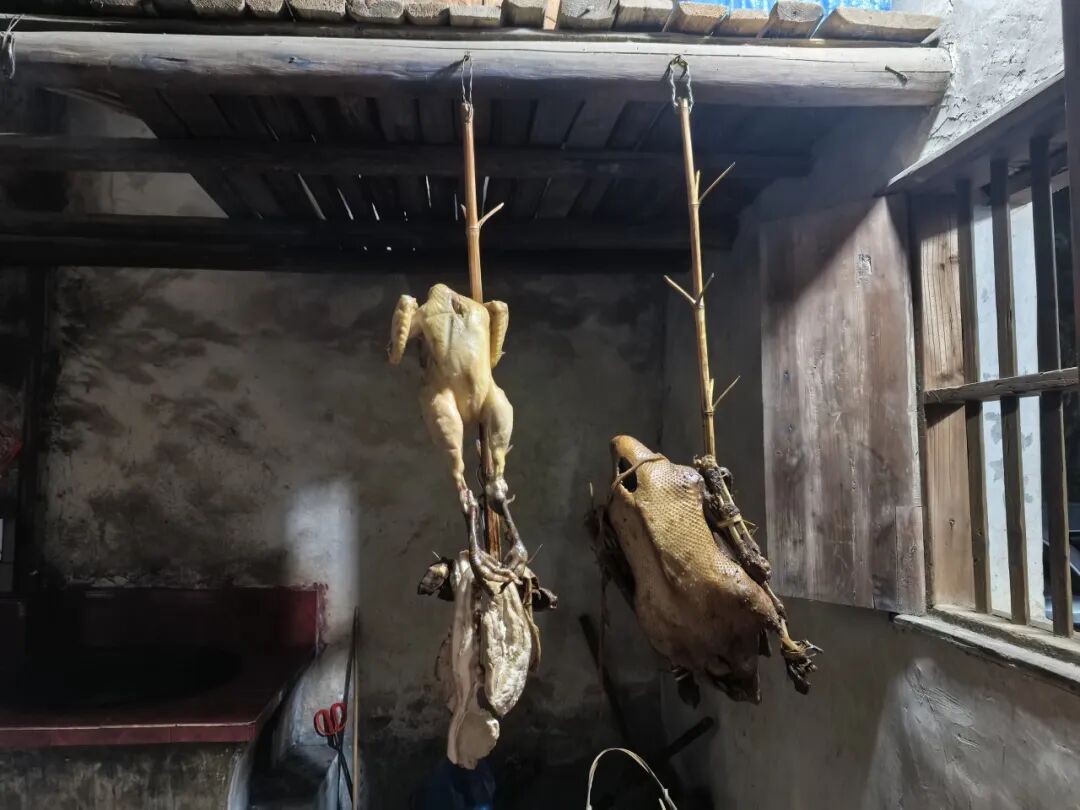
◉After being offered to the deities, the braised goose hangs suspended in mid-air, and the family will eat it over several days.
Today’s braised goose
In urban Chaozhou today, braised goose shops line every street and alley; it is not unusual to find two or three on just one short block. Prices and flavours vary from shop to shop, and costs fluctuate throughout the year. The cost also depends entirely on the cut. By current market standards across Guangdong, the going rate for an ordinary braised goose breaks down roughly as follows: the head and neck are 45 yuan per 500g (1.1 lb); the kidneys command the highest price at 80 yuan per 500g; the thick mid-section of the breast can reach up to 50 yuan per 500g; the hindquarters are 42 yuan per 500g; the feet and wings go for 60 yuan per 500g; and each length of braised intestine is 20 yuan. Conversely, the section from the shoulder to the wing root, which is mostly bone and very little meat, is priced much lower—shopkeepers quip that it is “half sold, half given away.”
The “ordinary” braised geese described above are usually Lion-head geese raised for around 140 days, an age at which the cost remains manageable. Yet geese allowed to mature for three to five years or longer yield exceptionally prized aged heads, which can fetch prices of up to 1,000 yuan each.
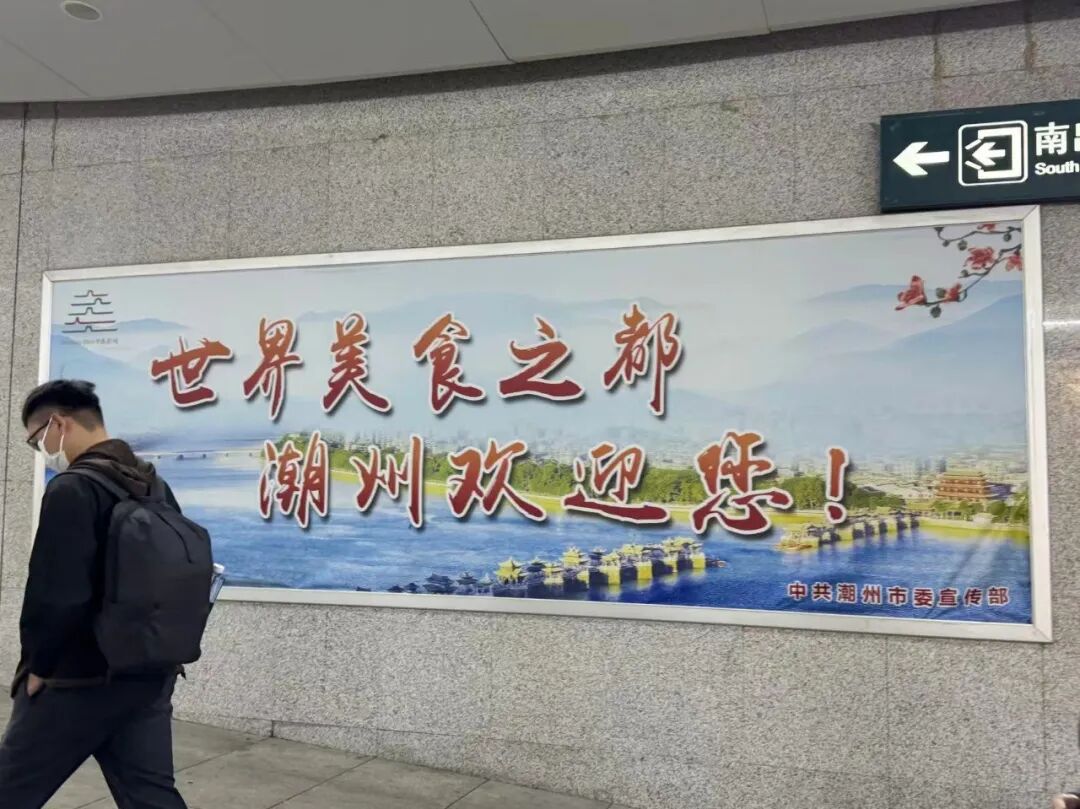
◉Right outside the Chaoshan High-Speed Railway Station, you’ll immediately spot the publicity department’s display: at once hospitable and proud, yet playfully provocative. Photography: Wang Youzao
As for flavour, the Chaoshan region—touting itself as the “World City of Gastronomy” at the Chaozhou-Shantou high-speed railway station (see image above)—approaches a dish as vital as braised goose with meticulous refinement. It is only natural that standards are held so high, yet the precise taste profile varies from township to township, and village to village. The Chenghai area, for example, has a thriving Lion-head goose farming industry and is famous for its braised goose, even boasting a braised broth hotpot tradition; the goose here tends to be saltier. Meanwhile, in Xikou, Linxi Town, known as the “Hometown of Braised Goose”, the braised goose leans towards sweetness, a trait likely rooted in the region’s historical prominence in sugarcane cultivation and sugar refining.
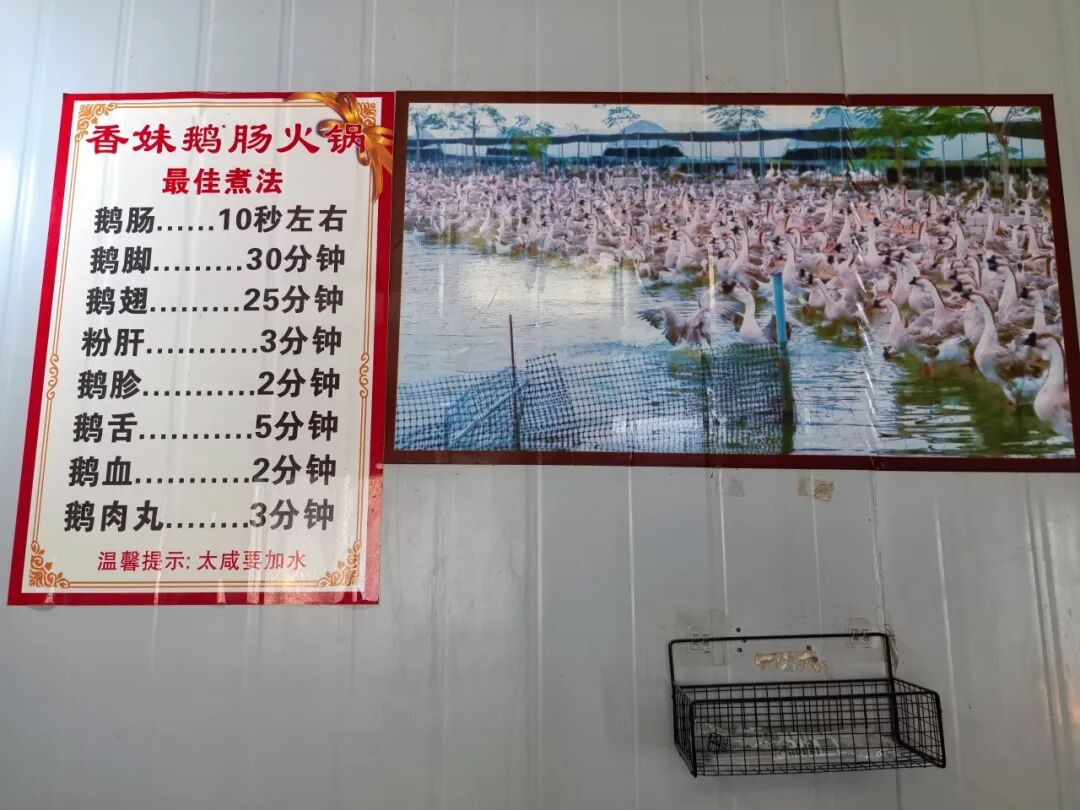
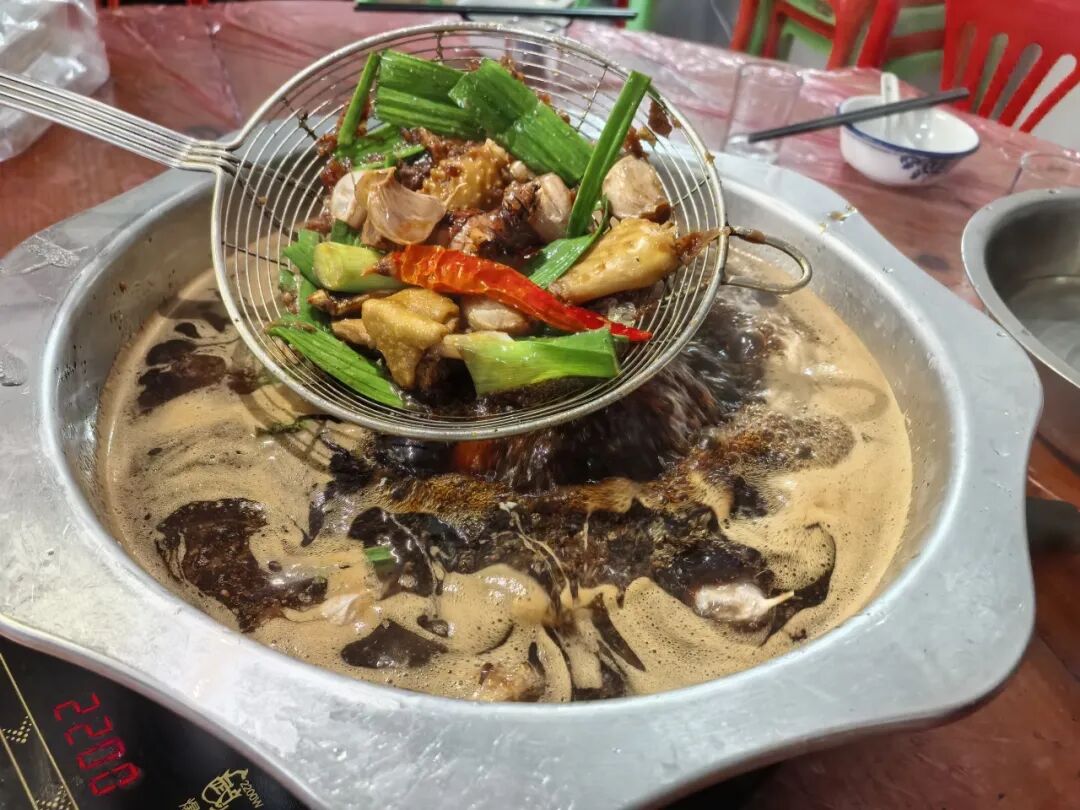
◉Brine hot pot from Chenghai.
In Xikou, I met Brother Liu, who is particularly skilled at making braised goose. Here is how he prepares it: he first caramelises sugar in a pan, coats the whole bird in the resulting glaze, and only then braises it. Geoes treated this way look splendid, gleaming with a rich caramel hue. Most other braised goose, by contrast, is cooked directly in the seasoned broth, with dark soy sauce used for colour. The finished dish is comparatively dull, lacking that caramel sheen and instead settling into a muted yellowish-brown.
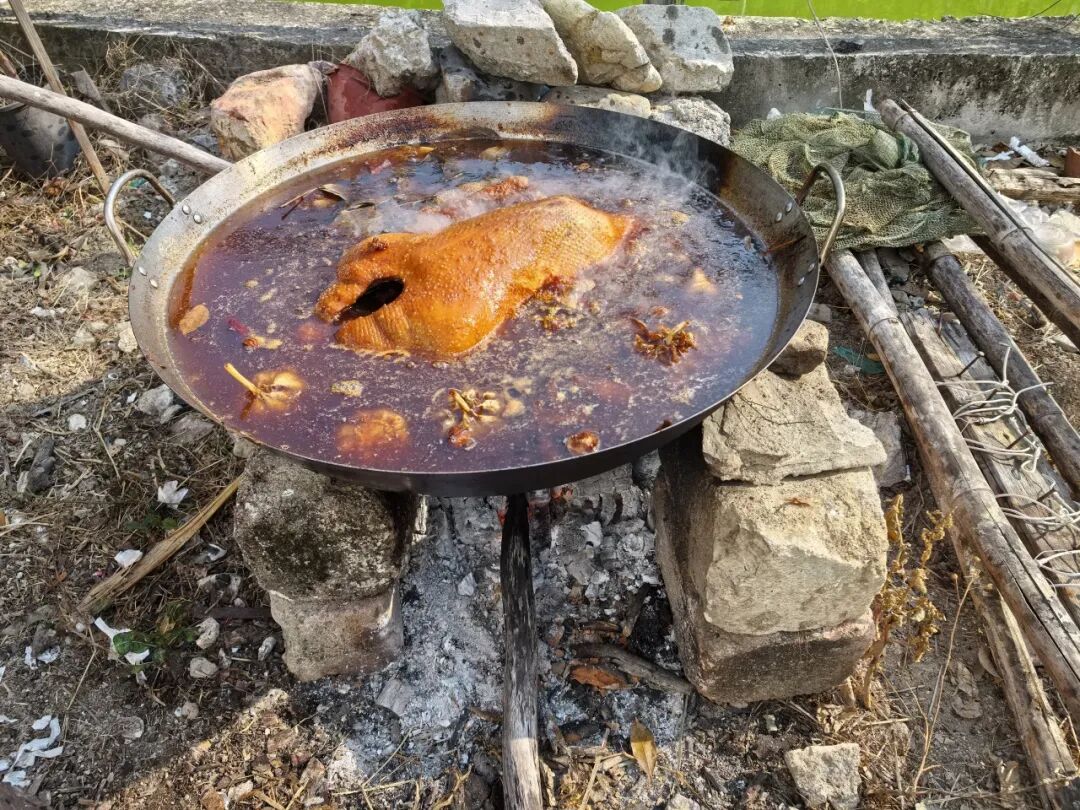
◉Many rural families in the Teochew region still maintain the tradition of building their own stoves to braise goose.
As mentioned earlier, for the Spring Festival ancestor rites, every Teochew household must prepare a braised goose. Once the ceremony is over, the whole bird is either hung beneath the eaves or somehow squeezed into the fridge. Over the following days, it inevitably appears on the table at every meal; exactly how long it lasts depends entirely on the number of people in the household.
Delicious as it is, eating it day after day throughout the first lunar month inevitably breeds fatigue. Many begin to view this once-prized delicacy more as a chore during the New Year period. Consequently, people start devising various ways to clear the larder and make room in the fridge.
As the Lion-head goose is too large to fit into a fridge whole, meticulous Teochew cooks portion it by cut: the carcass is picked clean, with the bones packed in one bag, the meat in several, and the neck, wings, and offal stored separately. A bag is then unpacked for each meal. The neck and wings are eaten first, followed by the bones simmered with plain rice porridge for breakfast, and finally the separated meat. This meat can later be stir-fried with dried radish or ginger to create a fresh dish, which goes some way towards reducing the taste of leftovers.
Regardless, the Teochew respect for good food and culinary ingenuity has remained unchanged since 1946.
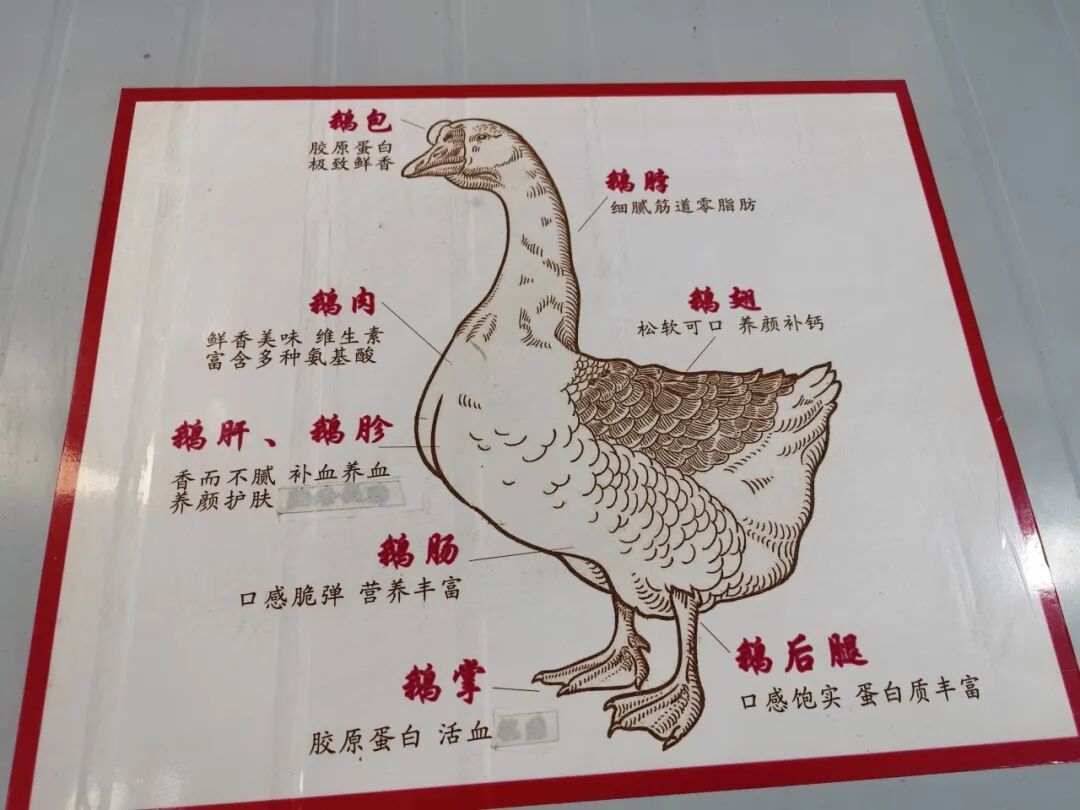
◉Different parts of braised goose carry different prices.
– This is Foodthink’s 809th original article –
Foodthink
Author
Chen Sicheng
Writer based in Guangzhou, focusing on the environment, ecology, and food systems. Her non-fiction work *Trees of the South*, exploring the landscapes and produce of the Lingnan region, will be published by Huacheng Publishing House this month.
About the Lianhe Creative Project
To gain a deeper understanding of the current state of food and agriculture, and to encourage wider exploration of the complexities behind these issues, Foodthink has joined forces with several charitable and media partners to launch the Lianhe Creative Project in 2024 and 2025. The initiative supports media creators and researchers in conducting investigations across the food and farming sectors, providing funding to develop public-facing content.
Following several rounds of interviews with the judging panel, the Lianhe Creative Project funded 18 creative projects in 2024 and 20 projects in 2025. Several of the supported works have since been completed and made publicly available:
“Amei the Cleaner Just Wants a Proper Meal” | The Worker’s Table
In Malaysia, Chinese Buyers Only Want Grade-A Durians
“Fake Meat” Ousts the Real Thing: Herders, Dinner Tables and the Amazon
Sweet Watermelons Guaranteed, Growing Them a Bitter Task
From the Mountain Yao to “The Chosen Foragers”: A Termite Mushroom Picking Craze
Malan in Shenzhen, Without a Dining Companion
Why Has the Sweetness of Childhood Faded?
Technology, Pesticides and Drone Pilots: The Other Side of the “Tech Revolution”
Why Guizhou Can’t Do Without Sour Soup, and Sour Soup Can’t Do Without Guizhou?
Who Drove Out the Wet Markets?
Will Fresh-Food E-Commerce Make Wet Markets Disappear?
When Drones Become the New Farm Tools: Who Is Defining “Scientific Farming”?
Unless otherwise stated, all photographs are by the author
Editor: Tianle