
Researching tomato flavours, American writer Chris St. Cavish found that ingredient quality is already determined the moment a seed is chosen; China’s rice varieties have shrunk from 46,000 to 1,000, yet living seeds in farmers’ hands still guard the last of that diversity.
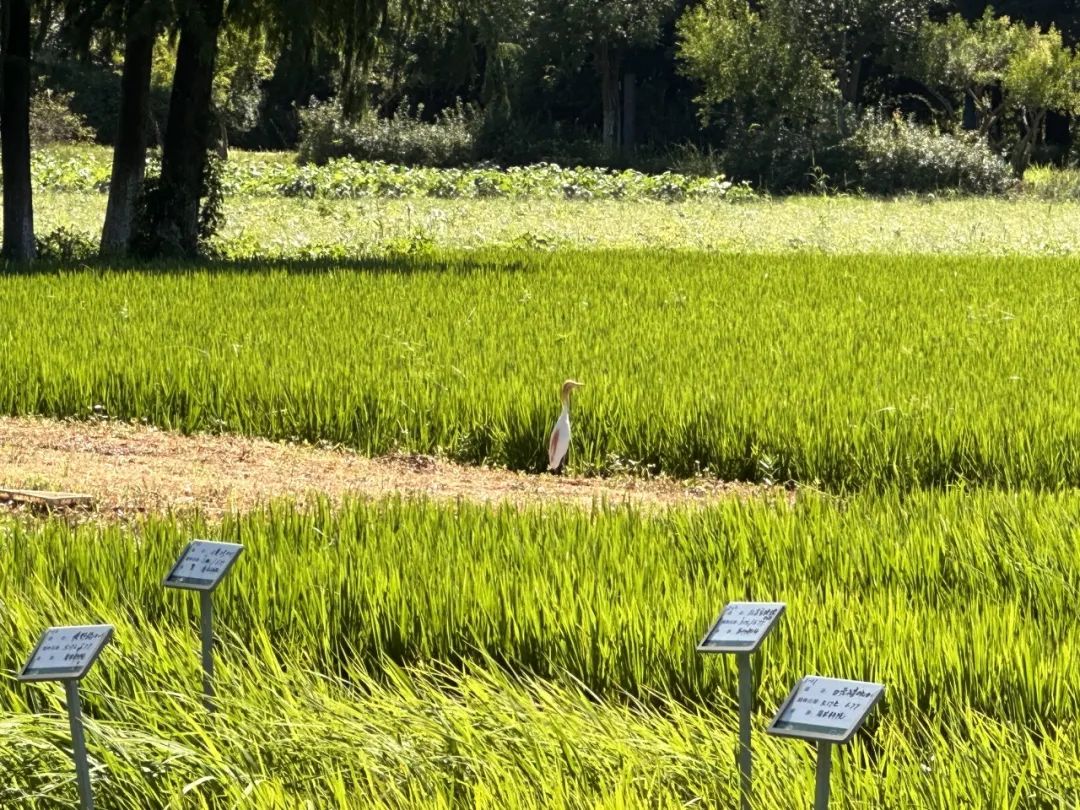
Ecologist Zou Yi at Xi’an Jiaotong-Liverpool University finds that land consolidation reduces natural enemy richness in rice paddies, driven by the loss of linear habitats such as field bunds and irrigation channels. She recommends rebuilding these semi-natural habitats and considering the economic and ecological costs of insecticides.
At Meet Farm in Meishan, Chen Ying replaces pesticides and chemical fertilisers with rice-duck pest control and kitchen-waste composting. Across forty mu, she grows and raises everything herself – the only food that needs to be bought in is salt.
At Yinlin Village, Taiping Town, Conghua, Guangzhou, Sister Hu’s 400-plus lychee trees yielded over 8,000 jin last year — this year, not even 100. At Pengcheng Ecological Farm, 200-plus trees produced just a dozen or so lychees. Prices up several times over still cannot recoup the costs.
Brandenburg’s rainfall is 30% below the national average. The Eberswalde University for Sustainable Development has introduced broad beans, chickpeas and other overwintering crops into trial plots at organic farms, recommending farmers gradually shift from the three-summer-two-winter to the three-winter-two-summer rotation.
In Eren Valley, Fujian, Kouzi’s trial-planted onions this spring rotted almost entirely in the field. His carefully prepared winter wheat set not a single grain after daily rain during anthesis. Self-sufficiency dashed – yet he says he’ll still plant.
From the Rochdale Society of Equitable Pioneers in 1844, cooperatives have connected members at both consumption and production ends for 180 years. Foodthink gathers cooperative practices in food and agriculture worldwide, tracing this movement’s paths to health, fairness and sustainability in the ‘food empire’s’ gaps.
From volunteer teaching in Shaanxi to promoting ecological agriculture training in Guangxi, Huang Guoliang (Lao Liu) co-founded the Y.C. James Yen Rural Reconstruction Academy and the Little Donkey Community Farm, advocating coexistence and mutual learning between ecological and conventional agriculture rather than irreconcilability.
Hu Xuemei, a Pidu District farmer, went from water-protection volunteer to turning her family’s fields into a diverse, finely tended ecological farm and setting up farming-based arts-education classes with an art teacher. After half a lifetime passively running a household, she became the master of her own life.
Two interns set off from Guixinyuan Farm, visiting five ecological farms across Guangdong and Guangxi, repeatedly recalibrating between the ease of Natural Farming and the pressures of yields, lease terms and labour – ultimately affirming the ideal of a Half-farming, Half-X life.


