The large-scale monoculture of the Plantationocene has dismantled ecosystems and rural communities, yet the traditions of care in the Qimin Yaoshu and Xu Guangqi’s Nongzheng Quanshu suggest that “non-plantation” farming can still become imaginable once more.
Ÿnsect, the European insect-protein unicorn that raised USD 625 million, has been wound up by a French court. A UK Government-commissioned life cycle assessment also shows insect meal’s carbon emissions far exceed soybean meal’s — the capital narrative of “eating bugs equals eco-friendliness” is being punctured by full-chain data.
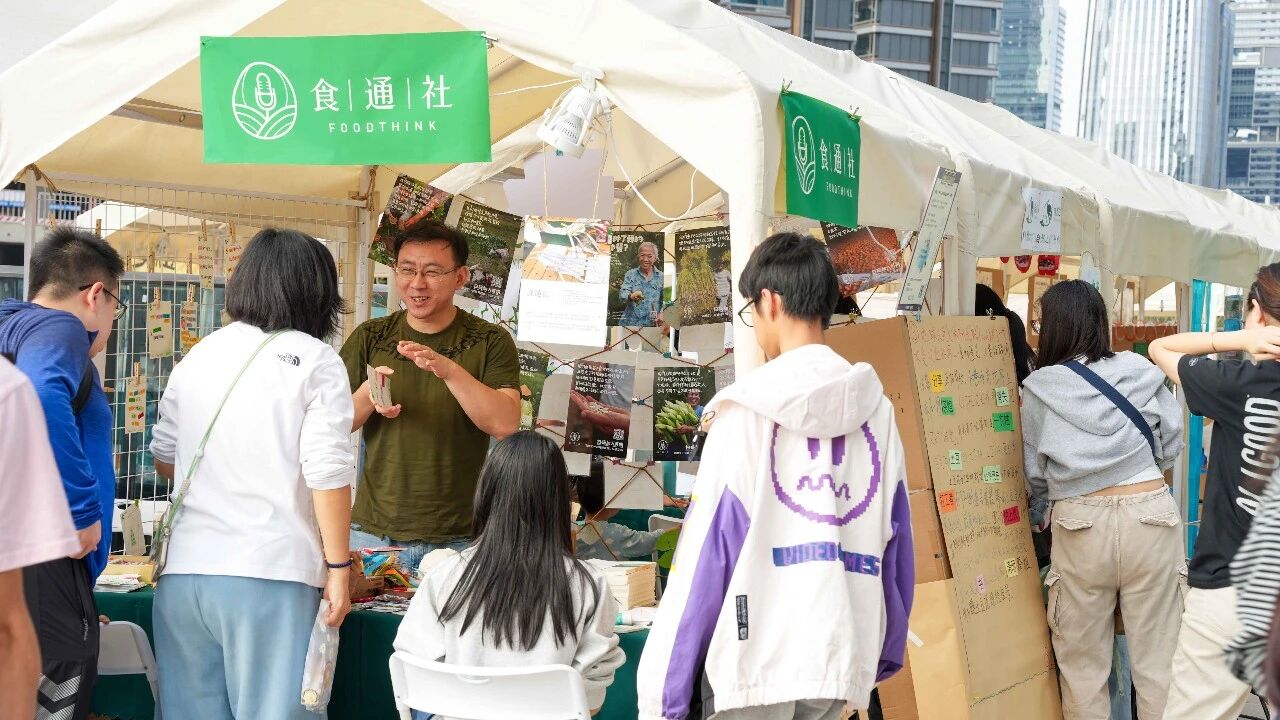
At Guangzhou’s Harvest Festival, Foodthink had nearly a hundred readers relay-write eight climate fiction (cli-fi) stories from article titles, screen a documentary on imported beef and lamb hitting the Qinghai pastoral area, and discuss fields and dining tables under extreme weather with fellow growers and documentary filmmakers.
From Qiandongnan to Baoding, from Thailand to the Philippines, seed-saving farmers and seed workers guard old varieties amid the standardised expansion of hybrid seed, questioning who has the right to decide what we grow and what we eat.
From Beijing to Yunnan, the practice of more than a dozen ecological farms across the country shows that weeds are not enemies to be conquered but partners in mending soil and building ecology; how weeds are managed reveals the fundamental difference in how farmers relate to nature.
“Scientific farming” in rural Northeast China is shaped largely by agri-supply dealers bundling drones with fertiliser. Maize fell to 1.1 yuan per jin after harvest; farmers spraying twice versus five–six times saw almost no yield difference. More output never brought more income.
In 30 mu of foothill fields, hail wipes out apricots and rain washes away autumn crops. Wenzizi and Changjiaoling learn the craft from old farmers, sow more seeds, and over ten years have gathered two books and a way of living alongside the sky.
Zhen Rui’s 450-mu farm in Miyun, farmed for thirteen years, lost all topsoil to flash floods; resuming cultivation in the short term looks hopeless. He temporarily grafted his operation onto a neighbouring farm, while northern farmers still lack systematic insurance and land-planning support against extreme rainfall.
Fifty years ago, half of every million wild salmon swimming toward the Atlantic completed their return migration; now only 30,000 do, while some 400 million are penned in Norwegian fish pens. The journey from gravel riverbed to deep sea and back upstream is nearing its end.
From harvesting and drying to storing and selling, growers and buyers have exhausted every strategy they can think of—yet nearly every corn grower still has no choice but to accept reduced yields, falling prices and mould. Consecutive years of natural disasters are rapidly rendering the farming experience farmers have built up obsolete.