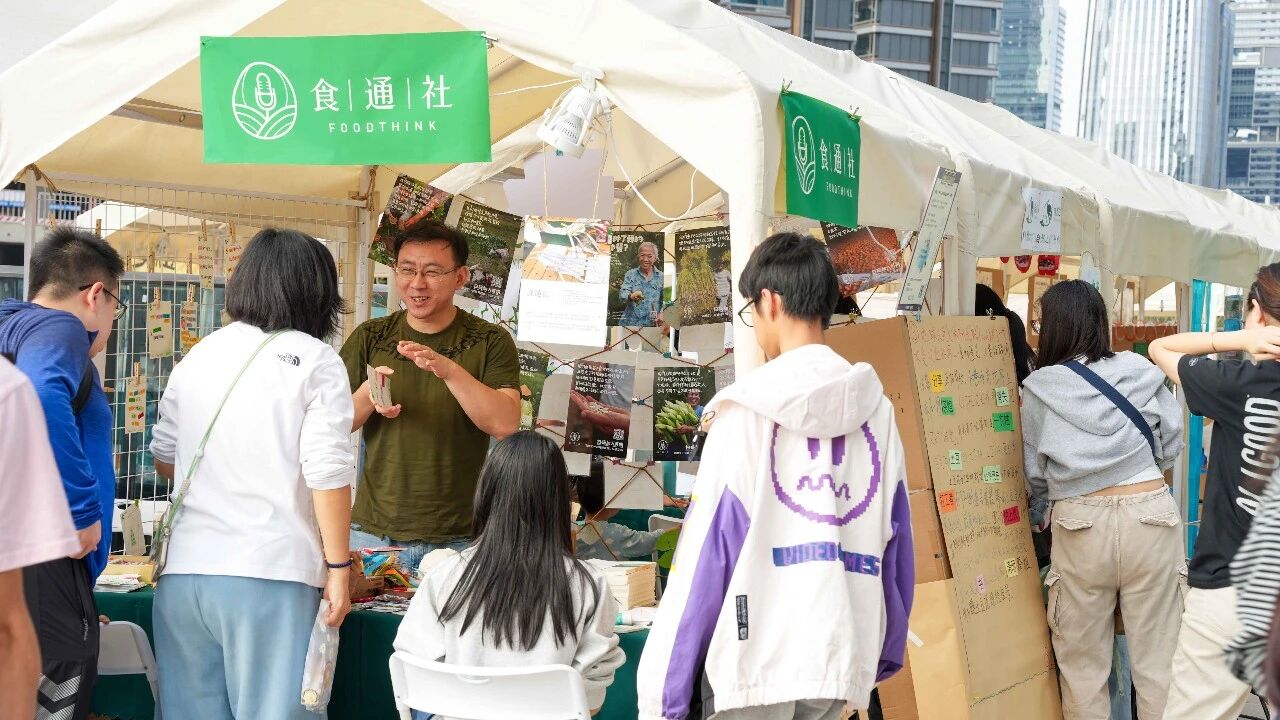
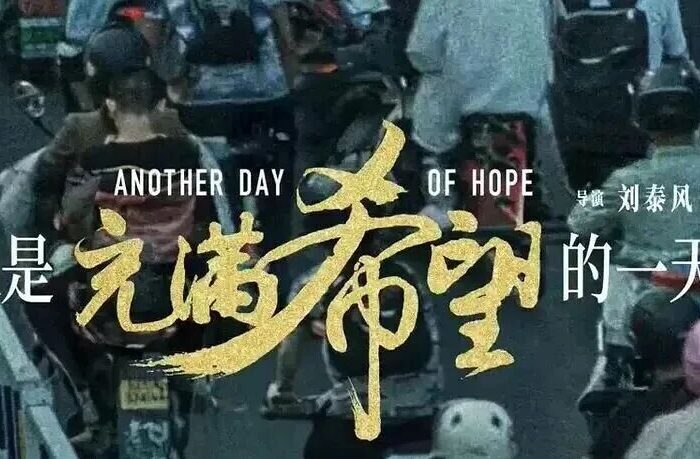
Foodthink screens four films about food and labour back-to-back at Tuanjiehu this June — from food-delivery riders to rice farmers, pastoralists and fermentation artisans. Each screening is followed by an in-person conversation with directors, protagonists and activists, and preceded by a farmers’ market.
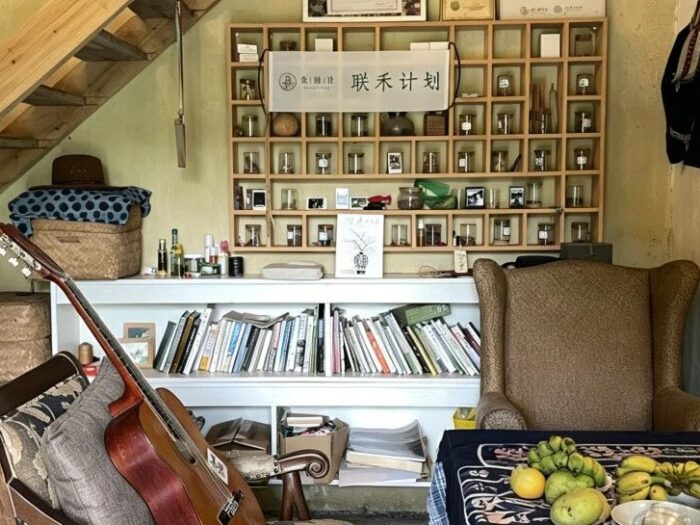
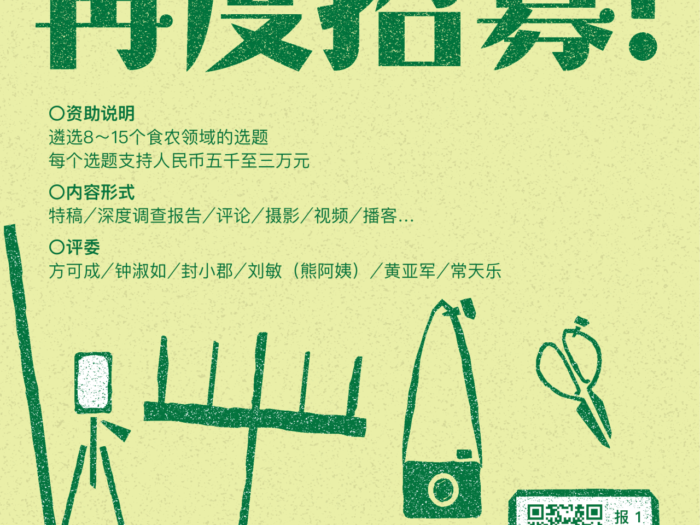
Foodthink’s sixth round of the Lianhe Programme small action grants is open to farmers, cooperatives, community self-organisations and others. Priority goes to local projects helping smallholders on the front lines of climate change. ¥5,000–¥30,000 in funding plus communications resources; applications close on 17 May.
The second Lianhe Creative Programme received 197 applications, with 20 projects ultimately selected. Topics range from Southeast Asian fruit supply chains and mountain villages where the Sichuan pepper boom has ebbed, to digital fish ponds, wild boar conflicts in Tibetan regions, and farmers’ livelihoods under climate risk.
Foodthink ends two weeks of silence as Grain Rain arrives, reintroducing itself to readers: a food and agriculture platform founded in 2017, focused on smallholder livelihoods and the conditions of food and farming workers. This year it turns its focus to women farmers, herders and climate resilience.
Guanqi of the Farmer Seed Network died unexpectedly on a work trip in Qinghai. Foodthink’s friends set down who he was: the group’s “study representative”, a craft beer lover, an unsung hero of seed conservation — and the friend who made sure no one was ever alone.
At Guangzhou’s Harvest Festival, Foodthink had nearly a hundred readers relay-write eight climate fiction (cli-fi) stories from article titles, screen a documentary on imported beef and lamb hitting the Qinghai pastoral area, and discuss fields and dining tables under extreme weather with fellow growers and documentary filmmakers.
Lamb prices have slumped for years and imported frozen meat has flooded the market, trapping generations of Qinghai Lake herders in revolving debt: some sold their yaks at a pittance to deliver food in town; others carry 200,000-yuan loans, hoping each year for sheep prices to rebound.
“Scientific farming” in rural Northeast China is shaped largely by agri-supply dealers bundling drones with fertiliser. Maize fell to 1.1 yuan per jin after harvest; farmers spraying twice versus five–six times saw almost no yield difference. More output never brought more income.
Through Foodthink’s Ecological Agriculture Internship Programme, Jianing came to Yinlin Farm in Conghua. Among hens, goats, rain-thinned maize and old lychee trees planted by the older generation, she relearned to recognise the land and the farmers behind the food.
In summer 2024, agricultural drone pilots in Heilongjiang faced a harsh reality: pesticide drift compensation disputes, health damage amid a lack of labour protection, and per-mu service fees sliding from ten-odd yuan to 2.5 yuan.