
After Drone Spraying, a “Silent Spring” for Jiangnan Silkworm Farmers

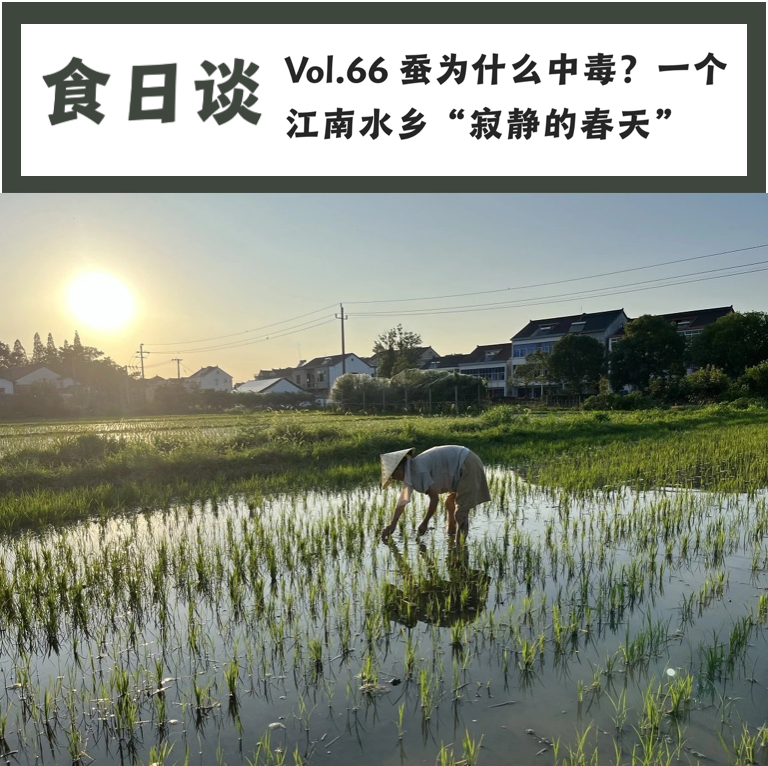
In March this year, a news story about pollinating bees in rapeseed fields being “accidentally harmed” by drones drew attention. But away from the spotlight, another insect that has coexisted with human civilisation for millennia – the domestic silkworm – is facing a quieter yet graver survival crisis.
The moment a drone takes flight, “all that rearing was for nothing” – silkworms are extraordinarily vulnerable to pesticides and their environment. Many “low-toxicity” pesticides, even biopesticides, are harmless to humans yet deadly to silkworms. Pesticide drift damage from drones has made matters even worse – poisoned silkworms fail to spin silk, produce thin-shelled cocoons, or end up dumped into the woods by the silkworm farmers.
When “efficiency” becomes the benchmark for agriculture, technology too is quietly transforming the ancient practice of silkworm rearing – once, a brick-and-tile factory in a Jiangnan water town would shut down during the silkworm-rearing season, but now, before spraying, no one notifies you anymore.
In this episode, we begin with a viral news story about “bees poisoned to death”, venture into the water towns of Jiangnan, and listen to a silkworm farmer who returned to the land fourteen years ago: how drone spraying has caused mass poisoning of mulberry silkworms, how the traditional mulberry-silkworm system is being squeezed, and the different future that industrialised silkworm rearing is bringing.
This episode’s guest, Yu Jiangang (Yugang), was born into a family that had reared silkworms for generations on the South Taihu Plain. As a child, he helped his family cut mulberry leaves and feed young silkworms – even the village cats were named after the seasons when silkworms grew. He later left home for university, took a job in Beijing, and threw himself into rural development, before choosing in 2011 to return to the land, attempting to rebuild the pastoral order of silkworm, rice, and people. More than a decade on, he is still trying to answer: today, can traditional agriculture still survive in the margins?
Between efficiency, ecology, and culture – what exactly are we losing? And are these changes truly irreversible? If you too care about this small yet important topic, please click to listen to this episode.

This/Episode/Guest
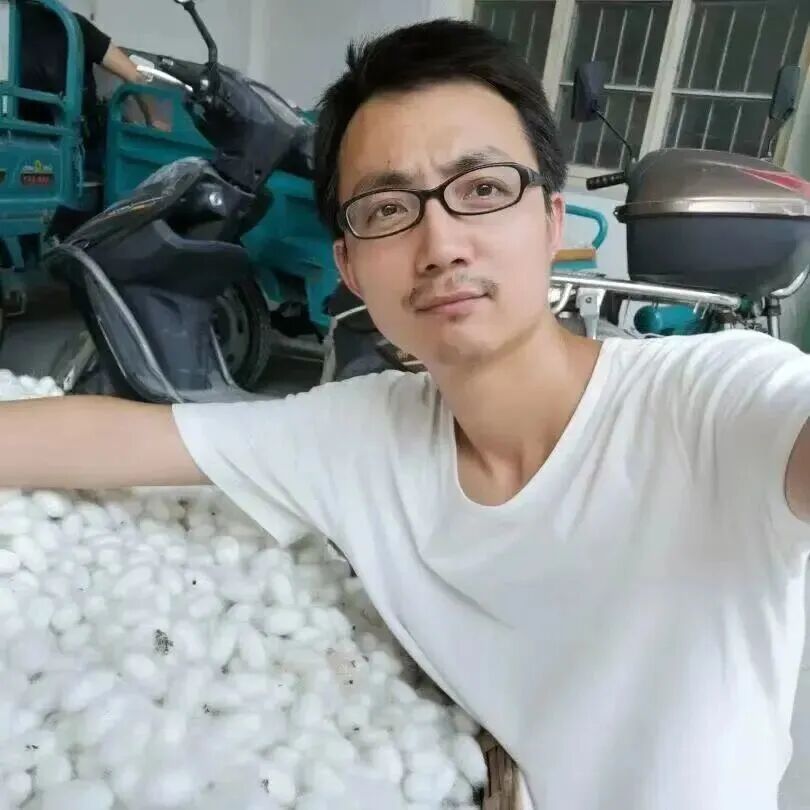
Yu Jiangang (Yugang)| A practitioner who has been farming in his home village for 14 years, from a traditional mulberry-and-silkworm area in Tongxiang, in the Taihu Lake basin of Zhejiang. He and his family have long grown mulberries and reared silkworms, and are working to restore the “rice–mulberry–silkworm” symbiotic ecological farming system, while exploring how small-scale farmers can continue to survive in the modern agricultural landscape. He is also a co-curator of the podcast Tuanli Jiegou, documenting the real changes in land, agriculture, and rural life.
This/Episode/Host

Pei Dan| Foodthink editor and writer, focused on the real people amid climate change and environmental transformation
Time/line
00:21 Why does a drone spraying incident that killed bees matter?
02:26 Starting from the South Taihu Lake basin – what was the old mulberry-fish pond ecological system?
04:43 Why did every household once rear silkworms, yet now only a few still persist?
08:28 From occasional incidents to the norm – why is this “pesticide drift damage” increasingly difficult to avoid?
12:47 Insurance covers only a third – silkworm rearers begin abandoning rearing in the second year
14:28 “East Mulberry, West Transfer” – can smallholder farmers make money?
19:16 Industrialised silkworm rearing: silkworms fed soybean feed, spinning silk year-round – is this necessary?
25:06 From harmonious coexistence to “mutual harm” – are we losing a traditional way of life?
29:56 “First Silkworm Cat”, “Second Silkworm Cat” – how silkworm rearing has permeated the sense of time in the Jiangnan water towns?
31:58 One silk duvet – how much can silkworm farmers earn?
34:35 To stop silkworms from being poisoned again, Yugang rented 15 mu of rice paddies
39:42 Creating a protected area the way a zoo keeps tree frogs
48:00 How to support? Buy rice, co-create, and share
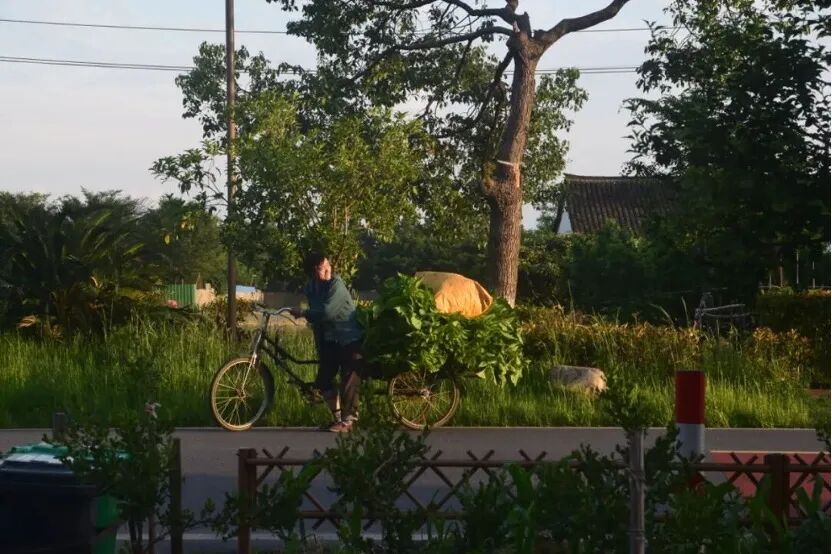
Eighty-year-old silkworm farmer Xing’e returns from picking mulberry leaves. Each year, Xing’e and her eldest daughter-in-law jointly rear 3–4 batches of spring silkworms and 1.5–2 batches of osmanthus silkworms. At a selling price of 2,200 yuan per batch, they earn roughly 12,000–15,000 yuan in cash income. This money covers everyday expenses and the ever-escalating reciprocal gift-giving of village life. Yugang says that silkworm-rearing income is the most important source of earnings for local rural elderly, especially elderly women – it is the “pension” they can rely on. Image source: “Meihe Yu”, Yugang’s WeChat public account
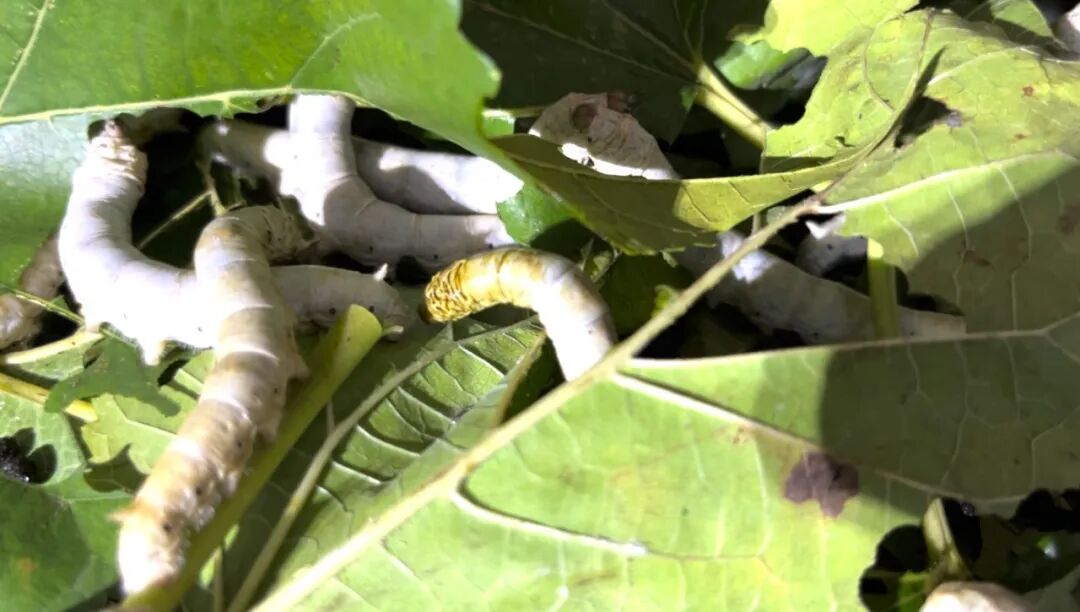
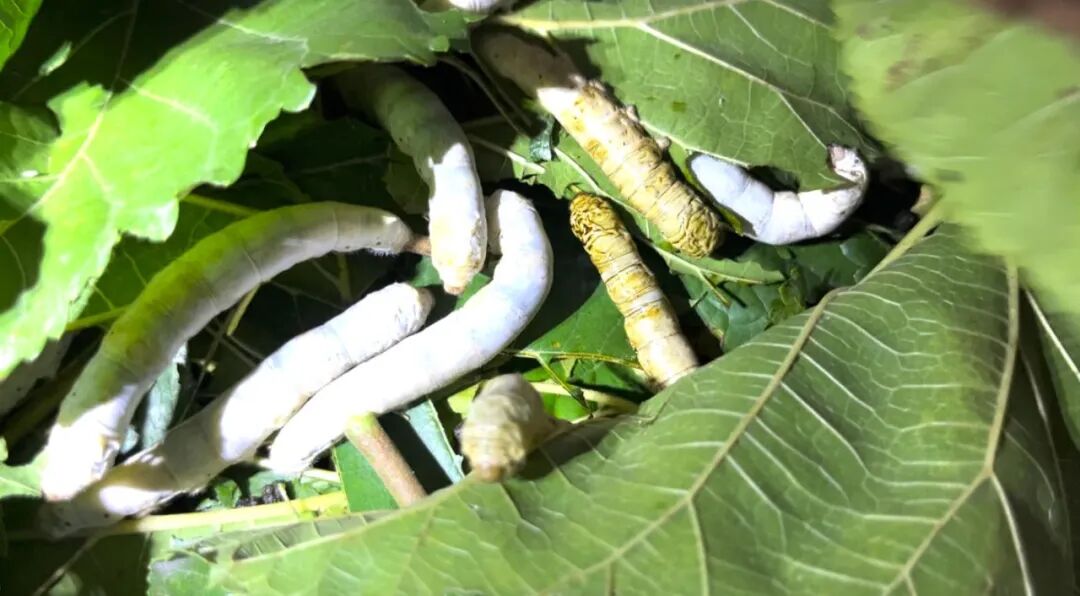
The poisoned silkworms have already turned yellow. Image source: Yugang
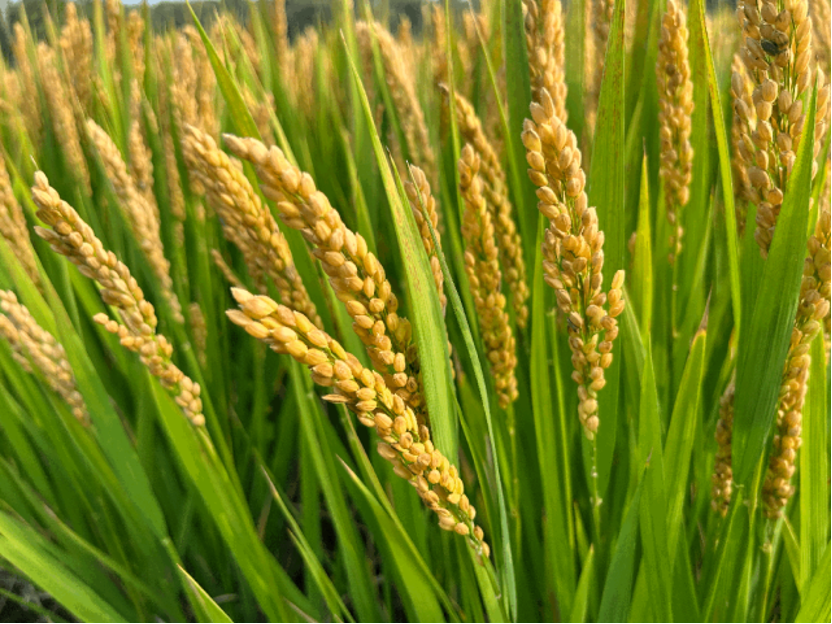
In 2025, Zhenghebang, the natural village where Yugang lives, simultaneously harvested ecologically grown rice and silkworm cocoons, achieving rice–silkworm symbiosis. This is, in fact, the centuries-old ecological tradition of the mulberry-fish pond system in Jiangnan. Image source: “Meihe Yu”, Yugang’s WeChat public account
🍃
Call for Co-creation | “Building a Protected Area for Silkworms and Bees”
Related Reading ▼
Scan the QR code below
On Xiaoyuzhou | Ximalaya | Lizhi | Apple Podcasts
Subscribe to the Food Talk podcast

Feel free to leave a comment on any podcast platform – we reply from time to time. Scan the QR code below to add Shitong Jun’s secondary WeChat account and note “食日谈” (Food Talk) in your request to join the podcast listener community group.

Unless otherwise stated, all images are provided by this episode’s guest
Podcast music: Banong
Editor: Pei Dan
Producer: Xiaojing
Article layout: Minglin
Contact email
xiaojing@foodthink.cn