A Birdwatcher’s Revelation: Humans Are Busy for Food, but Birds Die for It? | Food Talk Vol. 73

There is a board game hugely popular among birdwatchers called Wingspan. It divides bird habitats into three categories: forest, grassland, and wetland. But we often overlook that farmland itself is a bird habitat.
Seen from a bird’s perspective: a rice paddy is like a wetland, a wheat field resembles a grassland, and an orchard approximates open woodland. To humans, this is farmland where food is produced; but to birds, it is a place to forage, to breed, and a brief stopover on a long migratory journey.
Birds, frogs, insects and countless other creatures have long been adapting to farmland — this ecosystem so profoundly reshaped by human hands. Field ridges, ditches, ponds, and even the weeds between the rows are spaces on which they depend for survival. Yet in a modern agricultural system obsessed with yield and efficiency, these creatures and their habitats are often treated as “variables” to be eliminated or controlled: if weeds grow, they must be cleared; if insects appear, they must be killed; and if birds peck at the grain, they are branded “bird damage”.
Wildlife affects agricultural production, and our methods of production profoundly shape the survival of wild animals.
Chongming, Shanghai, is both a key agricultural area and an important stopover on migratory bird routes. Preliminary statistics from 2023 showed that around 25,000 mu of agricultural production in the area had been affected by wild birds, with direct economic losses of approximately 19 million yuan. The harm agriculture inflicts on animals is equally real. Nanjing Hongshan Forest Zoo fitted satellite trackers to rescued black kites being released back into the wild, and the tracking data also recorded the dangers they faced out there: among confirmed deaths, carbofuran poisoning and injuries from leg-hold traps featured.
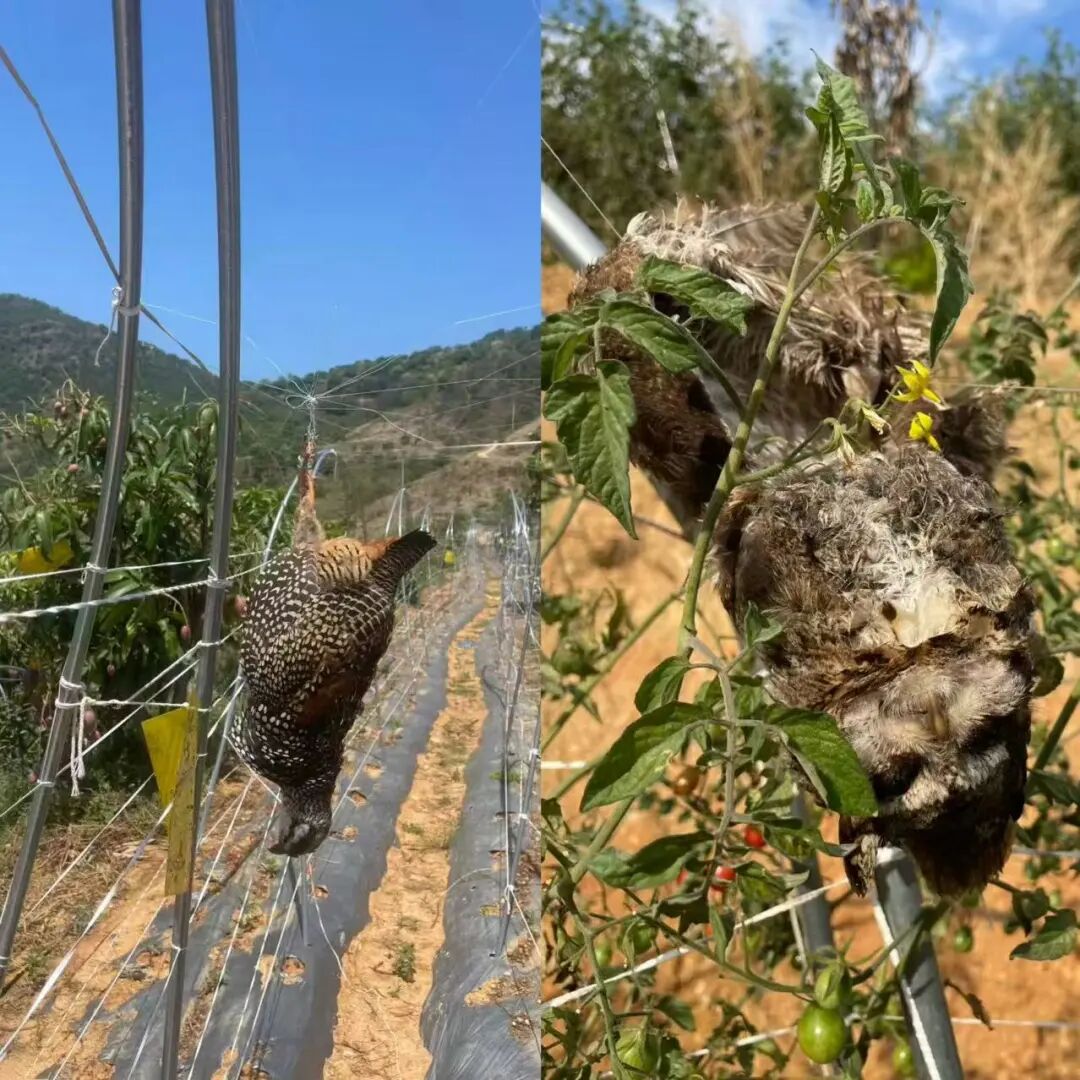
A Chinese francolin and a collared scops owl, killed after becoming entangled in tomato trellis netting. Photo: Hali
Is it really only a binary choice between protecting agricultural yields and protecting wildlife? How should we produce food so that a plot of farmland can sustain us while also making room for other life?
In this episode of Food Talk, we invite birdwatchers and animal-protection advocates Fengzi and Hali to start from the vantage point of birdwatching and talk about biodiversity on farmland, and the complex relationship between agricultural production and wild animals. We chat about a bird-loving group in rural Jianyang, Sichuan, and about the “human–bird conflict” at Chongming Dongtan in Shanghai; about a trellis on an ecological farm in Yunnan that unexpectedly caught birds, and about pesticides, mechanised harvesting, and the increasingly neat, tidy landscape of high-standard farmland.
How do farmers who have spent a lifetime working the land come to see the “flying guests” in their fields in a new light through birdwatching? How do the pesticides sprayed across the fields end up harming the birds in the sky? Why might a farmland kept neat and tidy not necessarily be a good thing? And once we stop using chemical fertilisers and pesticides, what else can we do for the small creatures that share our fields?
Seeing one another — starting from food — might not be something that happens only among humans.

This Episode’s Guests

Fengzi | Head of Nanjing Yeluzi Studio, long involved in community outreach on farmland biodiversity.
Hali | Vegetarian, cares about the planet as much as about the few, and practises a queer way of life. Always acting for the world they want to see, and believing in the power of action.
This Episode’s Host
Li Ye | A cyber-birdwatcher, who supports issuing resettlement homes to wild animals.
Timeline
01:54 Farmers in Jianyang, Sichuan, form an amateur birdwatching squad: people who see birds in the fields every day may not really have “seen” them
07:12 From “every bird is here to eat my rice” to voting for a favourite kingfisher and egret — birdwatching changes the way we see the world
08:25 “The wheat is almost golden” and “this building has no lift”: people always caption bird song with their own lives
10:47 Eating insects means a “beneficial bird”, eating grain means a “pest bird”? Time to revisit food chains and food webs from A-level biology
16:02 The “human–bird conflict” in Chongming, Shanghai: protect the birds or protect the harvest? My lord, the times have changed!
19:21 Conserving biodiversity might simply be about “leaving room” for all life
23:17 The climbing netting for tomatoes and yard-long beans ended up tangling and killing collared scops owls and Chinese francolins
25:33 If you were a bird: a rice paddy is a wetland, a wheat field is a grassland, an orchard is a forest
28:10 A young peregrine falcon’s compulsory lesson: toss a stick, dive, catch — practising in advance for the courtship skill of “making a good grip” with its talons
29:15 A field hit by a looper outbreak, with power lines in the distance lined with red-billed starlings waiting for dinner
32:13 The pesticides sprayed on the fields — how do they “kill” all the way up to the birds in the sky?
34:24 From Silent Spring to the bald eagle: how does DDT travel up the food chain to the top predator?
39:02 Cement ditches, levelled fields, mechanised harvesting: farmland grows ever more “standardised”, yet leaves other life nowhere to hide
45:03 How bustling can a good piece of farmland be? Close your eyes and listen to the frogs, the insects and the birdsong
53:27 Biodiversity on an ecological farm: is it a goal actively pursued, or a byproduct of ecological growing?
56:11 Why are ugly fruits tastier? Don’t let marketing shape our tastes and our idea of food
59:02 Have you tried the unspotted tree frog rice ball from Hongshan Zoo? Once one catch could fill a whole basin — what happened over thirty years that made them impossible to find?
1:02:36 From the lab to the rice paddy: to protect a single tree frog, the zoo has started growing crops
1:10:52 How do you explain “biodiversity” to farmers? Come and watch the birds with us first!
01:18:13 If I also want to do something for the other life in the fields, where should I start?
📚 Further Reading & References
1. Silent Spring, Rachel Carson
2. The Vanishing Bees, Lü Chensheng
3. Chongming Dongtan human–bird conflict research: “Habitat Use of Wintering Ducks and Its Economic Impact on Rice Production Near Nature Reserves”
4. Nanjing Hongshan Zoo · Unspotted Tree Frog Project
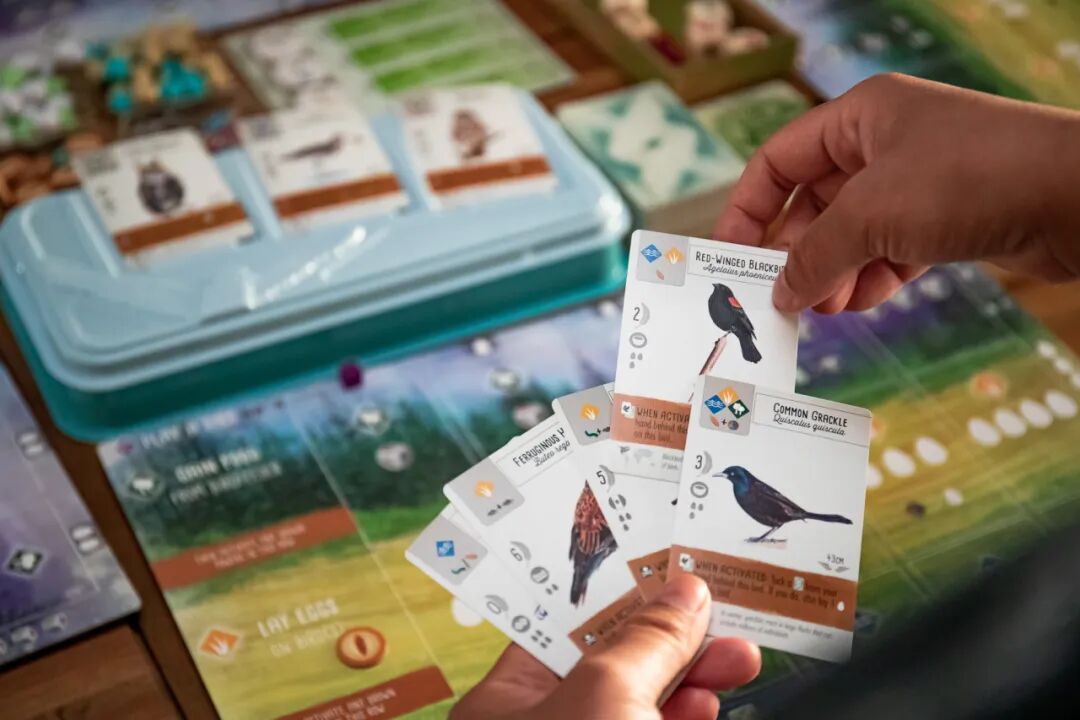
Wingspan is a bird-themed board game in which players attract different bird species to three types of habitat: forest, grassland, and wetland. It was while playing this game that we began to wonder: what does a piece of farmland really mean from a bird’s perspective?
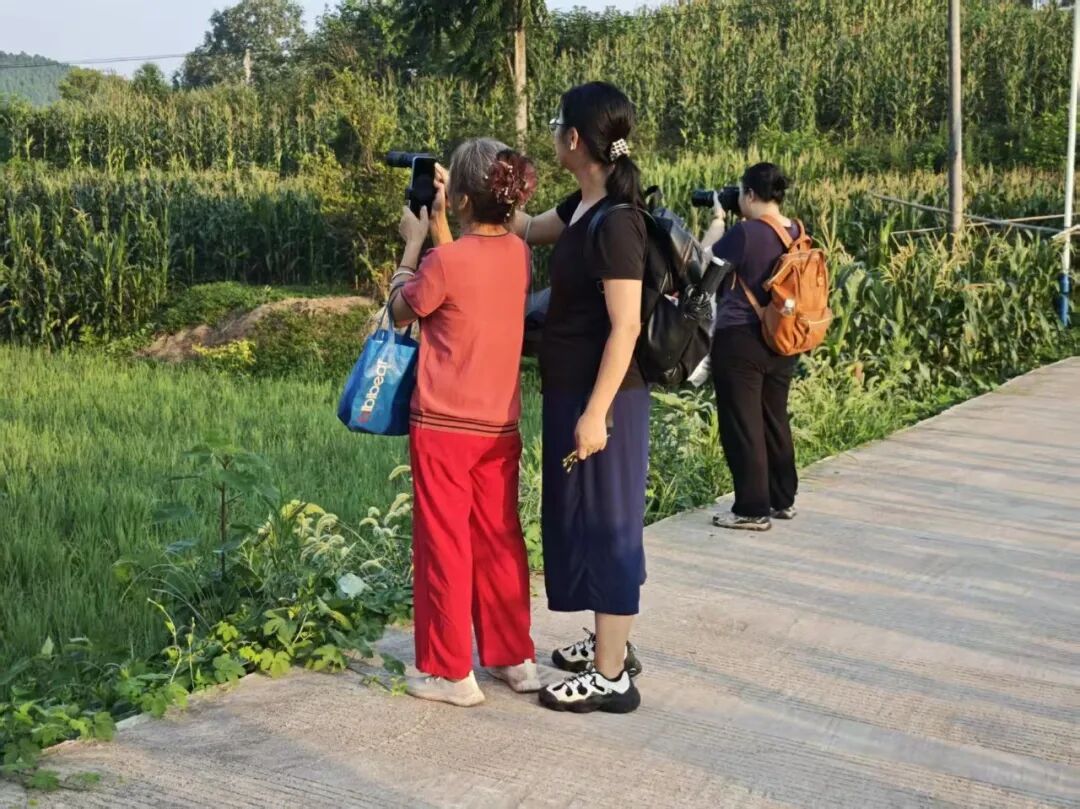
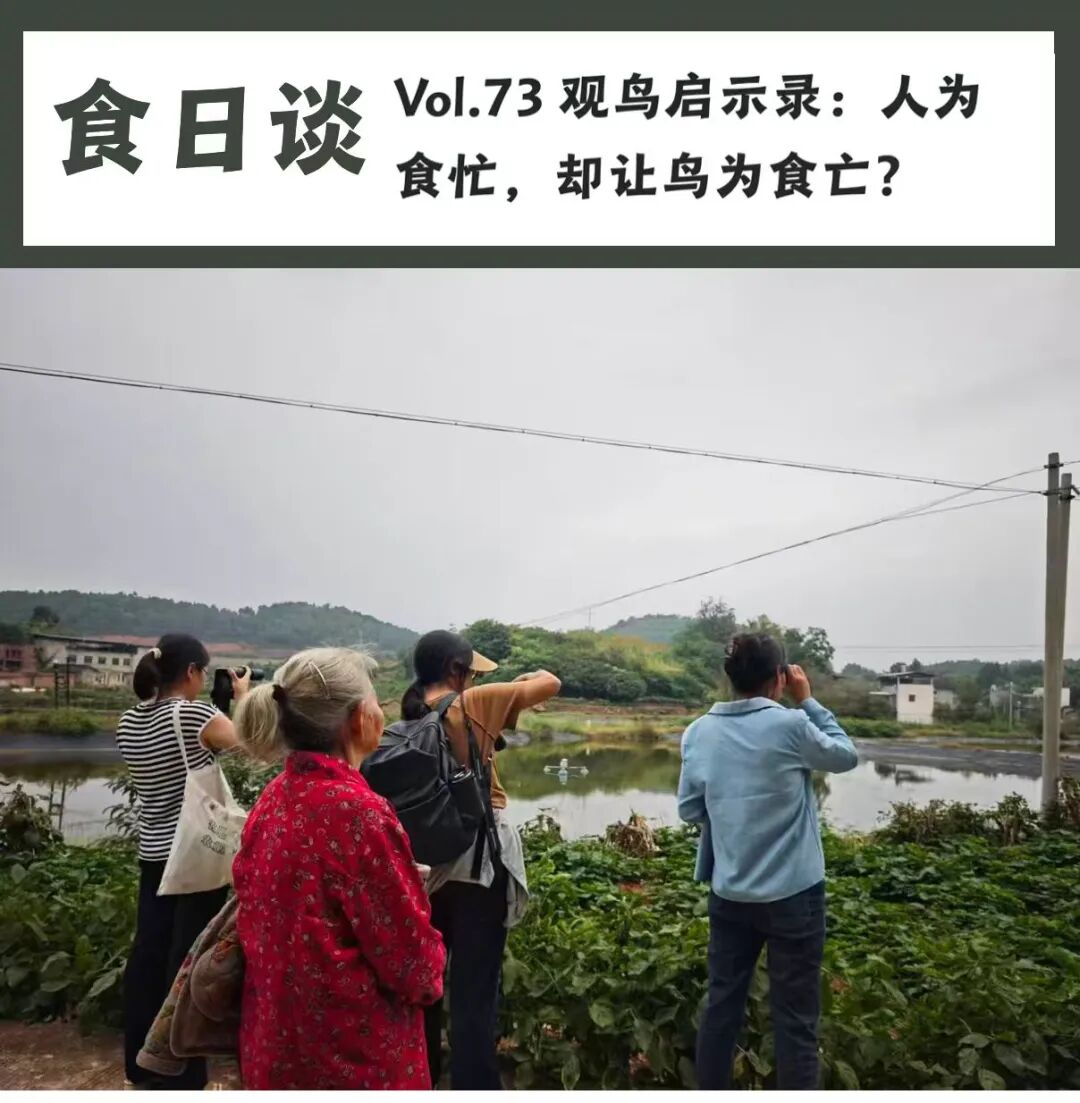
The bird-lovers’ group in Jianyang, Sichuan, out birdwatching
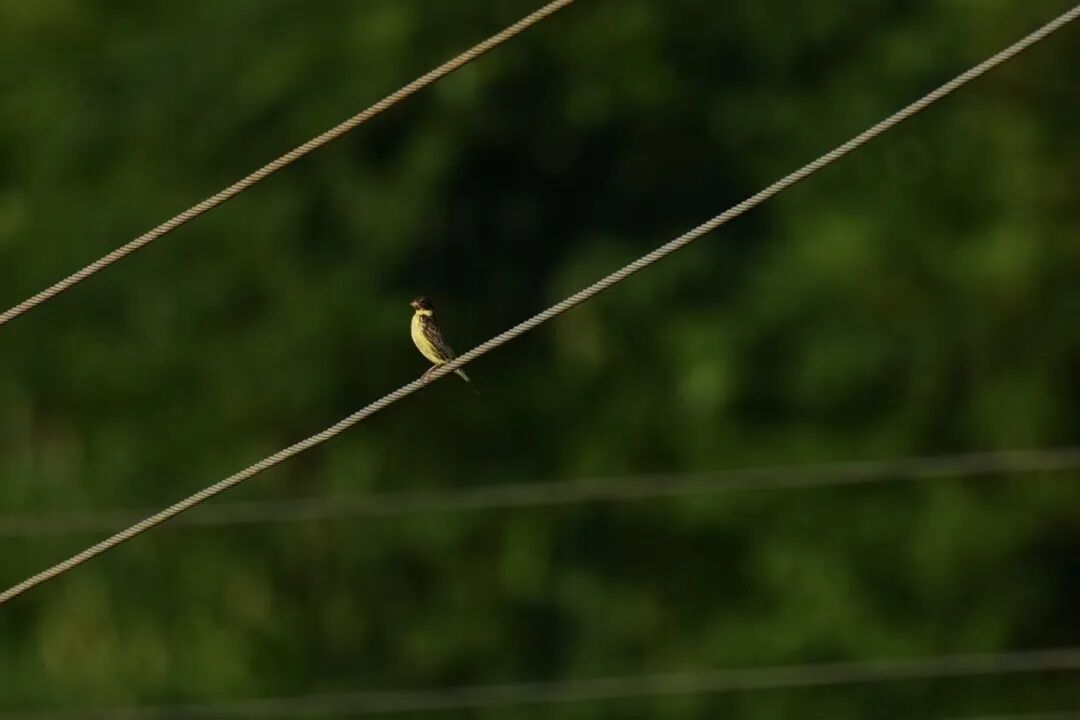
Yellow-breasted buntings on the power lines over the fields in August
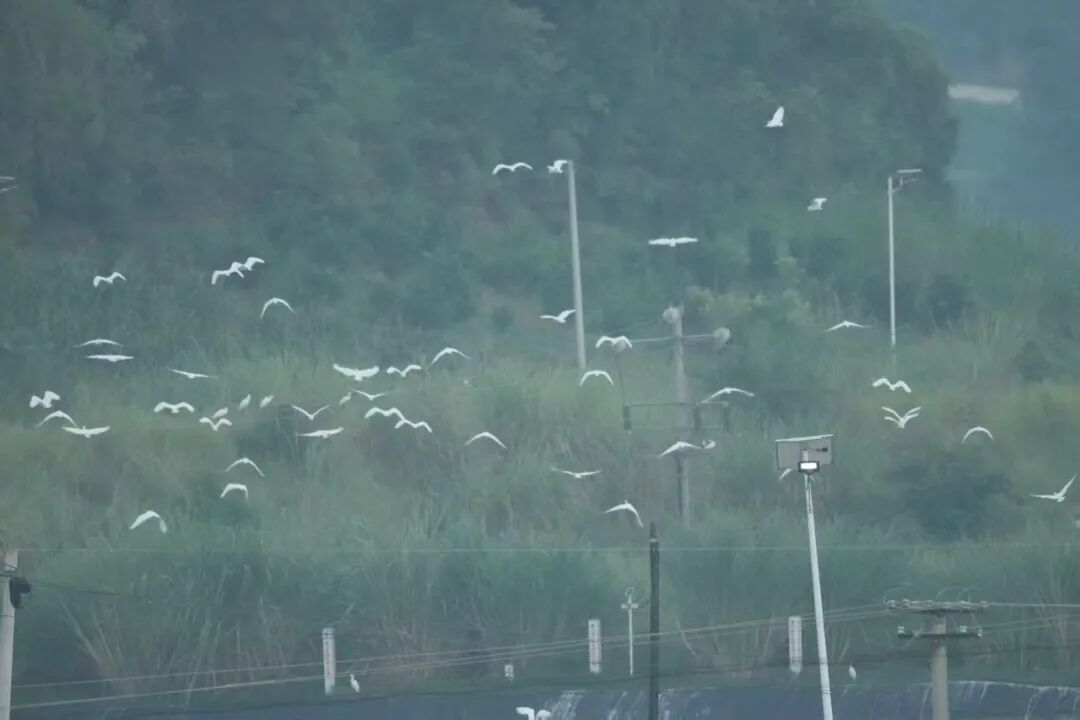
Many egrets soaring into the blue sky
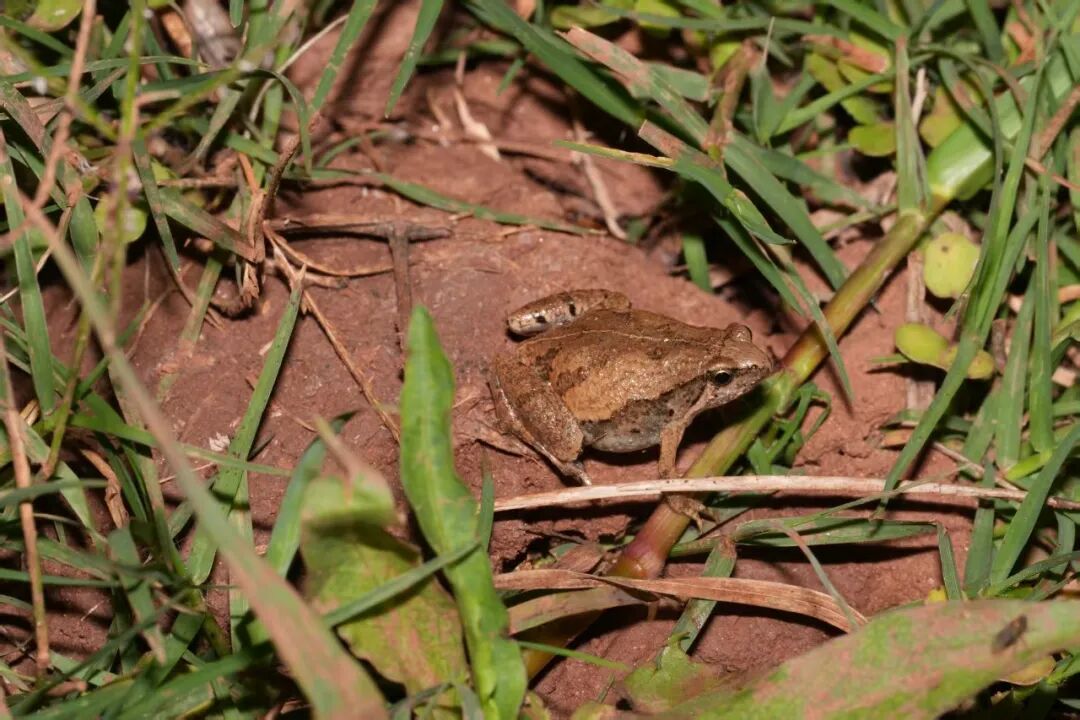
Ornate narrow-mouthed frog, known locally in Jianyang dialect as “gan ki ma’r”
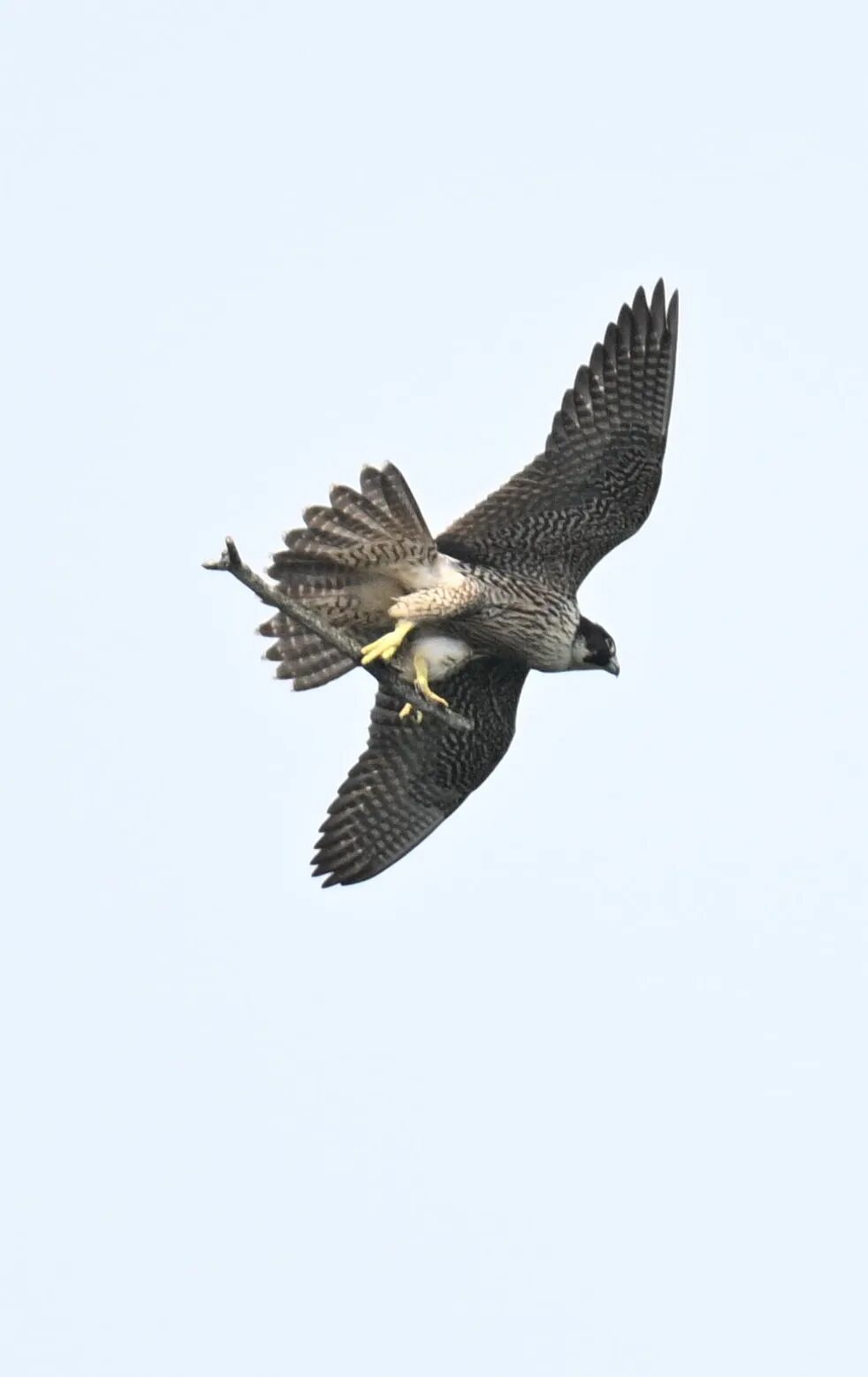
A peregrine falcon practising its branch-catching skills. Photography: Shadingyu
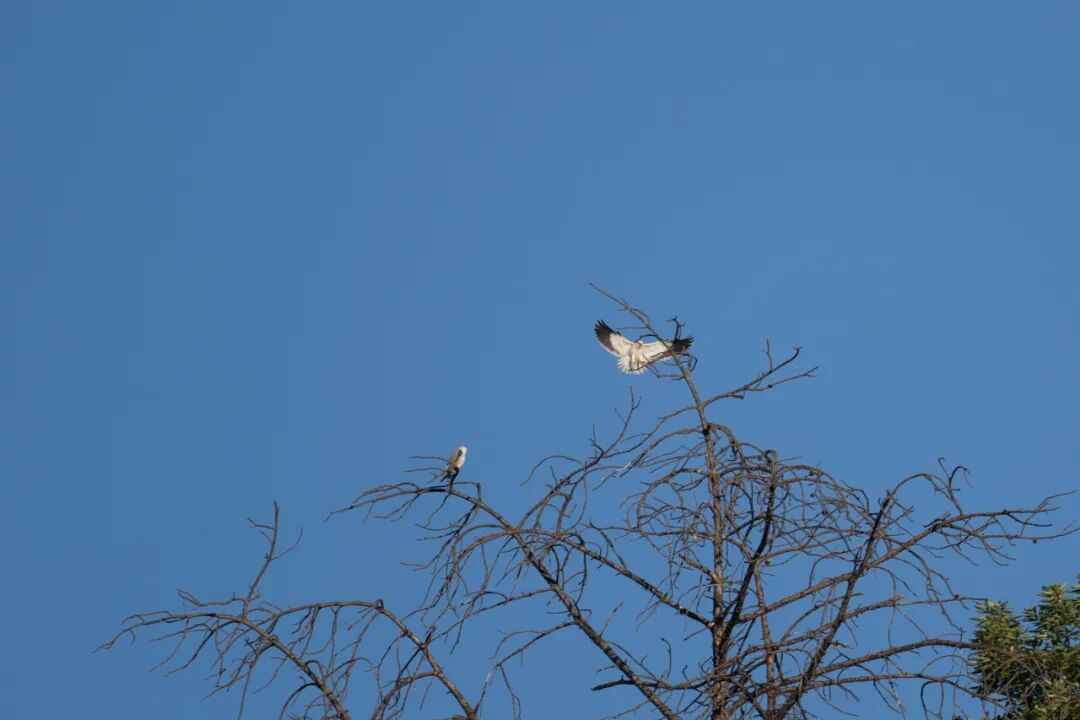
A black-winged kite spotted at an ecological farm in Yunnan. Photography: Xingya
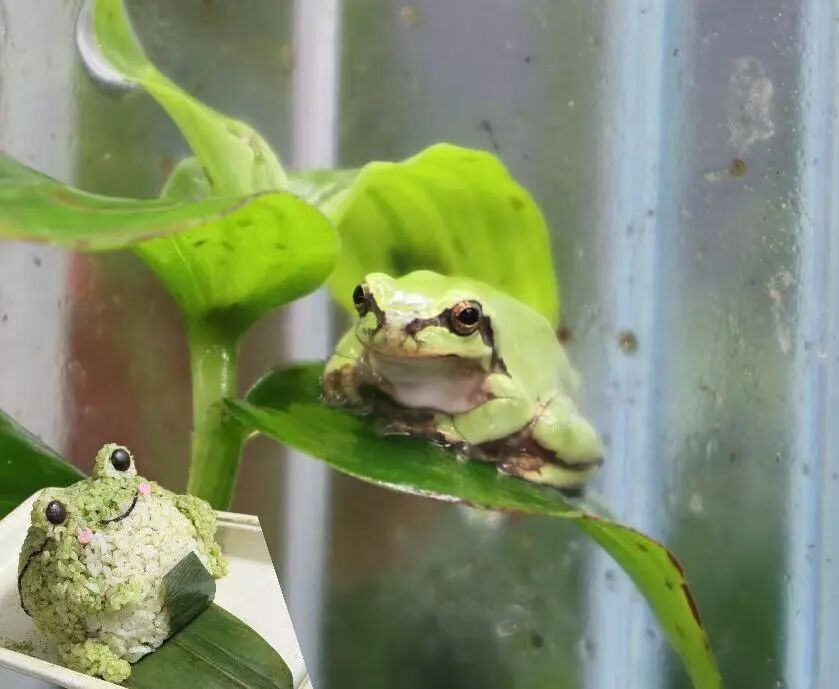
Unspotted tree frog and the limited-edition tree frog rice ball. Image source: Hongshan Zoo’s official website and WeChat account
Related Reading ▼
Scan the QR code below
On Xiaoyuzhou | Ximalaya | Lizhi | Apple Podcasts
to subscribe to the Food Talk podcast

Feel free to leave a comment in the discussion section on any podcast platform — we reply from time to time. Scan the QR code below to add Shitong Jun’s secondary WeChat account, noting “食日谈” (Food Talk) in the remarks, to join the listener community group.

Music: Banong
Opening birdsong: recorded by Hali in Jianyang, Sichuan
Produced by: Li Ye
Cover design: Xiaojing
Production: Xiaoputao
Article layout: Xiaoshu
Contact email
xiaojing@foodthink.cn
Scan to tip — support original, quality food writing
▼

▼
Click a keyword to explore more article collections
Seeds | Farming Techniques | Policy | Fermentation | Nutrition | Fruit | Fisheries | Events | Recruitment | Takeaway | Wet Markets | Livestock | Food Talk | Sharing Sessions | Book Clubs | Harvest Festival | Smallholder Stories | Climate Change | Rural Development | Cooperative Economy | Urban Farmers | Food Safety | Digital Technology | Biodiversity | Pandemics and Food | False Solutions | Agroecology Internship Programme
Beijing | Hebei | Shanghai | Guangdong | Guangxi | Henan | Sichuan | Jiangxi | Xinjiang | Shaanxi | Hong Kong | Chongqing | Zhejiang | Jiangsu | Guizhou | Northeast China | Taiwan | Inner Mongolia | Philippines | Canada | Russia | Mexico | Italy | United States | United Kingdom | Germany | Netherlands | Thailand | Sweden | Japan