The Plants That Are Mine, the Self That Is Theirs | Grandma Kouzi

After Villain Valley’s fifth anniversary, the systematic felling of white ginger lilies became part of my daily routine. Hand rises, blade falls—my white ginger lilies lie “strewn like corpses across the fields.”
The one who wields the blade to cut them down—it is me. It is not that I do not love—I love white ginger lilies, deeply. I love her whiteness, pure as jade; her scent, subtle and far-carrying. A love, deep and abiding, for over a decade, each day the same.
The white ginger lilies remain as pure-white as jade, her scent still subtle and far-carrying; my deep love, too, remains unchanged. And yet these swift cuts—hand rises, blade falls—grow ever more frequent.
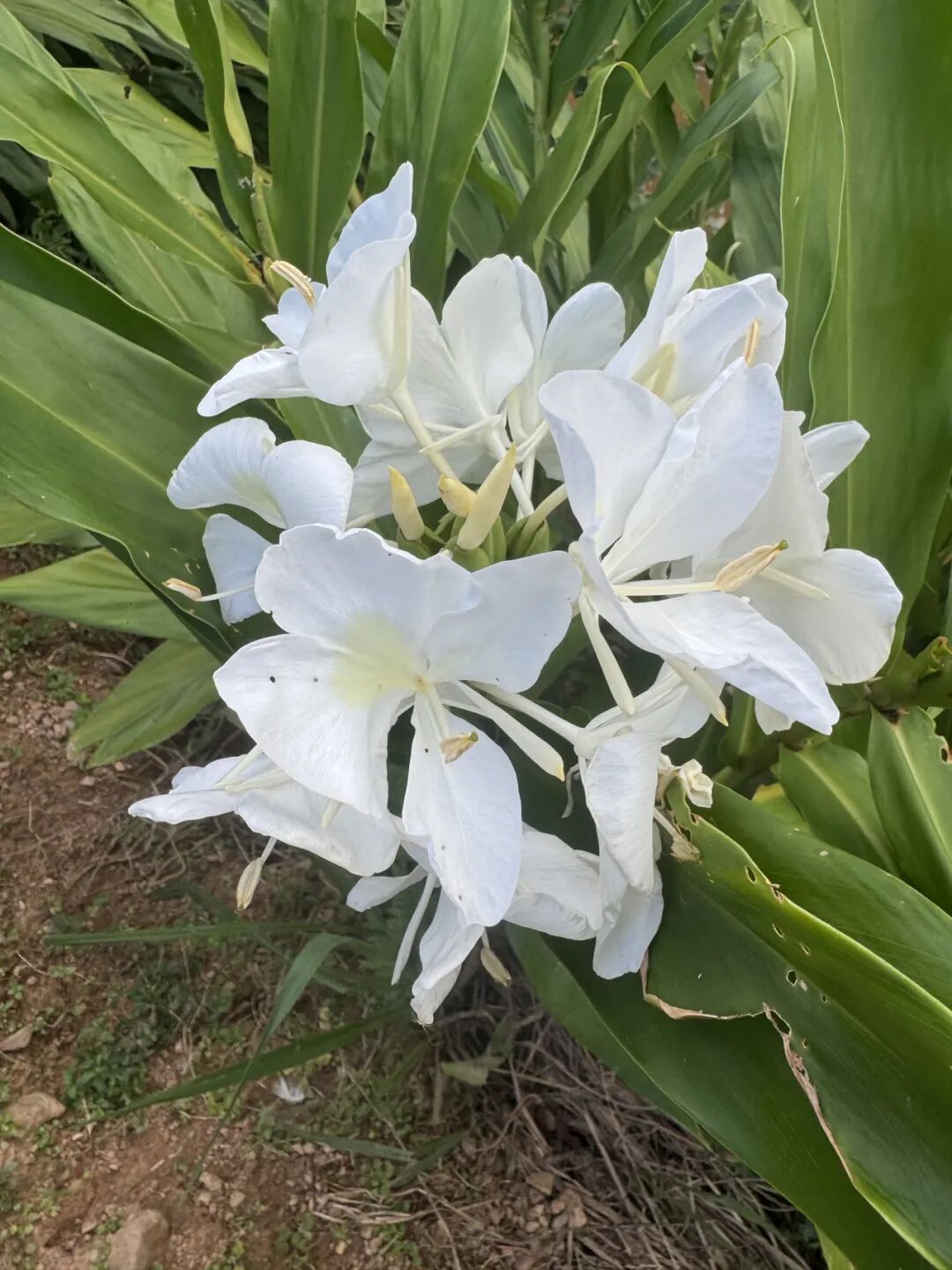
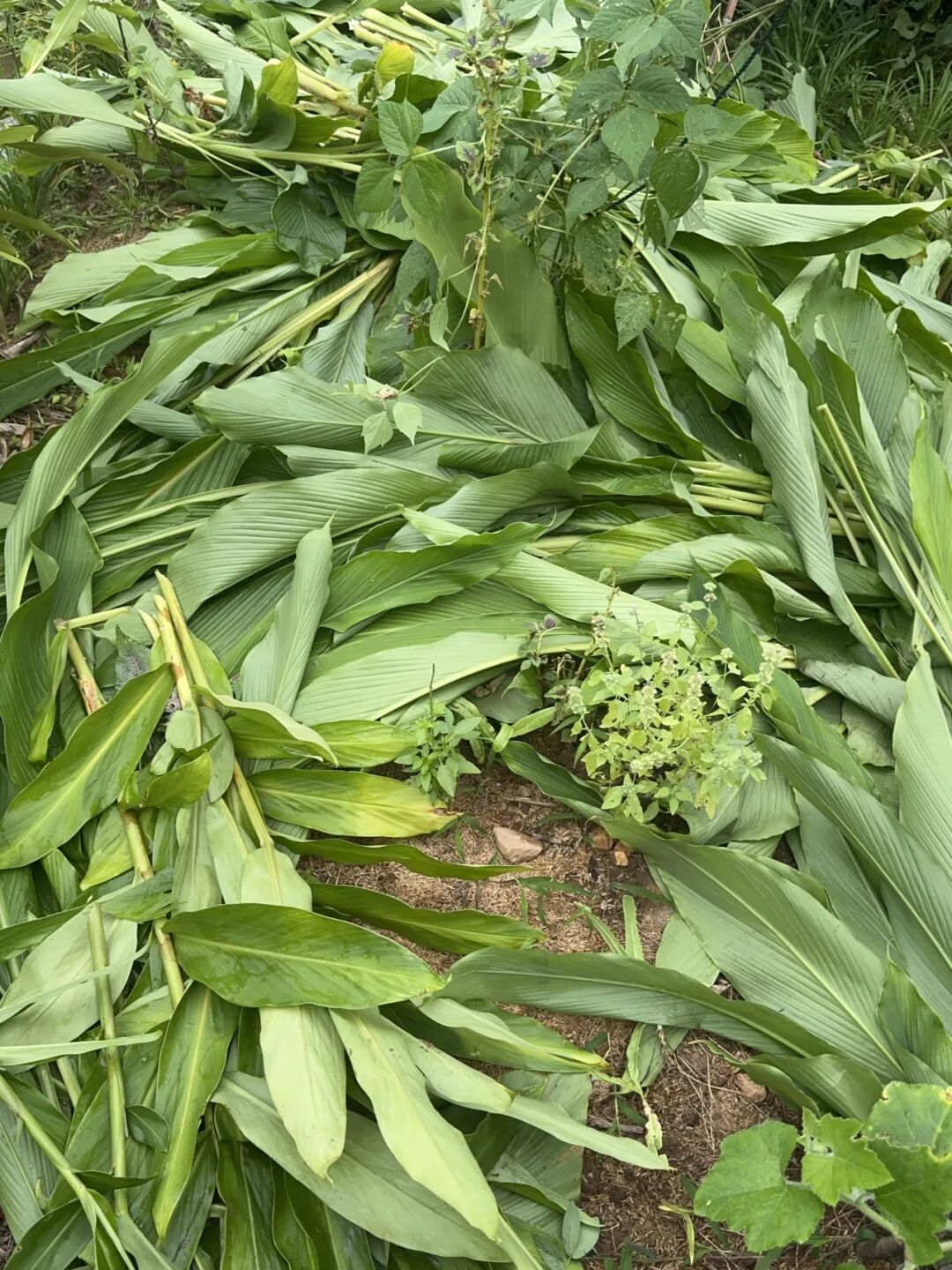
◉ White-as-jade white ginger lilies, cut and laid strewn across the ground
You Say You Love White Ginger Lilies Best
The song I keep humming this season is “You Say You Love White Ginger Lilies Best.” It borrows the melody from “You Say You Love Lilacs Best” – forgive me for turning a song of mourning into a march.
My love for white ginger lilies began in Hong Kong in 2011, on a rainy night, hillwalking after dark with the Hong Kong charity Miaopu Education Aid. By then I had been observing grassroots philanthropy in China for over twenty years and already knew about Miaopu; I knew they had helped build over a thousand rural Hope Primary Schools. After the Wenchuan earthquake of 12 May 2008, I worked in the disaster zone on aid for young people left disabled by the quake, and the deaths and injuries of students were a pain that cut to the bone. Of the sixty-one Miaopu Hope Primary Schools in Sichuan, not one suffered structural collapse, and there were no casualties among staff or students – six of them sat right at the epicentre in Aba.
Miaopu did not simply throw money at school-building and leave it at that; they involved themselves in every detail, attending the construction site in person to oversee the civil works. I myself had seen far too much of “Money in, people out,” and I knew that Miaopu’s hands-on approach was the single greatest reason for their flawless record. My admiration for them is beyond measure.
We hillwalked on weekdays, gathering at half past seven in the evening at a metro station. Miaopu is loosely organised, and all its events are open to anyone – hillwalking especially so: bring your own gear, bear your own risk, join or drop out as you please. When the time comes, you set off; no one waits, no one turns back, and the plan is to reach a different station around eleven. The organisers take up the front and rear positions. Several dozen people spread out in a long single file along the narrow mountain path, saying very little. Not a soul did I know, which meant I could simply focus on walking, savouring the silence of the hills and the solitude amid a crowd.
We got rained on along the way. Sudden showers are perfectly normal in a Hong Kong summer, and getting rained on is perfectly normal for anyone who loves the outdoors. Everything carried on as usual; the pace simply slowed a little. Once the rain passed, we came to a hollow between the hills, and the person at the front suddenly stopped. Following their gaze, we saw fireflies filling the sky!
Several dozen of us stood in that hollow, perfectly still. Beside me was a tall plant I had never seen before, its scent heady and overwhelming. When the group moved on, I simply followed, quietly asking where we had just been – I cannot recall whether it was Luosi Mountain or Luosi Bay – and then the name of the flower. I learned it was called white ginger lily.
That night, I wept with happiness. Beautiful people, a beautiful journey, and such a beautiful flower.
And that is how I fell in love with white ginger lilies – deeply in love.
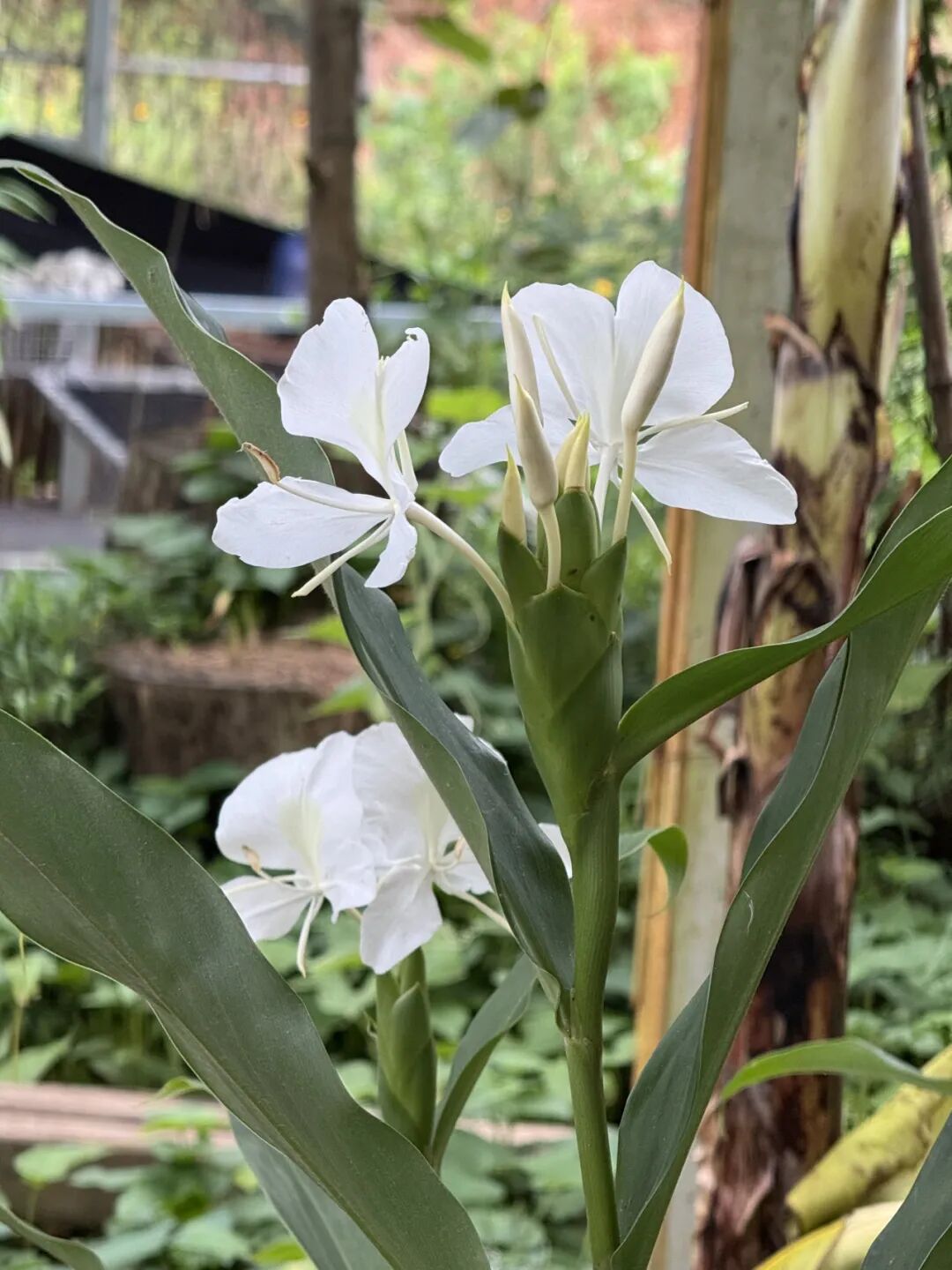
◉ White Ginger Lilies
Villain Valley’s White Ginger Lilies
“The garden should be filled with white ginger lilies, blooming with beautiful white flowers…” The very first spring after arriving at Villain Valley, I went to the neighbouring village’s riverbed and dug up handfuls of white ginger lily rhizomes. To this day, I have a corridor of white ginger lilies nearly a hundred metres long. Every single one was planted by my own hand.
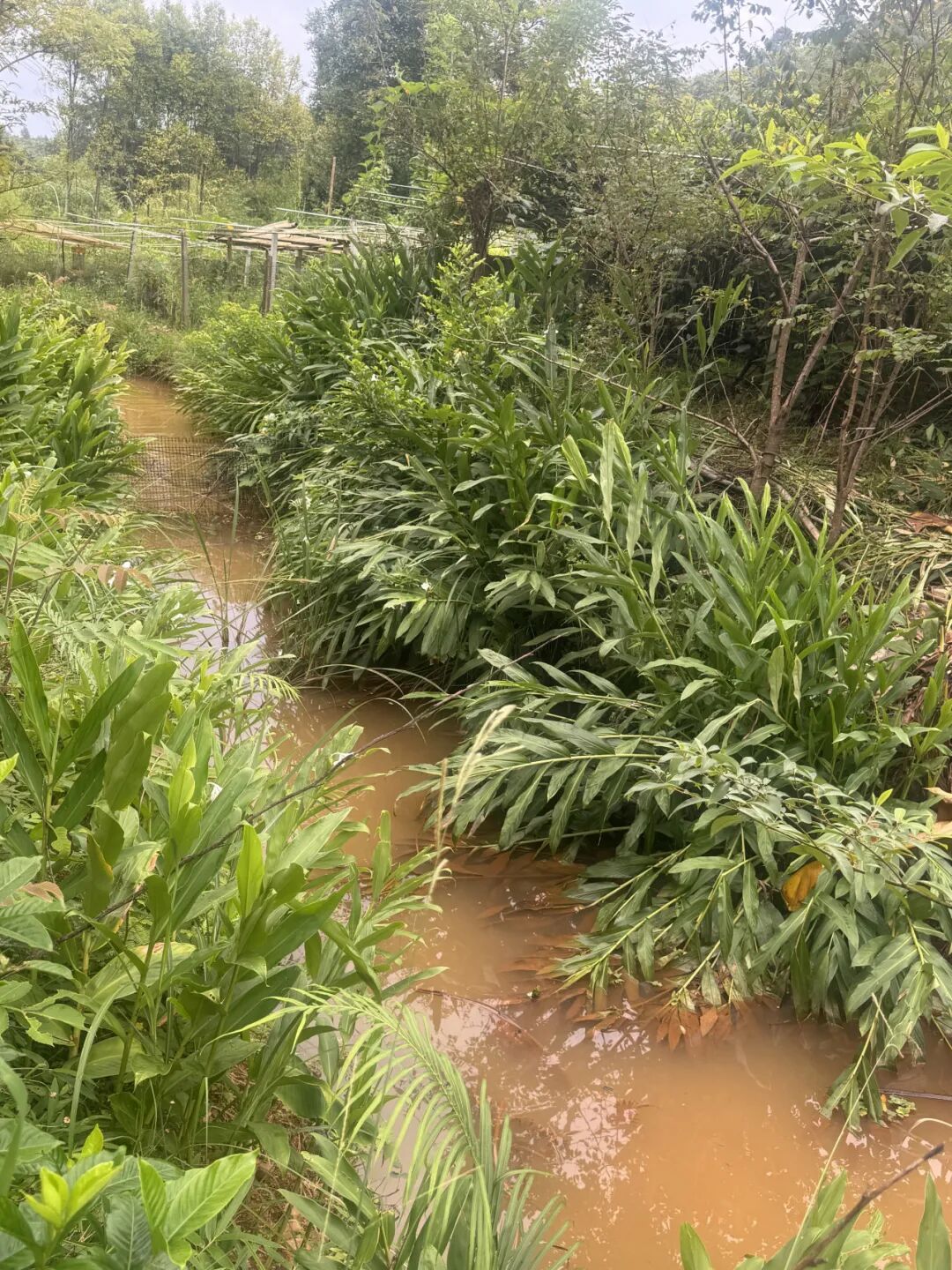
◉ White Ginger Lilies Lining the Riverbank
When a foodie selects plants, the first thing that matters is whether they’re edible. The pure-white blooms of white ginger lilies can be fried with eggs, and a soup of fresh flowers and vegetables is truly exquisite – a star of Villain Valley, beautiful and delicious both.
My idea of the good life begins with the edible and the delicious – and ideally, a lazy plant: put it in the ground once and it lives for a lifetime. But what comes after growing it? As a northerner with no formal farming experience, the finer details of planning a southern farm remain hazy. I can only plant first and worry about the next step once things take root.
I want to build a living, self-sustaining, closed loop from Villain Valley’s tiny patch of land – every plant, every presence, should be a part of the system. White ginger lilies are low-maintenance, long-flowering and gorgeous; an easy-to-grow native species. But gradually I have begun to worry that their vitality is too extravagant, crowding out the space other plants need. Every scrap of rhizome, every tiny new shoot, given a few years, grows into a full clump, splitting into dozens or even hundreds of offshoots, covering nearly the whole river surface and even swallowing the steps. There was nothing for it but to grab a blade and start hacking.
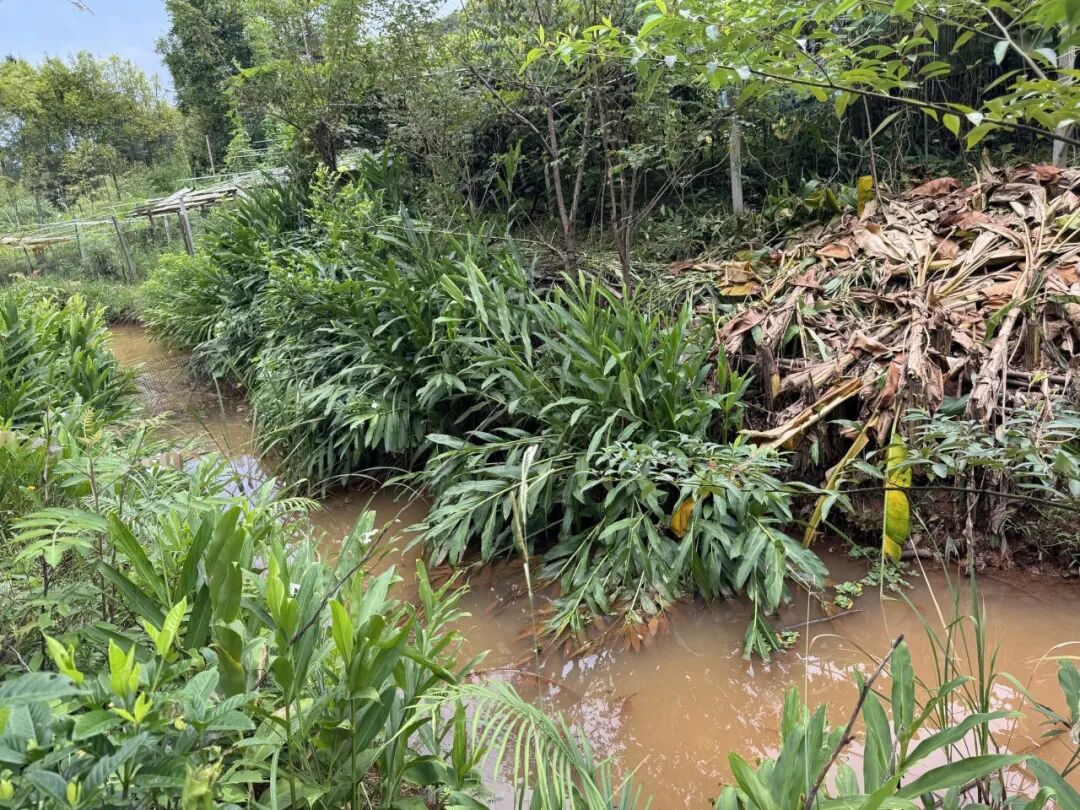
◉ Cut White Ginger Lilies Laid as Ground Cover
The cutting opened everything up. Not only is the path clear now – even the ventilation around the hammock area has improved. And beside it, the pumpkin seedlings that had been cowering in the shadows are finally visible. Same batch of seeds – others from the same sowing are already in flower and fruit, the gourds ripe and old – yet this vine has not even started to grow. If I clear all the white ginger lilies here, perhaps these pumpkins will get their chance?
After that bout of fierce cutting, I felt so light-headed I was nearly floating. Next year, I will start earlier for sure – leave the roots to hold the slope, and lay the cuttings on the riverbank nearby. This is the gardenia zone; weeds poke through every crack, pulled and back again before you know it. Laying white ginger lily stems between the gardenias will not only suppress weeds – it will enrich the soil as well. In another two years, I reckon the gardenias will carpet this entire slope…
And so, at last, I have found white ginger lilies’ rightful place in Villain Valley.
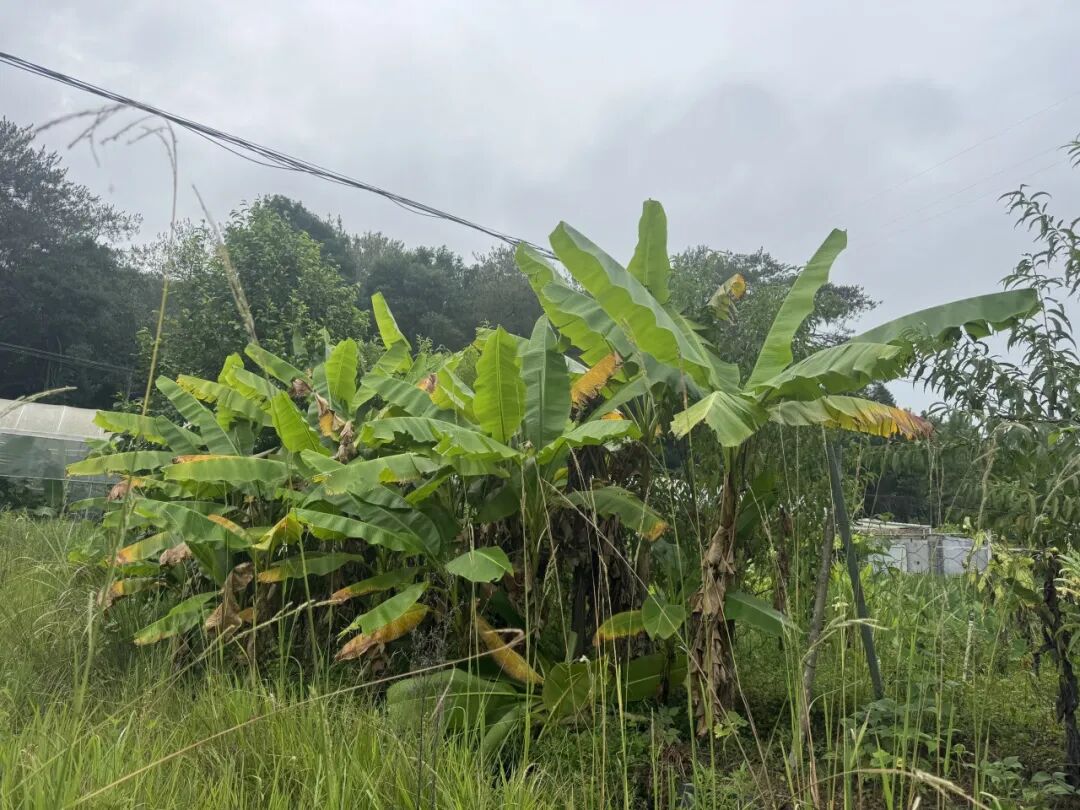
◉ Before Cutting the Hardy Bananas
The Ecological Niche of the Tall Perennials
With the white ginger lilies cut flat, it was the hardy bananas’ turn. Felling those fruitless ones too – surely everything would open up even more?
We call them trees because they tower so tall, but hardy bananas are herbaceous perennials, no different in that regard from white ginger lilies.
Neither hardy bananas nor bananas are native to this region. Tianbao bananas and Yongchun lychees may be celebrated Fujian specialities, but they hail from the eastern coast. Western Fujian’s mountains see frost – lychees cannot survive, and bananas will not fruit.
The earliest hardy bananas were brought in to purify domestic sewage, though there was a touch of poetry in it too – rain drumming on banana leaves. The first batch, ordered online, was four hardy banana plants and three apple bananas. More followed later: dwarf cultivars, and a fruiting variety sourced by a nearby friend. Counting only those with a traceable provenance, there are at least seven.
Last year, on Villain Valley’s fourth anniversary, I reflected that it takes at least three years to prove whether a plant truly suits a place. Now I realise how shallow that was. Take the hardy banana: it took at least five years to confirm that its temperament matched this climate, this soil. Perhaps by Villain Valley’s twentieth year, I will decide it takes nineteen. Who can say?
I never imagined these hardy bananas, pressed into sewage-purification duty, would ever fruit. In the first year, frost blackened every shoot. In the second, spring brought a fresh flush of buds, and those that survived quietly spread into clumps. The real surprise came in year three. November had arrived, the air was turning cold, and my hardy bananas bloomed. The tiny bananas wilted in the chill almost at once, but it proved the point: hardy bananas here do not merely survive – they can bear fruit.
In the fourth year, flowering came a little earlier – still after the Start of Autumn, but the fruit set properly this time. I harvested two bunches of not-yet-ripe hardy bananas, and they tasted good.
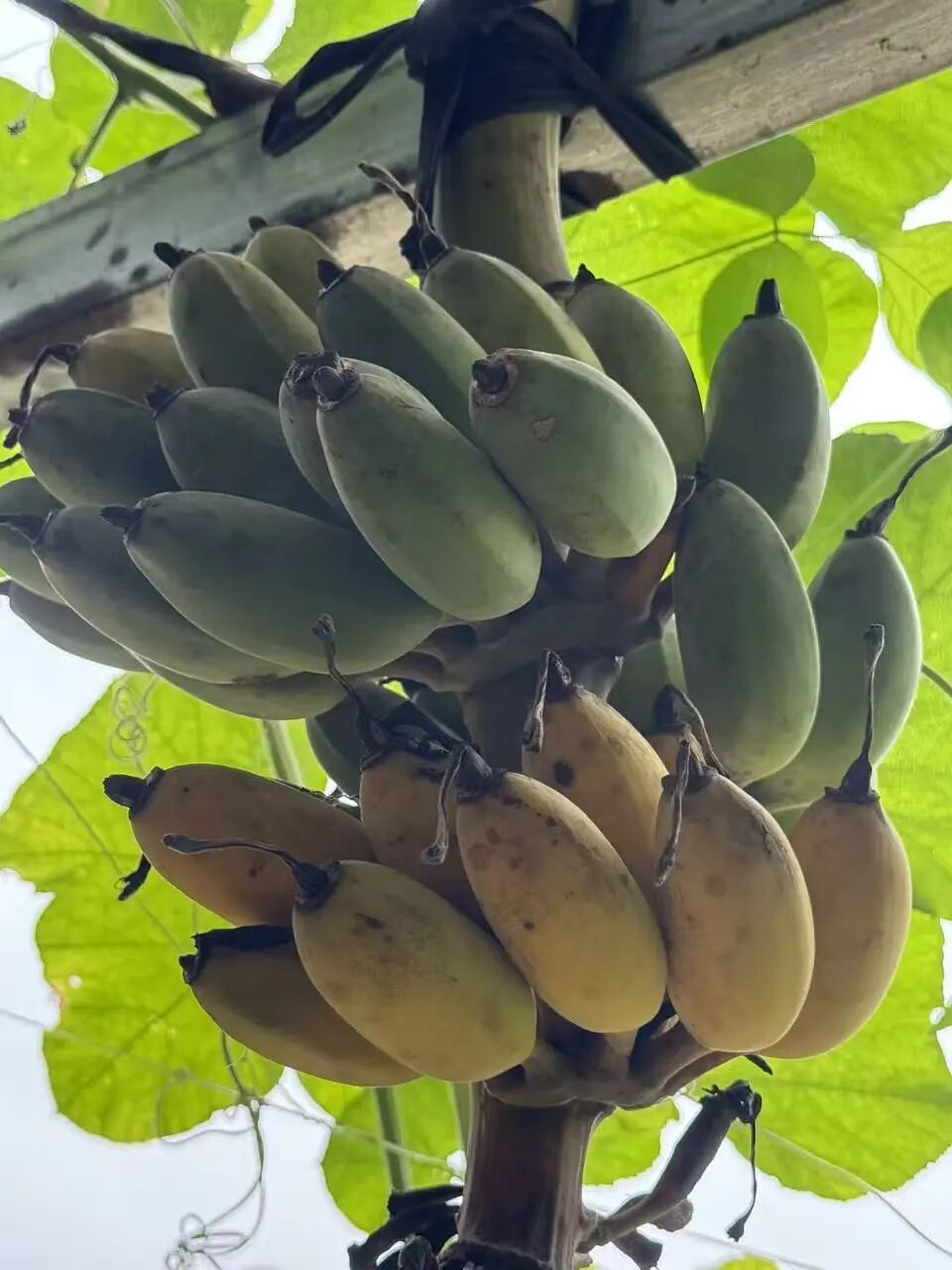
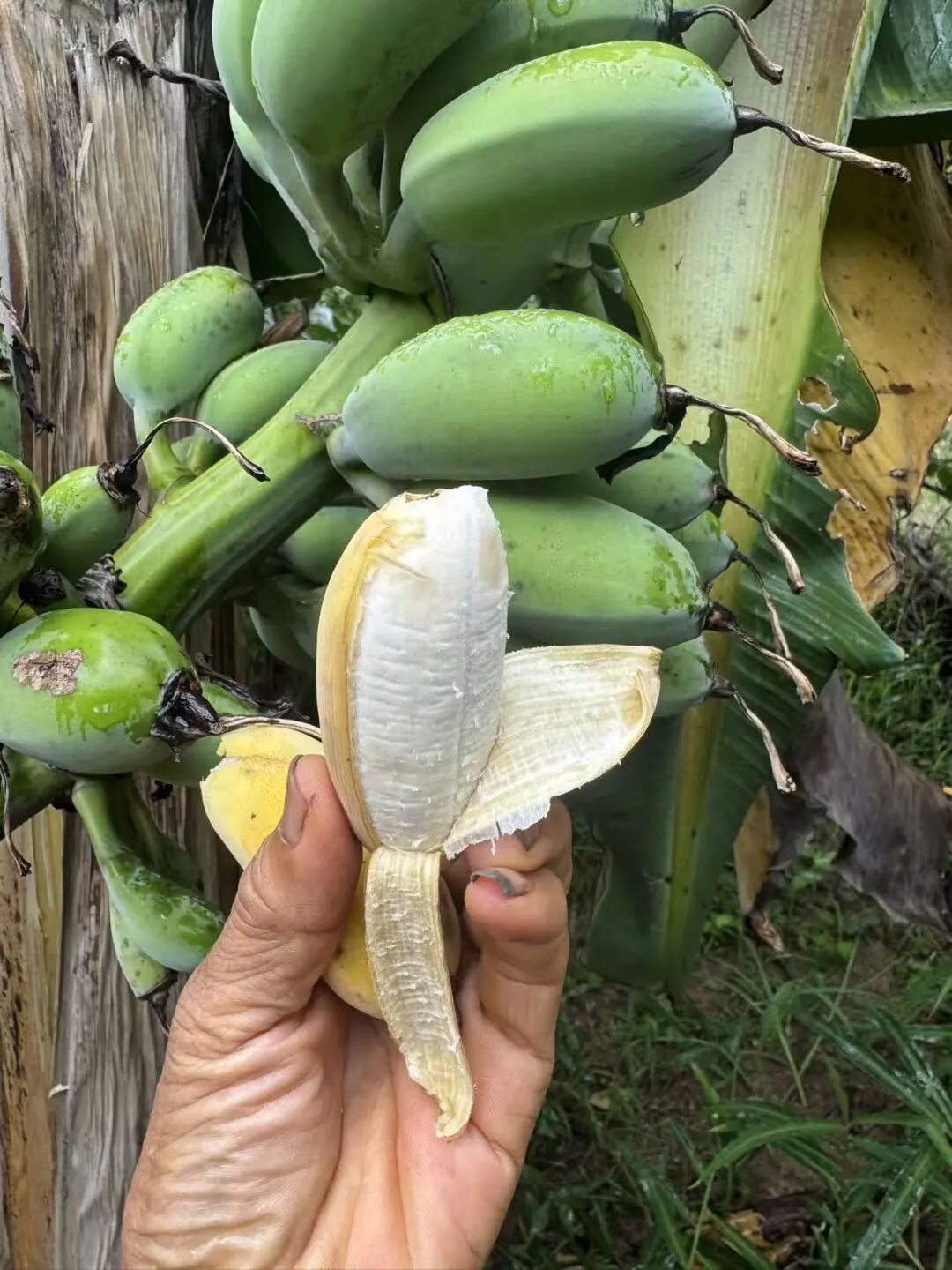
◉ This Year’s Hardy Banana Harvest
To eat more hardy bananas, I built a plastic polytunnel. Now there are two camps: polytunnel hardy bananas and open-air hardy bananas. Naturally, the greenhouse ones flower and fruit early, but the open-air faction is not far behind. Guess what month this year’s open-air plants flowered? The very first bloom appeared in May.
This is no stroke of luck – it is the fruit of learning and effort. From early spring, the moment the new shoots begin to stir, I start pruning the hardy bananas. No longer do I let them grow wild; if the leaves and branches run riot, they siphon nutrients away from reproductive growth. Each year, each clump, I keep just three or four main stems for flowering and fruiting.
The most successfully managed plant has exactly four stems. The first flowered in May; already three bunches have formed, and the fourth flower is on the very verge of opening. This year, between the two camps, we might harvest at least ten bunches of hardy bananas. Banana freedom – practically in the bag.
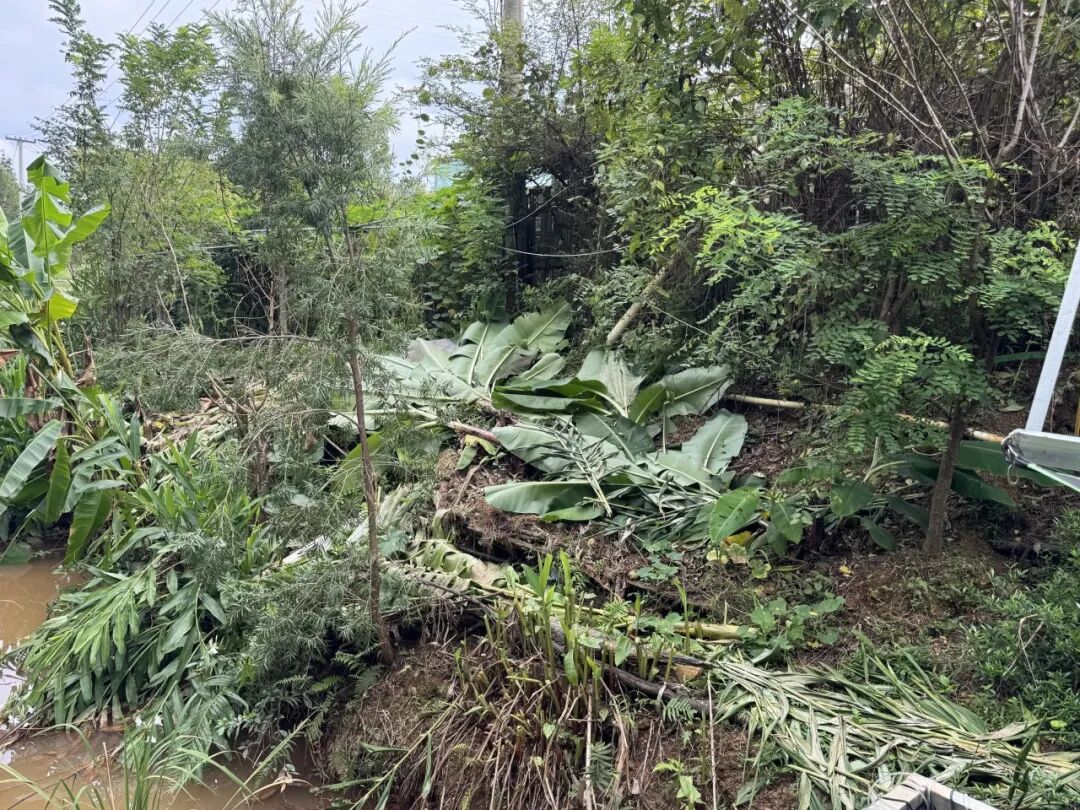
◉ Cut Hardy Banana Leaves Laid as Ground Cover
The Plants That Are Mine, the Self That Is Theirs
In Villain Valley I plant all sorts of things and let survival of the fittest do the rest – trial and error, error and trial again – slowly shaping the plant ecosystem that is mine, and changing myself without quite knowing it.
I used to be a plant killer – the black-hand Mafia, the antithesis of green fingers. Nearly everything I planted died; those rare survivors were too tough to perish yet never thrived either. I remember the last few years at my office job: a single Chinese hibiscus sat on the windowsill, never once in bloom. It produced bud after bud, their blazing scarlet stirring in me a desperate, earnest hope – yet they would always drop at some moment, and I never once saw a flower open.
Later I quit to work in charity. In the winter of 2005 I took a train to Guangzhou, and along the tracks at Guangzhou Station Chinese hibiscus bloomed in their thousands – blazing scarlet for kilometre after kilometre, an unbroken blaze. I mentioned it to a friend in Guangzhou, full of wonder. He thought nothing of it. “Guangdong is not Shandong,” he said. “Chinese hibiscus doesn’t belong in a pot either – it grows wild over every hill and valley. Leave it alone and it flowers anywhere.”
So all those years, I had been tending that one flower with the greatest care – only to plant it the wrong way, in the wrong place.
People are the same, really. I should never have sat weeping over a potted plant on an office windowsill. Charity work was the life that truly suited me.
Charity work means dealing with people. I had to be accountable to them; there was no room for error. But I am human too, and mistakes are inevitable. One habit proved invaluable during those years: keeping a diary. Every day I wrote reams, no matter how exhausted or how late the hour – neither my electronic work log nor my private notebook was ever left blank. What I had done right, what I had done wrong, why it went wrong, how to avoid it. Over twenty-odd years, hundreds of volumes, full of the hidden subtleties of human nature and the small failings tucked beneath my own robe… Putting words on paper is also a kind of separation and settling – a way to lay down the anxious, everyday restlessness inside me.
A farm holds hundreds of species and thousands upon thousands of individual plants. It is no longer possible to pour every ounce of devotion into each one, as I once did for that lone Chinese hibiscus. The land grew wider, and so did my heart. What began at Villain Valley as nervous, breathless fussing over the first white ginger lilies has long since given way to a broader, easier touch. When I dug up the surplus rhizomes and felt it too cruel to simply toss them, I flung them into the shallows and left everything to the heavens.
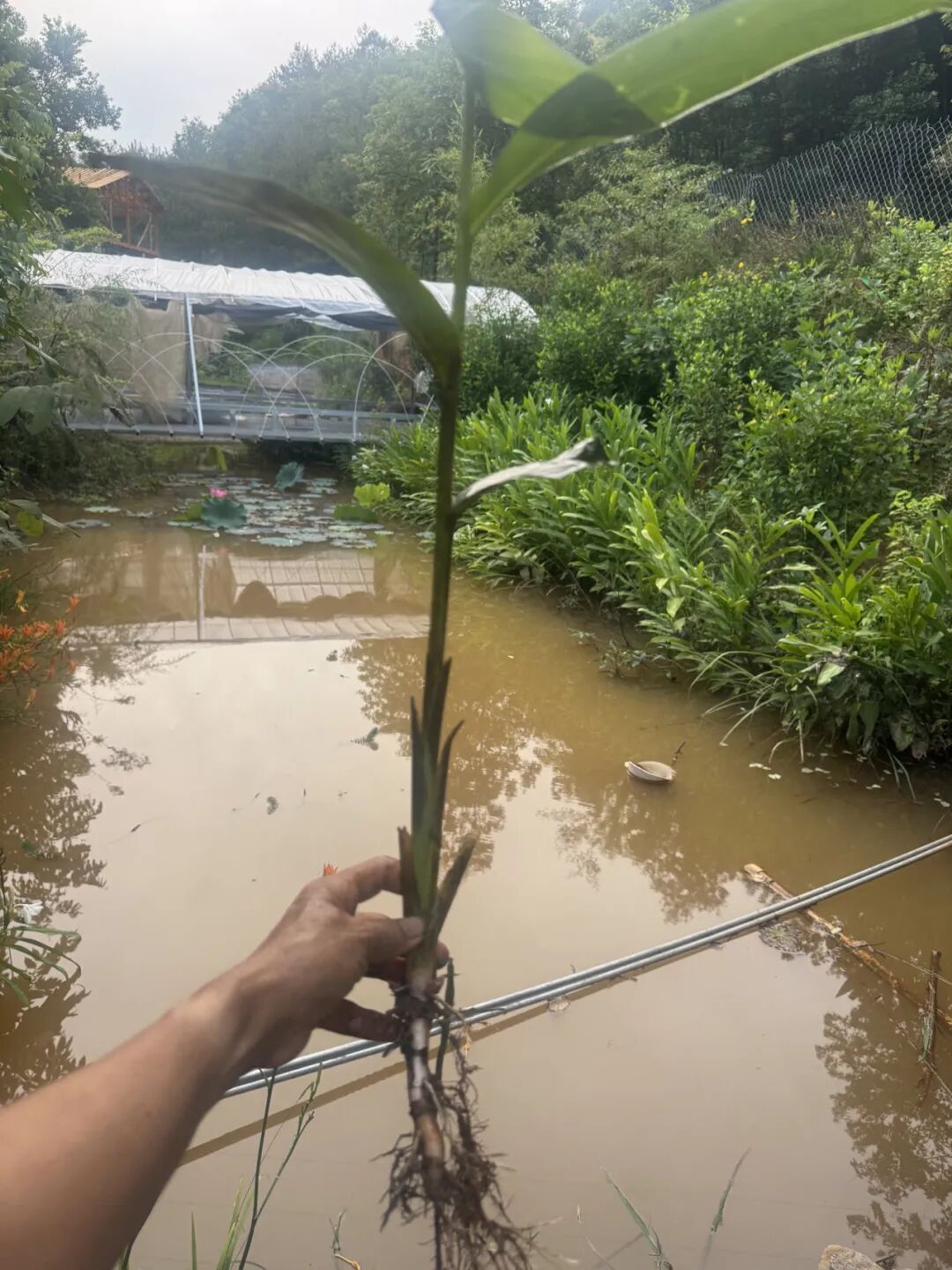
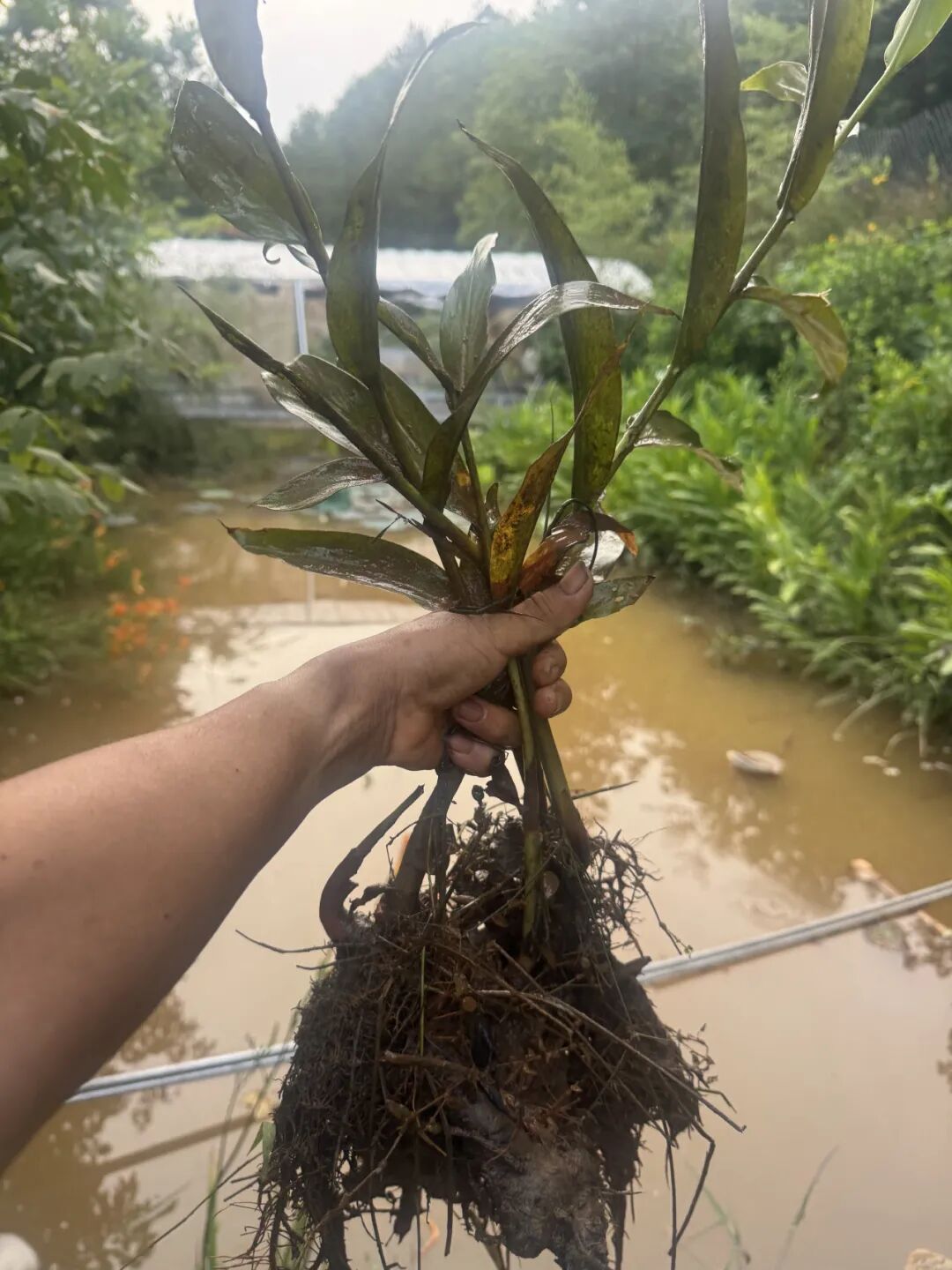
◉ White Ginger Lily Seedlings
I plant myself in the soil as though I were a plant, and choose plants for this land. Once sown, life and death are their own affair – the fate of the plant, the fate of this land and, faintly, the fate of me. Then, among the survivors, between myself and the plants, I look for a way to coexist and flourish together. There is a time for spring blossoms, a time for autumn harvest, a time for wind and rain, frost and snow.
Now my unit of time with the plants stretches from months to years. My restlessness has nowhere to settle – and nowhere it needs to. The anxiety that once shadowed me every step of the way has vanished, and I cannot say where it went. Of all the tangled mess in this world, much of it I no longer need to carry. The Villain Valley diary has quietly grown shorter, short to just a handful of lines: “Morning – cut white ginger lilies along the east bank, and pumpkin seedlings appeared,” “In the rain – switched to the polytunnel, trimmed hardy banana leaves, laid them as ground cover,” “Sowing this, sowing that – trying corn and peanuts in the same hole, hoping the peanuts fix nitrogen and cover the ground at once. Perhaps then the weeds will leave it alone?”…
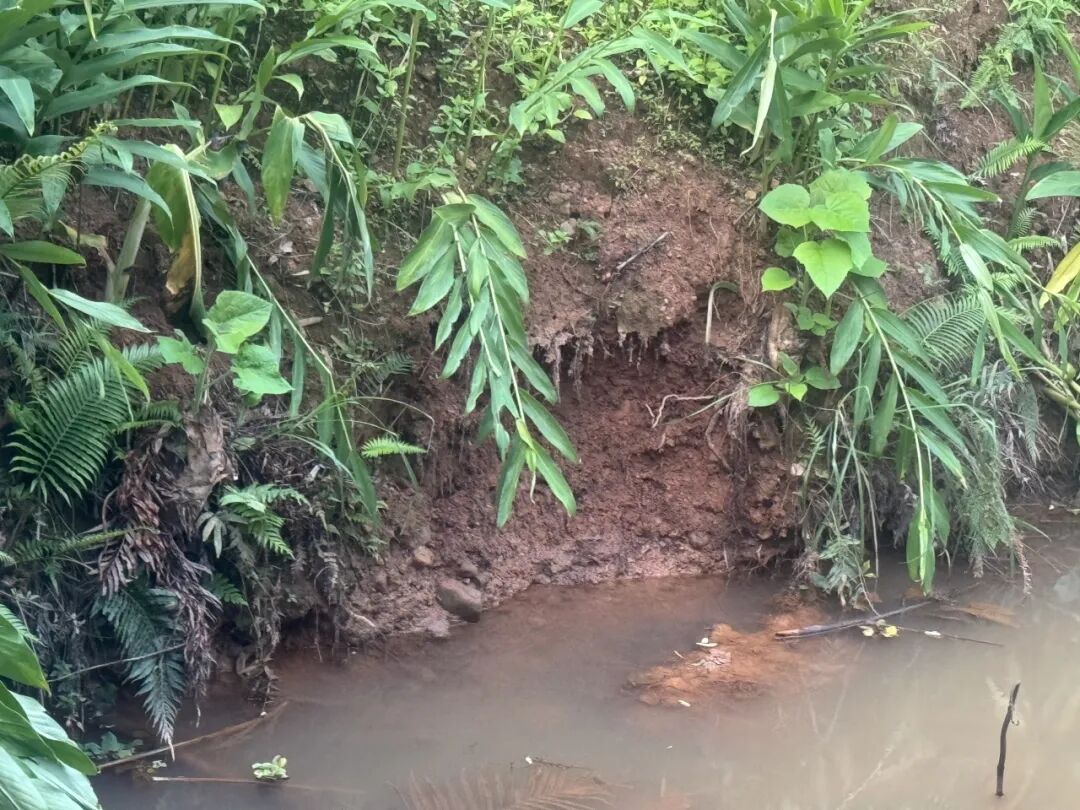
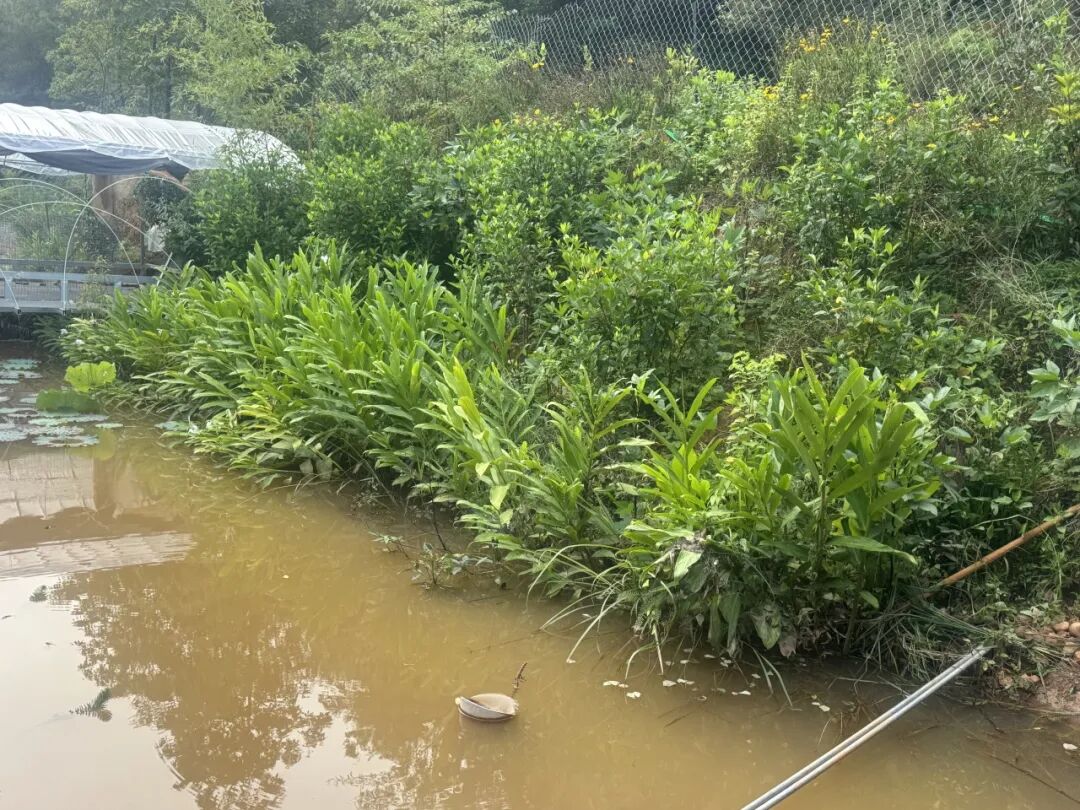
◉ The collapsed bank before and after replanting; in two years, this is what it should look like
A few days ago, heavy rain brought down a short stretch of the west bank. Bright and early this morning I pulled on my chest waders and went to replant white ginger lilies across the collapsed bank. Those very rhizomes I had casually tossed into the water before now send up thin, pale shoots – perfect for patching the slope. Once the white ginger lilies establish themselves, dozens or hundreds of rhizomes and countless fibrous roots will bind the earth into something as solid as a fortress. Even if the world came to an end, this bank would hold.
With the bank repaired, I cleared the white ginger lilies along the path too. Swinging the blade with all my might, amid the rhythmic thud of chopping, I found myself thinking of those words: “To everything there is a season, and a time to every purpose under the heaven: A time to be born, and a time to die; a time to plant, and a time to pluck up that which is planted…”
– This is Foodthink’s 847th original piece –

Foodthink
Author
Kouzi
Farmer and endurance walker, village brewmaster. Full-time foodie, part-time farmer, amateur writer.
Unless otherwise noted, all images are provided by the author
Editor: Xiaodan
Layout: Minglin
Scan to tip and support original food writing
▼

▼
Click an image to read related articles
▼
Click a keyword to browse more article collections
Seeds | Farming Techniques | Policy | Fermentation | Nutrition | Fruits | Fisheries | Events | Careers | Takeaway | Market | Animal Husbandry | Food Talk | Talks | Book Club | Harvest Festival | Smallholder Stories | Climate Change | Rural Development | Cooperative Economy | Urban Farmers | Food Safety | Digital Technology | Biodiversity | Pandemic and Food | False Solutions | Agroecology Internship Programme
Beijing | Hebei | Shanghai | Guangdong | Guangxi | Henan | Sichuan | Jiangxi | Xinjiang | Shaanxi | Hong Kong | Chongqing | Zhejiang | Jiangsu | Guizhou | Taiwan | Inner Mongolia | Philippines | Canada | Russia | Mexico | Italy | United States | United Kingdom | Germany | Netherlands | Thailand | Sweden | Japan