Who Is Making Us Fear Fermented Food?

Foodthink Says
Pickled vegetables, sour soup, milk curd, bread, beer, sausage, cheese… whether in China or abroad, fermented foods are everywhere. This is perhaps because fermentation is, in essence, a biological process in which ubiquitous microorganisms interact with their specific surrounding material environment.
In modern society, fermented foods that have existed for millennia can evoke fond memories of home and childhood in some people, while arousing suspicion and fear in others. Why? Baumgartber’s book Fermented Food records and analyses the context in which such complex and contradictory attitudes arose.
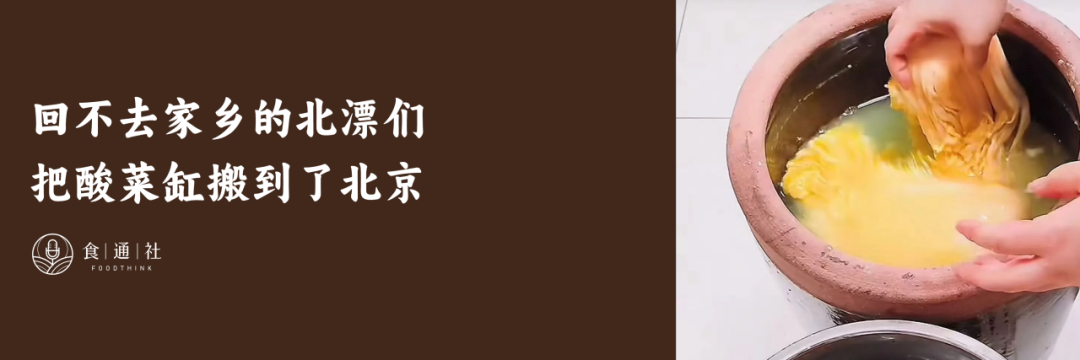
The piece “North-Drifters Who Can’t Go Home Moved Their Pickling Crocks to Beijing“, previously published by Foodthink, responds at the level of lived experience to the core argument of this book: that fermented food itself represents a way of life; that in modern society it can serve as a medium for connecting people with one another, and humans with the natural world; and that it can also be a resource people draw on in pursuit of their own health and well-being.
This article, by contrast, is an excerpt from the book’s introduction. It outlines the historical process in which microbiology, discovered through the study of fermentation, was swept along by market forces to steer modern people away from home-fermented foods and towards mass industrial food production during the nineteenth and twentieth centuries.
With thanks to Science Popularization Press for granting permission to publish this article.

◉ Cover of Fermented Foods
A Packet of Sourdough Starter That Gets “Angry”
In the spring of 2007, I received a small envelope containing a sourdough starter. This starter had been born on the Oregon Trail, a relic of the era when America’s early pioneers were pushing westward. It looked so unremarkable that I half suspected a mix-up with my order. Still, before going to bed, I mixed it with flour and spring water and tucked it into a Mason jar. But when I woke up, the sticky, bubbling batter had overflowed the worktop. Only when I was cleaning up the mess did I realise that this heirloom starter was far more active than the dried yeast you’d get in a shop.
This starter has not only “character” but also a rather “picky” temperament. If I leave it in the fridge unused for too long, it gets “cross”. During a few months on a gluten-free diet, I forced it to ferment rice flour and tapioca flour, and it got even “crosser”. Even turning the thermostat down too far in winter would make it “throw a tantrum”. But when spring arrives, it perks right up. In the warm weather it eagerly devours the organic rye flour I feed it, then rewards me with perfectly crusty French loaves, tender and supple ciabatta, and round, dense sourdough rye bread.
Success with this starter encouraged me to try other fermented products. I sought guidance from Sandor Katz’s The Art of Fermentation, and at various points in time my fermentation family has included kefir, kombucha, lactic acid-fermented cucumbers, beetroot and chillies, tepache (a fermented drink popular in Mexico), cider and even red wine.
Every evening I spend time tending to my fermented products, and this gives me a sense of steadiness in an increasingly noisy world. A stable job might collapse along with the financial markets, but I can still look after my fermented products. Each one is a little world in itself; good health and a sense of fulfilment are the rewards I get. George Orwell considered tea-making a pillar of civilisation. For me, brewing tea is the first step towards starting another batch of kombucha.
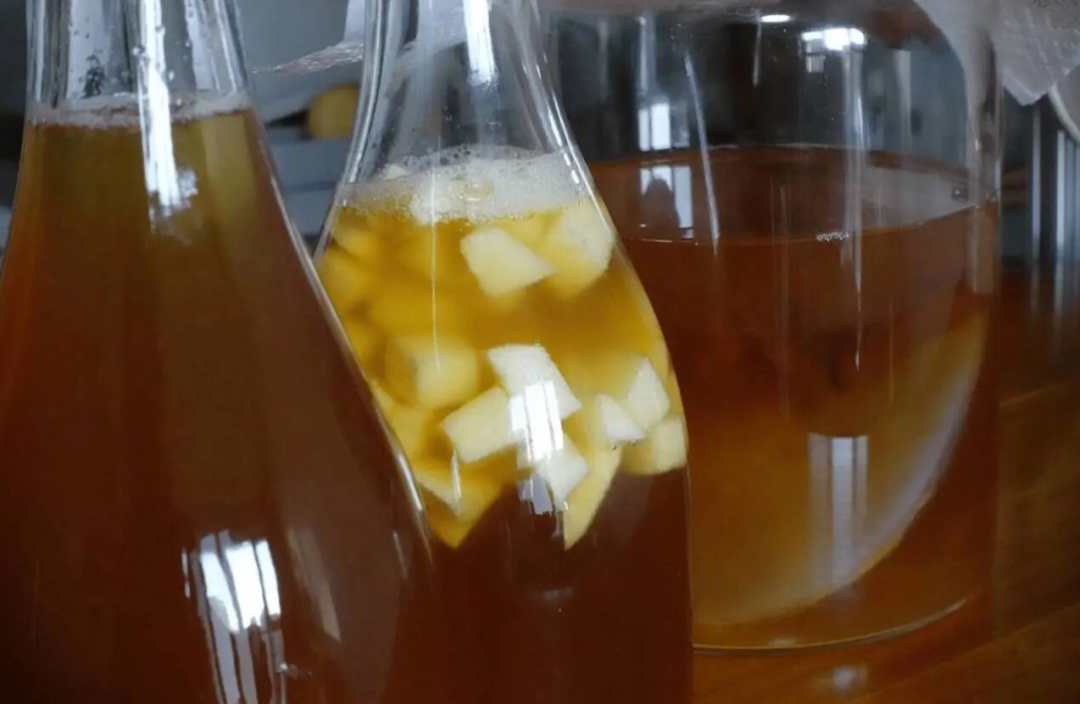
◉ Kombucha. Image: Xiaofang.
I think my motivation for trying fermentation is not much different from that of others who keep chickens, make pickles or pursue a form of urban “self-sufficiency”. I wanted to build something more enduring than the present moment. For a very long time, in both war and peace, in times of plenty and times of scarcity, people have brewed beer, made cheese, baked bread and cured meat. It is only recently that the art of fermentation has been regarded as mysterious, even dangerous.
Some people have advised me that fermenting at home is a waste of time. Others have warned that I’m likely to poison myself. Such mildly contemptuous yet unconvincing remarks make me wonder why the satisfaction of fermenting things by hand shouldn’t be as joyful as baking a pie. I intend to go looking for the answer, and the answer is an important chapter in the history of fermented food. As it turns out, suspicion and distrust of fermented foods is a “peculiar product” of the blending of scientific and market forces. This “product” has proven so influential that consumer preferences have shifted, replacing the richer, more flavourful things we can make ourselves with bland, appetite-deadening, mass-produced substitutes. Fermented food reflects humanity’s relationship with the second, invisible yet omnipresent kingdom of life. The history of fermented food is the history of how we came to see bacteria and fungi as both enemy and friend.
Fermented Food and the Public Health Movement
In August 1922, eight tourists died at a hotel on remote Loch Maree in Scotland, a hotel renowned for its romantic scenery and exemplary management. Not one of the eight had shown any signs of weakness or illness. On 14 August, they joined a guided excursion arranged by the hotel. That morning, some had gone fishing and others hiking, before gathering by the shores of nearby Loch Maree for lunch: wild duck pâté, ham and ox-tongue sandwiches, accompanied by jam, butter, boiled eggs, scones and cake. Everyone made it back to the hotel in time for dinner.
……
An official investigation was launched. Food from the hotel was sent for bacteriological examination, and the chef was interrogated. On 30 June, six weeks before the tragedy, one of the finest manufacturers in the area had delivered two dozen tins of meat to the hotel. Indeed, the manufacturer had observed every precaution at each stage of meat processing. Workers cooked the meat in batches, tinned it, placed the unsealed tins in a retort for sterilisation, then transferred the contents into smaller glass containers for a second boiling. Of the millions of tins produced by this method before the Loch Maree hotel incident, not a single case of poisoning had been reported. The chef confirmed that the tins had arrived intact, and that upon opening, their contents neither looked nor smelled spoiled.
Too little of the pâté remained in the tins for a full analysis. Fortunately, however, investigators unearthed another crucial piece of evidence: a sandwich buried by a boatman in a flowerbed. He had saved it from the earlier excursion picnic to keep for his supper. Having heard that the duck pâté might be responsible for the recent spate of illnesses, he had buried the sandwich to protect his hens, fearing they would die if they pecked at it. The sandwich was dug up in time; analysis revealed it was contaminated with toxin — thoroughly contaminated.
This terrible toxin baffled everyone. It had survived repeated boiling and sterilisation, let alone burial. The Scottish Board of Health issued a press release on 25 August claiming that the poisoning was shrouded in mystery, yet urging the public to remain calm. Investigators succeeded in isolating a microorganism from the duck pâté. They injected a liquid culture medium into two mice, and both died; a rabbit given the same injection also died. A bacteriologist noted that the mice and the rabbit had all displayed symptoms of botulism.
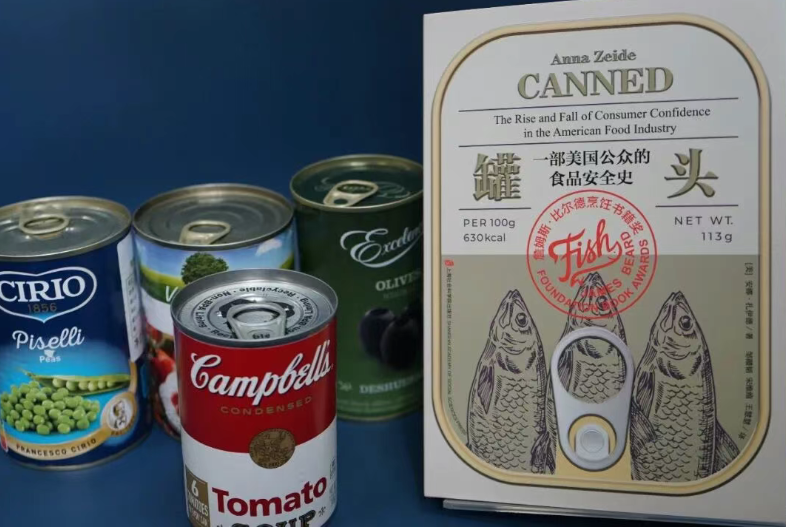
◉ Botulism poisoning once triggered widespread public panic about canned food. Shown here is the cover of Canned: A History of American Public Food Safety. Foodthink previously published a review of this book; see the article “Why Can’t Humans at the Top of the Food Chain Tell Whether Food Is Safe Anymore? | A Review of ‘Canned'”.
Clostridium botulinum is an anaerobic, rod-shaped, spore-producing bacterium that can grow in places where many other bacteria cannot survive. It secretes a potent biotoxin that attacks the peripheral nervous system. This toxin is produced only when the bacterium releases its spores. Yet these spores are extraordinarily tenacious: from garden soil to salmon gills, they can persist in a host of environments, enduring extreme cold, high temperatures and radiation. The first person to identify Clostridium botulinum was the Belgian bacteriologist Émile van Ermengem. In 1895, while investigating a series of poisoning incidents linked to sausages and cured meats, he isolated a microorganism that was not easily eradicated — one that remains the culprit behind fatal foodborne illness to this day.
A judicial inquiry ruled that Clostridium botulinum was the sole “culprit” in the Loch Maree poisoning. This happened to occur in an era when nearly every disease was blamed on microorganisms. Microbes and the ways they worked, whether beneficial or harmful, had entered the common consciousness through the sanitary movement. The “golden age” of the sanitary movement ran roughly from the late nineteenth century to the 1930s. It was characterised by a focus on the spread of tuberculosis, typhoid fever and other diseases attributed to so-called contaminated water and soil. As understanding of the pathogens behind these diseases grew, so too did the movement. Before that, such awareness had been confined to laboratories and factories. Ordinary people rarely understood the biological processes behind the beer they drank, the cheese they ate, or the unappetising meat pâté on their plates. They might know something of why food treated one way brought pleasure and health while treated another way it brought illness and death — knowledge gleaned from everyday observation. Yet these methods were so deeply interwoven with customary practice that they defied explanation.
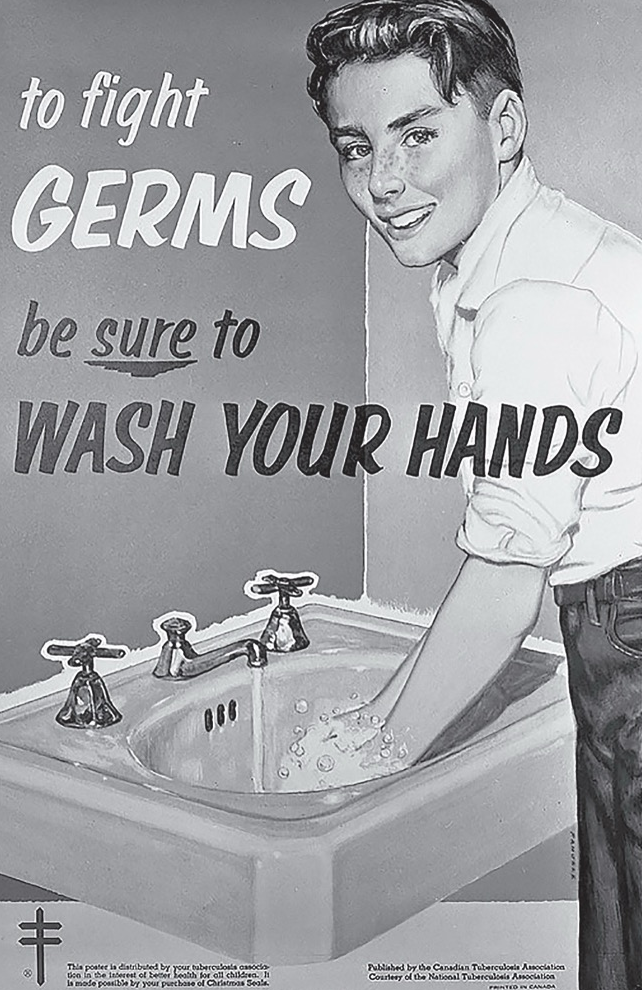
◉ This is a 1959 print advertisement by the Canadian Tuberculosis Association promoting proper personal hand-cleaning. Scientific advances in the nineteenth and twentieth centuries gave people a greater understanding of microorganisms’ role in human illness. Unfortunately, it was also during this period that people began to waver in their trust of traditional fermentation methods. Image: Science Popularization Press
The public health movement disseminated all manner of knowledge about microorganisms and their effects, distilling it into a form almost anyone could grasp. Publishers of domestic science books and pamphlets brought the “germ theory” — an emerging science — into kitchens across the land, encouraging housewives to cook in more hygienic ways. No one would dispute that these were good practices. Yet the movement also became a textbook case of well-intentioned “tyranny”, because ordinary domestic tasks acquired an atmosphere of invisible danger. The proverb “the viper may be small, yet carries venom” could hardly be more apt.
Despite centuries in which homemade pickles, wine and buttermilk had seldom gone wrong, people now knew that microorganisms lurked everywhere, lying in silent wait for the smallest lapse in cleanliness. Because they were both imperceptible and ever-present, the anxiety stirred by the risk of microbial contamination was enough to drive housewives towards foods that had once been made at home but were now produced in factories and stocked in shops.
New methods of food preservation once coexisted with the old. Beer bottled by the most modern breweries and cheese made in factories appeared on the same shelves as homemade pickled cucumbers and bread. But as history rolled from the nineteenth century into the twentieth, railways brought novel foods to market, and radio broadcasts drew attention to them. The large corporations that made them managed to convince the public that only their products were reliable, clean and wholesome. Following the lead of the British Parliament’s Sale of Food and Drugs Act of 1875 and Margarine Act of 1887, the United States Congress passed the Pure Food and Drug Act in 1906, further fuelling this persuasive campaign. Only well-funded enterprises could invest in the equipment needed to meet the new standards and obtain the government-approved certification consumers sought. The cost of that certification became prohibitive; smaller manufacturers could only watch as their customer base shrank and they went swiftly bankrupt.
Having succeeded, the big corporations craved more, emphasising ever louder that they alone offered wholesome food. Domino Sugar argued that machine-processed food was cleaner and therefore safer than handmade products; Gold Medal Flour boasted that their products had never been touched by a miller’s hand; Kellogg’s advertised that their cereal boxes came sealed in pollution-proof packaging; and Heinz invited the public into designated areas of its factories to watch women workers in immaculate white uniforms packing the company’s pickles.
The advertising campaigns of the big corporations were built on stunts like these, often pushing past sensationalism into sheer brazenness. To gain dominance in the domestic market, the American Sugar Refining Company published advertisements featuring magnified images of the harmless yet alarming-looking microorganisms in brown sugar, presented as proof that unrefined sugar was dangerous to eat. The campaign was a resounding success: even the best-selling Boston Cooking School Cook Book warned readers to stay away from brown sugar because ‘tiny bugs’ lurked within.
The breakfast cereal and biscuit industries soon followed suit. Manufacturers declared that only packaged cereal could guarantee freedom from bacteria. A breakfast of meat and eggs, yeast-leavened bread — all might cause disease. “Toasted cornflakes”, produced under the highest standards of hygiene, were by far the safer, healthier choice. For biscuit makers, the “enemy” was a staple of the village shop — the biscuit barrel. These barrels were just as much a breeding ground for bacteria: biscuits bought wholesale were poured into barrels that might not be sanitary, then pulled out again by hands that might not be sanitary either. Nabisco offered as an alternative individually wrapped, neatly presented biscuits that appeared never to have been touched by anyone.
For these mass-produced foods, a clean exterior was the sole ambition (many large food factories constructed mock-ups of an ideal production environment for curious visitors, while actual production took place elsewhere, in considerably less tidy conditions). Beyond appearances, mass-produced food was dull and uniform, lacking the distinctive terroir of traditional foods. ‘I hear that American kitchens are dreadful,’ Tsar Nicholas II said to one of his subjects, an opera singer who had just returned from a visit to the United States. ‘All the food is mass-produced, with no distinctive taste or flavour.’
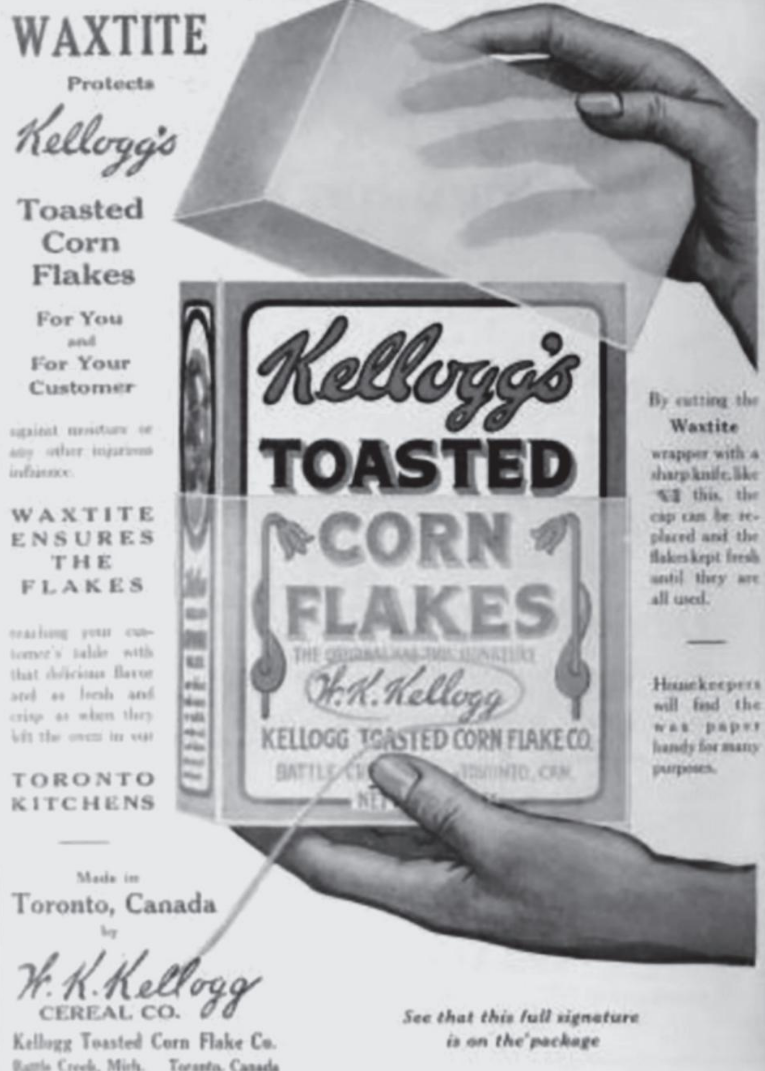
◉ This is an early-twentieth-century print advertisement leaflet for Kellogg’s breakfast cereals. The company’s decision to add cereal-box packaging was influenced by advances in microbiology at the time. It was widely believed that the safety and hygiene of food depended on isolating it from any possible contamination. Yet, as with so much else in industrial capitalism, this safety and hygiene was a perception rather than a fact — a perception that food-industry manufacturers cultivated relentlessly among consumers. Image: Science Popularization Press
This judgement applies equally to mass-produced food in Europe. In industrial cities such as Manchester, workers with scarcely a moment to spare abandoned watercress, fish and other traditional foods in favour of tinned beef and Bird’s Custard, because processed food was simply easier for those with only a few hours of leisure. As it turned out, the time workers saved was later lost: their life expectancy shortened, and many among them fell victim to scurvy, tooth decay and other degenerative diseases.
In Switzerland, food-industry pioneer Julius Maggi persuaded housewives to accept his improved stock cube. Though the stock cube lacked the flavour and nutrition of homemade stock, it proved attractive to modern women working outside the home. The stock cube was a great success, and Maggi founded the eponymous company in Germany in 1897. Convenience triumphed over flavour, and the factory’s unbroken, fixed rhythm of production gradually reshaped people’s daily habits. Time spent cooking could not be spent working and earning. Moreover, industrial production made food cheaper. The industrialist Auguste Cortai, former chef to Italy’s Umberto I, proclaimed in the 1880s: ‘Every day, the great factories provide delicious, freshly prepared and cooked food at the lowest possible price. This will be the dawn of a new era!’
This was the dawn of a new era. The sanitary movement marked a turning point in food production and preservation, for better or worse. It taught ordinary people simple ways to prevent terrible diseases. Though they grew healthier and less prone to illness, they also ceded considerable autonomy in domestic and culinary affairs to the government and to big business. In the realm of humanity’s relationship with microorganisms, the sanitary movement’s predictions and recommendations were absolute and uniform, disregarding individual differences or traditional beliefs.
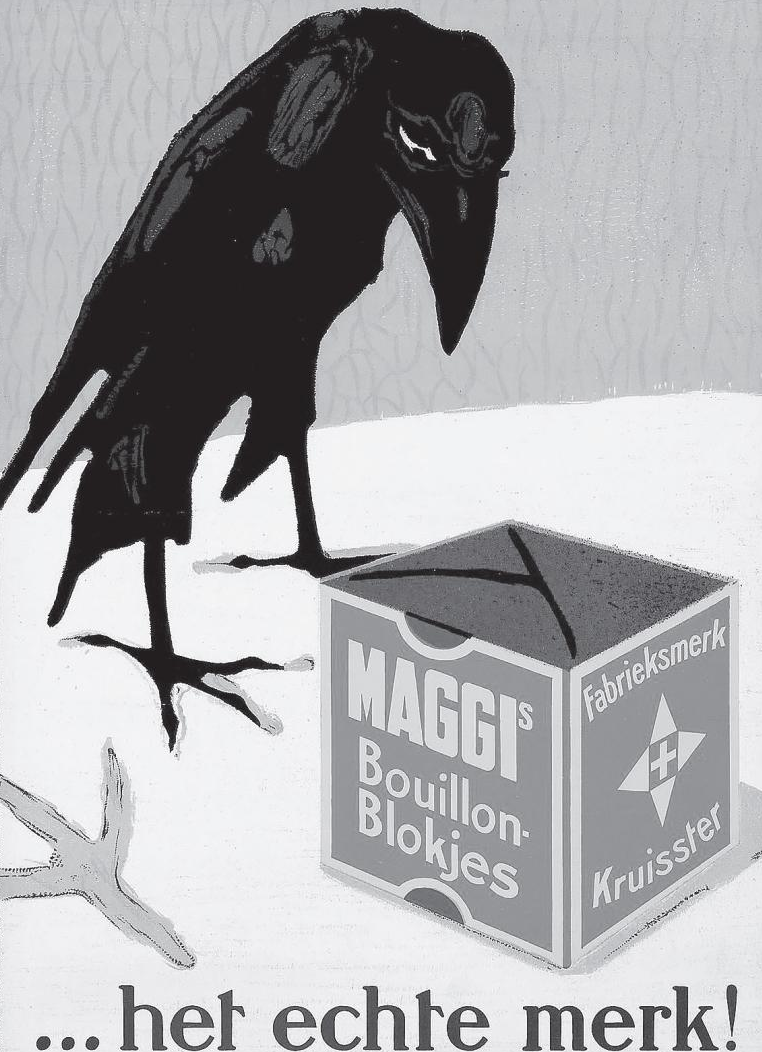
◉ This is an early-twentieth-century Dutch-language print advertisement for Maggi stock cubes. The slogan reads: “…a true brand!” Like other industrial foods, Maggi’s stock cube saved tired housewives time in the kitchen, but this convenience came at the cost of nutrition and flavour. Image: Science Popularization Press
In traditional practice, those somewhat rough-and-ready, culturally specific pieces of advice evoked a sense of creativity in those who followed them, but they have since been replaced by a strict set of fear-based rules (which is why, today, knowledge about how to avoid a cold is far more common than knowledge about baking sourdough or pickling carrots). This fear, as the Loch Maree incident demonstrates, was not unfounded. Whether bacteria, yeast or mould, these tiny, dual-natured organisms can bring both illness and health. In The Pasteurisation of France, the contemporary French sociologist Bruno Latour writes: “Society is not composed of humans alone; microorganisms intervene and act everywhere.” But who can know the intentions of these “agents” lurking unseen?
The Dual Nature of Microorganisms
Before the modern era, no one could have known. To understand the dual nature of microorganisms, we need to grasp something of their biology. Microorganisms are living things too small to be seen with the naked eye. In fact, a single pinhead harbours millions — indeed, even more — of them. Their existence stretches back through immemorial ages. Microorganisms waited billions of years for the humans who would come to accompany them, and once humans are gone, they will most likely endure for billions of years more. They emerged some 4 billion years ago. Earth at that time was nothing like the friendly, temperate world we call home; it was a planet battered by comets, meteors and solar radiation. Beyond these impacts, the Moon orbited much closer than it does today, and its gravity unleashed violent tidal surges. Beneath the turbulent seas, hydrothermal vents released enormous energy. Around these vents lay accumulated sediment rich in substances essential to life. As H. G. Wells, the British pioneer of science fiction, wrote: “a faint glimmer, not yet kindled, in the vast immensity of the void.”
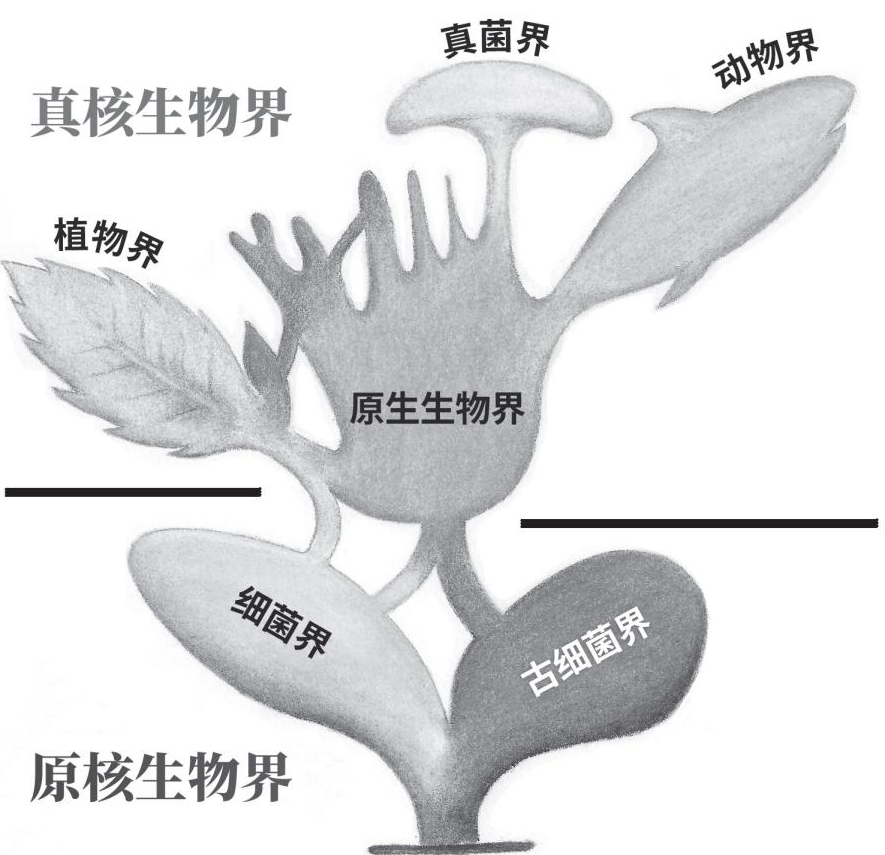
◉ This is a diagram depicting the evolution of life from lower to higher forms. The existence of today’s biological kingdoms owes much to the ancient endosymbiotic origin between bacteria and archaea. This not only made the emergence of more complex life on Earth possible, it also helped the planet become hospitable to a wide range of life forms. Image: Science Popularization Press
Though not yet kindled, life nonetheless took root in the form of primitive cells. Even billions of years ago, as Earth cooled from its scorching beginnings, life continued to flourish and grow ever more diverse. It evolved into two markedly distinct single-celled forms: bacteria and archaea. Bacteria possess cell walls but lack a nucleus. Archaea are similar in size to bacteria and equally simple in structure, yet, unlike bacteria, they have a more complex genome and a wider range of metabolic pathways. While both bacteria and archaea can harness solar energy, the latter, compared with the former, tend to favour environments that would be hostile to most other life. Beyond these differences, the two share a deep kinship.
According to the mainstream endosymbiotic theory, archaea at some point engulfed bacteria without destroying them, and the two merged to form eukaryotes — cells and organisms with a clearly defined nucleus containing DNA organised into chromosomes (we humans are eukaryotes). Because the bacteria supplied additional energy, this new symbiotic form could grow larger, accumulate more genes and become increasingly complex. The waste product of this evolved form — oxygen — in turn created the conditions for a greater diversification of life.
Microorganisms are found everywhere and play a part in every biological process. They sustain the world’s ecosystems and contribute to the health of the creatures that inhabit them. They break down the dead and rescue the living. Yet, when conditions are right, they also bring disease, famine and death.
Around 39 trillion microorganisms live inside us, yet we understand only a fraction of their roles and duties. We know that many microorganisms bolster the immune system, regulate blood sugar, aid digestion and make countless other contributions to our health and well-being. For our part, humans have learned to harness microorganisms to increase our food supply, making food more nutritious and more delicious. We domesticate microorganisms much as we domesticated cattle and sheep, to sustain ourselves.
But what are we to microorganisms? This unsettling question still has no answer, and the motivations of these invisible life forms remain unknown. In 1891, Professor Percy Frankland observed that they “swarm abundantly in every environment around us, possessing extraordinary potential for both good and evil. At times they act as our friends and faithful servants, performing without complaint the tasks assigned to them; at other times they resist us as implacable enemies, scorning our strength and ingenuity.” We expend as much effort combating the microorganisms that cause disease and death and destroy the fruits of our labour, as we do cultivating those that bring health and happiness. We strive to domesticate microorganisms, lest we become their “colony”.
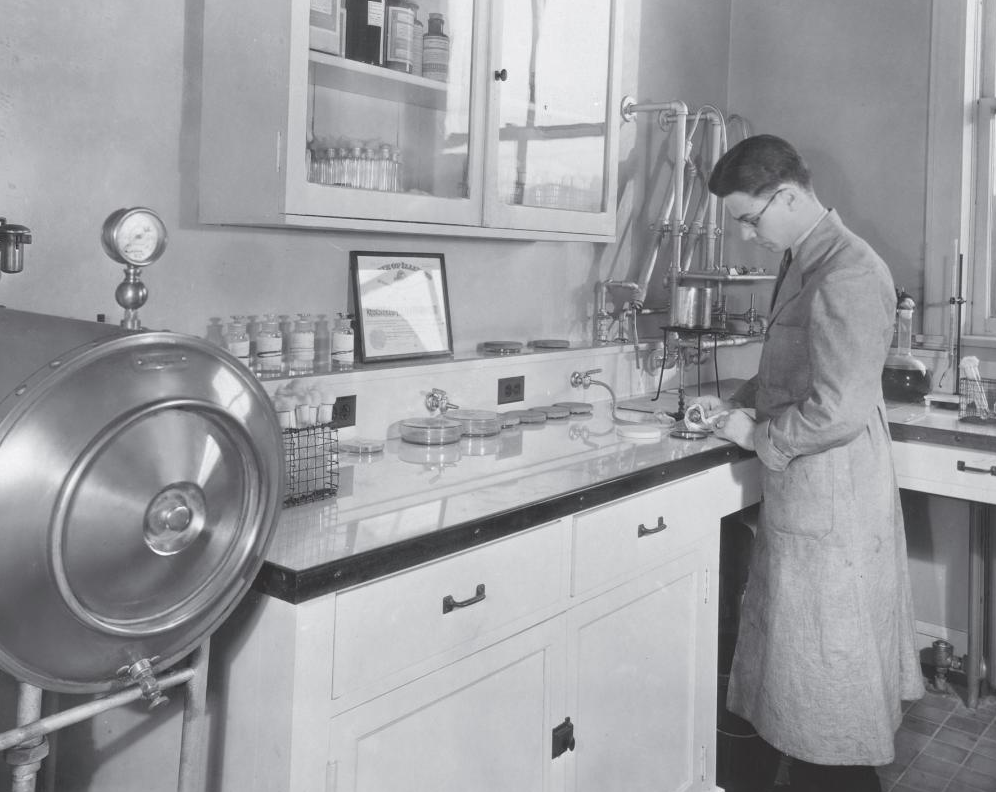
◉ This is the bacterial analysis laboratory of the Dearborn Chemical Company in Chicago, United States, photographed circa 1930. The scientific community of the early and mid-twentieth century held a rather alarmist view of microorganisms — one that largely undermined the continuation of ancient fermentation methods. In recent decades, however, there has been a renewed interest in the role microorganisms play in human health, longevity and well-being. Image: Science Popularization Press
Happily, as the English novelist Thomas Hardy wrote, these unceasing struggles make for “a very beautiful history” — and quite a few delicious foods besides. But before we sit down to eat, we ought first to think about drinks, for a considerable proportion of early fermented products appeared in the form of alcoholic beverages.

▼
Click the image to read the related article