Are There Food-Delivery Wars Abroad? The Answer from a Roujiamo Shop Owner in Britain

This year marks my seventh year living in Britain. Six years ago, in a small town in the city of Exeter, I opened a roujiamo shop and named it Rogamo. That name has nearly become the generic English word for roujiamo.
Before Rogamo, I had already spent ten years in the restaurant business back home. When I opened my first shop in Beijing, group buying—the precursor to food delivery—had just begun to take off in China. The Hundred Group Buying War was in full swing at the time. Every day, canvassers would sweep through the streets and come into the shop, trying to sign us up for group-buy deals while dangling all kinds of subsidies to lure both consumers and merchants. In hindsight, the Hundred Group Buying War was the forerunner of the food-delivery wars, and the beginning of countless merchants being swept into the platform economy.
As an entrepreneur who entered the food industry back in 2010, I could say I have been dealing with food delivery all along, and I have watched every step of how delivery platforms went from a parasitic presence to gradually gaining the upper hand over the restaurant trade. Rogamo is now listed on delivery platforms too, but food delivery in Britain is very different from that in China.
This dynamic, comparative perspective has helped me realise that, after several subsidy wars, the food-delivery industry in China—platforms, merchants and consumers alike—has forgotten that delivery was originally just a simple service of getting food to a customer’s door, one that should follow the principle of “whoever enjoys it, pays the bill.”
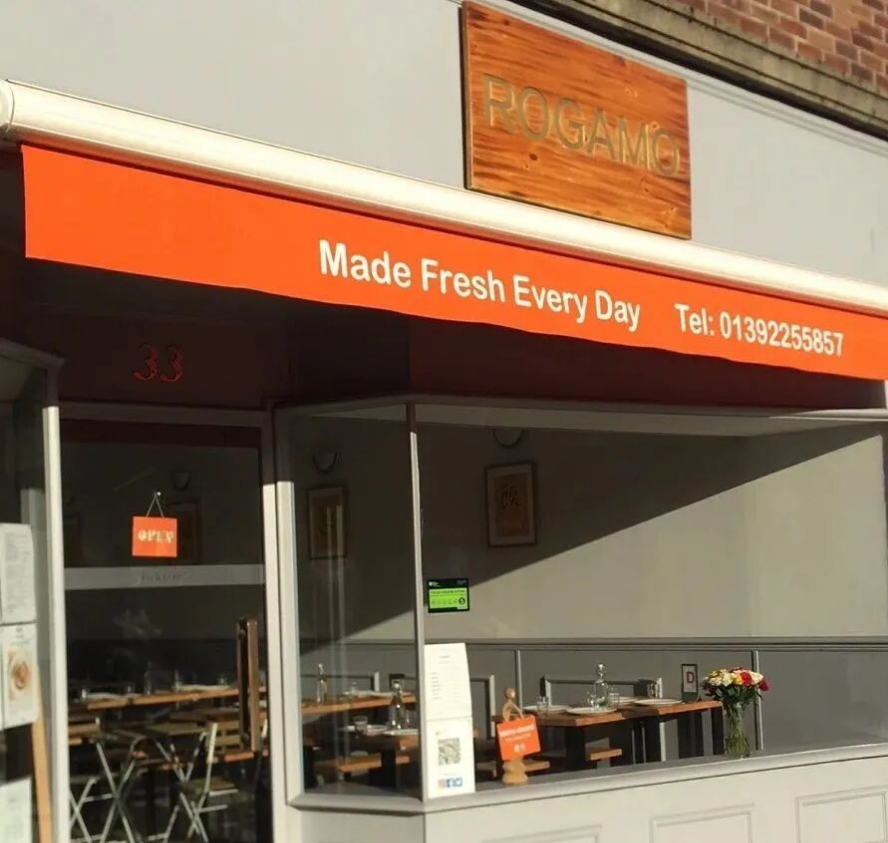
◉ Rogamo shop.
What Is “Whoever Enjoys It, Pays the Bill”?
One afternoon last month, in the heart of the commercial district in Canary Wharf, London—when you would expect it to be peak delivery time—my friend and I did not see a single delivery rider.
In the small town where I live, the main commercial area has plenty of chain restaurants—well-executed Asian-fusion places like Wagamama and Pho. On a Sunday two weeks ago, I went there for pho, and during the two hours I was dining, I did not hear the shop’s delivery-order device go off once, nor did I see a single delivery rider weaving through the streets of the commercial district.

◉ The main street in the town where Rogamo is located.
In other words, food delivery in Britain has not become “advanced” to the point where, as in China, traces of delivery pervade every street and alley at all hours.
There are four main delivery platforms in Britain: Deliveroo, Uber Eats, Just Eat and Hungry Panda—all foreign companies.
Hungry Panda—熊猫外卖 in Chinese—was founded in Britain by a Chinese student. From the orders at our shop, you can tell that most people ordering through Hungry Panda are Chinese students. Our store sits directly opposite a number of the apartment blocks where students live. Delivery riders frequently come to pick up orders, park at the shop’s front door and walk the food to the students. Yet the students still prefer to order delivery to their apartments.
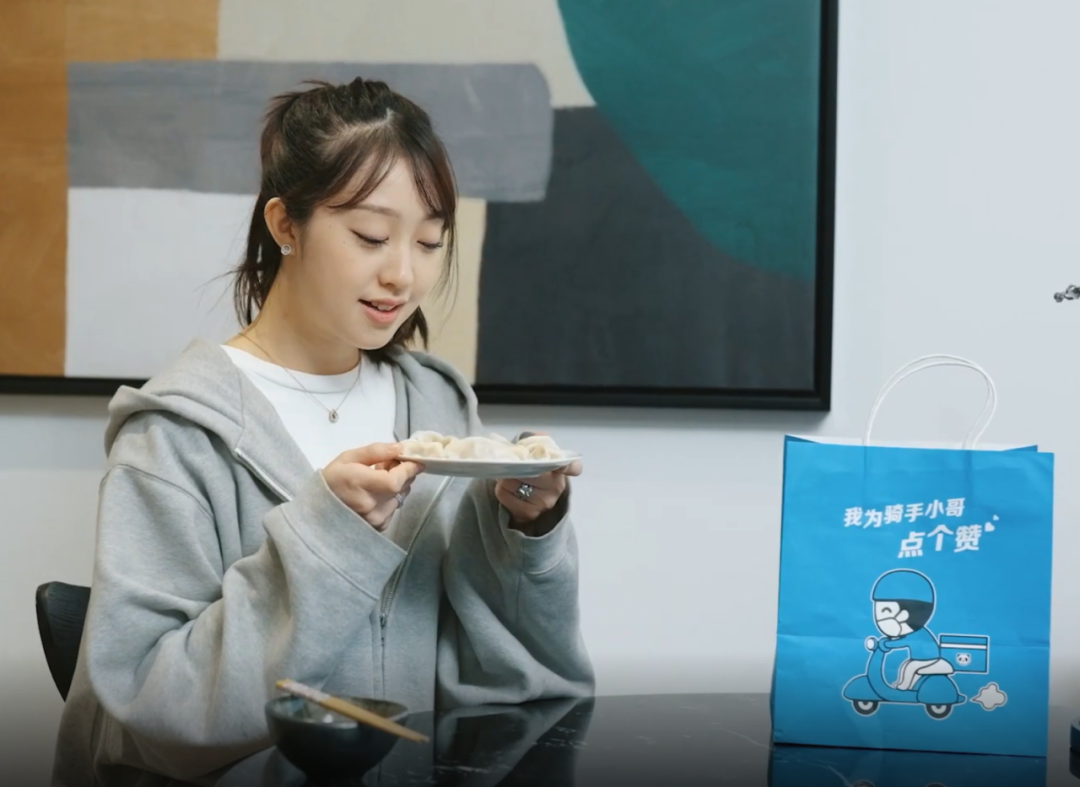
◉ Hungry Panda is a Chinese food delivery platform targeting overseas Chinese and international students. Pictured: a screenshot from a Hungry Panda video ad. Source: Hungry Panda’s official website.
To be honest, I would rather they came and ate in the shop. It is not just that a piping-hot, freshly made product gives a far better eating experience. The crucial point is that for us merchants, the same order—delivered versus dine-in—means a very different amount ends up in our pockets. British delivery platforms charge us small restaurant owners a fee of 35% plus VAT. What comes back to our account is only 58% of the order value.
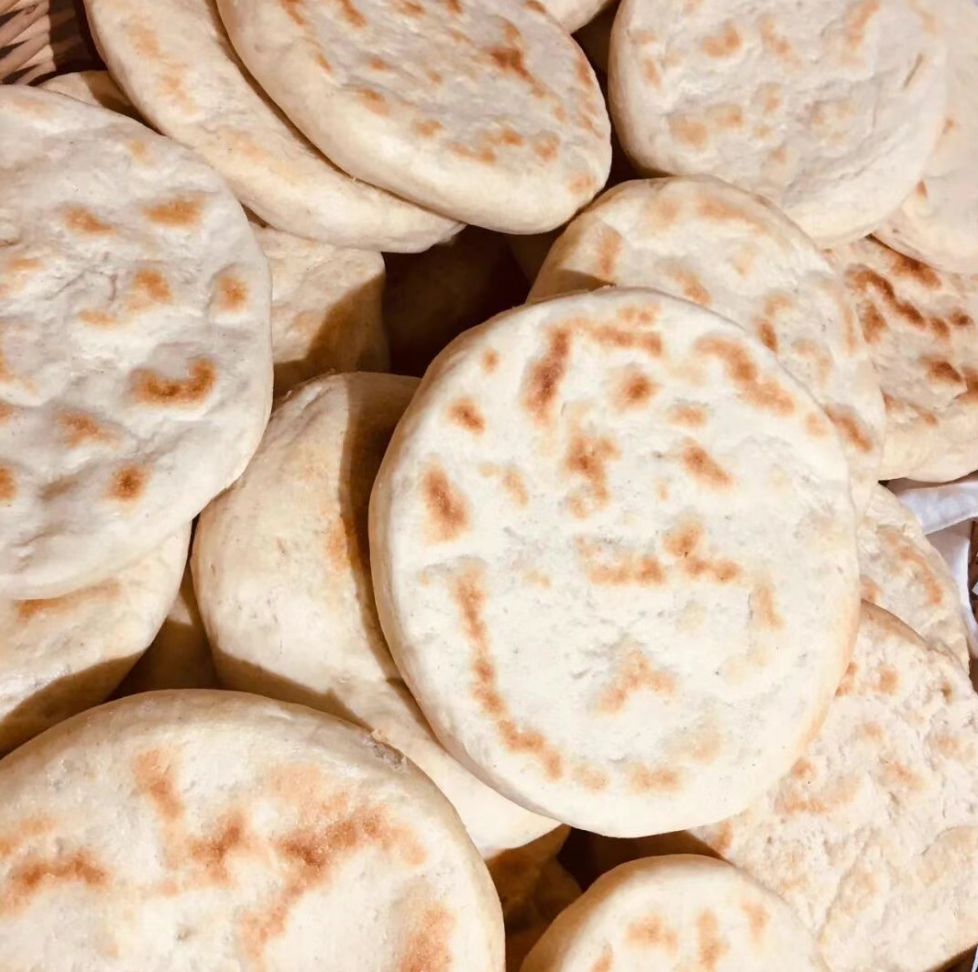
◉ A freshly baked, piping-hot bun.
However, I will not do what many merchants in China do—set the delivery price at or even below the dine-in price, despite the platform’s commission already being sky-high. Even taking into account the need to maintain a presence on the platforms and draw customers into the restaurant, we still mark up the delivery price by 20%, so that we lose a little less. I have had brief conversations with some of the excellent restaurant owners in our small town, and their prices on delivery platforms are also higher than in the shop. That is a cost the customer needs to bear.
This is what I mean by the principle of “whoever enjoys it, pays the bill”: if you want to spend less, come to the shop; if you want the convenience, you must pay the price of that convenience. It is three or five minutes from the apartment to the shop—just a two-minute walk. If customers insist on enjoying that delivery service, they should pay the costs it entails—to the rider and to the platform.
For us merchants, costs are fixed. Rent, staff wages, utilities and all the other outgoings do not shrink simply because a customer chooses to order delivery. So in my logic, the extra costs that come with delivery orders should be borne by the customer.
On the Food-Delivery Wars
Last year, when Meituan, JD.com and Taobao Flash Purchase were locked in a three-way fight, I followed the whole thing closely as a fellow restaurant entrepreneur. From my experience of food delivery in the UK, I can offer a comparative perspective.
Over these six years, I have not seen any of the UK platforms engage in anything resembling a turf war, so there have been no elaborate subsidy campaigns. I mentioned earlier that British delivery platforms charge a commission of 35%. Many people assume that is far higher than the commission rates on Chinese platforms. But back in China, on top of the headline 20–25% commission, platforms push all kinds of mega-voucher promotions onto merchants, who end up shouldering most of the cost. If you do the maths, the money that actually lands in the account is probably not far off what I get here.
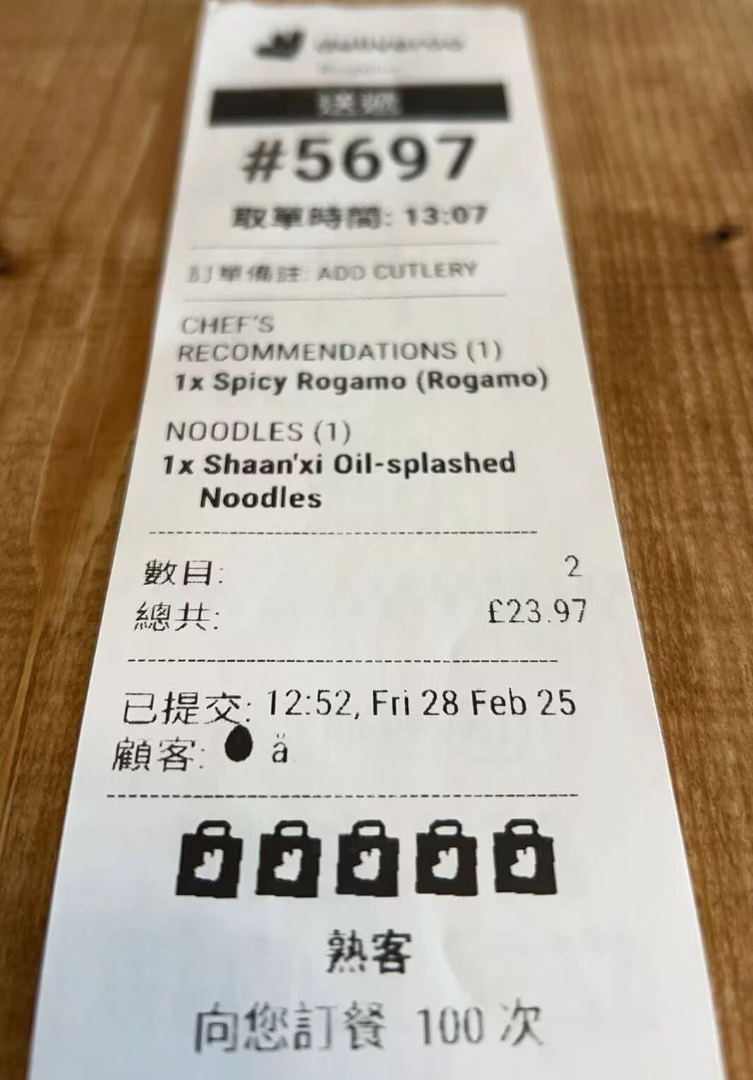
◉ A delivery order from Rogamo.
So the key difference is this: the operating model of British delivery platforms is clear and straightforward. It is, at heart, a delivery service—I bring the food to your door, and you pay for that delivery. A commission from the merchant, a delivery fee charged to the customer, and that is the end of it. No convoluted tricks or hidden games.
This is how a delivery platform should logically work, not the way Chinese platforms operate: first comes a flood of subsidies to lock everyone in, and many merchants whose normal cost structures were thrown off balance by those subsidies die the moment the platform cuts them off;
then the platform demands that merchants subsidise customers alongside them to attract new users, forcing merchants to hand back the subsidies they had previously received; and then, eventually, the platform stops subsidising entirely and only the merchants are left footing the bill. You refuse to subsidise? Then customers simply switch to another shop on the platform. By the time people wake up to this, it is already too late. Every merchant on the platform has been firmly locked in, with zero bargaining power. Only the big-name restaurant brands—those the platforms need to attract and retain traffic—get a little room to negotiate.
And finally, the platform makes you buy traffic and pay for search rankings, so that your shop has a chance of appearing near the top of the delivery page. Otherwise, by the time a customer happens to scroll past your listing, the moment will have long since passed.
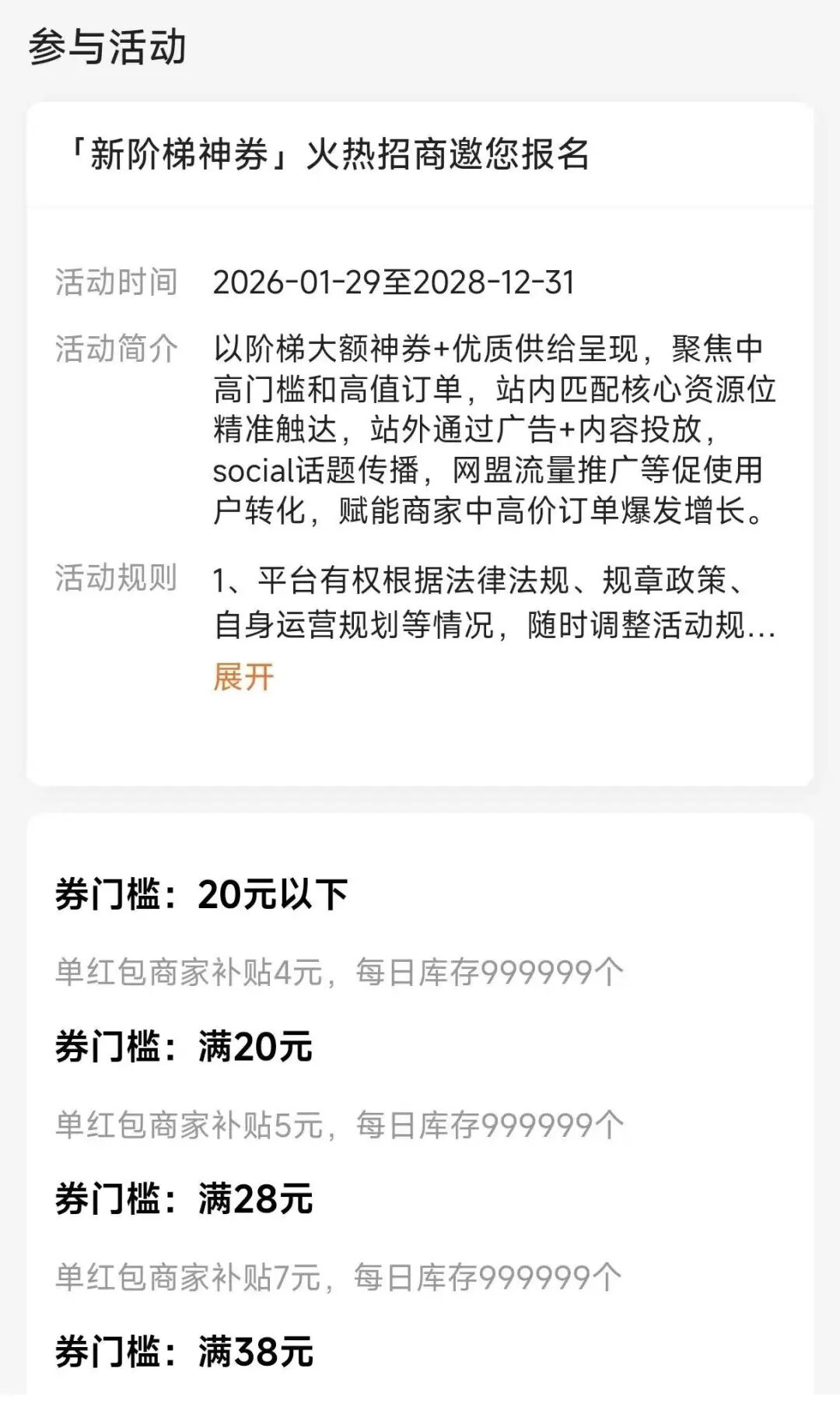
◉ Pictured: Meituan’s recently launched Tiered Mega-Voucher campaign, which subdivided the original five- or six-tier mega-voucher structure into nine tiers spanning ¥0 to ¥128, with the merchant contribution range adjusted to ¥5–¥22. A research team has pointed out that the core of this adjustment is not whether the tiers have been refined, but that the platform has shifted subsidy costs further onto merchants by adding additional tiers. Source: screenshot from the Meituan app
Having dealt with the platforms from the group-buying era right through to today, I see it very clearly. During the Hundred Group Buying War, I told the canvassers who came into my shop: “I already have the foot traffic. It is your platform that wants to acquire users through my shop, so you should be paying me.”
Six years ago, the day Rogamo opened, we went live on all four UK platforms. And yet, to this day, I have never done a single promotional campaign—whether for dine-in or delivery—and there are no discounts or special offers. Hungry Panda’s joint merchant promotions come to me every time, inviting us to take part. I have never joined any of them. I said: “If the platform wants to subsidise customers, go right ahead. But if you want merchants to foot the bill, I will not take part.”
Users attracted by discounts, subsidies and markdowns are almost always empty calories—they place an order because they want a bargain, not because your food is good. After more than a decade in the restaurant trade, I know that once those customers have enjoyed their deal, they rarely come back. Some even leave negative reviews. It simply is not worth it. The customers who genuinely love you do so because your food tastes good. All our regulars come through word of mouth, and now and then someone will take a two-hour train from London just to eat here.
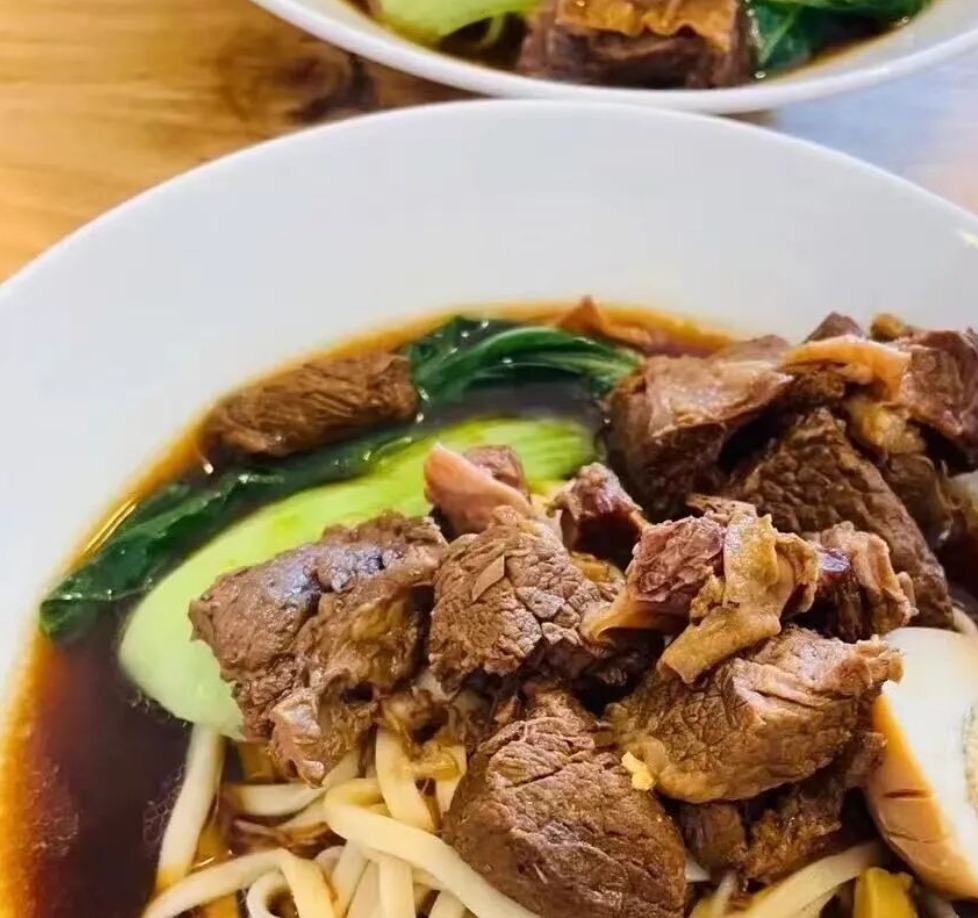
◉ There is a young man who comes in four or five times a week—we are open six days a week—and every time he orders the same thing: a bowl of Braised beef noodle soup and a small dish of hot chili oil. One day he said to me in Chinese, “This is my absolute favourite—No.1.”
For certain special dishes, such as pork intestine noodles or the occasional pot of traditional Beijing stewed offal, I do not list them on the platforms. If you want them, come to the shop. The main reason is that once you add 20% on top, the online price becomes too steep. Students who come in to dine in and see that the same dish is cheaper than the delivery price tend to make the effort to visit, and the experience is far better than a takeaway. In my philosophy of running a restaurant, the traffic should come from the food itself, not from platforms or subsidies.
Of course, this logic only holds on the premise that British delivery platforms have not developed to the point of being able to completely control access to both users and merchants. That may have to do with factors such as Britain not having a labour pool as vast and cheap as China’s, the restaurant industry being more concentrated, and many chain restaurants running their own delivery services. But regardless, in this context we can recognise that the food-delivery industry does not have to be built on holding both merchants’ livelihoods and consumers’ health hostage to a platform’s logic of traffic and profit.
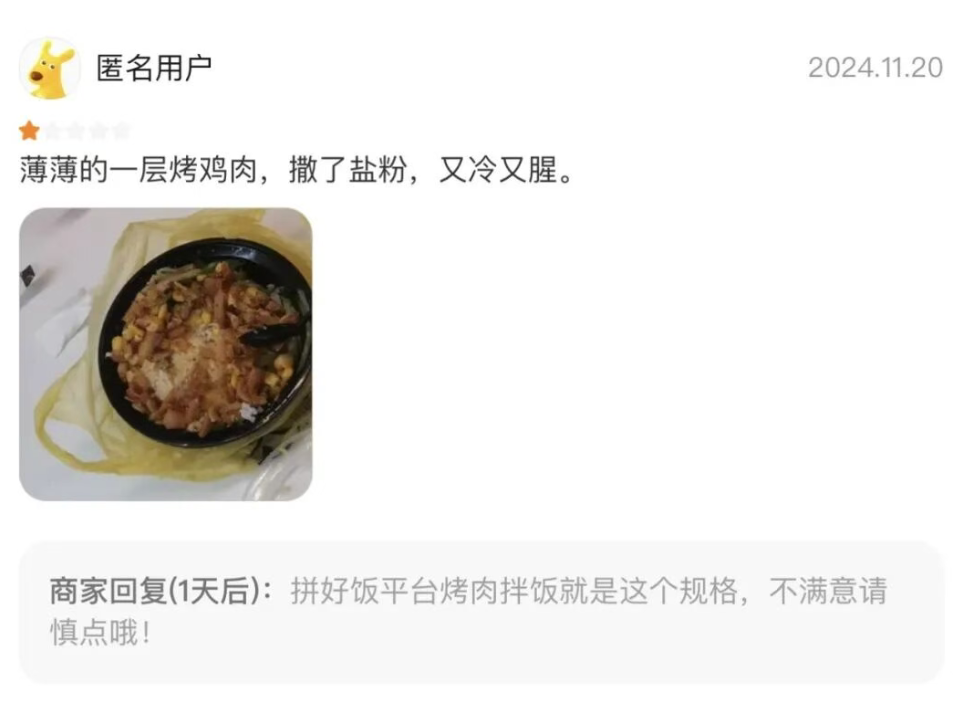
◉ Meituan’s “Pin Hao Fan” uses traffic as a weapon to drive prices down, forcing merchants to cut corners on ingredients. Pictured: user feedback and merchant responses about Pin Hao Fan. Foodthink previously described and analysed this budget food-delivery model in the article “Who Gets a Good Meal from Pin Hao Fan?”. Source: screenshot from the Meituan app
One could say that China’s food-delivery industry was, over the past decade or so, forced into existence by abnormal subsidy wars. A decade of that has made us forget what a normal food-delivery model should look like. But as an industry that concerns people’s livelihood and health, it is truly time we stopped and thought about how food delivery should develop.
Taking It Slow Is Quite Nice
In the UK, click-and-collect—placing an order online or in person and then coming to pick it up yourself—is a very long-standing tradition. Customers phone their order to the shop, and once it is ready, they come in, collect it and pay. The merchant’s only job is to cook the food well and pack it up. Even now, when delivery platforms have penetrated deep into rural Britain, there are still plenty of takeaway shops that operate on this phone-in model.
Just Eat still offers a great deal of this kind of service, connecting hundreds of such takeaway shops. Customers can order online, but they still collect in person. To this day, I believe this is an excellent business model for a restaurant, because a shop’s effective service radius is really only a few kilometres around it. For the merchant, the task is to focus on making the food well and leave everything else to the customer.
Think back to the five to ten years before delivery platforms appeared. Daily meals and the pace of life in China were nowhere near as rushed as they are now. I was working at a newspaper in China at the time, and when we were too busy to head downstairs for a meal, we would order in. Back then, we didn’t call it delivery—we called it takeaway. The operation was refreshingly simple: restaurants nearby would drop off menus and flyers at the office, we would phone in our order, the restaurant would write it down, and once it was ready, we could collect it ourselves or the restaurant would bring it over. The quality of that food was exactly the same as a dine-in meal.
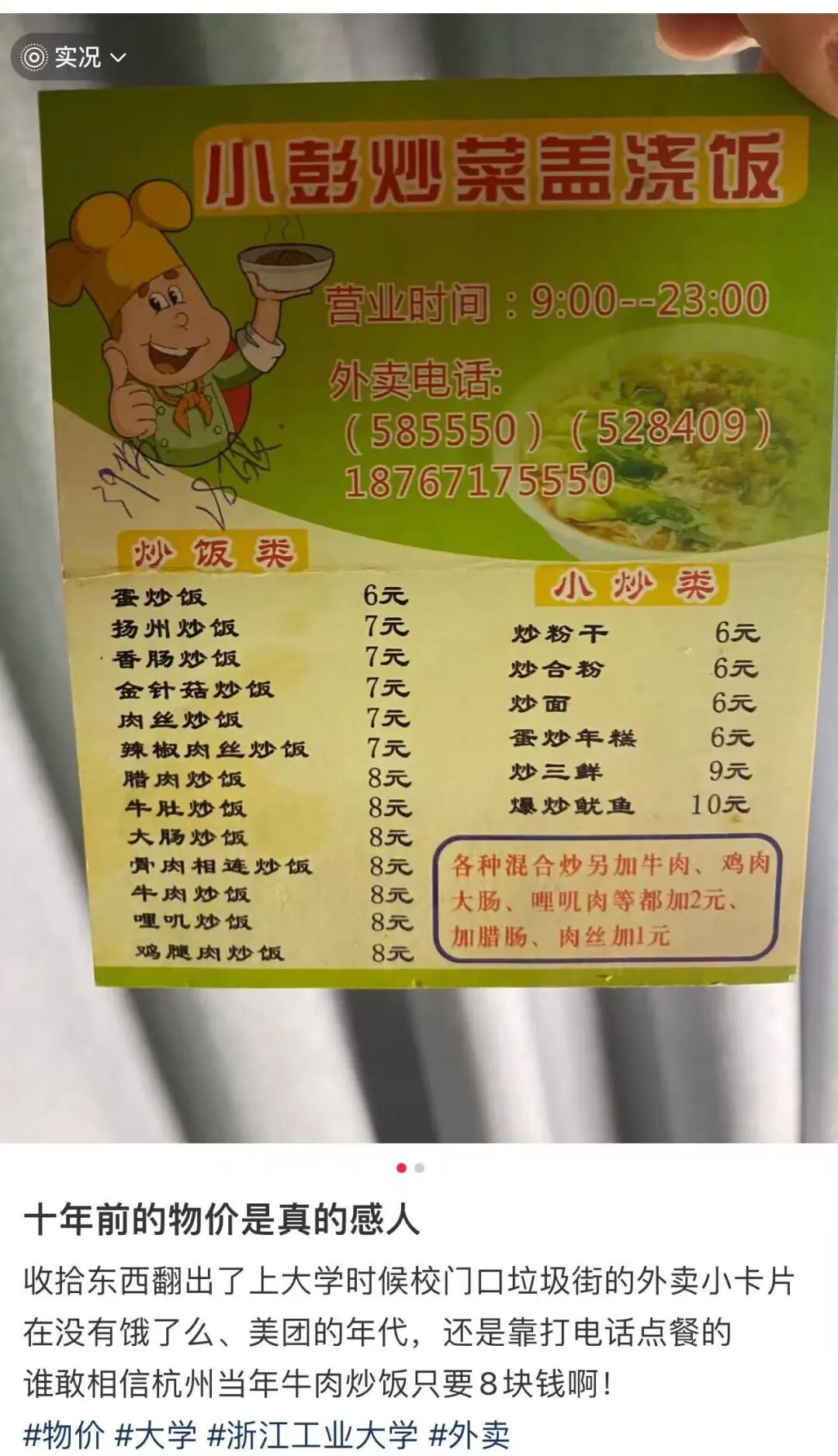
◉ A social media user shared a flyer from years ago for a shop that used to deliver its own takeaway orders. Image source: Xiaohongshu @叶不羞的修
Now the pace of meals and life itself has been wound up ever faster by the delivery platforms. Under the platforms’ irrational competition, what used to be an hour’s delivery window has been gradually squeezed down to forty minutes, even half an hour. The cost is the riders’ safety and a growing tide of traffic accidents.
Speaking of riders, in the five or six years I have been running the shop in this small town, well over a hundred delivery riders have passed through, and I know most of them well. I sometimes wonder whether UK delivery riders’ delivery times are also strictly dictated by algorithms. Do they get docked pay for mistakes? From what I can see, the riders here work at a leisurely pace and are never in a hurry when delivering.
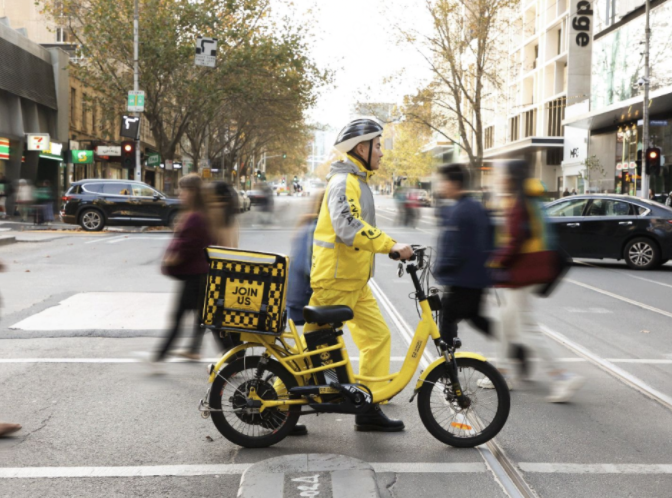
◉ A Hungry Panda delivery rider completing an order. Image source: Hungry Panda website
The people in this small town take their time eating, too, and they have gradually come to love the taste of roujiamo. I take my time cooking as well, practising my philosophy of food at my own unhurried pace. And just like that, taking it slow—quite nice.
– This is Foodthink’s 806th original article –
Foodthink
Author
Ru Tongxue
A restaurant entrepreneur with over a decade of experience, currently writing a book called Selling Roujiamo in Britain.
Editor: Yuyang
Layout: Minglin
▼
Click the image to read related articles