What Kind of Farmer Isn’t Fazed by Falling Rice Prices?

Foodthink Says
Across the world, large-scale, mechanised farming has displaced many crop varieties that once thrived along field margins, replacing them with a handful of high-yielding monocultures. Smallholder farming culture seems to have become nothing more than agricultural heritage — destined to be swept away by the times. But is that really the case? Last September, as Thai rice prices hit rock bottom, Foodthink followed its partners at Towards Organic Asia into northeastern Thailand and glimpsed another possibility for a commoditised smallholder economy.
Falling Rice Prices, Vanishing Varieties
Before the story itself, a little background. Thailand is the world’s second-largest rice exporter, yet selling rice has become ever more difficult: the steep rise in US tariffs has hit sales of premium Thai jasmine rice, while India’s resumption of rice exports has intensified international competition. Earlier in 2025, the average paddy price in Thailand fell by around 30% year on year, to just over 2,000 yuan per tonne.
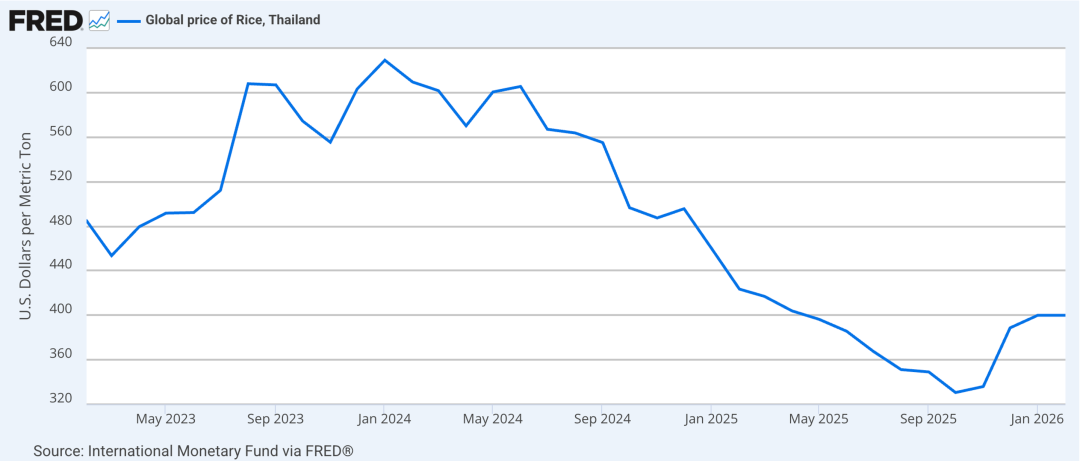
◉ Thai rice prices fell from nearly USD 640 per tonne in early 2024 to USD 320 per tonne in September 2025. Image source: IMF
Alongside overproduction and cut-throat competition within the industry, many local rice varieties have also disappeared. The northeastern region is Thailand’s principal grain-producing area. Rice cultivation there originally centred on farmer-saved seed and local varieties — cultivars well adapted to local ecological conditions, requiring few newer technologies or agricultural inputs, though with lower yields and limited commercial viability. From the latter decades of the twentieth century onward, the Thai government’s drive towards agricultural modernisation and market integration saw high-yielding varieties developed by international and government institutions spread rapidly through agricultural extension stations and subsidy schemes. In particular, improved varieties suited to local ecological conditions gradually displaced traditional farmer varieties. As late as 2000, 43% of farming households were still growing local, traditional varieties; by 2009 that figure had fallen to just 11%.
Smallholder farmers sit at the far end of the value chain: the varieties they grow are dictated by international market demand and policy subsidies. Thailand’s export market pushes farmers towards one of two options — grow soft glutinous fragrant rice with varietal purity certification for high-value export to the United States, or grow hybrid, high-yielding common long-grain rice for export to the Middle East. Yet when competition in the export rice market intensifies, farmers cannot simply switch to another variety overnight. Thai fragrant rice, for instance, commands a high premium, but it depends heavily on rainfall and light saline-alkaline soils in the northeast and is a photoperiod-sensitive, low-yielding, late-maturing variety subject to wide yield fluctuations — conditions that most smallholders cannot meet. They can barely sustain their livelihoods by constantly pushing for higher yields on the varieties they already grow. This means ever greater inputs of labour and agricultural resources, with diminishing marginal returns.
Isn’t this a vicious circle? Yet one village in Thailand shattered our pessimistic expectations.
Farmers, Too, Can Breed Cooperatively
In late September 2025, we joined partners from across Southeast Asia who care about the environment and community, and made our way to Khok Sa-at village in northeastern Thailand (hereafter K village). There we found a group of farmers who neither grow export varieties nor farm at scale — and yet are doing remarkably well.
In K Village, the farmers use farmyard manure in place of chemical fertilisers and pesticides, persist in self-breeding and saving seed of traditional rice varieties, and sow and reap entirely by hand. Set against the logic of large-scale, capital-intensive, industrialised modern agriculture, K Village reads like a paragon of a pre-modern farming society. Far from being squeezed out by commercial society, we found them free of any survival pressure at all. Without going head to head with mainstream markets, how do they still turn a profit — and what exactly are their methods?
K Village sits more than 70 kilometres west of the Mekong River. It is a traditional farming village, well known in the surrounding area for conserving local heritage rice varieties. A young villager called Aew finished his studies and went on to work as an environmental journalist, travelling widely. More than a decade ago, after learning that Thailand is home to over 5,000 rice varieties, he began collecting old seeds from farmers across the northeast. In the first year, Aew managed to gather just five paddy rice varieties; the next year that number grew to more than a dozen; and over time he has pieced together more than 250 rice varieties from provinces throughout the region.
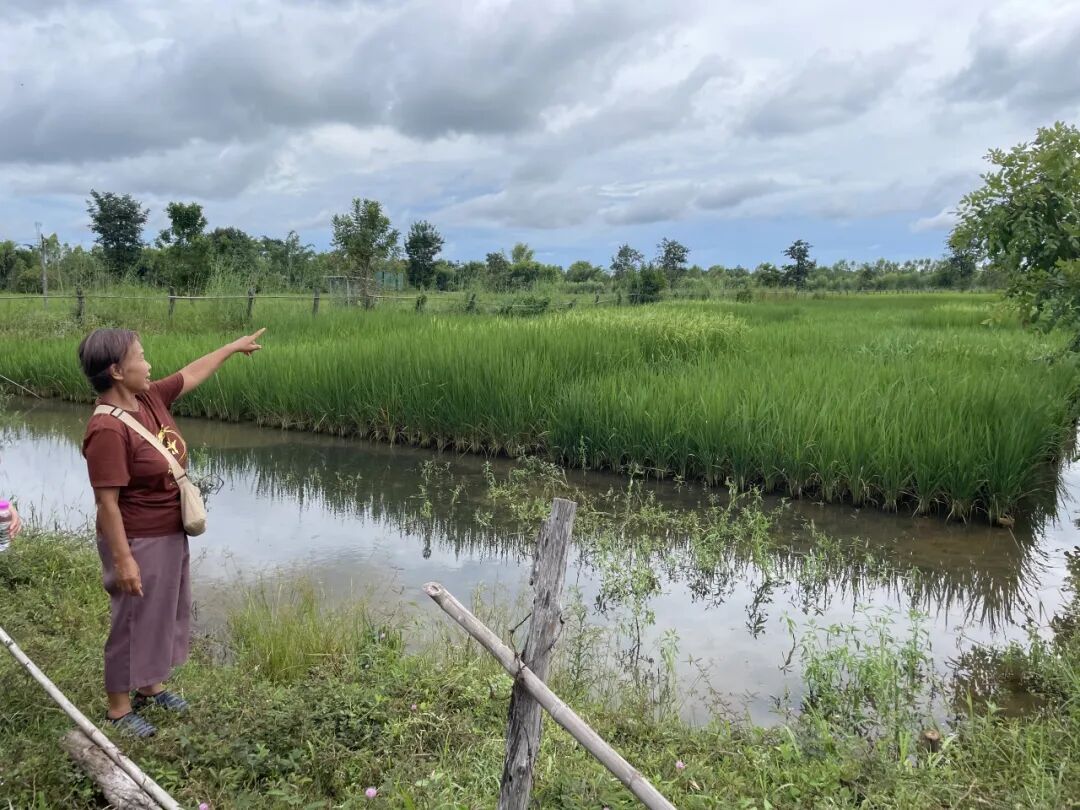
◉ A breeding team member tending her family’s paddy field. She is trialling the propagation of K Village’s flagship rice variety.
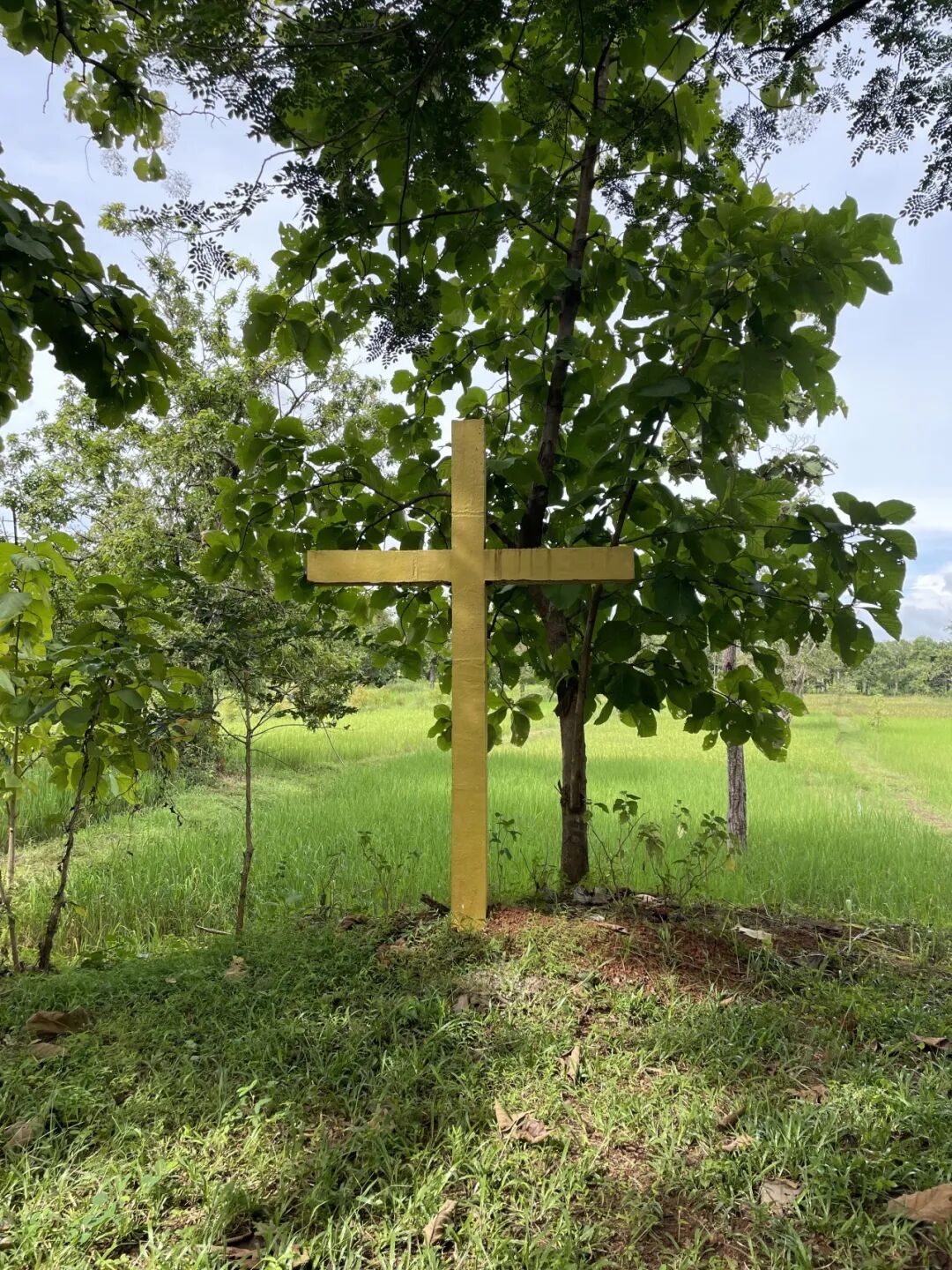
◉ A cross on the earthen bank of the seed production trial plot. Most of the villagers are Christians.
Conserving heritage rice is about far more than collecting seeds. Aew also urged farming households in his village to start saving and breeding their own seed. Rice group members observe which varieties tiller well — a single seed producing ten to twenty plants (and sometimes as many as sixty) — and examine the tillering characteristics of each panicle: whether the grains are densely set, evenly spaced, and whether the panicle has an attractive shape — all to single out the highest-yielding candidates. The village now has a communal paddy, owned by the local church, which has been turned into a trial field growing more than 200 local rice varieties. The whole plot is tended on a voluntary basis by fifteen members of the breeding team. At the Farmer Field School they exchange techniques and, through repeated trial and error, transplant the varieties they favour and find best suited into their own paddy fields. Over the past seven years, the breeding team has also been working, with the help of local research institutions, to develop a flagship variety for K Village, expected to reach the market in another three years.
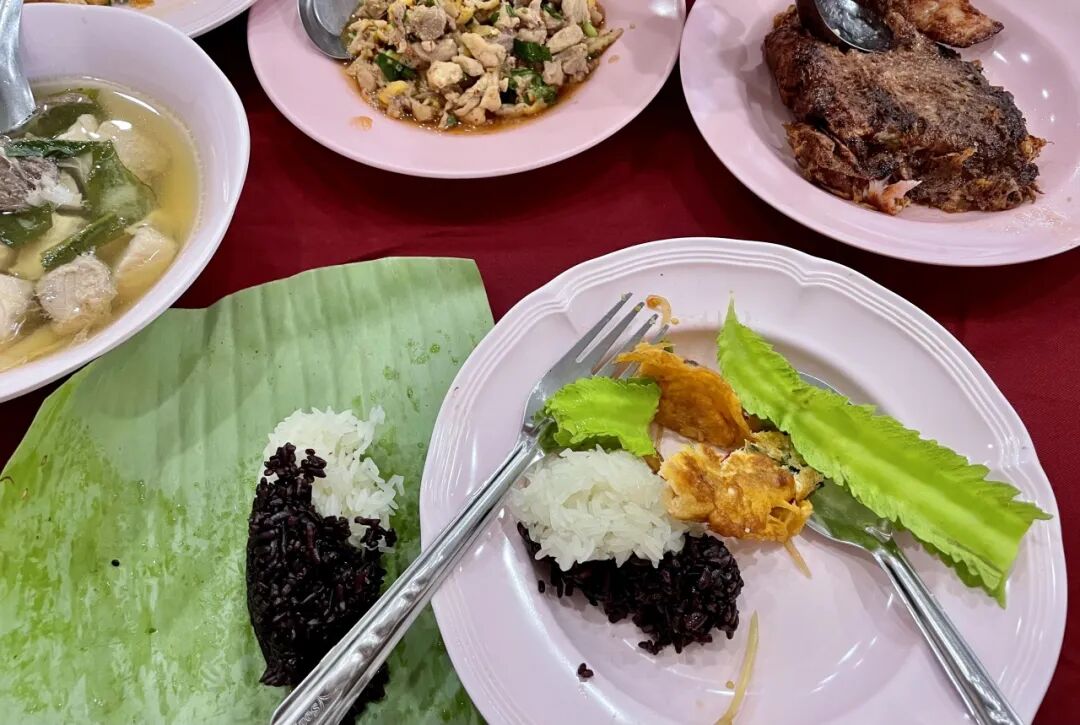
◉ At midday, the women members wrapped parcels of small black rice and red rice in banana leaf for us.
We were fortunate enough to taste both small black rice and red rice in a single meal — both celebrated local heritage varieties. The black rice grains are short, keep their shape well when cooked, and have a satisfying chew; they are so fragrant you could eat them plain. The red rice, once cooked, is comparatively soft and fluffy and easier to digest — a good way to temper a green papaya salad hot enough to make your soul leave your body. Though rain-fed rice falls short of irrigated paddy on yield, its flavour is all the richer for the difference.
Can Old Seeds Alone Still Yield a Bumper Harvest?
But can a life that looks so much like a pastoral idyll — growing nothing but heritage rice — actually turn a profit?
Beyond not needing to buy seed from outside every year, K Village enjoys two further advantages: land and labour.
First, land. More than 40% of Thailand’s farmers do not own their own land and must rent it to farm. These farmers grow three cropping seasons of rice a year, yet often still cannot make ends meet — the outlay on seed, pesticides, fertiliser and machinery leaves them deeply in debt.
K Village’s advantage is that the land is owner-held — some of it passed down through generations — with well-established water management arrangements. The local farmers are intimately familiar with the surrounding ecology and can select varieties suited to the local climate. Alongside the village’s paddy fields stands a dipterocarp forest whose extensive root systems retain water, reduce soil erosion, and regulate runoff. K Village’s land is dryland; the farmers can grow only one season of rice a year, during the wet months from May to October. In the low-lying areas they plant varieties that bear abundant panicles, have a long growing period, and demand plenty of water; on the slopes they grow upland rice varieties that mature faster but bear fewer panicles. I have heard of similar practices in the mountainous areas of Yunnan. The paddy is watered by rain, pond water, or reservoir storage — no need to divert water, drill wells, or dig canals. After the rice harvest, the climate turns relatively dry, and the farmers rotate in pumpkins or other crops with comparatively low water demands, rather than forcing a double-cropped rice season.
Next, labour. Once Thai rice farmers began growing uniform varieties geared towards export, peak-season work demanded ever greater density and intensity of labour; transplanting, spraying and harvesting gradually shifted to specialist agricultural machinery service teams. Farm work was quietly turning from a family obligation into a market service you could simply buy.
K Village, however, still follows traditional farming methods and does not require the dense, seasonal labour of modern monoculture. They need no hired workers from outside; at peak times the group members simply swap labour with one another. The rice group also buys no external pesticides or chemical fertilisers — they use plastic scarecrows to deter sparrows and their own cattle manure as fertiliser.
With no pressure to chase yield, the farmers are free of the burden of debt repayment and rent, and practising diversified cropping becomes far easier. No land rent to fret over, no agricultural inputs to purchase — the cost of rice production can be remarkably low. Once production costs drop, growing heritage varieties with ecological methods ceases to feel like such a struggle.
The Role of the Credit Cooperative
Yet low production costs alone do not guarantee a profitable enterprise. Why is it that, after having tasted the export route, the farmers still choose to grow heritage varieties — lower yielding, with narrower sales channels — over Thai fragrant rice, the most reliable crop on the international market?
This brings us to the question of whether there is enough money. Unlike an ordinary rural enterprise, the Hom Dok Hung Rice Cooperative (hereafter the Cooperative) was established with the backing of K Village’s Credit Cooperative (hereafter the Credit Co-op). When the Credit Co-op was founded more than forty years ago, it had just seventeen members. It has since grown to nearly 3,000 members drawn from twenty-one nearby villages, with total assets exceeding THB 117 million — approximately RMB 23 million.
It is worth pausing here to explain the relationship between an agricultural cooperative and a credit cooperative. Both are organisations in which members pool their capital, share the returns, and participate jointly in decision-making. An agricultural cooperative’s work centres on cultivation, the sale and processing of farm produce. A credit cooperative provides financial services — savings, loans, and payment settlement. In K Village, the Cooperative and the Credit Co-op operate independently in name, yet there is considerable movement of funds and people between them.
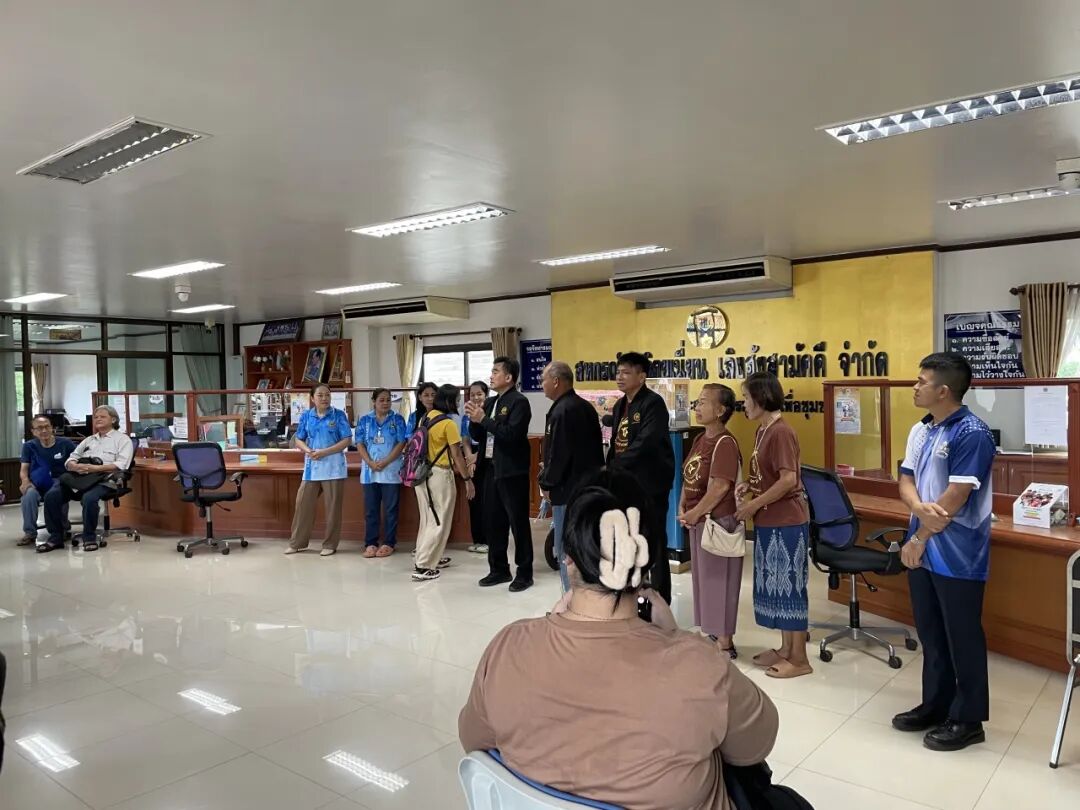
◉ K Village’s Credit Cooperative. The staff are all volunteer members of the cooperative; no one draws a salary.
Thailand’s first agricultural cooperative was established in 1916, to help rice farmers mired in debt during the early days of agricultural commercialisation. Today there are nearly 2,000 cooperatives across the country, the vast majority engaged in agricultural production. Though cooperatives are plentiful, credit cooperatives account for a mere nine per cent of the total. Most farmers still have to turn to the Bank for Agriculture and Agricultural Cooperatives to meet their borrowing needs.
A credit cooperative is unlike a conventional bank: it does not set profit maximisation or shareholder returns as its chief aim. In practice, the Credit Co-op’s earnings are never channelled into high-risk investments but are instead funnelled into a common reserve, a risk reserve, or year-end dividends for members. While offering lending rates more favourable than those of commercial banks, the K Village Credit Co-op pays depositors an interest rate of 3.75% (a typical commercial bank pays just 0.75%). The president of the Credit Co-op would even like to raise the deposit rate further, but the government refuses to allow it. On top of all this, the Credit Co-op maintains a dedicated welfare fund — disbursing bereavement grants to members who have lost a family member and extending interest-free loans to families in hardship.
And any profit the Rice Cooperative earns is deposited straight back into the Credit Co-op. Members’ assets are highly transparent and easy to keep in check, creating a self-sustaining ecosystem of circulating capital.
Nevertheless, a credit cooperative like this cannot be set up just anywhere — it thrives hand in hand with the local culture. Urban dwellers have long placed their personal security and financial affairs in the hands of government, financial institutions, and insurance companies. In K Village, by contrast, community leaders still carry genuine authority. For the older, more conservative farmers here, borrowing and managing money are entirely foreign concepts, and the Credit Co-op’s growth to its present scale owes a great deal to the pastor who encouraged everyone to take part.
Eighty per cent of the villagers are Christians (the remaining twenty per cent are Buddhists, but relations are harmonious and they work and live side by side). According to the Cooperative’s president, Christians are frugal, hardworking, and devoted to their children’s education and the village’s unity — all factors behind the Cooperative’s success. In their way of life, they bear some resemblance to Mennonite communities in the United States, each building their own small sanctuary, set apart from the mainstream world.
The Village’s ‘7-11’
The phrase “for the collective good” is no joke here. Maximising every last penny within the community means practising this on every front. The village has no restaurants, no entertainment or leisure venues — let alone a wet market. All it has is a supply-and-marketing cooperative shop that has been trading for over fifty years.
The president told us proudly that everyone jokingly calls the little shop the village’s ‘7-11’, precisely because the villagers have resisted the encroachment of chain stores. This resonated with my own experience in rural western America, where locals feel that chain stores, with their enormous scale and crushing power to drive down prices, not only crowd out existing businesses but also siphon the hard-earned income from selling farm produce straight to distant corporate headquarters.
The ‘Village 7-11’ operates on a membership model with shares distributed according to a principle of fairness, functioning essentially as a consumer cooperative. Each household may purchase an equal number of shares per family member, and profits are returned to members at year-end in proportion to their shareholding. The shop stocks everyday necessities, buys and sells at market prices, then channels the profits back to the community, forming a cycle of internal economic circulation. The villagers are both shareholders and customers.
By the time we arrived it was the end of the month. The shelves cannot be called a smorgasbord, but daily essentials are reasonably well covered, and the prices of everyday items are roughly the same as in Bangkok convenience stores. There was soap (it would seem that buying it is still cheaper than making rice bran soap to sell), laundry detergent, hair dye, Coca-Cola, ice cream, and so on.
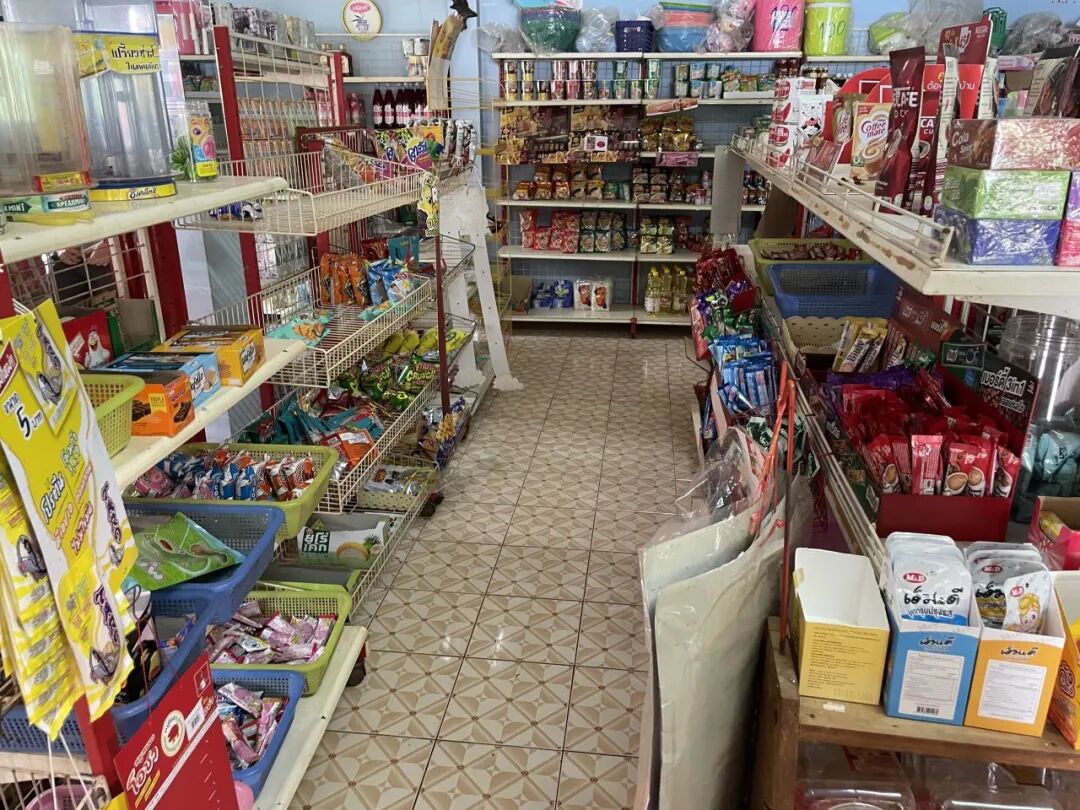
◉ Interestingly, the ‘Village 7-11’ still stocks the ordinary soap found on the open market. Perhaps in K Village, where goods are scarce, a bar of soap of unknown provenance holds more allure than rice bran soap?
Dispatching E-Commerce Parcels
Back to the Little Cabin to Cook Rice over a Wood Fire
The farmers do more than labour in the fields; they are responsible for an entire value chain, from selecting seed to selling the finished product.
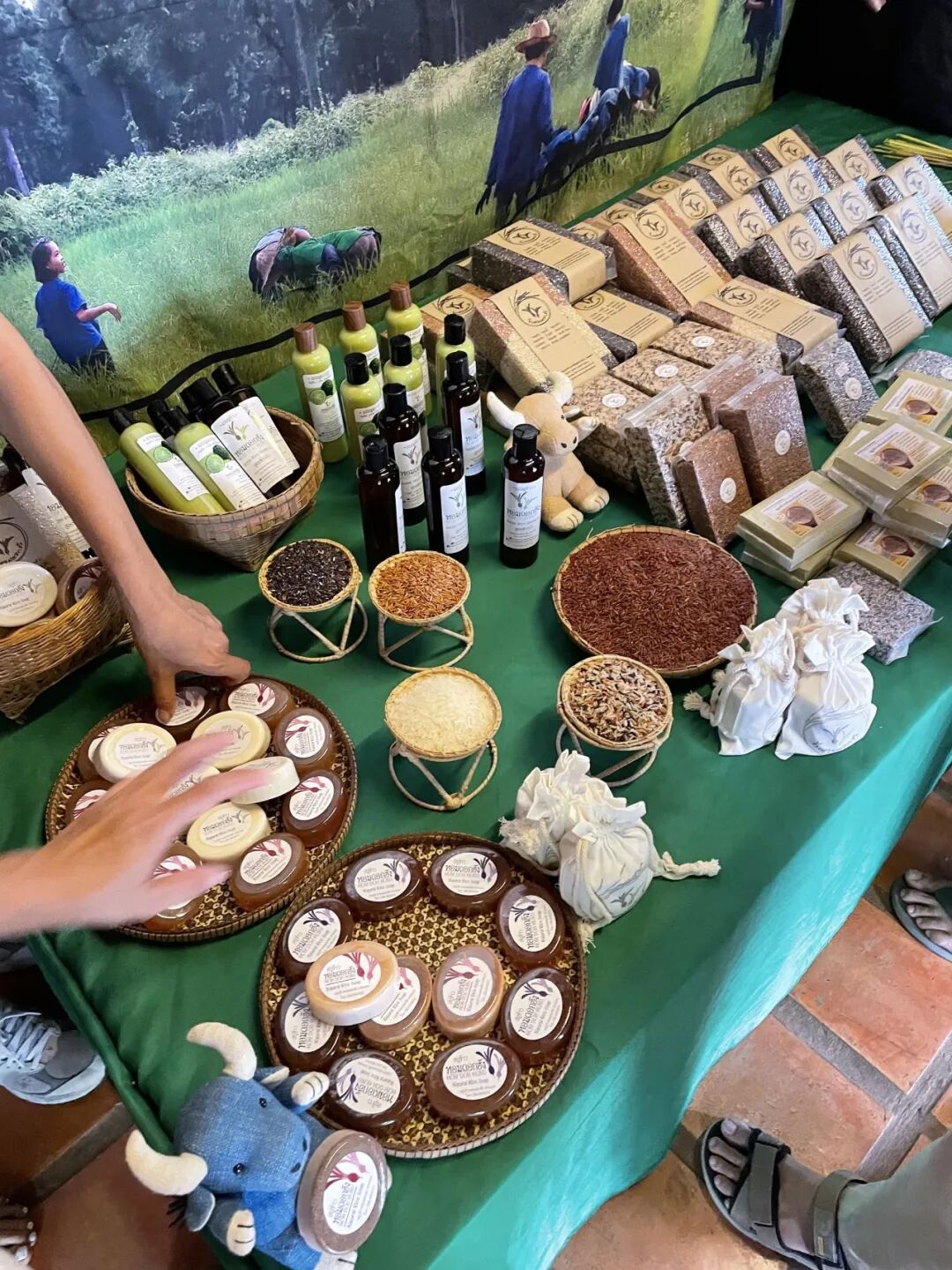
◉ The farmers showed us their products. The beautiful packaging and the village’s holistic ecological philosophy hold great appeal for certain consumers.
The organic paddy rice is packed into neat, small portions, highlighting the distinct textures and health qualities of different varieties. Meanwhile, the broken rice, rice germ, and rice bran sorted out during grading can be turned into raw materials for shampoo bars — saving the cost of shampoo bottles and sparing the world unnecessary plastic waste. The villagers have realised that simple processing can lend considerable added value to the by-products of rice production.
A single grain of rice becoming rice wine, soap, and other goods at its birthplace may not sound like much. But by selling straight to urban consumers via e-commerce logistics, rather than through middlemen and sub-middlemen, the share of profit that reaches the farmers naturally grows higher.
Consumers who care about health, the environment, and social justice are strong supporters of K Village Cooperative’s business model — their organic rice fetches up to double the price of comparable products on the market. A Thai celebrity has even volunteered to help spread the word.
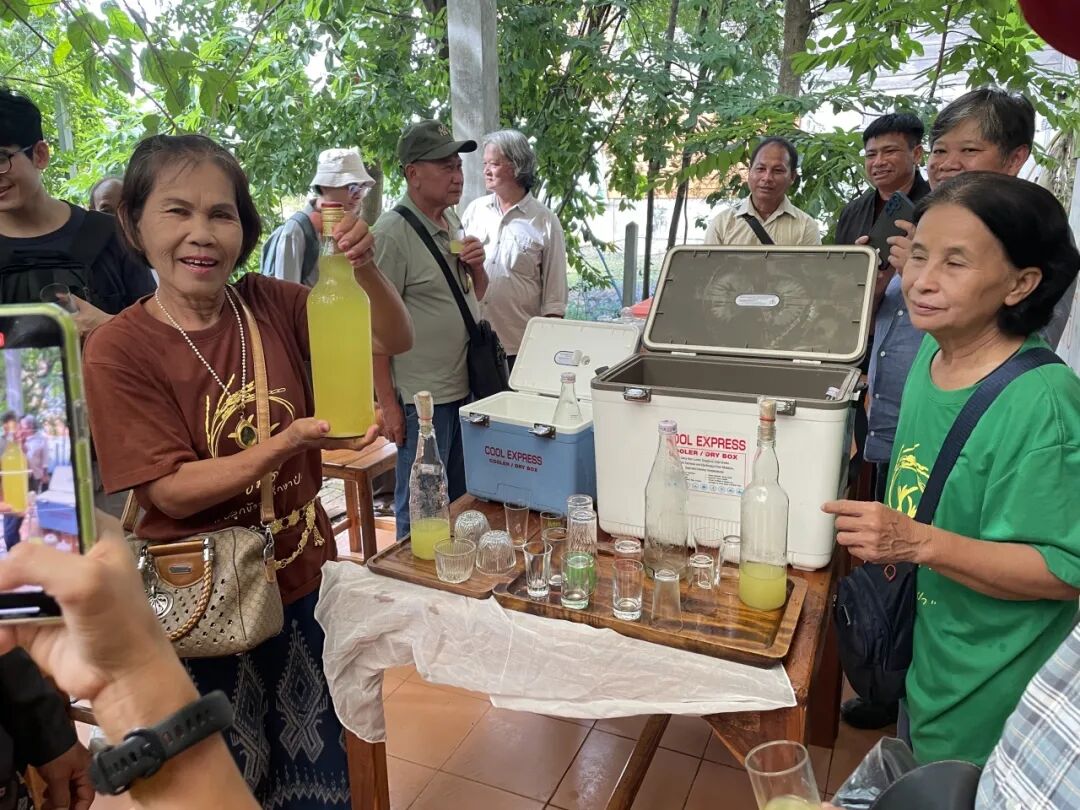
◉ Without a production licence, the rice wine cannot be sold externally and must be consumed in-house. Nevertheless, with the enthusiastic recommendations of friends from across Southeast Asia and a dozen local villagers, we made short work of several bottles of sweet rice wine.
The collective economy is vividly embodied in K Village’s Rice Cooperative, and it relies neither on sales volume nor on policy support. In summary, its success can be credited to several factors.
First, the Rice Cooperative was incubated by the local Credit Co-op. Its initial capital came directly from villagers’ deposits; social relationships are embedded within the financial system, and the two institutions share a remarkably solid foundation of trust — loans serve members directly. Second, as the primary beneficiary, the Rice Group receives dividends distributed according to Credit Co-op shares, achieving internal growth and circulation of profits within the community. Third, the Cooperative’s rice bypasses conventional procurement channels and connects directly to the premium market. To achieve all of this requires contributions from three pillars: a healthy ecological environment, well-established financial institutions, and strong social cohesion.
However, not all Thai rice farmers grow heritage varieties and command premium prices as those in K Village do. In Thailand, high-yielding paddy rice and lowland jasmine fragrant rice paddies, beloved by international markets, still dominate the field. Meanwhile, international agencies, governments, and foundations are pouring tens of millions of dollars into the research, development, and promotion of “climate-friendly” rice. More rural areas remain deeply in debt, with no internal financial systems. Most rice farmers are still waiting for policy support from Bangkok, fighting for bargaining power, and hoping for rice prices to rise.
But in K Village, growing rice is not merely a game of yield and procurement price for the farmers — it is also about dignity, achievement, and the right to choose. Before we left, we hurriedly visited one household in the woods. They lived in several flimsy wooden structures barely warranting the name ‘houses,’ with pots, pans, and bowls arranged on bamboo racks outside, cooking over an open fire each day. The eldest sister lifted the wooden lid off a large jar under a tree; I switched on my torch, leaned over, and peered inside to see it packed with loaches. Chickens darted beneath the tree, crabs crawled around in a plastic basin, and two yellow oxen stood idly in the cowshed. Tens of millions in net assets had not pulled the villagers away from their familiar world. Our imagination of a “life of abundance” is still far too narrow.
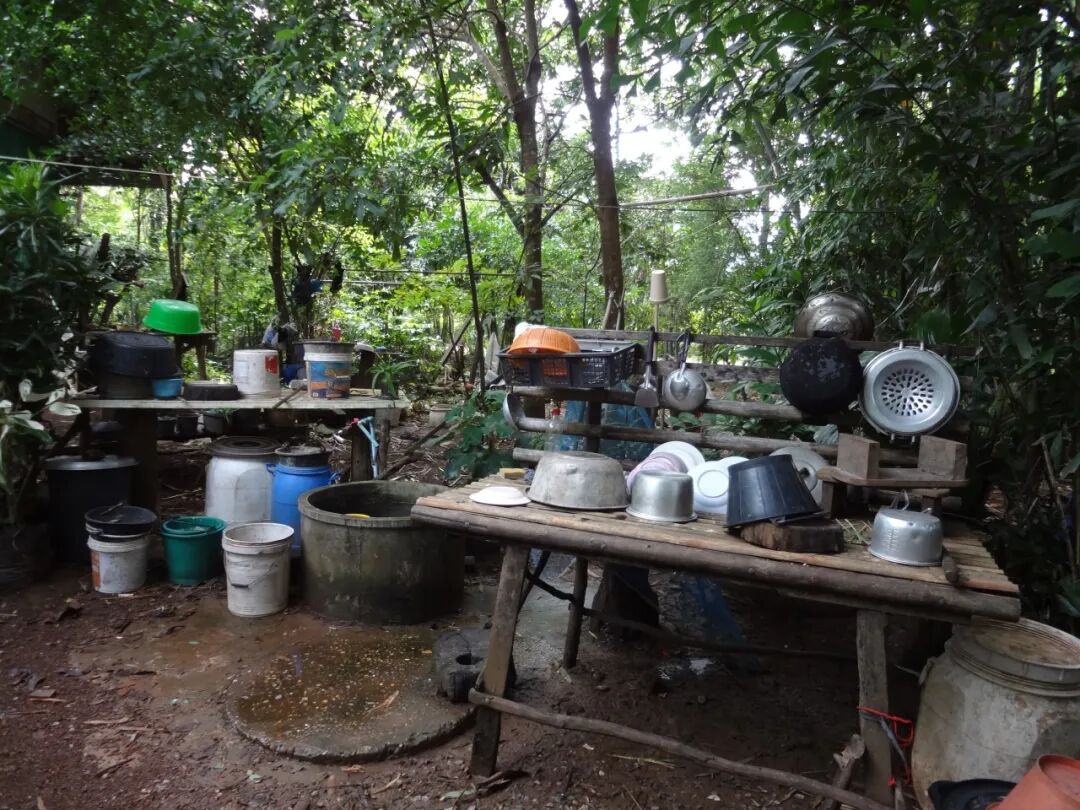
◉ The kitchen outside a farmer’s wooden house.
– This is Foodthink’s 807th original article –
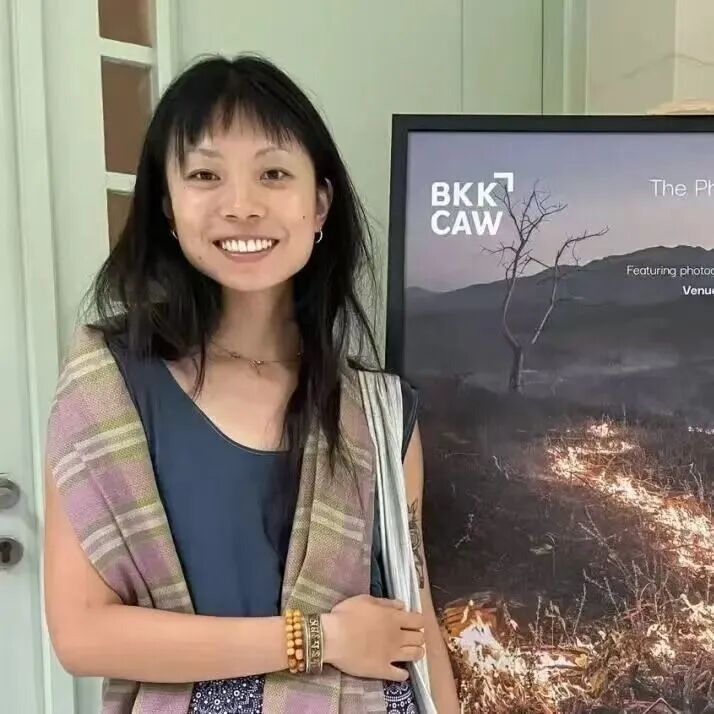
Foodthink
Author
Jieni
Project officer at Foodthink; postgraduate student in the Department of Human Geography at the University of Toronto. Interested in the environment and food systems.
Unless otherwise indicated, all photographs in this article were taken by the author.
Edited by: Auntie Xiong
Layout: Minglin
▼
Click on the image to read related articles.