Heavy Penalties for Food Giants’ Greenwashing — How Much Are Consumers Really Being Shortchanged?

In recent years, an increasing number of food companies have begun publicising their emissions-reduction targets and environmental contributions. “Sustainable”, “recyclable”, “low-carbon” and “climate-friendly” claims have also started appearing on food packaging, in an attempt to convince consumers that simply buying the product can make a small, positive contribution to tackling climate change.
But what do these promises actually mean? Do products bearing these labels truly reduce greenhouse gas emissions, or is it all just marketing?
Two lawsuits against global meat giants have shown us just how crude and unsubtle food companies’ greenwashing can be. From “net-zero emissions” to “climate-smart beef”, to “environmentally friendly” and “recyclable” claims on packaging — behind the labels may lie nothing more than another ploy to mislead consumers.
When Beef Giants Label Their Products “Climate-Friendly”
In 2024, the New York State Attorney General’s Office and the Environmental Working Group (EWG), a non-profit organisation dedicated to public health and environmental issues, separately filed lawsuits against two global beef giants — Brazil’s JBS and the US-based Tyson Foods — alleging that the two companies misled consumers by marketing their beef products as “climate-friendly” and “climate-smart”, amounting to suspected greenwashing.
Although both giants denied the allegations, the two cases ultimately reached settlements with the plaintiffs in 2025.
Tyson agreed to withdraw its “net-zero emissions by 2050” claim, and will no longer be permitted to describe its beef products as “climate-friendly” or “climate-smart” — or to use similar marketing language in the US market — without independent third-party verification. Over the next five years, the company must undergo independent third-party audits to ensure it fulfils its climate commitments.
JBS agreed to reclassify its “net-zero emissions by 2040” pledge from a “commitment” to a “goal” or “aspiration”, and must provide details of specific actions if it promotes its emissions-reduction measures in future. In addition, JBS will pay $1.1 million to support sustainable agricultural development in New York State.
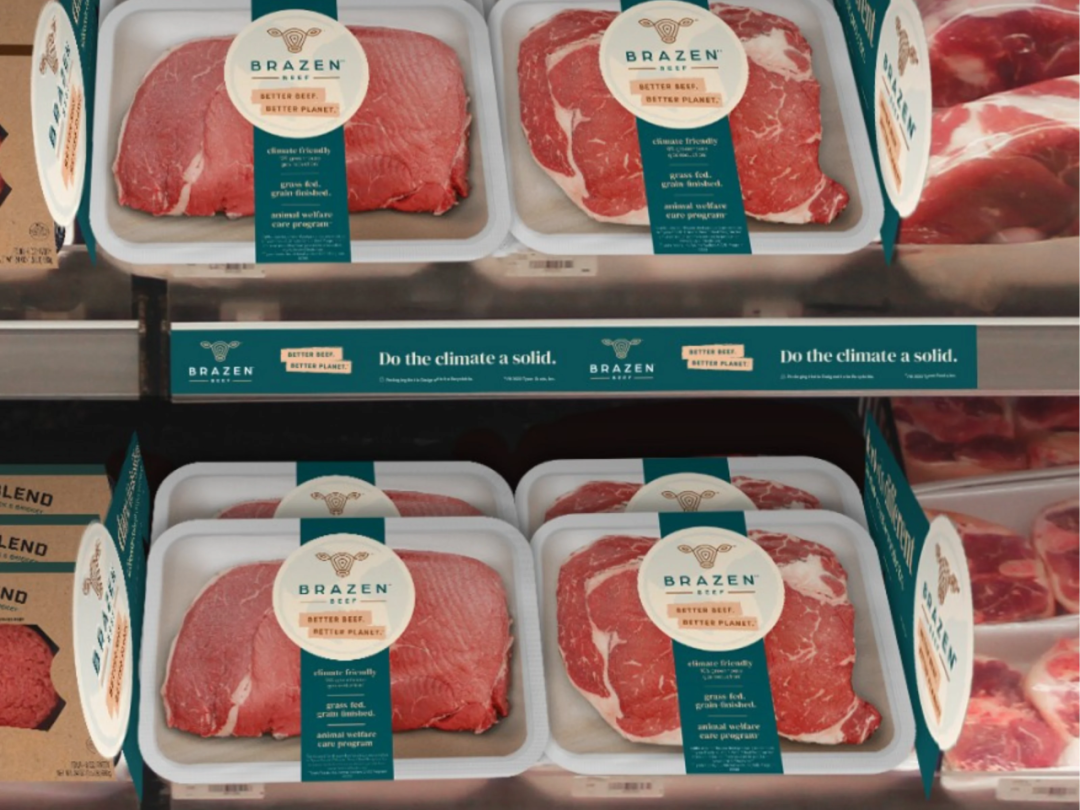
◉ Tyson’s “climate-friendly” beef. Source: Tyson Food
There are plenty of products playing the environmental card — so why did New York State single out these two beef giants? It mainly comes down to the fact that cattle farming is one of the food sources with the highest greenhouse gas emissions. In particular, every stage of industrial beef farming and production generates substantial emissions.
Cattle release large quantities of methane during digestion; manure and feed crop cultivation also produce methane and nitrous oxide; and deforestation for grazing and feed cultivation releases carbon stored in the soil, weakening the land’s carbon sequestration capacity. As a result, every stage of intensive beef production — from feed and rearing to land use — is accompanied by high emissions. Beef generates roughly 2.5 times the greenhouse gas emissions of lamb, and nine times those of fish and chicken.
JBS and Tyson Foods together produce roughly half of all the beef in the United States. Tyson Foods alone generates total greenhouse gas emissions exceeding those of Austria or Greece, with approximately 85% coming from beef production.
It was precisely because of this that when Tyson claimed its beef was “climate-smart” and pledged to achieve net-zero emissions by 2050, environmental organisations simply could not believe their ears.
In the lawsuit, the EWG pointed out that the methane and nitrous oxide emitted by Tyson’s intensive beef production cannot be fully eliminated using current or foreseeable technology.
At the same time, Tyson extensively applies the “climate-smart” label to its beef products, yet the company has neither defined specific standards for “climate-smart beef” nor explained how its net-zero target will be achieved.
The promotional claims of “net-zero emissions” and “climate-friendly beef” are therefore misleading.
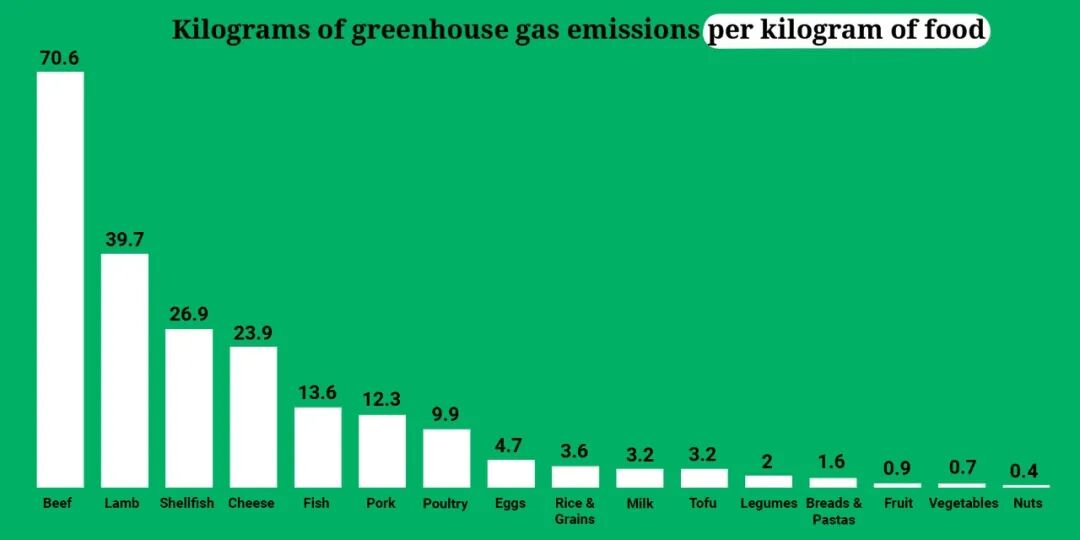
◉ According to a UN study, each kilogram of beef emits 70.6 kg of greenhouse gases, exceeding the emissions from lamb, pork and chicken. Source: UN
Carrie Apfel, the lawyer handling the case, stated, “Climate-smart simply does not apply to any industrially farmed beef product. Beef has the highest carbon footprint of all foods; even if beef emissions were reduced by 10–30%, it would still fall far short of being climate-friendly.” She added, “This settlement should send a clear message to consumers — be wary of beef producers who brand their products as “climate-smart”.”
She went on to say: “Substantial greenhouse gas emissions are generated at every stage of (industrial) beef production. To achieve effective emissions reduction at this scale, companies must make real, fundamental changes — and Tyson Foods has clearly failed to do so.”
The aim of these two lawsuits is not merely to push companies to change their business practices, but to challenge the false marketing that industrial agriculture has manufactured around climate issues. Leila Yow, climate programme lead at the Institute for Agriculture and Trade Policy (IATP), explained: “This settlement represents a major victory in combating industrial agriculture’s misleading claims about climate.”
Do Food Giants Really Care About the Environment and Climate?
For beef farming companies, excessively high greenhouse gas emissions have become an issue they simply cannot ignore.
Over the past decade, consumers in Europe and North America have become increasingly concerned about the environmental impact of food production — particularly whether meat production drives deforestation, meets animal welfare standards, and how much greenhouse gas it generates.
Tyson itself acknowledged in its climate risk report: “Consumers are willing to pay a premium of at least 24% for more environmentally friendly and sustainable products… A growing number of consumers are willing to buy beef and other foods that can reduce greenhouse gas emissions.” Consequently, for food companies, failing to ease public concerns about climate risks may well affect product sales and market competitiveness in the future.
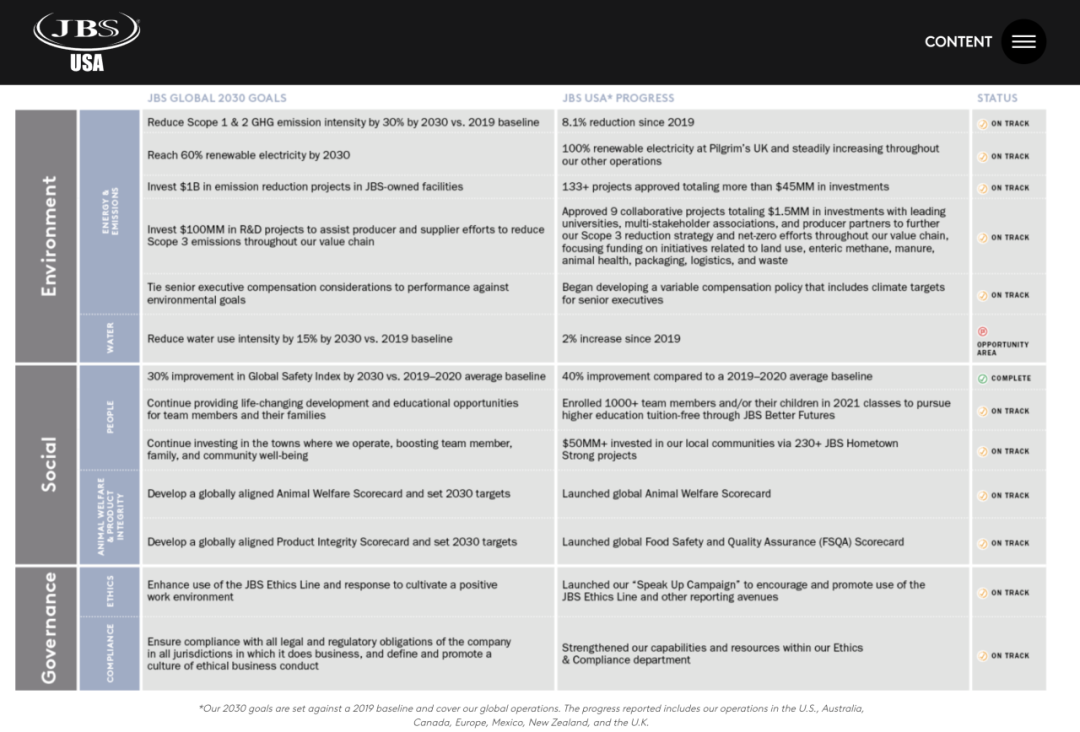
◉ JBS’s 2030 sustainability targets include greenhouse gas emissions intensity goals for Scope 1 and Scope 2, stipulating that JBS globally will reduce emissions intensity by 30% by 2030 against a 2019 baseline. Source: JBS USA
At the same time, governments in Europe and North America have begun tightening regulation of companies’ environmental claims.
In recent years, the EU has successively introduced the Empowering Consumers for the Green Transition Directive and the Green Claims Directive, further curbing corporate greenwashing. Under the latter, companies making environmental claims such as “eco-friendly”, “sustainable” or “climate-friendly” must base them on scientific evidence and subject them to independent third-party verification, gradually driving towards harmonised assessment standards.
Although the United States has not established a unified regulatory framework comparable to the EU’s, it too has begun requiring companies to take on greater climate risk disclosure obligations. The U.S. Securities and Exchange Commission (SEC) adopted the “Climate-Related Disclosure for Investors” rule in 2024, requiring listed companies to disclose climate risks, greenhouse gas emissions and the financial impacts of extreme weather. Although this rule was subsequently repealed in 2025, the climate pressures facing companies have not disappeared as a result.
Driven by both consumer demand and regulation, more and more food giants are rushing to announce net-zero carbon targets. For them, net-zero is not necessarily a commitment to the environment, but it is certainly an all-purpose key to entering international markets, as well as a vital way to respond to investors and shape brand image.
However, for food giants like JBS and Tyson, achieving net-zero emissions is virtually impossible.
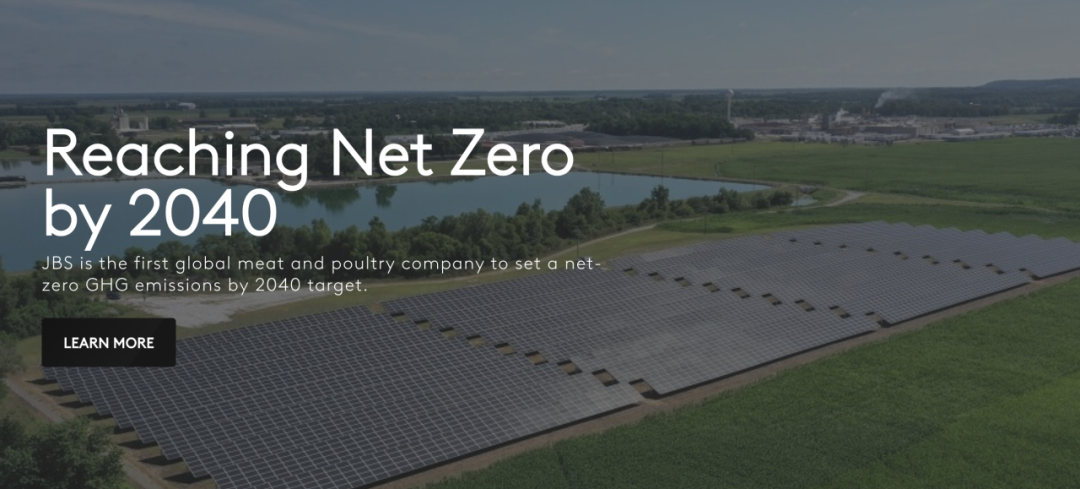
◉ On its US website, JBS states that it is the world’s first meat and poultry company to set a net-zero greenhouse gas emissions target for 2040. Clicking to learn about the 2040 net-zero emissions target now shows that the page cannot be found. Source: JBS USA
For intensive beef farming, it is all but impossible to fundamentally reduce emissions without shrinking the herd — fewer cattle means less output, which means lower profits, and companies are clearly unwilling to go down that route.
So, rather than genuinely transforming production practices through concrete action, it is far easier to pay lip service and simply change the marketing.
To cater to consumer preferences for sustainable products, Tyson spent nearly four and a half years promoting across its website, social media and press releases that the company would achieve “net-zero emissions” by 2050, describing its beef as a “climate-friendly” product.
However, according to the litigation documents, Tyson took virtually no adequate measures to deliver on these pledges, nor could it provide corresponding evidence to support its claims.
The lawsuit revealed that of Tyson’s approximately $53 billion in annual revenue, only around $50 million was spent on emissions-reduction measures — less than 0.1% of total revenue — and the bulk of that went towards research. By comparison, the company’s annual advertising and marketing spend is roughly three times its emissions-reduction research budget.
This is also why an increasing number of lawsuits targeting greenwashing by food companies are focusing on whether businesses have actually taken action, and demanding that they stop misleading environmental marketing and promotion.
What Other Common Greenwashing Tactics Do Food Companies Use?
Beyond net-zero targets that amount to “all talk, no action,” another common greenwashing tactic among food companies is exploiting vague, inconsistently defined terms and concepts to mislead consumers.
For instance, words like “natural,” “eco-friendly” and “sustainable” frequently appear on food packaging, leading consumers to believe these products are not only green and healthy, but that purchasing them supports a more environmentally responsible and healthier way of producing food.
But what do these words actually mean?
In many countries, “natural,” “eco-friendly” and “sustainable” have no unified, strict legal definitions, giving companies wide latitude in interpretation — and creating the very grey areas that enable greenwashing.
The United States has seen several lawsuits on this issue. Nature Valley, a snack brand built on health-consciousness, long marketed its products as “Natural” and even “100% Natural,” yet they actually contain heavily processed ingredients such as high-fructose corn syrup and maltodextrin. Nature Valley subsequently faced a class-action lawsuit on charges of misleading consumers.
This phenomenon bears some resemblance to a controversy in China surrounding “zero additives” trademarks. For example, the condiment brand Qianhe registered “Qianhe 0” as a trademark and printed it alongside the word “additives” on product packaging, causing consumers to mistakenly believe the soy sauce contained no additives.
Is it legal to register terms like “zero additives” or “heritage-breed pigs” as trademarks? The question sparked considerable public debate. Many felt that food companies were exploiting loopholes in trademark registration and playing word games to mislead consumers.
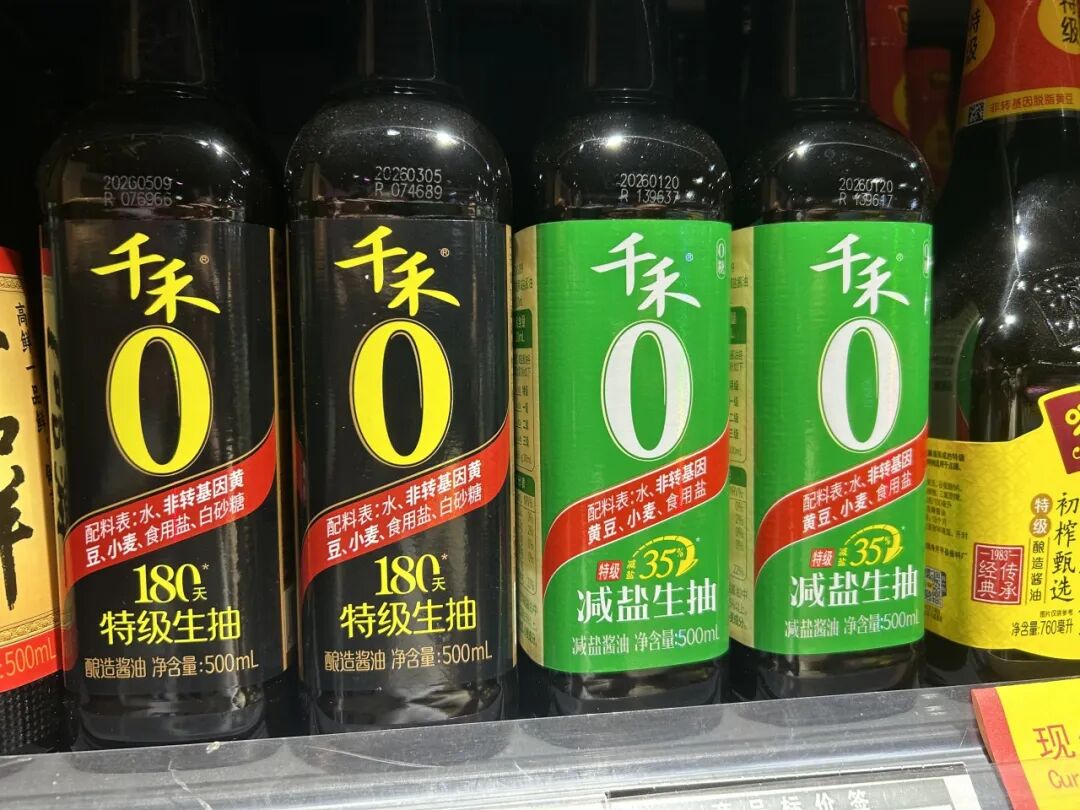
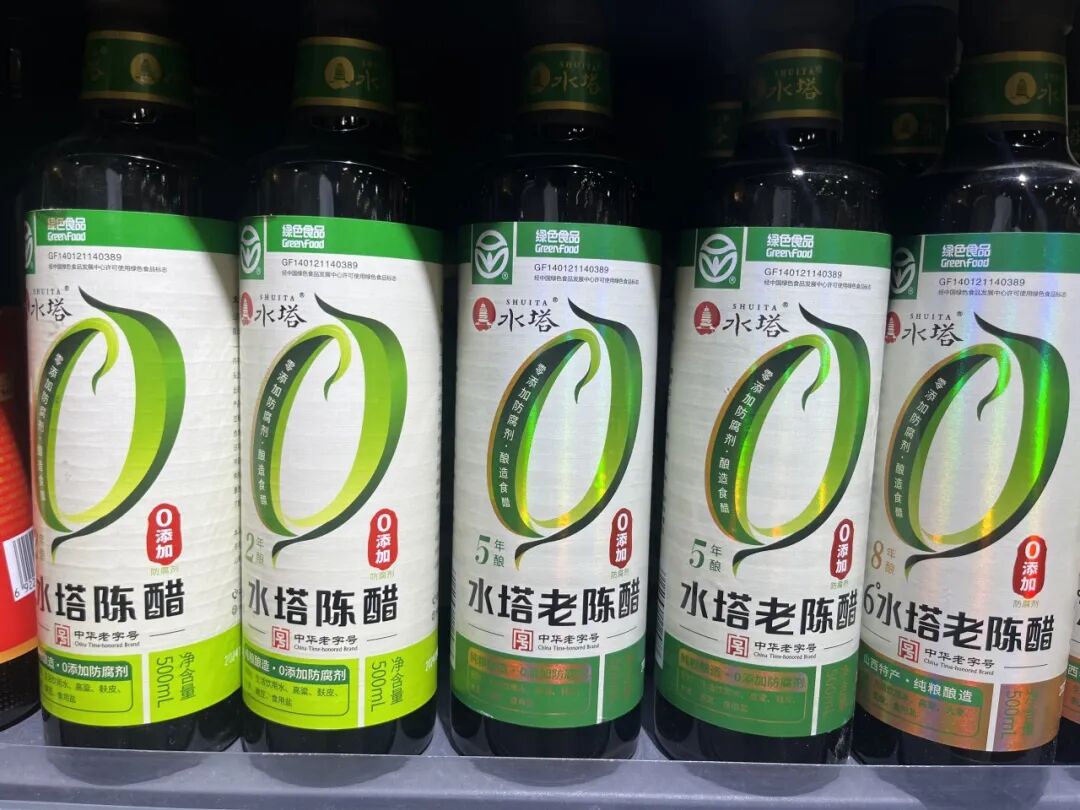
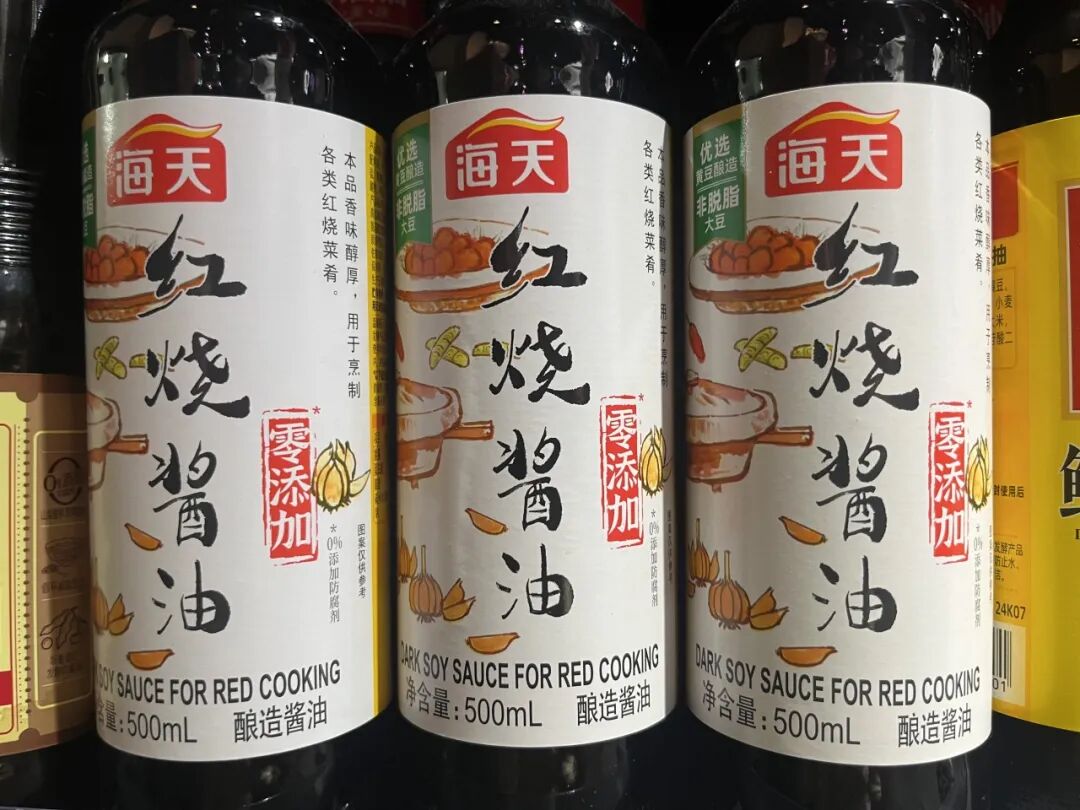
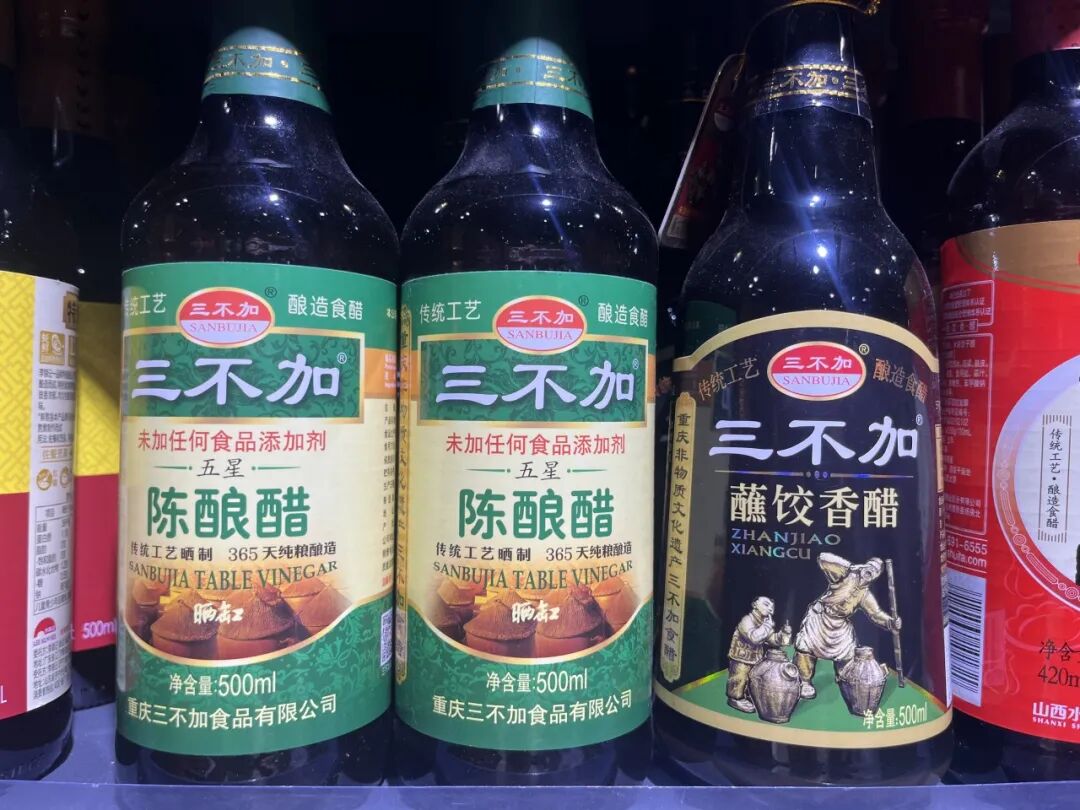
◉ A Foodthink visit to a neighbourhood supermarket revealed that multiple soy sauce products on the shelves prominently display “0” or “zero additives” on their packaging. Some add a small-print disclaimer after “zero additives” or “0 additives,” while others rely simply on the registered trademark “Three No-Adds” to signal product qualities.
Additionally, “recyclable” is one of the most commonly used eco-labels among food companies. Most consumers who spot “recyclable” on packaging assume it can genuinely be collected and recycled, yet few stop to consider the follow-up: Can it actually be recycled? Where? And how is it ultimately processed?
The US beverage and coffee brand Keurig faced a class-action lawsuit for precisely this reason. Keurig’s coffee pods were explicitly labelled “recyclable,” yet complaints alleged that most local recycling facilities simply could not process pods made from this multi-layer composite material. In the end, the pods either ended up in landfill or contaminated other recyclables.
The court accepted this argument and ordered Keurig to pay a $10 million settlement. Subsequently, Keurig replaced “recyclable” on its packaging with: “Please check with your local facility whether recycling is available — many areas cannot recycle these coffee pods.”
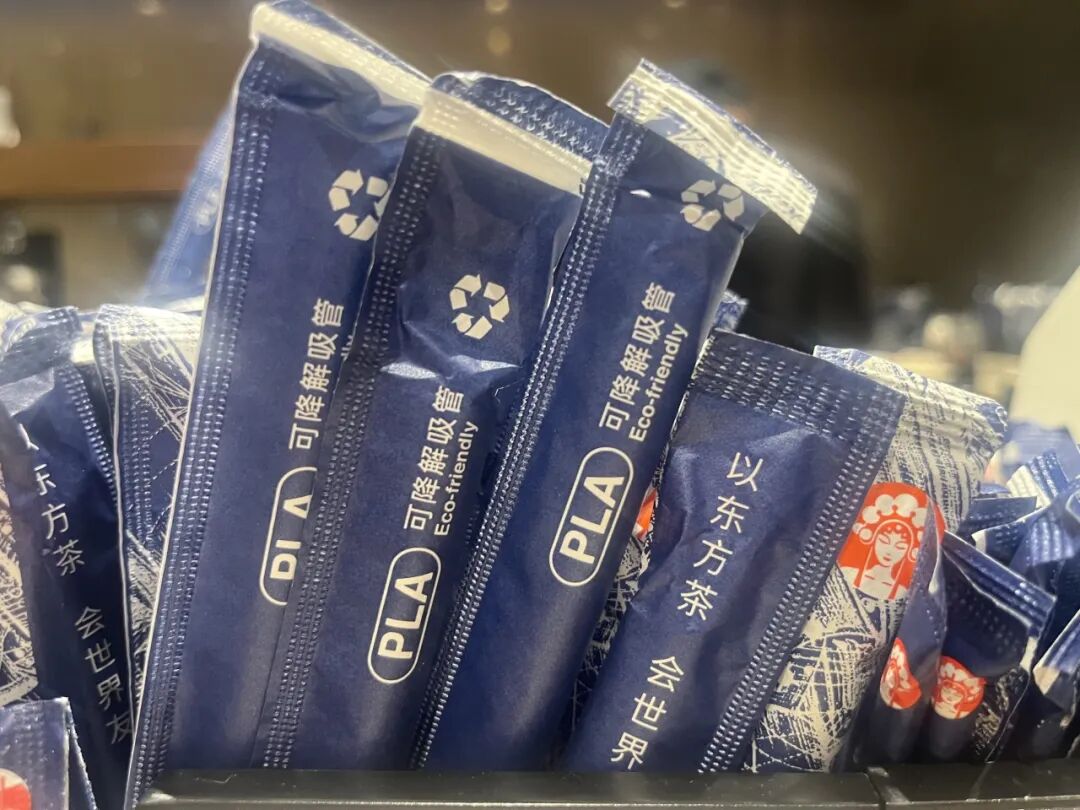
◉ Biodegradable PLA straws are commonplace in China — but do you know how they are actually recycled, and does your local area have the right facilities for biodegradation?
Cases like these serve as a reminder that when a company claims a product is “sustainable” or “recyclable,” consumers should look behind the label before reaching for their wallets — asking whether there is a complete, truthful and verifiable pathway to deliver on the claim, rather than being swayed by corporate green messaging.
Is Climate-Friendliness Feasible?
Of course it is!
Although “climate-friendly” and “climate-smart” are not currently backed by clear standards or third-party certification schemes, this does not mean climate-friendly agriculture does not exist.
Since different crops and foods involve different production methods, emission sources and pathways for reduction, genuine climate-friendly agriculture must be grounded in specific crops, regions and production conditions.
In fact, in various regions, people are already practising “climate-friendly” agriculture tailored to local climate, soil and growing conditions.
For example, the Yunnan Sili Ecological Alternative Technology Centre (hereafter “Sili”) has long been exploring ways to grow climate-friendly rice.
Rice cultivation is one of the significant sources of agricultural methane. At Sili’s project sites, they form ridges and furrows so that irrigation water is retained mainly in the furrows, removing the rice’s dependence on continuous deep flooding — thereby reducing the likelihood of anaerobic environments forming in the paddies and methane being generated.
Sili is also experimenting with the direct-seeded upland rice technique, growing traditional heirloom varieties sourced from different regions. This dryland farming approach requires no flooding, and the drought tolerance of the heirloom varieties suits Yunnan’s increasingly pronounced dry conditions. Both methods reduce the likelihood of methane emissions from rice paddies and are regarded as climate-friendly rice-growing practices.
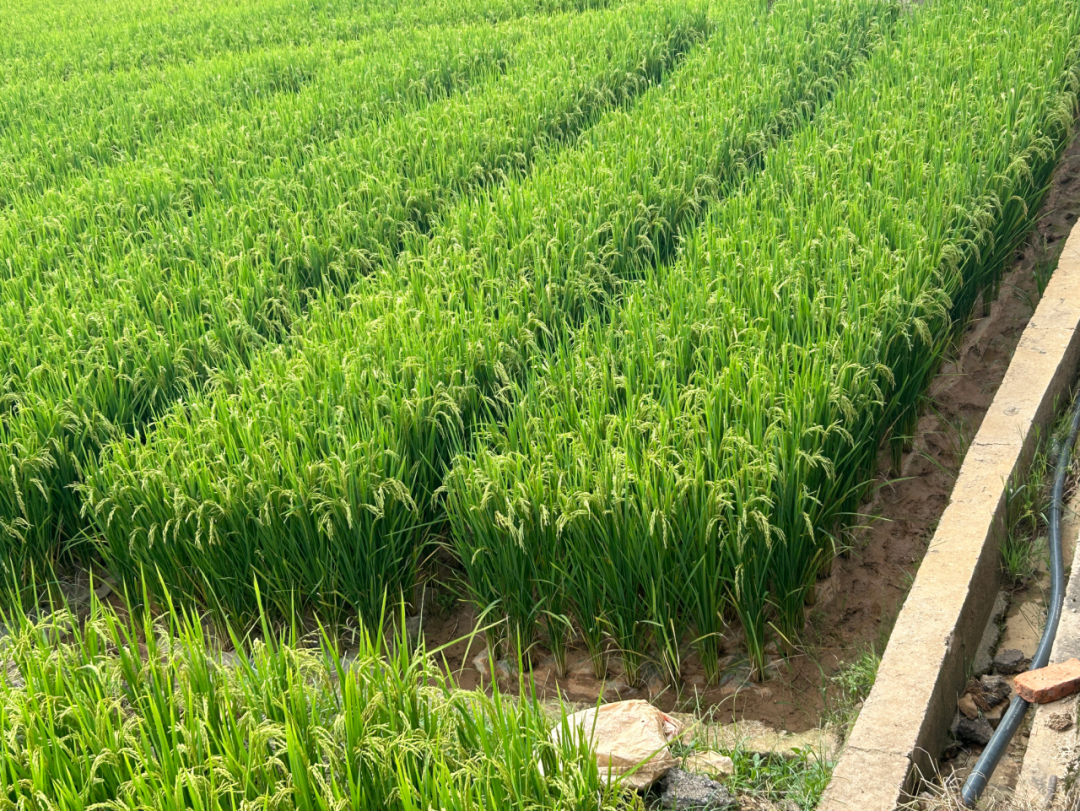
◉ Climate-friendly rice paddies with ridges and furrows in Sili’s community demonstration field at Wagong. Photo: Ruomiao
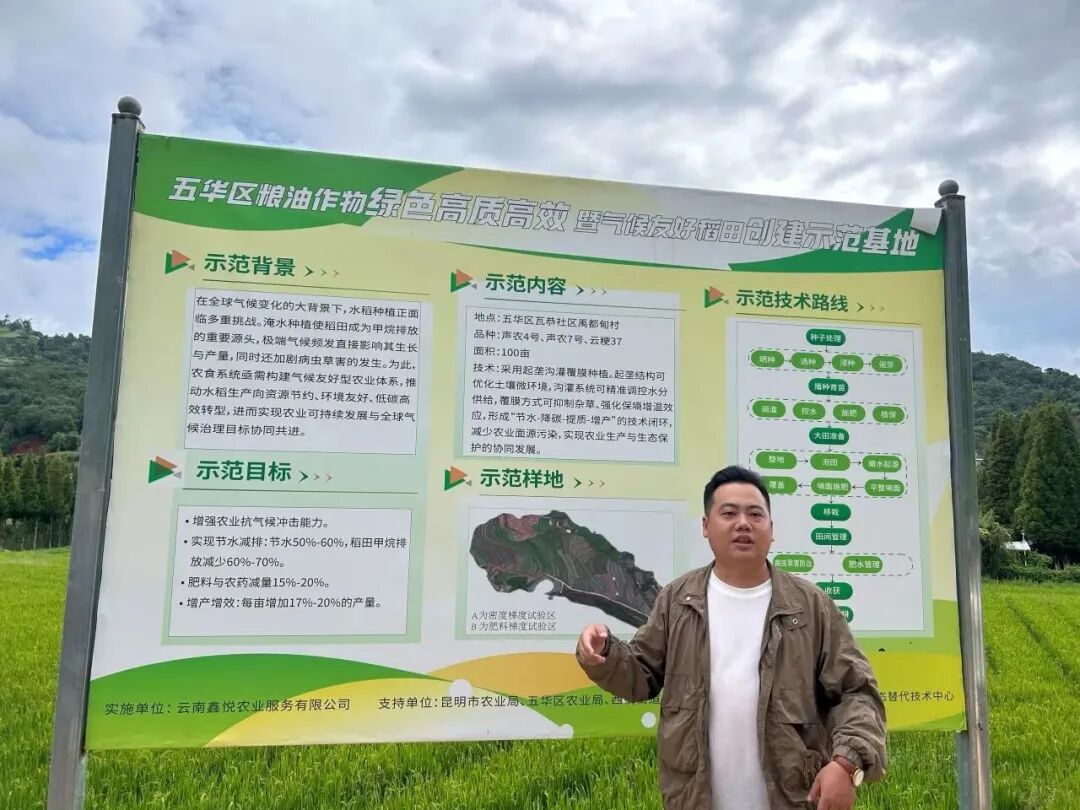
◉ Sili staff member Zhao Hao explains the climate-friendly approach being developed in Kunming’s Wuhua District. Photography: Pei Dan
Of course, food companies can make their products more climate-friendly by changing how they produce — but the prerequisite is that companies and producers must put forward concrete methods, real data and verifiable results so that genuine emissions reductions take place. Not slapping on a “climate-friendly” or “climate-smart” label first, then using an unachievable target to paper over the problem.
In reality, genuinely climate-friendly food extends well beyond the field. Transport, processing, consumption and even end-of-life disposal all generate carbon emissions — and therefore all offer opportunities to reduce them.
For ordinary consumers seeking “climate-friendly” food choices, rather than opening a mystery box among products of unknown provenance in supermarkets and online marketplaces, it is better to source ingredients from local ecological smallholders: fresh produce grown without chemical fertilisers and pesticides already avoids substantial carbon emissions, and buying locally cuts transport and packaging emissions.
Sometimes trusting your own common sense is more reliable than blindly believing corporate claims.
True climate-friendliness is not a label, nor a single standard that can be applied across all food production — it is an ongoing process of practice and verification in the field. The next time you spot “climate-friendly” on food packaging, perhaps ask one more question: how exactly is it achieved?
– This is Foodthink’s 825th original article –
Foodthink
Author
Kai Rui
Tropical islander, born of a north–south union
Unless otherwise noted, images are by the author.
Editor: Tianle
Layout: Minglin
Scan to tip and support original food knowledge
▼

▼
Click image to read related articles
▼
Click a keyword to browse more article collections
Seeds | Agricultural Techniques | Policy | Fermentation | Nutrition | Fruit | Fisheries | Events | Recruitment | Food Delivery | Wet Markets | Livestock | Food Talk | Sharing Sessions | Book Clubs | Harvest Festival | Smallholder Stories | Climate Change | Rural Development | Cooperative Economics | Urban Farmers | Food Safety | Digital Technology | Biodiversity | Pandemic and Food | False Solutions | Agroecology Internship Programme
Beijing | Hebei | Shanghai | Guangdong | Guangxi | Henan | Sichuan | Jiangxi | Xinjiang | Shaanxi | Hong Kong | Chongqing | Zhejiang | Jiangsu | Guizhou | Taiwan | Inner Mongolia | Philippines | Canada | Russia | Mexico | Italy | United States | United Kingdom | Germany | Netherlands | Thailand | Sweden | Japan