70 Years of Pork Supply to Hong Kong: Cross-Border Transport, Slaughterhouse Auctions and the World of Pig Farming

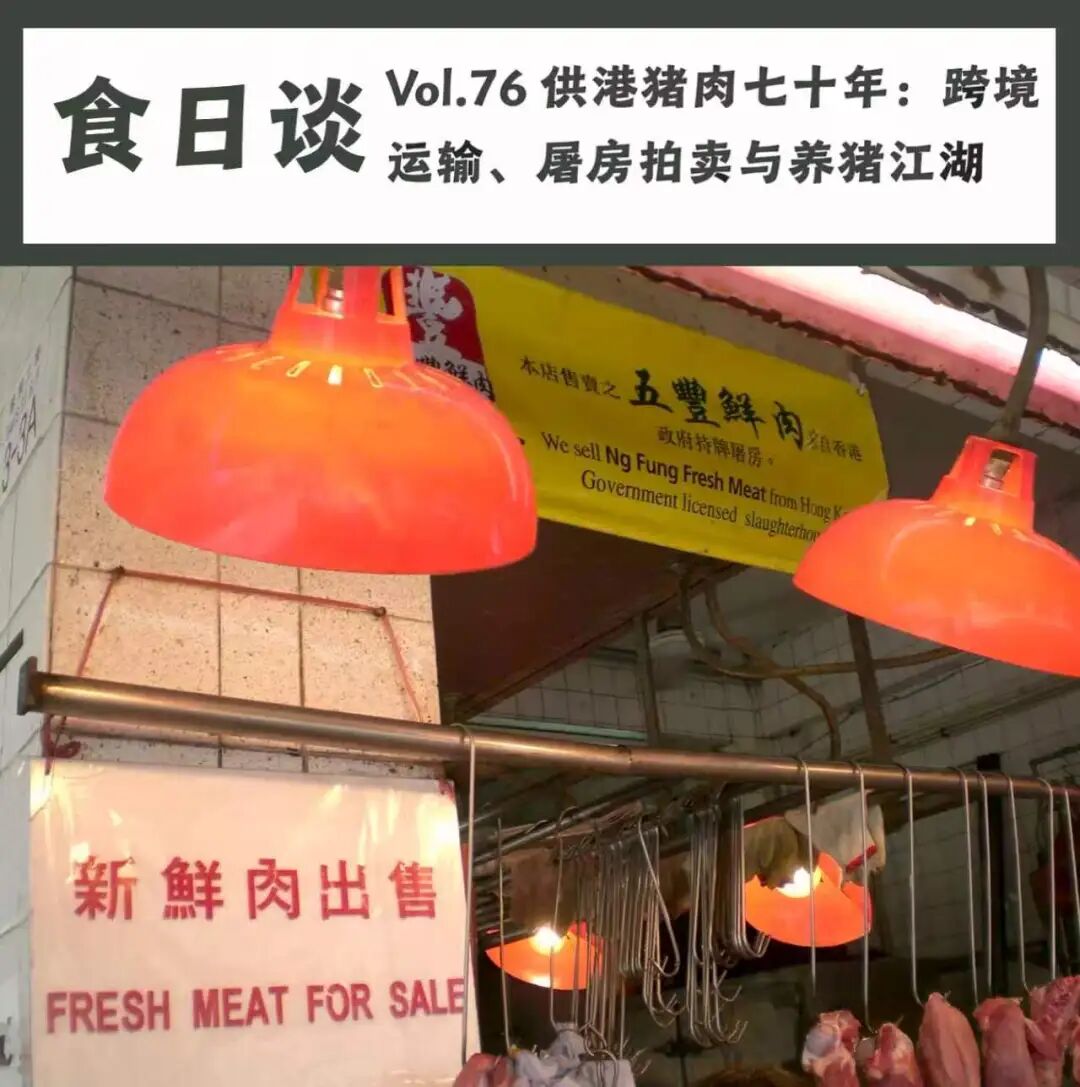
The pork sold at a Hong Kong wet market may have been living on a farm in Hunan, Hubei or Jiangxi just days ago.
In fact, more than 90 per cent of the live pigs on Hong Kong’s market come from the mainland. They pass through cross-border transport, quarantine, slaughter and auction before reaching Hong Kong’s wet markets. How exactly does this pork supply chain, stretching hundreds of kilometres, operate? Who decides the quality and price of pork at Hong Kong’s wet markets?
Land in Hong Kong is at a premium, making it difficult to develop farms. And to ensure millions of people can eat fresh pork, there has to be a food supply system that has been running for decades. What does “supply to Hong Kong” really mean?
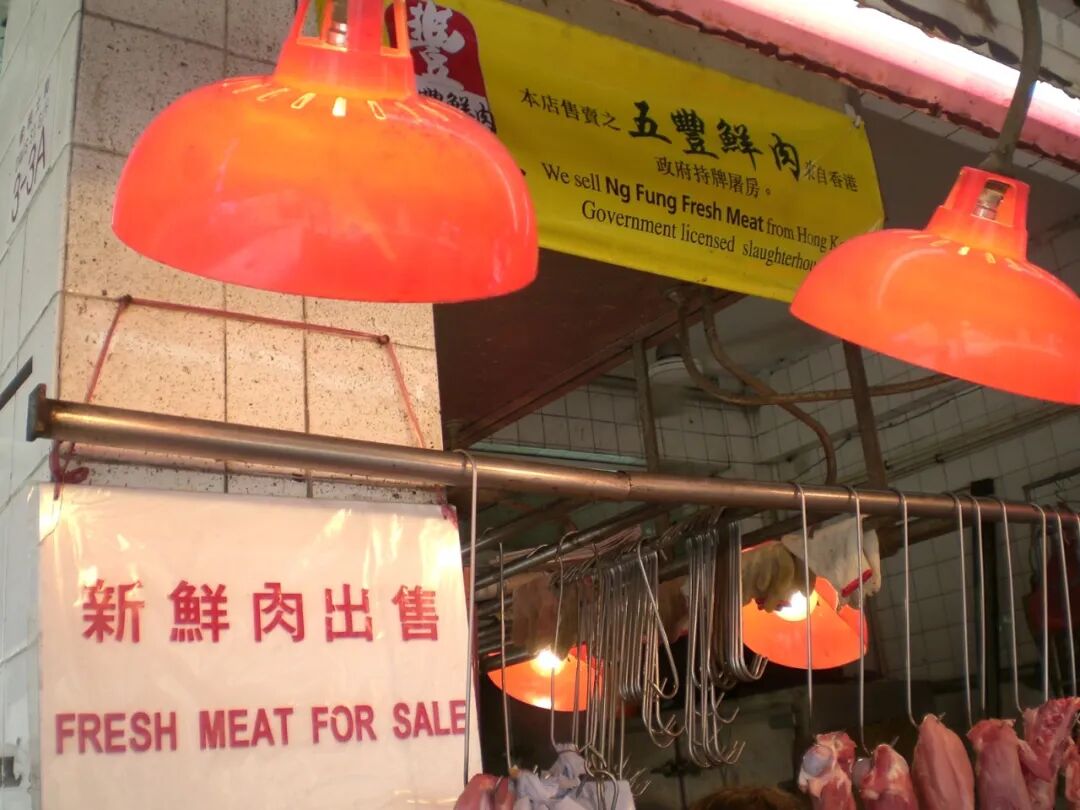
Since 1951, Wufeng has provided Hong Kong with a stable supply of fresh pork. The market has always favoured “hot meat” over frozen. Image source: Wikipedia
In 1951, Wufeng was established in Hong Kong as an agricultural products trading company. Premier Zhou Enlai, aiming to stabilise the price of fresh meat supplied to Hong Kong, ordered the Ministry of Foreign Trade to authorise Wufeng as the sole distributor for mainland Chinese food products in Hong Kong.
In 1962, the “Three Express Trains” carried livestock to Hong Kong for the first time. From early steam locomotives to today’s road transport, from a sole distributor to market competition, from scattered smallholder rearing to modern industrial-scale pig farms — the journey of pigs supplied to Hong Kong has witnessed the economic ties between the mainland and Hong Kong, and the changing times in China’s farming industry and Hong Kong’s urban development.
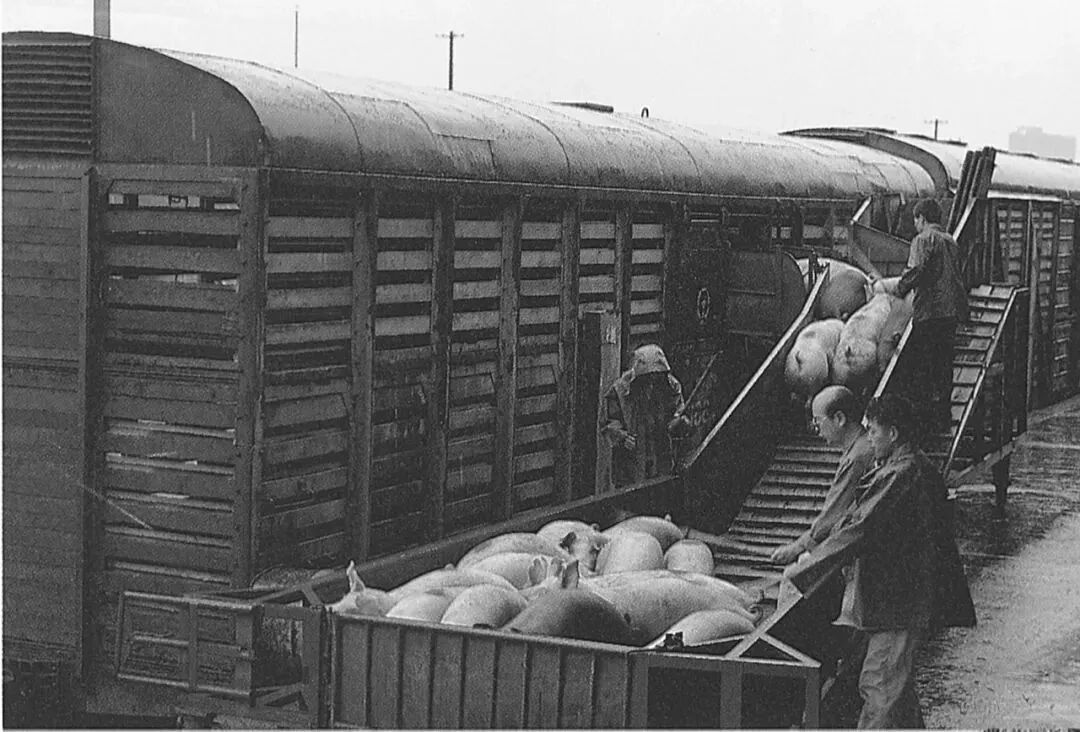
From the mainland to Hong Kong, three trains depart daily from Wuhan, Shanghai and Zhengzhou, each carrying a full load of live pigs. Image source: COFCO
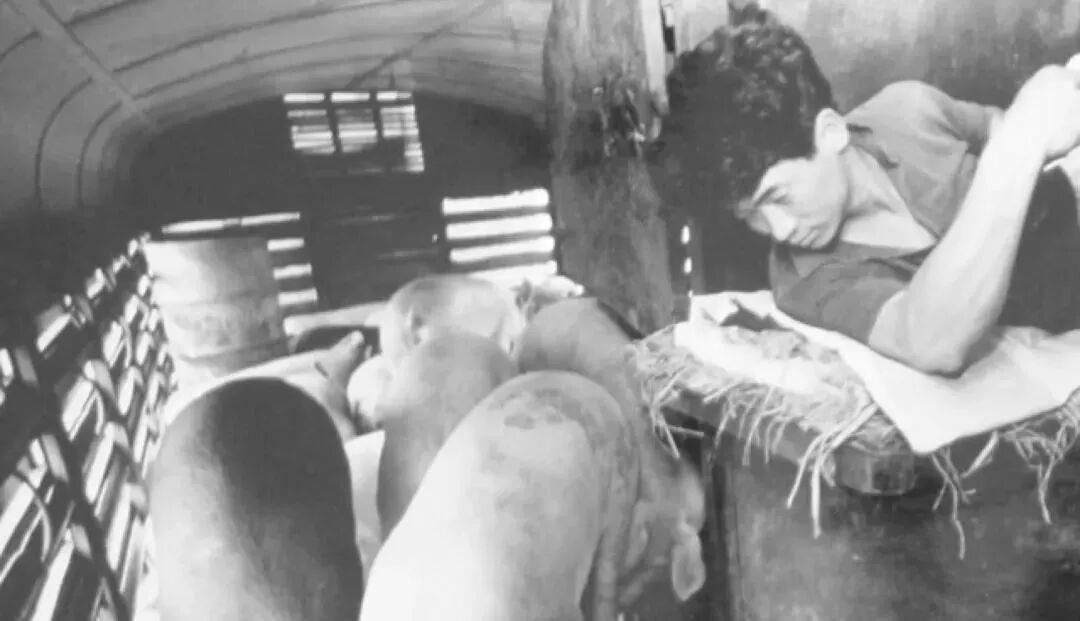
Livestock escorts in the 1960s slept alongside the pigs. They had to spend considerable time cooling the animals down to ensure they arrived in Hong Kong alive. Image source: COFCO
In this episode of Food Talk, we invited Wang Weiyong, former General Manager of CR Vanguard, to walk us through the little-known system of pork supply to Hong Kong, drawing on his many years of experience in the industry. How does a pig earn its “eligibility to supply Hong Kong”? How does the auction at Sheung Shui Slaughterhouse work? Why can eggs be freely supplied, but pork tells a different story? How has modern farming changed China’s pig industry? And what challenges has African Swine Fever brought to this cross-border supply system?
One pig’s journey links farms, transporters, slaughterhouses, wholesalers and wet markets — and connects markets and industries. Today, when food supply to Hong Kong is no longer simply about ensuring availability, what remains unique about this system, and how will it continue to change?
Beginning with a single slice of char siu, let us step into a little-known history of Hong Kong’s food supply.
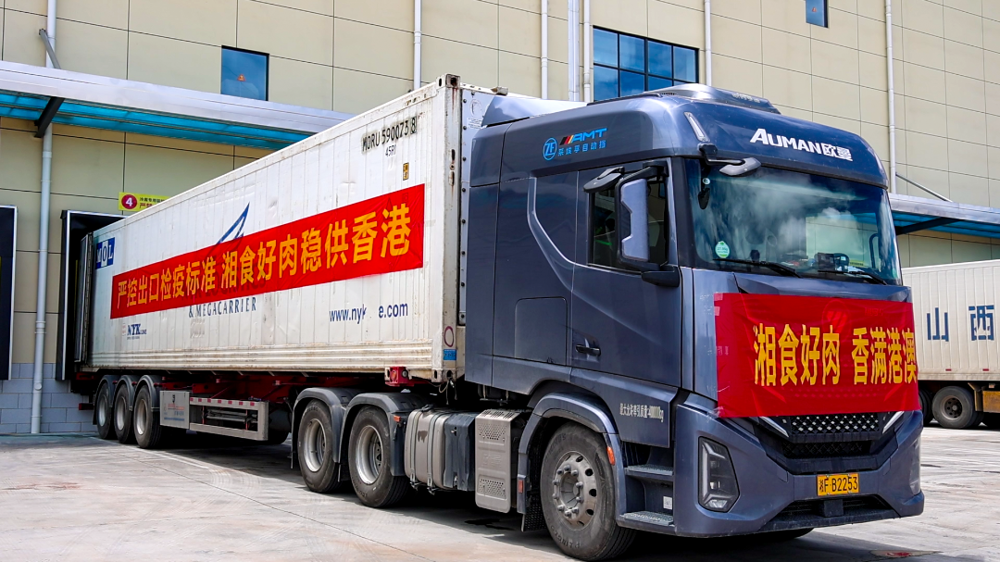
As cold chain technology and the industry mature, increasing quantities of frozen pork are entering Hong Kong. Pictured: a modern temperature-controlled cold chain truck. Image source: People’s Government of Jinshi City, Hunan Province
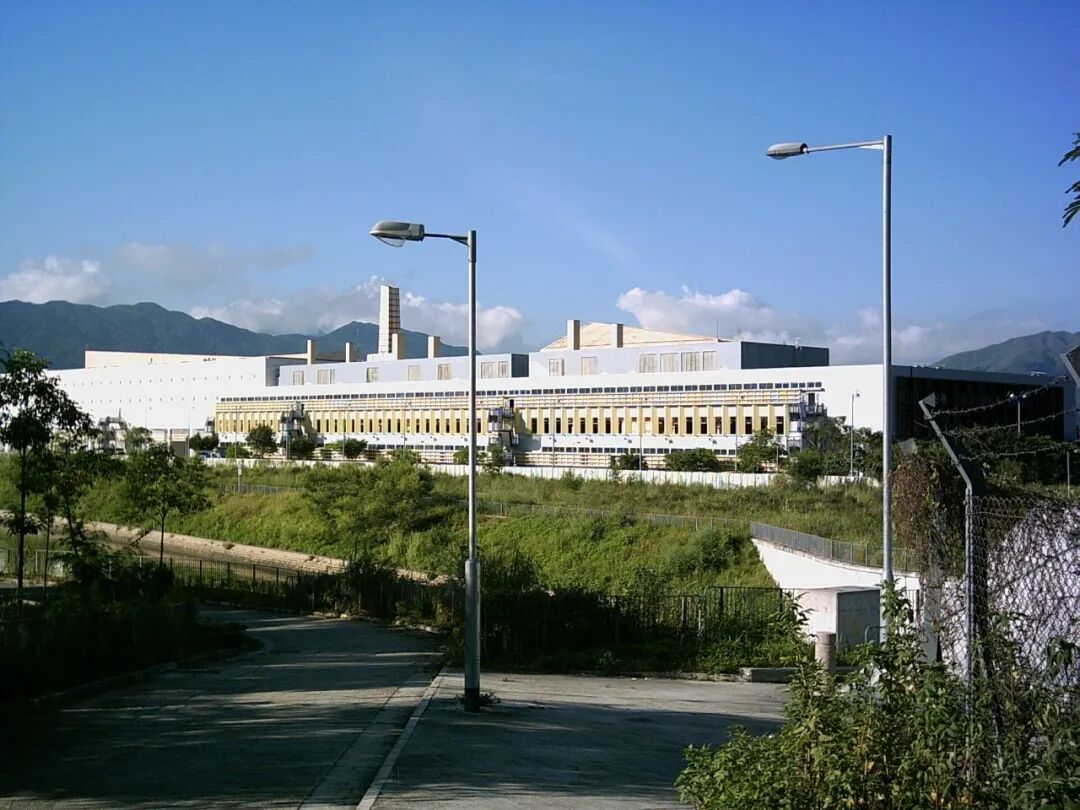
Located in the New Territories of Hong Kong, China, Sheung Shui Slaughterhouse is one of the largest and most advanced slaughterhouses in Asia. Image source: Wikipedia
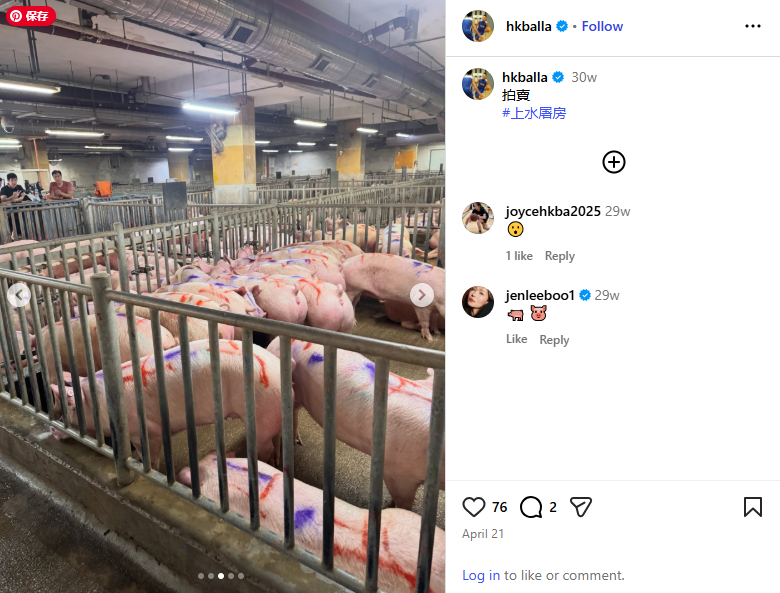
Hong Kong’s pigs are still sold by auction to this day. Pictured: pigs awaiting auction. Image source: Instagram@hkballa
G/U/E/S/T

Wang Weiyong | Former General Manager of CR Vanguard. Joined China Resources in 1988 and served as CEO of CR Vanguard Limited. Has long been engaged in the operations and management of the food and consumer goods industry.
H/O/S/T

Jieni | Project Officer at Foodthink. Loves traditional maize and cares about the environment.
T/I/M/E/L/I/N/E
00:00 The pork Hong Kong people eat every day — it’s all transported from the mainland?
01:43 From the founding of Wufeng in 1951: the origins of the food supply system to Hong Kong
03:04 From the “Three Express Trains” to road transport: one pig’s journey to Hong Kong
05:22 A pig hasn’t even left the farm, yet it’s already under Hong Kong’s food safety oversight?
08:01 From one dominant player to three-way competition: how was the Hong Kong pork supply market reformed?
11:03 Why must farmers keep raising pigs at a loss once they’ve reached their target fattening weight?
13:41 Live pig transport and the auction pricing mechanism
14:50 How is pork priced in Hong Kong? Buyers inspect the pigs, place bids and auction on the spot
23:01 Eggs have long been freely supplied — why is pork different?
24:36 From smallholder rearing to large-scale farming: the transformation of China’s pig industry
27:22 Whose responsibility is food safety? How do government, business and the market work together?
34:02 Is “Peking Duck” actually roasted British duck?
47:31 Young people won’t raise pigs and slaughterhouses can’t recruit: where is the future of Hong Kong’s pork supply? Is “supply to Hong Kong” still needed?
Further Reading ▼
Scan the QR code below
On Xiaoyuzhou | Ximalaya | Lizhi | Apple Podcasts
Subscribe to the Food Talk podcast
You are welcome to leave comments on any podcast platform’s comment section — we reply from time to time. Scan the QR code below to add Foodthink (WeChat ID: foodthink2), then note “食日谈” (“Food Talk”) to join the podcast listener group chat.

Music: Ba Nong
Planning: Jieni
Cover Art: Xiaojing
Copy Editor: Li Ye
Layout: Xiaoshu
Contact Email
xiaojing@foodthink.cn
Scan to tip and support original food knowledge
▼

▼
Click a keyword to explore more article collections
Seeds | Farming Techniques | Policy | Fermentation | Nutrition | Fruit | Fisheries | Events | Recruitment | Takeaway | Wet Markets | Animal Husbandry | Food Talk | Sharing Sessions | Book Club | Harvest Festival | Smallholder Stories | Climate Change | Rural Development | Cooperative Economy | Urban Farmers | Food Safety | Digital Technology | Biodiversity | Pandemics and Food | False Solutions | Ecological Farming Internship Programme
Beijing | Hebei | Shanghai | Guangdong | Guangxi | Henan | Sichuan | Jiangxi | Xinjiang | Shaanxi | Hong Kong | Chongqing | Zhejiang | Jiangsu | Guizhou | Northeast China | Taiwan | Inner Mongolia | Philippines | Canada | Russia | Mexico | Italy | United States | United Kingdom | Germany | Netherlands | Thailand | Sweden | Japan