
Spring Lambing: What Worries Ordos Herders?
Anthropologist Dr Urichan’s non-fiction piece “A Pastoral Vet’s Spring and Autumn: Treating Settled Herds and Restless Diseases” documents this in detail, and won third prize in the Frontline Non-fiction Writing Fellowship in 2022. The present article is an excerpt from that work.
With thanks to Frontline and the author for permission to republish; the WeChat Original label is applied solely to protect copyright. Frontline was founded by Matters Lab and the Renaissance Foundation, and provides fellowships and editorial support to independent writers. Visit the official website to subscribe for the latest on writing commissions, events, and workshops: frontlinefellowship.io; contact: fellowship@matters.news.
The start date and duration of lambing are linked to the mating programme carried out on the herds in autumn. A skilled herder must always be thinking one step further ahead. The careful nursing, feeding and orderly introduction of stud rams for mating in autumn can ensure both the survival of lambs and the smooth running of lambing.
A Mongolian herder’s livestock is known as the “Five livestock”, comprising cattle, sheep, goats, camels and horses. Of these, sheep and goats are called small livestock (bog mal), while cattle, camels and horses are called large livestock (bota mal).
Ordos herders also call bog mal “gar mal”, meaning “herds grazed within arm’s reach”, because tending small livestock demands the herder’s constant attention and care, and their grazing grounds are never as distant as those for cattle, horses or camels.
I
Goats, by contrast, are restless, curious and easily distracted. They tend to move downwind in search of fodder and may stray far from the grazing area, but when they do sense danger they bleat loudly enough to be heard. Grazing the two species together allows them to cover each other’s shortcomings.
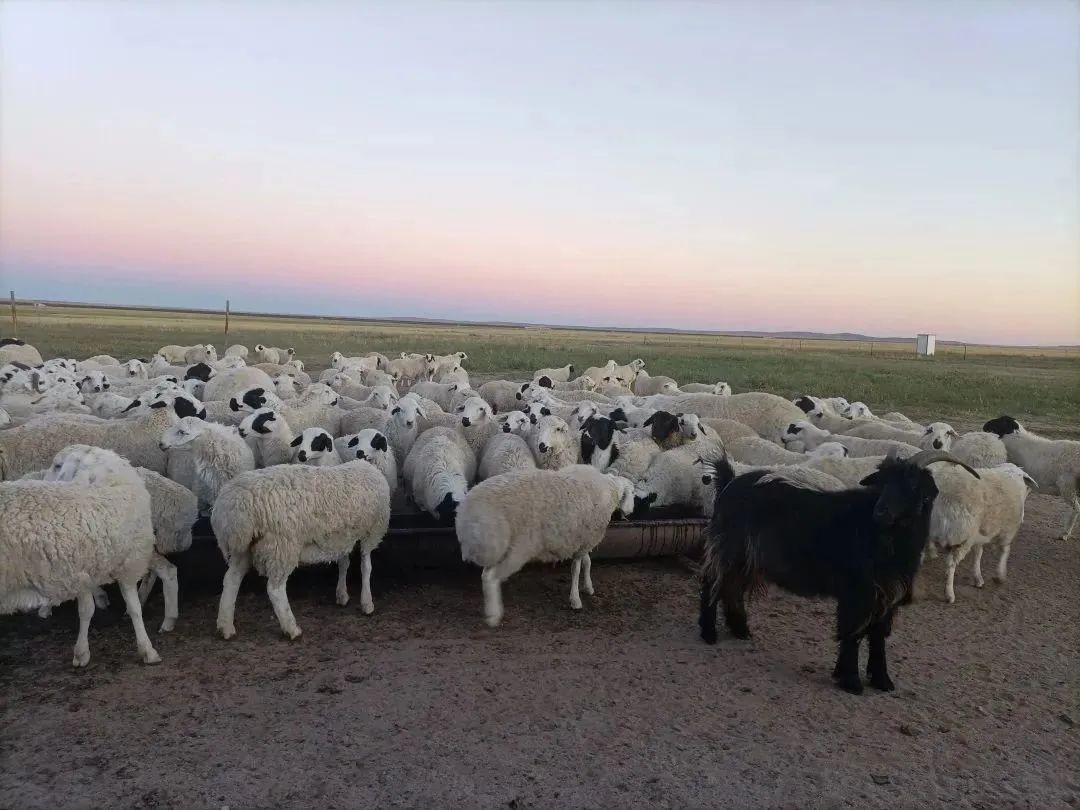
The flock that Jirimtu’s mother, now in her eighties, grazed in her youth was made up largely of goats. Ever since the wire mesh fences went up, the goats had been squeezing under the wire and straying onto neighbouring pastures, which bred a constant cycle of friction and quarrels between neighbours. It was precisely because of this instinct in goats that local herders gradually gave them up.
In 1953, the Central Government and the Inner Mongolian Party Committee decided to improve local livestock breeds in order to raise the quality and yield of animal products. Breed improvement for sheep in S Banner began in 1957, and by 1971 the Xinjiang fine-wool stud rams, initially introduced at a few pilot Communes (the present-day Sums and towns), had been extended across the entire Banner.
The offspring of S Banner’s local ewes bred with Xinjiang fine-wool stud rams were named Ordos Fine-wool Sheep. Compared with native sheep, Ordos Fine-wool Sheep produce a finer fleece, for which the purchase price once reached around forty yuan per jin.
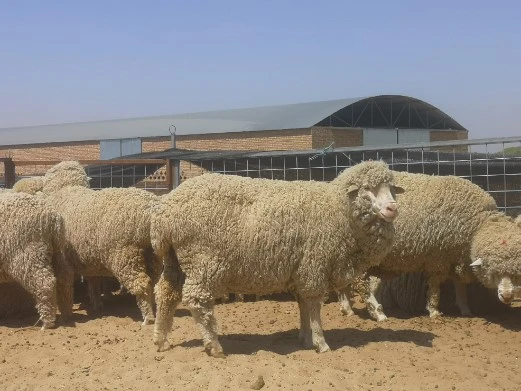
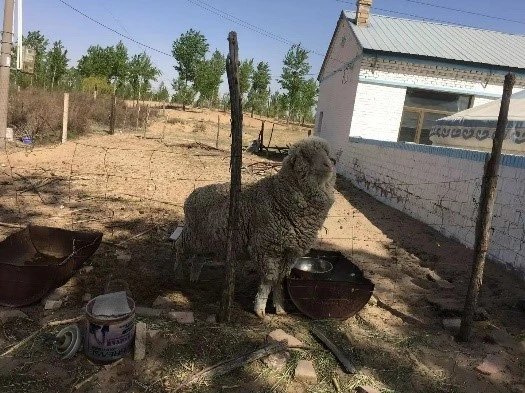
Before S Banner’s sheep breed programme was implemented, a household’s small flock consisted of native sheep and goats. At that time, a herder’s spring lambing was focused mainly on goats, while lambing of sheep was completed before spring had even arrived. The native sheep of S Banner were of the Fat-tailed Mongolian Sheep breed: hardy, cold-resistant, with large lambs and a high survival rate. So even with rudimentary pastoral infrastructure, winter lambing had no negative impact on the survival of young animals.
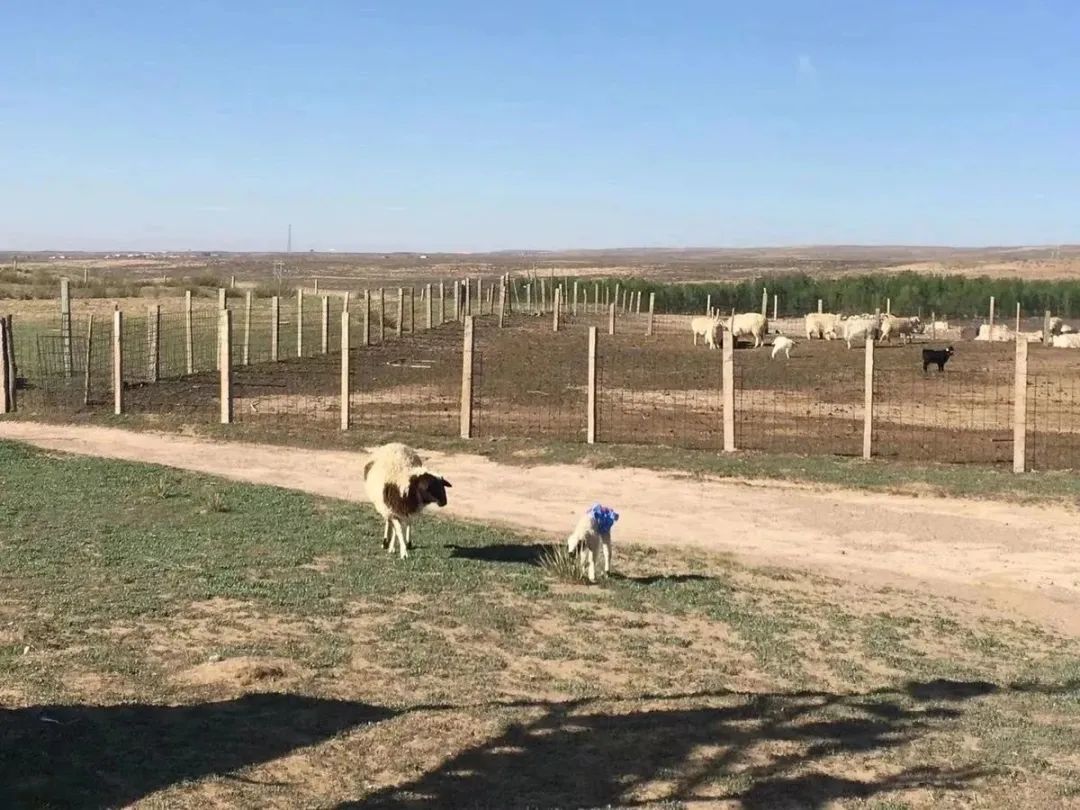
II
The daytime rest is also cut short: they must keep watch over any ewe that might give birth at any moment, while also checking whether a newborn lamb has managed to stand up, can suckle on its own, or needs to be moved somewhere warmer.
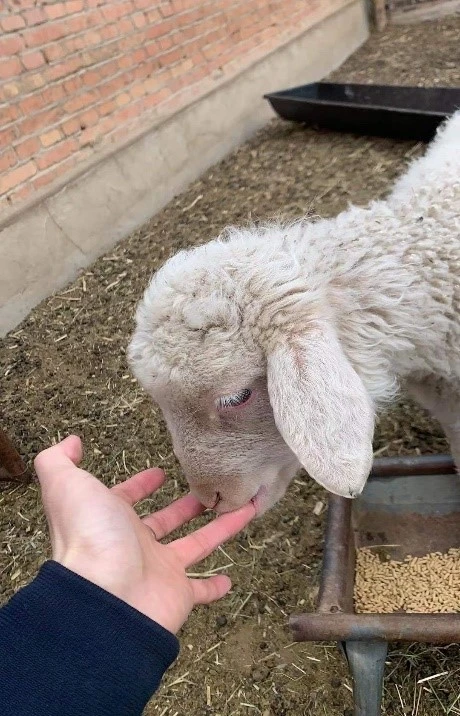
In exceptionally cold weather, the herder wraps a scrap of old padded cotton around the lamb’s back and belly. If signs of a difficult birth appear during labour, the children in the household are called to help.
They feel inside to check the foetal position and the condition of the lamb, then – under an adult’s direction – turn the presentation right or pull the lamb out. A sheep’s birth canal is small and narrow; once an adult’s hand is in, there is no room to manoeuvre. But nowadays, during lambing season the children are at school – most of them in boarding school – and can no longer lend a hand with the family’s work.
III
Que Naimu, a veteran vet at L Sum in the same S Banner, told me that in recent years he and several colleagues have averaged forty to fifty Caesarean sections a day through the spring lambing season, most of them on sheep. De, the station head, along with the veterinarians Qinggel and Dayang, are out on calls until two or three in the morning every day. After I left W Sum, I heard that Dayang had fallen asleep at the wheel on a call-out and the car had rolled into a ditch at the side of the road.
One day in early March, Dayang received a call from Sirji. The situation was urgent. One of Sirji’s ewes had been in labour since the day before, but twenty-four hours had passed with no successful delivery, and the ewe was spent, with no appetite.
On arriving at Sirji’s home, Dayang asked Sirji’s wife, Udabala, to prepare a basin of warm water, a towel and some washing-up liquid. Meanwhile he and Sirji together carried the ewe from the pen out to the brick paving in front of the house and laid her flat on a clean cardboard box.
Dayang first clipped the fleece from the lower abdomen, then washed the belly with warm water and a little washing-up liquid and dried it with a towel. He then took up a scalpel and made a crescent-shaped incision along the approximate position of the uterus. The abdominal wall slowly opened. Reaching in with a blue rubber-gloved hand, he discovered that the uterus had twisted externally, causing the difficult birth. Because of the delay, the lamb inside had stopped breathing.
Dayang pulled the dead lamb out through the incision in the uterus. The body was sheathed in a translucent membrane tinged pink with blood. Sirji placed the lamb and the afterbirth together into a white flour sack he had prepared in advance, planning to bury them under a clump of sand wormwood shortly afterwards.
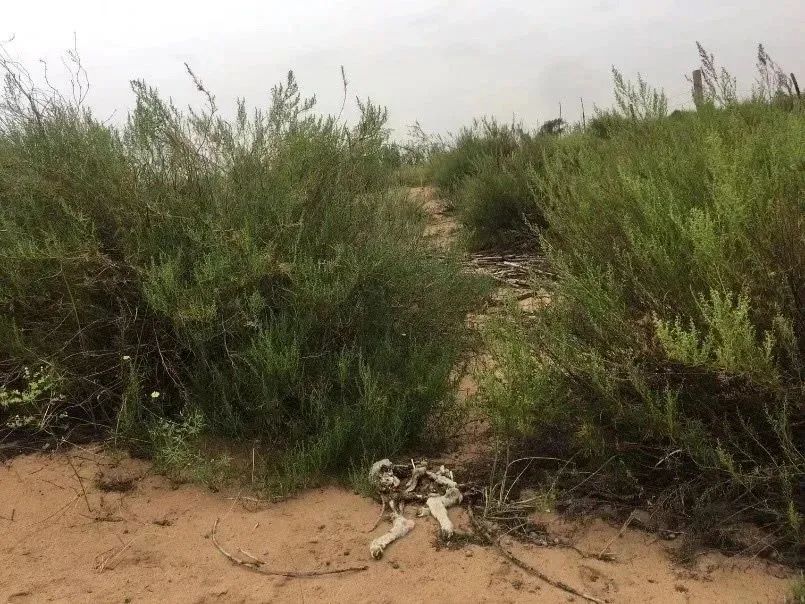
Ordos Fine-wool Sheep are remarkably placid: even after so complex a procedure no sedative is required. Two people holding the head and hindquarters are enough, and the animals will utter only a few low, brief bleats at the most painful moments.
IV
After nearly two hours of intense work, we were invited indoors for tea. Just as I poured myself a second bowl, I heard Udabala calling out loudly to Dayang from outside. Sirji knelt down, rested the ewe’s head on his knee, and drew back her eyelid – no red streaks showed in the whites of the eye. A bottle of nutrient fluid was not yet finished when the ewe’s breathing grew fainter and fainter, until every sign of life had vanished.
Sirji regretted not having called Dayang sooner. As they were heading out, Sirji and Udabala placed two hundred yuan on the tea table and pressed it on Dayang. “If the ewe doesn’t survive, I won’t take it,” he said, and at that Sirji stopped arguing and saw us to the door.
Dayang carried a measure of self-reproach over failing to save the ewe. Sirji and Udabala expressed no blame, yet often herders will voice their doubts – sometimes even their fury – on the spot. Some attribute the ewe’s death to vaccination or to the vet’s incompetence.
The vets, however, insist that difficult births in ewes have nothing to do with vaccination and arise from far more complex causes. Virtually every case of dystocia in ewes is caused by uterine torsion.
V
When the herders of A Gacha acquire a new breed, they typically travel beyond the Banner, and often beyond the prefecture-level city, to buy stud rams, while the ewes that conceive remain Ordos Fine-wool Sheep. The stud rams of these breeds are tall and broad-boned, vastly larger in frame than the Ordos Fine-wool ewes, so foetuses too large for the mother’s body easily trigger difficult births.
S Banner has suffered severe drought for three consecutive years. After rainless summers and autumns, the grassland vegetation in winter and spring grows thinner still. The drought makes the herders’ winters and springs exceedingly hard: they either supplement natural grazing with crops from sown fodder plots or buy hay, feed, and fodder in bulk to sustain their animals. Every year, nearly every household in A Gacha spends 50 to 80 per cent of its annual income on grass and feed. During lambing season, to supplement the ewes with extra Taimei’er and safeguard the lambs’ health, herders feed them compound rations.

Every time a herder walks into the pen carrying a plastic bucket brimming with feed, all the ewes scramble eagerly to the trough. Packed shoulder to shoulder, jostling to thrust their heads into the feeding trough, they inevitably trample and push against one another. The vets believe that the crowding and rushing at feeding time is likely a major cause of uterine torsion.
VI
In A Gacha, apart from a small number of herders who have amassed considerable wealth through proximity to the surrounding coal mines, most supplement their income through seasonal wage labour, selling animal products, or driving trucks for the mines.
Still, without question, selling the year’s spring lambs in bulk at the turn of late summer into early autumn remains the principal household income. So the condition of the ewes in spring and the health of the growing lambs all bear on how much the household earns come autumn. The annual live-animal trading price, too, is subject to the fluctuations of the meat market.
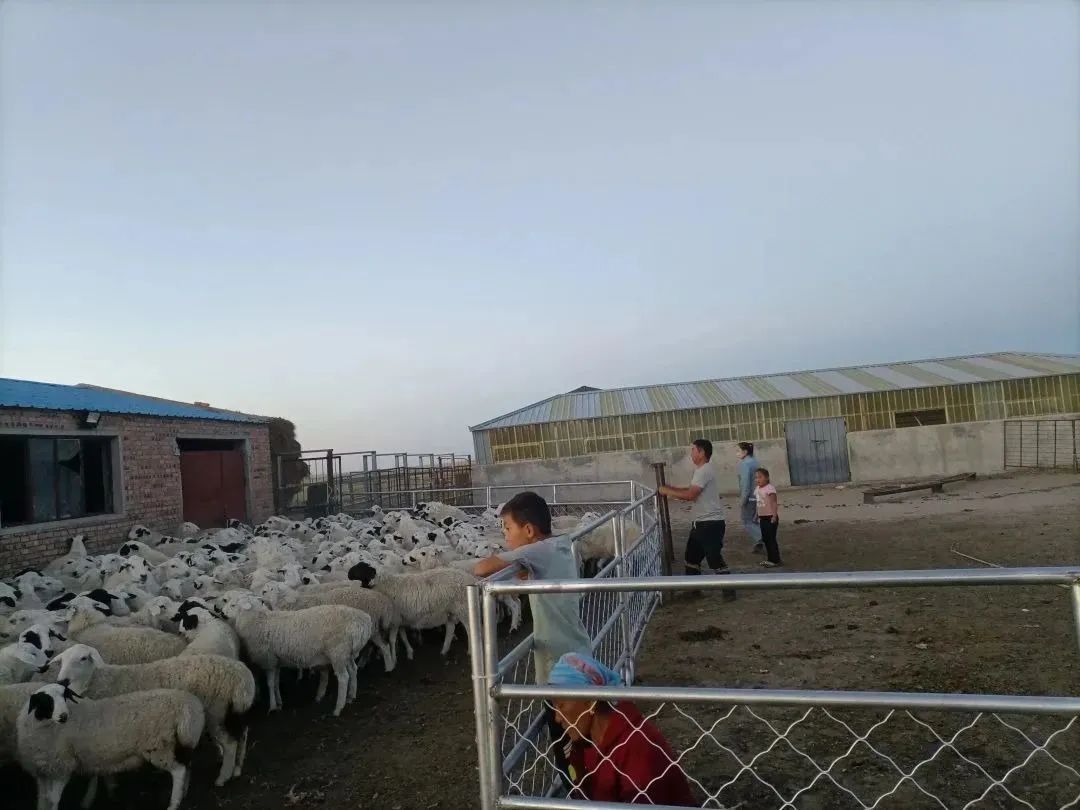
Had Sirji called a vet on the very first day the ewe showed signs of a difficult birth, perhaps both the lamb and the mother might have lived. Dayang voiced his frustration over this, too.
When to call a vet is a delicate calculation for a herder. On the one hand they hope to ease the animal’s condition with traditional remedies, folk treatments, or even the animal’s own constitution; on the other, they keep watching for the right moment to make a “paid” intervention.
But if the animal shows no hope of being savable, herders will simply give up. For the vets, therefore, a call-out often comes one step later than the ideal moment.

Unless otherwise noted, all photos in this piece were taken by the author.
The layout differs slightly from the original.
Original editor: Gu Yuling / Frontline