
Farmers Return – and the Big Land Contractees Panic

In late March in Tongchuan, the weather was still chilly. A few days earlier, two showers had fallen – not heavy, and intermittent – but the dampness still lingered.
At last the sky cleared. Just past seven, Hongxia was up the hill. She was feeling anxious: the maize stalks left standing since before the New Year still hadn’t been cleared. “There are over thirty mu of maize stalks still on the hillside plots – all of them still in the ground.” They all needed tidying up urgently. After all, in barely twenty days, around Grain Rain, the new crop of maize would need sowing.
But alongside the pressure of time, Hongxia had a new worry. Even if she got the land cleared, she didn’t know whether she would still be able to farm it.
More and more people were returning to the village. After a few of Hongxia’s own relatives came back, they reclaimed the land they had entrusted to her years ago to farm for them – around twenty mu in all. “They’re all neighbours and kinsfolk,” she said. “When someone asks for it back, you can hardly refuse. Even with a written contract, it’s three to five years at most.”
Hongxia feared that the more people came back, the more of them would want their land returned. The investment her family had made over the years across those hundred mu might never be recouped.
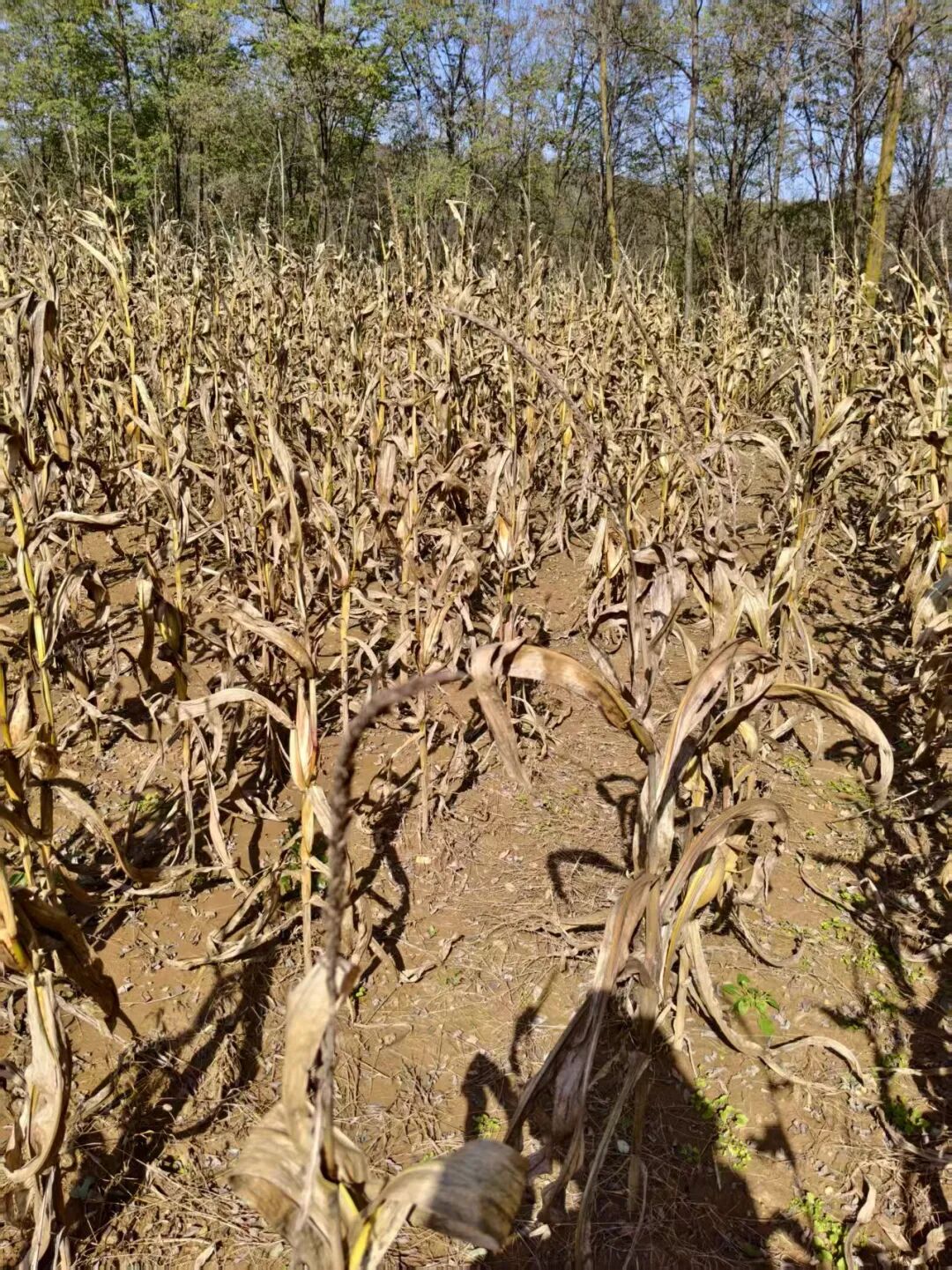
◉ Maize stalks yet to be cleared still stand in the fields.
The Large-Scale Farmers Who Stayed
Hongxia had only just turned forty, yet she and her husband Daming had been farming together for over twenty years. She always joked with a laugh, “I suppose I’m an old farmer by now.” The couple could not bear to see so much land lying uncultivated – Daming in particular, who had no love for migrant work and much preferred tilling the soil.
So at first the two managed the ten-odd mu of land allocated to the family by the village. Since Daming preferred working the land to dealing with people, they began taking on plots that relatives and neighbours had abandoned. Over time, they pieced together more than thirty mu.
After that, to make the work of preparing the land more manageable, they invested in additional farm machinery – a rotary tiller, a seed drill, a small walk-behind harvester, a thresher, three-wheeled utility vehicles, and more. As their fleet of machines grew, and in order to spread the costs and keep the equipment from sitting idle, they leased additional village land at a rate of nearly 200 yuan per mu per year, bringing their total to around 110 mu. Compared to the way villagers used to farm each their own plot in isolation, this amounted to a small form of large-scale farming.
Daming liked to say he enjoyed the “freedom of farming”. This “freedom” meant no boss dictating his hours, and a sense of self-determination over his own time. But the other side of “freedom” was labour that knew almost no rest through the year. In spring, tilling and sowing; in summer, spraying and weeding; in autumn, harvesting; only when winter’s cold set in could there be a brief respite.
This life was not so different from having a job, really. The sheer expanse of land also meant more reasons one could not leave home. As Hongxia put it, “The land just walls you in.”
Rather than work with their faces to the earth and backs to the sky, most people chose to leave. In Tongchuan, farming could not hold people.
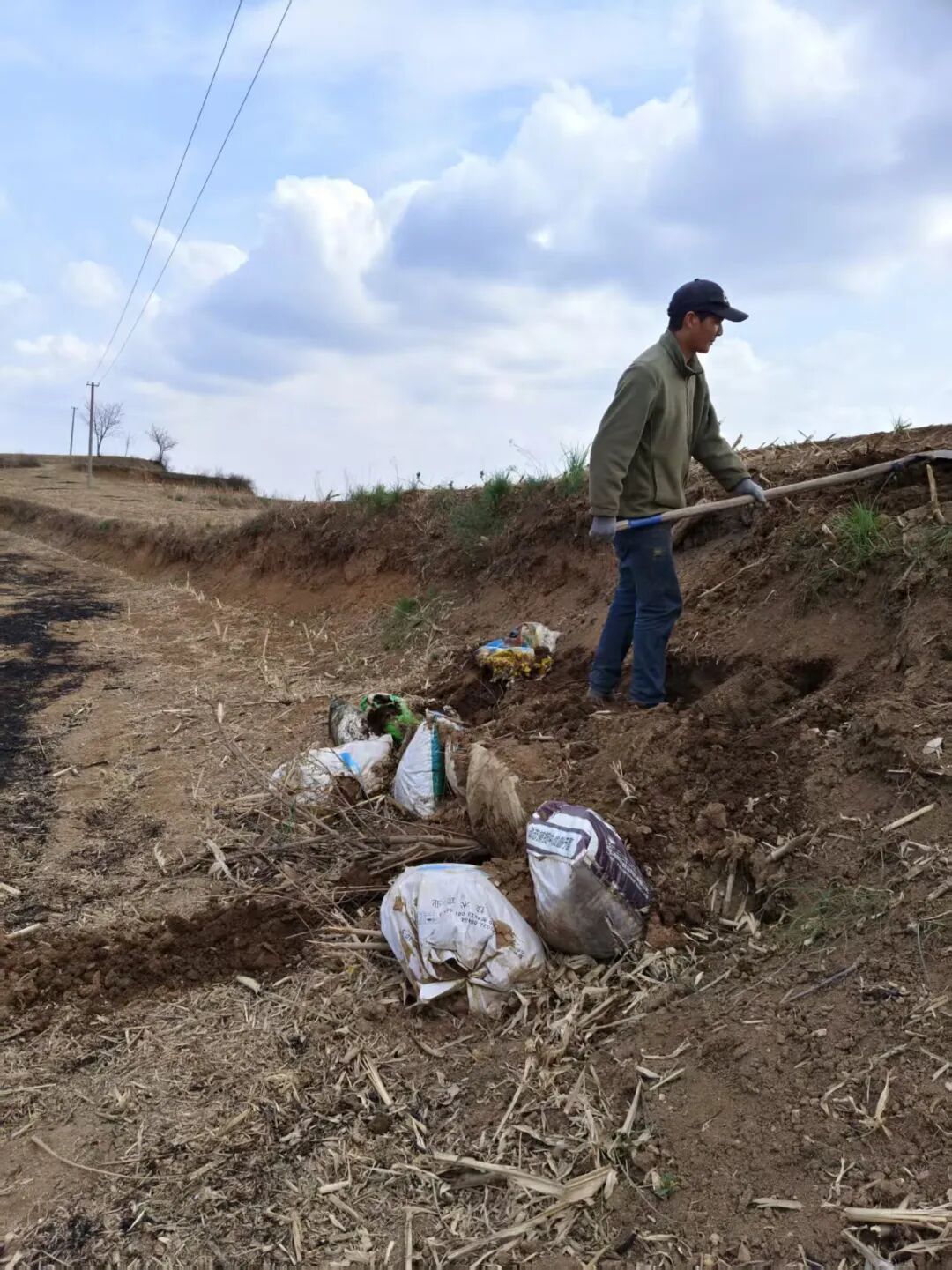
◉ Daming, Hongxia’s husband, is clearing his family’s land.
Land Abandoned, City Bound
Tongchuan lies in the heart of Shaanxi, bordered on its various sides by Xianyang, Yan’an and Weinan. The city sits close to the southern edge of the Northern Shaanxi Loess Plateau, and although it is classed within the Guanzhong Plain region by its administrative position, a glance at a satellite map reveals that the land here is anything but plain – it is all mountains. Scattered among them are tablelands, ridges, knolls, gullies and river valleys.
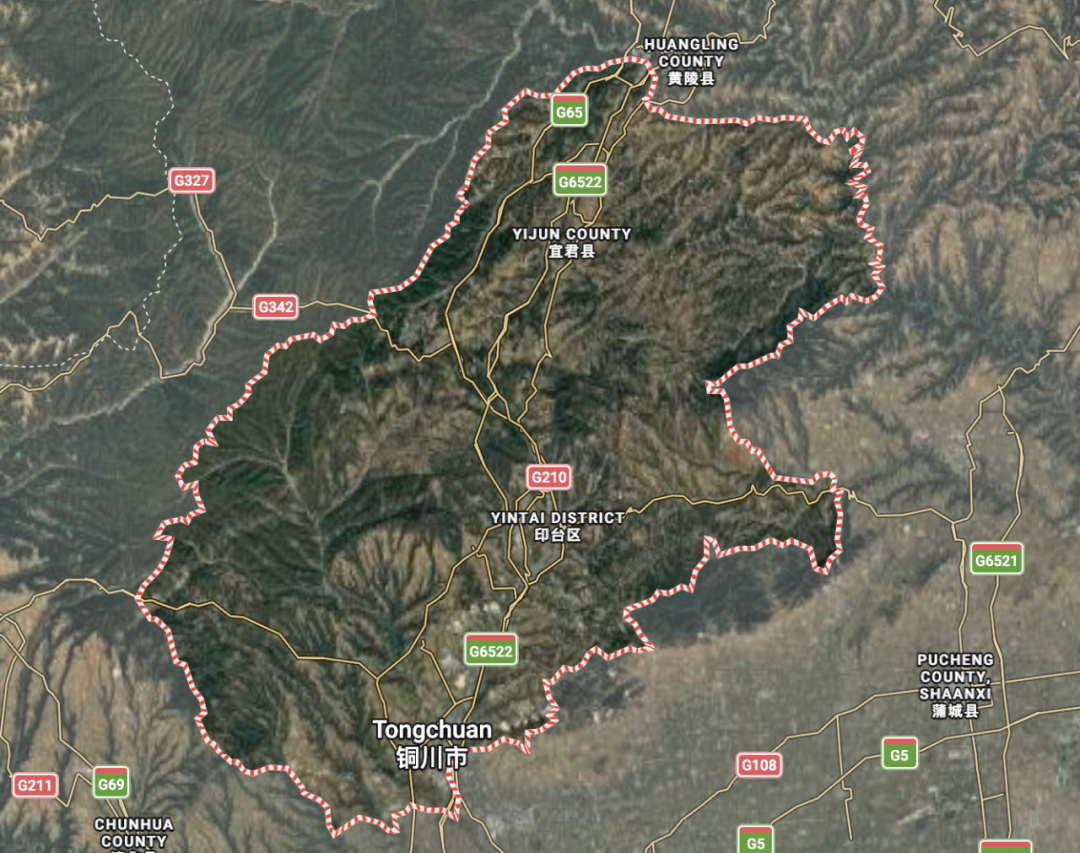
◉ A satellite map of Tongchuan, where flat ground is scarce and mountains stretch in every direction.
It is precisely because of this terrain that farming here means making a living on the slopes – far harder and more exhausting than working the flatlands. Slopes are not the vast, unbroken plains of the north, where heavy mechanisation can save labour and boost efficiency. For the people here, the degree of mechanisation achievable is very limited. “The smaller vehicles can still puff their way up the slopes and help haul a few things, but once the farm machinery gets any bigger, it simply cannot get up at all.” In the end, a great deal of the work still has to be done by hand.
And when the ground is uneven, so is its fertility. “Once late summer and early autumn roll round with all that rain, the soil washes away badly. The mud gets carried right down the slope, and all that’s left is a scatter of small stones.”
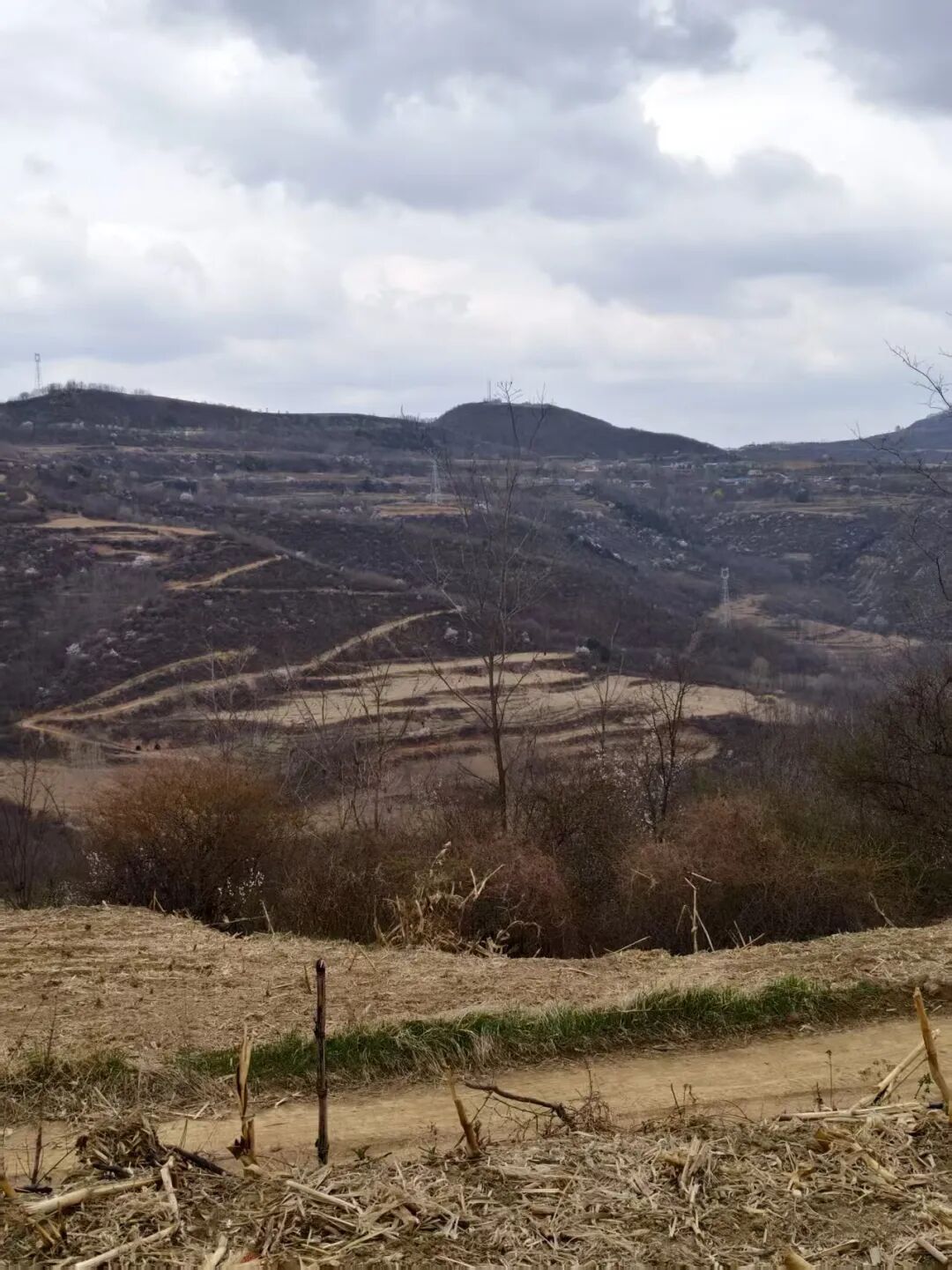
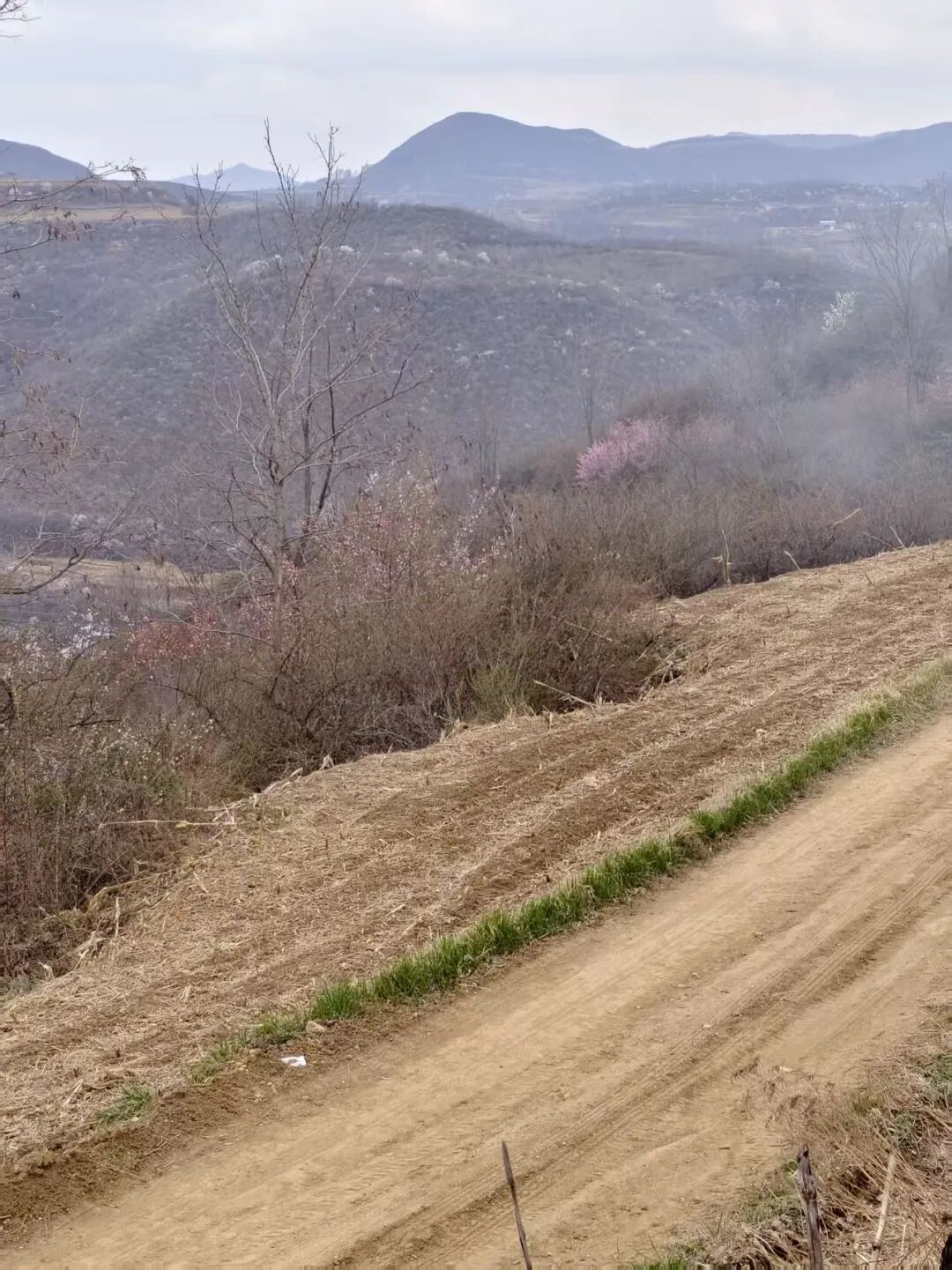
◉ The path Hongxia takes each day as she walks up the hill to the fields.
But for most villagers, the reason they abandoned their land went beyond the soil itself being “not rich enough” – being limited to just one crop a year was another serious problem.
In most parts of Tongchuan, the temperature swing between winter and summer is stark, and grain yields are low – quite unlike the Guanzhong Plain, which can produce two harvests a year. Many farmers in Tongchuan can grow maize or wheat, but not both in the same year. So after working out what the land will actually yield, most people here opt for maize. “If there’s no major freak of the weather, you might get over 1,200 jin of maize. But if it’s wheat, you’re looking at barely 400 to 500 jin.”
And for the ordinary villagers here, who simply needed to put food on the table, that was clearly not enough.
Farming was “a life at the mercy of the weather”, so to find another means of making a living, most villagers chose to head out for migrant work. In Hongxia’s words, “We’ve got no education, no book learning – can barely recognise a handful of characters. The only work we can get is the low-skill, back-breaking kind.”
Fewer and fewer people stayed in the village, and the land was abandoned one plot after another. Compared with farming, going down the mines offered a more direct path to cash. Land and mine shafts, in a sense, made up the most basic livelihood structure of this region – the former “low return but relatively secure”, the latter “high risk but quick money”.
Land That Saps You
Hongxia’s husband Daming had once gone down the mines too, but lasted only a year before giving up. “Coal mines are dangerous after all – I was a bit afraid.”
Choosing to stay in the village and farm meant choosing to grind through the land, day after day. Most of Hongxia’s family’s land lay on the slopes. “Of our 110 mu, at least 100 are on slopes.” Farming on slopes made mechanisation nearly impossible, and every task was an enormous drain on human labour.
Stones exposed after rain had washed away the soil had to be picked up one by one by hand. Hongxia said, “If you don’t clear the stones, the machinery can easily break down, and the maize won’t grow well either.” Whenever rain gave way to clear skies, she had to hurry up the hill. First, she would rake the stones together with a heavy iron rake, then, gloves on, toss the smaller stones into a woven basket, emptying it, basket by basket, into the three-wheeled utility vehicle. Once one load was full, her husband would drive it down the hill, and they would cart the stones away, load after load.
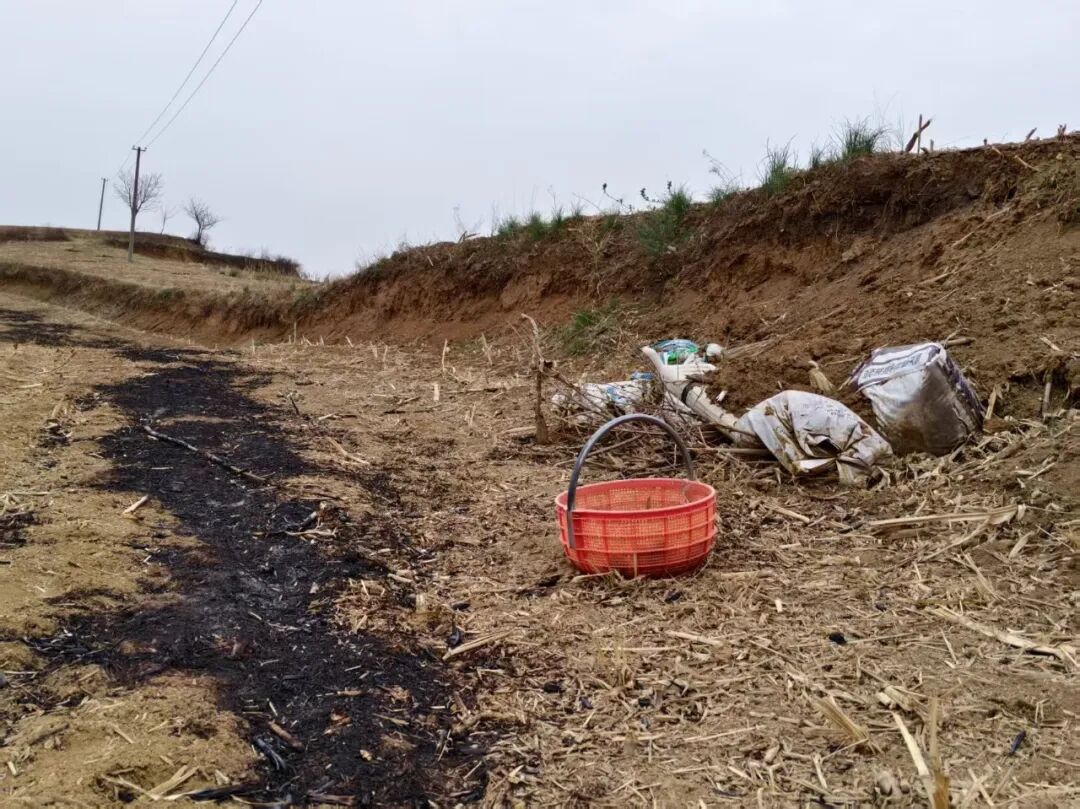
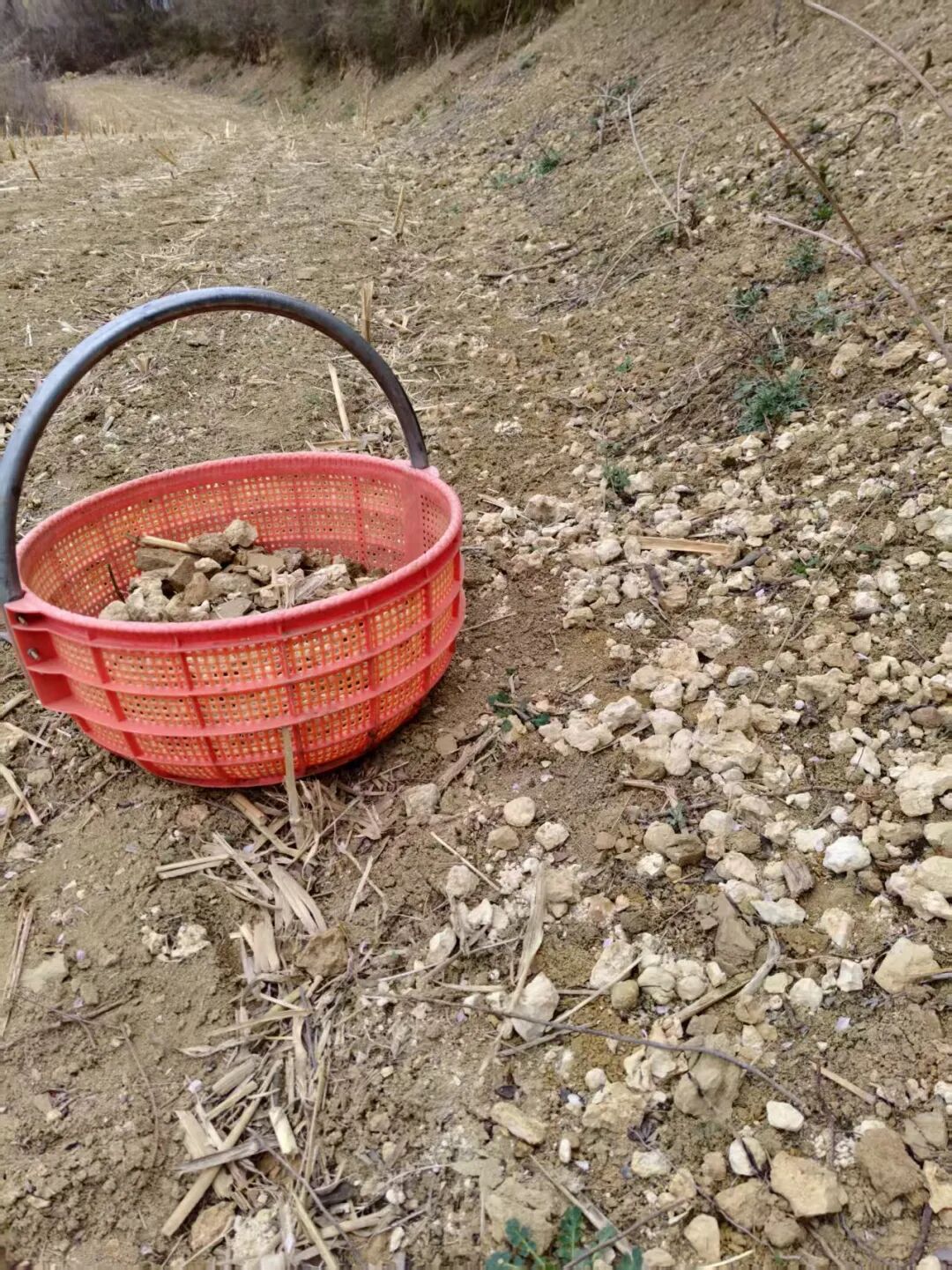
◉ Hongxia has loaded the stones from the field into a basket.
From sowing to final harvest, maize needs at least four rounds of hands-on work: sowing, thinning seedlings, applying fertiliser, breaking off the maize cobs, husking, threshing, and cutting stalks – “every single stage calls for human labour.”
Hongxia’s family farmed a great deal of land, and since machinery could not be used on the slopes, the maize had to be broken off entirely by hand. Every year when the maize was ripe, the couple alone simply could not cope. Harvesting took no more than a fortnight from start to finish, and what they dreaded most was rain – if a race against the weather meant hiring extra hands, it had to be done. Labour costs were a considerable expense. Once harvest arrived, they would hire workers at 100 yuan per person per day, typically around four people at a time, for just over a fortnight. This also meant that even by expanding the scale of their operation, it remained difficult to substantially reduce certain unit labour costs that defied easy quantification.
And over the past few years, Hongxia had clearly noticed some shifts in the village’s labour market.
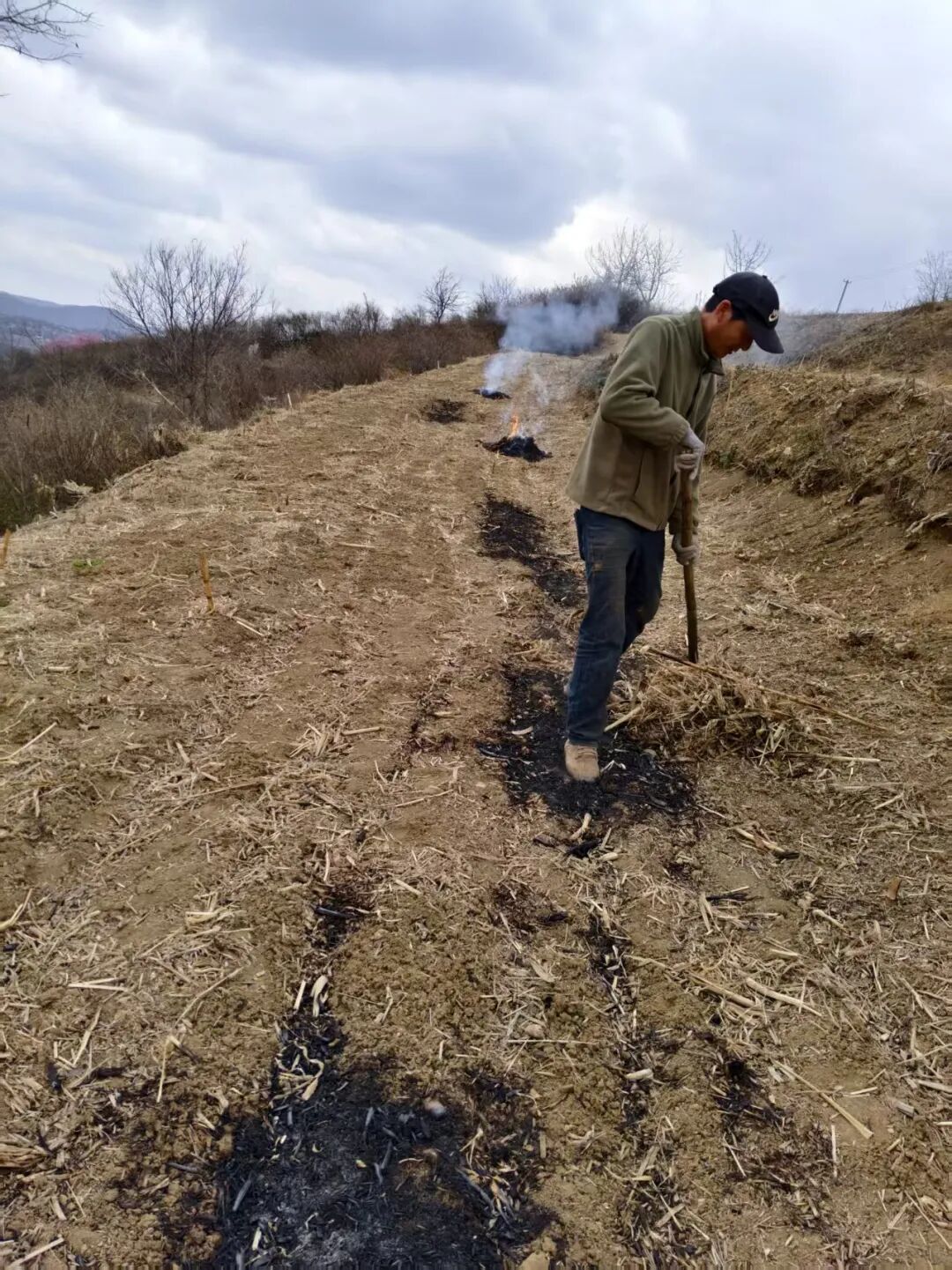
◉ Hongxia and her husband are clearing maize stalks roughly chopped up by a machine.
When the City No Longer Offers a Way to Live
“So many people have come back.”
When it came to the village growing busier again, the first sign Hongxia noticed was in the pay of the “cob-breaking” workers. “In past years, a person earned at least 130 yuan a day. Last year it dropped to 100.”
Hongxia felt this shift had begun after the pandemic. Whether heading to the city for work or going down the mines to find a living, opportunities were scarcer than before.
In earlier years, Tongchuan had known prosperity too. During the First Five-Year Plan, the state had prioritised two major projects here – the Wangshi’ao Coal Mine and the Yaoxian Cement Factory – laying the city’s industrial foundation. At that time, Shaanxi’s industrial development relied chiefly on Tongchuan. And given its importance, in 1958 Tongchuan became the second prefecture-level city established in Shaanxi, after the provincial capital Xi’an.
Industry surged in those days. Coal output once accounted for 70% of the province’s total, and Tongchuan became a key national coal-production base and the largest cement-production base in the Northwest. This brought abundant opportunities to those living nearby. Even when villagers needed to find work away from home, they did not have to travel far – with so many mining areas around Tongchuan, “if the land could not be farmed, many simply went down the coal mines to dig.”
For a great many people, the mines remained the realistic choice. “If you’re willing to put in the hard graft, seven or eight thousand a month was possible.”
Beyond the coal mines, jobs in construction labour, restaurant kitchens, security and domestic service were the posts most villagers took up when they left for the city. “Scrapping for a living off the land is never certain – one bad drought or one heavy flood, and a whole year’s crop is ruined. Working away is hard too, but at least there’s a wage each month. Even a thousand or so brings a measure of peace.”
Years of uncontrolled, unrestrained mining had left this city “riddled with holes”. It had created extensive mined-out areas and subsidence areas, and caused severe environmental pollution. Tongchuan came to be known as “a city invisible from a satellite”.
Over time, this single-industry economy pushed Tongchuan’s economy to near the bottom of Shaanxi’s rankings. The gradual retreat of heavy industry also cost many their chance of finding work in the city. According to Hongxia, the coal mines had raised their standards and now took on only younger workers – once you were over 40, you were virtually never hired – and as mining districts aged, many shafts closed, so opportunities dwindled.
Jobs in the city were hard to find and the pressure to survive was immense; some people simply could not find work and had no choice but to go home. In the city, the moment you opened your eyes you were spending money – rent, groceries, everything was a cost. But back in the village, the house was your own, there was no rent to pay, and if there was a plot by the door, you could grow enough vegetables to see through a whole summer. “We’re country folk. If we can’t earn more, we’ve got to find ways to spend less.”
There was another change, too, and a more subtle one. In the past, rural people moved to the city. Now, some urban dwellers have begun flowing the other way, coming to the countryside to pick up odd jobs. Hongxia mentioned that some town people who had once worked in the mining areas had had their land requisitioned and still had no stable income. “Living in the city costs a fortune, so they come out to the village to work.” During the busy farming seasons, they helped with flower thinning, breaking off maize cobs, and picking apples.
This reverse flow of labour had driven wages down. But that did not mean the countryside was well supplied with workers. Quite the opposite – local labour was still in short supply. The younger generation refused to do the hard work in the fields, leaving only middle-aged and elderly people behind. “They’ve also got newborn grandchildren to look after, so they never stay the course at work,” Hongxia explained. And those past a certain age simply could not manage the labour in the fields any more. The sources of labour had grown more complex, too: village elders, unemployed town residents, and “landless farmers” who had been resettled in urban areas. Together they made up a labour market that was loose and unstable.
Those Who Have Returned Want Their Land Back
Following the mountain road as it wound uphill, all she could see was the familiar yellow-and-brown earth of the area and a sky the colour of smog haze. Hongxia was in no mood to take in the scenery around her. Her eyes were fixed only on the yellowed maize stalks still waiting to be dealt with.
Winter gives way to spring, and the farmers are about to begin a new sowing season. Hongxia could only cling to what was certain right in front of her. “Whether the land can be farmed or not, I’ll clear the stones first. The land must not go idle – as long as it’s not idle, that’s enough.”
Now that people were coming back, naturally they wanted their land back too. Renting land among villagers was not like contracting to an outside company or institution, where there is a formal written agreement. Rural society runs on personal ties. Most arrangements are made verbally – you settle the terms of a land rental over a meal at someone’s home, and even among neighbours who are not well acquainted, a go-between passing on a few words is enough to bridge the gap. But this is exactly where the trouble lies.
For the farming households who had once expanded their operations by contracting large plots of land, the risk came sharply into focus the moment the land was reclaimed – their earlier outlay on machinery had turned into a sunk cost. And there was no cutting their losses. “The machines won’t sell, but even with less land you still can’t do without them,” Hongxia said.
The money Hongxia and her husband had spent on agricultural machinery – vehicles large and small – came to around 150,000 yuan in total. In truth, even in their best year, once the cost of the machinery was set aside, net profit barely came to a thousand yuan. In 2025, the relentless autumn rains left the maize completely waterlogged. What little they managed to salvage would not dry and went mouldy in the end; each mu could fetch only 300 yuan – barely enough to recover the seed and fertiliser costs.
It was not only Hongxia. A young man in the village, just over thirty, faced the same predicament. “He’s even got a university degree,” Hongxia said, her tone tinged with regret. Before the pandemic, he had deliberately moved back to the village, determined to bring scale and mechanisation to farming. He figured that one person with machinery could manage over a hundred mu and clear 100,000 yuan a year without any trouble. So the young man set about it in grand fashion, even paying 200 yuan above the local going rate – 400 to 500 yuan per mu – to contract around 80 mu of village land. But it never came to pass. Before three years were out, he was left with fewer than 50 mu to farm. “Everyone else has taken their land back.”
Moreover, it was not just the land. In preparing to farm, the young man had also poured a great deal of money into agricultural machinery. “Now there isn’t enough land to work, and it’s all sitting in the yard gathering dust.” His plan had been to help other farmers with the autumn harvest, earning enough to cover fuel, but he could not sit at home every day waiting for word. However he worked it out, these odd, sporadic earnings were nowhere near enough to keep a family going.
In the end, his “grand” vision was betrayed by the land. “This year, he’s gone down the coal mines too.” On this land, those who had been to school and those who had not walk to the same ending.
An Uncertain Future
For the smallholder farmers left scattered across individual plots, earning a living from the land had become even harder. Even when it came back into their hands, it brought no stable livelihood. If anything, it was more of a “forced fallback”.
Hongxia pointed out that her village was still one of the more generous when it came to land – each person received just over two mu, nearly three, and a household put together would amount to barely ten or so mu. In a year, each mu yielded roughly 1,200 jin of maize, while the purchase price of maize in recent years had hovered around 1.1 to 1.4 yuan per jin. In other words, annual income came to barely over 10,000 yuan. Yet the per-mu annual cost of seed, rotary tilling, sowing and fertiliser added up to roughly 300 yuan. After deducting costs and dividing the remainder among a household of four or five, what was left was next to nothing. ‘We’d hoped to pick up odd jobs to make up the shortfall, but now there’s no work to be found either.’
And that told the true story of the countryside today. For most people there was no reliable path upward, only a jumble of livelihoods constantly reshuffled as circumstances changed. Though the rural population flowed in and out, constantly in motion, there was never a clear direction.
The land here had been like that. In the years when no one in the village was left to work it, plots had gradually gathered into the hands of those still willing to farm, people like Hongxia. Now, amid all the uncertainty of life, the people were returning, and the land was fragmenting once more, plot by plot.
Hongxia was no exception. She and her husband were still what people called “hundred-mu contracted farming households”. Their future, too, remained uncertain. ‘If we lose any more land, we’ll try livestock, or maybe set up a little food stall.’ When asked about the future, Hongxia’s answer carried a characteristic pragmatism, but her tone was thick with uncertainty and bewilderment.
For all that they appeared to have so many options, the truth was that these were merely scenarios without a clear road to follow. People who had spent half a lifetime working the soil had not yet worked out how to come to terms with the land slipping away from under them.
Foodthink
Author
Mi Xiaomai
A second-generation farmer who tilled the fields as a child and now makes a living from the written word. She loves and resents the land in equal measure, but hopes to document more of the countryside, its farmers, and their work.
Daming is a pseudonym used in this article. All photographs provided by the author.
Editor: Xiaodan