
The Wanderer’s Journey: Who Knew Yoghurt Could Be This Much Fun!
I.
My curiosity about fermentation drew me towards fermented dairy, and yoghurt in particular. Commercial yoghurt, produced on an industrial scale, typically uses a single culture purified through laboratory freeze-drying—most often Streptococcus thermophilus and Lactobacillus bulgaricus. While a single culture ensures food safety and consistent flavour in mass production, it also forfeits the capacity to continue fermenting and thus to be preserved over the long term.


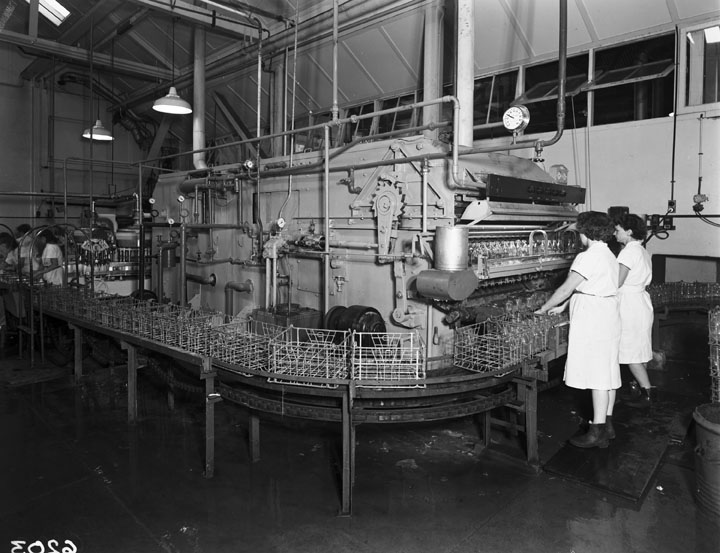
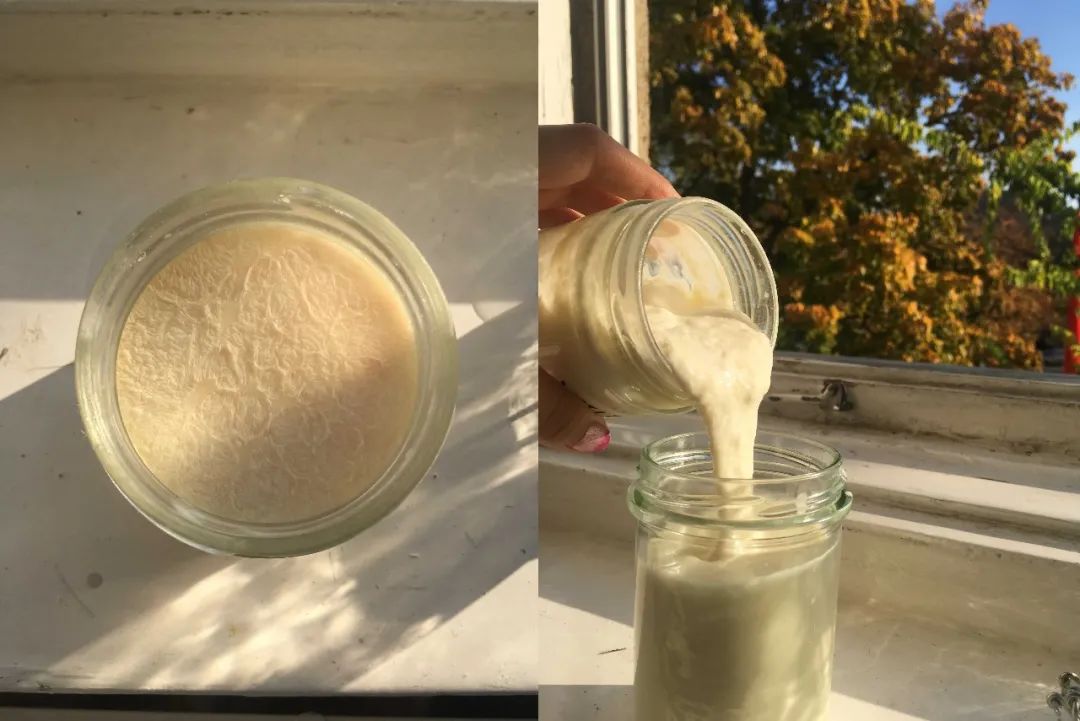
In contrast, naturally fermented yoghurt (sour milk) is made by pouring a small portion of already-fermented yoghurt (a starter culture) into fresh milk and leaving it at room temperature. In these conditions, the microorganisms in the starter find a suitable environment for growth and reproduction (room temperature) as well as nourishment (the milk’s fat), transforming the milk into yoghurt.

If one were to draw a parallel, it is rather like ancient armies besieging a walled city and gradually assimilating its original inhabitants. Different regions harbour different varieties of yoghurt “crafted” by different microorganisms, and many fermentation enthusiasts eagerly preserve or share ancient cultures. Yet which microorganisms exactly make up these cultures can no longer be precisely determined.
Even the same variety of yoghurt from the same origin, once preserved by different people in different environments using different methods, will develop its own distinct microbial populations and levels of activity. Through the passage of time and shifting conditions, they have evolved into tenacious, inclusive little ecosystems that tirelessly preserve and refresh the yoghurt’s flavour.
Gradually, I too embarked on my own humble journey of culture collecting, nurturing our miniature microbial ‘pets’ alongside the members of my studio. Along the way, I came to feel that the joy of enjoying fermented foods is about so much more than flavour alone—it stems far more from the exchanges and conversations shared among fellow fermentation enthusiasts.

II.
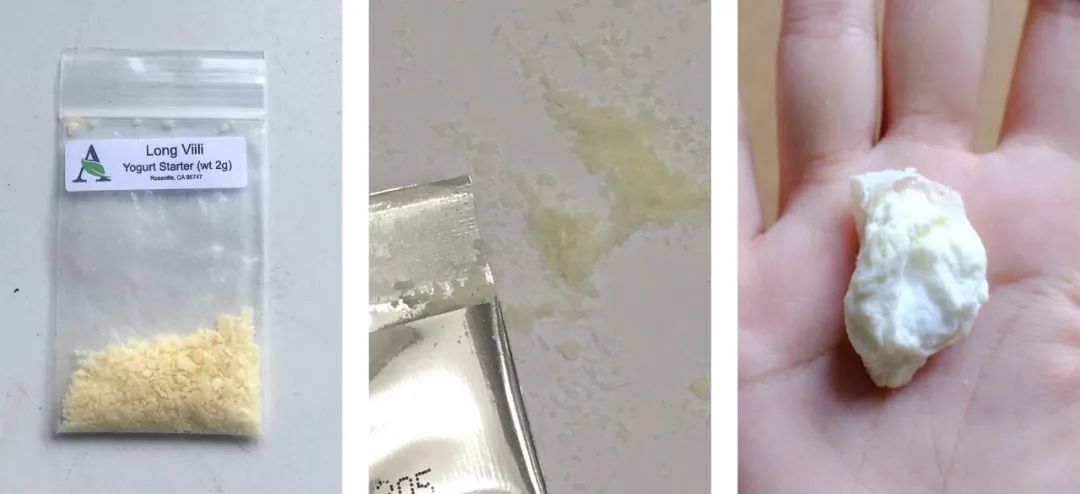
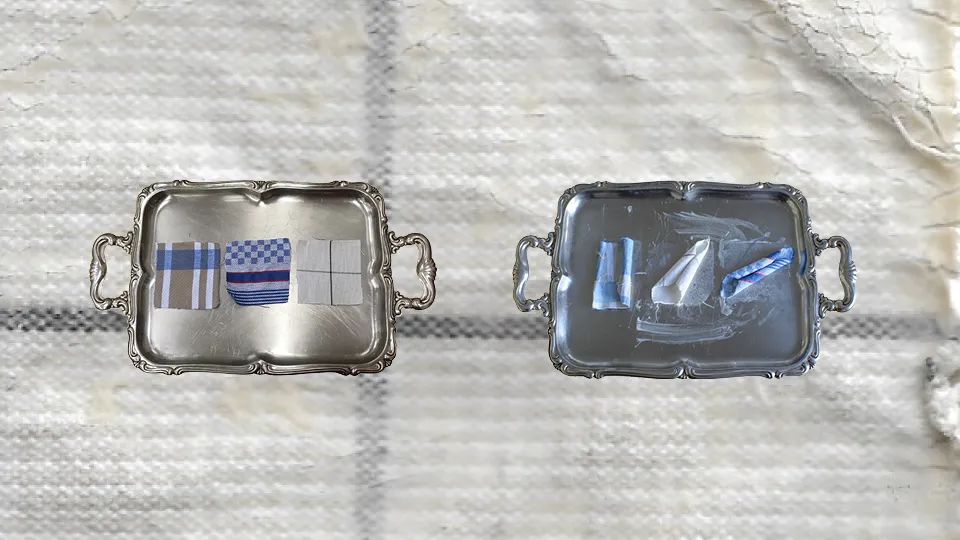
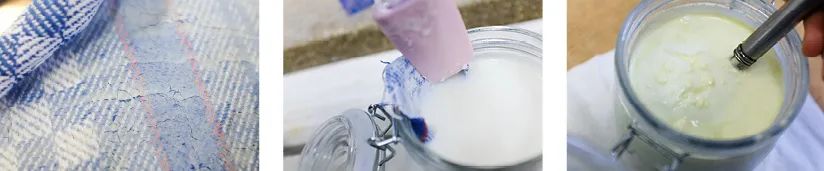
Interestingly, in my search for various starters, I have encountered the many forms of “culture containers” devised by folk wisdom—some people soak cotton in yoghurt and then dehydrate it; others send through the post little sachets of yoghurt crumbs… These tiny creatures seem always to find a quiet, safe corner in the crevices of human industrial civilisation, living on undisturbed.
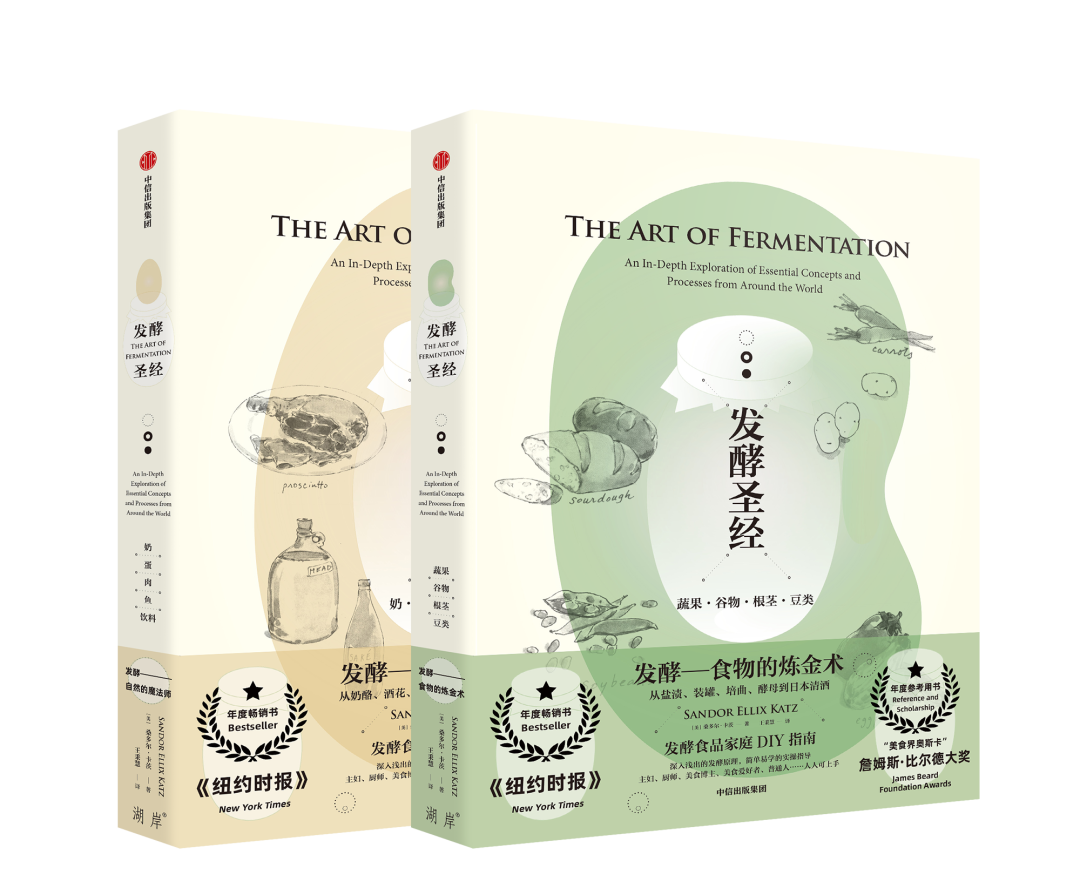
Author: Sandor Katz (USA)
Initiated by: Lake Shore Culture
Publisher: CITIC Publishing Group
Translator: Wang Binghui
Published: 20 April 2020
III.
In the Germanic and Romance language families, the word “culture” carries both the meaning of cultivating civilisation and the cultivation of microbial populations.
When it comes to cloth, we can usually discern its cultural origins through the visual style of its weaving techniques or printing methods. In this sense, cloth is a medium of expression for “culture” in the civilisational sense.
In the story of the Finnish immigrants, however, cloth becomes a carrier of microbial “culture” in the most literal sense. The playful duality in the word led me to consider how cloth, as a medium, could simultaneously convey the many meanings of “culture.”
If spreading yoghurt on cloth and letting it dry is a process of transforming cloth into a “medium” or a “container”, then could the yoghurt—acting as the “contents” within the cloth “container”—be arranged in a regular or aesthetically pleasing manner?
If cloth serves as a carrier for yoghurt cultures, could it still be repurposed after fulfilling its role as transport? I turned my gaze towards the pristine, thick yoghurt—this semi-liquid substance—wondering whether it too could serve as a pigment to depict the microorganisms within.
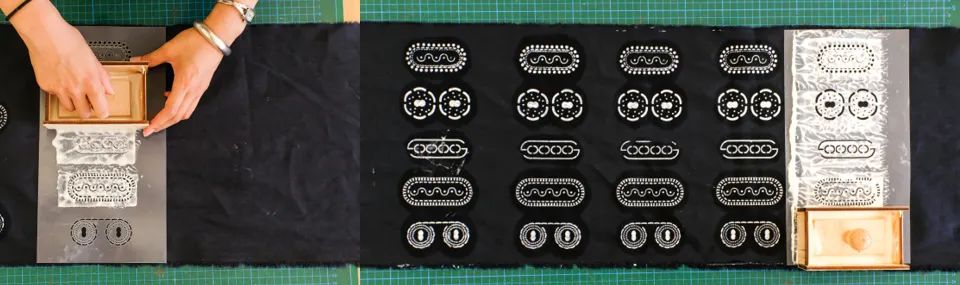
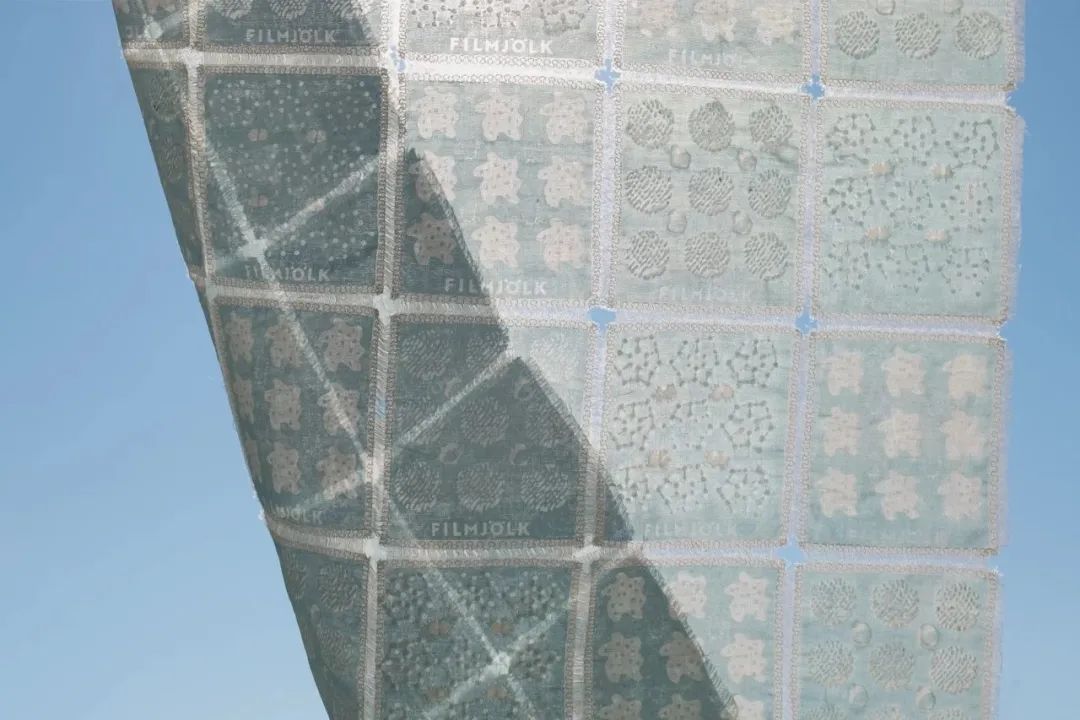
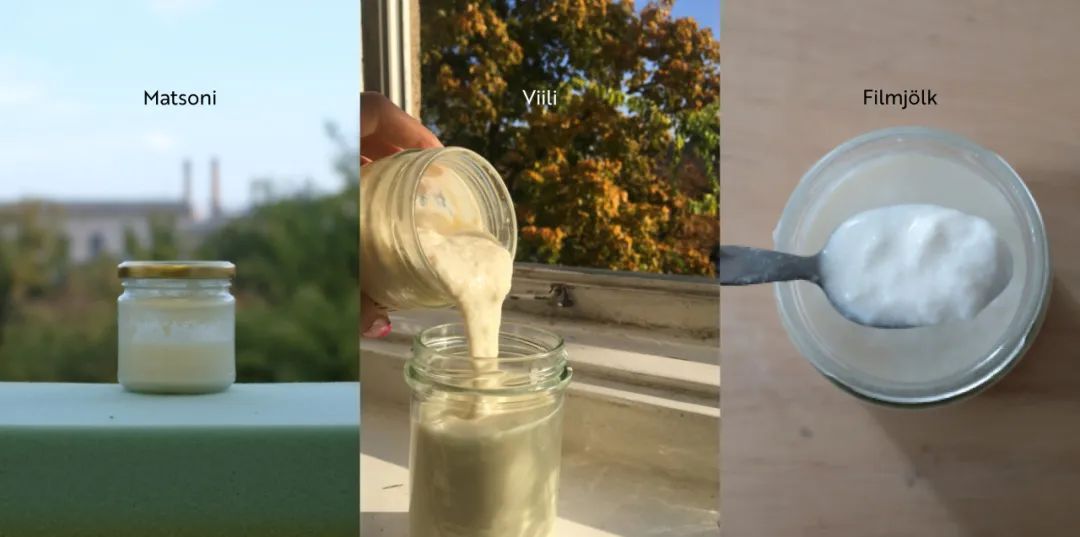
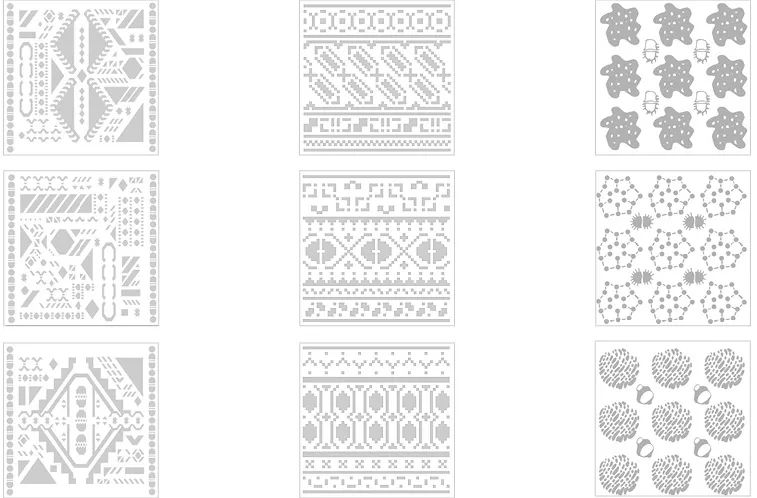
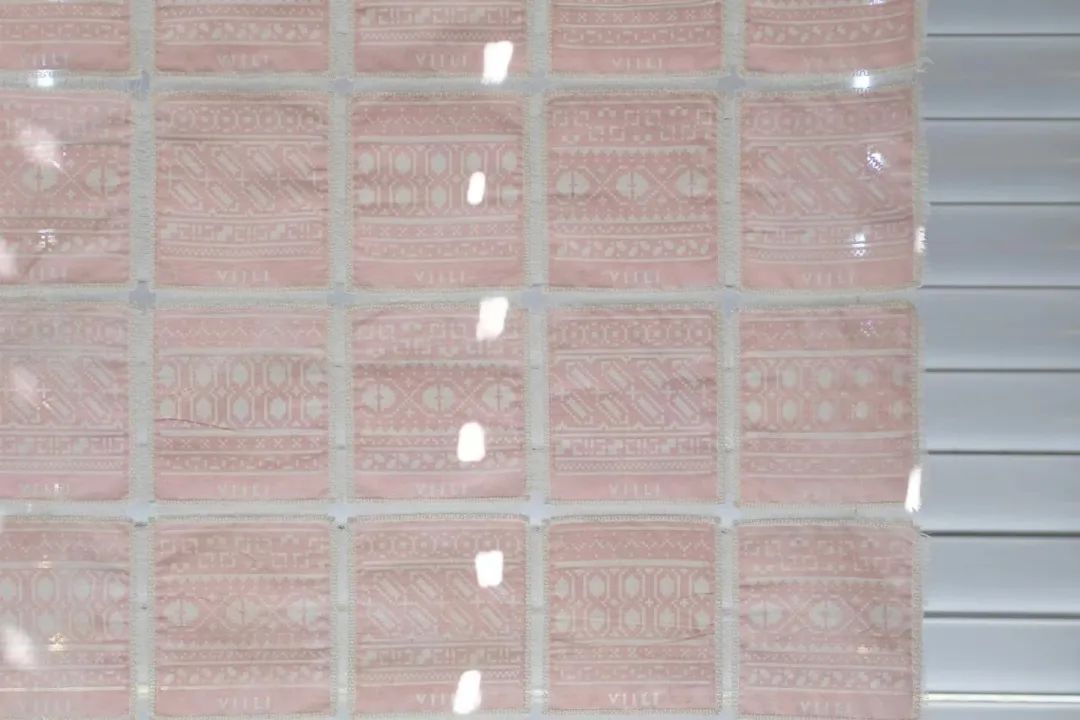
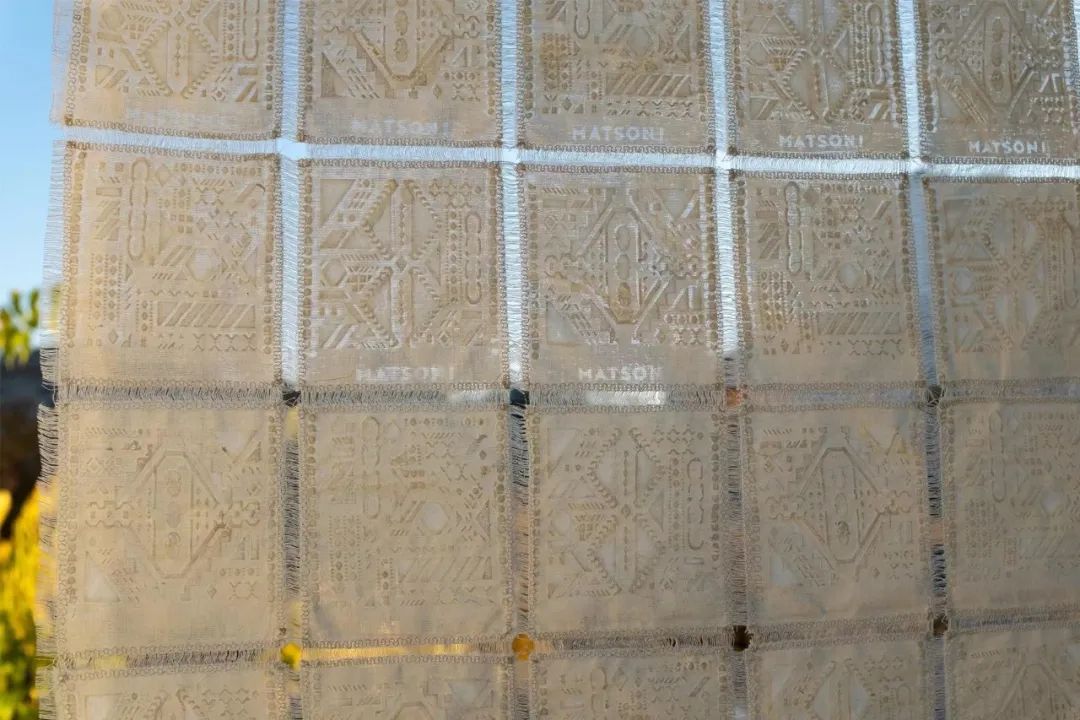
I chose yoghurts from three distinct cultures: Finnish Viili, Georgian Matsoni, and Swedish Filmjölk. The textiles of each culture possess a striking personality—the geometric motifs of Georgian carpets, the checkered weaves of Finnish textiles, the Kurbits patterns of Sweden…
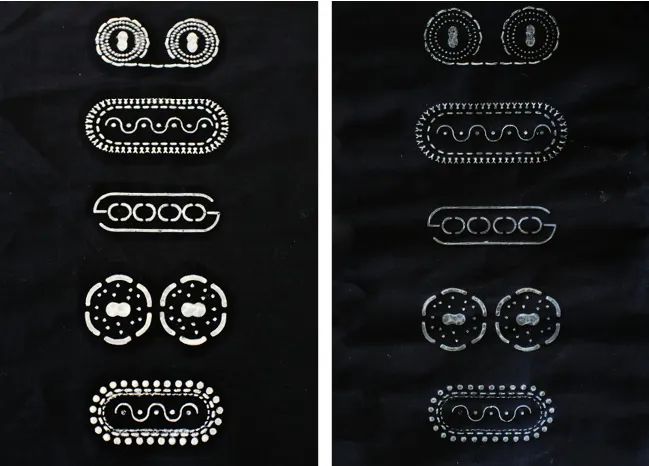
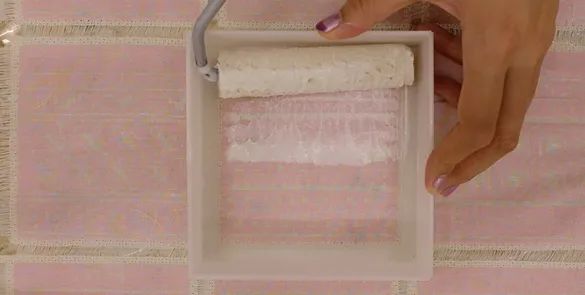
I extracted the most representative visual element from each culture and designed three sets of flat patterns for each yoghurt variety. The cloth, serving as container, was divided into 10 × 10 cm units; on each small square, the negative shapes of the flat patterns and the name of the corresponding yoghurt were screen-printed using food colouring. The corresponding yoghurt was then used to paint the positive shapes onto each square and left to dry.
Processing Steps
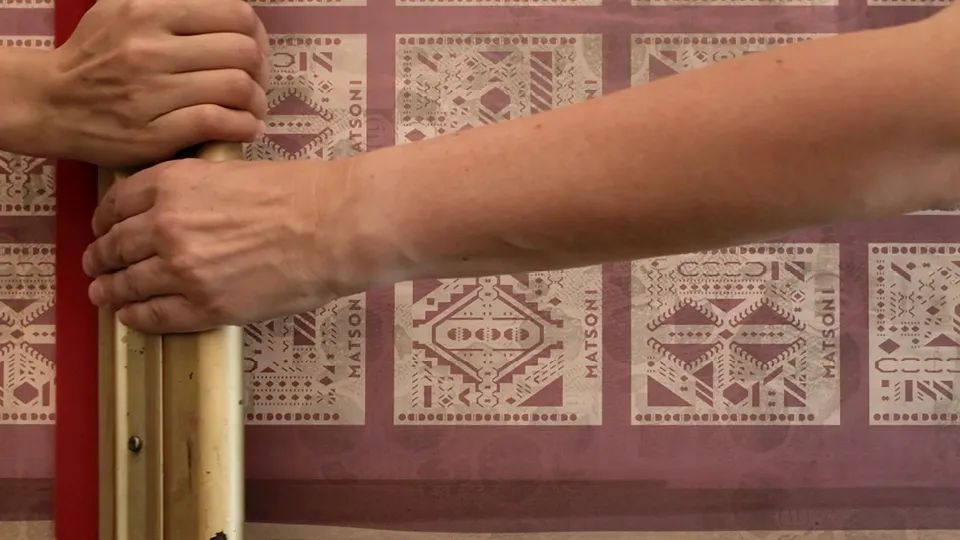
2. Sewing: The edges of each small square are overlocked with a sewing machine, and the threads between each overlock line are pulled out one by one;

3. Applying the dairy product.
The way the cloth is finished made it easy to cut the fabric—serving as culture containers—into small squares. The lightness of the cloth means it can slip into any nook and cranny at hand. In this sense, the cultures possess not only the potential to stretch infinitely along the axis of time, but also the ability to roam across different spaces, carried by the movement of people.
I cut up my finished culture containers into individual squares and shared them with friends—some were posted as letters, others handed over in person. The tiny lactic acid bacteria, cradled in a swatch of featherweight cloth, had completed their wanderers’ journey.
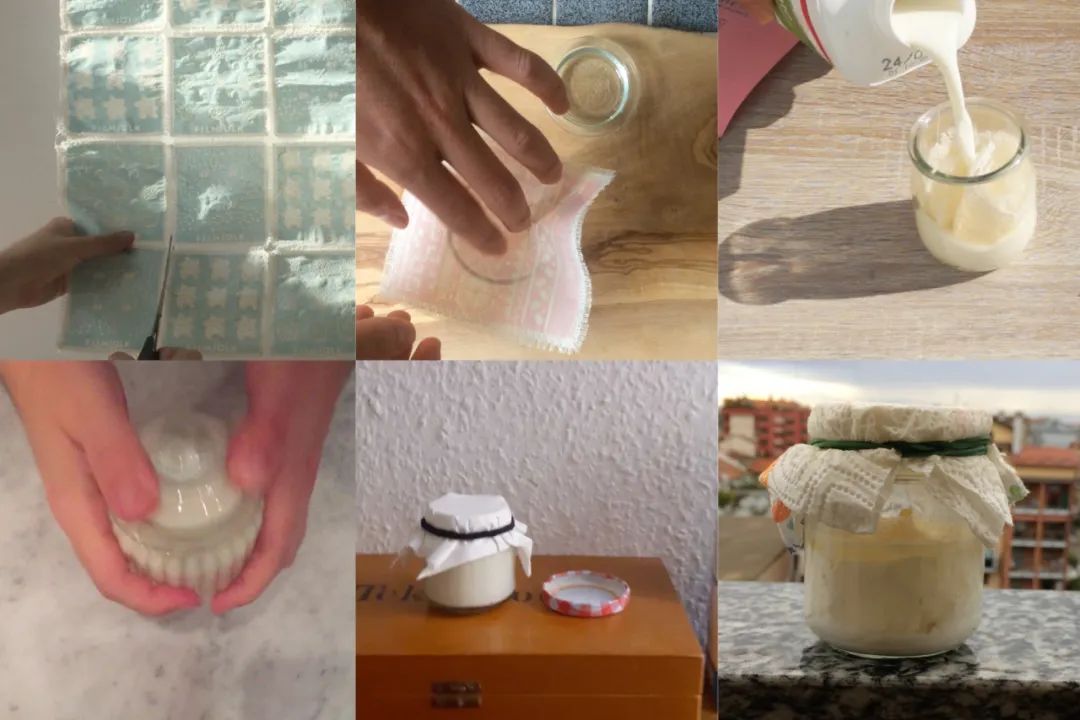
From the feedback I have received from friends, I have learned that natural fermentation is, after all, still full of uncertainties—perfect results are not guaranteed from every little container. But as one friend put it, ‘Well, we certainly had a wonderful time with it’—and I think that is precisely where the joy lies in cultivating cultures in everyday life, exchanging them, and savouring fermented foods.

This article is reprinted with permission from the author’s blog