
Post-2000 Woman’s Farming Journey: “We Can Handle This Big Machine Too”
Foodthink Says
Yet to this day, gender disparities persist in the world of agriculture. Women’s roles in agrifood systems often remain under-recognised. As a result, the United Nations has declared 2026 the International Year of the Woman Farmer, aiming to raise public awareness and drive progress towards narrowing the gender gap and improving women’s livelihoods worldwide.
Tomorrow is International Women’s Day, and we recommend this article by Wu Ting, a young woman of the post-2000 generation. Hailing from Anhui, she grew up watching her elders toil on the land. As agricultural mechanisation gathered momentum, her father purchased a combine harvester and became an agricultural machinery operator, supporting the family by offering farm-machinery services. Out of interest, Wu Ting recently attended a farm-machinery training course after returning to her hometown.
Through this training, she not only observed the urgent need among older-generation machinery operators to update their skills and keep pace with the times, but also keenly perceived the constraints women face in the world of agriculture. What follows is Wu Ting’s account of—and reflection on—gender bias in agriculture.
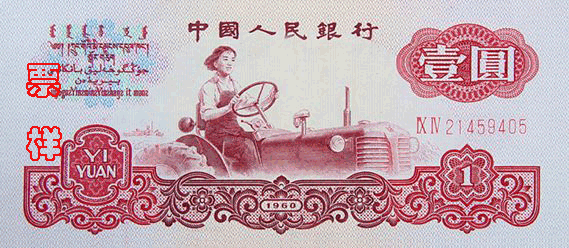
I. Sitting the Agricultural Machinery Operator Exam
I figured more skills would open more doors, so I dialled the registration number straight away. It wasn’t really about any grand career plan—I just wanted to earn a certificate.
Most agricultural machinery operators today are self-employed: often people who would rather not work for someone else but still want to make good money. When the rush harvest wraps up in Northern Anhui, many operators group together in threes or fours and head off to other regions—some as near as Shanghai, others as far as Jiangxi or even Guangxi.
This line of work is how the elders in my family have supported our household. In 2009, my father entered the trade as a combine-harvester operator. As a young child, I often found it hard to watch my parents leave home.
Their work also showed me how hard life can be. One year, my parents set off for the rush harvest in summer, when temperatures frequently soared above 40 degrees. Over that month, they suffered heatstroke time after time. By the time they came home, they were visibly changed—haggard and worn. I only learned later what they had been through.
Accidents could happen, too. An operator they knew had his machine tip sideways into a ditch while harvesting rice, and the combine harvester crushed him beneath it. After his death, the burden of keeping the family going fell on his wife, and his children were forced to drop out of school.
Compared with their life, my own past work was admittedly far more comfortable—no wind and sun on my face, no heavy manual labour on the land, nowhere near as gruelling. But the pay from that so-called “respectable” job barely covered my own expenses, and spending all day shut in a cramped office wore me down mentally.
Agricultural machinery operators work for themselves, earn more, and find greater fulfilment in their work: standing atop their machines, facing the golden expanse of the crop, they are filled with the joy of a bountiful harvest. But it is also a far more demanding livelihood, not without its risks.
The two generations work in different ways, and the hardships differ too—neither comes easy.
II. Dread Among the Female Trainees
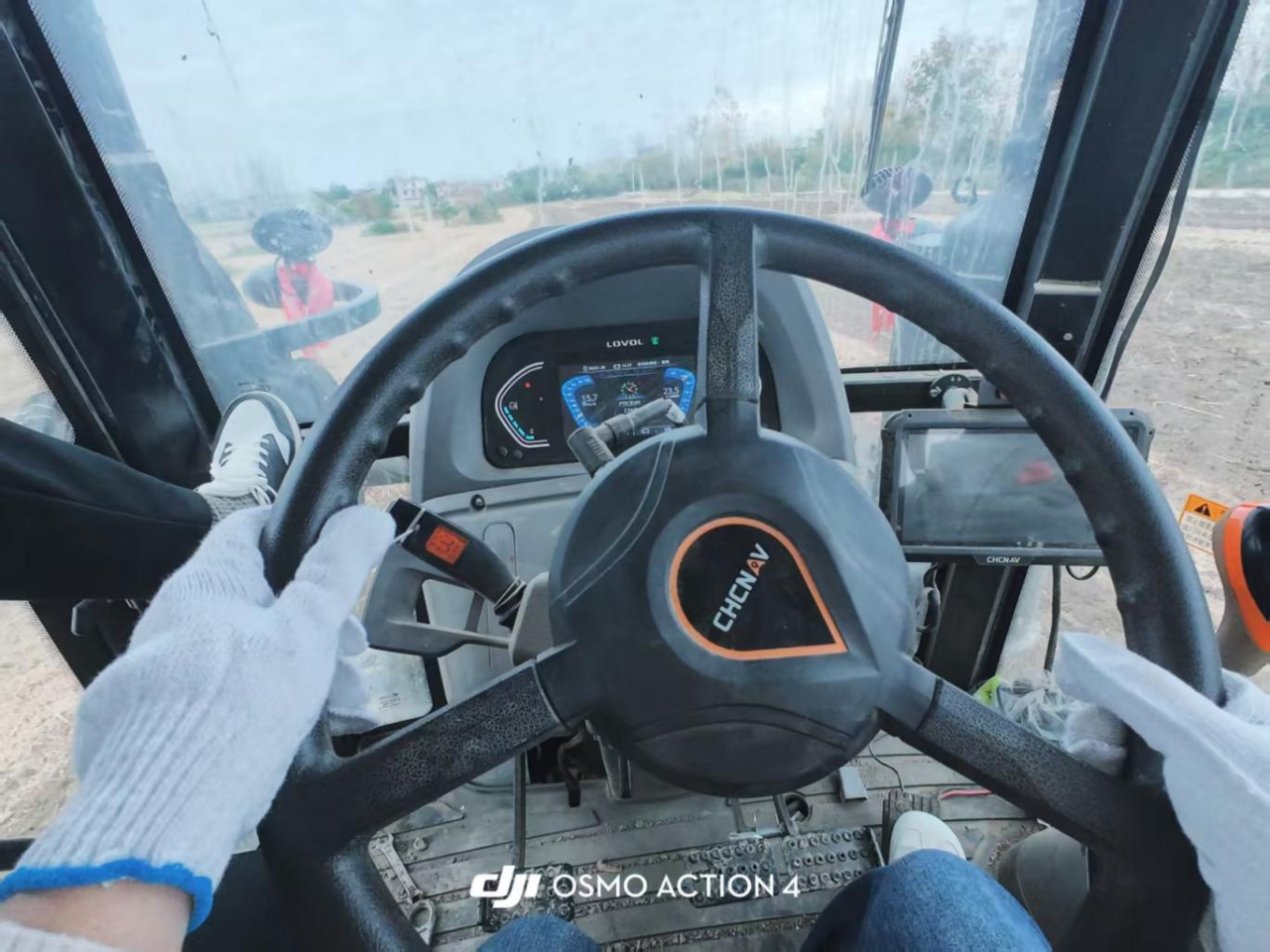
I preferred the practical sessions to the theory classes. The practicals began with the whole group learning to drive a tractor. Before this, I had always watched that big thing from a distance; I never imagined I’d one day be behind the wheel myself.
I also noticed that very few of the trainees were women—of the 50 in our cohort, only 7 were female, and most were veteran male operators who had driven tractors before. The men were mostly in their forties or fifties, farming folk from the three districts and five counties of Fuyang who doubled as machinery operators. The tractor had been their faithful old companion for years, yet almost none of them had any experience with drones. They had come to add drone operation to their repertoire alongside their old companion—making pesticide spraying easier on their own farms and earning a bit of money by spraying for others too.
The course was run by the Fuyang Branch of the Central Agricultural Broadcasting and Television School in Anhui Province, which everyone simply called “the Radio and TV School.”
Through this free, government-provided farm-machinery training, these trainees—who had already built up plenty of hands-on experience—could at least get to grips with the workings of the newer agricultural equipment, so they wouldn’t be shortchanged when they went to a shop for advice, simply because they didn’t know the trade.
Compared with the experienced male trainees, the women shrank back far more when it came to the tractor. Much like the stigma attached to the label “female drivers” that still lingers to this day, a similar prejudice is at work when it comes to farm machinery: many people instinctively consign it to “a man’s world.”
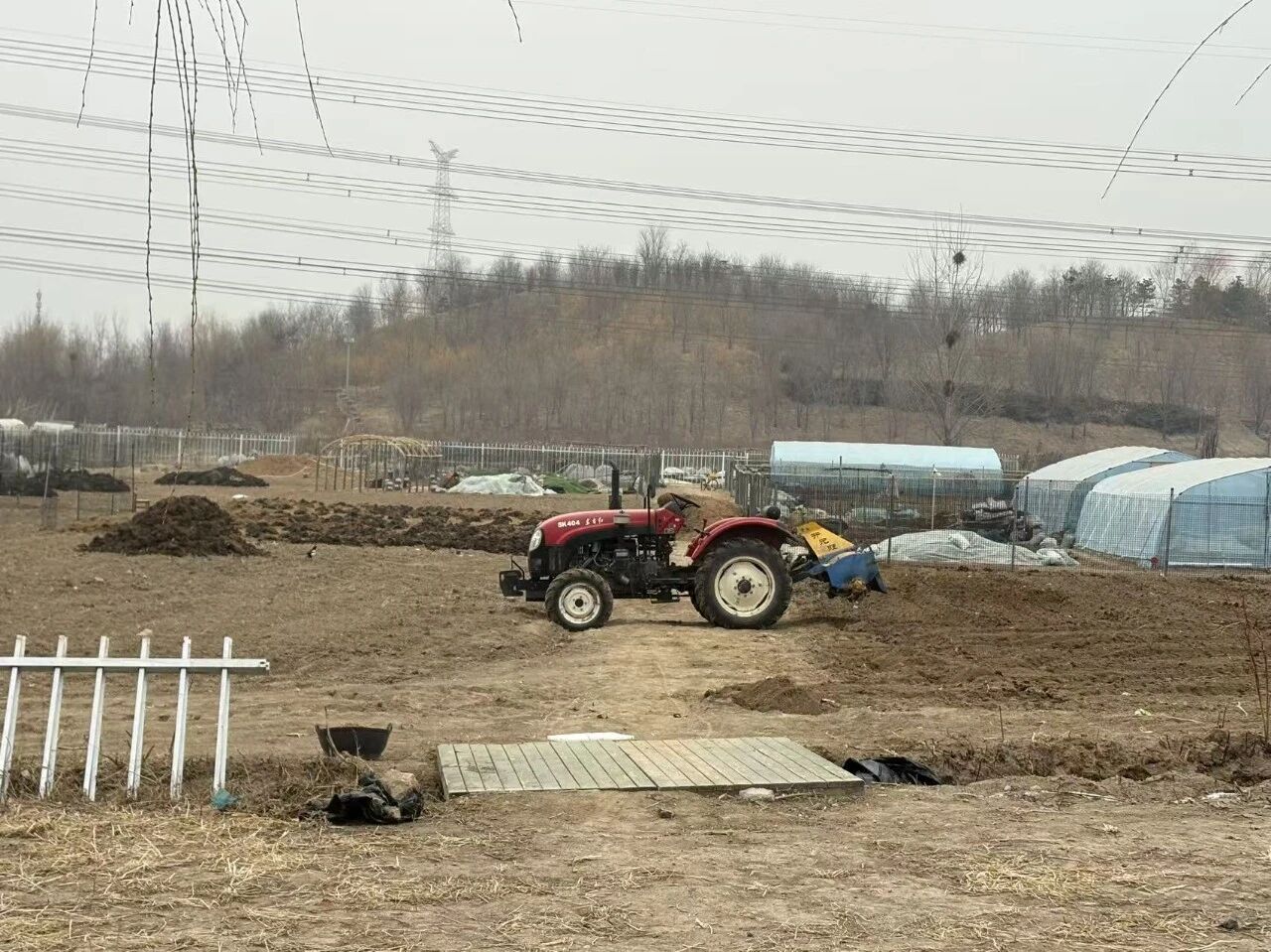
In the practical class, the other women and I hadn’t even touched a tractor before we began to hesitate. With an old family grave visible not far into the field, and four tractors lined up in front of us, everyone looked nervous—terrified of driving poorly and accidentally ploughing into someone’s ancestral grave. The safety instructor quickly reassured us, “Just put it in first gear and take it slow—the safety instructor is right there with you.”
But the lack of confidence still crept through. “The men drive them better—they’ve got the experience, and we still don’t measure up,” said one of the older female trainees.
I felt a spark of defiance and raised my hand, putting myself forward for the next turn. Then I stepped over the dirt ditch at the edge of the field and strode towards the tractor.
But spite was one thing—when it actually came down to it, I couldn’t even work out how to open the cab door. Once aboard, the safety instructor sat to my left and walked me through the steps one by one: “First, turn the key to the ignition position; to the left of the steering wheel is the forward-reverse lever—push it up to go forward, push it down to go in reverse; to engage a gear, first push the gear lever to the front-left, then shift it to the right into first gear.” Then he pointed out where the brake, throttle and clutch were.
I was so nervous that my head went blank. The words came in one ear and straight out the other, and my palms started to sweat. When I finally eased into motion, a tractor driven by the trainee next to me came straight at me. I slammed on the brake on pure instinct. After that scare, I finally committed the positions of the brake, throttle and clutch to memory.
By the time I reached the headland, it was time to turn around. Sitting in the driving seat, I faced the wide-open field, wheat just poking through the soil in the neighbouring field, and the rumble of the engine filling my ears. Only then did I realise my palms were soaked with sweat. Thank goodness I was wearing gloves—there was no danger of the steering wheel slipping.
I forced myself not to let my attention wander, gripping the steering wheel tightly with both hands, my eyes fixed firmly ahead, running through the safety instructor’s instructions over and over in my mind. At last, when I successfully made the turn, I let out a long, involuntary breath, and the sweat on my palms gradually receded.
III. We Can Handle This Big Beast Too
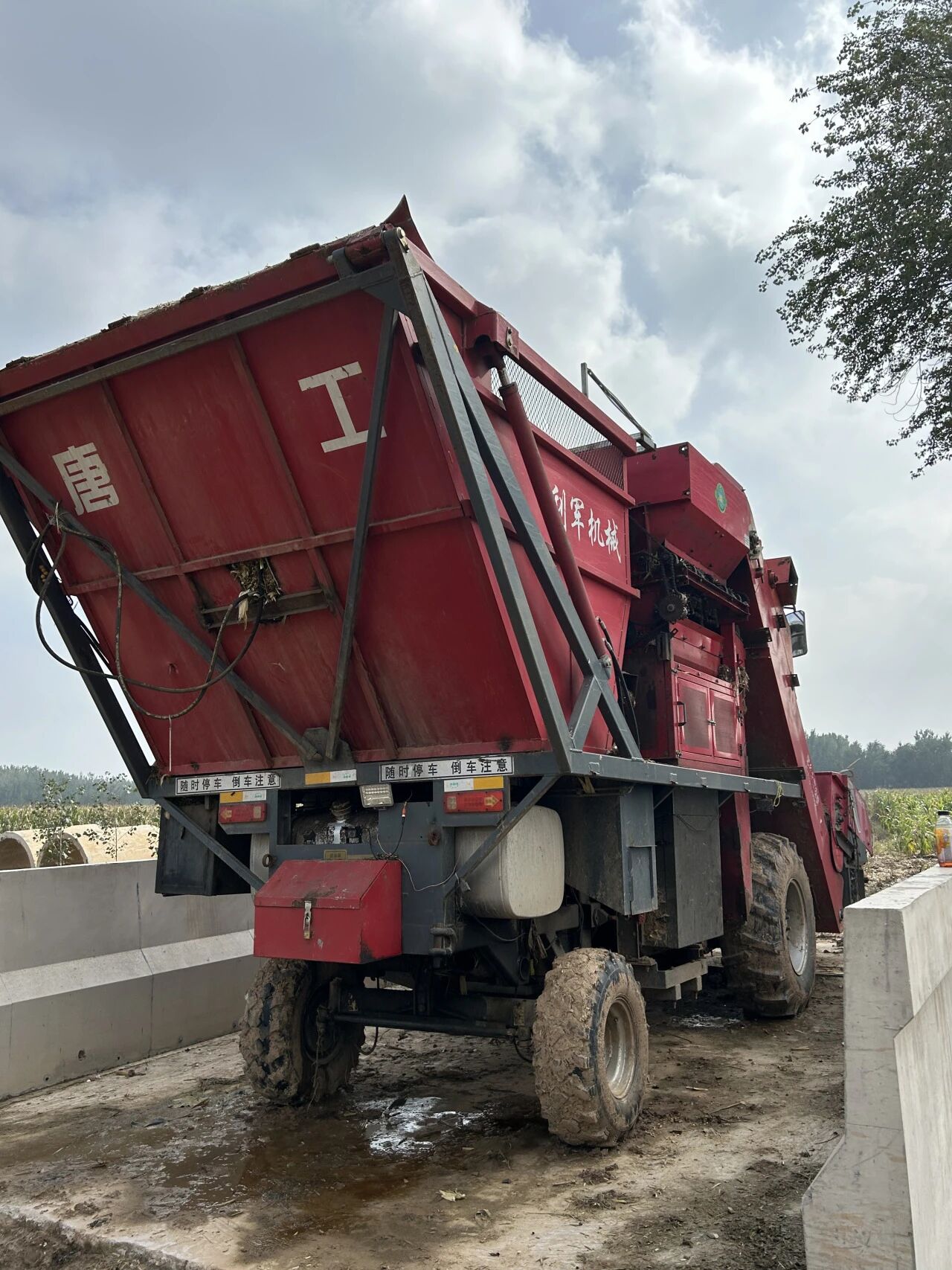
Driving a combine harvester was nothing like driving a car. The machine at the training base had no steering wheel—just a single seat in the cab. In front of me were two control levers, one on either side, and at my feet a wide brake pedal with no clutch. You inserted the key, pressed the red button, and the engine came to life. Where the machine went depended entirely on those two levers: push them forward and it moved forward; leave them alone and it stayed put.
At first, many of the male trainees couldn’t get the hang of it either, which made me feel even less confident. I was turning it over in my head: should I try it or not? I even found myself wanting to talk others out of it—”It’s too hard, just forget it. Don’t tip it over! A machine this big—if it flips, we can’t afford the damage!”
The other women chimed in: “Even the veteran operators can’t drive it properly. With so many men here, barely any of them dare get on.” Another female trainee added, “This thing is meant for men in the first place. If they can’t manage it, we certainly can’t. Women just can’t drive a combine harvester.”
In truth, the younger women felt a certain defiance but couldn’t bring themselves to argue back on the spot. Then one of the male trainees nearly sent the harvester onto the kerb—the header almost knocked a tree down.
It only deepened our hesitation. The sister next to me murmured, “This harvester isn’t even that big—by all accounts it shouldn’t be this hard. But I just don’t dare. I’m not confident… though I’d still like to try.”
She was a few years older than me, still not yet thirty. Her family had been supportive when she signed up. “My father-in-law said if I learn it, once we buy a harvester, I’ll be the one to drive it—for our family’s rice harvest.”
Later, the Radio and TV School teacher asked, “Any female trainees who’d like to give it a go?” Everyone pushed and nudged each other; no one was willing to speak first. She hesitated for a moment, then suddenly stepped forward—before another male trainee could get there—and claimed the cab of the harvester.
The safety instructor first taught her to start the engine and work the levers. Soon the harvester was rolling forward in her hands, the body steadier than anyone expected.
I overheard an older woman exclaim, “So a harvester doesn’t shake like that! When I watched the men driving them, rocking all over the place, I thought that was just how it was.”
Throughout, I’d been filming her on my phone. Watching her drive—steady and sure, reversing into a parking bay without crossing a line, leaving plenty of clearance from the kerb and the roadside trees—a spark of confidence flickered inside me: perhaps I could drive it well too.
It turned out that the notion in our heads—”only men can drive these”—had nothing to do with innate difference. Women, trapped in that assumption, were quicker to dismiss both themselves and each other: the more hesitant we were to get on board, the more it seemed to confirm “they really can’t,” and the stereotype just kept spinning in circles.
When my turn came, there was still a moment of trouble. Once I was in the cab and the door clicked shut, my mind went completely blank—I had to call the safety instructor back. The old machine was temperamental; the levers jerked and shuddered if I pushed too hard. Sweat prickled across my back, and I still crossed the line on the reverse. But in the end the harvester made it back to where it started—no tree hit, no kerb scraped.
With the first one done, the second, third, and fourth followed quickly. Almost every female trainee got a turn, including the older woman from before. She drove a bit unsteadily but finished without incident. Climbing down, her eyes wide with disbelief, she said in delight, “My legs were shaking so badly up there, I never thought we could handle such a big beast!”
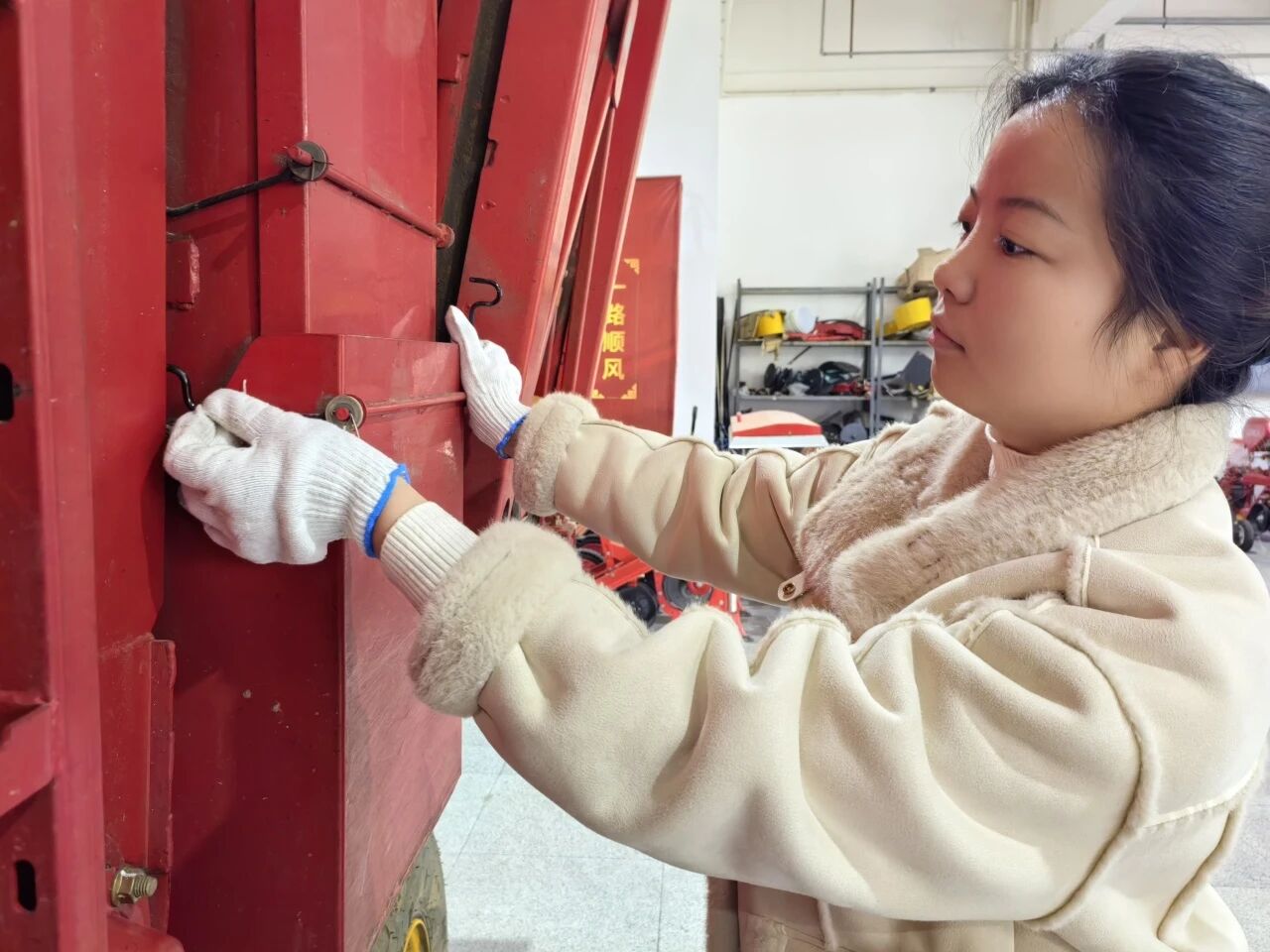
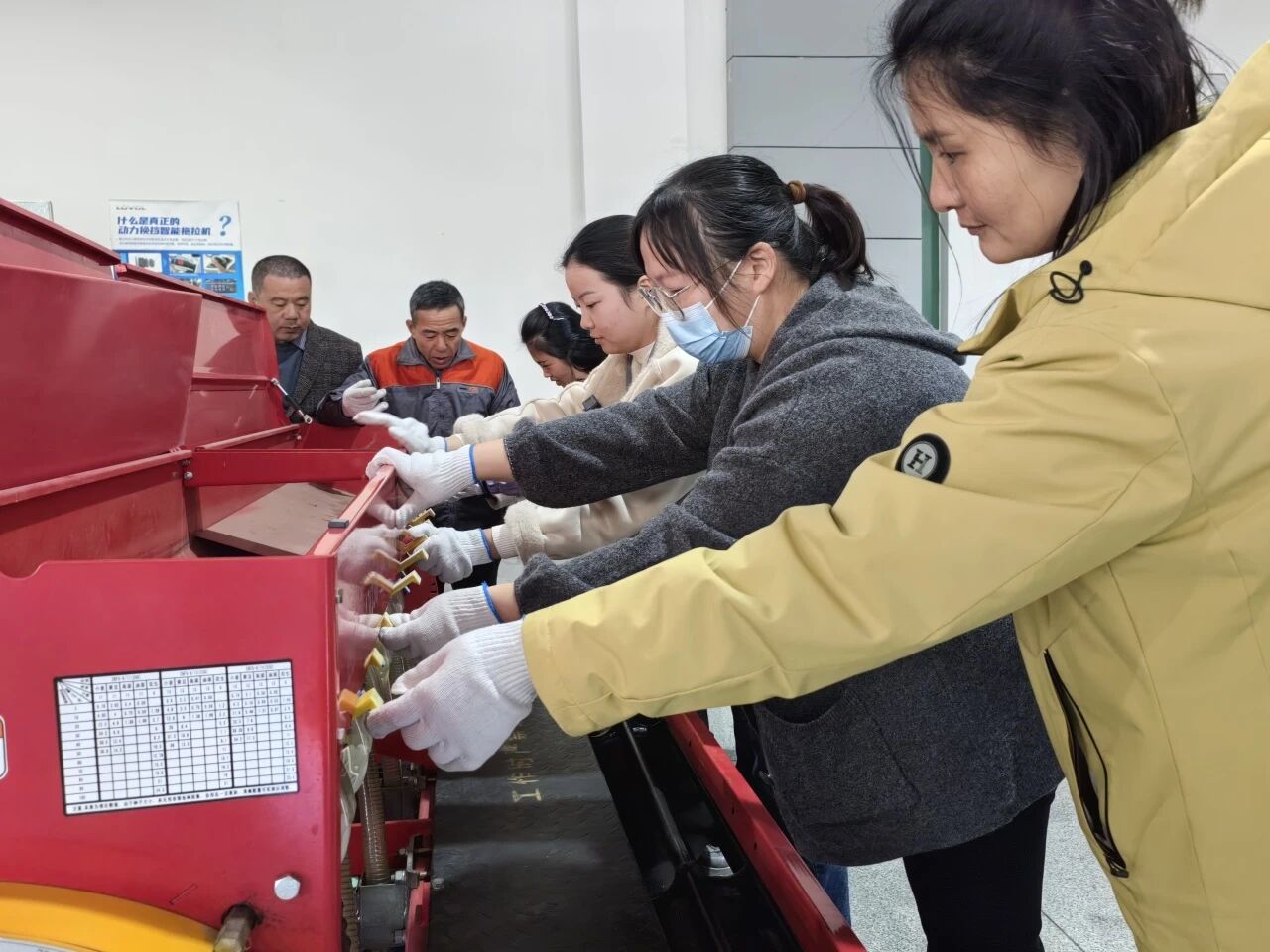
IV. The Assessment
Engaging a gear, releasing the clutch—the tractor pulled away smoothly. Following what the teacher had shown us, I gripped the steering wheel firmly and kept my eyes fixed on the distant field bund as a reference point—a new technique I’d picked up during the course. Midway through, I suddenly recalled something my father used to say when I was little: “You can tell from the engine’s sound whether the ploughing is even. A muffled tone means you’ve gone too deep; a hollow one, too shallow.”
I slowed down without thinking and pricked up my ears. Sure enough, the tractor’s tone had been a bit muffled while ploughing that last stretch. I gently lifted the control lever, and the sound steadied. In the rear-view mirror, the turned earth was a warm yellow, spread evenly behind me. The damp, earthy scent drifted into the cab—familiar, the smell of the land.
When the assessment was over, I tossed those sweat-soaked gloves into the bin at the training station. They had served their purpose, like the stone roller in my memory. In the old days, we used the stone roller to press the earth flat, shaping it into a rice-drying ground. Then came the grain suction machine, grain turners, and grain dryers. The drying ground was gradually replaced by concrete, and the stone roller was tucked under the eaves. Later still, the eaves were torn down, the new houses had no eaves, and the stone roller was left with nowhere to rest.
On the coach home, I looked out of the window and saw, in the glow of the setting sun, a drone releasing a fine, even mist of white pesticide over a wheat field. Beside the field bund, an old man stood with his hands clasped behind his back, watching. His shadow stretched long across the ground, and the drone’s pesticide mist fell gently just beyond it, settling on a patch of tender green wheat shoots.
Before we parted, I said to the sister I’d trained with, “Tell your father-in-law to pick out a combine harvester—then you’ll be the one driving it, and you won’t need to ask anyone else to harvest your rice anymore.”
Editor: Xiao Dan