
The Fresh-Food E-Commerce 30-Minute Delivery Myth Begins with the Picker’s Three Minutes
A Note from Foodthink
Is a Picker’s error merely a fluke? As fresh-food e-commerce becomes a key battleground for platform giants such as Meituan (Xiaoxiang), Alibaba (Freshippo) and JD (7FRESH) vying for the local services market, the delivery speed of delivery riders and the picking speed of Pickers are crucial to sustaining traffic and user retention. Yakou, the author of this article, worked part-time at Xiaoxiang Supermarket and found that Pickers on fresh-food e-commerce platforms are perpetually under intense pressure created by algorithms, data metrics and Piece-rate pay. Mis-picks and omitted items are inevitable structural problems. On one side, alienated labour; on the other, unsafe food consumption. Before we fall into the binary of worker versus consumer, we should first examine the ever-intensifying “Speedism” on fresh-food e-commerce platforms.
“They… eat after they finish work. Part-time workers simply don’t get time for dinner.”
In March, after the New Year holiday, I found a part-time job as a Picker at a Xiaoxiang Supermarket in a first-tier city in Guangdong. My main task was to pick items from the shelves after a customer placed an order, pack them up, and hand them over to a delivery rider.
I had planned to stay at least two weeks, but on the third day, after six hours of continuous high-intensity labour, I fell ill. Perhaps it was the frequent trips in and out of the freezer to grab Frozen goods; perhaps it was simply the workload. That day, had I not insisted on taking a break for dinner, the Site manager had intended to put me on from 4:30 pm to 10:30 pm, without a moment’s rest.
My body simply couldn’t cope, so I handed in my notice. But after I left, I knew that several full-time staff were still there working themselves to the bone: six days on, one day off, at least twelve hours a day, carrying heavy loads and walking tens of thousands of steps — all while getting just one meal a day.
In a delivery market growing ever more competitive and under ever tighter regulation, Xiaoxiang Supermarket’s ability to tap into and meet the online demand for fresh groceries has become a new weapon in maintaining Meituan’s traffic advantage in Local commerce. But the foundation of all this is efficiency and convenience sustained by intense labour, at the cost of Pickers’ bodies being so strictly controlled and their labour so strictly controlled.
I. The Invisible Xiaoxiang Supermarket, the Invisible Pickers
In everyday life, however, Xiaoxiang Supermarket often lurks quietly in a residential compound or a back lane. Even if we walk past it every day, we may never notice it.
The day of my interview was also the first time I laid eyes on a Xiaoxiang Supermarket site. Beneath a huge green sign with the logo, three delivery riders in green uniforms were squatting on the ground, all looking barely out of their twenties. One had his head down, dozing with half-closed eyes; the other two were chatting. By the entrance, several more riders stood waiting for orders to come through. Following the narrow lane past the site, I noticed the damp wall bore the words “Riders Only”; a row of electric scooters was parked along the wall, and four or five riders were squatting there scrolling through their phones.
Unlike Meituan’s riders in their yellow uniforms, these green-clad riders serve Xiaoxiang Supermarket orders exclusively. It is their daily life-or-death races along the roads that sustain the myth of Xiaoxiang Supermarket’s “ultra-fast 30-minute delivery”.

II. The Brutal Three Minutes
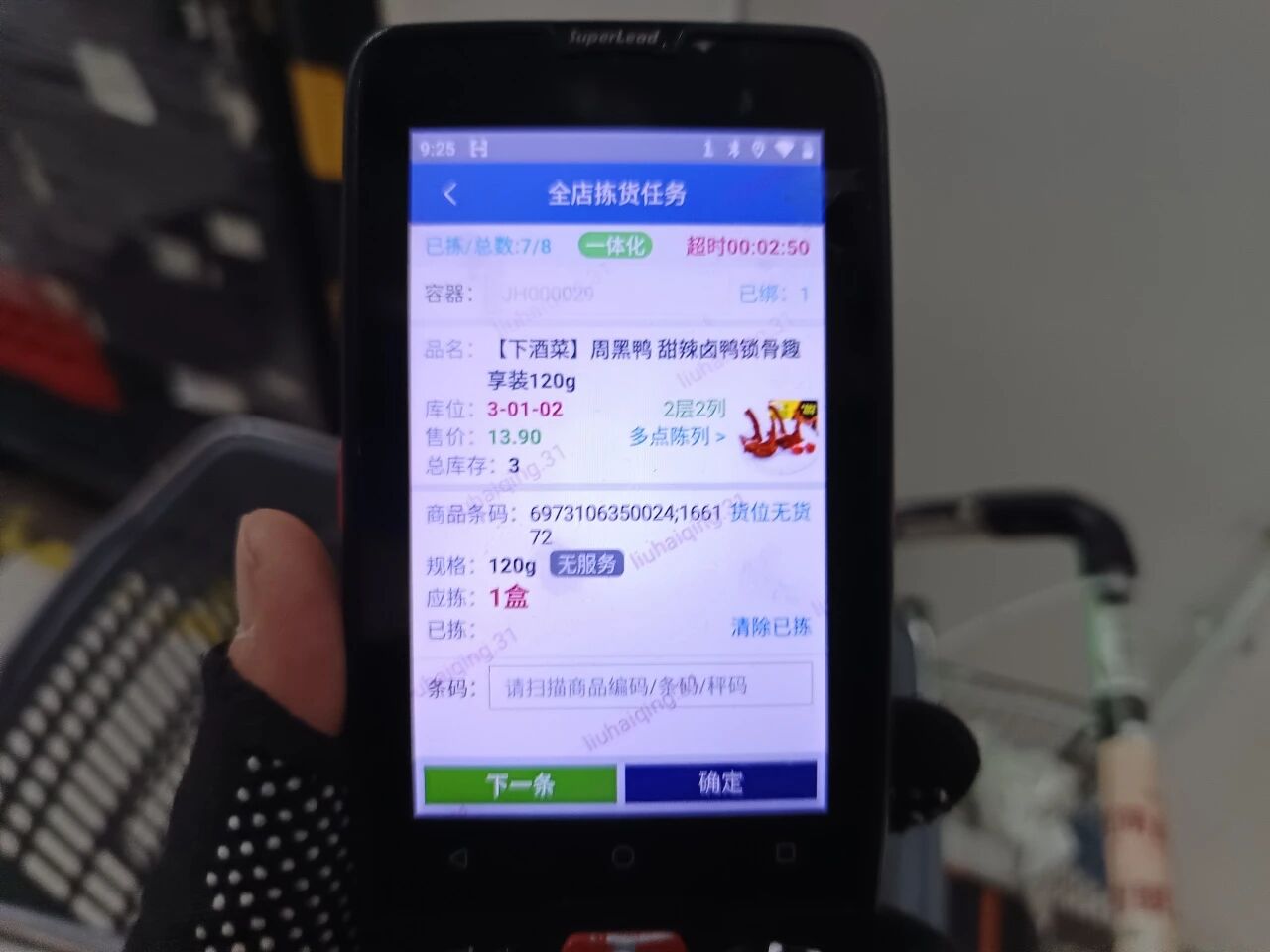
The entire site is a warehouse of some two or three hundred square metres, and shelves take up the vast majority of the space, crammed with a dense array of products. Ambient, Medium-temperature, Chilled and Frozen — the temperature zones divide the warehouse into four areas. A Picker’s job is to receive an order on a PDA, dart back and forth between the different zones to grab every item on the list, and then take the parcel to the Packing station to pack it up — all within three minutes. As soon as one order is picked, the next one pops up on the PDA. The moment you tap “Accept Order”, a new race begins, and Pickers are trapped in an endless loop of heart-pounding three-minute sprints.
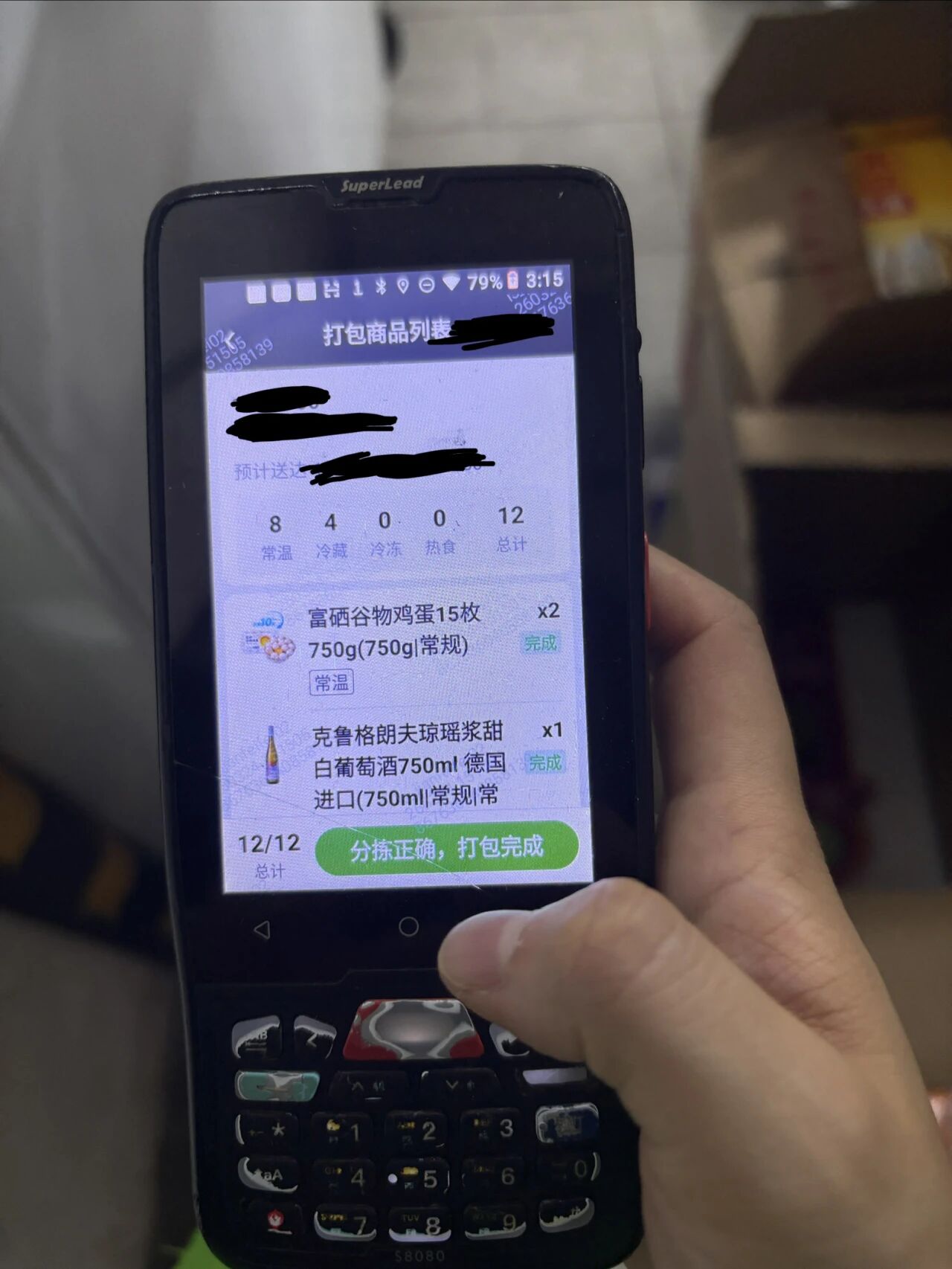
Let me walk you through one order I picked myself, so you can see just how much a single person can do in three minutes at the limit.
An order appears on the PDA. Even though there is no way to know in advance how many items it contains, I press “Accept Order” without hesitation.
Item one, Hami melon: Medium-temperature, 03-02-02-01. Those four numbers plus “Medium-temperature” form the inventory code for the Hami melon; in a warehouse this size, you need a code to find anything. Row three, column two, shelf two, bin one — there it is. I scan the QR code on the shelf with the PDA, then scan the code on the melon’s packaging. Item one done. The plastic bag hanging from my arm suddenly feels heavier.
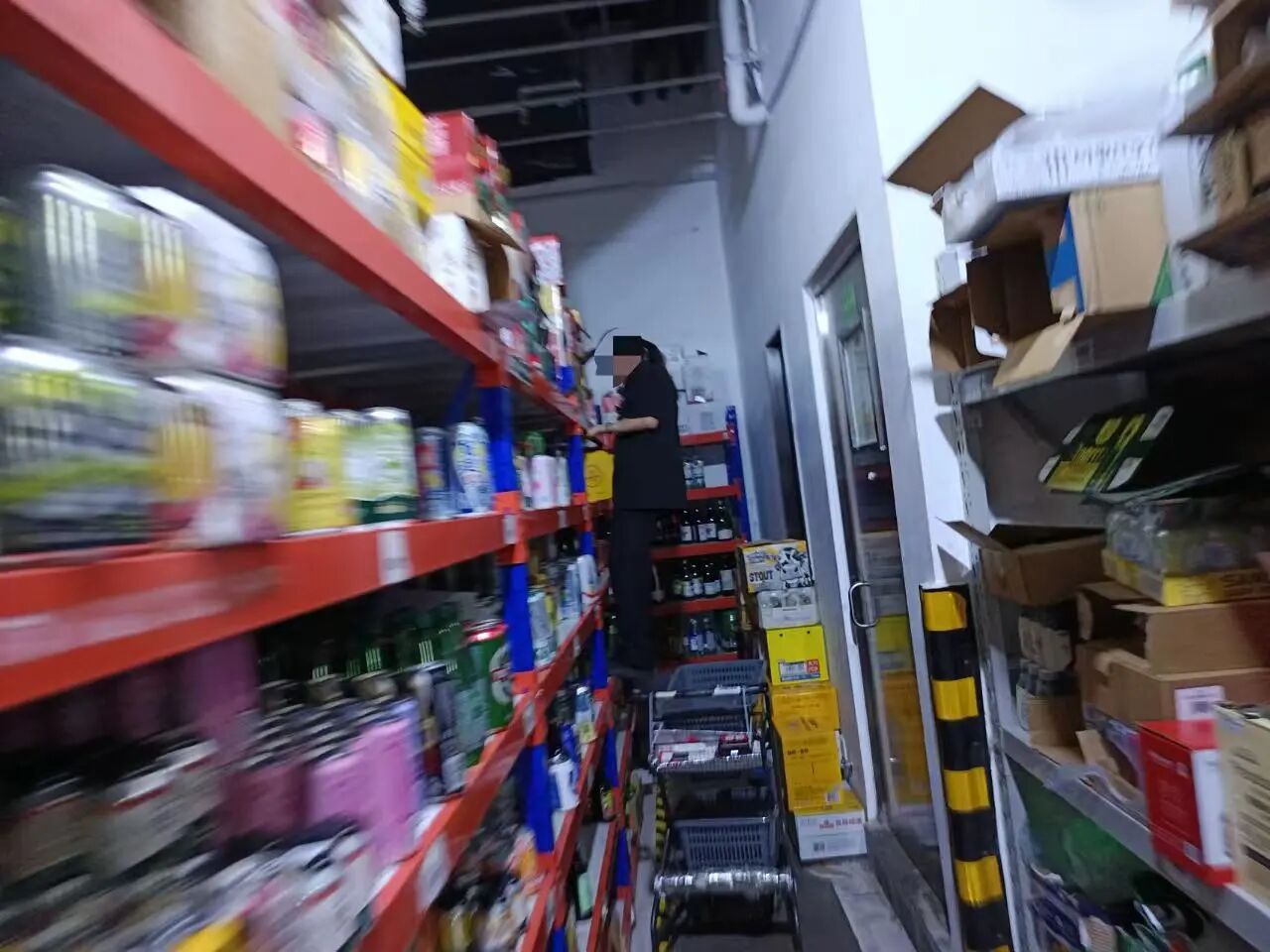
Item two, Bird’s eye chilli: Medium-temperature, 03-01-06-01. Level six is the highest, and I can’t reach it. The shelving unit stands roughly one metre eighty tall; goods on the top shelf are usually stored in plastic crates. I can only just touch the rim of the crate by stretching as far as I can. Fetching a step-stool would do the trick, but finding one, carrying it over, stepping up, grabbing the goods, scanning them, and climbing back down — the whole sequence would eat up about thirty seconds, and I can’t let one item consume a sixth of my time.
In the end, I choose to climb the shelving unit instead — stepping on the second shelf to reach the goods on the top one. This is a trick I learned from other Pickers of my height. At first I thought it was far too dangerous, but plenty of people do it, and it genuinely saves time. Sometimes I even stand with one foot on each of two adjacent shelving units, because the wider stance keeps me more stable. Although a nagging fear that the shelving might topple sideways never quite leaves me, I still scramble down as quickly as I can, anxious but determined to save every second.
Item three, blueberries: Chilled, 07-02-04-03. Item four, ice cream: Frozen, 02-03-01-06. I let out a long sigh. I have to go into the freezer. A thick curtain hangs over the freezer door, with layers of ice caked on it. Inside, a dozen or so evaporator units are humming away, working hard. I crane my neck, hunching my body forward — if a person could roll themselves along, I would curl up into a ball and be done with it.
Stay below minus twenty degrees for more than a minute and a half, and thoughts of death creep in. A few times, after frantically rummaging through one cardboard box after another without finding what I was looking for, I caught myself wondering whether I might actually freeze to death in here, or pass out from the cold. In those moments, the instinct to survive and the dread of going over time wage a battle inside my head. To avoid frostbite, even knowing the order will be severely late, I choose to step outside for a while before going back in.
Item five, bread: Ambient, 11-04-06-01. Top shelf again — I climb. By now, two minutes have passed. The PDA in my hand flashes: “Order about to time out.” Two items left; it looks hopeless, but I start running anyway, just like every other Picker, breaking into a sprint in every corner of the warehouse. I remember my very first trial shift, watching the others hurry past me — some speed-walking, others jogging — the chirp of “Order about to time out” rising and falling all around the warehouse. Now, I have joined them.
III. “Effective Working Hours”
A city has many Xiaoxiang Supermarket sites, and the sites compete against one another on on-time delivery and low customer-complaint rates. If a site’s data looks poor, the Site manager is the one whose pay takes the biggest hit.
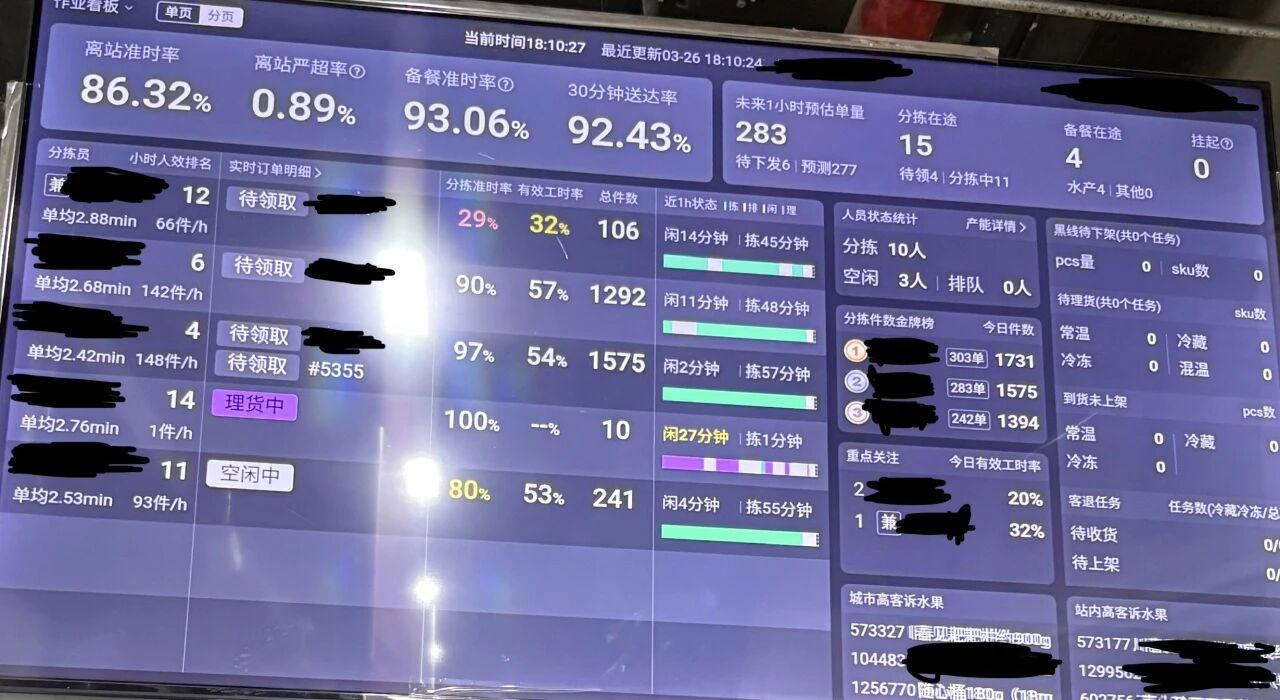
But the Site manager doesn’t bear that anxiety and loss alone. A large display hangs in the site, showing the whole site’s on-time rate, 30-minute delivery rate and other metrics on the big screen. Every second of every person’s work seems to be held accountable to those numbers.
On top of that, each employee’s real-time labour status is laid out in plain sight: average picking time per order, items picked per hour, live order details, picking on-time rate, effective-working-hours rate… plus item-count rankings and Priority Watch List employees. The pressure cascades down layer by layer through the data stream from the platform above.
The recruitment app advertised twenty yuan an hour, but only if you are fast enough. If I can’t pick a hundred items per hour, my hourly rate drops to just thirteen yuan. Under this system, even without the boss cracking a whip, workers will run — for the extra pay.
On my first day, I ended up on the Priority Watch List. Fortunately, as a newcomer, I wasn’t called out by the Site manager. On the screen, my effective-working-hours rate sat below thirty per cent. The very concept of “effective working hours” baffled me. We are clearly working in the workplace — why must those hours be split into effective and ineffective?
It was only later that I learned: if an order is marked as confirmed complete and you don’t immediately accept the next one, the system counts the gap as “idle time” — in other words, ineffective working time. But Pickers typically hit “Packing Complete” early, before they have actually packed, to avoid going over time. The packing process itself takes one or two minutes, and if the fruit or vegetables need careful inspection, that so-called “idle” stretch grows even longer. We are not idle at all, yet we are flagged as idle, so we simply have no time to catch our breath before plunging into the next sprint.
In this efficiency-above-all environment, I also felt a kind of loneliness.
One time, while picking, I knocked over a box of mandarins and a dozen rolled across the floor. I hurriedly set down what I was holding and scrambled to pick them up one by one — my hands shaking with the rush. Two or three Pickers were right beside me, but nobody came to help. Everyone was consumed by their own order.
I asked myself: if another Picker needed help, would I put my work down to lend a hand? The moment I realised the answer was “not sure”, I felt the true horror of this job. It encourages competition, chases efficiency, erodes mutual aid and deepens loneliness. It makes asking for help a burden and reaching out a form of self-sacrifice.
IV. Who Delivers Our “Perfect” Life?
For items like eggs and fruit such as blueberries, strawberries and table grapes, where the condition isn’t immediately obvious, we are required to inspect each one individually before packing, checking for rot, damage or blemishes. That alone can easily take a full minute.
The problem is that, to reduce the chance of going over time, Pickers often tap “Packing Complete” before they have actually finished packing. The moment they do, the delivery rider receives a collection alert for the order, and the timer pressure that has vanished from my side simply transfers to theirs.
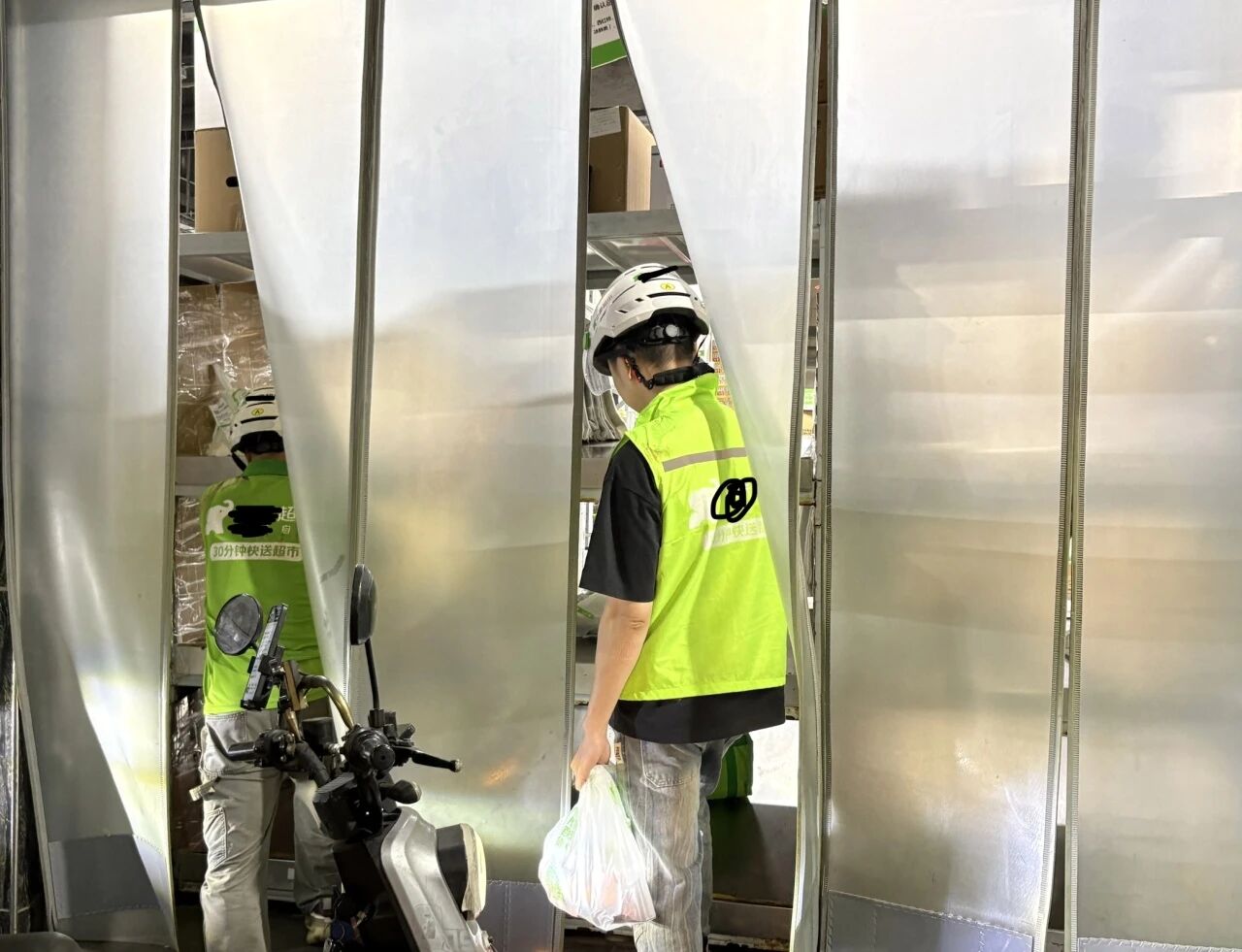
In that moment, my interests and the delivery rider’s were irreconcilable. If the Picker doesn’t tap “Packing Complete” early, the order will definitely go over time; if the Picker taps it early but the rider arrives to find nothing ready, the system may flag the rider for late collection. Sister Lin warned me, “Be quick, now. If the rider waits more than a minute, they might hit ‘Appeal’ and you’ll get five yuan docked from this order. If you can’t make it in time, be sweet about it, right? Say something nice — ask them to hold on a moment.”
Most of the time, the riders don’t actually file an appeal. At worst, I have seen them “nudge a bit” or “shout a word or two”, while the Pickers answer sweetly and their hands fly. About fifteen Pickers work at the site each day, three-quarters of them women, while nearly every delivery rider who comes to collect is male — I realised that what Sister Lin had been teaching me was a deeply gendered survival strategy.
On my very last day, I still received a customer complaint. Ten yuan was docked from my pay, with no room for negotiation. If each order contains eight to ten items, a part-time Picker earns less than two yuan per order. A single customer complaint means five orders done for nothing.
Beyond fruit appearance, mis-picks and omitted items are the other most common triggers for complaints. Once past the beginner stage, Pickers move from one order at a time to two, meaning you have to sort on the run — deciding which items belong to order one and which to order two, and slotting them into the correct plastic bags. Because the work demands speed, putting an item in the wrong bag is all too easy.
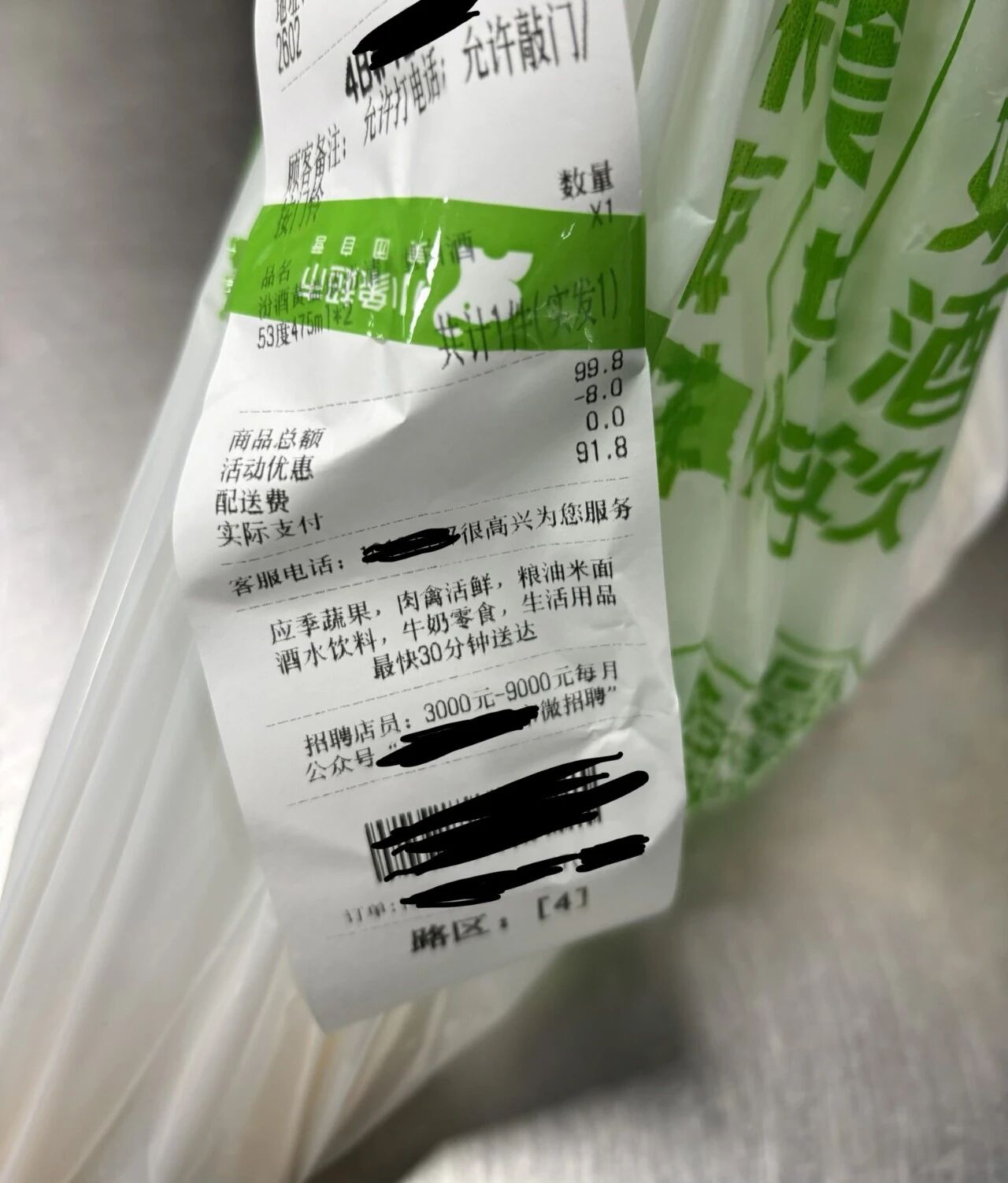
It suddenly struck me that I, too, had once tapped “Complaint” on a platform’s interface when an item I had ordered failed to arrive. Yet I had never truly grasped what was happening behind that tap, or what my complaint actually meant. Only when I no longer wielded the “power to punish” that platforms ostensibly grant to consumers, but became the one being punished myself — only then did I understand.
In this era, people do indeed inhabit different spaces, different worlds. And that division, in a time when everything feels so frictionless, has grown ever more rigid, ever more hidden.
We want “perfect” fruit, a “perfect” life, yet we have little idea how many pairs of hands a piece of fruit passes through before it reaches ours. What must those who grow it, those who store it, those who transport it, those who sort it give up — how must they reshape their own bodies and lives — to jointly produce this “perfection”?
But is such a life truly perfect? Who gets to define perfection? Is fruit without a single blemish perfect? Is a life of efficiency and convenience perfect?
At the very least, once we recognise that behind every morsel of food stand countless workers — delivery riders, Pickers and more — serving this vision of perfection amid tension and anxiety, we must press the question again: what does a perfect life actually look like?

Unless otherwise stated, all images in this article are provided by the author.
Editor: Yuyang