
How Can Today’s Young People Eat Well? A Youth Day Special
We wish all young friends a happy Youth Day!
People often say that young people are the most dynamic, the most energetic, the most full of life, and the most idealistic generation. Yet in reality, most of them are simply working people rushing about to make a living.
In this busy, accelerated era, over the past two years Foodthink has been inviting young friends to share their stories through a call for submissions, engaging them in conversations about how to eat well. Many have shared their own reflections and records on the question of eating: some have analysed, based on their own work situations, why they cannot break free from food delivery; some have pointed out the inherent connection between food delivery and the “digital side dish”; some have set off to find community canteens and small restaurants tucked away in the corners of the city; some have discovered that eating fermented foods can help relieve constipation; and some, surrounded by plastic-wrapped food, have reflected on the relationship between their lifestyle and the planet’s ecology…
How can young people truly eat well? What challenges do we face? How should we go about making changes? We have gathered together these reflections and records; some speak to big questions, others to small ones, but most touch on phenomena and feelings that are a familiar part of young people’s daily lives.
Foodthink will continue to focus on young people’s eating habits in the future. What other challenges around eating do you think young people face? Do you have any tips or advice for eating well that you would like to share? You are welcome to share them in the comments below. We also wish all our young friends the ability to eat well and live well!
Why Can’t This Generation Do Without Food Delivery?
Food delivery platforms in China now have a user base of 535 million, with young people forming the backbone of those placing orders. But why, when it comes to something as fundamental as eating, can young people never seem to break free from food delivery? Are you facing a similar predicament?
As an editorial team determined never to order food delivery, these submissions struck us deeply. For the platforms, food delivery is simply a business; but for ordinary young people making their way in the world, it is woven tightly into the fabric of their daily lives. What resonated most with working people was this: one-third of readers, independently of one another, noted a positive correlation between ordering food delivery and the pressures of work and daily life.
Meanwhile, more and more people have come to recognise clearly that what is trapped in the system is not only “delivery riders’ rights issues” but also “consumer health problems caused by excessive oil and salt.” And then there are the emotions that accompany the act of ordering food delivery: “anxiety,” “guilt,” “a sense of grievance,” and “an emptiness the heart cannot fill.” These private feelings, which young people would rarely confide in outsiders, have here been earnestly voiced.

◉ Click the image to read everyone’s more detailed discussions and contributions.
A Question That Has Long Troubled Working People
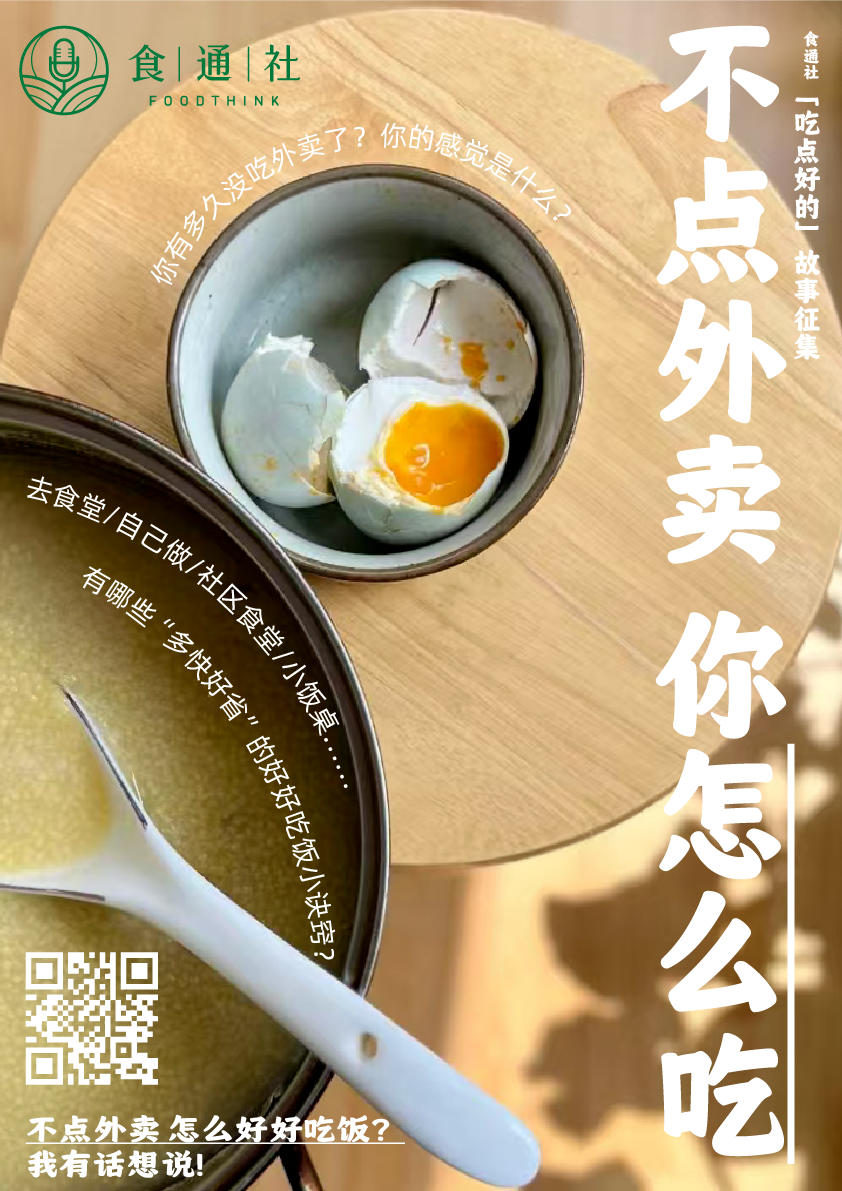
If not food delivery, then how do you eat? This seems to be a question that has long troubled working people but has never been seriously discussed. Many have shared that, although there are moments when they want nothing more than to give up food delivery, constrained by a hectic work pace, inexperienced cooking skills, or humble cooking facilities, many young people still cannot completely break free from it.
Fortunately, the wisdom of the crowd is boundless. Young friends from every corner of the country have enthusiastically contributed their own tips and tricks for eating well, which together have been woven into a quick, easy, and economical “Secret Manual for Eating Your Fill.” Some started with small, personal changes: choosing to eat at community canteens and small restaurants, designing simple, efficient recipes suited to weekday cooking, batch-cooking pre-made meals at home, or trying to bring a packed lunch to the workplace. Others felt that “cooking for one is just too hard,” and so chose to take turns cooking with a buddy. And some simply rolled up their sleeves and started growing their own vegetables, ensuring from the very source that they could eat well.
How feasible are these ways of eating for you?
◉ Click the image to read everyone’s more detailed discussions and contributions.
Is the Digital Side Dish an Antidote to Young People’s Loneliness?
In the everyday diets of young people today, this virtual food – the “digital side dish” – has become just as indispensable. Why is it that we need the “digital side dish”?
Some readers have shared that it is precisely because they want to eat well that they need the “digital side dish” to give a meal more flavour. Others have reported, however, that the “digital side dish” does not always truly help people shed negative emotions and may even cause them to overlook the food’s own taste.
Research teams have already found that immersing oneself in electronic devices while eating can increase total calorie intake by 15% and may lead to issues such as gastric dysfunction, indigestion, and nutritional imbalance. Perhaps now, more than ever, we should start from the phenomenon of the “digital side dish” and think seriously: in a modern society where loneliness and acceleration coexist, what does it truly mean to “eat well”? And how can we actually go about doing so?

◉ Click the image to read everyone’s more detailed discussions and contributions.
When Young People’s Food Is Trapped in Plastic Packaging
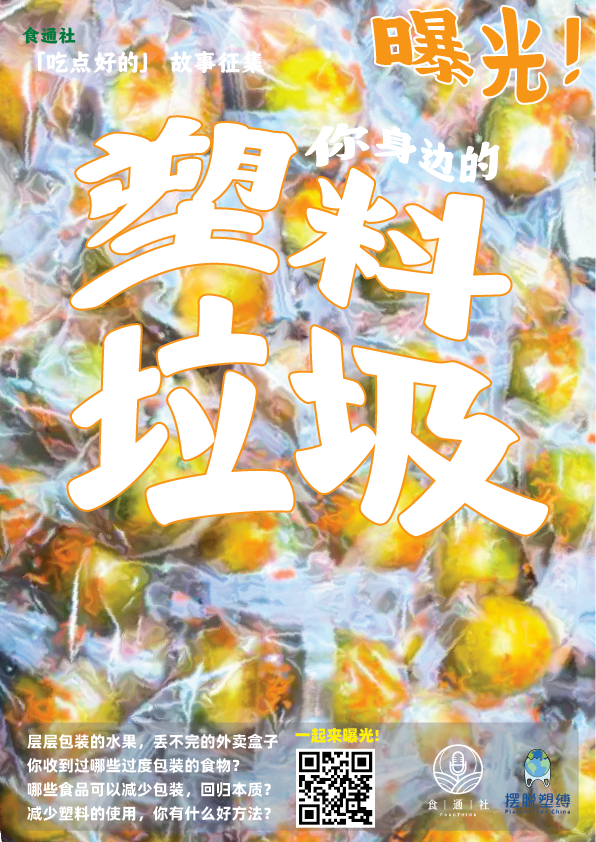
In the everyday diets of young people, there is an overwhelming amount of excessive plastic packaging. Clinging to food, it seems to “proliferate” uncontrollably, spreading like a runaway growth. Faced with layer upon layer of plastic wound around food delivery orders, fresh vegetables, and pastries – not to mention the plastic wrappings of every manner of ultra-processed food – many have no doubt voiced their frustrations. But more often still, people are left feeling baffled and speechless: “I never asked for all this surplus plastic, so why is it still here?”
For years, a “use-it-and-toss-it” lifestyle has trapped humanity and plastic in what can only be called a “toxic yet impossible-to-quit relationship.” Whether it is binned and ends up in a landfill or an incinerator, or scatters across mountains and seas before making its way back along the food chain to our tables, plastic packaging inflicts enormous harm on both people and nature. Ultimately, then, the answer lies in cutting plastic consumption at the source.
What other examples of excessive plastic packaging have you come across? We would also love for you to share in the comments any tips or tricks for recycling or reducing plastic use.
◉ Click the image to read everyone’s more detailed discussions and contributions.
How Long Has It Been Since You Last Went to the Market?
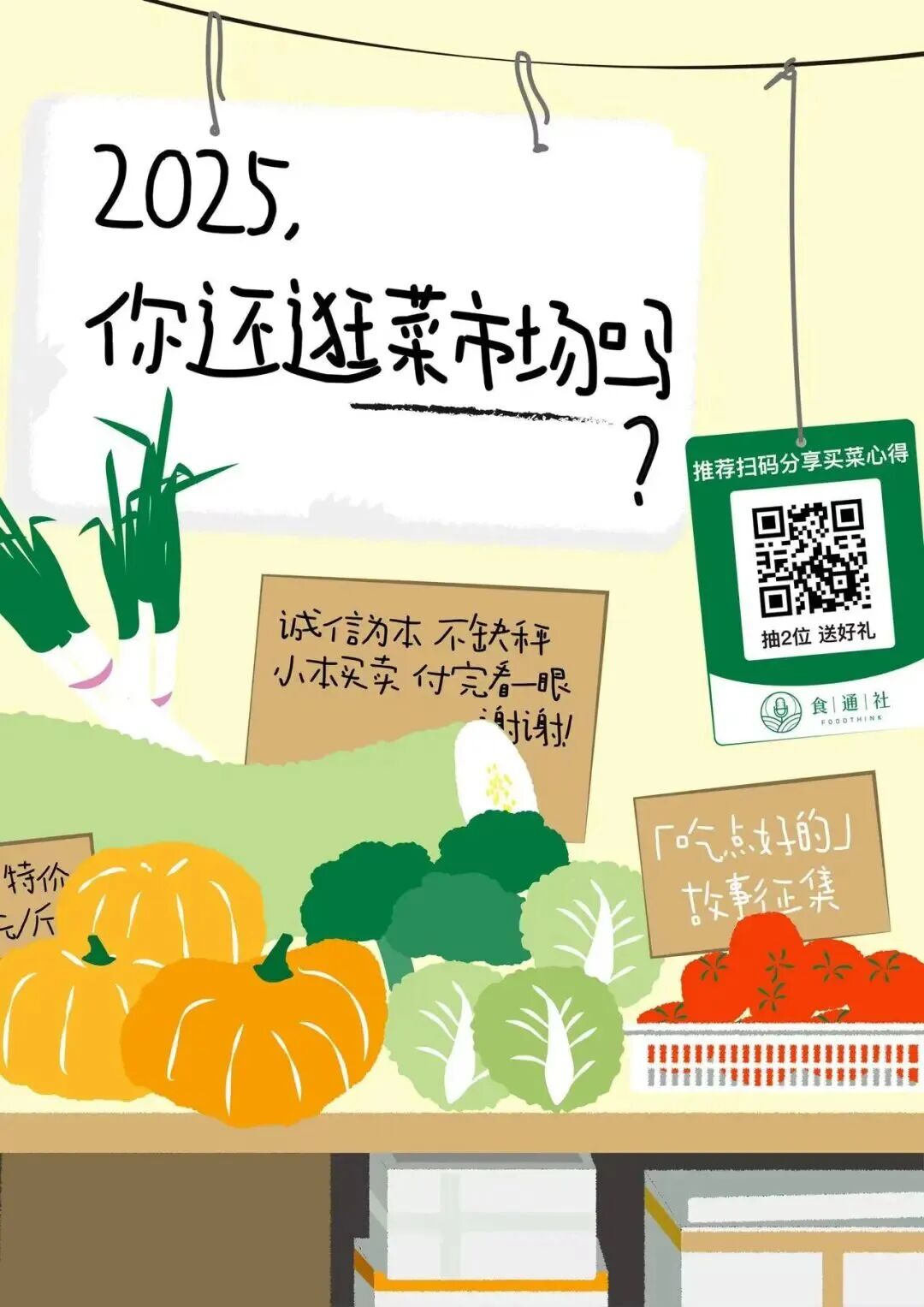
What a market offers is far more than ingredients – it lets you feel a whole way of life, threaded together through food. It is the place most brimming with life and vitality.
As a young person, do you still visit the market often? In this era of acceleration, we have still received many accounts from young readers about their experiences at the market. Whether in big cities or small towns, whether at home or abroad, whether from the far south to the far north, people’s lives are always connected to the market in one way or another.
Some believe the market will become the next space where the “20-Minute Theory” plays out; others see it still as a place that is “dirty, messy, and run-down.” New and old views overlap, yet neither seems able to capture the market’s full experience. And the market perches quietly in some corner of the city, interwoven with the heavy weight of livelihoods, breathing in and out the very breath of daily life.
◉ Click the image to read everyone’s more detailed discussions and contributions.
When Young People Begin to Learn Fermentation
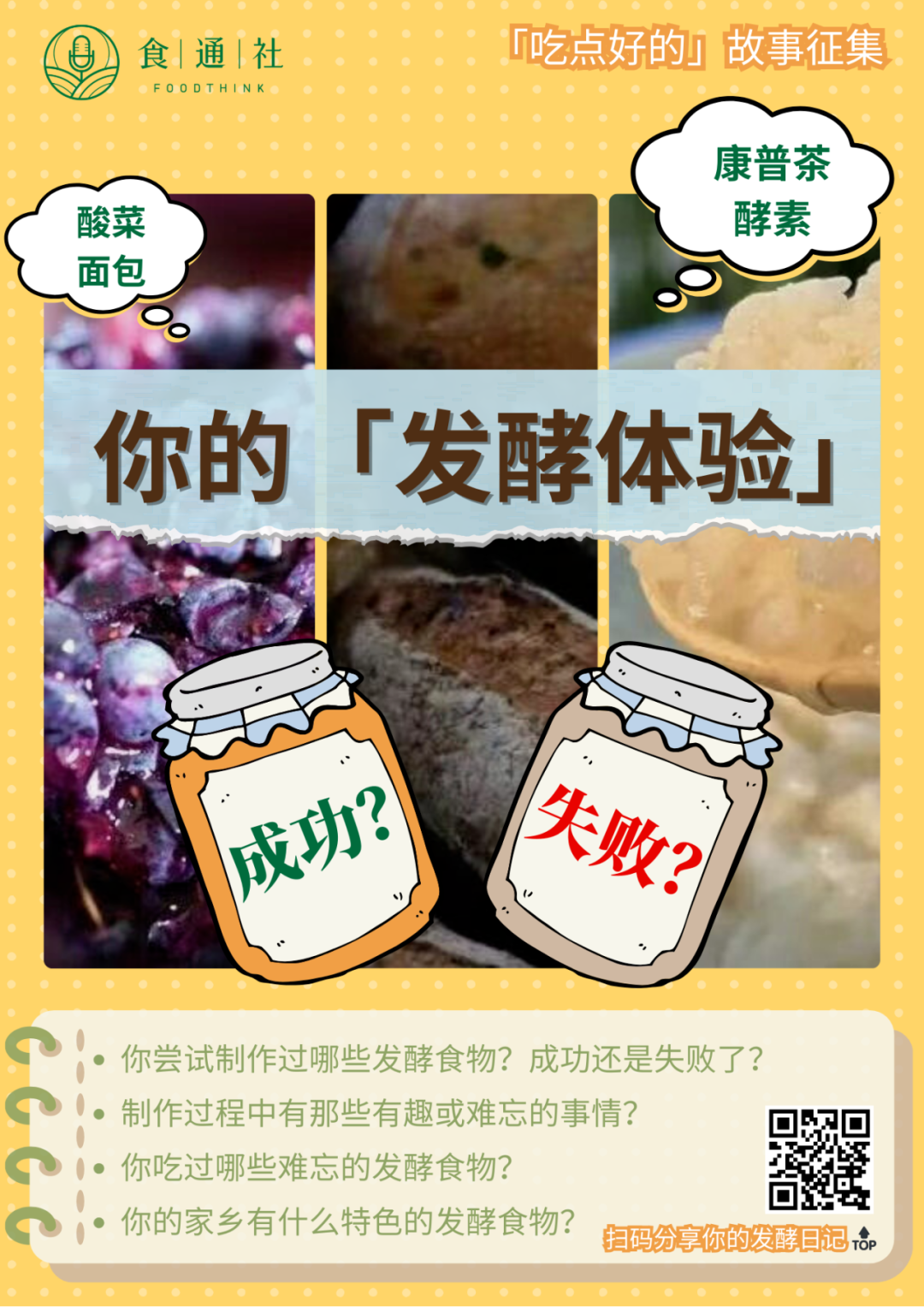
While we agonise over whether to cook for ourselves or head to the market to pick up fresh ingredients, some young people have already begun experimenting with fermentation. Fermentation is, in essence, a process in which microorganisms interact with the particular material environment around them under human influence. Of all the culinary techniques, therefore, making fermented foods can sharpen one’s perceptual awareness of food and its material surroundings like no other.
Fermentation is more than just a culinary technique – it is a way of life. Many young people have embraced fermentation as a new experiment in eating well in the city, yet it is also deeply rooted in the terroir and traditions of every region. Northeastern pickled cabbage may well be how “students abroad” long for home; sharing kombucha starter liquid is an extension of friendship; the recipes for paocai can be passed down from generation to generation – and so can the paocai brine.
Guizhou’s grain leaven and fermented sour broth, the pine-nut maltose candy of the Northeast, Kunming’s aubergine zhà – a traditional fermented aubergine preserve – Shanxi’s Tóunǎo, a medicinal breakfast broth, Jiangxi’s qìgāo steamed rice cake, Hunan’s chopped chilli peppers… Have you tried them all? If there are more fermented foods you would like to recommend, please leave a comment – together we can keep building this Guide to Fermented Delicacies Across China.
◉ Click the image to read everyone’s more detailed discussions and contributions.
Compiled by: Yuyang
Poster: Zhou Xuan, Li Ye, Kairui