
As Farmers Return to Villages, Large-Scale Land Contractors Panic

Late March in Tongchuan still holds a cool chill. There have been two showers over the past few days, light and intermittent as they were, but the dampness clings to the air.
At last the skies cleared, and just after seven in the morning, Hongxia headed up the mountain. She was growing anxious; the corn stalks left over from before the Lunar New Year still hadn’t been cleared. “There are still over thirty mu (≈0.067 hectares) of sloping fields left with corn stalks standing in them,” she said. All of it needed to be gathered as quickly as possible. After all, in less than twenty days, around Grain Rain, the new crop of corn would need to go in.
Yet the pressure of time was not her only concern; Hongxia had developed a fresh anxiety. Even if she managed to clear the fields, she had no way of knowing whether she would be able to keep farming them in the future.
More and more people are returning to their hometowns. When a few of Hongxia’s own relatives came back to the village, they took back the land she had been farming for them in earlier years, around twenty mu in total. “We’re all neighbours from the same village; if they ask for it back, you can’t exactly refuse. Even if you sign a paper contract, it’s only good for three to five years at most.”
Hongxia worried that as more people returned, more would want their land back. The investment she had made over these years in these hundred mu of land might not be recouped.
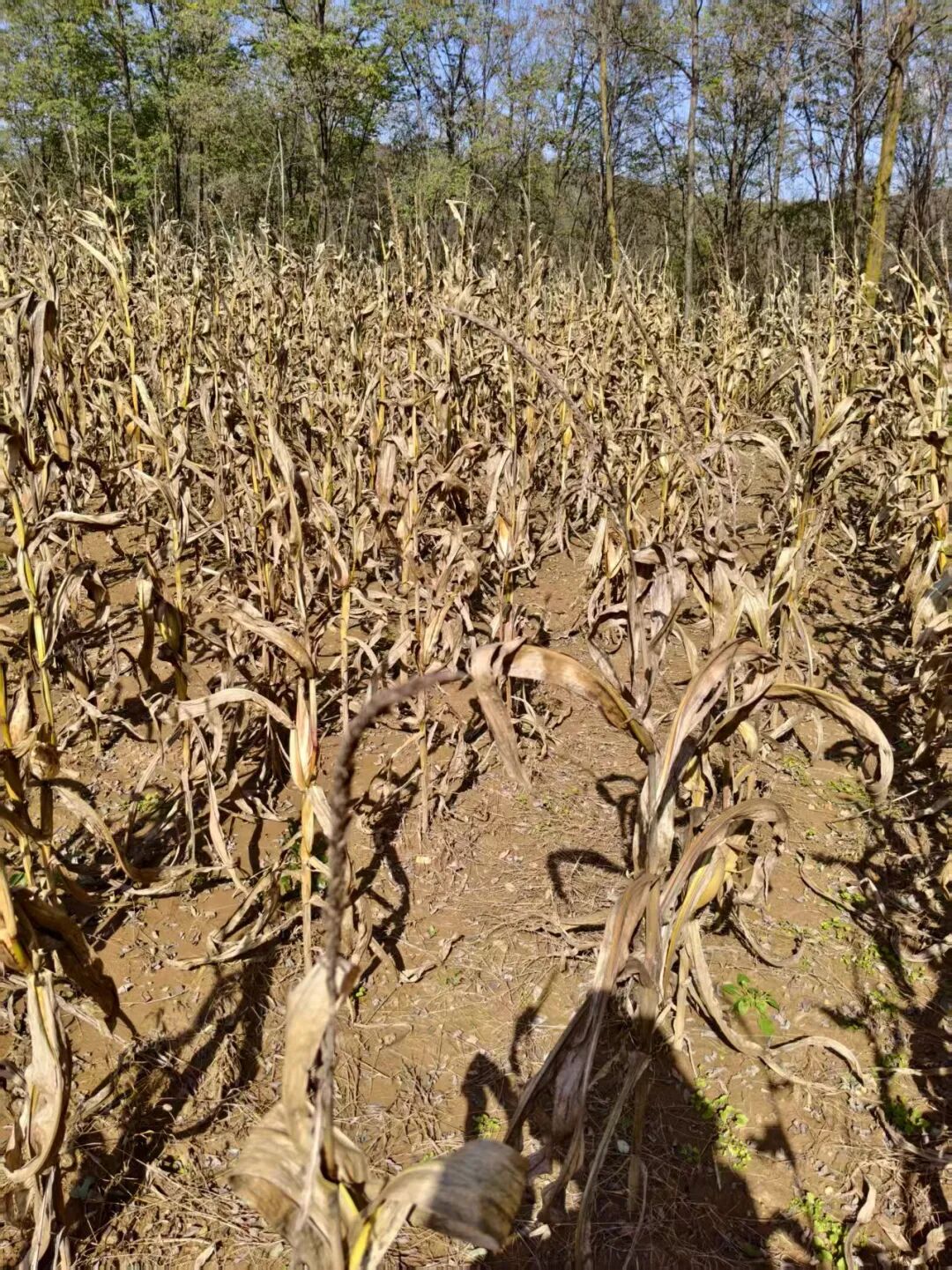
◉Unharvested corn stalks stand in the fields.
The Large-Scale Contractors Remaining in the Village
Hongxia is just past forty, yet she has already been farming alongside her husband, Daming (a pseudonym), for over twenty years. She often smiles and jokes, “I suppose I count as a seasoned farmer now.” They cannot bear to see so much land left uncultivated, particularly Daming, who has never been keen on migrant labour and prefers working the soil.
Initially, they simply tended the roughly ten mu of land allocated to them by the village. Given Daming’s preference for working the soil over dealing with people, they gradually began taking on plots left to lie fallow by relatives and neighbours, eventually accumulating a little over thirty mu.
To streamline land preparation and fieldwork, the couple subsequently acquired more agricultural machinery, including a rotary tiller, seeder, small walk-behind harvester, thresher, and a three-wheeled utility vehicle (locally ‘sanbengzi’). With their equipment growing, they needed to spread the costs and keep the machines running, so they contracted further plots from the village at nearly 200 yuan per mu a year. Their total area now stands at around 110 mu. Compared with the past, when villagers farmed their own small plots independently, this setup counts as a modest form of scaled farming.
Daming often speaks of “farming freedom”. This “freedom” means not having to answer to a boss and taking control of his own time. But the flip side of this “freedom” is nearly ceaseless labour almost all year round. Spring is for preparing the land and sowing, summer for spraying and weeding, autumn for harvesting, and only when winter turns cold can one take a brief respite.
This way of life differs little from working a regular job. Managing such vast tracts of land also means there are plenty of reasons not to leave home. As Hongxia says, “The land keeps you tethered.”
Rather than endure the backbreaking labour of farming, more people choose to leave. In Tongchuan, agriculture simply cannot keep people there.
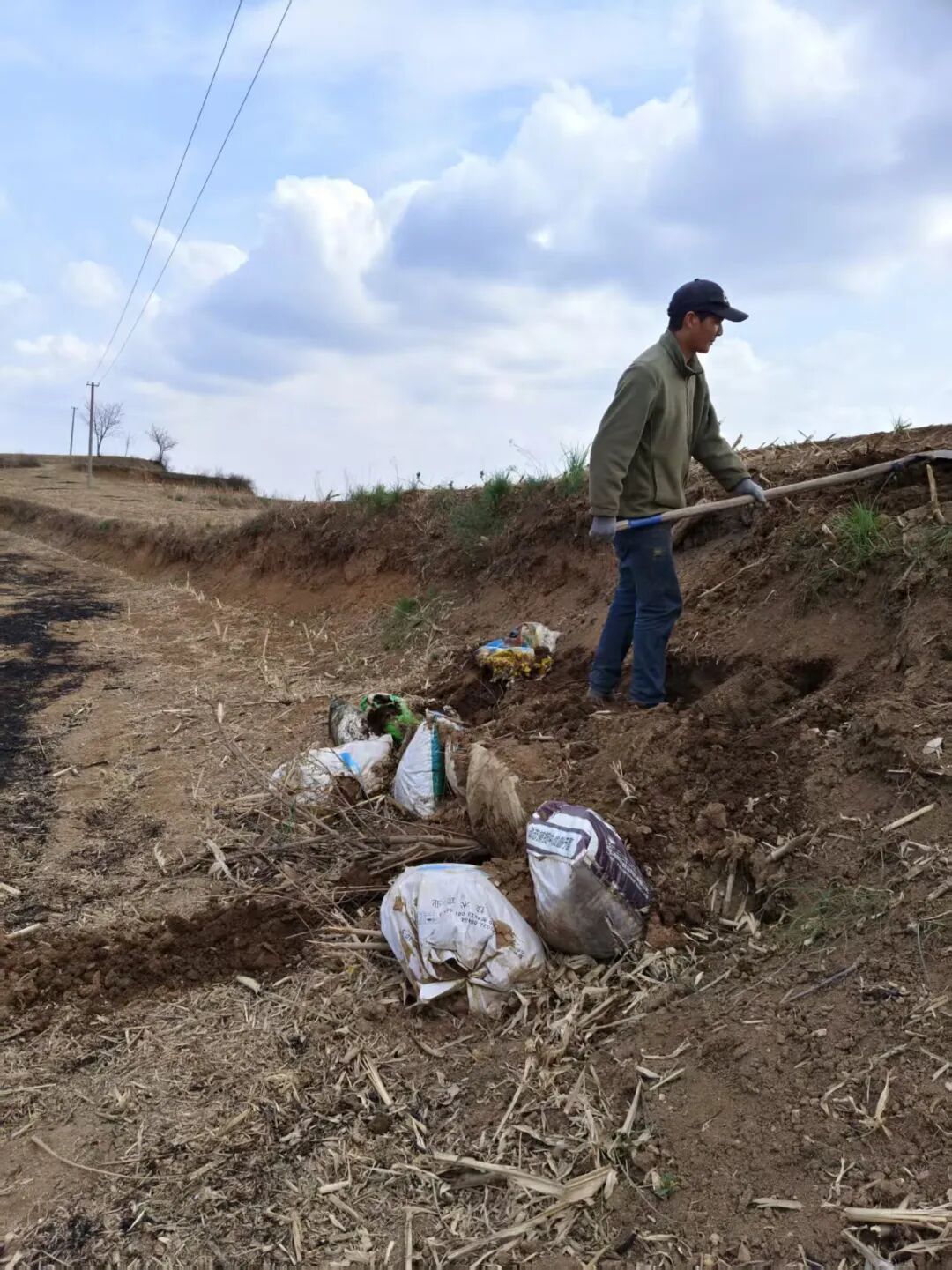
◉ Hongxia’s husband Daming is preparing the family’s land.
Abandoning farmland to head to the city
Tongchuan lies in central Shaanxi, bordered by Xianyang, Yan’an, and Weinan. Although classified within the Guanzhong Plain region, it sits near the southern edge of the northern Shaanxi Loess Plateau. Yet a satellite view reveals that the terrain is far from flat; it is entirely mountainous, with mountains, tablelands, ridges, loess hills, gullies, and river valleys spread throughout the area.
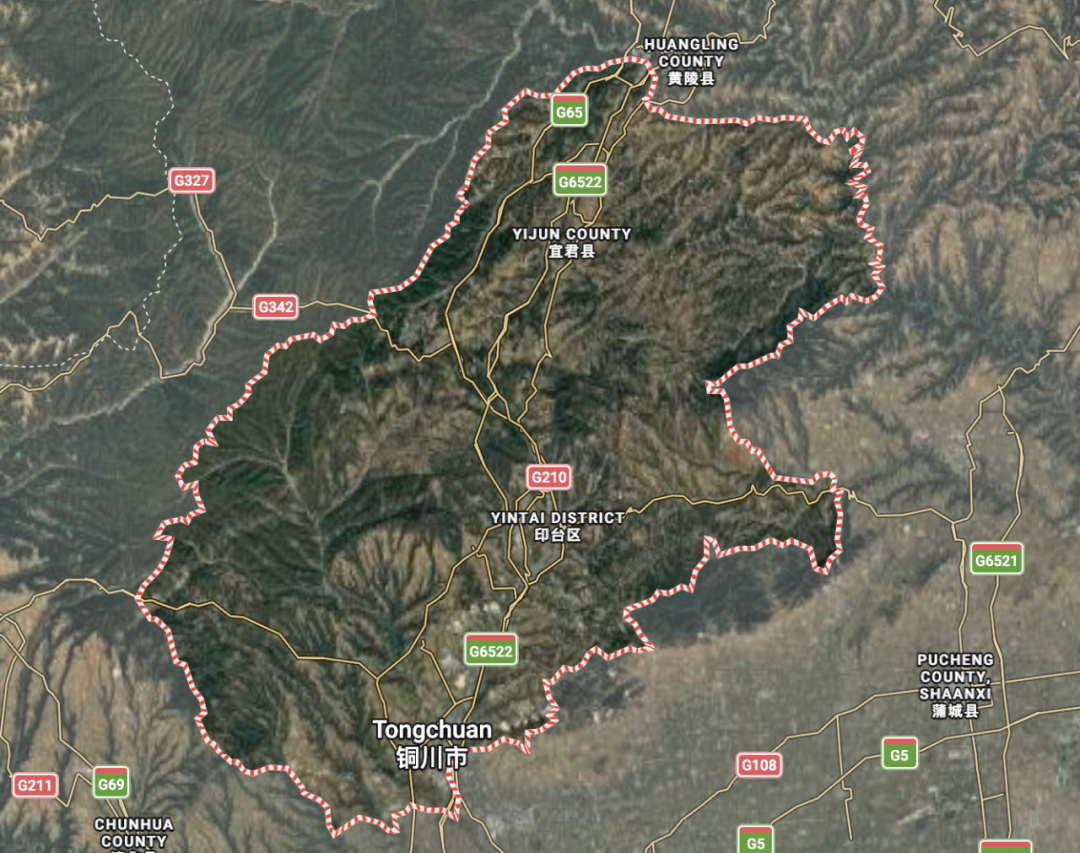
◉Satellite map of Tongchuan, showing a landscape with little flat ground and mostly mountains.
It is precisely because of this topography that farming means eking out a living on slopes, which is far more difficult and back-breaking than cultivating flat ground. Slopes are nothing like the vast flat plains, where extensive mechanisation can save labour and boost productivity. For locals, the scope for mechanisation here is very limited, “Smaller vehicles can still struggle up the slopes to help haul goods, but even slightly larger farm machinery simply cannot get up.” Ultimately, much of the work still relies on human labour.
Moreover, the uneven terrain means the soil lacks fertility. “As soon as late summer and early autumn set in, the heavy rains cause severe soil erosion. The mud washes down the slope, leaving behind nothing but small stones.”
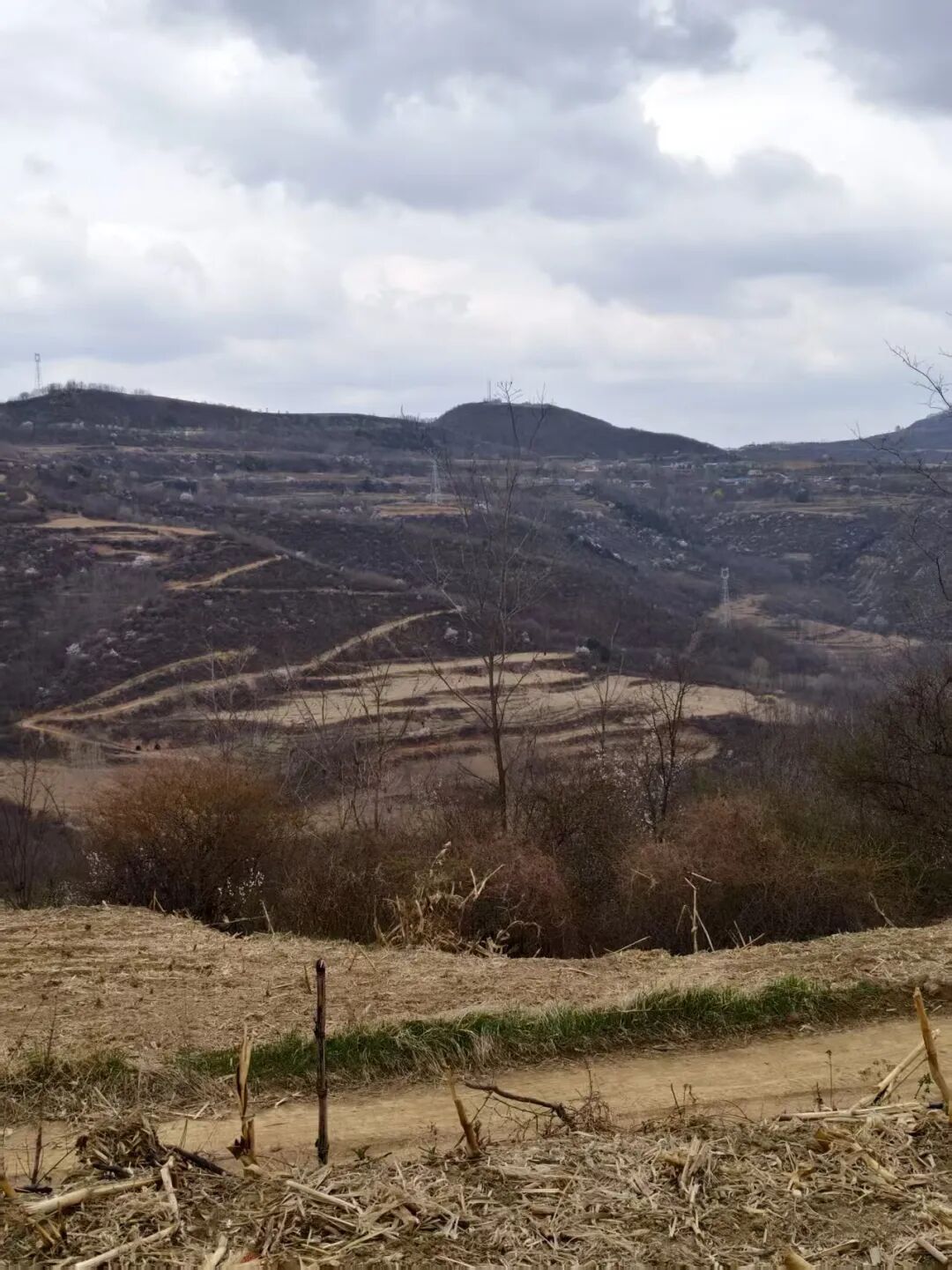
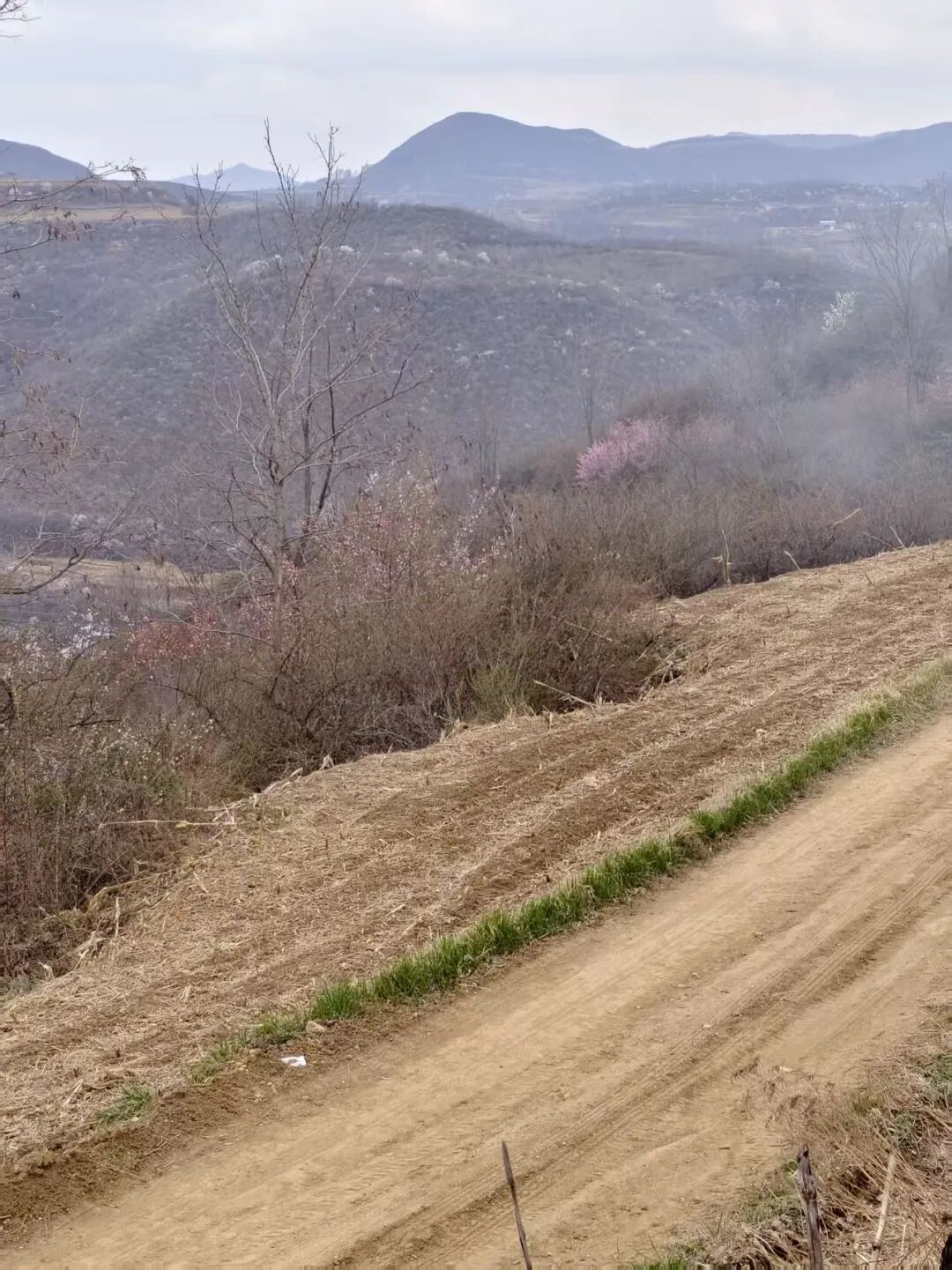
◉The path Hongxia takes daily up the mountain to reach the fields.
For most villagers, the decision to abandon farmland is driven not only by the soil being “not fertile enough”, but also by the fact that only one crop can be harvested annually, which poses a major constraint.
Across much of Tongchuan, pronounced seasonal temperature swings and lower grain yields stand in stark contrast to the Guanzhong plain, where double-cropping is the norm. Here, farmers face a binary choice: plant maize or wheat, but not both. After weighing the potential returns, most locals opt for maize. “Provided there are no severe weather anomalies in a given year, maize yields can exceed 1,200 jin (0.5 kg), whereas wheat typically brings in just 400 to 500 jin.”
For ordinary villagers striving to support their households, this return is plainly insufficient.
Farming is a livelihood entirely at the mercy of the weather. In search of alternative means of survival, most villagers eventually left the area to work elsewhere. As Hongxia puts it: “Without formal education or proper schooling, barely able to read a few characters, the only work open to us is low-skilled, heavy manual labour.”
As the village population dwindled, fields were gradually abandoned. Compared with farming, coal mining offered a more direct route to cash. In many ways, the land and the mines came to define the area’s fundamental economic structure: one offering low returns but relative stability, the other presenting high risks but faster pay.
The Land That Drains You Dry
Hongxia’s husband, Daming, also spent time in the mines, but he quit after just a year. “Coal mining is inherently dangerous,” he admits. “I was still too frightened to stay.”
Opting to stay in the village and farm means resigning oneself to a daily grind on the soil. Much of Hongxia’s land lies on slopes: “We have 110 mu in total, and at least 100 mu of that is on hillsides.” Cultivating on inclines rules out mechanisation, making every task intensely labour-heavy.
Any stones exposed by rainfall must be cleared by hand. As Hongxia explains: “If we don’t clear the stones, machinery is liable to break down, and the maize won’t grow properly.” Whenever the skies clear after rain, she rushes up the slope. She begins by raking the stones together, then dons gloves to toss them into woven baskets before dumping each load into a three-wheeled utility vehicle. Once the bed is full, her husband drives it down to the valley floor. They repeat the process, cartload after cartload, until the field is clear.
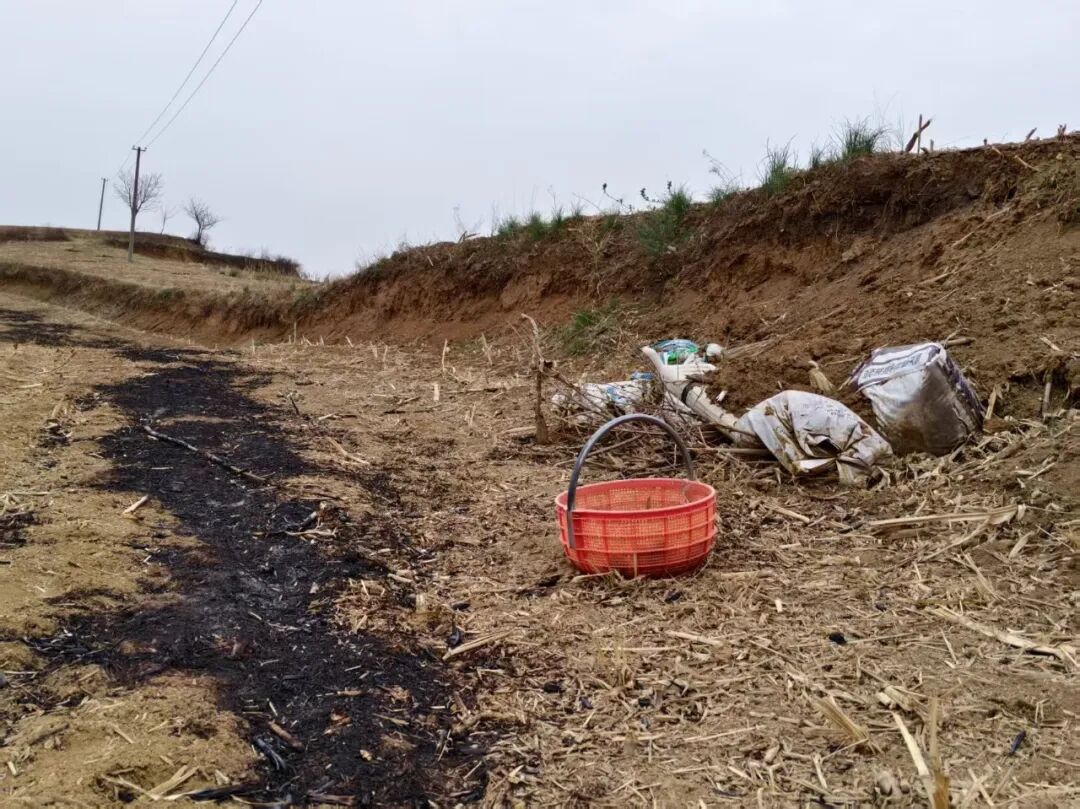
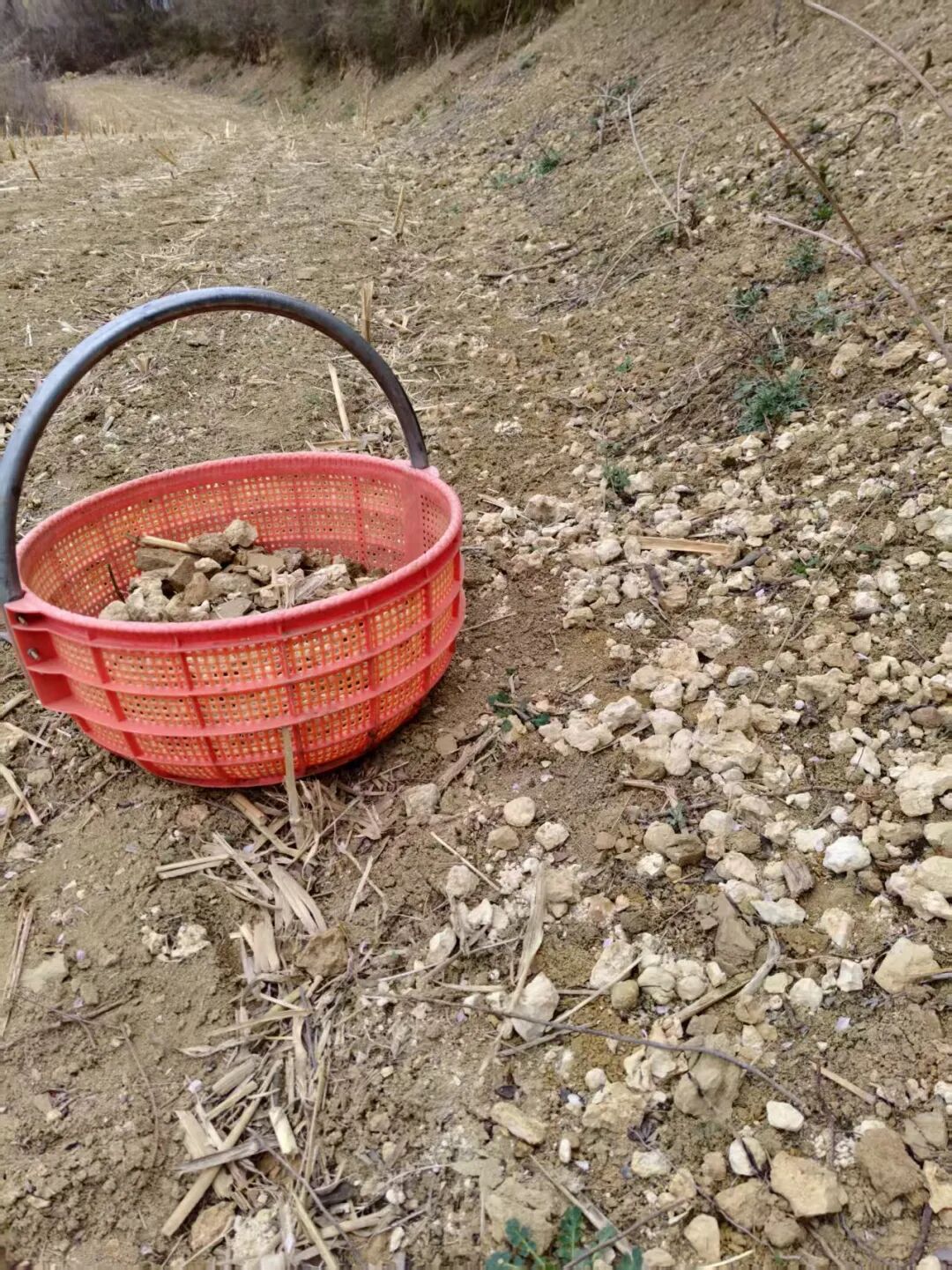
◉Hongxia loads the stones from the field into baskets.
From sowing to final harvest, maize must be worked over at least four separate times: planting, thinning the seedlings, applying fertiliser, picking the cobs, husking, threshing, and cutting the stalks. “Every single stage demands manual labour.”
Hongxia’s household farms a considerable area, and since machinery cannot operate on the slopes, the maize must be picked entirely by hand. Once the crop matures, the couple simply cannot cope on their own. The entire harvest takes no more than half a month, and their biggest fear is rain; rushing the harvest inevitably means hiring help. Labour costs are a significant expense. During the picking season, they employ workers at 100 yuan a day, typically bringing on four people at a time for over half a month. This means that even as they expand, they struggle to significantly lower the per-unit cost of manual labour—an expense that defies conventional economies of scale.
Over the past few years, however, Hongxia has noticed a clear shift in the village’s labour market.
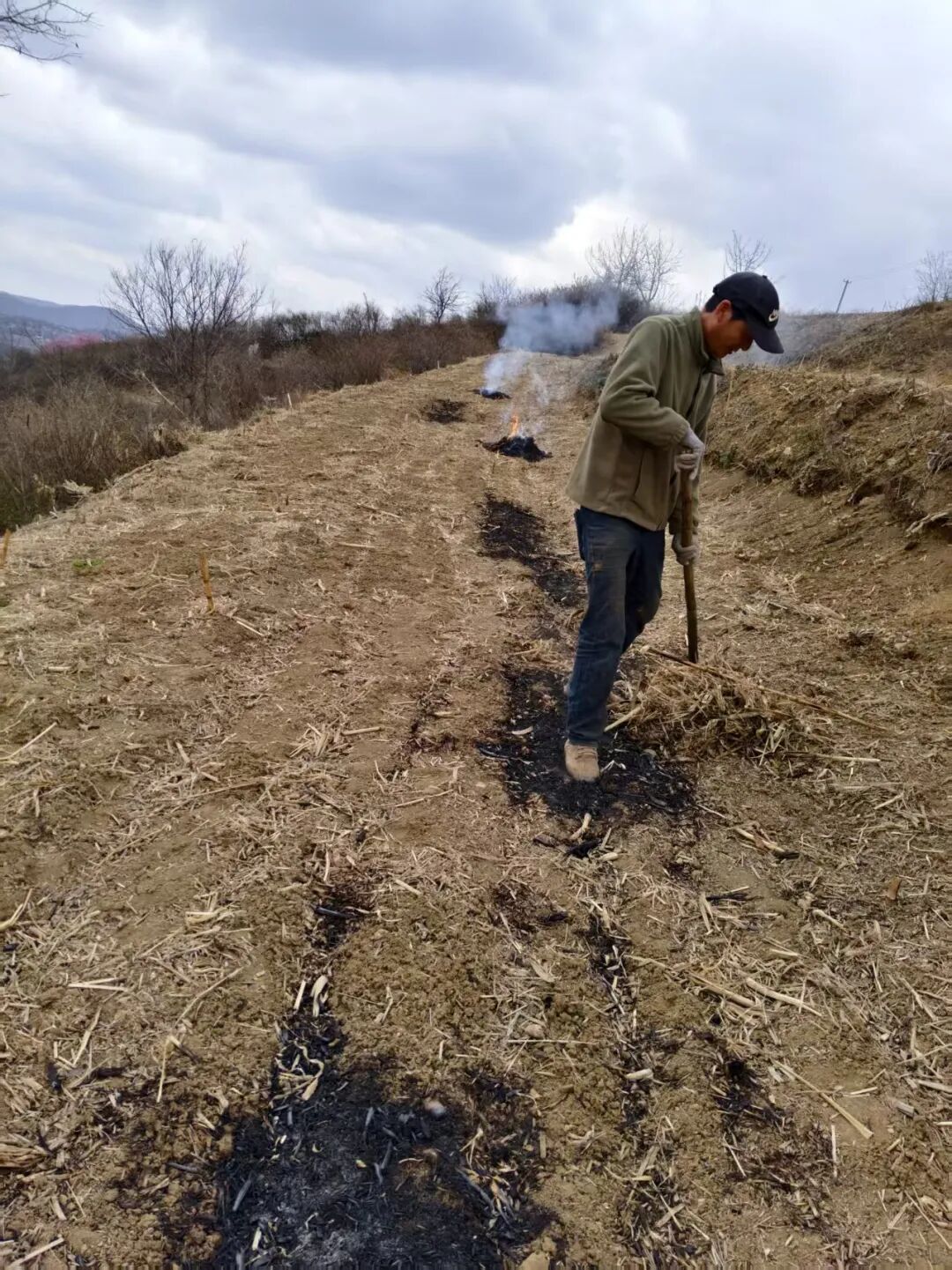
◉ Hongxia and her husband are clearing away the corn stalks roughly chopped by a machine.
When the City Is No Longer a Way Out
“A lot of people have come back.”
Hongxia first noticed the growing number of villagers through the falling daily rates for corn-harvesting hands. “In past years, a worker would earn at least 130 yuan a day; last year, it dropped to 100.”
Hongxia believes this shift began in the wake of the pandemic. Whether seeking work in the city or heading down the mines for a living, opportunities are fewer than they used to be.
In earlier decades, Tongchuan knew prosperity. During the First Five-Year Plan, the state prioritised two major projects in the region: the Wangshi’ao Coal Mine and the Yaodian Cement Plant, laying the groundwork for Tongchuan’s industrial base. At the time, Shaanxi’s industrial development relied heavily on Tongchuan. Recognising its strategic importance, Tongchuan was granted prefecture-level city status in 1958, becoming the second in the province after the capital, Xi’an.
During this period, Tongchuan’s industry expanded rapidly. Its coal output once accounted for 70% of the provincial total, establishing it as a key national coal producer and the largest cement manufacturing hub in north-west China. This boom brought plenty of opportunity to locals. Even for those who needed to leave farming for wage labour, work was never far away. With numerous mining operations across the Tongchuan region, the local reality was simple: “Those who couldn’t make a living from the land simply went to the coal mines.”
For many, heading down the mines remains a pragmatic choice. “If you can put in the hard graft, a monthly income of seven or eight thousand is certainly within reach.”
Beyond the mines, roles such as construction labourers, kitchen hands, security guards and domestic helpers became the primary destinations for villagers heading to the cities. “Farming is fundamentally uncertain; a severe drought or flood can wipe out an entire season’s yield. Wage labour is grueling, too, but at least the money comes in monthly. Earning a thousand or so a month keeps your mind at ease.”
Years of unregulated mining have left the city “riddled with scars”. The extraction has created vast goaf and subsidence zones, while triggering severe environmental degradation. Consequently, Tongchuan has been dubbed “a city you cannot see from a satellite”.
Over time, the city’s reliance on a single industrial sector saw Tongchuan’s economy languish at the bottom of Shaanxi’s rankings. The gradual decline of heavy industry has stripped many of their urban employment opportunities. According to Hongxia, mines have raised their hiring standards, now recruiting exclusively young workers; those over 40 are rarely taken on. Coupled with the depletion of older mining areas and the closure of numerous pits, opportunities have dwindled significantly.
With work scarce in the city and the cost of living high, those unable to find employment had little choice but to return home. In the city, expenses begin the moment you wake up; rent, groceries, everything adds up. Back in the village, however, the house is your own. No rent to pay, and a patch of ground by the door can yield enough vegetables to see you through the summer. “We are rural people. If you can’t raise the money, you simply have to find ways to tighten your belt.”
There is another shift underway, though it is far more subtle. In the past, the migration flowed from the countryside to the cities. Now, however, some urban residents are even beginning to return to rural areas in search of temporary work. Hongxia notes that some city dwellers, formerly employed in the mining districts, had their land requisitioned and still lack a steady income. “It costs too much to live in the city, so we’ve come to the countryside to work,” they say. During peak agricultural seasons, they lend a hand with tasks such as flower thinning, harvesting maize, and picking apples.
This influx of reverse migrant work (urban residents taking rural seasonal jobs) has driven down labour costs. Yet this does not signify a surplus of agricultural workers. Quite the opposite: the local workforce remains inadequate. The younger generation refuses to work the land, leaving middle-aged and older workers behind. As one local noted, they are “still worrying over their newly born grandchildren, so they lack the stamina for sustained field work”. Those too old have simply lost the capacity for farm labour. Moreover, the local labour pool has grown increasingly fragmented, drawing on village elders, unemployed town residents, and “landless farmers” who relocated to the city. Together, they create a loose and precarious labour market.
Returnees seek to reclaim their land
As you head up the slightly winding mountain track, the landscape is a wash of the area’s typical ochre and brown earth, beneath a grey-brown sky that hangs like smog. Hongxia has little appetite for the scenery. Her focus is entirely on the withered, yellowed cornstalks still waiting to be cleared from the fields.
With winter giving way to spring and farmers preparing for the new sowing season, Hongxia can only cling to what is certain right now. “Plantable or not, I’ll clear the stones first. The land must not be left to lie fallow; keeping it from going to waste is what matters.”
With villagers returning home, it is only natural they would want their land back. Renting out plots among locals is nothing like contracting with outside standardised firms or entities, which operate under written contracts or formal agreements. Rural society functions as a reciprocity-based community (an informal kinship network), so deals are largely verbal. A land lease can be settled in the time it takes to share a home-cooked meal. Even if neighbours are not well acquainted, a middleman can be called upon to relay terms and build rapport. Yet this leaves inherent vulnerabilities.
For farmers who previously expanded their operations by contracting land, the risks quickly become apparent once the plots are reclaimed, turning their initial machinery investments into a sunk cost. Yet they cannot cut their losses. “You can’t sell the machines, and even with less land, you still can’t do without them,” Hongxia says.
Hongxia and her husband initially invested around 150,000 yuan in agricultural machinery, with the total cost covering vehicles of all sizes. In reality, even in their best years, the machinery expenses aside, their annual net profit scarcely exceeded a thousand yuan. The continuous rains of 2025 compounded their woes: the corn was entirely waterlogged, and the harvested crop could not be dried, leaving it to rot. They could only sell the yield from a mu for 300 yuan, just barely breaking even on seeds and fertiliser.
Hongxia is not alone; a young man in his thirties from the same village has encountered the exact same predicament. “He’s a university graduate, too,” Hongxia says, her tone tinged with regret. Before the pandemic, he returned to the village specifically to pursue scaled and mechanised farming, believing that one person operating machinery on over a hundred mu would comfortably bring in around 100,000 yuan a year. Determined to make a grand start, he even paid a premium of 200 yuan above the local market rate, leasing roughly 80 mu at 400 to 500 yuan per mu. Yet, contrary to expectations, it took less than three years for his cultivable area to shrink to under 50 mu. “Others have all asked for their land back,” he notes.
Beyond the loss of land, the young graduate had also sunk considerable funds into purchasing agricultural equipment to sustain his operations. “With so little land to farm now, it all just sits gathering dust in the courtyard,” he laments. He had hoped to pick up odd jobs during the autumn harvest to cover fuel costs, but he cannot simply wait at home for work to come his way. When he tallies everything up, these patchy earnings fall far short of supporting a family.
Ultimately, his “grand” ambitions were thwarted by the land itself, and “he went down to the coal mine this year.” On this soil, those with education and those without are ultimately heading towards the same fate.
Uncertain Future
For fragmented smallholder farmers, farming has become even less profitable. The return of land to their hands has not brought stability; instead, it resembles a “reluctant fallback.”
Hongxia points out that her village is still among those with ample land. Each resident is allocated just over two mu, nearing three, meaning a typical household’s total holding amounts to roughly ten mu. Annually, a mu yields around 1,200 jin of corn. In recent years, the procurement price has fluctuated between 1.1 and 1.4 yuan per jin. In other words, the gross annual income comes to only just over 10,000 yuan. The yearly costs for seeds, rotary tilling, sowing, and fertiliser total approximately 300 yuan per mu. Once these expenses are deducted and the remainder split among a family of four or five, virtually nothing is left. “I had hoped to supplement our income with odd jobs, but now there isn’t any work to be found.”
This accurately reflects the current state of the countryside: for most people, there is no stable pathway to upward mobility, only a patchwork of livelihoods constantly shifting to match changing circumstances. Although rural populations continually come and go in a steady flow, their movements never seem to point toward a clear direction.
Much like the land here, when no one in the village was farming it a few years back, plots gradually consolidated into the hands of those willing to take them on, such as Hongxia. Now, amid today’s uncertain livelihoods, as people return to the village, the land is fragmenting once more, plot by plot.
Hongxia’s situation is no different. Today, she and her husband remain what might be called large-scale land contractors, managing around a hundred mu. Their future is just as uncertain. “If we’re left with even less land, we’ll turn to livestock or set up a small food stall,” Hongxia says. Asked about what lies ahead, her reply is characteristically pragmatic, yet her tone carries a palpable sense of uncertainty and doubt.
Though these options may appear plentiful, in reality they are little more than vague aspirations without a clear path forward. For someone who has spent half their life working the soil, how to truly come to terms with the gradual loss of it remains an unanswered question.
Foodthink
Author
Mi Xiaomai
A second-generation farmer (child of rural workers), who spent their childhood working the fields and their adulthood writing. Despite a complex, ‘love-hate’ relationship with the land, they hope to document more of the countryside, its people, and their agricultural livelihoods.
Daming is a pseudonym. All photographs are provided by the author.
Editor: Xiao Dan