
From the US to a Dong Village in Guizhou: A Beijing Woman’s Career and Life Choices

A note from Foodthink
Can an urban professional rebuild their life and career in the countryside? Chen Xi, a former consultant who grew up in Beijing and spent a decade living and working in the United States, travelled to a Dong village in Guizhou for a water quality survey. A bowl of steaming purple rice and a few late-night conversations by the fire sparked her idea to “build a house and stay”. Later, she started a family there and, last year, became a proud mother.
Over the past six years, Chen Xi and her husband Bang Rong have worked with local families to cultivate rice in the terraced fields, preserving more than twenty local varieties of rice and coarse grains. They founded the brand Zhaoxishe to help people discover and taste these heirloom Dong rice varieties; and, through charity sales of purple rice, built a children’s library and launched public events and educational initiatives in Yangdong Village.
Yangdong Village is changing, and she continually moves between the roles of farmer, mother, rural community builder, and cultural advocate. How does she view and understand the countryside, and what does it mean to her to “stay”?
What follows is in her own words. This piece was compiled from a women’s career talk she gave on 18 March, co-hosted by Foodthink and Pushpull Bar & Space.
This year marks the UN’s “International Year of Women in Family Farming”. Foodthink has launched the “Her and the Land” column, focusing on women in agriculture and food systems and sharing their stories. This article is part of the series.
From Beijing to the United States, and on to Guizhou
I was born and raised in Beijing.
I was quite rebellious in my second year of high school. I strongly disliked my form tutor, always feeling he was trying to suppress us. During one winter break, I told my mother I was fed up with homework and wanted to go out and see the world. I happened across a winter camp in the United States and signed up. I didn’t give it much thought then; I just figured that wherever it was, getting out was what mattered most.
Later, I secured a place as an exchange student in the United States. I ended up staying on to study, graduate, and work, remaining there for 11 years. The political climate back then was different from today; as a Chinese national, I was able to take on consultancy work for the US government after graduating, a role I held for five years. Our project celebrations were even held at the White House.
In 2018, I faced significant setbacks in both my career and personal life. I was drawn into intense office politics, and my health began to deteriorate, requiring treatment. Around the same time, a chef and food writer I greatly admired, Anthony Bourdain, took his own life. To me, it felt like a cherished food dream had shattered. So I began to seriously consider whether it was time to step back and take a rest.
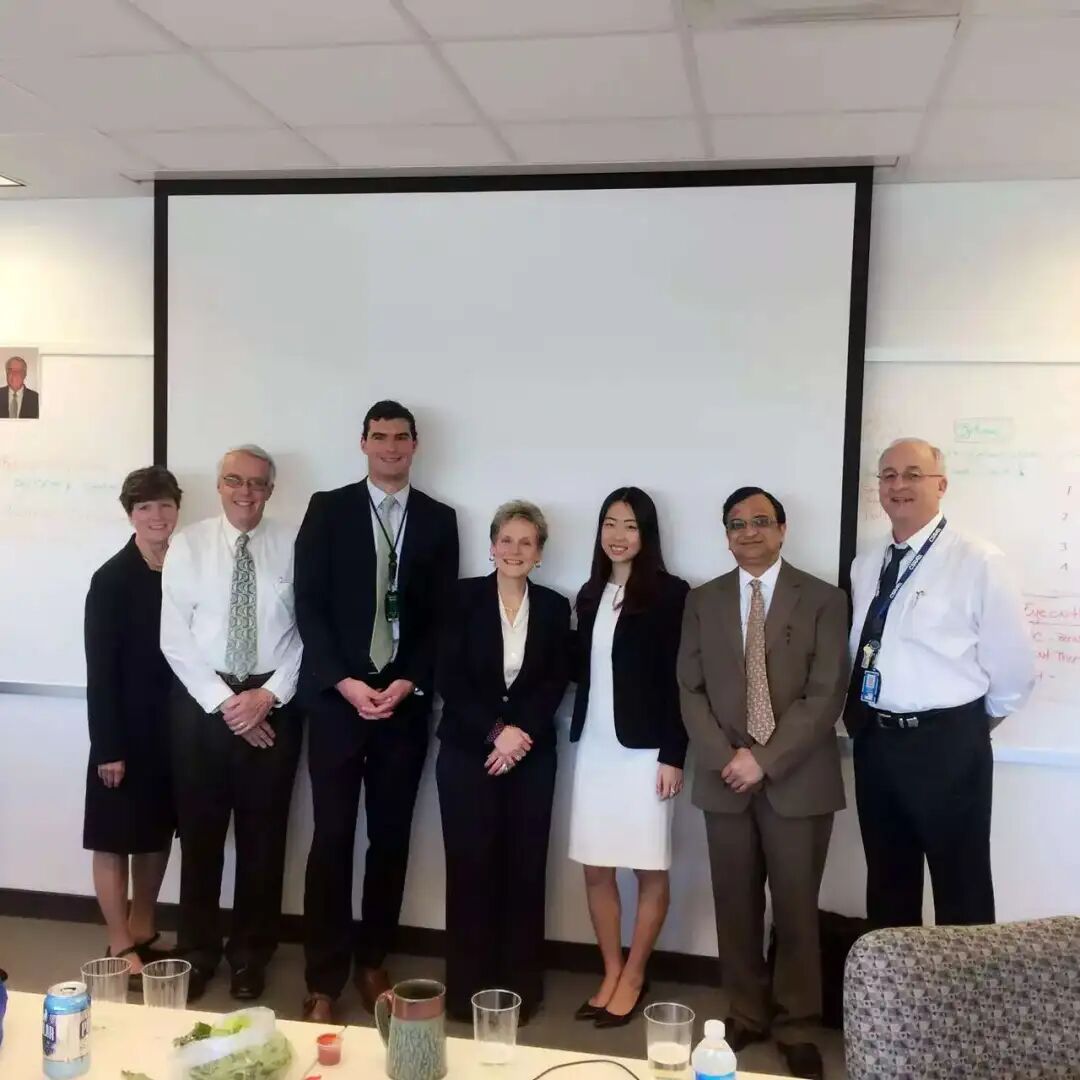
◉Chen Xi, a core team member on a project representing the US federal government, poses with her colleagues after 14 days of intensive training and a roadshow. Photo: Chen Xi
Looking back over the past thirty-odd years, I realise I never truly rested, nor did I ever really just live. I kept chasing one target after another, as if I were just ticking off KPIs. So when I finally decided to take a step back, the first thought that crossed my mind was to return to China.
I had left home at seventeen, and by the time I looked back, I had missed China’s period of most frenetic development and never really come to understand the land itself. So after returning, I joined the non-profit organisation Wushui Information Platform, hoping to get to know the local landscape better by working on rural projects. One of these sites was Yangdong Village in Qiandongnan, a Miao and Dong autonomous prefecture in Guizhou. It was from this village that the rest of my story truly began.
I arrived in Yangdong Village for the first time in January 2019, stepping into the role of a project mentor.
Having never visited Guizhou before, the first thing that struck me was the sheer length of the journey. The high-speed rail link to the village was still under construction, so getting there meant a complicated series of transfers: flying into Guizhou or Guilin, taking a high-speed train to Rongjiang County, and finally catching a local bus into the village. The roads were still being upgraded, and the final stretch was muddy and deeply rutted. By the time I stepped off the bus, my suitcase was caked in grey mud.
Yet what left the deepest impression on me from that trip was, in fact, the rice. The first time I tasted it in Yangdong Village, I knew immediately it was the finest rice I had ever eaten. At first, I wondered whether it was simply because we were so exhausted that day. But we went on to have it at every meal, and it remained just as good. Even the students from Guangxi on the team felt the same way.
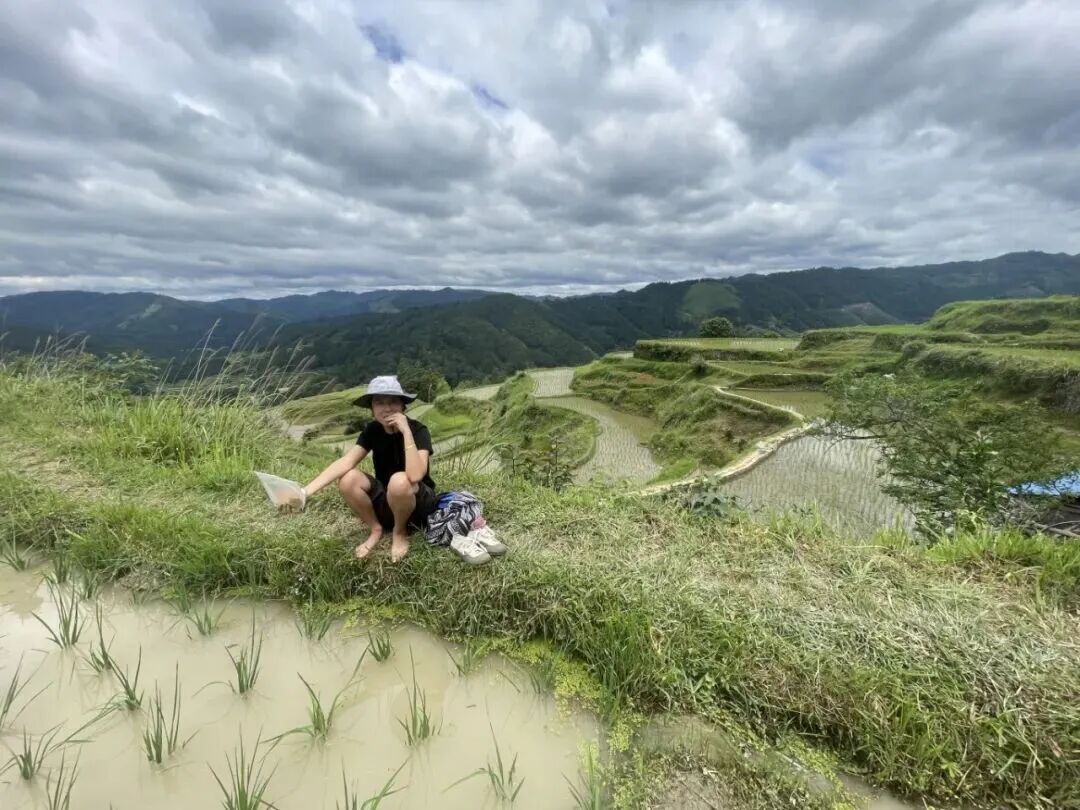
◉Chen Xi beside the rice paddy. Image: Zhaoxishe
I was raised on wheat flour and knew very little about rice; my family mostly ate rice from the northeast, let alone understanding anything about Guizhou’s paddy fields. Looking back now, my story with Guizhou, in a way, began with that first bite of rice.
By the following year, the pandemic had arrived. I was working from home and, for the first time in over thirty years, living with my parents again. Cooped up for so long, I grew utterly restless, as though grass were taking root in my chest.
It was around then that I received a parcel from my now-husband. It was caked in mud on the outside, but when I opened it, there was a box of spring bamboo shoots from Qiandongnan. They smelled wonderfully fresh, and I was deeply moved. That’s when I felt a strong pull to get out. I hadn’t left home in ages. One morning, I hiked up the Western Hills, but Beijing was blanketed in thick smog. Just then, a friend sent a WeChat photo: the early morning mist rolling over the hills of Yangdong Village.
On one side, Beijing’s thick smog; on the other, the mountain mist of Qiandongnan.
It was these two moments that led me to fly to Guizhou, where I spent a truly unforgettable summer—one I now call ‘the happiest summer holiday of my life’.
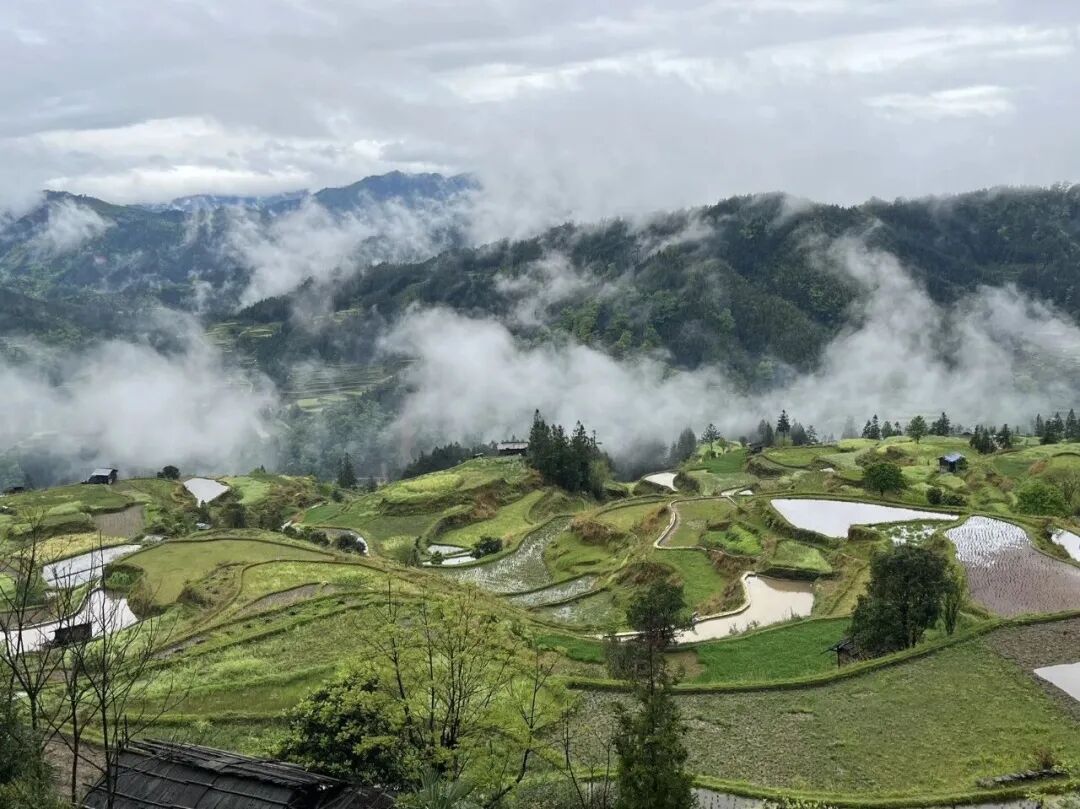
◉ Mountain scenery in Yangdong Village. Photo: Chen Xi
It was a feeling I hadn’t had in a long while, reminiscent of a proper summer holiday from my student days. I spent each day exploring the hills and streams, soaking in the water, and cooking alongside local friends. My wooden cabin was also being built. At the time, I figured that once the pandemic ended, I’d probably head back to Beijing for work and only return to Guizhou during the holidays.
Yet, while the cabin was being built, my husband and I began a relationship. We met in the rice terraces. He was one of the young people who had returned to their rural roots, working as manager of the cooperative’s rice mill. Our connection started over the rouge purple rice (yanzhi zimi), and before long, everyone was jokingly calling it “love purple rice”.
The cabin was finished in April 2021, and from that point on, we made it our permanent home, never to leave again.
Building a Library with Rouge Purple Rice
Over that summer in Yangdong Village, I got to know several of the local children. I noticed they had very little to do outside of school. With their parents away working, the kids lived with their grandparents and spent much of their time watching short-form videos. That’s what made me want to set up a library: I hoped it would give the children somewhere to come during the school holidays to read and take part in activities, offering them an alternative.
But where would the funding come from? I knew the local rouge purple rice was excellent quality, yet the farmers were struggling to sell it, so I decided to raise funds by selling the grain myself.
The entire fundraising drive was wrapped up over the winter. Local high school students and villagers came along to help us pack and dispatch orders. It was my first time genuinely involved in selling farm produce, and it was through this process that I really came to understand the rouge purple rice. I researched its history, learned how to tell its story, filmed videos, and shared cooking tips with people. Afterwards, I received a steady stream of feedback, with plenty of people keen to keep buying it. In fact, this experience played a big part in why we later decided to grow the rice ourselves.
As the fundraising was underway, I started looking for a site. We found an abandoned granary on the banks of the Yangdong River; the location was ideal, sitting just a short walk from the primary school. Given how dilapidated it was, however, most locals assumed it could never be turned into a library. We loved the wooden structure, though, and wanted to preserve it.
The library opened its doors in June 2021. It was the first non-profit community library in Qiandongnan, and over time it gradually evolved into a hub for the wider community. I’ll always be grateful for the part this library has played in my life.
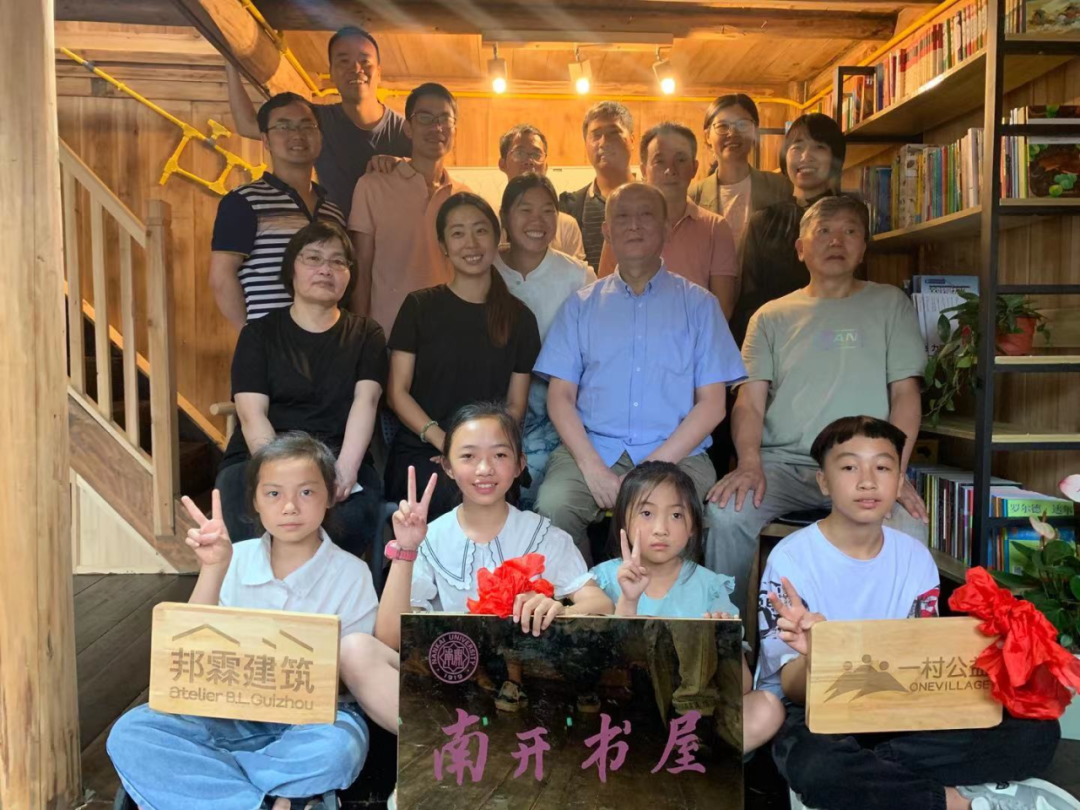
◉The Liping County Yangdong Children’s Library officially opened on 3 July 2021. Image: Liping County Yangdong Children’s Library WeChat official account
I usually teach English and run yoga sessions at the library. We also welcome volunteers from various places who come to teach classes, such as those focusing on children’s emotional well-being, alongside flower arranging, nature education, and craft workshops. The poetry sessions have been the most popular. I’ve come to realise that every child is a natural creator; they simply need a space where they feel accepted, and like seeds, they will sprout.
To ensure the library’s long-term sustainability, we compiled the children’s poems into an anthology and took it to Shanghai, Beijing and other cities for readings and exhibitions. This also helped us raise some funds.
At the same time, I began designing courses tailored to the village’s specific needs. Topics such as sex education and waste management, for instance, were areas where I had noticed a gap, prompting me to invite educators from non-profits to run targeted sessions.
As we work to preserve heirloom seeds, we believe it is important to start with the children. The library is therefore preparing a ‘Seed Classroom’, where the children can learn about local plants and seeds.
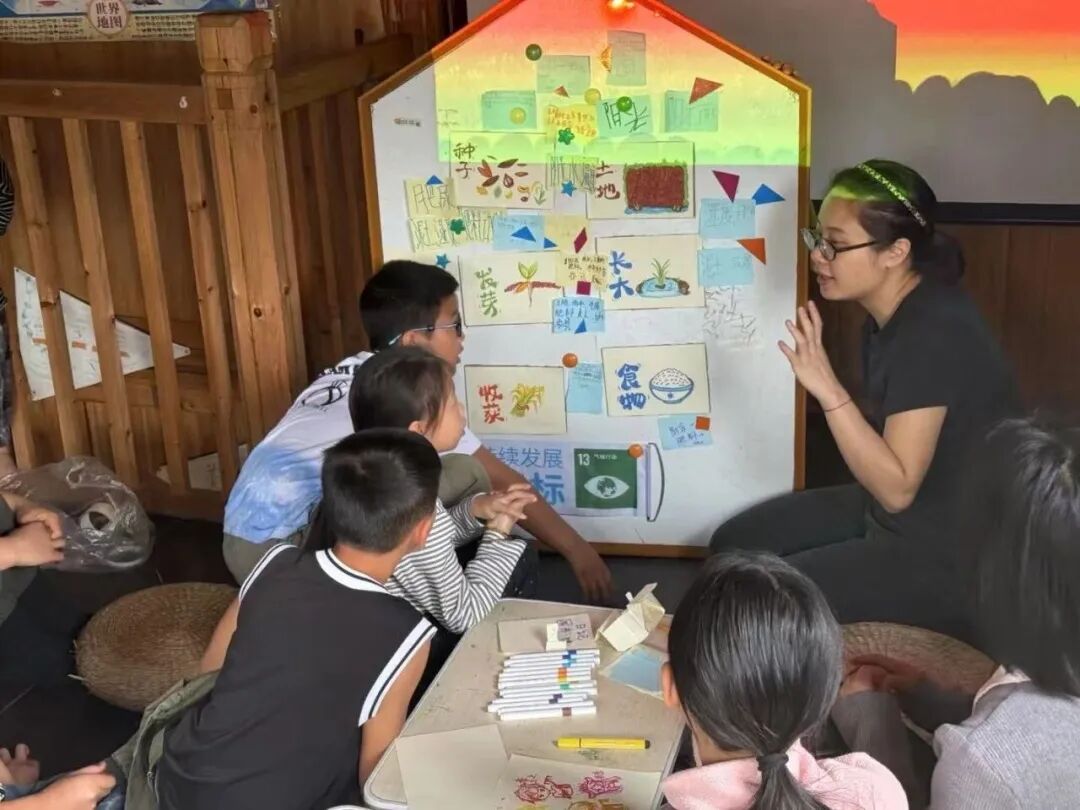
◉ In April this year, the children’s library invited Yi Han to lead a seed class. Image: Liping County Yangdong Children’s Library WeChat Official Account
This process has thrown up plenty of challenges, and the most pressing one at the moment is that the library needs to relocate.
The landlord is determined to keep water buffalo on the premises. I did speak with the local authorities about it, but given that bullfighting is a longstanding Dong tradition and integral to local culture, they made it clear they wouldn’t intervene to stop him. As a result, our top priority this year will be to relocate the library to a new site.
There are also cultural frictions, particularly around respect for agreements and expectations of efficiency, whether I am building a house or organising local farmers for planting. Initially, I expected there to be a clear contract or agreement, whether oral or written, that everyone would simply stick to. In practice, it proved incredibly difficult. People might fail to turn up due to a festival, a family matter, or simply bad weather. Gradually, I came to understand that this was never personal; it was simply a different rhythm of life. So I adjusted my expectations accordingly. I eventually realised that efficiency need not be paramount. Agriculture and nature are full of unpredictability, unlike office output, which can be precisely scheduled. I’ve learned to accept that things will happen when they do, a month early or a month late, and to stop beating myself up over it.
Yangdong Village’s traditional approach to growing rice
Over the years living in Yangdong, I have gradually moved from initial involvement to a deeper engagement with agriculture itself. This stems partly from my husband’s interest in farming and agricultural tools, and partly from my own focus on heirloom seeds. We have begun to take a more hands-on role in the planting, and through observing the local context, we have gradually developed our own guiding principle: to do our utmost to preserve the Dong community’s traditional farming practices.
Growing rice in Yangdong primarily relies on a rice–fish–duck integrated system.
We stock every paddy field with “paddy fish”. In spring, when the rice seedlings are transplanted, we release the fingerlings; by autumn harvest, we gather both the rice and the fish. This cycle is accompanied by our own festivals: the Guanyang Jie (Rice Transplanting Festival), which celebrates the planting of seedlings, and the Chixin Jie (New Grain Festival), which marks the rice harvest. Before then, we drain the fields to catch the fish, then invite family and friends over to share the meal.
Fish play a number of roles in the rice paddies. Their waste acts as fertiliser, while their movement through the water stirs it up and helps to keep weed growth down. The fields are home not only to the fingerlings we stock, but also to wild freshwater mussels, prawns, small fish and pond snails. It is fascinating that in the Dong language, every tiny creature has its own specific name, and there are distinct terms for stocked fingerlings and wild fish. This really speaks to the local community’s deep care for these creatures and their aquatic habitat. For example, when my husband is ploughing the fields, his ten-year-old nephew will wade into the churned-up mud to catch fish. Whatever he brings up gets boiled up for lunch straight away, and it tastes remarkably fresh.
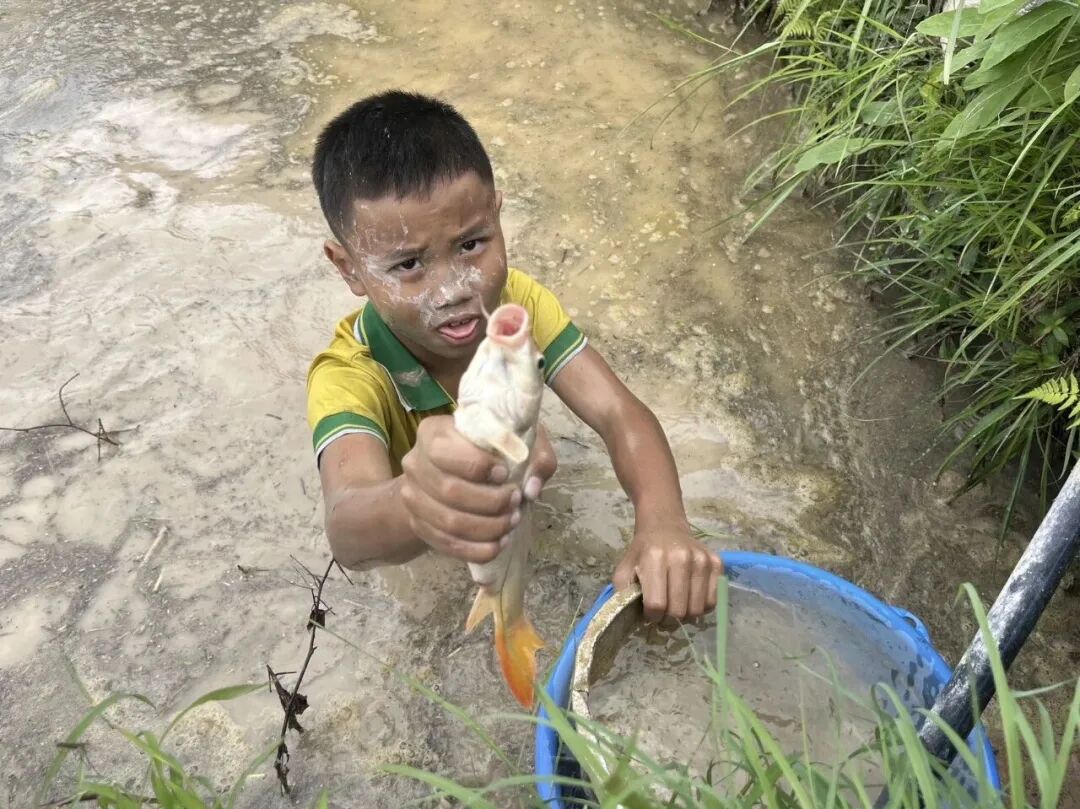
◉Ploughing the fields while scooping fish, typically catching carp. Image: Zhaoxishe
The division of labour in the paddy fields flows quite naturally: men till the soil, while women scoop for fish as the water churns up. Most of what they catch are small wild fish—carp, crucian carp, and others that have Dong names but no Mandarin equivalent I can recall.
We also steer clear of chemical fertilisers, opting instead for compost made from our own cow dung and wood ash. Our approach to keeping weeds at bay is just as natural: cattle graze on the grass along the field banks, while ducks and fish feed on the weeds growing in the water. Where the bank grass threatens to encroach on the rice, we remove it by hand.
The terraced fields in Yangdong Village sit at altitudes ranging from 500 to 1,200 metres. The rice is grown as a single crop each year, with a maturation period of over 150 days, and the paddies are irrigated year-round by flowing mountain spring water.
Thanks to these natural conditions, the area is home to a wealth of heirloom rice varieties. We currently preserve around nine rice cultivars and more than a dozen miscellaneous grains, with our collection stabilising at roughly twenty varieties annually. The heirloom rice we sell through Zhaoxishe is almost entirely grown from farmer-saved seeds, including Green Fragrant Pearl rice, rouge purple rice, Small Hemp Red rice, Five-Colour Banquet rice, Clear Water Fragrance rice, Fragrant Glutinous rice, and Mangling japonica rice.
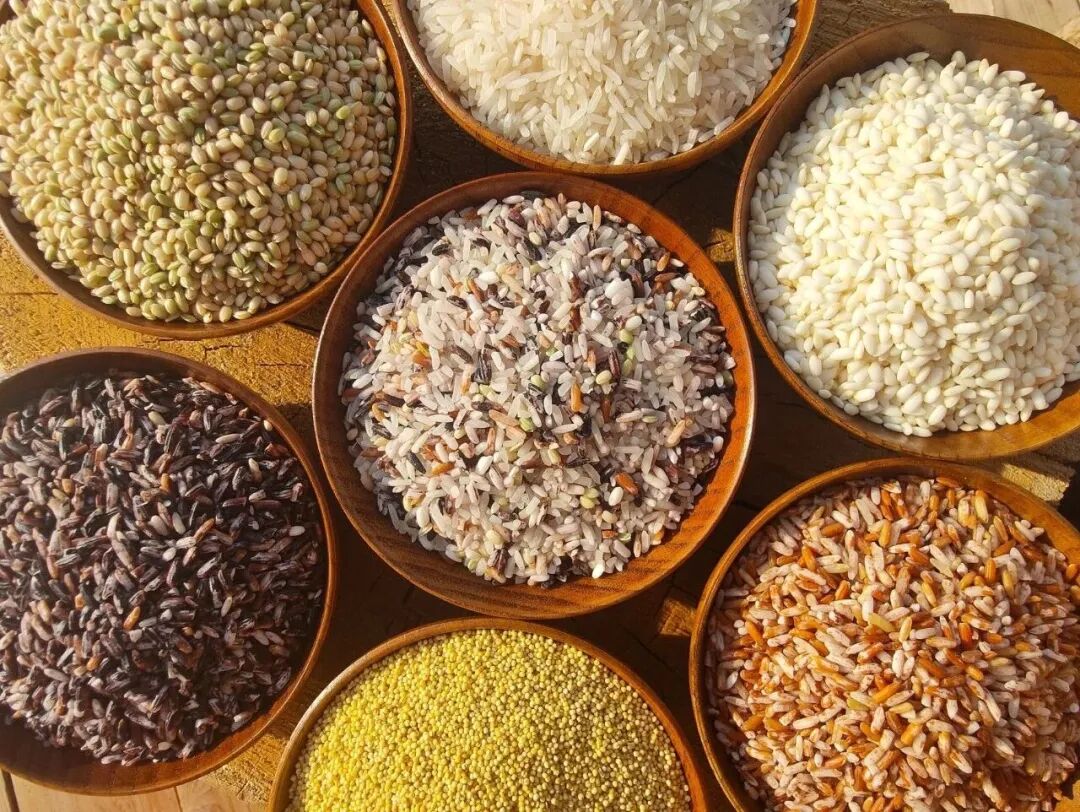
◉ Zhaoxishe’s signature rice variety, a local heirloom rice from Yangdong Village. Image: Zhaoxishe
Because the Dong ethnic group has no written language, relying entirely on oral tradition, the historical records we can trace mostly originate from county chronicles dating to the Ming dynasty or later. As a result, we generally say these seeds have a history stretching back at least four centuries.
Each variety of rice has its own distinct character. Rouge purple rice, for instance, is traditionally used in winter to make ciba (glutinous rice cakes), zongzi (sticky rice dumplings), and wine. Green pearl rice has a remarkably low yield—under 300 jin (≈150 kg) per mu (≈0.067 hectares)—making it our most treasured crop and a firm favourite among Michelin-starred chefs. Five-colour banquet rice is a blend of five different grains, inspired by Dong wedding and funeral customs where every household contributes a handful of rice to be cooked together, resulting in a beautiful array of colours. Mangling japonica rice is a variety we discovered in Mangling Village, while fragrant glutinous rice behaves quite differently from the others; it thrives in cool, shaded conditions and must be cultivated in low-light areas close to running water.
From heirloom varieties to new roles
By working to conserve these local heirloom varieties, I have also woven myself into a wider ecological farming network. Since last year, I have begun stepping out more. In October, I travelled to Thailand with colleagues from Foodthink to visit local farming communities, and took part in farmers’ markets and events across Beijing and Guangzhou. This past January, I headed to Germany to attend the Global Food and Farming Forum.
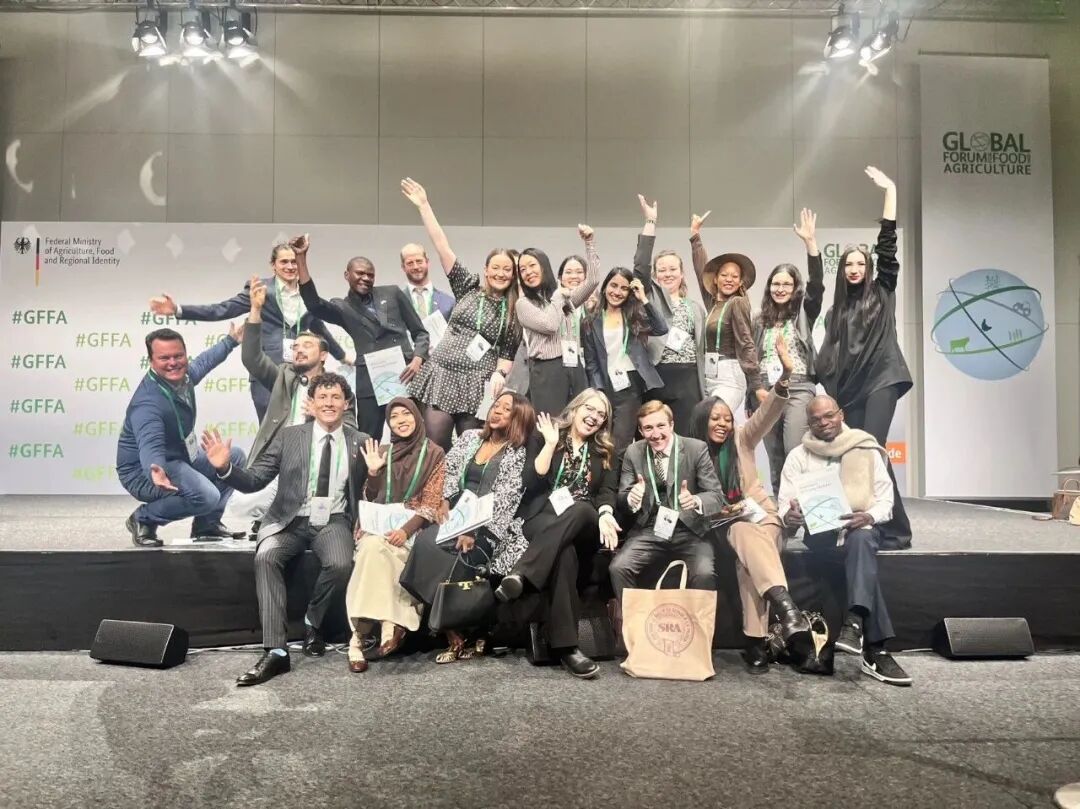
◉In January 2026, at the invitation of the German Ministry of Agriculture, Chen Xi will travel to Berlin as a representative of young farmers to attend the 2026 Global Forum on Agriculture (GFFA). Through these exchanges, she will introduce Guizhou’s heirloom rice varieties, giving more people the opportunity to truly taste and learn about them. Image: Zhaoxishe
Quite a few people have asked us: why don’t you livestream? You’d be well suited to it, and you have a lovely setting. But we don’t see it that way.
From what I’ve observed and learned, some farms may follow organic and ecological practices, but their operations have become highly corporate, driven by yields, sales, and growth. The founders are often deeply anxious, constantly livestreaming, telling stories, and answering questions. It’s an incredibly exhausting way to go about things.
The Zhaoxishe brand has always been my original vision. It is meant to be intertwined with our everyday lives, a quiet understanding shared between my husband and me. Once we start livestreaming, we would stray from the ecological lifestyle we set out to cultivate. I would slip back into my old working habits—constantly monitoring metrics, consumed by data-driven anxiety, and allowing my true intentions to be compromised.
So, despite receiving numerous offers to expand our growing area, take on larger orders, or pursue formal certification, we remain fairly cautious. Once we make a commitment, it becomes very difficult to stick to our current farming methods; it would mean switching varieties or finding other ways to meet production and order demands.
By my sixth year living in Guizhou, I have come to realise that rural communities truly bear the brunt of some of the consequences brought about by this era’s rapid development. For instance, as transport links have improved over the past few years, all manner of packaged snacks have become far easier to get into the village, and with them come plastic wrappers, packaging, and polystyrene waste. When I first arrived in Yangdong Village, this was virtually non-existent. Now, the rubbish in the mountains accumulates year on year, leaving us with little choice but to organise a weekly cleanup. By picking it up ourselves and bringing the children along, we hope to make at least a small difference.
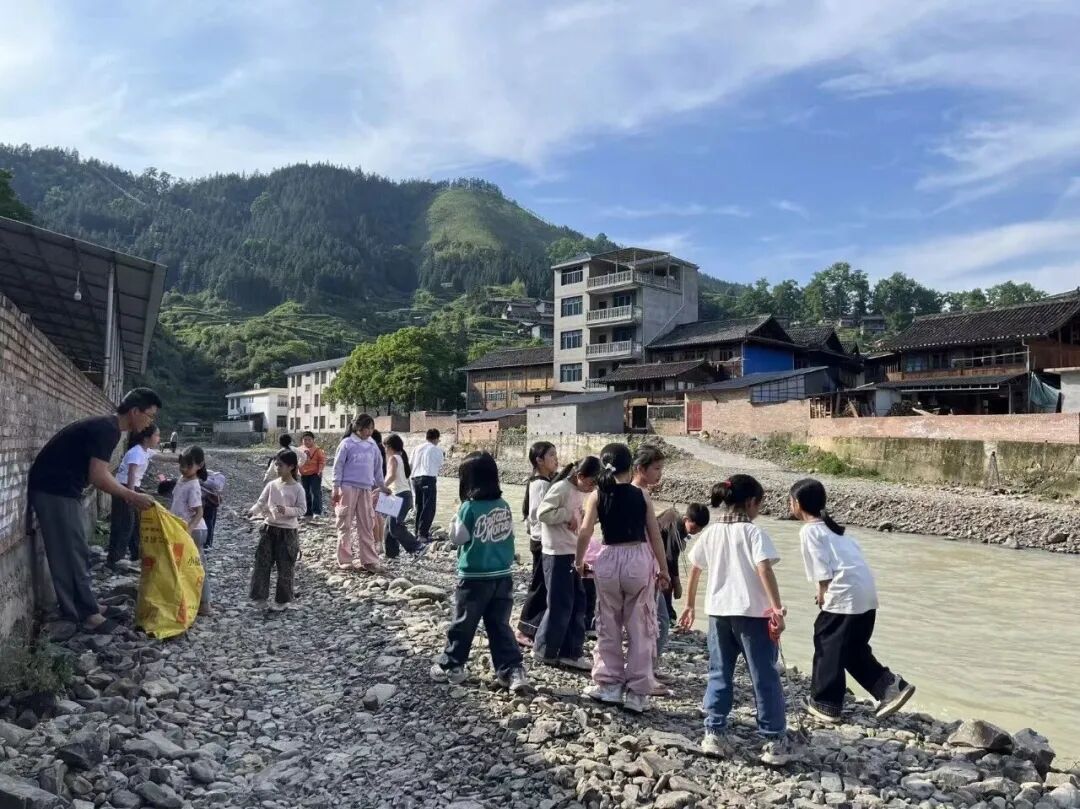
◉Volunteers at the children’s library join the children for a rubbish pickup. Image: Liping County Yangdong Children’s Library WeChat Official Account
The push for chemical fertilisers has also started to reach the village. Nowadays, mobile vans with loudspeakers drive in to sell them, something that was unheard of before.
The ageing of the agricultural labour force is also stark. Most of those still farming in the village are elderly, mostly over 60.
Over the past few years, we’ve tried to draw more young people from the village into farming. My husband’s brother has recently returned from Guangdong to join us, but I’m unsure how long he’ll stay. He seems to find it hard to recognise the value of the land, seeds, and natural resources the way I do. I’ve also spoken to many locals who’ve gone off to work elsewhere. Their wages sound reasonable enough, but living costs in the city are high. Farming isn’t exactly a glamorous pursuit, and it often feels harder to craft a compelling narrative around staying to till the soil than around venturing out into the world. Yet often, people leave simply to keep up appearances. They assume they’ll earn a fortune, only to find there’s not much left to bring home in the end.
Gender imbalance is another pressing issue. There’s a surplus of single men in the village compared to women. When families fall on hard times, women tend to leave, leaving the children in their fathers’ care. If the father then needs to go out for work, the children are left behind with the grandparents.
Many primary schools across towns and villages are currently being merged or closing down entirely. People often ask how long the library can survive. To be honest, I don’t know. As long as Yangdong Primary School is open, I hope the library will be too. If the school goes, the library loses its reason for being. Fortunately, Yangdong is a fairly large village. When primary schools in nearby Miao villages shut down, children were consolidated here, which has actually boosted our student base.
In 2025, I took on another new role — becoming a mother.
Friends have asked me whether I feel anxious about my child’s future education. Since having a child, I certainly think about it more, but I’m not anxious.
I believe there will be an educational path that suits him. I don’t know what it is yet, but when that stage arrives, I’ll know.
Looking back, my decision to go to the US was also quite accidental. In a way, it mirrors why I later came to Guizhou: I didn’t rationally weigh the options to choose the place that best fitted my personal criteria. Instead, I chased a somewhat wild idea to see if I could make it a reality. Even if it doesn’t work out, I’ll be content simply for having tried.
So I’ve never really seen myself as someone who fled the city for the countryside. Life in the village is a good fit for my nine-month-old and me right now. In the mountains, he rests as the sun sets and sleeps much more soundly. Everyone faces different challenges and finds their own way through them, but what matters is that wherever you live, you can stay true to yourself.
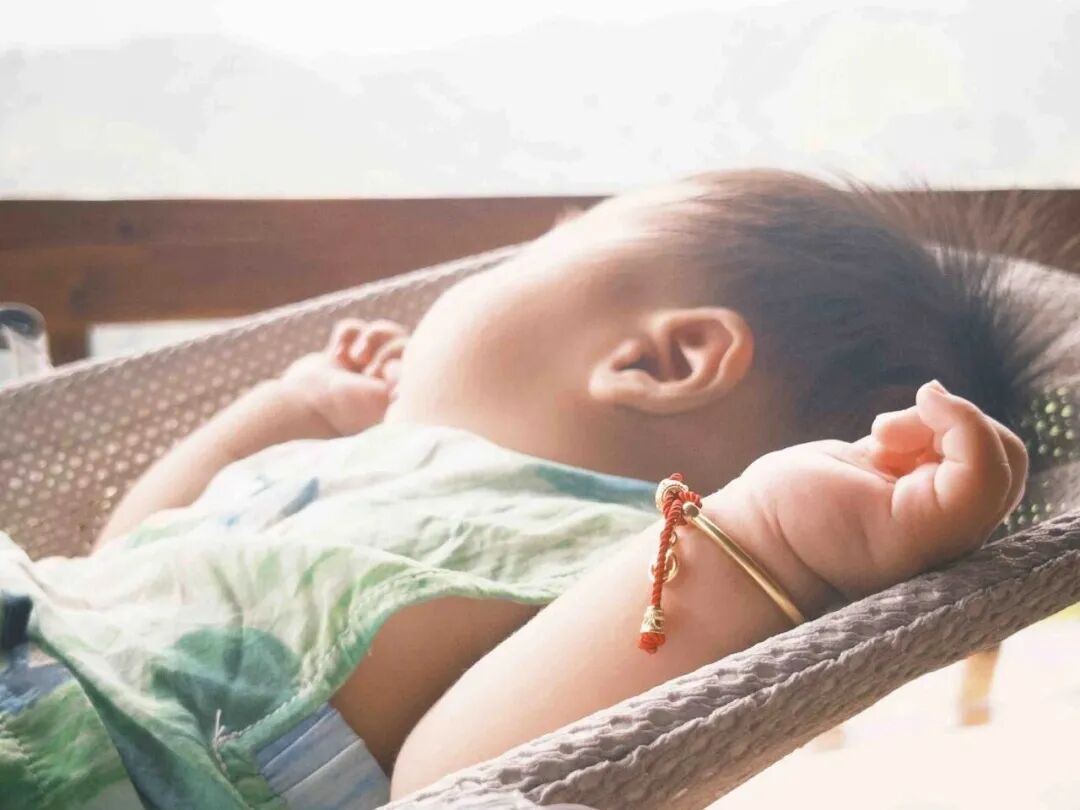
◉ Chen Xi’s baby, Croissant, slept through the night in his own cot on his very first day back in the mountains, even with temperatures reaching 36 °C. It’s nature’s magic. Image: Zhaoxishe
About the “Her and the Land” Column
This year marks the UN’s International Year of Women in Family Farming. Foodthink is launching the “Her and the Land” column to focus on women within agricultural and food systems. We will step into fields, markets, fishing harbours, pastures, kitchens, laboratories, and city streets to see the women who are often overlooked yet constantly present. Involved in production, research, cooking, distribution, and care, they sustain our daily lives with their labour, experience, and wisdom. They are both tillers of the earth and essential builders of rural communities and food systems. Through interviews, writing, and workshops, we hope to tell their stories and understand how women’s participation shapes our food systems. We also invite everyone to join the conversation: for women in food and farming, how can a fairer, more dignified future be realised?
Editor: Kerry