Crop Straw Return: What Extra Costs Is It Imposing on Farmers?

To Farm, First Chop the Straw
“The village said they couldn’t handle it! Just chop it into the field!”
Zhao Hai (pseudonym) recalled that following last autumn’s harvest, he had told the village officials he hoped for straw removal (off-field processing), which involved hiring a farm machinery operator to bale and cart away the straw. Farming several hundred mu (Chinese acre, ~0.067 hectares) of rice for others, he believed this was the most hassle-free way to dispose of the residue. But his hopes were dashed: the village committee failed to find buyers for the straw, leaving most of it with no option but to undergo straw return.
In June this year, Foodthink visited three counties in Hunan to examine how straw return affects farmers’ cultivation. The Village A we visited had just gone through the most stringent straw-burning ban season on record last year. Higher authorities mandated that not a single burning incident be permitted. Forced to incorporate straw into the fields overnight, Zhao Hai endured a tumultuous six months, encountered farming peculiarities he had never seen before, and saw his costs mount considerably.
Situated in the hinterland of Hunan’s Dongting Lake region, the farmland in Village A was historically formed from accumulated lake sediments. The terrain is remarkably flat, establishing it as a primary growing area for rice and rapeseed. Levees separate the village’s internal ditches from the external river network, with irrigation water supplied by electric pumping stations. In recent years, the village has begun developing crayfish farming. Ditches excavated for the crustaceans now criss-cross the rice paddies; the shallow water reflects the sky, and egrets are occasionally seen foraging along the field bunds.
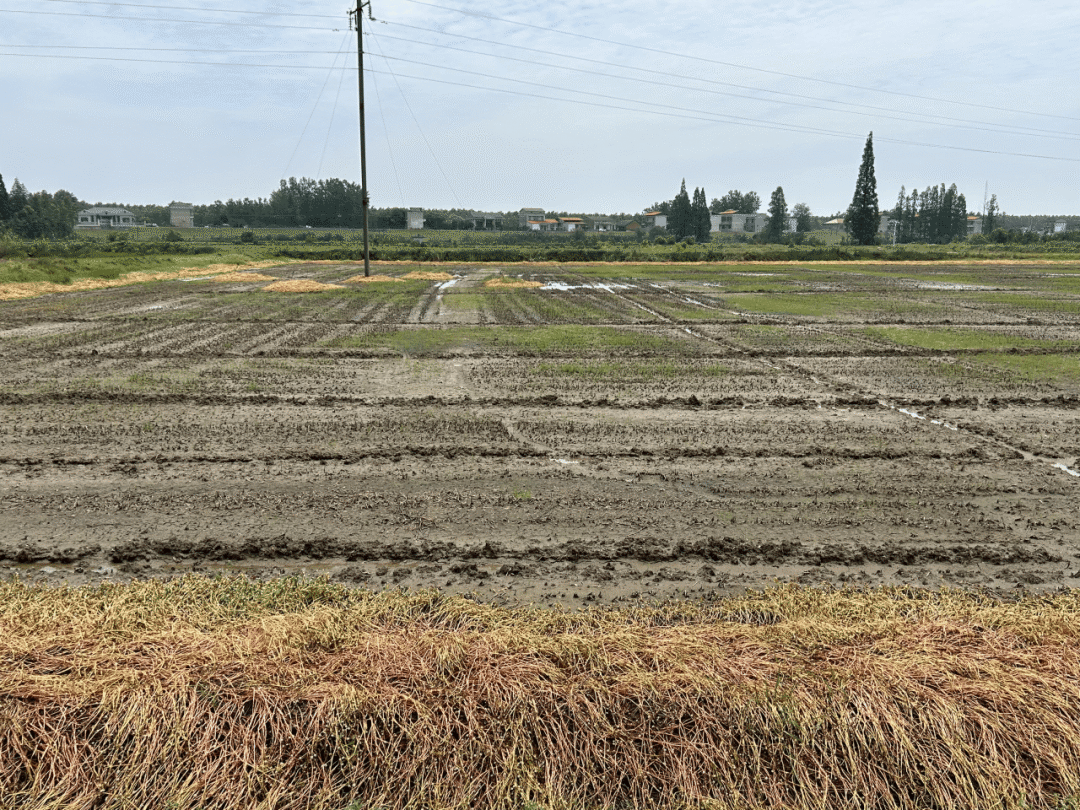
◉The rice paddy from last season was flooded with deep water for crayfish farming; once the water was drained and ditches dug, the short rice stubble is still visible.
In previous years, following the autumn rice harvest, farmers would burn their straw in an organised manner under official direction, before scattering rapeseed directly onto the soil. Some would also flood their fields to rear crayfish. Confronted with this abrupt straw burning ban, the first challenge farmers face is a thick, tangled mat of straw blanketing their plots.
Crouching down for a closer look, this so-called ‘grass’ is a mix of shredded rice stalks and leaves alongside rice stubble still anchored in the ground—essentially the root systems and short stems poking through the surface. Experts have aptly dubbed this mat a ‘sponge layer’. Unless it is thoroughly incorporated into the soil and left to decompose quickly, it will impede the tiny rapeseed seeds from establishing roots and sprouting, ultimately resulting in lower yields.
According to the Ministry of Agriculture and Rural Affairs (MARA) “2022 Guidelines on the Scientific Return of Autumn-Harvest Crop Straw to Fields”, operators in the rice–rapeseed rotation zones of northern Hunan are advised to use combine harvesters equipped with straw-chopping and spreading attachments. This allows the straw to be shredded and scattered evenly during harvest, keeping the average stubble height under 15 centimetres.
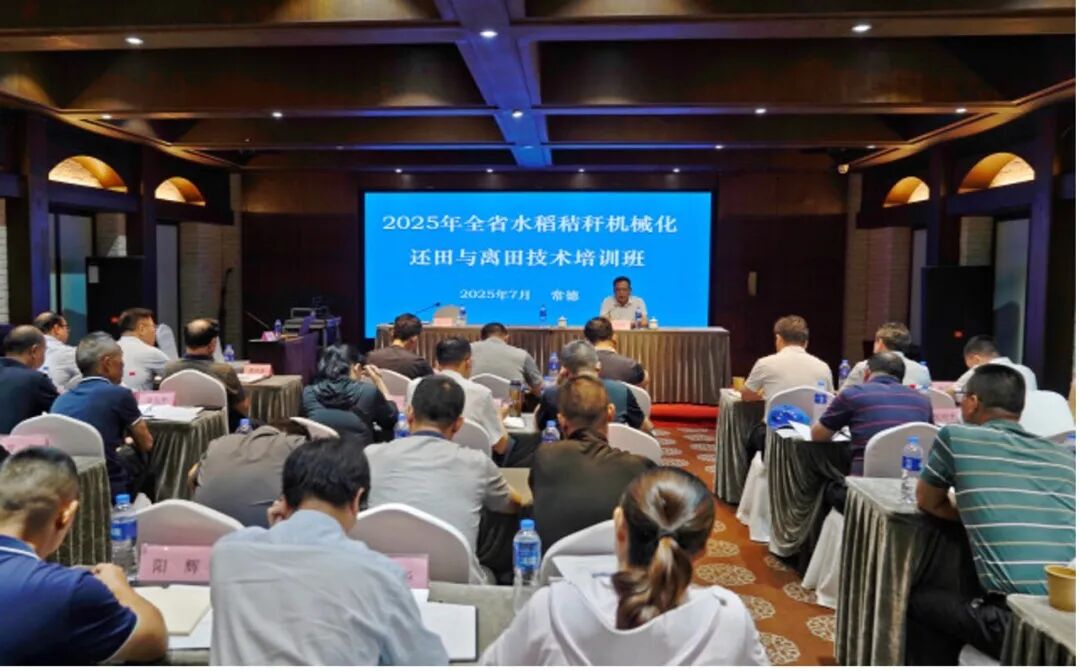
◉On 18 July 2025, a provincial training programme on mechanised rice straw return and removal techniques opened in Changde, Hunan. Image source: Hunan Daily
However, in practice, harvester operators frequently leave the stubble well above the 15 cm mark to conserve fuel and maximise working hours. The second round of Hunan Province’s routine ecological environment protection inspections in 2023 found that across 80 rice fields, stubble heights consistently ranged between 40 and 60 cm.
Furthermore, random spot checks of harvesters deployed in the fields revealed that more than half lacked straw chopping and spreading attachments. Fitting a set of shredding blades adds to the machine’s load and fuel consumption, increasing operating costs by at least ten yuan per mu and extending working hours. As a result, operators often discreetly leave the equipment unattached, or remove a portion of the blades to carry out only partial chopping.
Local agriculture officials have also reluctantly conceded that out-of-area harvester operators, who work on a mobile basis, already operate on thin margins and are ineligible for local straw return subsidies. They naturally have little incentive to take on extra mechanical strain and fuel costs. At the same time, local authorities find it difficult to regulate these transient workers.
This has led to two distinct mindsets among farmers: large-scale growers who own their own machinery are willing to cut the stubble shorter—lower residue makes subsequent field operations much easier, so they are prepared to spend extra on fuel and time to prepare the land; but for smallholders, the costs ultimately fall back on them. They are unwilling to pay operators extra to ensure the straw is properly chopped, preferring instead to flout the regulations and burn it in secret.
The village secretary in Village A also conceded that most farmers hadn’t even chopped their straw, leaving long stalks standing. Unless the village arranged for baling and removal, they would simply wait for the right moment to burn it.
As noted earlier, Village A struggled to find buyers for the straw and had to devise a way to clear the long stalks. They coordinated with the town government, which deployed machinery to go over the fields and chop the residue a second time. According to locals, the subsidy or labour fee paid to machine operators is between 30 and 35 yuan per mu.
Chopping involves running machinery over the rice straw to shred it further. Farmers attach a specialised implement to the rear of a tractor for this task. If rotary tillage is required, they swap it for the corresponding set of blades.
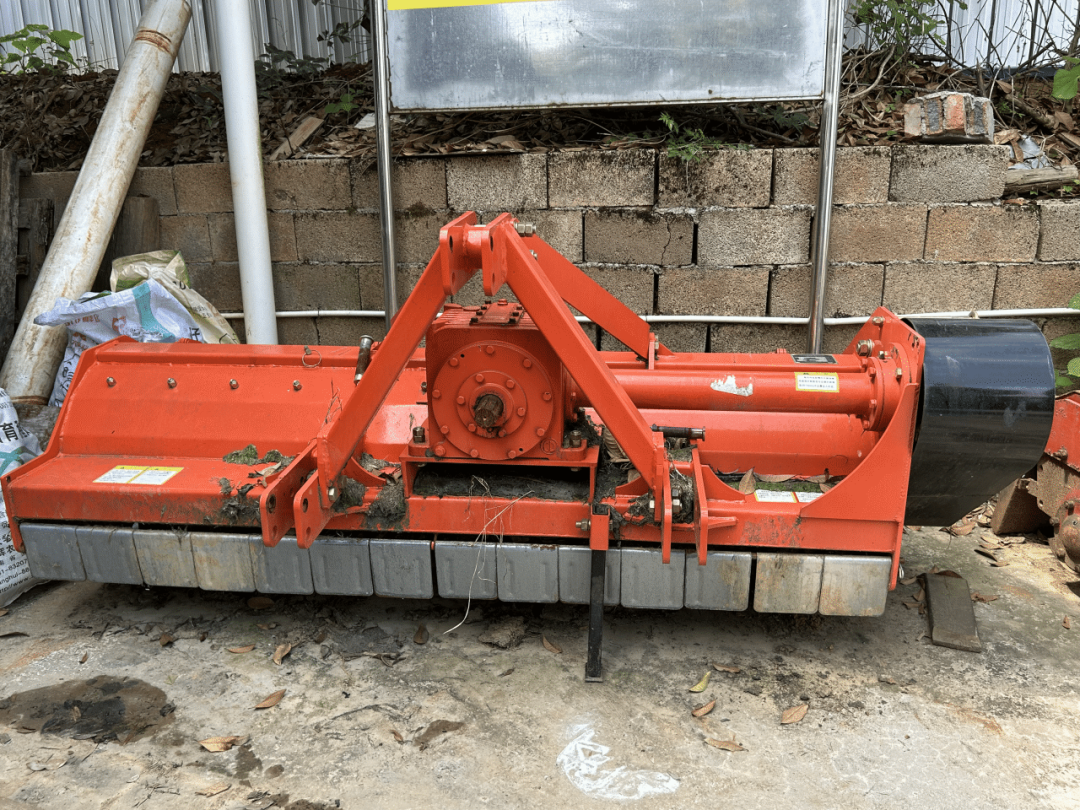
◉A straw chopping attachment purchased in 2025 by a large-scale farmer in Village B near Changsha, designed to be mounted on a tractor. After subsidies, the farmer’s actual out-of-pocket cost is just over 5,000 yuan.
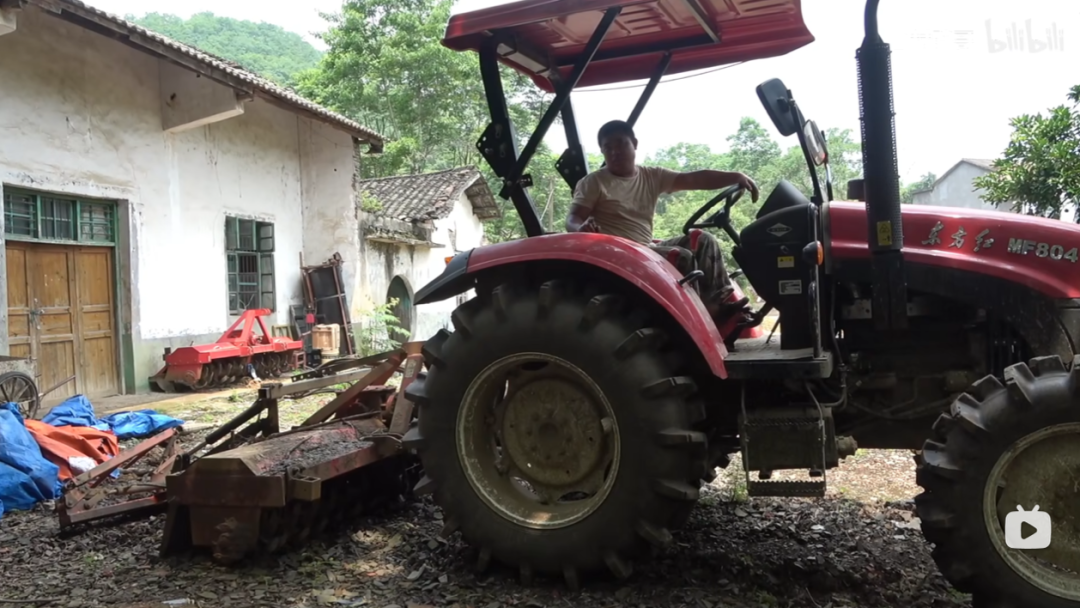
◉Tractors used for chopping, stubble destruction (cutting down residue), and rotary tillage. Image source: bilibili
The straw layer is too thick; even when the township government funds and coordinates the chopping machinery, the results fall short.
Because the machinery is dispatched by the township, the operators are not necessarily answerable to the farmers. According to Zhao Hai, only the central plots receive proper chopping; for the rest, the operators simply “get the job done and call it a day”.
This marks the completion of the first straw return step: chopping. Next, if Village A farmers plan to grow rapeseed in the following season, they must also incorporate the chopped straw into the soil using rotary tillage. Rotary tillage requires the blades to penetrate more than 10 centimetres deep, which burns more fuel. Crucially, this stage is no longer subsidised; hiring an operator costs 80 yuan per mu. When straw burning was still permitted, rotary tillage was only carried out before planting rice, whereas rapeseed merely required digging drainage ditches (at 30 yuan per mu). The additional 50 yuan now has to be covered by the farmers themselves.
Compounded by heavy rainfall, yields plummeted. Farmers in Village A report that the rapeseed failed to take root, suffered poor germination, and was highly prone to lodging. Many harvested merely 100–200 jin per mu, compared to a normal yield of 300–400 jin.
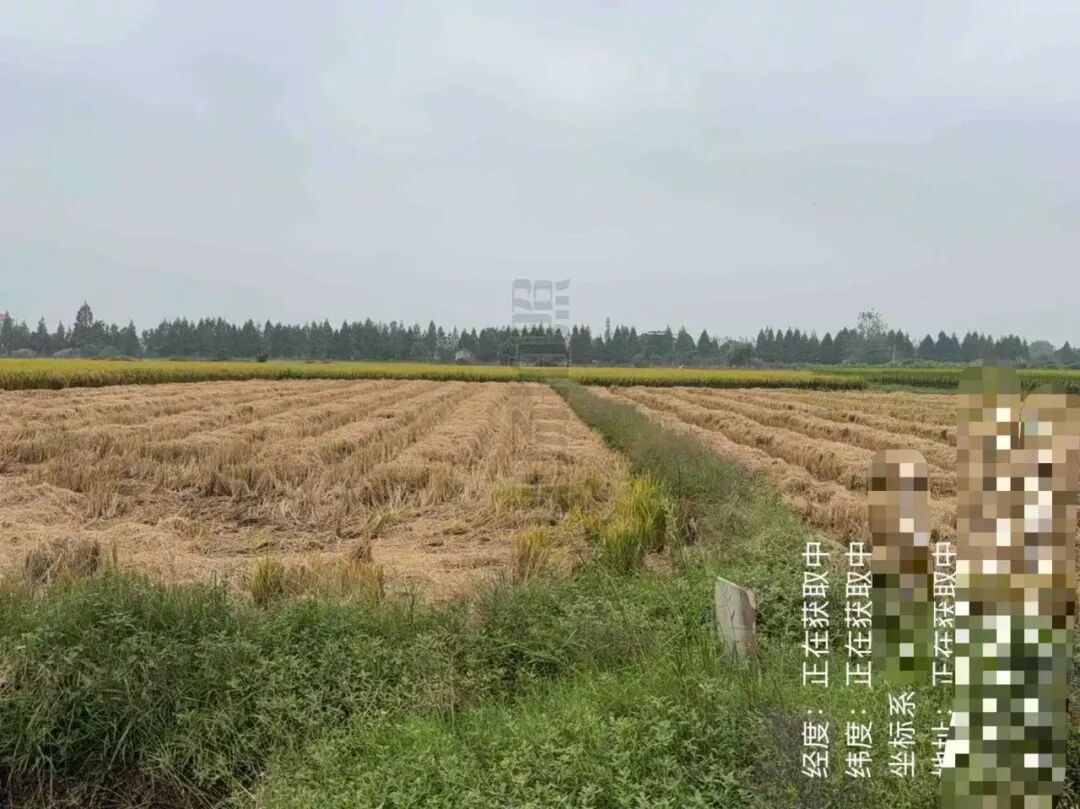
◉After the harvest, the rice fields in Village A are left with a thick layer of long stalks. Image source: interviewee
An extra 80 yuan spent
To secure yields, the solution in Village A is to sow more seed. Originally, two packs of seed covered a mu, but on some plots this has increased to three or four. Although the state covers the cost of rapeseed as an oilseed crop, the village party secretary in Village A sees this as spending taxpayers’ money all the same. Moreover, the government-allocated seed is not always sufficient; for instance, Zhao Hai often has to buy extra himself.
They have also considered adopting the no-till mulching method mentioned in the aforementioned Straw Return Guidelines, which would eliminate rotary tillage costs. However, the uneven layer of rice stubble scattered on the surface still hinders root establishment and germination, leaving many farmers unenthusiastic about the approach.
Meanwhile, Village B, near Changsha, began returning straw to the fields as early as 2021, without using rotary tillage. They have “more experience” – or, as locals put it, have repeatedly tried various methods to solve the problems brought about by straw return.
Previously, they would plough the fields, then ridge them, prepare seedbeds, and broadcast seed by hand, but the rapeseed still struggled to take root.
Now they have worked out a combination of techniques: first, cutting the rice stubble shorter. Then, larger-scale farmers have purchased their own blade attachments for chopping straw and destroying stubble, which mount to the front of their tractors and cost around 5,000 yuan each after subsidies. These blades not only chop the straw but also destroy the stubble, digging up and shredding the rice roots and rhizomes buried in the soil.
Finally, to help the rapeseed take root more effectively, they use a row seeder for sowing. After the straw is chopped and the stubble destroyed, this machine can carry out fertilising, seeding, tilling, and trenching in a single pass – a piece of equipment specifically promoted by agricultural departments, costing around 20,000 yuan per unit after subsidies.
However, unlike in Village A, there is no funding for straw chopping in Village B, and the straw return subsidy amounts to less than 10 yuan per mu. After the larger-scale farmers finish chopping the straw, they submit subsidy applications to higher authorities; the funds could cover less than half the cost of this operation, but the disbursement has yet to be approved.
Based on estimates from several farmers in both villages, the additional costs for chopping straw, rotary tillage, and pesticide application for a single rapeseed season after implementing straw return total roughly 60 to 80 yuan. Meanwhile, the profit from rapeseed is typically only around 200 yuan per mu.
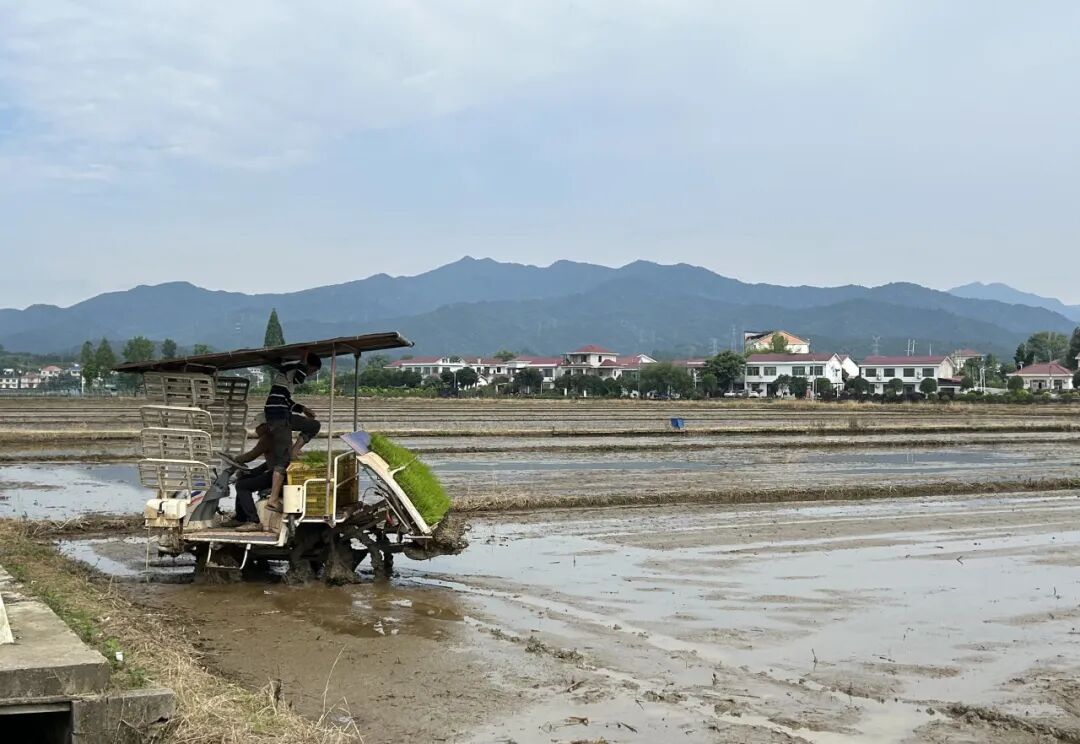
◉In early June, large-scale farmers in Village B are carrying out mechanised rice transplanting.
Some farmers have simply abandoned their fields. A large-scale grower in Village A, who manages 200 mu of land, decided to quit after secretly burning a dozen mu. His plots are scattered, so running a rotary tiller back and forth 20 kilometres to sow a patch of rapeseed was not worth the cost. On top of that, the land had just been upgraded to high-standard farmland, leaving the soil surface uneven and pushing rotary tillage expenses to 120 yuan a mu—higher than the local average. Ultimately, he handed all 200-odd mu back to the village collective to sow green manure.
Pests and ‘Soy Sauce Water’
During visits to Village B, the aforementioned agricultural official repeatedly stressed that straw return enriches the soil. “If you don”t incorporate it and apply the same amount of fertiliser, yields will certainly drop a bit.’
Yet in our interviews, not a single grower had actually cut back on chemical fertilisers. In the presence of the official, a large-scale farmer from Village B who had been practising straw return for five years could only phrase his hesitation diplomatically: “Perhaps chemical fertilisers just aren”t as potent as they used to be?’
Perhaps they are simply too anxious about losing yield to ever dare cut back on chemical fertiliser. But a crayfish farmer in Village A saw with his own eyes how the straw actually “enriched” the water—the crayfish ate noticeably less feed. He applies a compound bacterial preparation based on Lactobacillus plantarum for pond-bottom amendment, mixed with brown sugar and rapeseed cake. This helps microorganisms and plankton flourish in the pond, indirectly accelerating the decomposition of organic matter on the bottom (like leftover feed and excrement).
Under these conditions, the feed he purchased based on past consumption was still far from finished. Crayfish cannot digest straw itself, but the bacterial preparation likely spurred microbial growth and organic breakdown on the straw’s surface, transforming it into a biofilm and organic debris that the crayfish could graze on.
Yet there are drawbacks. Once the straw starts to decay, the fields quickly turn into a pitch-black “soy sauce water” (dark, foul-smelling pond water). It’s stinking and filthy; just stir it a little and—”Oh my God, all the stench comes out,” Zhao Hai says.
Although the aforementioned farmer saved on feed, he admitted the water needed changing every three days. In Village A, a flat wetland area where every household relies on electric pumps to move water into ditches, his fields sit right beside a canal. With the water source at his doorstep, he follows a simple rule: “Change it the moment the colour shifts.” Over a single season, he changed the water at least a dozen times.
Yet most farmers lack such an advantage. In recent years, the village has frequently faced periods when the outer rivers run dry, leaving no water to flush the ponds. The crayfish fall ill and die; often, before farmers even realise a change is needed, the juvenile stock has already perished. Installing extra pumps and water-drawing equipment adds to the expenses. Technically, farmers are entitled to a “return via livestock digestion” subsidy of 10 yuan per mu, but nearly a year on, the funds still have not materialised.
Amid these trade-offs, one thing stands out to everyone: the explosive surge in agricultural pests.
The village secretary of Village A recalls that during the autumn harvest, whenever he drove to the fields at night and switched on his torch, the insects would appear in thick swarms.
One grower in Village A says that of his extra 80 yuan in cultivation costs, half was spent purely on pest control. Drone spraying services cost 20 yuan a mu, and he had to book two runs. In previous years, his rapeseed never required any pesticide treatments.
The insects affect not just the winter rapeseed, but also the rice crops planted from spring through summer. Two large-scale farmers in Village B recall that seven or eight years ago, infestations of Chilo suppressalis (Asian rice borer)—locally known as the borer—were not so severe. Without pesticide treatments, the pests would at worst devour a few plants. In later years, however, they could strip the fields completely. Rice thrips have also multiplied; once confined to seedling beds, they now appear wherever straw is left behind.
The frequency and intensity of pesticide applications are both increasing. Previously, spraying only became necessary during the grain-filling stage, and once the panicles “nodded” with maturity, pests no longer bored into the stems. Now, growers must begin applying higher-grade imported pesticides just half a month after transplanting, continuing straight through to harvest, requiring three to four applications per season. Some smallholders have even sprayed eight times in a single crop cycle and still failed to keep the insects at bay. “What does that mean? A spray every twenty-odd days, the rice is practically soaking in pesticides!” lamented the large-scale farmer who had helped him with the harvest.
Farmers and agricultural technicians have also noticed that some pests appear to have developed resistance to pesticides, as if they have already “mutated” and “upgraded”.
Farmers reason that with the ban on burning, pests survive the winter hidden in the rice stubble, making them impossible to fully eradicate. Furthermore, the local farmland is fragmented, with single-crop, early, and late rice fields interspersed in “patchwork fields.” As soon as one plot is sprayed, pests fly in from the next, “shuttling back and forth to infest crops,” which makes coordinated pest management nearly impossible.
They all remember when an official from Changsha in Hunan province personally went to the fields to pry apart the “rice stubble” (local term: *he tou zi*), discovering over a dozen larvae in a single stalk base.
The aforementioned agricultural official confirmed that the Asian rice borer outbreak had “caused serious problems” in Hunan, with some areas suffering total crop failure. Since 2024, Hunan’s Department of Agriculture and Rural Affairs has repeatedly used terms such as “crucial battle,” “severe outbreak,” and “widespread infestation” to describe the pest’s impact on rice paddies. In April 2025, the Ministry of Agriculture and Rural Affairs (MARA) dispatched a special team to Hunan to investigate control measures for the Asian rice borer.
Later that year, the Pest and Plant Quarantine Station of Hunan predicted in its *Pest and Disease Bulletin* that rice pest and disease pressure would be heavier than usual, affecting 310 million mu across various species, with the Asian rice borer alone covering 62 million mu. Furthermore, the province-wide weighted average density of the Asian rice borer reached 9,773 larvae per mu, a 67.6% increase from the ten-year average and a 20.9% rise from 2024.
Interviewees express concern that as straw return continues, pest infestations will only intensify.
The ecological rice farmer’s solution
Is straw burning an inevitable by-product of input-intensive farming?
Firstly, continuous cropping and tightly packed planting schedules leave little room for crop rotation or fallowing, providing pests with an ideal breeding ground. Several Hunan villagers we spoke to recalled that in their childhood, fields were left uncultivated in winter, with the village collectively organising “sun-drying the soil” – turning over the subsoil so that winter frosts and sunlight could kill off some of the overwintering pests.
Today, only tobacco fields still benefit from this “sun-baking and drying” process, as seedlings are not transplanted until March or April, allowing the land to lie fallow over winter following the autumn harvest.
Moreover, when rice is not harvested by machine but cut by hand, farmers can always trim the stubble much lower – to just an inch, “like a close shave” – leaving nowhere for pest eggs to hide. The aforementioned *Pest and Disease Bulletin* also noted that over 90 per cent of rice in the province is now machine-harvested, and fields cut by machines typically leave behind much taller stubble.
Most significantly, as rural households gained access to piped gas and electricity and livestock operations scaled up, low-energy rice straw became largely useless. In the past, it was stacked in lofts above pigsties and used for cooking, animal feed, roofing, bedding, and even woven into small scarecrows once the early rice grains were separated out…
In Village C, another town in the Dongting Lake region, Ding Yong has practised ecological methods on the more than ten mu of rice fields he leases for years, using straw mulching. Yet he says the concentrated outbreak of rice planthoppers last year had little impact on him: while other farmers in the village could not prevent it, his yields remained within historical fluctuations. He credits the biodiversity established in his fields as a key factor: the Asian rice borer comes and goes each year, but its natural predators, such as rove beetles and spiders, are constant residents, keeping the borer’s damage within acceptable limits.
In addition, Ding Yong explains that he sows the green manure plant Chinese milk vetch ten days before harvesting the mid-season rice, while the soil is still moist. After harvest, the straw is left directly on the soil surface, which actually helps the milk vetch retain moisture and protect it from the sun – late September and early October can still be warm in Hunan. This way, the seeds still germinate, and he saves on the cost of rotary tillage.
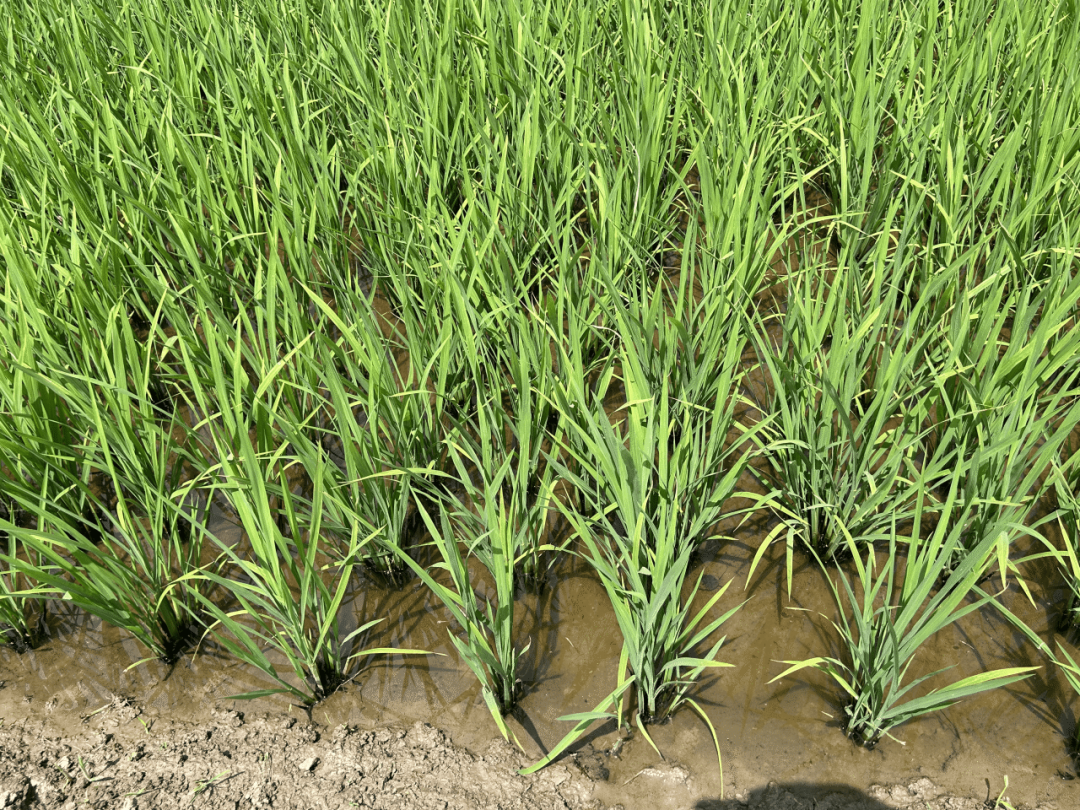
◉Tadpoles, snails and birds can be seen throughout Ding Yong’s rice fields.
The crop straw that proves such a headache for farmers in Village A is something Ding Yong finds he never has enough of. To mulch the crops in his greenhouse vegetable plots, he cuts and sun-dries the grass himself. Even tough weeds like revolution grass serve multiple purposes: beyond mulching, they can be fermented to make liquid fertiliser. “Mulching has so many benefits, I call it the “five protections”: it retains water, shields the soil, holds moisture, preserves nutrients, and suppresses weeds,” Ding Yong explains in detail. Most importantly, returning fertility to the ground aligns with his “energy cycle” philosophy of farming.
To process the straw, Ding Yong also spent 4,000 yuan (after subsidies) on a chopper attachment.
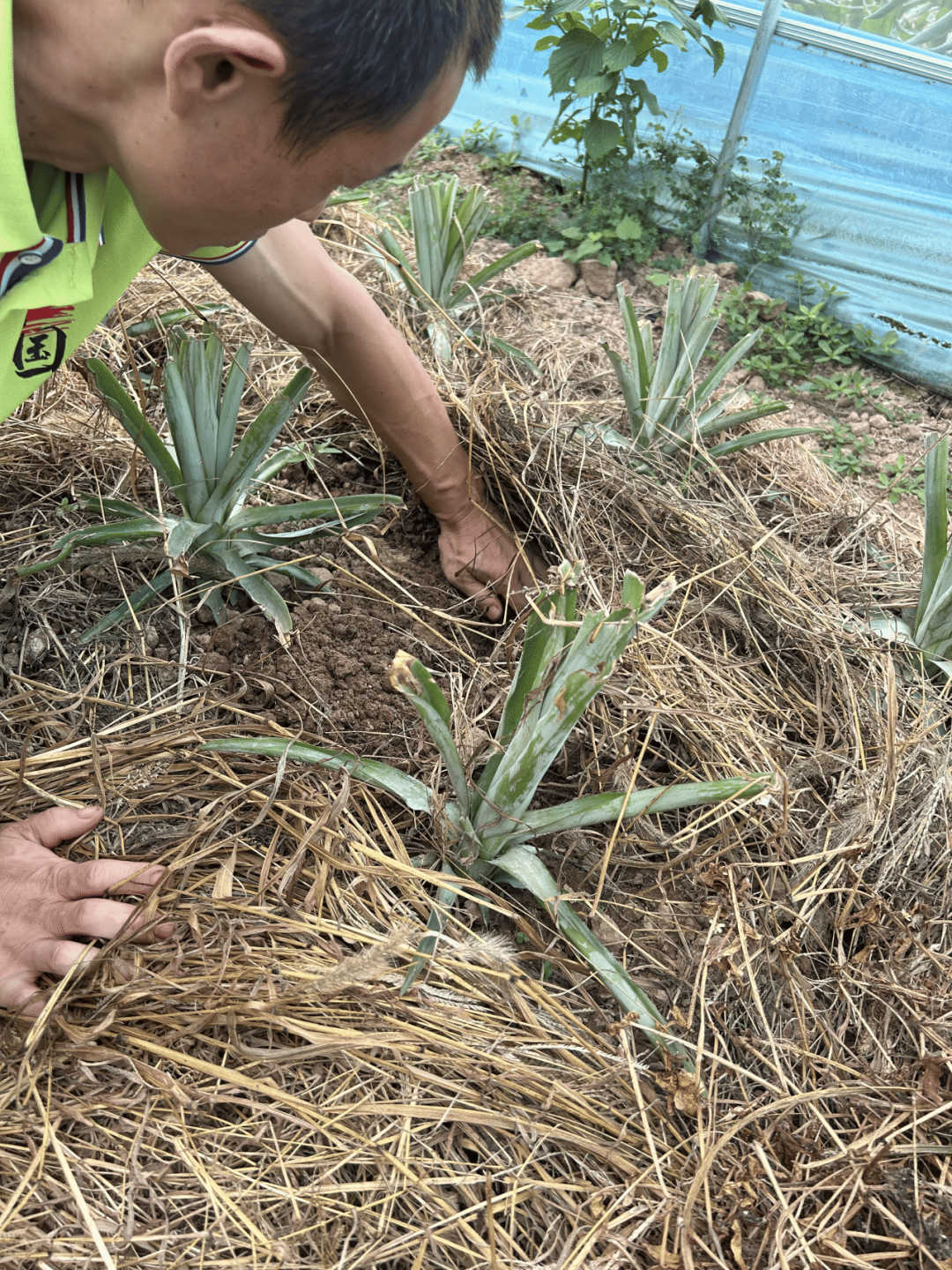
◉Ding Yong uses straw to mulch his pineapple seedlings. Comparing the results, he found that the mulch significantly reduced watering frequency and meant less fermented enzyme residue was needed as fertiliser.
As we toured the local straw collection and storage plant and saw damp, sprouted, or even mouldy bales that nobody wanted discarded outside the building, he too noticed that the mix of rice straw and rice husks actually provided an ideal environment for growing potatoes using no-till mulching. “The no-till mulching method isn’t fussy about the soil,” he said.
To him, even the chopped straw mixed with soil clods formed during baling were simply treasures in the wrong place — material he could take back to enrich his vegetable patches.
Although Ding Yong treats straw as a treasure, he is not a priority for government support. The authorities prioritise subsidies and backing for large-scale operators processing over 10,000 tonnes of straw. Ding Yong understands the reality: operators need to coordinate vast quantities of straw across the region, liaise with sellers, and secure subsidies. They simply wouldn’t consider it, nor have the capacity to dedicate the intensive care a small plot requires to establish an ecological cycle.
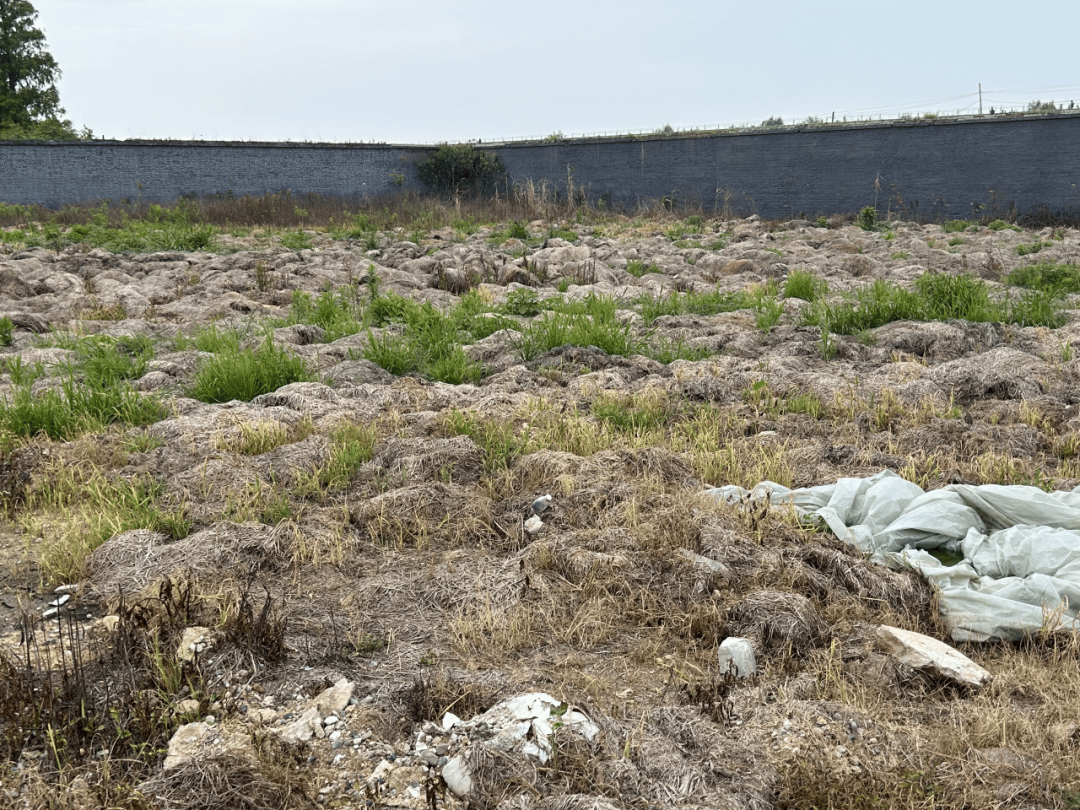
◉Through the lens of Ding Yong’s “energy cycle”, this field of discarded straw is actually a future fertile potato farm with limitless potential.
We spoke to other conventional farmers in Ding Yong’s village. They, too, have secretly removed the chopping attachments from their harvesters, or even burned straw outright – particularly during the tight window between harvesting early rice and planting late rice. They are no strangers to the arduous path to straw return that Villages A and B have already trodden: they were initially issued free government-supplied chopping and stubble destruction machines, only to face heavier pest infestations. Today, they are left footing the bill themselves to rotary till the residue into the soil.
Within the same village, the two farming systems represent entirely different ledgers of costs and returns: for large-scale growers, it means calculating expenses down to the last penny, managing yields, and investing in agricultural machinery, all to ensure the grain can be sold by year’s end, leaving funds to pay land rent to the farming households and settle accounts with fertiliser suppliers. In this context, as Zhao Hai puts it: whether they burn it or not, pesticide use won’t be cut back in the slightest; but without burning, field management is far more convenient, the blades won’t get tangled in straw during rotary tillage, and overall it simply saves a great deal of hassle.
Yet Ding Yong’s seemingly effortless approach comes at a cost. As an ecological farmer, he has spent years cultivating a local ecosystem, which demands significantly more manual labour for tasks such as weeding, conducting comparative trials, and producing enzyme fertilisers. Consequently, his labour costs are substantially higher. Should land-tenure rights change hands or extreme weather strike, this fragile, biodiversity-rich micro-environment could just as easily be lost.
Therefore, even if ecological farming appears to offer a more viable, “painless” route for straw return, it is far too simplistic to casually declare one approach more practical or “environmentally friendly” than the other.
Ultimately, the ban on burning straw is a profoundly complex ledger. Farmers’ livelihoods, ecological consequences, and administrative costs are all critical variables in this equation, yet they are invariably overshadowed by the singular pursuit of air quality. Only by recognising the genuine struggles farmers face under the burning ban can we truly chart a sustainable way forward for crop straw.
– This is Foodthink’s 832 nd original article –

Foodthink
Author
Pei Dan
A writer back on track, focusing on the people affected by climate change, ecological environments, and wider shifts.
Zhao Hai is a pseudonym.
All photographs are by the author unless otherwise stated.
Editor: Ling Yu
Layout: Xiao Shu
Scan to tip and support original content
▼

▼
Click the image to read related articles.
▼
Click a keyword to explore more article collections.
Seeds|Agricultural Techniques|Policy|Fermentation|Nutrition|Fruit|Fisheries|Events|Careers|Food Delivery|Wet Markets|Livestock|Food Talk|Sharing Sessions|Book Club|Harvest Festival|Smallholder Stories|Climate Change|Rural Development|Cooperative Economy|Urban Farmers|Food Safety|Digital Technology|Biodiversity|Pandemics and Food|False Solutions|Ecological Farming Internship Programme
Beijing|Hebei|Shanghai|Guangdong|Guangxi|Henan|Sichuan|Jiangxi|Xinjiang|Shaanxi|Hong Kong|Chongqing|Zhejiang|Jiangsu|Guizhou|Taiwan|Inner Mongolia|Philippines|Canada|Russia|Mexico|Italy|United States|United Kingdom|Germany|Netherlands|Thailand|Sweden|Japan