Straw burning bans ease, but Hebei maintains a blanket ban. What do smallholders think?

I went back to my hometown in southern Hebei this past May to see how straw incorporation is actually playing out. When I explained why I was there, the local farmers would first pause, wearing that familiar “what’s there really to talk about?” look. Whether you call it confusion or resignation, their reactions were layered with mixed feelings—
We’ve been incorporating straw for over a decade now. Even if you don’t want to do it, you simply get used to it;
Of course, you’d much prefer to just burn it, but that’ll get you detained;
Straw incorporation certainly has its problems, and it can even reduce crop yields, but so what? With grain prices this low, harvesting a couple of hundred jin less hardly matters. It’s like skipping one steamed bun; you won’t starve.
Before heading home, I witnessed numerous instances of straw burning across Heilongjiang. After a decade of compulsory straw incorporation, Heilongjiang province effectively relaxed the ban last year amid strong opposition from farmers, allowing controlled burning once higher authorities issued instructions. Several other provinces are undergoing similar shifts. The Ecological Environment Code, which came into force in August this year, stipulates that “local governments at all levels shall scientifically and precisely strengthen the organisation, guidance and management of burning straw, fallen leaves, and similar materials,” marking a transition from a blanket ban to a new phase of “scientifically managed burning.””>
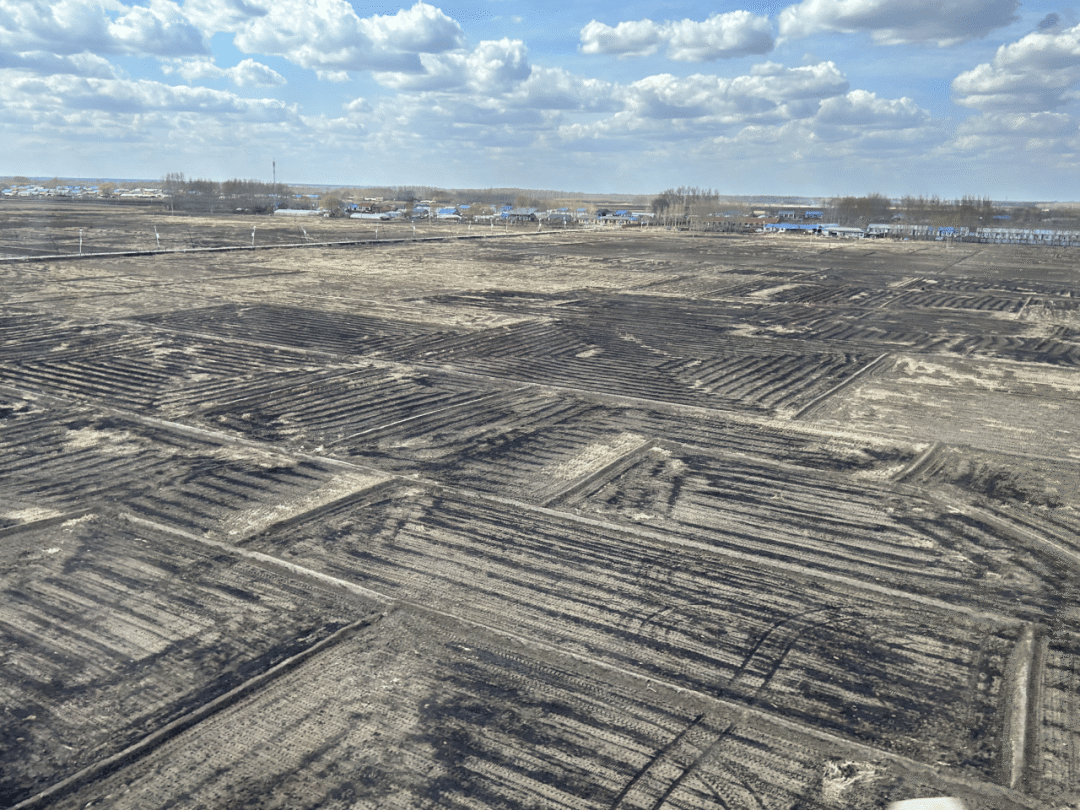
◉Large tracts of freshly burned farmland in Heilongjiang, seen by Foodthink in late April this year.
However, compared with the northeast, the reality on the ground for Hebei farmers is altogether different. Not a single farmer I spoke with knew that other provinces had begun to permit burning under certain conditions.
“Light a fire anywhere around here and they’ll lock you up.” More than one farmer told me.
In other provinces, the mention of the straw burning ban still tends to stir strong emotions. In Hebei, however, locals respond with a quiet detachment. They speak little, their demeanour coloured by a resigned acceptance.
The North China Plain, where my family hails from, is a major grain-producing region, typically running a two-crop rotation of winter wheat and summer maize. Compared with the widespread headaches I encountered elsewhere from incorporating straw back into the soil, the process in Hebei has been relatively straightforward, with few overt tensions. What lies behind this? Is it that straw incorporation simply suits the local climate, crop varieties, and farming systems better? Or has it been the strictest enforcement of the burning ban that has forced farmers to devise workable coping strategies over the past decade and more?
Sowing
Farmers’ main grievances with incorporating straw back into the fields currently centre on two issues: it hampers sowing and triggers pest and disease outbreaks.
Wheat straw poses fewer problems. As farmers will tell you, the stalks are thin, soft and short. Combine harvesters simply chop them up and scatter them across the field surface, where they are left to break down naturally—what’s referred to as surface mulching. When maize planting time comes around, a standard four-wheel seeder passes over the field, cultivating the soil and sowing the seeds in a single pass. This leaves the wheat straw covering the spaces between the maize rows, with up to 20 centimetres of the old wheat stubble still anchored in the ground. “Leave it all there. It helps retain the moisture,” locals say.
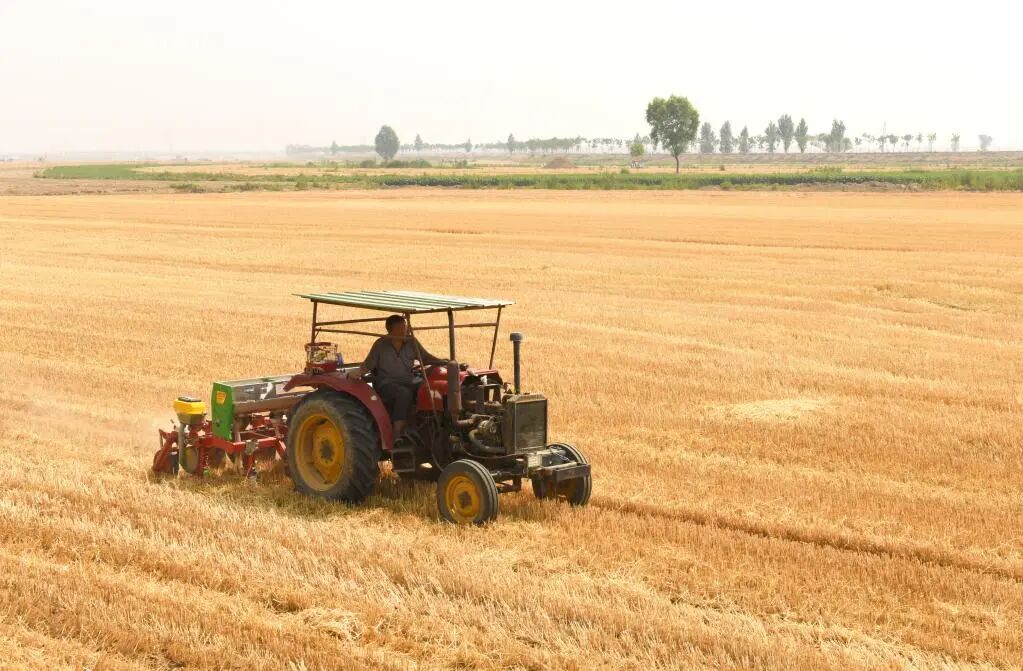
◉A farmer in Xingtai City, Hebei Province, sows maize using no-till methods in a freshly harvested wheat field. Image credit: Xinhua News Agency
The real headache is the maize straw. There is simply too much of it. A farmer in Quzhou put it like this: “Nowadays maize is planted so densely and the straw grows so tall that returning it all to the field is simply unmanageable.” As a result, some farmers haul a portion of the straw away themselves. “Otherwise, the fields would be nothing but straw, with no soil left.”
He described how, as soon as the irrigation water is turned on, it washes across the field, leaving a thick layer of straw floating on the surface.
Farmers offered varying explanations for how incorporating maize straw into the soil affects seedling emergence. Some believe the straw leaves the soil too loose and uncompacted; after sowing, irrigation causes the soil to collapse, burying the seeds too deeply and delaying their emergence.
Others noted that wheat seeds can end up resting on the straw rather than in the soil, leaving them exposed to the frost and freezing over winter. You can see entire patches of wheat dying off as a result.
To cope with this, one of the farmers’ coping strategies is to sow more seed, which inevitably drives up costs. Agricultural researcher Zhao Qinxu has spent years living in Hebei villages, focusing on high-yield grain production techniques. He cautions that whether straw is properly incorporated into the soil directly determines sowing quality. Drawing on his experience, a rotary tillage depth of at least 30 cm during maize straw incorporation ensures the material is turned into the upper 20 cm of the soil. When the straw and soil are thoroughly mixed, they will not obstruct subsequent planting.
However, the farmers I visited generally report that machine operators limit rotary tillage to a depth of no more than 20 centimetres. Everyone knows that deeper tillage is preferable, but increasing the depth burns more fuel; how are the operators expected to make a profit?
When I asked why they did not pay extra to have the machine operator till to 30 centimetres, the farmers countered: how can you be sure he is actually carrying out your request? One noted, ‘Machine operators are a mixed bunch; some will just fudge the job, tilling deep at the head of the field but cutting the depth as soon as they get to the middle.’
The net result is an unspoken arrangement to do the bare minimum: the straw is tilled only to the depth just sufficient for sowing.
This is because profit margins on grain farming are so slim that, to farmers, “minimising inputs” matters more than “boosting yields”. Even if this cuts the harvest by 100 jin (50 kg) per mu (c. 0.165 ha), the loss amounts to just over 100 yuan. Zhao Qinxu says that, based on his field observations, straw incorporation has little overall impact on grain yields. While a handful of farmers have suffered 60 to 70 per cent yield drops due to poor application, those who carry it out properly can actually see increases of 10 to 15 per cent.
Some farmers do pay attention to the quality of straw incorporation. They will bring in a straw shredder to crush the corn stalks a second time, then mix them into the soil with a rotary tiller. A farmer in the Fengfeng Mining District says it costs 30 yuan to shred the corn stalks on a mu of land. Some have even found that a single pass isn’t enough to fully incorporate the material, requiring a second run. Of course, this naturally drives up costs.
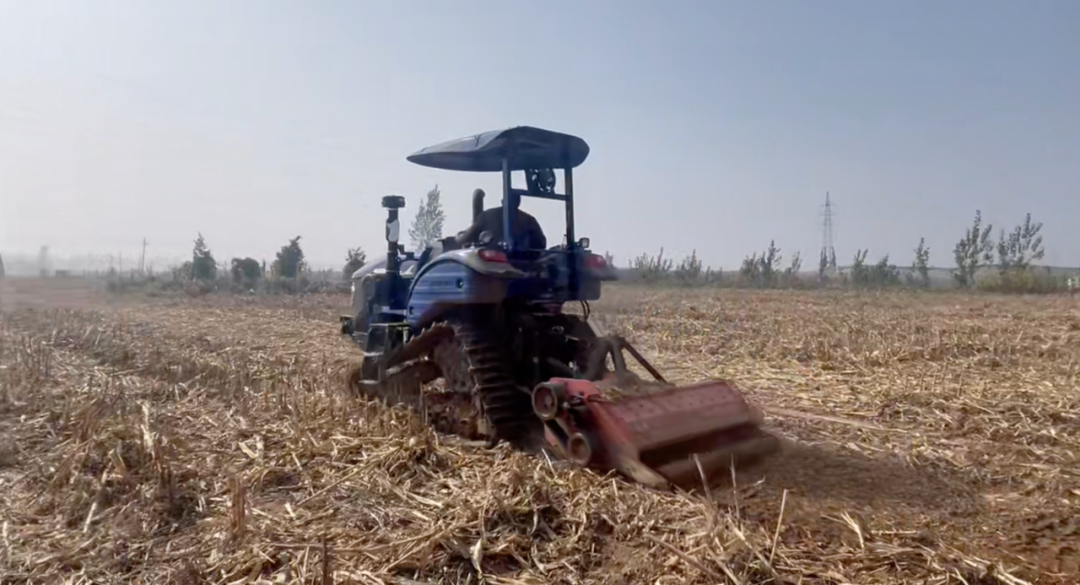
◉Maize stalk shredder in North China. Photo: 贤子
Another coping strategy is passive resistance. In Quzhou, it was noted that to get crops into the ground, farmers have no choice but to clear out the surplus maize stalks and dump them in an unattended spot on the village outskirts.
“The village officials are worried too, afraid of fires,” he said. “What can you do? You’re not allowed to burn it, so where do you put it? In the end, we just haul it all to useless pits outside the village, hire an excavator, and bury it.”
That counts as ‘straw incorporation’, I suppose.
Pests and diseases
Wheat straw is relatively straightforward to manage and does not need to be rotary-tilled into the soil, but this very fact makes it more prone to pest infestations. A farmer in Fengfeng Mining District said wheat attracts more pests than maize because about 20 centimetres of stubble is left behind after harvest. “The hollow stems of the wheat stalks easily harbour insects.”
“The aphid infestation has been heavy this year,” he said. He had applied pesticides just over ten days before my visit. As we were talking, he was watering the wheat, planning to wait a few days after irrigating before spraying again. He has noticed a clear increase in pests since straw incorporation. Crouching at the field’s edge, he emphatically gestured to describe how, without pesticide treatment, black aphids would densely cover the main wheat stems. To control the insects, pesticide usage has increased by at least a third, he said.
Farmers in Quzhou noted that before straw incorporation, pesticide application was less frequent, but afterwards, they need at least two extra sprays per crop season. “These days, wheat and maize both require several pesticide treatments. You simply can’t manage without it.”
Weeds have also increased. He believes that incorporating the straw shreds the weeds along with it, scattering seeds into the soil where they multiply endlessly. “And there are more types of weeds than before. I’m in my forties or fifties, and all sorts of unfamiliar weeds I’ve never seen before are showing up. We have no idea where they’re coming from. Some flower, some don’t. In the past, there were only those few kinds in the fields.”
More frequent pesticide spraying naturally drives up costs. A single application costs around 20 yuan per mu (c. 0.067 hectares), but farmers in Quzhou point out that the chemicals themselves are cheap; it is the labour for spraying that really adds up. He runs his own livestock farm and has no time to work the fields. His parents are nearing eighty, and he has persuaded them to stop farming. Consequently, he has to hire someone to handle the spraying.
This is why Zhao Qinxu repeatedly stresses that the depth of straw tillage must be strictly maintained, as thoroughly mixing the straw with the soil and burying it deeply helps suppress pathogens, pests, and weed seeds.
The large yellow underwing (*Noctua pronuba*) serves as a case in point. Hebei was the first region in China where the pest was recorded damaging summer maize. Since its initial discovery in 2005, it spread rapidly around 2011 across Hebei and the Huang-Huai-Hai summer maize zone, prompting the province to take the lead in drafting local technical guidelines for its control. *China Rural News* interviewed several experts in 2017, who noted that the outbreak of *Noctua pronuba* was not driven by a single factor, but was closely linked to new cultivation systems such as straw incorporation following mechanical harvesting and no-till sowing in the wheat–maize double-cropping region.
Once the wheat straw is returned to the field as a surface cover, it creates a shaded environment at the base of the maize seedlings. This provides an ideal habitat for the larvae of the large yellow underwing moth, which thrive in cool, damp conditions, and simultaneously shields them from pesticide applications, effectively turning the cover into a refuge. To address this, plant protection experts from the Hebei Academy of Agricultural Sciences recommend either baling the straw for removal from the field or breaking up this thick, soft, quilt-like layer. For instance, farmers could chop the straw into finer pieces to prevent a continuous mat from forming, use a stubble crusher to break down and press the material into the soil surface to restrict larval movement, or simply clear the straw from the planting rows.
The final recommendation bears a strong resemblance to a local farming method Zhao Qinxu heard from fellow growers: once the wheat crop has emerged, leave gaps for the maize planting rows and sow the maize in these cleared spaces. This reduces direct contact between the young maize plants and the wheat stubble, thereby helping to curb the incidence of pests and diseases.
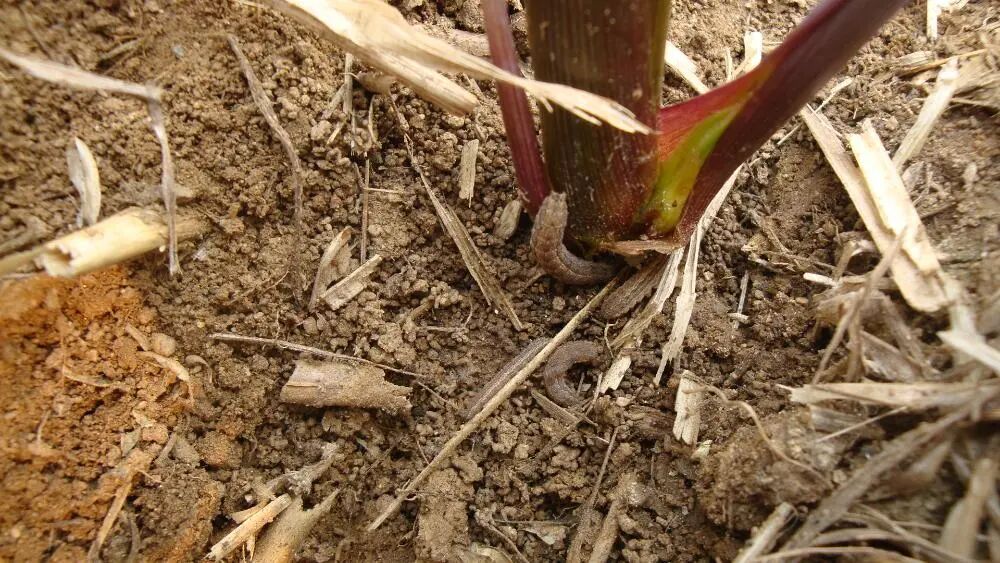
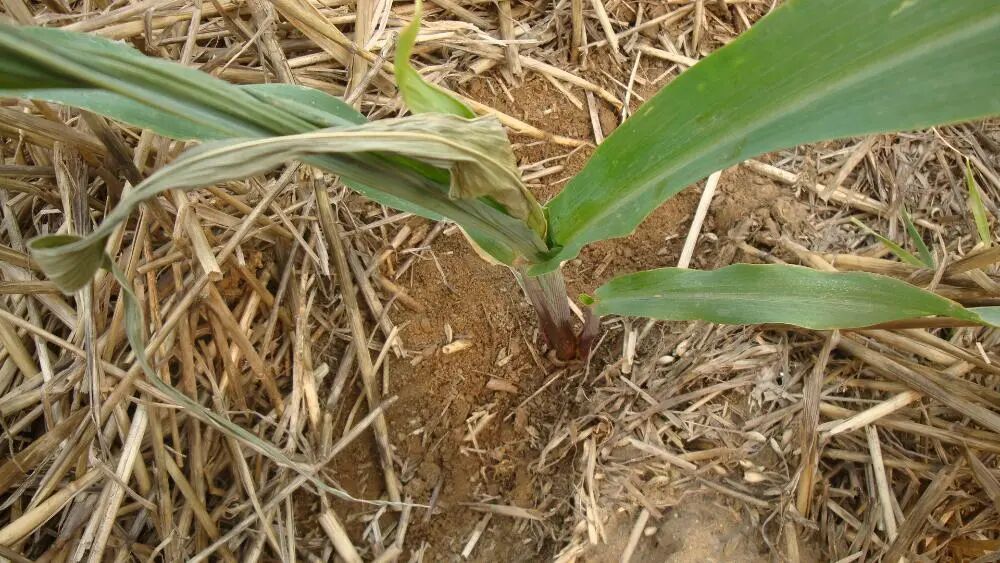
◉Maize seedlings with dead hearts caused by the large yellow underwing. The straw layer provides a cool, damp refuge for the larvae. Image source: Lingshou County People’s Government
Calculating the costs
When the costs are broken down, straw incorporation increases farmers’ expenses primarily in pesticides, machinery (straw shredding, rotary tillage, etc.), seeds, and labour.
During an interview with a large-scale farmer, I asked him to itemise the costs at each stage of farming. An interesting finding is that straw incorporation may place a heavier burden on smallholder farmers.
First, stages such as straw shredding and rotary tillage require machinery, regardless of whether a farmer operates a large or small holding. However, machine operators tend to charge less for larger farms. “Operators prefer not to keep moving their equipment. With a large, contiguous plot, they do not need to relocate, so they are happy to offer a discount.” Smallholders readily acknowledge this reality. For instance, the cost for rotary tillage typically runs at 25–30 yuan per mu (c. 0.067 ha) for large operations, whereas smallholders must pay around 40 yuan.
Second, large-scale farmers use drones to spray pesticides and herbicides, at a cost of roughly 4–5 yuan per mu. Should straw incorporation lead to higher pest and weed infestations, spraying expenses will inevitably rise. Large operators view this as an absorbable cost. For smallholders who apply chemicals by hand, however, it represents a frustrating extra burden of labour. Because they generally handle the application themselves, they cannot easily calculate a precise economic figure, and simply complain that “it is just too much of a hassle.”
It is precisely these minor “hassles”—overlooked by most and impossible to factor into a ledger—that accumulate into a tangible dilemma for farmers, keeping the temptation to burn the straw persistently simmering beneath the surface.
In 2023, Zheng Jiaxin, a sociology PhD student at Wuhan University, concluded after field research in Anhui that due to higher machinery costs for smallholders and other factors, returning straw to the fields has effectively accelerated smallholders’ exit from farming. I have not, however, observed this trend in Hebei. Farmers say that although agriculture is no longer lucrative, they will continue to cultivate the land. Particularly since the pandemic curtailed employment opportunities, some villagers who had taken migrant work in other provinces have returned home to farm, picking up local odd jobs during slack periods. Ultimately, for farmers, the land remains their last refuge.
An elderly farmer in Daming County learned about ‘straw decomposition accelerator packs’ on Kuaishou, so he went to an agricultural supplies store to buy some and try them out. He spent just over 90 yuan on three packs, spreading them across five or six mu (roughly 0.35 hectares) of land in the hope that the maize straw would break down more quickly. As for the effect? He said he ‘felt it was decomposing a bit faster.’ But when I pressed him on whether he planned to keep using them next year, his answer was vague: ‘I’ll decide after the Spring Festival.’
Indifference, apathy – the prevailing attitude towards straw incorporation I observed among farmers during my fieldwork in Hebei. They would complain about the poor crop emergence and rising pest problems that come with incorporating straw, yet when asked about yields, they would simply say, “It hardly makes a difference.”
They sometimes find this conclusion a little strange themselves. They then suggest that many factors can affect yields: perhaps the government’s recent water conservancy projects have secured reliable irrigation, or maybe the quality of fertilisers and seeds has improved. But regardless, as long as the yield reduction is not too drastic, they can live with it. “Just making back a little money is enough,” they say. After all, you cannot count on farming to make a living.
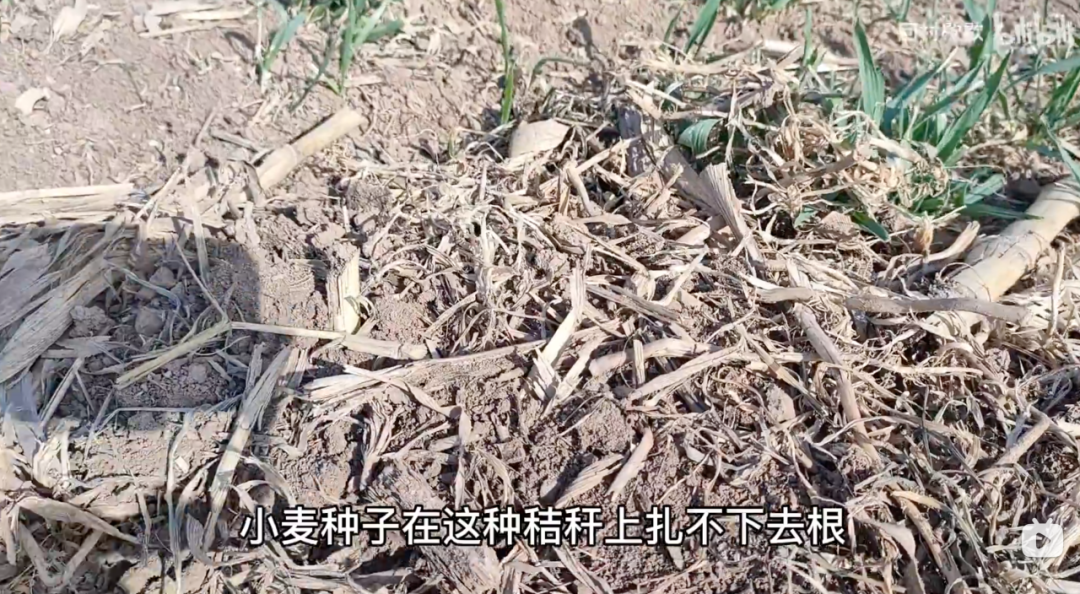
◉If maize straw is insufficiently shredded and not thoroughly mixed with the soil, it can lead to shallow rooting of wheat seeds and poor seedling emergence. Image source: Bilibili creator “回村歇歇”
Baling
Even though farmers have grown accustomed to straw incorporation and it does not significantly affect yields, the interviewed farmers all reached the same conclusion: they would still prefer to burn it. Burning leaves the fields clean, makes them easier to work, and reduces pests.
One smallholder family farms 12 mu (about 0.8 hectares). Adjacent to their land, a large-scale operator from a neighbouring city has contracted 800 mu. One year, he watched the operator use heavy machinery to bale and haul away all the straw. He was envious and has long hoped someone would come and collect his straw too. “I asked someone to bale it, but they turned me down, saying the plot was too small.”
However, farmers who have gone through the baling process tend to complain more. A farmer in Feixiang recounted how, over a decade ago, shortly after burning was prohibited, contractors came to bale up the wheat straw. “The machinery goes over the field once to bale it, and again to pick up the bales,” he said. “When planting maize, you should be able to sow directly. But all that traffic back and forth has packed the soil down.”
He doesn’t know whether the machine operators who baled the straw received any state subsidies. Either way, “If the subsidy isn’t paid to the farmers, why would they be told to compact the fields for nothing?”
Weighing the downsides, he ultimately decided to incorporate the straw into the soil.
Another incident a couple of years ago made him even more wary of letting machine operators onto the land. In previous years, the government promoted deep loosening, subsidising contractors to prepare fields for farmers. “They’ll just free of charge scratch a few furrows in the ground instead of turning it over properly, leaving it all in ridges and trenches that make it a pain to work when you actually need to plough,” he said. Once operators had done such a shoddy job, farmers refused to let anyone carry out deep loosening on their fields.
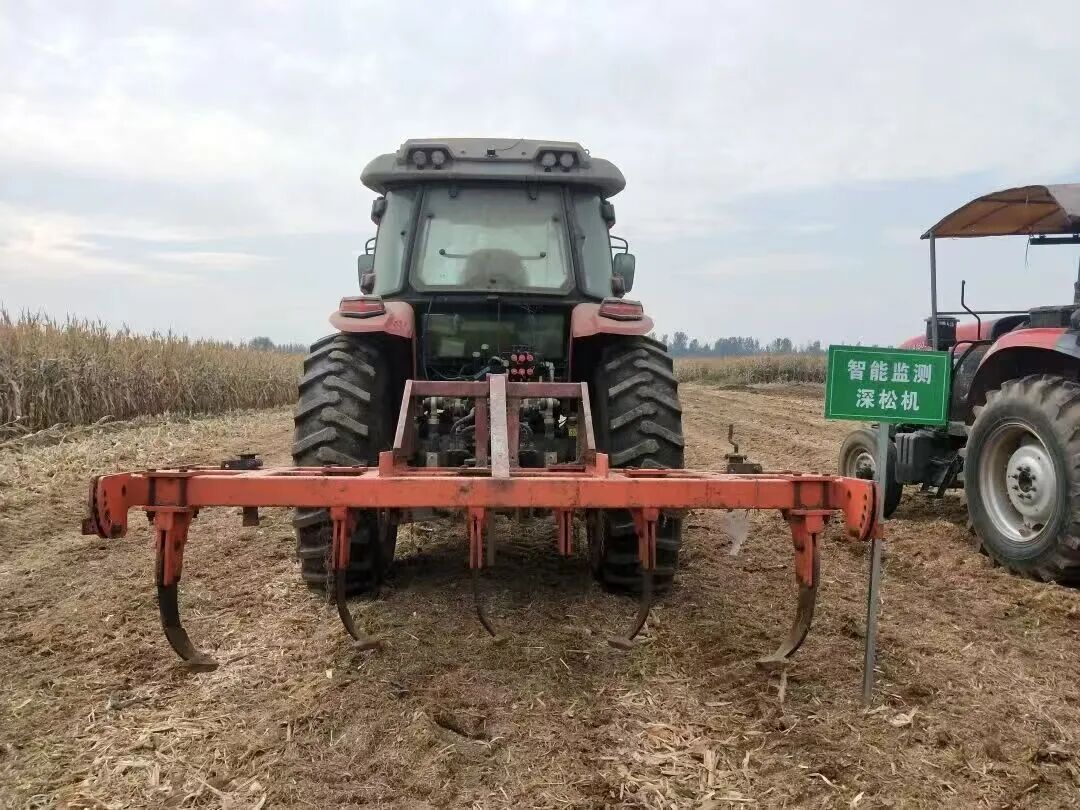
◉To improve the quality of arable land, the central government has allocated funds over several consecutive years to support mechanical deep loosening and land preparation. Yet, as with straw returning to fields, once implementation falls short, it ends up hindering farmers’ planting work. Image source: 邯郸新三农
Decades of intensive cropping, coupled with heavy reliance on chemical fertilisers and pesticides, have depleted the soil’s nutrients. This is precisely the issue that returning straw to the fields aims to address: replenishing organic matter, improving soil structure, and sustaining long-term soil fertility. But have farmers actually felt these benefits? The farmers I met all agree that the soil has indeed become looser and is no longer compacted. Zhao Qinxu also notes that incorporating maize straw into the ground does increase soil organic matter, and you can tell just from the colour alone. “Even a quick visit to a farmer’s field shows the topsoil is noticeably darker. Further testing for soil organic matter would confirm it.”
Yet farmers have not cut back on chemical fertiliser. This is largely down to two reasons: first, while straw adds organic matter to the soil, the readily available nutrients that crops require still come chiefly from chemical fertilisers; second, over-application is already widespread across much of China. Because farmers do not know what their soil actually contains, they tend to rely on traditional practices—and, driven by a fear of yield loss, often stick with or even increase their usual fertiliser rates.
Many farmers still operate on the assumption that “the more chemical fertiliser you apply, the better.” This mindset also clouds their understanding of how straw incorporation relates to soil health. Only when straw incorporation is integrated with targeted practices—such as soil-testing and tailored fertilisation, alongside nutrient balance management—can improvements in soil fertility realistically translate into reduced fertiliser use. But how can growers gain a proper understanding of their soil? It remains a knowledge gap for farmers, and a conspicuous void in local agricultural extension services.
Although straw incorporation has become a widely accepted farming practice across the North China Plain, farmers have yet to genuinely embrace it.
– This is Foodthink’s 834 th original article –
Foodthink
Author
Kong Lingyu
Project Director at Foodthink. Focuses on climate, environmental, and food and agriculture issues.
Zhao Qinxu is a pseudonym used at the interviewee’s request.
Editing: Pei Dan
Layout: Xiao Shu
Scan the QR code to tip and support original food insights.
▼

▼
Click the image to read related articles.
▼
Click a keyword to browse more article collections.
Seeds|Agricultural Technology|Policy|Fermentation|Nutrition|Fruit|Fisheries|Events|Careers|Food Delivery|Wet Markets|Livestock|Food Talk|Sharing Sessions|Reading Groups|Harvest Festival|Smallholder Stories|Climate Change|Rural Development|Cooperative Economy|Urban Farmers|Food Safety|Digital Technology|Biodiversity|Pandemics and Food|False Solutions|Agroecology Internship Programme
Beijing|Hebei|Shanghai|Guangdong|Guangxi|Henan|Sichuan|Jiangxi|Xinjiang|Shaanxi|Hong Kong|Chongqing|Zhejiang|Jiangsu|Guizhou|Taiwan|Inner Mongolia|Philippines|Canada|Russia|Mexico|Italy|United States|United Kingdom|Germany|Netherlands|Thailand|Sweden|Japan