A Full-Time Gig Worker’s Mooncake Factory Days

The mooncake factory, where my gig work began
My hometown is in Chaoshan. When people think of Chaoshan, the first thing that comes to mind might be the overseas Chinese hometown culture seen in *A Letter to Grandma*. Many also assume that people from Chaoshan are naturally gifted at business — that no matter how long you’ve been working away from home, those around you seem to take it for granted that you’ll eventually return to take over the family trade. The truth is, not every family in Chaoshan has a business to pass down. Plenty of us are just ordinary wage-earners, neither here nor there — as my dad puts it: ‘Making salt that isn’t salty, making vinegar that isn’t sour.’ That proverb describes a life that never quite amounts to anything.
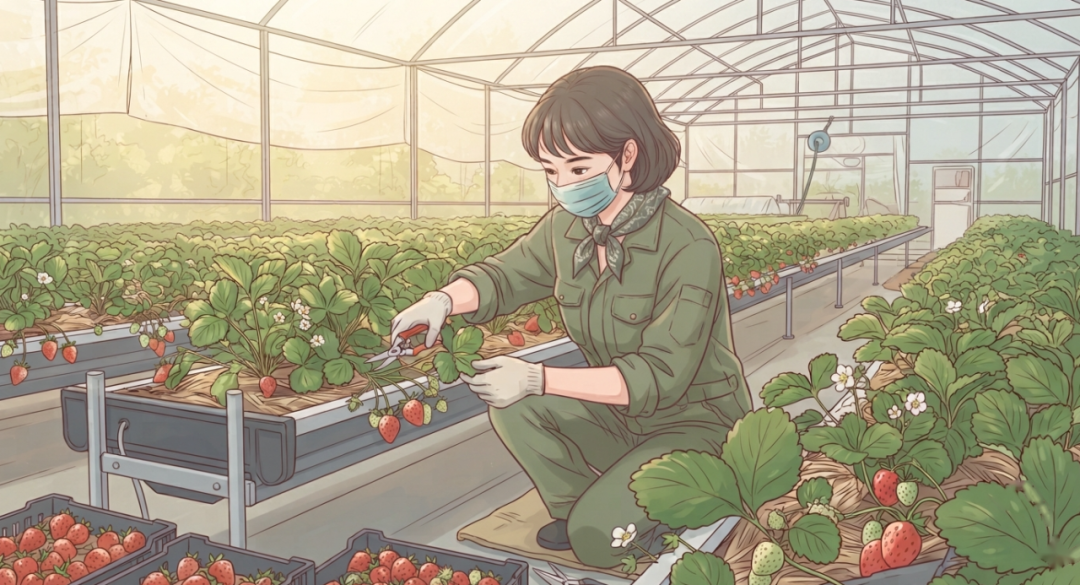
Now thirty this year, I’m juggling three gig jobs in Guangzhou simultaneously — hospital escort, social media operations, and museum docent. I’ve also done work as a strawberry pruner, a film extra, a cinema receptionist, and more. The income barely covers my living costs, but gig work offers no safety net, and the longer it goes on, the more anxious I get, always looking for another gig to pick up.
I recently landed my fourth gig. With the Mid-Autumn Festival approaching, the supermarket downstairs was hiring mooncake tasters. Before starting, I assumed the samples would be premium mooncakes from well-known brands. Instead, my supervisor handed me a few plump, loose-packed mooncakes. When I made out the brand on the packaging, a wave of déjà vu washed over me — it was the very mooncake factory where I had worked back home three years ago.
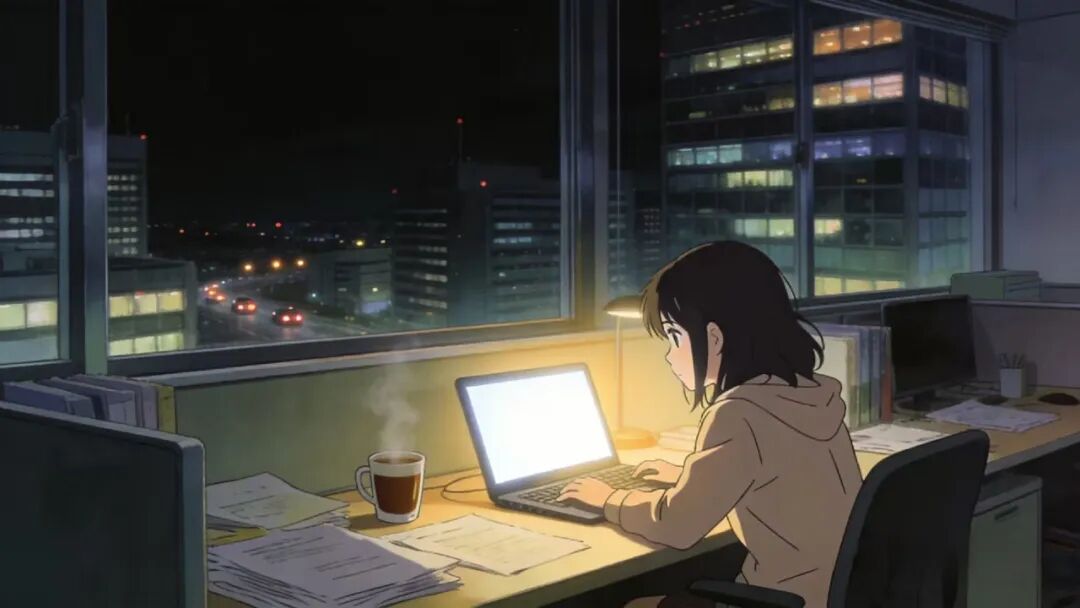
In the spring of 2023, I still had a full-time job in Guangzhou. One evening, I was working overtime in a brightly lit office tower when my phone buzzed with news that my mother had fallen ill. I froze. Emotions long pent up from years of grinding away at work suddenly broke through, and I slumped onto my desk, sobbing uncontrollably.
Shortly after, I went back to Chaozhou and became, for three months, a full-time daughter. First I spent over a month keeping hospital bedside, then after her discharge I regularly took her to outpatient appointments. Her condition gradually improved, and by summer things had stabilised considerably.
But when I tried to find work back home, I found it surprisingly difficult to land a full-time position. I came across a job listing for a mooncake factory by chance. Hoping for some light physical work, I signed up, figuring it would just be a temporary stopgap. At the time I had no idea that this would become the starting point of my gig-work career.
Kneading Dough at the Mooncake Factory
The factory was tucked away at the far end of a suburban industrial park. It turned over tens of millions a year, yet looked so understated it might have been a small workshop. The mooncake department occupied the second and third floors, with a total of five production lines — one per workshop. The moment you stepped into a workshop, the assembly line was the first thing you saw. Follow it along and you reached the baking area; open a door and you could get to the packaging area. The entire layout, in other words, formed a loop.
It was 45 days to the Mid-Autumn Festival. Every morning, the supervisor would hold a briefing and set the day’s quota — say, seven thousand lotus paste with salted egg yolk, five thousand tangerine peel and red bean, plus a thousand lao bing (lard pastries). For a single production line, the daily target was somewhere between ten and twenty thousand mooncakes.
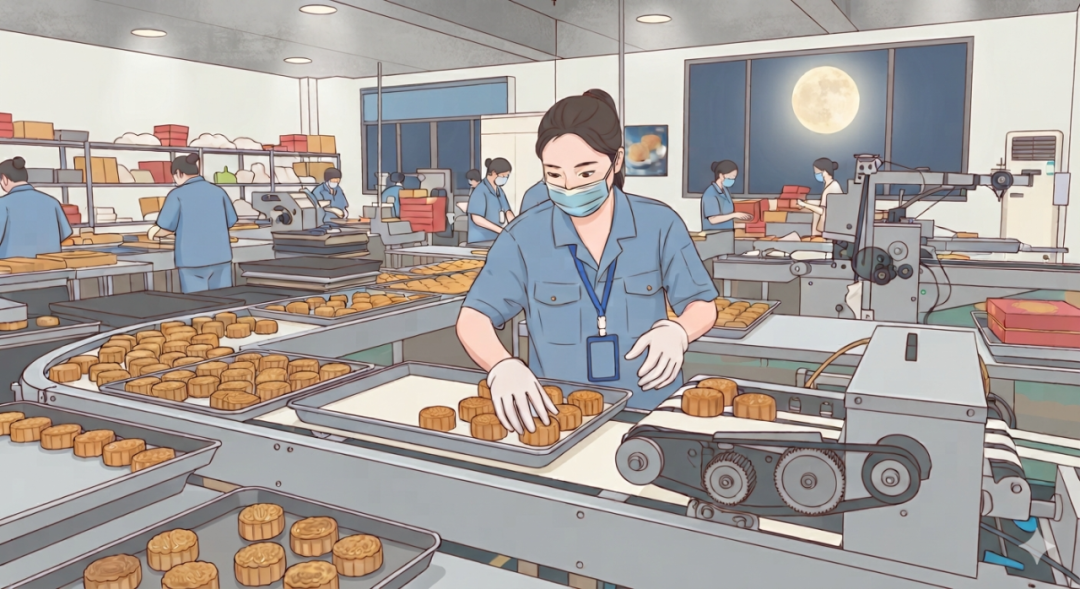
My main job was kneading the dough — the aim being to prevent the mooncake moulds from sticking. It sounded like simple work, but in practice it was exhausting. Usually two people were assigned to kneading, and each had to work through seven or eight thousand pieces a day. That worked out to roughly twenty per minute, so apart from meals, there was almost no pause at all. Even toilet breaks were time-limited — you had to be back within ten minutes. The lavatory was in a corner on the floor below, so I was constantly dashing up and down in a panic, and still had to allow time for hand-washing and sanitising before re-entering the workshop.
Sometimes, near the end of a shift, we were still far behind on quota. The supervisor would crank the assembly line to full speed, and we could only work like mad—no time even to drink water. In the neighbouring workshop, a third-year student from a teacher-training college who had come to work alongside her mother lost 7 jin (3.5 kg) in a single month. One day, after my shift, I glanced at my phone and the battery was still at 98%. I couldn’t help but reflect: even a small city has its own ‘fast pace.’
And so I kneaded flour for half a month before my supervisor moved me over to the automatic oil-brushing station. It’s the last step before the mooncakes go into the oven, and my job was catching the baking trays. I even gave myself the nickname “Tray Hero.” Hat, mask, and clothes all wrapped up tight—standing next to the oven was sweltering. But I only lasted a single day on the trays before they called me back to kneading the next day. I let out a sigh of relief: “Kneading flour is better after all!” The rack for the trays was a bit high, and I’m simply too short to reach the top shelf.
The Birth of a Mooncake
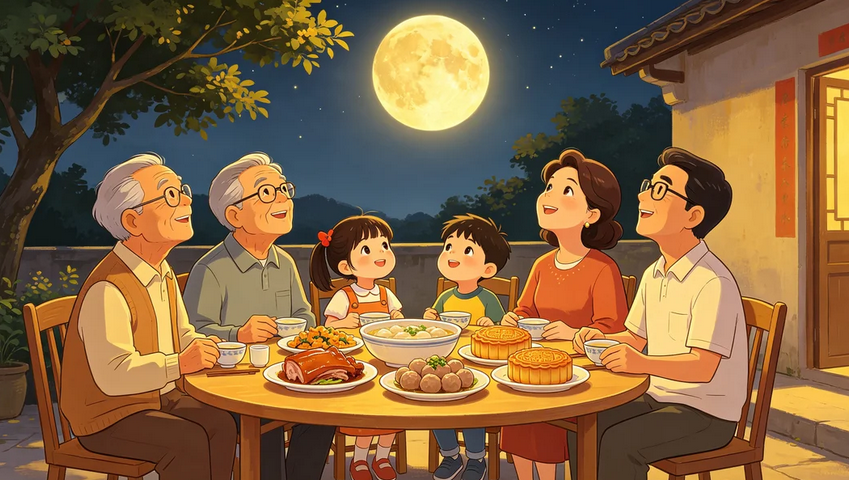
How is a mooncake born? I never imagined I’d need to work that out. Before, mooncakes meant the same to me as they did to most people—a symbol of the warm togetherness with family during the Mid-Autumn Festival. Then came those days at the mooncake factory, putting in solid, honest work alongside my coworkers, and the whole process of making mooncakes got etched into my memory.
A mooncake comes into being in one unbroken flow. Flour, sugar, oil, and water are slowly poured into the dough mixer, where repeated kneading turns them into a single pliable skin. The skin and filling are then loaded into the hoppers of the mooncake machine; with a gentle press, the filling is neatly encased in the dough, and the whole is cut into uniform, equal-sized balls.
Then comes the flour-rubbing stage I know so well. The kneaded dough balls ride the conveyor belt to the moulding station, where a light press gives each one its smooth, round shape. Next, the surface is misted with water, the mooncakes are placed in baking trays, and they go in for their first bake to set the shape. Out of the oven, they receive a brush of egg wash and a second bake—and with that, the mooncake is complete.
The filling machine, shaping machine, and tray loader are the main pieces of equipment in mooncake production. The machine first wraps the filling and presses it into shape; once a worker feeds a tray, it automatically loads each mooncake onto the baking tray. Although machine automation has greatly freed our hands, it doesn’t mean the hard work has disappeared. Placing the filling and pastry, adjusting machine parameters, rolling the dough, loading baking trays, spraying water, packing boxes — none of these steps can be done without manual labour.
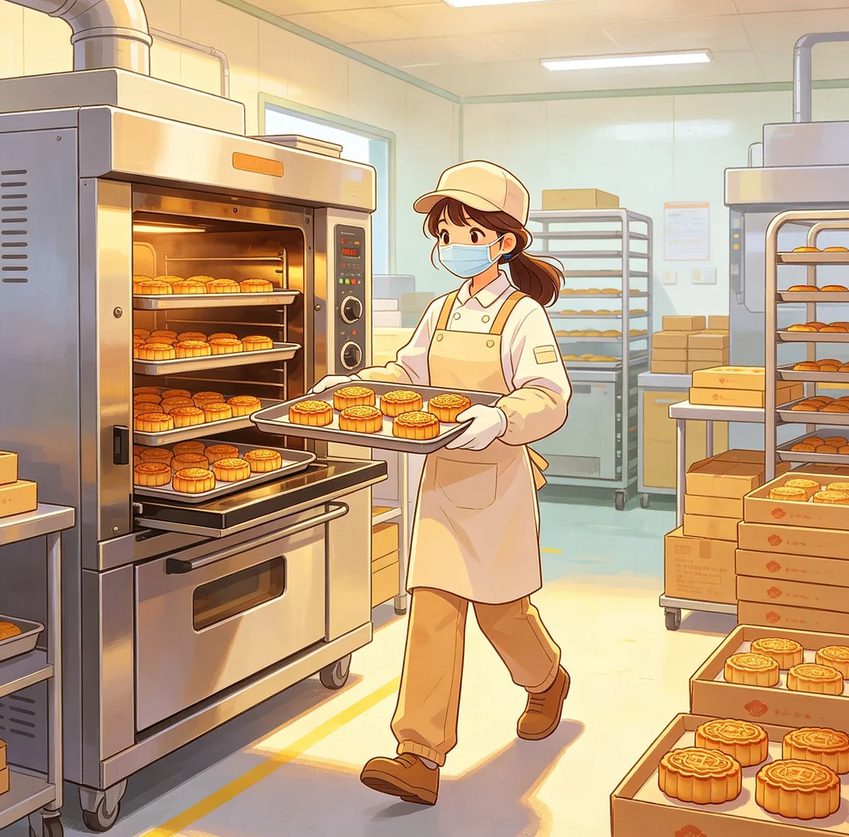
Mooncakes come in many schools. The most widely referenced framework speaks of four major schools and ten cake systems. Within those, Chaoshan-style and Cantonese-style mooncakes are not all that different; their traditional flavours include lotus paste with egg yolk, fruit, aged tangerine peel and red bean, black tea, green tea, mung bean paste, five-nut, and more. I’ve made every one of these varieties at the mooncake factory.
Mooncakes with different fillings take turns on the production line. That’s how it goes for us — today we’re making one, tomorrow another. You do yours, I do mine.
Mooncakes a machine can’t wrap
Another mooncake from Chaoshan is the lao bing, whose core craft still depends entirely on handwork. The lamination step—the one that gives the pastry its soul—remains something no machine can yet replicate.
The classic filling for lao bing is black bean paste—silken and smooth, the perfect companion for tea and moon-gazing on Mid-Autumn night. The pastry is made with lard, requiring repeated folding and pressing to build up its layered structure: flatten the dough, roll it into a cylinder, press it flat again, then roll it out into a distinctly flaky crust. A light touch sends crumbs cascading; the outer skin is soft and tender, never tough, with a mellow, rich aroma and a delicate, yielding texture. A machine, by contrast, kneads with even, relentless force, which over-develops the gluten and leaves the crust hard and chewy—stripped entirely of that “crumbles at a touch” quality.
As the “troublesome” one among the lot, lao bing always gets the grand-finale slot each day. The master craftsman would shut down the assembly line and teach us to wrap lao bing by hand, guiding our fingers every step of the way.
Perhaps I had grown accustomed to the assembly-line pace during the day, and now that everything had suddenly slowed down, I found myself at a loss. Fortunately, as everyone chimed in one after another, the atmosphere warmed up again.
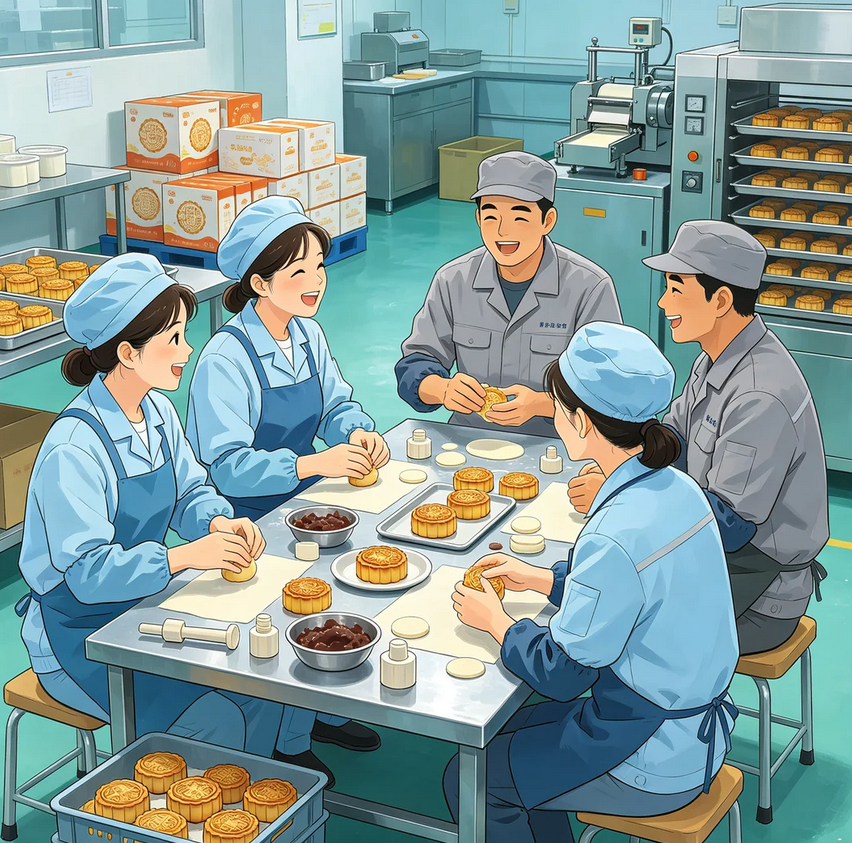
The master craftsman asked me whether making mooncakes was any fun. The supervisor jumped in: “Just look at her completely lifeless expression and you’ll know the answer.” I wasn’t just lifeless—I was clumsy as well, earning me the label “not exactly skilled.” The master craftsman finally couldn’t stand watching my hideous little cakes any longer and had no choice but to coach me one-on-one. Luckily, I caught on quickly enough, and after a few more rounds, the hands found their rhythm.
When I finally produced a near-perfect lao bing, don’t let my blank face fool you—I was screaming inside: Oh, a natural delivery! And what a handsomely shaped, plump little mooncake!
The Odyssey Period at the Mooncake Factory
How do you describe the exhaustion of working at a mooncake factory? As someone who usually has trouble falling asleep, I found myself dropping off the moment my head hit the pillow. Sometimes I would doze off before I’d even sent the messages I owed people that evening. I could fall asleep sitting on the floor of the changing room during my lunch break. Those were the best nights I had slept in nearly a decade. I remember eagerly telling a friend: “It’s tiring, sure, but the coworkers are hilarious—I feel like I can hold out until Mid-Autumn Festival.”
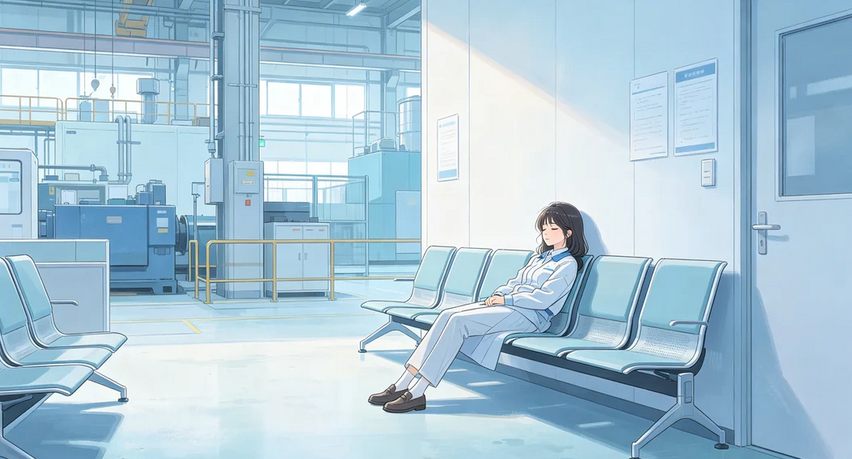
The work itself was fulfilling. But during that stretch at the mooncake factory, I felt like a fawn lost in the forest, wandering all day with nothing in particular I wanted to do. In today’s language, I had entered my Odyssey period.
When the machines in the workshop were running at full throttle, the noise was deafening, and I often couldn’t make out what my coworkers were saying. Once, the supervisor called out “The inspection’s over,” and I heard “The police are here.” I immediately caught the scent of gossip and asked him: “Where are the police? What happened? Did the machinery injure someone, or is it a fight?”
He laughed so hard he dropped to the floor. “You are the biggest gossip around. Everyone’s been saying a first-degree graduate has joined our workshop—looks bookish, but the person’s a complete oddball. On top of that, they say you’re the Rain God. Ever since you showed up, it rains every single day.” I wanted to ask what exactly made me an oddball—I was just pretending to be the boss’s relative, after all. At first the coworkers half believed and half doubted, but the more I embellished, the more it sounded plausible. There was even a moment when I caught them looking at me with genuine awe.
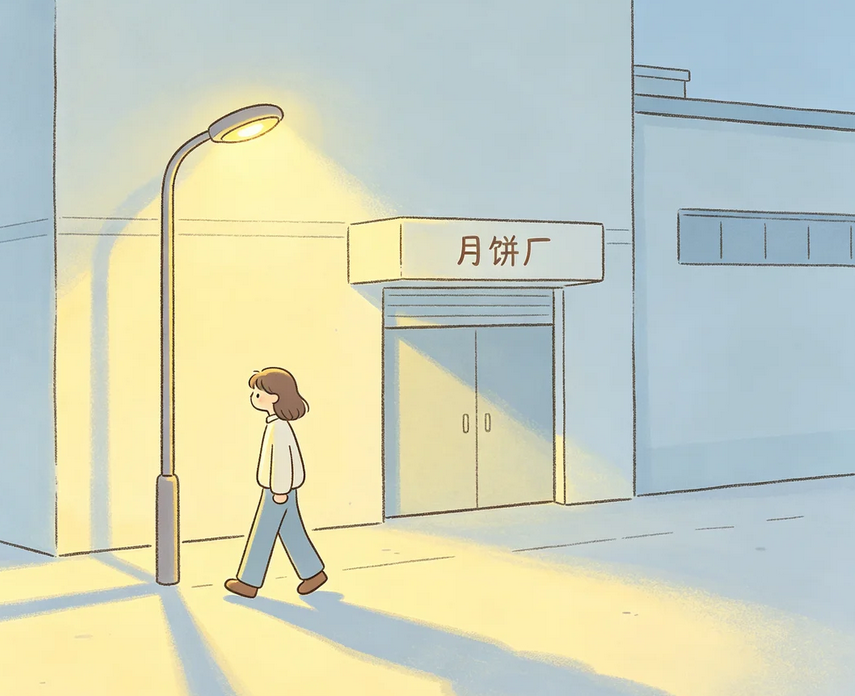
The days went on, one after another, and in the end I still didn’t make it to Mid-Autumn Festival. One early morning, I bolted without even clocking out. The streetlight made me look faintly dead. I had worked fifteen hours that day, from eight in the morning to midnight, and I’d heard the days ahead would average fourteen hours each.
The supervisor asked: “Why don’t you stick it out until Mid-Autumn Festival? Once orders ramp up, they’ll schedule day and night shifts so there are people working around the clock. That way we won’t have to do overtime.” The supervisor was a good man, truly, but I simply couldn’t go on. It was hard to fathom how full-time employees managed to keep at it, day after day.
Among the group of workers, two were young women from a vocational health school who had come together over the summer to earn some pocket money. They would boast to anyone who’d listen about their three-year friendship, certain it was unbreakable. They also asked me what the world was like in your twenties, and whether I’d be freer once I was their age. I gave a vague answer: “I suppose it’ll be a little freer, but there’ll be new constraints, too.”
Monkey was the team leader, which made him something of a manager in the mooncake department. On my first day, he taught me how to roll out the pastry dough. When new starters came to other workshops, he’d pop over to give them a hand, but he mostly stayed with our team. He told me he’d been a fan of Wu Bai for twenty years and hoped to catch one of his concerts in his lifetime. I said: “Surely that’s not too hard to arrange?” He laughed and replied: “At my age, there are so many things holding me back. You’re still young—go do whatever it is you want to do.”
Hearing that, I didn’t know for a moment how to respond. Everyone craves freedom, yet everyone also has a real life they need to face.
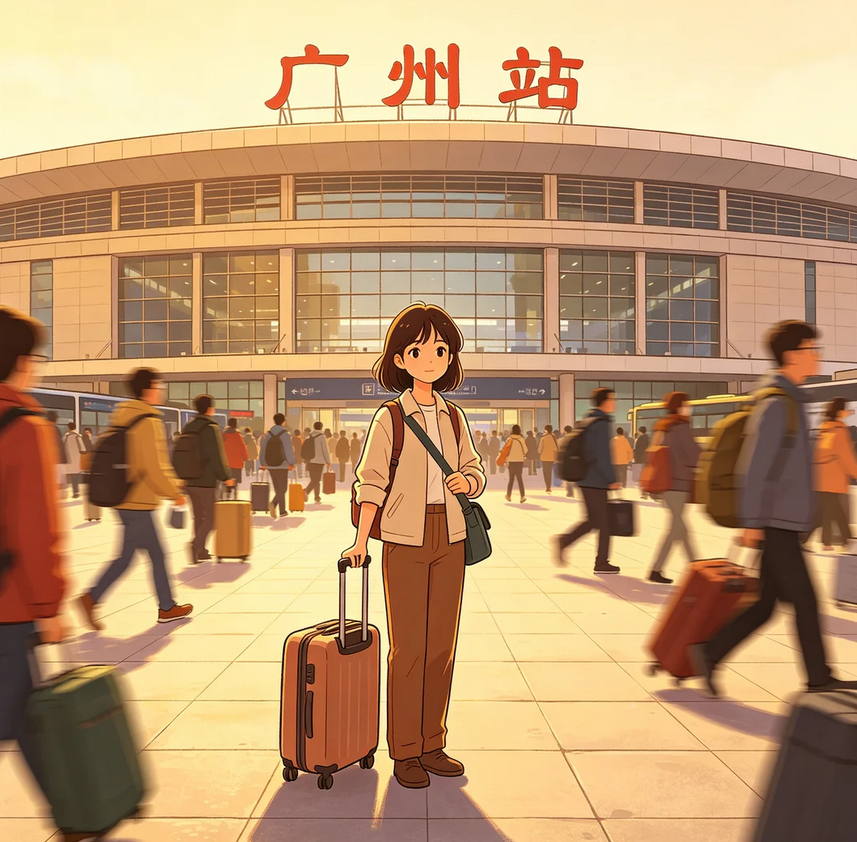
After leaving the mooncake factory, I chose to go back to Guangzhou. Since then, apart from a stint at a tutoring company that folded in under a year, I’ve been getting by on odd jobs. As for where I stand now, I can’t say whether it’s for the better or the worse. Perhaps being stuck in the middle can also be called a kind of peaceful acceptance of life.
– This is Foodthink’s 845th original post –
Foodthink
author
Huang Yang
Small-town girl, keeps a koi called Huang Xiaoyu. Between four part-time jobs, occasionally writes a story or two.
All images in this article were created by Road using AI.
Edited by Yuyang
Layout by Xiaoshu
Scan to tip, support original food writing
▼

▼
Click the image to read related articles
▼
Click a keyword to explore more articles
Seeds|Ag Tech|Policy|Fermentation|Nutrition|Fruit|Fisheries|Events|Jobs|Takeaway|Market|Livestock|Food Talk|Sharing Sessions|Book Club|Harvest Festival|Smallholder Stories|Climate Change|Rural Development|Co-operatives|Urban Farmers|Food Safety|Digital Technology|Biodiversity|Pandemic & Food|False Solutions|Agroecology Internship Programme
Beijing|Hebei|Shanghai|Guangdong|Guangxi|Henan|Sichuan|Jiangxi|Xinjiang|Shaanxi|Hong Kong|Chongqing|Zhejiang|Jiangsu|Guizhou|Taiwan|Inner Mongolia|Philippines|Canada|Russia|Mexico|Italy|United States|United Kingdom|Germany|Netherlands|Thailand|Sweden|Japan