A Wet Market Grocery: 31 Years Across Three Generations of Women

I grew up wandering through wet markets. Day to day, I am just an office worker in a cubicle, but come the New Year, I transform into the “deputy” of our family’s grocery stall.
What is a wet market, exactly? For ordinary people living by the natural rhythm of “three meals a day”, a wet market is simply a place to buy groceries, an ordinary part of daily life. With the rise of supermarkets and later e-commerce platforms, however, perspectives on wet markets began to multiply. Initially, some argued that supermarkets were cleaner and tidier, with clear price tags that wouldn’t “rip you off”. Then the times changed again, and people began to appreciate the earthy vitality (烟火气, everyday warmth) of wet markets; consumers in big cities even turned them into must-visit spots for snapping photos.
Unlike these polarised and mutually exclusive views, the wet market I hold in my heart is far more vivid and complex.
The office worker misses the wet market
My feelings for the wet market only truly deepened after I left home.
I was brought up in Wuzhou, Guangxi. As the region’s eastern gateway, it blends the cultures of Guangdong and Guangxi, and once served as the seat of the Ming dynasty viceroy for the Liangguang (Guangdong and Guangxi) region. In this small city, you can find Laoyou noodles, Guilin rice noodles, and Luosifen, alongside white-cut chicken, soy sauce chicken, rice noodle rolls, and Cantonese dim sum. You may well have heard of guilinggao (turtle jelly)—it is a proper local speciality of Wuzhou!

◉Wuzhou, viewed from the Dragon Mother Temple. Photo: Juzi
I’m fond of my hometown, but as a small city, it simply doesn’t offer roles that align with my qualifications. So, after graduating in 2022, I moved to Wuxi, 1,600 kilometres away, to begin life in a metropolis with my partner.
As a typical office worker not finishing until six o’clock or later, evening downtime is precious. The nearest wet market to our residential area is several metro stops away, and completely drained, we simply had no inclination to wander through one after work.
This urban layout is quite different from back home.
Wuzhou is a compact city, with a relatively small old quarter and densely packed residential areas. To keep daily life convenient, every street or neighbourhood has a well-established wet market, so you’re never far from one.
Wuzhou is also deeply shaped by Cantonese culinary traditions, where locals place a huge premium on ingredients that are “fresh” and “slaughtered to order”. Farmers ride three-wheelers into the city daily to sell their fresh harvest, creating a constant need for wet markets to provide them with a place to trade.
The wet markets in Wuzhou’s old quarter come alive at dawn. Though most of the younger generation have left for Guangdong in search of work, those who remain—particularly the older residents—still stick to the habit of rising early to buy their fresh groceries at the local markets.
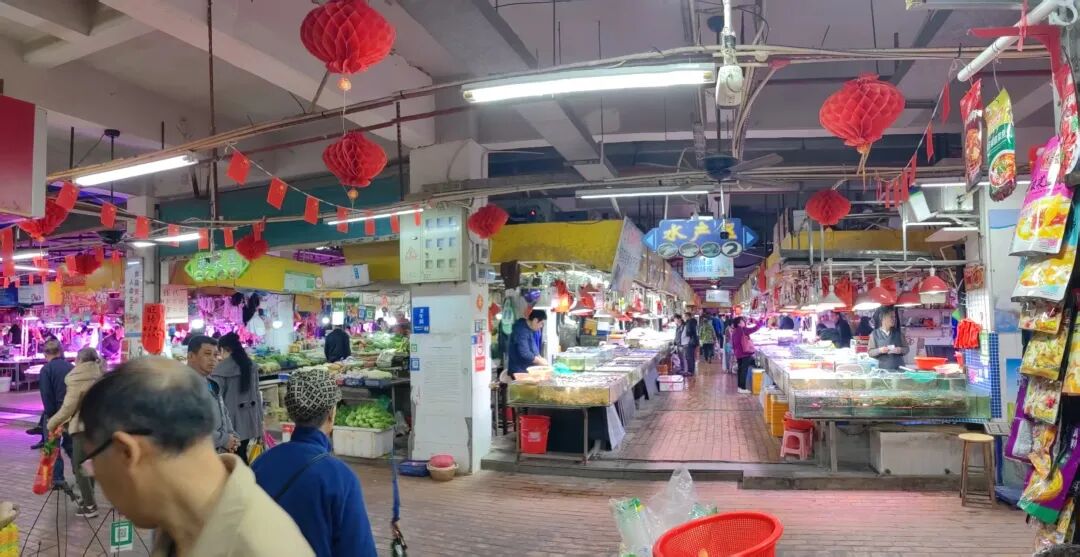
◉ Every morning, Wuzhou’s wet markets are bustling with activity. Photo: Juzi’s mother
Consequently, the rise of large supermarkets and online grocery platforms has not driven the traditional markets out of business in this small city. They remain the main way locals buy their groceries.
Yet, working far away in Wuxi, I found myself relying on platforms like Dingdong Grocery or Xiaoxiang Supermarket to pre-order ingredients during work breaks, just to get dinner on the table sooner. It was then, when I realised I could no longer simply step downstairs to pick up chickens and ducks slaughtered that day, region-specific condiments, or fresh sweet potato leaves and choy sum, that I began to deeply miss the vibrant, bustling markets of my hometown, brimming with fresh produce.
Three Generations at the Grocery Shop
The market I miss most is Yijing Market. It pulses with everyday warmth, offering everything from fresh fruit, vegetables, meat and seafood to ready-made dishes, dried goods, and kitchen staples like rice, oil and salt. My mother runs a general grocery stall right there in the market.
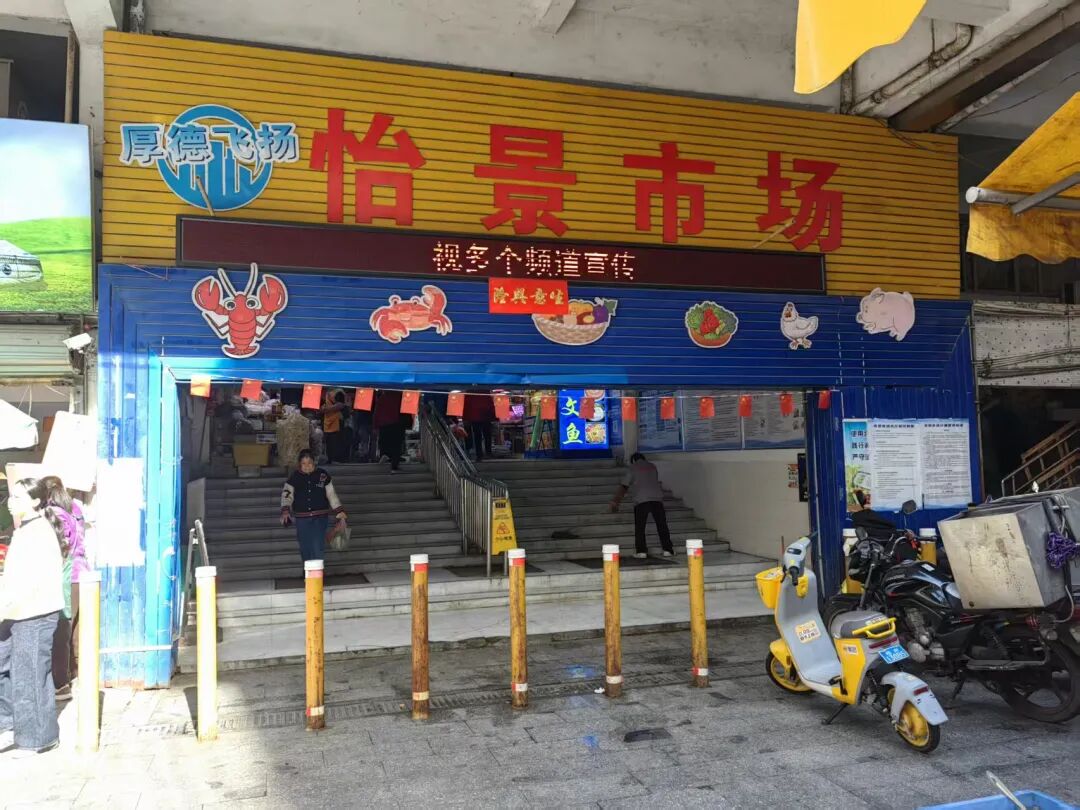
◉ Yijing Market storefront. Photo: Juzi’s mother
I have been helping my mother run the shop in the market since I was little. The wares are wonderfully eclectic: alongside staples like oil, salt, soy sauce and vinegar, we sell all manner of bulk ingredients. Each category comes in multiple brands—truly everything under the sun, far too many for me to count off in a single day. Consequently, the little shop is always bustling. Shoppers usually finish buying their fresh groceries, arms laden with bags large and small, and then pop back to pick up seasonings and pantry staples.
The market’s stallholders are also regular customers at our shop. Some head home for a midday nap, while others cook straight at their stalls. If they find themselves short of any particular condiment, they simply pop in to buy some. Around midday, the market is always thick with the scent of cooking.
As I grew older, I returned every Spring Festival to help keep the shop open. In my day-to-day life, I am an office worker confined to a cubicle, but back home for the New Year, I transform into the market grocery’s “second-in-command”.
Food is a cornerstone of daily life, and getting the seasoning right is the key to a well-cooked meal. Because every customer has their own preferences for ingredients and condiments, those who come to buy groceries don’t just pick what they want and leave; they invariably ask you all manner of questions: “What sort of flour do I need for this kind of pastry?” “What dishes can I make with this yellow soybean paste?” and so forth.
“Are your century eggs any good? Have you actually tried them yourself?”
I nervously replied: “Ours are definitely delicious!”
The old lady retorted: “Pfft, of course you’d say yours are good. Have you actually tasted them or not?”
“M-my mum’s had them…” I’m not exactly quick with words, and in the end, my mum had to step in to bail me out.
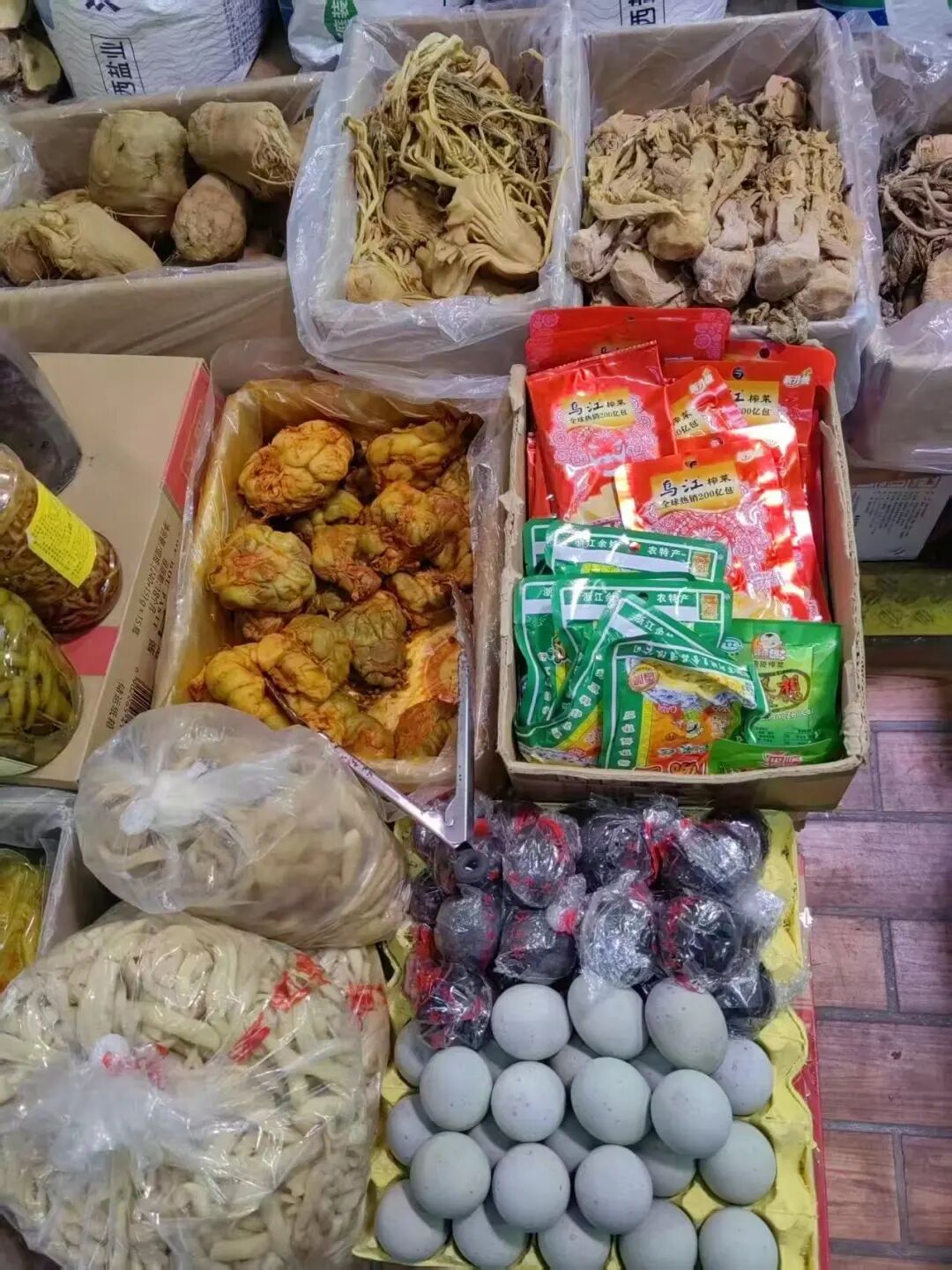
◉ Century eggs, pickled mustard green stems and dried radish from our shop. Photo: Juzi’s mother
My mother is remarkably capable. She handles every question with ease, calmly explaining to customers the pros and cons of each condiment brand.
For all my mother’s current calm and effortless competence, she was once little more than a helper in this shop. The grocery shop was originally founded by my grandmother in 1995, opening its doors at the same time as the wet market. Back then, customers all looked to Grandma as the boss and came to her for whatever they needed. At that time, many items in the shop were sold in bulk, including soy sauce. There weren’t as many soy sauce brands back then, and it was still sold in bulk. Customers would bring all sorts of empty drink bottles along to buy soy sauce.
Later, as the seasoning market evolved, there was no longer any need to buy soy sauce loose. The market itself underwent several rounds of renovation and shop relocations. Our shop was downsized, its floor space reduced to barely a third of what it once was. As my grandmother reached retirement age, my mother shouldered the heavy responsibility of running this small grocery shop.
Work, from dawn till dusk
If a city is a living organism, the wet market is undoubtedly the first organ to awaken each day. When customers step inside, they only see stallholders standing behind an abundance of fresh ingredients, unaware that they have already been busy since the early hours. That work may continue for twelve hours or longer before the day’s labour is finally over.
When my grandmother was running the grocery shop, it would open for business at six or seven every morning. She would unseal the retail grains and flours, arrange a range of goods in prominent spots, and restock anything that had sold out. She used to say that even with such an early start, there would still be customers waiting at the door to buy spices. Once my mother took over, the opening time was delayed by an hour.
From eight to eleven in the morning is typically the market’s busiest period, with most shoppers being middle-aged or older. A designated open area is also reserved within the market for roving stallholders, who only set up in the morning. They sell their vegetables at remarkably low prices; snow peas can be as cheap as one yuan a jin (500g or roughly 1.1 lbs).
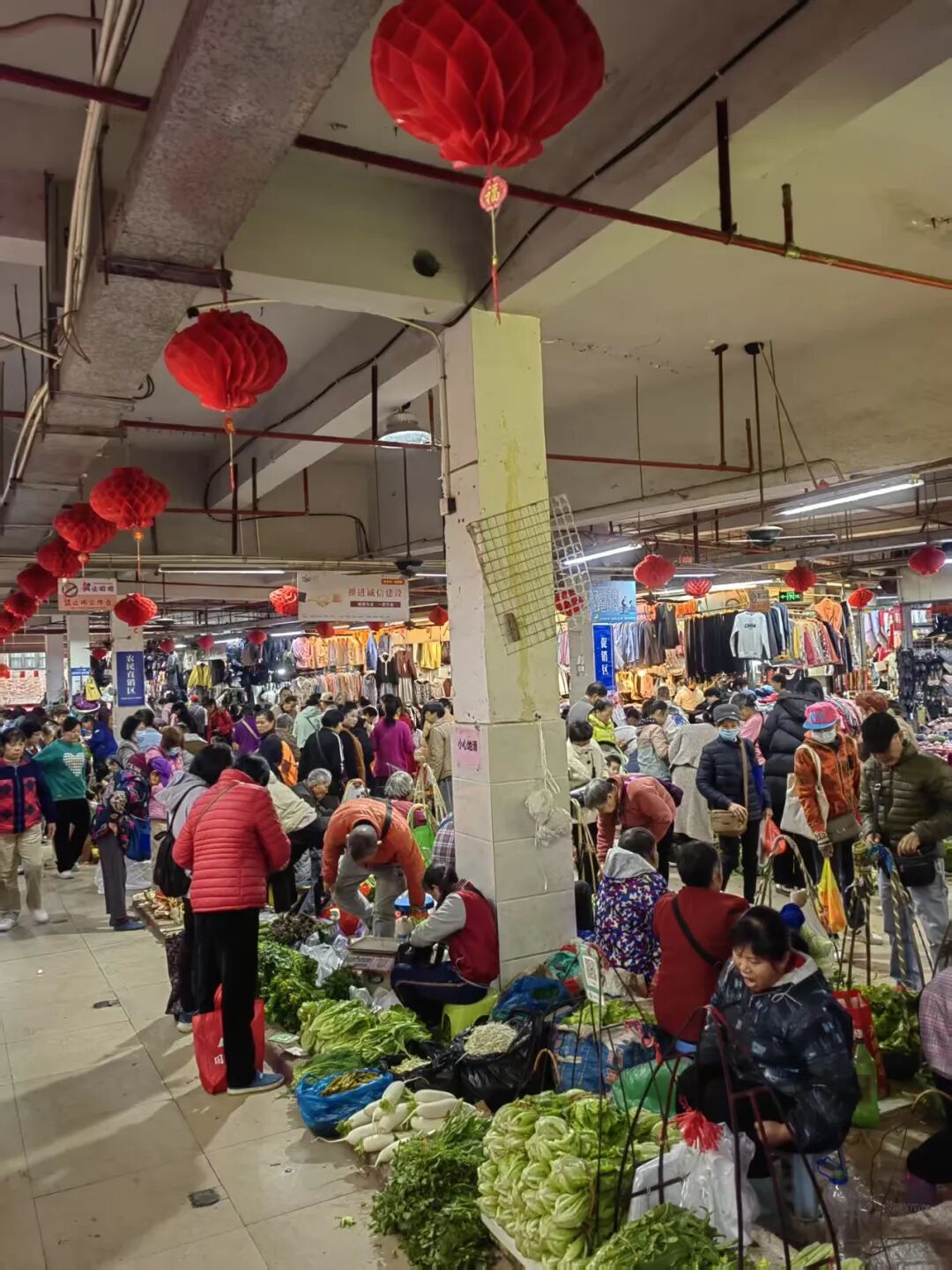
◉The indoor area of the market designated for mobile vendors. Photo: Juzi’s mother
By midday, the market reaches its quietest point as most people head home to cook and rest. Some stallholders follow suit; the cooked-food vendors typically don’t reopen their stalls until four in the afternoon. Even with fewer customers around at this hour, we have no time to rest. It’s time to take stock.
With absolutely no room left in the shop to store extra stock, we don’t work to a fixed delivery schedule. Whether we’re running low on oil, salt, soy sauce, and vinegar, or need a hefty 50-jin bag of flour, we simply contact the relevant brand’s sales representative to arrange a drop-off. The city is small, so deliveries usually arrive swiftly. The reps also make regular visits to scout the market, check which rival brands we’re carrying, or pitch their latest products.
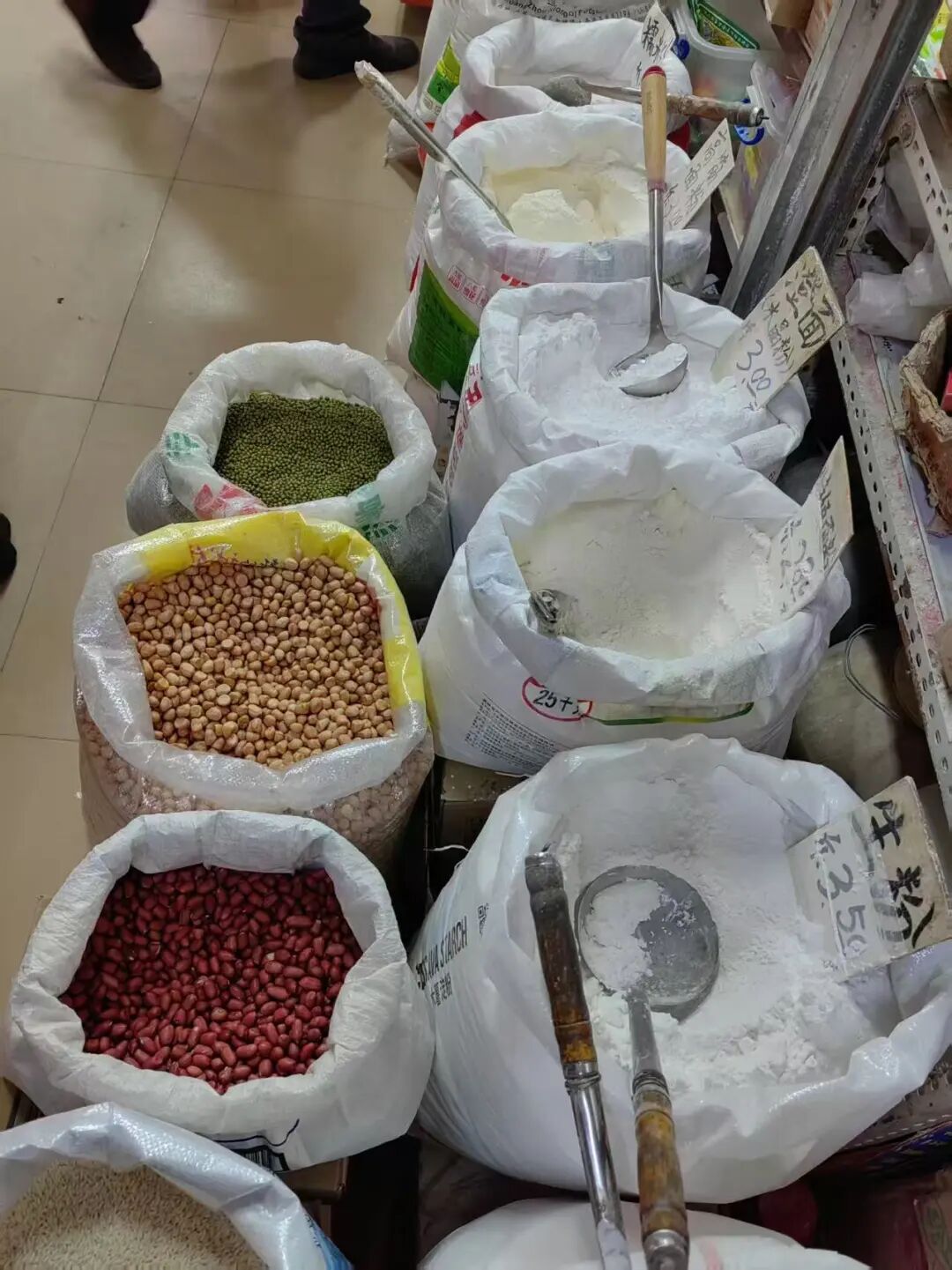
◉Various types of flour and beans for sale in the grocery shop. Photo: Juzi’s mother
After 4 pm, another rush of customers arrives, lasting until 6 pm. Only then do we finally have the chance to slowly begin tidying up and preparing to close. Even as we’re packing away, a steady stream of shoppers keeps coming in. There are always customers who hurry in just as we’re about to shut up shop to buy hard-to-find condiments, and my mother always patiently unpacks the goods she has already stowed away to serve them. It isn’t until after dinner time, usually after 7 or 8 pm each evening, that we can finally pack up and head home.
Don’t think you can just wind down once you get home. In our grocery shop, practically anything can be sold in the smallest possible portions: tonight we portion out white sesame seeds, tomorrow night tom yum spices, and the night after custard powder. So, after a twelve-hour stretch, we still have to keep prepping stock when we get back home. We’ll typically keep busy until just past ten o’clock before we can truly switch off. Then we’re up at half past seven the next morning, straight back into the fray for another day.
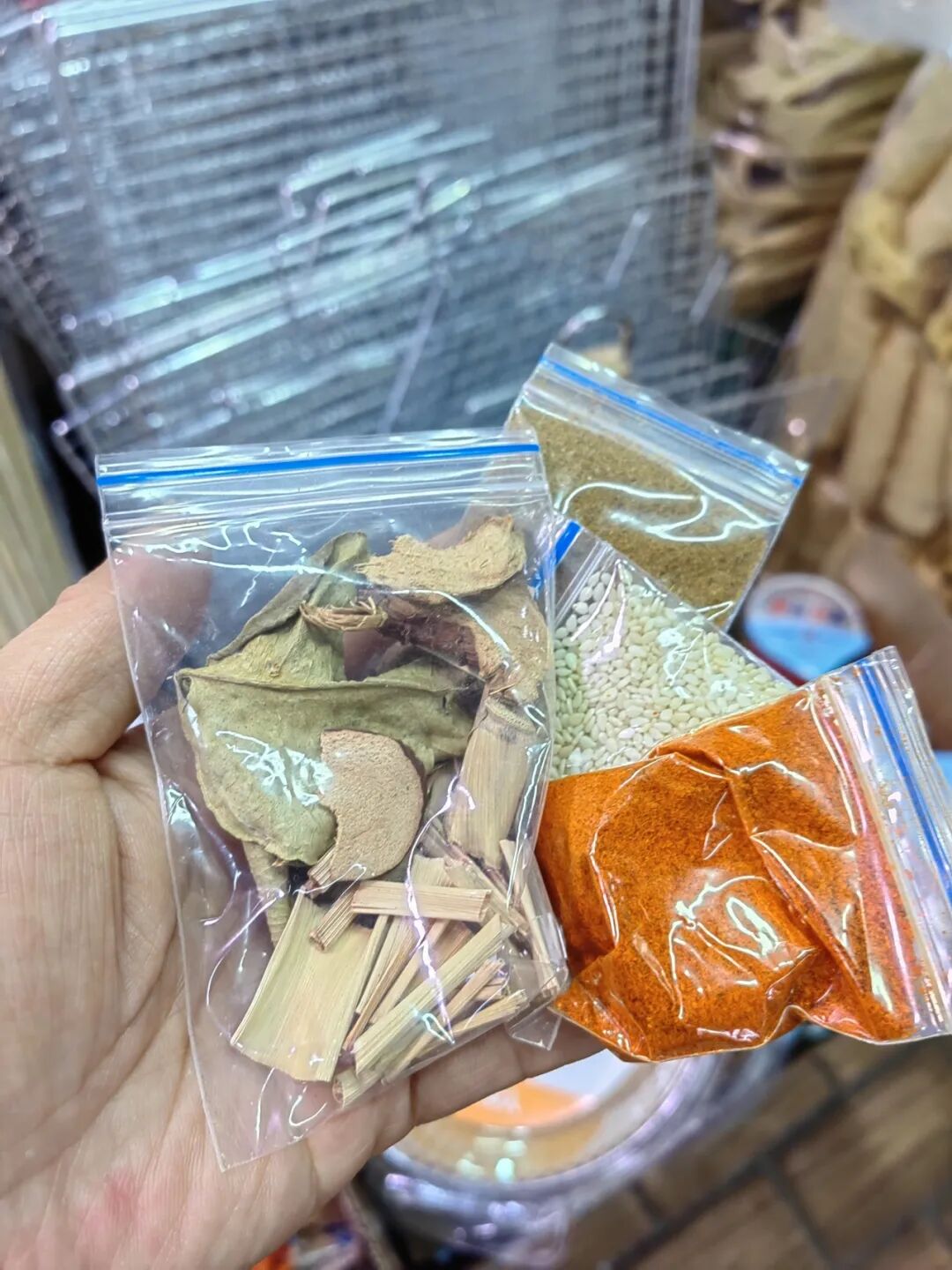
◉ Spices portioned out each night, including tom yum spices, cumin powder, white sesame seeds and chilli powder. Photo: Juzi
“Guess You Like”, More Than Just an Algorithm
Many customers are loyal to our small grocery shop not just for our wide range of products, but also for my mother’s genuine hospitality. During a brief stint helping out last Chinese New Year, I saw several regulars bring friends along to shop. It was only when they spotted my mother that they felt certain they were at their familiar local store.
Many online grocery platforms include a “Guess You Like” feature that works out what dishes you might be preparing and what other ingredients you’ll need, all based on your past purchases. My mother has long mastered this very same approach, but she does so with a much warmer, personal touch.
She remembers what regular customers usually come in for. Before a shopper even has to ask, she’s already handing the goods right to them.
“Still sticking with this brand of soy sauce, right?”
“Yes, exactly! I always prefer this one for cooking. You have such a good memory.”
Which customer wouldn’t cherish that feeling of being remembered? That sense of being remembered and truly valued is something no algorithm’s “Guess You Like” could ever provide.
She is also well-versed in making all manner of cakes and pastries. If you pick up peeled mung beans, she’ll know straight away you’re planning to make large meat zongzi, and will let you know the shop also stocks five-spice powder, zong leaves, and glutinous rice. If you’re buying glutinous rice flour to make tangyuan, she’ll tell you she has sesame, red bean paste, and lotus seed paste fillings in stock, and might even tip you off that adding a little rice flour will give the dough a bit more chew.
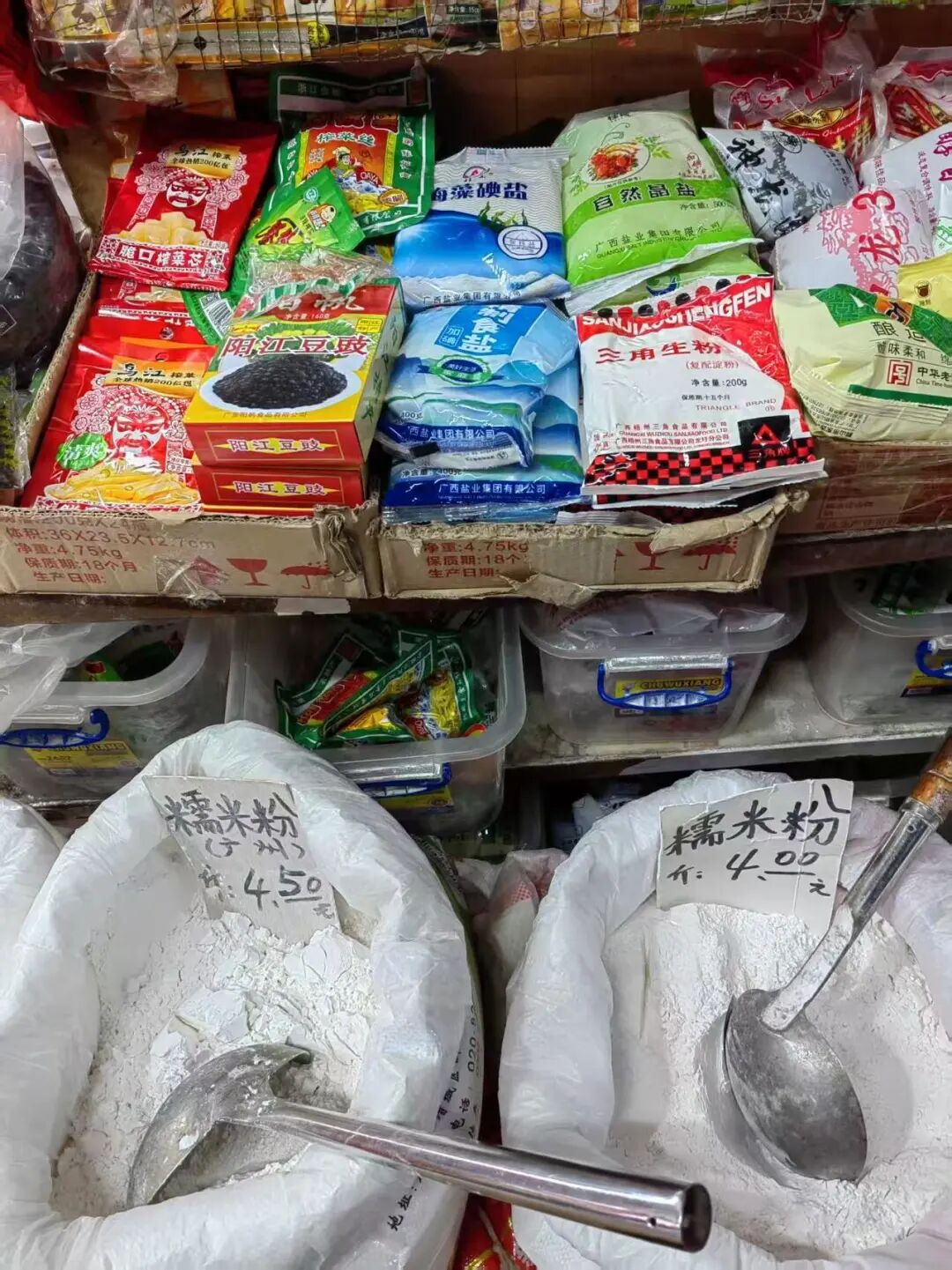
◉ Glutinous rice flour in the grocery shop. Photo: Juzi’s mother
Many customers head straight to our shop as soon as they step into the market. “Boss, I’m making beef brisket stew tonight, three jin’s worth. Could you pack up some spices for me? I’ll pop by later to pick them up!” A customer will drop a few words like that and head off to shop.
These genuine exchanges might run counter to many people’s negative impressions of wet markets, such as skimping on weight or inflating prices. I’m not sure about markets elsewhere, but from my own experience, wet markets thrive on repeat custom, not one-off transactions, meaning vendors wouldn’t do anything that might lose their customers’ trust.
Holding Fast
In the wet market and the grocery shop
In truth, for a long stretch after my secondary school workload ramped up, I rarely spent any time in the shop. I only returned to lend a hand during university holidays. By then, it had been ages since I’d last crossed paths with the market stallholders, yet I could still recognise those familiar old faces: the three sisters selling fish, the couple trading in beef, the auntie with the cooked food stall, and so on.
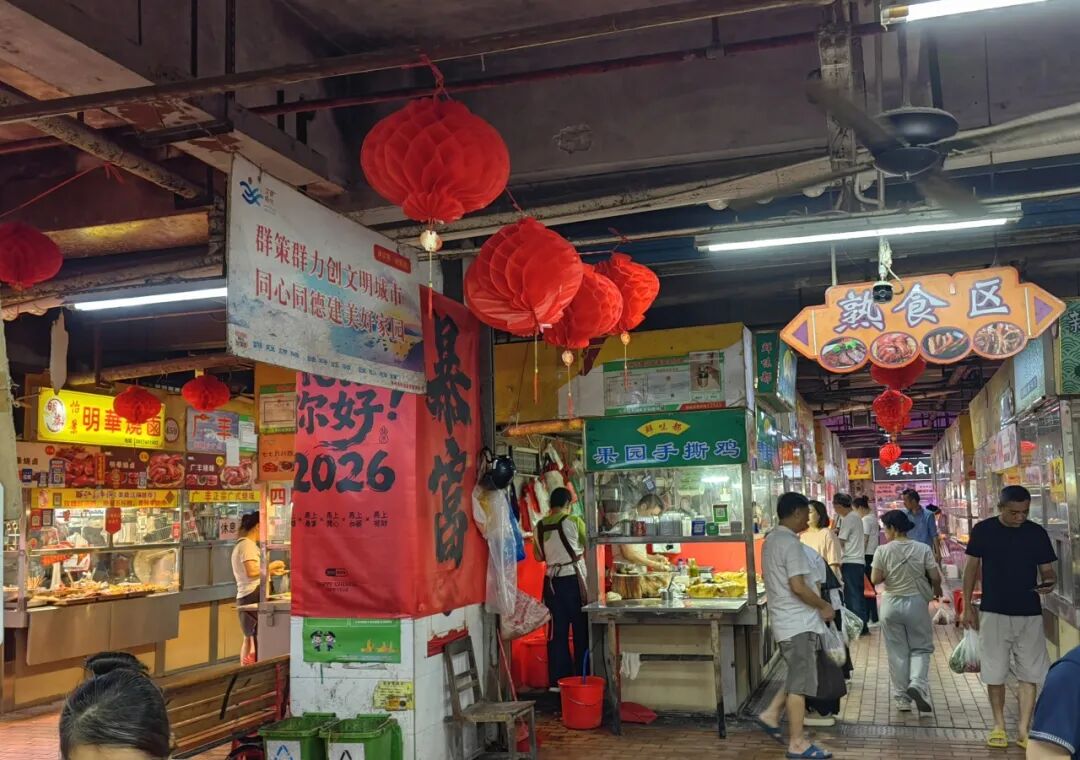
◉The cooked food section at Yijing Market. Photo: Juzi’s mother
They no longer recognise me, though. It’s only when I’m helping out in the shop that they suddenly take notice: “Huh, when did a new face turn up at this shop?” “Is that your daughter?” I’ve had these sorts of exchanges countless times. Each time, they’d sigh to one another about how long we’ve all been holding on in this market.
All things considered, from my grandmother’s initial venture to my occasional help in the shop today, this grocery shop has woven through three generations of our family’s lives for thirty-one years. But what of its future? We have not really spoken at length about it. While I do intend to return to the Guangdong and Guangxi region to settle down, it is highly unlikely I will ever take over the family shop. By the time my mother is older, this shop will probably have run its course.
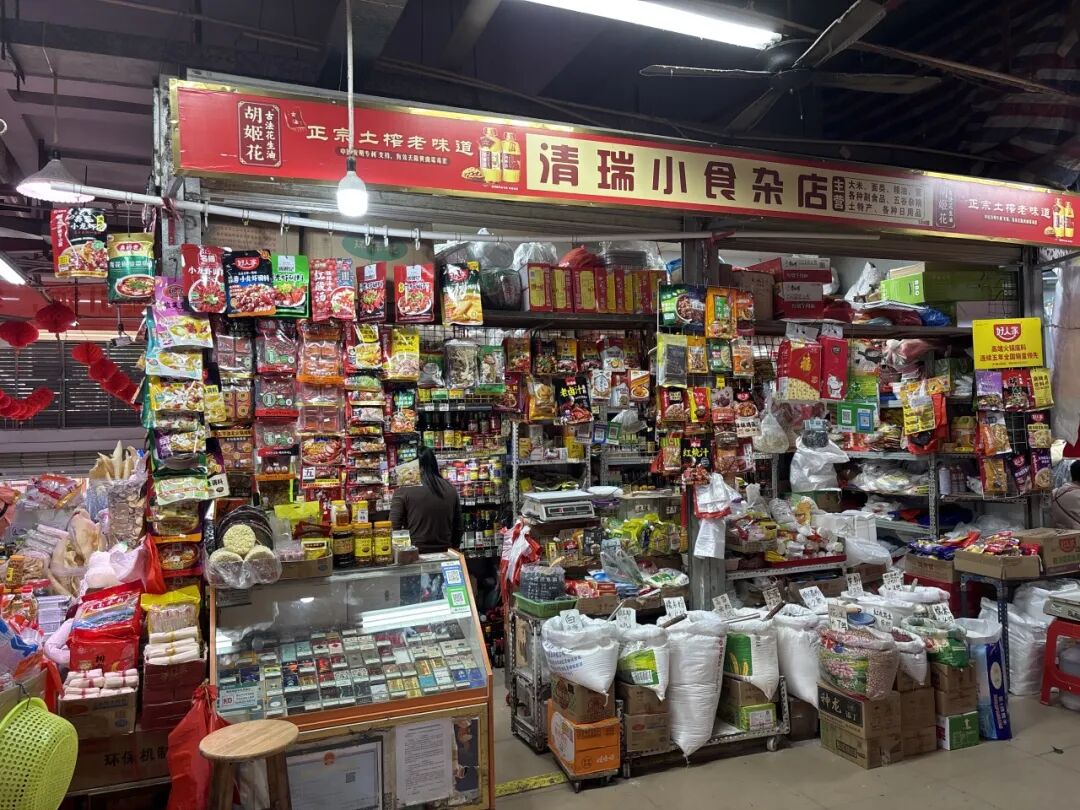
◉ The grocery shop’s storefront. Photograph: Juzi’s mother
In reality, trade across the wet markets in Wuzhou has broadly declined. A residential neighbourhood bordering one market was converted into a tourist district, leading to a significant population drain. Consequently, that market has been steadily shrinking: the seafood section was dismantled and has lain empty ever since, while a number of independent stallholders have moved their operations to busier markets elsewhere. The range of produce available there has dwindled as a result, and local residents now prefer to drive to a larger, more comprehensive market further afield.

◉ A street scene in Wuzhou’s old town. Photograph: Juzi
Fortunately, thanks to its location in the city centre, Yijing Market remains thoroughly bustling. With each Lunar New Year, I still have the opportunity to return home and look after the shop, documenting and soaking up the atmosphere of genuine human connection that thrives within the market. Just as I did as a child, I watch the diverse stream of passersby with wide eyes, wrapped in that sense of security that comes from being enveloped by the market’s vibrant, living pulse.
– This is Foodthink’s 797th original piece –
Foodthink
Author
Juzi
During the week, I’m an office worker in a cubicle; back home for the New Year, I transform into the market grocery shop’s ‘second-in-command’.
All photographs in this article were supplied by the author.
Editor: Yuyang
Layout: Xiaoshu
▼
Click the image to read the related article.