Who Is Making Us Fear Fermented Foods?

Foodthink says
Pickled vegetables, sour soups, fermented milk curds, bread, beer, sausages, cheese… Whether in China or abroad, fermented foods are everywhere. This may be because fermentation is, at its core, a biological process in which ubiquitous microorganisms interact with their specific surrounding environment.
In modern society, fermented foods that have existed for millennia can evoke fond memories of home and childhood for some, while sparking suspicion and fear in others. Why is this so? The book *Fermented Foods* by Baumgart-Getz documents and analyses the context in which these complex, contradictory attitudes emerged.
Foodthink previously published the article “Beijingers Far From Home Brought Their Pickling Crocks to the Capital”, which largely echoes the book’s central thesis on an experiential level: fermented foods represent a way of life in themselves. In modern society, they can serve as a medium connecting people to one another and to nature, and can also act as a resource for individuals striving for their own health and wellbeing.
This article features excerpts from the book’s introduction, outlining the historical process by which the microbiological science discovered in fermentation phenomena was swept up by market forces during the 19th and 20th centuries, driving modern society away from home-fermented foods and towards the pursuit of large-scale industrial food production.
We thank Science Popularisation Publishing House for authorising the publication of this article.

◉Cover of Fermented Foods
A packet of sourdough starter that gets “moody”
In the spring of 2007, I received a small envelope containing a sourdough starter. This batch originated on the Oregon Trail, a relic from the era of early American pioneers pushing westward. The starter itself looked decidedly unremarkable, leaving me to wonder if there had been a mistake with my order. Regardless, before turning in for the night, I mixed it with flour and spring water and poured the mixture into a Mason jar. To my astonishment, I woke to find the bubbly, gooey batter spilling over the worktop. As I mopped up the mess, it struck me just how much more vigorous this heirloom starter was than any shop-bought dry yeast.
This starter was not only “full of character” but also distinctly “picky”. If I left it sitting in the fridge for too long without use, it would “take offence”. During the months I was on a gluten-free diet and forced it to ferment rice and cassava flours, it grew even more “displeased”, and it would even “throw a tantrum” if I turned the thermostat down too low in winter. The moment spring arrived, however, it would “perk up”. The warmer weather prompted it to eagerly digest the organic rye flour I fed it, rewarding me in turn with flawlessly crusty French loaves, supple and chewy ciabatta, and round, dense sourdough rye breads.
The success with this starter inspired me to experiment with other fermented foods. Seeking guidance from Sandor Katz’s *The Art of Fermentation*, my family of ferments has, at various times, included kefir, kombucha, lacto-fermented cucumbers, beetroot and chillies, as well as pulque (a fermented drink popular in Mexico), cider, and even red wine.
Every night, I dedicate time to tending my ferments, which brings me a sense of calm in an increasingly clamorous world. Stable employment may collapse alongside the financial markets, but I can still look after my ferments. Each is a self-contained universe, and the rewards are good health and a genuine passion. George Orwell regarded tea as the cornerstone of civilisation. For me, brewing tea is merely the first step in preparing another batch of kombucha.
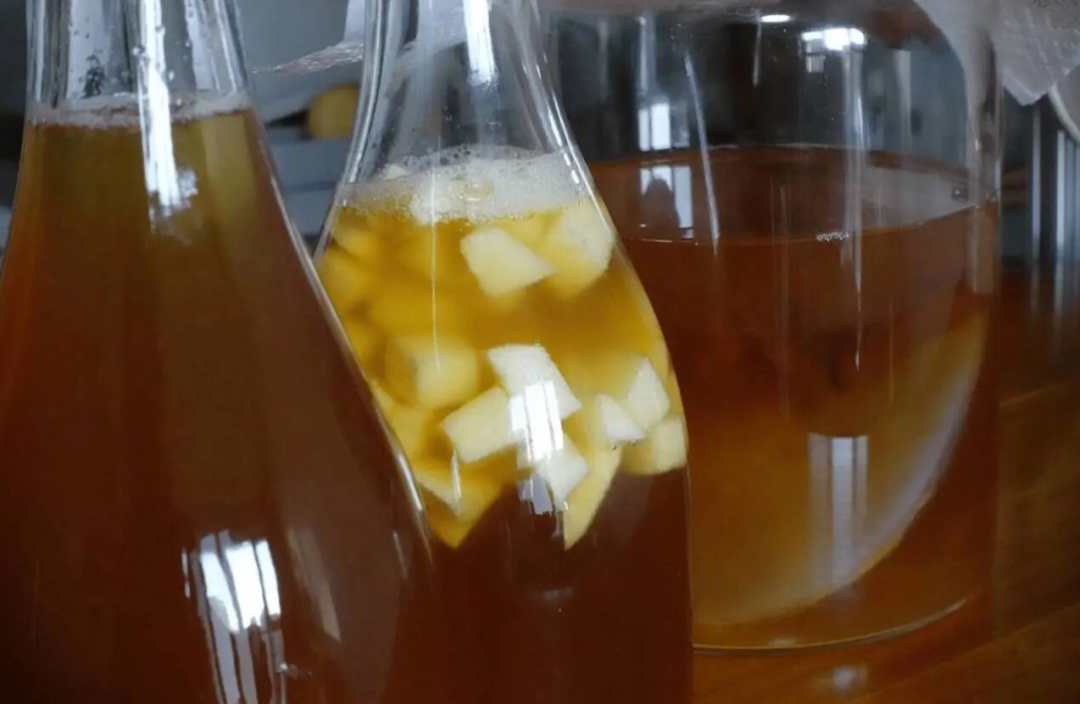
◉Kombucha. Photo: Xiao Fang.
I don’t think my motivation for trying fermentation differs much from that of others who keep chickens, pickle vegetables, or pursue similar forms of urban “self-sufficiency”. I’m attempting to forge a connection that lasts longer than the immediate moment. For centuries, whether in times of war or peace, plenty or famine, people have brewed beer, made cheese, baked bread, and cured meats. It was only relatively recently that the art of fermentation came to be regarded as mysterious, even dangerous.
Some have advised me that fermenting at home is a waste of time. Others have warned that I am likely to poison myself. These somewhat dismissive and unfounded claims have led me to wonder why making fermented foods at home shouldn’t bring the same self-sufficient satisfaction as baking a pie. I set out to find the answer, which turns out to be a pivotal chapter in the history of fermented foods. In fact, the suspicion and mistrust towards fermented foods are a “special product” forged from a blend of scientific and market forces. This “product” proved so influential that it shifted consumer preferences, replacing the richer, homemade flavours we could craft ourselves with bland, unappetising mass-produced alternatives. Fermented foods reflect humanity’s relationship with an invisible yet omnipresent second biological realm. The history of fermented foods is the story of how we came to understand that bacteria and fungi are both adversaries and allies.
Fermented Foods and the Public Health Movement
In August 1922, eight visitors died at a hotel on the remote Loch Maree in Scotland, an establishment renowned for its romantic scenery and excellent management. None of the eight had shown any signs of weakness or illness. On 14 August, they joined an outing arranged by the hotel. That morning, some went fishing while others went hillwalking, before reconvening by the nearby shores of Loch Maree for lunch. The meal featured wild duck pâté, ham and ox-tongue sandwiches, accompanied by jam, butter, boiled eggs, scones, and cake. All eight returned to the hotel in time for dinner.
…
An official investigation was launched. Samples of the hotel’s food were sent for bacteriological examination, and the chef was questioned. On 30 June, six weeks before the tragedy, one of the region’s most reputable manufacturers had delivered two dozen tins of meat to the hotel. Indeed, the manufacturer had observed every precautionary measure at each stage of processing. The staff cooked the meat in bulk, filled the tins, placed the unsealed containers in steam sterilisers, and finally transferred the meat into small glass jars for a second boiling. Prior to the incident at Loch Maree, millions of tins produced by this method had never been linked to a single reported case of poisoning. The chef confirmed that the tins arrived intact, and when opened, the contents looked and smelled perfectly fresh.
Too little of the spread remained in the jars for a comprehensive analysis. Fortunately, investigators uncovered another vital item: a sandwich that a boatman had buried in a flowerbed. He had saved it from an earlier picnic during the hike to eat for dinner. Hearing that the duck pâté might be responsible for a recent string of illnesses, he had buried it to protect his hens, worried they would perish if they ate it. The sandwich was excavated promptly and sent for testing, which confirmed it was contaminated with the toxin—completely so.
This fearsome toxin left everyone baffled; it had survived multiple boilings and sterilisations, let alone burial. In a statement issued on 25 August, the Scottish Board of Health acknowledged that the poisoning was shrouded in mystery but urged the public to remain calm. Investigators successfully isolated a microbe from the duck pâté. They injected a liquid culture into two mice, both of which died, as did a rabbit subjected to the same treatment. A bacteriologist confirmed that the rabbit and the mice all displayed symptoms of botulism.
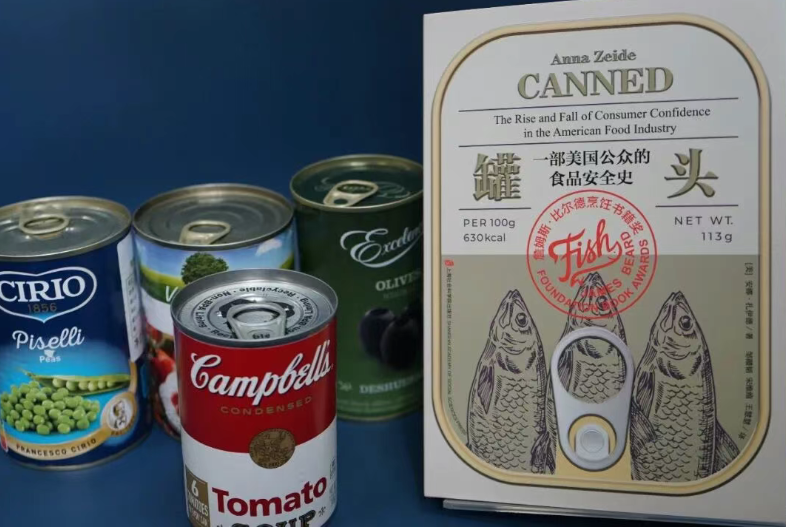
◉Botulism once sparked widespread public panic over canned food. The image shows the cover of *Canning: An American Public History of Food Safety*. Foodthink previously published a review of the book; see the article “Why Can Humans at the Top of the Food Chain No Longer Tell If Food Is Safe? | Review of *Canning*” for details.
*Clostridium botulinum* is an anaerobic, rod-shaped, spore-forming bacterium capable of thriving in environments where many other bacteria cannot survive. It secretes a potent biological toxin that targets the peripheral nervous system. This toxin is only produced when the bacteria release their spores. Yet these spores are remarkably resilient; they can survive in countless environments, from garden soil to salmon gills, and withstand extremes of cold, heat, and radiation. The first person to identify this bacterium was the Belgian bacteriologist Emile van Ermengem. In 1895, while investigating a series of poisoning incidents linked to sausages and cured meats, he isolated a microorganism that proved difficult to eradicate. To this day, that same microbe remains the primary culprit behind fatal foodborne illnesses.
A judicial investigation concluded that *Clostridium botulinum* was the sole “criminal” behind the Lake Marion poisoning incident. This coincided with an era in which virtually every illness was blamed on microbes. Through public health campaigns, knowledge of microbes and their workings—whether beneficial or harmful—had entered the popular consciousness. The “golden age” of the sanitation movement lasted roughly from the late nineteenth century to the 1930s. It was characterised by a focus on the spread of tuberculosis, typhoid fever, and other diseases attributed to contaminated water and soil. As understanding of these pathogens grew, so too did the sanitation movement. Before this, such knowledge was largely confined to laboratories and factories. The general public knew little of the biological processes behind the beer they drank, the cheese they ate, or the unpalatable meat sauces they consumed. They might have had a vague sense, gleaned from everyday observation, that preparing food one way could bring pleasure and health, while doing it another could invite illness and death. Yet these methods were so deeply intertwined with traditional customs that they defied rational explanation.
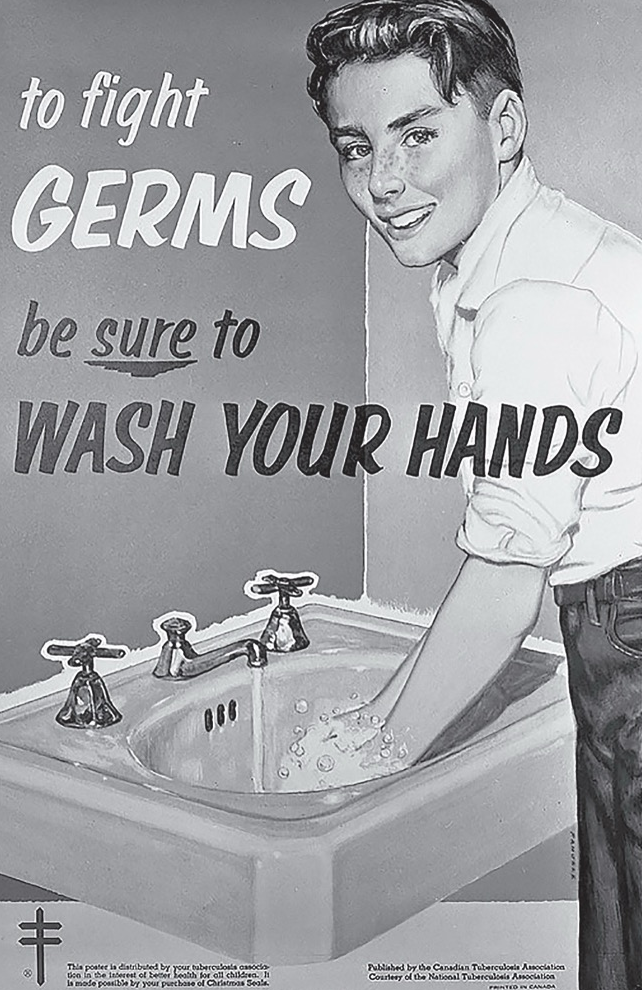
◉ This is a 1959 print advertisement issued by the Canadian National Anti-Tuberculosis and Health Association to encourage proper handwashing. Scientific advances throughout the nineteenth and twentieth centuries fostered a greater understanding of microbes and their role in human disease. Unfortunately, this period also saw growing scepticism towards traditional fermentation methods. Image source: Science Popularisation Publishing House.
This public health campaign disseminated a wide range of knowledge about microbes and their effects, translating it into concepts accessible to almost everyone. Home economics manuals and booklets introduced “germ theory” as an emerging science into household kitchens, encouraging housewives to adopt more sanitary cooking practices. These were undoubtedly sound practices. Yet the movement also became a textbook example of a well-intentioned “tyranny”, as ordinary domestic chores were suddenly cast in an atmosphere of invisible danger. The adage “small as a viper, it still bears venom” could not have been more fitting.
Although homemade pickles, wines, and buttermilk had rarely caused problems over the centuries, people were now aware that microbes lurked everywhere, lying in wait for the slightest lapse in cleanliness. Because they were both invisible and omnipresent, the unease stirred by the risk of microbial contamination was enough to steer housewives away from what they once made at home and towards foods now produced in factories and stocked on shop shelves.
New methods of food fermentation once coexisted with traditional ones. Beer bottled by state-of-the-art breweries and factory-made cheese appeared on shelves alongside homemade pickles and bread. But as the wheel of history turned from the nineteenth into the twentieth century, railways brought these new foods to market, while radio broadcasts captured public attention. The large corporations behind them worked hard to convince the public that only their products were reliable, clean, and healthy. Drawing inspiration from the UK Parliament’s 1875 Sale of Food and Drugs Act and 1887 Margarine Act, the US Congress passed the Pure Food and Drug Act in 1906, lending further weight to this persuasive campaign. Only well-capitalised enterprises could afford to invest in equipment that met the new standards, thereby securing the government certification that consumers were seeking. The cost of compliance became prohibitive, leaving smaller manufacturers to watch their customer bases wither before ultimately going out of business.
This success fuelled the ambitions of large corporations, prompting them to place greater emphasis on supplying wholesome foods. Domino Sugar argued that machine-processed foods were cleaner, and therefore safer, than those made by hand. Gold Medal Flour boasted that their product had never been touched by a miller. Kellogg’s promoted their cereal boxes as being sealed against contamination. Meanwhile, Heinz invited the public into designated areas of their factories to watch women in neat white uniforms pack the company’s pickles.
The advertising campaigns of these large corporations relied on such gimmicks, frequently escalating from mere attention-seeking to outright shamelessness. To secure a dominant position in the domestic market, the American Sugar Company published advertisements that enlarged microscopic images of microbes in brown sugar—which was harmless but merely looked alarming—presenting them as evidence that consuming raw sugar was dangerous. The campaign proved thoroughly successful. Even the best-selling *Boston Cooking-School Cook Book* warned readers to steer clear of brown sugar, claiming that “tiny bugs” lurked within it.
The breakfast cereal and biscuit industries soon followed suit. Manufacturers claimed that only packaged cereals could guarantee freedom from bacteria. A meat and egg breakfast, or yeast-leavened bread, were both presented as potential disease triggers. Corn flakes, produced to the highest sanitary standards, were touted as the safest and healthiest choice to date. For biscuit producers, the “enemy” was a country shop staple—the biscuit barrel. These barrels were similarly cast as breeding grounds for bacteria; wholesale biscuits would be poured into possibly unclean containers, only to be scooped out by equally unhygienic hands. Nabisco offered a pristine alternative: individually wrapped biscuits that looked tidy and appeared to have never been touched by anyone.
For these mass-produced foods, a clean exterior was the sole pursuit (many large food factories would stage idealised production environments for curious visitors, whilst actual manufacturing took place elsewhere in far less tidy conditions). Beyond that, mass-produced fare was bland and monotonous, lacking the distinctive character of traditional foods. “I hear that American kitchens are dreadful,” Tsar Nicholas II told one of his subjects, an opera singer who had recently returned from a visit to the United States. “All the food is mass-produced, with no unique taste or flavour.”

◉This is an early 20th-century print advertisement for Kellogg’s breakfast cereal. The manufacturers’ introduction of boxed packaging was influenced by contemporary advances in microbiology. It was widely believed that food safety and hygiene depended on completely isolating products from any potential contamination. Yet, much like many other facets of industrial capitalism, this proclaimed safety and hygiene was a perception rather than a fact—a perception that food manufacturers painstakingly cultivated among consumers. Image source: Science Popularisation Press
This assessment applies equally to mass-produced foods across Europe. Time-poor workers in industrial cities such as Manchester abandoned traditional staples like watercress, fish, and other customary fare in favour of canned beef and Bird’s Egg Custard Powder, since processed foods were far more convenient for those with only a few hours to spare. In reality, the time these workers saved was eventually lost: their life expectancy declined, and many fell victim to scurvy, dental decay, and other degenerative conditions.
In Switzerland, food industry pioneer Julius Maggi persuaded housewives to embrace his refined soup cubes. Although they lacked the flavour and nutritional value of homemade stock, they proved highly appealing to modern women working outside the home. The product was a resounding success, leading Maggi to establish an eponymous company in Germany in 1897. Convenience triumphed over flavour, and the uninterrupted, fixed rhythm of factory production gradually reshaped people’s daily habits. Time spent cooking was simply time that could not be spent earning a wage. Furthermore, industrialised production made food cheaper. In the 1880s, the industrialist Auguste Coutant—who had previously served as chef to Italy’s King Umberto I—proclaimed: “Every day, great factories will supply delicious, freshly made and cooked food at remarkably low prices. This will mark the beginning of a new era!”
This marked the beginning of a new era. The sanitation movement represented a turning point in food production and storage, for better or worse. It taught ordinary people simple ways to prevent terrible diseases. While they grew healthier and less susceptible to illness, they also surrendered considerable autonomy over household and culinary affairs to governments and large corporations. In matters of human–microbe relations, the sanitation movement’s assumptions and recommendations were rigid and monolithic, overlooking individual differences or traditional practices.
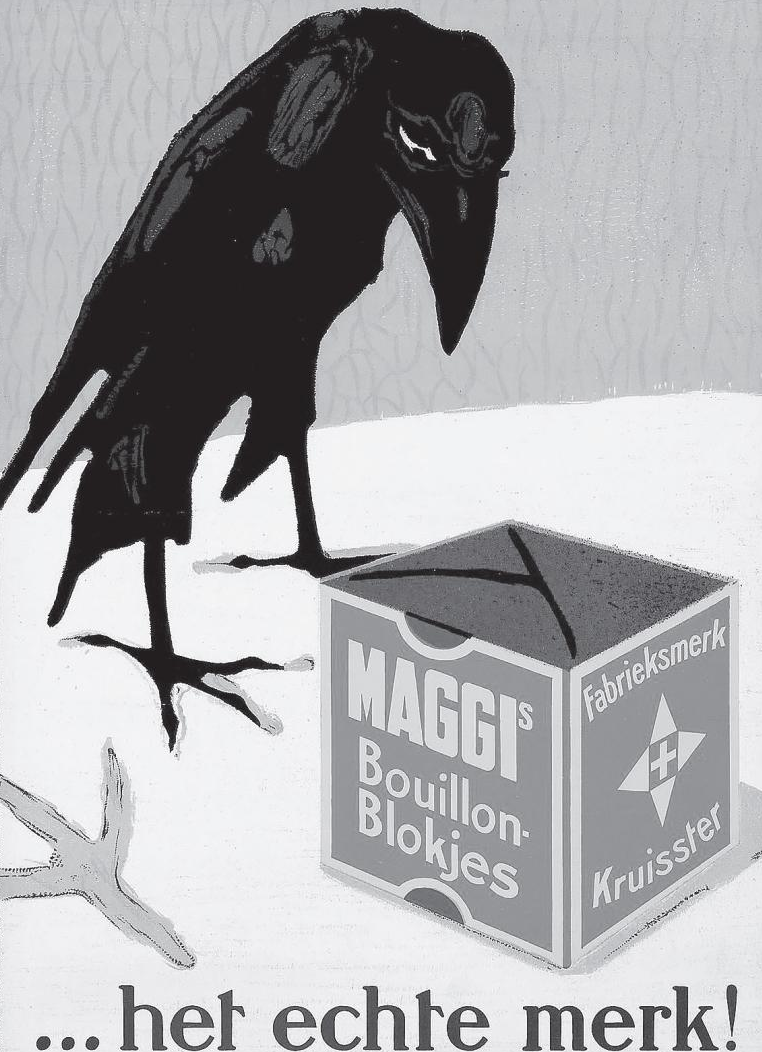
◉This is a Dutch print advertisement for Maggi stock cubes from the early 20th century. The slogan reads: “… the real brand!” Like other industrial foods, Maggi’s stock cubes saved weary housewives valuable cooking time, but this convenience came at the expense of nutrition and flavour. Image source: Popular Science Press
In traditional frameworks, those somewhat rough-and-ready, culturally specific guidelines inspired a sense of creativity in those who followed them. Yet they have been supplanted by a rigid set of rules grounded in fear (which explains why, today, knowledge of how to avoid catching a cold is far more common than knowing how to bake sourdough or pickle carrots). This fear, as illustrated by the Lake Michigan incident, is not entirely unfounded. Whether bacteria, yeast, or mould, these minute, dual-natured organisms can bring either disease or health. As French sociologist Bruno Latour notes in his work *Pasteurisation*: “Society is composed not only of people; microbes intervene and act everywhere.” So, who can possibly know the intentions of these “agents” operating from the shadows?
The Dual Nature of Microorganisms
Before the modern age, no one could know. To understand the dual nature of microbes, we must first look at some of their biological characteristics. Microbes are organisms so minute that they are invisible to the naked eye. In fact, millions (or even more) of them can be found on the head of a single pin. Their existence stretches back through the ages. Microbes spent hundreds of millions of years waiting for the humans who merely serve as a backdrop for them; were humanity to vanish, they would very likely endure for hundreds of millions of years more. They emerged around four billion years ago. The Earth of that time was nothing like the gentle, hospitable home we inhabit today; it was a planet battered by comets, meteorites, and solar radiation. Beyond these impacts, a Moon in a far closer orbit exerted gravitational pulls that triggered violent tidal surges. Beneath the turbulent seas, hydrothermal vents released vast amounts of energy. Around these vents lay accumulations of sludge rich in the building blocks of life. As the pioneering British science fiction writer H. G. Wells wrote, this was “a faint spark, yet unkindled, in the vastness of the void”.
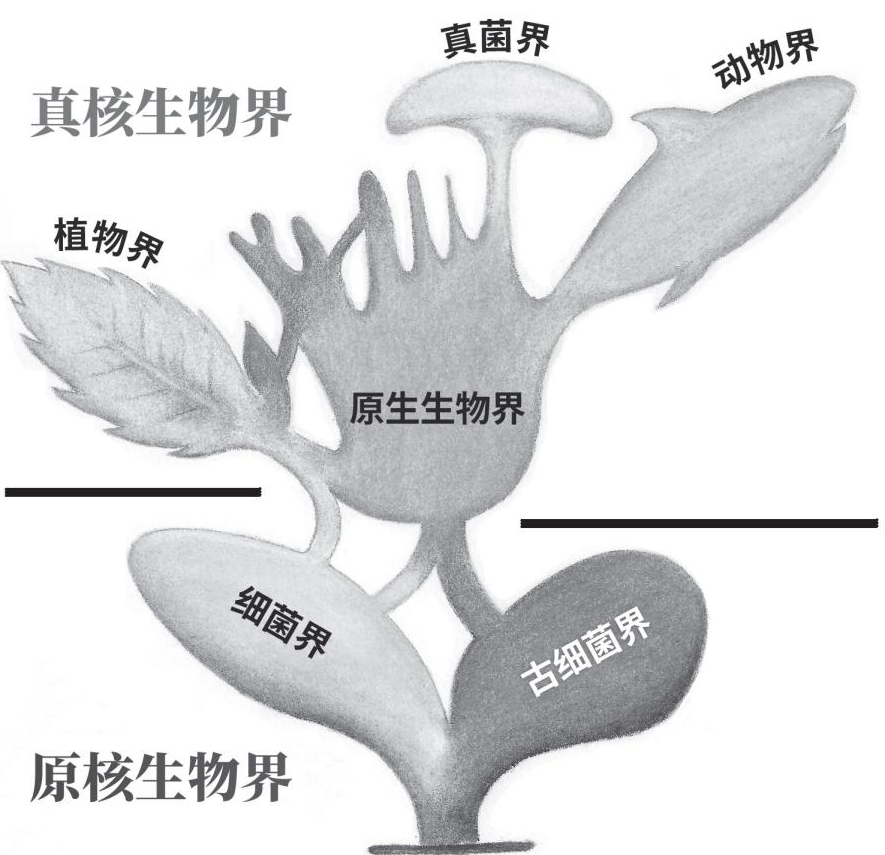
◉This diagram illustrates the evolution of life from simpler to more complex forms. The biological kingdoms we see today owe their existence to the endosymbiotic origins of bacteria and archaea in the distant past. This process not only made the emergence of more advanced life forms on Earth possible, but also helped render the planet hospitable to a vast array of organisms. Image source: Science and Technology Publishing House.
Despite not yet being kindled, life persisted, taking root in the form of primitive cells. Even as the Earth cooled over billions of years, life continued to multiply and diversify. It evolved into two distinct single-celled forms: bacteria and archaea. Bacteria possess cell walls but lack a defined nucleus. Archaea are similar in size and equally simple in structure, yet unlike bacteria, they feature more complex genomic architectures and metabolic pathways. Although both can harness solar energy, archaea tend to favour more inhospitable environments. Beyond these differences, however, they share a remarkably close relationship.
According to the prevailing theory of endosymbiotic origin, archaea at some point engulfed bacteria without destroying them; the two merged to form eukaryotes—cells and organisms possessing a distinct nucleus containing DNA in the form of chromosomes (we humans, for instance, are eukaryotes). With the bacteria supplying additional energy, this new symbiotic form could grow larger, accumulate more genes, and become far more complex. The waste product generated by these evolved strains—oxygen—in turn created the conditions for life to diversify further.
Microbes are ubiquitous and play a part in every biological process. They sustain ecosystems across the globe and contribute to the well-being of the organisms that inhabit them. They decompose the dead and sustain the living. Yet, given the right conditions, they can also bring disease, famine, and death.
Around 39 trillion microorganisms reside within us, yet we comprehend the roles and functions of only a small fraction. We know many can strengthen the immune system, regulate blood sugar, improve digestion, and offer other beneficial contributions to our health and wellbeing. For our part, humanity has learned to harness these microbes to expand our food supply, rendering it more nutritious and palatable. We have domesticated microorganisms much as we have cattle and sheep, to feed ourselves.
Yet, to microorganisms, what are we? This unsettling question remains unanswered, and the motives of these invisible life forms continue to elude us. In 1891, Professor Percy Frankland observed that they “thrive in vast numbers throughout every environment surrounding us, possessing extraordinary potential for both good and ill; sometimes they act as our friends and faithful servants, carrying out their allotted tasks without complaint, while at other times they rise against us like implacable enemies, defying our strength and intellect”. We expend just as much effort combating those microbes that cause disease and death and ruin our labours, as we do cultivating those that bring health and happiness. We strive to domesticate microorganisms to ensure we do not become their “colonies”.
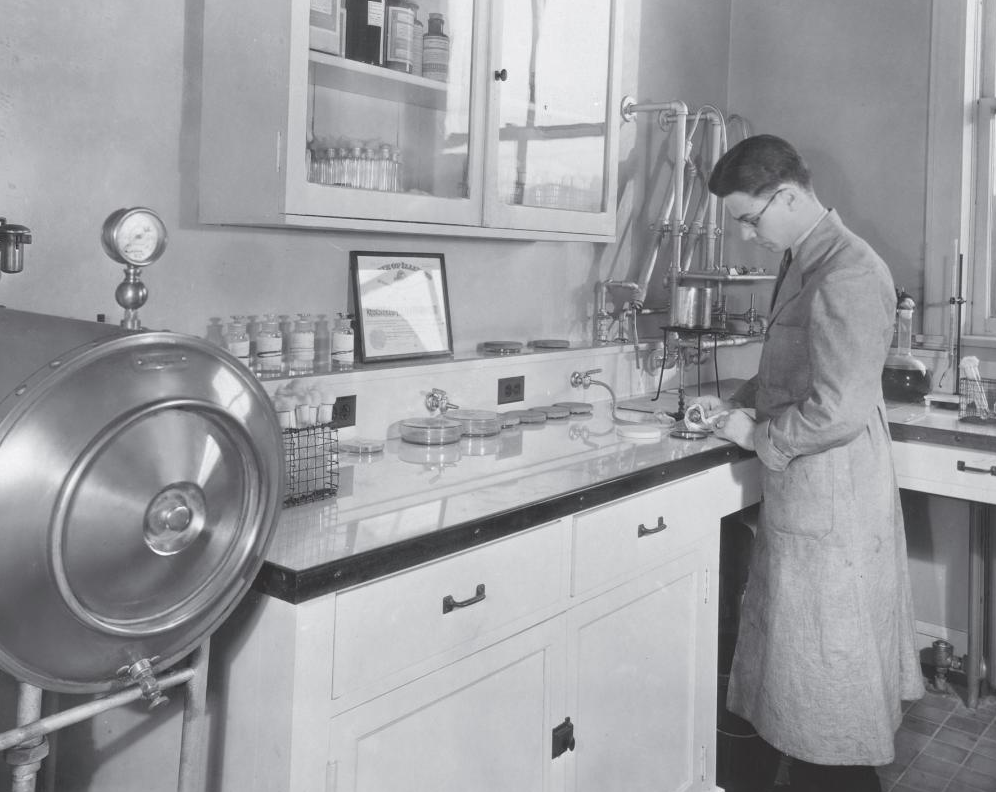
◉This shows the bacterial analysis laboratory of the Dearborn Chemical Company in Chicago, USA, pictured around 1930. In the early to mid-20th century, the scientific community held a rather alarmist view of microorganisms, a stance that considerably hampered the continuation of age-old fermentation methods. Yet, in recent decades, interest has been rekindled in the role microbes play in human health, longevity, and wellbeing. Image source: Science Popularisation Publishing House
Fortunately, as the English novelist Thomas Hardy wrote, these relentless struggles have forged a “very fine history”, alongside a host of delicious foods. But before we turn to these dishes, we ought to consider drinks first; after all, a great many early fermented products took the form of alcoholic beverages.

▼
Click the image to read related articles