Chen Jingjing, a 20-year researcher of rural construction, worked a paddy for the first time this year in Qingshan Village, Hangzhou—no herbicide, sun-drying. Rice cost over 30 yuan a jin, and he also hit a hard wall woven from land rent, hired labour and the division of labour.
Anonymous readers from southwest, northwest, and central China described farmland abandonment due to water shortage after high-standard farmland conversion, raw subsoil exposed by construction destroying soil fertility, and outsider large-scale operators suspected of leasing land to extract subsidies. Contractors also reported plunging profits and overly stringent oversight.
Last century, the Sugar Association funded Harvard scholars to blame heart disease on fat; Ancel Keys’s Seven Countries Study cemented this with cherry-picked data. The first Dietary Guidelines for Americans ushered in half a century of low-fat wrong turns — only the 2026 edition finally rejects added sugars entirely.
Forty thousand delivery riders faced 700,000 active peers; the platforms raised per-order prices and simply defused the strike. Lacking employment contracts and strike protections, riders continue to take risks in a cycle of ever-shrinking algorithmic delivery deadlines.
Meishan farmer Zhao Lishun watched rice paddies transferred to outside large-scale lessees go mouldy and be left unharvested. Across villages in Sichuan, Guizhou and Henan, high-standard conversion has stripped away topsoil, water-conservancy facilities are empty shells, and the “large-field” model is pulling villagers further from their land.
Nearly a decade on from the Ten Air Measures, Hebei’s coal-to-gas conversions, Shandong’s clean heating upgrades and the blanket straw-burning ban were rolled out one after another. Yet nearly one-sixth of converted households have already abandoned their systems; the green transition’s extra cost has long fallen on farmers.
Gail Borden’s canned condensed milk, Henri Nestlé’s infant milk powder and the transnational competition of the Anglo-Swiss Condensed Milk Company turned perishable fresh milk into an ocean-crossing industrial commodity in the nineteenth century.
In a sixteenth-century manor in western France, a 1970s hippie couple sustains self-sufficiency through work-exchange volunteers. A month with a Colombian brother and sister—undocumented workers—picking strawberries, smashing walls, making cheese: the “return to the countryside” romantic imaginings shattered by day after day of unpaid manual labour.
Grandma Kouzi at Villain’s Valley in Fujian harvested over a hundred pumpkins and over a hundred jin of beans, grains and peanuts in 2025—full food self-sufficiency except salt. A single batch of air-fryer roasted pumpkin sustains a day’s staple food.
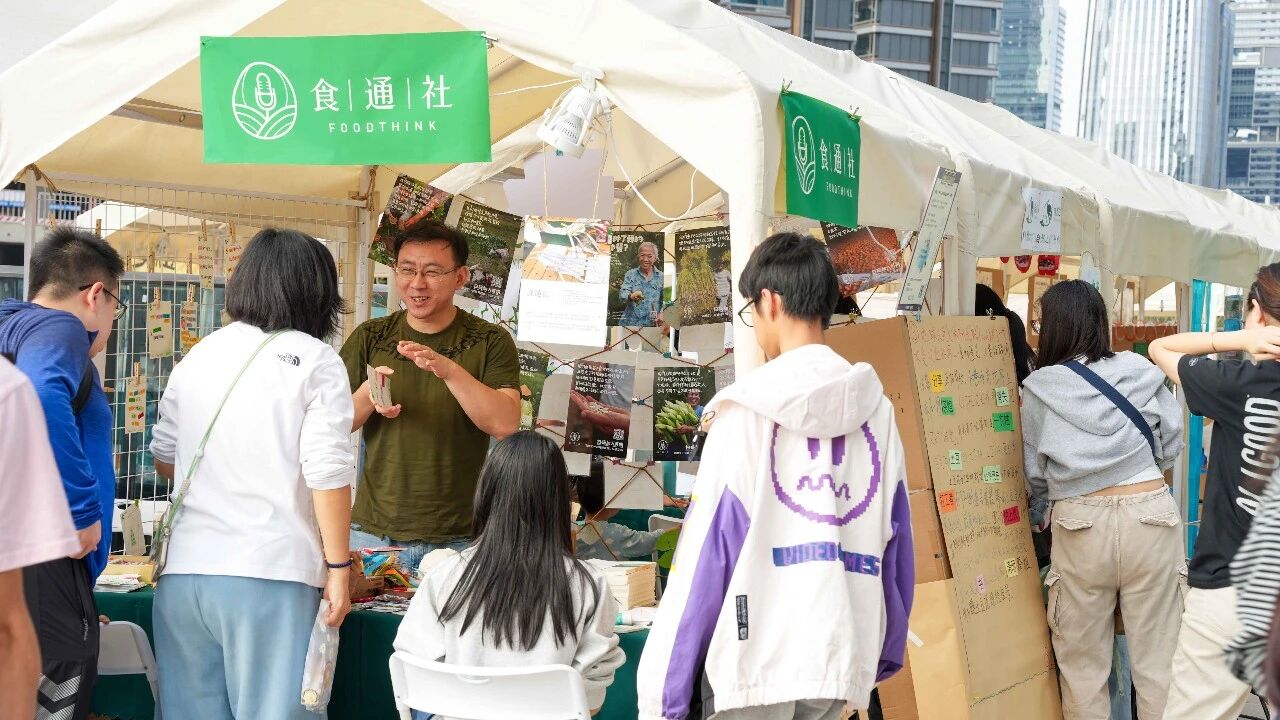
At Guangzhou’s Harvest Festival, Foodthink had nearly a hundred readers relay-write eight climate fiction (cli-fi) stories from article titles, screen a documentary on imported beef and lamb hitting the Qinghai pastoral area, and discuss fields and dining tables under extreme weather with fellow growers and documentary filmmakers.